
What Does an Air Plant Need If It Has No Soil?
Tillandsia spp. Bromeliaceae
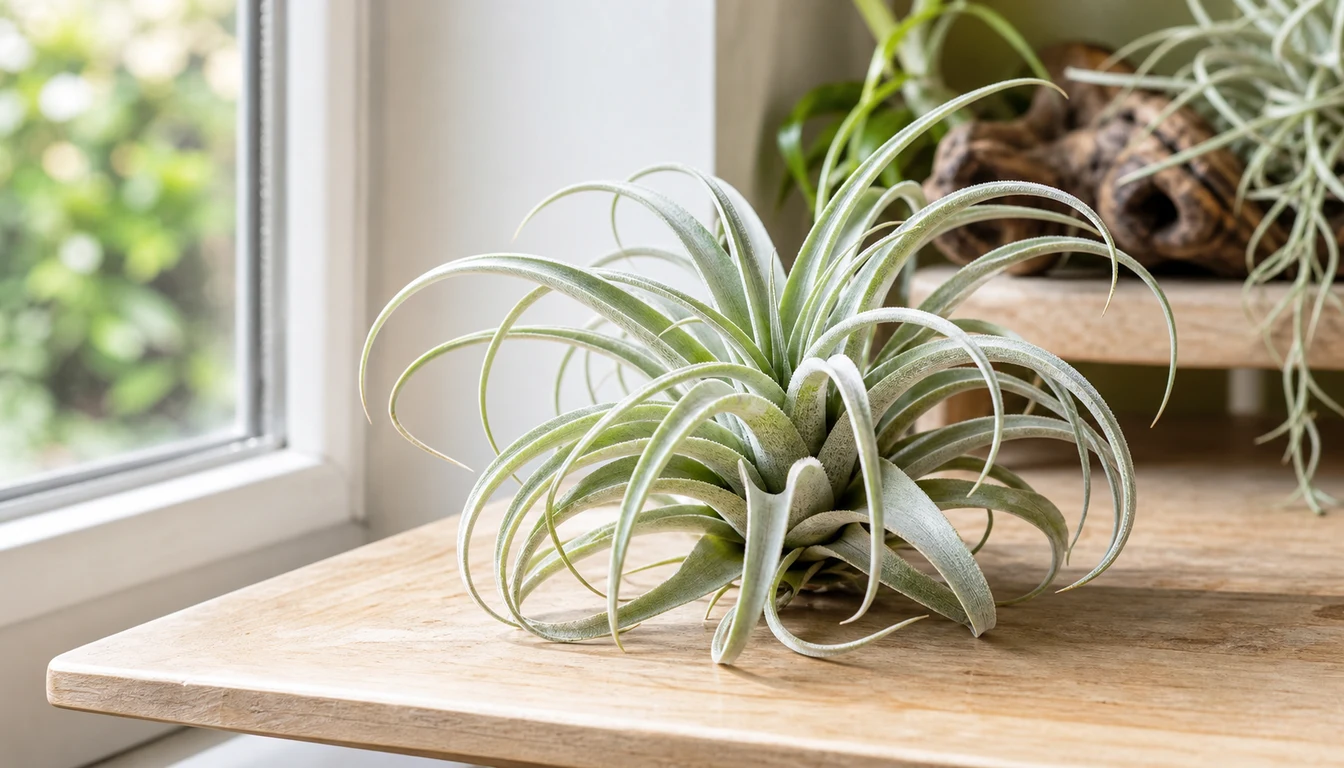
Air plants are living sculptures that thrive without soil, anchoring to driftwood, rocks, or shells while drawing moisture from the air. Their silvery-green rosettes and unique flowering habits make them endlessly fascinating botanical curiosities.
Care snapshot
Why Air Plants Don't Need Soil
Air Plants skip soil because they are epiphytes, plants built to live anchored to bark, rock, or driftwood while pulling water and nutrients straight from the air.
The genus Tillandsia holds more than 650 recognized species, ranging from thumbnail rosettes to trailing mats two feet across.
The trick is a coat of microscopic scales called trichomes covering every leaf. Each scale opens when wet and draws moisture and dissolved nutrients directly into the leaf, which is why roots are optional rather than required.
A thick, silvery trichome coat is not dust and it is not a sign of neglect. It marks a species built for brighter, drier air, while a smoother, greener leaf usually belongs to a species that wants more shade and humidity.
Roots, when a species grows them, exist to anchor the plant in place rather than to feed it. That is why an Air Plant wedged into a shell or wired to cork survives fine without a single root ever touching soil.
Growth habit varies as much as color across the genus. Some species form tight, symmetrical rosettes that flare open at bloom time, while others send out long trailing stolons the way a Pothos vine cascades from a shelf.
Most Air Plants are monocarpic, meaning each rosette flowers exactly once.
After that bloom, the mother plant produces offsets called pups at its base, then spends the following months declining while those pups mature.
That single bloom is often the showiest event in the plant's life. Bright tubular flowers push through colorful bracts and can hold their color for weeks before the decline sets in.
Because the leaf does the feeding instead of a root system in soil, every care decision ahead comes down to one thing. Get water onto the leaf surface, then get it off again before it can sit in the crown and rot.
Light Air Plants Actually Need
Air Plants want more light than most tropical houseplants get by default.
Aim for bright, filtered light with a few hours of direct morning sun rather than the deep shade that suits a Pothos or ZZ Plant.
An east-facing window works unshaded for most species. A south or west exposure works too, but sheer curtains keep midday sun from scorching leaf tips.
Watch the rosette for feedback. Adequate light keeps growth compact and often brings out red, orange, or purple tinting as the plant matures.
Too little light stretches the plant instead. Leaves elongate, fade toward pale green, and look weak rather than firm, and the plant is unlikely to bloom in that condition.
Some species tolerate dimmer rooms better than others.
T. caput-medusae and T. fasciculata hold up in moderate indirect light, while T. ionantha and T. xerographica need real brightness to keep their color and form.
A dim apartment is not a dead end. Twelve to fourteen hours daily under a full-spectrum grow light reproduces the brightness a windowsill cannot provide.
A bright bathroom window is often the best real-world spot in a house. It pairs strong light with the ambient humidity that keeps trichomes from drying out between soaks.
The Soak-and-Dry Method
Misting will not keep an Air Plant alive on its own. Give it a full soak instead, submerging the whole rosette in room-temperature water for 20 to 30 minutes every 7 to 14 days.
Climate decides where in that range to land.
Hot, dry rooms or homes running central heat need soaks on the shorter end, while humid rooms can stretch toward the two-week mark.
Water quality matters more than most owners expect. Chlorine, fluoride, and dissolved minerals in tap water gradually damage trichomes, so rainwater or filtered water works best.
- Rainwater or distilled water for the most sensitive species
- Tap water left uncovered for 24 hours to let chlorine dissipate
- Filtered water as a reliable everyday default
- Distilled or reverse osmosis water occasionally if your tap water is very hard
Soaking is only half the job. The plant must dry within a few hours, because its cup-shaped base traps water against the growing point exactly where rot starts.
After soaking, shake off the excess water and set the plant upside down on a towel or rack for two to four hours.
A gentle fan speeds drying in a humid room and lowers the odds of trapped water ever becoming a problem.
The base is the tell. Touch it after a soak, and dry, papery skin means the plant is ready for its next watering cycle, while a base that still feels slightly spongy needs another day before you soak again.
Adjust frequency by season rather than the calendar date. A plant sitting in dry winter heat or summer air conditioning needs water more often than the same plant in a naturally humid room.
Mounting and Displaying Without a Pot
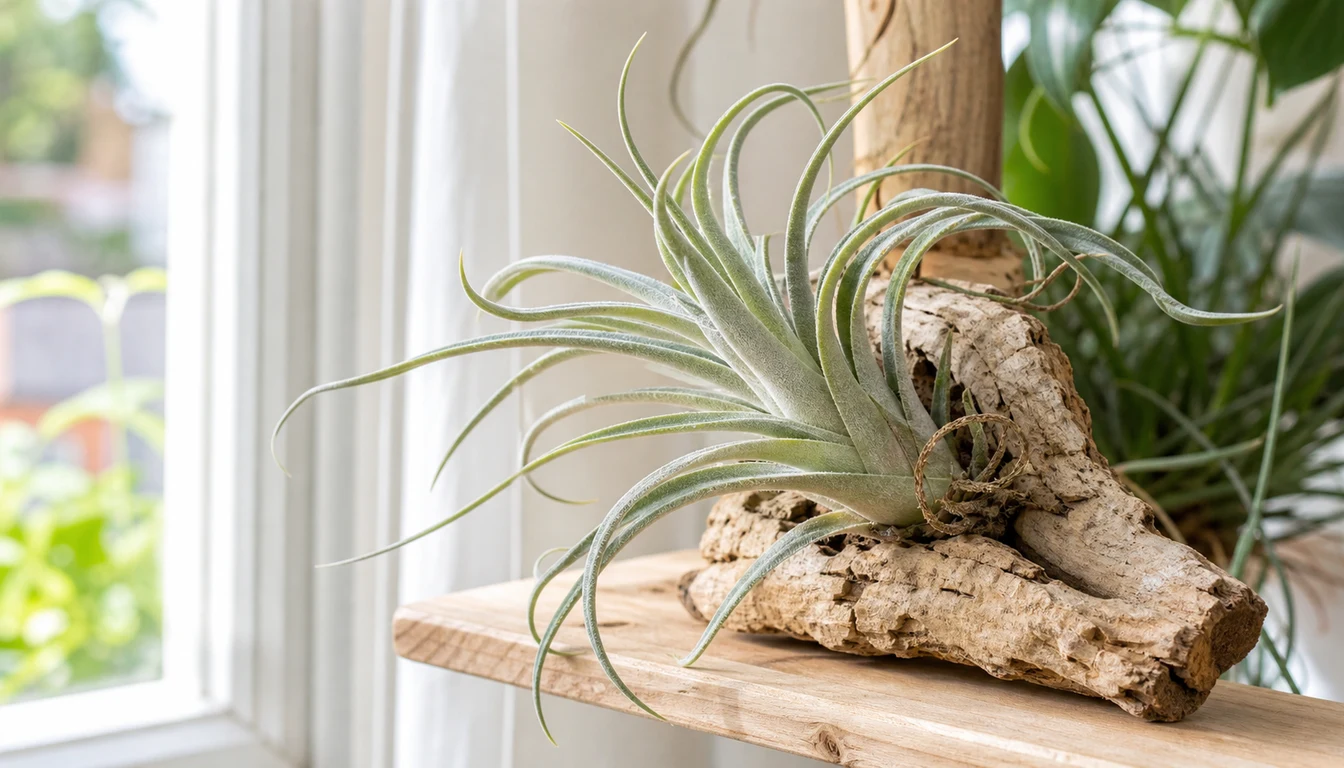
Air Plant roots, when a species grows them, exist purely to anchor the plant rather than to feed it. That means almost any inert surface works as a home, from driftwood and shells to open glass and metal frames.
Choose materials that will not trap moisture against the base.
Hot glue applied in a low-temperature setting, fishing line, or floral wire secures a plant without harming it, and cork bark, orchid bark, and cholla wood all make natural-looking mounts.
- Driftwood or cork bark for a natural mount
- Fishing line or floral wire to secure without adhesive
- Low-temperature hot glue for a permanent, damage-free bond
- Open shells, wide dishes, or metal frames for a soil-free display
Skip soil, sphagnum moss, and anything else that holds water against the plant, since that recreates the exact conditions that cause rot.
Closed glass terrariums and sealed globes look striking but work against the plant. They trap humidity around the crown and slow drying at the one moment drying needs to happen fast.
If you already own a closed container, use it only as an open display. Leave the lid off, or choose one with wide venting, so air keeps moving across the leaves between soaks.
Match the mount to the growth habit.
A trailing species reads best hung at eye level where the stolons can drape, while a tight rosette like T. xerographica anchors a tabletop or shelf display just as well upright as on its side.
Choosing a Species for Your Light and Space
Let your light decide the species before size or price. Heavier silver trichome coats, like those on T. xerographica and T. streptophylla, signal a plant built for bright, dry rooms.
Greener, smoother species handle moderate light better. T. brachycaulos and T. caput-medusae tolerate an indirect spot that would leave a xerographica pale and stretched.
Size ranges widely across the genus.
T. ionantha barely reaches 2 to 3 inches and turns a fiery red-orange before it blooms, while T. capitata grows 6 to 8 inches with broad, velvety leaves.
For a statement piece, T. xerographica or T. magnusiana can spread nearly two feet across and anchor an entire shelf or centerpiece on its own.
Availability tracks familiarity more than difficulty.
Common species like T. ionantha stay inexpensive and widely stocked, while rarer cultivars or oversized specimens carry a premium price and often want more specific light and humidity.
Match the plant to the spot you can actually dry it in, not just the look you want. A tight rosette wedged into a narrow glass cup dries far slower than the same plant wired to open cork, so a beginner is better served by an open display than a rare, hard-to-dry form.
- Bright, dry room
- T. xerographica or T. streptophylla for the strongest silver trichome coat.
- Moderate indirect light
- T. caput-medusae or T. brachycaulos before trying rarer, brighter-light species.
- Small shelf or terrarium
- T. ionantha for its compact size and reliable airflow in an open display.
What Happens After It Blooms
Flowering is not a bonus stage for an Air Plant, it is the beginning of the end for that particular rosette.
Most species are monocarpic, so the mother plant spends the months after its bloom gradually declining while it channels energy into offsets instead.
Those offsets, called pups, usually appear two to six at a time around the base.
Wait until a pup reaches roughly one-third the size of the mother plant before separating it, which gives it enough reserves to survive soaking and drying on its own.
Separation itself works the same way as propagating many other houseplants from an offset. Most pups twist away from the mother plant by hand once they are mature, and a pup that resists needs only clean scissors to cut the connecting tissue.
Let the cut end dry for 24 hours before resuming normal watering. That dry window keeps the fresh wound from becoming the same kind of entry point that causes crown rot elsewhere on the plant.
A mother plant often turns red, pink, or purple in the weeks before it blooms. That color shift is a normal signal that flowering is close, not a sign the plant is struggling.
Once the last pup is mature enough to separate, the original rosette can be left in place, composted, or removed once it has fully dried and browned. There is no need to rush its removal while it still shows any green.
Diagnosing Rot, Pests, and Stress Signs
Rot kills far more Air Plants than any pest does.
It starts as a soft, dark, faintly mushy patch at the base, often while the leaves above still look silver and healthy.
Catch it early and the plant is often savable. Remove the affected tissue with a clean blade, skip the next scheduled soak, and improve airflow around the plant until the remaining base firms back up.
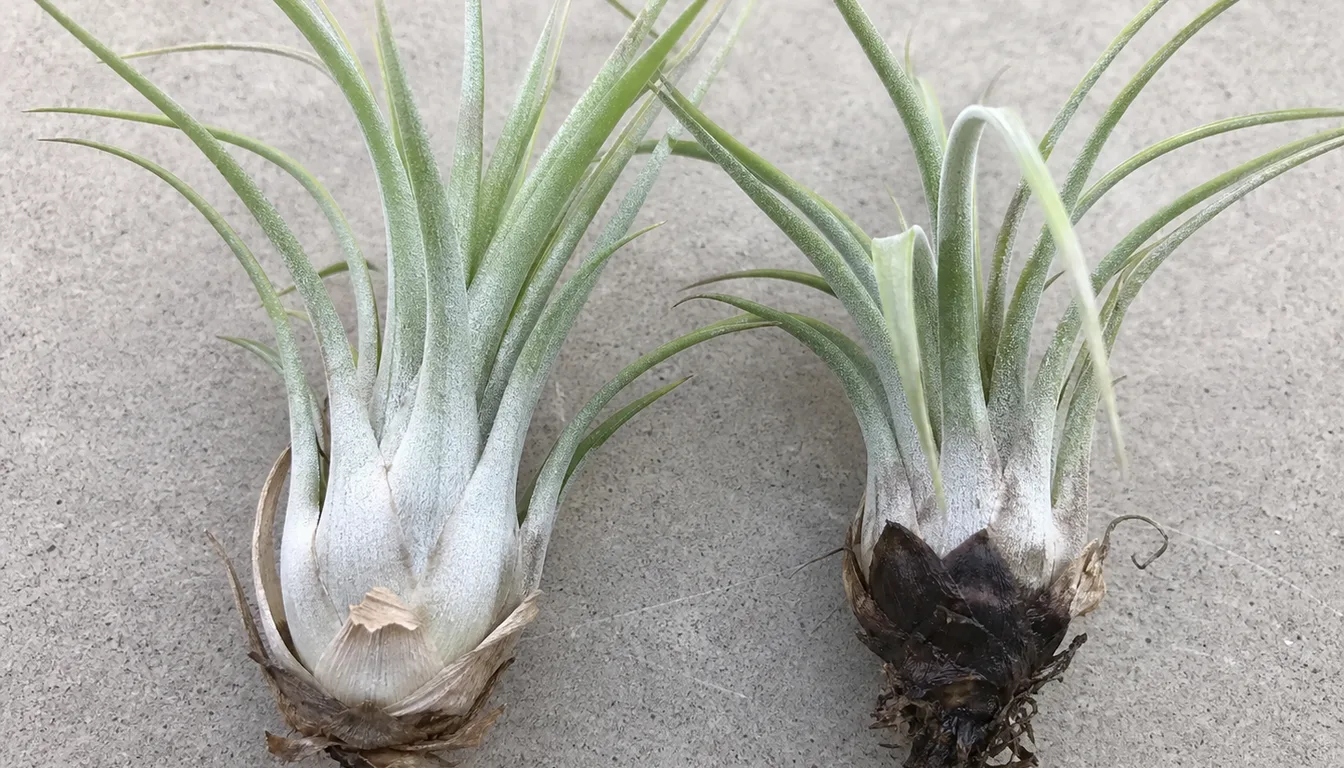
Left untreated, base rot spreads upward through the crown within days rather than weeks, since there is no soil buffer to slow it down the way there is with a potted plant.
Pests are a smaller but real risk.
Mealybugs hide in the leaf bases as white, cottony clusters, and scale insects attach flat to the leaf surface to feed on sap.
Treat either one the same way you would on a Monstera or Aloe Vera, dabbing rubbing alcohol on a cotton swab, then rinsing the plant thoroughly. A heavier infestation calls for a 15-minute soak in diluted insecticidal soap instead.
Brown, brittle leaf tips point to a different problem than rot. They usually mean underwatering or low humidity rather than a fungal issue, and while the browned tissue will not turn green again, new growth recovers once the watering rhythm improves.
- Soft, dark, mushy base: crown rot from water trapped after soaking
- White cottony clumps in leaf bases: mealybugs
- Flat brown bumps stuck to leaves: scale insects
- Dry, brittle brown tips: underwatering or low humidity, not rot
Most rot traces back to one habit, not bad luck. A plant dried on schedule after every soak almost never reaches this point, so treat a rot scare as a cue to check your drying routine rather than switch plants.
How Indoor Heat and AC Change the Soak Schedule
Air Plants tolerate a wide range, roughly 55 to 85°F (13 to 29°C), so temperature rarely forces a change on its own.
Indoor air conditions do, because forced heat or air conditioning pulls moisture out of the trichomes faster than still, naturally humid air does.
Winter heating and summer air conditioning both call for soaking closer to the weekly end of the range. A naturally humid room, or a stretch of mild weather with the HVAC off, can push the interval out toward two to three weeks instead.
During active growth from spring through early fall, a quarter-strength bromeliad or orchid fertilizer added to the soak water once a month supports stronger color and a better shot at blooming. Skip fertilizer entirely once growth slows for the year.
Keep plants away from cold window drafts and heating vents alike. Both create the same problem, air dry or cold enough to stress the plant faster than a normal soak schedule can compensate for.
Is It Safe Around Pets and Kids
The pet safety of Air Plants is not established.
The ASPCA has no Tillandsia record and NC State gives no pet rating for the genus, so for a shelf a curious pet can reach, choose from the pet safe houseplants the ASPCA does list.
Without a listing, keep chewing pets away. A pet that chews on the leaves can still end up with mild stomach upset, so an out-of-reach mount is still the more comfortable choice for both of you.
The same holds for kids and the rest of the household. With no soil in the picture, there is no potting-mix dust or mold to worry about either, just the plant itself.
When buying, favor sustainably propagated stock over wild-collected specimens. Widely cultivated species like T. ionantha are easy to find grown this way, and choosing them helps protect wild populations that collection has pressured in parts of Central and South America.
Frequently Asked Questions
Do air plants need soil at all, or can I plant one in dirt?
No, and planting one in soil or a sealed pot will smother it rather than help it. Air Plants absorb water and nutrients through leaf trichomes, so a mount, shell, or open dish does the job soil would do for any other houseplant.
Why is my air plant turning red or pink?
That color shift usually means the plant is getting ready to bloom, especially on species like T. ionantha. It is a normal, even a good, sign rather than a symptom to fix.
Can air plants live in a closed terrarium?
Only if it stays genuinely open, with the lid off or wide venting. A sealed globe or jar traps humidity around the crown and turns a decorative container into a rot risk.
How do I tell if my air plant is dying instead of just blooming?
Reddening leaves and a slowing growth rate near bloom time are normal. A soft, dark, mushy base is not, and that is the sign that means intervene now rather than wait.
Do air plants need fertilizer?
Not strictly, but a quarter-strength bromeliad or orchid fertilizer once a month during spring through early fall supports stronger color and a better chance of blooming. Skip it during the plant's slower months.
Sources & References
Related Plants
Jade Plant
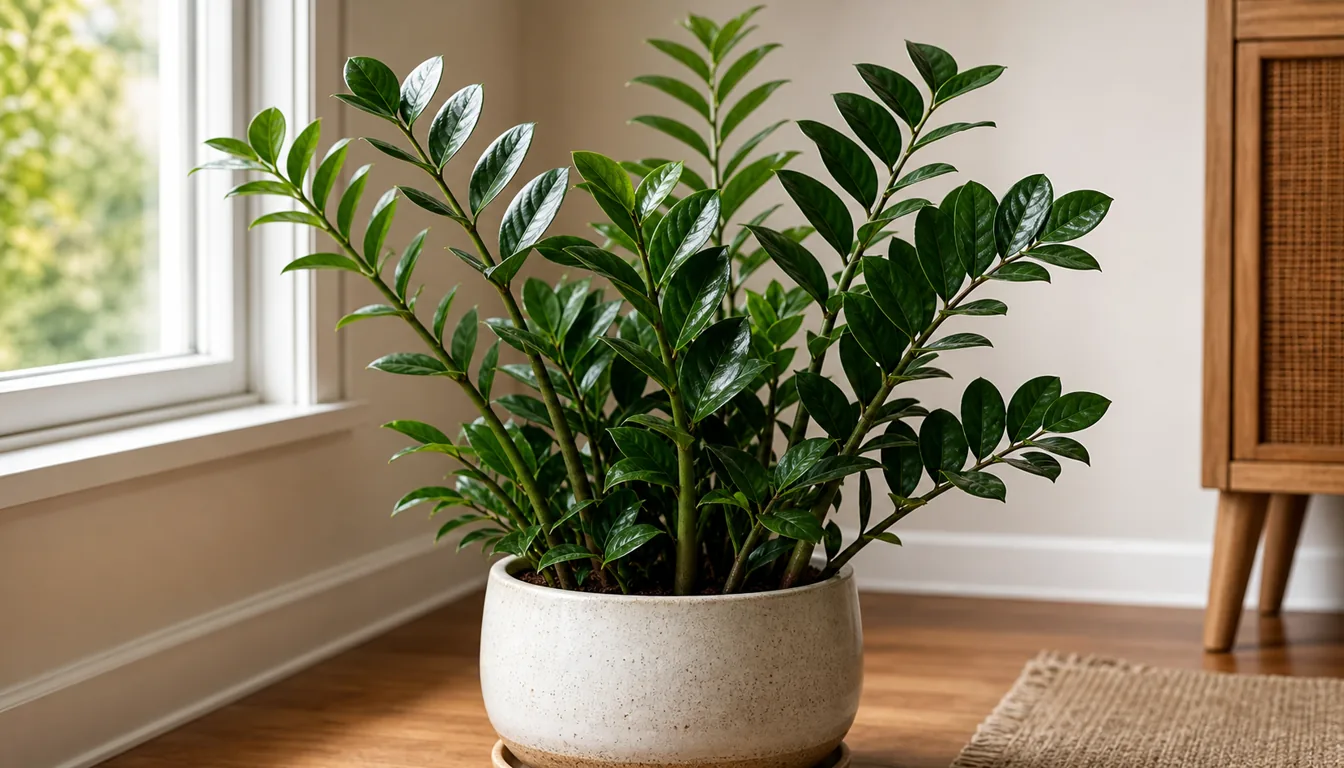
ZZ Plant
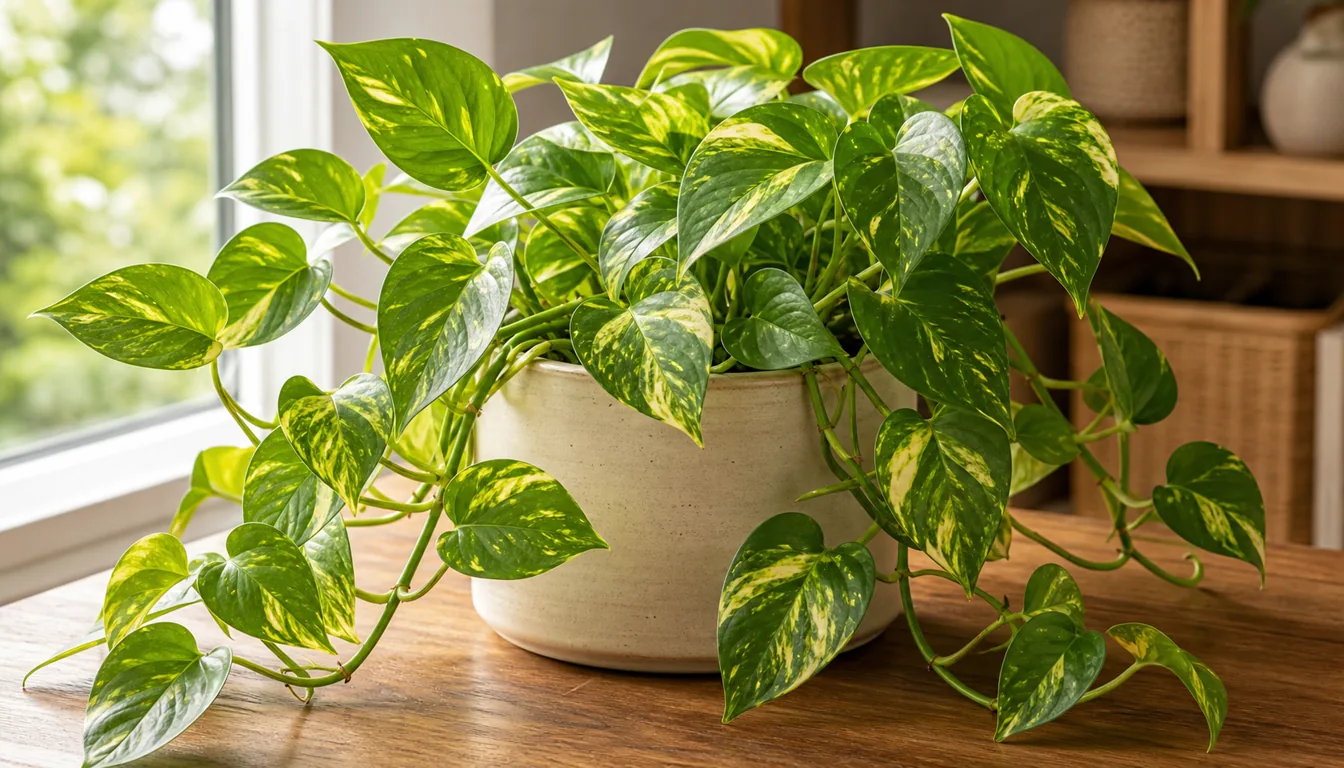
Golden Pothos
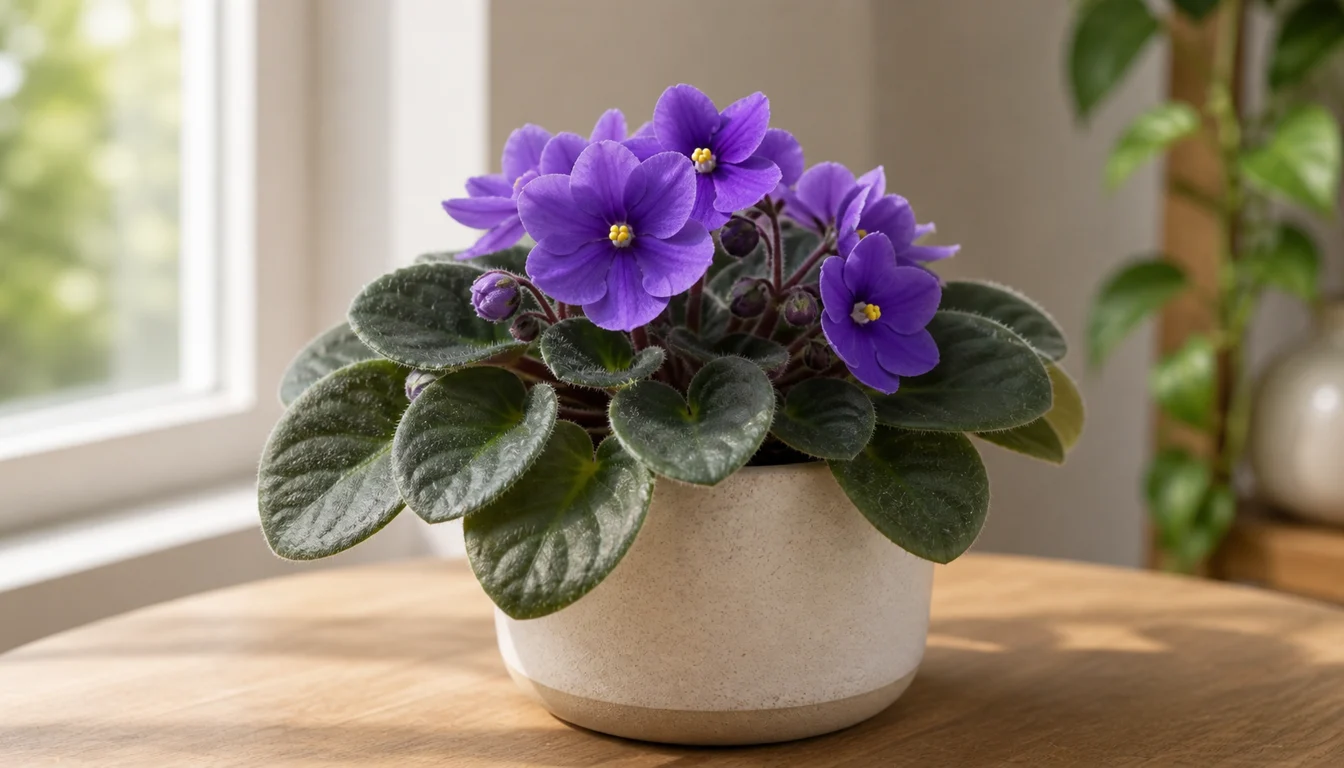
African Violet
African Violet is a windowsill bloomer that rewards steady, small-pot care.
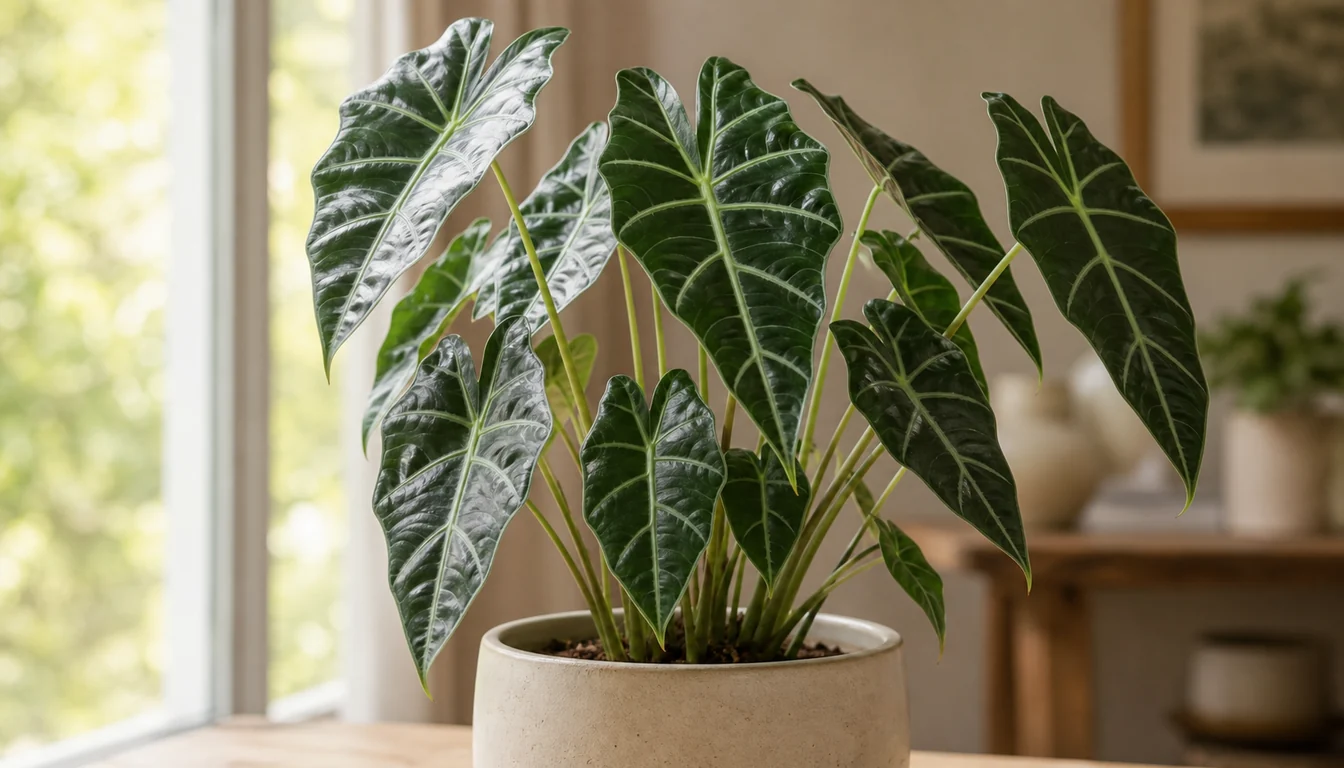
Alocasia
Alocasias include compact, textured houseplants and large elephant ears that need substantial floor space.
Alocasia Dragon Scale
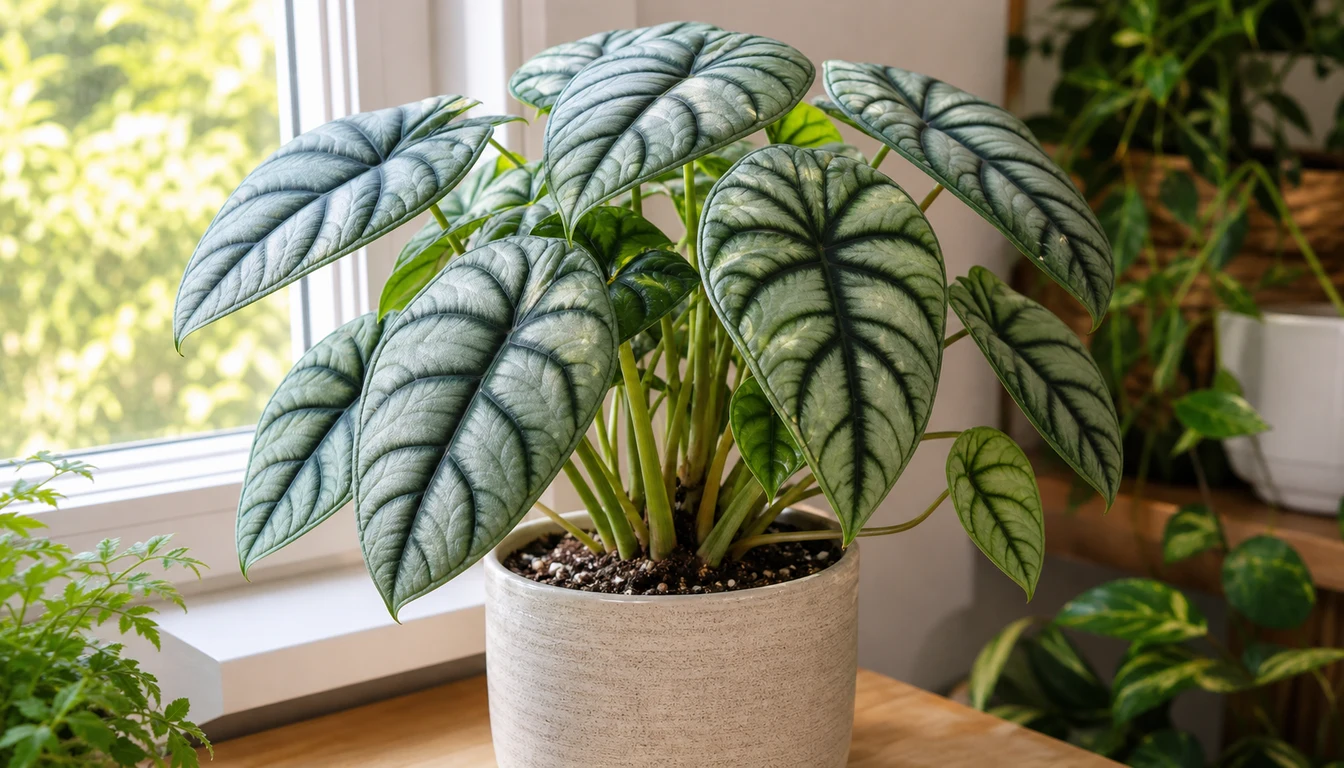
Alocasia Dragon Scale has thick, quilted-looking leaves with dark veins.