
What's a Heartleaf Philodendron? How to Keep the Vine Full
Philodendron hederaceum Araceae
Heartleaf Philodendron grows as a glossy green climber or trailing vine. Identify its papery leaf sheaths, place light at the crown, and use node cuts to rebuild bare growth.
Care snapshot
The Papery Leaf Sheath Identifies Heartleaf Philodendron
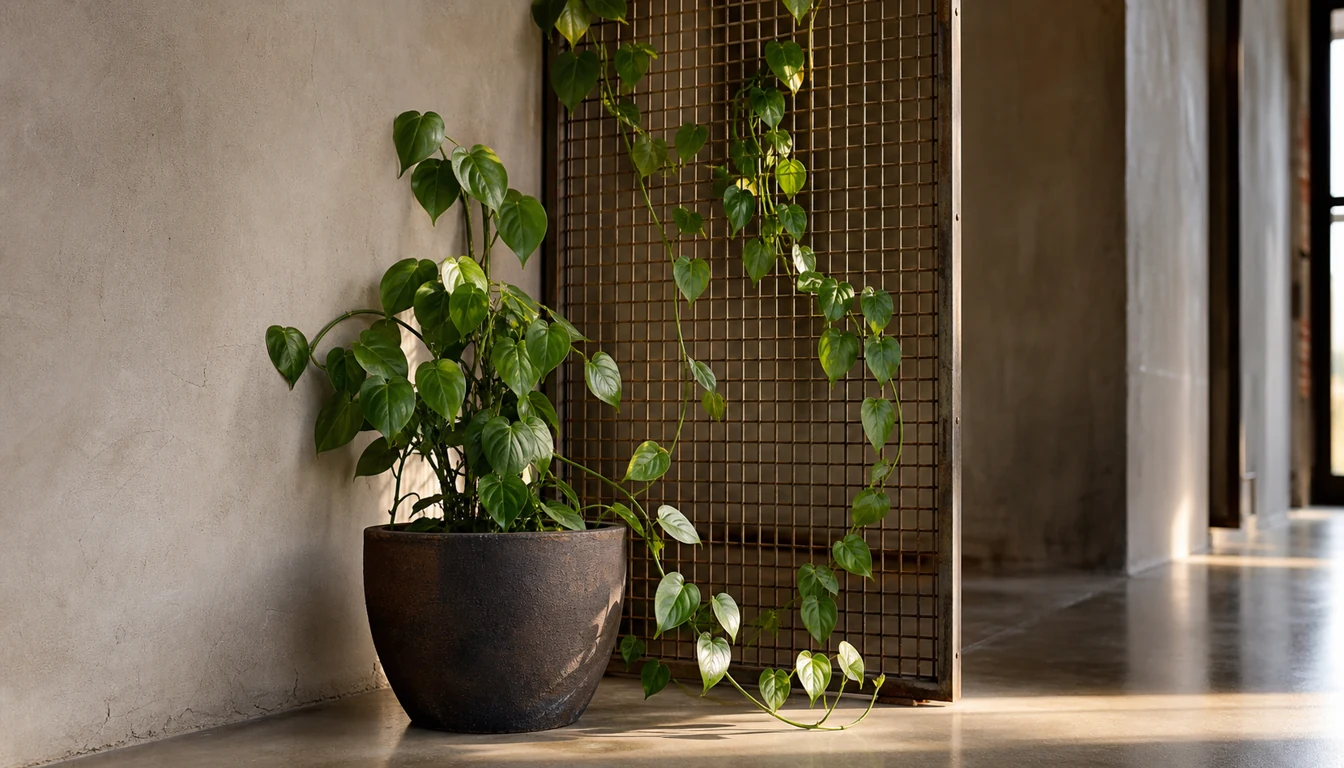
Heartleaf Philodendron is Philodendron hederaceum, an evergreen aroid vine native from Mexico and the Caribbean through tropical Central and South America. The species climbs tree trunks beneath a warm forest canopy rather than growing as a freestanding shrub.
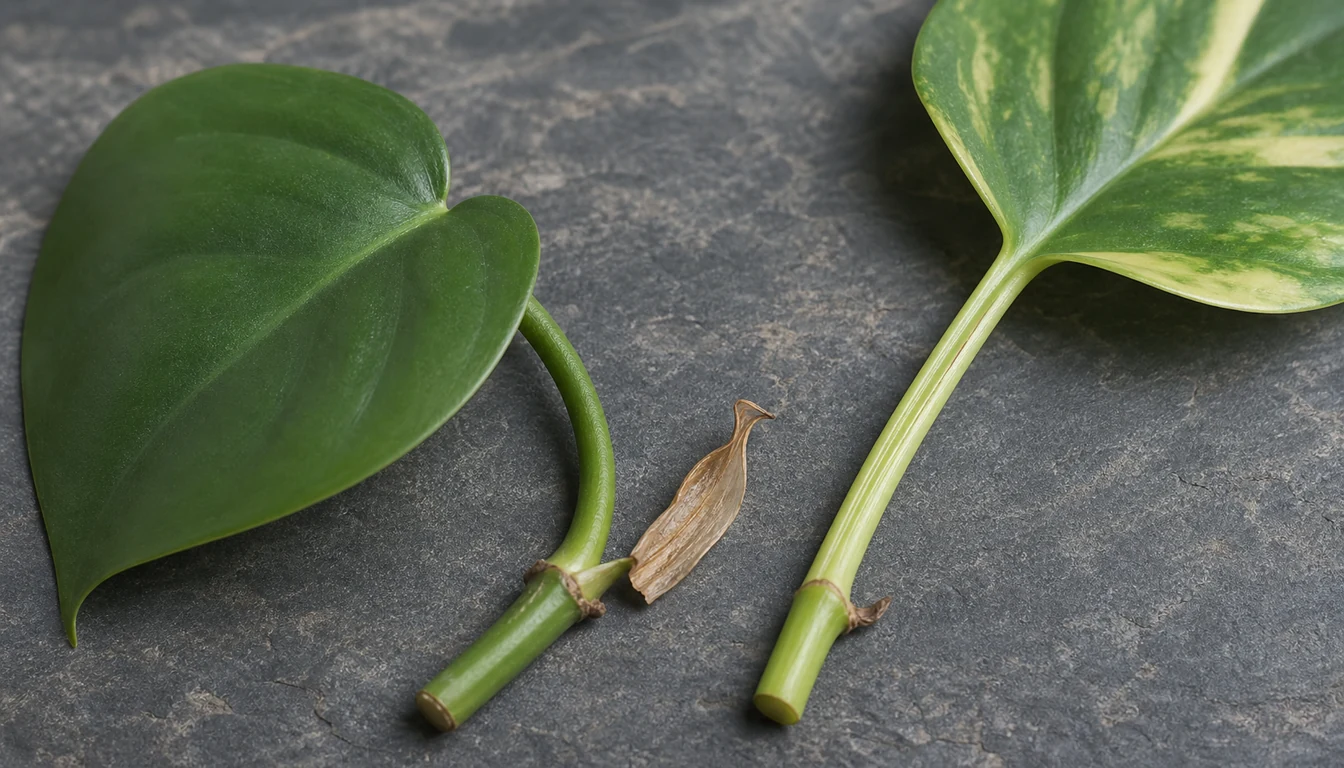
Its juvenile leaves are glossy green hearts on slender flexible stems, with a pointed tip and a deep notch where the petiole meets the blade. A new leaf emerges beside a free papery stipule that later dries and falls away from the node.
Look at the petiole when a plant resembles Golden Pothos.
Heartleaf Philodendron has a smooth round petiole, while pothos carries a lengthwise groove and lacks the same loose papery stipule.
- Heartleaf
- Smooth petiole, papery stipule, solid green heart
- Golden pothos
- Grooved petiole and a firmer often marbled blade
- Brasil
- Same soft heart shape with a lime center stripe
- Self-heading type
- Leaves rise from a compact crown, not long vines
Brasil, Lemon Lime, and other named forms belong to more specific color questions because their patterns change what useful light means, while this profile covers the solid-green heartleaf species.
A mature vine can form a pale green aroid spathe and spadix, but flowering is uncommon in an ordinary room. The dependable indoor display is the changing leaf chain, not a seasonal flower show.
A Hanging Vine and a Climbing Vine Become Different Displays
Choose trailing when you want a visible chain of small heart leaves, and choose climbing when you want upper leaves to broaden against support.
Small aerial root nubs form at the nodes and grip rough surfaces in the plant's forest habitat. Indoors, those roots can meet cork, bark, or coir, but a smooth painted stake offers little purchase.
Trail
- Shows the longest sequence of glossy heart leaves from crown to tip
- Fits a high shelf or basket with a clear drop below the lowest runner
- Turn shaded tips back toward light before node gaps widen and the crown empties
Climb
- Gives aerial roots firm contact with a cork, bark, or coir face
- Supports broader upper leaves as the attached vine rises into stronger light
- Tie the internode loosely and keep every petiole free to turn toward light
Fill the crown
- Returns rooted nodes to the emptiest crown spaces after roots begin branching
- Uses several unequal stem lengths instead of arranging a perfect artificial ring
- Keeps some soil visible so each new start has light and room
Wild stems can climb 10 to 20 feet and mature leaves may reach about 12 inches. An indoor hanging plant stays smaller because it keeps producing juvenile foliage without a vertical route.
Trailing makes the sequence of hearts easy to see and keeps pruning simple, but it exposes a bare crown quickly when every stem drops over the rim.
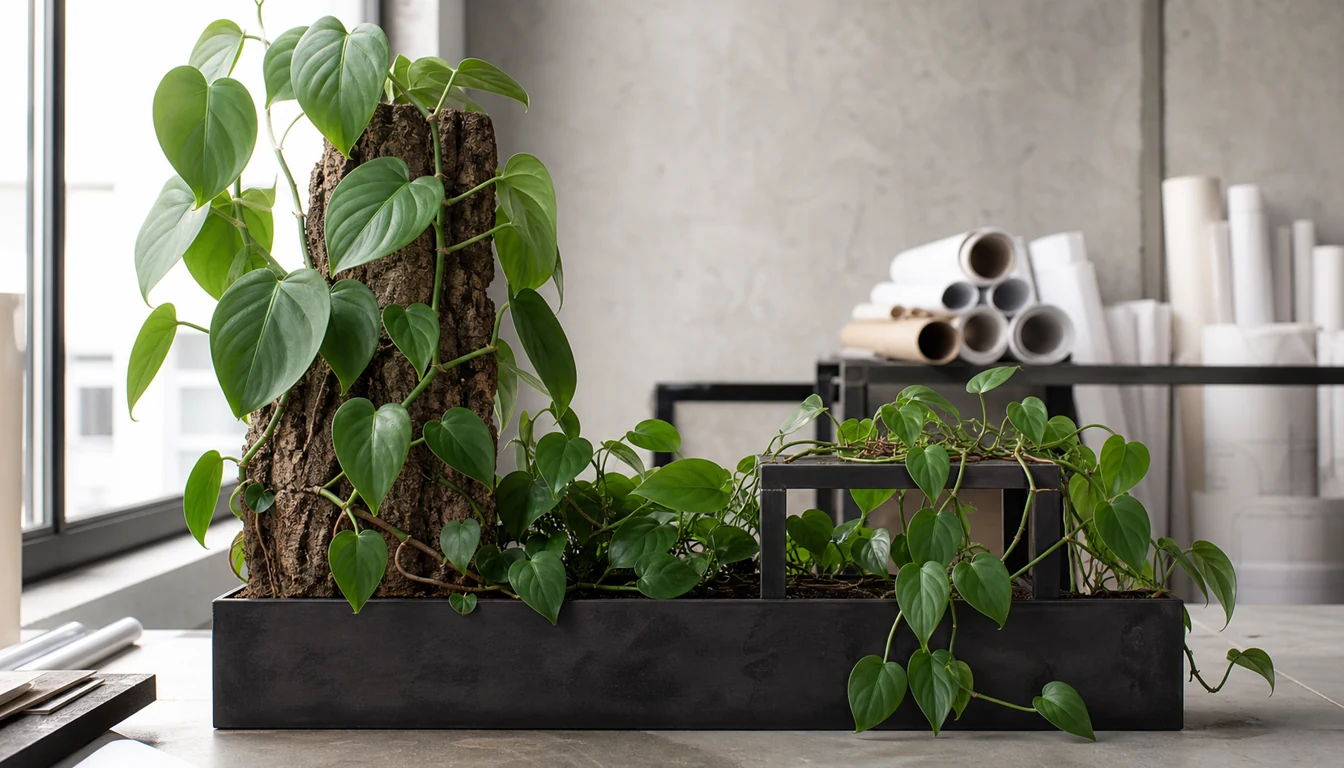
Climbing can support larger new leaves as roots maintain contact, although it needs room above the pot. Choose the support before long stems stiffen around a different path.
Fasten the internode loosely and keep every leaf stalk free.
Measure Light at the Crown, Not at the Floor
A bright pool on the floor does not prove that the crown of a high shelf plant receives useful light. Judge the position where the newest node is forming.
Several new leaves with widening node gaps and smaller blades show that the crown needs more filtered light.
Bring the pot closer to a bright indirect source or redirect the active stem across the lit side of its support. Filter strong summer sun if the nearest leaf develops a crisp tan patch that does not expand after the exposure ends.
The species survives dimmer rooms better than many variegated cultivars, but deep shade eventually produces spindly stems with fewer and smaller leaves instead of compact growth.
Curling Green and Yellow Lower Leaves Require Different Pot Checks
A curling green leaf can appear as the root ball dries, while yellow lower leaves on a heavy pot point toward saturated mix. The two clues need opposite responses.
Lift the container, feel the upper compost, and learn its weight immediately after a full soak so the next light-pot comparison has a useful reference.
- Light pot, dry surface, and curling green leaves support a slow thorough soak across the whole mix.
- Heavy pot with yellow lower leaves means inspect the drainage path and root firmness before watering.
- Dry rim with a damp center means the last watering reached the root ball unevenly, so apply water in two passes.
- Soft dark roots require removal before the plant returns to fresh airy mix in a cleaned container.
When the pot remains heavy for many days, inspect the drainage hole and slide out the root ball if basal stems soften. Healthy roots stay firm and pale, while dead roots turn dark and lose structure.
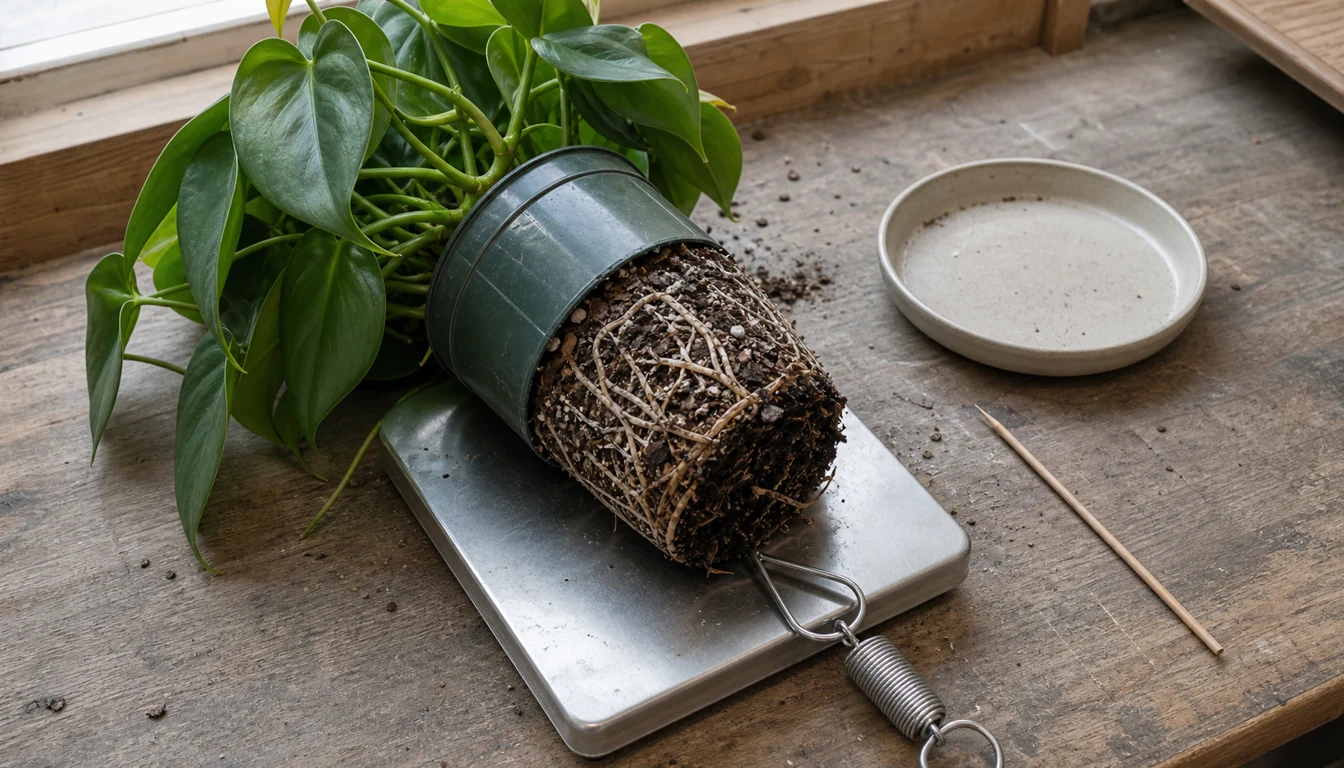
Use a loose, slightly acidic mix that holds moisture while leaving pores for air. Fine bark, pumice, or similar coarse material can prevent a peat-free base from packing tightly.
When dryness is confirmed, wet the entire surface slowly until excess drains, then empty the saucer before the pot reabsorbs it. Wait for the upper layer to dry again rather than topping up small amounts each day.
Where Should You Cut a Bare Heartleaf Vine?
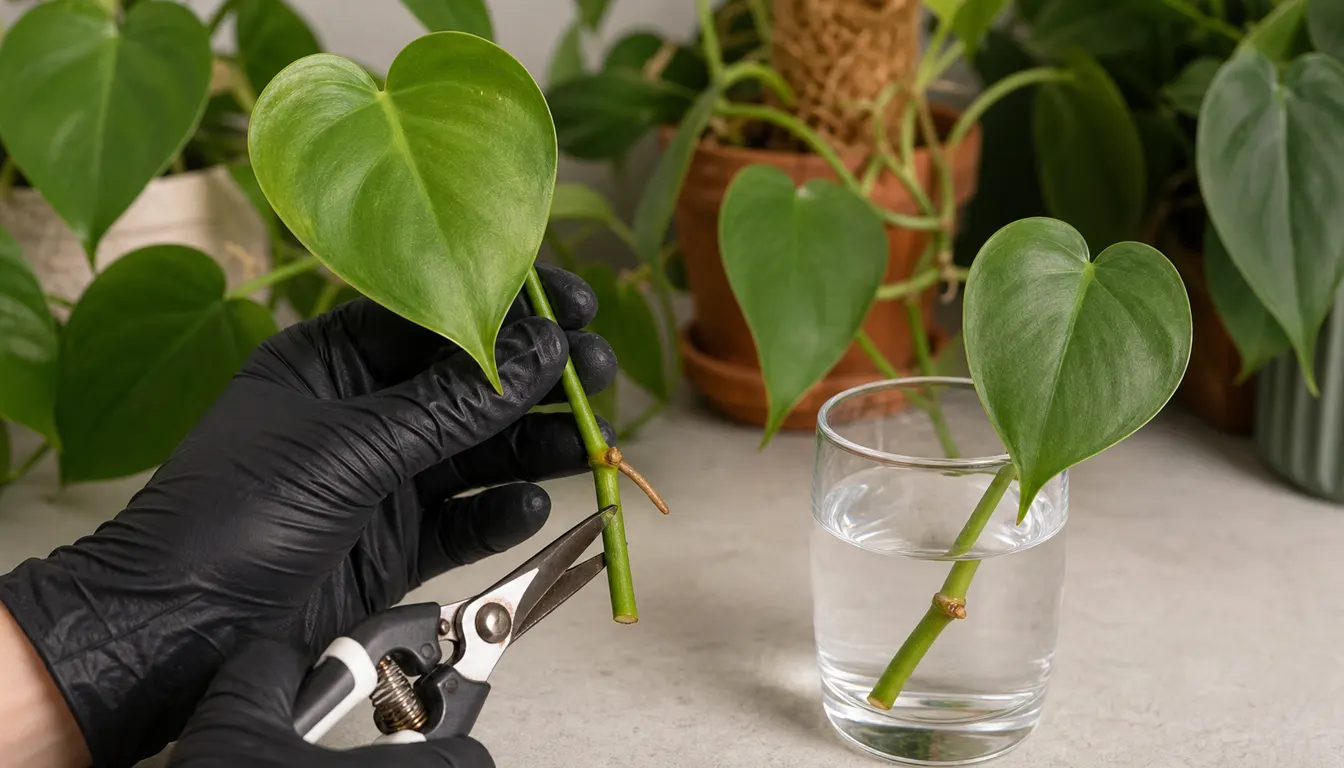
Find a firm node with a leaf or aerial root nub and cut just below that joint.
Take several cuttings of different lengths from healthy solid-green stems instead of reducing every runner to one identical piece.
- Trace a healthy solid-green stem to a firm leaf-bearing node with no soft tissue.
- Cut below the joint because a detached leaf without node tissue cannot rebuild a complete vine.
- Remove any leaf that would sit below the water or mix surface and decay.
- Wait for several roots to branch rather than potting the first short white nub.
- Place rooted pieces in the emptiest crown areas and leave unequal spaces between the starts.
Water rooting makes the first roots visible, while perlite or another airy medium reduces the later change to potting mix. Keep the node warm and in bright shade, and discard a cutting if its base turns soft before roots branch.
Return rooted pieces to specific gaps around the mother crown and leave unequal spaces so the pot fills without producing a perfect artificial ring.
Warm Growth Determines When to Feed and Repot
Keep Heartleaf Philodendron above 59°F and away from cold windows or direct radiator air because a sudden cold draft can pause a tender tip while the rest of the vine still looks green.
Feed from April through September only while new leaves are opening, and repot in spring after roots crowd the container or circle the drainage holes. A pot only a few inches wider limits unused wet compost around the established root mass.
Outdoor growth suits frost-free Zones 11 and 12 or a warm shaded summer position protected from harsh midday sun. Bring a container indoors before cool nights cross the lower limit, and inspect the leaf undersides before it rejoins other plants.
Treat the newest unfurling leaf as the growth signal, and check temperature, light, and root moisture before repeating fertilizer when the tip stays closed for several weeks.
A climbing plant also needs its support considered during repotting because established aerial roots may already grip the surface. Move the root ball and support together when possible so the vine does not lose both root stability and its climbing path at once.
A trailing plant is easier to lift free, but long vines can pull against a fresh root ball. Set the pot back in place before arranging the runners.
Sticky Joints, Fine Dots, and Soft Roots Need Different Responses
Inspect new leaf folds, stem joints, and both leaf surfaces before choosing treatment.
Mealybugs leave removable white wax in protected joints, scale stays attached as brown bumps, and aphids gather around tender growth that may carry sticky honeydew.
Cotton
- White wax lifts from protected stem joints with a cotton swab
- Tender leaf folds may open twisted or permanently distorted
- Isolate the pot, clean visible mealybugs, and repeat the joint inspection
Brown bumps
- Scale remains attached when a loose fleck of bark would move
- Sticky honeydew collects on leaves and nearby surfaces below
- Inspect the entire stem before cleaning the first visible cluster
Fine dots
- Leaf surfaces develop many pale pinpoints rather than one fixed scar
- Fine webbing crosses the protected underside and petiole junction
- Check nearby foliage before washing away mobile spider mites
Spreading spot
- The damaged edge expands between dated photographs taken in the same light
- Crowded wet foliage keeps the crown damp long after watering
- Remove the worst leaf, clean tools, and improve air space
Soft base
- The lower stem darkens and loses firmness where it enters the mix
- The pot remains heavy for several days after the last watering
- Inspect root color and firmness before applying another pest treatment
Fine pale stippling and webbing send the inspection to leaf undersides for spider mites. Isolate the plant before washing so mobile pests do not reach neighboring foliage.
A leaf spot that expands between photographs needs spacing and sanitation, while an old dry scar stays fixed. Avoid wetting a crowded crown late in the day.
Soft lower stems and broad yellowing return the diagnosis to the root ball, where saturated mix and dead roots need correction before another surface treatment.
Can Heartleaf Philodendron Grow Safely Around Pets?
Heartleaf Philodendron contains insoluble calcium oxalate crystals and is toxic to cats and dogs. Chewing can cause mouth pain and swelling, drooling, vomiting and difficulty swallowing.
The crystals irritate tissue in the mouth. That explains the local injury, but it does not make chewing the plant harmless. Missing leaves and an animal that appears well do not establish whether any plant material was swallowed.
Keep the plant, fallen leaves and propagation pieces inaccessible to pets. A high shelf alone may not prevent access by a climbing cat or to a trailing vine.
Frequently Asked Questions
Is Heartleaf Philodendron the same as pothos?
No, Heartleaf Philodendron has free papery stipules and smooth petioles, while Golden Pothos has a grooved petiole and firmer often marbled leaves.
Should Heartleaf Philodendron trail or climb?
It can do either. Trail it for a visible chain of smaller leaves, or give aerial roots textured support when you want broader upper growth.
Why is my Heartleaf Philodendron leggy?
Check light at the crown because widening gaps and smaller new leaves usually mean the active tip needs brighter filtered light.
How often should I water Heartleaf Philodendron?
Water after the upper mix dries and the pot feels lighter, then soak the whole surface and drain the excess. Do not use vine length as a watering cue.
Is Heartleaf Philodendron safe for pets?
No. Its insoluble calcium oxalate crystals can irritate the mouth and cause swelling, drooling, vomiting or difficulty swallowing in cats and dogs. Suspected chewing or ingestion warrants prompt veterinary advice even when no symptoms are visible.
Sources & References
- Heartleaf Philodendron - NC State Extension Plant Toolbox
- How to grow philodendrons - Royal Horticultural Society
- Philodendron hederaceum - Missouri Botanical Garden
- Philodendron varieties and pet safety - ASPCA
- Philodendron hederaceum, NC State Extension Gardener Plant Toolbox
- ASPCA, Heartleaf Philodendron
- ASPCA, My Pet Ate Something! When Should I Seek Help?
Related Plants
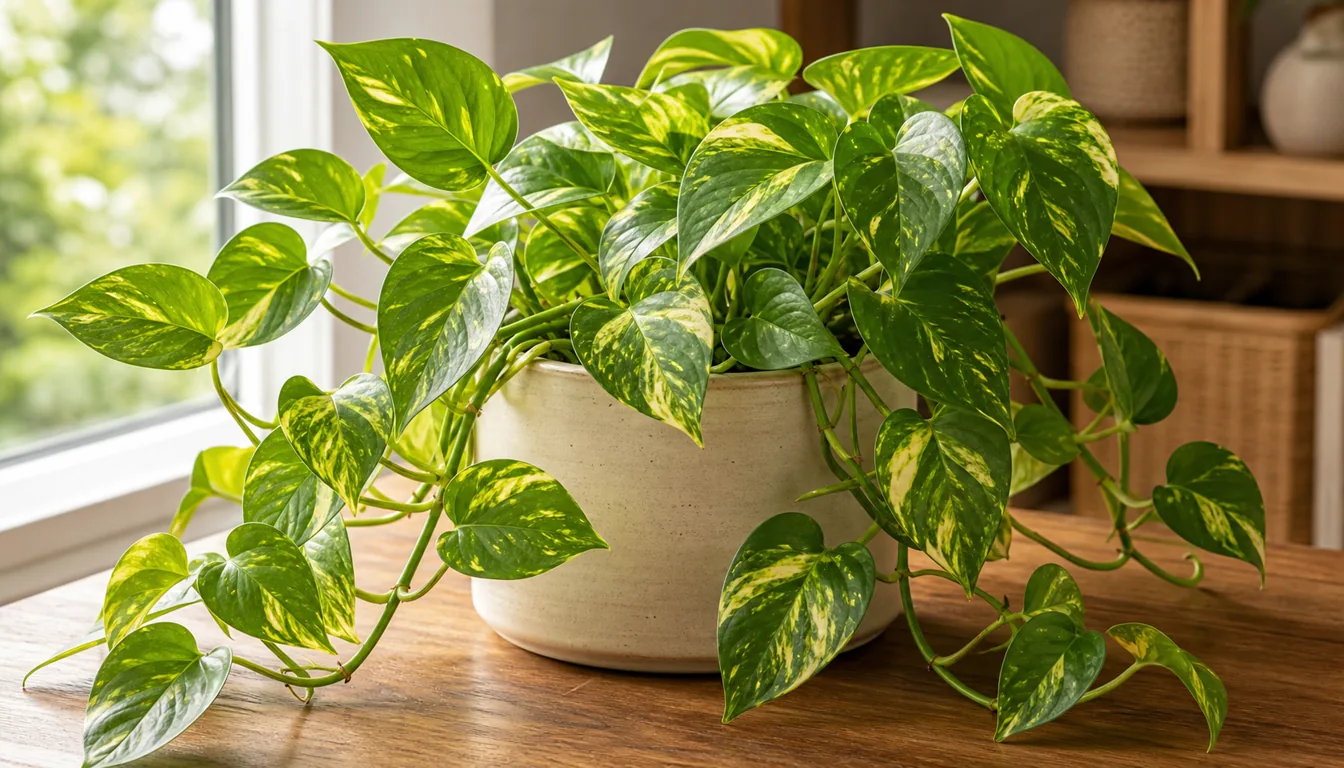
Golden Pothos
A grooved petiole and thicker leaf separate this similar trailing aroid from Heartleaf Philodendron.
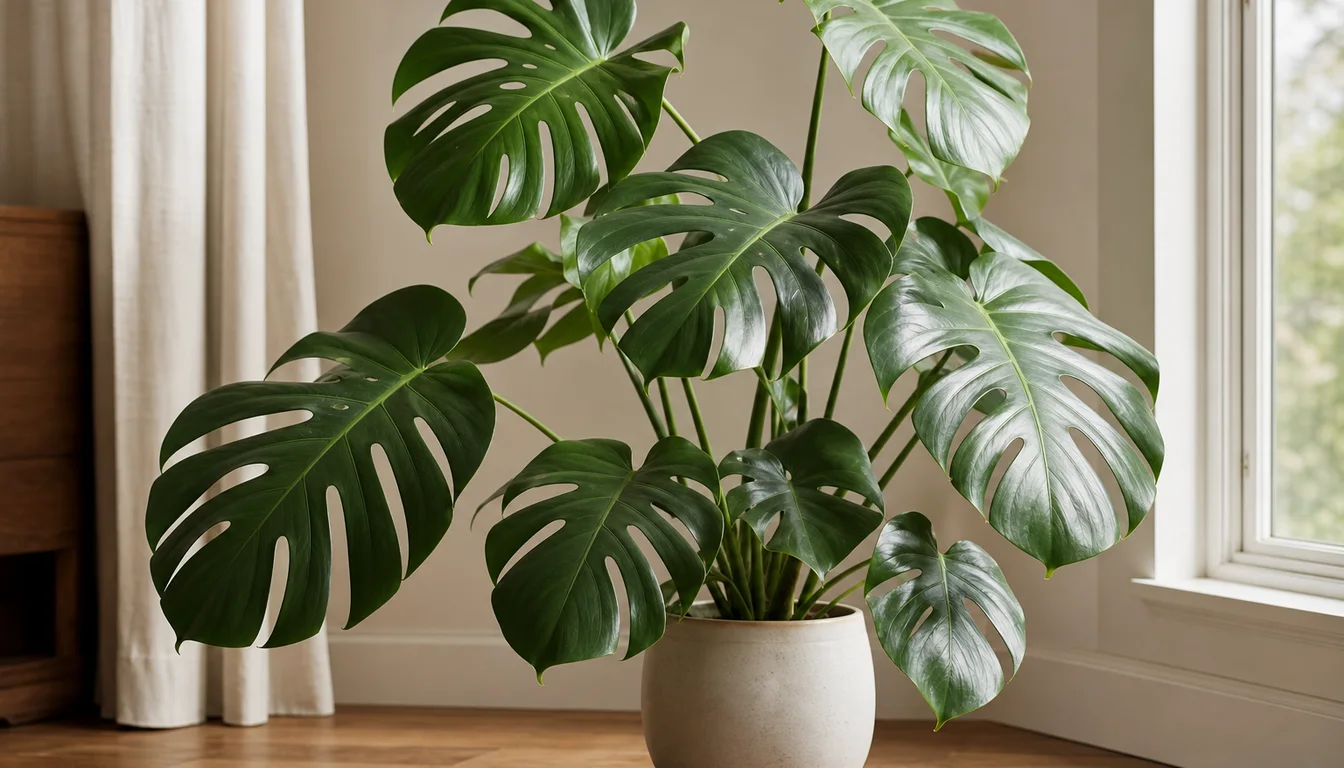
Monstera
A heavier climbing aroid develops much larger split leaves and requires more floor space.
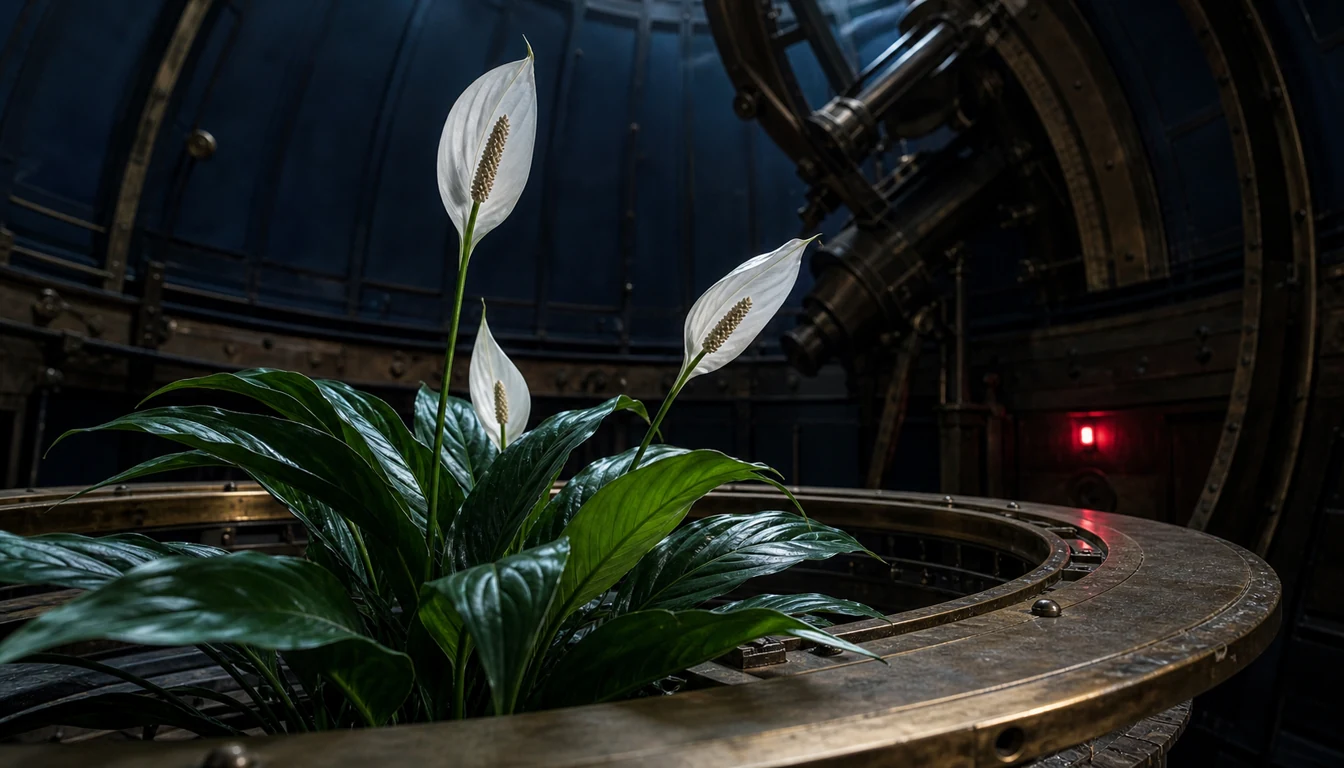
Peace Lily
A clumping aroid carries upright leaves and visible white spathes instead of flexible vines.
African Violet
African Violet is a windowsill bloomer that rewards steady, small-pot care.
Air Plant
Air plants are living sculptures that thrive without soil, anchoring to driftwood, rocks, or shells while drawing…
Alocasia
Alocasias include compact, textured houseplants and large elephant ears that need substantial floor space.