
Best Time to Water Plants for Healthier Roots
Watering at the wrong time wastes water and stresses plants, even if you are generous with the hose. The best timing depends on sun, temperature, container size, and whether the water is headed to indoor containers or outdoor beds.
Once you understand how roots drink and how fast soil dries, you can build a simple routine that fits your schedule; this guide shows when to water in the morning or evening, how timing shifts in heat waves, and what to do differently for lawns, veggies, and houseplants.
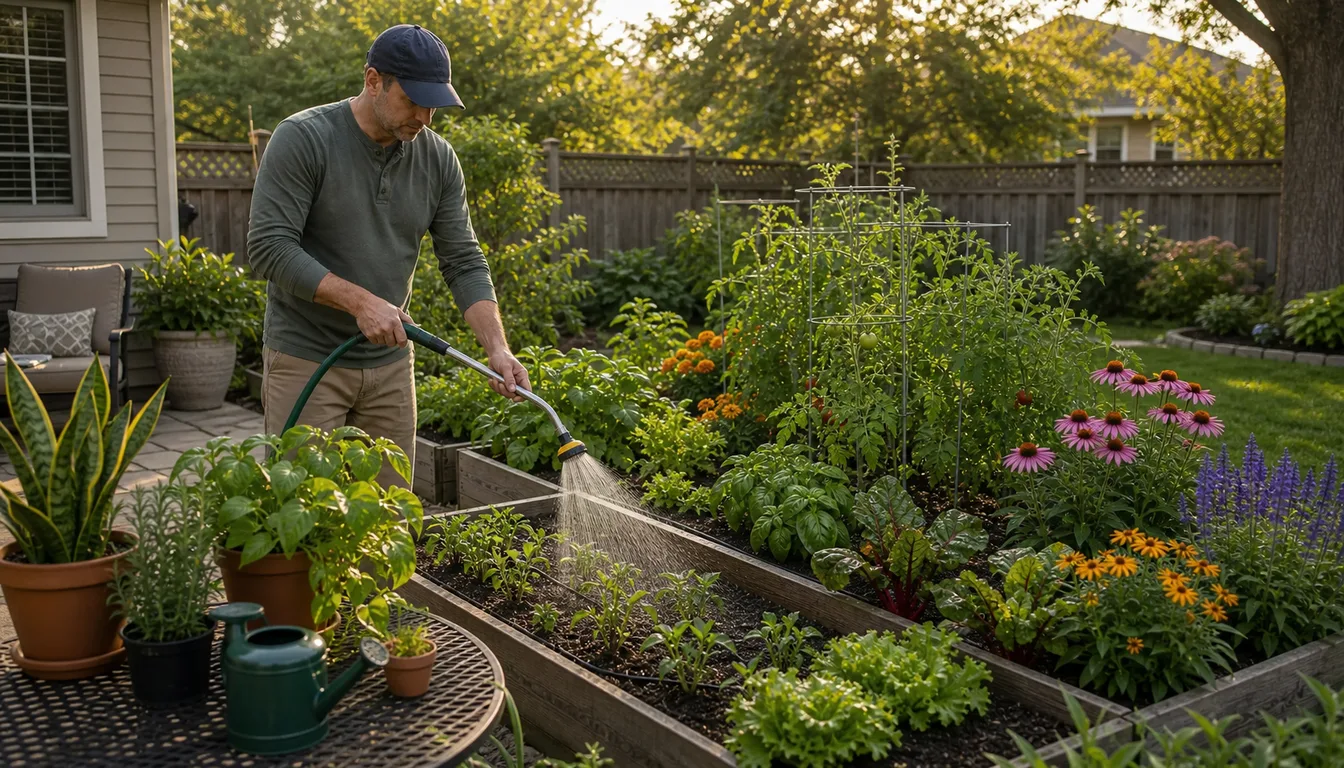
Why Timing Matters More Than You Think
Most watering problems show up as yellow leaves, droop, or brown tips, but the real issue often started with bad timing several days earlier. Water too late on a hot day and most of it evaporates before roots ever see it.
Early watering gives roots first crack at cool, moist soil before the sun cranks up. That window changes by season and region, which is why gardeners in colder northern zones often water at different hours than folks in warmer climates.
Leaves also react to when you wet them. Midday overhead watering can spot petals on rose bushes, and late evening watering can leave leaves wet all night.
That lingering moisture encourages mildew on peony clumps and cucumber vines.
The right time to water is whenever soil can soak deeply and leaves can dry again before night. That single rule works for lawns, veggies, and pots if you pair it with deep watering instead of light sprinkles.
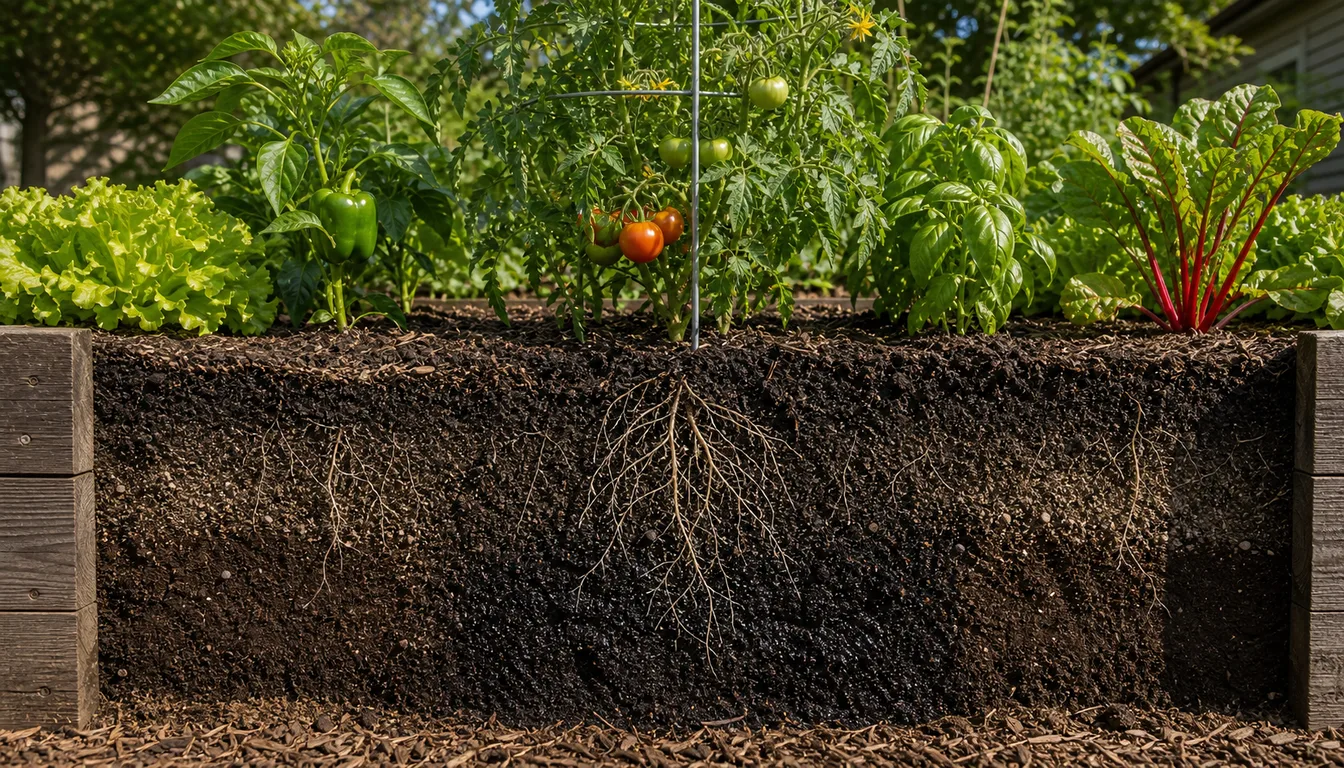
- Root goal: Keep moisture in the top 6–12 inches of soil for most garden plants.
- Evaporation check: Avoid watering in the hottest 4–6 hours of the day when possible.
- Leaf health: Aim for at least 2–3 dry hours before night so foliage is not damp in the dark.
- Disease risk: High humidity plus wet foliage makes powdery mildew and leaf spots far more likely.
- Your schedule: Consistency beats perfection. A regular early routine is better than random ideal times.
Morning vs Evening Watering Outdoors
Cool early hours are usually best for outdoor beds, lawns, shrubs, and trees. Morning watering gives time for leaves to dry, but the soil still stays cool enough that water seeps down instead of steaming off the surface.
For lawns of Bermuda grass or cool season fescue mixes, pre-dawn to mid-morning is ideal. Sprinklers can run with almost no wind, droplets land where they should, and blades dry before afternoon heat.
Evening watering has its place when mornings are impossible. In very hot regions, watering a vegetable bed with tomato vines after the sun drops can reduce stress. The key is to water early enough that pepper bushes and basil clumps dry before full dark.
Watering outdoors after sunset with overhead sprinklers is the fastest way to grow fungus instead of stronger roots.
Use that warning as your cutoff: if leaves will still be shiny by bedtime, wait for the next morning.
- Best outdoor window: Start 1–2 hours after first light, finish by late morning.
- Second-choice window: Begin 2–3 hours before sunset, only if leaves can dry.
- Skip these times: Midday in full sun or right before dark, unless there is an emergency.
- Wind factor: Strong wind wastes spray. Shift to calmer hours whenever possible.
- Heat waves: In extreme heat, a quick midday splash on wilting hydrangea shrubs is fine as an emergency, but still do deep watering at your regular time.
Best Time to Water Houseplants
Indoor plants see less temperature swing, so you get more flexibility. Timing matters most for your routine and for avoiding water sitting in saucers all night around roots of plants like snake plant clumps.
Morning is easiest because you can check soil, water, and empty saucers before work. Light levels are rising, so monstera foliage and peace lilies can start photosynthesizing with fresh moisture in the root zone.
Evening watering works if you are consistent and careful. Dry loving plants, such as tough ZZ specimens, can handle a late soak as long as you pour off excess. Air plants dipped weekly follow the same rule: dry them before they sit overnight.
The worst timing for houseplants is not a specific hour, it is watering on a fixed calendar instead of checking the soil.
That is why a simple soil check beats a perfect-looking schedule every time.
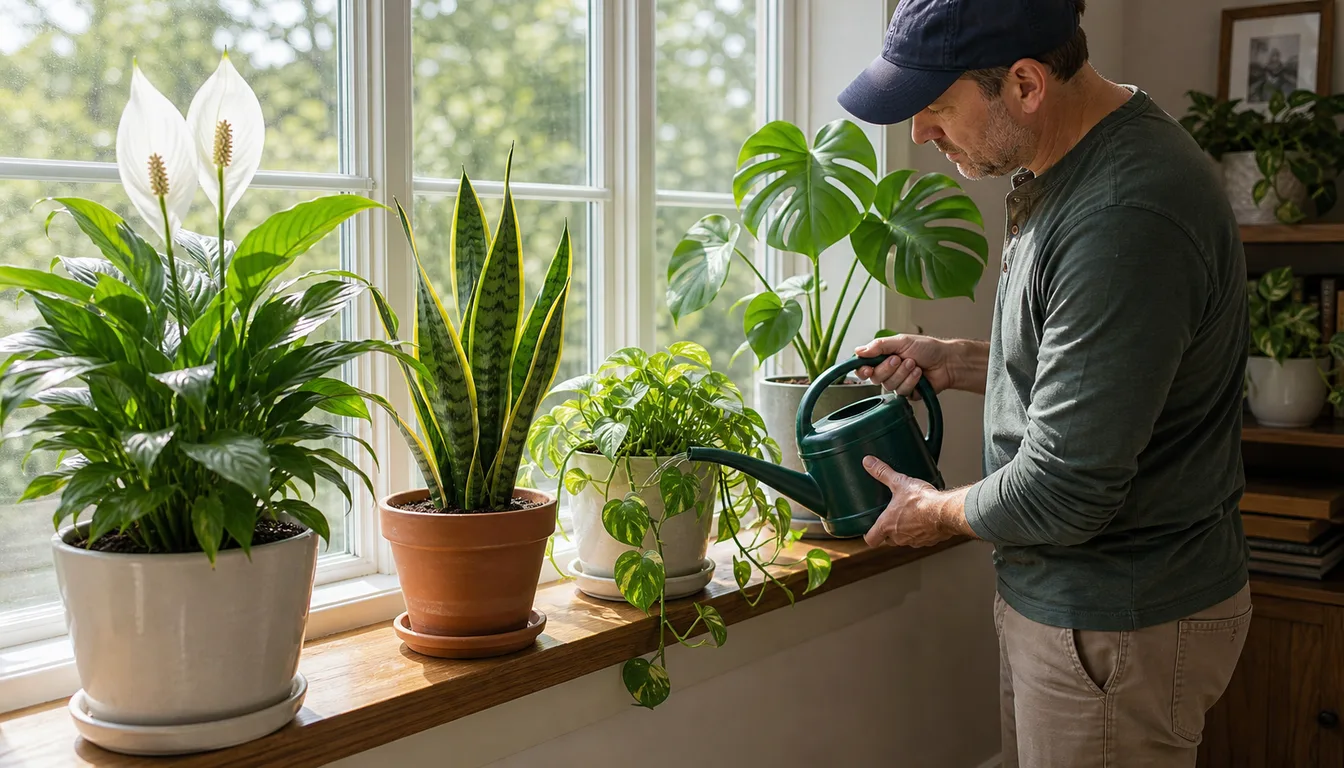
- Check time: Pick a regular morning or evening to test soil with your finger.
- Light lovers: Water earlier in the day so bright light matches fresh moisture.
- Low light types: Plants like Chinese evergreen pots stay wetter longer, so give them extra drying time between waterings.
- Problem plants: If you see yellow pothos foliage or pale ZZ fronds, review both timing and depth, not just frequency.
- Weekend routine: For big collections, a weekly Saturday morning “round” keeps timing consistent without watching the calendar too closely.
Adjusting for Season, Zone, and Plant Type
The best time to water plants in April is not always the best time in August. Cooler spring and fall days evaporate less water, so your morning window is wider and soils stay damp longer, especially in midrange zones.
Summer heat shrinks that safe window. In hot southern zones, you may need to water lawns and beds right at sunrise. That gives daylily clumps and coneflower stands a full day to drink before the soil dries toward evening.
Plant type also decides timing. Succulent roots on jade plants and sedum mats hate constant damp, so a quick morning drink that dries by night is perfect.
Thirstier plants like bigleaf hydrangeas or shade hostas might prefer a longer soak timed to avoid direct midday sun.
Indoor seasons matter too. Winter light drops for sun-hungry succulents on windowsills, so they need less frequent watering, often staying on a mid-morning schedule every couple of weeks instead of weekly.
- Cool seasons: Water a bit later in the morning, while temps are still mild.
- Peak summer: Aim for as close to sunrise as your schedule allows.
- Drought tolerant: Plants featured in dry garden lists can handle a wider timing range.
- Moisture lovers: Shallow rooted veggies like leafy beds need steadier moisture and more frequent checks.
- New plantings: Freshly installed shrubs or trees in any zone need the most careful timing the first 2–4 weeks.
Signs You Watered at the Wrong Time
Plants tell you when your timing is off, you just have to know what to look for.
Leaves that stay wet into the night, especially on things like rose bushes, invite fungal spots and powdery mildew.
Wilting in full sun right after a drink usually means shallow roots and water sitting near the surface instead of soaking in.
For houseplants like peace lily clumps, limp leaves in the morning can point to late-night watering that never reached the root zone.
Outdoors, fungus issues on tulip foliage or peony stems often track back to overhead watering at dusk.
If foliage is wet for more than 8–10 hours straight, disease risk climbs fast.
Soil smell is a clue too. Sour or swampy odors around pots or beds, especially after evening watering, suggest poor timing and drainage.
Compare that to healthy soil, which smells earthy after a morning soak and dries slightly by afternoon.
Yellowing lower leaves on tomato vines or basil plants right after hot days can signal mid-afternoon watering that mostly evaporated.
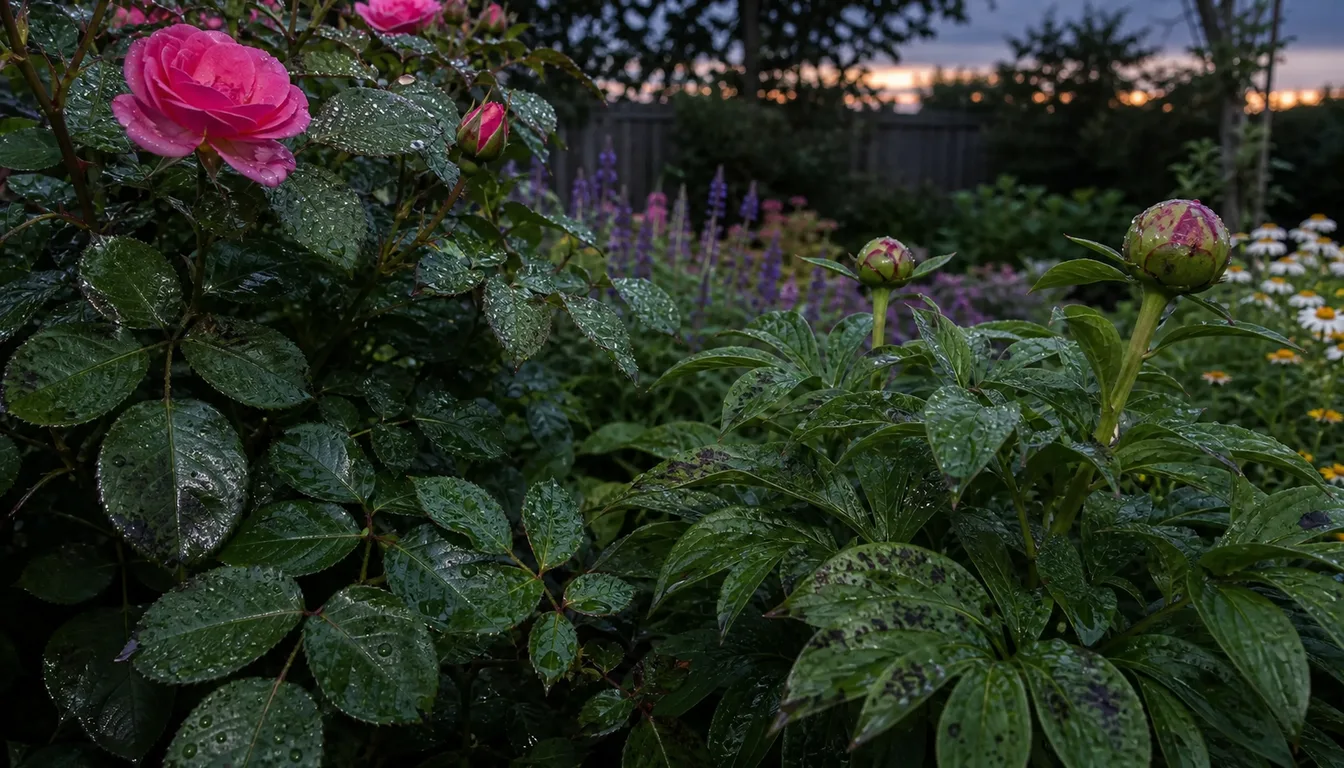
- Leaf surface: Dry by early evening, not shiny or dripping
- Soil feel: Slightly moist 1–2 inches down, not soupy
- Air smell: Neutral or earthy, never rotten
- New growth: Firm and upright at sunrise, not floppy
Coordinating Watering With Fertilizer and Pest Control
Watering time affects how fertilizer and treatments behave, especially in hot weather.
Morning is usually safest for feeding container indoor collections, because roots are waking up and the foliage dries quickly.
For outdoor beds, light feeding before a deep early soak lets nutrients move into the root zone without burning.
Heavy mid-day fertilizer on thirsty hydrangea shrubs or hosta clumps can scorch edges when the sun is sharp; roots are already stressed in that heat.
Foliar sprays are another story. Many pest treatments on spider mite outbreaks work best in early morning or late afternoon when sun is softer.
You want enough drying time so monstera leaves and other broad foliage are not wet overnight.
Never apply high-strength fertilizer to bone-dry soil and then water in under full afternoon sun.
That combo is rough on roots of boxwood hedges, azalea borders, and most lawn grasses.
Time your lawn feeding around sprinkler cycles too. Early morning fertilizing followed by a scheduled deep soak is ideal.
You can follow the same pattern on veggie beds, pairing feeding days with a planned deep watering morning.
- Before fertilizing: Water lightly the day prior so soil is evenly moist
- After fertilizing: Schedule a deep soak in the early morning hours
- Pesticide sprays: Apply at sunrise or late afternoon, never at night
- Granular products: Keep pellets off wet foliage to avoid burn
Using Timers, Drip, and Sprinklers the Smart Way
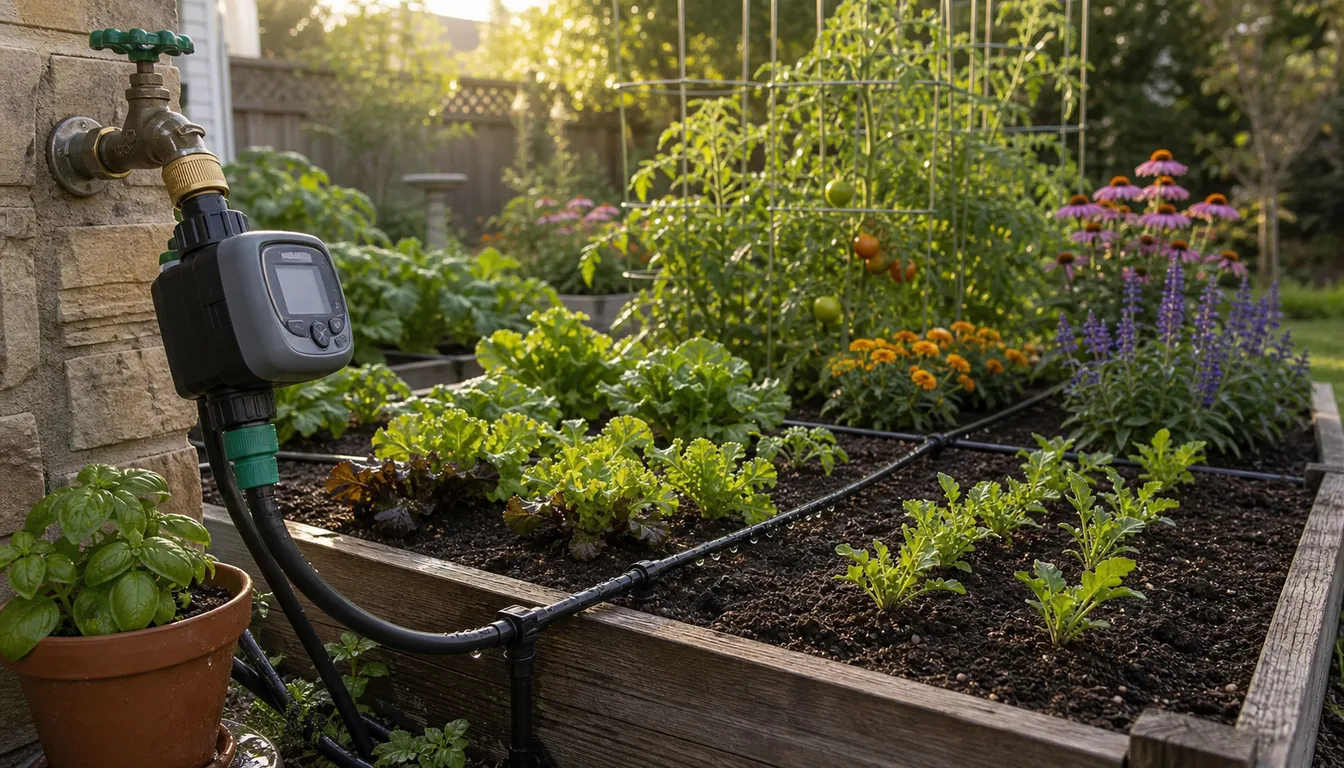
Automatic systems are only as good as their schedule. The right hardware still wastes water if it runs at the wrong time.
Drip lines shine when they run in the pre-dawn window, soaking beds while foliage on salvia, coneflower, and daylily clumps stays dry.
Overhead sprinklers are touchier. They wet leaves on crepe myrtle and blueberry shrubs, so early morning is almost non‑negotiable.
Set smart controllers for 3–6 a.m. in most zones, adjusting runtime with season changes.
A perfect schedule in April is usually wrong by August, so revisit timers at least four times a year.
That one review habit fixes a lot of overwatering before it ever reaches the root zone.
Use the cycle-and-soak approach on sloped yards or clay soil. Two shorter runs with a 30–60 minute gap let water infiltrate instead of running off.
Drip around thirsty plants like indeterminate tomatoes and pepper beds also benefits from staging, especially in compacted soil.
Match emitter output to plant size. A single 0.5 gph emitter is fine for a small lavender mound. A big apple tree root zone might need multiple lines circling the drip line.
Smart controllers that read local weather can skip cycles after rain, but still check soil.
- Sprinkler start: Between 3–6 a.m. to finish before direct sun
- Drip frequency: Fewer, longer cycles each week instead of daily trickles
- Cycle-and-soak: Two or three 10–15 minute runs on slopes
- Season check: Adjust minutes at least at each new season
Common Timing Mistakes That Waste Water
Most of us were taught a few habits that fight against good timing without us realizing it.
The worst is watering on a fixed calendar instead of watching the soil around plants like snake plant or ZZ plant stems.
Another big miss is chasing droopy leaves at noon. Many plants, including bigleaf hydrangea, naturally flag mid-day, then perk up by evening without extra water.
If you respond with afternoon watering, you train roots to hang out near the surface.
Nighttime watering seems convenient, but it often leaves rose foliage and grape vines wet for 10–12 hours.
That long window is perfect for black spot, mildew, and leaf spot to spread.
Watering in wind is another quiet problem. Much of the spray from sprinklers never reaches the soil on breezy days.
You still pay for it, but roots under Bermuda grass lawns or bluegrass lawns do not benefit.
If water is misting sideways instead of dropping straight down, you are losing money and moisture to the air.
Skipping seasonal adjustments might be the most expensive timing error.
Running midsummer minutes on a cool, rainy fall morning keeps soil constantly soggy around boxwood roots and shallow-rooted perennials.
- Fixed schedules: Ignore the calendar and check soil instead
- Mid-day panic: Recheck plants at dusk before adding more water
- Windy cycles: Pause sprinklers when spray blows sideways
- Season carryover: Reduce minutes each time temps drop
Adapting Water Timing for Containers and Raised Beds
Pots and raised beds dry out faster, so timing needs more attention than in-ground beds.
Container herbs like rosemary usually want a deep morning soak and then a quick check late afternoon in peak summer. Thyme and mint barrels follow a similar rhythm, but they still need separate soil checks.
Clay pots breathe and lose moisture faster than plastic, which matters for thirsty petunia baskets and compact veggies.
Raised beds with fluffy soil drain beautifully, but they do not store as much water below root level.
That means a big box of lettuce and greens in full sun might need morning water daily during hot stretches in zone 8 and warmer.
Early in the season, you may only water every second or third morning, even in raised beds, especially in cooler zones like zone 5 gardens.
Houseplant-sized containers outdoors, like patio monstera pots or ficus trees, get stressed fast if watered in the heat of the day.
Morning timing lets the entire root ball hydrate before decks or patios heat up.
Use saucers carefully. Briefly filling a saucer for thirsty blueberry tubs in the morning is fine.
Letting pots sit in water all evening or overnight is begging for root rot.
- Containers in sun: Check with a finger test by mid-morning
- Raised beds: Favor earlier, more frequent soaks in summer
- Saucers: Empty standing water within 30 minutes of watering
- Material choice: Terracotta dries faster than glazed or plastic
Pro Tips
- Water outdoor beds and lawns in the first 2–3 hours after sunrise whenever possible.
- Give pots and raised beds deep soaks less often instead of quick daily sprinkles.
- Match watering to light levels so roots are moist when plants are actively growing.
- Empty saucers under houseplants 15–20 minutes after watering to protect roots.
- Shift your watering window earlier during heat waves and windy days.
- Group plants with similar thirst so you are not forcing one schedule on everything.
- Use soil moisture, not the calendar, to decide whether today is watering day.
Frequently Asked Questions
Is it really bad to water plants at night?
Occasional night watering will not kill most plants, but making it a habit raises disease risk. Leaves and stems stay wet for many hours, which encourages fungi on things like roses, tomatoes, and lawn grass.
What is the best time to water new trees and shrubs?
Water new trees and shrubs early in the morning so moisture can soak deeply before heat builds. In very hot spells, a second lighter watering around late afternoon can help, as long as foliage dries before dark.
How often should I water potted plants in summer?
In hot weather, many outdoor containers need water every day, sometimes twice for small pots in full sun. Always check the top inch of soil; water in the morning when it feels dry and again later only if the pot is very light.
Can I water my lawn during the day?
You can, but it is less efficient. Mid-day sun increases evaporation, so more water is wasted and droplets can magnify heat on grass blades. Early morning is much better, with early evening as a distant second choice.
Do succulents have a different best time to be watered?
Timing is similar, but frequency changes. Succulents still prefer morning watering so excess moisture evaporates by night. Let soil dry almost completely between waterings and follow dedicated succulent watering advice.
Sources & References
Related Guides
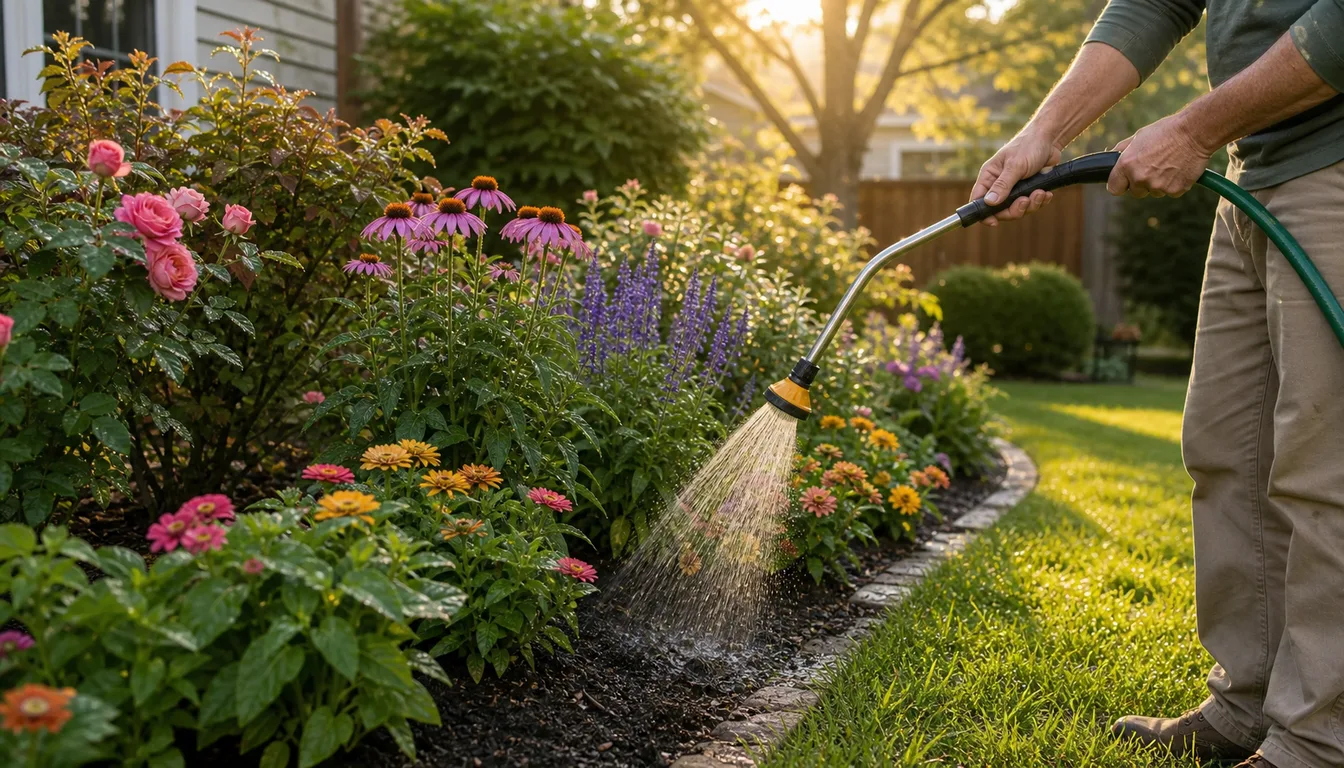
Best Time to Water Flowers for Stronger Blooms
Watering flowers at the wrong time does more damage than skipping a day. Good timing gives you…
10 min read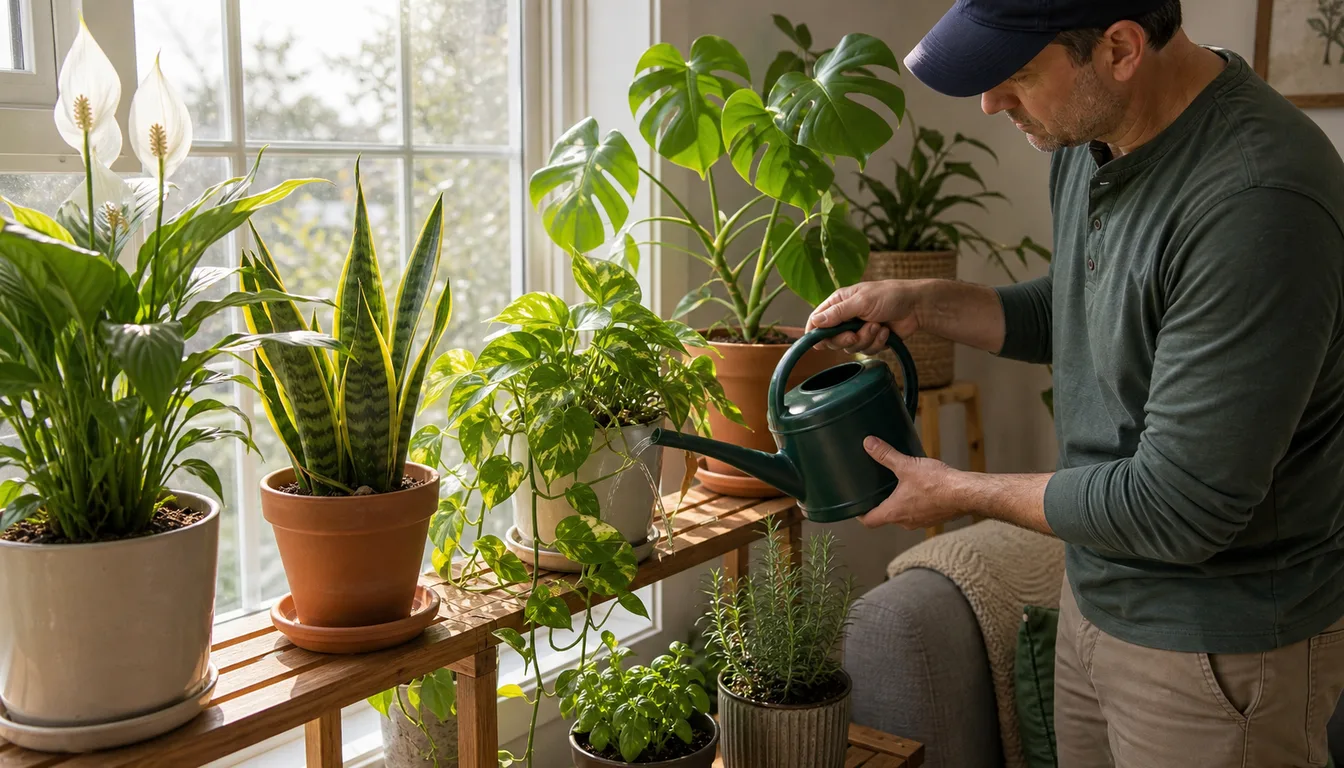
Best Time to Water Indoor Plants for Healthy Growth
Most indoor plants die from watering at the wrong time, not from black thumbs. Timing affects how…
11 min readCan an Overwatered Plant Recover? Check the Roots First
Wilting leaves, soggy soil, and that swampy smell usually point to one problem, too much water. The…
11 min read