
How to Grow Peace Lilies for Healthy Leaves and White Spathes
Spathiphyllum spp. Araceae
Peace lilies are clumping Spathiphyllum plants with glossy leaves and white spathes surrounding tiny flowers. Bright indirect light and a moist, freely draining root zone support growth, but a flowering pause or a drooping leaf needs context before you change care.
Cultivar, plant maturity, and growing conditions affect flowering. Division preserves a growing crown and roots together, while the shared name with true lilies calls for a separate safety distinction.
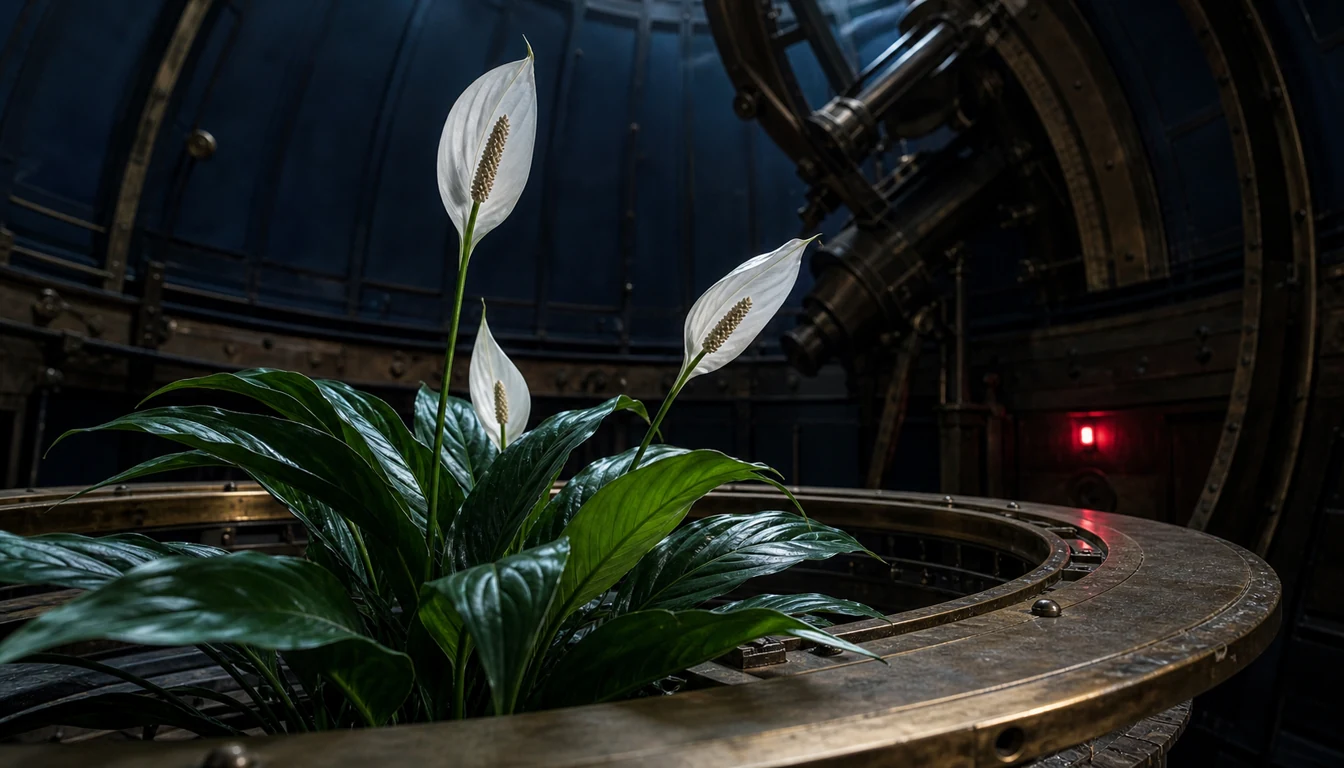
Care snapshot
What Is a Peace Lily?
Peace lily is the common name for cultivated Spathiphyllum species and hybrids in the arum family, Araceae. S. wallisii is one familiar species, but its native range and mature size do not describe every plant sold under the common name.
It is not a true lily. The difference affects flower anatomy, propagation, and the type of pet hazard.
- Family
- Araceae, the arum family
- Flower structure
- Small flowers on a spadix, beside a conspicuous spathe
- Habit
- A clump of leafy crowns near the mix surface
- Size
- Compact and large cultivars differ substantially
- Indoor setting
- Warmth, indirect light, and a moist but aerated root zone
Glossy lance-shaped leaves rise on individual stalks from connected crown fans near the mix surface. New fans enlarge the clump sideways, so an established plant becomes denser rather than forming a trunk or vine.
The cultivar label is useful when choosing a location. Compact selections fit smaller spaces, while larger forms can outgrow the tabletop position where a young plant was first placed.
Some cultivars have cream or white leaf markings. A stable pattern consistent with the cultivar differs from newly damaged tissue, although patterned plants can develop stress symptoms too.
The common name comes from a white flag-like structure above the leaves. Botanical identity matters because this aroid and a true Lilium flower carry different hazards even though both use the word lily.
What Is the White Flower-Like Part?
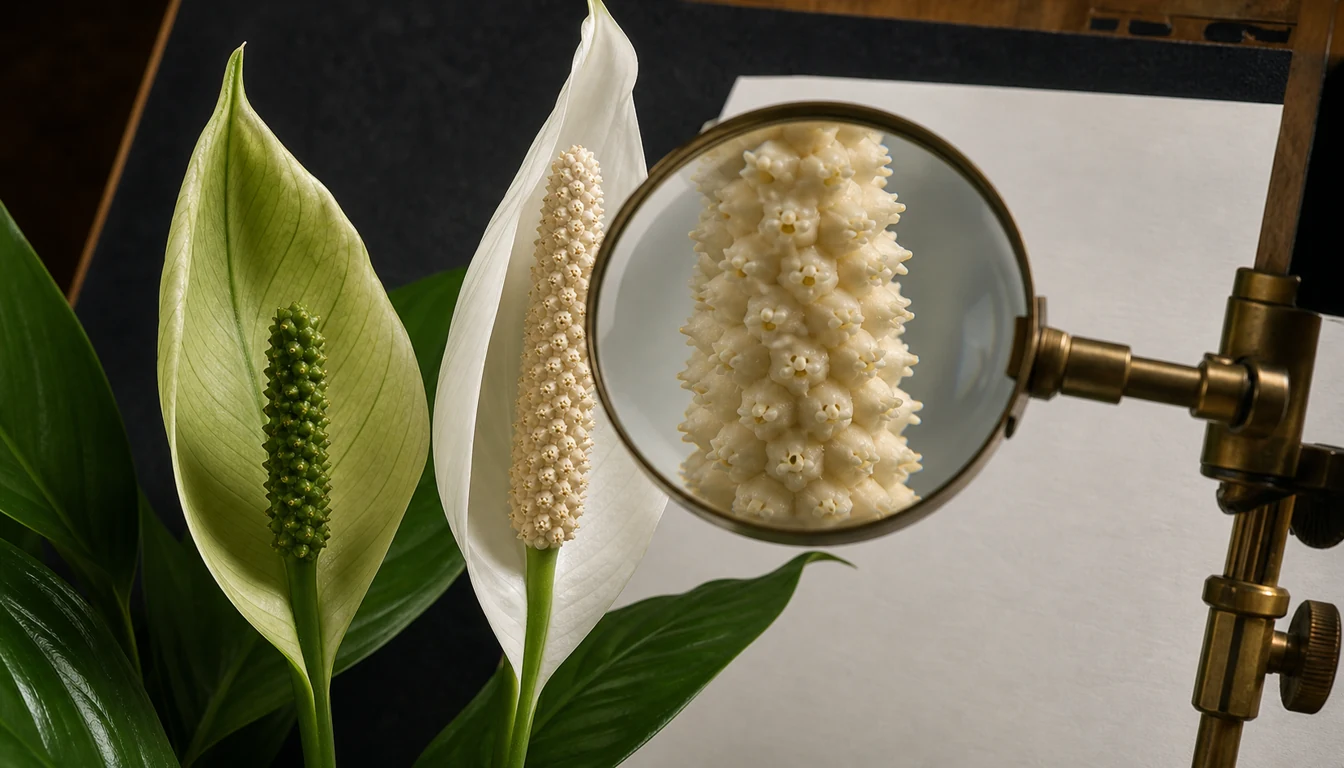
The white blade is a spathe, a modified bract rather than one large petal, and it wraps partly around a cream central spike called a spadix.
Many minute true flowers cover the spadix. Their small scale explains why the whole structure looks simpler than a petaled flower when viewed across a room.
The spathe often becomes green as it ages. That change alone does not mean the plant needs fertilizer, and the condition of the leaves and crown provides separate information about its health.
Flowering varies with cultivar and maturity as well as conditions. A plant may keep attractive foliage between displays, so continuous white spathes are not a reasonable health requirement.
An aging spathe can remain while it is attractive. Once the display declines, its stalk can be cut near the base without damaging neighboring leaf stalks.
Should You Wait for the Leaves to Droop?
Dramatic drooping is an unreliable watering schedule. It can reflect a dry root ball, but damaged roots can also fail to supply water while the mix remains wet.
Pot weight and moisture below the surface help separate those situations. A firm crown is useful to observe, but it does not prove that every root is healthy.
- A light pot and dry root ball support watering, provided drainage is open.
- A heavy, wet pot with continued wilting needs drainage and root-zone assessment before more water.
- Soft or collapsing crown tissue makes closer inspection more urgent.
- A stable plant in moist mix can wait while that mix dries toward its next watering.
Unpotting becomes useful when decline continues, the base collapses, or the mix has failed. Root color alone cannot establish health or disease. Tissue that collapses or loses its outer layer is more concerning than a naturally darker root.
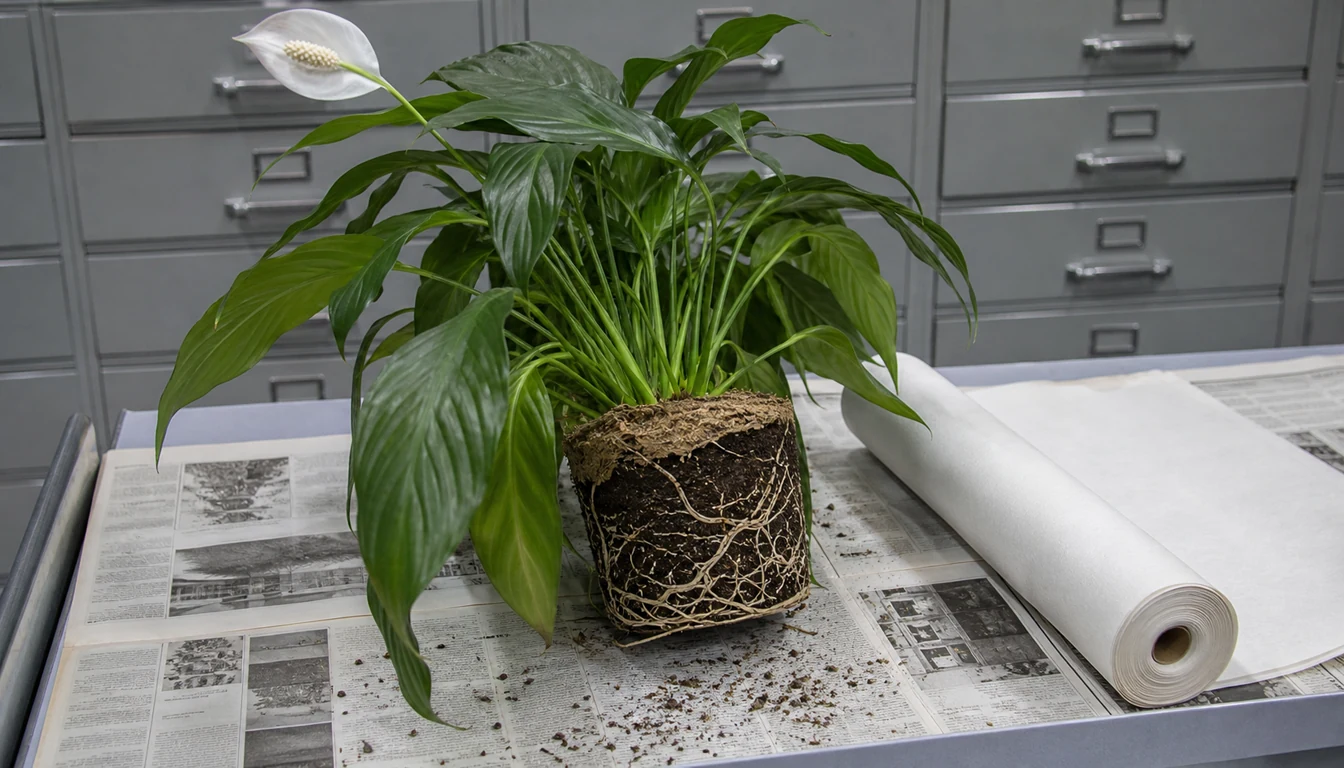
When dryness is confirmed, slow watering across the surface helps wet the root ball before runoff drains away. Empty collected water. If the center stays dry despite runoff, the mix may be resisting wetting rather than receiving enough water.
Watering frequency changes with light, temperature, roots, and the container. Continued drooping beside saturated mix deserves reassessment instead of another automatic drink.
Why Does It Grow Leaves but No White Spathes?
Insufficient light can limit flowering, even when older foliage survives. A position with usable indirect daylight is therefore worth assessing before adding fertilizer, but light is only part of the explanation.
UF/IFAS flowering research distinguishes cultivar and maturity responses. Commercial growers can also induce flowering with gibberellic acid, so a small plant sold in bloom may not immediately repeat that display under ordinary home conditions.
Brighter filtered light supports growth without exposing shade-grown leaves abruptly to strong sun. New leaf growth and developing flower stalks are useful observations over time, rather than a deadline for another intervention.
An established plant in active growth can receive an appropriate houseplant fertilizer according to its label. Extra fertilizer does not replace light or maturity, and commercial growth-regulator treatments are not a home-care requirement.
What Does a Brown Leaf Tip Actually Tell You?
A brown tip is evidence without one automatic cause because repeated new damage can come from dry moving air, fluoride or salt exposure, uneven moisture, or weakened roots.
Air and exposure
- Dry moving air or intense direct sun can damage exposed tissue.
- The actual vent, window, or move history matters more than tip color.
Water and salts
- Fertilizer dose and water composition help assess recurring margin damage.
- A generic filter may not remove fluoride or dissolved salts.
Root-zone condition
- Dry pockets and poorly aerated wet mix can both limit water supply.
- Root condition needs assessment when decline persists.
Old damage
- A stable dead edge differs from new injury appearing on additional leaves.
- Trimming dead tissue improves appearance without curing the cause.
Photographs of the same leaf and new growth help distinguish stable old injury from an expanding problem. They record change without identifying the cause on their own.
RHS notes that fluoride exposure can damage Peace Lily foliage. If water quality is a concern, information from the supplier or a relevant test is more useful than assuming all tap water is unsuitable or every filter removes fluoride.
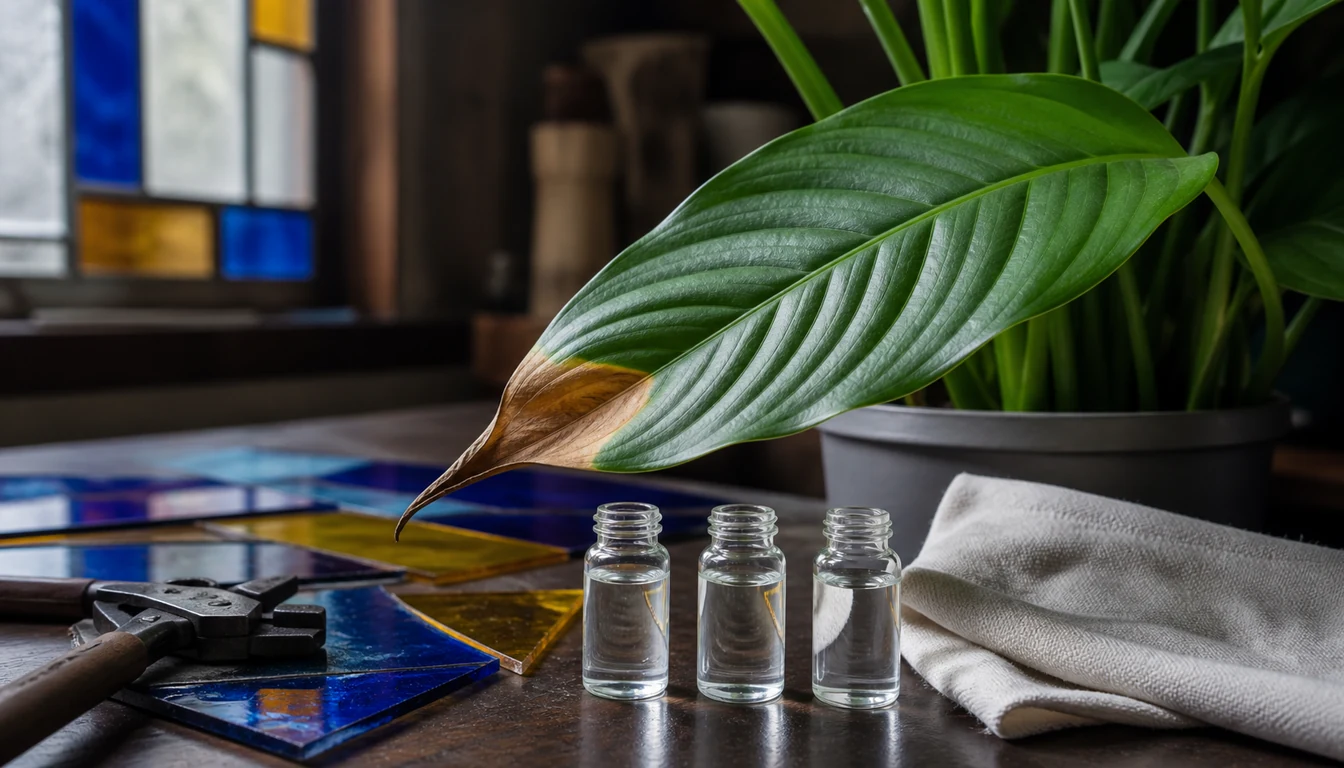
Water, air, and roots can contribute at the same time. Changing the water source cannot resolve a root ball that remains saturated, and raising room humidity does not rewet a dry center.
Follow the natural leaf outline when removing a fully dead tip and leave a narrow brown margin. Cutting into green tissue creates a fresh wound that can dry again.
How Tight Should the Root Ball and Crown Stay?
A modest pot increase avoids surrounding a small root ball with a large volume of wet mix. The remaining root mass and the way the mix wets and drains matter more than a fixed repotting interval.
Repotting becomes useful when crowded roots interfere with watering or growth, or when the mix has deteriorated. Active growth is a helpful time for routine work, while serious drainage failure may need attention sooner.
- Crowded roots and restricted growth
- Consider a modestly larger container if the root system is otherwise suitable.
- Excess wet mix
- Assess drainage, pot size, and root condition rather than automatically increasing the pot.
- Buried crown
- Keep the established crown at its previous growing depth.
- Runoff with a dry core
- Check whether the mix rewets before deciding that a larger pot is needed.
Use a peat-free moisture-retentive houseplant mix with enough coarse material to drain freely while holding an even reserve without sealing air away from the roots.
Keep the crown at its previous soil line. Burying leaf bases traps moisture against tender tissue, while setting roots too high leaves the clump unstable.
How Do You Divide a Crowded Peace Lily?
Division preserves a growing crown and its attached roots. An established clump offers ready-made growing units, so this method is more appropriate than treating a detached leaf as a complete new plant.
Natural separations in the clump help locate divisions with enough roots and foliage to continue growing. Equal-sized pieces are unnecessary, and a declining plant needs its problem assessed before routine division adds more disturbance.
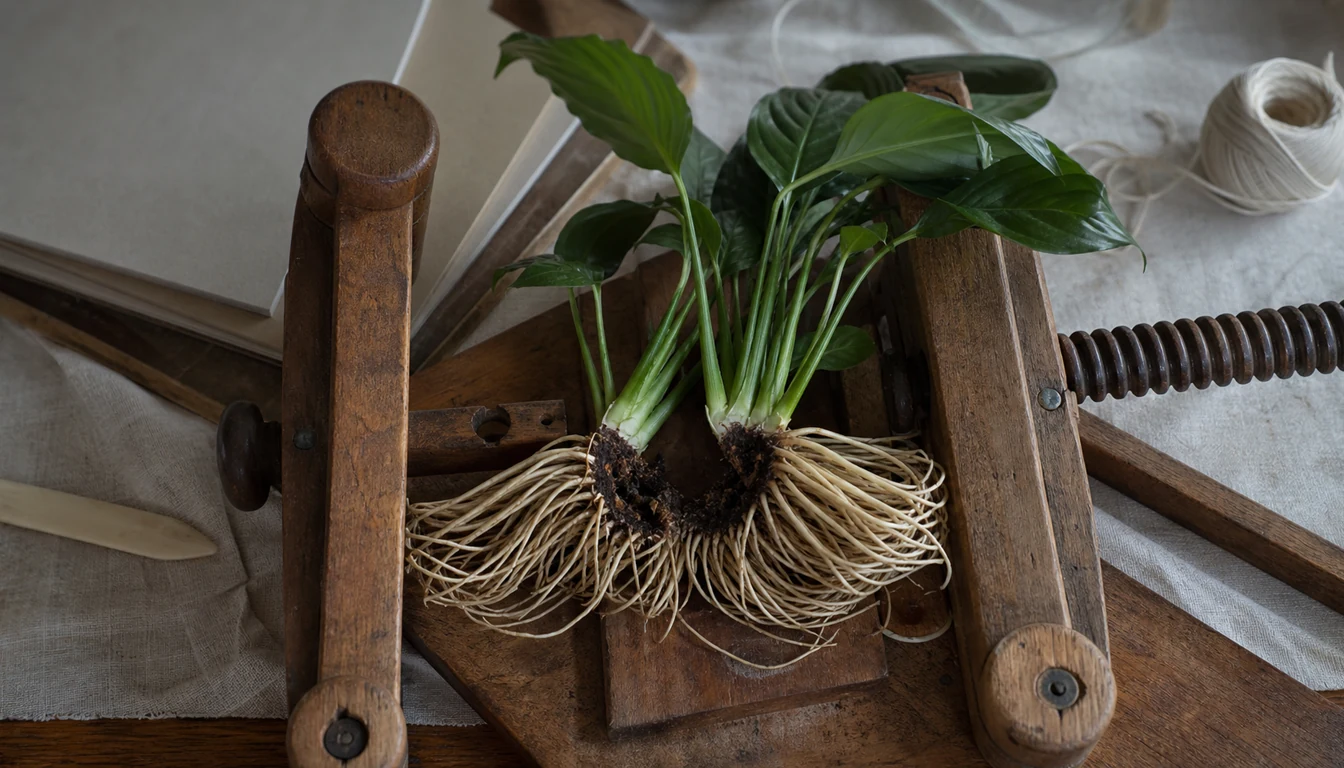
- Wear gloves, remove the established clump from its pot, and expose enough of the crown connections to see natural divisions.
- Ease the sections apart, using a clean blade only where a connection needs cutting. Retain a growing crown, foliage, and attached roots with each piece.
- Remove clearly dead or decayed tissue without cutting roots merely because they are brown.
- Pot each division at its previous depth in a draining container matched to the roots, then settle the mix with water and drain excess.
Filtered light and an evenly moist, aerated root zone support establishment. New growth is encouraging, but there is no fixed recovery date and one upright leaf does not prove that every root has recovered.
Is a Peace Lily the Same Risk as a True Lily?
Both plants require pet control, but Peace Lily is not a true lily and does not carry the same toxic mechanism as Lilium, so common-name confusion must never become a reason to leave either plant within reach.
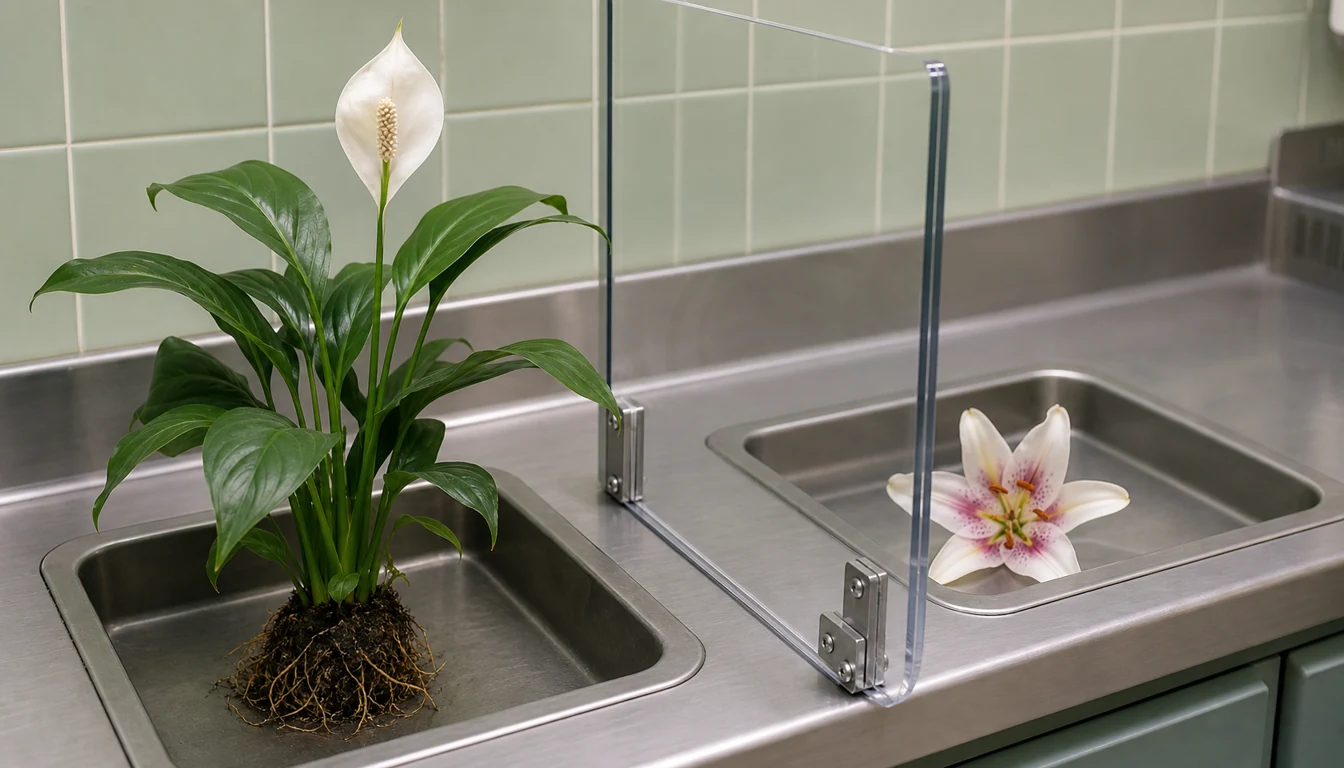
Peace Lily contains insoluble calcium oxalate crystals. ASPCA lists it as toxic to cats and dogs because chewing can cause mouth irritation, drooling, vomiting, and difficulty swallowing.
True Lilium lilies and Hemerocallis daylilies can cause severe kidney injury in cats. Exposure can include pollen or vase water, so an uncertain identification is a reason for urgent veterinary advice rather than waiting for illness.
Keep plants and discarded pieces away from children and pets. Gloves reduce sap contact during pruning or division. Source-listed non-toxic houseplants offer different choices, but their foliage is not intended as pet food.
Sources & References
- Peace Lily pet safety - ASPCA
- Which lilies are toxic to pets - ASPCA
- Spathiphyllum - NC State Extension Plant Toolbox
- How to grow peace lilies - Royal Horticultural Society
- ENH1047/EP320: Spathiphyllum Flowering—Keys to the Future
- University of Minnesota Extension: Insects on Indoor Plants
- University of Georgia Extension, Growing Indoor Plants with Success, Bulletin 1318
Related Plants
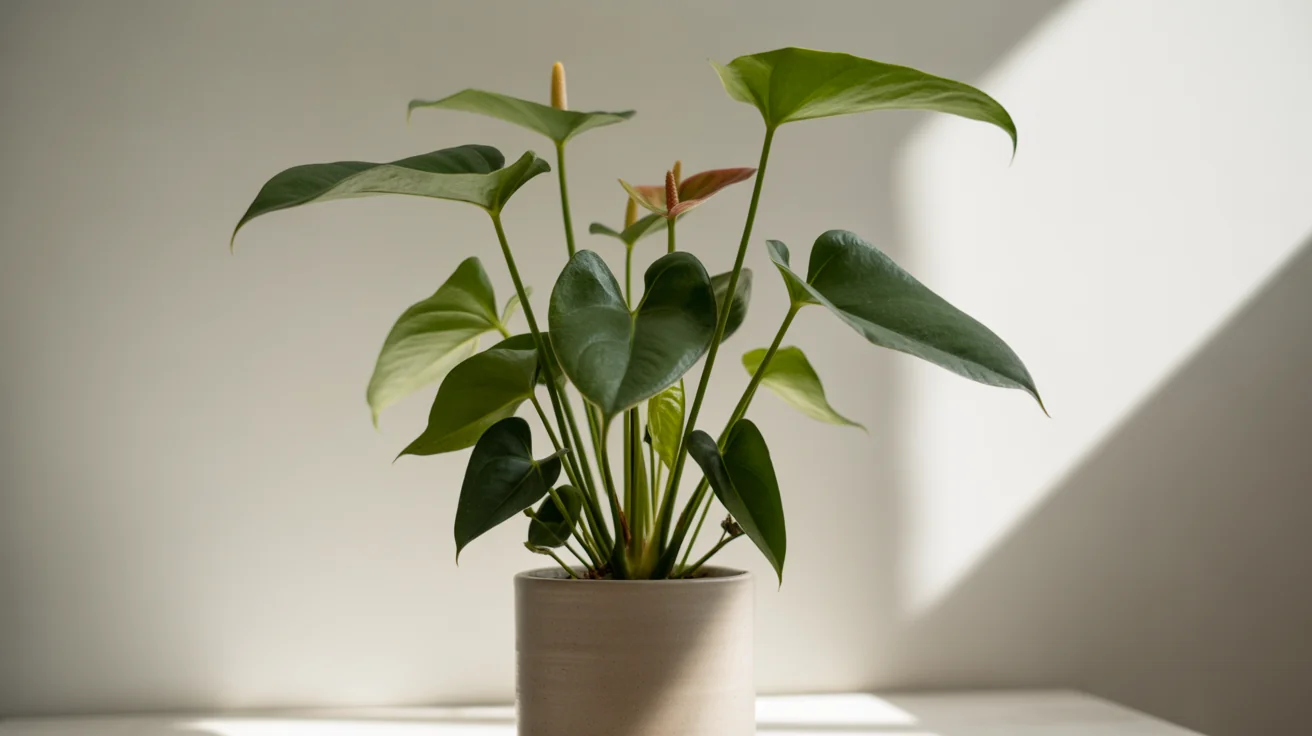
Anthurium
Another aroid displays a colorful spathe around a true flower spike.
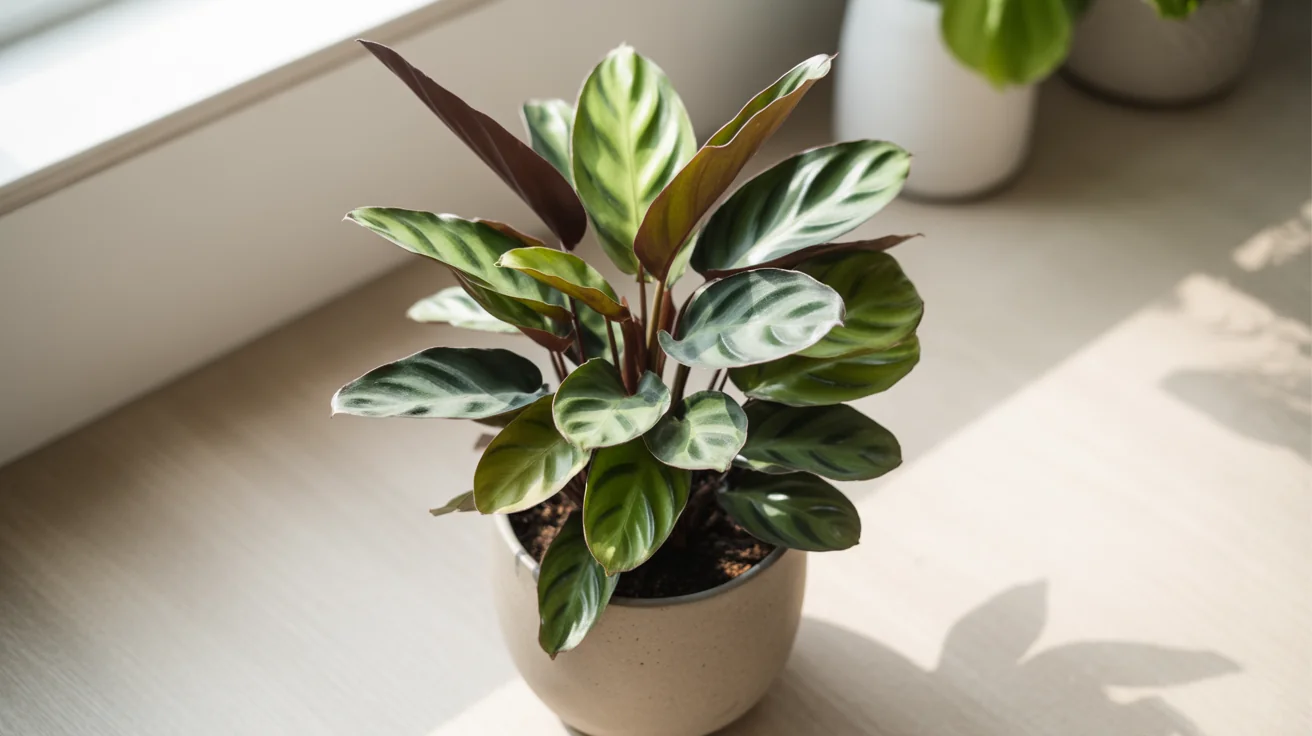
Calathea
Patterned foliage with moisture and humidity needs that deserve separate assessment.
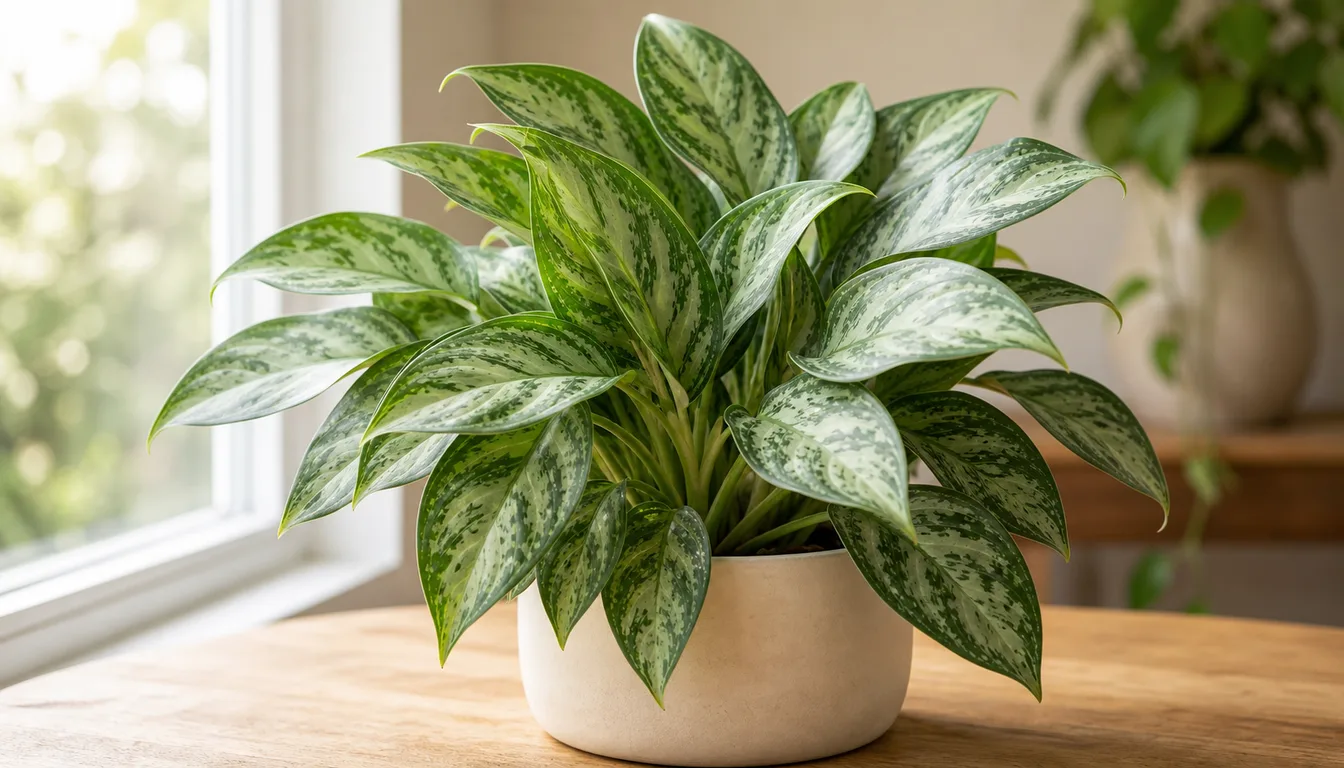
Chinese Evergreen
Warm shaded rooms support colorful foliage without relying on white spathes.
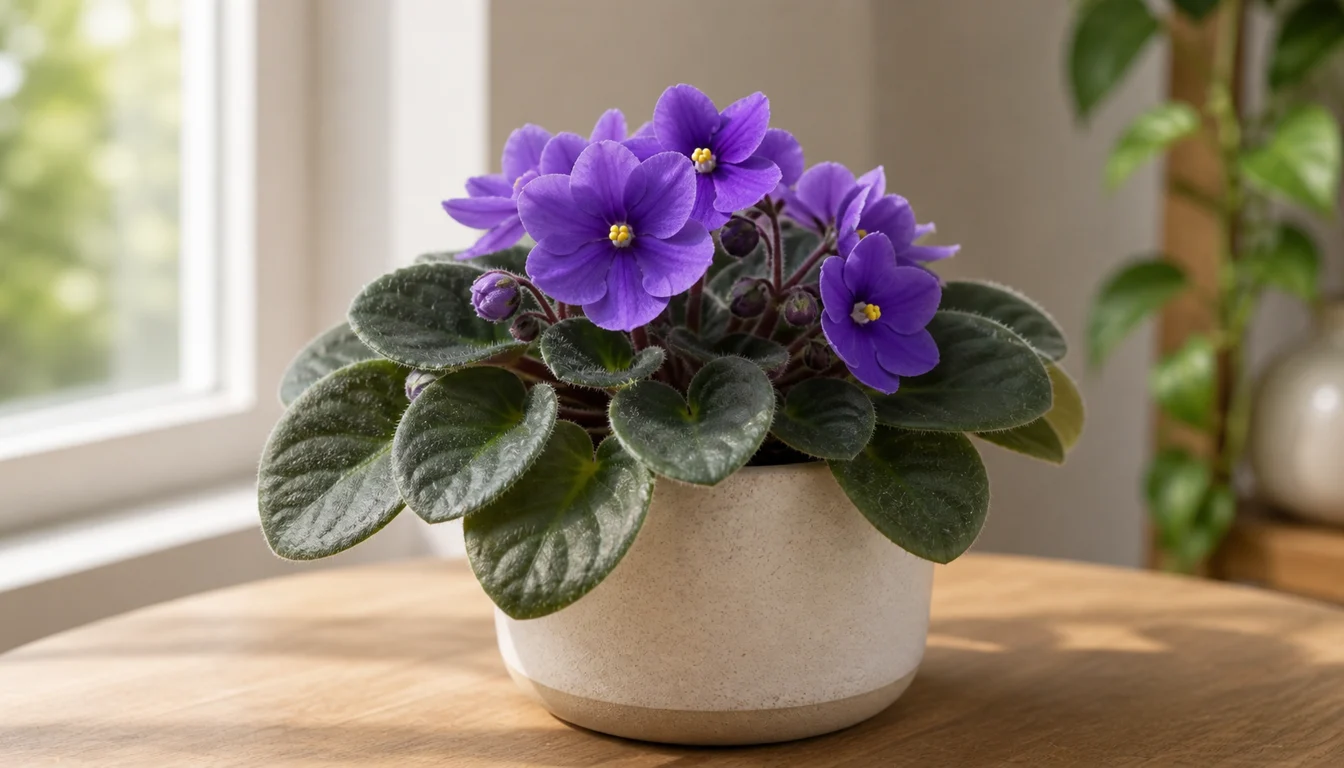
African Violet
African Violet is a windowsill bloomer that rewards steady, small-pot care.
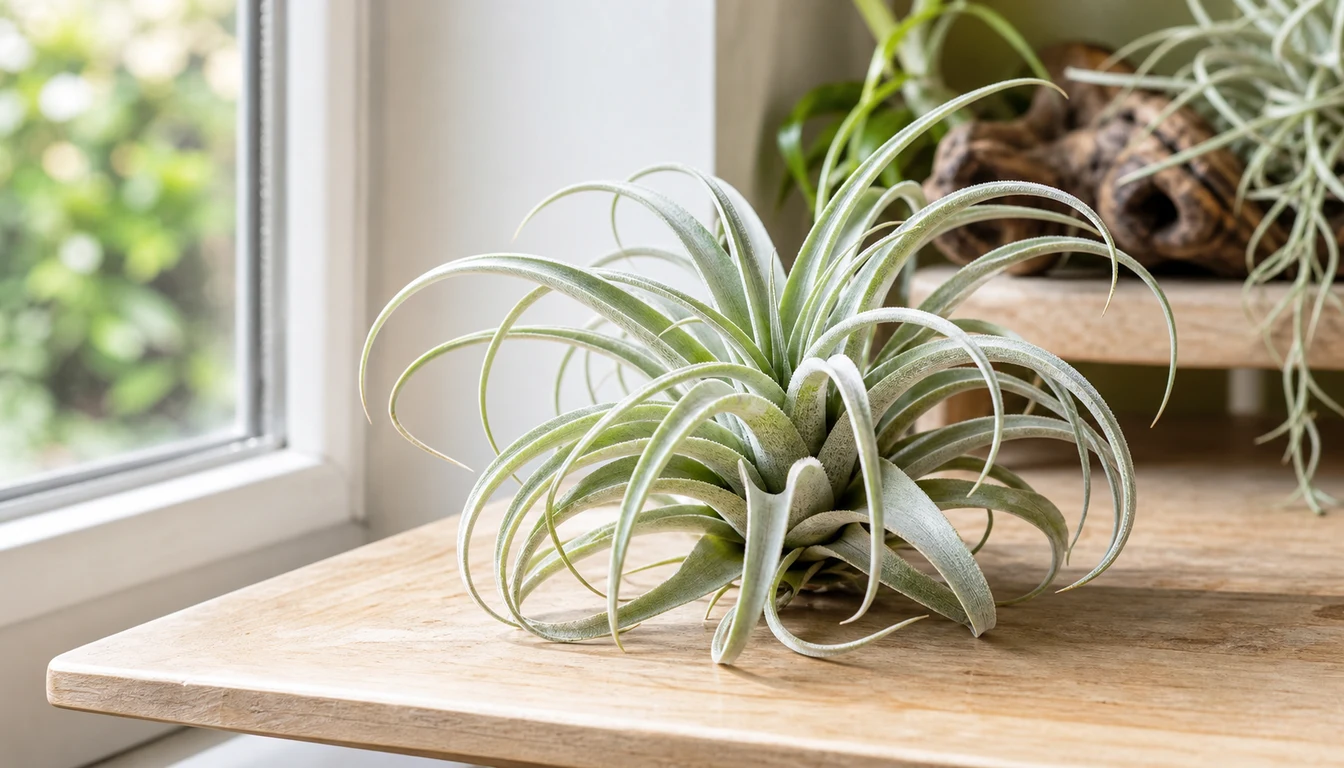
Air Plant
Air plants are living sculptures that thrive without soil, anchoring to driftwood, rocks, or shells while drawing…
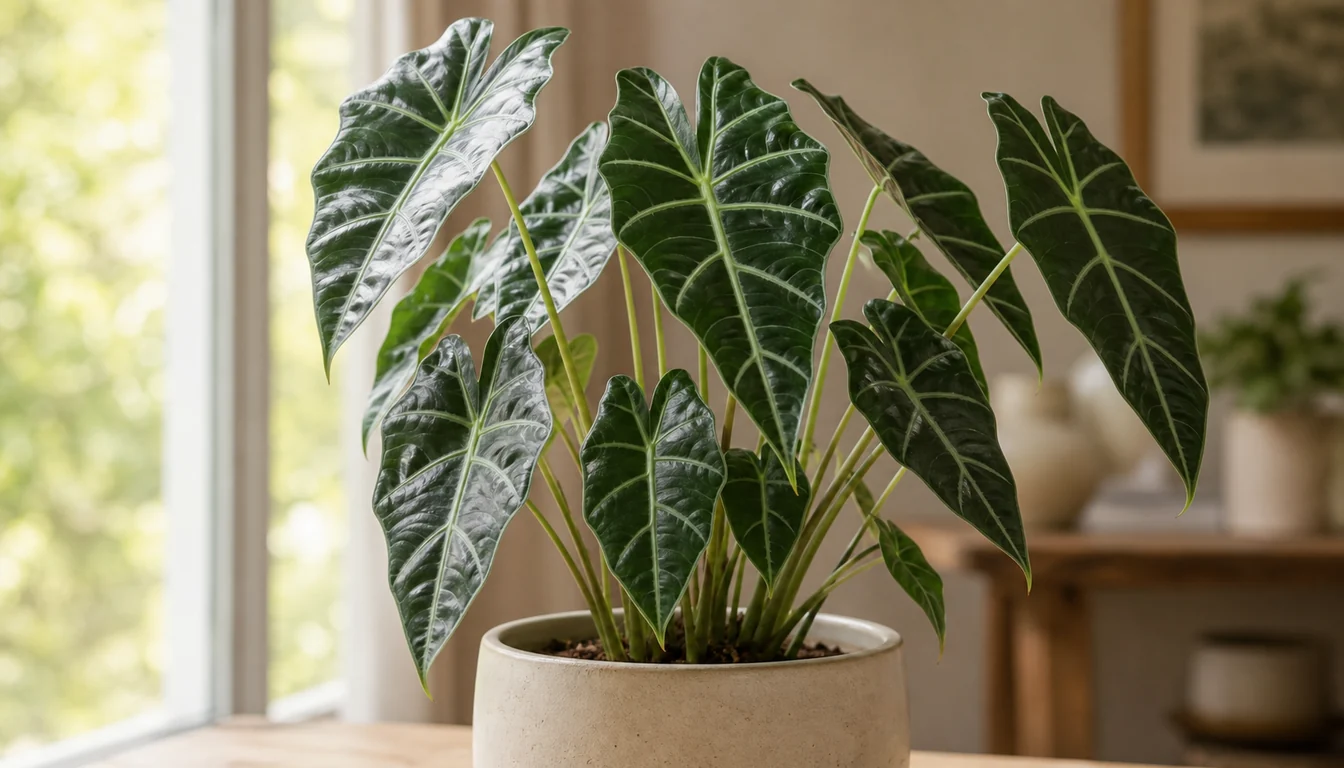
Alocasia
Alocasias include compact, textured houseplants and large elephant ears that need substantial floor space.