
What's a Snake Plant? How to Water It Without Rotting the Rhizomes
Dracaena trifasciata Asparagaceae
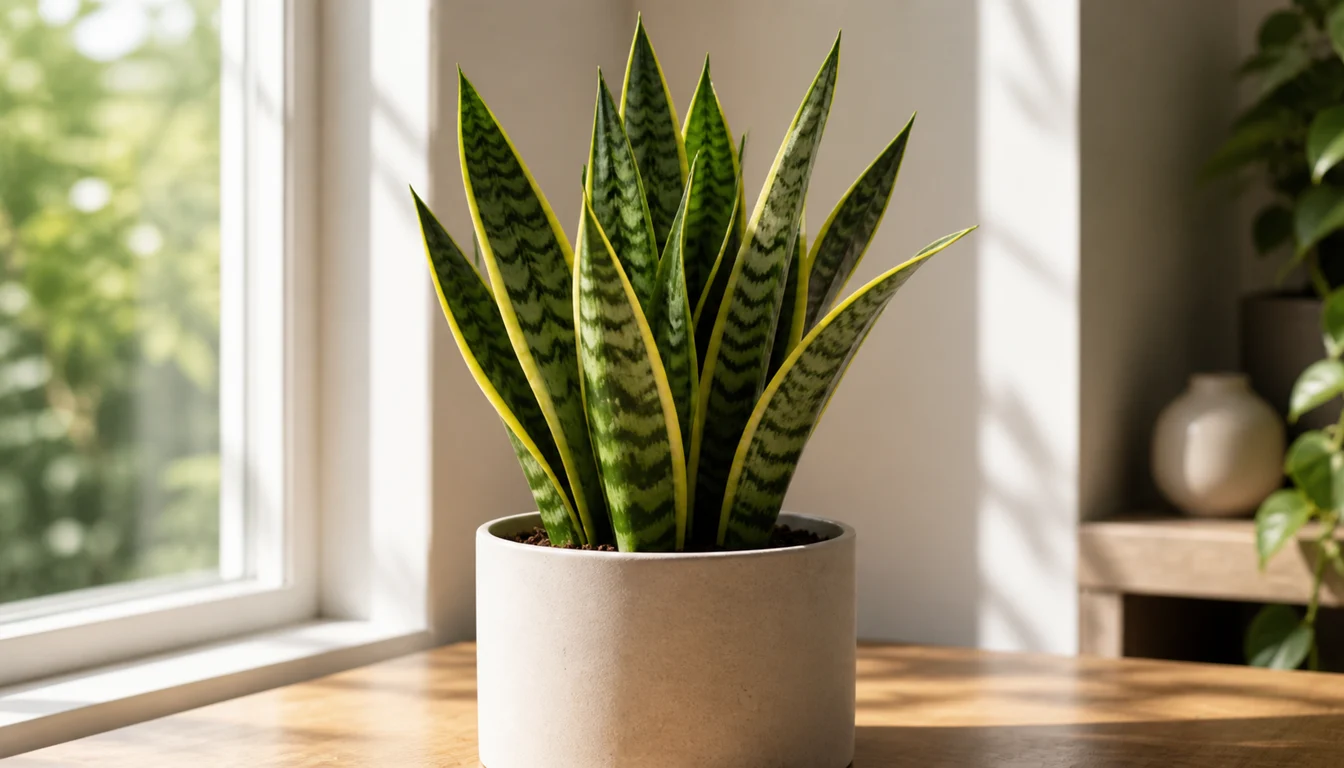
Snake Plant grows as a stemless clump of water-storing, sword-shaped leaves. Let the entire pot dry before watering again, because wet rhizomes are the main threat to this durable houseplant.
Care snapshot
What Is a Snake Plant, and Which Form Are You Growing?
Snake Plant usually means Dracaena trifasciata. This rhizomatous tropical perennial belongs to the asparagus family and comes from tropical Africa, while Kew treats the older label Sansevieria trifasciata as a synonym rather than a different care group.
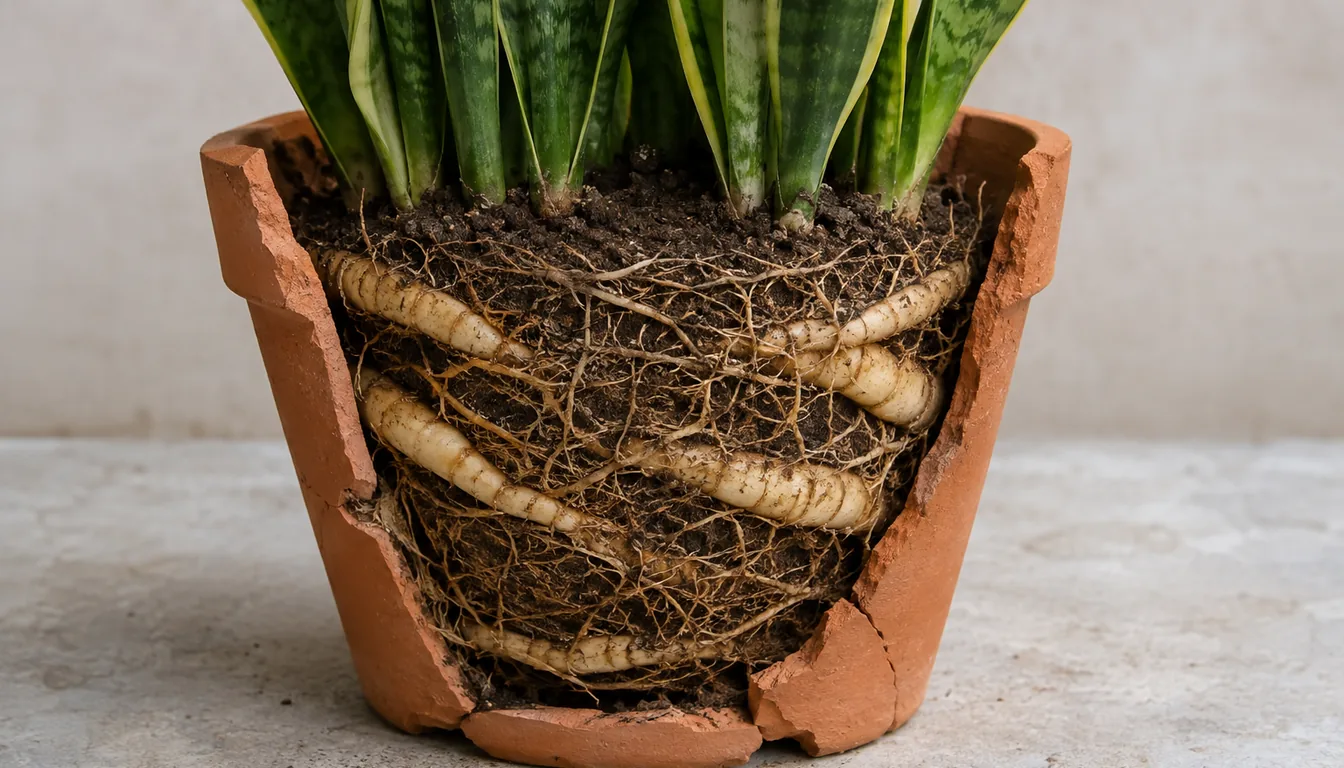
Snake Plant has no visible woody stem, and its stiff, fleshy leaves rise from compact rosettes while pale underground rhizomes extend sideways and turn one rosette into a wider upright clump.
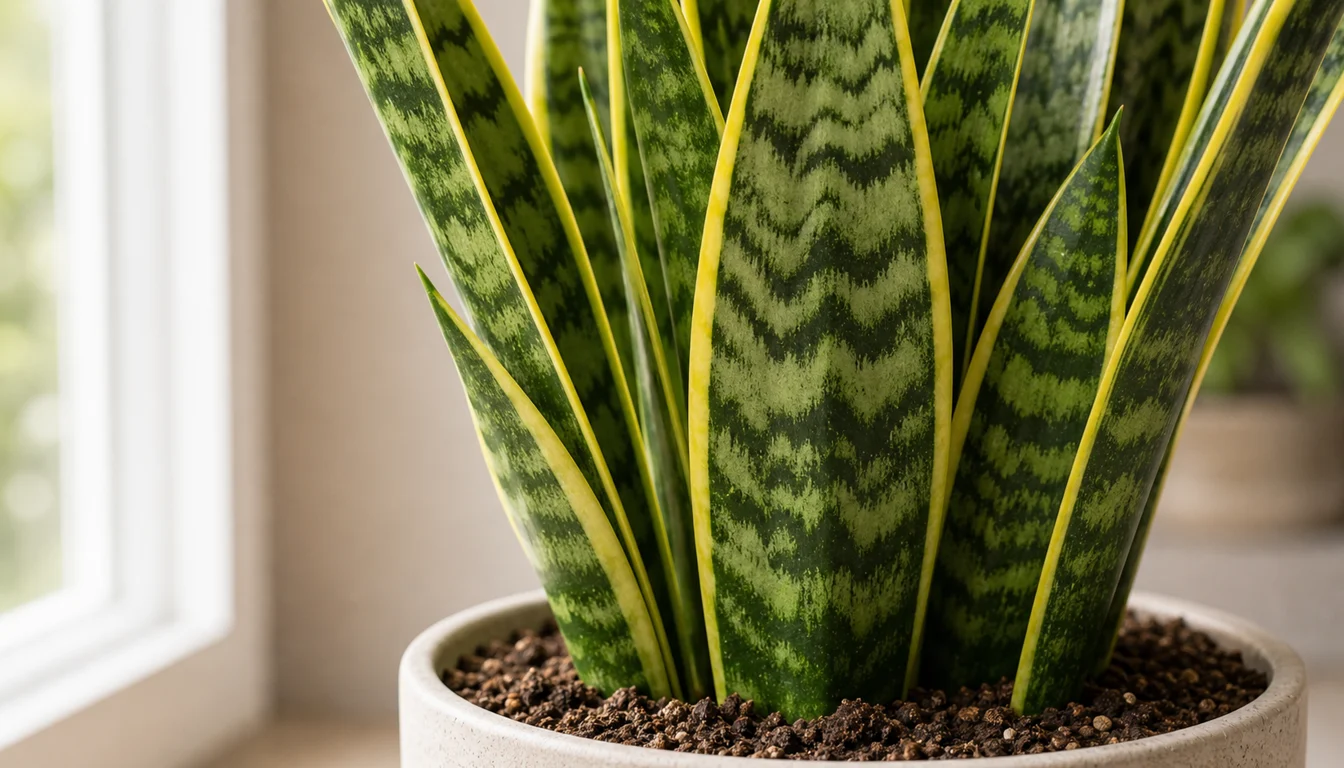
Most leaves are 1 to 3 inches wide and show irregular horizontal bands in several shades of green, although cultivars add yellow edges, white stripes, twisted blades, or silver color. Mature plants can produce fragrant greenish-white flowers on a slender raceme and then orange berries, but both are uncommon indoors and foliage remains the dependable display.
The common name is wider than the species. More than 70 species from Africa, southern Asia and Madagascar are sold under it, and some of the spear-leaved forms spread up to 3 feet beyond the rim of their own pot.
- Standard green form
- Sword-shaped cross-banded leaves can reach about 4 feet.
- Laurentii
- Yellow leaf margins need useful light to stay distinct.
- Moonshine
- Broad silvery leaves give the clump a paler finish.
- Hahnii
- A compact bird's-nest rosette stays near 6 inches.
- Bantel's Sensation
- Narrow leaves carry strong vertical white striping.
- Black Gold
- Dark centers contrast with bright gold leaf edges.
- Twisted Sister
- Short green and gold leaves twist outward.
- Futura Robusta
- Broad gray-green leaves carry silvery mottling.
- Whitney
- Dark centers meet layered pale green margins.
Choose the form before choosing the container, since a low Hahnii fits a shelf while a tall Laurentii needs floor space, clearance above it, and enough pot weight to resist tipping.
Where Will Snake Plant Leaves Keep Their Color and Upright Shape?
Bright indirect light produces the strongest growth. Snake Plant can also take two to six hours of mild sun and tolerate low light, but a dim plant uses water slowly, makes fewer shoots, and may lean toward the only useful window.
A north window can suit a green plant, while yellow-edged or silver cultivars usually hold clearer color closer to a brighter window and benefit from a quarter turn when their new rosettes lean.
Leaves raised in a dim room can develop pale tan scorch patches after a sudden move into hot direct sun. Increase exposure over one or two weeks, starting with gentle morning light, and judge the final position by healthy new growth because bleached tissue will not recover.
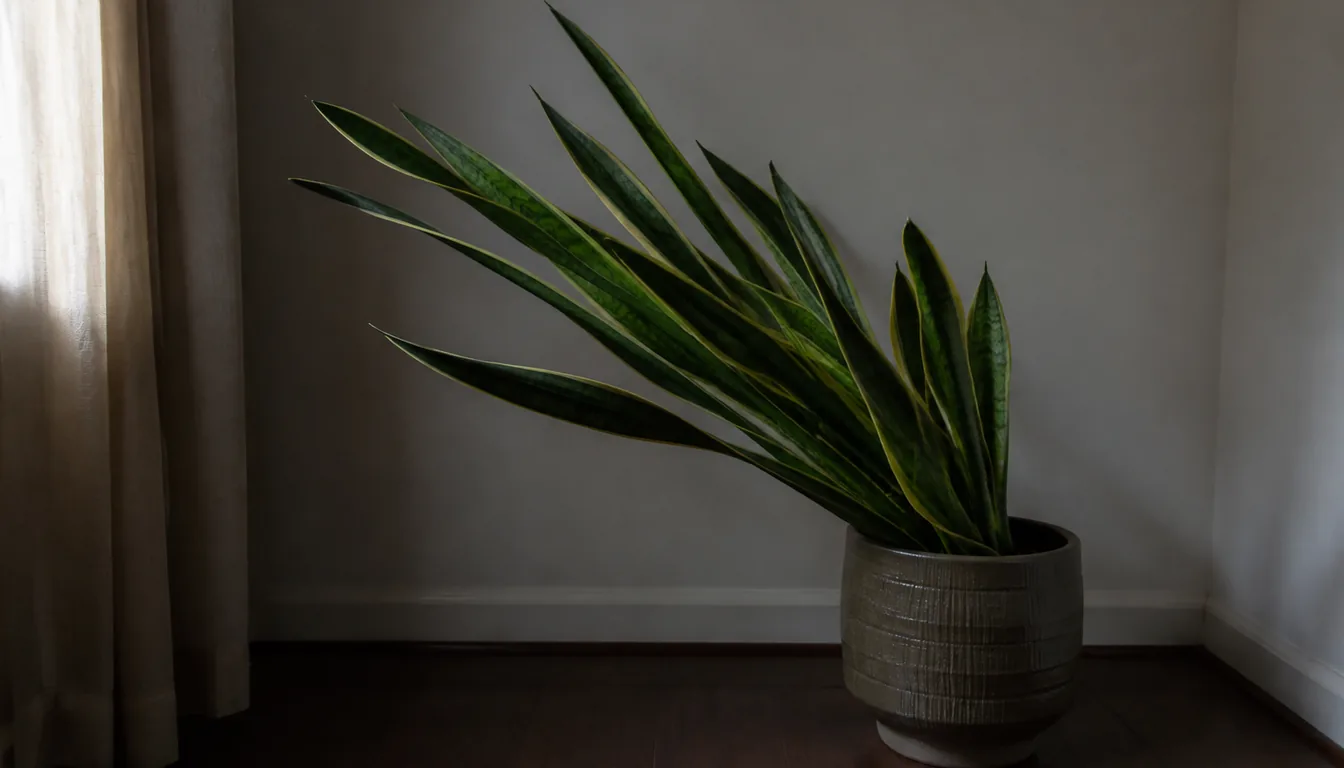
A leaf that has fanned out will not stand back up. Moving the pot corrects the next rosette rather than the one in front of you, which is why the position is worth settling before the clump widens.
When Is a Snake Plant Pot Dry Enough to Water?
Wait until the potting mix has dried through the root zone before watering the whole root ball, because the fleshy leaves and thick rhizomes hold more reserve than a damp lower pot can safely accept.
The two mistakes here are not equal. A plant left unwatered for a month or so comes through no worse for it, while one soak poured into mix that never dried can finish the rhizomes.
The top inch is not enough. Sun and indoor air can dry it above a wet center, so compare the pot's dry and wet weight or check whether a deep wooden skewer comes out cool, darkened, or carrying damp soil.
When the pot is truly dry, pour room-temperature water slowly across the surface until it reaches the drainage hole, then empty the saucer or cachepot so the root ball cannot soak.
Thirst usually appears as thinner, wrinkled, or inward-curling leaves while the mix is dry and the pot feels light, but firm older leaves can remain unchanged for weeks. A soft base, spreading yellow tissue, or sour-smelling wet soil points toward rot and needs a root check instead of a recovery watering.
What Soil and Pot Keep Snake Plant Rhizomes Healthy?
Use an airy mix that drains quickly but still holds the plant upright, adding perlite, pumice, or coarse bark when a packaged cactus mix compacts, shrinks from the pot edge, or stays wet for days.
Every container needs an open drainage hole, including a nursery pot hidden inside a decorative cover that must be emptied after each watering. Choose a pot only one size wider than the root mass, because a deep oversized container leaves too much unused wet mix around slow roots.
- Keep the crown and leaf bases at the original soil line.
- Use terracotta or another heavy pot for tall cultivars.
- Clear compacted soil from the drainage hole before watering.
- Repot when rhizomes distort the pot or roots circle tightly.
- Move up only 1 to 2 inches in container width.
- Separate a cracked nursery pot before it pinches expanding rhizomes.
- Use fresh mix after rot instead of returning damaged roots to wet soil.
- Wash an old pot before reusing it for trimmed healthy divisions.
- Brace a newly divided clump until fresh roots hold it upright.
- Keep gravel out of the pot bottom because it does not replace drainage.
- Loosen circling roots gently instead of stripping every root bare.
A snug pot is normal until the container bows, cracks, becomes top-heavy, or dries so quickly that a thorough watering runs around the root ball instead of wetting it.
A snug pot is the plan rather than neglect, but the plan has a limit. A rootbound clump can break a clay pot, because the rhizomes keep pushing outward long after the roots have run out of room.
The interval belongs to the form rather than the calendar. Fresh mix every five years suits most plants and a tall clump can go considerably longer, while a dwarf Hahnii rosette fills its bowl fast enough to want repotting around every three.
Does a Snake Plant Need Regular Fertilizer?
Snake Plant needs little fertilizer indoors. Apply a balanced houseplant fertilizer at half the label rate every four to six weeks only while new leaves are growing, and skip it in low light, after repotting, or during recovery from root loss.
Fertilizer cannot correct weak light, cold roots, or wet soil, and unused salts can accumulate as a pale crust when a slow plant receives repeated feeding.
Watch the center of an established rosette for the next firm leaf spear. That visible change is a better feeding signal than the month on a calendar.
A quiet plant with firm leaves may simply be growing slowly, so compare pot weight, light, and room temperature instead of increasing the dose to force movement.
If a pale crust appears on the mix or pot rim, pause feeding and flush the root ball with plain water once it is due for watering. Let all excess drain before returning the pot to its cover.
How Do You Propagate Snake Plant Without Losing Its Pattern?
Divide the rhizome if you want a new plant that matches the parent and already has enough stored water to establish. Remove the clump, find an offset with several leaves and roots, then cut the connector cleanly and pot both pieces at their original depth.
- Cut a healthy leaf into sections about 3 to 4 inches long.
- Mark each lower edge before the pieces lose their orientation.
- Let fresh cuts dry until the surfaces no longer feel moist.
- Insert each lower edge into a lightly moist draining mix.
- Keep the cuttings warm in useful indirect light.
- Water sparingly while roots and new shoots form.
- Discard any section that becomes soft or translucent at the base.
- Expect the first shoot only after roots establish below the surface.
- Wait for clear resistance before testing a cutting with a gentle tug.
- Move rooted sections to individual pots after each forms a shoot.
- Keep the mix lightly moist rather than wet during early rooting.
- Label patterned cultivars so green reversions are easy to recognize.
Leaf cuttings take patience because a section must root before building a new shoot, and an angled lower cut or pencil mark preserves the original top-to-bottom orientation after several pieces dry together.
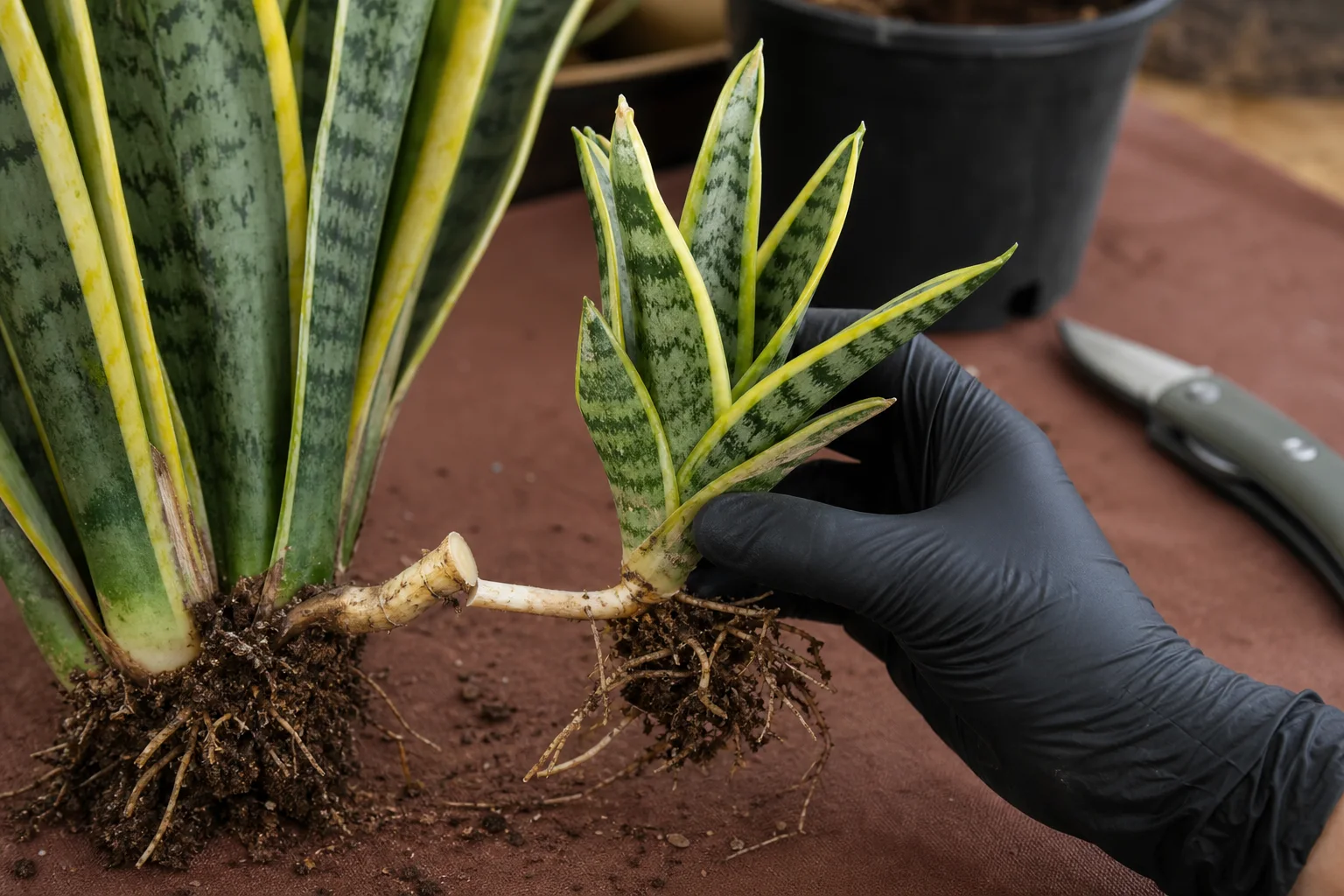
A cutting from yellow-edged Laurentii may produce an all-green plant because its variegation is not reliably carried into the new shoot. Division preserves the patterned growing point, mature leaves, and part of the established root system, making it the better choice when color matters.
What Do Soft Leaves, Wrinkles, and Brown Tips Mean?
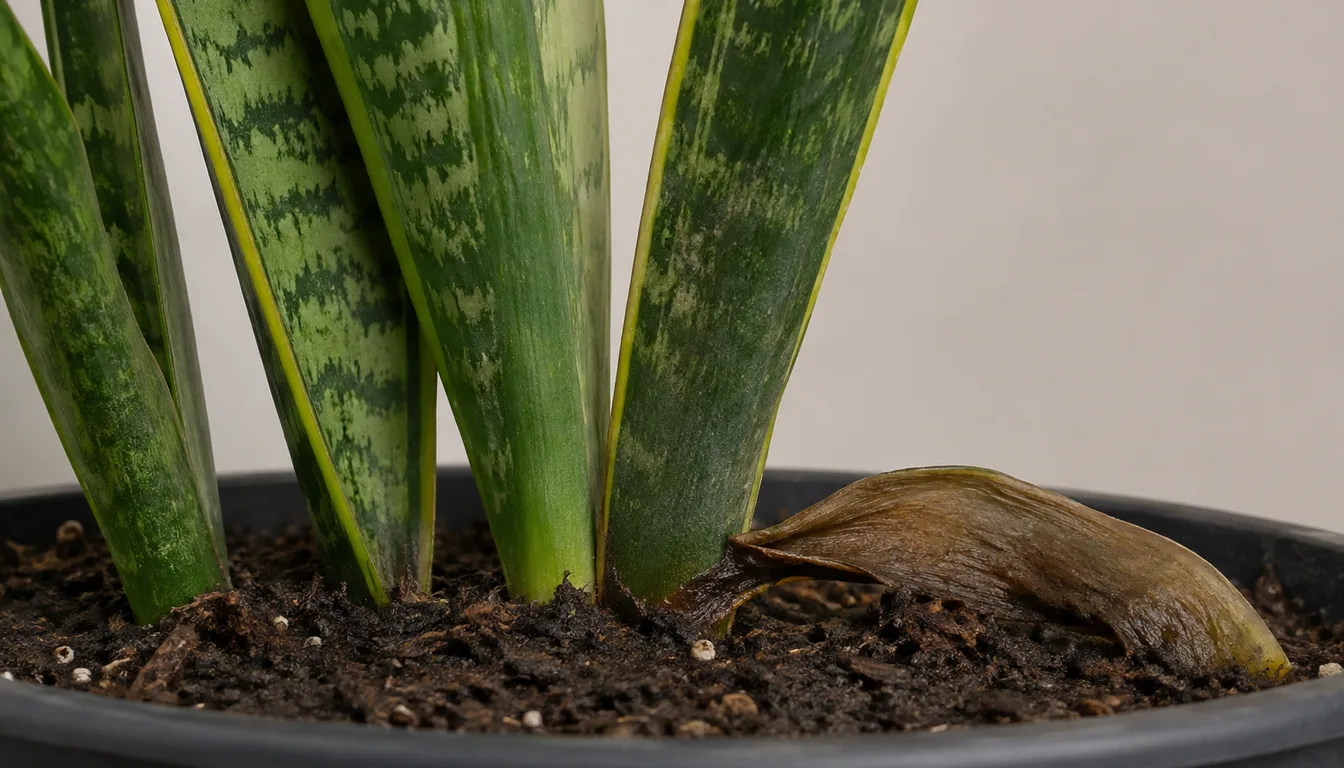
Soft tissue at the soil line needs an immediate root check, removal of black or mushy roots and rhizomes with a clean blade, and repotting of firm pale surviving tissue in fresh dry mix.
Rot arrives at the base rather than at the tip, and it arrives on one leaf before it arrives on the clump. A single leaf that has folded over at the soil line while its neighbors stay stiff is the earliest warning this plant gives.
Wrinkles do not prove thirst. Check whether the root zone is dry and the base remains firm, because wrinkled leaves above wet soil can mean damaged roots no longer supply the foliage.
- Soft base in wet soil
- Inspect roots and rhizomes for rot immediately.
- Wrinkles in dry soil
- Water thoroughly, drain, and watch the next dry-down.
- One crisp brown tip
- Review old physical, cold, or watering damage.
- Cottony material in leaf bases
- Isolate the plant and check closely for mealybugs.
- Fine stippling and webbing
- Check both leaf surfaces for spider mites.
- Pale stretched new leaves
- Move gradually toward stronger indirect light.
- Yellow leaf with firm base
- Check age, light, and moisture before removing it.
- Leaning whole clump
- Inspect pot stability and crowded rhizomes.
- Dry brown side patch
- Review sudden sun exposure or contact damage.
- Mushy new center growth
- Check for water trapped around the crown.
A brown tip cannot turn green again, so trimming is cosmetic and should follow the leaf's natural point without cutting into healthy green tissue or creating a blunt flat edge.
Mealybugs hide where upright leaves meet, while spider mites leave pale stippling and fine webbing that is easiest to see against a bright background. Isolate the pot, clean both leaf surfaces, and repeat inspection because eggs or insects can remain inside the tight rosette.
Inspect nearby plants after finding either pest, since a Rubber Plant or another close neighbor can shelter sap-feeding insects on hidden leaf surfaces and reinfest the cleaned Snake Plant.
How Should Snake Plant Care Change in Winter or Outdoors?
Short winter days and cooler rooms slow water use, so test the pot instead of preserving a summer routine. Stop fertilizer when growth pauses, keep leaves away from cold glass and heating vents, and move the pot only if its current floor position becomes chilled.
A warm summer outdoors can support stronger growth when the plant starts in bright shade, receives gentle morning sun gradually, stays sheltered from strong wind, and gets a pest inspection before returning inside.
Rain changes the watering calculation, especially when a decorative outer pot catches runoff or wind drives water into a covered patio. Move the plant under cover during repeated storms, and check every saucer after rain so the rhizomes do not remain soaked.
Is Snake Plant Safe Around Pets and Children?
Snake Plant is toxic to cats and dogs because its saponins can cause nausea, vomiting, or diarrhea, so place fallen cuttings and the pot beyond reach and contact a veterinarian if chewing is followed by illness.
The pointed leaves also make floor placement important around small children and active pets. Keep tall cultivars out of narrow walkways and away from face height, avoid leaving cut leaf sections within reach, then wash exposed skin after handling fresh sap.
Frequently Asked Questions
How often should I water a Snake Plant?
Water after the mix dries through the full root zone. The interval changes with light, temperature, pot size, and season, so check the pot instead of following a weekly date.
Can Snake Plant grow in low light?
Yes, but growth becomes slower and variegation may look weaker. Bright indirect light usually produces denser growth and clearer leaf markings.
Why is my Snake Plant soft at the base?
A soft base in wet mix often indicates rot. Inspect the roots and rhizomes, remove mushy tissue, and repot firm sections in fresh draining mix.
Can I propagate Snake Plant from a leaf?
Yes. Keep each leaf section upright and plant its original lower edge, but use division when you need a variegated cultivar to match the parent.
Is Snake Plant toxic to pets?
Yes. ASPCA lists Snake Plant as toxic to cats and dogs, with possible nausea, vomiting, and diarrhea after ingestion.
Sources & References
Related Plants
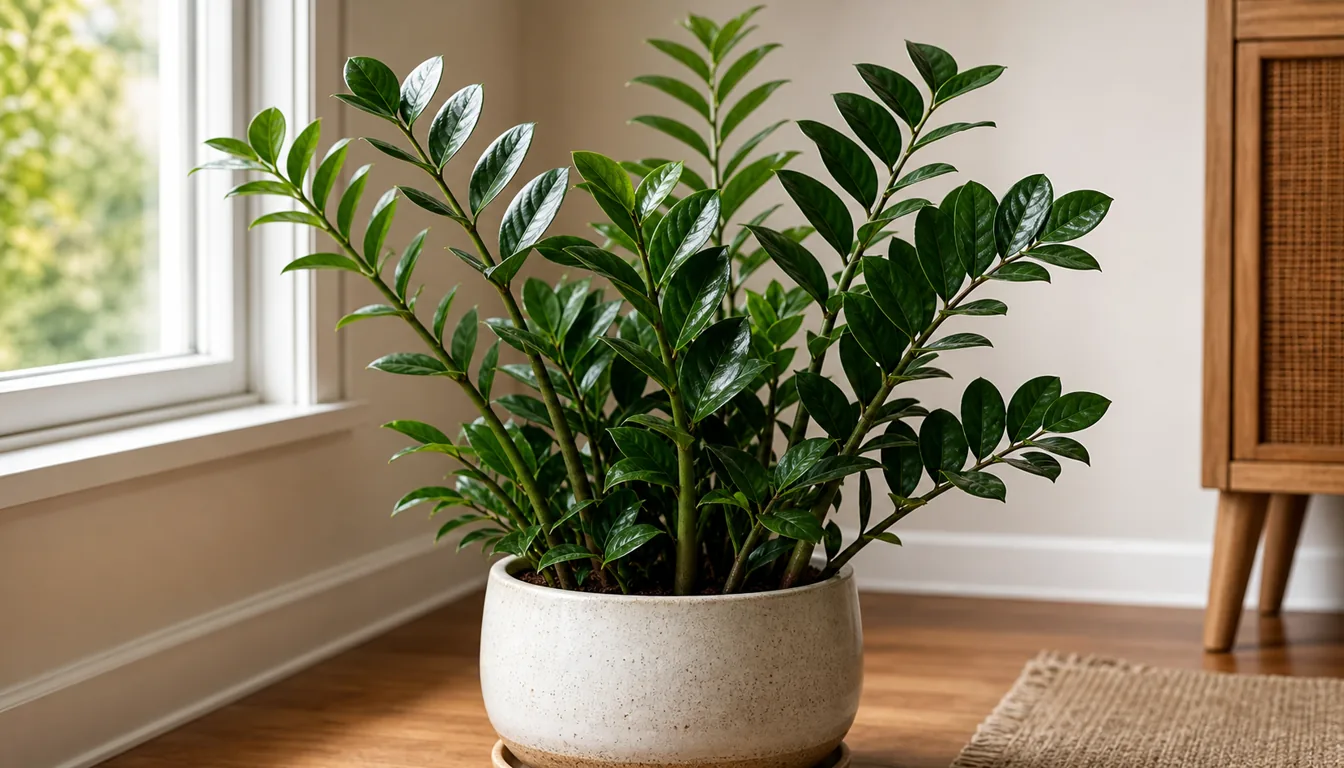
ZZ Plant
A low-water houseplant with arching stems and underground rhizomes.
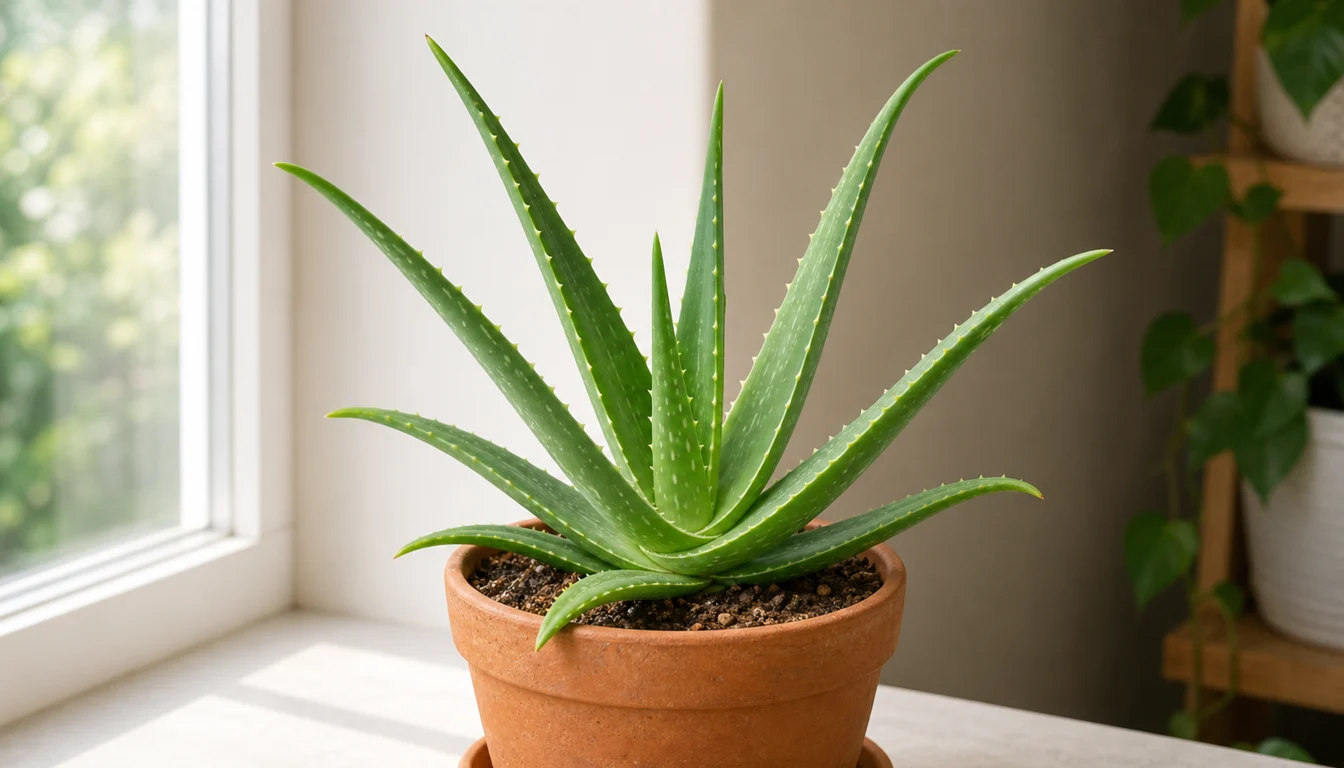
Aloe Vera
A sun-loving succulent with fleshy leaves and sparse watering needs.
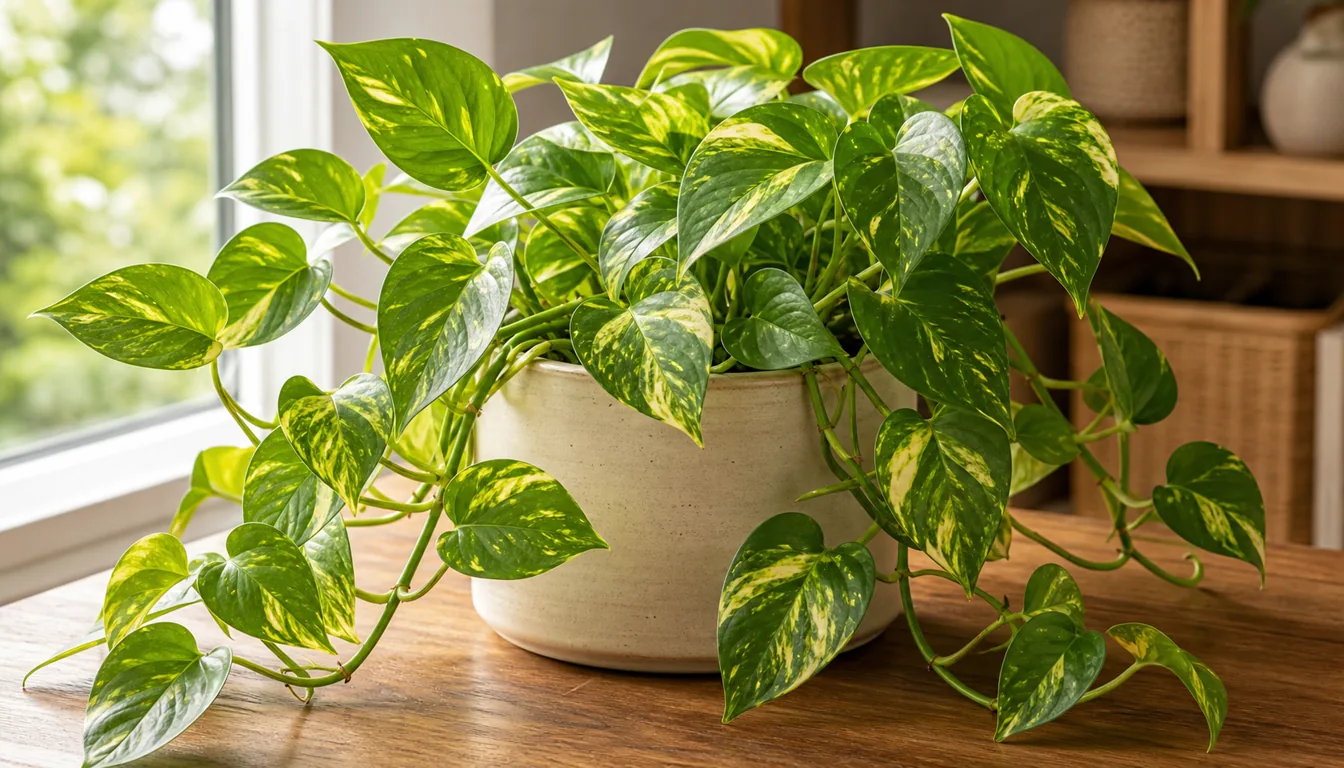
Golden Pothos
A forgiving trailing vine that prefers more frequent watering.
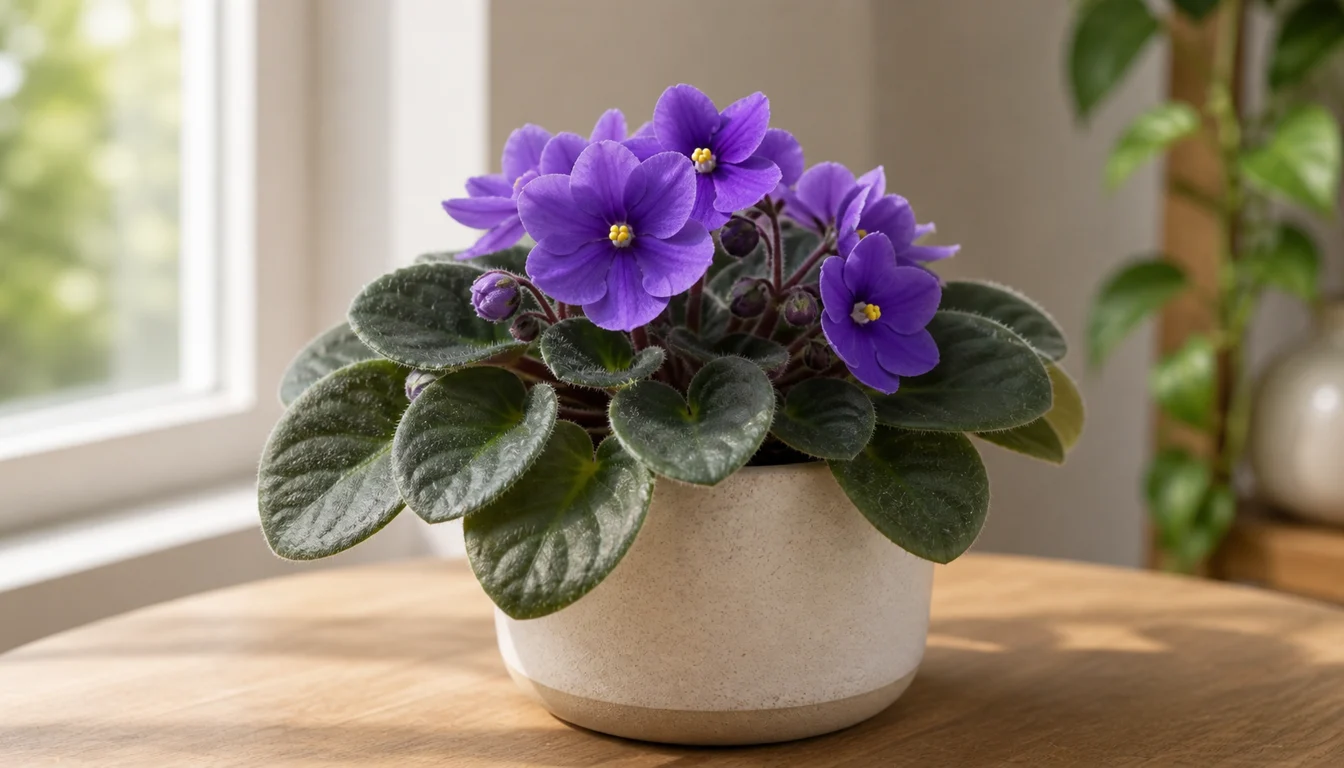
African Violet
African Violet is a windowsill bloomer that rewards steady, small-pot care.
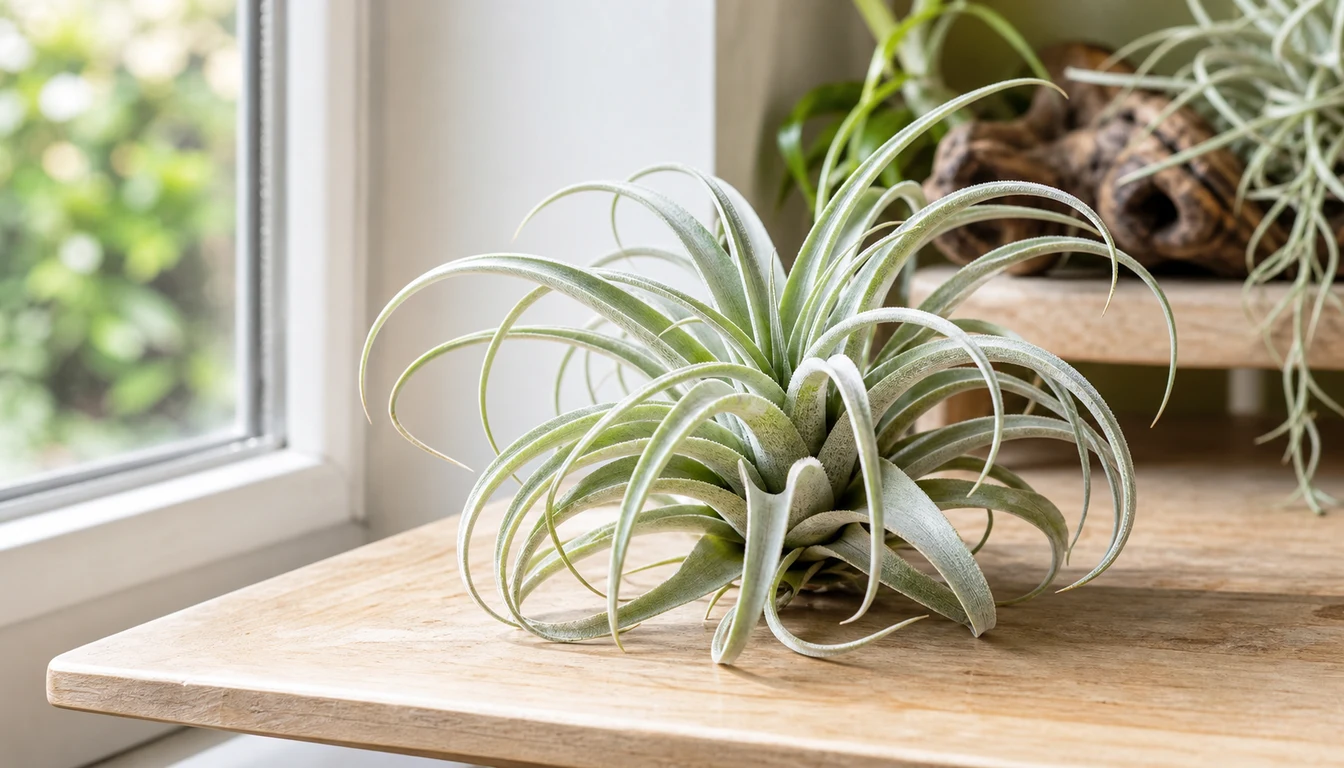
Air Plant
Air plants are living sculptures that thrive without soil, anchoring to driftwood, rocks, or shells while drawing…
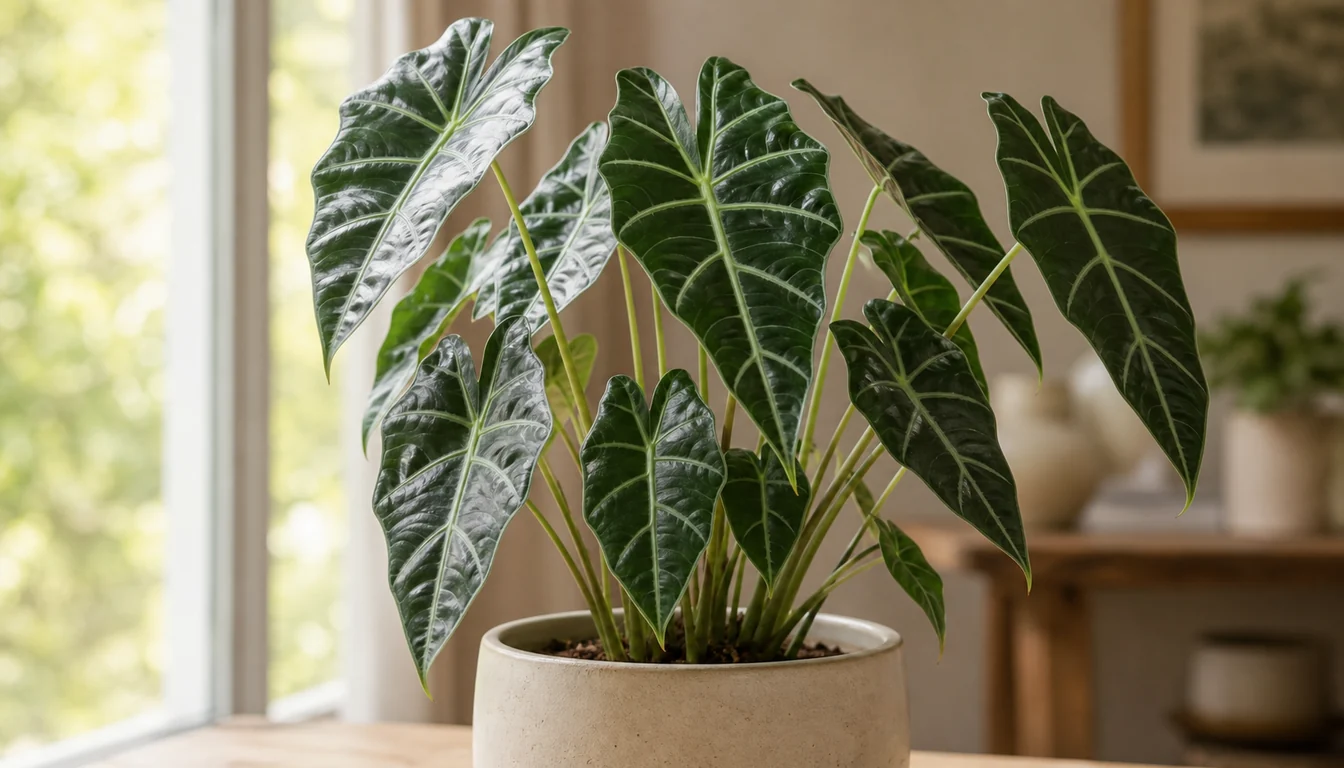
Alocasia
Alocasias include compact, textured houseplants and large elephant ears that need substantial floor space.