
How to Grow a ZZ Plant Without Overwatering Its Rhizomes
Zamioculcas zamiifolia Araceae
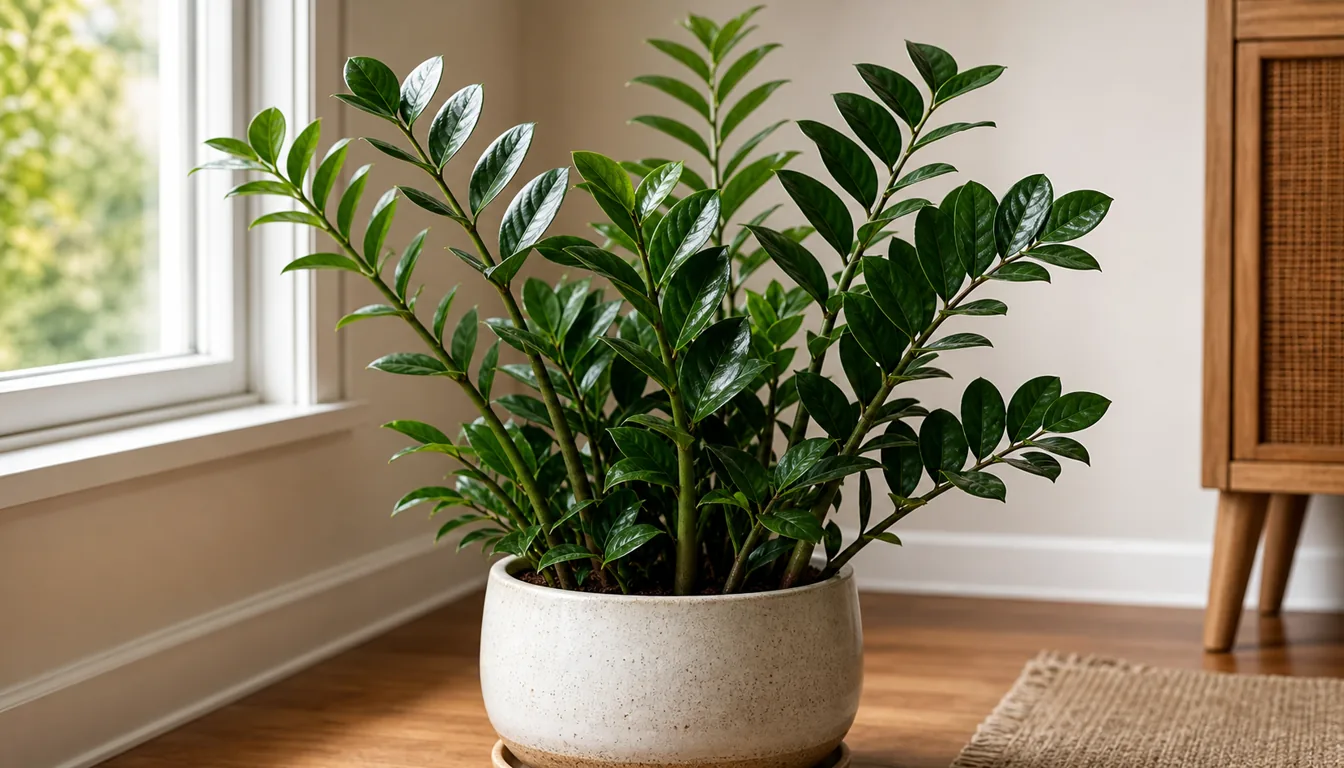
ZZ Plant stores water in fleshy underground rhizomes and tolerates drying between waterings. Its pot needs time to dry through, while enough light and a container suited to the roots support new growth.
Care snapshot
Why ZZ Plant Care Starts Below the Soil
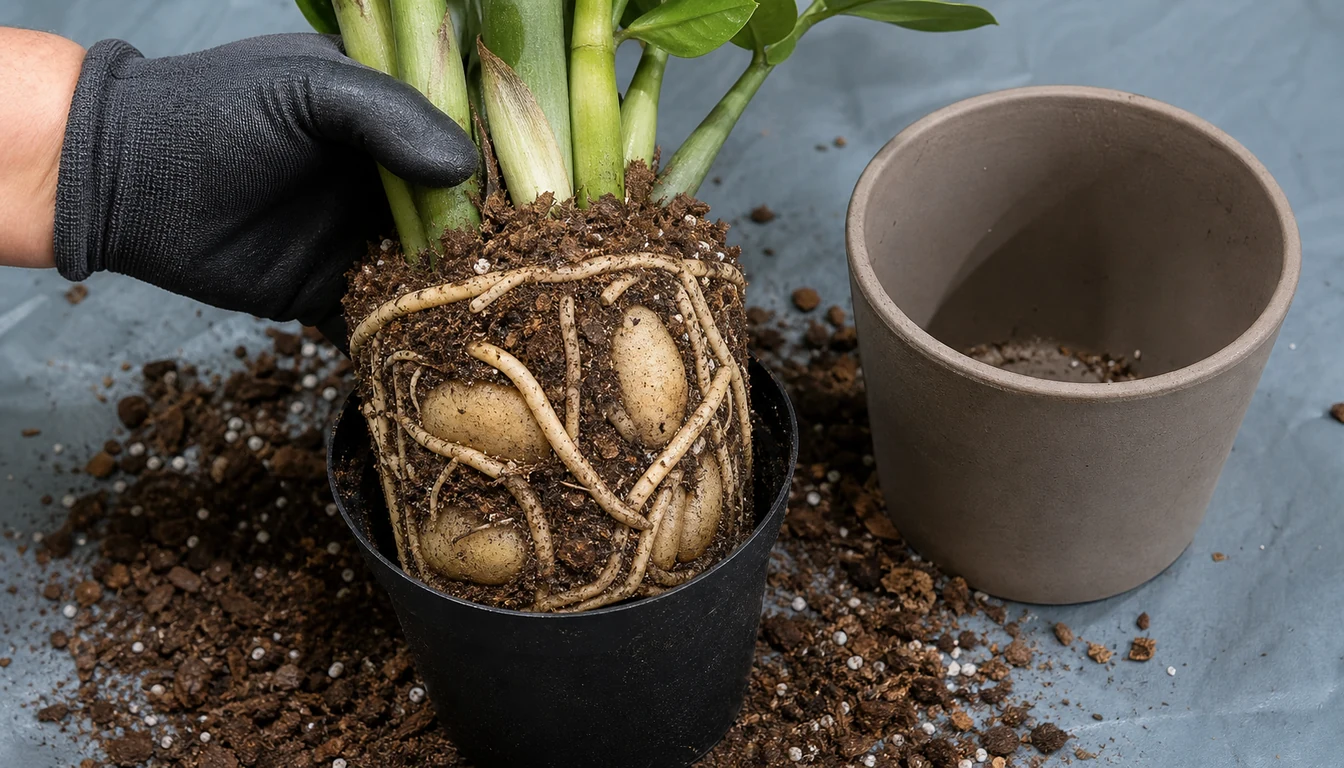
The fleshy rhizomes below a ZZ plant store water and produce new leaves. That reserve helps explain why a plant can remain green while its pot dries, but it does not make roots immune to damage in persistently wet mix.
The species is Zamioculcas zamiifolia, a member of the aroid family native to tropical Africa. Its glossy, thick foliage resembles a cycad, but the resemblance does not make it a palm or give it the same care requirements.
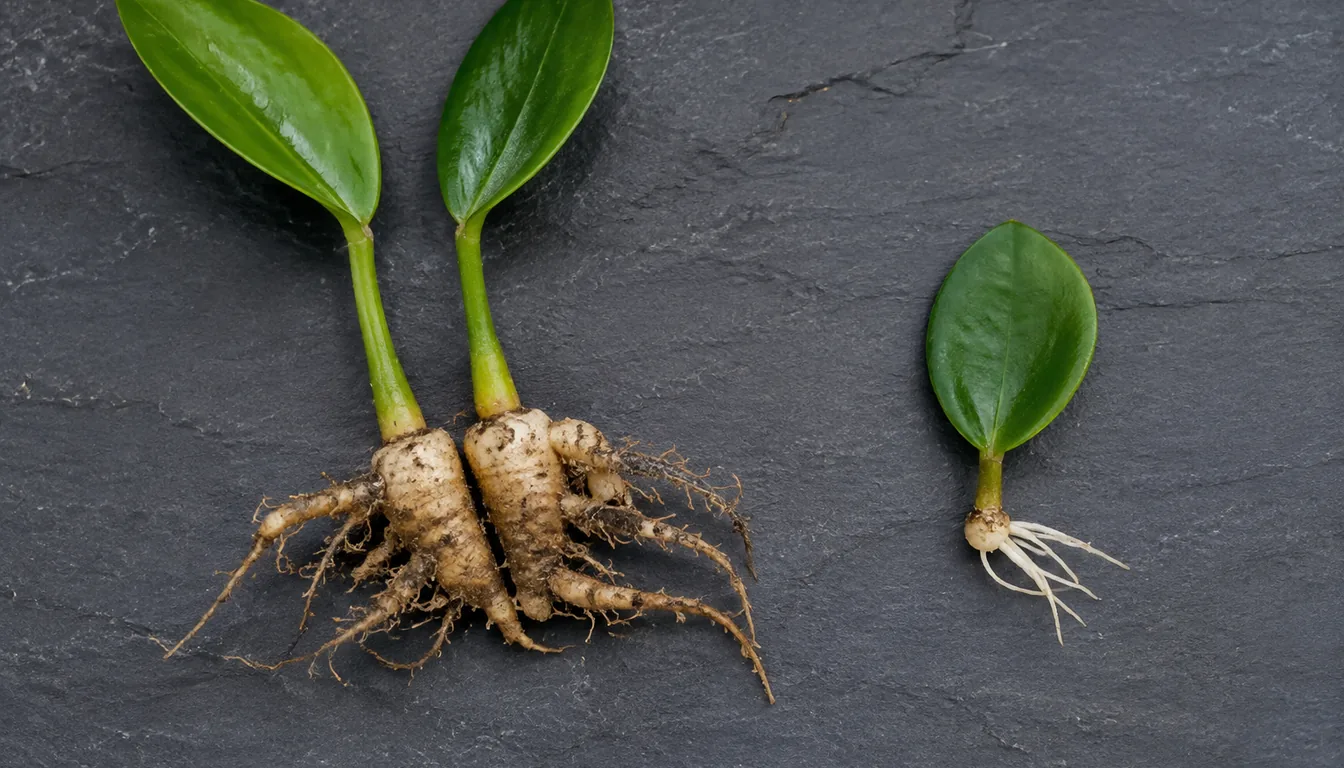
What looks like a row of upright stems is a group of compound leaves. Each has a thick stalk carrying smaller leaflets, while the swollen rhizome is an underground stem. This distinction matters during propagation because a detached leaflet has to form a new rhizome before it can build another leafy plant.
Stored water buys time during a dry spell. It does not replace the air roots need, and repeatedly watering still-damp mix can leave the root zone wet long after the visible surface has dried.
- Rhizomes
- Store water and produce new leaves
- Thick roots
- Need air between thorough soakings
- Compound leaves
- Carry the leaflets that collect light
- New spears
- Develop into another compound leaf
Established plants commonly reach 2 to 4 feet in height and width, with arching leaves taking more space than the pot suggests. Growth is naturally slow, and a pause in visible growth alone cannot tell you whether the plant is making roots, lacks light, or has another problem.
Green and dark-leaved cultivars share this basic structure. Their appearance can guide a purchase, but a color name does not establish how quickly a particular pot will dry.

How Dry Should a ZZ Plant Get Before Watering?
A ZZ plant does best with a clear drying interval between thorough waterings. A dry surface is only the first clue because moisture can remain much deeper around the rhizomes.
The surface can look dusty while the center of a tall plastic pot remains cool and wet, especially in low light, cool rooms, dense peat mixes, and containers much larger than the root ball.
For a manageable pot, its weight after draining provides a useful comparison with its weight several days later. A wooden skewer slipped gently into an open area of mix can add information about deeper moisture, but it samples only that spot. There is no need to force it through a rhizome or lift a heavy floor pot.
- Damp mix beneath the surface means another watering can wait.
- A lighter pot and dry mix at depth support watering, provided water can drain away.
- A soft yellow stalk beside wet mix calls for closer inspection, not a larger drink.
- Wrinkled leaflets beside dry mix make water shortage plausible, but leaf texture alone does not prove it.
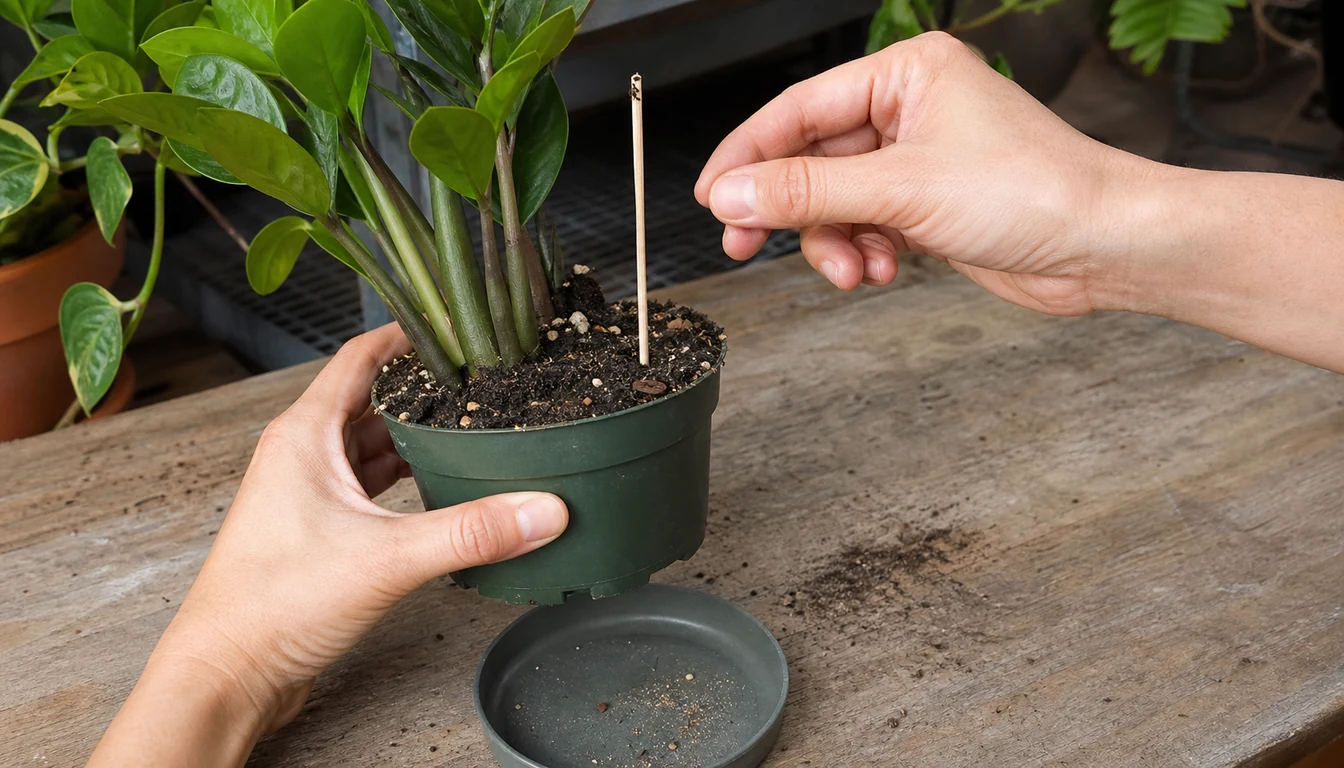
When the mix has dried, water slowly across the surface until excess leaves the drainage holes. The nursery pot needs to finish draining before it returns to a cover pot, with collected runoff emptied.
Repeated small drinks can wet only part of the root ball. If very dry mix sheds water down the sides, a quick burst of runoff does not prove that the center absorbed it. The useful result is an evenly moistened root ball that can drain, followed by another drying interval.
Bright warmth, new growth, container size, and the mix all affect the interval. A calendar can remind you to inspect the pot, but it cannot establish that watering is due.
Can a ZZ Plant Grow in a Dim Room?
ZZ tolerates lower light than many houseplants and may still produce leaves there, although brighter indirect light is a useful starting point for growth. A dim room and a room with no usable light are different conditions.
A strong lean or small new growth is a reason to inspect the light reaching the whole plant. It is not a light meter or a diagnosis, especially if the roots, temperature, or watering have also changed.
An east window or a bright position outside the direct beam of a south or west window is a practical starting point. In a windowless room, a timed grow light above the canopy gives a clearer and more consistent source than distant ceiling fixtures.
A warm indoor position away from cold glass, exterior doors, and heating vents avoids abrupt temperature stress. Ordinary room humidity does not call for routine misting, which cannot correct a dry root ball or weak light.
Direct sun can scorch leaves, particularly after a sudden move from shade. A tan patch on the window side fits that history but does not prove sun damage on its own. Firm, dark foliage also cannot rule out a root problem if other signs of decline are developing.
When Do Crowded ZZ Rhizomes Need a Bigger Pot?
An indoor potting mix needs both drainage and enough water retention to moisten the roots throughout. A suitable container mix with coarse particles can help maintain air spaces, but adding a small handful of perlite does not guarantee that a dense or oversized pot will dry well.
An unglazed clay pot can lose water through its walls, while plastic holds moisture longer under otherwise similar conditions. Either can work when its size matches the root mass and the drainage holes remain open.
A decorative cachepot can conceal standing runoff. Lifting out a small nursery pot for watering makes that water easier to see and empty. Stones underneath do not create an outlet from a closed container.
Repot when firm rhizomes distort or split a thin container, lift the clump above the rim, or leave so little mix that water bypasses the roots. Visible roots at one drainage hole are only a reason to inspect, not proof that the plant needs a much larger home.
For a crowded, healthy clump, a slightly larger container gives the rhizomes room without surrounding them with a large volume of wet mix. The plant can remain near its previous planting depth. Repotting damaged roots is a different job, and a reduced root mass may need the same size pot or a smaller one.
How Does ZZ Plant Care Change Through the Year?
Seasonal care follows the conditions at the plant, not a rule to halve every summer watering interval in winter. Shorter days and a cooler room may slow drying, while consistent warmth and a grow light can reduce that seasonal change.
- Less light or cooler mix
- Drying may take longer. Moisture at depth remains the watering check.
- Warmth and active new growth
- Inspect more often if the pot is drying faster, without assuming it needs water each time.
- Cold window or draft
- Move away from the exposure. Extra water or fertilizer does not warm the roots.
- No new leaves, otherwise stable
- Review light and root conditions before treating slow growth as a deficiency.
Fertilizer is a supplement for a plant that has suitable growing conditions. A modest application of a houseplant product according to its label is more useful than repeated feeding to force a new leaf, particularly if the mix already contains fertilizer. Pausing growth is not evidence that the plant needs a stronger dose.
Scale insects are a recognized problem on ZZ, even though the species often has few pest difficulties. Raised bumps, sticky residue, or damaged new growth justify a close look at leaflet undersides and stalk joints. The absence of scale does not exclude other pests or root trouble.
What Do Wrinkled Leaflets and Soft Yellow Stalks Mean?
Color alone cannot diagnose a ZZ plant. Leaf texture, damage location, the recent care history, and moisture below the surface help decide what to inspect before watering or disturbing the roots.
Wrinkled leaflets beside very dry mix make a prolonged dry spell plausible. Yellowing or collapsing leaf bases beside wet mix raise concern about the root zone. These combinations guide the next check, but damaged roots can also leave foliage short of water.
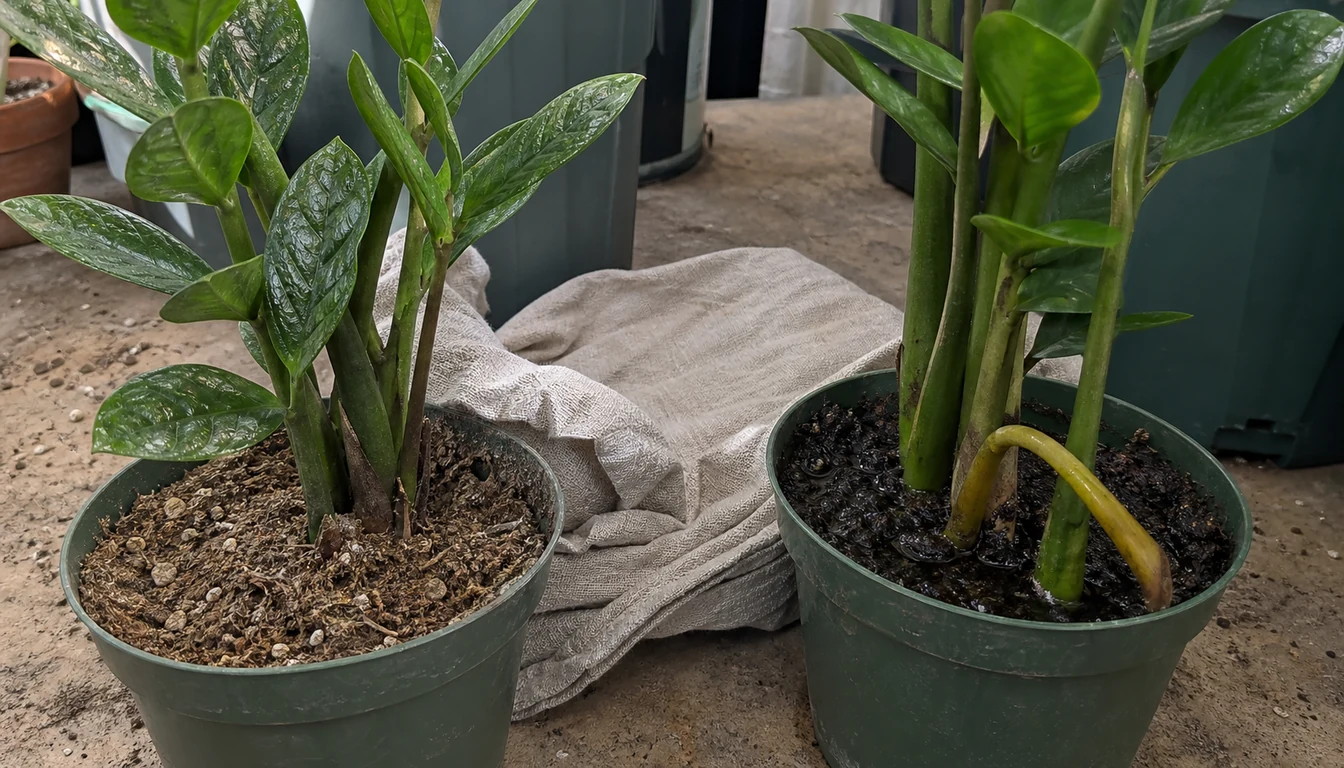
- Wrinkles and dry mix at depth
- Water shortage is plausible. Restore an even watering and observe whether decline continues.
- Yellow or collapsing base with wet mix
- Check trapped runoff and drainage. Continued collapse warrants root and rhizome inspection.
- Tan patch facing the window
- Compare its position with recent sun, hot glass, cold exposure, or handling damage.
- Dull film that wipes away
- Dust can obscure the natural gloss. Cleaning reveals whether underlying tissue is damaged.
- Raised bumps or sticky residue
- Inspect for insects before selecting a treatment. Different pests can leave similar clues.
A change affecting many leaves matters more than one aging leaflet. Progressive collapse, spreading damage, or symptoms that do not fit the watering history deserve further investigation rather than another automatic adjustment.
A damp cloth can remove dust without leaf polish. It also makes attached bumps and damaged tissue easier to examine, but a wipe test alone cannot identify a pest. Treatment needs to match the insect and a product label that permits indoor use on that plant.
If the plant continues to collapse or has soft tissue near soil level, gentle unpotting can reveal damaged roots or rhizomes. Soft, decayed tissue does not become healthy again after drying, and a firm-looking portion is not proof that disease is absent. Widespread damage may make disposal more practical than repeated cutting and replanting.
Recovery is judged from stable remaining tissue and subsequent growth, not a promised number of days. Yellow or dead tissue will not regain its original appearance, even when the underlying conditions improve.
Should You Divide a ZZ Plant or Root a Leaflet?
Division starts with an existing rhizome, roots, and leafy growth, so it gives you a recognizable plant sooner than starting from a small cutting. It also disturbs the parent and is most useful when a healthy clump already needs separation or repotting.
Separate natural clumps gently, keeping viable rhizome tissue and attached roots with each piece. A clean, sharp tool is needed where tissue must be cut. Each division fits into a container suited to its own roots, near its previous depth, with care adjusted while it settles.
An individual leaflet or a whole compound leaf can also be used as a cutting. UF/IFAS illustrates the crucial sequence for a leaflet: a new rhizome forms at its base, roots develop, and new leafy growth follows. Visible growth can take many months, so division and a leaflet cutting are not equivalent shortcuts.
- Rhizome division
- Starts with an established storage organ and roots, but requires disturbance of the clump.
- Whole-leaf cutting
- Uses a larger piece of foliage while a new root and rhizome system develops.
- Single leaflet
- Removes less foliage but begins with a very small reserve and needs time to form a new plant.
Cuttings need warmth, indirect light, and a medium that stays lightly moist without remaining saturated. Repeatedly pulling them out to look for roots can damage developing tissue. A green cutting may be alive without having rooted yet. A soft or decaying base is a warning, not proof of one particular watering mistake.
Where Can You Keep a ZZ Plant Safely?
NC State lists Zamioculcas zamiifolia as toxic to dogs and cats and identifies calcium oxalate as its toxic principle. That species evidence does not establish a safe amount to chew or predict how an individual animal will respond.
For people, Queensland Poisons Information Centre warns that all plant parts are poisonous and that chewing can cause mouth pain or swelling. It also identifies skin and eye irritation. The leaves are not the only material that needs to stay away from children and pets.
A stable, inaccessible position reduces access to the plant, but a floor pot or high shelf is not a reliable barrier for every animal. Gloves during cutting, prompt collection of fallen pieces, and clean tools reduce accidental contact while repotting or propagating.
Sources & References
- NC State Extension Plant Toolbox: Zamioculcas zamiifolia
- UF/IFAS EP252: Cultural Guidelines for Commercial Production of Interiorscape ZZ
- Queensland Poisons Information Centre: Zanzibar gem (Zamioculcas zamiifolia)
- Illinois Extension: ZZ Plant Is a Tropical That Thrives Indoors
- University of Minnesota Extension: Insects on Indoor Plants
- University of Georgia Extension, Growing Indoor Plants with Success, Bulletin 1318
- ASPCA: What to Do if Your Pet Is Poisoned
Related Plants
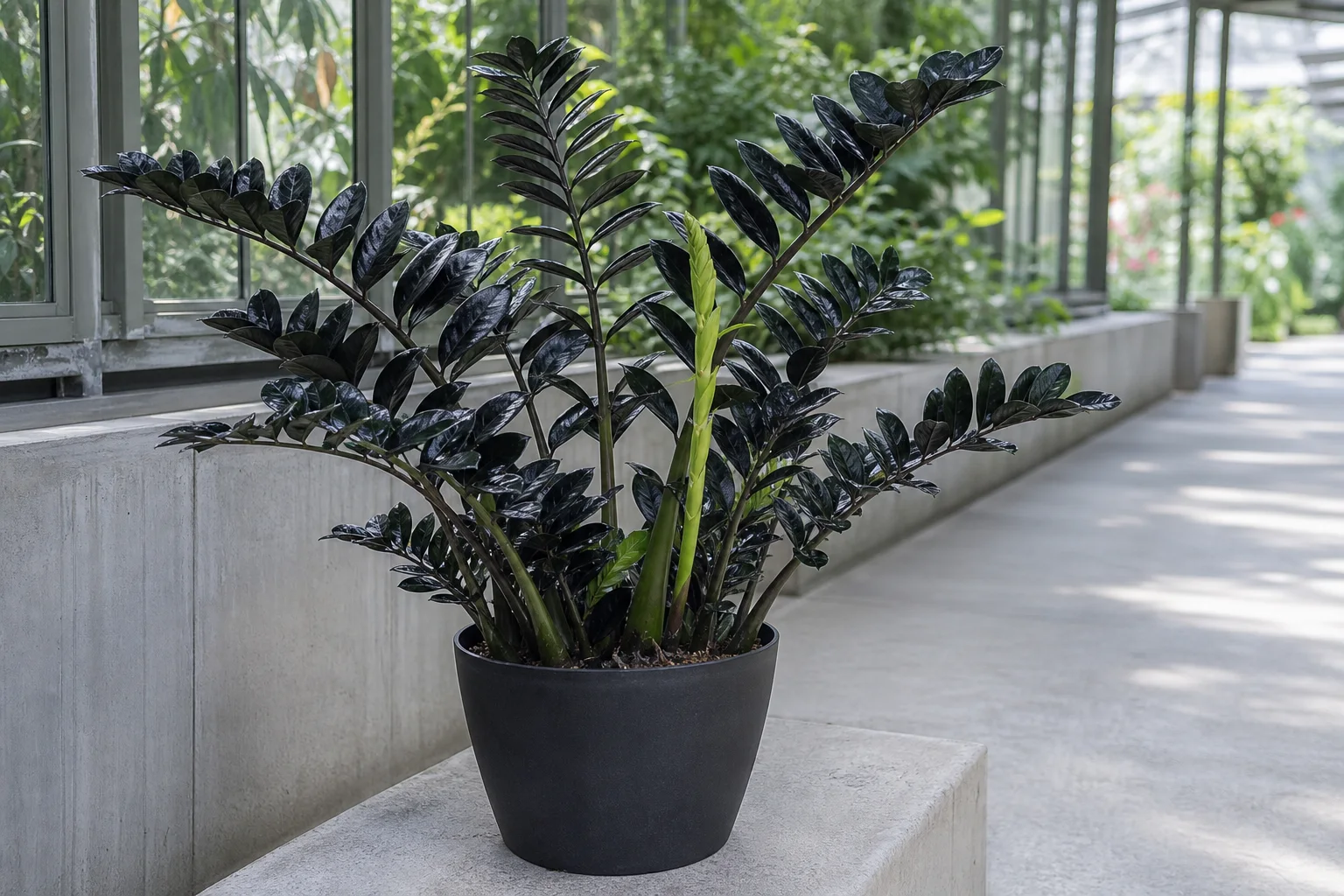
Raven ZZ Plant
A dark-leaved ZZ cultivar with the same water-storing rhizome structure.
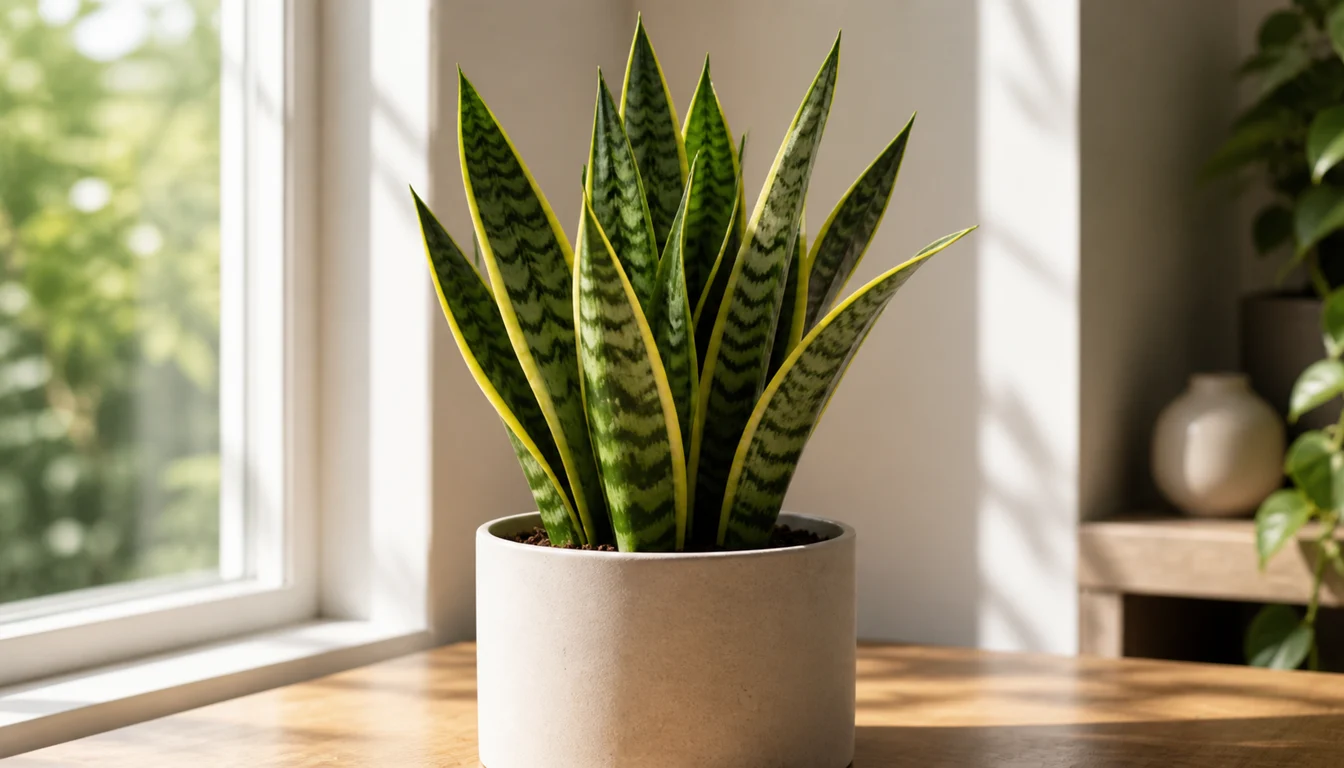
Snake Plant
A narrower upright choice that also tolerates broad dry-down and lower indoor light.
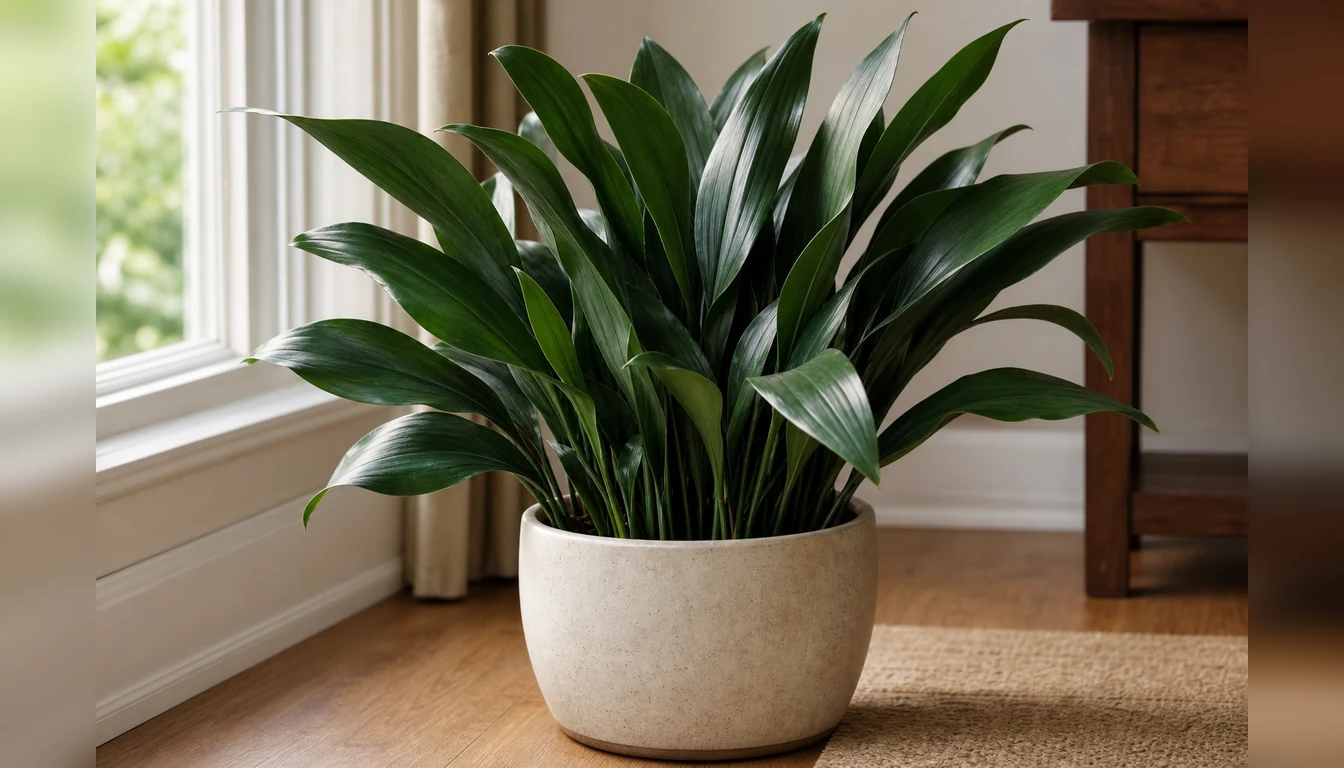
Cast Iron Plant
A broad-leaved alternative for lower-light indoor positions.
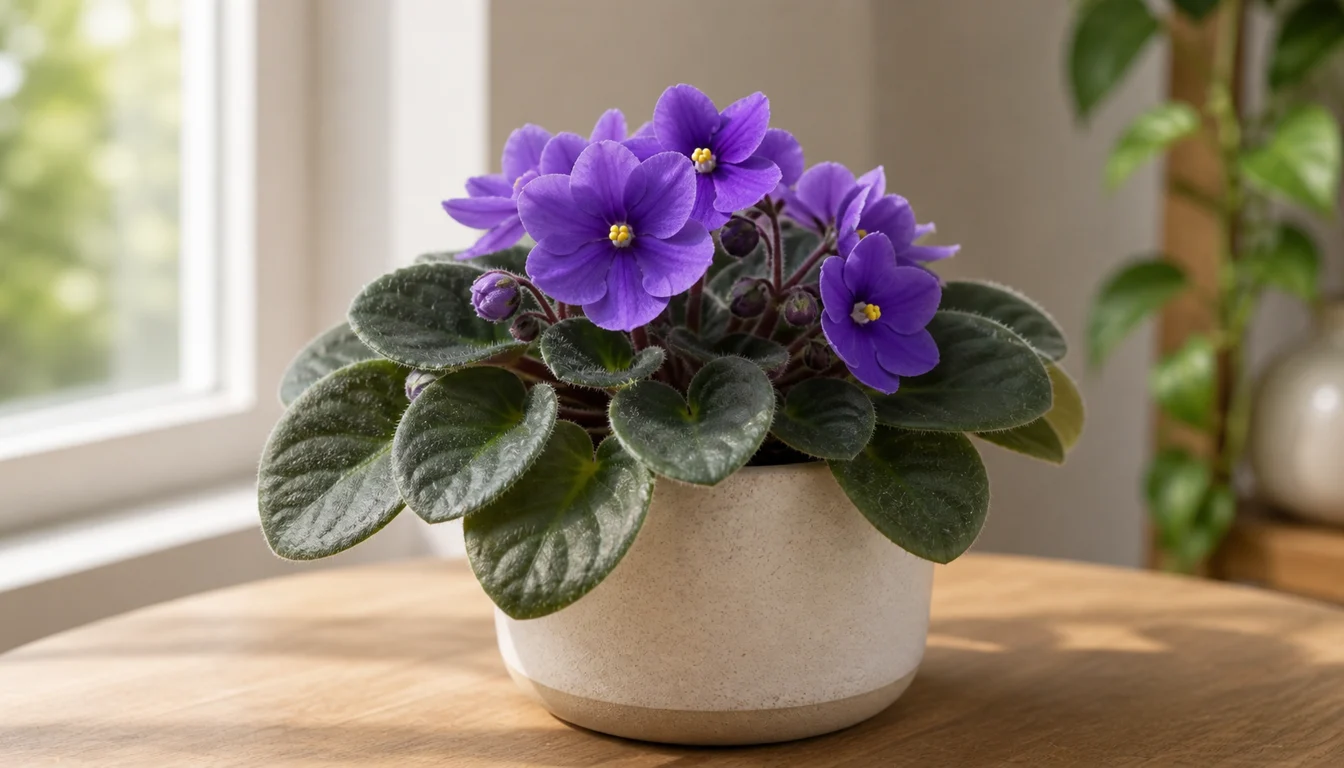
African Violet
African Violet is a windowsill bloomer that rewards steady, small-pot care.
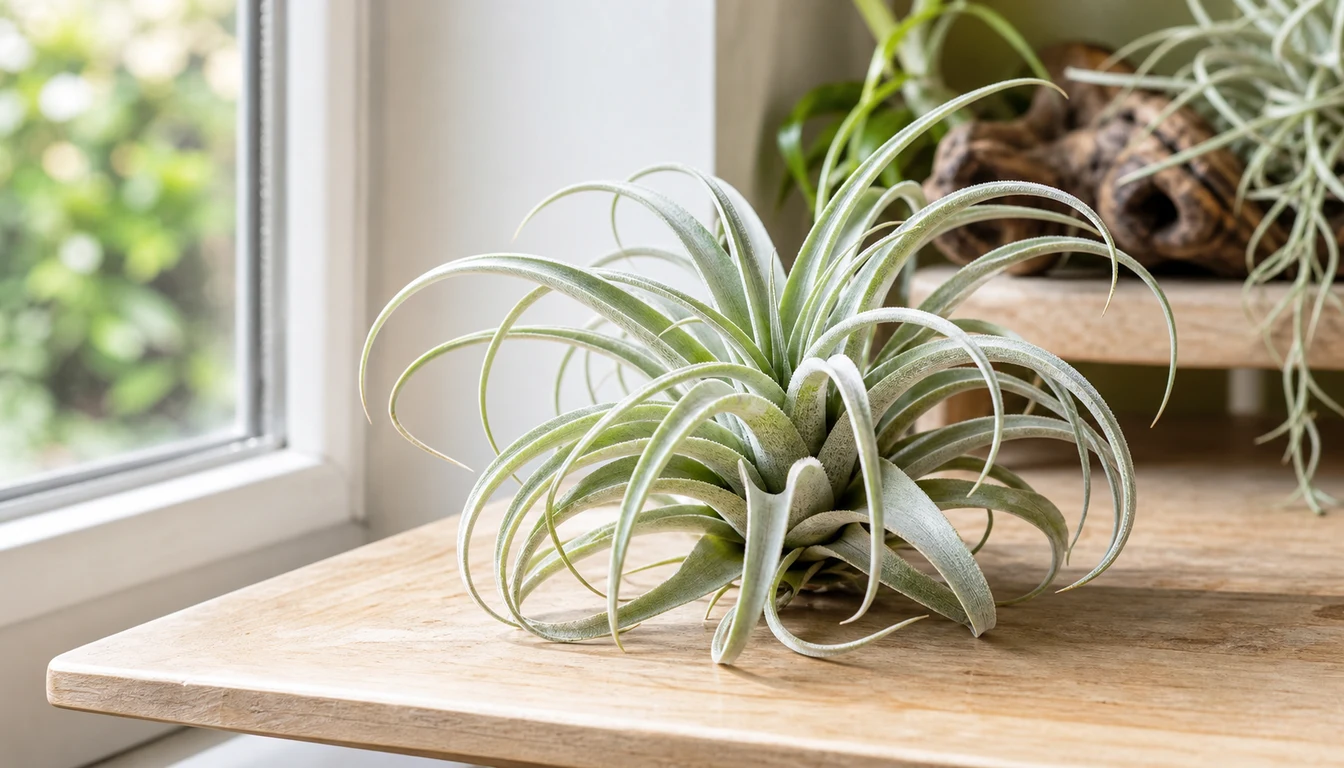
Air Plant
Air plants are living sculptures that thrive without soil, anchoring to driftwood, rocks, or shells while drawing…
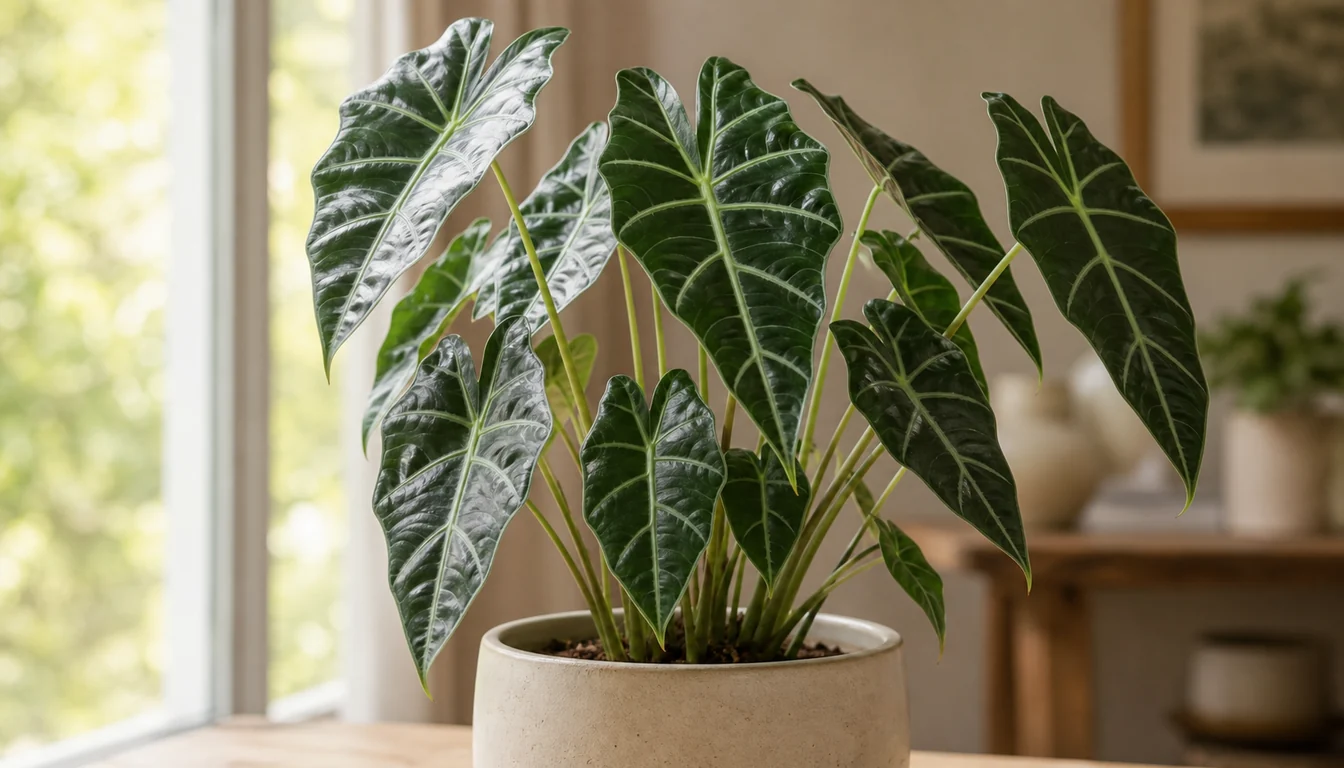
Alocasia
Alocasias include compact, textured houseplants and large elephant ears that need substantial floor space.