
Best Time to Water Flowers for Stronger Blooms
Watering flowers at the wrong time does more damage than skipping a day. Good timing gives you deeper roots, longer bloom seasons, and fewer fungal problems; morning watering is usually best, but shade, soil, and climate all tweak the rules.
This guide shows how to time watering for beds, pots, and hanging baskets, plus how to adjust in heat waves and cool spells. The same timing principles help annual beds, classic rose bushes, and mixed perennial borders. Early morning, before 10 a.m., is the safest default for most flower beds.
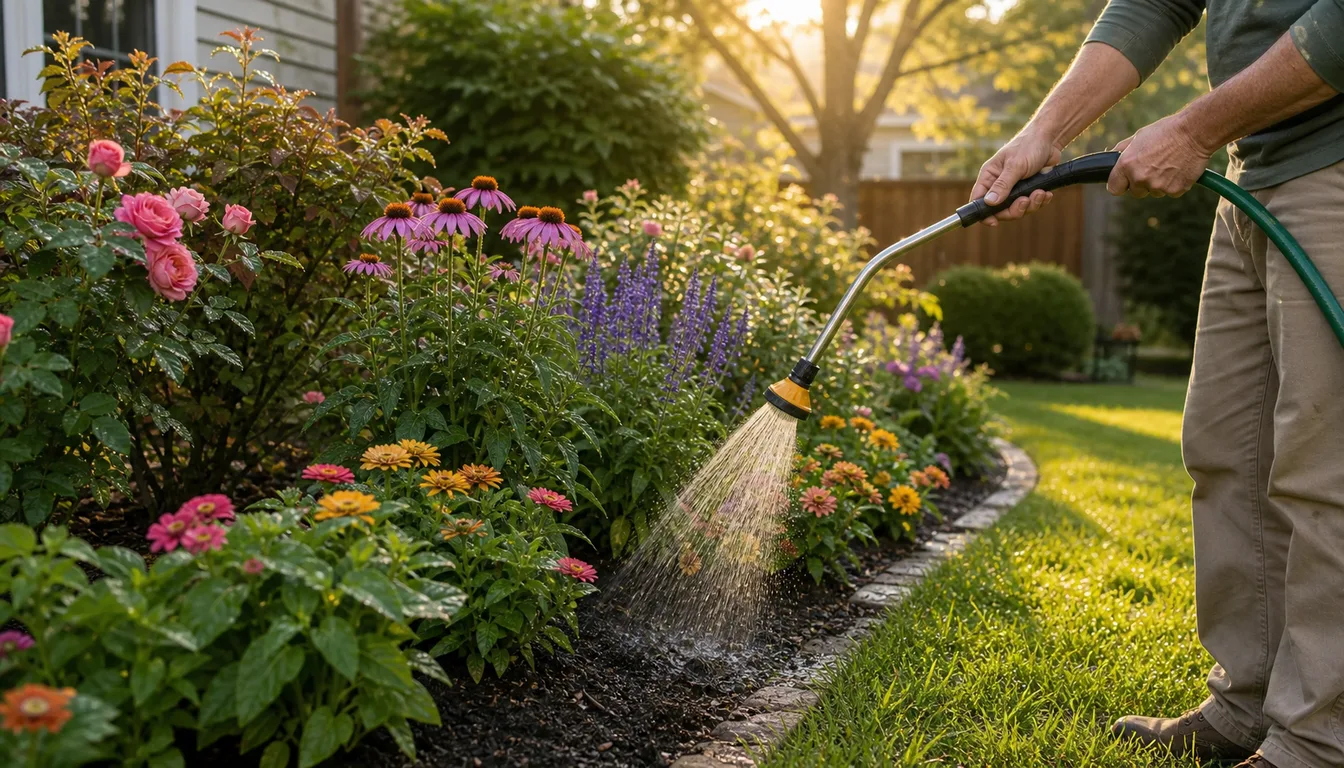
Why Timing Matters More Than You Think
Flower roots do their heavy lifting when soil is cool and moist, not when the top inch is hot and steaming. That is why watering at the right time can double how long your blooms hold on.
Early watering also controls disease. Wet leaves that sit overnight invite mildew on plants like garden peonies and black spot on old rose varieties. Dry foliage by sunset keeps most fungal problems in check without spraying.
Timing even affects fertilizer. If you feed your flower beds following a vegetable garden feeding schedule, you still need moisture in the root zone when nutrients arrive. Otherwise, fertilizer sits on top and can burn tender roots.
The biggest win is simple, consistent morning watering that soaks the root zone and dries the leaves before nightfall.
- Root health: Cool, moist soil lets roots pull nutrients without stress.
- Disease control: Dry evening foliage cuts mildew and leaf spot.
- Water savings: Less evaporation means fewer gallons from the hose.
- Stronger blooms: Steady moisture keeps petals from wilting or browning early.
Morning vs Evening: What Actually Works Best
Cool, still early mornings are the sweet spot for almost every flower bed. Air is calm, soil soaks up moisture, and leaves dry quickly as the sun climbs.
In hot summers, especially in zones 8-11, early watering prevents midday stress. Shallow rooted shade annuals struggle less when soil starts the day fully hydrated instead of playing catch up.
Evening watering is tempting after work, but it is riskier. Leaves that stay damp through the night invite mildew on tall phlox. They also encourage spots on large hydrangea leaves and rust on hollyhocks. Wet soil also cools more, which can slow roots in cooler zones.
If you must water late, use drip, soaker hoses, or careful hand watering at the base and avoid soaking foliage.
Midday watering is not illegal, just less efficient. You can still help drooping tomato vines or container flowers at noon, but expect more loss to evaporation and shallow rooting if it becomes a habit.
- Best overall: Early morning, before 10 a.m.
- Second choice: Late afternoon, with at least 2-3 hours of drying time.
- Use sparingly: Midday, for emergency wilting.
- Avoid when possible: Late evening, especially on disease prone varieties.
Adjusting Watering Time by Season and Zone
Spring soil warms slowly, so roots are still shallow and tender. Water mid to late morning so beds have time to warm slightly but still enjoy long cool hours with moist soil.
By midsummer, especially in zone 7 and warmer, nights stay hot and dry. Morning watering becomes critical for thirsty plants like bigleaf hydrangeas and heavy feeders in mixed borders.
In cooler zones 3-5, evenings can stay chilly even in early summer. Water early so roots have daylight warmth to recover. Cold, wet soil overnight around hosta clumps can slow growth. The same slowdown shows up around daylily fans when soil stays chilled after dusk.
Fall often brings dew and longer nights. You may be able to stretch the time between waterings for established perennials and late annuals. Focus on checking soil moisture instead of following a strict calendar schedule.
Use soil conditions, not the calendar, to decide when flowers need water.
Let the season set the default, then let the soil decide whether you actually turn on the hose.
- Cool spring: Late morning watering keeps roots active.
- Hot summer: Early morning every time you can manage it.
- Cool nights: Avoid soaking soil right before dark.
- Dry, windy days: Expect to water beds and flower containers more often.
Beds vs Containers vs Hanging Baskets
In-ground beds hold moisture longer because surrounding soil acts like a reservoir. A deep morning soak can carry most perennials and annual beds through a full summer day.
Containers heat up and dry out quickly, especially dark pots in full sun. Hanging baskets are even more exposed and often packed with roots. They may need morning watering plus a quick afternoon check.
Bed plantings, like a sweep of coneflower drifts, handle short dry spells if roots are deep. But a porch pot stuffed with petunia blooms wilts fast when the small soil volume dries.
Assume potted flowers need water about twice as often as the same plant in a garden bed, especially in hot weather.
The smaller the soil volume, the more often you should check it during heat.
- Flower beds: Deep soak in the morning, every few days depending on soil.
- Containers: Morning watering, with afternoon checks during heat.
- Hanging baskets: Daily morning watering in summer, sometimes again by late afternoon.
- Indoor pots: Follow similar timing ideas, then adjust using houseplant watering cues.
Match Watering Time to Soil and Mulch
Soil type changes how fast water moves and when your flowers prefer a drink. Sandy beds dry out fast, so early morning watering is safer because the soil will not stay soggy long.
Heavy clay holds water for days, so timing is less about speed and more about avoiding saturation. Aim for gentle morning soakings and double check moisture before watering again.
Mulch acts like shade for soil. A 2–3 inch layer around coneflower clumps or daylily fans keeps roots cooler so they tolerate later morning watering without stress.
In bare soil, the surface heats and crusts quickly. Early watering is critical there, or you end up with runoff and dry roots even though you ran the hose for twenty minutes.
- Sandy beds: Water in the coolest part of the morning so moisture sinks before heat.
- Clay soil: Space watering days, and only water once the top 2 inches feel dry.
- Mulched beds: Water a bit longer, since mulch must get wet before soil benefits.
- Bare soil: Add mulch or shorten watering sessions to avoid losing water to runoff.
Timing Around Rain, Irrigation, and Fertilizer
Weather and other yard routines can help or hurt your flowers if you ignore timing. Light showers rarely soak roots, so they do not replace a deep morning watering.
A slow overnight rain that leaves soil dark and cool usually means you can skip watering for a day or two. Stick your finger 2 inches down to confirm before hauling hoses.
If you have lawn sprinklers, flower beds around hydrangea borders or hosta groupings might get hit at odd times. Early morning cycles are fine, but midafternoon runs waste water and invite mildew on crowded beds.
Fertilizer timing matters too. Liquid feeds for containers of petunia mounds or mixed baskets go on best in the morning right after a light prewatering, so nutrients do not burn dry roots.
- Before a storm: Water containers lightly so potting mix absorbs incoming rain.
- After a storm: Delay watering until soil lightens in color and feels only slightly damp.
- With sprinklers: Set flower zones to run near dawn or coordinate with lawn cycles.
- When fertilizing: Moisten soil first, feed in the morning, then water again to wash in.
That prewatering step matters most when fertilizer is involved.
Never apply high-strength liquid fertilizer to bone-dry soil, because roots can scorch within hours.
Diagnosing Problems Caused by Bad Timing
Many flower problems blamed on pests or "weak plants" start with watering at the wrong time. Afternoon hose sessions in full sun can leave rose shrubs with crispy edges even when soil is damp.
Persistent morning dew plus late evening watering keeps foliage wet for 12 hours or more. That invites black spot on roses. It also invites powdery mildew on phlox panicles and salvia stalks.
Wilting right after midday watering often signals cooked roots, not thirst. Cool water on hot soil creates steam pockets around shallow roots in new plantings, especially annuals and fresh transplants.
Yellowing lower leaves on containers that are watered nightly can point toward root rot, similar to what you see in overwatered pothos indoors. Adjusting timing to earlier and easing off frequency usually stops the slide.
- Evening-only watering: Watch for fuzzy mildew, dark leaf spots, and slimy stems.
- Midday watering: Note quick wilting afterward, leaf scorch, or cracked soil crusts.
- Random timing: Expect shallow roots that collapse during the first real heat wave.
- Consistent mornings: Flowers perk up faster and new growth looks sturdier within weeks.
Track the symptom for a week after changing timing instead of adding another product right away.
If you change timing and symptoms improve within 7-10 days, you likely found the real problem.
Special Timing Rules for Different Flower Types
Different flowers react to timing in their own way. Deep rooted perennials like black eyed susan swaths shrug off small timing mistakes, while shallow annuals in hot sun can collapse from one bad day.
Bulbs such as tulip clumps prefer evenly moist soil during active growth, then much drier conditions as foliage dies back. The same pattern applies to daffodil drifts. Water both in the morning during spring, then cut back instead of switching times.
Shade lovers like astilbe plumes usually live under trees where soil dries slowly. Bleeding heart follows the same pattern there, since foliage stays cool and rarely bakes. Late morning watering works well in that cooler pocket.
Sun-baked annuals, including lantana mounds, need strong morning watering so they can ride out hot afternoons. Verbena trails behave the same way in exposed pots and borders. For full-sun beds, assume earlier is always safer.
- Bulbs in spring: Water in the first half of the day, then taper off as leaves yellow.
- Deep perennials: Give one strong morning soak once or twice a week, not daily sprinkles.
- Shade flowers: Aim for midmorning so foliage dries by lunchtime but soil stays cool.
- Heat-loving annuals: Never skip an early watering before forecasted highs above 85°F.
Advanced Timing Tricks for Busy Gardeners
Busy schedules rarely match perfect watering windows, so timing tricks help. Soaker hoses in rows of shasta daisy or coneflower borders can run on a timer just before dawn while you sleep.
Self-watering containers let you fill a reservoir when you get home from work, but roots drink overnight and early morning when conditions are better. This helps heat-prone flowers like patio petunias avoid midday stress.
If you use drip lines, set them to finish watering about 30–60 minutes before sunrise ends. Soil will be fully soaked, but foliage gets a chance to dry as light levels rise.
Traveling during summer is risky for flowers and for houseplants like peace lily clumps that need steady moisture. Group containers in bright shade, water deeply right before you leave, and have a neighbor top them up early every third day.
- Timers: Program start times between 3–5 a.m. so systems finish near sunrise.
- Drip on a slope: Schedule shorter, repeated early cycles to avoid runoff downhill.
- Vacation prep: Mulch containers and beds heavily the evening before a trip.
- Split schedules: Water thirsty containers daily, but beds only every few days, both mornings.
Even a basic timer is better than a perfect plan you cannot repeat.
Automating at least part of your routine is the easiest way to stick with ideal watering times all season.
Pro Tips
- Water early in the day so leaves can dry completely before night.
- Push a finger 2 inches into soil and only water when that layer feels dry.
- Give containers enough water that 10–20% drains out of the bottom holes.
- Use soaker hoses in long beds of flowers to keep foliage dry and timing flexible.
- On extreme heat days, check hanging baskets again around midafternoon for wilting.
- Group thirsty bloomers together so they can share the same watering schedule.
- Mulch beds with 2–3 inches of compost or bark to stretch time between waterings.
Frequently Asked Questions
Is it ever okay to water flowers at night?
Night watering is a last resort. Cool temperatures slow evaporation, but leaves stay wet for hours, which encourages disease. If you must water late, keep water at soil level and avoid splashing foliage.
Can I water flowers in the middle of a hot day?
Only water midday if plants are wilting hard and soil is bone dry. Use a gentle stream at soil level, not over the leaves. Plan a deeper watering the next morning to reset the schedule.
How often should I water flowers if I use mulch?
With 2–3 inches of mulch, most in-ground flowers need deep watering once or twice a week in summer. Always check moisture under the mulch at 2 inches deep and only water when it feels dry to slightly damp.
What is the best watering time for potted flowers?
Water containers in the morning until water runs from the drainage holes. In high heat, check again in late afternoon, but only water if the top couple inches are dry and plants are starting to wilt.
Does watering timing change for shade flowers?
Shade flowers tolerate a wider timing window because soil stays cooler. Late morning usually works well. Just avoid soaking leaves late in the evening so they do not stay wet overnight.
Sources & References
Related Guides
Best Time to Water Indoor Plants for Healthy Growth
Most indoor plants die from watering at the wrong time, not from black thumbs. Timing affects how…
11 min read
Best Time to Water Plants for Healthier Roots
Watering at the wrong time wastes water and stresses plants, even if you are generous with the…
11 min readCan an Overwatered Plant Recover? Check the Roots First
Wilting leaves, soggy soil, and that swampy smell usually point to one problem, too much water. The…
11 min read