
Pick the Plant Your Room Can Actually Support
Most disappointing houseplants were the wrong plant for the room rather than the wrong owner. The plant looked good on the shelf, the tag said easy, and nothing in the shop asked what the corner it was heading for actually offers.
The useful order runs the other way. Measure the spot, be honest about how often you will be there, check what the plant becomes, and only then look at leaves.
At a glance
Measure Your Light Instead of Guessing It
Human eyes are the problem here. They adjust across an enormous range without telling you they have done it, so a room that reads as bright and airy can be delivering a small fraction of what the plant met in the nursery.
There is a free test that settles it in two seconds. Put a sheet of white paper where the plant will stand, hold your hand about a foot above it in the middle of the day, and look at the edge of the shadow rather than at the room.
Distance from the glass matters more than which way the window faces. Light falls away sharply as you move back, so a spot three or four feet into the room can be half of what the sill gets, and the test has to be run at the exact place the pot will sit.

| Shadow you see | Light level | What will grow there |
|---|---|---|
| Crisp edge, clearly separated fingers | Bright | Almost anything, including succulents, cacti, and fruiting plants |
| Soft edge, fingers visible but blurred | Medium | Most aroids and foliage plants, and the widest general choice |
| Faint, blurred, hard to make out | Low | A short list of tolerant plants only, and growth will be slow |
| No visible shadow at all | Too dark | Nothing will grow, though tolerant plants may survive a while |
Then Choose for the Watering You Will Actually Do
The question worth answering is not how often the plant wants water but how often you will genuinely be standing in front of it with a watering can, in the version of your life that actually happens rather than the one you are planning.
Err toward neglect if you are unsure, because the two failure directions are not equal. A drought-tolerant plant forgives a forgotten fortnight, and almost nothing forgives being watered on schedule while it sits in the dark.
- Do you travel for weeks at a time? That rules out thin-leaved plants like ferns and calathea, whatever the light is.
- Do you enjoy the routine, or resent it? Someone who likes puttering can grow the fussier things, and someone who does not should stop pretending otherwise.
- Is the spot somewhere you pass daily? A plant out of your path gets forgotten regardless of intentions.
- Do you tend to fuss when something looks unhappy? If so, buy plants that tolerate extra water rather than ones that punish it.
What It Becomes, Not What It Is on the Shelf
Everything in a shop is a juvenile, sold at the size that fits a trolley and a shelf, which for many species is a fraction of what it reaches indoors within a few years.
This is the constraint people skip entirely, and it is why healthy plants get given away. The plant did not fail, it simply stopped fitting the room, and by then it is too large to move and too good to bin.
Some of it can be managed and some cannot, depending on where the plant carries its growing points. A pothos or philodendron can be cut back indefinitely, while a fiddle leaf fig or a dracaena pruned hard just looks pruned hard.
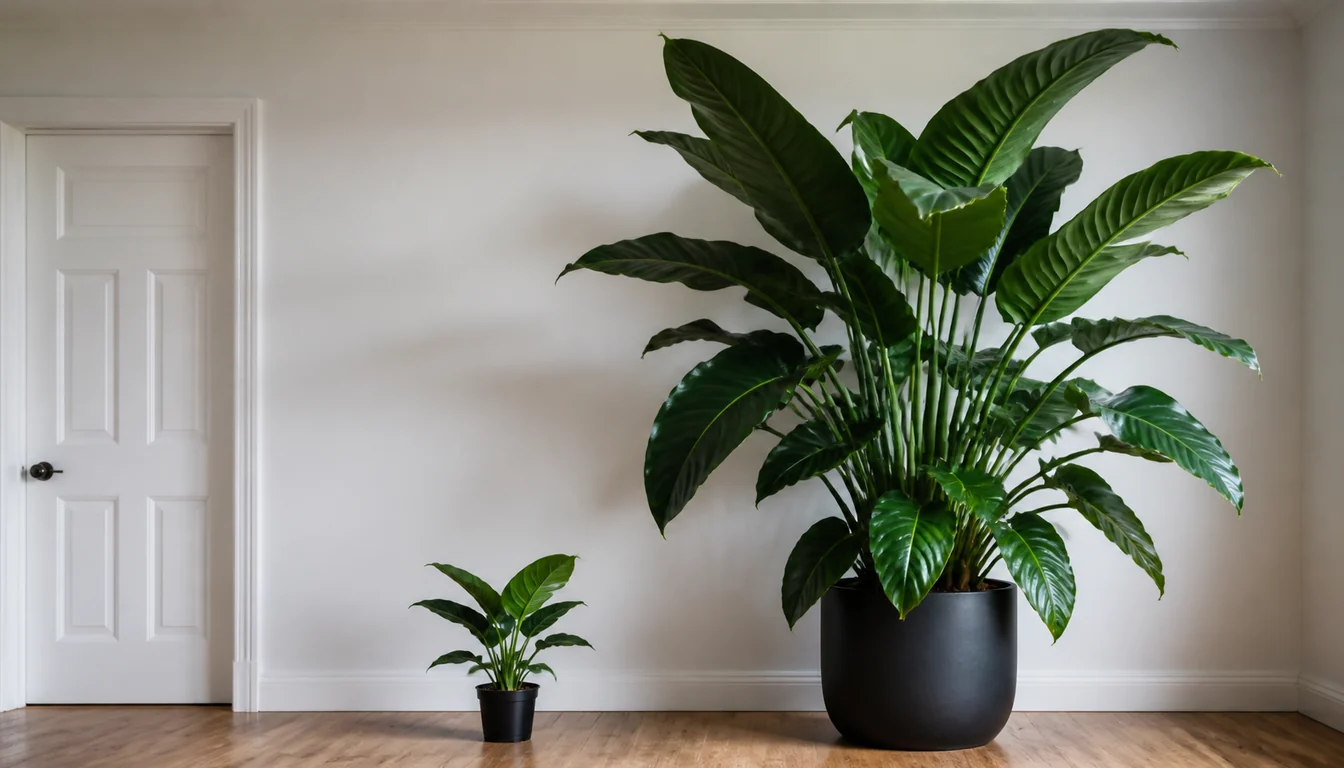
| Plant | Shop size | Mature indoors | Time to get there |
|---|---|---|---|
| Pothos | Small hanging pot | Vines several meters long, easily cut back | One to two years |
| Snake plant | 20 to 30 cm | 60 to 100 cm and slowly widening | Three to five years |
| Monstera | 40 cm on a small stake | Two meters plus, and wide with it | Two to four years |
| Fiddle leaf fig | 60 to 90 cm | Ceiling height, awkward to prune | Three to five years |
| Rubber plant | 60 cm | Two meters plus, tolerates cutting back | Three to five years |
| ZZ plant | 30 to 40 cm | 60 to 90 cm, stays contained | Four years or more |
Inspect the Plant in Front of You, Not the Species
The species decides whether the plant suits your room, and the individual decides whether it survives the first two months, which is the question nobody asks in the shop.
Spend a minute on it before paying.
- Turn several leaves over and look along the veins and joints, because pests ride home and reach the rest of your plants within weeks.
- Lift the pot to feel whether it is waterlogged, since a plant standing in a wet sleeve on a shop floor may already have failing roots.
- Tip it out if you can and check for firm pale roots rather than dark mushy ones or a solid mat of circling roots.
- Look at the soil surface for a white salt crust, fungus gnats, or moss, all of which say the plant has been sitting a long time.
- Count the stems and notice whether this is one plant or six seedlings arranged to look full, because the two behave completely differently.
The First Month at Home
Expect some leaf loss and do not read it as a verdict. Nursery light is far stronger than almost any home, so a new plant spends its first weeks shedding leaves it can no longer fund and adjusting the rest.
The temptation is to intervene, and intervening is what turns a settling plant into a struggling one.
- Do not repot for at least a month, since root disturbance on top of light shock is two problems at once.
- Do not feed it until it is visibly growing again, because a plant that is not growing cannot use fertilizer.
- Do keep it away from your other plants for two or three weeks, which catches anything that came home with it.
- Do water on the same evidence as any other plant, judged by pot weight rather than by a settling-in schedule.
Matching the Conditions You Measured to Plants
The light level from the shadow test sets the column, your honest watering answer sets the row, and what remains is a handful of names rather than a category.
When the two constraints disagree, the light wins every time, because watering habits can be adjusted and a dark corner cannot.
| Light | If you water rarely | If you water regularly |
|---|---|---|
| Bright | Cacti, succulents, snake plant, string of pearls | Monstera, rubber plant, most herbs, citrus |
| Medium | ZZ plant, snake plant, cast iron plant | Pothos, philodendron, peace lily, spider plant |
| Low | ZZ plant, cast iron plant, aspidistra | Pothos and peace lily, accepting slow growth |
| Too dark | Nothing, and no watering pattern changes that | Nothing, and more water makes it worse faster |
The Plants People Most Often Regret
Regret clusters on a few specific mismatches rather than on genuinely difficult plants. In almost every case the plant was fine and the room was never going to work.
If the look is what you wanted, there is usually something that gives you most of it without the fight.
- Fiddle leaf fig fails on light far more often than on watering, and a rubber plant delivers a similar architectural look with much more tolerance.
- Calathea and maranta need humidity and consistency that most rooms do not offer, while a prayer-plant look is available from tougher aroids with patterned leaves.
- Supermarket orchids are sold in full bloom and then judged as failures for doing exactly what they do, which is rest for months before flowering again.
- Air plants need more frequent attention than their marketing implies, not less, and a small succulent gives the same sculptural effect with a fraction of the fuss.
Pro Tips
- Run the shadow test at the exact spot, not in the middle of the room.
- Buy for the watering habits you actually have.
- Check what the plant becomes in three years before you buy it.
- Turn the leaves over in the shop and check the undersides.
- Leave a new plant alone for its first month.
Frequently Asked Questions
What is bright indirect light, actually?
It is light strong enough to cast a shadow with a soft but visible edge, without the sun's disc falling directly on the leaves. Run the shadow test rather than guessing, because most spots described as bright indirect are closer to low light in practice.
Which houseplant is genuinely easiest for a beginner?
Snake plant and ZZ plant tolerate the widest band of neglect and light, which is what easy really means. Pothos is close behind and grows fast enough to be encouraging, which matters more for a first plant than people expect.
Can I keep a plant in a room with no window?
Not without adding light. If the shadow test shows nothing at all, a tolerant plant will slowly decline rather than grow, and the honest options are a grow light on a timer or rotating plants in and out of a brighter room.
Should I repot a new plant straight away?
No, wait about a month. The plant is already adjusting from nursery light to your room, and adding root disturbance to that is the most common way a healthy new plant gets into trouble.
Why did my new plant drop leaves within two weeks?
Almost always acclimation rather than anything you did. The plant is shedding leaves it grew under much stronger nursery light and cannot fund in your room, and it usually stabilises once it has adjusted.
Is one big plant or several small ones a better start?
Several small ones, because they cost less to be wrong about and they teach you your own conditions faster. A large specimen is worth buying once you know from experience that the spot supports it.
Sources & References
Related Guides
Best Butterfly Garden Plants for a Complete Habitat
The best butterfly garden plants do two different jobs. Host plants feed caterpillars, while nectar…
15 min read
Best Fall-Blooming Flowers for Color Near Frost
A bed that still carries flowers in October usually was planned before temperatures fell.
9 min read
Best Fast-Growing Trees for Shade and Privacy
The best fast-growing tree is the one whose mature crown, roots, climate range, and maintenance…
16 min read
Best Fragrant Flowers for Every Yard and Season
The best fragrant flowers depend on climate, light, space, and the hours you use the yard.
15 min read
Best Full-Sun Perennials for Hot, Bright Beds
The best full-sun perennials are the ones that match the bed's soil moisture and drainage, local…
14 min read
Best Ground Cover Plants for Sun, Shade, and Slopes
The best ground cover is a plant that survives the site and performs the job without escaping into…
18 min read