
Best Full-Sun Perennials for Hot, Bright Beds
The best full-sun perennials are the ones that match the bed's soil moisture and drainage, local summer heat and humidity, mature size, and bloom role. A plant tag that says full sun only describes light tolerance, so it cannot tell you whether the same plant will thrive beside hot pavement, in humid clay, or in a sunny low spot.
Start by sorting the bed into one of four useful conditions. Choose drought-adapted plants for hot, fast-draining ground, adaptable plants for average soil, humidity-tolerant plants where nights stay warm and damp, and moisture-loving plants where sunny soil remains wet.
Most drought-tolerant perennials still need regular checks and timely water while their roots establish. Established is a stage, not a date on the calendar.
The plant is ready for longer dry intervals after it develops established root spread, which means roots extend beyond the original root ball.
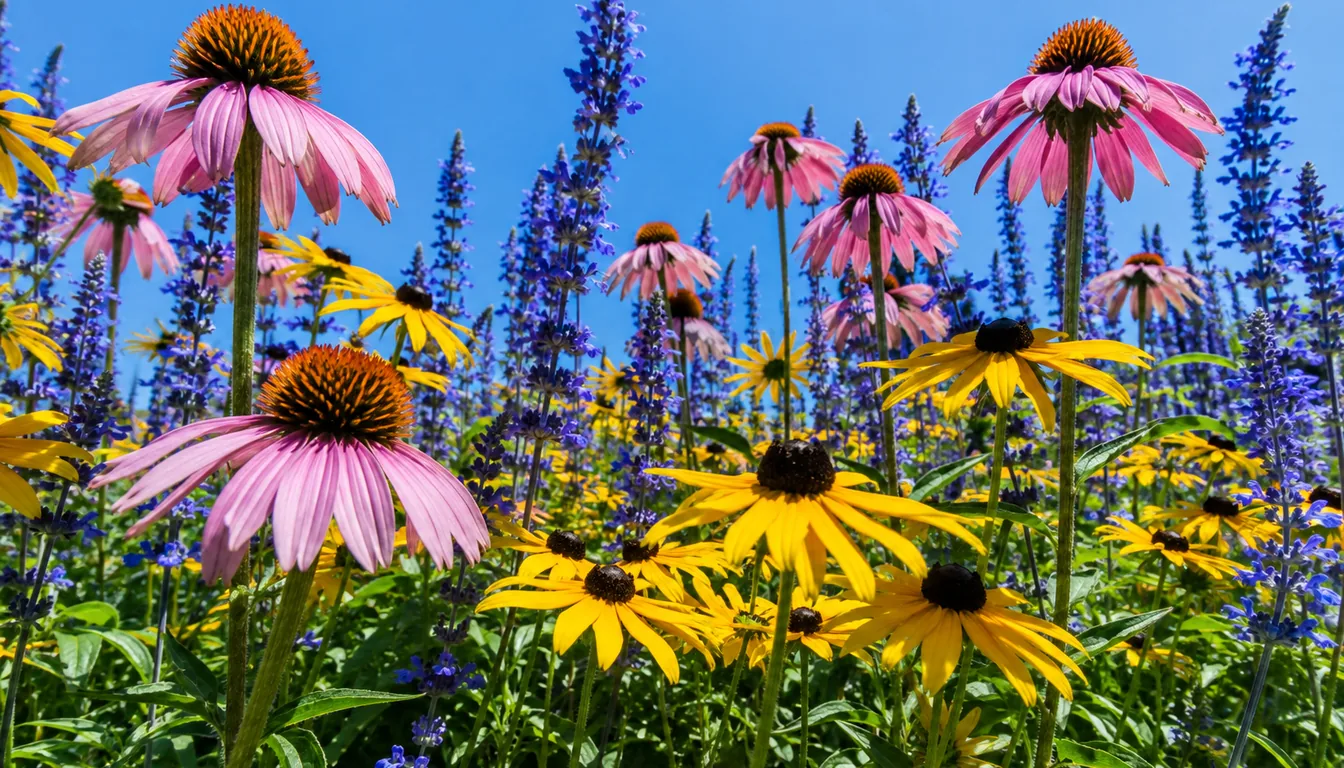
At a glance
Audit the Sunny Site Before Choosing Plants
Full sun usually means at least 6 hours of direct sunlight a day, while many flowering perennials perform best with longer exposure.
That number is a starting point because morning sun and afternoon sun place different heat loads on leaves and soil.
Latitude, elevation, and season also change what the plant experiences. A southern garden can combine intense afternoon light with warm nights, while a high-elevation or northern site may provide long summer days without the same overnight heat load.
Walls, pale siding, gravel, and pavement reflect light and release stored heat after sunset. A driveway edge can therefore be hotter and drier than an open bed that receives the same measured hours of sun.
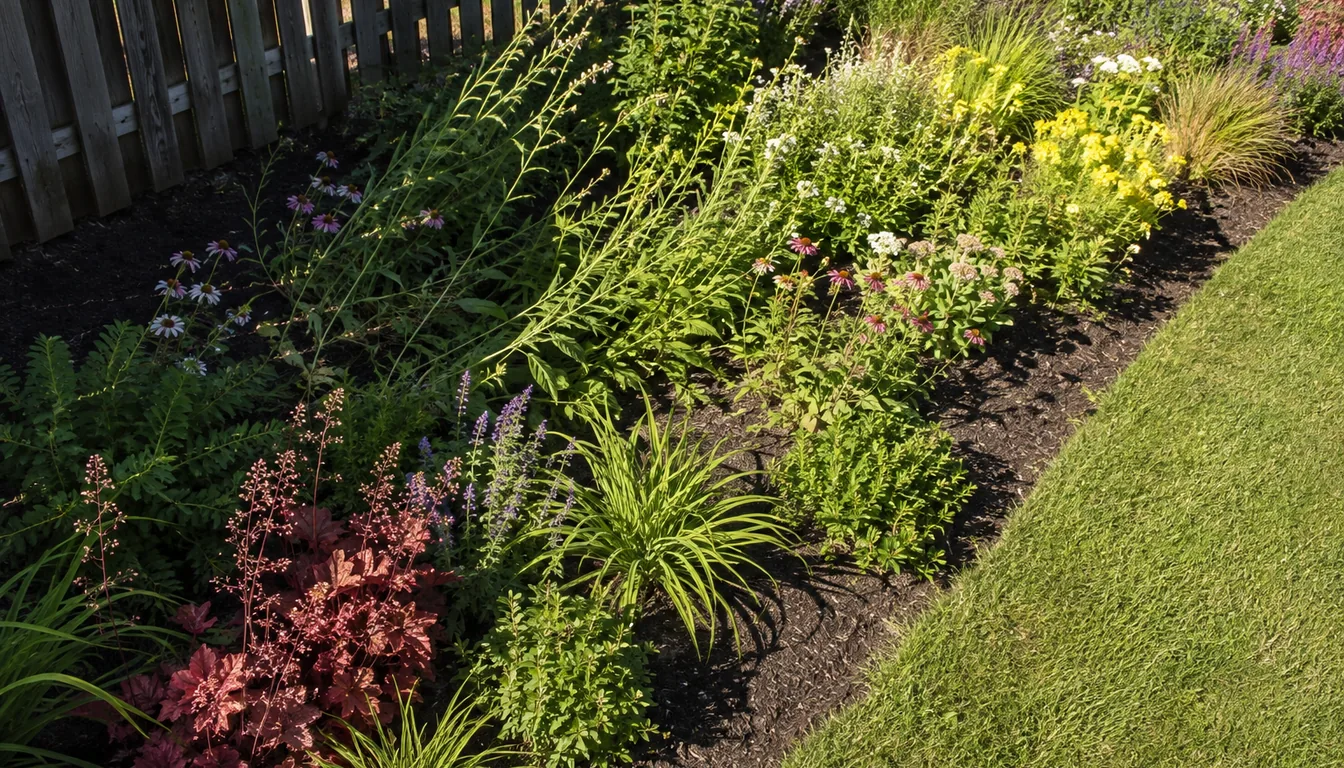
- Count direct-sun hours at several points in the bed on a clear day
- Record whether the strongest exposure arrives in the morning or afternoon
- Note reflected heat from walls, pavement, stone, gravel, and metal fencing
- Watch where water puddles after rain and how long the soil remains wet
- Check whether winter rain or snowmelt collects around dormant crowns
- Decide how much irrigation can reliably reach each part of the bed
- Mark strong wind, road salt, or coastal salt spray where they affect the site
- Measure the bed and any clear space needed beside sidewalks, doors, and utilities
Wind speeds moisture loss, and salt can narrow the plant list even when light and soil seem suitable. Treat those pressures as separate selection filters rather than assuming every sun lover can handle them.
Repeat a shorter observation after nearby trees leaf out or a fence changes.
Choose for the harshest normal condition, not for the mild hour when you happened to inspect it.
Compare Reliable Full-Sun Perennials
Use the table as a shortlist, then confirm the species or cultivar on the nursery tag against your USDA zone and local Extension guidance. Height and bloom timing vary by cultivar, region, weather, and soil, so the ranges describe common garden performance rather than a guarantee.

| Plant | Best site or soil moisture | Bloom season and useful role | Main limitation |
|---|---|---|---|
| Purple coneflower | Average to occasionally dry, well-drained soil | Summer flowers on upright 3 to 4 ft stems, followed by seedheads | Can decline in persistently wet soil, and some cultivars are less durable than the species |
| Orange coneflower or black-eyed Susan (Rudbeckia fulgida) | Average to occasionally dry soil with good drainage | Summer into fall color in 2 to 3 ft clumps | Leaf disease can increase with crowding and prolonged humidity |
| Yarrow | Hot, dry, lean, fast-draining soil | Early to late summer flat flower clusters, usually 1.5 to 3.5 ft | Rich soil or excess water can cause spreading and floppy growth |
| Russian sage | Hot, dry, sharply drained soil | Airy blue summer flowers and silver foliage, usually 2 to 4 ft | Poor drainage and humid, still air can shorten its life |
| Catmint | Dry to average, well-drained soil | Low edging, aromatic foliage, and repeat flowers after trimming | Can open in the center or spread wider than expected in rich soil |
| Stonecrop or upright sedum | Dry to average, well-drained soil | Succulent foliage and late flowers, often under 2 ft | Wet soil and high fertility can cause crown loss or weak stems |
| Coreopsis | Dry to average, well-drained soil | Yellow summer color from compact or airy plants | Hardiness and longevity vary widely among species and cultivars |
| Blanket flower | Hot, dry, fast-draining soil | Long summer color in a low to medium mound | Often short-lived where winter soil stays wet |
| Daylily | Average soil with steady moisture and drainage | Strappy foliage and early, midseason, or late flowers | Individual flowers are brief, and plants need division when crowded |
| Liatris | Average to moist, well-drained soil | Vertical purple or white spikes in summer, usually 2 to 6 ft | Species differ in mature height and preferred moisture |
| Hardy hibiscus | Moist to wet sunny soil with room for a large clump | Large early summer to fall flowers, commonly 3 to 8 ft | Large mature plants need space and protection from strong wind |
Coneflower and orange coneflower or black-eyed Susan (Rudbeckia fulgida) fit many average sunny beds, but neither should be treated as a license to ignore drainage.
Russian sage, yarrow, blanket flower, and many silver-leaved plants belong at the dry end of the bed because wet roots are a greater threat than summer sun.
Hardy hibiscus fills a different job. It is a true herbaceous perennial in suitable zones and uses consistent moisture well, unlike drought-focused plants that would fail in the same sunny low ground.
Rosemary and lantana are not dependable herbaceous perennials across the country. They may return in warm regions or be overwintered under protected conditions, but they do not belong on a general nationwide list without that limitation.
Hydrangeas also need species and climate context. Some tolerate substantial sun with adequate moisture, yet they are shrubs rather than universal answers for exposed, dry perennial beds.
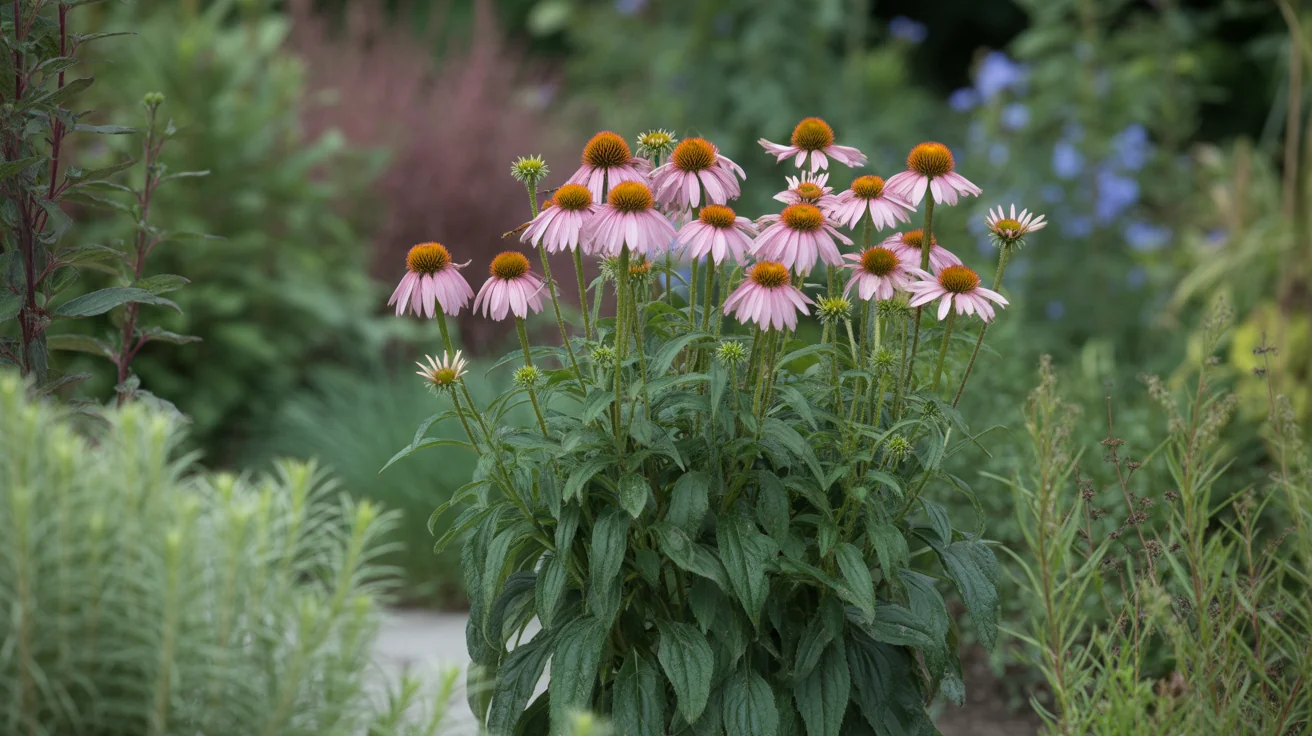
Coneflower
Midsummer flowers and winter seedheads
- Mature fit
- Commonly 3 to 4 ft high and 1 to 2 ft wide
- Main tradeoff
- Needs drainage and cultivar-level checking
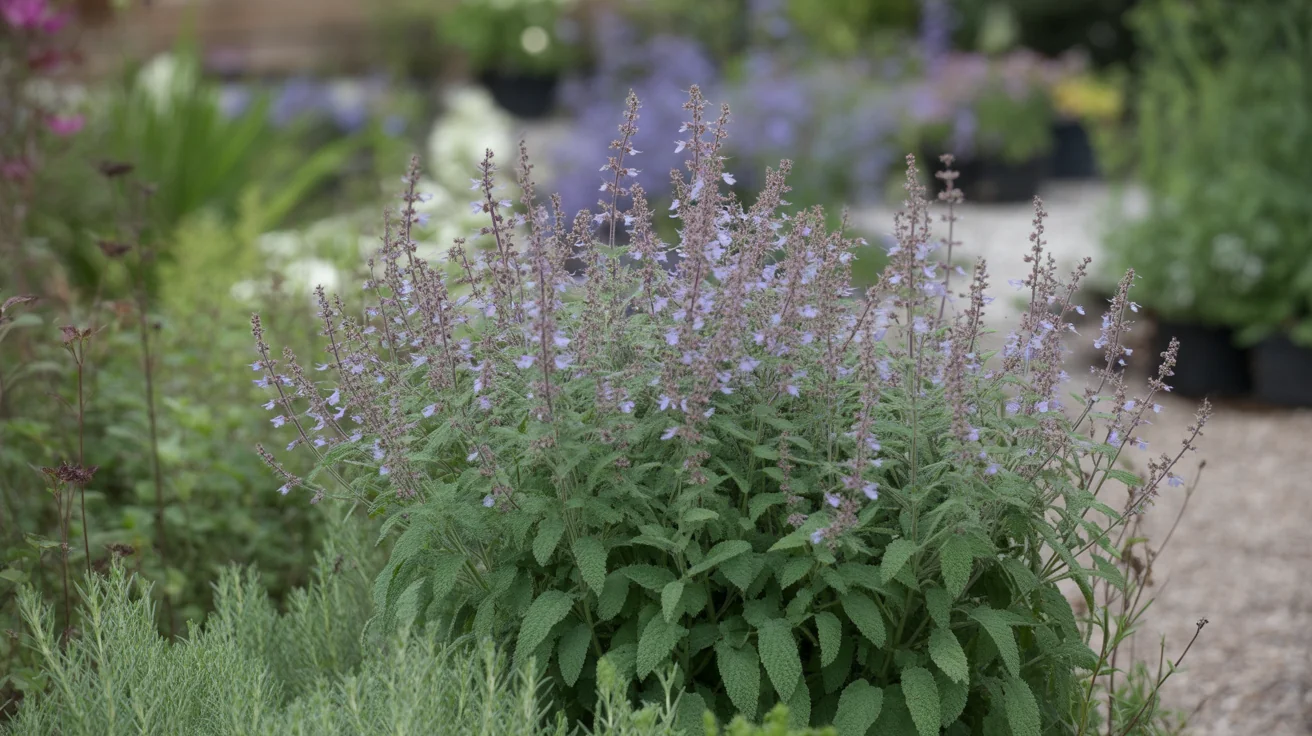
Russian Sage
Airy height for a hot, dry site
- Mature fit
- Commonly 2 to 4 ft high and wide
- Main tradeoff
- Poor fit for wet soil and still humid air
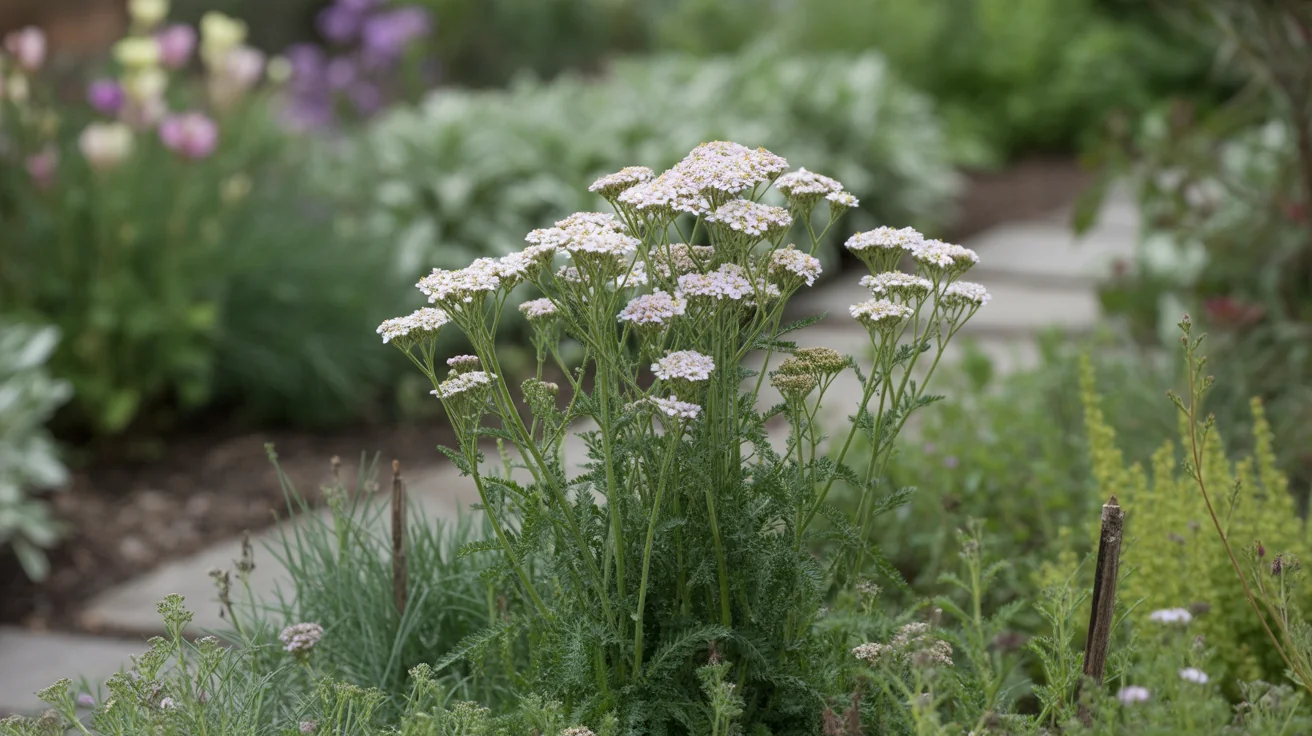
Yarrow
Flat flower clusters in lean soil
- Mature fit
- Cultivars commonly reach 1.5 to 3.5 ft high
- Main tradeoff
- Can spread or flop in rich, wet ground
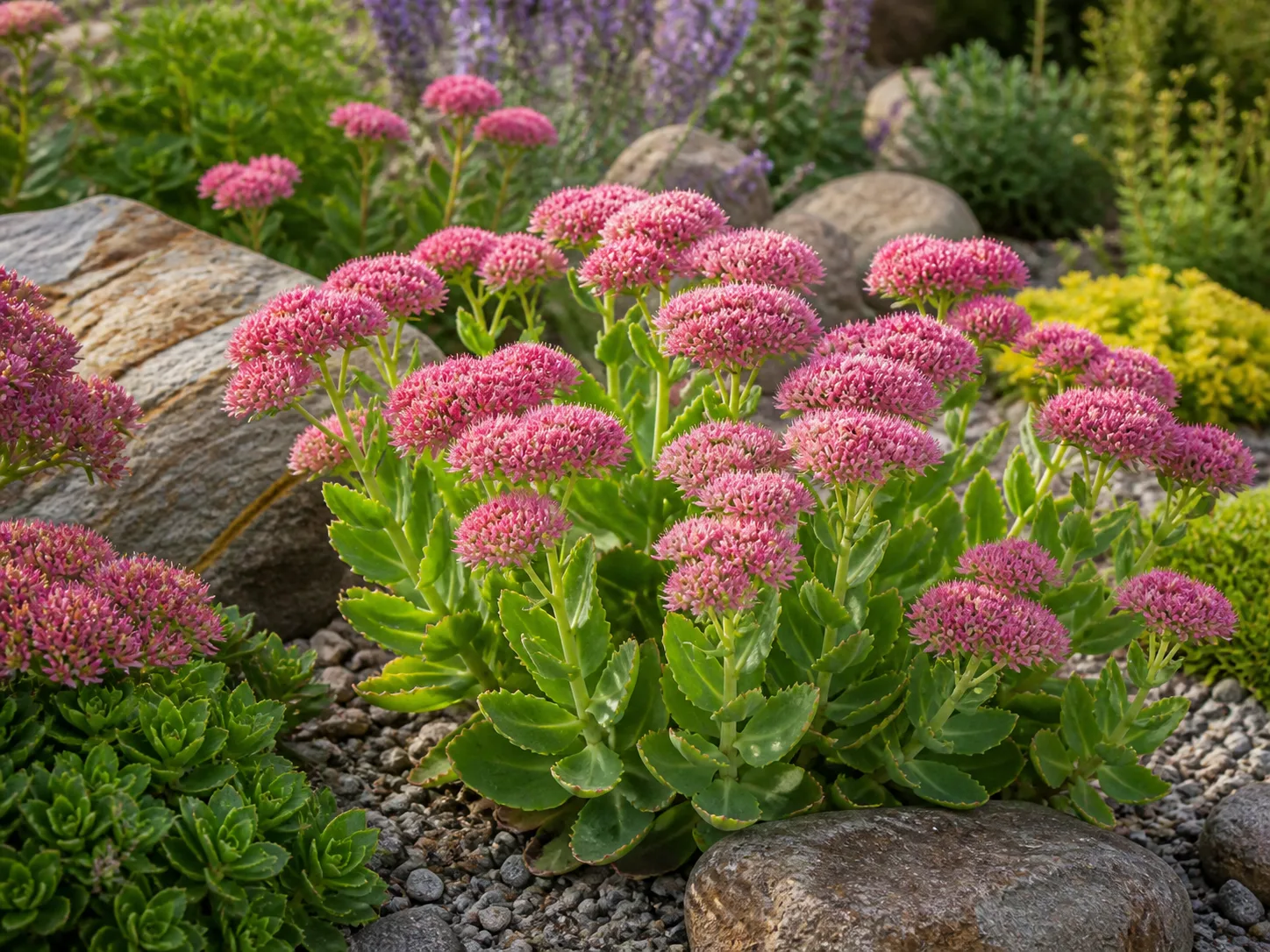
Sedum
Late flowers and sturdy succulent foliage
- Mature fit
- Upright forms are often under 2 ft high
- Main tradeoff
- Wet soil and excess fertility weaken crowns
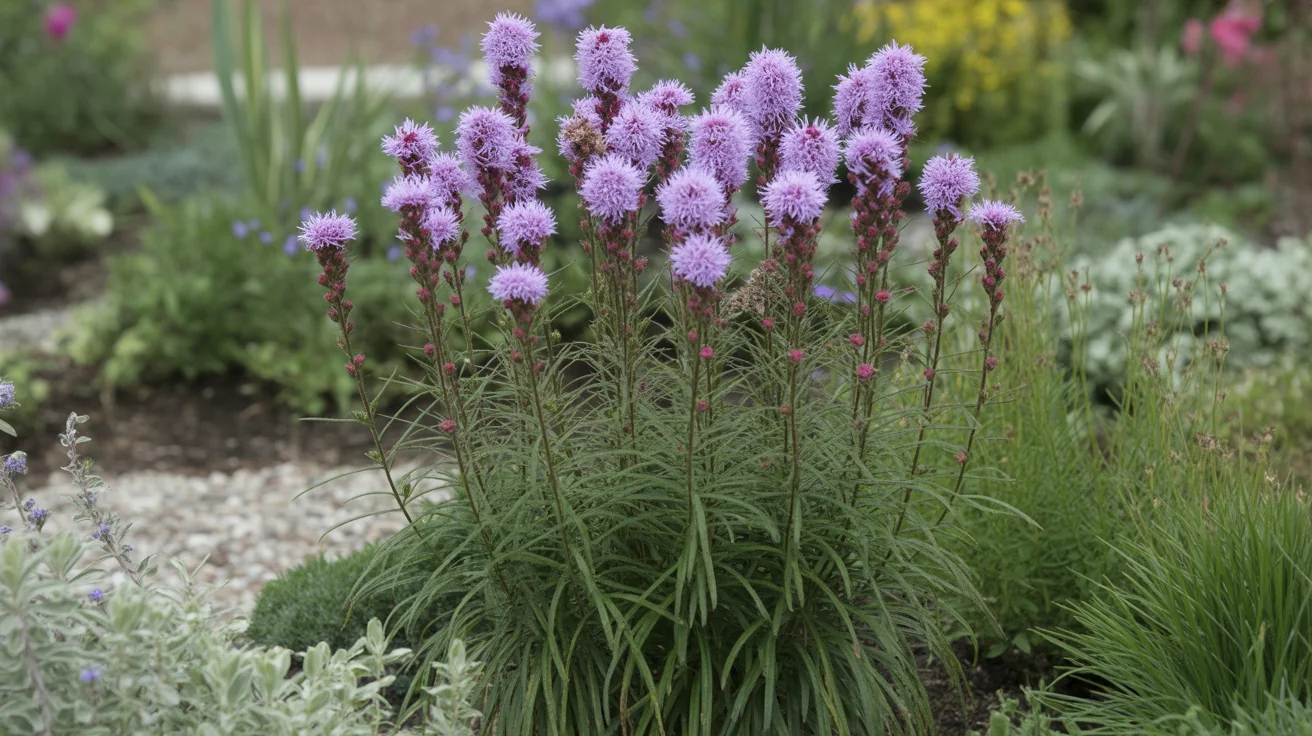
Liatris
Vertical summer flower spikes
- Mature fit
- Commonly 2 to 6 ft high, depending on species
- Main tradeoff
- Species choice must match the site's moisture
Match Plants to Heat, Humidity, and Water
A useful plant list changes when the same sunny exposure sits over different soil. Divide the site by how water moves and how quickly leaves dry, then place plants with similar needs on the same irrigation line.
Hot, dry, fast-draining
Start with Russian sage, yarrow, catmint, upright sedum, coreopsis, or blanket flower. These plants perform best after establishment when drainage is sharp and irrigation is occasional but thorough.
Average or moist, well-drained
Consider coneflower, orange coneflower or black-eyed Susan (Rudbeckia fulgida), daylily, liatris, and locally proven coreopsis. The soil should hold some moisture without remaining saturated around crowns.
Hot and humid
Favor plants with regional proof, sturdy forms, and enough mature spacing for air movement. Orange coneflower or black-eyed Susan (Rudbeckia fulgida), daylily, selected coneflowers, liatris, and hardy hibiscus can fit, while silver-leaved dry-climate plants need especially good drainage and open air.
Sunny wet or low spot
Use moisture-tolerant choices such as hardy hibiscus rather than trying to keep Russian sage, yarrow, or blanket flower alive in wet soil. Confirm whether the spot is seasonally moist or continuously saturated before buying.
Dry heat and humid heat create different failures.
In dry air, plants lose water quickly and may scorch near reflective surfaces, while warm humid nights slow leaf drying and increase pressure from mildew and leaf spots.
Winter drainage deserves equal attention because dormant roots and crowns still need oxygen. A plant that handles summer drought can rot during a mild, wet winter, especially in compacted clay.
Design for Bloom, Mature Size, and Access
Begin with mature width, not the size of the nursery pot. Plants set too close together may look finished in month one, but crowded foliage later traps humidity, blocks access, and forces repeated moving or division.
Place the tallest plants where they will not hide shorter neighbors or block a driver's sight line. A border viewed from one side usually keeps major height toward the back, while an island bed can hold height near the center with lower plants around its edges.
Build a bloom sequence instead of expecting one plant to flower all season.
Coreopsis or yarrow can carry early summer, coneflower and daylily can fill midsummer, and orange coneflower or black-eyed Susan (Rudbeckia fulgida), liatris, hardy hibiscus, or upright sedum can extend interest later, depending on the chosen cultivars and region.
Flowers are only one layer of the design. Catmint foliage can soften an edge, Russian sage adds a fine silver texture, daylily contributes strappy leaves, and upright sedum holds broad flower heads that remain useful as they age.
Leave selected coneflower, orange coneflower or black-eyed Susan (Rudbeckia fulgida), and sedum seedheads standing where winter structure or bird food matters. Cut diseased foliage instead of keeping it for appearance because infected debris can carry trouble into the next season.
Hydrozoning makes the irrigation plan match the planting plan.
Put the dry group on the high or pavement side, keep average-water plants together, and reserve the low area or a separate emitter zone for hardy hibiscus and other moisture users.
A wide bed needs root-zone access through stepping stones or a narrow route before plants fill in. Reach flowers and irrigation hardware without stepping into the root zone because compacted soil drains more slowly and carries less air.
Plant and Establish the Bed
Prepare the whole planting area when soil structure needs improvement.
Sandy soil and clay soil handle water differently, so the amount and type of organic matter should fit a soil test and the existing soil rather than follow a universal recipe.
Choose a cool, workable planting window when possible. Spring gives cold-region plants a growing season to root, while fall can reduce heat stress in many warmer regions, provided the species has enough time to establish before damaging cold.
- Set the root ball heightPlace the crown at the soil surface or at the depth recommended for that plant. Deep planting reduces oxygen around the crown and can promote rot.
- Loosen circling rootsTease apart tight outer roots or make shallow cuts where a container-grown root ball is severely bound. Keep exposed roots from drying while you work.
- Backfill with site soilSettle the soil around the root ball without leaving a sunken bowl over the crown. Avoid strong fertilizer in direct contact with new roots.
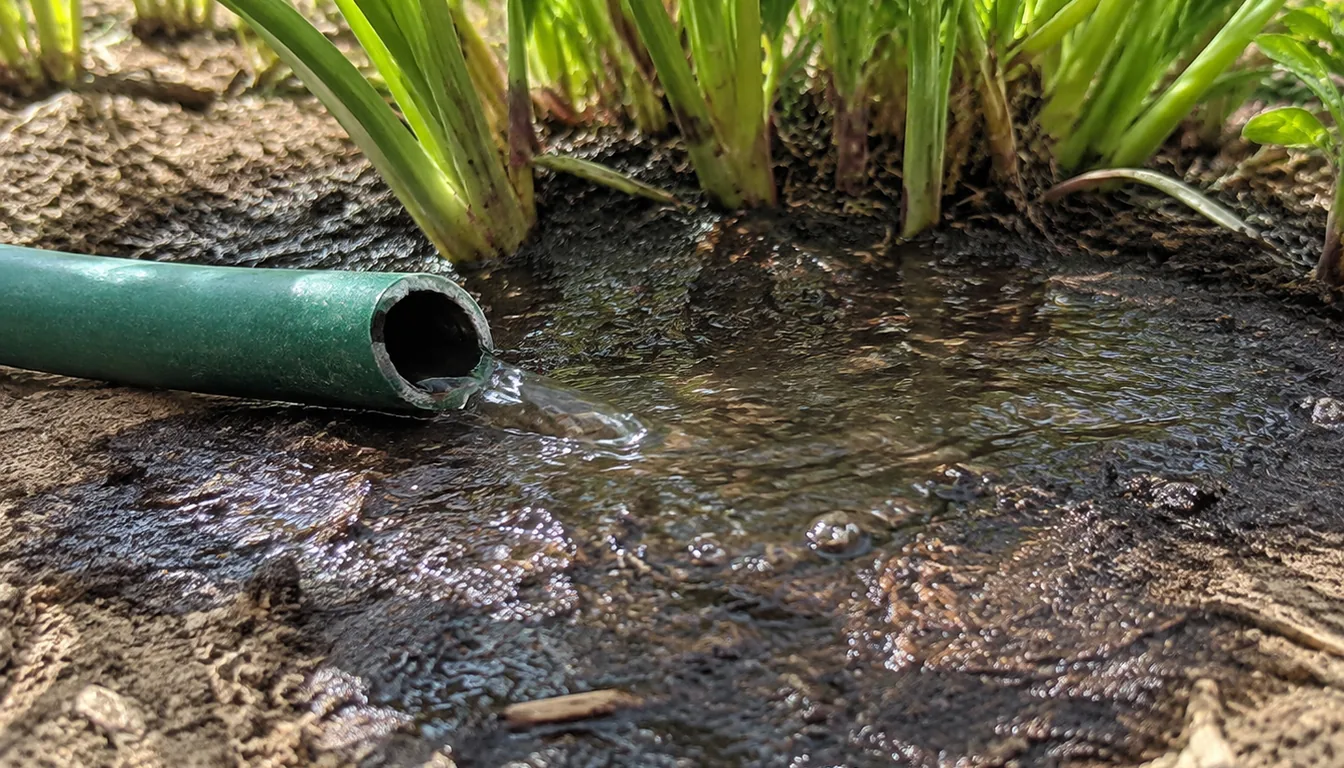
- Water the full root zoneSoak the root ball and nearby soil so both are evenly moist. Return later with a trowel or finger check instead of judging only by the dry surface.
- Mulch without burying crownsApply an organic mulch layer suited to the climate, often about 2 to 3 inches, and pull it back from stems and crowns.
- Recheck after settlingConfirm that irrigation has not exposed roots or buried the crown. Correct the plant height while the root system is still easy to adjust.
New roots occupy a small volume of soil and can dry well before the rest of the bed does. Check them more often during the first month, especially in sun, wind, sandy soil, or hot weather, but water only when the root zone is beginning to dry.
There is no reliable universal schedule.
Rain, temperature, wind, soil texture, plant size, and root growth determine whether the next check leads to water today or several days later.
Drought tolerance develops after roots spread beyond the original container shape. Reduce watering frequency gradually and make each irrigation deep enough to moisten the active root zone without leaving the crown saturated.
Work Through a Hot Driveway Bed
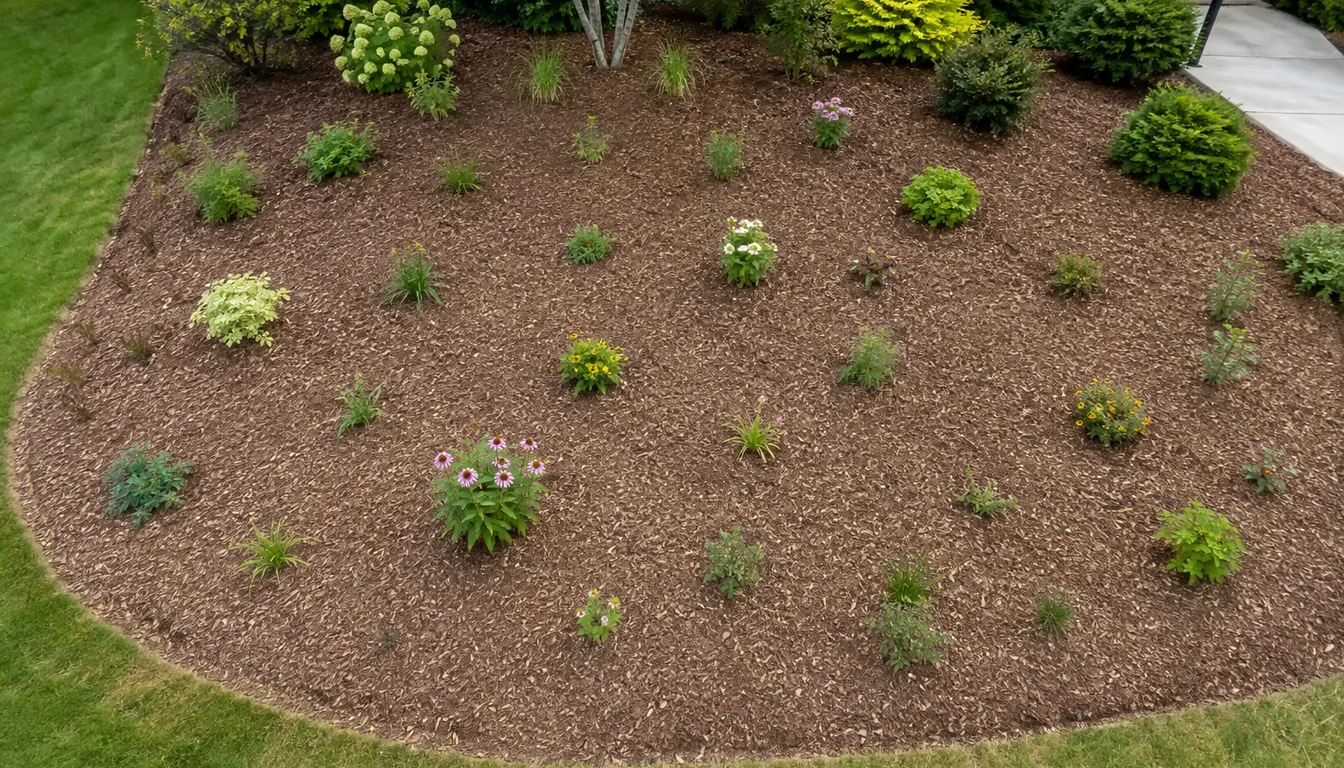
Consider an 8 by 4 ft mailbox bed that receives sun from late morning through evening. Pavement borders two sides, the soil drains within a few hours after rain, and a hose can reach the bed, so the main pressures are reflected heat, limited width, and first-year drying.
Keep plants back from the curb and mailbox door so mature stems do not block access.
Choose compact cultivars whose labeled widths fit the plan, and leave a small service path or stepping point for weeding and watering.
A practical combination could use one compact Russian sage as the airy vertical anchor, three clumping coreopsis plants for summer color, and three compact upright sedums for sturdy foliage and late flowers. A low catmint cultivar can soften the driveway edge only if its mature spread will stay clear of tires and foot traffic.
The plants share a preference for drainage, which makes one irrigation zone workable.
Run a drip line through the planting, cover the soil with organic mulch while keeping every crown clear, and check each original root ball separately during establishment because pavement-facing plants may dry first.
Do not fill every gap with another perennial. The spaces visible in the first season represent mature growth, and a few temporary annuals in removable pots can add color without creating future crowding.
This exact mix should change in a wet or humid site. Where summer nights stay damp, increase spacing and consider locally proven coreopsis and sedum cultivars, while a sunny low spot should use a moisture-tolerant design rather than Russian sage.
Read Stress Symptoms Before You React
A brown edge does not identify the cause by itself. Check the damaged tissue, soil moisture below the surface, recent weather, and where the symptom appears before changing irrigation or applying a product.
| What you see | Most likely direction to investigate | Best first check |
|---|---|---|
| Wilt with dry soil and dull or crisp leaves | Drought stress | Probe the root ball and surrounding soil, then water deeply if both are dry |
| Pale or tan patches on the hottest exposed side | Sun or reflected-heat scorch | Compare pavement-facing leaves with shaded inner growth and review recent heat |
| Wilt with wet soil, dark crown tissue, or collapsing stems | Root or crown trouble from excess moisture | Stop automatic watering and inspect drainage and crown depth |
| White coating or recurring leaf spots in warm humid weather | Mildew or other foliar disease | Check mature spacing, airflow, overhead watering, and cultivar susceptibility |
| Tall soft stems with few flowers | Excess nitrogen, crowding, or too little direct light | Measure current sun, review fertilizer, and compare spacing with mature width |
| Plant survives but flowers poorly | Shade, excess fertility, immaturity, or a mismatched cultivar | Check direct-sun hours and the plant's normal bloom window before feeding |
Drought stress often affects the whole plant and coincides with dry soil, while scorch can be strongest on the side facing afternoon sun or masonry. A recent transplant can show both because its limited root system cannot replace water as quickly as exposed leaves lose it.
Wet-root trouble calls for less water and better drainage, not another soaking.
A plant may wilt when damaged roots cannot supply the leaves even though the soil is saturated.
Humidity problems improve when leaves dry faster. Water the soil rather than the foliage when practical, preserve mature spacing, remove infected debris, and choose resistant cultivars if the same disease returns each year.
Flopping does not always mean the plant needs a stake. Excess nitrogen and insufficient light produce weak, stretched growth, so correct those causes before turning routine support into permanent maintenance.
Deadhead only when it extends bloom, limits unwanted seedlings, or improves the plant's next flush. Leave sound seedheads for winter interest and wildlife, divide clumps when crowding reduces vigor, and cut back diseased material when sanitation has a clear benefit.
Make the Final Choice at the Nursery
Bring the site notes and bed measurements to the nursery. Check the exact species or cultivar for hardiness, mature width and moisture preference, and known performance in your region rather than buying by flower color alone.
A strong shortlist gives every plant a job and a limitation you can accept.
One plant might supply early color, another carries midsummer, a third holds late seedheads, and all of them should share the same drainage and irrigation conditions.
Reject a plant when the tag and the site disagree, even if the display looks healthy. The right perennial fits the bed after bloom as well as during bloom because its roots, mature body, and maintenance needs remain in place for years.
Pro Tips
- Measure several points in a bed because a wall or tree can make one end hotter or shadier than the other.
- Group plants by water need so one irrigation setting does not drown dry-site plants or starve moisture lovers.
- Buy for labeled mature width and leave access to the mailbox, sidewalk, hose connection, and utility covers.
- Keep mulch off crowns and check its depth each year before adding another layer.
- Use a soil test before routine fertilizer because excess nitrogen can reduce flowers and weaken stems.
- Leave healthy seedheads where winter structure and bird food matter, but remove diseased debris.
Frequently Asked Questions
Do full-sun perennials need sun all day?
Usually no. Full sun commonly begins at 6 hours of direct light, although many flowering perennials perform best with longer exposure.
The timing and intensity matter, so a plant that succeeds with morning sun may scorch or dry too quickly beside west-facing pavement.
When is a drought-tolerant perennial established?
It is established when new roots have grown into the surrounding soil and the plant can maintain healthy growth as watering intervals lengthen.
The timing varies with plant size, planting season, soil, rainfall, wind, and heat, so check the root zone instead of relying on a fixed number of weeks.
Can full-sun perennials grow in clay soil?
Some can if the species tolerates clay and the whole bed drains well. Do not assume that a pocket of sand or gravel in one planting hole will solve compaction because the crown can still sit in trapped water.
Which full-sun perennial works in wet soil?
Hardy hibiscus is a strong candidate for moist to wet sunny ground in suitable hardiness zones.
Confirm the exact cultivar's mature size and cold tolerance, and do not place dry-site plants such as Russian sage or blanket flower in the same irrigation zone.
Sources & References
- Colorado State University Extension, Perennial Gardening
- Colorado State University Extension, Herbaceous Perennials
- University of Illinois Extension, Choose Perennials That Love Sun for Summer Glory
- University of Georgia Extension, Flowering Perennials for Georgia Gardens
- University of Georgia Extension, Landscape Basics for Herbaceous Perennials
- NC State Extension, Eastern Purple Coneflower
- NC State Extension, Rudbeckia fulgida
- NC State Extension, Salvia yangii
- NC State Extension, Hylotelephium
- NC State Extension, Rose Mallow
Related Guides
Best Butterfly Garden Plants for a Complete Habitat
The best butterfly garden plants do two different jobs. Host plants feed caterpillars, while nectar…
15 min read
Best Fall-Blooming Flowers for Color Near Frost
A bed that still carries flowers in October usually was planned before temperatures fell.
9 min read
Best Fast-Growing Trees for Shade and Privacy
The best fast-growing tree is the one whose mature crown, roots, climate range, and maintenance…
16 min read
Best Fragrant Flowers for Every Yard and Season
The best fragrant flowers depend on climate, light, space, and the hours you use the yard.
15 min read
Best Ground Cover Plants for Sun, Shade, and Slopes
The best ground cover is a plant that survives the site and performs the job without escaping into…
18 min read
Best Indoor Plants for Every Room and Light Level
The best indoor plant is one that fits the light in its exact location and the care you will…
16 min read