
Best Fast-Growing Trees for Shade and Privacy
The best fast-growing tree is the one whose mature crown, roots, climate range, and maintenance needs fit the planting site. A tree that adds height quickly can still fail as a screen, crack in storms, lift paving, or become far too large for the yard.
Choose a broad-crowned deciduous tree when summer shade is the main job. Choose a dense evergreen or semi-evergreen form when the view must stay blocked through winter, and use a mixed planting when you need both functions without depending on one species.
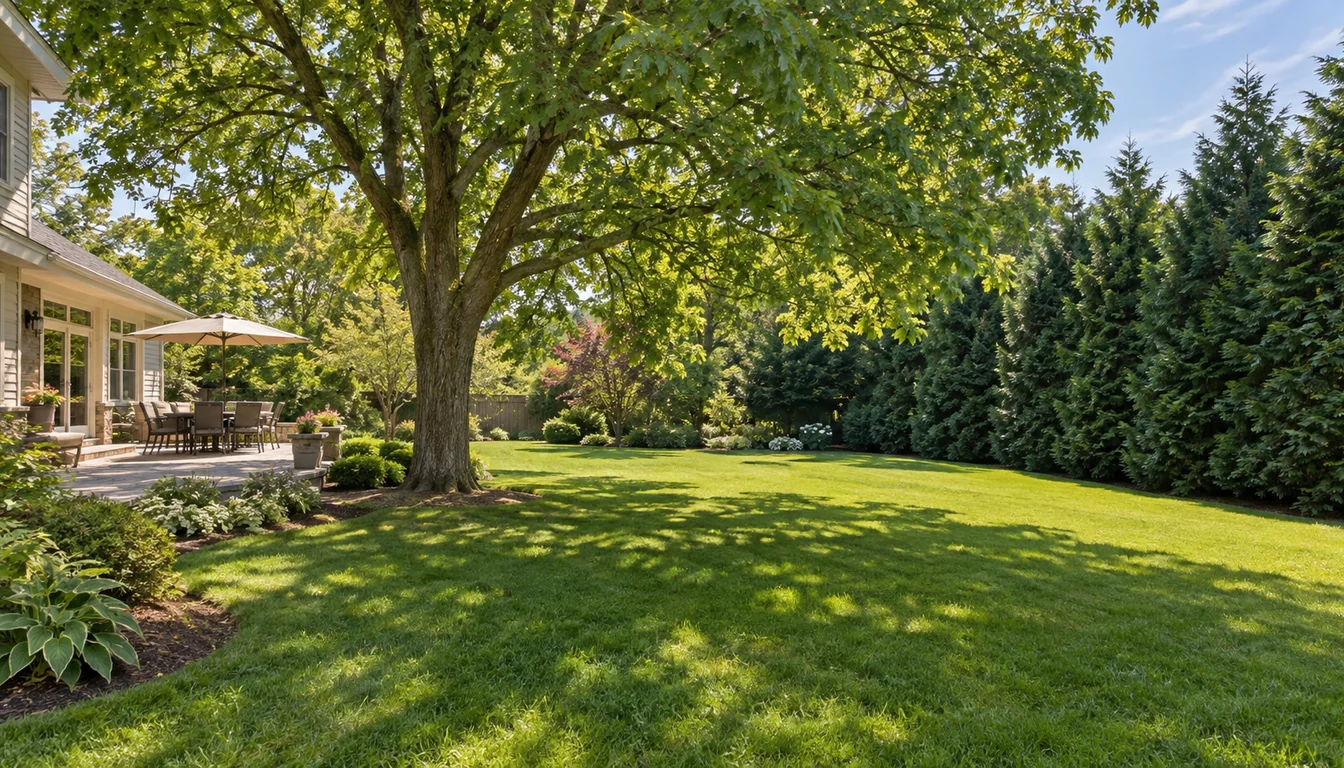
At a glance
Choose Shade, Screening, or Both First
Fast height is useful only when the new growth lands where you need coverage. A narrow tree may rise above a patio without shading the seats, while a broad deciduous canopy can shade well but reveal the neighbor's windows after leaf drop.
When comparing shade trees, look at mature crown width, branch height, and the sun's afternoon path. Height matters, but the shadow comes from leaf area in the right position.
For privacy, inspect density from the ground upward and ask whether the foliage persists in your winter. An evergreen that naturally thins at the base can leave the exact sightline you wanted to close.
Summer shade
Favor a broad deciduous crown with room to spread over the target area.
Year-round privacy
Favor dense evergreen foliage that remains within the available width.
Both jobs
Combine a canopy tree with lower evergreen or semi-evergreen layers.
Wind exposure
Choose flexible, site-tolerant plants and preserve enough spacing for sound structure.
The decision starts with useful coverage, not a height claim.
Mark the patio, window, road, or property-line view that needs protection before comparing species.
Which Fast-Growing Trees Are Worth Considering?
There is no national winner. The ranges below come from the NC State Extension Plant Toolbox, and each one is a screening filter rather than a promise that a tree will reach the same size or speed in every yard.
| Candidate | Strong role | USDA zones | Mature height x width | Best fit and main limit |
|---|---|---|---|---|
| Tuliptree | Broad shade | 4-9 | 80-120 x 30-60 ft | Deep, moist soil and a very large site; dislikes drought and compaction |
| River birch | Shade, loose screen | 4-9 | 30-70 x 40-60 ft | Moist or occasionally wet soil; sheds twigs and struggles in dry heat |
| Dawn redwood | Tall shade | 4-8 | 62-100 x 15-25 ft | Deep, moist soil and generous height; loses needles in winter |
| Red maple | Broad shade | 2-9 | 40-120 x 30-50 ft | Moist, slightly acidic soil; surface roots and ice breakage need consideration |
| Pin oak | Broad shade | 4-8 | 50-70 x 40-60 ft | Moist, acidic soil; alkaline soil can cause severe chlorosis |
| Eastern white pine | Tall screen | 3-8 | 50-80 x 20-40 ft | Cool, moist, acidic sites; poor fit for salt and polluted exposure |
| Green Giant arborvitae | Dense evergreen screen | 5-8 | 40-60 x 12-18 ft | Drained soil with ample width; root rot in wet soil and poor salt tolerance |
| Wax myrtle | Warm-climate screen | 7-11 | 20-25 x 8-10 ft | Wind and salt exposure in warm regions; cold can brown or drop foliage |
Tuliptree, dawn redwood, and eastern white pine need more vertical and root space than most compact lots provide. Their rapid growth becomes an advantage only where the mature tree can remain intact.
River birch is a strong moisture-site candidate, but its summer drought response and twig litter make it a poor default beside gutters or a highly manicured patio.
Red maple covers a broad range, yet named cultivars differ in form and final size, so the tag matters.
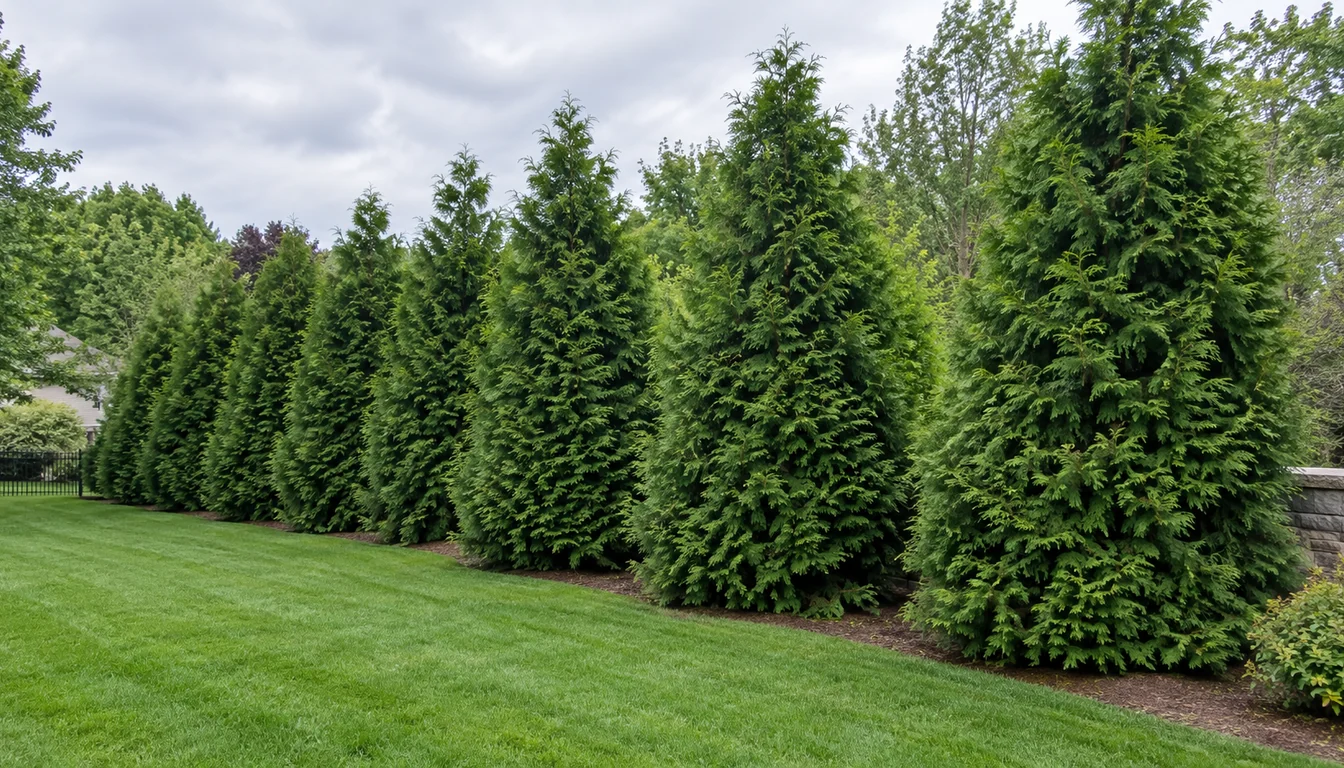
For an evergreen screen, Green Giant arborvitae grows much faster than the American arborvitae species commonly sold under the same broad name.
Wax myrtle fills a similar lower, wider role in warm regions and can be evergreen or semi-evergreen depending on winter conditions.
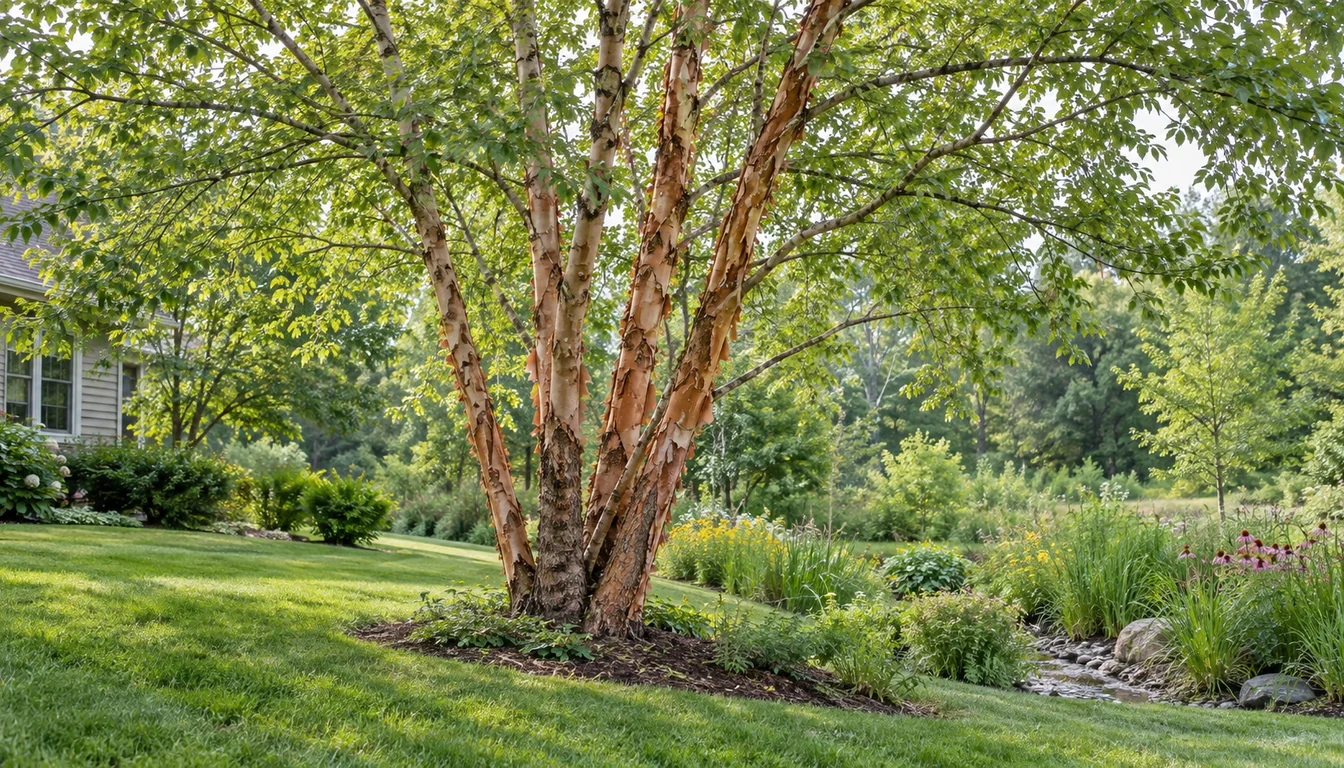
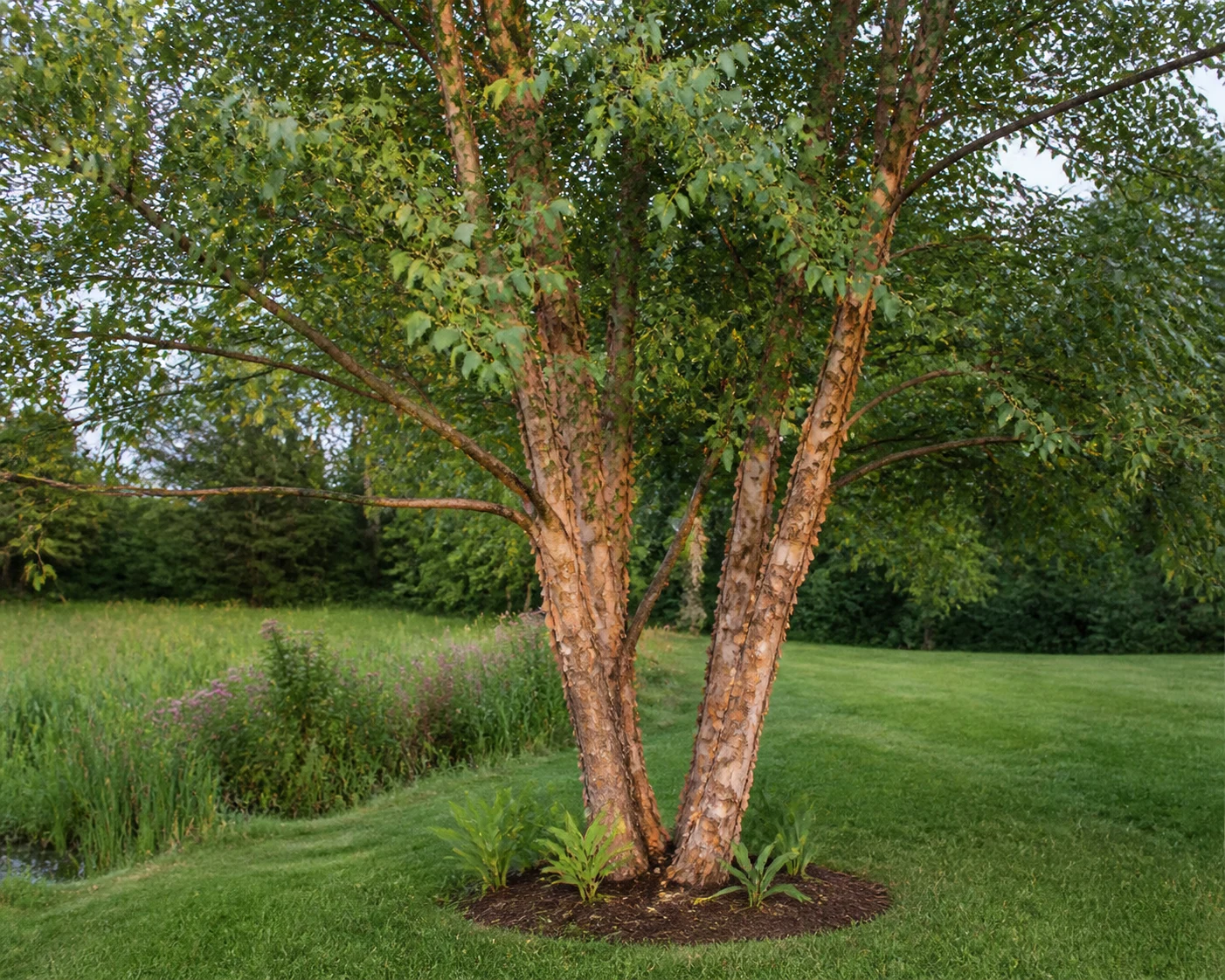
River Birch
Quick canopy on moist ground
- Mature fit
- 30-70 ft high and 40-60 ft wide
- Main tradeoff
- Twig litter and drought stress
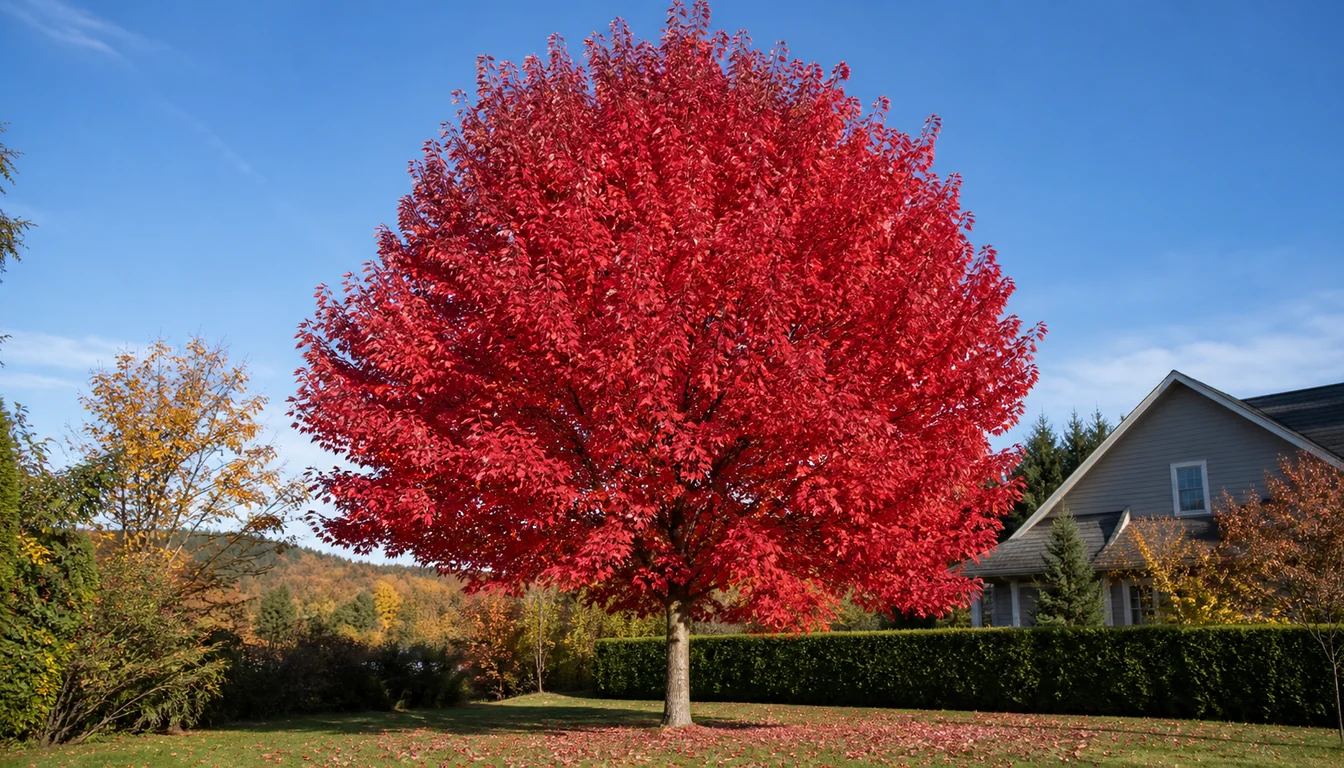
Red Maple
Broad deciduous shade
- Mature fit
- 40-120 ft high and 30-50 ft wide
- Main tradeoff
- Surface roots and possible ice damage
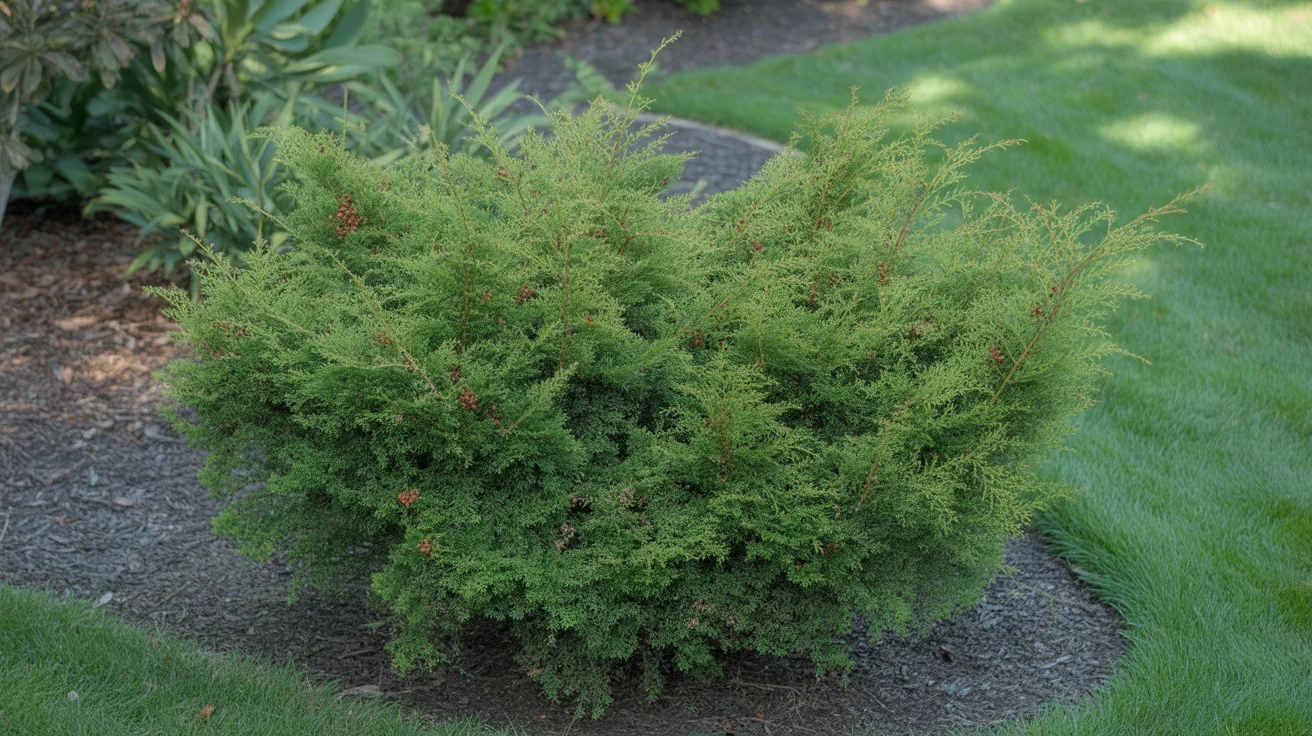
Arborvitae
Evergreen screen baseline
- Mature fit
- Green Giant needs 12-18 ft of width
- Main tradeoff
- Cultivar behavior differs from the species
Filter the List Through Your Actual Site
Hardiness zones describe expected winter minimums. They do not describe summer heat, reflected heat from pavement, drainage after a storm, soil pH, wind, salt spray, or the amount of rootable soil under a lawn.
Start with conditions you can observe. Watch where water remains after rain, note whether the site receives full sun, and check soil pH when a candidate has a narrow tolerance.
A pin oak in alkaline soil can develop iron chlorosis even when its zone looks perfect.
Eastern white pine can fit the temperature range but suffer beside salted roads or polluted urban exposure.
- Confirm the species and cultivar are hardy in your location.
- Compare summer heat and drought exposure, not winter temperature alone.
- Match drainage to the tree instead of trying to irrigate a wet-site tree forever.
- Test pH before choosing pin oak or another acid-preferring species.
- Account for wind, coastal salt, deicing salt, and heat reflected from walls or paving.
- Check your state invasive list and current local pest advisories.
- Reject any candidate that needs conditions the site cannot reliably provide.
Native status can improve ecological fit, but even a locally native tree can be wrong beside a foundation or under wires. Site volume and mature form still decide whether it belongs in that exact position.
Measure the Full-Size Tree Before You Buy
A nursery tree occupies a few feet, but the purchase commits a much larger volume of air and soil. Use the documented mature height and spread for the cultivar, then plan from the center of that future crown.
Do not apply one setback formula to every tree. Crown shape, root behavior, soil depth, building foundations, local rules, and the tolerance for overhang all change the safe position.
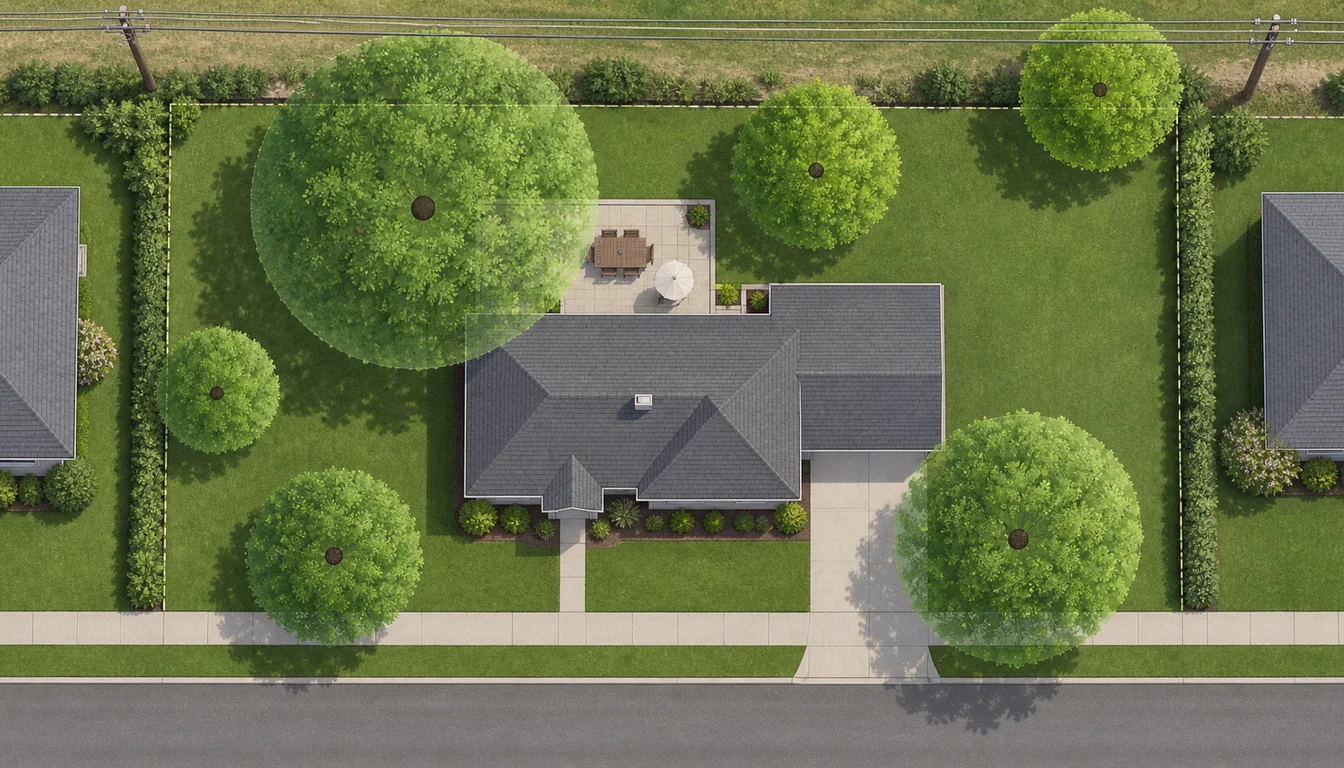
- Mark the targetStand where shade or screening is needed and mark the sightline or afternoon sun path.
- Draw the mature crownUse a tape, stakes, or hose to show the published width at ground level.
- Look upwardCheck service drops, distribution lines, roof edges, gutters, and street-light clearance.
- Look outwardCheck the property boundary, neighbor access, driveways, sidewalks, and future vehicle clearance.
- Look downwardLocate public utilities before digging and consider drains, old sewer lines, compacted fill, and limited soil strips.
- Verify the choiceAsk the utility or a qualified arborist when the crown or roots may enter protected infrastructure space.
A low-growing tree may fit under utility lines, while a narrow tall evergreen may fit a screen away from them.
A tree that will require repeated utility pruning is already in the wrong place.
Plan for the documented mature spread, not the size you hope pruning will hold. Regular topping cannot turn a large tree into a safe small tree and damages its long-term structure.
Does Fast Growth Mean Weak Wood or Aggressive Roots?
Not always. Growth rate alone does not tell you wood strength, branch attachment, root depth, lifespan, pest exposure, or whether a cultivar develops a sound central leader.
Some rapid growers are damaged more readily by wind or ice, while others can build durable structure when they receive room and early training. Red maple, for example, grows rapidly but NC State notes both surface-root competition and possible branch breakage in wind or ice.
Branch structure
Inspect leader competition, narrow unions, and the species response to wind or ice.
Root behavior
Match the expected root zone to paving, compacted strips, drainage, and available soil volume.
Pest exposure
Check current regional problems instead of relying on an old reputation for toughness.
Maintenance load
Include litter, lower-branch retention, pruning access, irrigation, and eventual removal space.
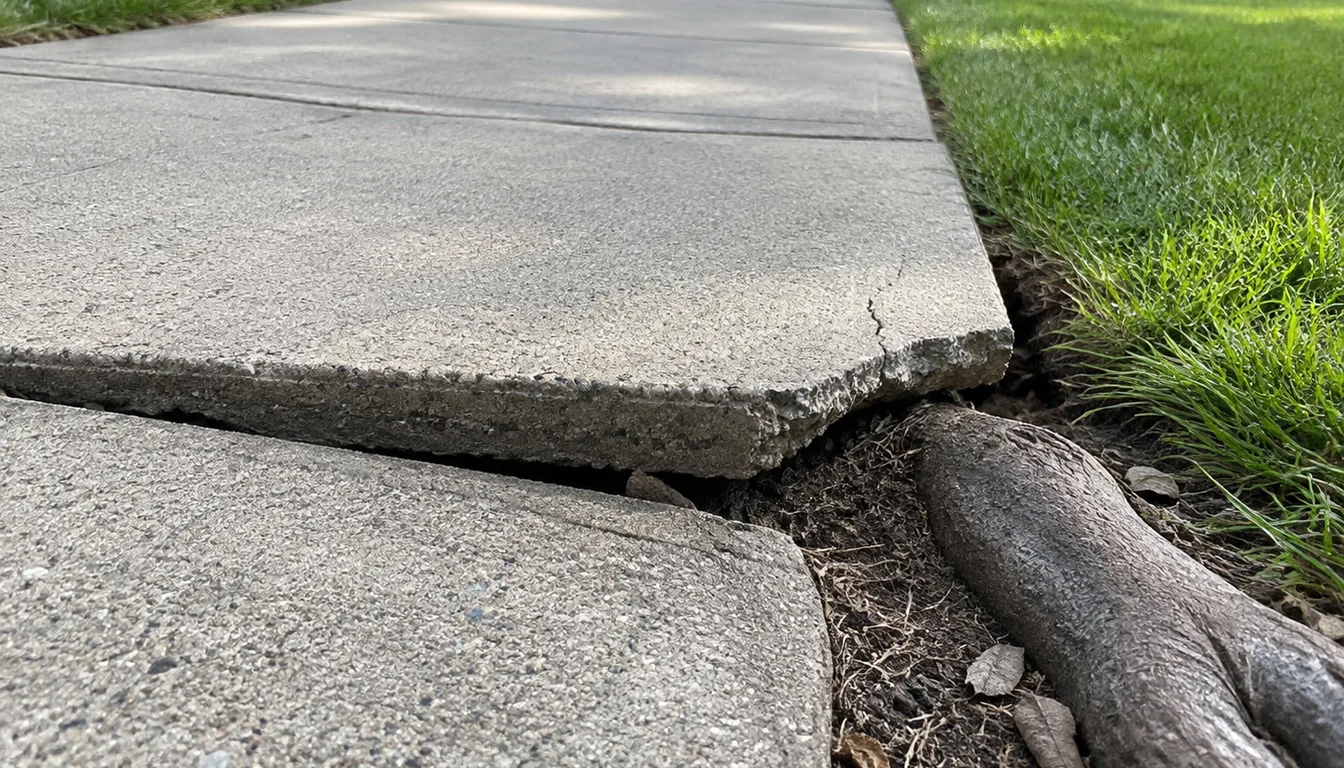
Roots usually exploit favorable soil, moisture, and existing defects rather than acting from a simple label such as aggressive. The practical question is whether a large root system has enough soil before it reaches pavement, drains, walls, or compacted ground.
The retained sidewalk image shows why placement matters. Once a large woody root and concrete occupy the same shallow space, routine pruning cannot solve the conflict without harming either the tree or the paving.
Buy for Root and Branch Quality, Not Maximum Height
The tallest tree on the rack is not automatically the fastest route to useful coverage. A smaller tree with straight outward roots, an exposed flare, and sound branch spacing can establish more efficiently than an oversized tree with crushed or circling roots.
Read the full tag before judging the canopy. Verify the botanical name and cultivar because similar common names can hide very different growth rates, mature sizes, and climate ranges.
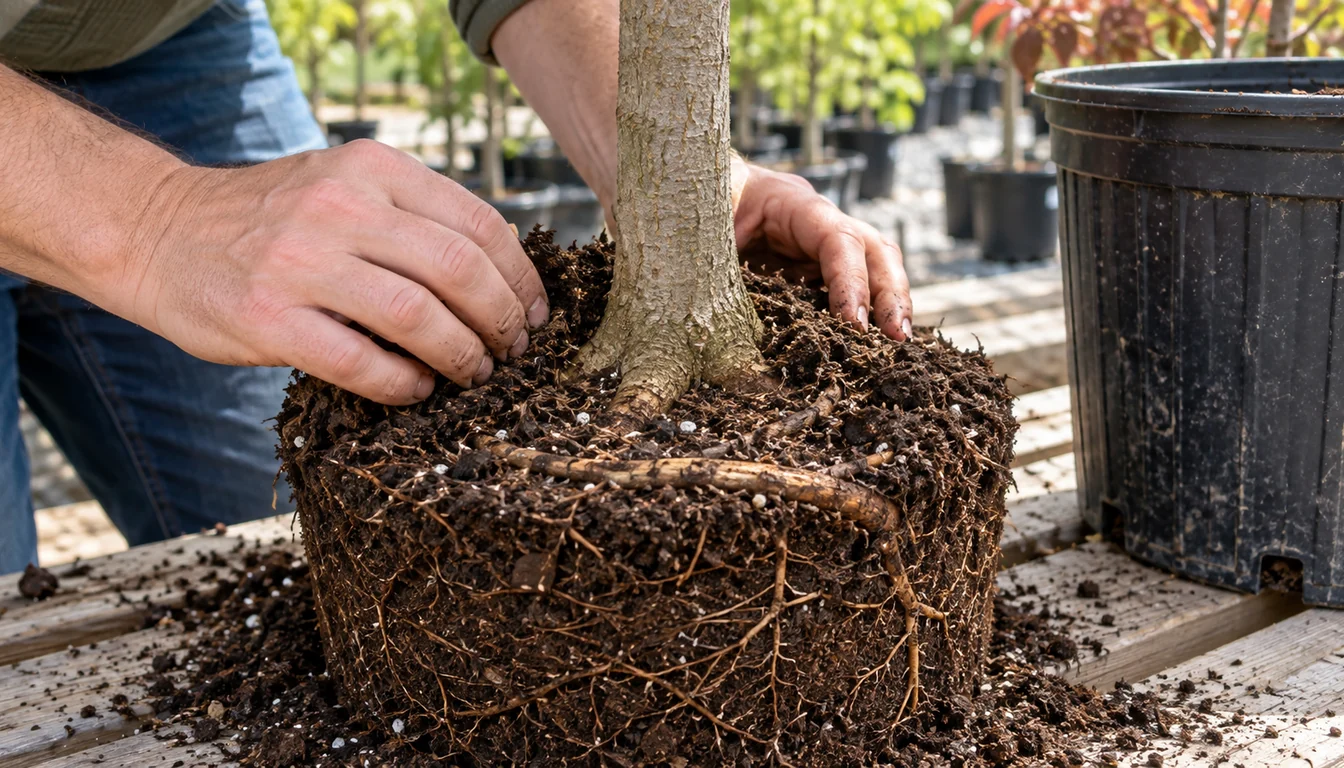
- Find the trunk flare instead of accepting a trunk that disappears straight into potting mix.
- Look for roots that radiate outward rather than circling tightly around the container wall.
- Reject cracked trunks, large bark wounds, dead tops, and fresh heading cuts.
- Choose a sound central leader when the species is normally trained as a single-trunk shade tree.
- Avoid several heavy branches attached at one crowded point.
- Check leaves and shoots for scale, boring dust, distorted growth, or widespread dieback.
- Confirm the root ball is firm enough to move without separating from the trunk.
Do not hide the flare problem by adding more mulch after planting. If the first structural roots are buried inside the container, remove the excess surface medium and reassess the planting depth.
Plant for Fast Root Expansion
A rapid-growing species still slows when the flare is buried or roots remain trapped in a tight container pattern. The planting job is to place sound roots in contact with usable native soil while keeping the trunk base exposed.
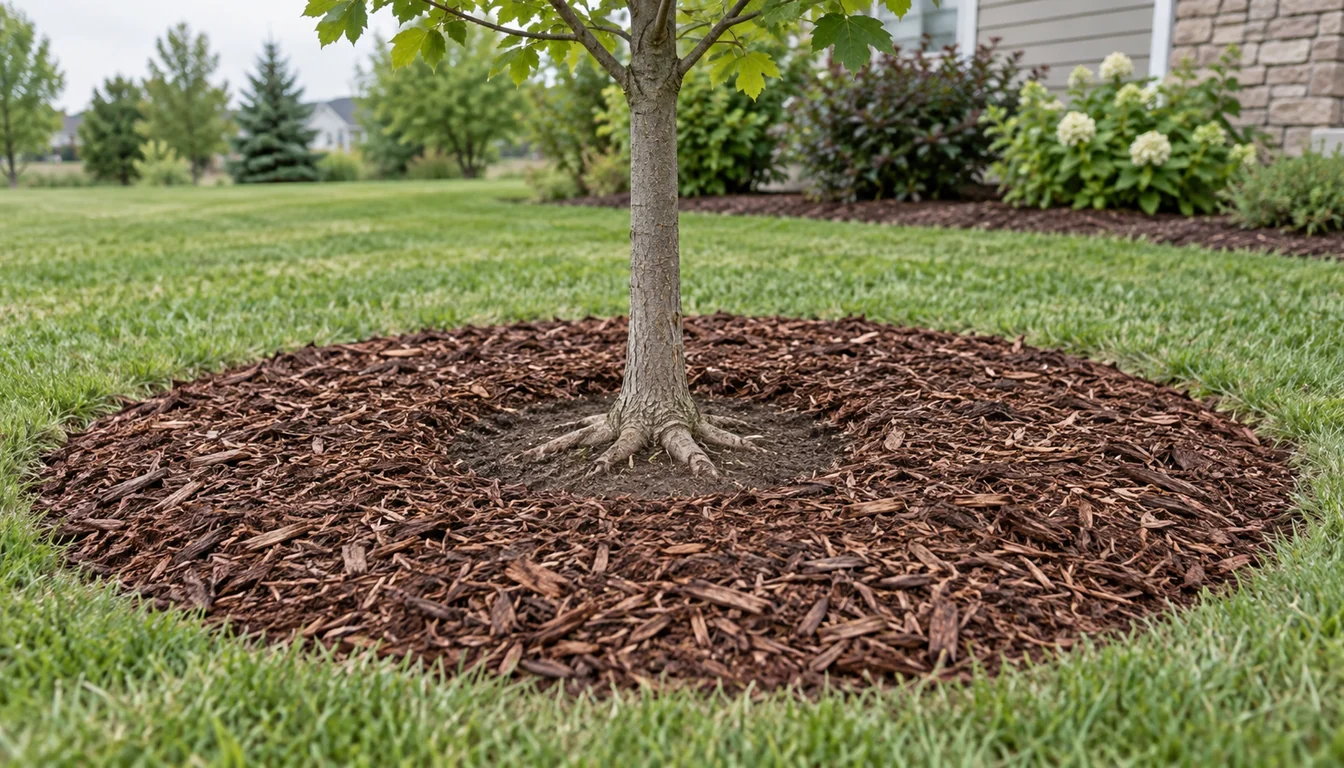
- Expose the flareRemove excess medium until the first major roots and the trunk flare are visible.
- Dig wide and shallowMake the hole about two to three times the root-ball width but no deeper than the root ball.
- Correct root defectsStraighten, cut, or remove circling roots and remove material that blocks outward growth.
- Set the heightLift by the root ball and position the flare so it remains visible at the finished grade.
- Backfill carefullyUse the excavated soil, keep the trunk straight, and water during backfill to settle large air pockets.
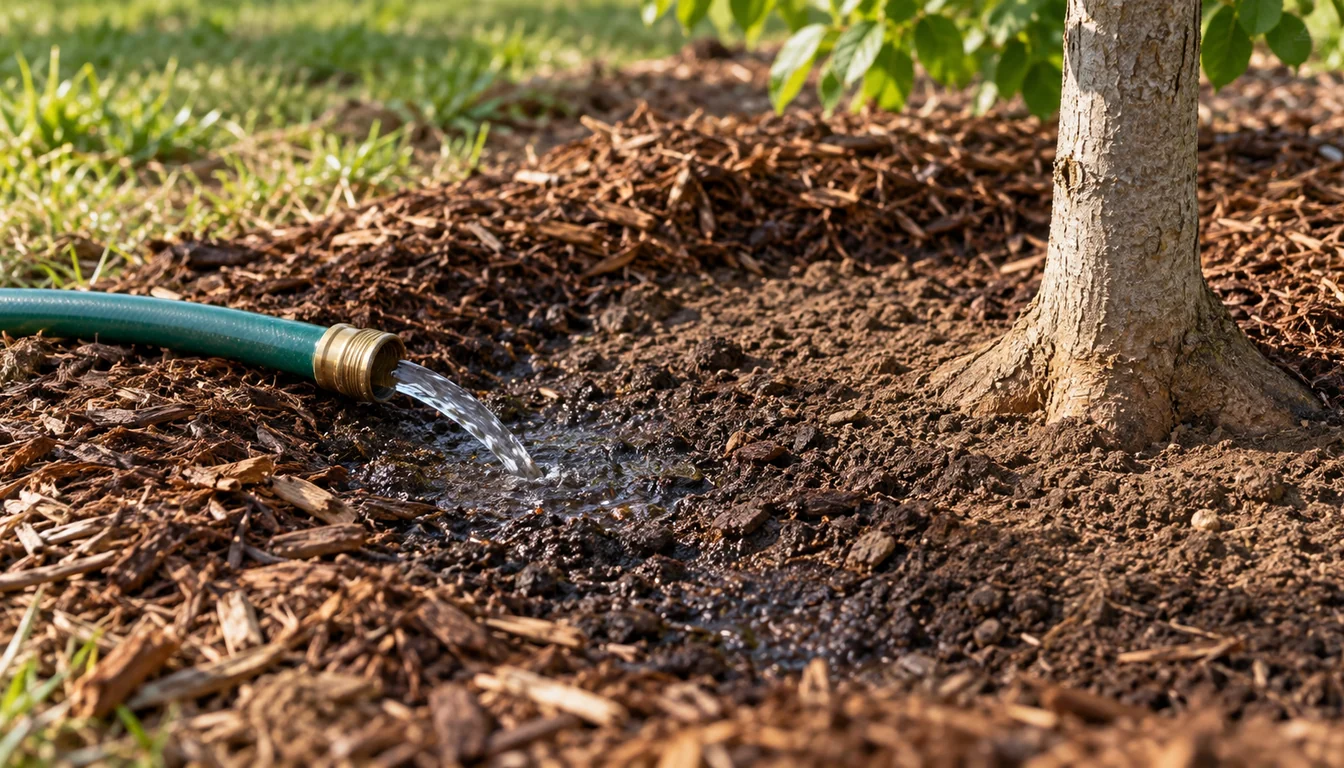
- Water the planting zoneMoisten the root ball and the soil immediately around it rather than flooding only the trunk.
- Mulch without a volcanoApply a 2- to 3-inch layer over the root zone and leave a mulch-free gap around the trunk.
- Stake only when neededSupport a root ball that moves or a bare-root tree in an exposed site, then remove support after establishment.
Avoid fertilizer at planting unless a soil test and a qualified recommendation identify a need. Added nitrogen cannot correct poor depth, compacted soil, or a dry root ball, and rapid top growth is not the first establishment goal.
Preserve the healthy canopy after planting. Remove branches damaged in handling, but delay broad corrective pruning while the tree is rebuilding roots.
Water and Train the Tree From Evidence
New roots occupy the original root ball and a limited band of surrounding soil. Water both areas slowly, then check moisture before deciding whether the next irrigation belongs today or later.
Rain can wet the soil surface without fully moistening a dense container root ball. Push a finger, trowel, or soil probe into both zones, and keep them moist rather than saturated.
| What you find | Likely issue | Useful next action |
|---|---|---|
| Dry root ball, moist outer soil | Water is missing the original roots | Apply water slowly over the ball and nearby soil |
| Wet, sour soil with weak growth | Poor drainage or excessive frequency | Pause irrigation and inspect drainage before adding water |
| Wilt with dry soil below mulch | Root zone has depleted available water | Soak the root ball and surrounding soil, then recheck |
| One dry side of a screen row | Uneven delivery or wind exposure | Test each emitter and compare soil along the row |
| Trunk moves at soil level | Root ball is not stable | Add temporary flexible support and inspect planting depth |
| Long, soft shoots with little branching | Excess nitrogen or low light | Stop feeding and confirm the tree receives suitable light |
Mulch slows evaporation and protects soil from mower traffic, but keep the trunk gap open. When mulch hides the flare or stays wet against bark, it creates a new problem at the exact point you need to inspect.
Prune only broken or damaged branches at planting.
After the tree has completed a growing season, begin necessary structural work with small cuts, preserving one dominant leader on species normally grown that way and never topping the crown.
Faster establishment comes from usable roots, not a fixed watering calendar. Weather, soil texture, root-ball size, drainage, and active growth all change demand.
Build Coverage Without a Crowded One-Species Row
A single species planted tightly can close a view quickly, but it also concentrates risk. One pest, soil mismatch, irrigation failure, or extreme weather event can open the entire row at once.
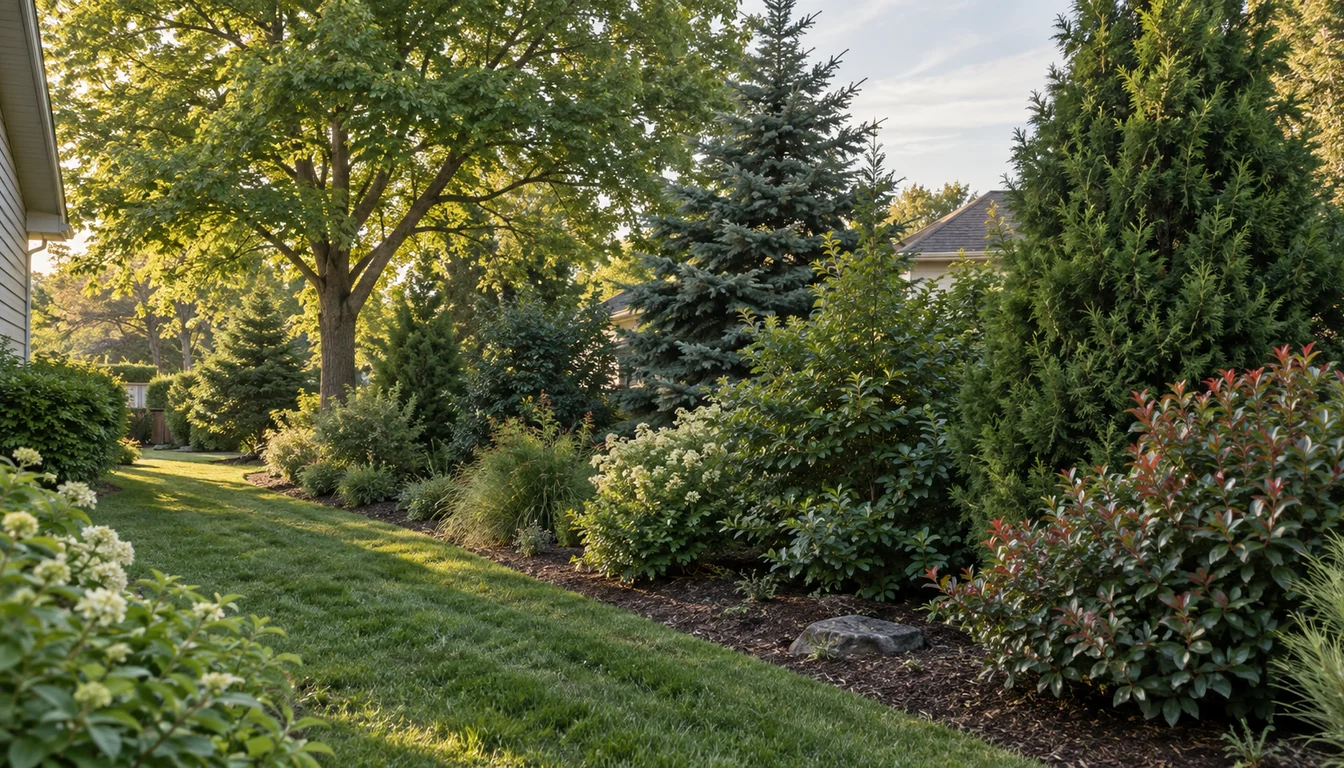
For privacy, arrange compatible plants by mature width and the sightlines they must block. A lower evergreen layer can cover seated views while selected taller trees intercept upper windows or afternoon sun.
For shade, place the main canopy where its mature shadow crosses the target, then use smaller plants only where their roots and crowns have enough room. Do not fill every early gap with another future large tree.
Pros
- Mixed sizes and forms :: Covers low and high sightlines without forcing every plant into the same shape.
- More than one suitable species :: Reduces the chance that one pest or disease removes the whole screen.
- Mature-width spacing :: Preserves air movement, branch structure, and access for inspection.
- Phased planting :: Lets the most important shade or privacy gap receive the first investment.
Cons
- One tight monoculture row :: Concentrates biological risk and can become crowded as crowns meet.
- Repeated shearing of large trees :: Hides the wrong mature-size choice and adds permanent maintenance.
- Deciduous trees sold as year-round privacy :: Leaves the winter sightline unresolved.
For a privacy-only decision, use the dedicated privacy-tree selection page. It compares density and seasonal coverage in more detail than the broader shade-or-screen shortlist.
Pro Tips
- Photograph the planting area from the privacy or shade target before visiting the nursery.
- Take the mature height and width from the exact cultivar tag, not a generic common-name sign.
- Call the utility-locate service before digging and contact the utility when a mature crown may approach overhead lines.
- Choose visible root flare and sound branch attachment over a small difference in nursery height.
- Check moisture inside the original root ball as well as the surrounding soil during establishment.
- Keep mulch over the root zone and away from direct contact with the trunk.
Frequently Asked Questions
What is the best fast-growing tree for shade?
There is no single best tree across the country. Tuliptree, river birch, dawn redwood, red maple, and pin oak all have rapid-growth potential, but their mature size, moisture needs, pH tolerance, climate range, and maintenance differ sharply.
What is the fastest evergreen tree for privacy?
Green Giant arborvitae is a rapid, dense candidate in USDA zones 5 through 8 when the soil drains well and the site is not salty. Eastern white pine needs much more room in cooler regions, while wax myrtle fits a shorter, wider screen in warm zones.
How close can a fast-growing tree be planted to a house?
Do not use one distance for every tree. Start with the exact cultivar's mature crown and root needs, then account for foundations, roof and gutter clearance, paving, soil volume, access, local rules, and the amount of overhang you can accept.
How can I make a newly planted tree grow faster?
Choose a suitable species, expose the root flare, correct circling roots, plant at the right depth, and keep the root ball and surrounding soil moist but aerated. Extra fertilizer cannot repair a buried flare, compacted soil, poor drainage, or a dry root ball.
Do all fast-growing trees have weak wood?
No. Growth rate does not describe branch attachment, wood properties, mature form, or storm exposure by itself. Compare species-specific structure and regional performance, then use early structural pruning where the tree's natural form requires it.
How soon will a fast-growing tree provide shade or privacy?
A universal year count would be misleading. Starting size, transplant stress, crown shape, soil, water, climate, and the height of the sightline all change the result, so track canopy width or screen opacity against the specific area you need covered.
Sources & References
- International Society of Arboriculture, Choosing the Right Tree
- International Society of Arboriculture, Planting a Tree
- NC State Extension, General Pruning Techniques
- NC State Extension Plant Toolbox, Tuliptree
- NC State Extension Plant Toolbox, River Birch
- NC State Extension Plant Toolbox, Dawn Redwood
- NC State Extension Plant Toolbox, Red Maple
- NC State Extension Plant Toolbox, Pin Oak
- NC State Extension Plant Toolbox, Eastern White Pine
- NC State Extension Plant Toolbox, Green Giant Arborvitae
- NC State Extension Plant Toolbox, Wax Myrtle
Related Guides
Best Butterfly Garden Plants for a Complete Habitat
The best butterfly garden plants do two different jobs. Host plants feed caterpillars, while nectar…
15 min read
Best Fall-Blooming Flowers for Color Near Frost
A bed that still carries flowers in October usually was planned before temperatures fell.
9 min read
Best Fragrant Flowers for Every Yard and Season
The best fragrant flowers depend on climate, light, space, and the hours you use the yard.
15 min read
Best Full-Sun Perennials for Hot, Bright Beds
The best full-sun perennials are the ones that match the bed's soil moisture and drainage, local…
14 min read
Best Ground Cover Plants for Sun, Shade, and Slopes
The best ground cover is a plant that survives the site and performs the job without escaping into…
18 min read
Best Indoor Plants for Every Room and Light Level
The best indoor plant is one that fits the light in its exact location and the care you will…
16 min read