
Which Succulents Need the Least Water?
Find low-water succulents for indoor and outdoor sites, compare how they store water, and prevent rot, stretching, and schedule-based mistakes.
At a glance
Low water is a shelf label, not a specification. Put a columnar cactus next to a haworthia and both carry the same tag while one coasts for months and the other is in trouble in a fortnight.
Choosing on that difference is what keeps a low-water planting alive. Where each plant keeps its reserve, which ones genuinely take neglect, what survives a wet winter outdoors, and why the dark corner you had in mind is the one place none of them belong.
What Makes One Succulent Need Less Water Than Another?
Low water describes a result, not one type of plant.
The useful question is where the plant stores its reserve and how much living tissue depends on a small root system.
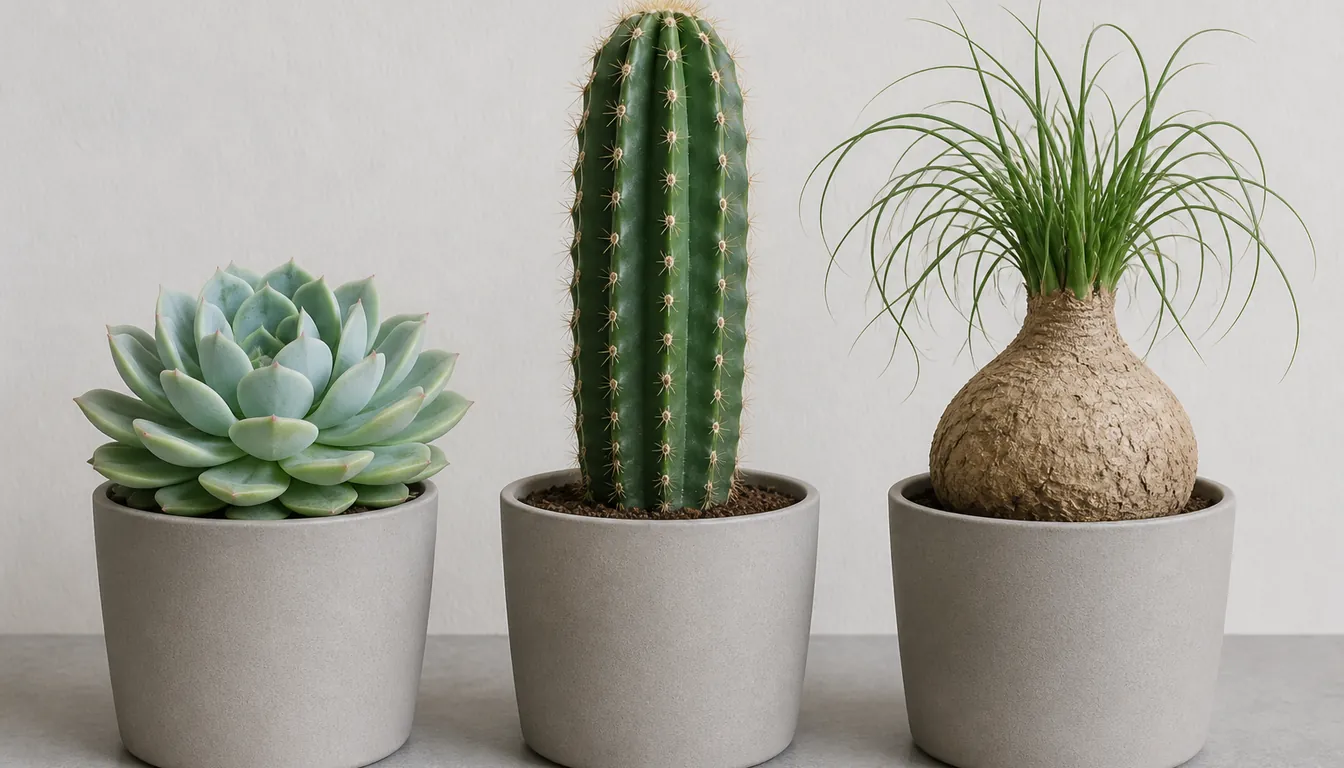
Leaf storers include Echeveria, jade plants, aloes, and many Sedum.
Their thick foliage gives visible warning as reserves fall, but swollen translucent leaves can collapse quickly after roots remain wet.
Stem storers include cacti and some euphorbias. A large stem reserve can bridge a long dry period, although a damaged root system may stay hidden until the stem loses firmness.
Caudex plants such as ponytail palm store water in a swollen base. That reserve can outlast a thin leaf canopy, but the fine roots below it still need air and drainage.
A larger drought buffer does not make saturated soil safer. Pot size, light, temperature, and root health still decide the real interval.
| Storage type | Visible clue | Examples | Main care consequence |
|---|---|---|---|
| Thick leaves | Plump rosettes or paired leaves | Echeveria, jade, aloe, Sedum | Wrinkles can show a falling reserve |
| Succulent stems | Ribbed or swollen green stems | Many cacti and euphorbias | Long buffer with fewer early warnings |
| Caudex or swollen base | Woody bulb-like base near soil level | Ponytail palm and adenium | Protect fine roots from prolonged wetness |
| Mixed storage | Leaves plus stems or roots | Jade and some aloes | Judge the whole plant and root zone |
Which Low-Water Succulents Fit Your Site?
Start with the conditions the plant must survive all year.
Drought tolerance cannot compensate for weak indoor light, freezing weather, standing rain, or a mature size that blocks a path.
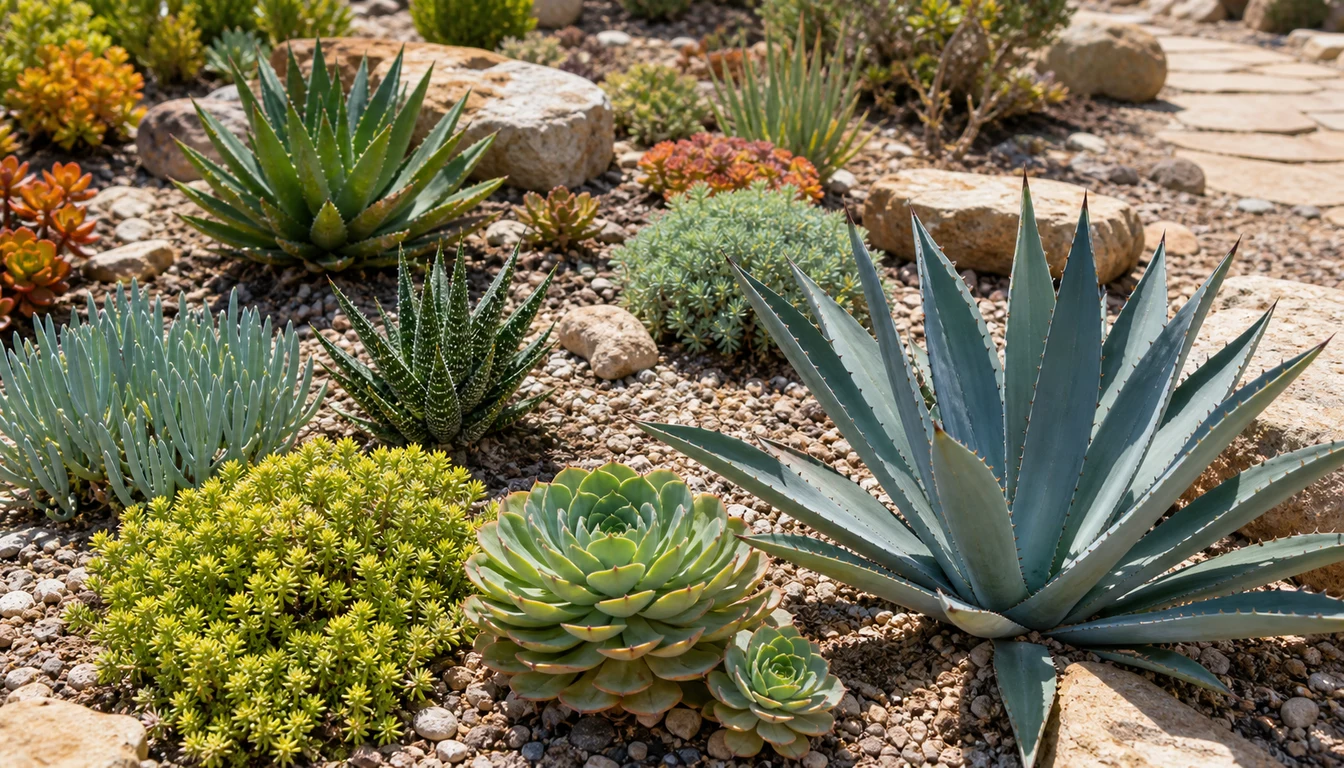
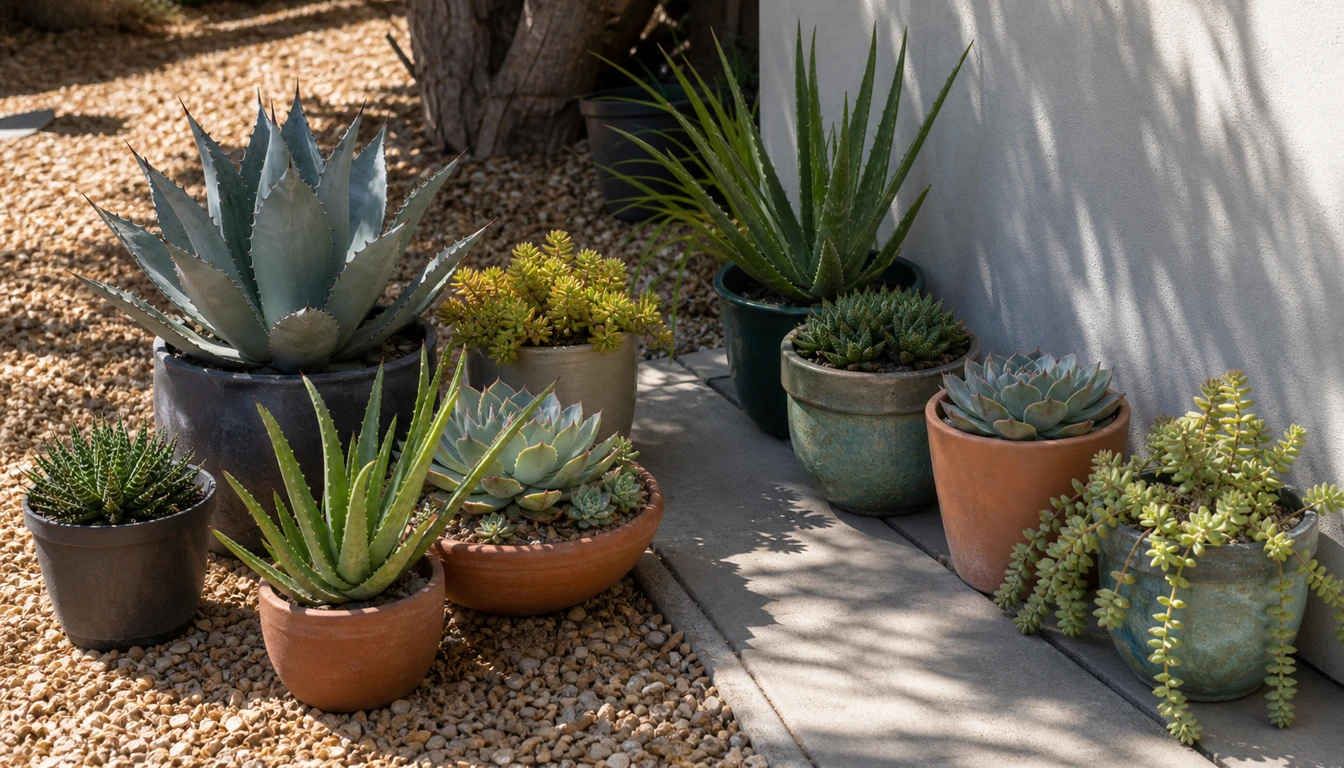
Hardy creeping Sedum and Sempervivum suit many outdoor dry beds because selected forms tolerate both frost and shallow rocky soil. Tender Echeveria and jade plants need a frost-free position even when summer drought does not trouble them.
Agave, aloe, and yucca create strong architectural forms, but species differ in cold tolerance and mature width. Give armed or toothed leaves enough clearance from walkways and play areas.
Bright indoor collections can use jade, compact aloes, haworthias, small cacti, and caudex plants. The plant still needs a window or grow light that maintains compact new growth.
Hardy carpets
Creeping Sedum can cover a sunny slope or rock edge after establishment when winter drainage keeps crowns from sitting wet.
Hardy rosettes
Sempervivum forms cold-tolerant outdoor colonies, but its offsets still need light and open crown conditions through wet winters.
Armed hot-site structure
Agave and selected yuccas provide long-lived structure where mature width and sharp leaf tips stay clear of paths.
Frost-free architecture
Aloe and jade bridge long dry intervals in bright containers, but tender selections need protection before cold weather.
Bright indoor reserves
Haworthia, compact cacti, and caudex plants fit small spaces only where window or grow-light intensity keeps new growth compact.
Why Do Low-Water Succulents Still Rot?
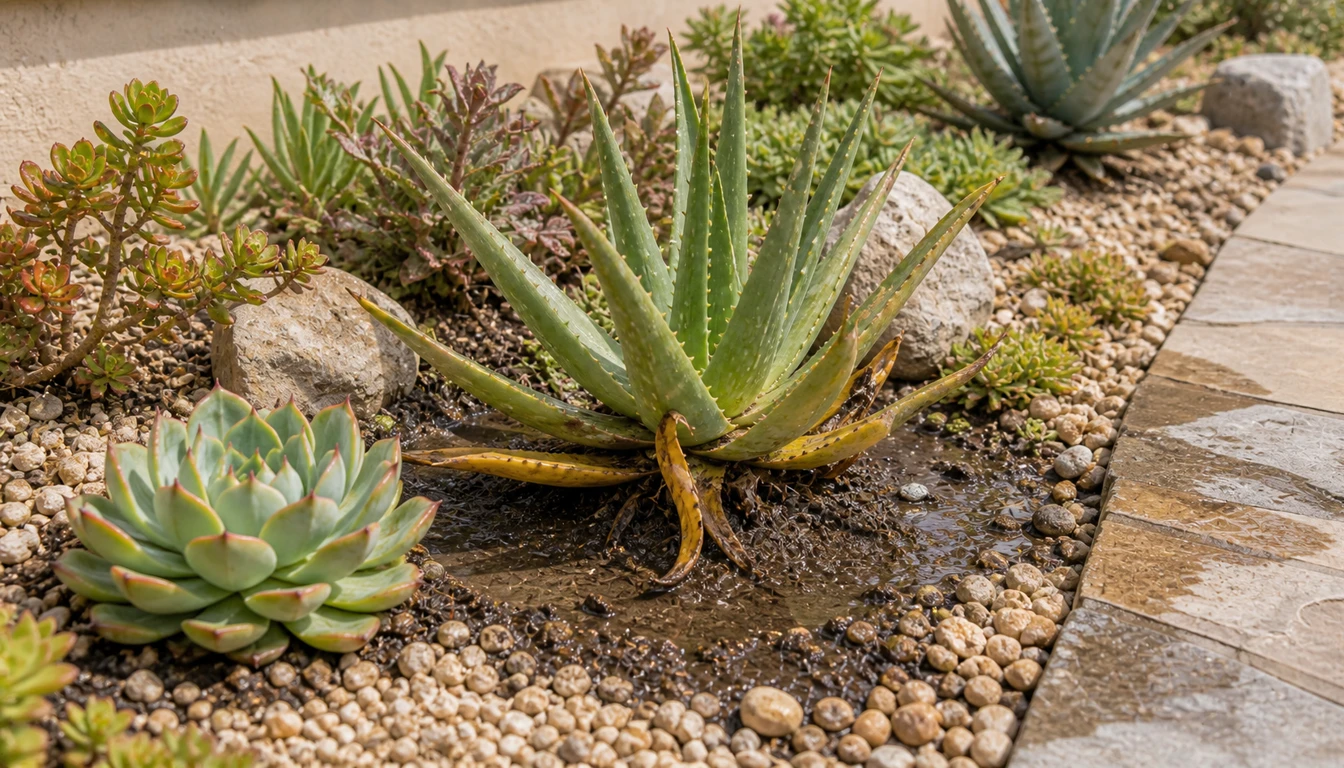
Drought-adapted foliage does not protect roots from a soil pore space filled with water.
When the root zone stays saturated, roots lose oxygen and damaged tissue becomes vulnerable to rot.
Cold weather and low light increase that risk because the plant uses water more slowly and the site evaporates less. A routine that worked in summer can leave the same pot wet for much longer in winter.
Firm wrinkles usually show that a reserve is running down. Translucent yellow tissue, leaves that detach at a touch, or a dark soft crown point toward excess moisture and damaged roots.
Lift a failing container plant when the signs conflict. Healthy roots feel firm, while rotten roots turn brown, soft, and easy to strip from the core.
| Pattern | Likely condition | Confirm it | First action |
|---|---|---|---|
| Firm wrinkled leaves | Depleted reserve | Root zone is dry through | Soak fully and drain |
| Translucent swollen leaves | Excess water uptake | Mix remains damp | Stop watering and improve dry-down |
| Dark soft crown | Active rot | Tissue collapses under light pressure | Cut above damage or discard |
| Damage after cold rain | Cold and wet exposure | Failure begins in a low pocket | Repair drainage and protect tender plants |
Can Low-Water Succulents Thrive Indoors?
Low-water succulents can grow indoors when the plant receives enough usable light.
A room can look bright to you while a plant several feet from the window receives too little light for compact growth.
Long pale internodes, a leaning stem, and widely spaced leaves show etiolation. Less watering will not shorten that growth, and old stretched tissue will not become compact again.
Move the plant closer to a suitable window or add a properly placed grow light. Acclimate sun-sensitive tissue gradually because foliage formed in weak light can scorch after an abrupt move.
Indoor dry-down changes with the season. Shorter days, cooler rooms, glazed pots, and a large soil volume all keep roots wet longer.
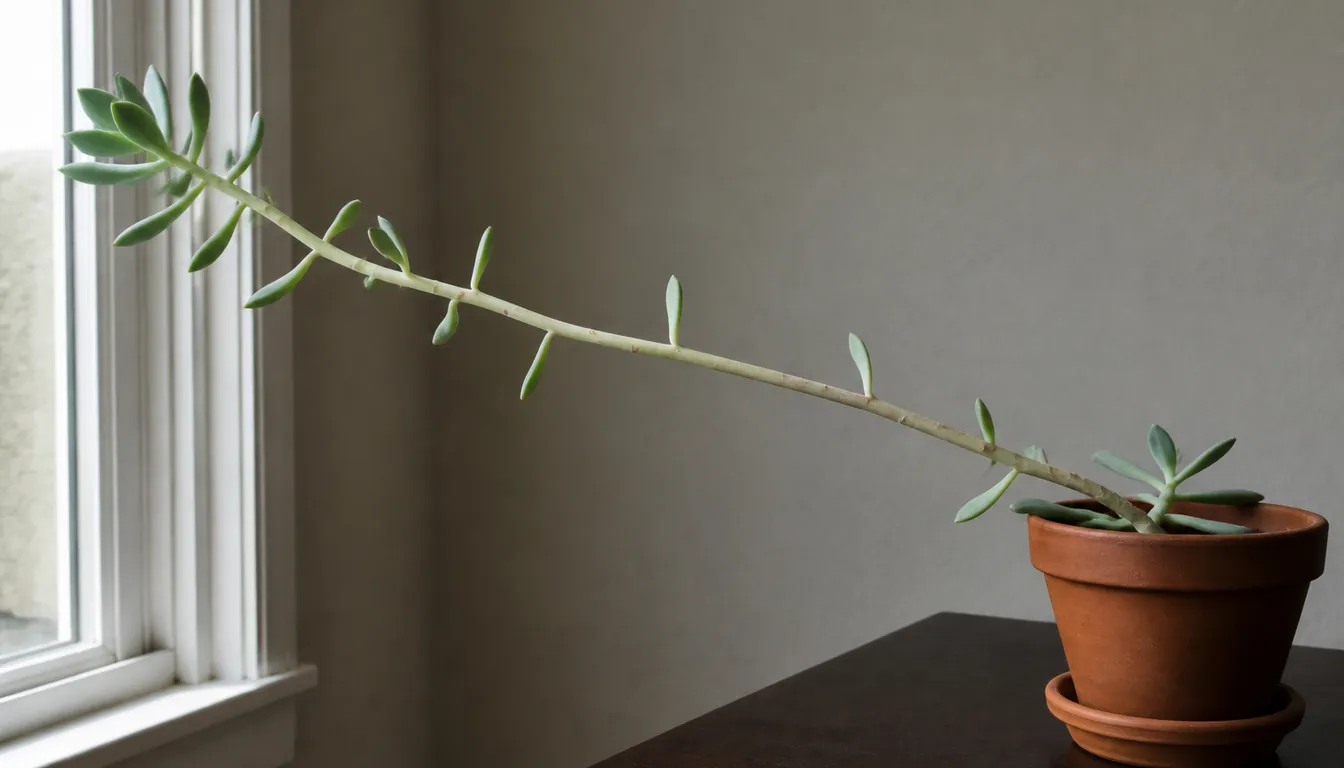
- Healthy light response
- Compact new growth and stable color
- Too little light
- Long pale gaps and leaning toward the window
- Watering consequence
- Weak light slows plant use and dry-down
- Recovery
- Improve light and judge the shape of new growth
- Dark room choice
- Use a plant adapted to low light instead
How Do You Set a Watering Routine Without a Schedule?
A newly planted succulent cannot use soil beyond its small root ball yet, so check that ball during establishment instead of treating it like a mature plant.
Once new roots enter the surrounding soil and growth resumes, let the whole occupied root zone guide a longer dry interval.
Measure one complete cycle in the plant's real position before you decide that it needs water every week or month. A published interval cannot account for the pot wall, root mass, window, season, and room temperature together.
Soak the root zone until water exits the drainage hole, then let the pot drain. Lift it while wet so you learn the weight of a fully watered setup.
Check again as the mix dries. A wooden skewer pushed near the bottom can confirm hidden moisture when the top layer already looks pale.
Repeat the measurement after a repot, a move, or a major seasonal light change. Those events change the dry-down enough to make the old estimate unreliable.
- 1. Check whether you are monitoring a new root ball or an established root zone.
- 2. Confirm that the pot has an open drainage hole.
- 3. Soak the occupied root zone and let runoff leave.
- 4. Lift the drained pot and remember its wet weight.
- 5. Recheck weight and moisture depth before the next soak.
- 6. Reset the comparison whenever roots, setup, or season change.
Quick Tips
- Check where a plant stores its water before buying. A stem-storing cactus and a thin-leaved haworthia are not the same purchase.
- Buy one plant from each tolerance group first, so you learn the difference on your own shelf rather than from a chart.
- Fix drainage before choosing plants for an outdoor bed, since standing water kills these plants far more often than drought.
- Treat winter wet rather than cold as the outdoor risk, and use sempervivum or hardy sedum where anything has to stay in the ground.
- Read a pale bare stem with widely spaced leaves as too little light, and move the plant rather than watering it differently.
- Check the mature size of an agave before planting it anywhere permanent, because the nursery pot gives no hint of it.
Recommended Plants
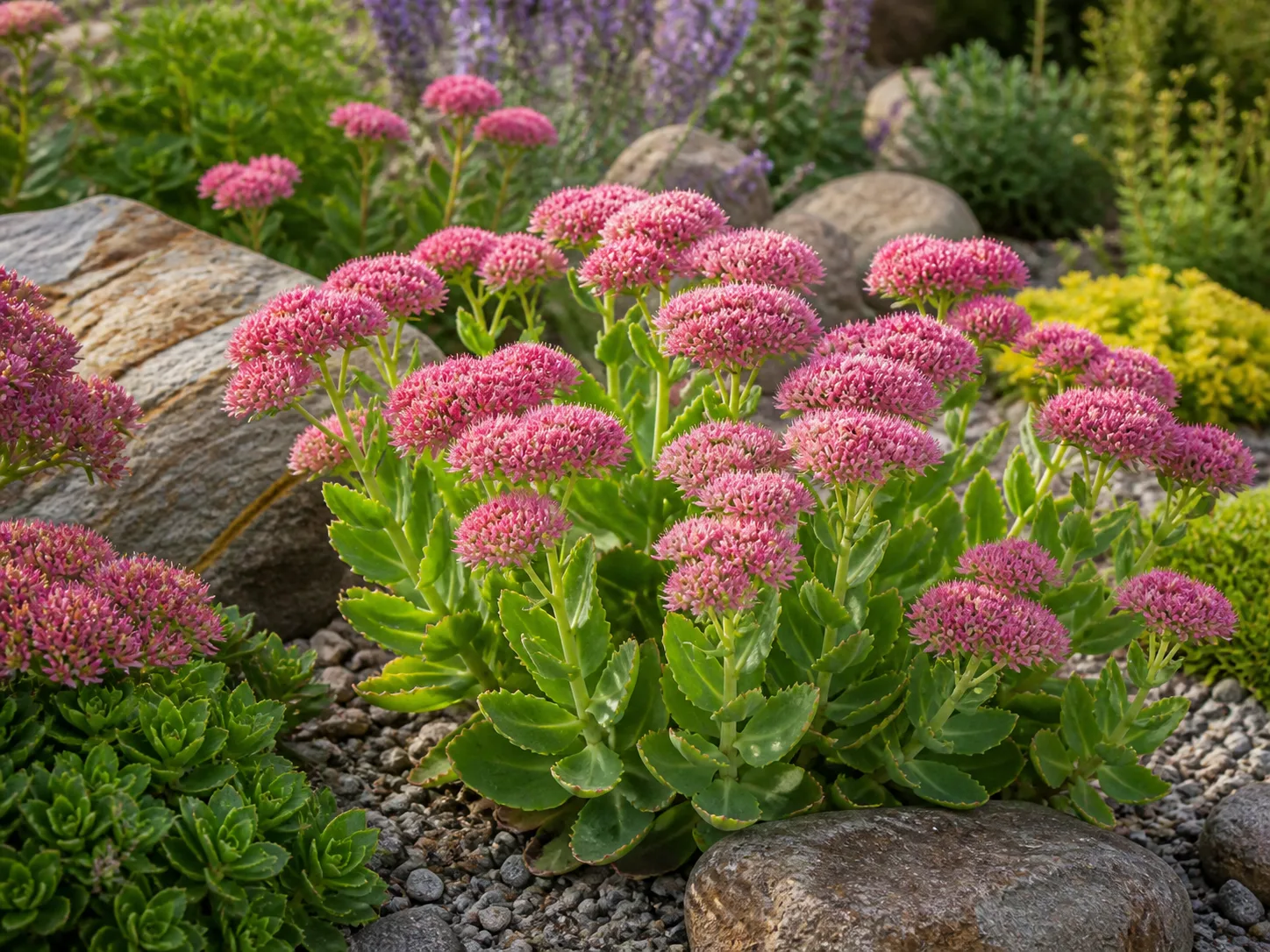
1 succulents worth considering.
Frequently Asked Questions
Which succulents need the least water?
The stem storers go longest, so a columnar cactus or euphorbia will coast for months where a leaf storer wants weeks. Among the widely sold plants, jade, aloe vera, yucca and ponytail palm take the longest gaps, while haworthia and string of pearls hold much less than their low-water reputation suggests.
Why did my low water succulent die when I barely watered it?
Almost always because the water it did get had nowhere to go, not because it got too little. A pot without drainage, a peat-based mix, or an outdoor spot that holds winter rain keeps the roots wet for days after a small watering, and rot follows from the hours spent wet rather than the amount poured.
Can succulents live in a room without much light?
They survive for a while and they do not do well, because low light makes them stretch into a pale bare stem with widely spaced leaves and that change is permanent on the growth that made it. The lower water use in a dim room also keeps the mix wet longer, so the rot risk rises rather than falls.
Which succulents survive winter outdoors?
Sempervivum and the hardy sedums come through freezing outdoors reliably, and they are the backbone of any permanent outdoor planting in a cold climate. Aloe, echeveria and jade are tender and will not survive a wet freezing winter in the ground regardless of how drought tolerant they are in summer.
How long can succulents go without water?
It depends entirely on where the plant stores water and how big the pot is, which is why no single number is useful. A columnar cactus in a modest pot can go a couple of months, a thick rosette a few weeks, and a haworthia considerably less than either.
Do succulents need special soil?
They need a mix that drains fast and holds air between the particles, which mostly means mineral grit rather than the peat-based potting soil sold for houseplants. Ordinary potting soil holds water for days and, once fully dry, repels the next watering so it runs down the sides without wetting the roots.