
How Often Should You Water Houseplants?
Water a houseplant when its potting mix reaches the dryness that plant tolerates. Snake Plant and ZZ Plant should dry between waterings, while Peace Lily and Boston Fern need closer moisture checks.
A reminder can tell you to inspect the pots, but it cannot tell you that every pot needs water.
Check below the surface and compare the pot's weight with its weight after watering. Then water the root ball thoroughly, let it drain, and empty collected runoff.
Change the next watering when the plant or its conditions change, rather than copying an interval from another home.
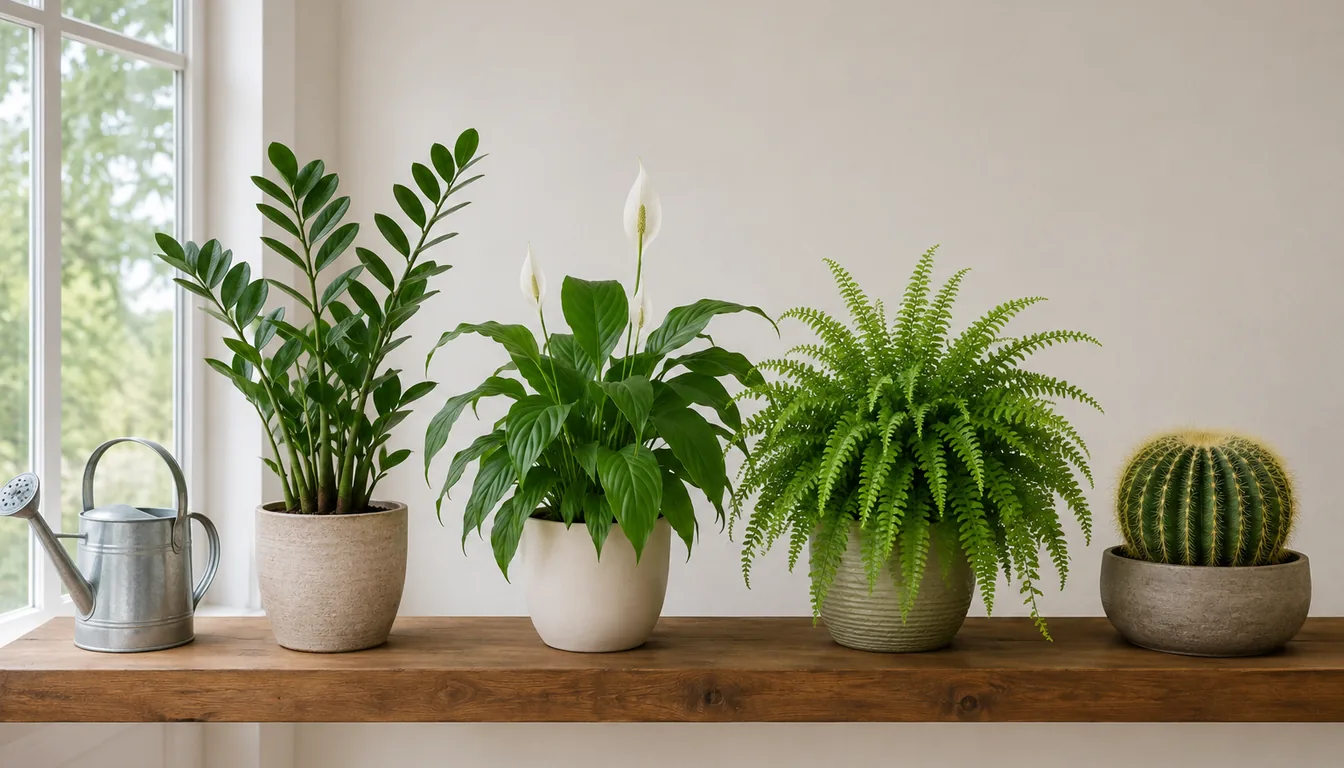
At a glance
How Do You Know Whether This Pot Needs Water?
Start with the plant's moisture preference, then check the mix.
For many ordinary foliage houseplants, feeling beneath the surface to about two inches is a useful starting check. It is not a depth rule for every pot.
A small nursery pot, a tall floor container, and an orchid planted in bark do not present the same root zone.
Feel the mix gently where you can reach it without forcing a finger through dense roots.
A dry surface can cover a damp interior. Conversely, a recently watered outer layer can surround an old root ball that stayed dry.
If your first check conflicts with the plant's condition, investigate another part of the pot instead of treating that one spot as conclusive.
Lift a manageable pot after watering and drainage, then compare it as the mix dries. Learn the weight of that particular pot.
A heavy ceramic planter or a very large tree may be impractical to lift, so use accessible moisture checks and drainage observations instead of risking a fall or injury.
A moisture meter is an additional observation.
Its contact with the mix and the place you insert it matter, especially in coarse mixes. Compare its reading with what you can feel and with the pot's recent behavior.
If the meter says dry while the mix is plainly wet, do not add water just to change the display.
Do not deliberately wait for every plant to wilt. Wilting can follow drought, but roots damaged in wet soil can also leave the leaves limp.
Check the pot before choosing the response.
Which Plants Need More Drying Between Waterings?
Use these plants as distinct examples, then check the care needs of the species you actually own. The categories describe moisture preference, not a promise about how many days a pot will take to dry.
| Plant | Condition to look for before watering | What changes the decision |
|---|---|---|
| Snake Plant | Mix has dried between waterings | A damp interior means wait, even when the top looks dry |
| ZZ Plant | Mix has dried rather than remaining continuously moist | Thick rhizomes store water, so a quiet growth period is not a reason to add more |
| Pothos | Mix has dried between thorough waterings | Check the root zone instead of waiting for repeated severe wilting |
| Peace Lily | Surface has dried slightly while deeper mix retains some moisture | Avoid both prolonged drought and a pot standing in runoff |
| Boston Fern | Mix remains evenly moist with drainage | A small or exposed pot may need attention sooner than neighboring drought-tolerant plants |
Snake Plant has fleshy leaves and tolerates dry intervals. Its ability to survive a missed watering does not protect roots from a mix that remains saturated.
If the pot still feels damp, another small splash does not improve its care.
ZZ Plant stores water in thick underground rhizomes. It can keep firm foliage while using little water, especially in lower light.
Inspect the mix before interpreting a lack of new shoots as a need for watering or fertilizer.
Pothos needs drainage and a drying interval, but deliberately taking the vine through repeated collapse is unnecessary. Check its pot as a separate unit even if another pothos in the house has already become dry.
Cuttings, established vines, and plants in different containers can use water differently.
Peace Lily needs a more attentive balance. Its tendency to droop makes it an obvious signaler, but drooping does not distinguish a dry root ball from damaged wet roots.
Water when the moisture check supports watering, and let surplus water escape afterward.
Boston Fern is a poor match for a routine that lets every pot become completely dry. Keep its mix evenly moist while retaining drainage.
This does not mean keeping a saucer full or repeatedly soaking a pot that is already wet.
Do not decide by the word succulent or tropical alone. A Christmas cactus is not a desert cactus, and a fern is not a ZZ plant.
If the identity is uncertain, identify the plant before adopting someone else's watering calendar.
How Much Water Should Reach the Root Ball?
For an ordinary pot with drainage, apply water to the mix slowly enough for it to soak in.
Work around the surface rather than pouring repeatedly at one point. Let excess water leave the drainage holes, then empty the saucer or outer decorative pot.
Small plants can be watered over a sink and returned after drainage.
There is no useful universal cup amount for a collection of different pots. The practical goal is to moisten the root ball, then allow drainage.
Repeated small sips can wet only part of the mix while encouraging you to water again before checking what happened below.
Water running out immediately is not proof that the roots received it. Very dry potting mix can repel water, and a shrunken root ball can leave a channel around the edge.
If the pot remains unexpectedly light or the center feels dry, rewet slowly in stages and check again.
Bottom watering can help rehydrate dry mix or keep water off sensitive foliage.
Set a pot with drainage holes into a shallow basin and allow the mix to absorb water. Check that moisture has reached the root ball, then remove the pot and let it drain.
Do not leave it soaking indefinitely because a timer or online instruction suggested a fixed session.
Bottom watering and a designed self-watering planter are different setups.
A reservoir system controls contact through its wick and growing medium. An ordinary pot left in a bowl can simply remain waterlogged.
Follow the planter's instructions and choose it for a plant that suits the moisture it maintains.
Why Do Two Similar Plants Dry at Different Speeds?
Look at the container and mix before assuming that one plant is behaving incorrectly.
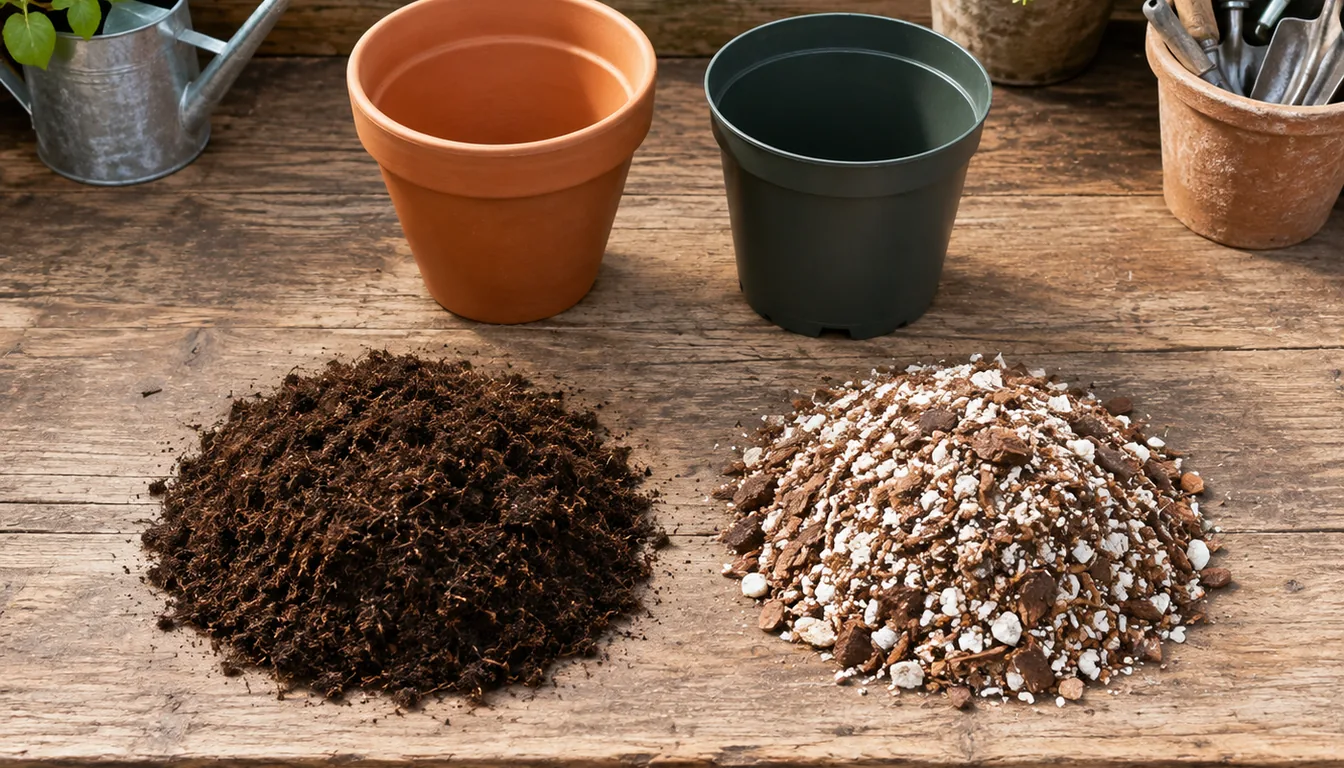
Unglazed terracotta allows moisture to pass through its walls. Plastic and glazed containers retain moisture differently, although light, plant size, and the mix can outweigh that one difference.
A fixed percentage for how much faster terracotta dries would hide those conditions.
Container size also changes how much mix surrounds the roots. A small plant in a very large pot can leave much of that mix wet because its roots are not using the stored water quickly.
Repot for the root system and the condition of the mix, rather than choosing a large container solely to make watering less frequent.
Mix texture affects both moisture retention and air space.
Bark and other coarse ingredients behave differently from a fine, fibrous mix. Choose a suitable commercial mix for the plant instead of adding the same scoop of perlite to every pot.
Orchids in bark and moisture-loving foliage plants need different handling.
Check the underside of the container.
A decorative outer pot may have no outlet even when the nursery pot inside it drains well. Lift the inner pot to check for collected water after watering.
For a plant grown directly in a container without drainage, changing to a suitable draining container makes moisture management easier to observe.
When Should You Recheck the Watering Routine?
Recheck when the plant changes location, light, size, or container. Brighter conditions and active growth can increase water use.
A plant moved away from its window may dry more slowly, so repeating the old watering day can keep the mix wet.
Winter creates competing effects.
Shorter days can slow growth, while indoor heating can dry the air and warm a nearby pot. Inspect the actual plant rather than automatically cutting every watering in half.
A plant under effective grow lights may not follow the same seasonal pattern as one beside a shaded window.
After repotting, compare the original root ball with the new mix around it. The two materials can absorb and hold water differently.
A damp outer layer does not necessarily mean that the old root ball was moistened, and a larger volume of new mix does not guarantee faster drying.
For a routinely repotted foliage plant, water to moisten the root ball and settle the mix, then let excess water drain. Follow species-specific instructions when roots were cut, diseased, or allowed to callus.
Do not extend ordinary foliage-plant advice to every cactus or succulent repair.
Heavy pruning or substantial leaf loss is another reason to reassess. The old combination of foliage, roots, and container has changed.
Check moisture and recovery before repeating the former interval, and avoid simultaneously changing light, fertilizer, and watering without a clear reason.
What Should You Do When the Plant Is Wilting?
Separate the symptom from the cause. Yellow leaves, brown tips, and drooping can occur for several reasons.
The condition of the root zone helps you decide whether water is needed or whether adding it would make the situation worse.
| What you find | Next action | What not to assume |
|---|---|---|
| Dry root ball and a light pot | Rehydrate the mix, drain, and observe the plant | A few drops on the surface reached all the roots |
| Wet mix and collected runoff | Empty the runoff and check drainage | Every drooping leaf signals thirst |
| Persistently wet mix with mushy roots or a decaying base | Inspect the damaged roots and use plant-specific recovery guidance | Moving to brighter light alone will reverse rot |
| Water bypasses a dry center | Rewet gradually or use controlled bottom watering | Fast runoff proves excellent drainage |
| Moisture seems appropriate but damage continues | Check light, temperature, pests, and water quality | More frequent watering is the next treatment |
For a dry plant, check whether the mix actually absorbed water before watering again. Leaves may take time to respond, and tissue that has already died will not become healthy after one drink.
Continuing to add water while waiting for damaged leaves to look normal can create a second problem.
For wet-soil wilting, inspect rather than treating root color alone as proof of rot. Soft, collapsing tissue and a decaying base are more concerning than color without texture or context.
Avoid stripping healthy roots or repotting every yellow-leaved plant as an automatic emergency response.
If fungus gnats are present, address persistent moisture while respecting the plant's needs. A fern cannot be managed exactly like a cactus simply to dry the surface.
Confirm the pest and combine suitable watering changes with the controls that address its life cycle.
Does Tap Water or Misting Change the Schedule?
Tap water works for many houseplants, but the water source and the plant's sensitivity matter. Avoid routinely using water from a household sodium-based softener.
Where water quality is a concern, identify the issue before buying a filter or changing every plant's care.
Brown tips do not prove that tap water is the cause. Fertilizer salts, drought, root damage, and other stresses can produce similar marks.
Look for a pattern across new growth and check the potting mix and fertilizer history alongside the water supply.
Leaving water overnight is not a universal treatment.
Chloramine does not rapidly dissipate on standing, as the EPA explains, so that advice cannot be applied to every municipal supply. Check what your utility uses and what a proposed filter actually removes.
For a sensitive plant, a suitable alternative water source is more useful than an unsupported promise about an ordinary pitcher filter.
Mineral and fertilizer residues can accumulate as water evaporates. In a pot that drains properly, watering from the top and discarding runoff can help carry soluble salts out.
A white crust deserves investigation, but repeated flushing is not a substitute for correcting poor drainage or excessive fertilizer.
Misting foliage does not water the root ball. It also does not give reliable control of room humidity for long periods.
If humidity is the problem, address the growing environment while keeping the watering decision tied to moisture in the pot.
How Can You Keep a Routine Without Overwatering?
Use a reminder to inspect, then record whether you watered or waited. A useful note describes the pot's condition, such as a dry root zone and lighter weight, rather than only recording that it was Tuesday.
Over time, those observations tell you which plants need closer attention.
For example, check a peace lily and a ZZ plant separately even when they share a shelf. If the peace lily is ready and the ZZ mix is still damp, water only the peace lily.
The shared room explains part of their environment, but the plants still have different moisture preferences.
Before a trip, compare the length of your absence with the drying pattern you have actually observed. A plant sitter needs instructions for each pot, including when to leave it alone and how to empty runoff.
Giving everyone a fixed amount of water on the same day recreates the original problem.
Test a wick or self-watering arrangement while you are home. Check that it supplies enough moisture for the intended plant without keeping a drought-tolerant one constantly wet.
Protect furniture and electrical equipment from leaks, and do not rely on an untested bottle or tray merely because it is labeled a vacation solution.
When you return, inspect each plant before watering. A pot that is still moist does not need compensation for the days you were away.
Resume care from its current condition, then update the routine if the season, room, or plant has changed.
Frequently Asked Questions
Should I water every plant when my reminder goes off?
No. Use the reminder to check each pot.
Water the plants whose mix has reached their preferred dryness and leave the others until their own moisture check indicates a need.
Do I have to wait until morning if a plant is dry now?
Do not leave a genuinely dry, wilting plant untreated solely to meet a clock time. Confirm that the root ball needs water, hydrate it, and let it drain.
Routine morning watering can be convenient, but timing cannot correct a wet or poorly drained pot.
Can a plant in a self-watering pot follow this guide?
Check the reservoir system and the moisture it maintains instead of treating the reservoir like an ordinary saucer. Follow its instructions, keep it clean, and confirm that the plant suits continuously supplied moisture.
Plants that need drying intervals may be a poor match.
Sources & References
- University of Maryland Extension - Watering Indoor Plants
- Virginia Cooperative Extension - Properly Watering Container Houseplants
- Illinois Extension - Watering Houseplants
- NC State Extension - Snake Plant
- NC State Extension - ZZ Plant
- NC State Extension - Pothos
- NC State Extension - Peace Lily
- NC State Extension - Boston Fern
- UC Master Gardeners - Watering Hydrophobic Soil
- Iowa State University Extension - How to Care for Houseplants
- Iowa State University Extension - Why Is My Houseplant Wilting?
- University of Saskatchewan - Watering Houseplants While on Vacation
- U.S. EPA - Chloramine information, archived page
Related Guides
A Drought Tolerant Plant Is Not Drought Tolerant Yet
Colorado State puts it in one sentence. Drought tolerant plants are not drought tolerant until…
11 min read
An Overwatered Tree Hides It for a Year, Then Thins
A tree gives you almost no warning. Colorado State says the symptoms of root problems may appear…
12 min read
Best Time to Water Flowers for Stronger Blooms
Watering flowers at the wrong time does more damage than skipping a day.
10 min read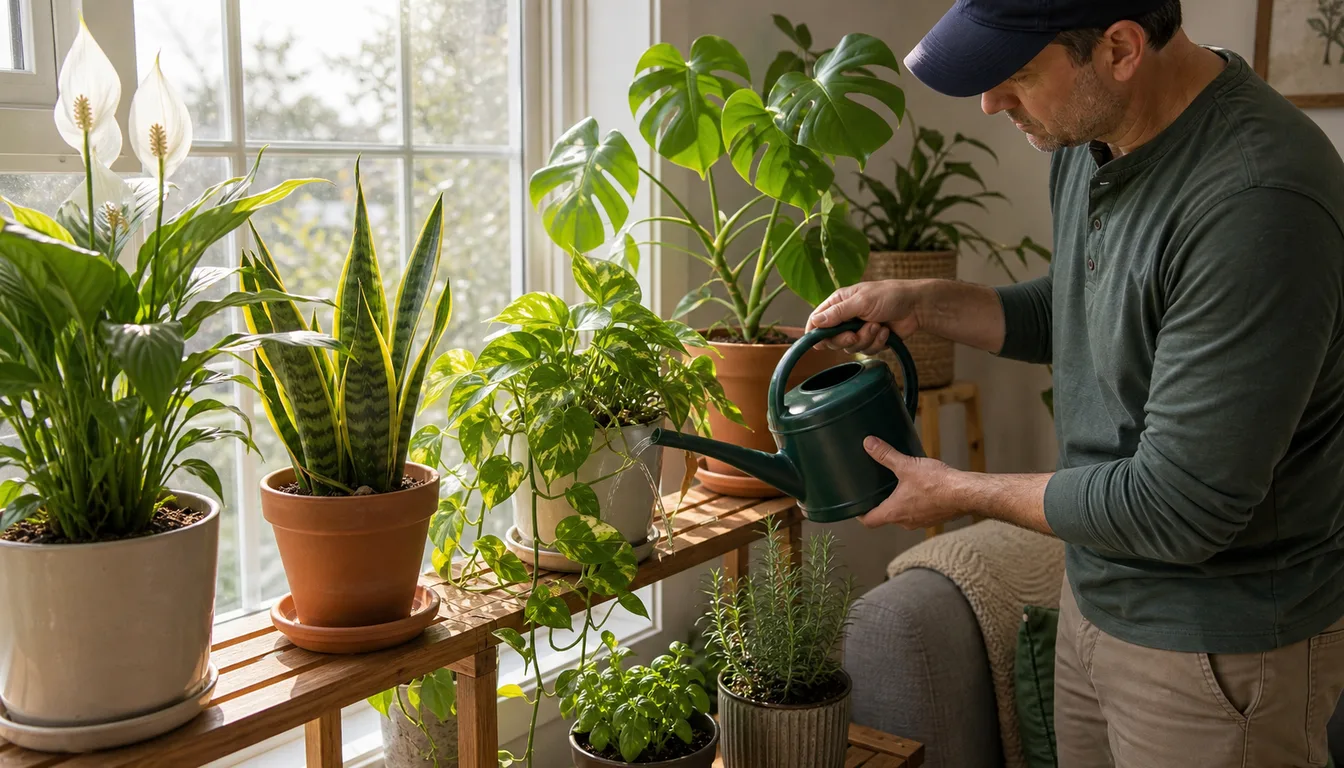
Best Time to Water Indoor Plants: Morning or Evening?
Morning is the better default for watering indoor plants.
6 min read
Best Time to Water Plants for Healthier Roots
Watering at the wrong time wastes water and stresses plants, even if you are generous with the…
11 min read
Deep Watering vs Frequent Watering: What Roots Need
Deep watering usually serves established lawns, vegetables, trees, and shrubs better than repeated…
17 min read