
Is Your Plant Overwatered or Just Thirsty?
A drooping plant does not mean a thirsty plant, and reaching for the watering can is how a wet plant gets pushed the rest of the way. The two problems call for opposite actions, so guessing wrong is worse than doing nothing.
The good news is that the answer is not hard to reach, it is just not where most people look for it.
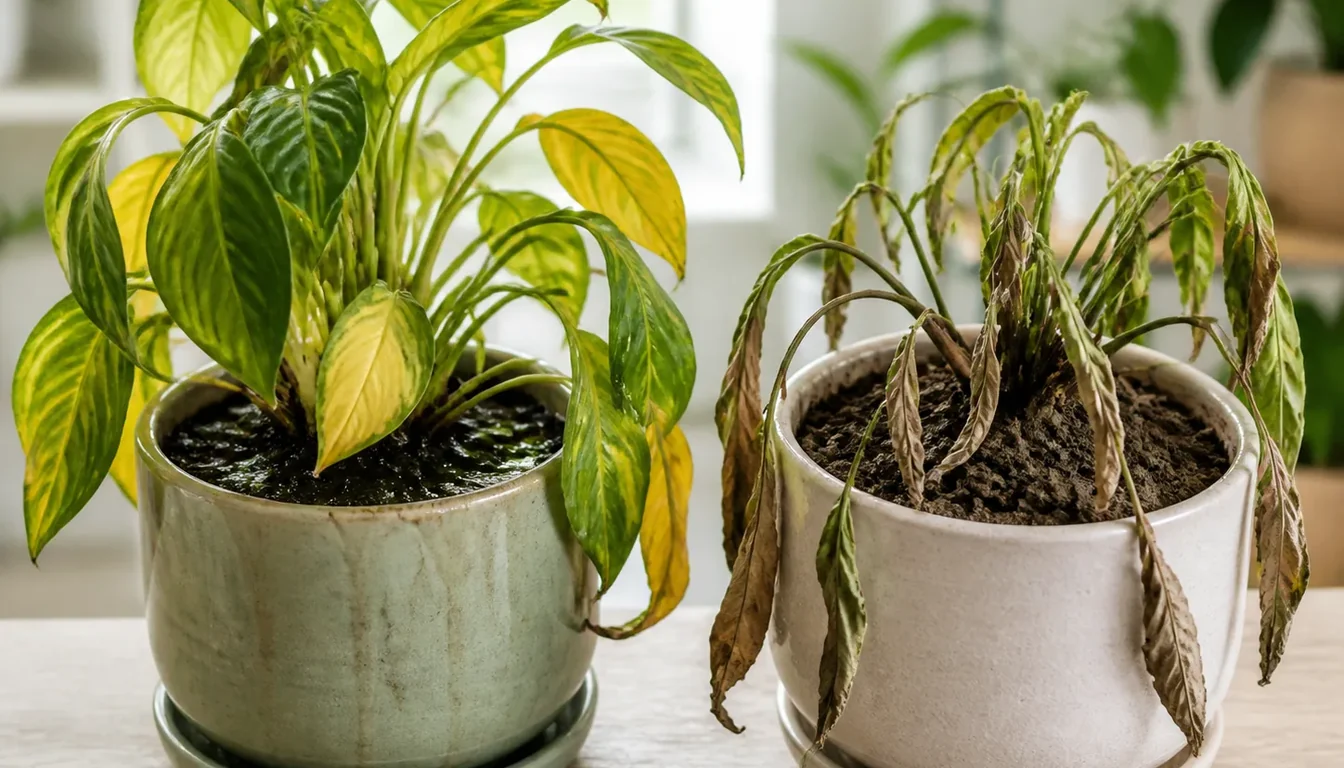
At a glance
Why the Leaves Cannot Tell You
An underwatered plant has no water to draw on, and an overwatered one has drowned the roots that would have drawn it, so both problems finish in the same place with leaves that are short of water.
That is why the wilt looks identical. A plant with rotted roots is genuinely thirsty, standing in a pot full of water it can no longer take up, and it droops exactly like one that has been forgotten for a fortnight.
Everything useful is therefore below the soil line. Nothing visible from above separates the two reliably, and the symptoms most often quoted as diagnostic turn up on both sides.
- Wilting and drooping happen in both, and are the single least useful symptom despite being the one people act on.
- Yellowing leaves happen in both, though the texture differs slightly once you know to check it.
- Leaf drop happens in both and tells you almost nothing about which.
- Brown crisp edges look like drought and appear on overwatered plants too, once the roots stop supplying the leaf margins.
Three Checks, in Order of How Much They Prove
Start with the pot rather than the plant. Lift it, and compare that weight against how the same pot felt in the hours after a thorough watering, because a pot still heavy days later has water the roots are not using.
If the weight is ambiguous, go into the mix, but go deep enough to mean something. A finger pushed in an inch reads the surface layer only, which dries first and fastest, so the check has to reach at least a third of the way down the pot.
When those two disagree or leave you unsure, take the plant out and look at the roots, which settles every remaining case in about a minute and costs the plant nothing.
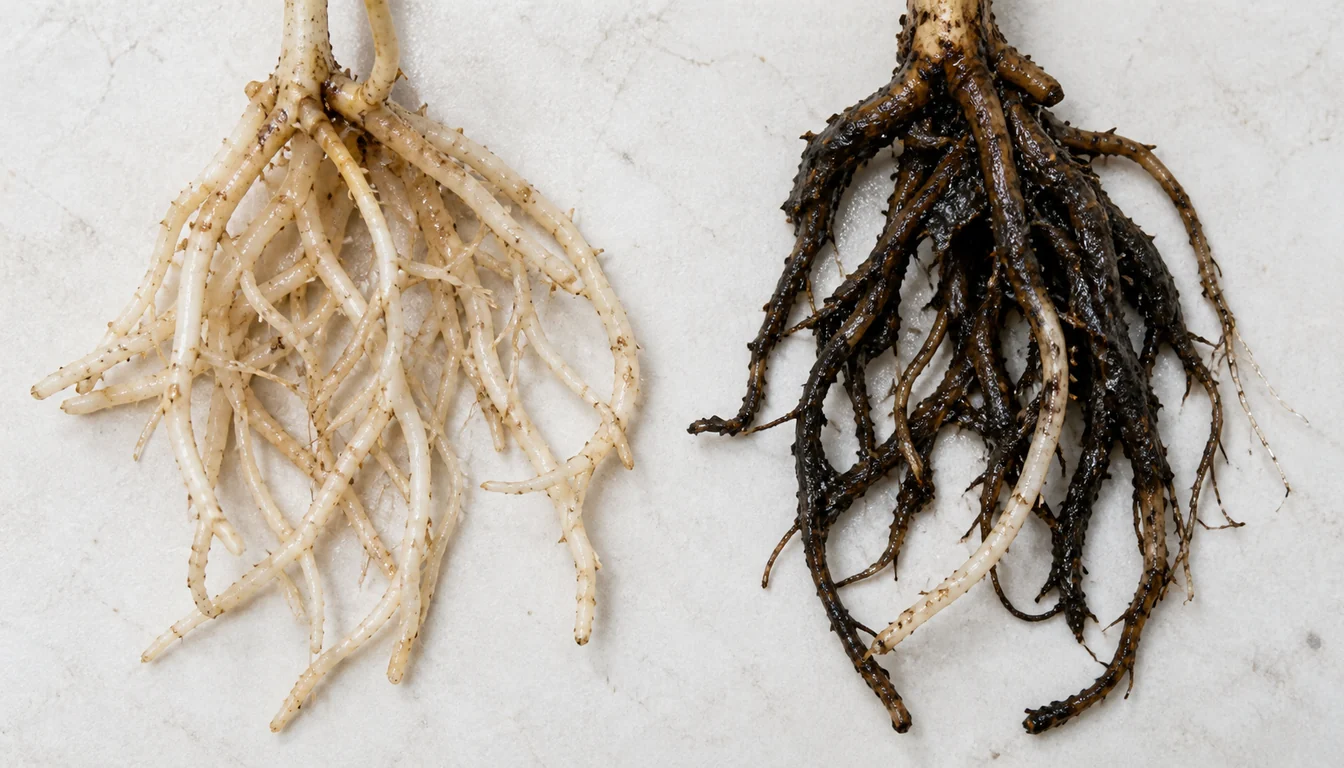
- Pot weight is fastest and decides most cases on its own, and it needs a remembered comparison rather than a scale.
- Depth-correct finger test has to reach a third of the pot's depth, since anything shallower reads the layer that always dries first.
- Root inspection is definitive, with firm white to tan roots on one side and dark collapsed ones that slip their skin on the other.
The Trap That Defeats the Finger Test
There is one arrangement that hands you exactly the wrong answer. The surface of the pot is bone dry, the finger test says dry, and the bottom two thirds of the root ball has been saturated for weeks.
Peat and coir repel water once they have dried out hard, so a watering runs down the gap between the shrunken root ball and the pot wall and straight out of the drainage hole without wetting the mix itself.
The owner watches water come out of the base and concludes the pot has been watered through. Meanwhile the water that did soak in has collected where it always collects, which is at the bottom, and it stays there because nothing above it is drawing.
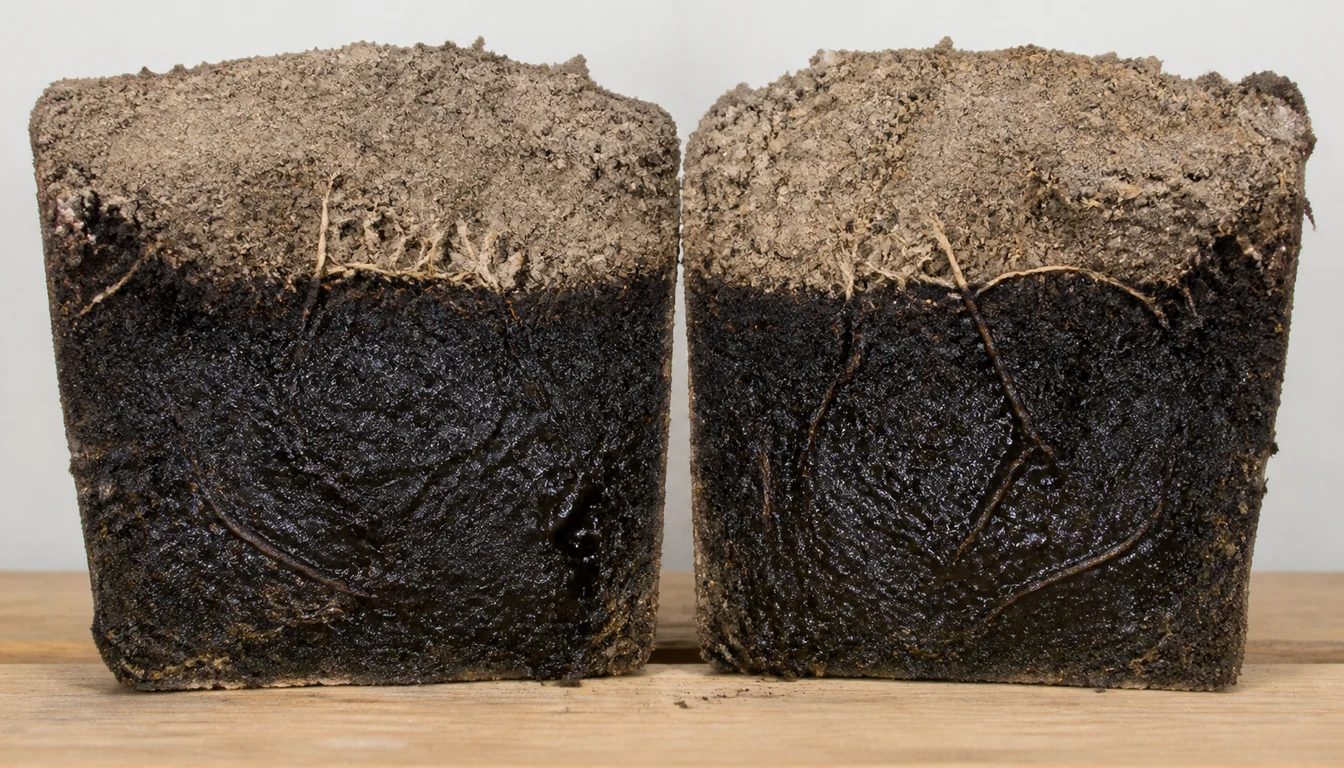
- The mix has visibly pulled away from the sides of the pot, leaving a gap you can see down.
- Water runs straight through within a few seconds of pouring rather than soaking in slowly.
- The pot is heavy despite a surface that feels completely dry.
- The plant has been in the same mix for two years or more, which is about when peat-based mixes collapse.
Symptom by Symptom, Where They Differ
A handful of symptoms genuinely do lean one way, and they are worth knowing once the pot checks have narrowed things down. None of them is strong enough to overrule a clear reading from the pot or the roots.
| Symptom | Leans overwatered | Leans underwatered | Weight |
|---|---|---|---|
| Yellow leaves | Soft, limp, starting low on the plant | Crisp and papery, often with brown edges | Moderate |
| Wilting | Present, and does not lift after watering | Present, and lifts within hours of watering | High, but only after the test |
| Soil smell | Sour or swampy | Nothing at all | High when present |
| Fungus gnats | Common, they breed in constantly damp mix | Absent | High when present |
| Stem feel | Soft or mushy near the base | Firm but shrivelled or wrinkled | High |
| Leaf drop | Happens | Happens | None |
| Brown leaf tips | Happens once roots fail | Happens | None |
When You Still Cannot Tell, Wait
The two mistakes do not cost the same. A plant that goes another two days dry will almost always recover once watered, and a plant given more water on top of rotting roots frequently will not.
In a genuinely ambiguous case, wait and watch and let the plant resolve it for you rather than committing to the more expensive error.
- Move it out of direct sun so it is not losing water while you decide.
- Wait two days without watering and without feeding it anything.
- A plant that has worsened in that time was wet, since a dry one holds roughly steady.
- A plant that has held on can then be watered thoroughly, and it should lift within a few hours if drought was the answer.
Correcting Each One
A genuinely dry root ball needs more than a normal watering, because the mix that repels water will keep repelling it. Standing the whole pot in a basin lets it rewet from below, which is the one method that reliably gets past a hydrophobic surface.
An overwatered plant needs the opposite, and it needs no product at all. What recovers it is air reaching the roots again, which means the mix drying out and, in bad cases, the dead roots coming off so the survivors are not sitting against them.
- If it is dry, stand the pot in water to a third of its depth for twenty minutes, then let it drain fully.
- Water from the top afterwards as well, so the upper layer rewets rather than staying dry.
- Never leave it standing in the basin beyond that, since the fix becomes the other problem.
- Expect it to lift within a few hours, with the worst leaves still lost.
- If it is wet, stop watering entirely and empty any saucer or outer pot immediately.
- Move it somewhere brighter and airier, which speeds drying without cooking the plant.
- Take it out of the pot if it has been wet for weeks, and cut away roots that are dark and slimy.
- Repot into fresh open mix in a pot barely larger than the surviving roots.
- Wait a week before watering, then judge by weight rather than by the calendar.
How the Plant Itself Shifts the Reading
The same evidence points differently depending on what the plant does with water. A plant that stores its own supply behaves nothing like one with fine roots and thin leaves.
Start from the group before you start from the symptoms, because it changes which error is likely before you have checked anything.
- Water storers such as snake plant, ZZ plant, and most succulents are almost always overwatered rather than dry, and they hide it for weeks.
- Aroids such as pothos, monstera, and philodendron sit in the middle and genuinely go both ways.
- Fine-rooted thin-leaved plants such as ferns and calathea really do dry out within a day or two, so drought is the likelier answer.
- A plant that wilts every hot afternoon and recovers overnight is telling you its pot is too small rather than that anything is wrong.
Pro Tips
- Lift the pot before you look at the leaves.
- A finger test has to reach a third of the way down to mean anything.
- A dry surface can sit directly on top of a saturated root ball.
- When you cannot tell, wait, because drought is the recoverable mistake.
- A thirsty plant lifts within hours of watering and a rotted one does not.
Frequently Asked Questions
Can an overwatered plant look like it needs water?
Yes, and it is the most common trap on this subject. Rotted roots cannot absorb, so the plant is genuinely short of water and wilts exactly like a dry one while standing in a saturated pot.
How long does an overwatered plant take to recover?
Weeks rather than days, and the recovery shows in new growth rather than in the leaves already damaged. A plant that has lost most of its fine roots may never regain its previous size even when it survives.
Should I use a moisture meter?
They read conductivity rather than water and can be thrown off by fertilizer salts, so treat a reading as a hint rather than an answer. Pot weight costs nothing and is more reliable on the pots most people keep indoors.
Why does water run straight through my pot?
Because the mix has dried hard and shrunk from the pot wall, so the water takes the gap at the edge and leaves through the drainage hole. Standing the pot in a basin rewets it from below, which pouring from above cannot do.
Is it better to underwater or overwater?
Underwater, if you have to choose. Dry roots regrow readily once water returns, while rotted roots do not come back, which is why waiting is the safer move when you genuinely cannot tell.
Do yellow leaves mean overwatering?
Not on their own. Yellowing happens on both sides, and the useful detail is texture, since overwatered leaves go soft and limp while dry ones turn crisp and papery.
Sources & References
Related Guides

Best Butterfly Garden Plants for a Complete Habitat
The best butterfly garden plants do two different jobs. Host plants feed caterpillars, while nectar…
15 min read
Best Fall-Blooming Flowers for Color Near Frost
A bed that still carries flowers in October usually was planned before temperatures fell.
9 min read
Best Fast-Growing Trees for Shade and Privacy
The best fast-growing tree is the one whose mature crown, roots, climate range, and maintenance…
16 min read
Best Fragrant Flowers for Every Yard and Season
The best fragrant flowers depend on climate, light, space, and the hours you use the yard.
15 min read
Best Full-Sun Perennials for Hot, Bright Beds
The best full-sun perennials are the ones that match the bed's soil moisture and drainage, local…
14 min read
Best Ground Cover Plants for Sun, Shade, and Slopes
The best ground cover is a plant that survives the site and performs the job without escaping into…
18 min read