
Best Yellow Flowers for Color From Spring to Fall
The best yellow flowers can carry a garden from early daffodils and forsythia to fall chrysanthemums. Choose by mature height, bloom window, and whether the plant returns, because a short bulb and a broad shrub solve very different jobs.
Cool lemon flowers soften a bed, while warm gold reads louder and works best when it repeats in a few deliberate groups. Blue, purple, white, and plain green foliage give the eye a place to rest.
Start with the tallest permanent plant, place shorter perennials in front, then use annuals to fill seasonal gaps without crowding the plants that come back.
At a glance
The Yellow Flowers Worth Planting First
The shortlist below is sorted by height rather than by beauty, because height is the decision you cannot undo once the plant is in the ground. A daffodil at eight inches and a forsythia at eight feet are both yellow, and putting them in the same place ruins both.
Start with the tallest thing you want and work forward, since everything shorter has to fit in front of it.
Two entries on the list behave differently from the rest. A sunflower can reach twelve feet in a single season and then die completely at frost, and a chrysanthemum bought in bloom in September has usually spent everything it had on those flowers and rarely survives the winter unless it went in the ground months earlier.
| Plant | Height | When it blooms | Comes back? |
|---|---|---|---|
| Daffodil | 6-24 in | Early to mid spring | Yes, bulbs multiply on their own |
| Forsythia | 6-10 ft tall, 6-12 ft wide | Very early spring, before its leaves | Yes, a permanent shrub |
| Yellow tulip | 6-24 in | Mid to late spring | Only where winters are genuinely cold |
| Yarrow | 1-3 ft | Early to midsummer | Yes, and it spreads by rhizome |
| Daylily | 1.5-3 ft scapes | Early to midsummer | Yes, Zones 3-9 |
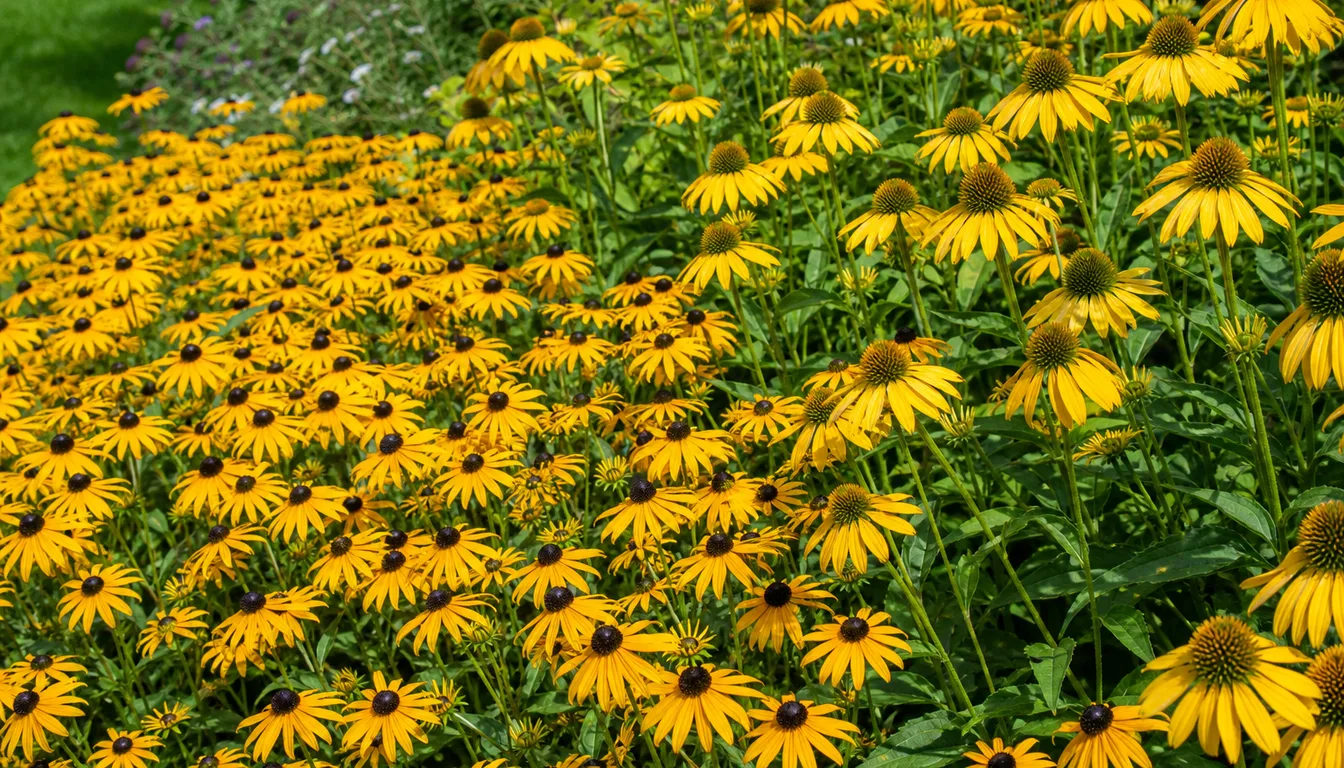
| Black-eyed Susan | 1-3 ft | Mid to late summer | Yes, Zones 3-9 |
| Sunflower | 1-12 ft | Mid to late summer | No, annual |
| Marigold | 6-36 in | Early summer to frost | No, annual |
| Lantana | 10 in to 6 ft | Spring to frost | Only in Zones 9-11 |
| Chrysanthemum | 8-36 in | Fall | Zones 5-9, only if planted in spring |
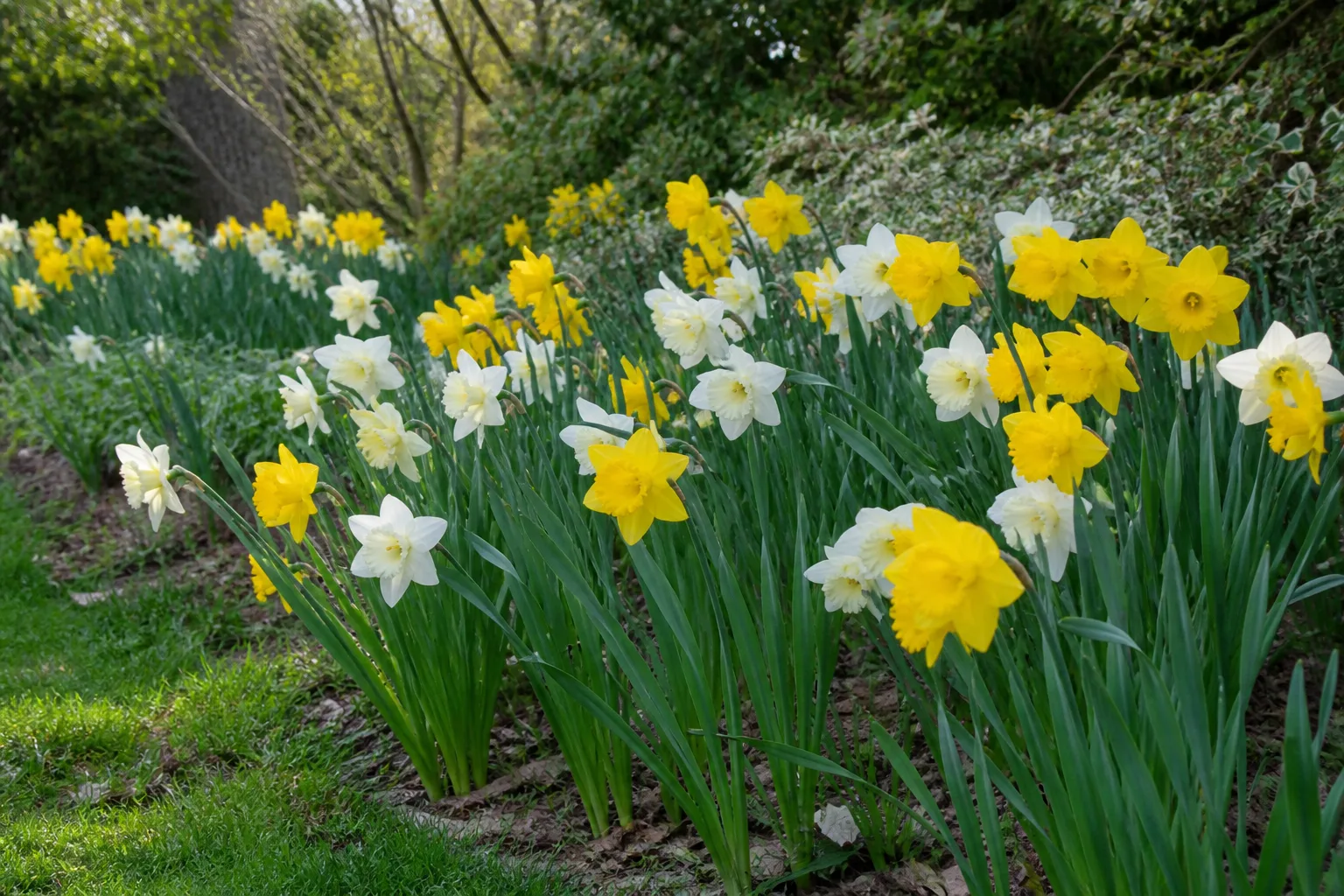
Daffodil
Dependable early yellow from bulbs that can multiply into larger clumps
- Mature fit
- Use shorter cultivars at the edge and taller forms through the middle
- Main tradeoff
- The foliage must remain until it yellows so the bulb can rebuild
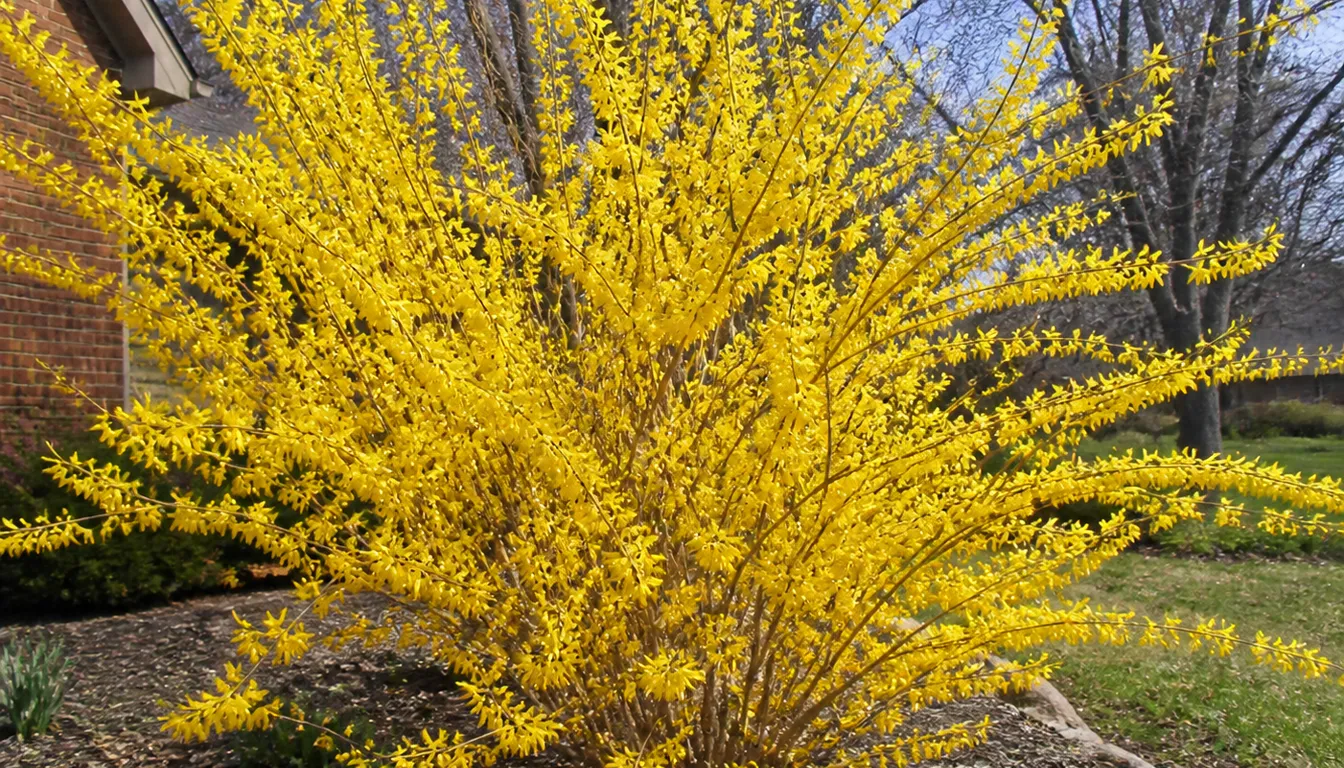
Forsythia
Very early shrub-scale color before most woody plants leaf out
- Mature fit
- Allow for the labeled mature width instead of relying on yearly shearing
- Main tradeoff
- Pruning after flower buds form removes much of the next display
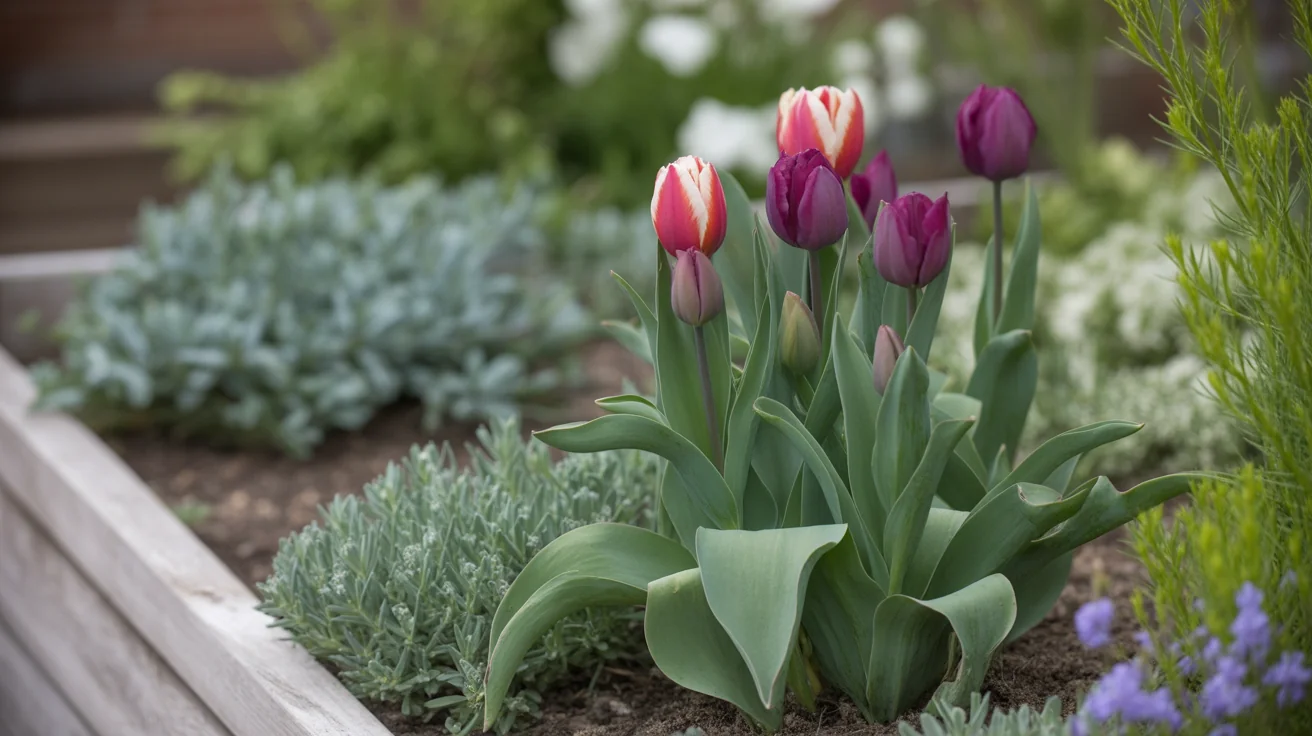
Tulip
A mid-to-late spring handoff after the earliest bulbs
- Mature fit
- Group bulbs where later foliage can hide their yellowing leaves
- Main tradeoff
- Many cultivars decline after the first year or need dependable winter cold
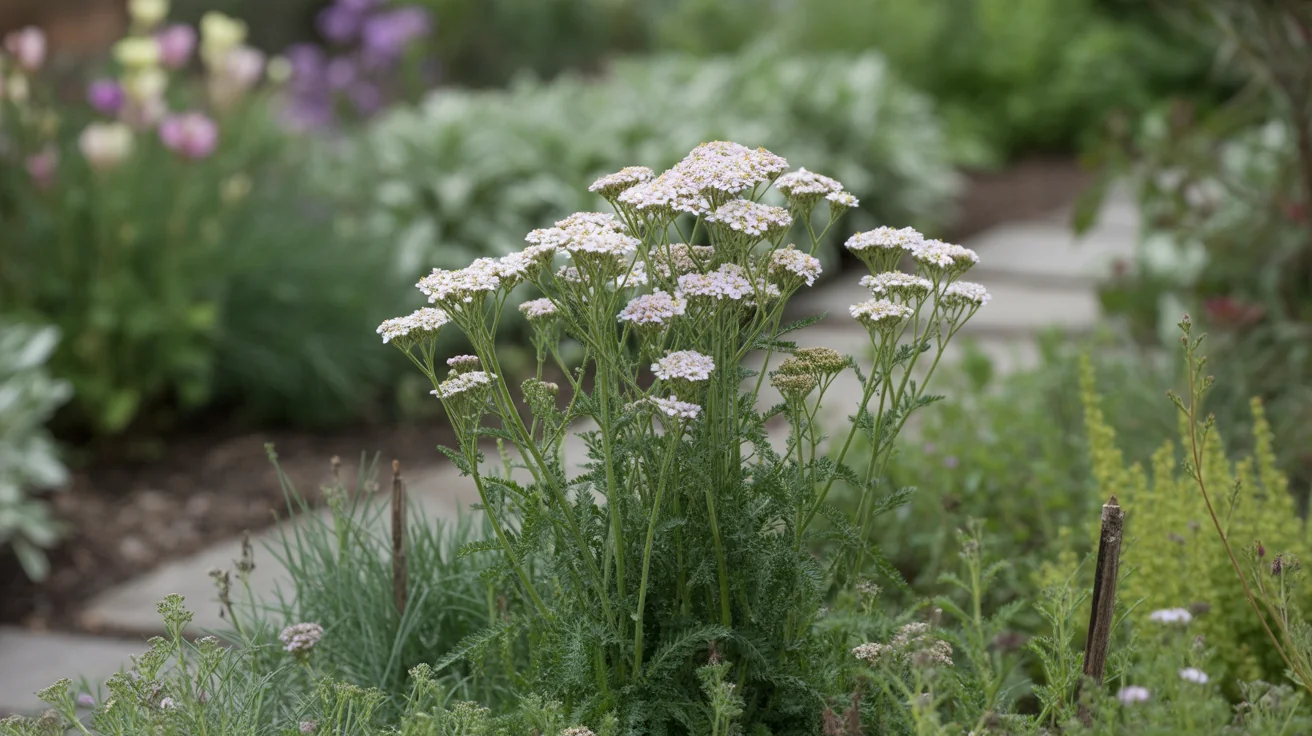
Yarrow
Low-water summer color for a hot, sunny bed
- Mature fit
- Give the spreading clump room among other drought-tolerant plants
- Main tradeoff
- Rich soil and excess water can make the stems flop
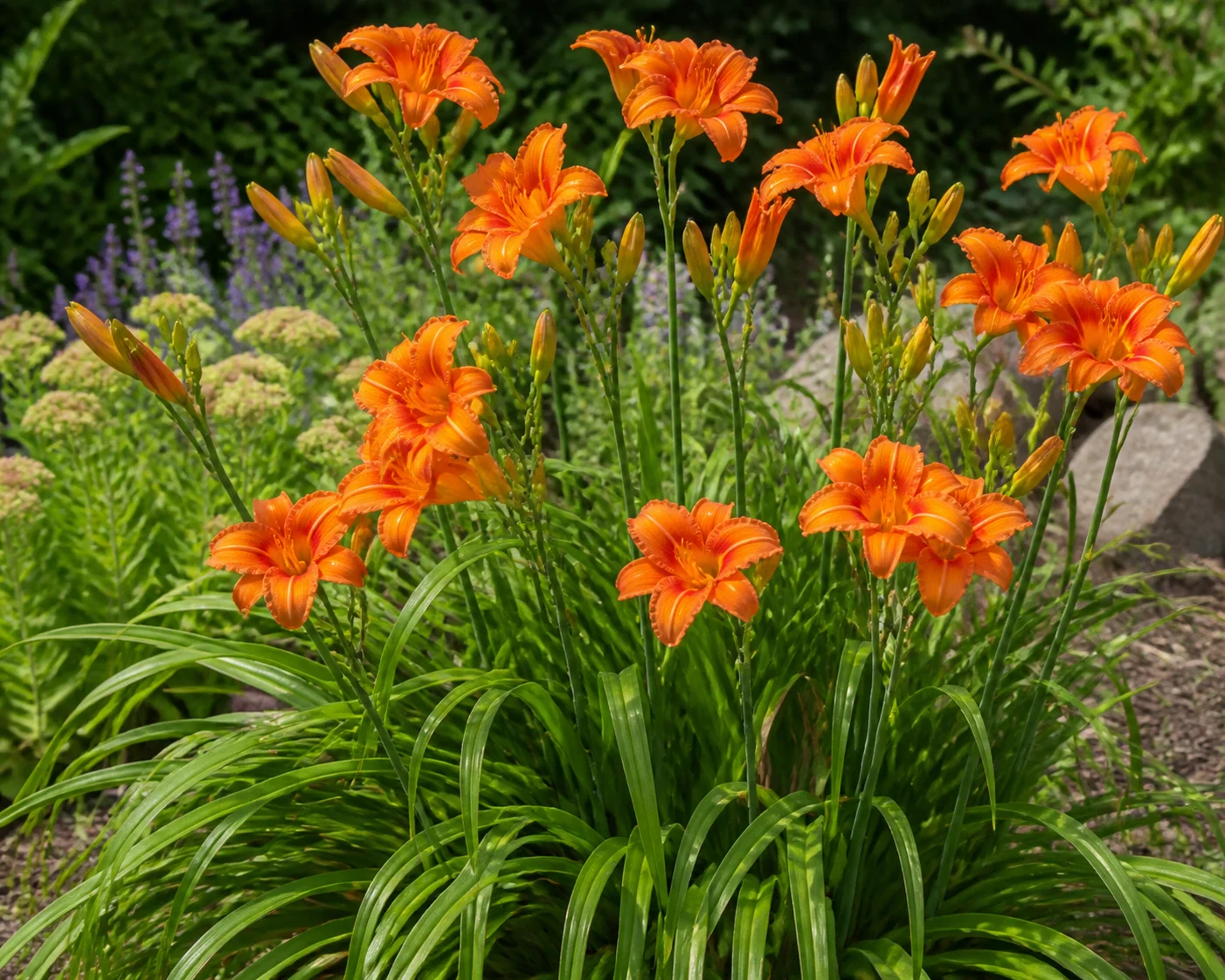
Daylily
Reliable summer flowers above a permanent arching clump
- Mature fit
- Place it where the foliage will not cover smaller edging plants
- Main tradeoff
- Each flower lasts one day even though the clump carries many buds
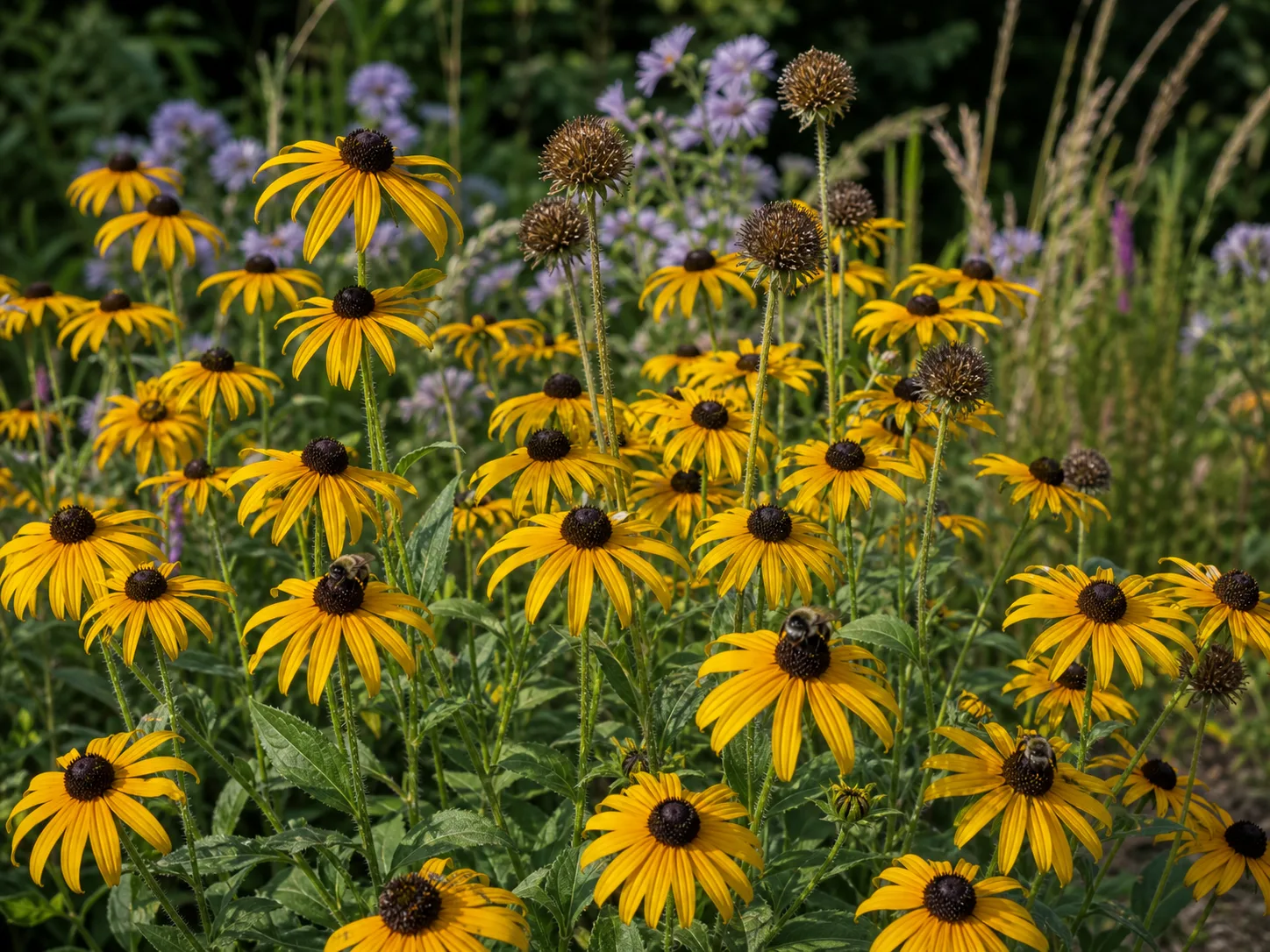
Black-Eyed Susan
Long-running gold color from midsummer toward fall
- Mature fit
- Allow the clump to spread beyond its first-season footprint
- Main tradeoff
- Crowded, wet foliage is more prone to leaf spot
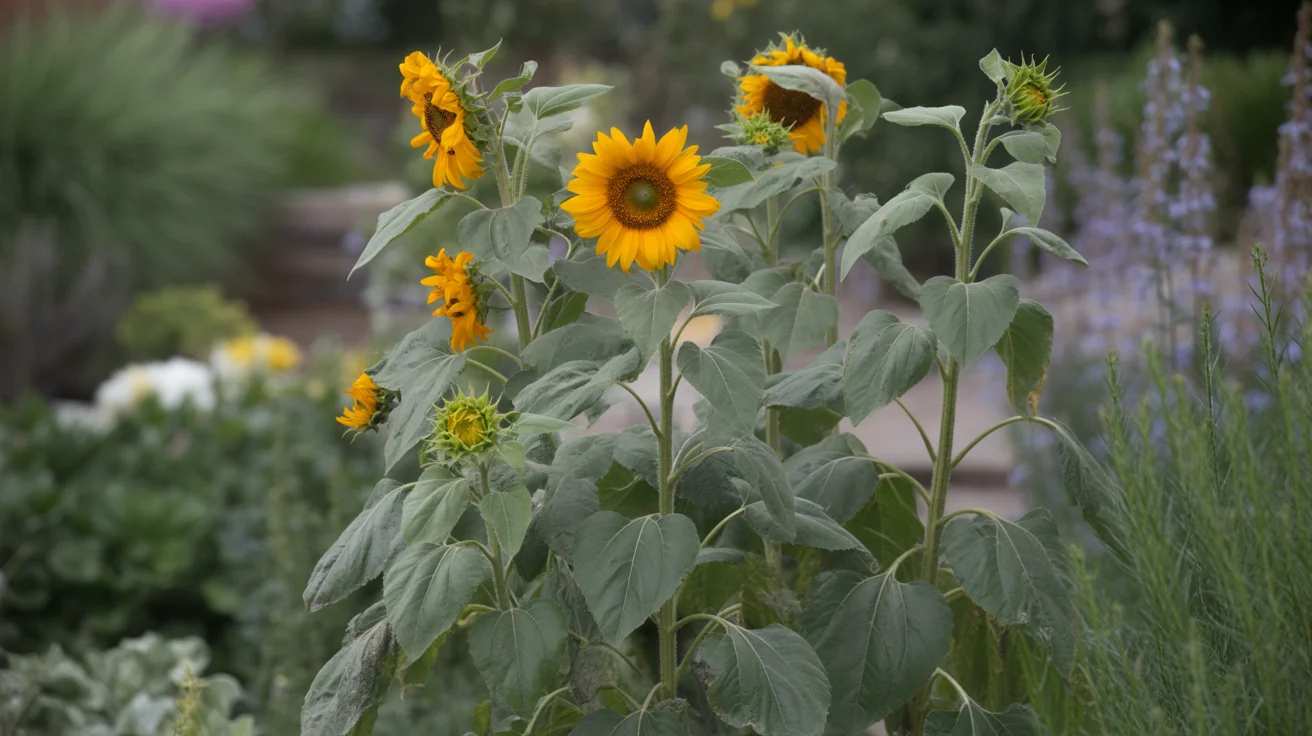
Sunflower
Fast annual height and large flowers in the back of a sunny bed
- Mature fit
- Choose a dwarf or tall cultivar before deciding its position
- Main tradeoff
- The plant dies at frost and taller forms may need protection from wind
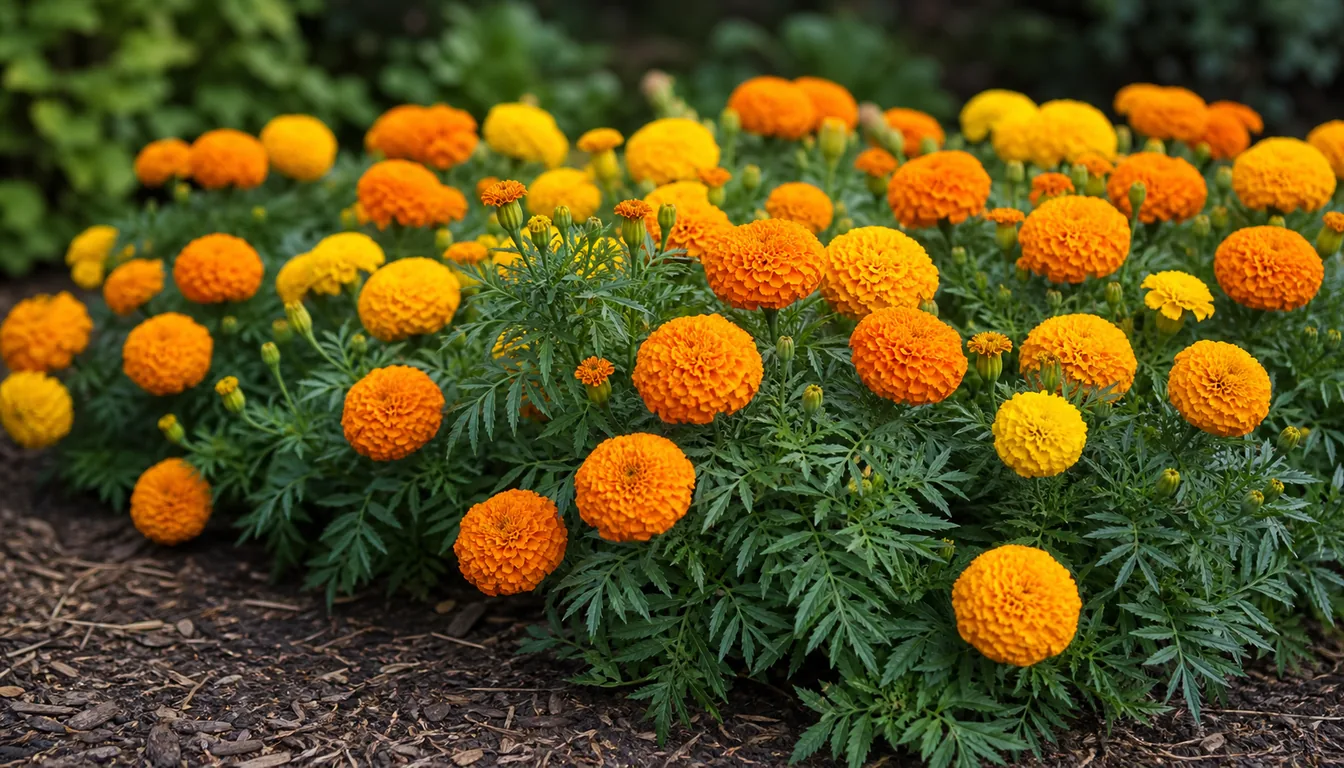
Marigold
Compact annual color that fills gaps from early summer to frost
- Mature fit
- Match French, signet, or African types to the front or middle of the bed
- Main tradeoff
- Spent blooms and wet flower heads can make the planting look tired
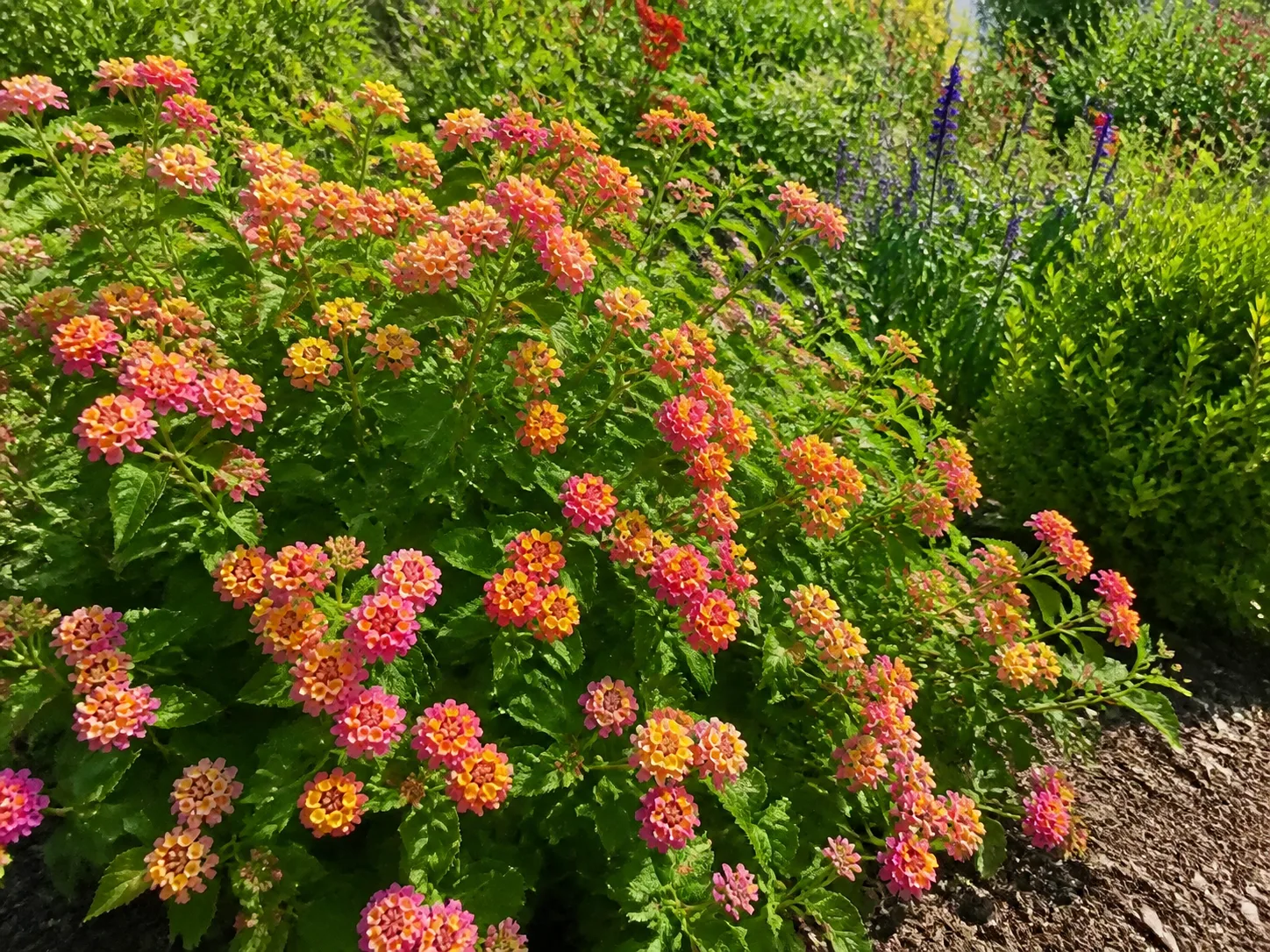
Lantana
Heat-tolerant flower clusters that continue toward frost
- Mature fit
- Choose a compact or shrub-sized cultivar for the available space
- Main tradeoff
- It is perennial only in warm climates and can be invasive in some regions
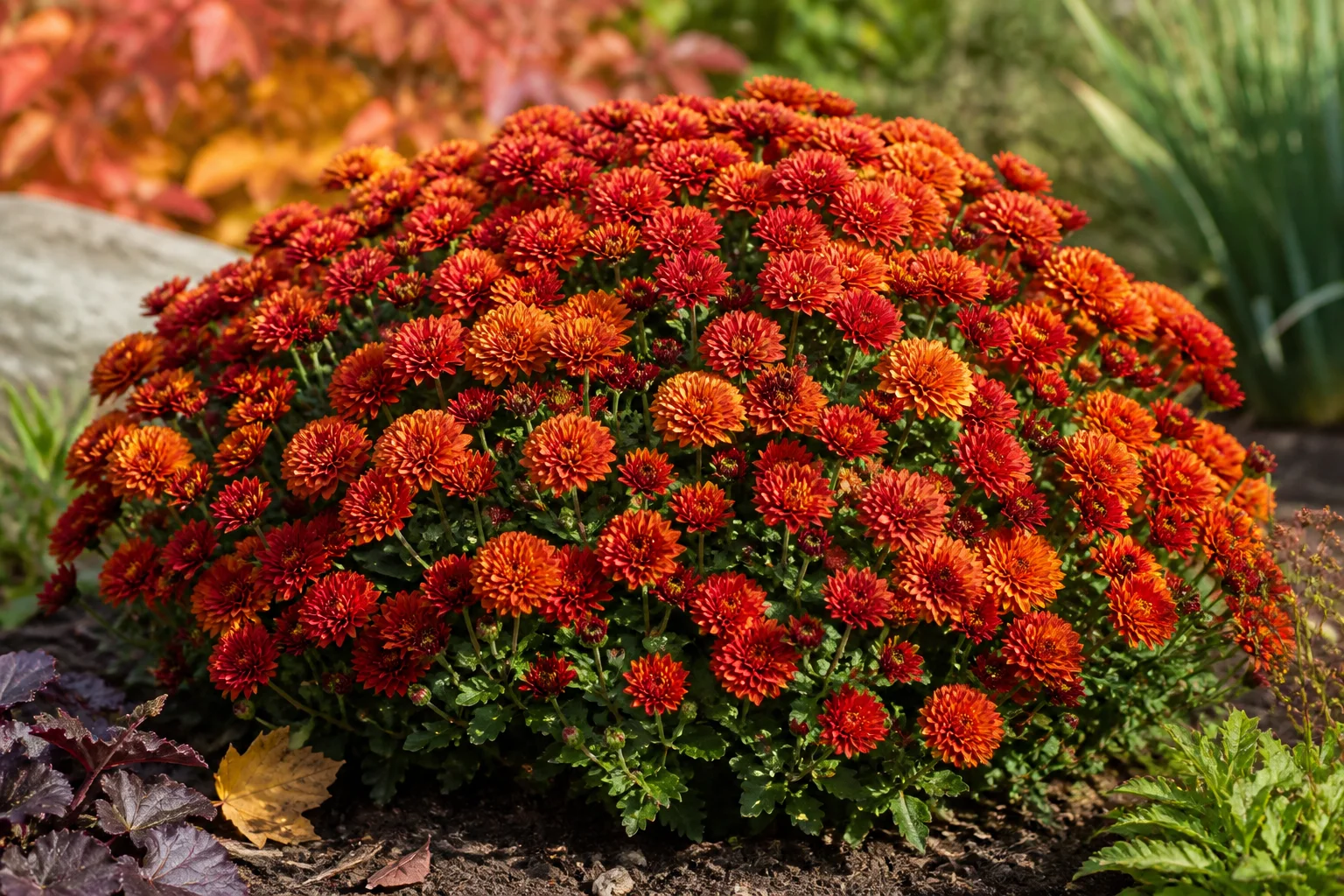
Chrysanthemum
Dense yellow flowers that close the season in fall
- Mature fit
- Plant hardy garden mums early enough to establish a full root system
- Main tradeoff
- A florist mum bought in full bloom may behave as seasonal decoration
Why Yellow Is the Forgiving Color
Yellow is not forgiving because of anything about the color. It is forgiving because an unusual number of genuinely tough plants happen to bloom in it, so a beginner reaching for yellow keeps accidentally picking survivors like yarrow and black-eyed Susan.
One recommendation gets repeated everywhere and sends beginners to the wrong plant. The coneflower sold under that name is Echinacea purpurea and it is purple, and the yellow-flowered cultivars bred from it are the shorter-lived ones, so a reader who wants dependable yellow should be reaching for a full-sun perennial like black-eyed Susan instead.
Build a first-year yellow bed on black-eyed Susan, yarrow, and daylily. All three bloom the season you plant them, tolerate poor soil, and forgive a missed week of watering.
Cool Lemon or Warm Gold? The Shade Sets the Mood
Yellow is a range rather than a color, and where a flower sits in that range decides what you can plant beside it.
Mixing the two ends carelessly is what makes a yellow bed feel restless rather than cheerful. A daylily is sold in both temperatures under the same word, and a yellow bearded iris ranges from near-white primrose to deep butterscotch, so read the actual petal in front of you instead of the label.
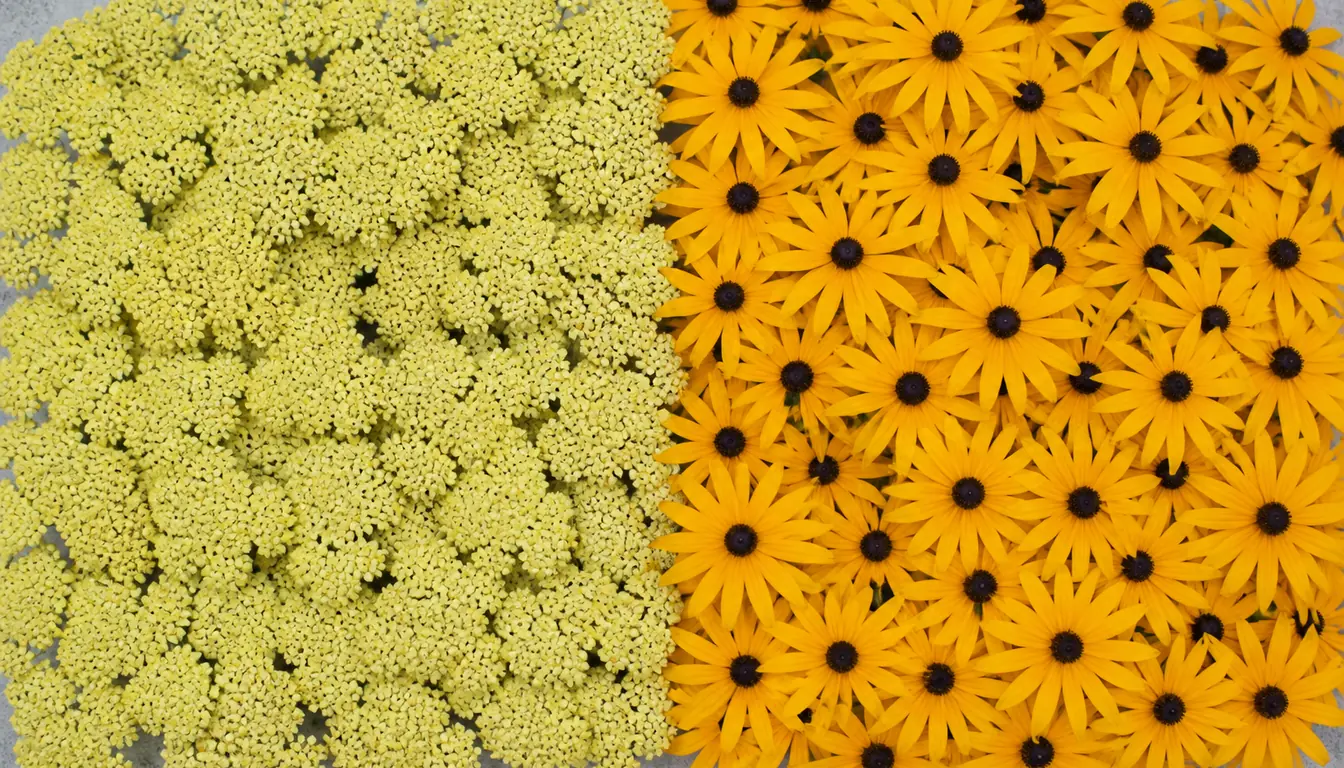
| Shade of yellow | Mood | Pairs with |
|---|---|---|
| Cool lemon and pale primrose | soft, fresh | blue, purple, white, pink |
| Warm gold and butter | bright, energetic | orange, red, bronze |
| Clear mid-yellow | cheerful, neutral | almost anything in small doses |
Planning the Handoff From Spring to Fall
Each part of the season is carried by a different group of plants, and buying one flush is how a bed ends up bare for two months. Bulbs and forsythia own early spring, tulips finish it, the daisy-family perennials own midsummer, and mums close the year.
The gap that catches almost everyone falls in late spring, after the bulbs are spent and before the summer perennials have any height. It is worse than it looks because you cannot tidy your way out of it, since daffodil foliage has to be left standing for roughly six weeks after bloom to feed next year's bulb.
Plant the summer perennials directly in front of the bulbs so their rising foliage hides the yellowing leaves while the bulb finishes its work.
- Early spring: forsythia and daffodil, both flowering before most shrubs leaf out
- Late spring: yellow tulips, planted in front of the daffodil foliage rather than beside it
- Summer: black-eyed Susan, daylily and yarrow, the weeks-long workhorses
- Fall: chrysanthemum, which blooms best in 45 to 70 degree weather and holds longer if you deadhead it
Will It Come Back? Annuals, Perennials, and Bulbs
The useful question is not which botanical group a plant belongs to but what you will have to do next April. Three of the yellows on this list need replanting every single year, and marigold and sunflower are the two that surprise people most, because they are so vigorous all summer that nobody expects them to be gone.
Lantana is the one most often mis-sold, since it is a genuine woody perennial in Zones 9 to 11 and an expensive annual everywhere colder.
- Replant every spring: sunflower, marigold, and lantana outside Zone 9
- Returns from the same crown: black-eyed Susan, daylily, yarrow, and chrysanthemum planted early
- Returns and multiplies: daffodil, which widens its clump through offsets year after year
- Returns somewhere else: black-eyed Susan also self-seeds freely, so expect it to wander
A daffodil clump that stops flowering is usually overcrowded rather than dying. Lifting and dividing it restores the bloom.
Using Yellow Without Making It Look Busy
The risk with yellow is excess rather than failure, because a bed that is all bright yellow gives the eye nowhere to rest. Restraint is the entire design skill here, and it comes down to two moves.
Repeat one or two yellows through the bed instead of collecting one of everything, which reads as intentional rather than scattered. Then set them against their opposite, since blue and purple sit across from yellow on the color wheel and make it pop while cooling the whole planting down.
- Repeat, do not collect: two yellows used three times each, not six yellows used once
- Pair with the opposite: blue and purple sharpen yellow and calm the bed at the same time
- Soften instead: white and silver lift yellow more gently than blue does
- Leave gaps: plain green foliage between clumps stops a hot gold running wall to wall
Yellow Pulls in Insects, Helpful and Otherwise
Yellow is not a neutral color to an insect, because it is one of the signals bees and hoverflies steer toward from a distance. That is part of why a yellow-heavy planting fills with pollinators faster than a pale one.
The same signal works on the insects you did not invite. Commercial yellow sticky cards are built entirely on this, since aphids, whiteflies, thrips, and fungus gnats all fly toward yellow, which also means a bed full of yellow flowers is genuinely more likely to pick up aphids in the first place.
That has one practical consequence most trap instructions leave out.
Do not hang a yellow sticky card inside a yellow-flowered bed, because the flowers outcompete it and the catch drops. Hang it just outside the planting, at the height of the new growth you are protecting.
When Yellow Flowers Look Yellow-Sick
A yellow flower and a yellowing leaf are entirely different things, and in a yellow bed they get confused constantly.
The pattern to read is where the yellow stops. Leaves that go pale between veins that stay clearly green point to chlorosis, usually high soil pH locking up iron, which a soil test and an iron or sulfur amendment correct.
Two other patterns point somewhere else entirely. Whole leaves yellowing evenly over soggy soil mean overwatering, and a rose whose blooms simply fade in fierce afternoon sun has nothing wrong with it at all.

- Yellow between green veins: chlorosis, so test the pH before adding iron
- Whole leaves yellow, soil wet: overwatering, so let it dry before doing anything else
- Lower leaves yellow, plant still blooming: normal aging, especially on daylily clumps
- Blooms pale in strong sun: normal fading, eased by afternoon shade
Pro Tips
- Pick your tallest yellow first, since a forsythia at 6-10 feet decides what can go in front of it.
- Skip coneflower if you want yellow; the standard one is purple and the yellow cultivars are short-lived.
- Read the actual petal, because cool lemon and warm gold pair with completely different colors.
- Leave daffodil foliage standing about six weeks after bloom, and hide it behind summer perennials.
- Buy chrysanthemum in spring if you want it to return; the ones sold blooming in fall usually do not.
- Repeat two yellows three times each rather than buying six different ones once.
- Yellow between green veins is chlorosis, so test soil pH before reaching for an iron product.
Frequently Asked Questions
What are the easiest yellow flowers to grow?
Black-eyed Susan, yarrow, and daylily are the three toughest, all hardy in Zones 3 to 9 and all blooming the first season you plant them, with daffodils just as easy and returning stronger every year. Skip coneflower despite how often it gets recommended, because the standard Echinacea purpurea is purple and its yellow cultivars are the short-lived ones.
Which yellow flower blooms first in spring?
Forsythia, which flowers on bare stems before its own leaves open and before almost anything else in the yard, with daffodils following within a few weeks. Yellow tulips close out spring, though they only behave as reliable perennials where winters are genuinely cold.
What colors go with yellow flowers?
It depends which yellow you have, because cool lemons pair with blue, purple, pink, and white while warm golds pair with orange, red, and bronze. Blue and purple sit opposite yellow on the color wheel, so they make any yellow pop while calming the bed down.
Are there yellow flowers for shade?
Very few, and this is the honest weak spot of a yellow scheme, since most reliable yellows are full-sun plants needing six hours or more. Daylilies tolerate light shade with fewer blooms and primrose handles part shade in cool climates, but a genuinely shady bed is better served by white flowers or chartreuse foliage.
How do I keep a yellow bed from looking too busy?
Repeat two yellows three times each through the bed instead of collecting six different kinds. Pair them with blue, purple, or white so the eye has somewhere to rest, and leave plain green foliage gaps between the clumps so a strong gold never runs wall to wall.
Why are the leaves on my yellow flowers turning yellow?
Read where the yellow stops, because pale tissue between veins that stay green means chlorosis from high soil pH locking up iron, and the pH should be tested before you amend anything. Whole leaves yellowing over soggy soil mean overwatering instead, while lower leaves yellowing on a plant that is still flowering is normal aging.
Sources & References
- University of Minnesota Extension, Growing Perennials
- Clemson Cooperative Extension, Flower Garden Basics
- University of Illinois Extension, Bulbs and More: Daffodil
- Missouri Botanical Garden Plant Finder, Rudbeckia and Echinacea Profiles
- Penn State Extension, Consider Soil pH Before Selecting Landscape Plants
Related Guides
Best Butterfly Garden Plants for a Complete Habitat
The best butterfly garden plants do two different jobs. Host plants feed caterpillars, while nectar…
15 min read
Best Fall-Blooming Flowers for Color Near Frost
A bed that still carries flowers in October usually was planned before temperatures fell.
9 min read
Best Fast-Growing Trees for Shade and Privacy
The best fast-growing tree is the one whose mature crown, roots, climate range, and maintenance…
16 min read
Best Fragrant Flowers for Every Yard and Season
The best fragrant flowers depend on climate, light, space, and the hours you use the yard.
15 min read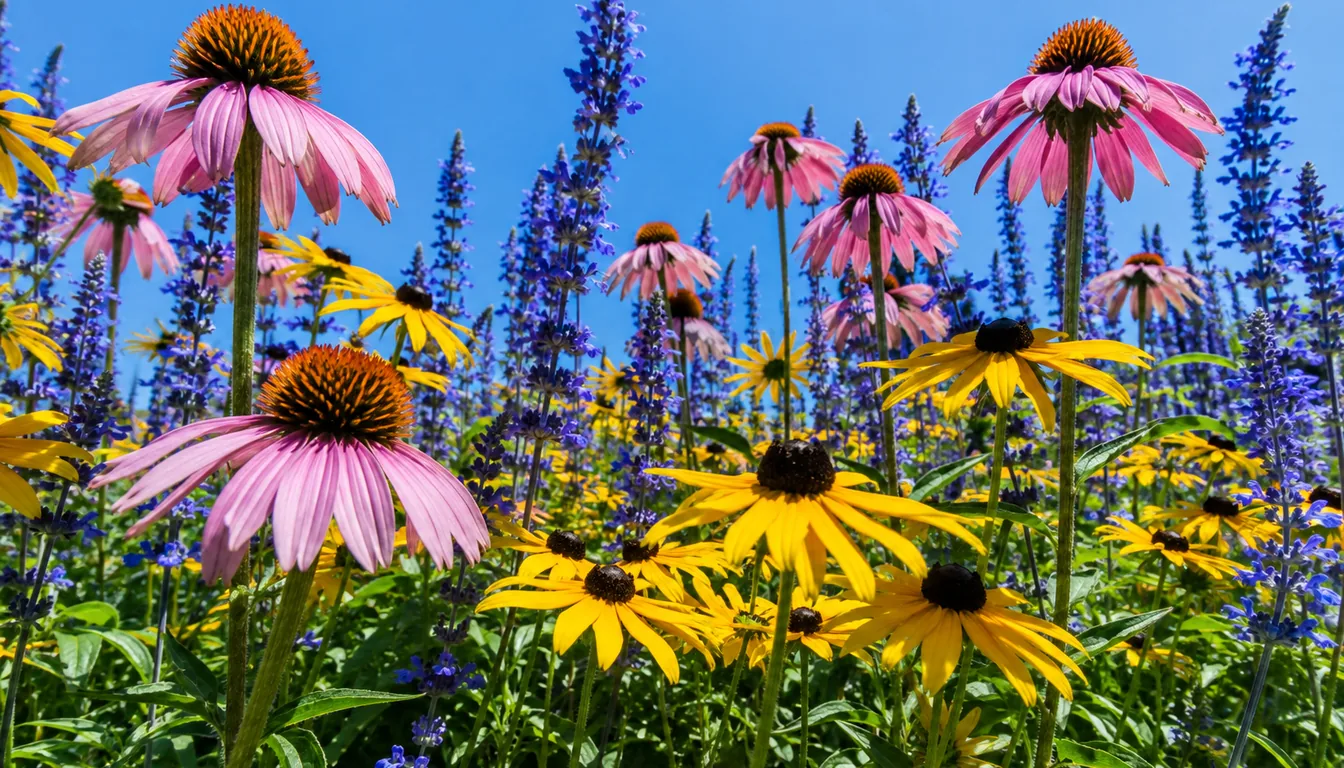
Best Full-Sun Perennials for Hot, Bright Beds
The best full-sun perennials are the ones that match the bed's soil moisture and drainage, local…
14 min read
Best Ground Cover Plants for Sun, Shade, and Slopes
The best ground cover is a plant that survives the site and performs the job without escaping into…
18 min read