
Which Flowers Actually Read Blue in a Garden Bed?
Blue is the color gardeners chase and nurseries oversell.
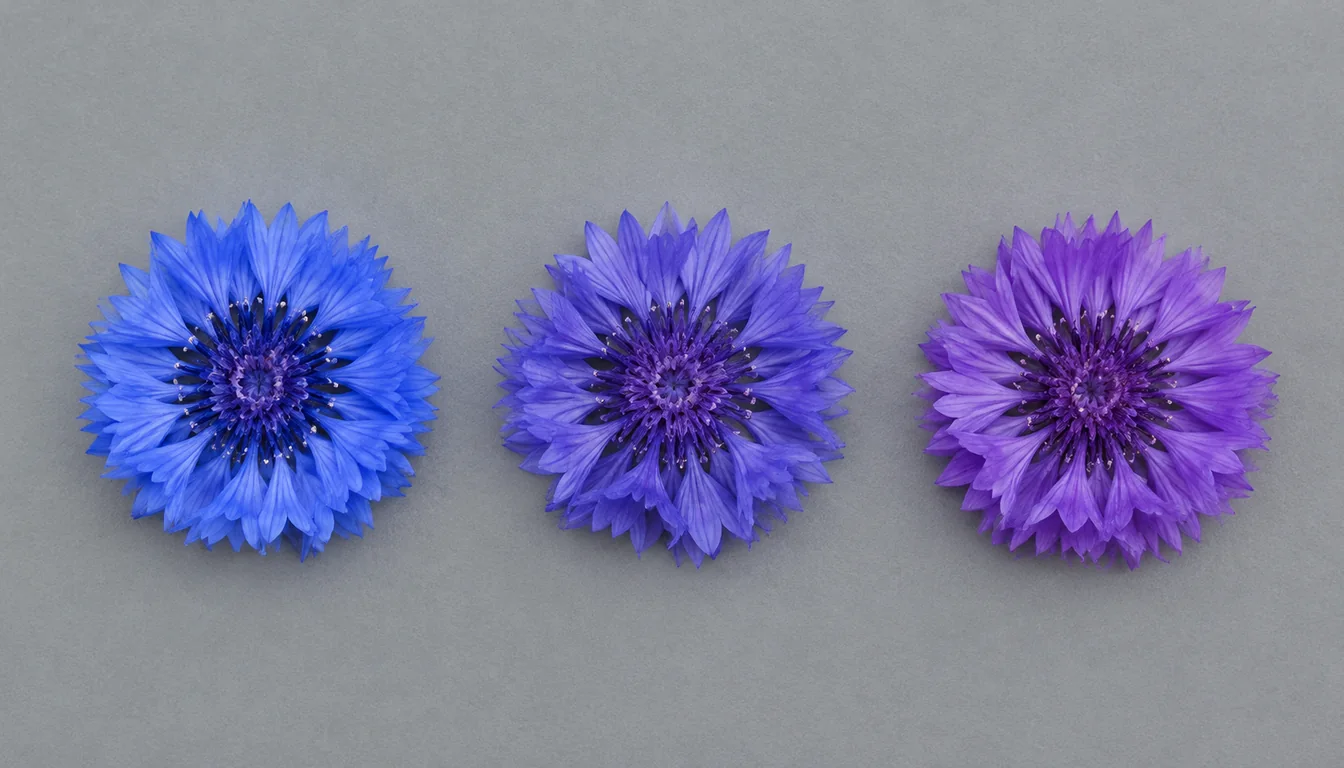
Truly blue petals are rare in nature, so a large share of the plants tagged blue open somewhere between violet and mauve once they are in your bed and the catalog photograph is no longer next to them.
Closing that gap is mostly a matter of calibration. Knowing what the trade means by blue, which plants hold it, and what your own ground and light will do to it after planting.
One plant turns the whole question into a soil question, and it is worth understanding rather than following as a recipe.
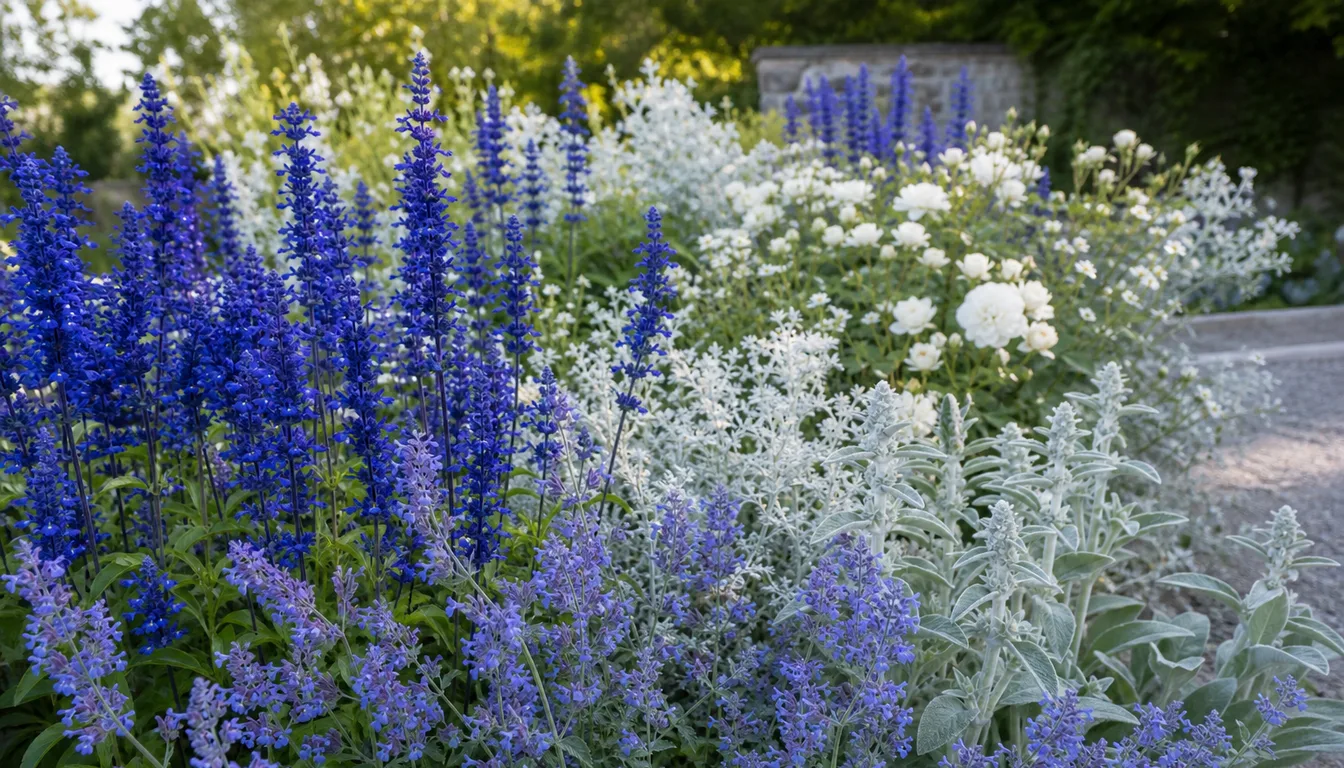
At a glance
Why Are So Few Flowers Truly Blue?
Most flowers simply cannot make the pigment.
Clean blue is the rarest color in the garden because the chemistry to produce it is uncommon, so breeders push violet and purple as close to blue as the plant will allow and the marketing closes whatever gap is left.
The catalog photograph usually travels further than the label does. Images are shot and processed to favor the blue, which means the printed color can be a longer way from the plant than the word on the tag.
The only reliable check available to a gardener is therefore buying in flower. A plant in bud is a description, and a plant in bloom is evidence.
Accepting a little violet is what makes a blue bed possible at all. Insisting on a pure blue rules out almost every plant that would have worked.
Which Flowers Actually Read Blue?
A short list carries most of a blue bed.
Sort by light before anything else, because a blue that wants sun and gets shade fades toward gray rather than toward violet, and that is a different disappointment with a different cause.
| Plant | Type | Light | How blue it reads |
|---|---|---|---|
| Bigleaf hydrangea | Shrub | Part shade | True blue in acidic soil |
| Cornflower | Annual | Full sun | Among the truest blues available |
| Lobelia | Annual | Sun to part shade | Strong blue, some violet forms |
| Brunnera | Perennial | Shade | Small clear forget-me-not blue |
| Salvia | Perennial | Full sun | Blue-violet, reads blue in mass |
| Russian sage | Perennial | Full sun | Hazy blue at a distance |
One shrub, a couple of perennials and an annual filler is a working structure. The shrub holds the bed together, the perennials return, and the annual gives color in the first season while the rest establish.
Use the annual as a test. It is the cheapest way to find out how a blue reads in your own light before committing a perennial to the same spot.
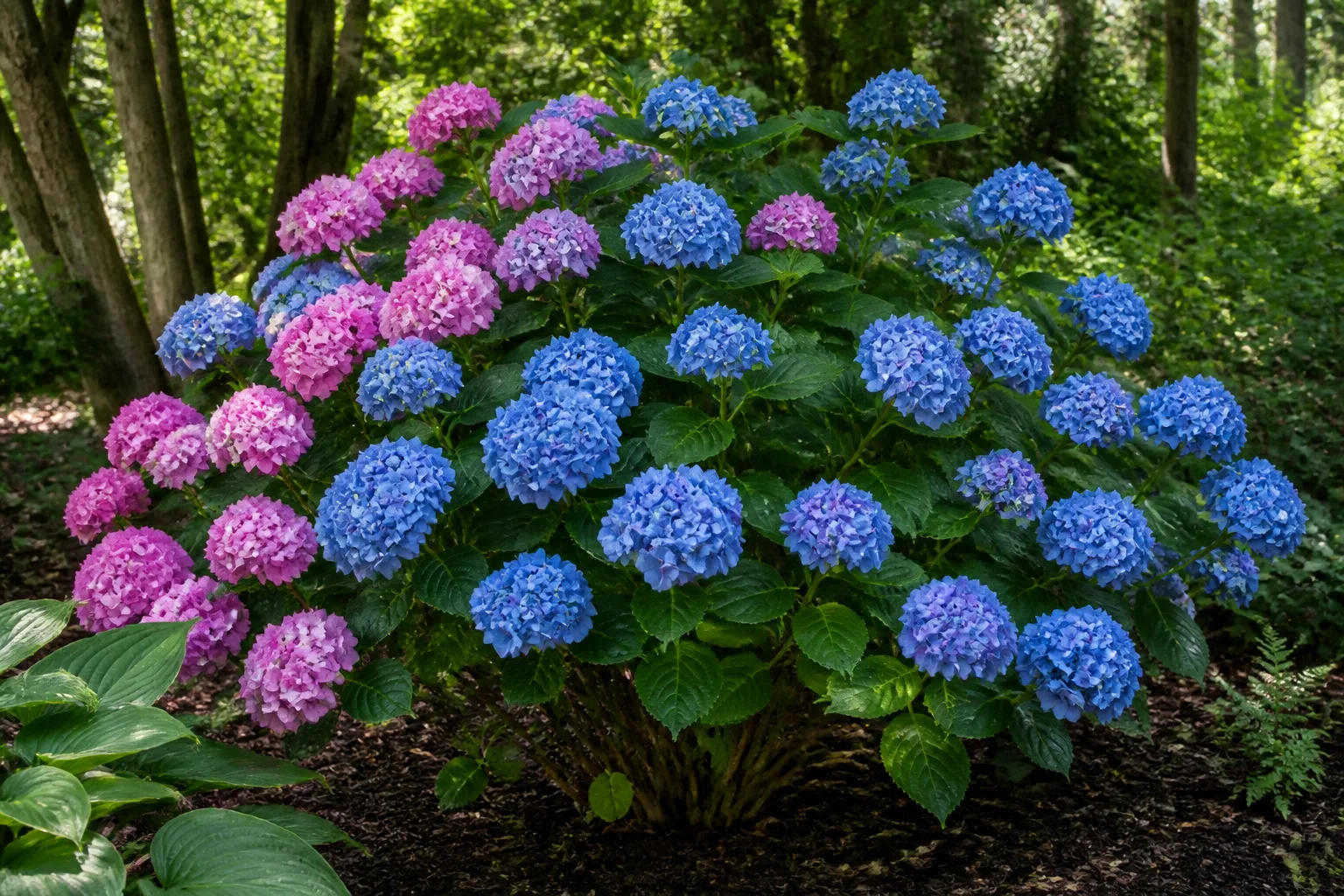
Bigleaf Hydrangea
True blue flower heads in part shade where soil chemistry supports the color
- Mature fit
- Choose the shrub by its labeled mature width, not its nursery-pot size
- Main tradeoff
- Blue color depends on acidic soil and available aluminum
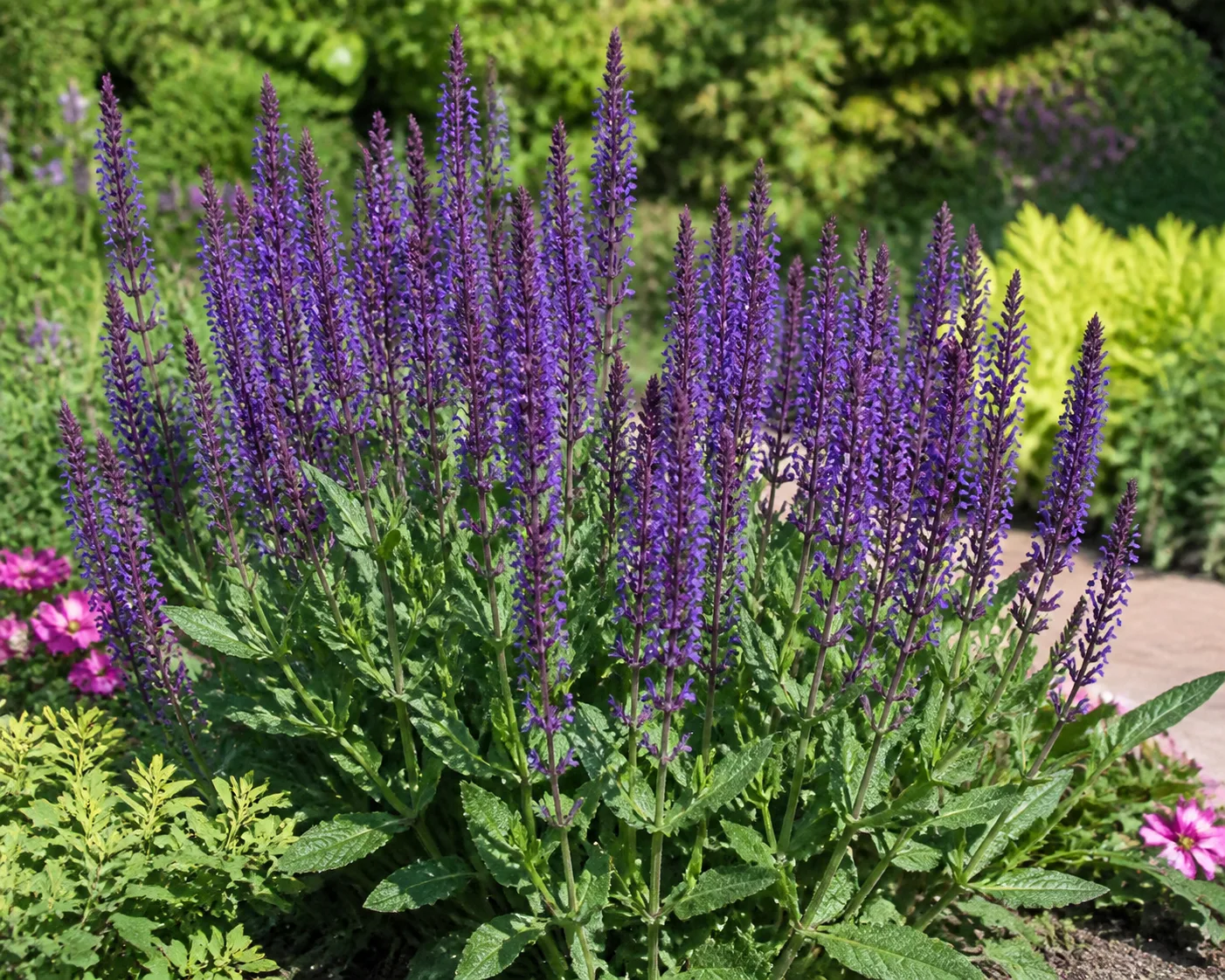
Salvia
Blue-violet flower spires that read blue when repeated in full sun
- Mature fit
- Match the cultivar's height and spread to the middle or back of the bed
- Main tradeoff
- Hardiness and moisture needs vary widely between species
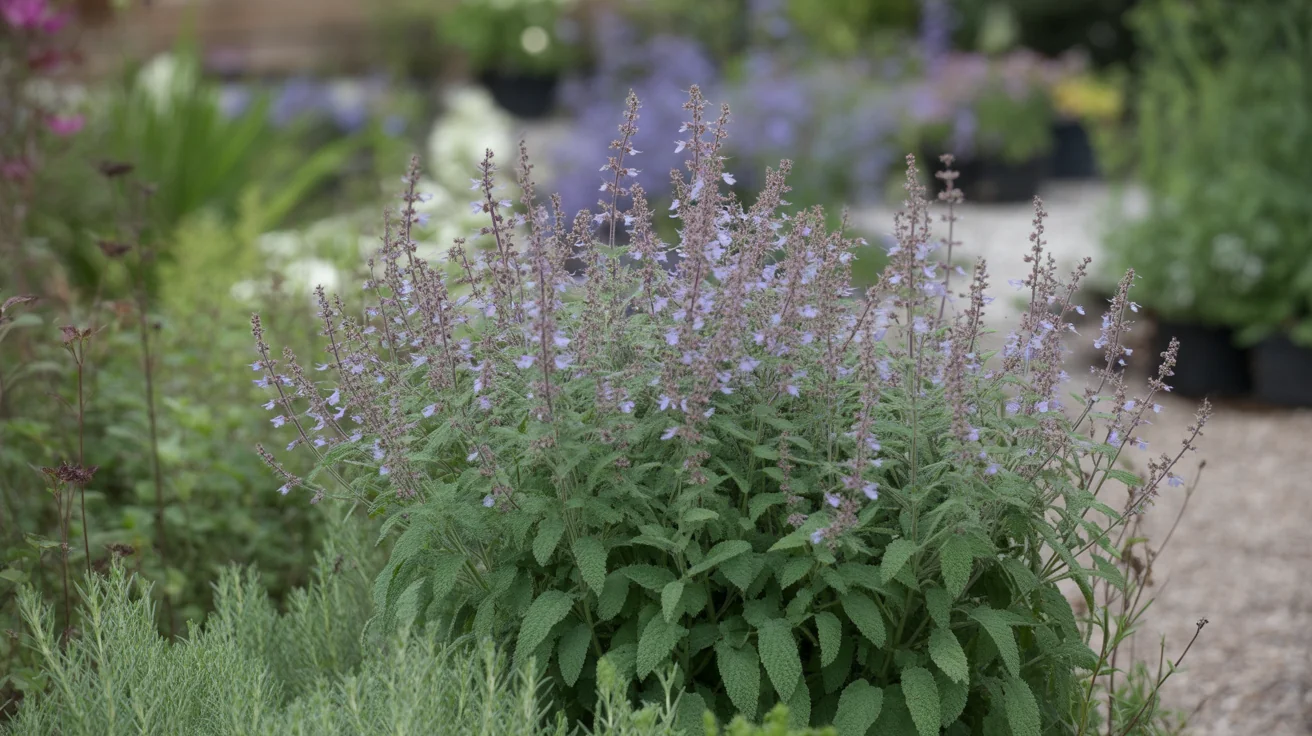
Russian Sage
An airy blue haze for a hot, dry, full-sun planting
- Mature fit
- Leave enough width for several stems to form a visible mass
- Main tradeoff
- It reads strongest blue at a distance and needs sharp drainage
Why Does the Same Hydrangea Flower Blue in One Garden and Pink in Another?
Because the flower color belongs to the soil rather than to the plant.
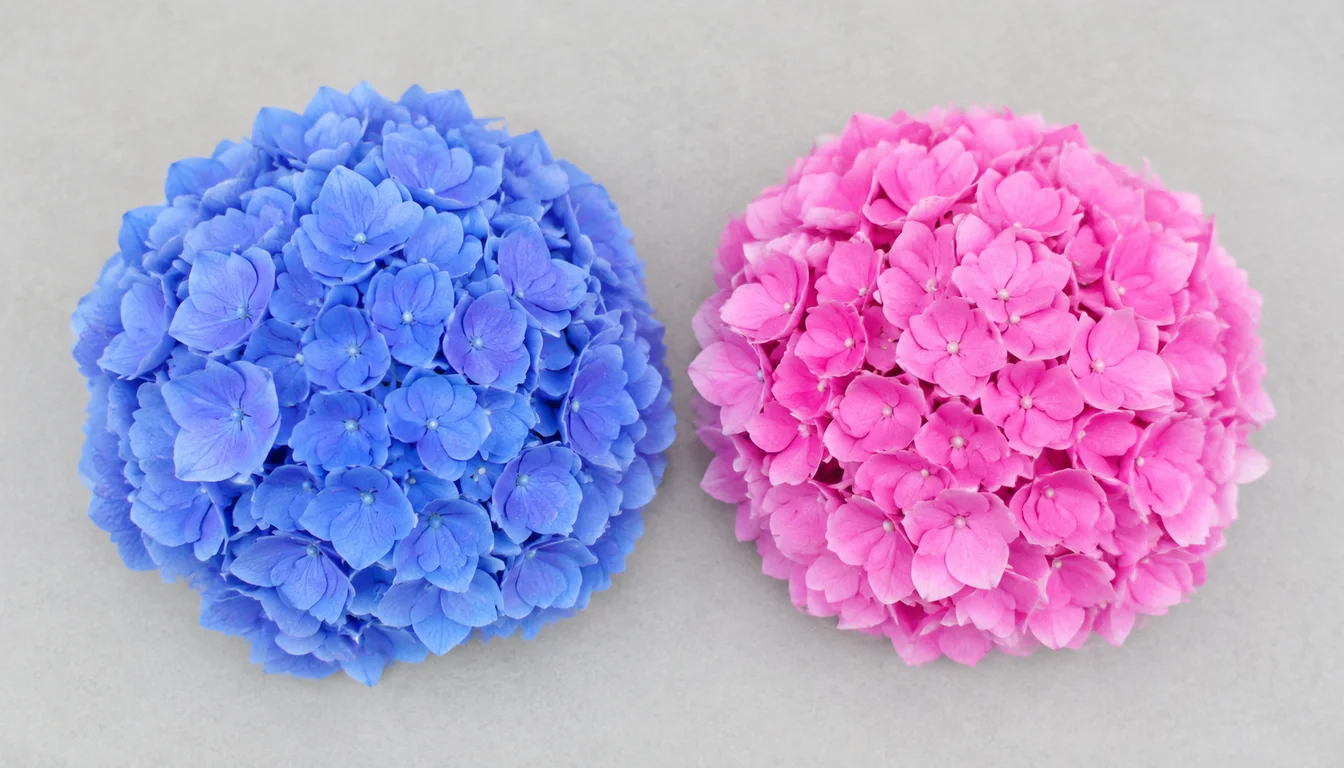
A bigleaf hydrangea flowers blue in acidic ground and pink in alkaline ground, and the same cultivar can do both on one street depending on whose garden it is standing in.
The mechanism is aluminum. It becomes more available to the plant in acidic soil and stays locked away in alkaline soil, and the flower color follows the availability rather than the pH directly.
That is why the amendments work the way they do. Aluminum sulfate lowers pH immediately once it dissolves, while elemental sulfur works gradually through bacterial conversion, and limestone or wood ash move the ground the other way toward pink.
A container is far easier to steer than a bed, because the volume you amended is the whole root zone rather than a patch of a much larger system.
How Do You Stop Blue Disappearing in a Bed?
Blue recedes, which is the whole problem and also the reason to use it.
At a distance it reads as depth and calm. In a busy bed it is the first color to disappear, and the plants beside it decide which of those two happens.
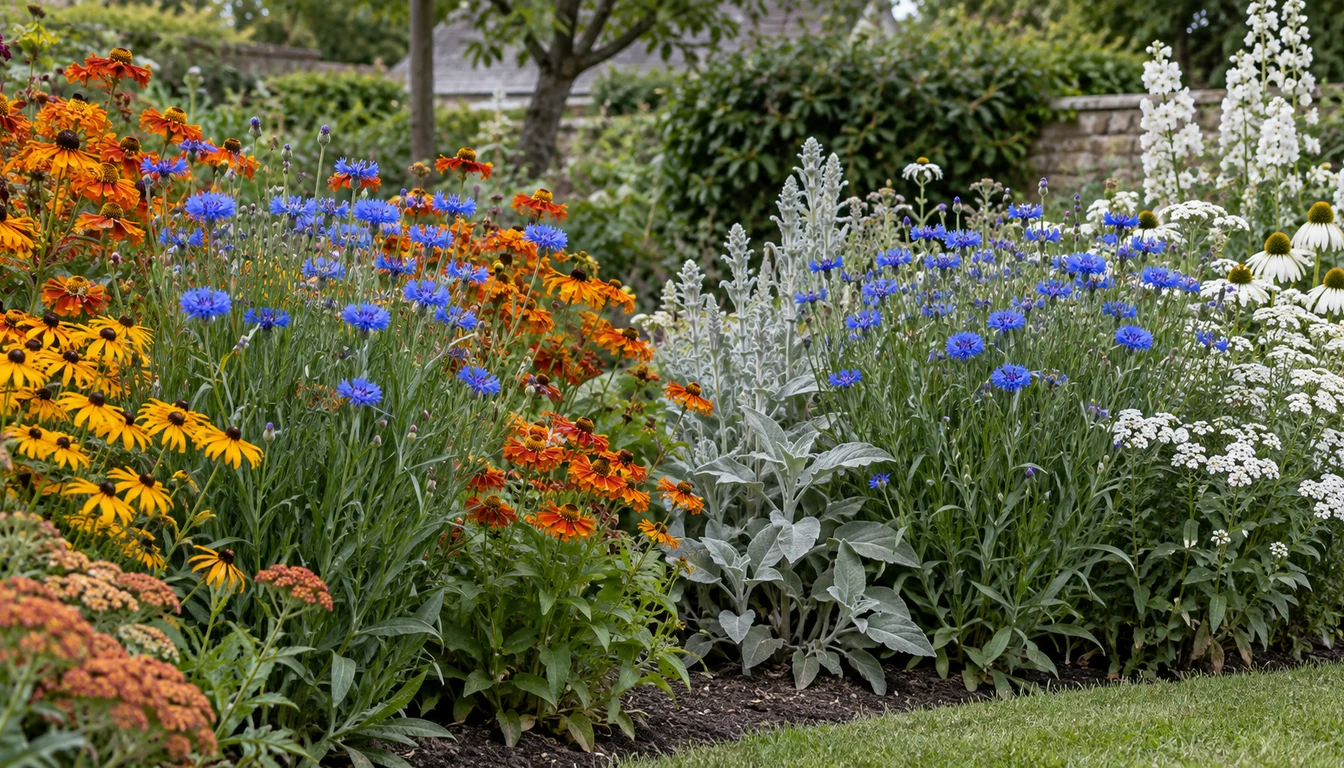
Hot colors swallow it. Orange and yellow next to blue take all the attention, and the blue stops reading as a color and starts reading as shadow.
Silver foliage, white flowers and plain green hold it up instead. They give the eye somewhere quiet to rest, and the blue becomes the thing being looked at rather than the gap between brighter things.
Mass it rather than scattering it. Several plants of one blue together read from across a garden where the same number dotted through a border reads as nothing at all.
Keep the hot colors at a distance and the cool ones close. The blue nearest the viewer is the one that survives the comparison.
What Turns a Blue Flower Purple or Gray After Planting?
Two forces move a blue after planting, and they leave different patterns.
- The whole bed reads violet: Suspect the soil rather than the plants. One shared condition is producing one shared result.
- One plant fades while its neighbors hold: Heat and light on that spot, not the ground underneath it.
- Individual blooms gray as they age: Neither force. Many blue flowers drift toward gray as a bloom finishes, and the plant is fine.
Check which pattern you have before doing anything, because the fixes point in opposite directions and amending soil for a heat problem wastes a season.
Light also changes the reading hour by hour. Blue holds truest under even overcast light and washes out in strong midday sun, so the same bed genuinely looks like two different colors depending on when you walk past it.
Judge a blue in the morning or under cloud. That is the version of the color the plant actually has.
How Do You Keep Blue in the Bed From Spring to Frost?
A single blue species often gives one concentrated peak, followed by months of green. That is the most common reason a blue border disappoints even when every plant is healthy.
Spring blue comes mostly from bulbs, and those are planted the previous fall. You cannot fill that stretch in March, so make the decision when bulb orders open.
Early summer is the easiest period and the one most beds already cover, which is why so many blue borders peak together and then stop.
Late summer into fall is the harder gap. An annual filler earns its place there because you can buy it in flower and fit it around established plants.
Aim for a blue presence in each stretch rather than a long list that all flowers in June. The exact bloom window will depend on species, cultivar, climate, and weather.
Pro Tips
- Photograph a blue you like on an overcast morning rather than in midday sun. That picture is closer to the color you will actually live with.
- Take a cut stem of a blue you already own to the nursery. Comparing two flowers beats comparing a flower to a memory of one.
- Plant the annual blues first and the perennials the year after. One season tells you what your light does to the color, and by then the decision costs nothing.
Frequently Asked Questions
Is there such a thing as a truly blue rose or tulip?
Not naturally. Both lack the pigment chemistry, so anything sold as a blue rose or blue tulip is dyed, heavily bred toward mauve, or photographed generously.
How long does it take to turn a pink hydrangea blue?
A season at least, and often two. Aluminum sulfate acts on the soil quickly and the plant still has to take it up and produce new flowers, so the change shows in the next round of blooms rather than the current one.
Will amending the soil turn a white hydrangea blue?
No. Color swings happen in bigleaf types that already flower blue or pink, and white cultivars and the panicle and smooth species stay as they are whatever goes into the ground.
Why do my blue flowers look purple in photographs?
Cameras handle blue badly in warm light and most processing pushes it toward violet. Shooting under cloud or in early morning gives a far more honest record of the color.
Do blue flowers attract different pollinators?
Bees see blue and ultraviolet well and are drawn to blue and violet flowers, which is part of why so many bee-pollinated plants sit in that range. It is not a reason to choose blue on its own, since plenty of other colors feed bees just as well.
Sources & References
Related Guides
Best Butterfly Garden Plants for a Complete Habitat
The best butterfly garden plants do two different jobs. Host plants feed caterpillars, while nectar…
15 min read
Best Fall-Blooming Flowers for Color Near Frost
A bed that still carries flowers in October usually was planned before temperatures fell.
9 min read
Best Fast-Growing Trees for Shade and Privacy
The best fast-growing tree is the one whose mature crown, roots, climate range, and maintenance…
16 min read
Best Fragrant Flowers for Every Yard and Season
The best fragrant flowers depend on climate, light, space, and the hours you use the yard.
15 min read
Best Full-Sun Perennials for Hot, Bright Beds
The best full-sun perennials are the ones that match the bed's soil moisture and drainage, local…
14 min read
Best Ground Cover Plants for Sun, Shade, and Slopes
The best ground cover is a plant that survives the site and performs the job without escaping into…
18 min read