
How to Deadhead Mums for Longer Fall Color
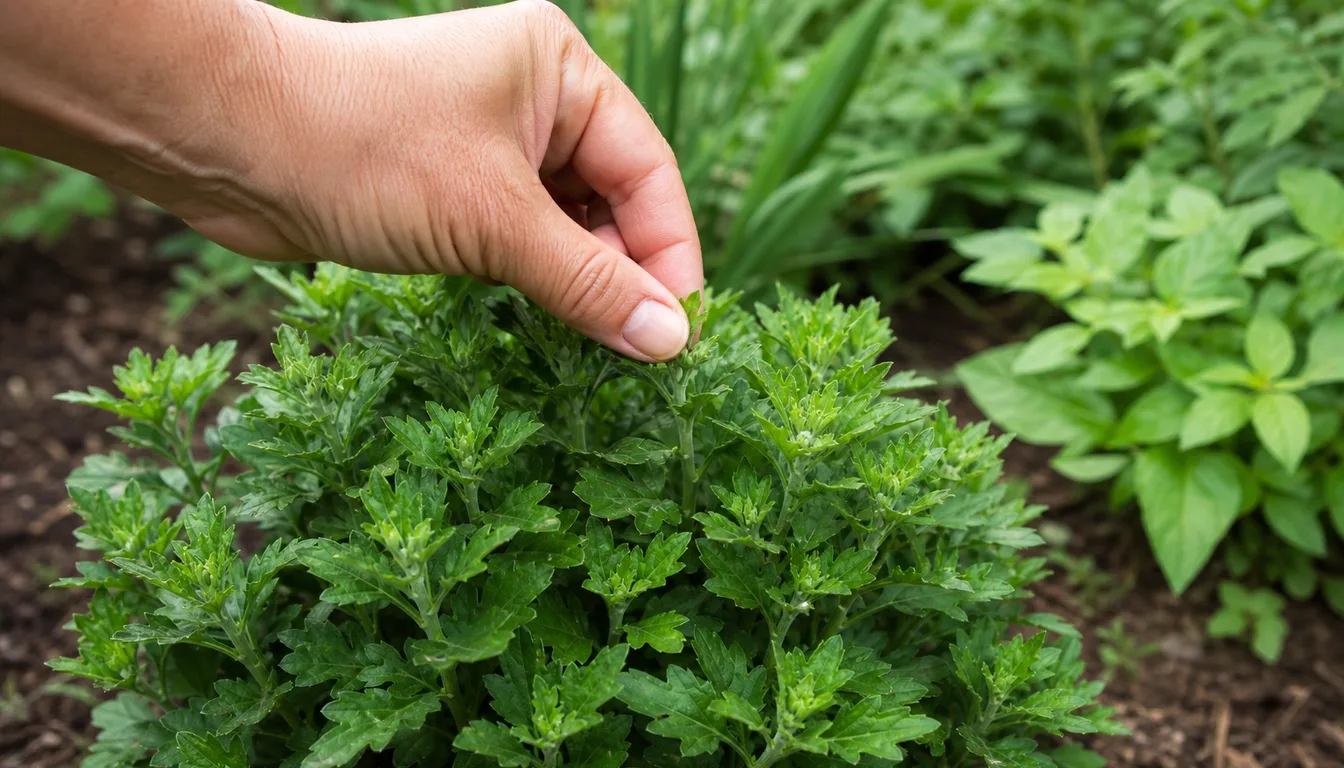
Deadhead mums by following each brown flower down to the first healthy leaf pair or firm side bud, then cutting just above that point. Remove only the faded branch when fresh buds share the stem.
This fall cleanup can keep a mum attractive while its remaining buds open, but it cannot replace the summer work that made those buds.
Pinching creates branches before bloom, deadheading removes flowers after bloom, and winter cutting prepares a hardy crown for cold weather.
At a glance
Is It a Bud or a Spent Mum Flower?
A mum carries buds, open flowers, and fading heads at the same time. Looking only from above makes it easy to remove a small bud hidden beside a brown flower.
A live bud feels firm and stays wrapped in green bracts, sometimes with a narrow line of petal color showing. A spent bloom feels dry or mushy, loses its even color, and pulls away easily at the petal tips.
Wait until a flower is clearly declining. Removing one at the first bent petal shortens the display, while waiting until the head collapses can trap wet debris inside a dense mound.
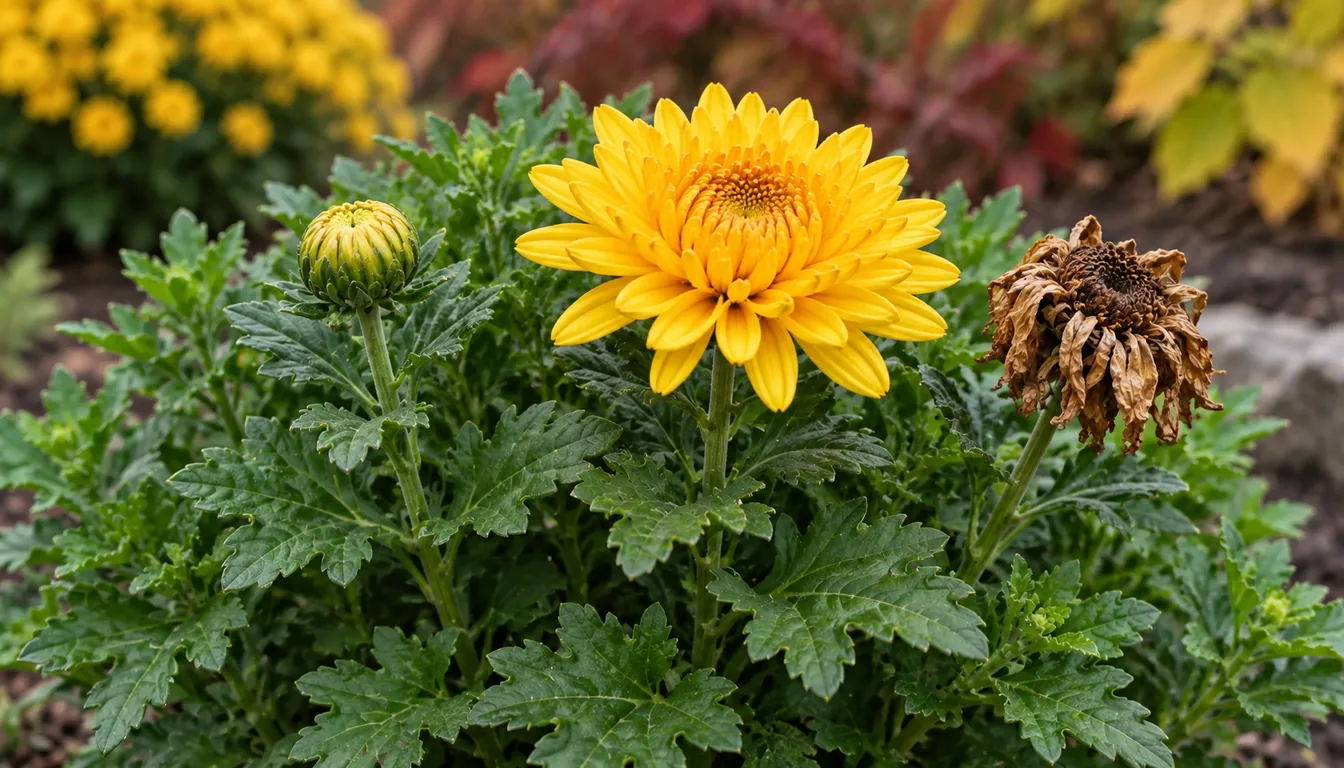
- Keep
- Firm green bud or evenly colored open flower
- Remove
- Dull, papery, brown, or rain-collapsed bloom
- Look beneath
- A firm side bud may sit directly below the old flower
- Best working time
- After dew dries, when stems and petals are easy to separate
Where Should You Cut a Spent Mum Flower?
Hold the spent head so you can see its stem, then trace it down through the foliage. Stop at the first healthy leaf pair or side shoot that gives the branch a natural end.
If the same fork carries an unopened bud, keep the bud and remove only the old flowering branch. If every bloom above a lower junction has finished, take the whole cluster back to that lower leafy point.
Use narrow garden snips on a dense cushion mum. Fingers can pinch a soft stalk, but pulling against a woody branch can tear the junction or uproot a loose fall-planted crown.
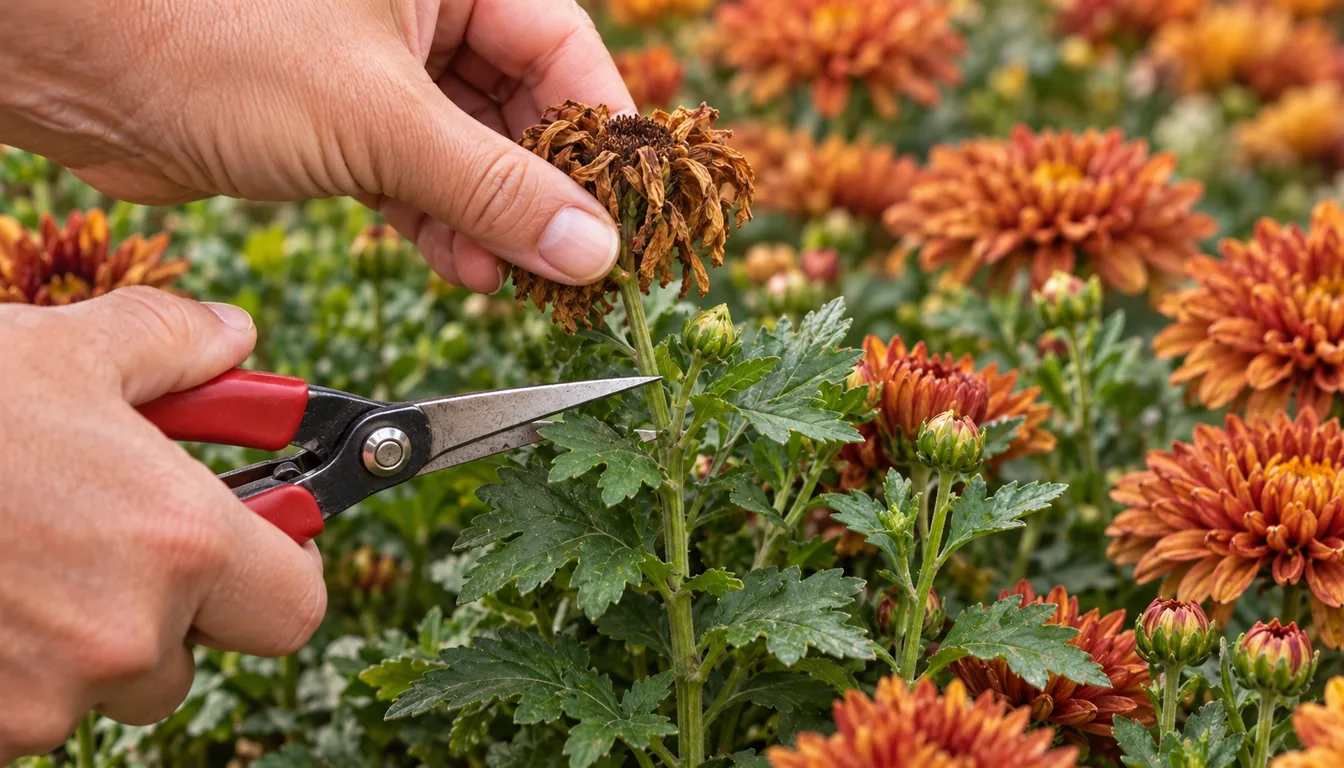
- Find the finished headCheck the sides and center of the mound for papery or brown flowers.
- Follow its stemMove down until healthy leaves or a firm side bud appear.
- Move the bud clearHold the spent branch away from any bud sharing the fork.
- Cut and collectSnip above living growth and put the wet or seedy head in a bucket.
How Often Should You Deadhead Mums in Fall?
Let the rate of fading set the schedule. A mixed plant with many buds may need a light pass every 3 to 4 days, while a cool week may produce almost nothing to remove.
Work after rain-damp petals and morning dew have dried. Wet brown flowers collapse into the mound, hold moisture against leaves, and are harder to separate cleanly from a firm bud.
Start at the top, then turn the pot or walk around the clump to inspect its sides. Remove fallen petals caught on leaves and any soft flower that has begun to decay, but keep healthy green foliage even when the display is nearly over.
Clean the blades before moving between plants when leaf spots or stem lesions are present.
Put diseased material in the trash or local municipal waste stream instead of dropping it under the crown.
- Dry petals and stems before cutting
- Check the top, sides, and center of the mound
- Keep firm buds and green leaves
- Collect wet petals trapped inside the foliage
- Clean blades before leaving a diseased plant
What Is the Difference Between Pinching and Deadheading?
Pinching happens while stems are green and growing, months before the fall display. Removing the soft tip makes buds below it break into side branches, which builds the dense shape people expect from a garden chrysanthemum.
Start when spring stems are about 6 to 8 inches tall. Remove roughly 1 inch from each tip, repeat after several inches of new growth, and stop by the local cutoff so the plant has time to set flower buds.
Early July is a common cutoff in long-season guidance, often remembered as July 4. Northern gardeners and early cultivars may need to stop sooner, so local Extension timing and the plant label outrank a national date.
Deadheading begins after flowers open.
A hard cutback belongs after the display and frost, and it should not be confused with either light job.
| Job | Plant stage | What comes off | Result |
|---|---|---|---|
| Pinching | Active spring and early-summer growth | About 1 inch of soft shoot tip | More branches and a compact mound |
| Deadheading | Fall bloom | Individual spent flower branches | Cleaner plant and room for existing buds to open |
| Winter cutback | After hard frost or in spring | Dead top growth | Clears the crown without sacrificing live buds |
How Do You Keep a Potted Mum Blooming Longer?
A florist mum reaches the store with a small root ball supporting hundreds of buds. Its display usually ends from heat, missed watering, or saturated roots before deadheading becomes the main limit.
Set the pot in bright light with protection from hot afternoon sun. Cool nights and mild days slow flower aging, while a warm porch beside reflective brick can rush every bud open at once.
Check the potting mix daily by touch and water when the surface begins to dry. Soak the root ball thoroughly, let the container drain, and empty a decorative sleeve or saucer so roots do not stand in water.
Rotate the pot a quarter turn every few days if light comes from one side.
Deadhead as soon as a cluster browns so wet petals do not rest against healthy leaves.
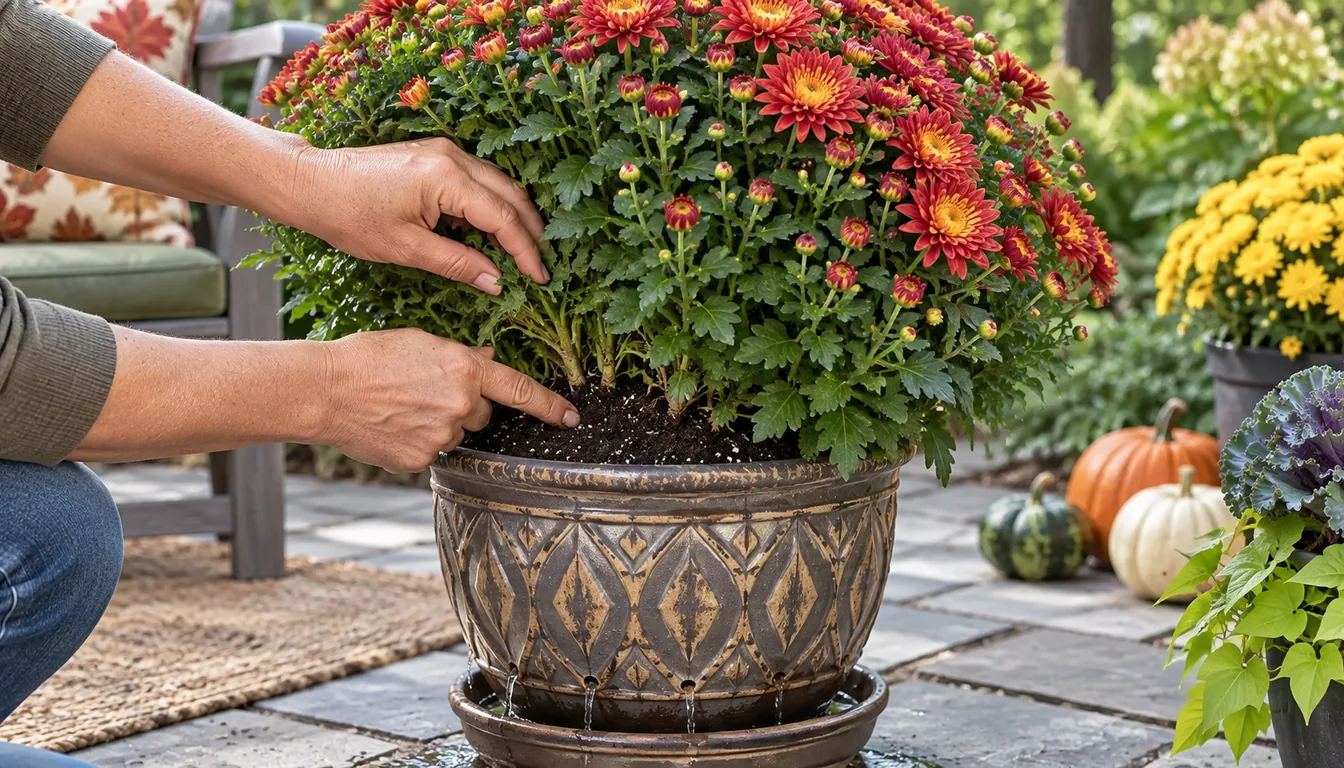
- Bright light without a hot reflected afternoon exposure
- Moist root ball checked beneath the dense outer foliage
- Open drainage holes and no water left in a sleeve or saucer
- Brown flowers removed without clipping the buds below
- Protection from an unexpected hard frost
Will a Store-Bought Mum Come Back Next Year?
A plant sold as a hardy garden mum has a better chance of returning than a florist mum bred and forced for one indoor display. The label, cultivar hardiness, planting date, drainage, and local winter all matter more than the rounded shape at purchase.
Fall planting is risky in cold regions because the roots have little time to establish before the ground freezes. Spring-planted garden mums develop a larger root system and enter winter with better odds.
If you want to try saving a fall pot, choose a hardy labeled cultivar and plant it promptly in well-drained soil at the same depth it grew in the container.
Keep it watered until the soil cools, but do not promise yourself a perennial from an unlabeled grocery-store plant.
Hardy garden mum
Named cultivar sold for landscape use, with hardiness that fits the site
Florist mum
Selected and scheduled for a temporary indoor or porch display
Spring planting
Gives roots a full growing season before their first winter
Fall rescue planting
Possible, but survival falls as planting gets later and drainage gets worse
Why Did the Mum Stop Blooming or Turn Leggy?
A tall mum that opens in the middle usually missed its pinching window or grew in weak light. Deadheading cannot rebuild its branch structure after buds have formed, so stake it discreetly and correct the timing next spring.
A plant with healthy unopened buds may simply be waiting for shorter nights and cooler weather. Chrysanthemums respond to day length, and strong porch or security lights at night can delay or disrupt flowering.
Yellow lower leaves in a pot often point to saturated mix or a dry root ball that was watered only around the edge. Check moisture inside the root mass before reaching for fertilizer.
Protect existing buds with stable light, temperature, and root moisture instead of another hard cut. Once a stem carries buds, preserve it.
| What you see | Likely cause | Useful response |
|---|---|---|
| Tall stems that fall open | Pinching stopped too early or never happened | Stake now and pinch on schedule next year |
| Green plant with buds that remain tight | Warm weather, long days, or night lighting | Keep normal care and reduce nearby night light if practical |
| Flowers all brown soon after purchase | Plant was already advanced, overheated, or dried out | Remove spent heads and protect remaining buds from heat |
| Yellow leaves and wet mix | Poor drainage or standing water | Drain the pot and let excess water leave freely |
| Wilt despite a wet outer surface | Dry center of a root-bound pot | Soak the entire root ball, then resume touch checks |
What Should You Leave After Frost?
Stop chasing new flowers when repeated frost has ended the display. The top growth will blacken or dry, and deadheading no longer changes the plant's future.
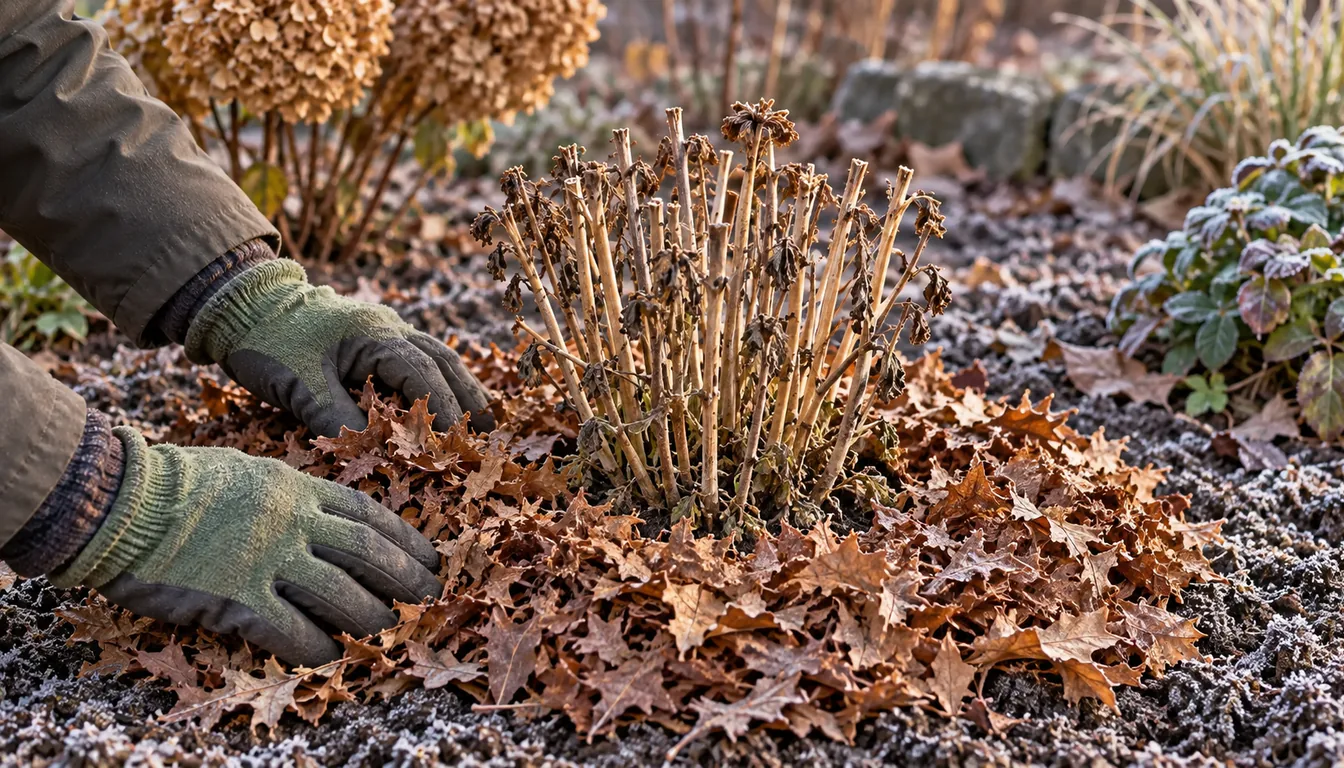
Leave several inches of stem standing rather than cutting level with the crown. The stubs mark the plant and help hold loose winter mulch without trapping a solid wet cap over the center.
After the ground begins to freeze, place about 3 to 4 inches of clean straw, pine needles, or shredded leaves around the plant.
The goal is to reduce freeze-thaw swings, so early mulch on warm soil can do more harm than good.
Remove excess mulch gradually as growth resumes in spring, then cut the old stems above the new shoots.
Garden mums fail more often in wet winter soil than from a missed fall haircut, which makes drainage the lasting priority.
Pro Tips
- Check the sides of a dense mum because spent flowers hide below the fresh color on top.
- Stop pinching by the locally recommended cutoff so you do not remove developing fall buds.
- Water the full root ball of a pot mum and empty any sleeve or saucer after drainage.
- Reduce bright night lighting near garden mums if buds stay tight despite healthy growth.
- Mulch a hardy crown only after the soil cools, using a loose layer that does not hold water against the center.
Frequently Asked Questions
Does deadheading mums make more flowers?
It removes spent flowers and gives existing side buds room to open, which can extend a mixed display. It does not guarantee new buds after the plant's natural fall cycle or replace spring and summer pinching.
How often should I deadhead mums?
Inspect a blooming plant once or twice a week and remove heads when they become papery, brown, or rain-collapsed. Use flower condition rather than waiting for the whole mound to fade.
When is it too late to pinch mums?
Early July is a common final date in long-season guidance, but northern locations and early cultivars may need an earlier stop. Follow local Extension guidance and stop once flower buds are developing.
Can I plant a fall pot mum in the garden?
Yes if it is a hardy labeled cultivar and the soil drains well, but a late-planted mum has less time to root before freezing. A spring-planted garden mum has better odds of returning.
Should mums be cut to the ground in fall?
Leave several inches of dead stem after frost, mulch loosely after the soil cools, and finish cleanup when new growth appears in spring. Avoid a dense wet layer over the crown.
Sources & References
Related Guides
Cutting Back a Leggy Houseplant Does Not Fix It
Most people cut a houseplant back because it has gone long and bare.
11 min read
Deadheading Daffodils Matters Less Than the Six Weeks After
Almost every page about spent daffodils tells you to remove the seed pod so the bulb is not…
11 min read
French Lavender Pruning Depends on the Plant and Season
French lavender needs light trimming within its leafy growth, rather than a hard cut into bare…
6 min read
Fruit Tree Pruning Starts With Where the Crop Forms
A fruit tree that gives small, crowded, scabby fruit is usually not underfed.
11 min read
How Deep Can You Cut a Spent Lavender Spike?
Deadheading lavender is the lightest cut you will ever make on the plant, and the one place people…
7 min read
How Do You Prune Spanish Lavender for a Second Flush?
Spanish lavender is the one that flowers first and the one that keeps going.
7 min read