
Best Orange Flowers for Sun, Season, and Color
Most orange disappointments start at the garden center rather than in the bed. Orange is sold under more names than any other flower color, and peach, coral, tangerine, and rust end up filed together even though they look very different once they open.
Read the cultivar description and inspect an open bloom before buying. Soil tricks that move pink and blue do nothing to orange, so choose the shade, bloom season, and visual weight you want from the start.
A daylily is the forgiving place to start, and a marigold is the cheapest way to test the color before committing.
At a glance
Coral, Apricot and Rust Are All Sold as Orange
Orange is sold under more names than any other flower color. Peach, apricot, coral, salmon, tangerine, rust, bronze and copper all land in the same part of a catalog, and they do not describe the same color.
Peach and apricot are pale orange cut with cream, and from ten feet away they read closer to pink than to orange.
Tangerine and marmalade are the words that mean saturated true orange, and they are the ones to look for when that is what you want. Rust, bronze and copper are orange pushed toward brown, honest enough on the tag but close to invisible against a bark mulch bed.
Growers reach for the gentler words because orange carries a reputation for being loud, and someone holding a hot orange often has a commercial reason to call it something softer.
The bicolor trap catches more buyers than the naming does. Plenty of orange daylilies and coneflowers carry a dark throat or a differently colored petal reverse, and from across a yard the eye reads only the outer ring, so the flower looks smaller and less orange than the close-up photograph promised.
Late-afternoon sun pushes yellow and apricot toward orange, which is why an evening catalog photograph flatters a color that will look noticeably paler at midday.
Two checks survive all of this. Buy the plant in bloom when the season allows it, and when it does not, look for a photograph taken in bright overcast light, which renders flower color closest to what your eye will see day to day.
When neither is available, treat the tag word as a range rather than a promise and buy one plant before you buy nine.
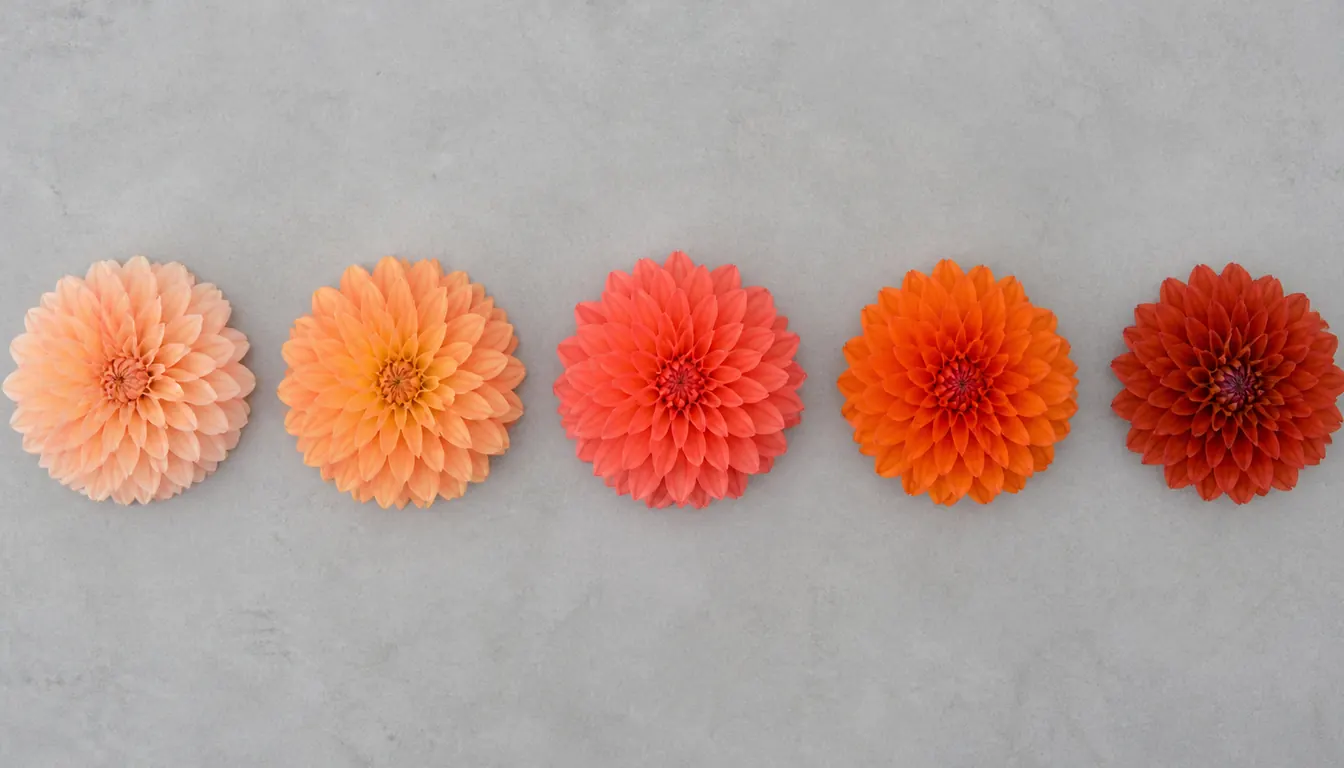
| Tag word | What it usually is | How it reads across a yard |
|---|---|---|
| Peach, apricot | Pale orange cut with cream | Nearly pink, soft |
| Coral, salmon | Between orange and pink | Pink-leaning, rarely reads orange |
| Tangerine, marmalade | Saturated true orange | Bold, carries at distance |
| Rust, bronze, copper | Orange darkened toward brown | Disappears against mulch |
| Flame, sunset | Usually a bicolor blend | Depends entirely on the throat color |
Orange Is a Carotenoid, So There Is No Soil Lever to Pull
Orange and yellow flower color comes from carotenoids, the same pigment family that colors carrots and pumpkins. Pink, purple and blue come from anthocyanins instead, which is a genuinely different chemistry with genuinely different behavior.
Anthocyanins respond to cell pH and to aluminum availability, which is the whole reason a hydrangea can be moved between pink and blue by changing the soil, and carotenoids answer to none of it.
The color you buy is therefore the color you keep. No soil amendment, fertilizer or pH adjustment will deepen a washed-out orange, which puts every bit of the weight on the purchase and none on the aftercare.
Do not buy soil amendments to fix a disappointing orange. The pH lever that moves hydrangea color has no equivalent in a carotenoid flower, and the money is better spent replacing the plant.
What does change orange is light, and strong direct sun with sustained heat can bleach a saturated orange toward pale cream-orange within a single season.
Aging works differently here too. An orange petal browns as it goes over rather than shifting toward another color, so spent blooms read as damage rather than as fading and need deadheading sooner than a pink or purple bed would.
The texture test separates the two. A sun-bleached flower keeps normal firm petal texture and only loses saturation, while a plant in real trouble goes limp, spotted or crisp at the edges before the color goes anywhere.
The Oranges Worth Planting, Grouped by What They Have to Do
The useful way to sort orange is by how long the plant lasts, not by how tall it grows. Height sits on every tag, but the difference between buying one season and buying ten changes the whole plan for the bed.
Marigold, zinnia, cosmos, nasturtium and calendula carry orange from planting until frost for the cost of replanting each spring, which no perennial in this color can match.
The perennials return but trade that continuity for a defined window. Butterfly weed, helenium, geum and the orange coneflower cultivars each bloom for a few weeks rather than a season, so a perennial-only orange bed needs several of them timed to hand off.
Bulbs and tubers hold the most saturated true orange available anywhere in the garden. Crocosmia, canna, dahlia and orange tulips reach a depth of color the annuals rarely touch, though most of them need lifting or protection where winters are hard.
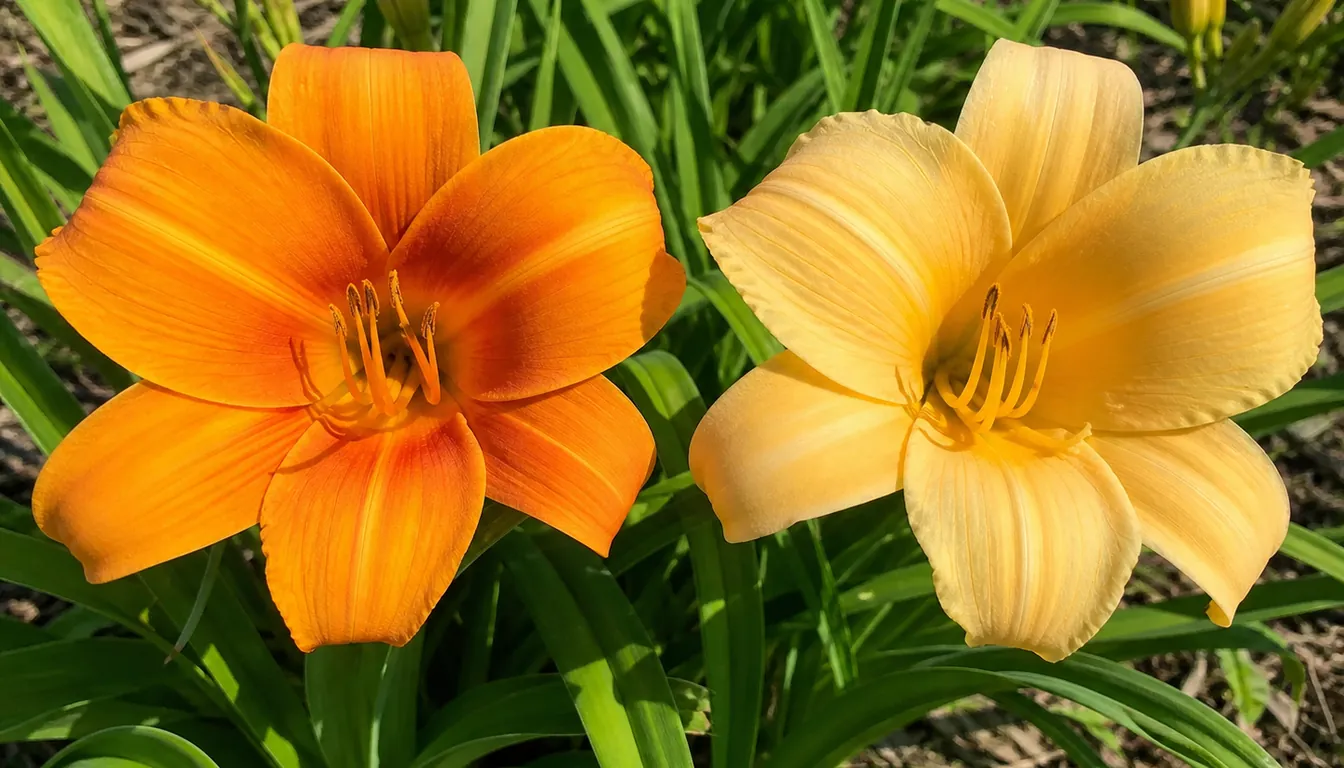
Daylily spans the widest orange range in common use, and although each flower lasts a single day the plant keeps opening new ones for weeks.
For heat and full sun, lantana holds orange through conditions that fade most of the alternatives, and the annuals generally outlast the perennials on that front. If your orange is going into a bed that bakes, weight the choice toward those.
Shade is where the list gets short. Orange depends on direct light to read as orange at all, so a shaded bed mutes it toward brown, and the honest answer there is usually to look at plants chosen for shade instead of forcing this color into it.
| Plant | Type | Sun | Bloom window |
|---|---|---|---|
| Marigold | Annual | Full sun | Planting to frost |
| Zinnia | Annual | Full sun | Midsummer to frost |
| Nasturtium | Annual | Sun to part shade | Early summer to frost |
| Butterfly weed | Perennial | Full sun | Early to midsummer |
| Helenium | Perennial | Full sun | Late summer to fall |
| Daylily | Perennial | Sun to part shade | Several weeks in summer |
| Crocosmia | Corm | Full sun | Mid to late summer |
| Canna | Rhizome | Full sun | Midsummer to frost |
| Tulip | Bulb | Full sun | Spring |
| Lantana | Annual or tender shrub | Full sun | All season in heat |
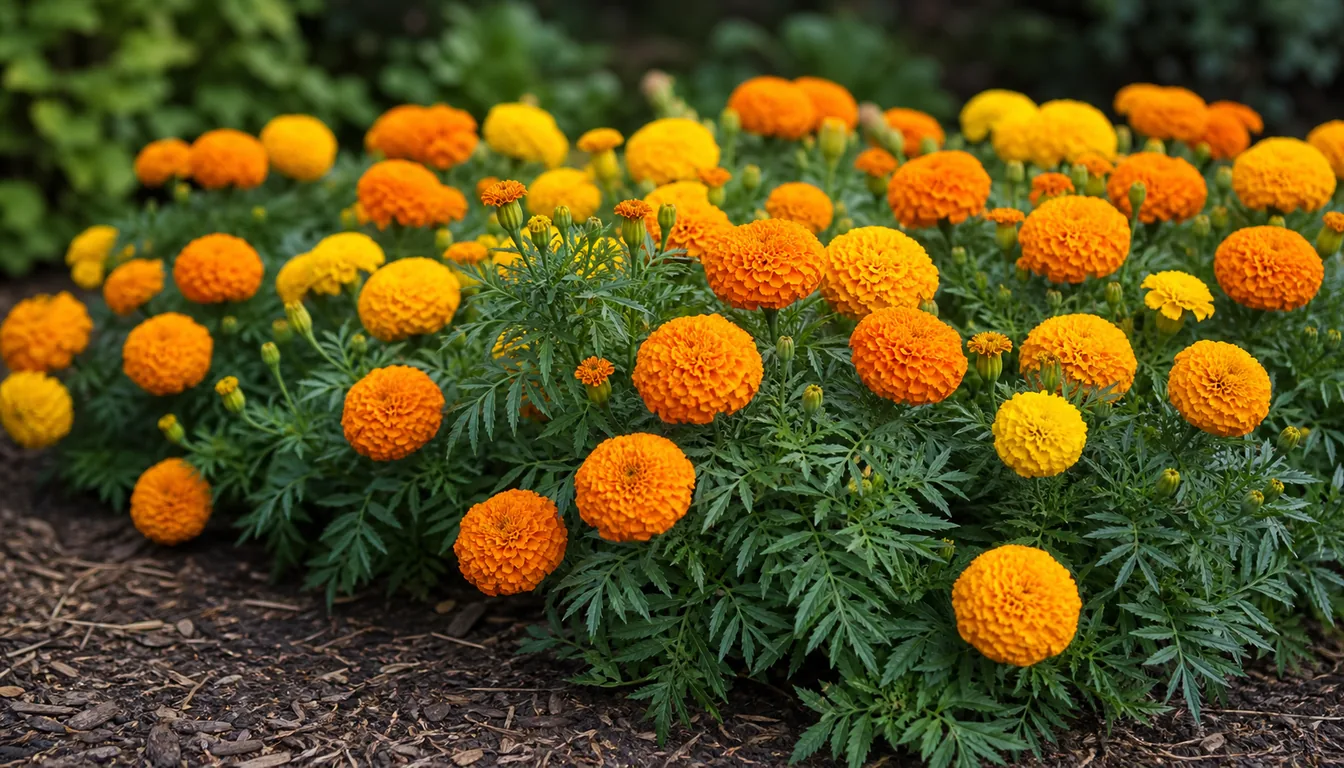
Marigold
Reliable orange bedding color from planting until frost
- Mature fit
- Choose the cultivar by its labeled height for edging, containers, or bed fill
- Main tradeoff
- It lasts one season and must be replanted the following spring
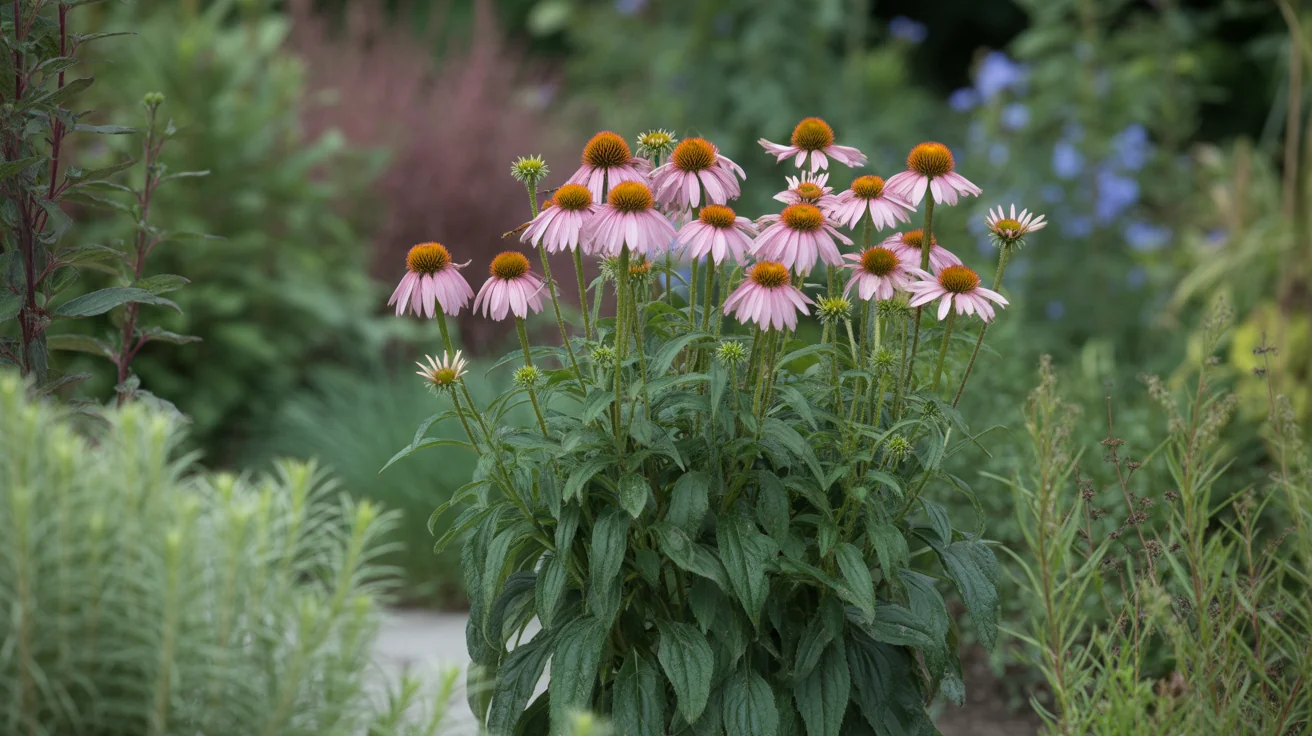
Coneflower
Orange perennial cultivars for a defined summer bloom window
- Mature fit
- Give the upright clump full sun and room among later handoff plants
- Main tradeoff
- It returns each year but does not carry orange continuously until frost
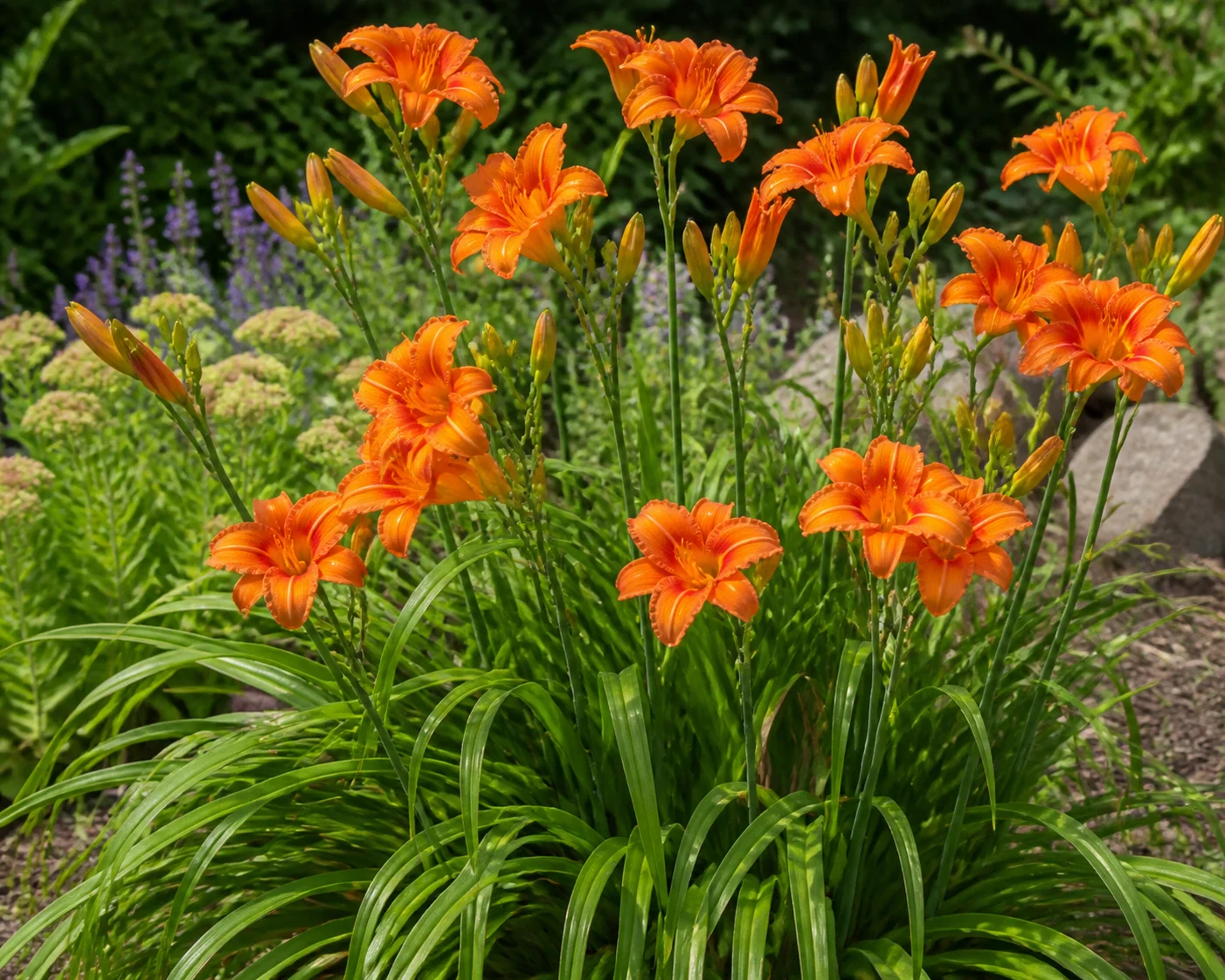
Daylily
The widest common range of orange shades in a returning clump
- Mature fit
- Use it at border scale in sun or light part shade
- Main tradeoff
- Each flower lasts one day even though new buds open for weeks
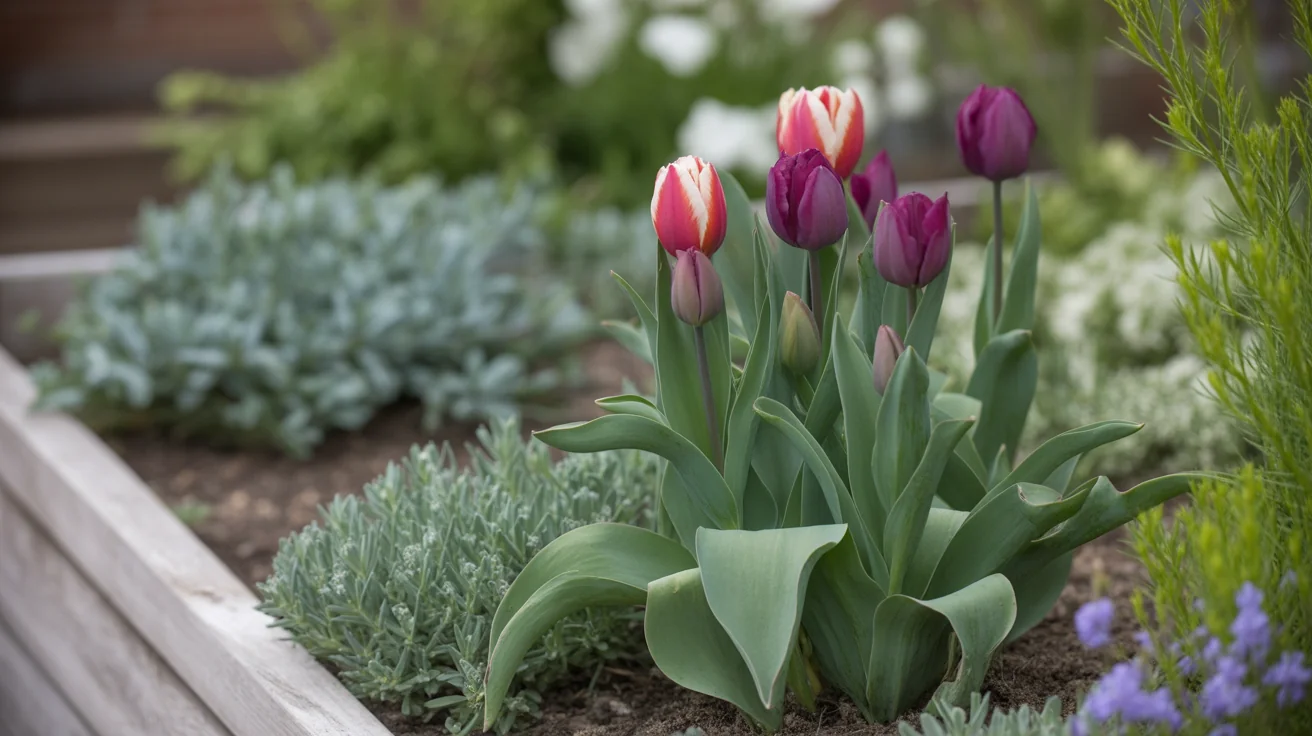
Tulip
Saturated orange color for the spring part of the sequence
- Mature fit
- Plant bulbs in a sunny, well-drained position where the foliage can mature
- Main tradeoff
- The display is brief and orange labels may open coral, apricot, or rust
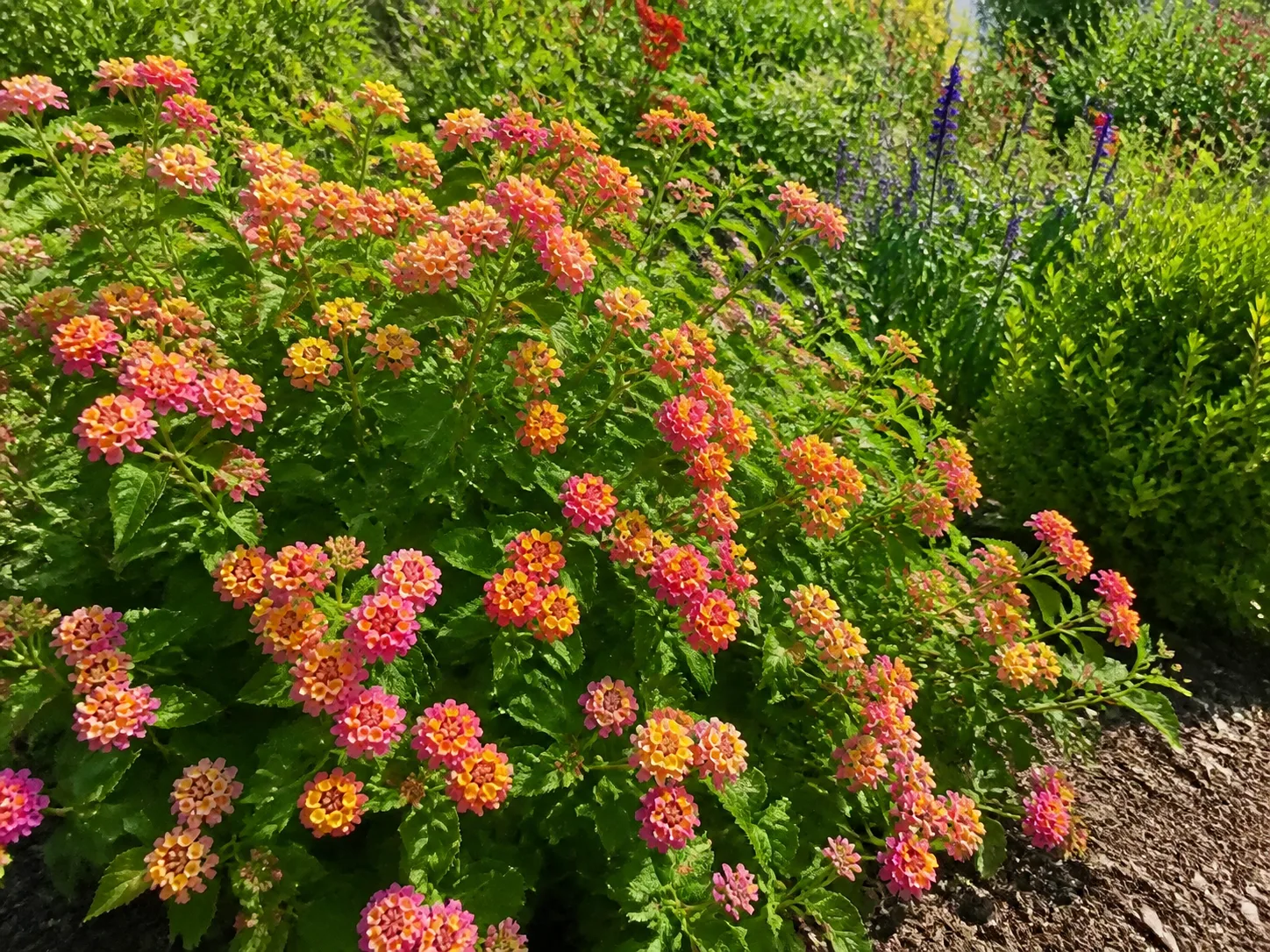
Lantana
All-season orange in a bed that stays hot and sunny
- Mature fit
- Treat it as an annual or tender shrub outside Zones 9 to 11
- Main tradeoff
- It handles heat well but is not a cold-climate perennial
Orange Comes Forward, and a Small Yard Feels It
Warm saturated color reads as nearer than it is, and cool color reads as further away.
In a small yard the effect is not subtle. Orange planted along the back boundary pulls that boundary visually forward, so a short garden ends up feeling shorter than it did before the color went in.
Spend your orange at the point you want people to look at, and let cooler colors and green do the work everywhere else.
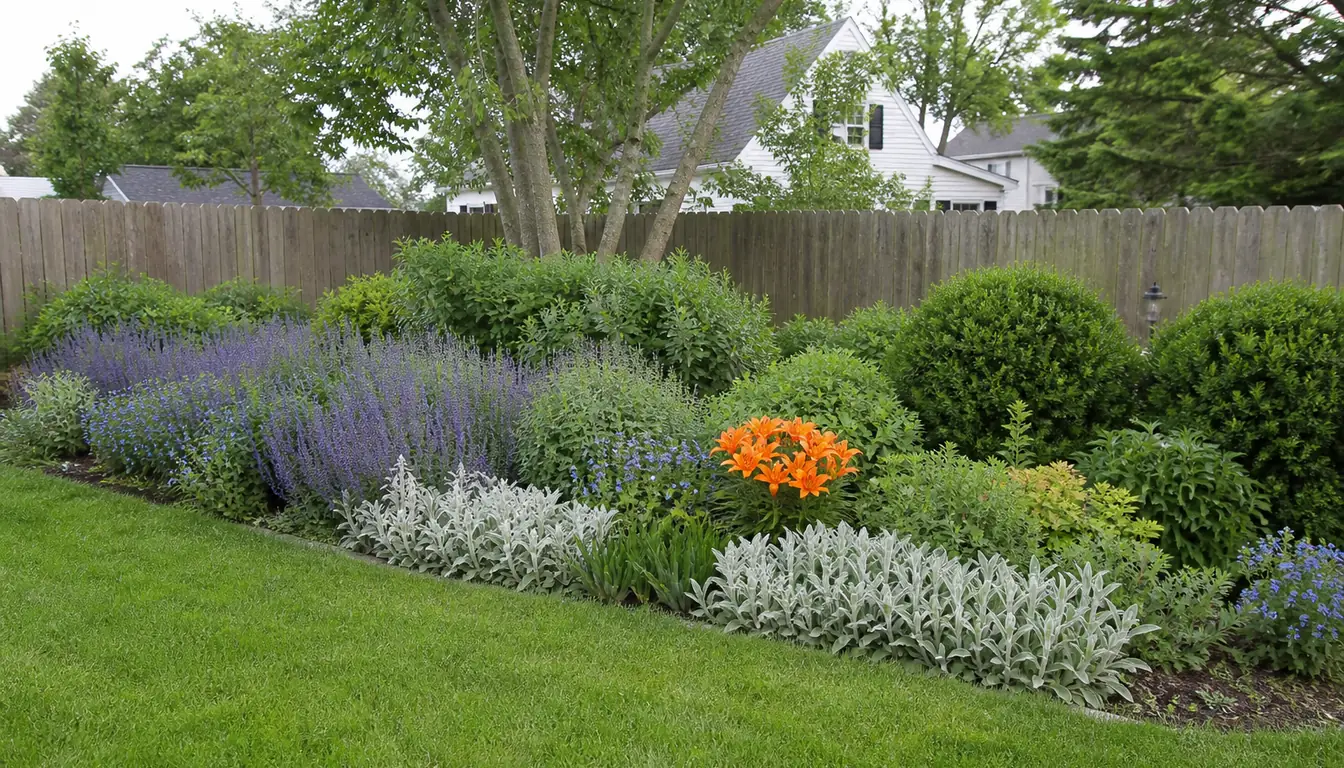
The Partners That Work, and the One Pairing to Watch
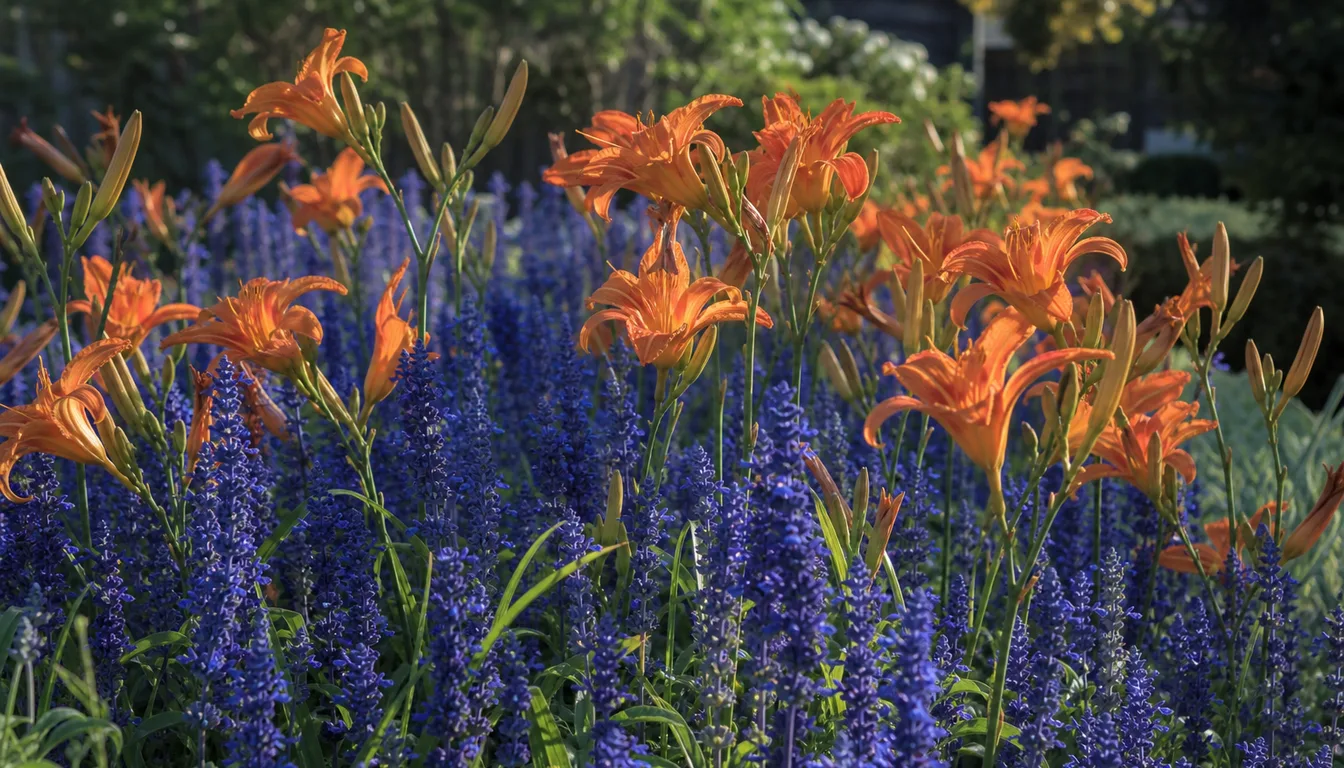
Blue is the partner that works, but not every blue survives the job. Pale and mid-tone blues wash out beside saturated orange, while deep saturated blues hold their own, which is why a salvia does more here than a pale forget-me-not and why the blue flowers worth planting are worth choosing deliberately.
The pairing that quietly goes wrong is orange with deep purple and near-black foliage. Each of those is a fine plant on its own, but together they carry a strong seasonal association, and a summer border can end up reading as a holiday decoration without anyone quite noticing why.
Silver and gray-green foliage such as lavender or catmint buffers orange from any neighbor without introducing another color to compete with it.
Pros
- Deep saturated blue holds its own beside orange instead of washing out
- Silver and gray-green foliage buffers orange from anything next to it
- Plain green mass gives the eye somewhere to rest between orange groups
Cons
- Pale blue and lavender go flat and grayish next to saturated orange
- Deep purple with near-black foliage reads as a seasonal decoration
- Soft pink beside true orange makes both colors look accidental
Pro Tips
- Treat the color word on a plant tag as a range rather than a promise, and buy one plant to test before buying nine.
- Check catalog photographs for light. A bloom shot in bright overcast light shows the color you will actually get, while late-afternoon light flatters it.
- Decide orange's role before you shop, since a few scattered orange plants read as accidents rather than as a scheme.
- Spend orange at the point you want looked at, and keep it off the back boundary of a short yard where it pulls the far edge forward.
- Skip soil amendments aimed at deepening orange. The pigment does not respond to pH the way pink and blue do.
- Deadhead orange sooner than you would a pink bed, because spent orange petals brown rather than fading and read as damage.
Frequently Asked Questions
Why does my orange flower look paler than the photo?
Catalog photographs are often taken in warm late-afternoon light, which pushes apricot and yellow toward orange and flatters the color, and strong direct sun with sustained heat genuinely bleaches saturated orange toward pale cream-orange over a season. If the petals still feel firm and only the saturation has dropped, that is normal bleaching rather than a plant in trouble.
Can I make my orange flowers more orange with fertilizer or soil changes?
No, because orange comes from carotenoid pigments, which do not respond to soil pH or aluminum the way the anthocyanins behind pink, purple and blue do. The hydrangea trick has no equivalent here, so the color is decided at purchase and cannot be corrected in the ground.
What is the difference between coral, apricot and true orange?
Apricot and peach are pale orange cut with cream and read close to pink from a distance, while coral and salmon sit between orange and pink and rarely read as orange in a bed at all. Tangerine and marmalade are the words used for saturated true orange, which is the one that carries across a yard.
What color goes best with orange in a garden bed?
Deep saturated blue is the strongest partner, since pale and mid-tone blues wash out next to orange, and silver or gray-green foliage works as a buffer beside almost anything. The pairing to think twice about is orange with deep purple and near-black foliage, which carries a strong autumn association even in midsummer.
Are there orange flowers for shade?
Very few that are worth planting, because orange needs direct light to read as orange and in shade it mutes toward brown, losing the quality you wanted it for. A shaded bed is usually better served by plants selected for shade than by forcing this color into it.
Which orange flowers come back every year?
Butterfly weed, helenium, geum, daylily and the orange coneflower cultivars are perennials that return, though each blooms for a defined window rather than all season. Crocosmia, canna and dahlia return where winters are mild and need lifting where they are not, while marigold, zinnia and nasturtium bloom until frost but must be replanted.
Sources & References
Related Guides
Best Butterfly Garden Plants for a Complete Habitat
The best butterfly garden plants do two different jobs. Host plants feed caterpillars, while nectar…
15 min read
Best Fall-Blooming Flowers for Color Near Frost
A bed that still carries flowers in October usually was planned before temperatures fell.
9 min read
Best Fast-Growing Trees for Shade and Privacy
The best fast-growing tree is the one whose mature crown, roots, climate range, and maintenance…
16 min read
Best Fragrant Flowers for Every Yard and Season
The best fragrant flowers depend on climate, light, space, and the hours you use the yard.
15 min read
Best Full-Sun Perennials for Hot, Bright Beds
The best full-sun perennials are the ones that match the bed's soil moisture and drainage, local…
14 min read
Best Ground Cover Plants for Sun, Shade, and Slopes
The best ground cover is a plant that survives the site and performs the job without escaping into…
18 min read