
Why Daffodils Grow Leaves but No Flowers
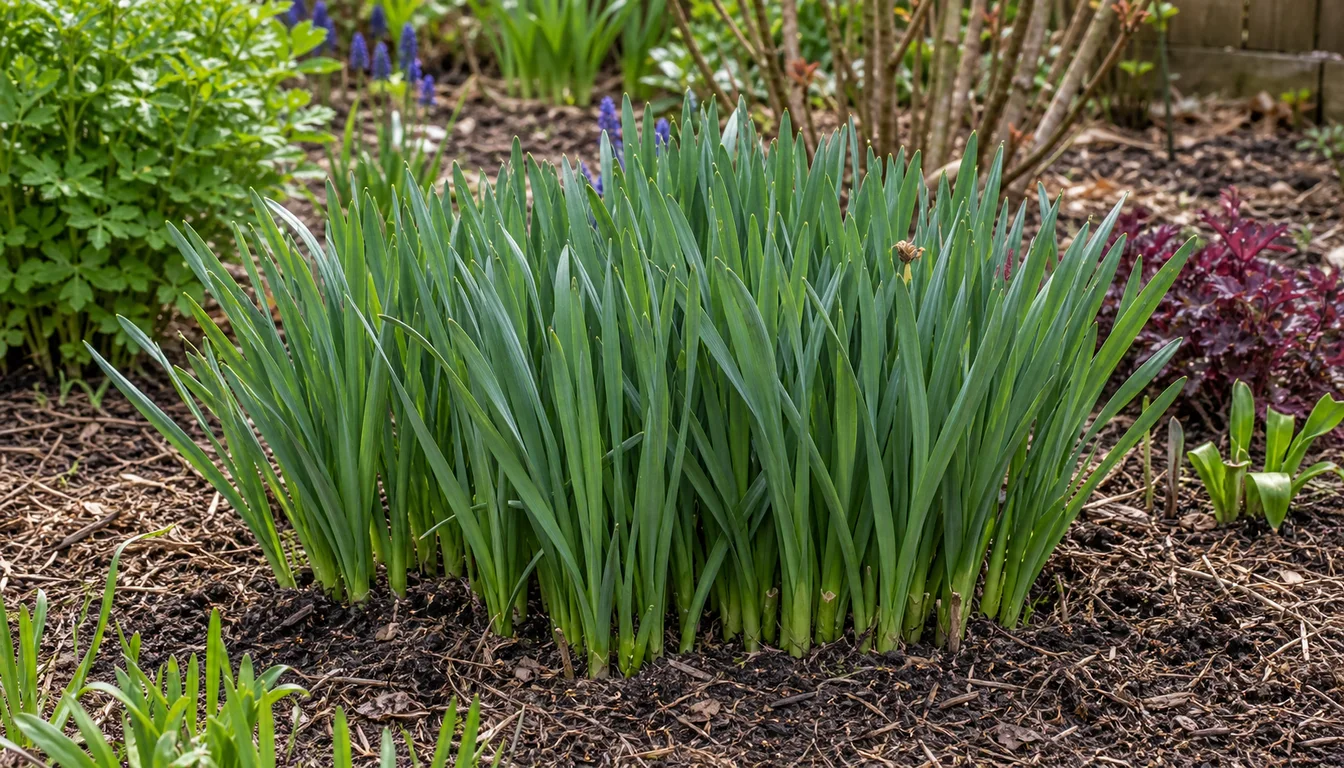
Daffodils that produce leaves but no flowers are often called blind daffodils.
Healthy green foliage points toward an interrupted recharge cycle, shade, crowding, planting depth, or excess nitrogen, while weak or abnormal leaves make bulb damage more likely.
Quick diagnosis
Start with leaf quality and the clump's flowering history
Normal-width green leaves with no flower scapes usually mean the bulbs are alive but lacked the stored energy or conditions to form flowers.
Grass-like shoots, yellow streaks, distorted leaves, premature collapse, or a soft bulb move the diagnosis toward pests or disease, while a browned formed bud after a hard freeze explains a one-season loss.
Open the full diagnosisWhat You Are Seeing
A Daffodil bulb builds much of next spring's display after this spring's flowers fade. Its leaves keep collecting light and returning carbohydrates to the bulb until they yellow naturally, so the action that caused a missed bloom may have happened many months earlier.
Look at the whole clump before digging. Note whether it once flowered well, whether every shoot is affected, whether the leaves are broad and firm or thin and abnormal, and whether a flower stalk or damaged bud ever appeared.
A clump that declined slowly over several years usually points to increasing shade, crowding, or depleted growing conditions. A newly planted clump may be establishing roots, while a sudden one-year loss after normal flowering deserves a check for early foliage removal, drought during recharge, fertilizer changes, or a hard freeze.
Do not cut green leaves or lift firm actively growing bulbs just because the spring display is missing. Mark the clump while its location and symptoms are visible, then make most spacing, depth, and relocation corrections after natural dieback.
Common Causes
01 High likelihood
Leaves were cut, tied, or dried too early
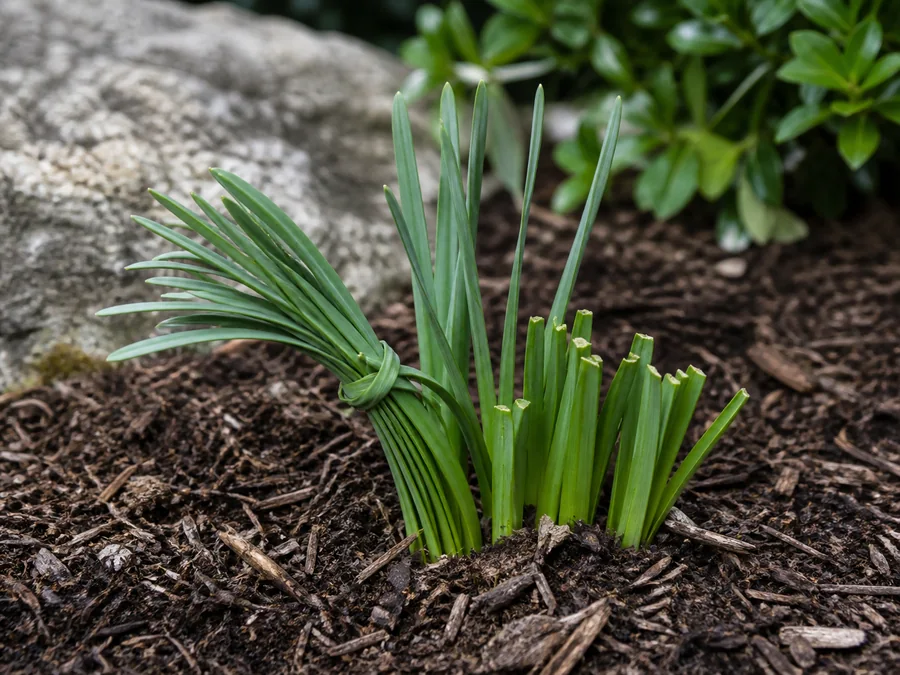
A Daffodil can emerge strongly this year and still miss flowers because last year's leaves stopped working too soon. Mowing, braiding, tying, drought, or an early heat-driven dieback can leave the bulb below the reserve needed to form a flower bud.
The delay between injury and the missing display makes this cause easy to overlook. Current leaves can appear healthy because the bulb retained enough energy to produce foliage, yet the previous recharge period ended before the flower for this season was initiated and supported.
Reconstruct the previous spring rather than judging only this year's leaves.
A lawn edge mowed before foliage yellowed naturally, a tied clump with little exposed leaf area, or a dry spell that ended growth early provides a mechanism. Protecting the current foliage supports the next cycle, but it cannot create a missing bud after spring growth has already begun.
How to identify it
- Leaves were removed while they were still green after the previous bloom.
- Foliage was tied or braided into a small bundle that exposed less leaf surface to light.
- The bed became dry while leaves were active and the foliage yellowed earlier than nearby clumps.
- Current leaves are normal in width and color, and the bulbs feel firm rather than soft.
- Several bulbs sharing the same mowing or watering pattern fail together.
What to do
- Leave every green portion in place until it turns brown and separates easily.
- Keep soil evenly moist during active spring growth without leaving the bulb bed soggy.
- Hide fading leaves behind later-emerging perennials instead of folding or tying them.
- Do not add a heavy feed to force flowers after the season's buds are already absent.
- Judge the correction next spring because a missed recharge cannot be rebuilt in time for this year's display.
02 High likelihood
Too little light during the recharge period
The bed may look sunny when Daffodils open, then become shaded as trees and neighboring perennials leaf out. That later light matters because the bulb is still rebuilding after bloom and needs working foliage for several weeks.
Judge the site during the recharge period rather than from an early spring photograph. A clump that blooms near the edge of a canopy while the shaded interior produces only leaves gives stronger evidence than a general impression that the bed receives some sun.
Measure when direct light reaches both portions after the overhead canopy opens.
If the flowering edge and blind interior share soil and care but differ consistently in late-spring light, moving firm bulbs after natural dieback is more defensible than feeding the entire bed. Avoid thinning the daffodil foliage itself to expose the center.
How to identify it
- Clumps in open parts of the bed bloom better than bulbs beneath the same tree or shrub.
- A canopy, fence, or expanding perennial planting now shades the leaves in late spring.
- Leaves lean toward brighter space or stay green longer without building stronger bulbs.
- The decline followed gradual growth of woody plants rather than one abrupt wet season.
- Bulbs remain firm and show no basal decay, hollow center, streaked foliage, or distorted shoots.
What to do
- Observe the bed after nearby trees and shrubs carry full leaves, not only during flowering time.
- Thin an appropriate neighboring shrub or relocate bulbs after their foliage dies naturally.
- Choose a site that provides about six hours of direct light while foliage remains active.
- Keep aggressive groundcovers from covering and competing with the daffodil leaves.
- Allow one complete growth cycle in the brighter site before judging the bulbs.
03 High likelihood
Crowded bulbs and offsets that are too small to flower
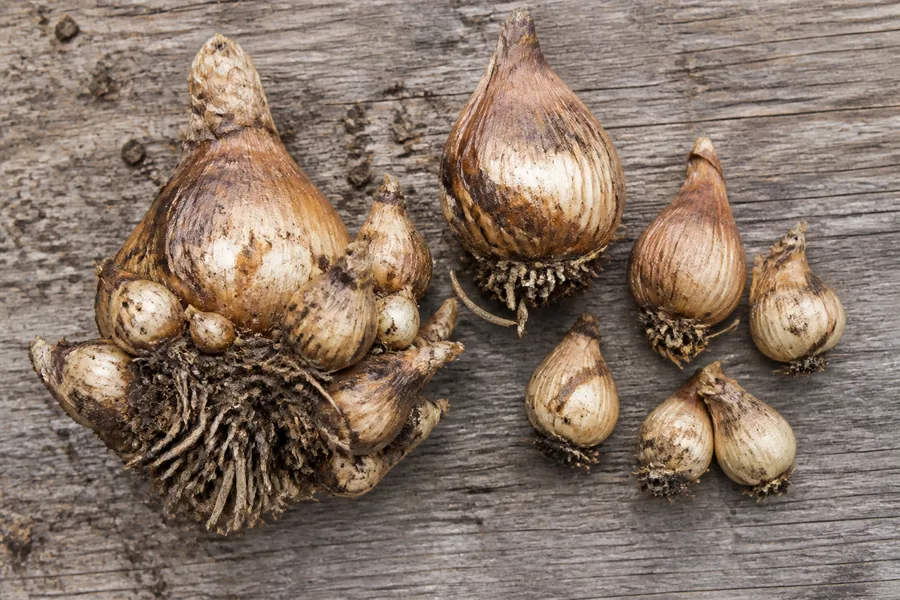
Established Daffodil bulbs multiply by producing offsets. A clump can eventually contain many small bulbs that still send up leaves, but the offsets begin with limited reserves and compete for light, water, and root space before reaching flowering size.
Crowding is most convincing when a clump flowered well for years and then produced more shoots but fewer scapes. Dense foliage by itself is not enough, since a young mass planting can also contain several nonflowering offsets that simply need time to gain size.
Wait until leaves yellow naturally, then lift a representative section without slicing the basal plates.
A tight mass dominated by small firm bulbs supports division. A few mature firm bulbs among many young offsets should be sorted by size, because the mature bulbs may flower after replanting while small offsets require additional growth cycles.
How to identify it
- A tight patch produces many leaf fans from a small area of soil.
- Flower numbers declined gradually as the clump became wider and denser.
- Other uncrowded clumps in the same light and soil still flower normally.
- Lifted bulbs are firm but packed with numerous small attached offsets.
- The smallest offsets have little stored mass compared with the mature bulbs.
What to do
- Mark the clump now and wait until the foliage yellows before lifting it.
- Loosen soil beneath the bulb mass so the basal plates and roots are not cut by a shallow scoop.
- Separate healthy offsets gently and discard bulbs that are soft, hollow, or badly injured.
- Replant mature bulbs with enough space for future increase and group small offsets where they can size up.
- Expect mature firm bulbs to respond sooner than small offsets, which may need more than one growing season.
04 Medium likelihood
Planting depth, late planting, or recent transplant stress
Bulbs planted very shallowly can divide into many small offsets, while bulbs set too deeply may spend energy reaching the surface and produce leaves without a flower. A recently moved or late-planted bulb can also delay flowering while it establishes roots.
Separate a depth error from ordinary establishment by comparing firm mature bulbs with the planting record. A bulb moved last fall deserves a complete root and foliage cycle, while an older clump buried by years of added soil or mulch has a persistent condition that waiting alone will not correct.
Check the top of the bulb relative to the original soil grade, not just the current mulch surface.
Years of added compost, soil wash, or repeated mulching can change effective depth. Correct it during dormancy and keep the basal plate intact; repeated in-season probing can damage the same bulb being evaluated.
How to identify it
- The clump has never flowered well since it was planted or moved.
- Bulb noses sit near the soil surface and the clump has multiplied into many small bulbs.
- Bulbs sit far below the expected depth even after allowing for added mulch or soil.
- Firm bulbs have healthy basal plates but limited new roots after a late planting.
- Older established bulbs nearby flower under the same light and weather conditions.
What to do
- Measure bulb height and replant after dormancy at the locally recommended depth, commonly about two to three times the bulb's height.
- Account for permanent soil above the bulb rather than a loose seasonal mulch layer alone.
- Set the pointed end upward and spread surviving roots without forcing them into a tight hole.
- Plant during the normal fall window early enough for roots to establish before the ground freezes.
- Give sound recently transplanted bulbs another cycle before disturbing them again.
05 Medium likelihood
Excess nitrogen or a depleted light soil
Nitrogen drifting from a fertilized lawn can favor lush foliage without correcting the factors that limit flowers. At the other extreme, bulbs in a poor light soil can decline after their first display when the site provides too little support for repeated reserve building.
Leaf appearance and site history keep these opposite problems from becoming one vague fertilizer diagnosis. Dark oversized leaves beside treated turf support excess nitrogen, while weak early dieback in fast-drying low-organic soil calls for a soil and moisture assessment before any nutrient is selected.
How to identify it
- Leaves are unusually dark, lush, and long compared with flowering clumps nearby.
- The bed sits beside turf or another planting that receives regular high-nitrogen fertilizer.
- Flowering declined after the feeding routine changed even though light and drainage stayed similar.
- A thin low-organic-matter soil dries quickly and foliage loses vigor before natural dieback.
- Bulbs are firm and free of pest galleries, basal decay, streaks, and abnormal swellings.
What to do
- Keep lawn fertilizer and concentrated nitrogen feeds out of the bulb bed.
- Review a soil test or local guidance before adding phosphorus or another targeted nutrient.
- Apply finished compost as a soil amendment when the bed lacks organic matter, without burying bulb shoots.
- Maintain moisture during active growth so roots can use available nutrients.
- Judge new flower formation after one corrected growth cycle rather than feeding repeatedly this spring.
06 Low likelihood
Basal rot or waterlogged bulb decay
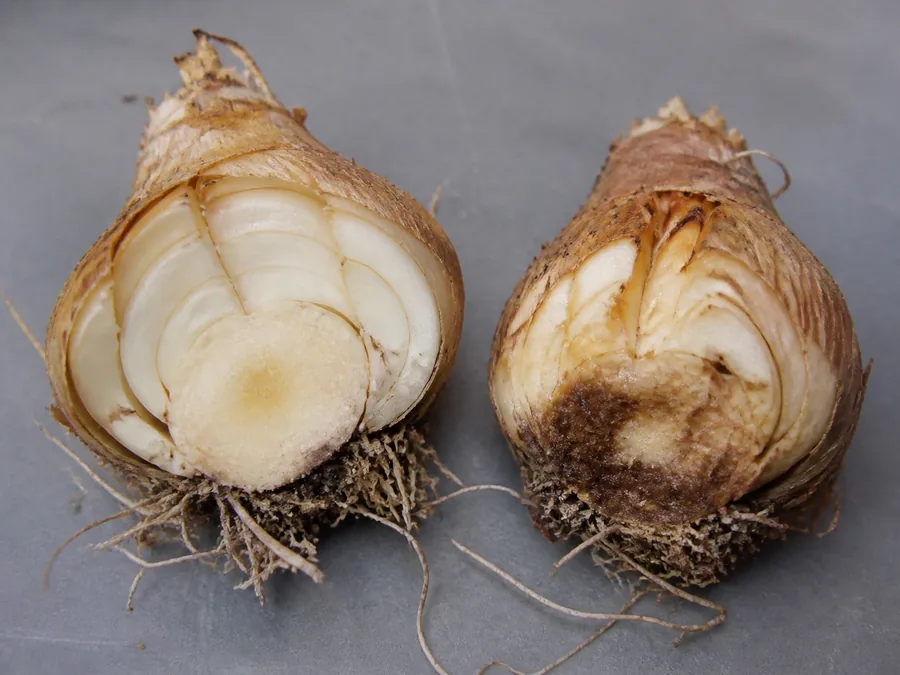
Narcissus basal rot begins around the basal plate and moves into the bulb scales. An infected bulb may produce stunted leaves that yellow early without flowering, and wet soil can worsen bulb decline even when it was not the original infection source.
This diagnosis requires bulb evidence because a wet bed and missing flowers do not prove infection. A firm basal plate supports drainage correction and continued observation, while soft brown tissue advancing upward through the scales means the bulb is no longer a candidate for division or replanting.
Map weak plants before lifting them.
Several failing bulbs in a low saturated sector implicate the site as well as the pathogen, while one soft purchased bulb among sound neighbors raises the planting stock question. Keep suspect soil and scales away from clean bulbs and tools until the pattern is understood.
How to identify it
- Leaves emerge weak or stunted and turn yellow before healthy clumps finish growth.
- The bulb base feels soft instead of firm under gentle pressure.
- Brown decay spreads upward from the basal plate between the bulb scales.
- Pinkish-white fungal growth may appear on a stored bulb as decay advances.
- The planting pocket remains wet long after rain or irrigation.
What to do
- Lift a failing bulb for inspection when premature collapse makes continued recharge impossible.
- Discard soft or decaying bulbs and do not place them in a home compost pile.
- Keep only firm uninjured bulbs with sound basal plates for replanting.
- Correct compacted soil, low pockets, or irrigation that leaves water around the bulbs.
- Use a different planting area when basal rot has been confirmed and local guidance recommends rotation.
07 Low likelihood
Bulb fly, stem nematode, or virus damage
Narcissus bulb fly larvae consume the bulb center and next flower buds, while stem and bulb nematodes or viruses change the foliage as vigor falls. These problems are less common than cultural blindness, but their abnormal shoots should not be divided through the garden.
The symptom combination decides whether specialist diagnosis is worth the delay. Normal broad green leaves make these causes unlikely, whereas a hollow bulb, grass-like shoots, persistent lengthwise streaks, or repeated distortion provides physical evidence that light and fertilizer changes cannot explain.
Select a partly affected bulb with attached roots for diagnosis rather than a completely collapsed specimen.
Photograph repeated foliage patterns across the patch and keep distorted bulbs separate. A single streaked leaf can have mechanical injury, but the same lengthwise pattern on several bulbs raises the risk of spreading a persistent problem during division.
How to identify it
- A bulb produces only a few thin grass-like leaves or fails to make a normal fan.
- The bulb center is hollow or filled with dark debris, sometimes with a large pale larva inside.
- Leaves show yellow or white lengthwise streaks, distortion, or loss of vigor.
- Small pale swellings occur on leaves and the bulb shows patterned browning without a fly larva.
- Weak or distorted patches expand through a planting instead of staying tied to shade or mowing.
What to do
- Do not diagnose a pest or virus from absent flowers alone.
- Bag and discard a hollow bulb or a plant with strongly suspicious spreading symptoms.
- Photograph foliage and cut bulb evidence, then ask a local plant clinic to distinguish nematode, virus, rot, and insect injury.
- Avoid moving offsets from an affected patch into clean beds while diagnosis is unresolved.
- Replace losses with firm bulbs from a reputable source and follow local sanitation guidance for the confirmed problem.
08 Low likelihood and seasonal
Freeze damage or bud blast after a scape formed
Emerging Daffodil leaves tolerate ordinary spring cold better than a developed flower bud. A hard freeze after the scape rises can brown or collapse the bud while the surrounding foliage remains capable of charging the bulb for next year.
A dated weather event and a visible failed bud are both needed. Cold weather before any scape appeared does not explain a clump that has been blind for several seasons, and green leaf tips emerging through light frost are not evidence that an unseen flower was killed.
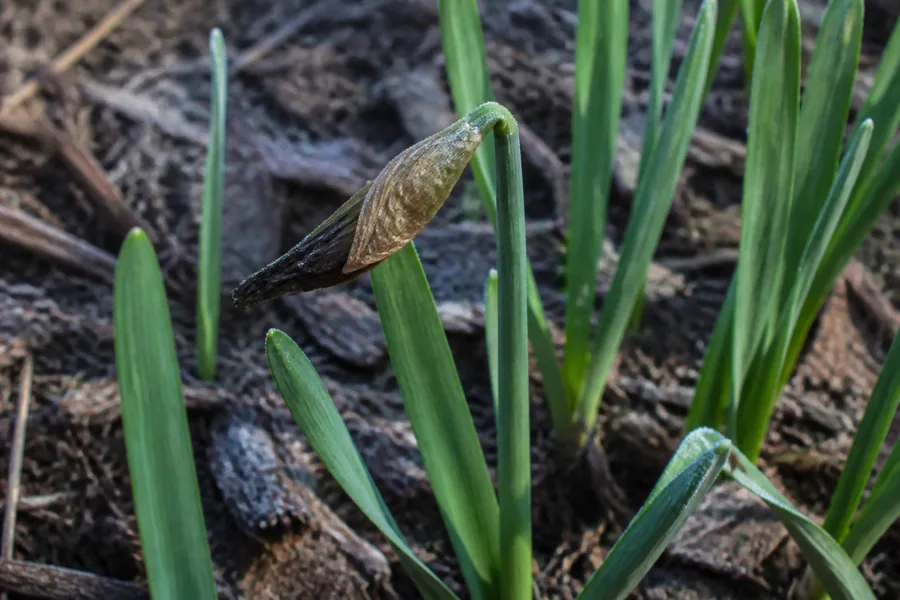
How to identify it
- A flower scape and bud were visible before the cold event.
- The unopened bud turned dark, water-soaked, papery, or limp after temperatures fell sharply.
- Leaves remain mostly green even when their tips show pale or tan cold injury.
- More exposed or early-flowering clumps lose buds while sheltered clumps still bloom.
- The same bulbs flowered normally before this single weather event.
What to do
- Leave healthy green foliage in place even though the flower is lost.
- Remove a dead bud only after damage is clear, without cutting the leaf fan.
- Do not dig, divide, or fertilize a sound clump solely because one freeze destroyed the display.
- Record the affected cultivar and exposure if late freezes repeat at that site.
- Expect the next normal chance to flower in the following growth cycle.
The leaves show whether the bulb can recover
Broad upright green leaves mean the bulb is alive and still able to rebuild, but they do not identify which part of the recharge cycle failed. Use the clump's history to rank causes, since a dense old patch, a newly planted bulb, and a lawn-edge clump with lush foliage need different corrections even when none has flowers.
A healthy bulb should feel firm from the neck through the basal plate and carry no spreading brown tissue. Many small offsets explain crowding, a soft brown base supports rot, and a hollow center with debris supports internal feeding, so the cut or lifted bulb should settle a decision rather than merely confirm that flowers are absent.
Abnormal foliage raises a different concern from ordinary blindness.
Grass-like shoots fit severe internal bulb damage, lengthwise yellow or white streaks can support virus, and pale leaf swellings with patterned bulb browning can support stem and bulb nematode when those signs repeat through a patch.
Freeze loss requires evidence that a bud existed and failed after a specific event. Normal early leaf emergence through snow or light frost does not explain missing flowers, but a formed bud that turns water-soaked and brown after a hard freeze can end this season's display without weakening every bulb.
The safest correction preserves the next recharge cycle while avoiding unnecessary disturbance. Do not divide an unidentified weak or distorted patch as though it were simple crowding, and keep suspicious bulbs separate until a diagnostic service can reconcile foliage symptoms with the bulb interior.
Use history to choose when to wait.
A newly planted firm bulb, a small offset, or a bulb recovering from one shortened foliage season may need another complete cycle. An old clump that has lost scapes for several years despite intact leaves, good late-spring light, and firm mature bulbs needs a closer depth, soil, or diagnostic investigation rather than indefinite patience.
The action window matters.
Preserve foliage through natural yellowing now, record light after trees leaf out, and postpone routine lifting until dormancy. Collapse, odor, or soft basal tissue is the exception because leaving active rot in contact with sound bulbs creates a larger sanitation problem.
How One Season's Leaves Become Next Spring's Flower
The flower missing this spring may trace back to what happened after bloom last year. Green daffodil leaves keep working for weeks, and the bulb uses that period to replace the energy spent on shoots and flowers.
Cutting, tying, or starving those leaves of light shortens the recharge period. The bulb may still hold enough reserves to send up foliage the next spring, yet it can fall short of the reserve needed to initiate and support a flower.
Protect the current leaves until they yellow naturally, then judge the correction when the next cycle reaches spring. Fertilizer added after shoots emerge cannot create a flower bud that the bulb failed to prepare months earlier.
- After bloom, intact green leaves capture light and feed the bulb.
- During early summer, the bulb stores those reserves before foliage dies back.
- Through dormancy, the bulb carries the prepared growing point into the next season.
- Next spring, a well-recharged mature bulb can send up a scape as well as leaves.
Recovery Plan
Mark the evidence and protect green leaves
Photograph leaf quality, late-spring light, shoot density, and any failed buds while they are visible. Keep green foliage intact, maintain moderate moisture through natural yellowing, and lift only a bulb that is already collapsing or clearly decayed because an unnecessary spring lift interrupts the recharge being protected.
Correct the cause while bulbs are dormant
Divide a crowded firm clump, correct persistent depth, or move sound bulbs to better late-spring light after the leaves yellow. Sort mature bulbs from small offsets during the lift, and discard soft, hollow, or suspicious bulbs instead of spreading them through the new planting.
Judge the new cycle by scapes and leaf quality
A mature firm bulb may return to bloom after one full corrected cycle, while small offsets or recently moved bulbs can take longer to reach flowering size. Record whether flower scapes return before changing care again, and send continued abnormal foliage, decay, or expanding weak patches for diagnosis rather than applying another fertilizer.
Prevent repeat Daffodil blindness by leaving foliage until natural dieback, preserving late-spring light, watering during active growth without waterlogging the bed, and keeping lawn fertilizer away. Plant firm bulbs at a depth suited to their size, divide only healthy crowded clumps, and never move streaked, distorted, hollow, or decaying bulbs into a clean bed.
Sources
- Daffodil Blindness, Royal Horticultural Society
- Why Won't My Daffodils Bloom, Iowa State University Extension
- All About Daffodils, Iowa State University Extension
- Narcissus Basal Rot, Royal Horticultural Society
- Narcissus Bulb Fly, Royal Horticultural Society
- Daffodil Viruses, Royal Horticultural Society
- Stem and Bulb Nematode, Royal Horticultural Society