
How to Deadhead Marigolds for More Blooms
Deadhead a marigold by removing the faded flower and its short stalk just above the next healthy leaf, unopened bud, or side shoot. Soft stems usually pinch cleanly between a finger and thumb, while clean scissors give better control on thick or crowded stems.
Make the cut when the petals have lost their color, collapsed, or begun to brown.
Leave tight green buds alone, and keep selected flower heads on the plant if you want them to mature into seed.
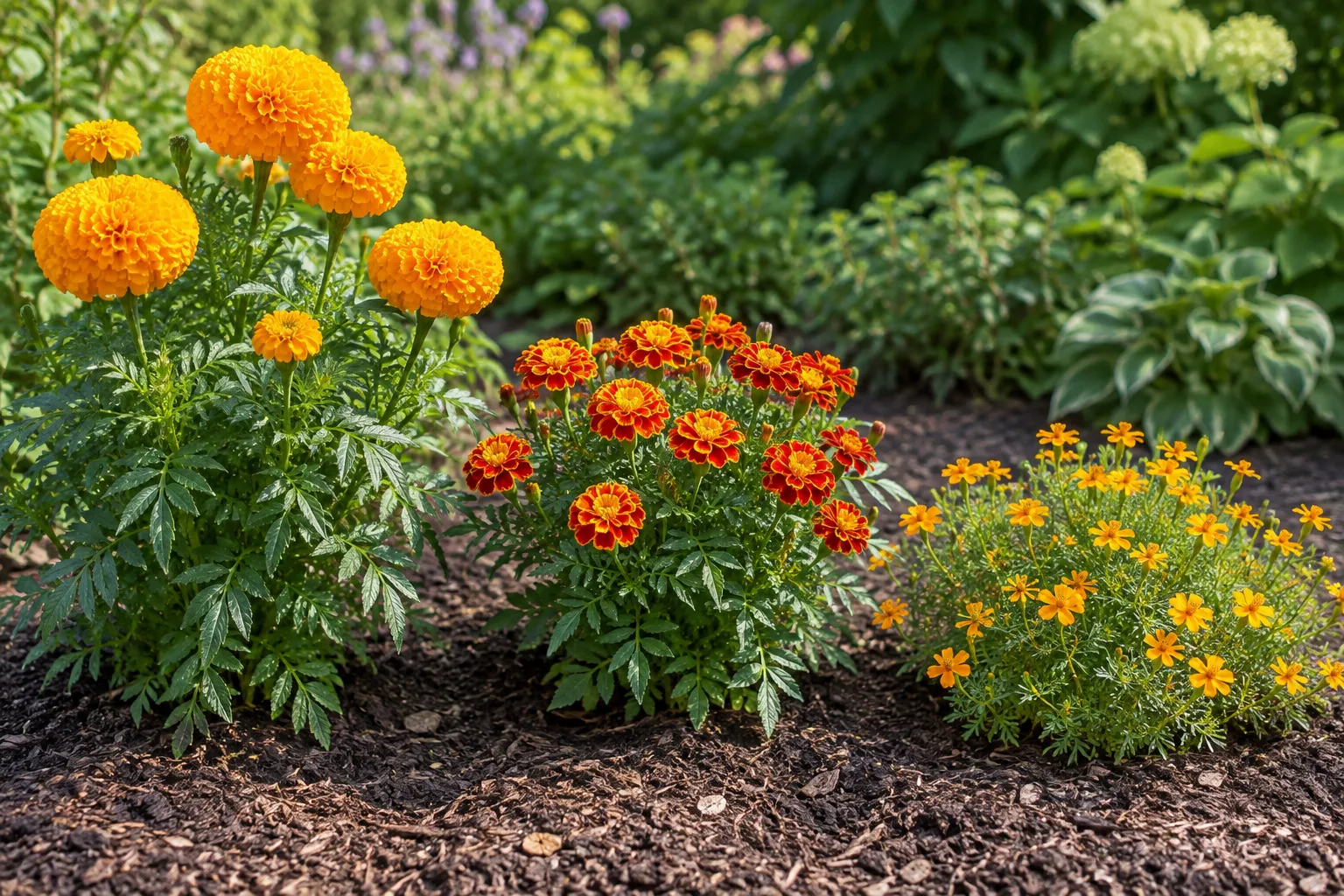
The benefit depends on the marigold. African marigolds respond well to deadheading, French marigolds often keep flowering without it, and signet marigolds commonly shed their small spent flowers on their own.
That distinction matters because deadheading can support more flowers and remove rotting blooms, but it cannot make every cultivar bloom faster or fix low light, wet soil, or excess fertilizer.
At a glance
Do Marigolds Need Deadheading?
Deadheading is useful, but it is not equally important for every marigold.
Iowa State University Extension notes that large-flowered African marigolds benefit from having spent blooms removed, while French marigolds can rebloom without the job and signet types usually drop their smaller flowers quickly.
For any type, removing a finished flower prevents that head from continuing into seed. University of Minnesota Extension also recommends taking off rotting flowers, especially when humid weather leaves the dense petals wet.
- African marigold
- Deadhead for tidier plants and continued rebloom
- French marigold
- Optional for flowering, useful for appearance and seed control
- Signet marigold
- Often self-cleaning, remove only heads that remain or rot
- Seed-saving plant
- Leave selected healthy heads until dry and mature
| Marigold type | What you will notice | Best deadheading decision |
|---|---|---|
| African, Tagetes erecta | Tall stems and large, heavy double flowers | Remove fading heads before they hang wet or start seed |
| French, Tagetes patula | Compact plants with single or double flowers | Deadhead for neatness or to limit seed, not from fear that bloom will stop |
| Signet, Tagetes tenuifolia | Fine foliage and many small single flowers | Let clean spent flowers fall; remove stubborn or damaged heads |
The cultivar can change the workload within each group.
Watch what the plant actually retains instead of treating every orange or yellow flower as the same kind.
Deadheading is also a choice about your goal. A display near a front walk may look better with every brown head removed, while a seed-saving plant needs some mature heads left in place.
Is It a Spent Marigold Flower or a New Bud?
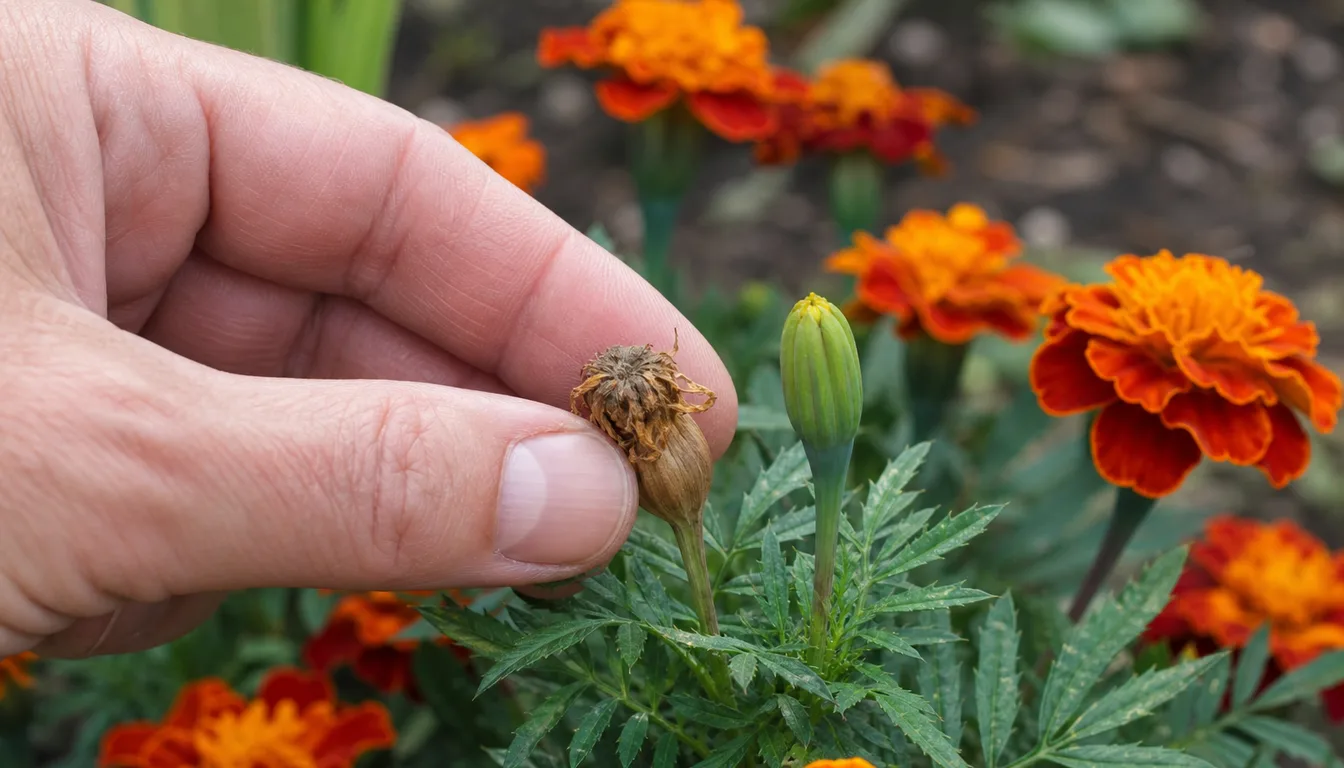
A fresh marigold bud is compact, green, and firm. Its outer bracts fit tightly around the developing petals, and the stalk below it looks fresh rather than yellow or dry.
A spent bloom still shows old petals at first.
Those petals fade, soften, and fold inward, then the head becomes brown and papery as the seed develops inside.
- [ ] Color has faded or browned rather than remaining bright
- [ ] Petals are limp, shriveled, or pulling inward
- [ ] The head feels papery or soft instead of firm and springy
- [ ] No fresh side bud sits directly below the intended cut
- [ ] A seed head being saved is brown, dry, and mature before removal
The hero photograph shows the safest comparison.
The dry head has loose brown material around its base, while the unopened bud is smooth, upright, and enclosed by green bracts.
A pollinated flower can look untidy before its seeds are mature. If you want seed, appearance alone is not the signal to harvest because Iowa State advises letting dry pods or husks mature and dry on the plant.
A safe uncertainty rule is wait for visible petal change. Waiting costs little, while pinching a healthy bud removes the next flower.
Where Should You Cut a Spent Marigold Flower?
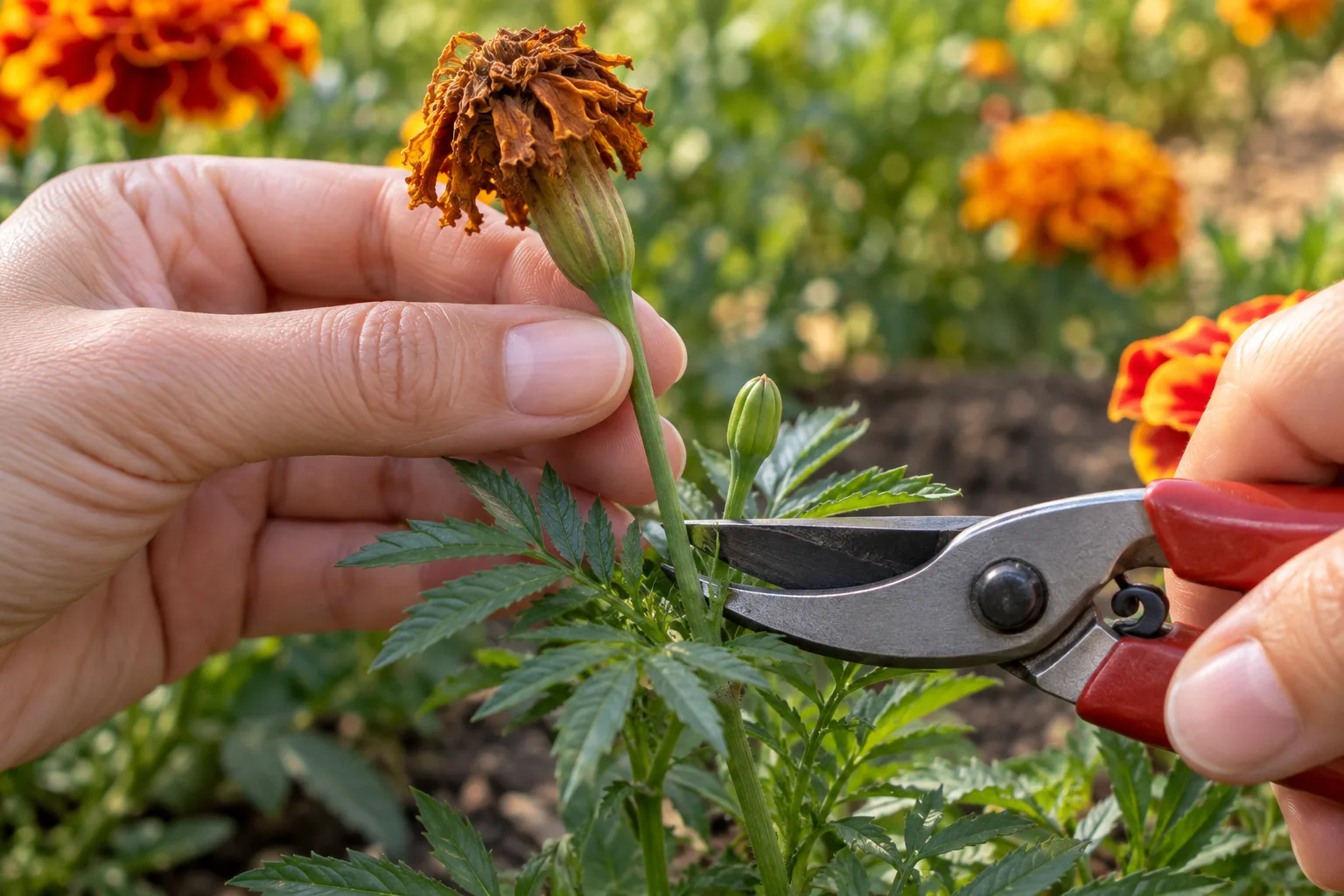
Follow the spent flower stalk downward until you reach the next healthy leaf, unopened flower bud, or side shoot.
Pinch or cut just above that living junction so the finished head and its bare stalk come away together.
Iowa State Extension gives the same general deadheading point for herbaceous ornamentals. Removing only the brown petals leaves the developing seed base behind, while cutting through the middle of a long bare stalk leaves an untidy stub.
- Confirm the flower is finishedLook for faded or collapsed petals and check that it is not a tight green bud.
- Find living growth belowTrace the flower stalk to the next healthy leaf, side shoot, or unopened bud.
- Protect nearby budsHold other stems aside and support the target stalk with your free hand.
- Pinch or cutRemove the stalk just above the healthy junction without scraping the new growth.
- Check the plantMake sure the cut is clean and that no loose diseased petals remain in the foliage.
Fingers work well on thin, flexible stems.
Use clean scissors or bypass snips when a stem is tough, when several buds crowd the junction, or when pulling could tear the branch.
You do not need to measure a fixed distance below the flower because the next healthy leaf or growing bud shows the correct point.
When and How Often Should You Deadhead Marigolds?
Use flower condition instead of a calendar.
Check the plant when you water, harvest nearby crops, or walk the bed, then remove heads that have clearly faded and leave open flowers and firm buds alone.
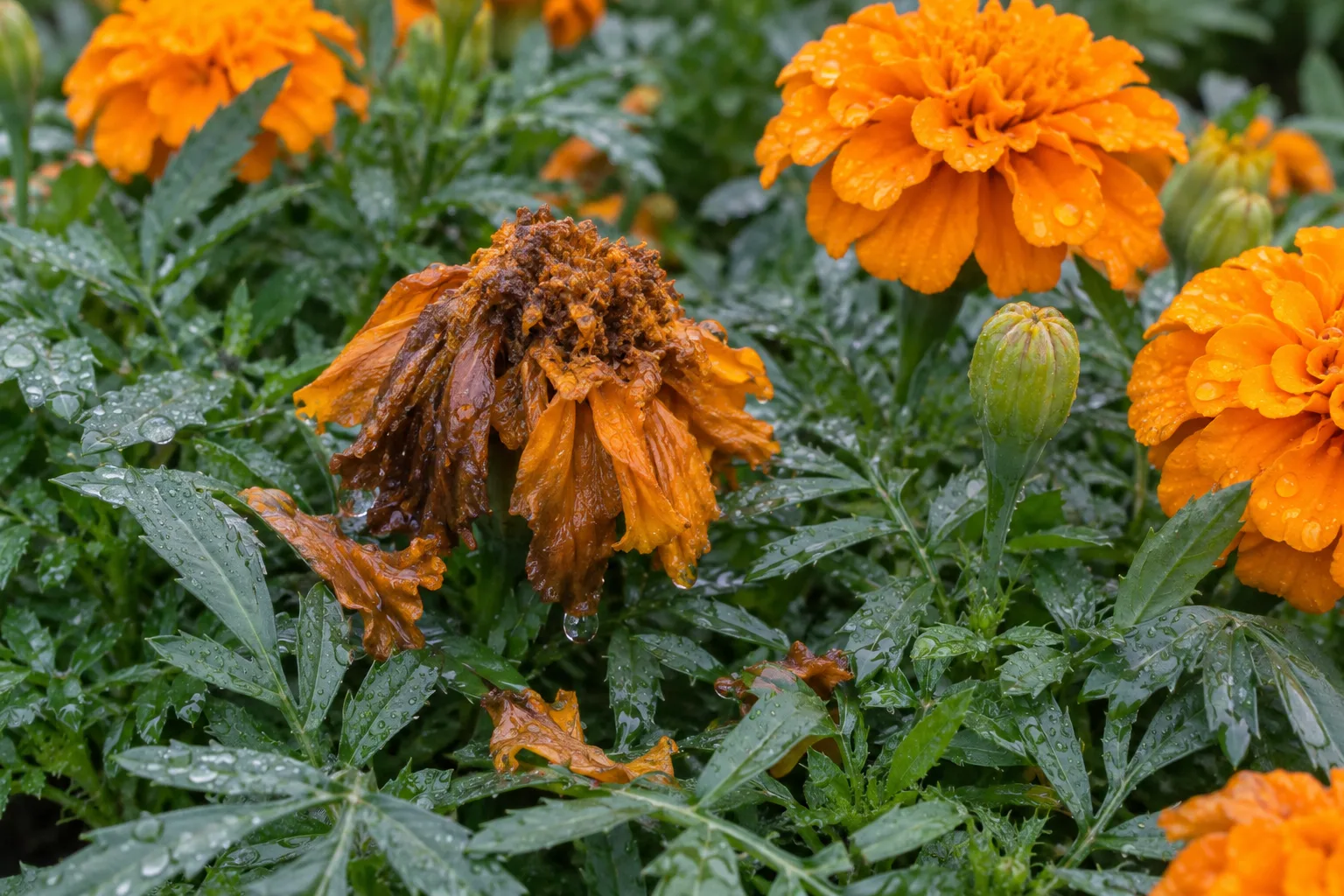
Warm weather can move flowers through their cycle quickly, but that does not create a universal two-day or weekly rule. A compact French marigold with self-shedding flowers may need little attention, while large African blooms can remain visible and hold water after rain.
A few dry faded heads
Pinch them during the next routine garden check.
Many clean finished heads
Work around the plant once, then stop when only flowers and buds remain.
Wet collapsing flowers
Remove them promptly and clear fallen petals from the crown.
Flowers still bright
Leave them for pollinators and check again after they fade.
Heads reserved for seed
Mark or remember those stems and let them dry on the plant.
A dry faded head can wait until the next pass. A wet head collapsing into the foliage deserves earlier removal because it can hold moisture against leaves and obscure the source of discoloration.
Continue while the annual is healthy and you want flowers, or begin leaving selected heads when seed production becomes the priority.
Deadheading, Pinching, or Cutting Back: Which Job Does the Plant Need?
Deadheading removes a flower that has finished.
Pinching removes a young growing tip to encourage a bushier plant, while cutting back shortens several leggy or damaged stems and changes the plant's overall shape.
These jobs can happen during the same garden visit, but they should not be treated as one cut. University of Minnesota Extension recommends pinching the top while a marigold is still small for more branches, which is different from removing spent flowers after blooming begins.
| Job | Plant signal | What comes off | What stays |
|---|---|---|---|
| Deadheading | One flower has faded | Finished head and bare stalk | Healthy leaves, buds, and side shoots |
| Pinching | Young plant needs more branching | Soft growing tip | Lower leaves and several nodes |
| Cutting back | Plant is leggy, broken, or badly uneven | Part of selected stems | Enough leafy growth to keep the plant functioning |
| Sanitation | Flower is wet, moldy, or rotting | Affected head and contaminated debris | Clean neighboring tissue |
Do not cut the whole plant back simply because several flowers faded at once.
A careful deadheading pass preserves open blooms and buds that are already carrying the next display.
If an entire branch is broken or diseased, trace that branch to sound tissue and treat it as a pruning or sanitation decision. Clean the blades before moving to another plant when disease is suspected.
The right scope is spent head plus bare stalk, which keeps the distinction between removing a finished flower and reshaping the plant clear.
Can You Save Marigold Seed and Still Deadhead?
You can keep most of the plant tidy and reserve selected flowers for seed.
Choose healthy, well-performing plants, then leave a few clearly marked heads in place while you deadhead the rest.
The number of heads depends on how much seed you need and how reliably those heads mature, so a fixed three-head or five-head rule adds no value.
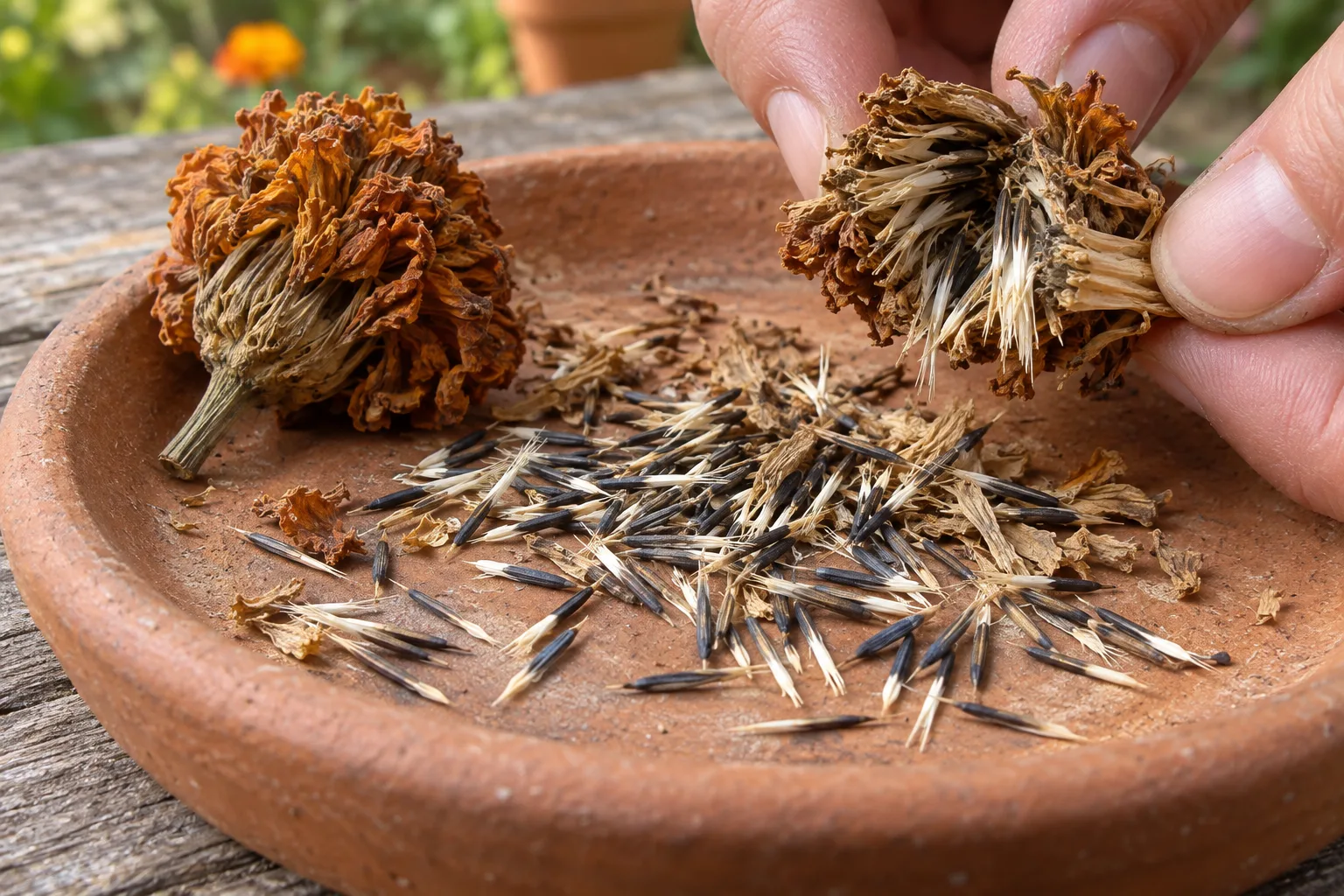
- Choose the parent plantFavor healthy plants with the flower color, form, and growth habit you want to keep.
- Reserve selected headsLeave some faded flowers attached rather than removing every head.
- Wait for maturityLet the pods become brown and dry on the plant when weather permits.
- Collect carefullyCut dry heads into a container so loose seeds are not lost.
- Separate and finish dryingOpen the pods, remove obvious chaff, and give clean seed good airflow away from direct sun.
- Store cool and dryLabel the variety and year, then protect fully dry seed from moisture and pests.
Iowa State lists marigolds among approachable flowers for seed saving and advises collecting dry-fruited seed after full maturity.
The same source warns that seed from F1 hybrids may produce plants unlike the parent, so check the packet or plant label before expecting an exact repeat.
A brown pod is the beginning of the storage check, not proof that the seed inside is ready for a sealed container.
Store only thoroughly dry seed because trapped moisture encourages mold.
Why Are There Few New Flowers After Deadheading?
Removing old flowers can support rebloom, but it does not override the conditions controlling new growth.
Start with the whole plant instead of cutting more stems when fresh buds remain scarce.
Marigolds flower best in full sun. Wisconsin Horticulture gives 6 to 8 hours of direct sun as the useful range, while University of Minnesota warns that excess fertilizer can favor leaves at the expense of flowers.
| What you see | Likely limitation | What to check next |
|---|---|---|
| Long soft stems with wide gaps between leaves | Too little direct light or excess nitrogen | Count direct sun hours and review recent feeding |
| Yellow lower leaves in soil that stays wet | Poor drainage or excessive watering | Feel below the surface and check whether the container drains freely |
| Wilted plant with dry soil and small stalled buds | Root zone has become too dry | Water the soil thoroughly, then reassess after the plant recovers |
| Speckled leaves or fine webbing | Spider mites in hot, dry conditions | Inspect leaf undersides before removing more growth |
| Sticky distorted tips with clustered insects | Aphids feeding on new growth | Check buds and tender stems, then choose a suitable pest response |
| Healthy leaves but fading annual late in the season | Natural decline or cold stress | Compare night temperatures and plant age with earlier growth |
Heavy flowering will not resume from a plant that lacks enough light or functional roots.
Correct the limiting condition and protect the healthy buds that remain.
Because marigolds are low feeders, automatic fertilizer after deadheading can make a foliage-heavy plant even less likely to bloom.
Pests are usually a secondary check rather than the first assumption. Iowa State reports that aphids, spider mites, thrips, and other insects can appear, but they rarely justify broad insecticide use in the home landscape.
What Care Does a Marigold Need After Deadheading?
A normal deadheading cut needs no wound dressing, fertilizer dose, or automatic watering.
The plant already has leaves and buds below the cut, so the next action should follow the soil and foliage rather than the scissors.
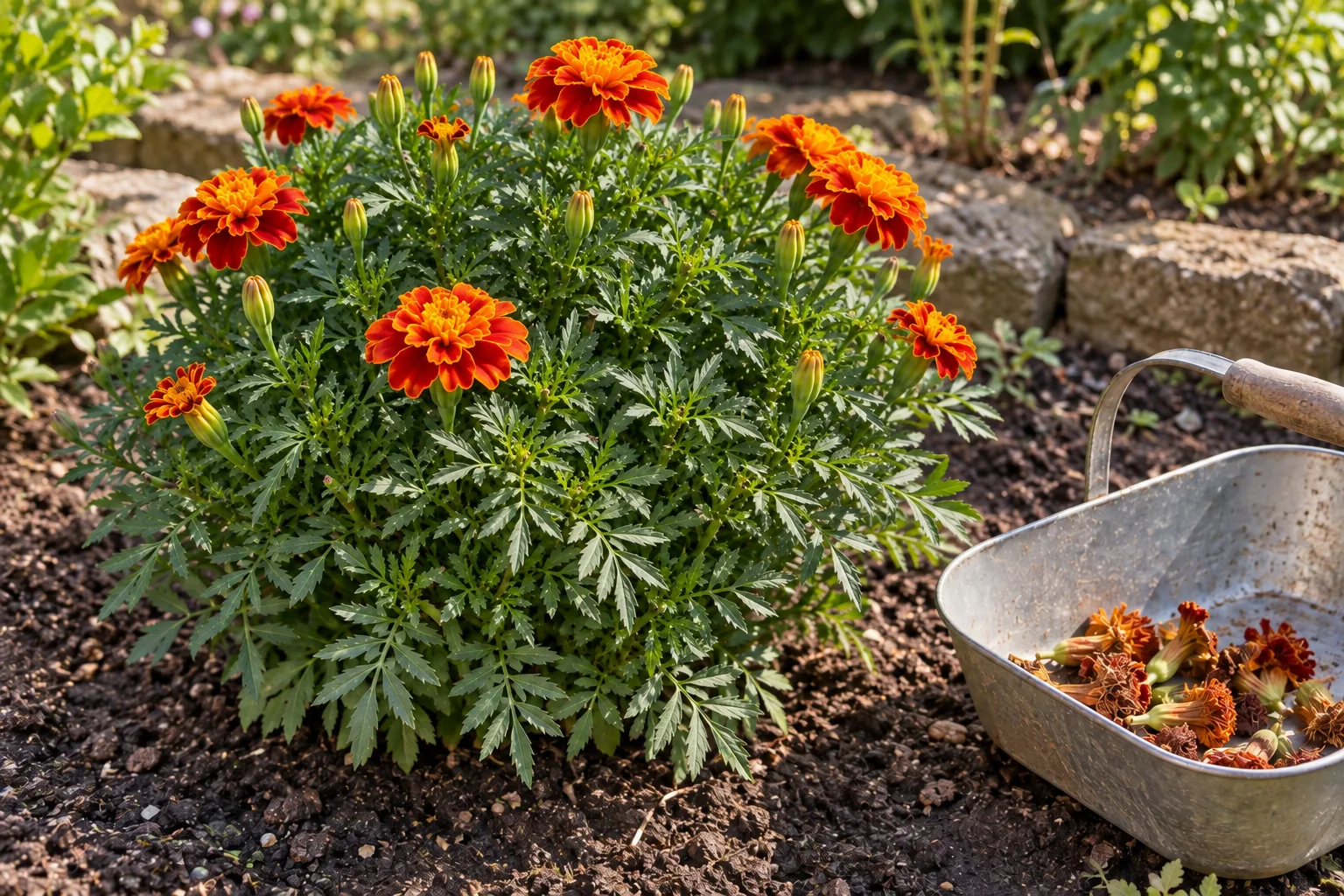
- [ ] Remove loose petals caught in dense foliage
- [ ] Keep healthy open flowers and unopened buds intact
- [ ] Water only when the root zone actually needs moisture
- [ ] Confirm containers drain instead of leaving roots in standing water
- [ ] Skip routine fertilizer unless a real nutrient need has been identified
- [ ] Clean cutting blades after diseased or rotting material
- [ ] Dispose of moldy heads separately from healthy spent flowers
Water at the soil line when irrigation is needed. Keeping dense flowers and foliage dry reduces the time that damaged tissue stays wet, while deep watering based on the root zone is more useful than sprinkling after every deadheading pass.
Containers need closer moisture checks because a small soil volume can dry faster, yet that does not mean every pot needs daily water.
Check below the surface and water thoroughly when the root zone is becoming dry.
Healthy dry heads can enter an actively managed compost system. Keep material showing mold or unexplained rot out of a cool pile, then wash your hands and clean the blades used on it.
The final check is simple.
The plant should still have a full working canopy, all sound buds should remain, and every cut should end near healthy living growth rather than halfway along a bare stalk.
Pro Tips
- Trace each faded flower stalk to the next healthy leaf, bud, or side shoot before cutting.
- Pinch flexible stems, but use clean scissors when a crowded junction makes the next bud hard to protect.
- Remove wet collapsing flowers promptly and clear petals trapped in the foliage.
- Let selected seed heads become brown and dry on the plant instead of harvesting them as soon as the petals fade.
- Skip automatic fertilizer after deadheading because excess nitrogen can produce more leaves and fewer flowers.
- Treat deadheading, young-plant pinching, and cutting back as three different jobs.
- Leave an uncertain green head for another look rather than sacrificing an unopened flower.
Frequently Asked Questions
Should you cut or pinch off dead marigold flowers?
Pinch a soft flower stalk when it releases with light pressure. Use clean scissors or bypass snips when the stem is thick, crowded by buds, or likely to tear.
Whichever method you choose, remove the faded head and stalk just above the next healthy leaf, bud, or side shoot.
Will marigolds bloom if you do not deadhead them?
Many will. French marigolds usually rebloom without deadheading, and signet marigolds often shed their small spent flowers.
Large African marigolds benefit more from removing old heads, and any type may look cleaner when faded or rotting flowers are taken off.
Can you deadhead marigolds too early?
Yes, if you remove a flower that is still useful to pollinators or mistake a firm green bud for a spent head. Wait until petals fade, collapse, or brown.
Keep any head selected for seed until the pod matures and dries on the plant.
How long does a marigold take to bloom again after deadheading?
There is no reliable universal interval. Cultivar, sunlight, temperature, root health, water, and the number of buds already present all affect the next flowers.
Watch for developing buds instead of promising a fixed number of days.
Should you deadhead marigolds before or after watering?
Deadhead when the plant is dry enough to inspect and handle cleanly. Watering is a separate root-zone decision, so check the soil rather than watering automatically after the cut.
After rain, remove wet collapsing heads promptly and clean petals from dense foliage.
When should you stop deadheading marigolds for seed?
Stop removing selected heads early enough for those pods to mature and dry before persistent cold or wet weather. The date varies by climate and season.
You can continue deadheading the rest of the plant while the reserved seed heads mature.
Sources & References
- Iowa State University Extension, Growing Marigolds in the Home Garden
- University of Minnesota Extension, Marigolds
- Iowa State University Extension, Deadheading Herbaceous Ornamentals and Roses
- Iowa State University Extension, How to Harvest and Store Seeds
- Royal Horticultural Society, Deadheading Plants: How and Why
- Ask Extension, Why Aren't My Marigolds Blooming?
- Wisconsin Horticulture Extension, Marigolds
Related Guides
Cutting Back a Leggy Houseplant Does Not Fix It
Most people cut a houseplant back because it has gone long and bare.
11 min read
Deadheading Daffodils Matters Less Than the Six Weeks After
Almost every page about spent daffodils tells you to remove the seed pod so the bulb is not…
11 min read
French Lavender Pruning Depends on the Plant and Season
French lavender needs light trimming within its leafy growth, rather than a hard cut into bare…
6 min read
Fruit Tree Pruning Starts With Where the Crop Forms
A fruit tree that gives small, crowded, scabby fruit is usually not underfed.
11 min read
How Deep Can You Cut a Spent Lavender Spike?
Deadheading lavender is the lightest cut you will ever make on the plant, and the one place people…
7 min read
How Do You Prune Spanish Lavender for a Second Flush?
Spanish lavender is the one that flowers first and the one that keeps going.
7 min read