
Plants That Attract Beneficial Insects to Your Garden
Chemical sprays knock out pests and helpers at the same time, so your garden ends up needing more and more rescue. Planting for beneficial insects flips that script.
By mixing in the right herbs and flowers, you feed ladybugs, lacewings, parasitic wasps, and hoverflies so they patrol your vegetable beds all season. We will walk through which plants to use, where to tuck them around food crops, and how to keep blooming going from spring through frost without turning the yard into a wild mess.
You will see how simple stands of dill, yarrow, and alyssum can replace a lot of spraying.
At a glance
Know Which Insects You Are Inviting
The most helpful garden insects fall into two jobs, predators and tiny wasps that parasitize pests. Each group prefers certain flowers and plant structures.
Lady beetles, lacewings, hoverflies, and pirate bugs gobble aphids, mites, thrips, and small caterpillars. Parasitic wasps lay eggs inside or on pest insects, which stops damage before you even notice it.
Most of these helpers drink nectar and pollen as adults. They hunt pests but still need flowers with easy access, especially small, shallow blooms.
If you do not feed beneficial adults with flowers, they will not stick around to raise the next generation.
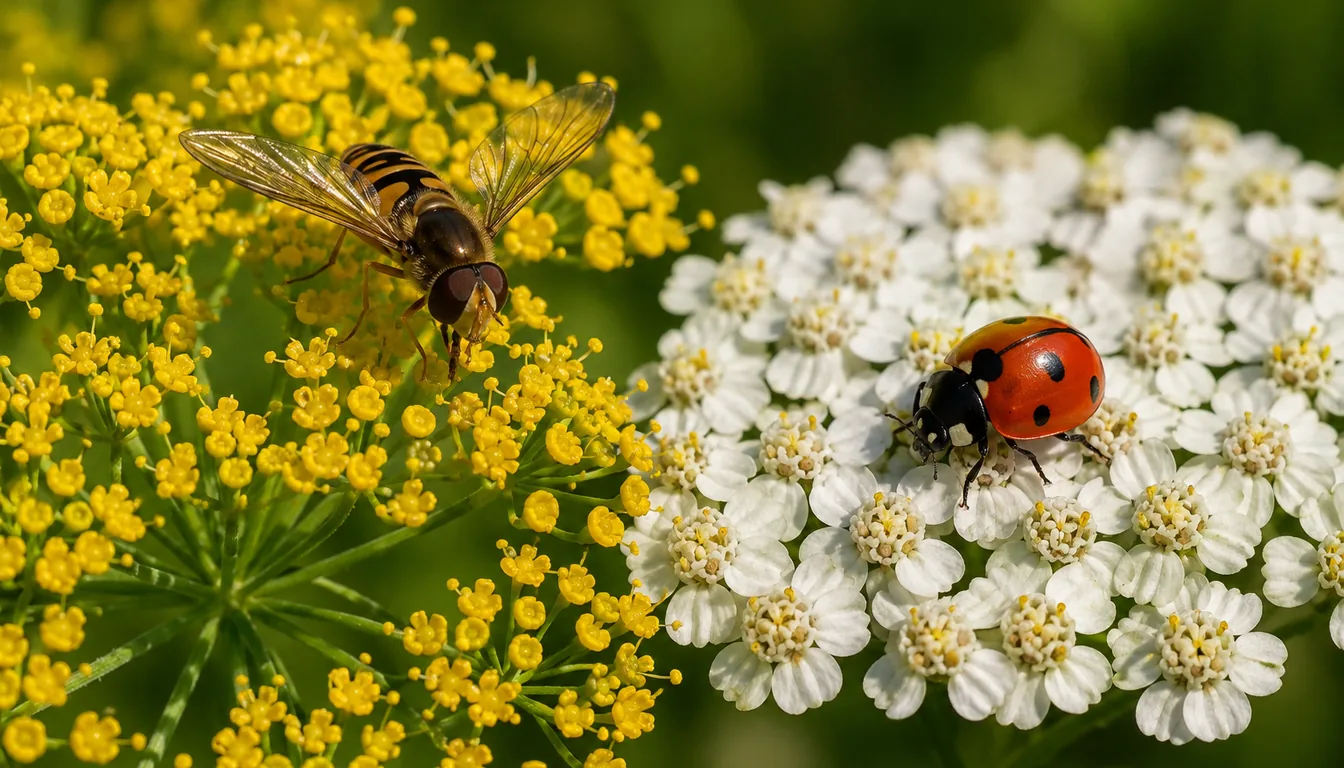
Umbel flowers like dill, fennel, and cilantro are favorites for many beneficial wasps. Flat clusters of blooms give them a landing pad and shallow nectar.
Daisy-style flowers such as coneflower, black eyed susan clumps, and yarrow draw in lady beetles and hoverflies while also pleasing human eyes.
Skip broad-spectrum insecticides anywhere you are trying to build beneficial insect populations.
Use the categories below to match plants with the helpers you want more of.
- Predators: Lady beetles, lacewings, hoverflies, minute pirate bugs
- Parasitic wasps: Trichogramma, braconid, ichneumon types
- Key pests they control: Aphids, caterpillars, whiteflies, mealybugs, mites
- Flower types they favor: Small, open clusters and flat blossoms
Core Plants That Feed Beneficial Insects
A few workhorse plants will support most of the helpful insects you want. Mix annuals and perennials so something is blooming from early spring into fall.
Feathery herbs such as dill, fennel, and parsley are magnets for parasitic wasps and hoverflies. Let at least a few stalks bolt and bloom near your tomato rows instead of pulling them when they flower.
Soft mounds of sweet alyssum bring in hoverflies that hunt aphids on nearby greens. The low habit also works well at bed edges and between stepping stones.
Perennials including yarrow patches, purple coneflower clumps, and aster feed lady beetles and wasps year after year with little work once established.
Fragrant herbs like lavender hedges, rosemary sprigs, and thyme groundcovers serve double duty. They flavor dinner and support bees, hoverflies, and parasitoids.
Allow at least a few herb plants to bloom instead of constantly pinching for harvest.
Keep the first planting simple by mixing one herb, one low annual, and one perennial flower.
- Umbel herbs: Dill, fennel, cilantro, parsley
- Low annuals: Sweet alyssum, calendula, dwarf marigolds
- Perennial flowers: Yarrow, coneflower, aster drifts
- Woody herbs: Lavender, rosemary, thyme
Designing a Beneficial Insect Strip
A narrow flower strip can support a surprising number of beneficials. You do not need a full wildflower meadow to see fewer aphids and caterpillars.
Aim for a strip 2 to 4 feet wide along the sunny side of a bed, fence, or path. That gives enough room for clumps of plants at different heights.
Group plants in patches rather than single stems. A block of three to five coneflower plants outperforms one lonely stem for attracting hoverflies and lady beetles.
Use tall anchors like russian sage stands or holly shrubs at the back, medium perennials in the middle, and low annuals such as alyssum at the front.
In small yards, tuck miniature strips at the ends of raised beds, beside new vegetable beds, or along the driveway where overspray from the street is low.
Leave bare soil or mulch gaps between clumps so ground-dwelling predators can move and nest.
The strip works best when it has enough width for insects to move through it, not just a single decorative row.
- Width target: 2–4 feet
- Patch size: Groups of 3–7 of the same plant
- Height layers: Tall anchors, mid perennials, low edging plants
- Placement: Bed edges, fence lines, along paths or driveways
Companion Planting Around Veggie Beds
Beds full of only one crop are pest buffets. Companion planting breaks up those blocks and brings food for beneficial insects right where pests show up.
Scatter bug-friendly plants at the corners and ends of beds. A tuft of dill near cucumber vines or a clump of alyssum by pepper plants shortens the distance helpers must travel.
Herbs growing in the same bed as vegetables do more than season sauce. basil borders around tomato stakes attract hoverflies that hunt aphids and whiteflies.
Calming plants like marigold companions are often praised for repelling pests. Their main value for beneficials is nectar for hoverflies and parasitoids, especially when you let them bloom freely.
Think in triangles instead of straight rows, with a beneficial plant every 3 to 4 feet. That pattern makes sure each crop plant has a nearby nectar source.
Do not crowd slow growers like broccoli seedlings; give at least 12 inches between them and flower companions.
Use the placement ideas below as starting points, then leave enough airflow around the crop itself.
- Bed corners: Dill, cilantro, alyssum
- Row edges: Basil, parsley, chives
- Between tall crops: Calendula, marigold, nasturtium
- Spacing goal: Beneficial plant within 3–4 feet of every crop
Companion flowers work best when planted right in the vegetable beds, not off in a separate border.
Seasonal Timing So Beneficials Never Go Hungry
Gaps in bloom time are the fastest way to starve helpful insects out of your yard. You want overlapping flowers from early spring through frost so there is always nectar and pollen on the menu.
In cooler areas like zone 5, aim for cold hardy perennials that wake up when spring bulbs start flowering. Warmer zones can lean harder on long blooming annuals and herbs.
Think in layers, not single plants. A mix of self seeding annuals like volunteer pot marigolds, short lived perennials, and longer lived shrubs keeps the buffet stocked without constant replanting.
If you can walk your yard in June, August, and October and still spot blooms, you are feeding beneficials well.
- Early spring: Flowering bulbs, fruit tree blossoms, and tough perennials like yarrow clumps
- Early summer: Herbs such as blooming chives and flowering thyme
- High summer: Heat lovers like purple coneflower and low shrubs
- Late season: Asters, late blooming sedum, and fall asters
Water, Mulch, And Shelter After Planting
Once the flowers are in, you still have to keep the habitat comfortable. Beneficial insects crash fast if the plants dry out or the soil turns into bare, baked dirt.
Deep, infrequent watering builds tougher plants and keeps nectar flowing through heat waves. Follow the same soak then dry a bit rhythm used for deep watering in garden beds.
Mulch matters just as much. A 1 to 3 inch layer of shredded leaves or wood chips cools the soil, cuts watering, and gives ground beetles and predatory wasps places to hide during the day.
Avoid glossy dyed mulches right around beneficial plantings, since they can overheat roots and shed water instead of absorbing it.
Small shelters hold the whole system together. Simple log piles, a few fist sized rocks, and an inexpensive insect hotel near your woody herbs give lady beetles and lacewings dry places to ride out storms.
- Watering pattern: Deep soak weekly in normal weather, every 3 to 4 days in extreme heat
- Mulch type: Shredded leaves, arborist chips, or straw, not rubber or stone
- Shelters: A mix of hollow stems, bark pieces, and drilled wood blocks
Organic Pest Control That Will Not Wipe Them Out
One heavy spray of the wrong product can undo months of work bringing in predators and pollinators. Even organic options can hit lady beetles and parasitic wasps as hard as aphids.
Spot treatment beats blanket coverage. Start with physical methods like blasting aphids off rose buds with water, hand picking caterpillars on brassica leaves, or pruning out badly infested stems.
If you do reach for sprays, keep them hyper targeted. Insecticidal soap or horticultural oil applied directly to pests in the evening reduces harm to daytime pollinators visiting your salvia spikes.
Skip broad spectrum "kill everything" insecticides anywhere near your beneficial insect plantings, even if the label says organic.
Biological controls work well with insect friendly beds. Bacillus thuringiensis (Bt) only affects certain caterpillars, so you can protect tomato foliage while still feeding adult butterflies on your flowers.
- Start with: Strong water sprays, hand picking, and pruning first
- If spraying: Treat only the affected plant section in the cool evening
- Read labels: Choose products rated safe for bees when used correctly
Common Mistakes That Drive Beneficials Away
Over cleaned gardens feel good to us but harsh to insects. If every stem is cut to the ground and every leaf is raked, predators and pollinators lose winter shelter and hiding spots.
Cutting down all hollow flower stems in fall is a classic slip up. Solitary bees and other helpers spend winter tucked inside the pith of plants like sturdy coneflowers and tall phlox.
Another big mistake is relying on flowers that look great but do not feed anything. Many heavily doubled varieties of roses and peonies barely offer nectar or accessible pollen.
A simple rule of thumb, if you cannot see the flower's center, most insects will struggle to use it.
- Leave stems: Keep 12 to 18 inches of sturdy stems from plants like Russian sage standing over winter
- Pick simple blooms: Choose single or semi double asters and open daisies
- Accept some "mess": A few leaf piles and weedy corners support ground beetles and spiders
Scaling Up With Meadows, Hedges, And Edges
Once basic strips and pockets are working, you can turn whole corners of the yard into insect factories. Edges along fences, back property lines, and around sheds are perfect for taller plantings.
A loose hedge of flowering shrubs gives height, cover, and nectar in one move. Mix insect friendly options like butterfly bush, small spireas, and old fashioned lilacs along the sunny side of a fence.
For open areas, low input mini meadows beat unused lawn. Swap a slice of grass for clumps of catmint, black eyed Susans, and late asters to keep the area buzzing through summer and fall.
You can even use orchard style plantings. Under plant fruiting apples or stone fruits with low herbs and flowers instead of bare mulch so natural enemies patrol under the canopy.
- Hedge spacing: Stagger shrubs 3 to 6 feet apart based on mature width
- Meadow size: Even a 4 by 8 foot patch makes a difference
- Edge focus: Prioritize sunny borders that have been hard to mow or water
Pro Tips
- Let a few herb plants bolt and bloom instead of pulling every flower bud.
- Skip broad-spectrum sprays anywhere you are relying on beneficial insects for control.
- Plant in clumps of three or more so insects can easily find their favorite flowers.
- Stagger bloom times by mixing early, mid, and late-season species in each bed.
- Use gentle overhead watering or drip, not pressure washing that blasts insects off foliage.
- Leave some leaf litter and stems standing over winter for overwintering beneficials.
- Add a shallow water dish with stones so small insects can drink without drowning.
Frequently Asked Questions
Do I need to stop all pesticides if I plant for beneficial insects?
You do not have to give up every treatment, but you should avoid broad spectrum sprays in or near insect friendly beds. Focus on spot treatments, physical removal, and targeted products like Bt that spare predators and pollinators.
How long does it take for beneficial insects to show up?
You can see lady beetles and hoverflies within a few weeks once flowers start blooming, especially on plants like dill or yarrow. More specialized helpers, such as parasitic wasps, build up over one to three seasons as habitat improves.
Will beneficial insects control every pest in my garden?
They reduce outbreaks and make problems slower and smaller, but they will not erase every aphid or caterpillar. Expect some damage and combine habitat plants with smart practices like crop rotation and careful monitoring of vegetable beds.
Can I attract beneficial insects in a very small yard?
Yes.
A few pots of flowering herbs, a shallow water dish with stones, and a small insect hotel on a balcony can draw in hoverflies and lady beetles.
Dense plantings in containers work well when ground space is limited.
Are there plants I should avoid near beneficial insect beds?
Skip highly invasive aggressive spreaders that crowd out diverse flowers, and be careful with plants that need frequent spraying for disease. For example, disease prone roses often need more treatment than simple perennials like coneflower or catmint.
Sources & References
- University of Minnesota Extension, Flowering Plants for Beneficial Insects
- University of California IPM, Conserving Natural Enemies with Selective Insecticides
- Michigan State University Extension, Attracting Beneficial Insects with Native Plants
- Penn State Extension, Conserving Beneficial Insects in the Garden
Related Guides
Do Marigolds Keep Squirrels Away From Your Garden?
Squirrels can strip a bed of seedlings or freshly planted bulbs in a single morning.
11 min read
Do Squash Bugs Bite People?
No. A squash bug cannot bite you. Its mouthparts are a slender stylet built to pierce plant tissue…
9 min read
Does Dawn Dish Soap Kill Grubs? Why It Fails and What Works Instead
No. Dawn and other dish detergents do not bring white grubs to the surface, and they do not kill…
9 min read
How Do You Get Rid of Spider Mites on Houseplants?
Spider mites on houseplants often can be reduced by repeatedly washing the leaf undersides.
11 min read
How Much Neem Oil Per Gallon? Read and Scale the Label Rate
There is no universal amount of neem oil per gallon. The rate belongs to the exact product and its…
11 min read
How to Control Fungus Gnats in Houseplant Soil
Fungus gnat control works best when it addresses the larvae in potting mix as well as the adults…
15 min read