
What's a Forsythia? How to Prune Without Losing Spring Flowers
Forsythia × intermedia Oleaceae
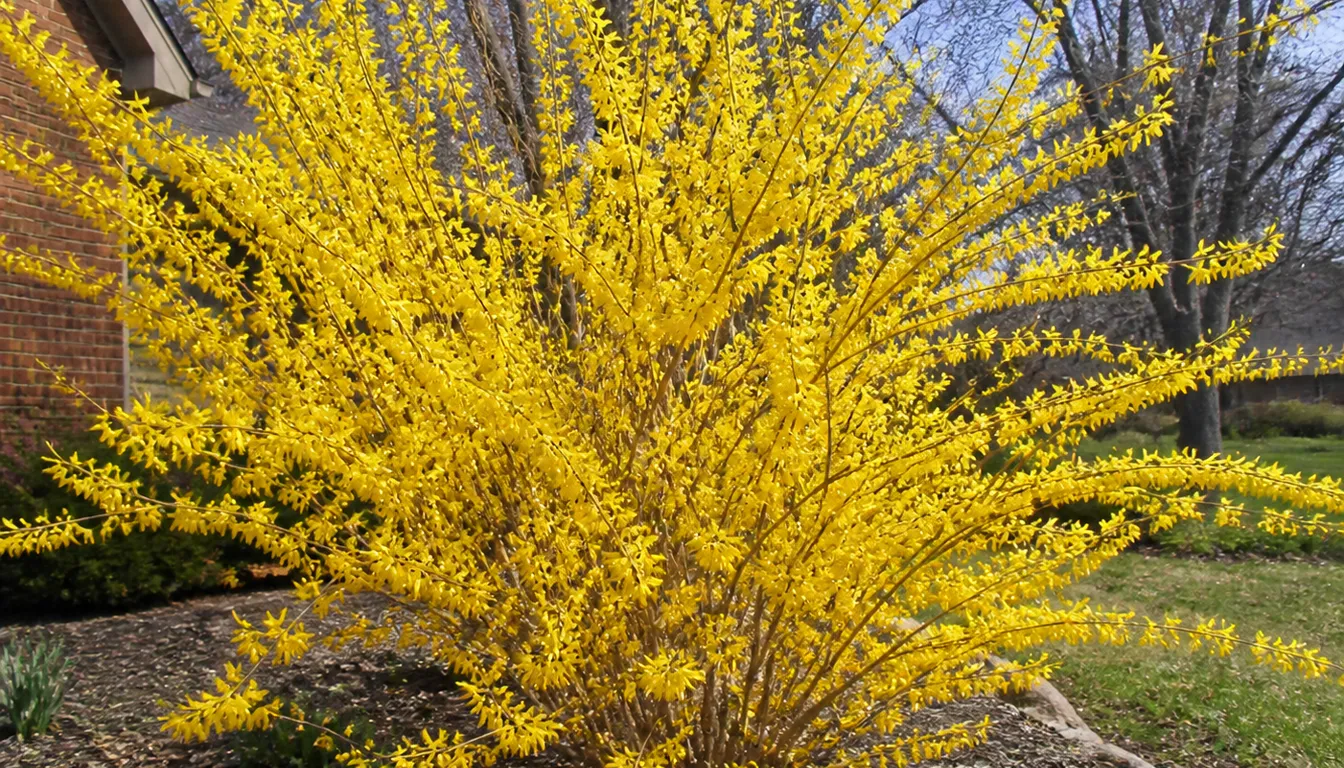
Forsythia is worth growing for one reason first, bright yellow flowers before the rest of the yard wakes up. Keep it sunny, give it room to arch, and prune right after bloom, or the shrub becomes a green tangle with fewer flowers each spring.
Care snapshot
What Makes Forsythia Bloom Before Its Leaves Open?
The Forsythia question is simple. Do you want the first loud yellow bloom of spring enough to give the shrub room later?
The flowers arrive on bare stems, then the plant spends the rest of the season as a fast green thicket.
Those flower buds do not depend on active leaf photosynthesis to open. The plant can bloom while still fully dormant above ground, which is why the yellow shows before any green appears.
Each flower has four narrow, slightly twisted yellow petals joined at the base into a small bell shape. A well-lit stem can carry flowers along nearly its entire length rather than only at the tips.
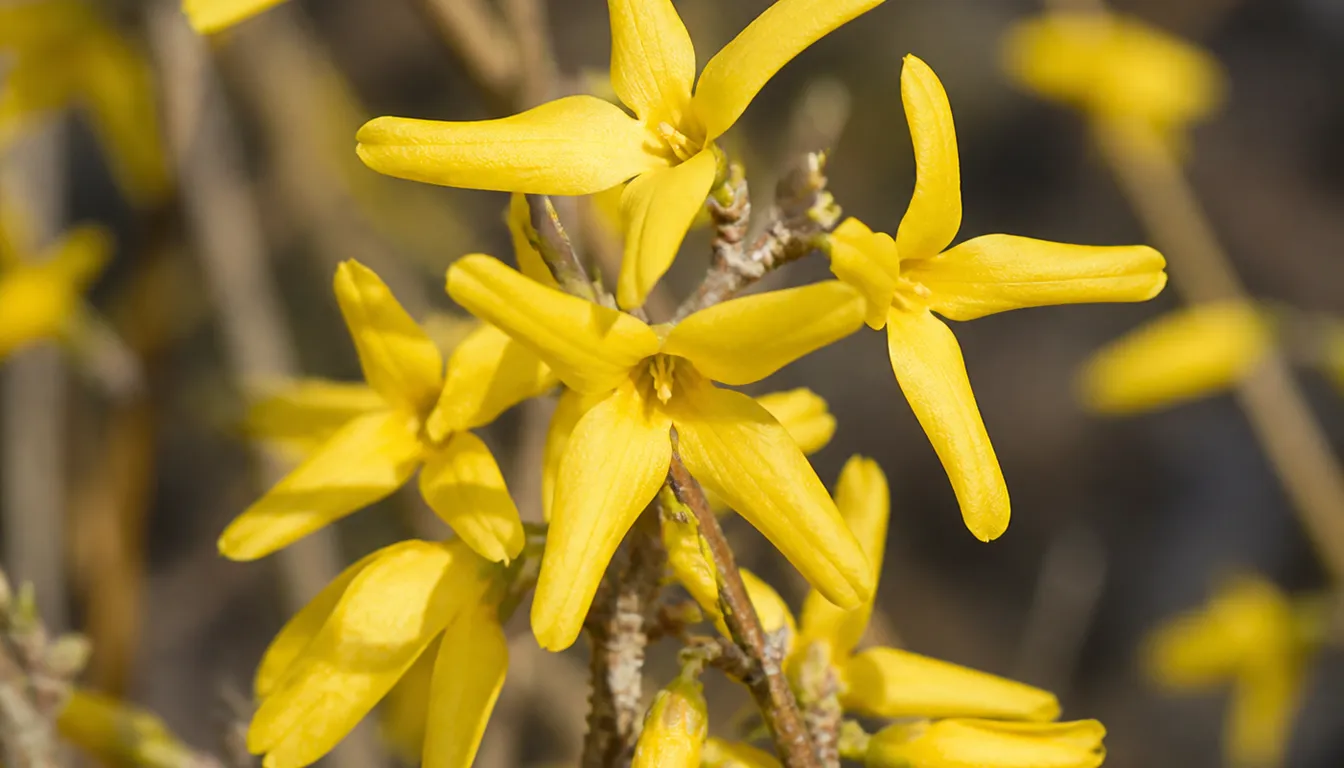
The full display usually lasts one to three weeks, depending on spring weather. A stretch of cool, calm days holds the flowers longer than a run of warm, windy ones.
The genus is named for William Forsyth, an 18th-century Scottish botanist and royal head gardener.
The widely planted landscape shrub is a hybrid, Forsythia x intermedia, bred from two Asian parent species rather than a single wild one.
That makes it different from beautyberry, which earns space in fall. Lilac gives fragrance after leaves start moving, but Forsythia gives the first yellow signal.
If you want fragrance after the yellow show, place Lilac nearby instead of expecting Forsythia to carry that job.
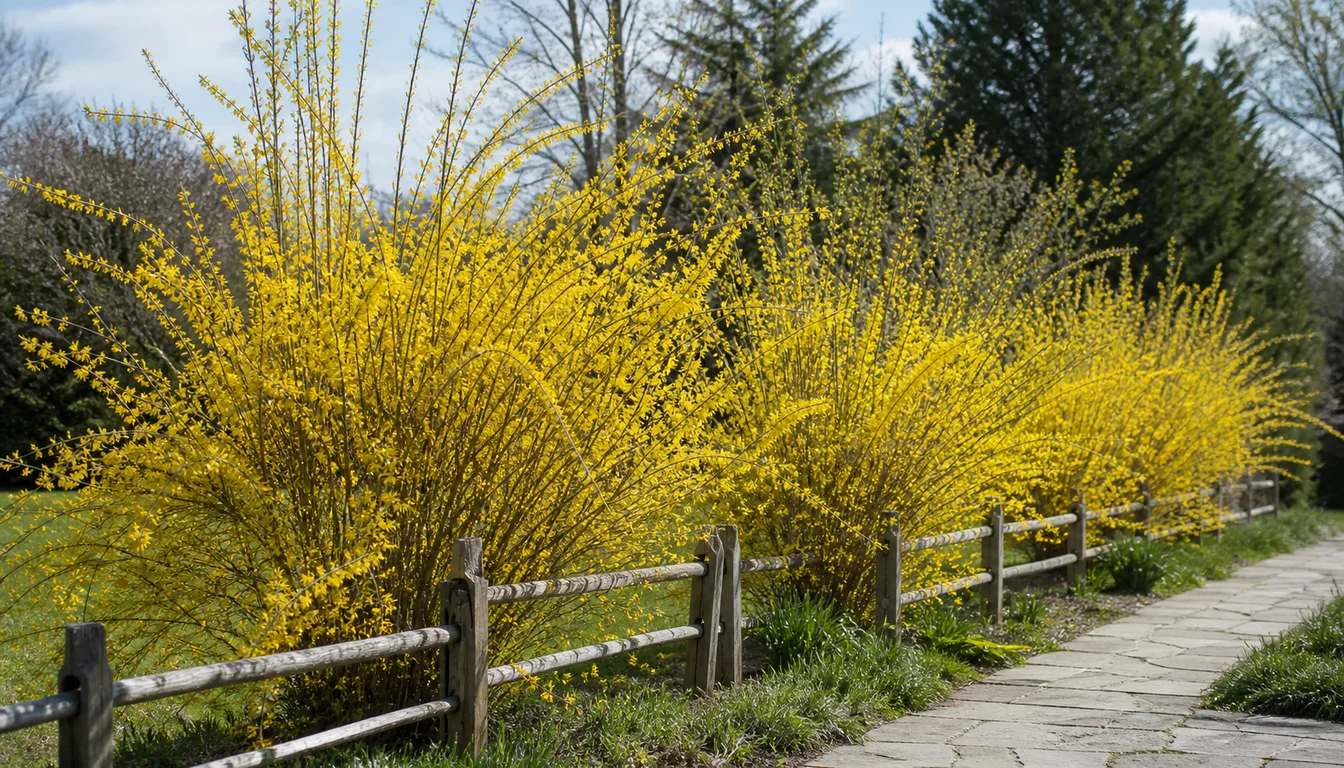
Use it where a loose arching shape is welcome. That means the back of a border, the edge of a slope, an informal hedge, or a spot seen from the house in late winter.
Do not use it as a tight foundation ball.
Protect the Old Wood That Carries Next Spring
Forsythia blooms on wood made the year before. That one fact controls the pruning calendar.
Cut hard in late summer or fall, and you remove the stems that were going to flower.
The right window is right after bloom. You can see which stems flowered, remove older canes at the base, and still give new shoots a full season to mature.
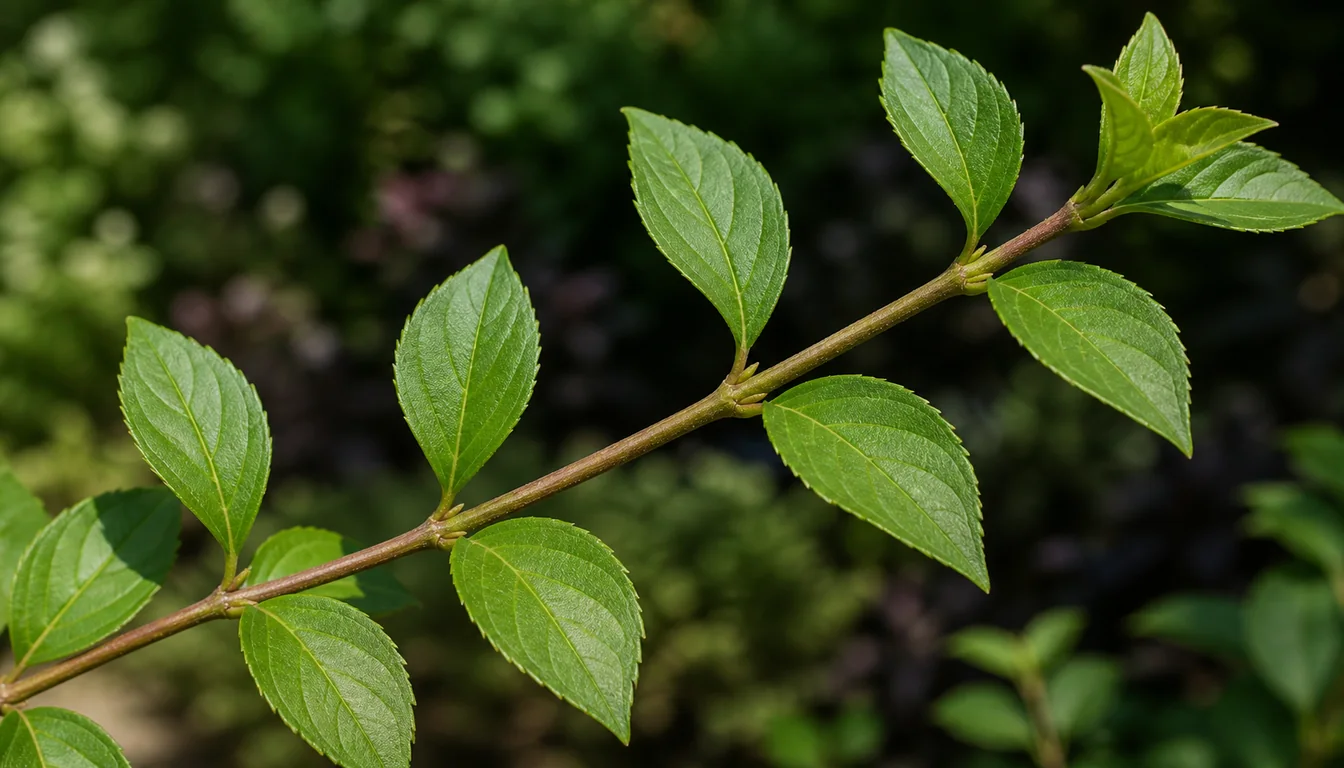
Old bloom wood is typically grayer and more rigid than the smoother, greener new growth that emerges after flowering.
That contrast is a visible cue for which stems just carried the show and which are this year's replacement growth.
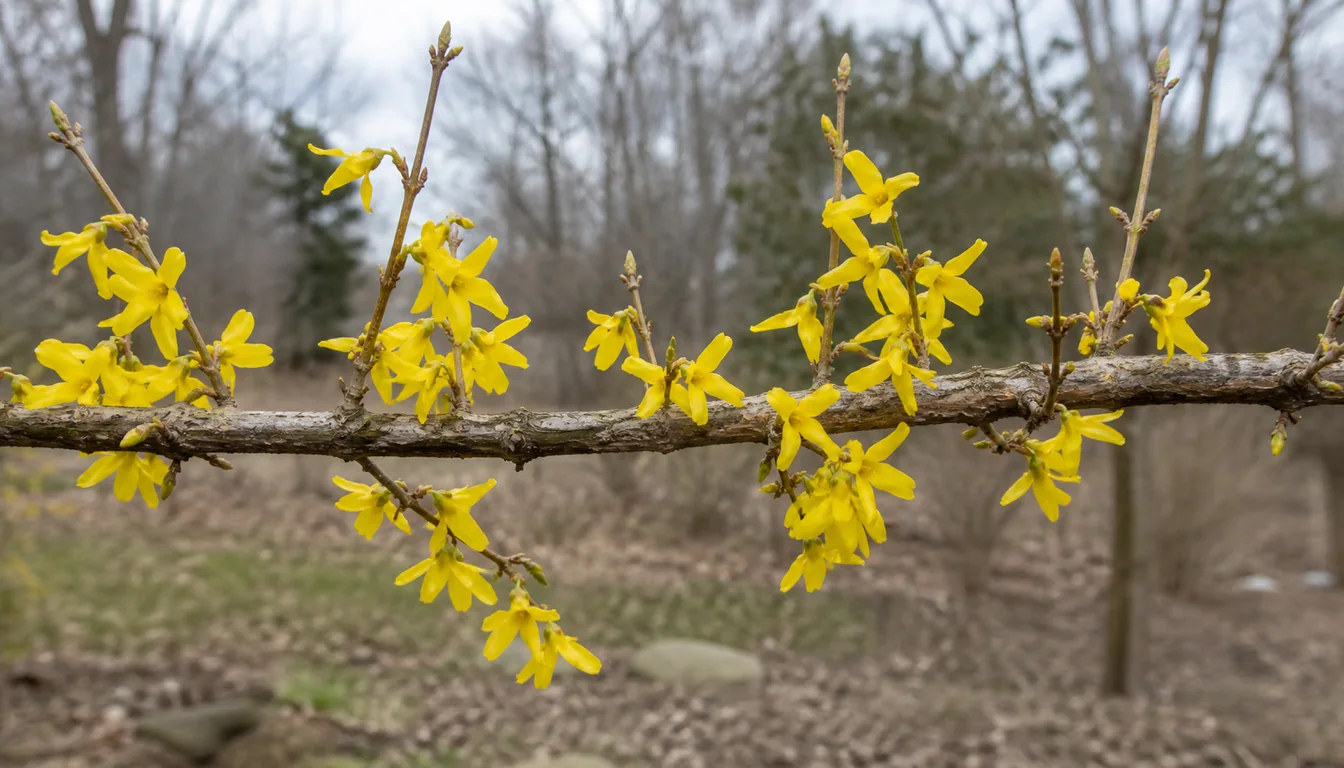
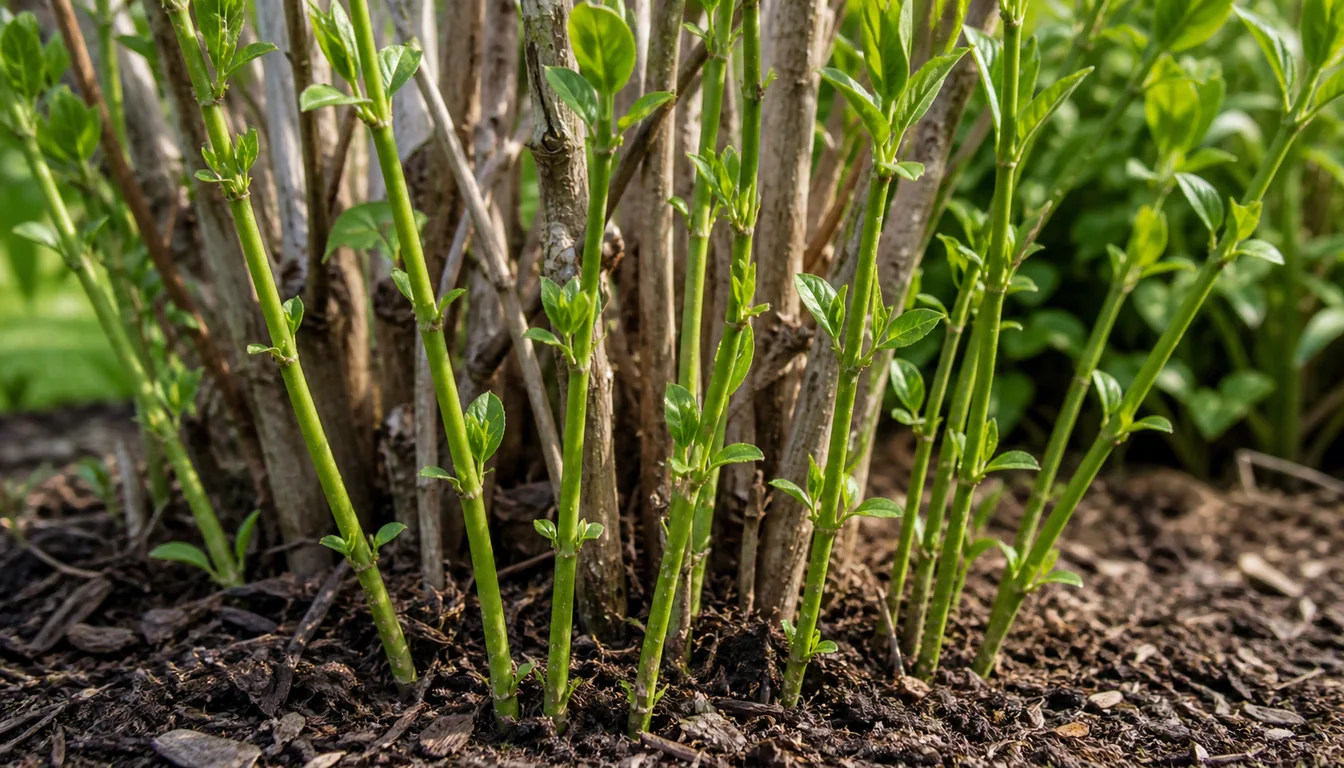
You can use that same old wood on purpose. Cutting a few branches in late winter while still dormant and bringing them indoors into water forces the buds open early, since they only need warmth and moisture rather than a full outdoor season.
Forced branches typically open within one to three weeks indoors, depending on how close to the natural outdoor bloom date the cutting was taken.
Cutting closer to that date shortens the wait.
Split the cut stem ends or crush them slightly before placing them in water, and change the water every few days. Set the vase somewhere cool rather than near a heat vent to slow the blooms and stretch the display.
A hard freeze after a warm spell can kill open buds even on outdoor stems, since the buds have no real protection once they begin to swell. A late cold snap right at bud break is a genuine risk in a variable spring, not just an unlucky year.
Use flowering shrub pruning for the broad rule, then apply the forsythia-specific one. Old wood holds the spring show.
Choose Size Before You Choose the Yellow
Most Forsythia flowers look yellow from across the yard. The bigger difference is mature size.
Some stay compact enough for small beds, while older hybrid types can sprawl wider than a small room.
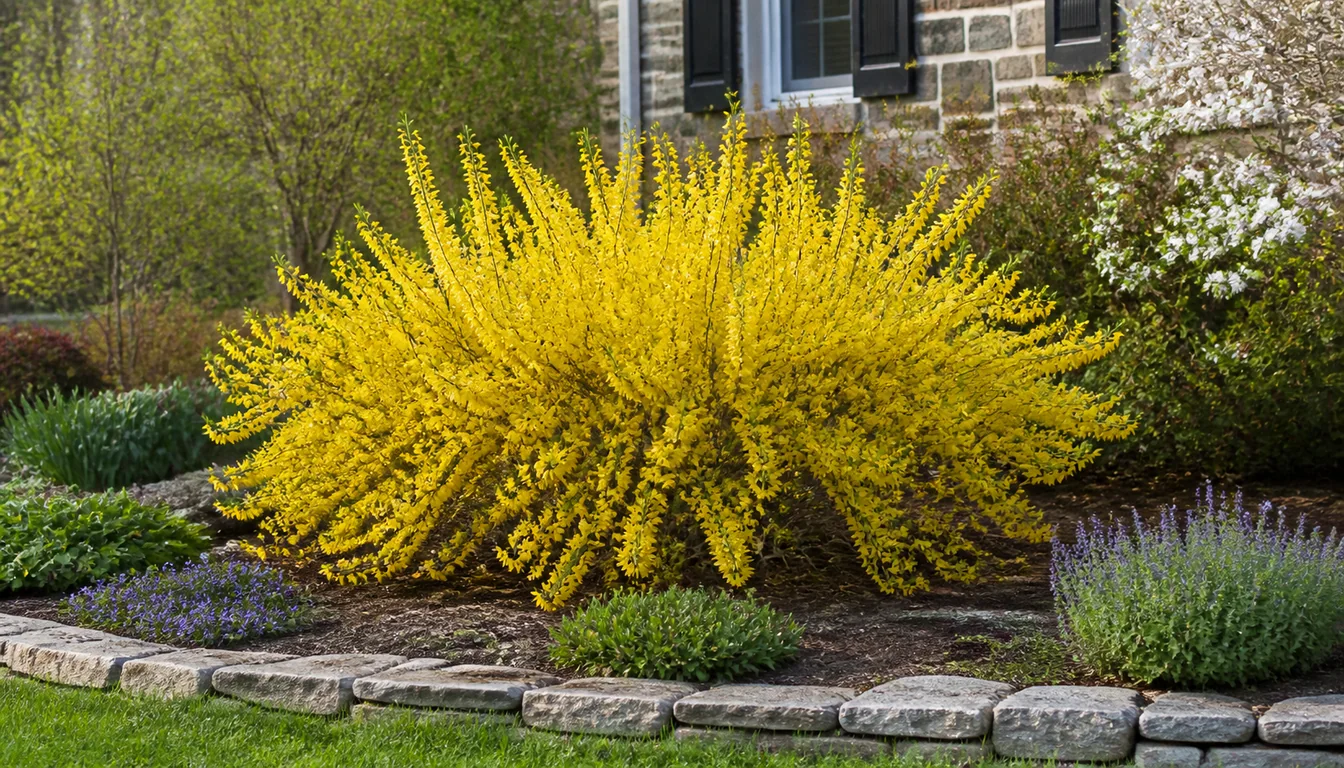
Cold hardiness also matters. In colder zones, flower buds can die even when the stems survive.
A hardy cultivar gives more reliable bloom than a pretty tag photo.
Lynwood Gold and Spring Glory are common larger, reliably hardy hybrid selections. Gold Tide and other dwarf cultivars stay under three feet and suit small beds without constant shearing.
A young shrub fills in fast once established, often adding a foot or more of new growth in a single season. That speed is part of why a wrong size choice becomes a pruning burden within just a few years rather than slowly.
White forsythia, a different genus called Abeliophyllum, is sometimes sold nearby and confused for a color variant. It is a distinct plant with its own bloom timing rather than a white-flowered version of true forsythia.
For an informal hedge row, space plants at roughly the mature spread of the chosen cultivar so the arching stems overlap naturally into a continuous line. Setting them too close together crowds the base early and defeats the loose, arching look that makes the plant worth growing in the first place.
Match the cultivar to the site with this quick reference.
- Small beds
- Use compact cultivars and still leave room for arching stems.
- Informal hedge
- Use larger forms where renewal pruning is easy.
- Cold edge
- Choose bud-hardy cultivars, not just stem-hardy plants.
- Formal front bed
- Use another shrub if you need a tight year-round shape.
Full Sun Makes the Flower Wall
A strong Forsythia bloom needs 6 or more hours of direct sun. Shade-grown shrubs can live for years, but the flower display thins and moves to the outside tips.
If only the top blooms, look at shade before fertilizer.
Tree roots, fences, and taller shrubs can steal the light that lower stems need to set buds.
Morning shade is usually less harmful than afternoon shade if the plant still gets a long bright day. The goal is flower bud energy, not just green survival.
A sunny site also makes renewal pruning easier.
Reflected heat from pavement or a south-facing wall does not scorch the leaves the way it does on some thinner-leaved shrubs. That tolerance makes a hot, bright strip along a driveway or sidewalk a genuinely good site rather than a compromise.
New canes mature better when they are not stretching through shade.
Establish Roots, Then Keep the Soil Ordinary
New Forsythia needs steady water during the first season. Mature plants are tougher and usually need help only during long drought.
Overwatering an established plant in heavy soil does not improve bloom.
Average soil is fine if drainage works. Very rich feeding can push long leafy shoots that become more pruning work rather than more flowers.
Use shrub fertilizer timing only when growth is weak.
The plant tolerates a wide soil pH range, from moderately acidic to moderately alkaline. That range is part of why it performs reliably across so many different yards without soil amendment.
It also tolerates the compacted, mixed fill soil common along driveways and new construction better than many flowering shrubs. Standing water is the real limit, not compaction alone, so a low spot that stays soggy after rain is still a poor site regardless of soil texture.
Mulch helps young roots, but keep it off the crown. A loose shrub still needs a visible base so you can remove old canes cleanly.
For broad watering decisions in mixed beds, use deep watering during dry establishment rather than daily shallow splashes.
Renew From the Base Instead of Shaving the Outside
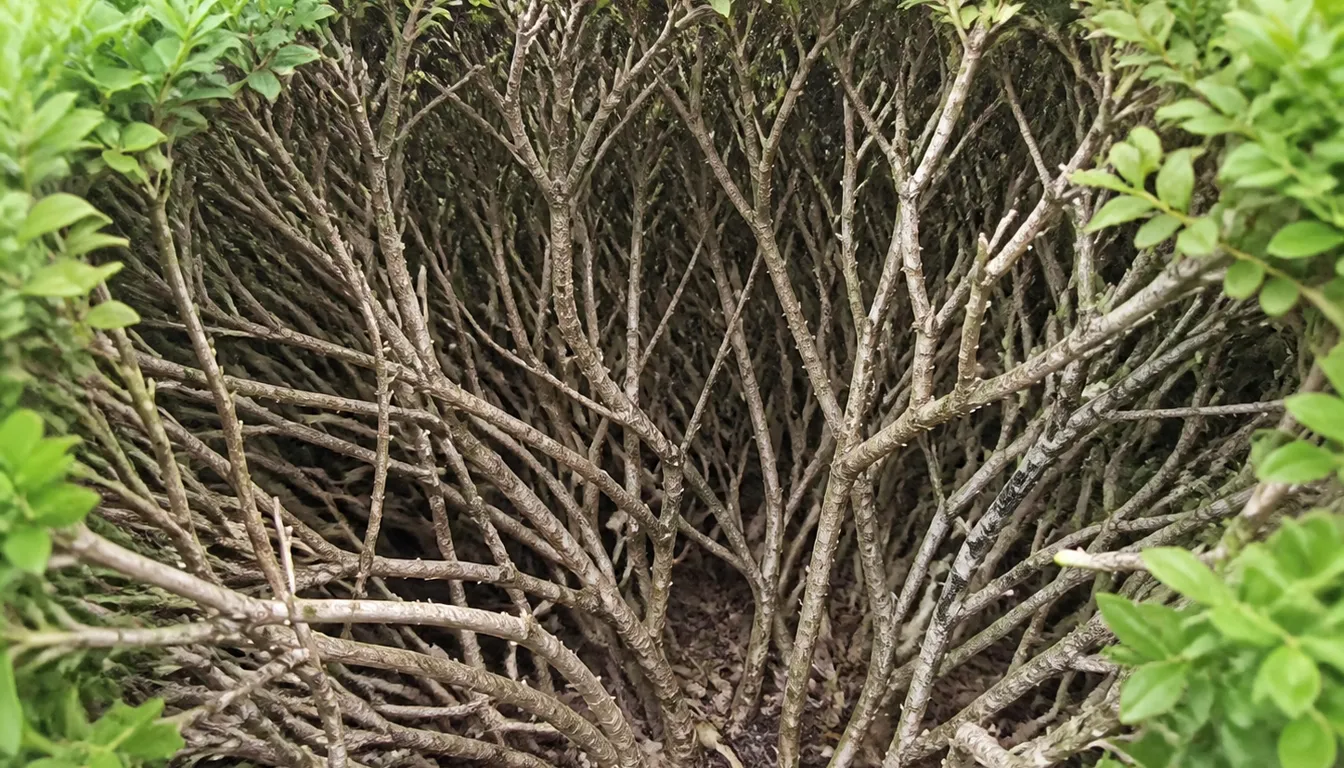
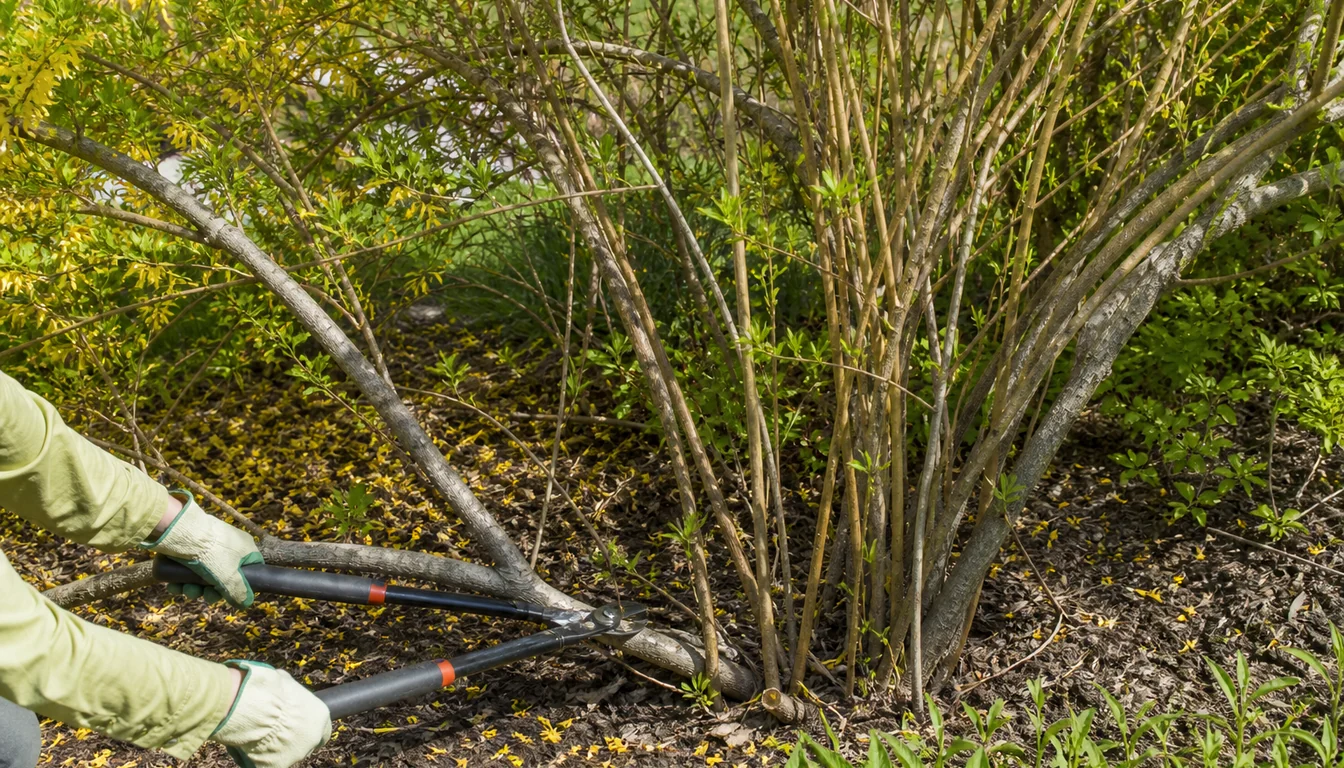
The best old Forsythia pruning removes a few thick canes at ground level after bloom. New canes rise from the base and carry future flowers.
Shearing the outside makes a green shell with bare wood inside. It may look neat for a month, but it reduces the natural arch and pushes flowers farther from the center.
A bypass lopper or small pruning saw cuts thick old canes at the base more cleanly than hand pruners. Save the hand pruners for thinning thinner young growth.
Old canes are not bad because they are old. They become a problem when they crowd the base and shade the young wood that should replace them.
Use shrub pruning timing when you need the broader calendar.
If the shrub is badly overgrown, renovate over two or three years. Remove the oldest third after bloom, then repeat.
That keeps some spring display while the plant rebuilds.
Cut just above ground level rather than leaving a tall stub, since a stub does not resprout as cleanly and just becomes dead wood to remove later. Wipe blades between plants if you are working on more than one shrub with visible disease.
- Wait until the yellow flowers fade.
- Cut the oldest, thickest canes at ground level.
- Shorten only the wildest young shoots.
- Stop pruning by midsummer so next year buds can form.
Root New Plants From Flexible Stems
Forsythia roots easily compared with many shrubs. Softwood cuttings in late spring or simple layering from low flexible stems both work.
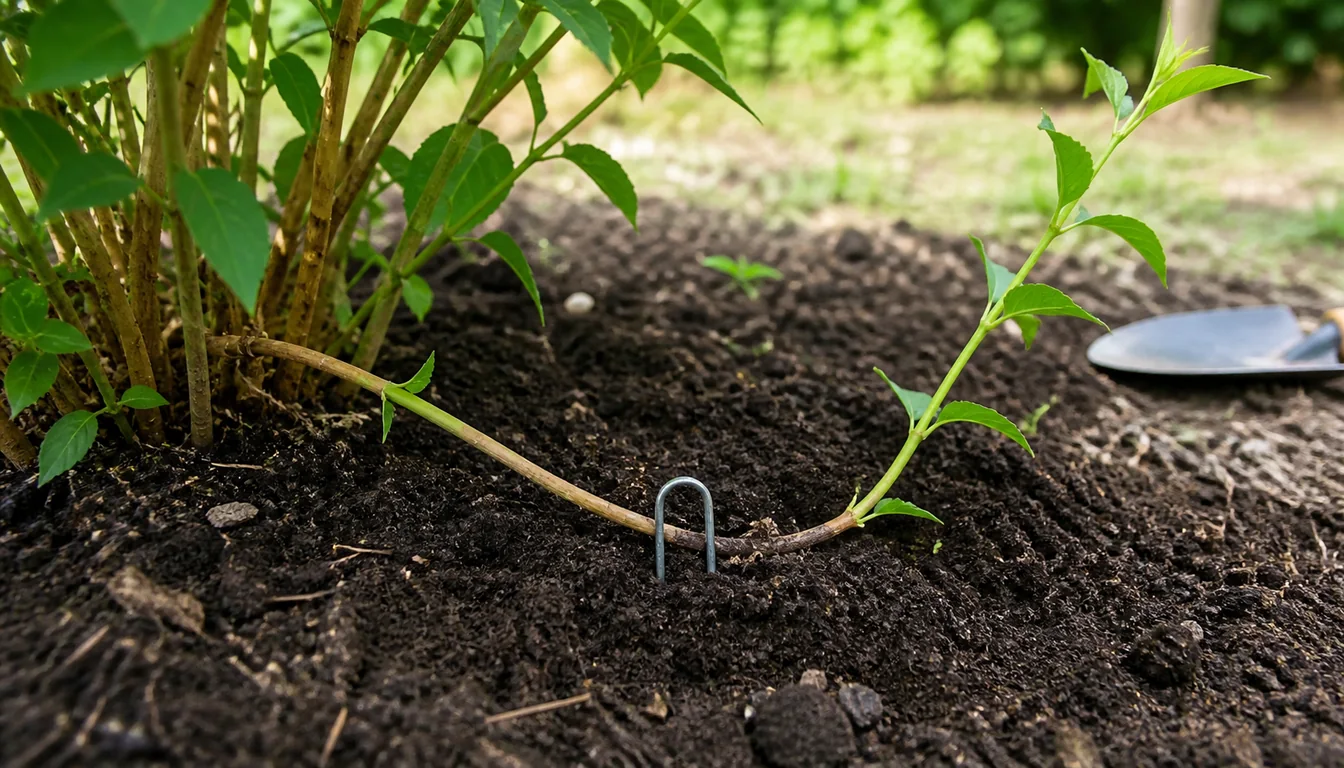
Layering is the easiest home method.
Pin a low stem to the soil, cover the wounded section, keep it moist, and separate it after roots form.
A rooting hormone powder dipped onto a fresh softwood cutting speeds root formation and improves the overall success rate, though it is not strictly required on a species that already roots this easily on its own. Expect visible new roots within roughly four to eight weeks under consistent moisture.
Since the widely planted landscape shrub is a hybrid, seed-grown plants do not reliably come true to the parent's bloom color or habit. That is why cuttings or layering are the practical route rather than seed.
Only propagate a shrub that blooms well and fits your space.
Copying a sprawling problem just gives you more of the same problem.
Poor Bloom Usually Comes From Pruning, Shade, or Cold
When Forsythia disappoints, pests are not the first suspect. Wrong pruning, too much shade, flower-bud freeze, or an old congested cane base usually explains weak bloom.
Leaf spots and minor insects can show up, but they rarely matter as much as light and pruning.
Keep the shrub open, rake heavy fallen leaves, and avoid wet overhead watering when disease pressure is high.
Forsythia is notably resistant to deer and rabbit browsing compared with many other flowering shrubs. That is a real, practical advantage in yards where heavy browsing pressure limits what else will reliably bloom.
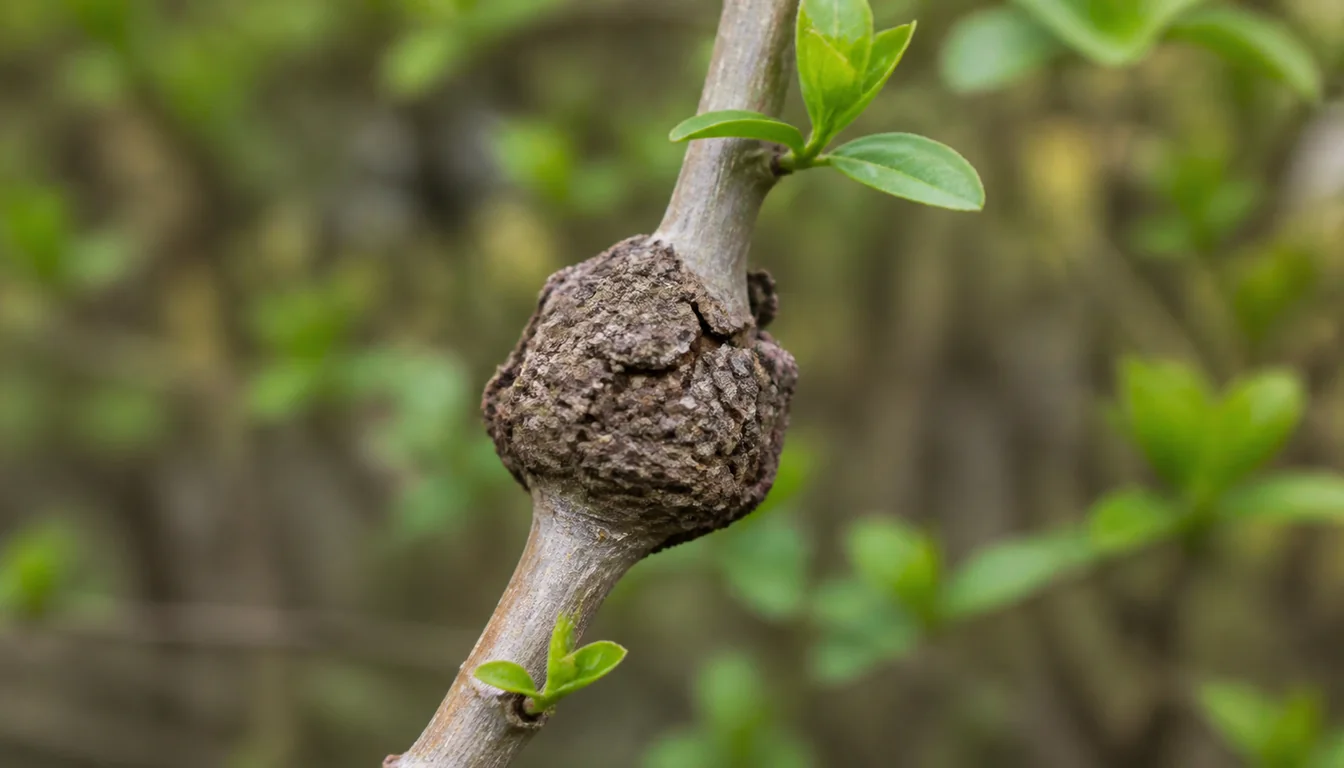
Round or oval knobby swellings along a stem are forsythia gall, a distinct condition specific to this plant rather than a random growth. It rarely threatens the shrub's overall health but can be pruned out and destroyed if the look genuinely bothers you, since no spray reliably treats it.
Twig blight can cause scattered stem dieback after an unusually wet spring, usually starting right at the branch tips and slowly working backward. Pruning out the dead sections during dry weather and improving airflow through the interior of the shrub controls it better than any fungicide spray.
Sort the symptom against this table before assuming disease.
- Few flowers everywhere
- Check late pruning or cold bud damage.
- Flowers only on top
- Check shade on lower stems.
- Green outside, bare inside
- Stop shearing and renew from the base.
Use It as a Signal Shrub, Not the Whole Spring Garden
Forsythia gives a strong early signal, but it does not carry a long wildlife or bloom season by itself. Pair it with later shrubs such as weigela so the bed does not go quiet after April.
Spirea can cover a lower summer-color job in front.
Because it blooms before most other nectar sources open, Forsythia is a genuinely useful early-season food source for the first bees active in spring. Little else is flowering yet when it opens.
Early mason bees and other solitary native bees rely on this kind of early bloom just as much as honeybees do, since they typically emerge on a similar late-winter schedule. A single shrub in full bloom can draw visible pollinator activity on the very first mild days of the year.
Cut branches are a popular addition to spring floral arrangements, and the bloom-forcing technique used indoors works equally well for a vase display as it does as a seasonal gardening trick. A few forced stems add real color to a room weeks before the outdoor shrub opens.
It is generally a low concern around pets compared with toxic shrubs such as oleander, but children and pets should not chew ornamental stems.
The bigger everyday issue is giving the plant enough room so it does not block paths.
- Best view: seen from windows or paths before other shrubs leaf out.
- Weak view: hidden behind evergreens where the yellow stems disappear.
- Best companion: later-blooming shrubs that take over after spring.
Frequently Asked Questions
When should I prune Forsythia?
Prune Forsythia right after flowering. It blooms on wood made the year before, so late summer or fall pruning removes next spring flowers.
Why is my Forsythia not blooming?
The usual causes are too much shade, pruning at the wrong time, winter bud damage, or old canes that need renewal cuts.
Can Forsythia be kept small?
Yes, but choose a compact cultivar first. Constant shearing on a large type creates a dense outer shell and weak spring bloom.
Does Forsythia need fertilizer?
Usually no, since average soil is enough. Feed lightly only if growth is weak after you rule out shade, drought, and pruning problems.
Sources & References
- Forsythia in the Garden, University of Minnesota Extension
- Pruning Trees and Shrubs, Clemson Cooperative Extension
- Forsythia × intermedia, Missouri Botanical Garden Plant Finder
- Forsythia for Home Landscapes, Cornell Cooperative Extension
- Forsythia x intermedia, Missouri Botanical Garden Plant Finder
- Forsythia x intermedia (Border Forsythia, Golden Bells) | North Carolina Extension Gardener Plant Toolbox
- Toxic and Non-toxic Plants: Golden Bells | ASPCA
Related Plants
Lilac
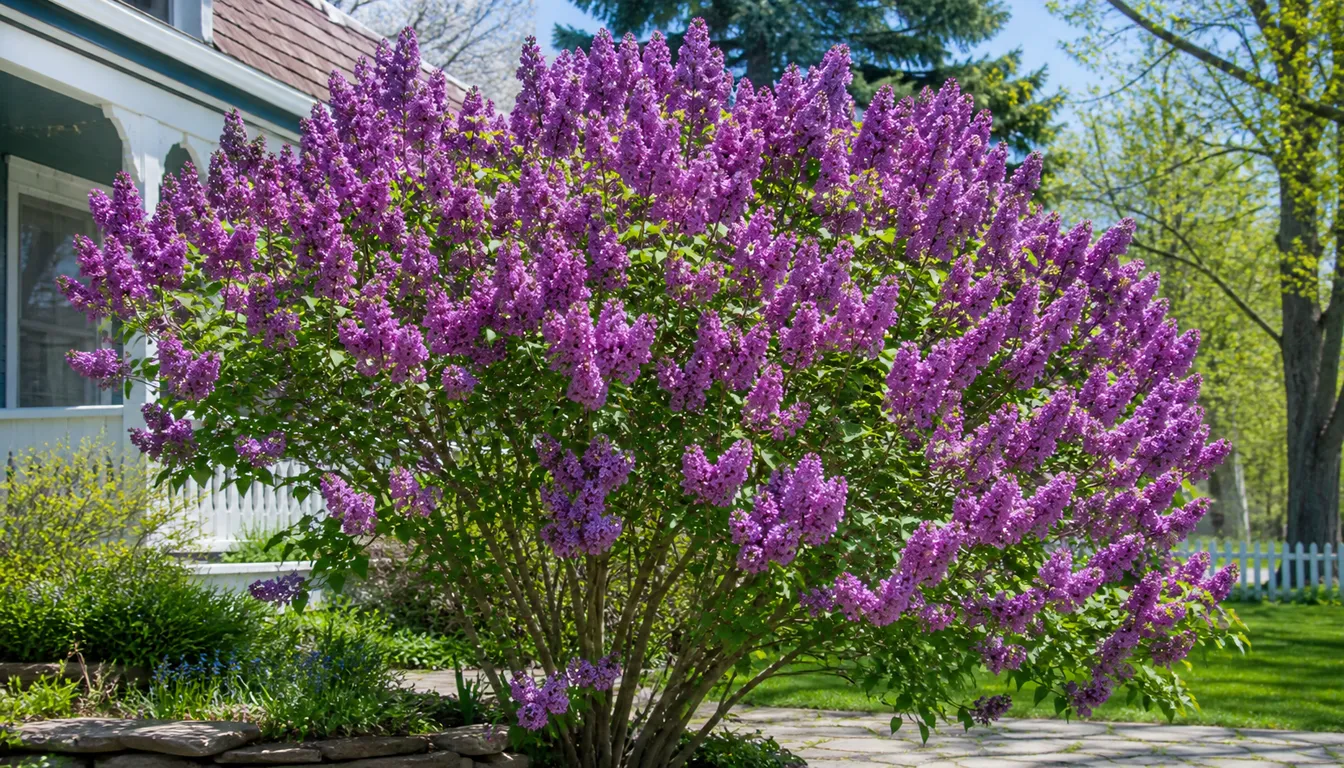
Fragrant spring shrub that pairs well with forsythia in cold climates.
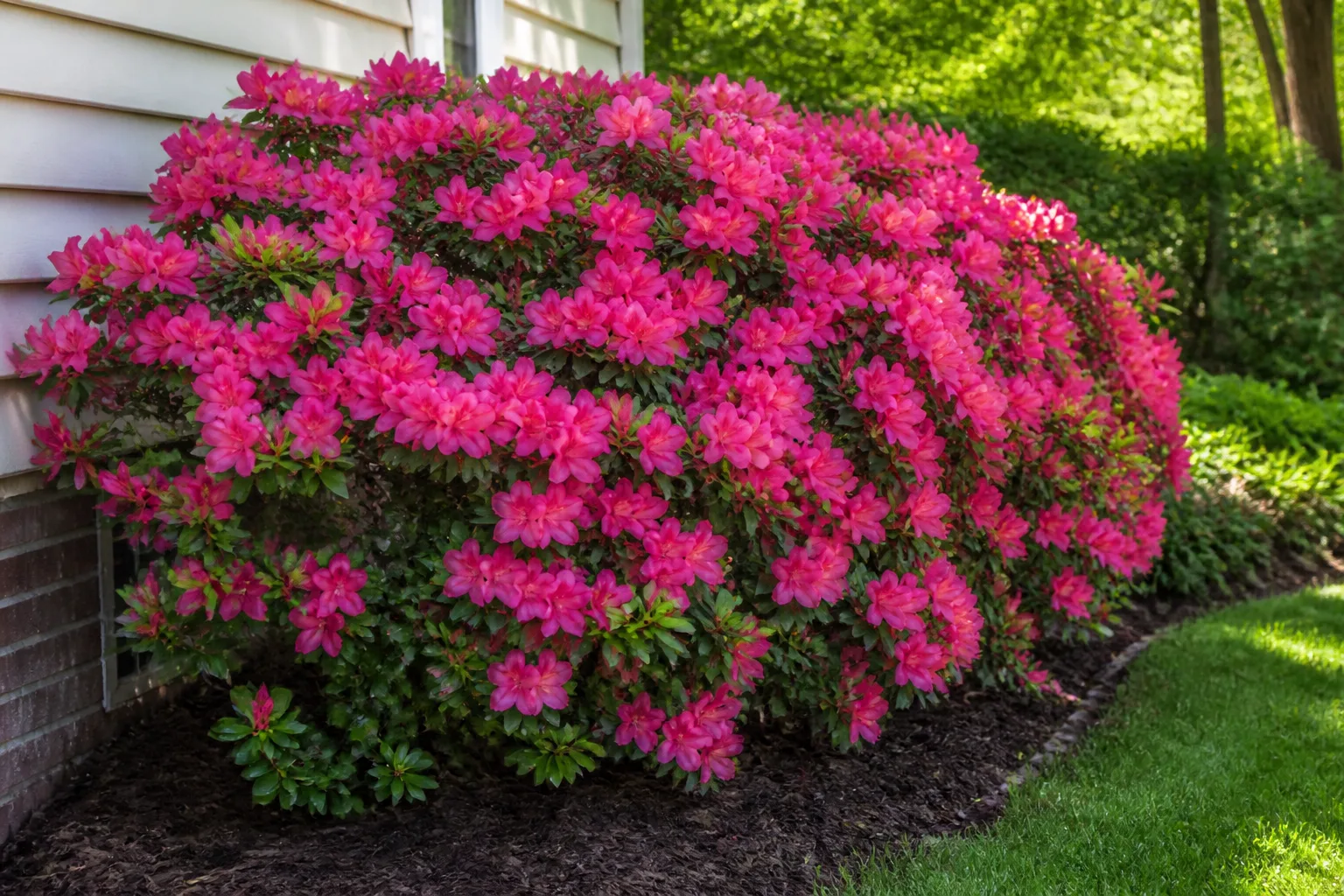
Azalea
Later-blooming shrub for layered color after forsythia fades.
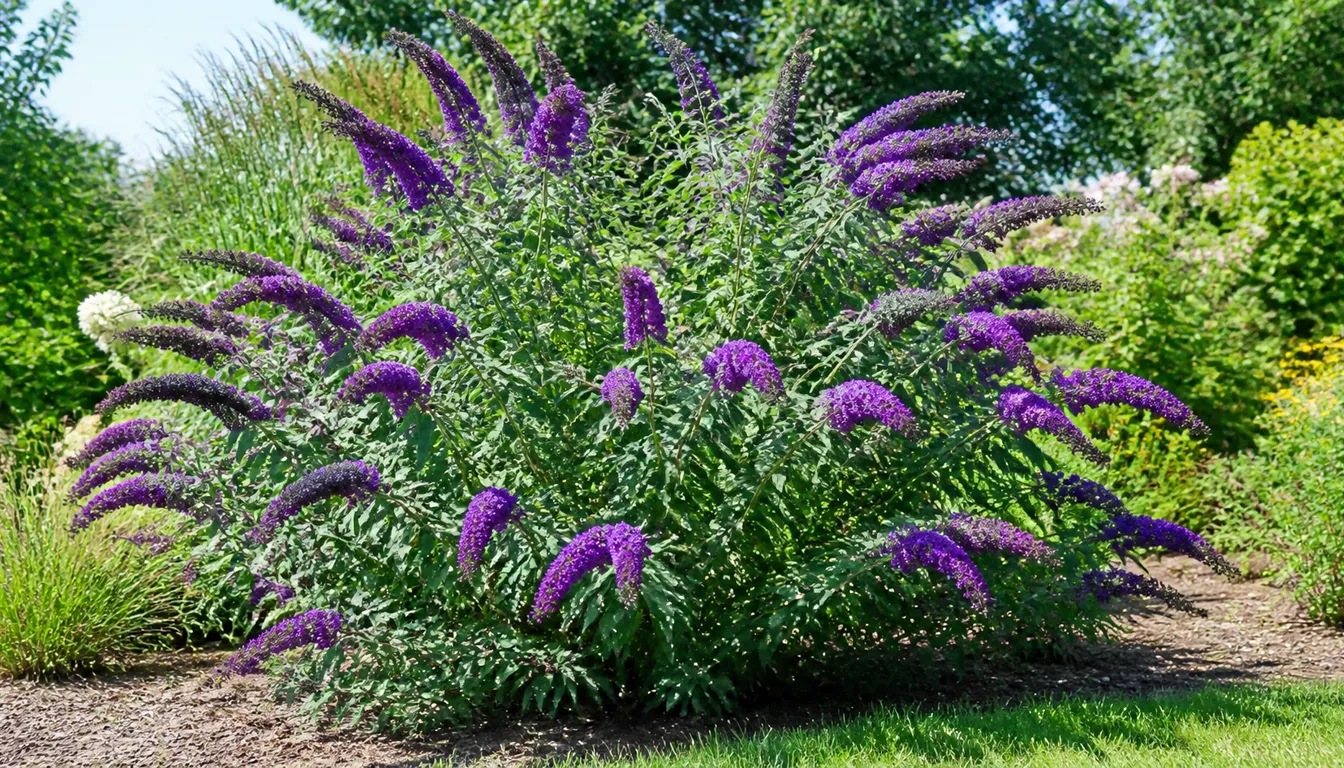
Butterfly Bush
Summer bloomer that keeps interest going once spring flowers are done.
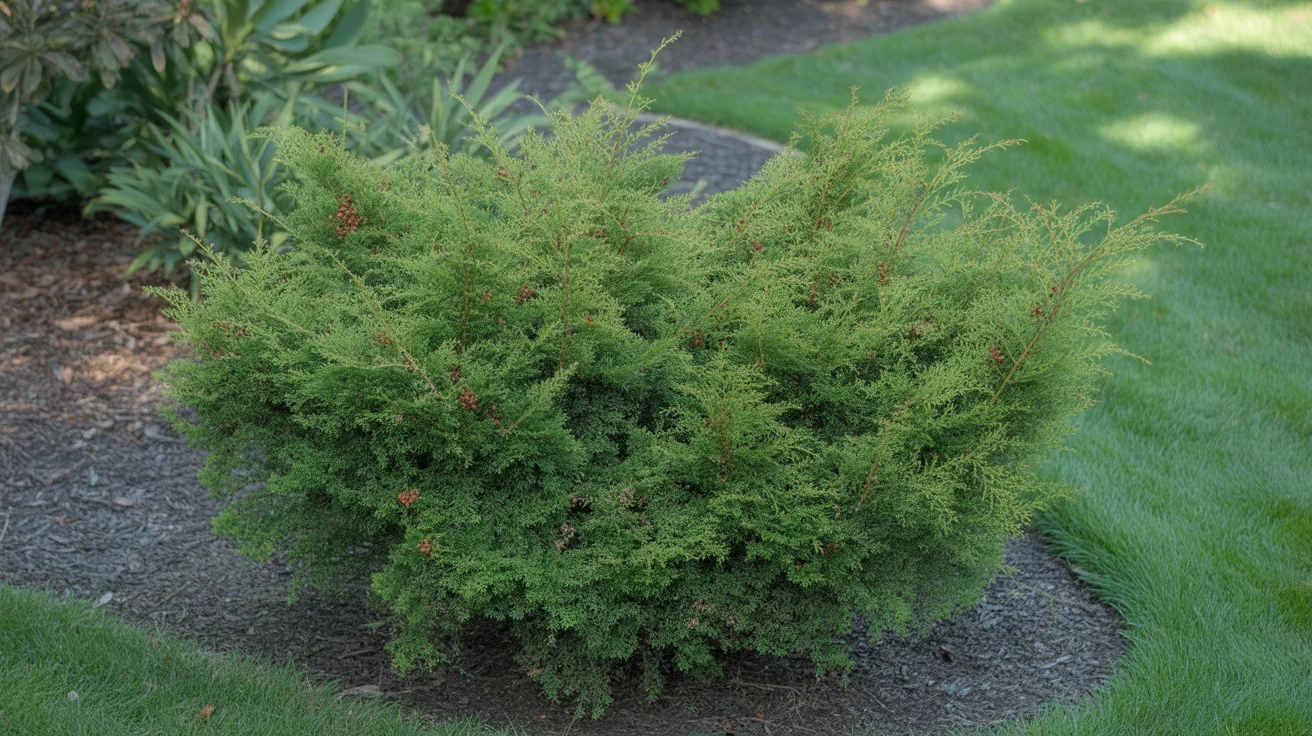
Arborvitae
Arborvitae can form a dense living screen where its mature width, exposure, and water needs fit the site.
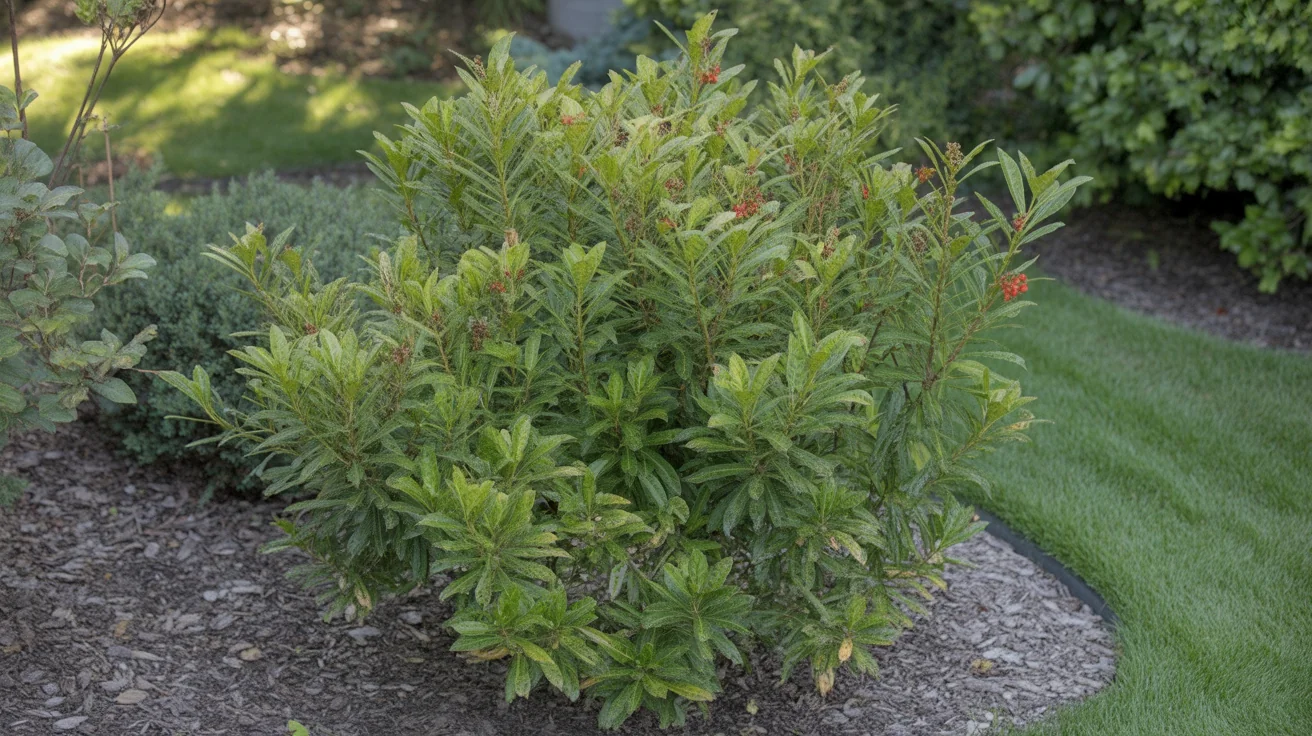
Aucuba
Aucuba is the shrub for bright shade with dry root competition. It keeps evergreen structure near north walls, porches…
Barberry
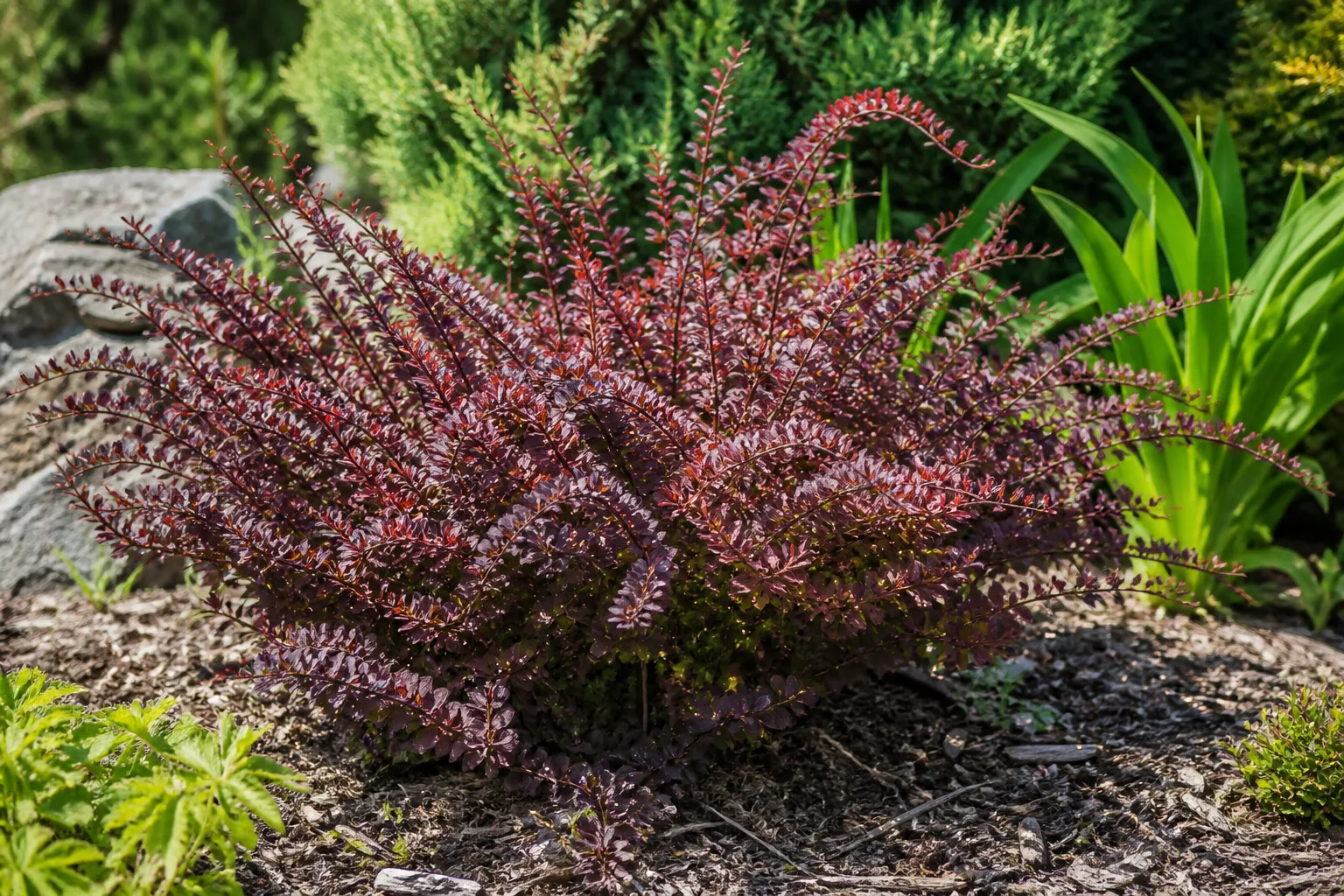
Japanese barberry (Berberis thunbergii) is a thorny, deer-resistant shrub whose berries birds carry into woods, so…