
Deadheading Daffodils Matters Less Than the Six Weeks After
Almost every page about spent daffodils tells you to remove the seed pod so the bulb is not drained. Iowa State Extension says it is not necessary, because seed pod formation on daffodils has little impact on plant vigor.
That rule came from tulips, where a seed pod really does cost the bulb its strength. It got attached to every spring bulb on the way past.
The thing that genuinely decides whether you get flowers next April is the foliage, and the period is longer than most people leave it.
At a glance
Do You Actually Need to Deadhead Daffodils?
The short answer from a land grant extension service is no.
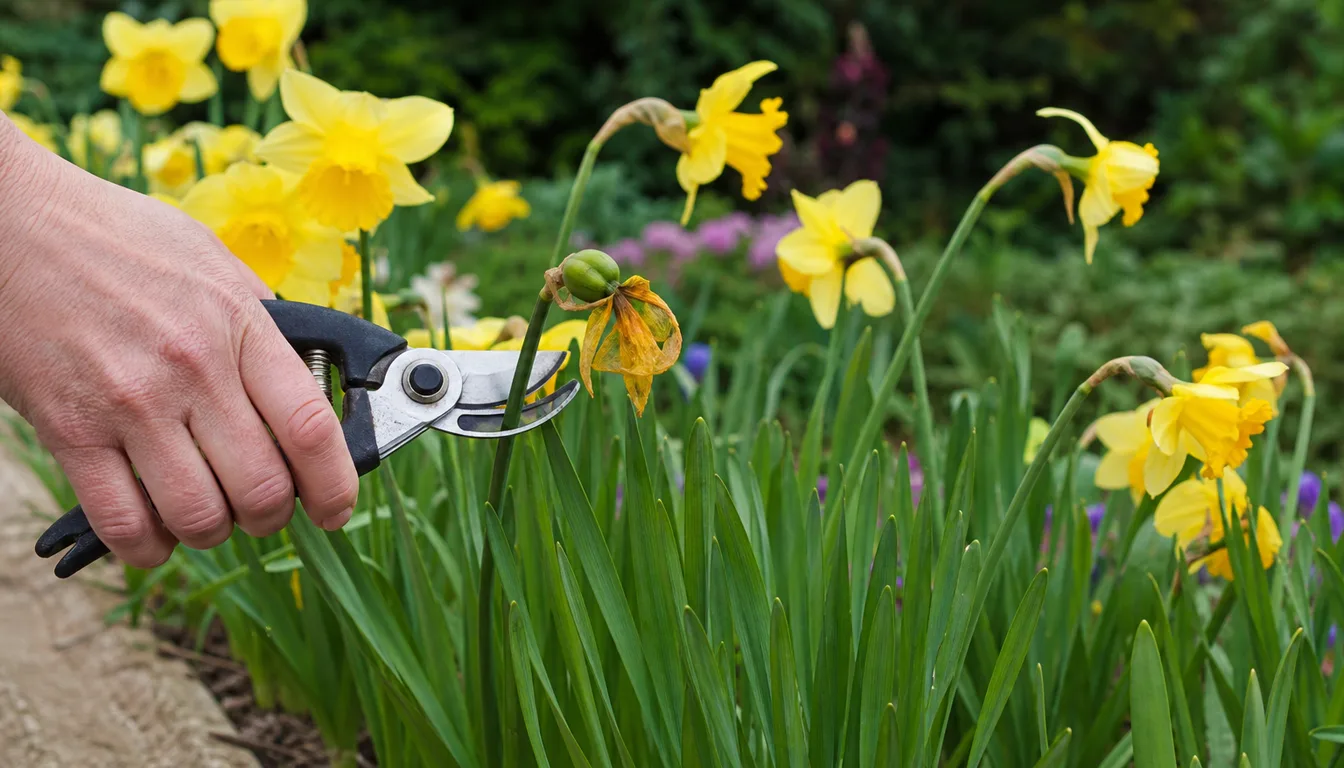
Iowa State Extension states plainly that deadheading daffodils is not necessary, and that seed pod formation on daffodils has little impact on plant vigor. Some gardeners remove the spent flowers for appearance, which is a different reason.
Tulips are the plant the rule was written for. Their vigor declines quickly when they are not deadheaded promptly and seed pods are allowed to develop, which is a real and measurable cost.
Daffodils inherited the advice by association.
The sources are not unanimous. The RHS does list seed capsule formation among the causes of a daffodil coming up blind, alongside eight or nine other causes, so nobody is claiming the pod is free.
What both sides agree on is the ranking. The pod is a small lever, the leaves are a large one, and a gardener who has time for exactly one job after the flowers fade should spend it on leaving the foliage alone.
Deadhead if the browning flowers bother you, and do it without any sense that the bulb depends on it. The plant is not waiting for you.
Where Exactly Does the Cut Go?
Two different things come out of a daffodil clump, and only one of them is fair game.
The flower rides on its own stalk, which is round, smooth and hollow, and roughly the thickness of a pencil.
The leaves are flat blades.
You can tell them apart with your fingers in poor light without looking down.
Trace the faded bloom down its stalk to the point where it rises out of the leaves, and cut there. The swollen green pod behind the flower comes away with it.
A short bare stub left standing does no harm at all. It dries out and vanishes into the clump as the foliage flops later in the season.
A finger pinch is enough on a handful of bulbs. Clean bypass snips are faster across a border and less likely to tear a leaf you catch by accident.
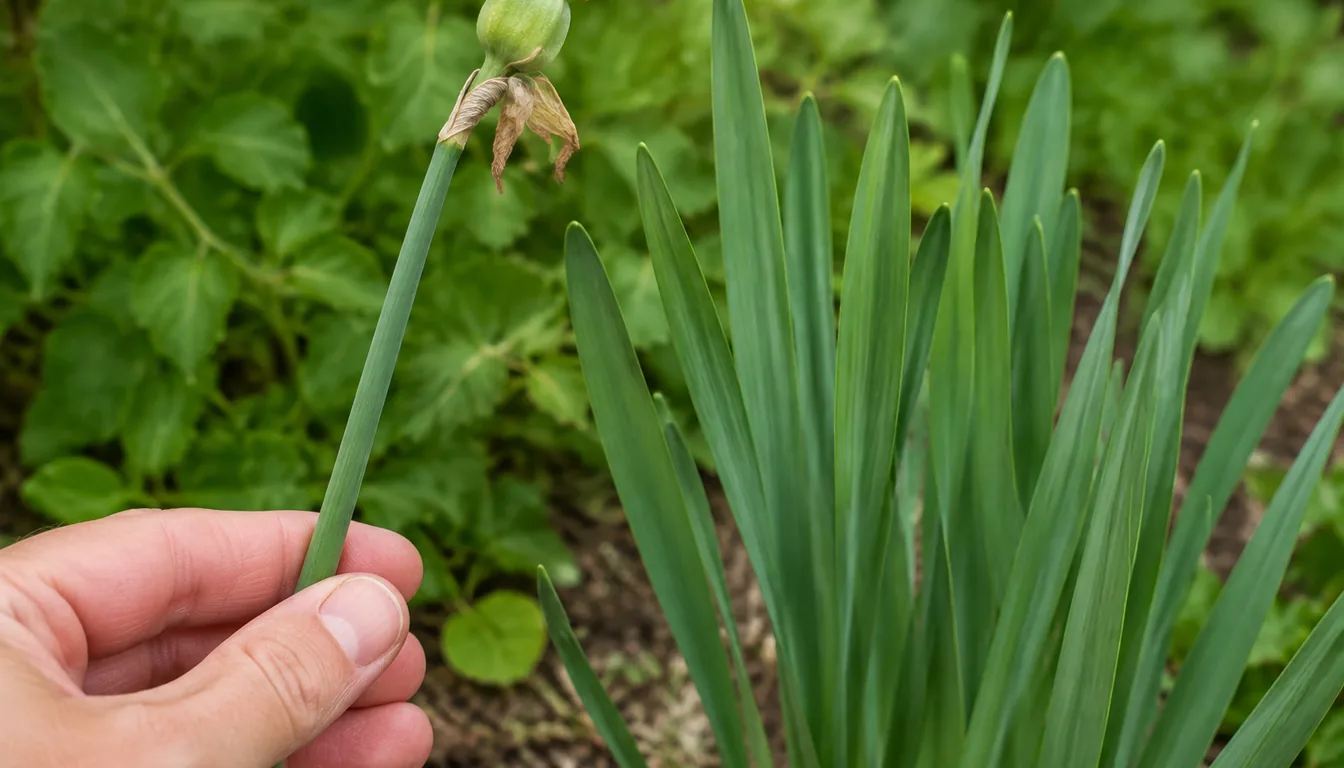
- Find itLook for the limp browning flower rather than a bud, since the pod only swells once the petals have collapsed.
- Follow itRun your fingers down the stalk until the round shape gives way to the flat blades of the leaves packed around it.
- Cut thereTake the stalk where it emerges from the leaves, with the green pod attached, and leave every blade untouched.
- Clear itDrop the stalks in a bucket rather than the bed, where they sit on the crown and hold damp against it.
How Long Do the Leaves Have to Stay?
This is the part that decides next spring, and it is longer than it feels.
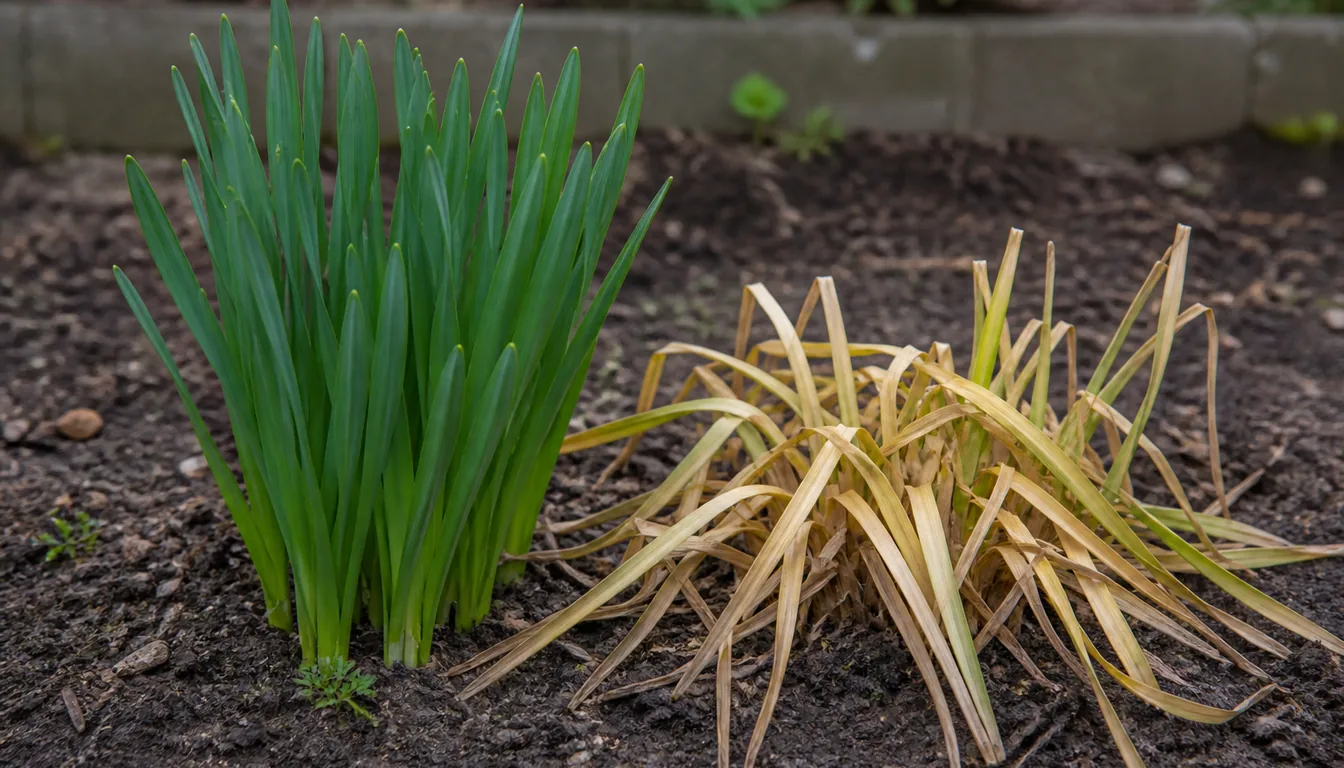
The RHS gives a floor of at least six weeks after flowering before leaves are removed or mown. Iowa State goes further and waits for the foliage to die and turn brown, which can run to late June or early July.
Those leaves are rebuilding the bulb for a flower that opens twelve months from now. Cut them at four weeks and the bulb goes into summer part filled, and nothing about the plant will look wrong until the following April.
Knotting or tying the leaves into tidy bundles is worse than it looks. Bent blades photosynthesise poorly, and the RHS lists tying among the causes of a blind daffodil.
Drought does the same damage without anybody cutting anything. Foliage that dies down early because the soil went dry has stopped feeding the bulb just as surely, so water a dry spring bed while the leaves are still green.
The foliage looks untidy for the whole of that period and there is no way around it. Planting bulbs behind something that leafs out later, such as a daylily or a hosta, hides the fade without shortening it.
- Minimum wait
- Six weeks after flowering finishes
- Cut when
- Leaves have yellowed and flopped on their own
- Never
- Tie, knot, braid or plait the foliage
- In a dry spring
- Water while the leaves are still green
Why Do Daffodils Come Up Blind?
A daffodil that comes up with foliage and no flowers has a name. It is described as blind, and it is the complaint most people arrive with.
One group of causes comes from handling. Cutting the leaves after flowering, knotting them, and letting the plant dry out so the foliage dies down early all starve the bulb the same way.
A second group was set months earlier at planting.
Bulbs put in too shallow or planted late, after the middle of November, come up weak.
Depth is measured against the bulb itself, and the figure is two to three times its own height.
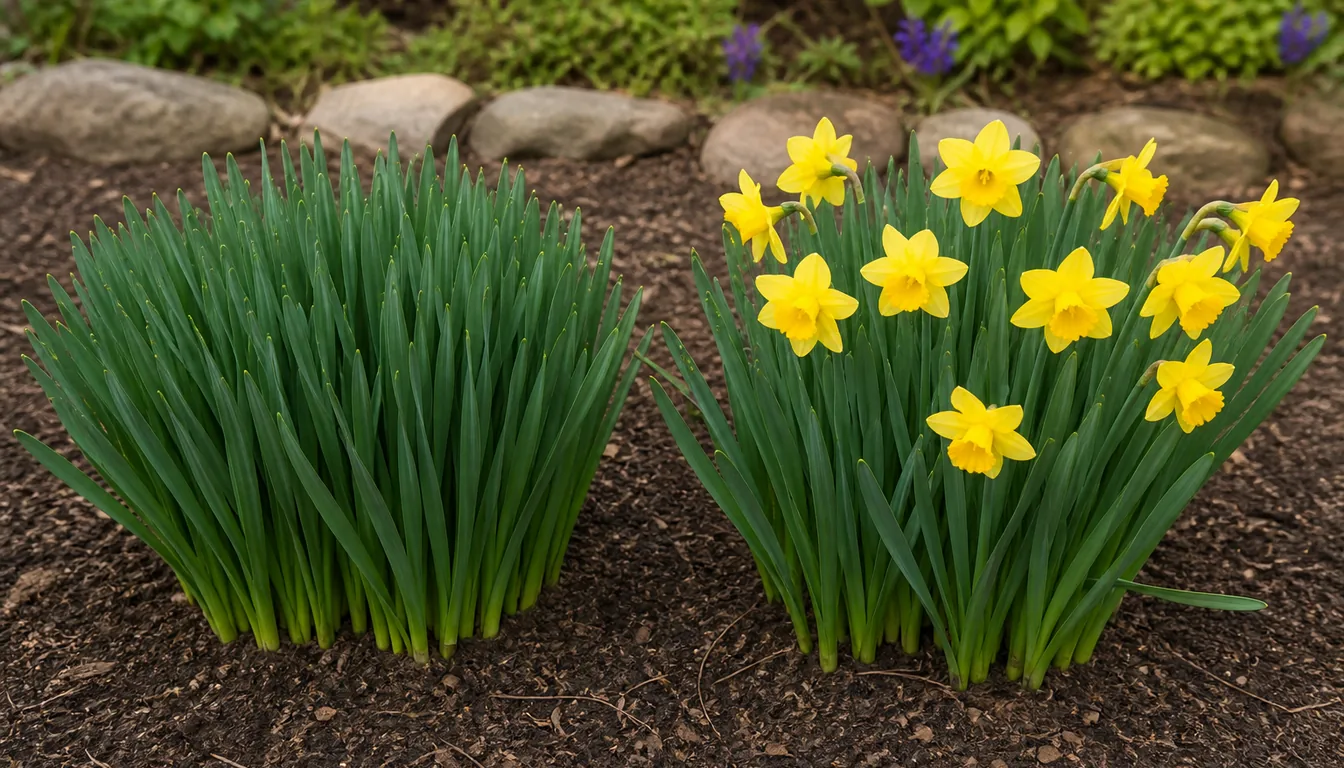
Overcrowding is the cause behind most old clumps. Bulbs multiply underground year after year until there is no room left, and a congested clump throws leaves rather than flowers.
Poor soil nutrition sits alongside those. Narcissus bulb fly, narcissus eelworm, basal rot and the daffodil viruses fill out the rest of the list and are worth suspecting only once the ordinary causes are ruled out.
| What you see | Most likely cause | What to do |
|---|---|---|
| Many leaves, few or no flowers, old clump | Overcrowding | Lift and divide once the foliage dies back |
| Weak bloom the spring after a tidy year | Leaves cut, tied or mown too soon | Leave them six weeks this year and wait a season |
| Whole planting fading over several years | Shade creep or poor nutrition | Check what has grown over the bed, then feed |
| Weak from the first spring after planting | Planted shallow or planted late | Replant at two to three times bulb depth in autumn |
| Foliage browning off very early each year | Dry soil | Water through spring while leaves are green |
| Soft or rotten bulbs when lifted | Basal rot, bulb fly or eelworm | Discard affected bulbs rather than replanting them |
When Should You Lift and Divide a Congested Clump?
Lift a congested clump once the foliage has died back in summer, never while it is still green.
By then the leaves have finished their work and the bulbs are dormant, so a fork through the clump costs nothing. Digging in spring interrupts exactly the process the rest of this page is about protecting.
Work compost into the soil before the bulbs go back, since poor nutrition is one of the causes of a blind clump and an old planting has usually taken what was there.
Replant with a gap of 5 to 7.5 centimetres, which is 2 to 3 inches, between each bulb, and set them at two to three times their own height. Small offsets go back too, and they take a year or two to reach flowering size.
Bulbs that are not going straight back into the ground are dried for two to three weeks, then kept in a mesh bag somewhere cool and dry until autumn planting.
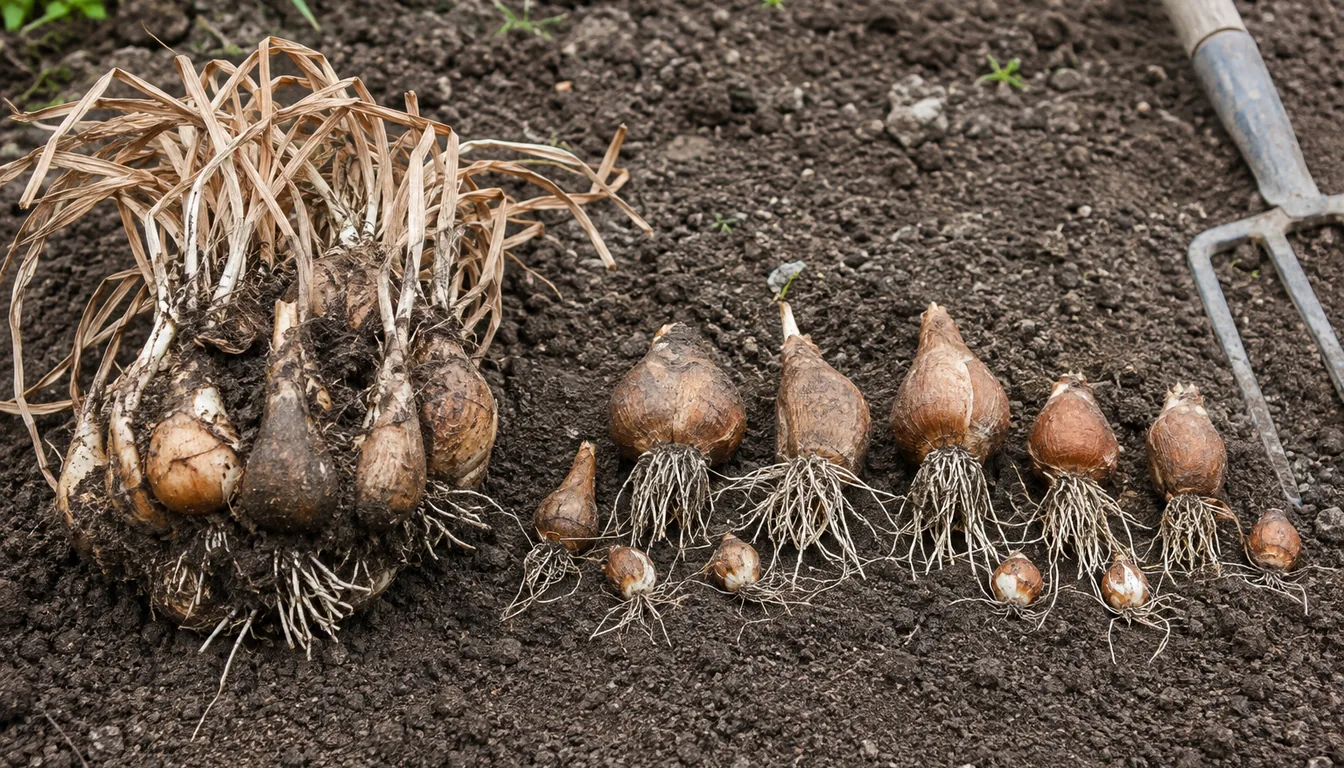
- WaitLet the foliage yellow and die back completely, which usually means midsummer rather than late spring.
- LiftWork a fork in well clear of the clump and lever the whole mass up together rather than pulling at the leaves.
- SplitPull the bulbs apart by hand, keeping the offsets, and set aside anything soft, holed or rotten.
- ReplantImprove the soil with compost, then replant 5 to 7.5 cm apart at two to three times the height of each bulb.
How Do You Handle Daffodils Naturalised in Grass?
A mower is a very fast pair of shears, so the six week rule applies to it exactly as it applies to snips.
Mark the date the drift finishes flowering and count forward. Nothing goes over that grass until the six weeks are up and the daffodil leaves have yellowed, whatever the rest of the lawn is doing.
Deadheading a large drift flower by flower is not a realistic job, and since the pod barely matters on a daffodil, it is also not a necessary one. Cut the front edge you actually walk past and leave the back of the drift alone.
When the first cut does come, raise the deck. A high pass clears the seed heads and the long grass without scalping any leaves that are still working.
Some cultivars naturalise in turf better than others, and Peeping Tom, Fortune and February Gold are named for the job. Deer and rodents leave daffodils alone, which makes them a dependable anchor in a drift where tulips get eaten.
- Note the week the drift finished flowering and add six weeks to it
- Check the daffodil leaves have yellowed before the mower comes out
- Raise the deck for the first pass so working leaves are not scalped
- Deadhead only the front edge you see, and leave the rest of the drift
What Should You Feed a Daffodil, and When?
Poor soil nutrition is on the blindness list, so feeding is worth getting right once rather than often.
Two to three pounds of a 5-10-5 or similar analysis covers 100 square feet of bed. That goes on either as new growth emerges in spring or after the blooms fade, and not both in the same year.
A liquid alternative works if the granular window has passed. A high potassium feed such as tomato food, applied every one to two weeks from the blooms fading until the leaves begin to yellow, lands the food during the window that matters.
Bulbs treated as annuals and replaced every autumn need nothing at all, since there is no bulb being rebuilt for a second year.
- Granular rate
- 2 to 3 lb of 5-10-5 per 100 sq ft
- Window
- New growth in spring, or after bloom, not both
- Liquid option
- High potassium feed every 1 to 2 weeks until leaves yellow
- Skip it if
- You replace the bulbs every autumn
Pro Tips
- Count six weeks from the day the flowers finish and write the date down, since the leaves give you no signal until then.
- Water a daffodil bed through a dry spring, because foliage that dies early costs the bulb the same as an early cut.
- Lift and divide in summer with the leaves already brown, never in spring while they are green.
- Plant bulbs at two to three times their own height, since shallow planting is a cause of blindness set months ahead.
- Screen the fading foliage with a later perennial instead of tidying it away.
Frequently Asked Questions
Do I have to deadhead daffodils at all?
No.
Iowa State Extension says it is not necessary, because seed pod formation on daffodils has little impact on plant vigor.
The rule about seed pods comes from tulips, where it does matter.
Will deadheading make daffodils bloom again this year?
No.
A daffodil flowers once a season, so nothing you cut brings a second flush.
The next flower is twelve months away.
When can I cut daffodil leaves back?
Leave at least six weeks after flowering before the leaves are cut or mown, and wait for them to yellow and flop on their own. Some sources wait for full brown, which can be late June or early July.
Should I tie or braid the leaves to tidy them up?
No. Bent leaves photosynthesise poorly, and knotting the foliage is one of the listed causes of a daffodil coming up blind the following spring.
Why do my daffodils make lots of leaves but no flowers?
That is called a blind daffodil. On an established clump the usual cause is overcrowding, and the fix is to lift and divide once the foliage has died back in summer.
How far apart should divided bulbs go back?
Leave a gap of 5 to 7.5 centimetres, which is 2 to 3 inches, between bulbs, and plant each one at two to three times its own height.
Sources & References
- Is it necessary to deadhead daffodils? Iowa State University Extension
- Care of Spring-Flowering Bulbs after Bloom, Iowa State University Extension
- Daffodil Blindness, Royal Horticultural Society
- Narcissus (Daffodils), North Carolina Extension Gardener Plant Toolbox
- Caring for spring-blooming bulbs after flowering, University of Illinois Extension
Related Guides
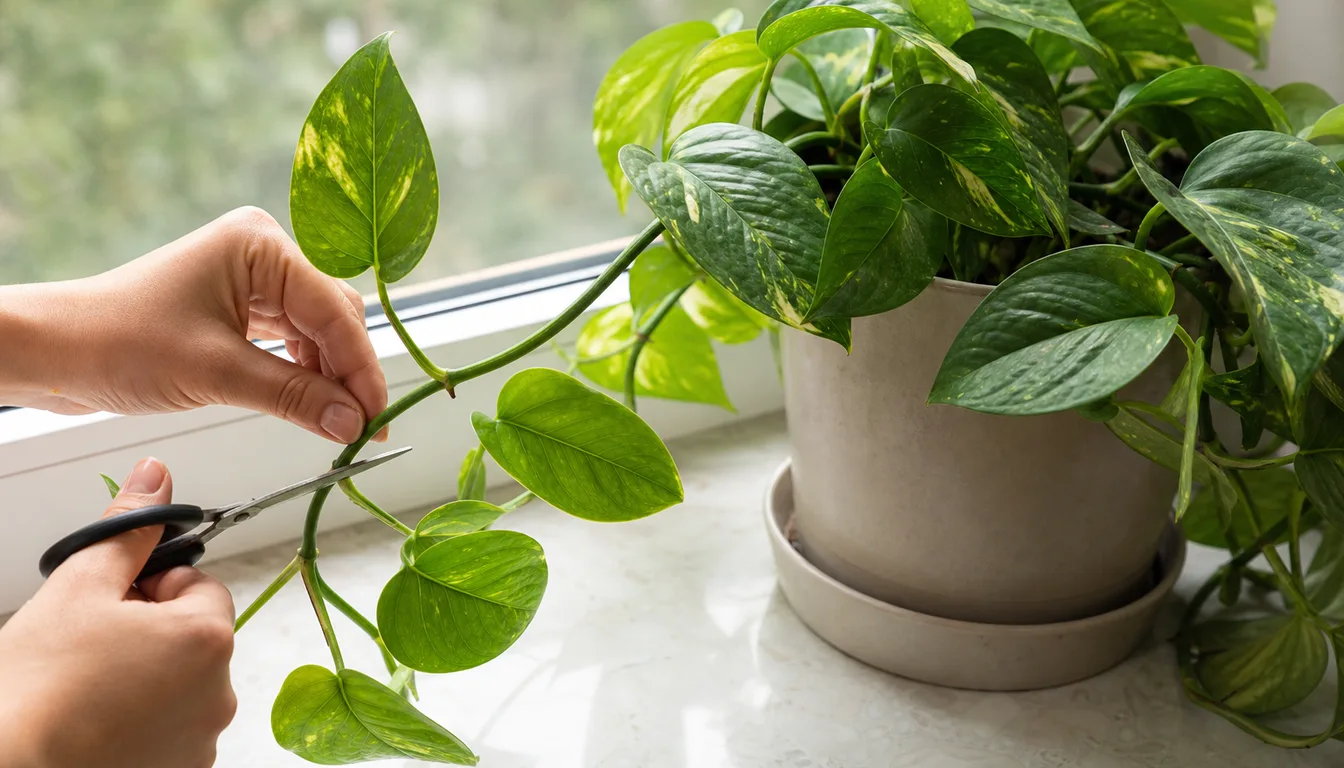
Cutting Back a Leggy Houseplant Does Not Fix It
Most people cut a houseplant back because it has gone long and bare.
11 min read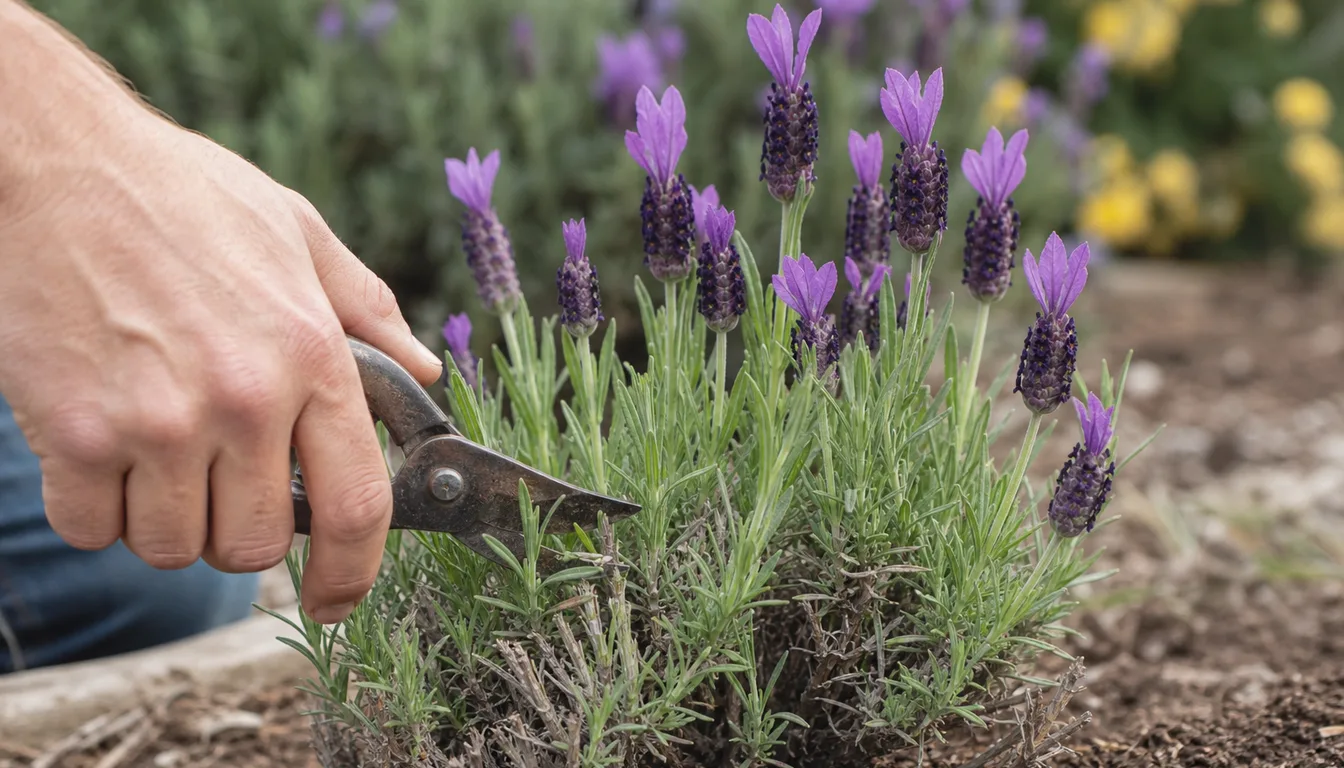
French Lavender Pruning Depends on the Plant and Season
French lavender needs light trimming within its leafy growth, rather than a hard cut into bare…
6 min read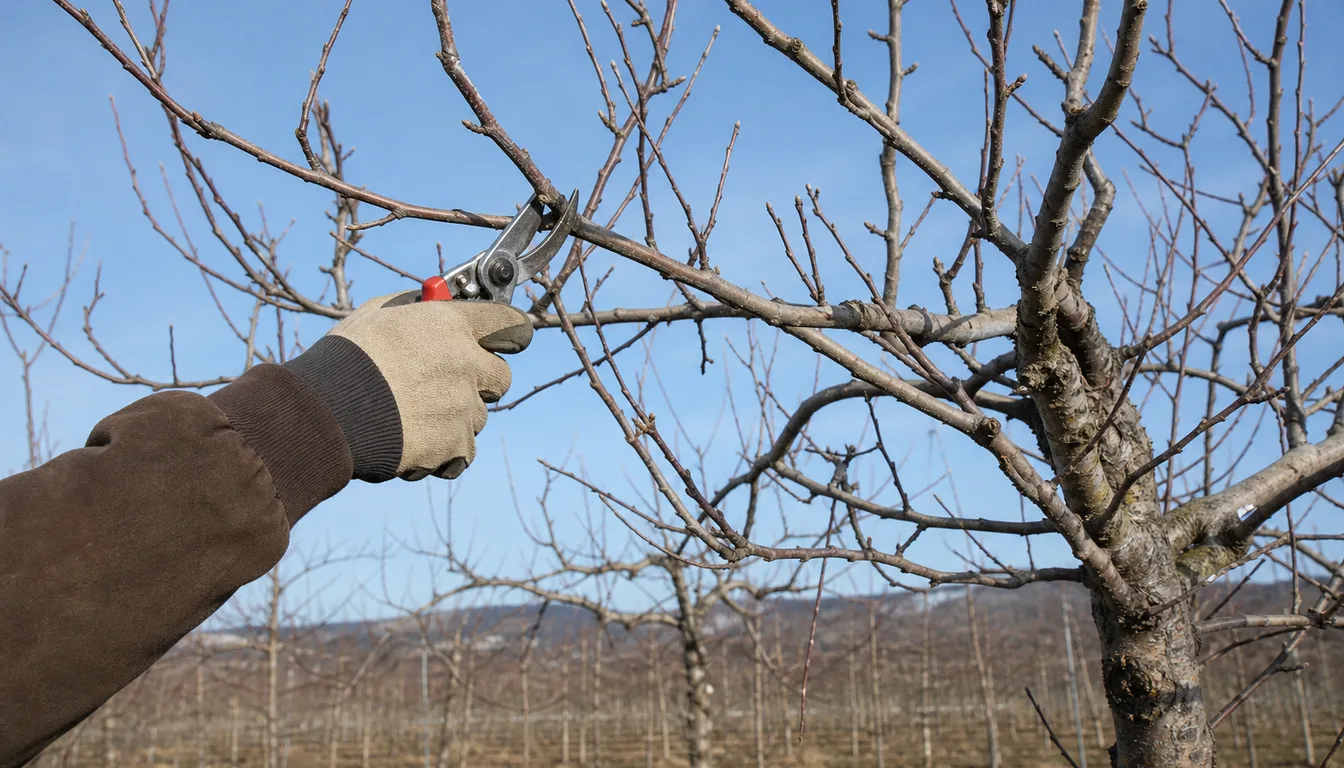
Fruit Tree Pruning Starts With Where the Crop Forms
A fruit tree that gives small, crowded, scabby fruit is usually not underfed.
11 min read
How Deep Can You Cut a Spent Lavender Spike?
Deadheading lavender is the lightest cut you will ever make on the plant, and the one place people…
7 min read
How Do You Prune Spanish Lavender for a Second Flush?
Spanish lavender is the one that flowers first and the one that keeps going.
7 min read
How to Deadhead Daisies for More Blooms
To deadhead a daisy, wait until the petals have faded or collapsed, then follow the flower stem…
12 min read