
Best Purple Flowers for Sun, Shade, and Dry Beds
Purple is the color many gardeners bring home when they went shopping for blue.
The difference comes from flower pigments and the way light changes color in a bed. Choose plants for your light and watering first, then use pale flowers or foliage beside the deepest purples so they remain visible from across the garden.
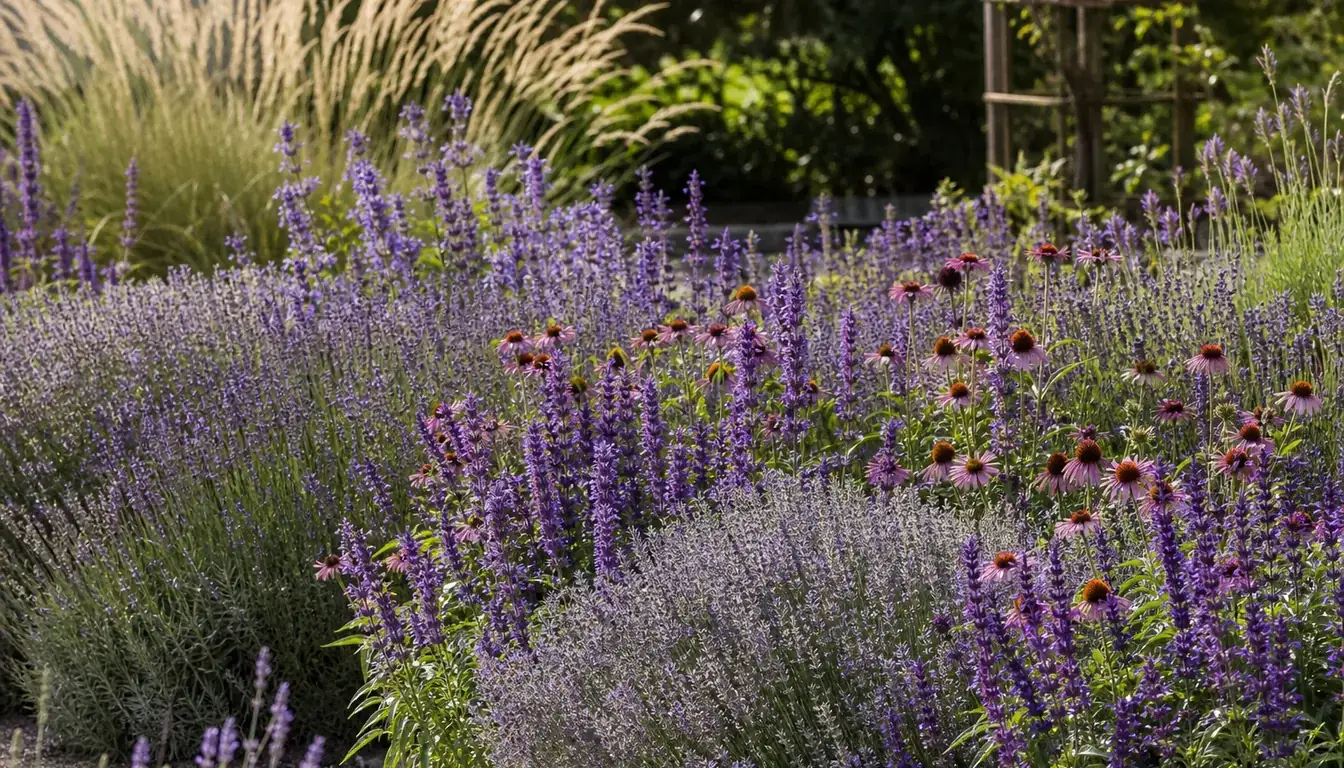
At a glance
Why True Blue Is Rare and Purple Is What You Get
Walk any garden center in June and count the labels that say blue against the flowers that are actually blue.
The gap is not marketing sloppiness so much as a shortage in the plants themselves.
Almost no plant produces a genuinely blue pigment. The flowers that read as blue are making the color out of anthocyanin, the same pigment family that produces red and purple, bent toward blue by the pH inside the petal and by metal ions the plant has taken up.
That is why blue is unstable as well as scarce, and the proof is sitting in most gardens already.
A hydrangea changes color with soil chemistry because the same pigment is being pushed one way or the other, and nothing similar happens to a reliably purple plant.
- Blue pigment
- Almost no plant makes one
- What blue flowers use
- Anthocyanin, the red and purple pigment
- What shifts it
- Petal pH and metal ions
- Visible proof
- Hydrangea changing color with soil
Stop paying a premium for plants labeled blue and buy the purple version instead. It is more widely available, less fussy about heat and soil, and it will still be the same color in five years.
The Purples Worth Planting
Light comes first with this color, for the reason covered further down, which is that purple behaves very differently in sun and in shade. The light you have narrows the list before height ever does.
In full sun the purples are mostly spires and daisies, which is a useful accident because vertical purple reads from further away than a rounded flower head of the same color. In shade the list is shorter and leans on foliage plants that happen to flower purple rather than on flowers alone.
Then check the water column before anything else, because it splits this list more sharply than height does. Putting a dry-soil purple in an irrigated bed is the single most common way these plants die.
| Plant | Light | Height | Water |
|---|---|---|---|
| Lavender | Full sun, 6-8 hrs | 12-30 in | Low, sharp drainage |
| Catmint | Full sun to light shade | 12-36 in | Low once established |
| Russian sage | Full sun | 2-4 ft | Low, the driest of them |
| Salvia | Full sun | 12-48 in | Low to moderate |
| Coneflower | Full sun | 2-4 ft | Low once established |
| Bearded iris | Full sun, afternoon shade in heat | 12-40 in | Low once settled |
| Aster | Sun to light shade | 1-6 ft | Moderate |
| Hosta | Part to full shade | 6 in to 3 ft | Steady moisture |
| Hydrangea and phlox | Part shade / sun | 2-6 ft | Steady moisture |
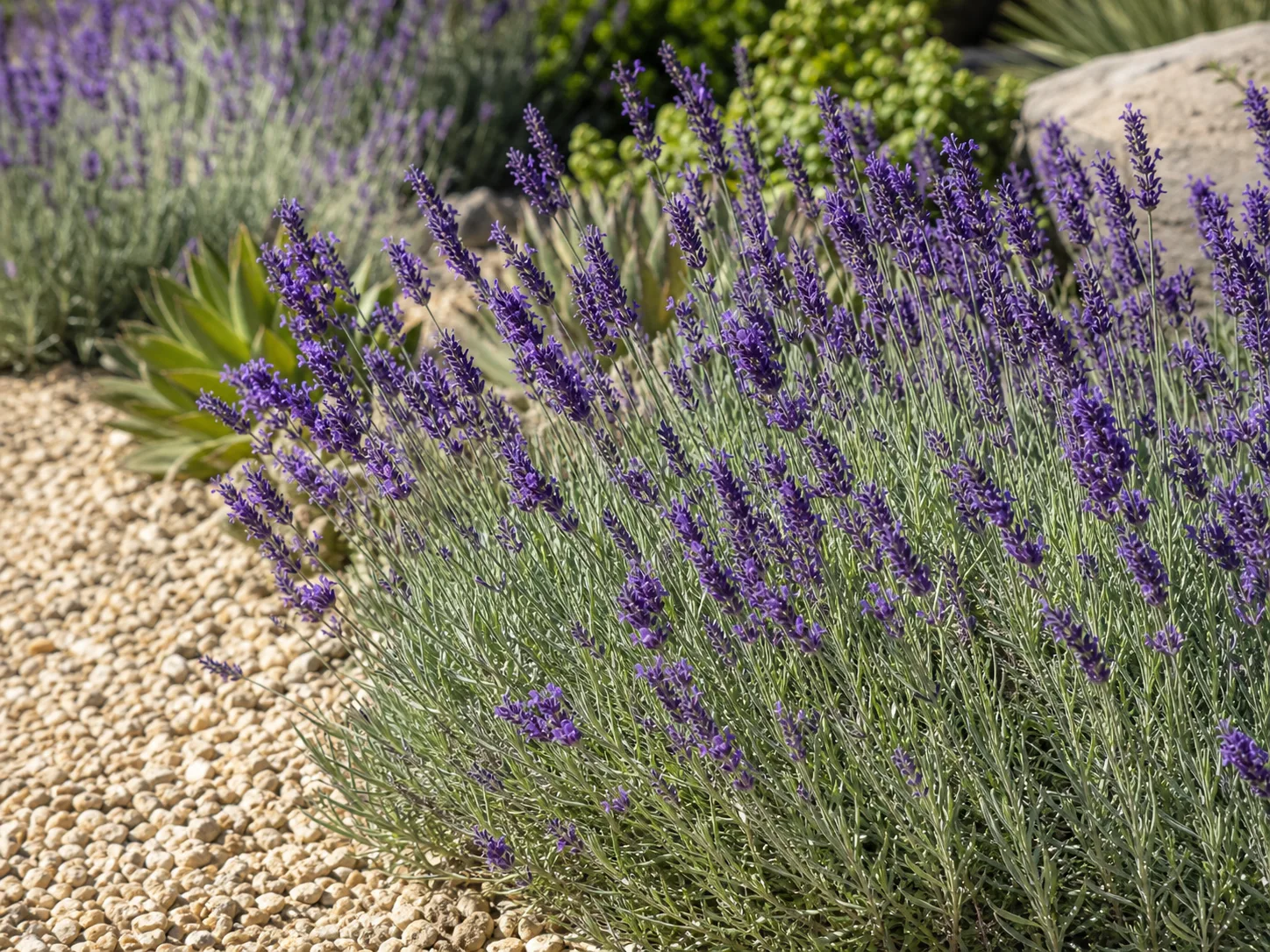
English Lavender
Purple flower spikes for full sun and dry soil
- Mature fit
- Allow 12 to 30 inches of height with open airflow
- Main tradeoff
- Sharp drainage matters more than extra watering
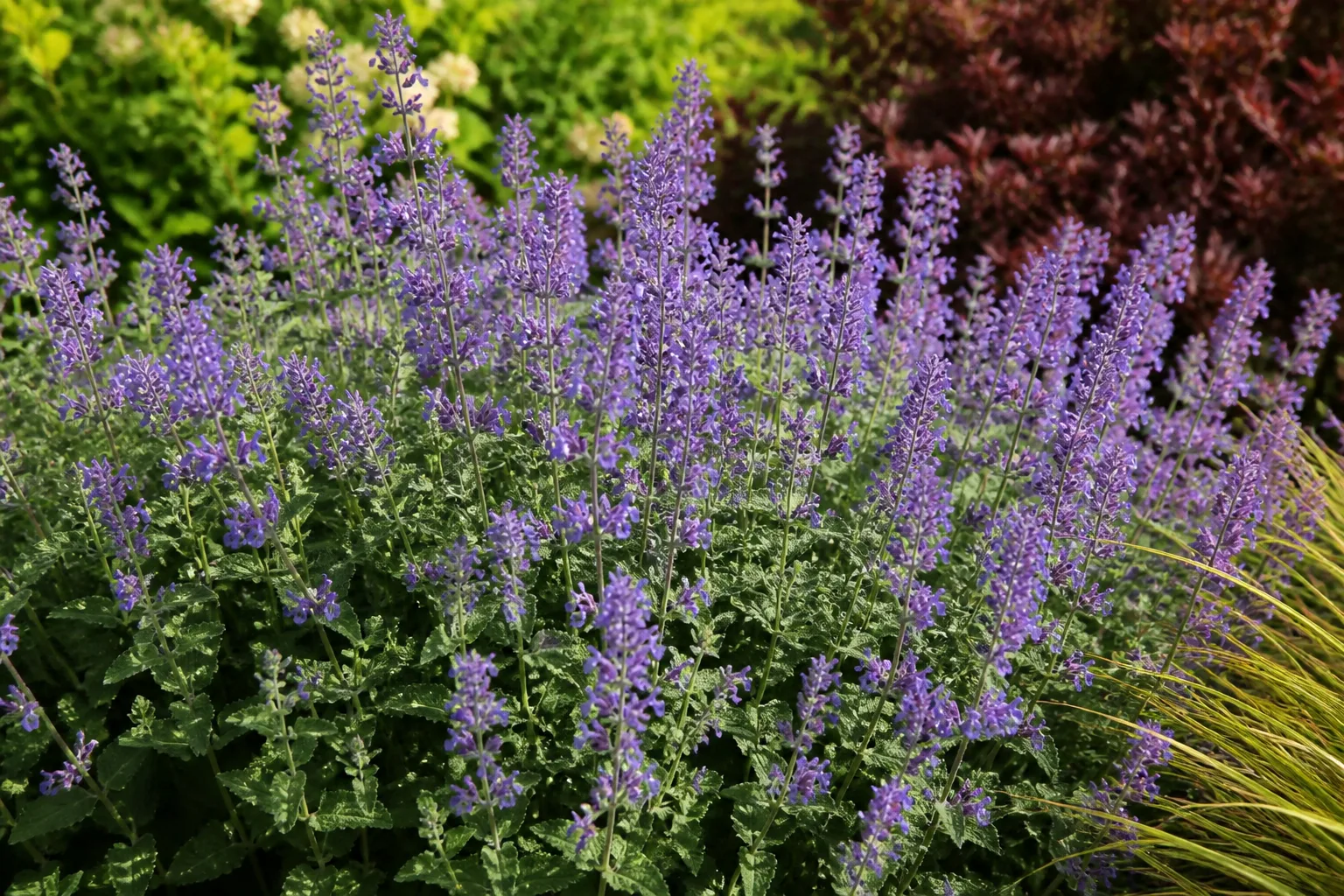
Catmint
A low-water purple mound for sun or light shade
- Mature fit
- Choose a 12-to-36-inch cultivar that can spill without covering neighbors
- Main tradeoff
- A soft spreading habit needs room at the bed edge
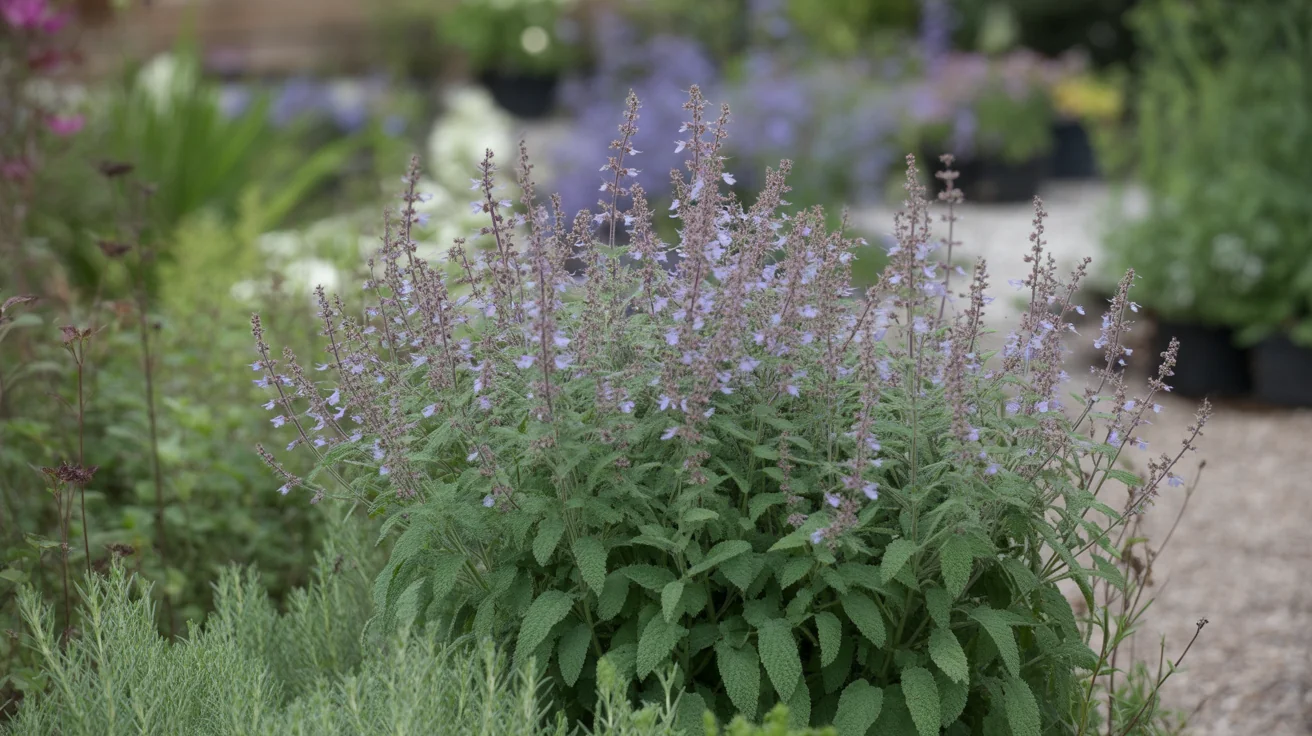
Russian Sage
The driest-site purple for a hot, full-sun border
- Mature fit
- Leave room for an airy clump about 2 to 4 feet tall
- Main tradeoff
- Wet soil is a larger risk than drought after establishment
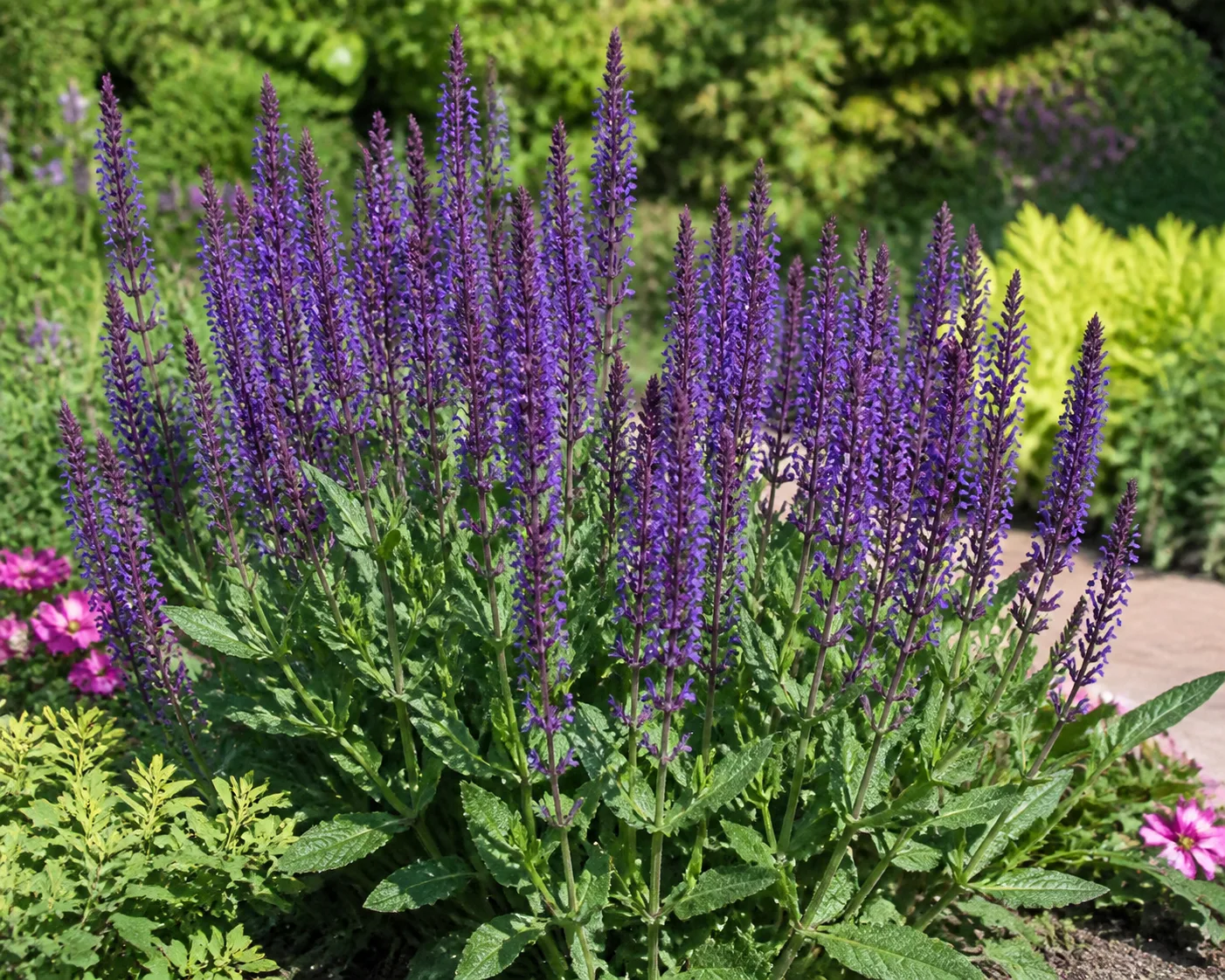
Salvia
Upright purple spires for a sunny mixed border
- Mature fit
- Check the cultivar because height ranges from about 12 to 48 inches
- Main tradeoff
- Water needs and winter hardiness vary by species
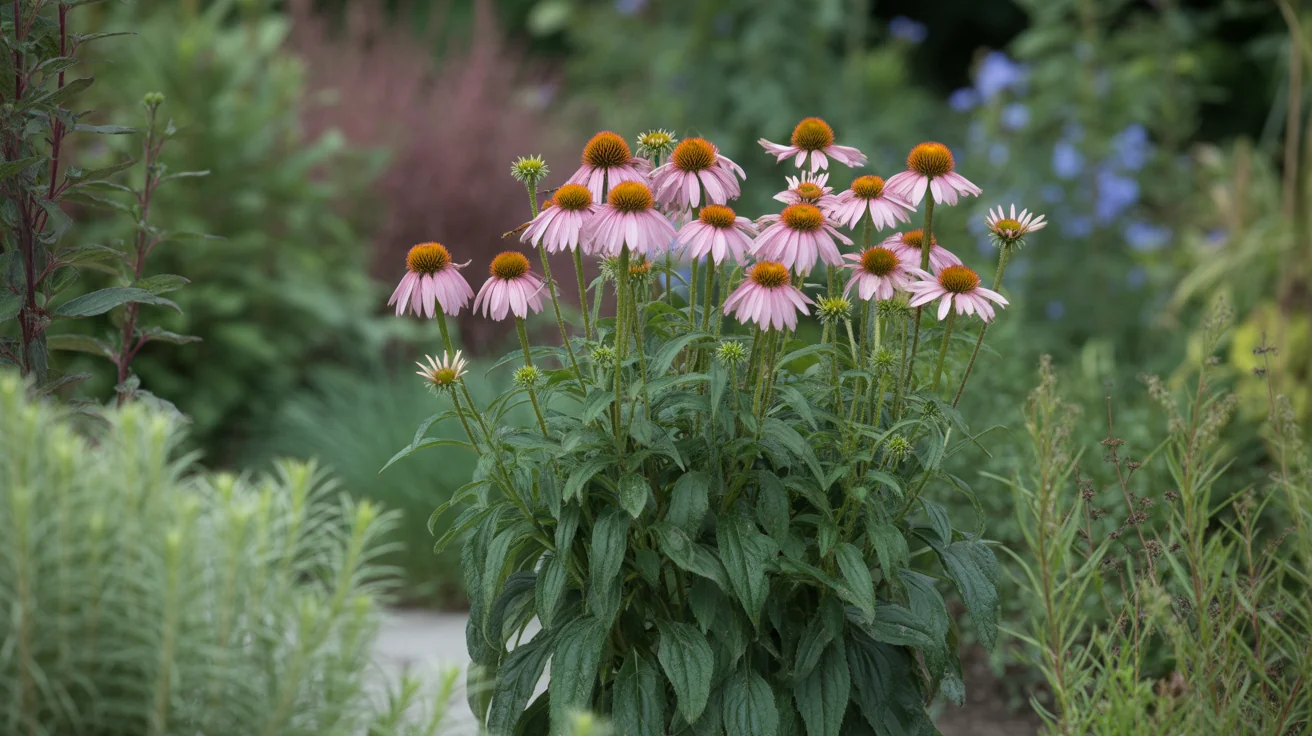
Coneflower
Purple daisy-shaped flowers for a sunny, lower-water bed
- Mature fit
- Use its 2-to-4-foot stems through the middle of the border
- Main tradeoff
- It needs establishment water before its drought tolerance is useful
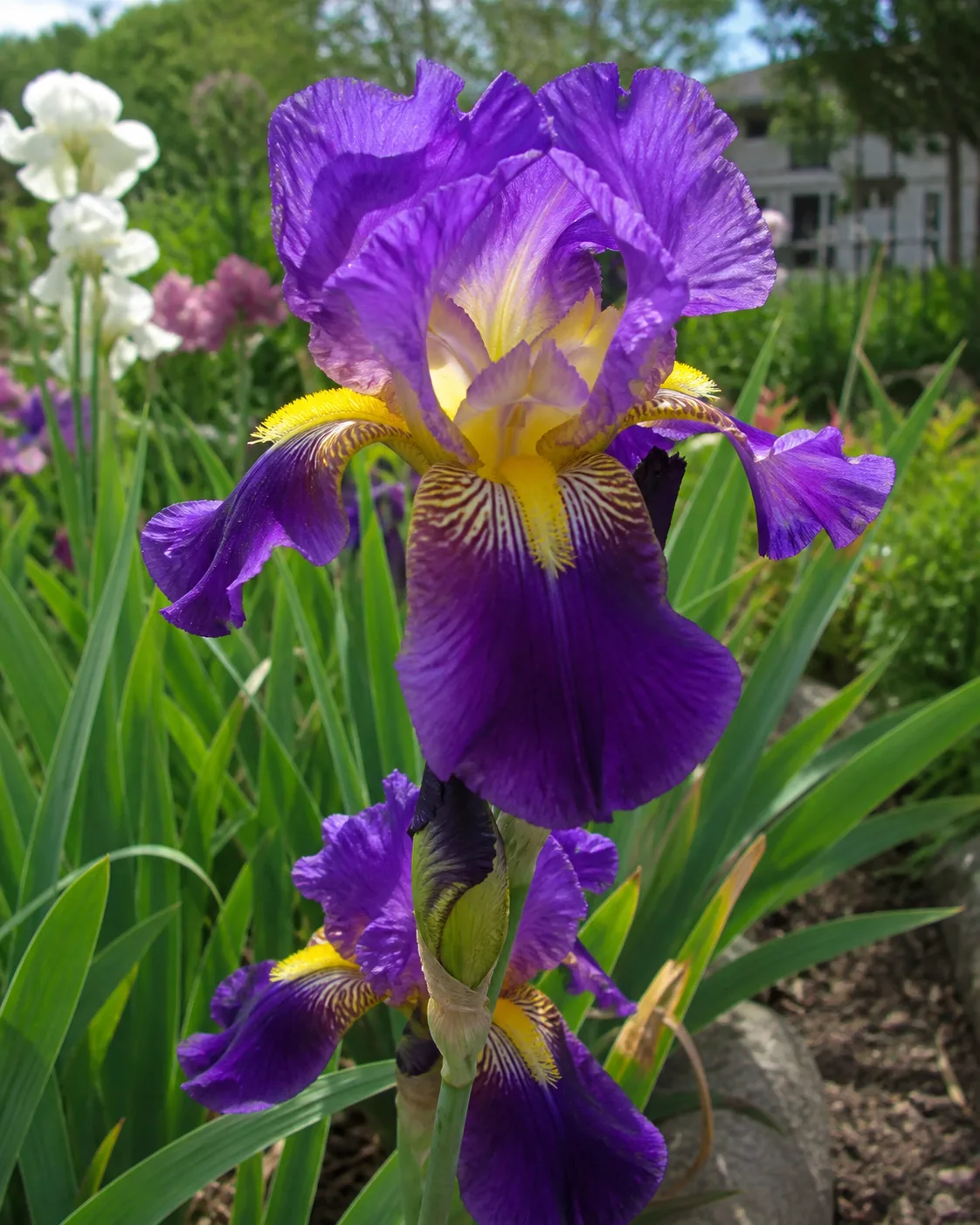
Bearded Iris
Spring purple flowers where the soil can dry after establishment
- Mature fit
- Place 12-to-40-inch forms in sun with afternoon relief in intense heat
- Main tradeoff
- Crowded or buried rhizomes reduce flowering
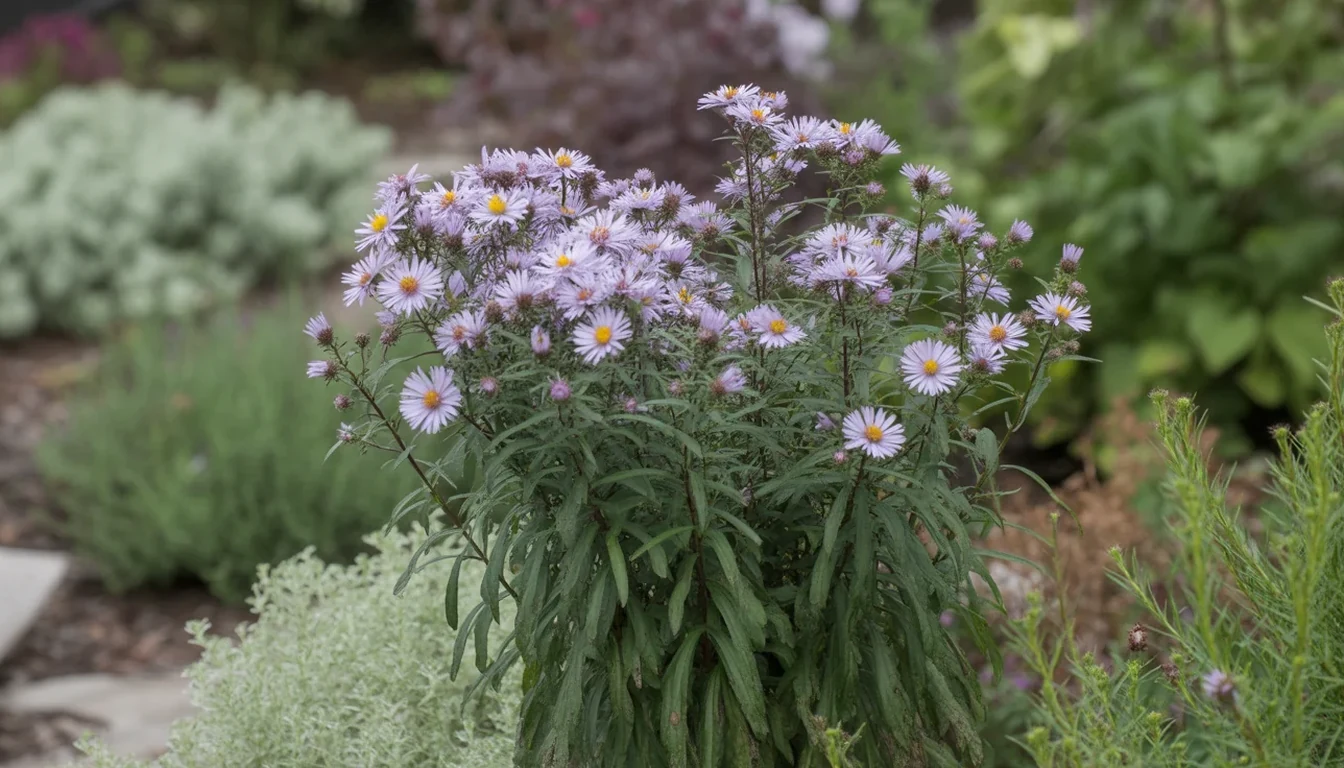
Aster
Later purple bloom for sun or light shade
- Mature fit
- Select by cultivar because height ranges from 1 to 6 feet
- Main tradeoff
- It needs more consistent moisture than the Mediterranean choices
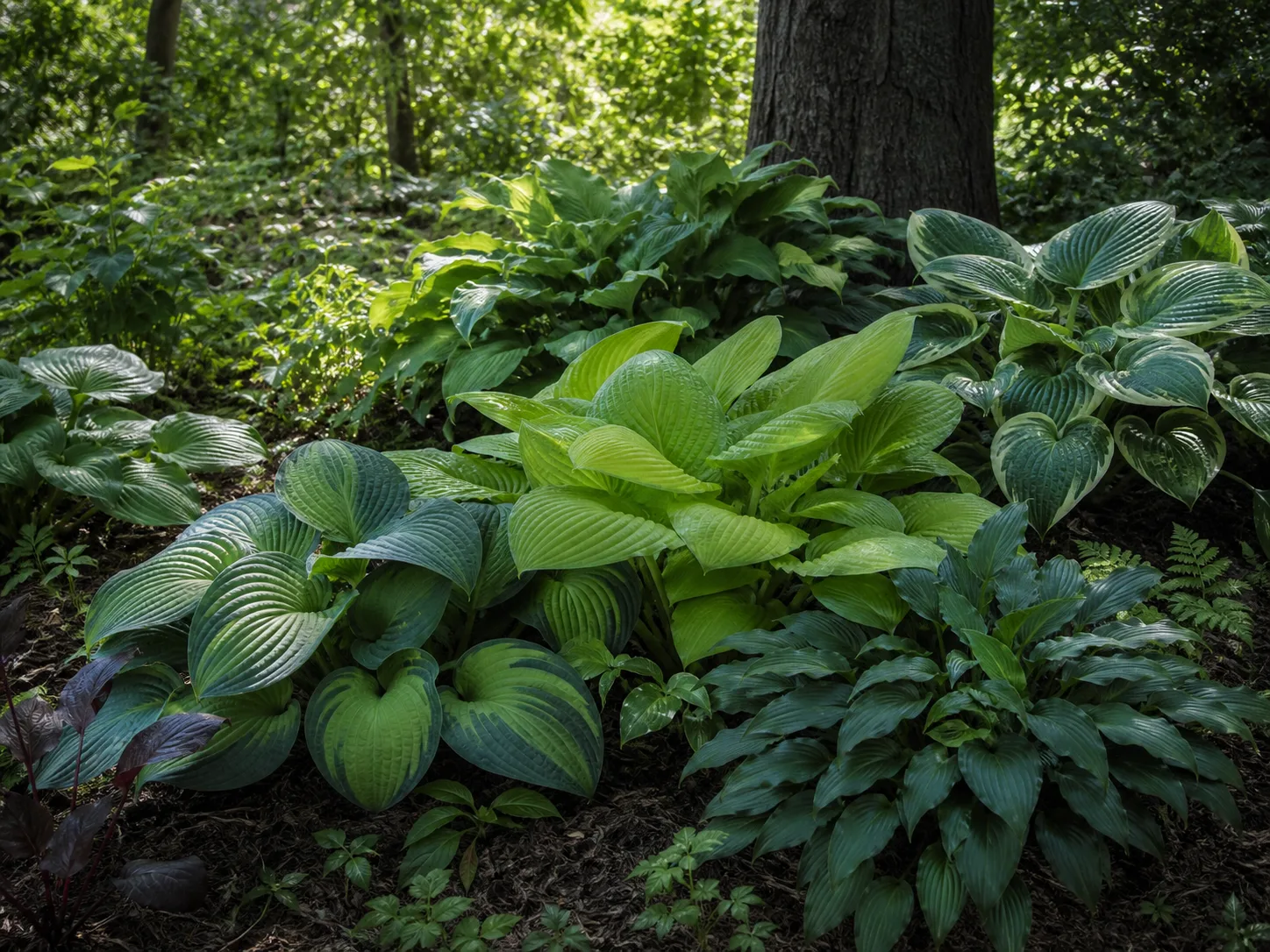
Hosta
Purple flowers above foliage in part to full shade
- Mature fit
- Cultivars range from small 6-inch plants to clumps about 3 feet tall
- Main tradeoff
- Steady moisture matters more than drought tolerance
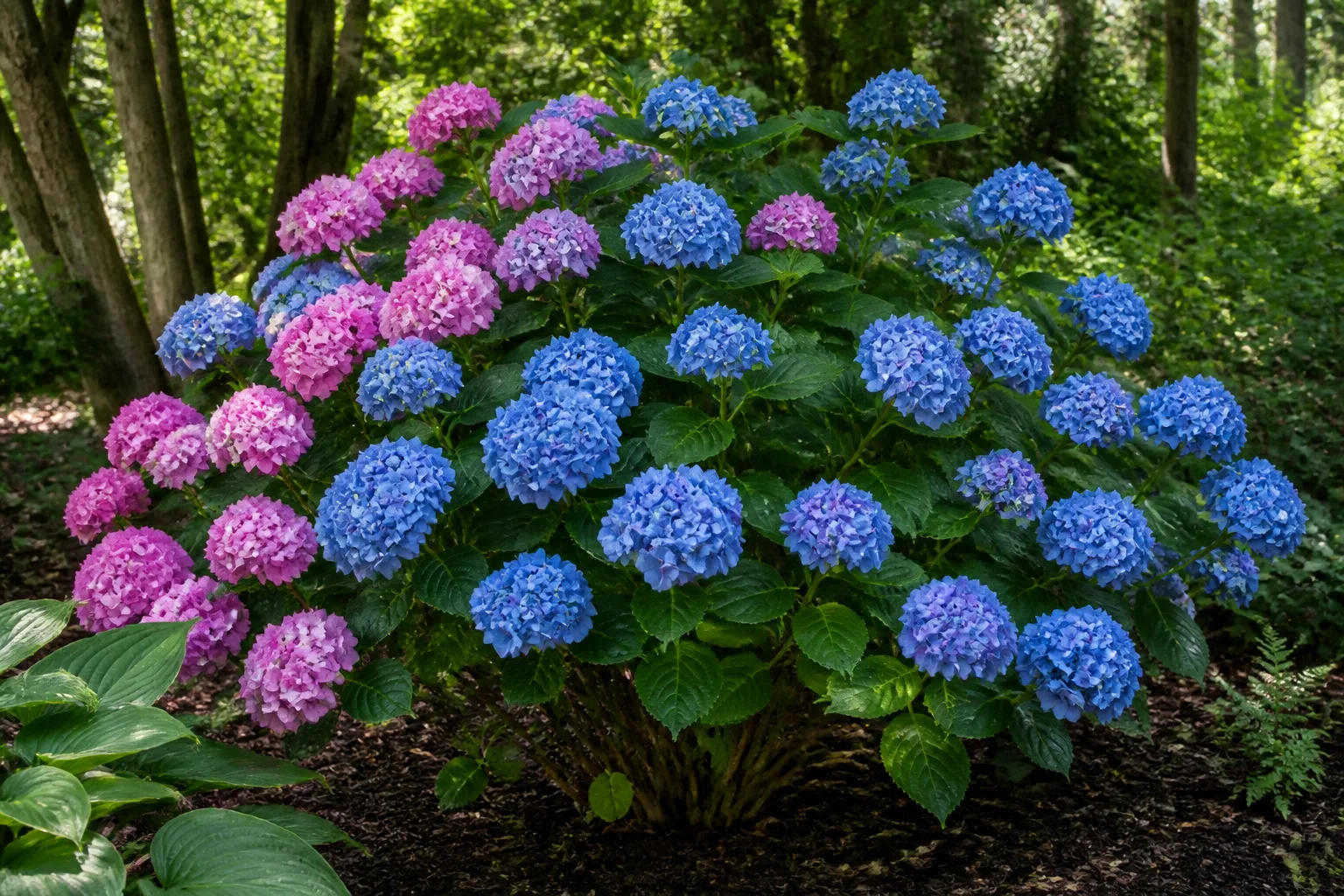
Bigleaf Hydrangea
Large purple-to-blue flower heads for a part-shade shrub layer
- Mature fit
- Give the mature shrub enough width rather than treating it as a filler
- Main tradeoff
- Flower color and plant performance both depend on soil conditions
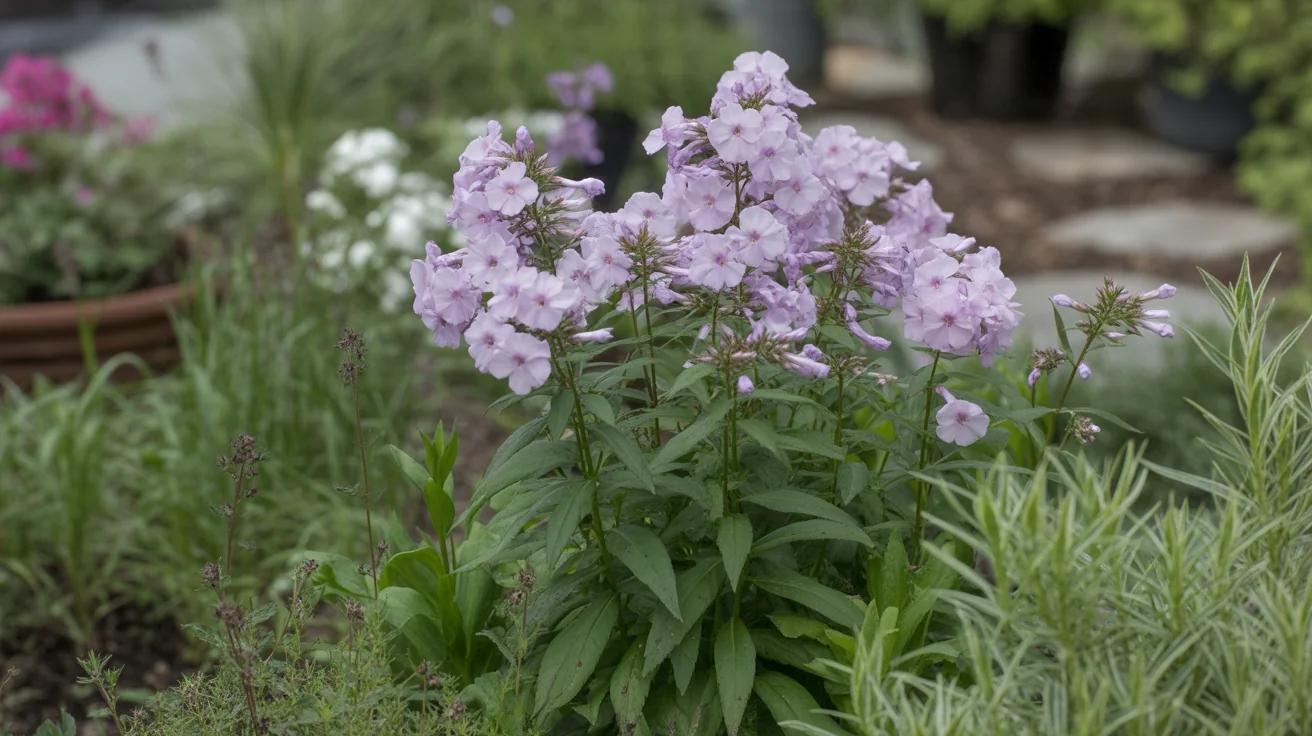
Garden Phlox
A taller purple flowering mass for a sunny bed with steady moisture
- Mature fit
- Use garden phlox where its 2-to-6-foot stems have airflow
- Main tradeoff
- It does not belong in the dry bed used for lavender or Russian sage
Purple Foliage Holds the Color When the Flowers Stop
Flower color leaves with spent blooms, while purple foliage can carry the color before and after the flowering period.
That makes foliage the sensible backbone of a purple scheme and flowers the moments laid on top of it, which is the reverse of how most people build one.
Dark leaves also solve a contrast problem. A purple flower set against purple foliage can disappear, while purple foliage behind silver or chartreuse keeps a clear edge.
There is one condition attached, and it catches people out. The pigment in purple leaves is largely a response to light, so many purple-leaved plants fade toward green in shade and hold their deepest color where enough sun reaches them.
| Plant | Height | Light | What the foliage does |
|---|---|---|---|
| Coral bells | 8-18 in | Part to light shade | Front-edge mound, holds all season |
| Loropetalum | 2-15 ft by cultivar | Morning sun | Evergreen purple, the year-round option |
| Barberry | 2-6 ft | Full sun to light shade | Dense dark mass, check local invasive lists |
| Ninebark | 5-10 ft | Full sun to light shade | Arching dark shrub with peeling bark |
| Smoke tree | 8-15 ft | Full sun | Cut hard each spring for bigger, richer leaves |
| Elephant ear | 3-6 ft | Bright part shade | Huge dark leaves for a tropical note |
Cool Violet Recedes, Warm Magenta Advances
Purple splits into two camps that do opposite things to the perceived depth of a garden, and this is optics rather than taste. Cool blue-violet recedes, so the eye reads it as farther away than it is, while warm magenta and red-purple advance and read as nearer.
That gives each end a job. Drift the cool violets through the back and middle of a border and the garden lengthens, while magenta held at the front or used as a punctuation point brings that spot forward.
Let one group lead. A few warm magenta accents can pull the eye forward, but equal masses of warm and cool purple make the border harder to read.
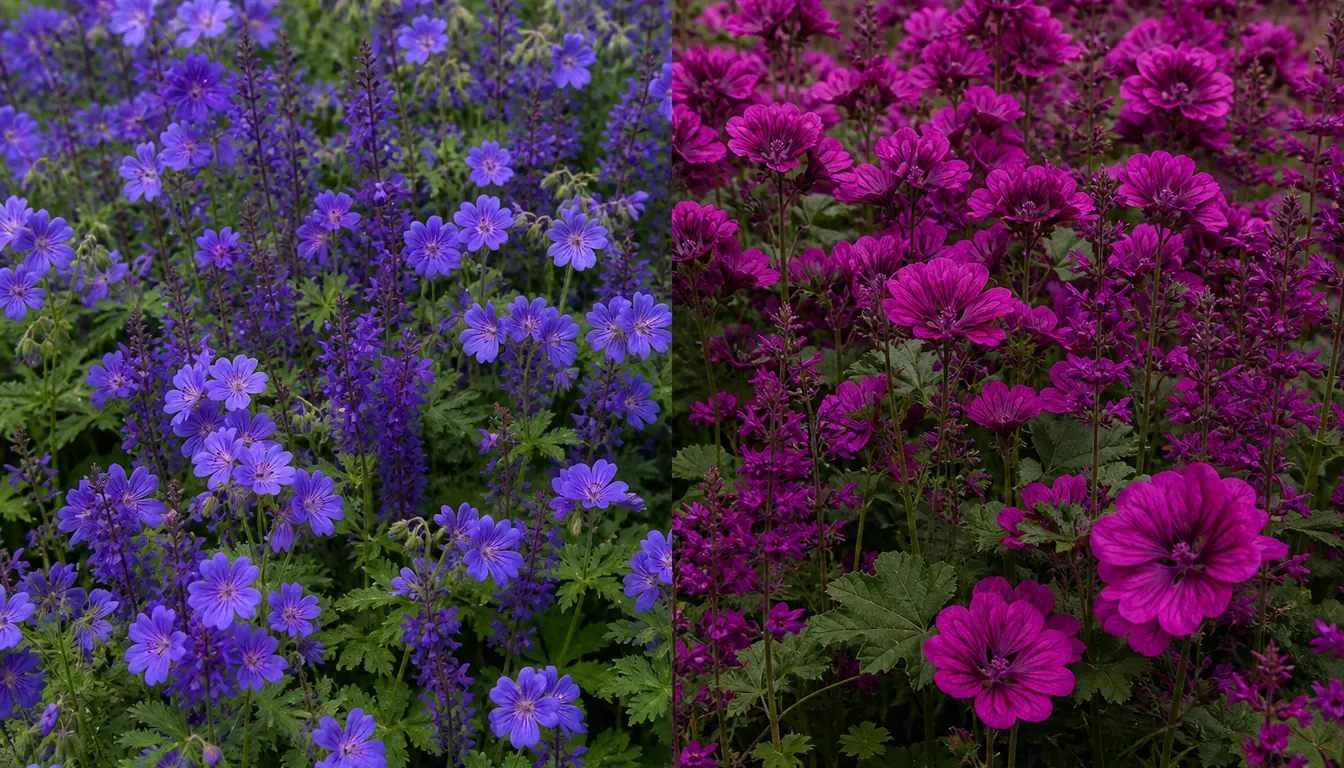
| The purple | What it does optically | Where it belongs |
|---|---|---|
| Cool blue-violet | Recedes, reads as distance | Back and middle, in drifts |
| Mid purple | Neutral, sits where you put it | Anywhere, the connective tissue |
| Warm magenta and red-purple | Advances, pulls the eye forward | Front, as an accent |
| The two mixed evenly | Compete for attention | Choose one group to lead |
Why Deep Purple Reads Muddy From a Distance
Dark colors lose their edges before pale ones do. A deep violet that looks rich up close can merge into a dark patch when viewed from farther across the yard.
Planting more of it can make that patch larger without making the color clearer. What the purple needs is a pale edge that preserves its outline.
Light is the second half of the fix, because purple in shade moves toward near-black while the same plant in brighter light keeps more of its hue.
A dark purple in a shaded corner is being asked to do the one thing it cannot.
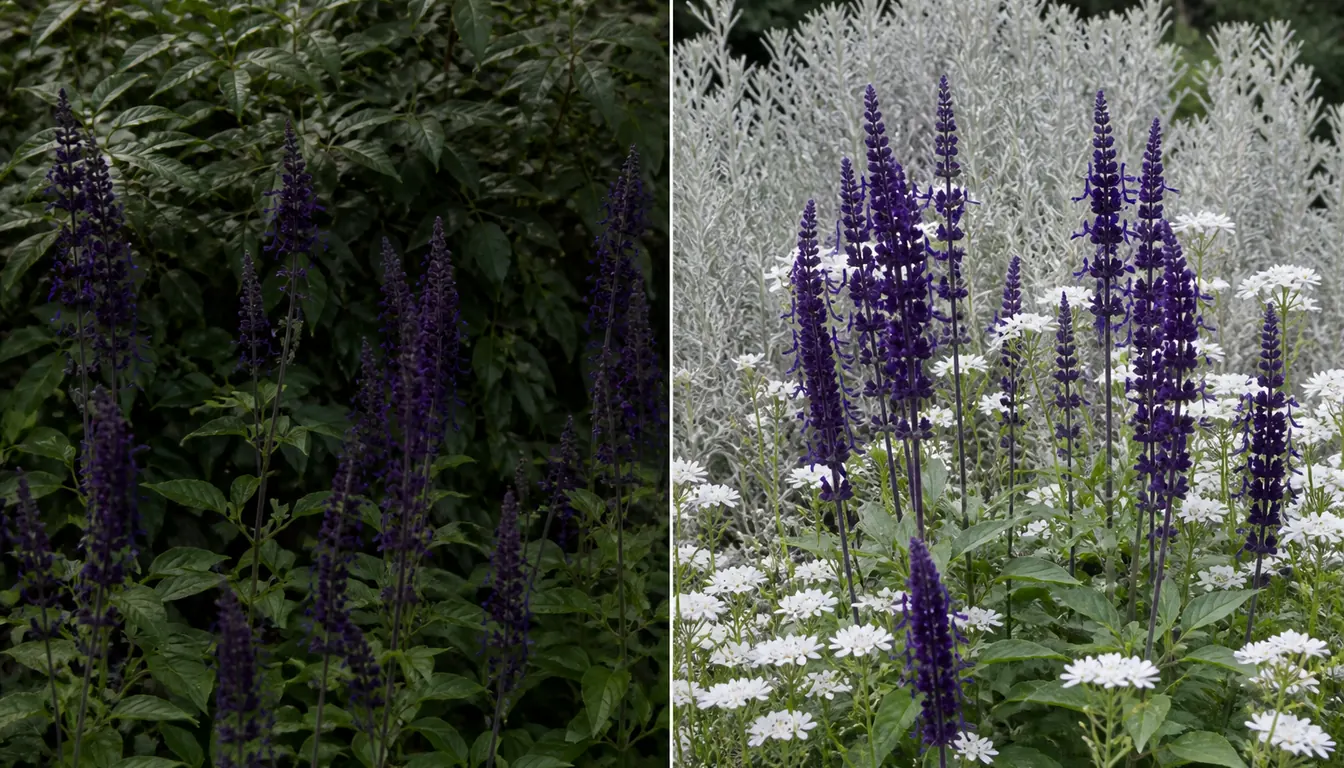
- Beside silver or white: a strong contrast that keeps the flower edge visible
- In the brightest suitable position: enough light helps the hue remain readable
- Near the main viewpoint: closer flowers retain more visible detail
- Backed by pale foliage: gray or cream leaves give dark blooms a clear outline
Purple and Yellow Is the Highest Contrast Pair
Purple and yellow sit directly opposite one another on the color wheel, making this one of the strongest pairings available to a garden.
Strength is also the problem, since equal visual weight can make both colors fight for attention. Use yellow in smaller patches when you want purple to remain the main color.
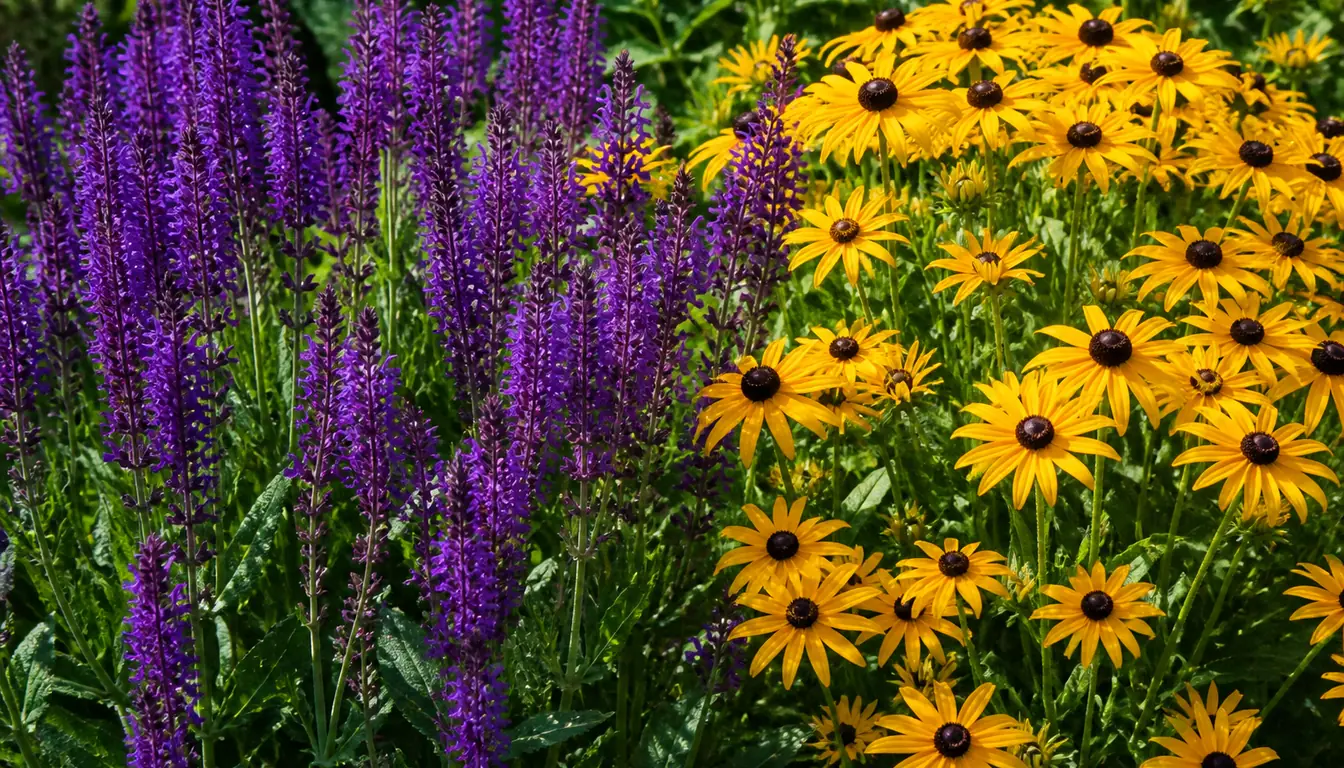
- Yellow flowers: maximum contrast, energetic and bright
- Pink flowers: lower contrast that reads as one color family
- White flowers: make dark purple visible without adding another hue
- Silver foliage: the quietest partner for a small bed
Most of the Tough Drought Purples Are the Same Plants
Several dependable purples also tolerate dry ground after their roots are established.
Lavender and russian sage come from dry climates, while coneflower has prairie ancestry.
All three still need regular water during establishment, and none benefits from soil that stays wet around the crown.
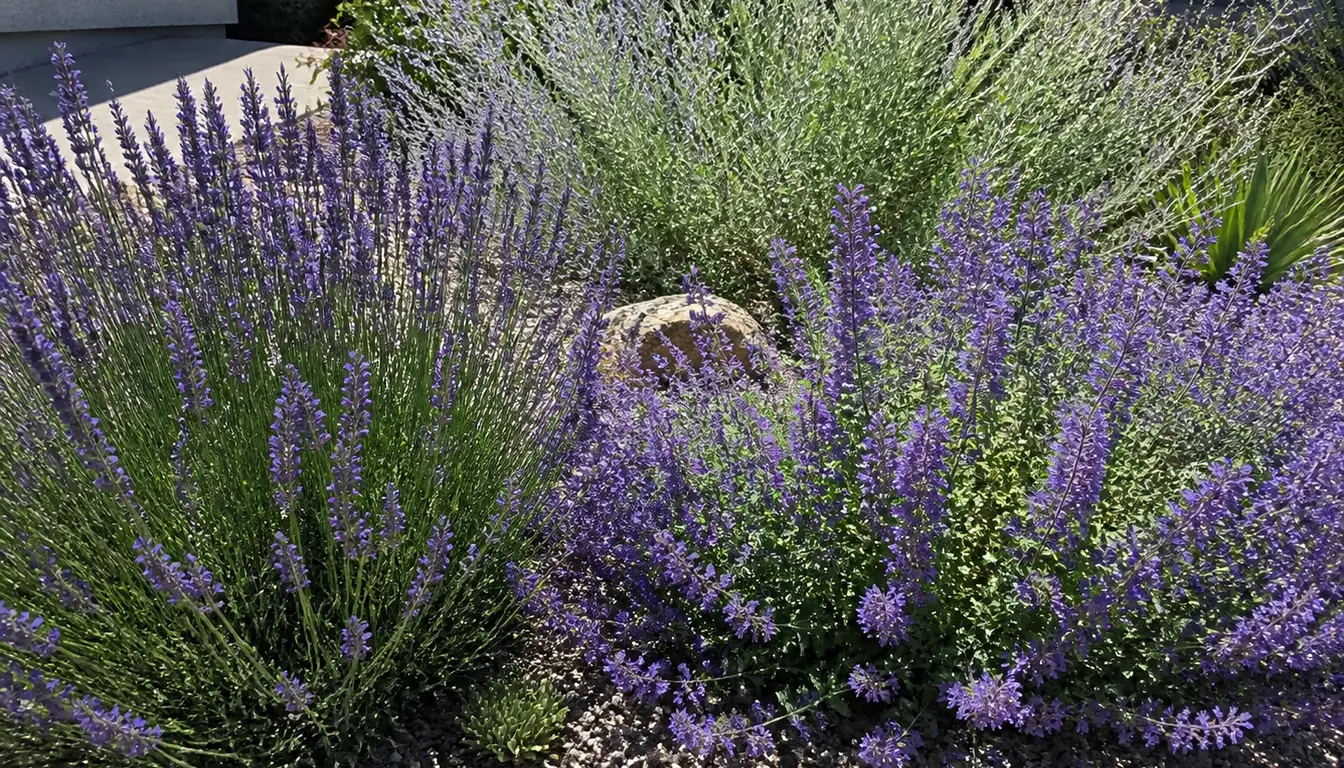
Driest position
Russian sage and lavender need full sun and fast drainage.
Lower-water border
Catmint, coneflower, and many salvias need water through establishment and during extended drought.
Steadier moisture
Aster, iris, and phlox should not stay dry for long stretches.
Separate bed
Hosta and hydrangea belong in the more consistently moist position.
Drought tolerance begins after establishment. Hydrangea, hosta, and phlox want steadier moisture than russian sage or lavender, so place the two groups in different beds instead of trying to correct the mismatch with a watering can.
Lavender lost over winter may have suffered from cold, wet soil, a poorly drained crown, or a cultivar that was not hardy enough for the site. Sharp drainage reduces one important risk, but it cannot correct the wrong hardiness zone.
A Purple Border From Spring to Frost
One purple species gives the border a limited bloom window, followed by foliage for the rest of its season. Layer plants that peak at different times if continuous color is the goal.
Catmint and some salvias can flower again after shearing, which helps bridge the gap between early-summer and late-summer perennials. The exact timing shifts with climate, cultivar, and weather.
Pro Tips
- Buy the purple rather than paying a premium for a plant labeled blue.
- Check the water column before the height, since it splits the purples more sharply.
- View deep purple from the path or window you use most. Add a pale or silver neighbor if the flowers merge into one dark patch.
- Put dark purples in the brightest spot you have, because shade takes them to black.
- Use yellow as a smaller accent when you want strong contrast, since equal masses of both colors can compete.
- Drift cool violets at the back to lengthen the garden and keep magenta forward as an accent.
- A lavender lost over winter almost always drowned rather than froze.
Frequently Asked Questions
Why are there so few true blue flowers?
Because almost no plant produces a blue pigment, and the flowers that look blue are making it out of anthocyanin, the same pigment family behind red and purple, shifted by petal pH and metal ions. That is also why blue is unstable, which a hydrangea demonstrates every time soil chemistry changes its color.
Why does my purple bed look dull from the house?
Deep purple can merge into a dark patch when viewed from across a yard, especially in shade. Give it a pale or silver neighbor, then check the pairing from the path, window, or chair where you usually see the bed.
What colors go with purple flowers?
Yellow creates strong contrast because it sits opposite purple on the color wheel. Use it as the smaller accent if you want purple to remain dominant, while pink, white, and silver make a calmer pairing.
Are purple flowers drought tolerant?
Many of the most reliable ones are, because lavender and Russian sage are Mediterranean plants and coneflower is a prairie plant, so dry sun is where they evolved. Hydrangea, hosta and phlox are the exceptions and need steady moisture, so the two groups belong in different beds.
Why did my lavender die over winter?
Almost certainly from wet rather than cold, since lavender tolerates hard frost and does not tolerate sitting in damp soil. Sharp drainage matters more than any amount of care with watering, which is why lavender fails in irrigated beds and thrives in gravel.
What purple flowers grow in shade?
The shade list is short and leans on foliage, with hosta from 6 inches to 3 feet being the main one, and hydrangea and astilbe filling part shade. Purple is at its weakest in deep shade because a dark color in low light goes to near-black.
Sources & References
Related Guides
Best Butterfly Garden Plants for a Complete Habitat
The best butterfly garden plants do two different jobs. Host plants feed caterpillars, while nectar…
15 min read
Best Fall-Blooming Flowers for Color Near Frost
A bed that still carries flowers in October usually was planned before temperatures fell.
9 min read
Best Fast-Growing Trees for Shade and Privacy
The best fast-growing tree is the one whose mature crown, roots, climate range, and maintenance…
16 min read
Best Fragrant Flowers for Every Yard and Season
The best fragrant flowers depend on climate, light, space, and the hours you use the yard.
15 min read
Best Full-Sun Perennials for Hot, Bright Beds
The best full-sun perennials are the ones that match the bed's soil moisture and drainage, local…
14 min read
Best Ground Cover Plants for Sun, Shade, and Slopes
The best ground cover is a plant that survives the site and performs the job without escaping into…
18 min read