
Pink Flowers That Hold Their Color, in Sun or Shade
Pink looks like the safe choice right up until two pinks land in the same bed and start fighting each other.
That happens because pink covers a wider range than any other flower color, and the two ends of that range do not sit together comfortably. Knowing which end a flower sits at settles most clashes. Shade narrows the pinks that will actually flower, and a hydrangea turning blue and a rose going pale are two completely unrelated problems.
At a glance
Why Two Pinks in the Same Bed Fight
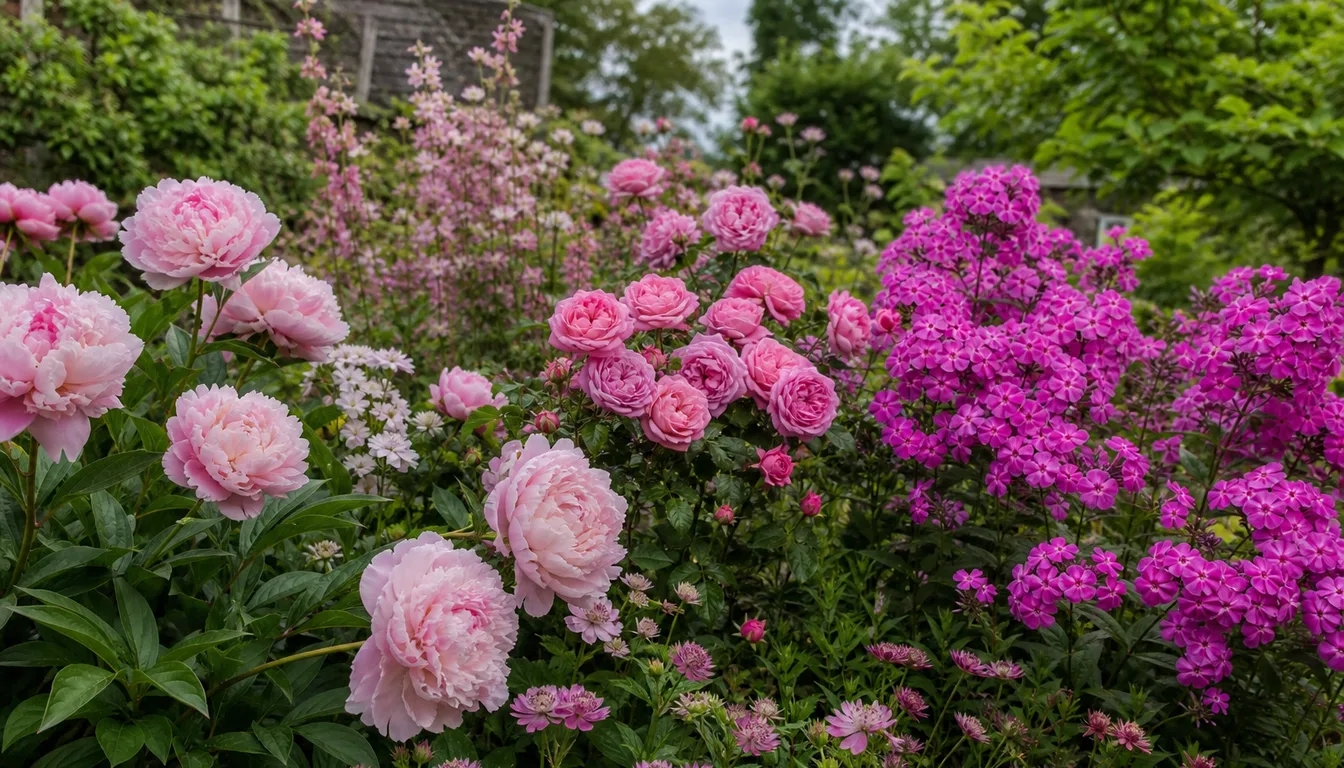
Pink is not one color but the widest range any flower color covers, running from cool blue-toned magenta through true pink to warm coral and salmon.
Two flowers can carry the same word on the label and still look wrong beside each other, which is why a pink bed sometimes feels off with no obvious culprit.
The split that matters is temperature, because cool pinks carry a trace of blue while warm pinks carry a trace of orange.
This is also the one color where the tag and the catalog photo are close to useless. A peony or a shrub rose can sit at either end under the same color word, and this site's own hydrangea notes warn against choosing a cultivar from a pink or blue catalog picture at all.
Take a true blue object and a true orange one to the nursery, then hold the flower against each. If it looks better beside the blue it is a cool pink, and if it looks better beside the orange it is a warm one.
Pink Is the One Color With a Real Shade Bench
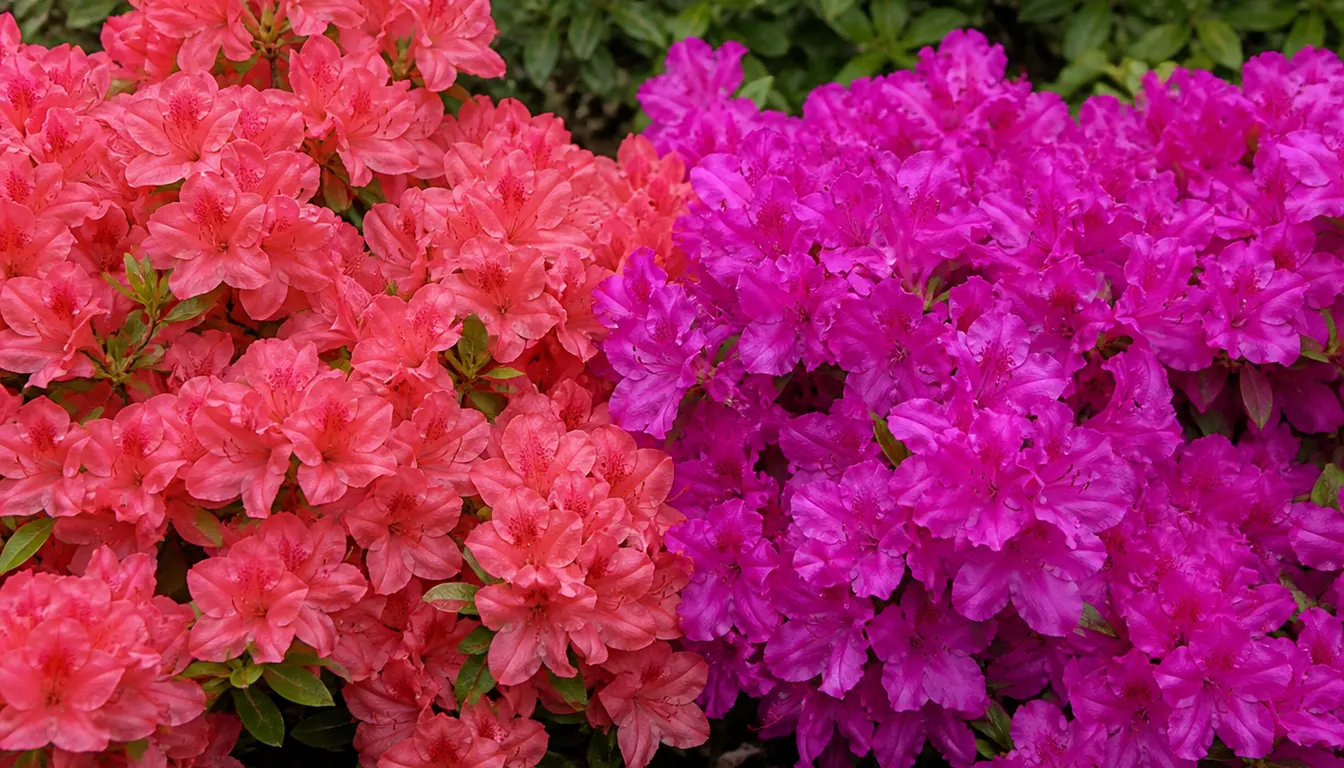
This matters more than any design rule. A shaded bed leaves most colors with almost nothing to offer, and pink is the one that still has a genuine list of plants that will flower there rather than just hold foliage.
They are not interchangeable, though, because each fills a different structural role. Camellia is a 6 to 12 foot evergreen backbone for Zones 7 to 9, astilbe gives 1 to 4 feet of upright plumes in Zones 3 to 9, and coral bells hold an 8 to 18 inch mound of foliage that stays presentable long after the flowers finish.
One entry needs different soil from the rest, since an azalea wants genuinely acidic ground while the others tolerate ordinary garden soil.
| Plant | Shade it takes | Size | What it is for |
|---|---|---|---|
| Camellia | Partial shade, morning sun | 6-12 ft, Zones 7-9 | Evergreen backbone and winter bloom |
| Azalea | Part shade to filtered sun | 2-10 ft, Zones 4-9 | Spring mass color, needs acidic soil |
| Bigleaf hydrangea | Morning sun, afternoon shade | 3-6 ft, Zones 3-9 | Long summer bloom, color shifts with soil |
| Astilbe | Part to light shade | 1-4 ft, Zones 3-9 | Upright plumes in genuinely dim corners |
| Bleeding heart | Partial to light shade | 24-36 in, Zones 3-9 | Early spring, then dies back by midsummer |
| Coral bells | Part to light shade | 8-18 in foliage, Zones 3-9 | Front edge that stays tidy all season |
Match Warm to Warm, Cool to Cool
Once the temperature is settled the planting almost designs itself. Keep the cool pinks with cool neighbors like blue, purple, silver, and white, and keep the warm coral pinks with peach, gold, and soft orange.
Two things bridge any pink when the rule cannot be followed, which happens often enough in an inherited bed. Plain green foliage and white flowers sit comfortably beside both ends, so a band of either between a magenta and a salmon stops them arguing without moving anything, and a drift of blue behind a cool pink sharpens it further.
| Pink temperature | Reads as | Pairs with |
|---|---|---|
| Cool blush and magenta | crisp, elegant | blue, purple, silver, white |
| Warm coral and salmon | soft, sunny | peach, gold, soft orange |
| Mid true-pink | classic, cottage | white and green bridge anything |
Three Different Reasons a Pink Stops Being Pink
Color draining out of a pink bed gets blamed on the sun almost every time, and two of the three causes have nothing to do with sun at all.
What separates them is the pattern and the timescale.
Soil chemistry moves the whole shrub over a season and only affects bigleaf and mountain hydrangea, while sun bleaching hits pale pinks within a single hot afternoon and eases by morning.
The third is age-fading, which happens flower by flower on a plant whose new buds still open true. That one is written into the cultivar and no amount of shade or water changes it, and in a lantana the florets shift color as they age entirely by design.
- Whole shrub drifting toward blue over weeks: soil pH, and only on a bigleaf hydrangea
- Pale pink reads white by afternoon, better by morning: sun and reflected heat, so give afternoon shade
- Old flowers pale while new buds open true: the cultivar is not colorfast, so replace it rather than treat it
- Every flower dull and the plant limp: drought stress, so water more deeply before blaming color
The Hydrangea pH Lever, and Where It Stops Working
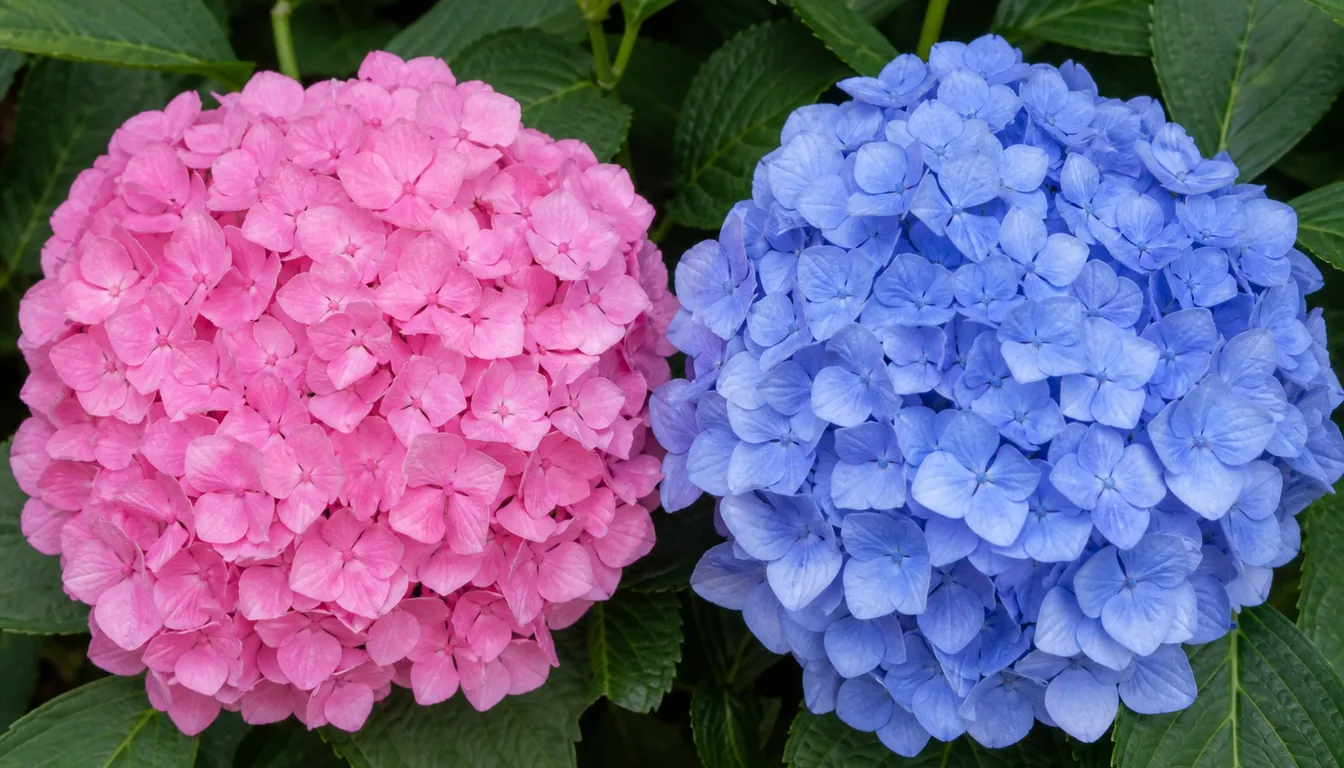
Soil below pH 6 with aluminum available to the roots pushes a bigleaf hydrangea blue, and soil above pH 7 favors pink. The band between those two numbers is where most disappointment lives, because it produces unstable muddy in-between shades rather than either color cleanly.
Three situations make the lever do nothing whatsoever. White cultivars stay white no matter what goes into the soil, panicle and oakleaf hydrangeas do not respond to pH at all, and rain steadily drives soil back down toward acidic, so a single application of lime is a season's change rather than a permanent one.
Check three things before buying lime: that the shrub is a bigleaf or mountain hydrangea, that the cultivar is not a white one, and what the soil pH actually is now. Amending blind is how people spend a year moving a plant from pH 6.2 to pH 6.6 and get muddy mauve for it.
Two Weeks of Pink, or Four Months
The pinks that fill garden photographs are almost all the brief ones, and a bed built entirely from them holds color for about three weeks a year. That is the single most expensive mistake available in this color.
The gap between the two groups is larger than most people expect. A peony gives roughly two weeks, an azalea two to three, and a bleeding heart disappears underground entirely by midsummer, while a crepe myrtle or a repeat-blooming rose runs for months.
Give most of the bed to the long bloomers and treat the showstoppers as accents planted where something else will grow over the gap they leave. A spirea or a weigela covers the awkward stretch between the spring and summer waves, and aster with sedum closes the season after the summer perennials are spent.
| Plant | When | Roughly how long | Role |
|---|---|---|---|
| Azalea | Spring | 2-3 weeks | Accent, then a plain green shrub |
| Bleeding heart | Early spring | 4-6 weeks, then dormant | Accent, plant something over the gap |
| Peony | Late spring | About 2 weeks | Accent, with foliage that stays presentable |
| Spirea and weigela | Late spring | 3-4 weeks, some rebloom | Bridge between the two waves |
| Garden phlox | Midsummer | 6-8 weeks | Backbone |
| Crepe myrtle | Mid to late summer | Many weeks | Backbone |
| Knock Out rose | Late spring to frost | Months | Backbone |
| Aster and sedum | Autumn | 4-6 weeks | Closes the season |
Pinks That Hold Their Color in Full Sun
In an exposed bed the deciding factor is depth of pigment rather than how tough the plant is.
A saturated pink has color to spare and still reads pink after losing some of it, while a pale blush starts with so little that an afternoon of reflected heat takes it to white. Save the blush pinks for the shade list above and build a hot exposed bed on the saturated ones.
- Crepe myrtle: 3 to 25 ft depending on cultivar, Zones 4 to 9, the summer-long backbone
- Knock Out rose: 3 to 5 ft in Zones 5 to 11, reblooming with almost no deadheading
- Garden phlox: 2 to 4 ft, the mid-border filler that carries midsummer
- Peony: 2 to 4 ft, unmatched for two weeks and quiet for the rest of the year
- Petunia: 6 to 18 in, an annual, and the one to reach for in containers
Pro Tips
- Hold a pink against a true blue and a true orange before buying, since the label will not tell you its undertone.
- Group cool blue-toned pinks together and warm coral pinks together, and use white or green to separate them.
- For a shaded bed reach for camellia, astilbe, or bleeding-heart rather than settling for foliage only.
- Check the hydrangea is a bigleaf type and not a white cultivar before spending anything on lime.
- Treat pH between 6 and 7 as the muddy band, because it gives neither clean pink nor clean blue.
- Put saturated pinks in full sun and pale blush pinks in morning sun, since blush has the least pigment to lose.
- If old flowers pale while new buds open true, the cultivar is not colorfast and no care will fix it.
Frequently Asked Questions
Why do two of my pink flowers clash?
Almost always because one is a cool blue-toned pink and the other is a warm coral-toned one, and pink spans a wider range than any other flower color. Hold each against a true blue and a true orange to see which way it leans, then group cool with cool and warm with warm.
What pink flowers grow in shade?
Camellia at 6 to 12 feet, azalea at 2 to 10 feet, astilbe at 1 to 4 feet, bleeding heart at 2 to 3 feet, and coral bells at the front edge all flower in part to light shade. Pink is the one flower color with a genuinely deep shade list, so a shaded bed does not have to be foliage only.
How do I keep my hydrangea pink instead of blue?
Hold the soil above pH 7 with garden lime, and expect to retest and reapply because rain steadily pushes it back down. Check first that the shrub is a bigleaf or mountain hydrangea and not a white cultivar, since panicle types and white flowers never respond to soil at all.
Why do my pink flowers fade to white?
If they read white by afternoon and better by morning it is sun and reflected heat bleaching a pale pink, which afternoon shade fixes. If old flowers pale while new buds still open true, the cultivar simply is not colorfast and nothing you do will hold it.
What colors go with pink flowers?
Cool blush and magenta pair with blue, purple, silver, and white, while warm coral and salmon pair with peach, gold, and soft orange. White flowers and plain green foliage bridge both ends, which is what to reach for when two pinks have to share a bed.
What are the easiest pink flowers to grow?
Knock Out roses, garden phlox, and crepe myrtle are the most forgiving in sun, all returning for years and blooming for months rather than weeks. For shade, astilbe and coral bells are hardy from Zone 3 to Zone 9 and ask for very little beyond even moisture.
Sources & References
Related Guides
Best Butterfly Garden Plants for a Complete Habitat
The best butterfly garden plants do two different jobs. Host plants feed caterpillars, while nectar…
15 min read
Best Fall-Blooming Flowers for Color Near Frost
A bed that still carries flowers in October usually was planned before temperatures fell.
9 min read
Best Fast-Growing Trees for Shade and Privacy
The best fast-growing tree is the one whose mature crown, roots, climate range, and maintenance…
16 min read
Best Fragrant Flowers for Every Yard and Season
The best fragrant flowers depend on climate, light, space, and the hours you use the yard.
15 min read
Best Full-Sun Perennials for Hot, Bright Beds
The best full-sun perennials are the ones that match the bed's soil moisture and drainage, local…
14 min read
Best Ground Cover Plants for Sun, Shade, and Slopes
The best ground cover is a plant that survives the site and performs the job without escaping into…
18 min read