
What's a Smoke Tree? How to Make It Actually Smoke
Cotinus coggygria Anacardiaceae
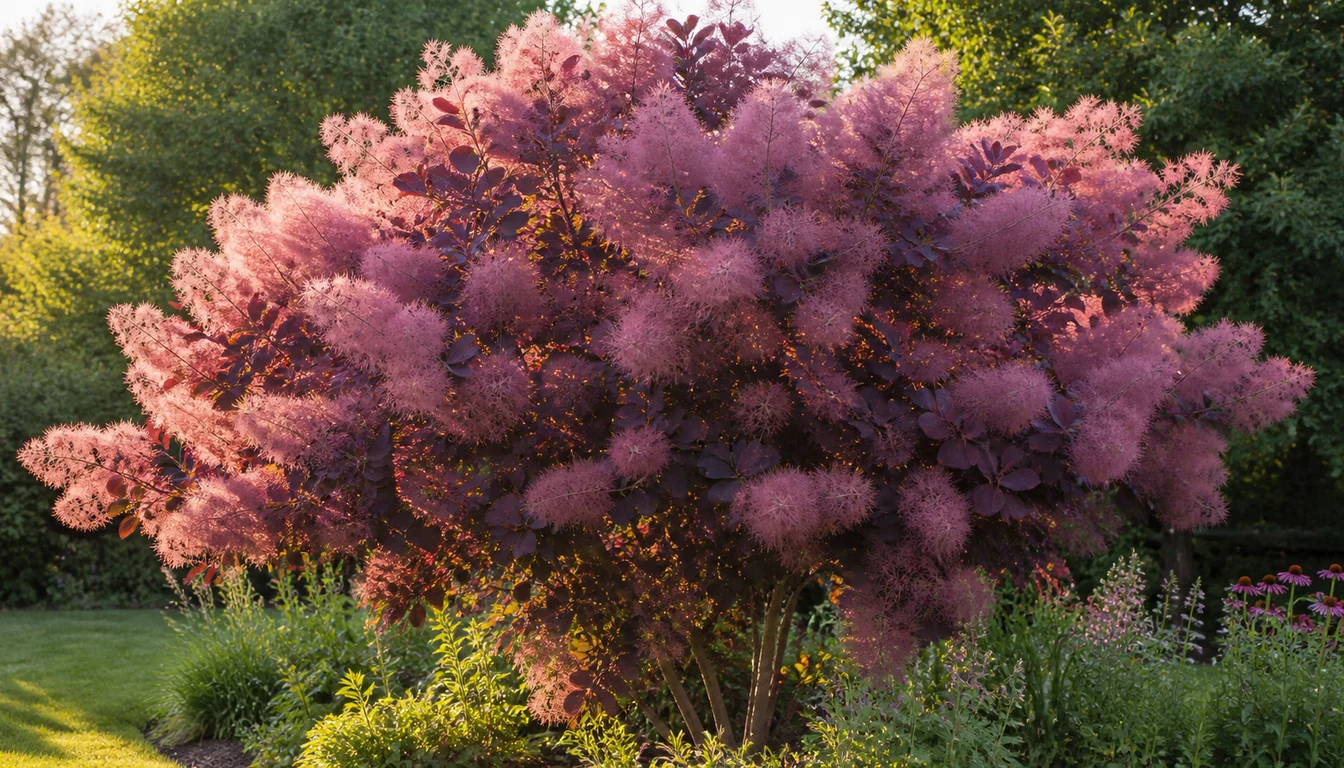
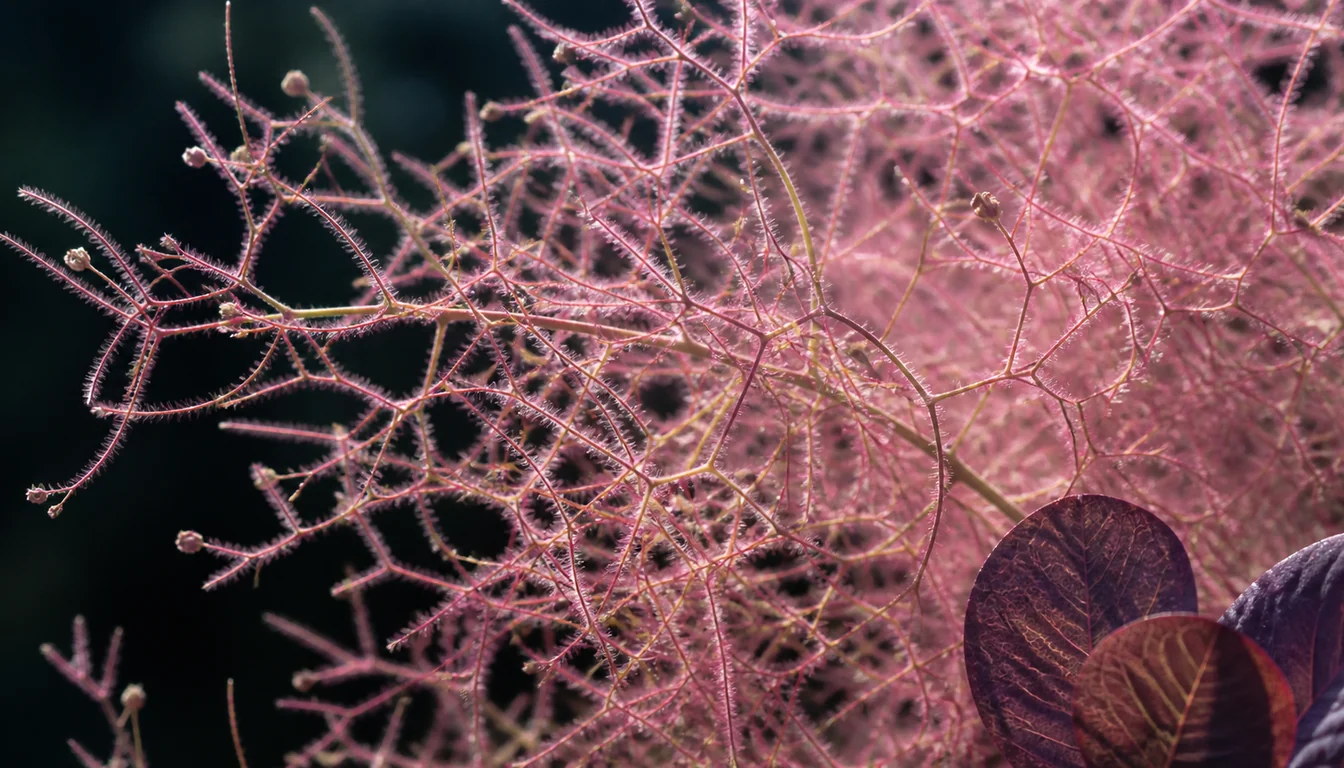
Smoke Tree (Cotinus coggygria) gets its name from thousands of hair-covered flower stalks that blur into a pink haze above dark purple leaves in midsummer. Whether the plant delivers that haze or a wall of oversized foliage comes down to one pruning decision, and full sun and lean, fast-draining ground decide whether either version looks like the photographs.
Care snapshot
What Is a Smoke Tree, and What Is the Smoke Made Of?
Smoke Tree (Cotinus coggygria) is a broad multi-stemmed shrub from southern Europe and central Asia, usually 8 to 15 ft tall and about as wide. It belongs to the cashew and sumac family, Anacardiaceae, which turns out to matter more for how you handle it than for how it looks.
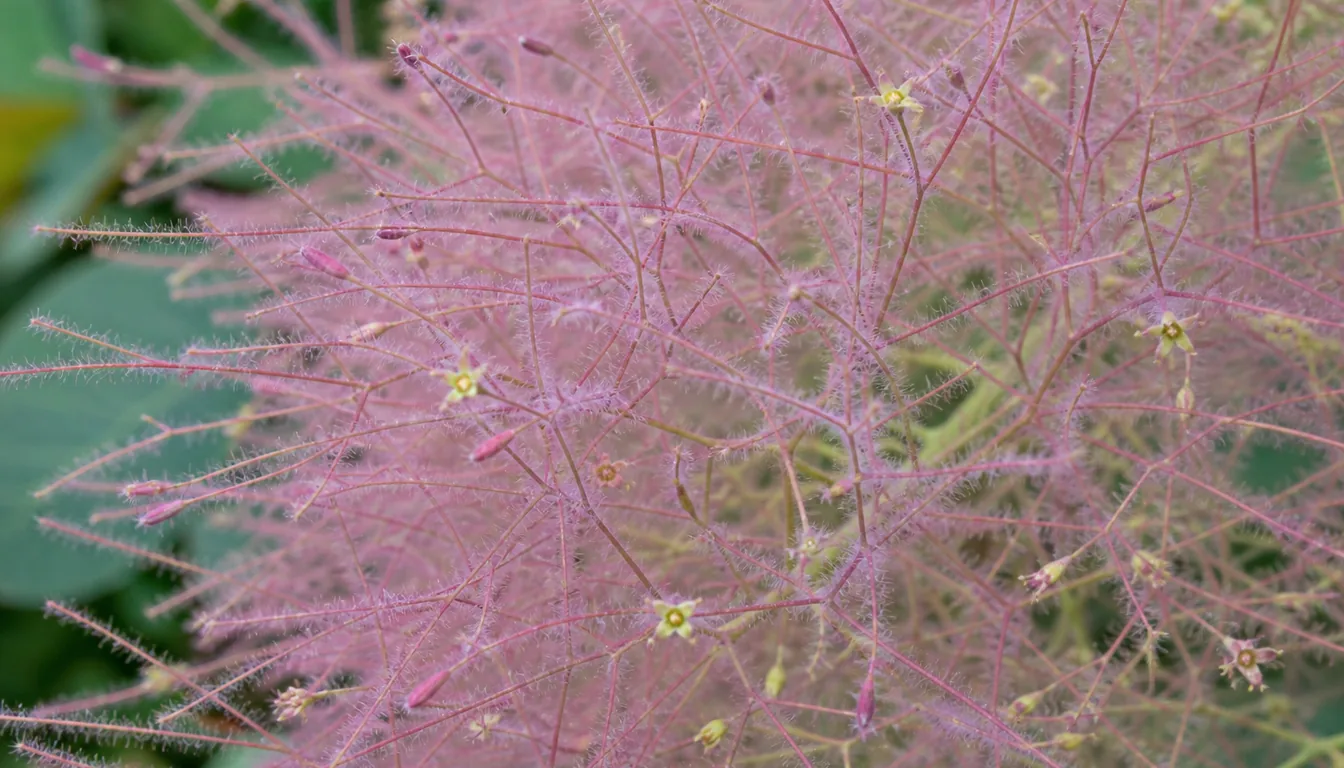
The smoke is not flowers.
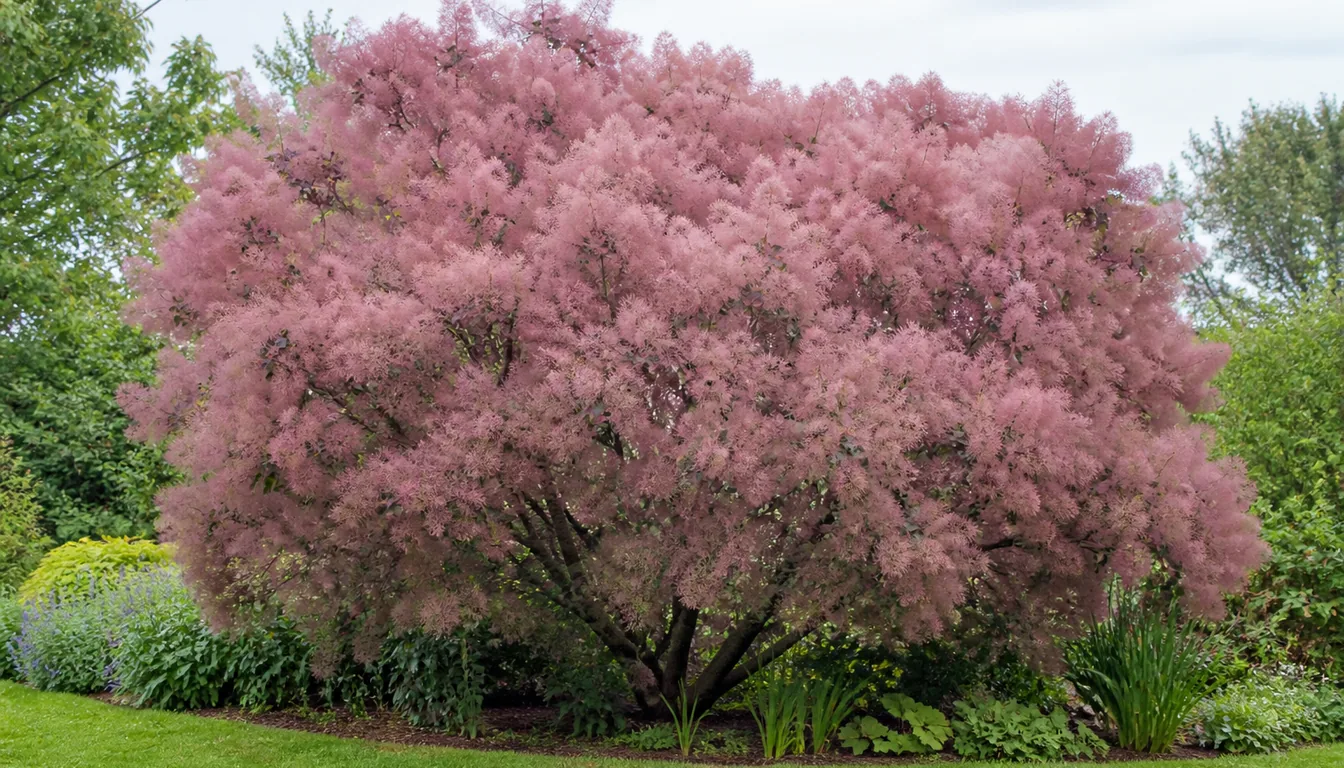
The true flowers are tiny, yellowish, and easy to miss, and on a garden cultivar most of them are sterile. What makes the haze is the stalk each sterile flower sits on, which keeps elongating after bloom and covers itself in long pink or gray-mauve hairs.
Thousands of those hairy stalks together read as a cloud rather than as separate parts, which is why the effect turns up weeks after the plant has technically finished flowering.
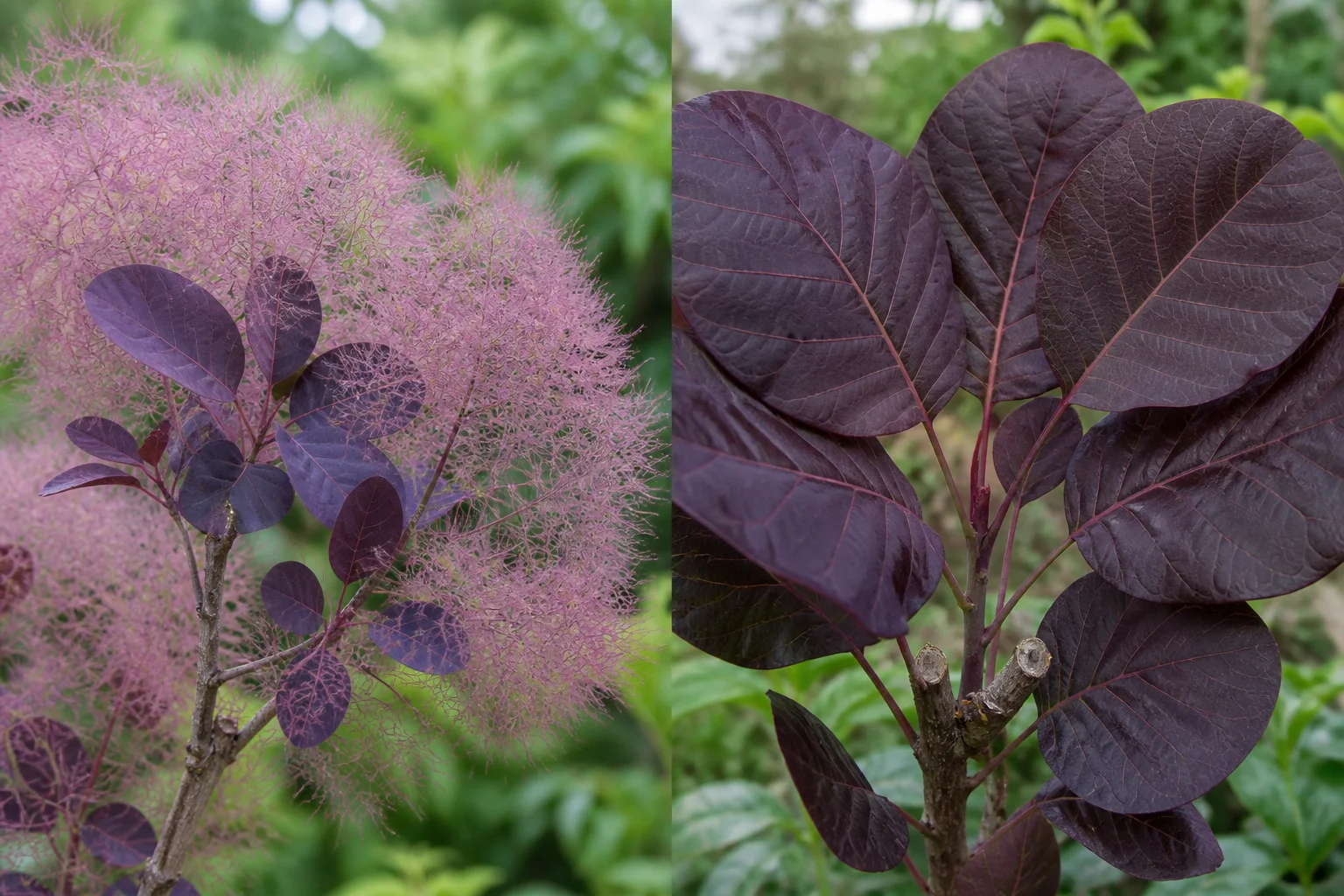
The leaves do the other half of the work, rounded and untoothed and 2 to 3 inches across, in a leaf color that depends entirely on which selection you bought.
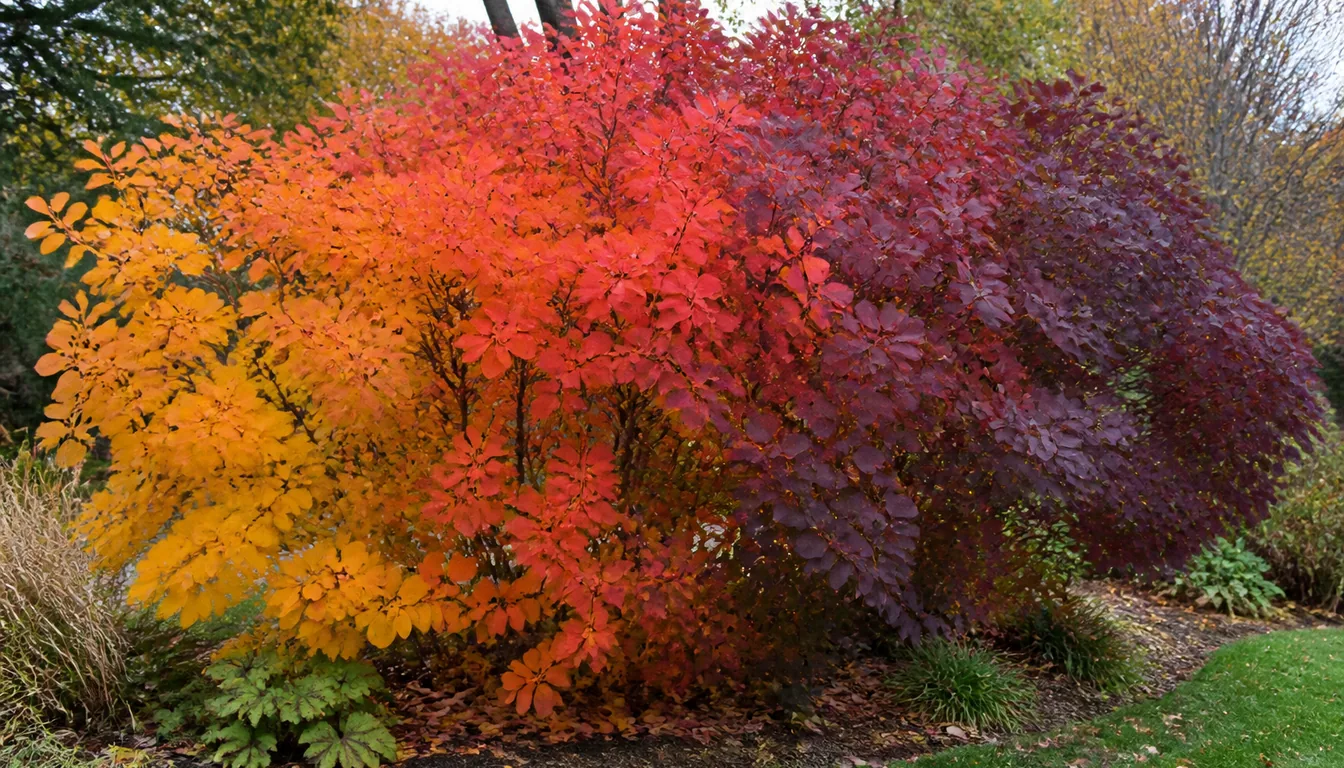
Fall is the second show, when one plant can carry yellow, orange, scarlet, and purple-red at the same time.
One naming point saves real confusion on the nursery lot, because two different species are sold under the same common name.
- Cotinus coggygria
- The Eurasian shrub behind almost every purple cultivar. 8 to 15 ft tall and as wide, multi-stemmed, and the plant this page describes.
- Cotinus obovatus
- The American smoketree, a genuine 20 to 30 ft tree from limestone bluffs in the southeastern states, with even stronger fall color.
- 'Royal Purple' and 'Velvet Cloak'
- Deep wine-purple leaves all season. Both smoke reliably and both stay firmly shrub-sized.
- 'Golden Spirit'
- Acid-yellow leaves. Grown for foliage and a shy bloomer, so expect little or no smoke.
- 'Grace'
- A hybrid with the American species. Taller, reads as a small tree, and smokes heavily.
Where Should It Go So the Smoke Actually Shows?
Full sun is not a preference here, it is the entire display. Shade costs plume density and drains the purple out of the foliage at the same time, so a plant tucked behind something taller ends up an ordinary green shrub.
Light direction matters as much as light quantity.
The haze reads best backlit, with low morning or late-afternoon sun coming through it, or set against something dark such as a conifer hedge or a shaded wall. Lit from the front at midday it flattens into a dull pink smudge.
That argues for placing it across a sightline you actually use at those hours, rather than in the middle of a busy mixed border where the outline disappears into everything else.
Soil should be lean and fast draining. Wild populations grow on rocky alkaline hillsides, and a plant in rich moist ground makes coarse floppy growth, holds weaker leaf color, and runs a much higher risk of root trouble.
Skip the heavy compost and the annual feed. Mound the planting area if your clay stays wet for days after rain, because sitting water is the one condition this plant will not tolerate.
Water deeply through the first two summers and then stop, since an established smoke tree is genuinely drought tolerant and resents being kept damp.
- Six hours of direct sun or more, with no tall neighbor throwing afternoon shade across it.
- A dark background or a low sun angle behind the plant, so the haze reads as haze.
- Ground that drains fast, mounded if clay holds water after rain.
- Room for a plant 8 to 15 ft across, because shearing it to fit destroys the effect you planted it for.
Why Doesn't My Smoke Tree Smoke?
Four things suppress the plumes and three of them are things you did. The plant flowers on wood at least a year old, which is where most of the trouble starts.
Nitrogen is the one people argue about. A plant standing in a fertilized lawn, or fed with a general shrub food, spends itself on soft green shoots rather than flower stalks, which is one more reason the lean-soil rule earns its place.
Some cultivars also flower less than others, and the heavily selected foliage forms are the usual culprits.
'Royal Purple' and 'Grace' both smoke reliably. 'Golden Spirit' is grown for the yellow leaf and stays a shy bloomer even in ideal conditions, so a plant that has never smoked may be doing exactly what it was bred to do.
- Pruning, by far the most common: Any cut that removes last season's growth removes this season's smoke. It usually arrives as a well-meant late-winter tidy-up.
- Age: A young plant out of a 3-gallon pot often needs three to five years before it flowers heavily, and nothing added to the soil speeds that up.
- Shade: Weak light cuts flowering long before it visibly changes the leaf color, so a plant can look healthy and still never smoke.
- Nitrogen: Lawn feed reaching the roots pushes soft green shoots instead of flower stalks.
Should You Coppice It for Big Leaves or Leave It for Plumes?
These are two different plants grown from the same shrub, and you cannot have both in one year. Coppicing means cutting every stem back to a low framework of stubs 6 to 12 inches above the ground in late winter, before growth starts.
The plant answers with a small number of vigorous new shoots, and because all the stored root energy goes into few leaves rather than many, those leaves come out around twice normal size on stems that can reach 5 or 6 ft in a season.
It is a genuinely different look, closer to a tropical accent than to a flowering shrub, and the wine-purple cultivars are spectacular treated this way.
The cost is absolute. No year-old wood is left to flower, so a coppiced plant produces no smoke at all that summer.
The alternative is light thinning, which means taking out crossing and dead stems, shortening anything badly placed, and leaving the rest so the open branching framework survives and lets the haze float instead of sit.
A middle route exists if the clump is wide enough. Coppice half the stems one year and the other half the next, and the plant carries some oversized foliage and some plumes every season.
- Light thinning
- Keeps the plumes. Open branching, normal leaf size, and a plant that slowly gains height and spread.
- Hard coppice every late winter
- No plumes at all. Leaves roughly double size on 5 to 6 ft stems, and the plant stays near head height.
- Alternate half the stems each year
- Some of both every season. Only works on a wide multi-stem clump with stems to spare.
Why Are the Purple Leaves Turning Green?
Two different things cause this and they call for opposite responses. The common one is light, because the purple pigment in Cotinus is produced in response to sun exposure and simply fades where the plant is shaded.
Nitrogen makes both versions worse, since soft fast growth carries less pigment.
The uncommon cause is reversion, and it is the only one of the three that needs you to pick up a pruner.
Cut a reverting stem out at its point of origin the week you notice it, because it grows faster than the cultivar and takes the whole plant over within a few years.
- Inner leaves green, outer leaves dark: A light problem. Purple pigment forms in response to sun, so shaded foliage fades first. Thin whatever is casting the shade, or accept it.
- The whole plant drifts to bronze-green in August: Normal. Purple cultivars are darkest on the spring flush and dull down every year. Nothing to do.
- One stem, plain green, bigger leaves, growing faster: Reversion from below a graft or a genetic sport. Cut that stem out at its point of origin now.
Why Is One Whole Branch Wilting and Dying?
A single stem that wilts, browns, and dies while the rest of the plant looks untouched is the signature of verticillium wilt, and Smoke Tree is among the more susceptible shrubs in the trade. This is the one problem on this plant that actually kills it.
The fungus lives in the soil, enters through the roots, and plugs the water-conducting tissue inside the stems, which is why the damage shows up one branch at a time instead of evenly across the canopy.
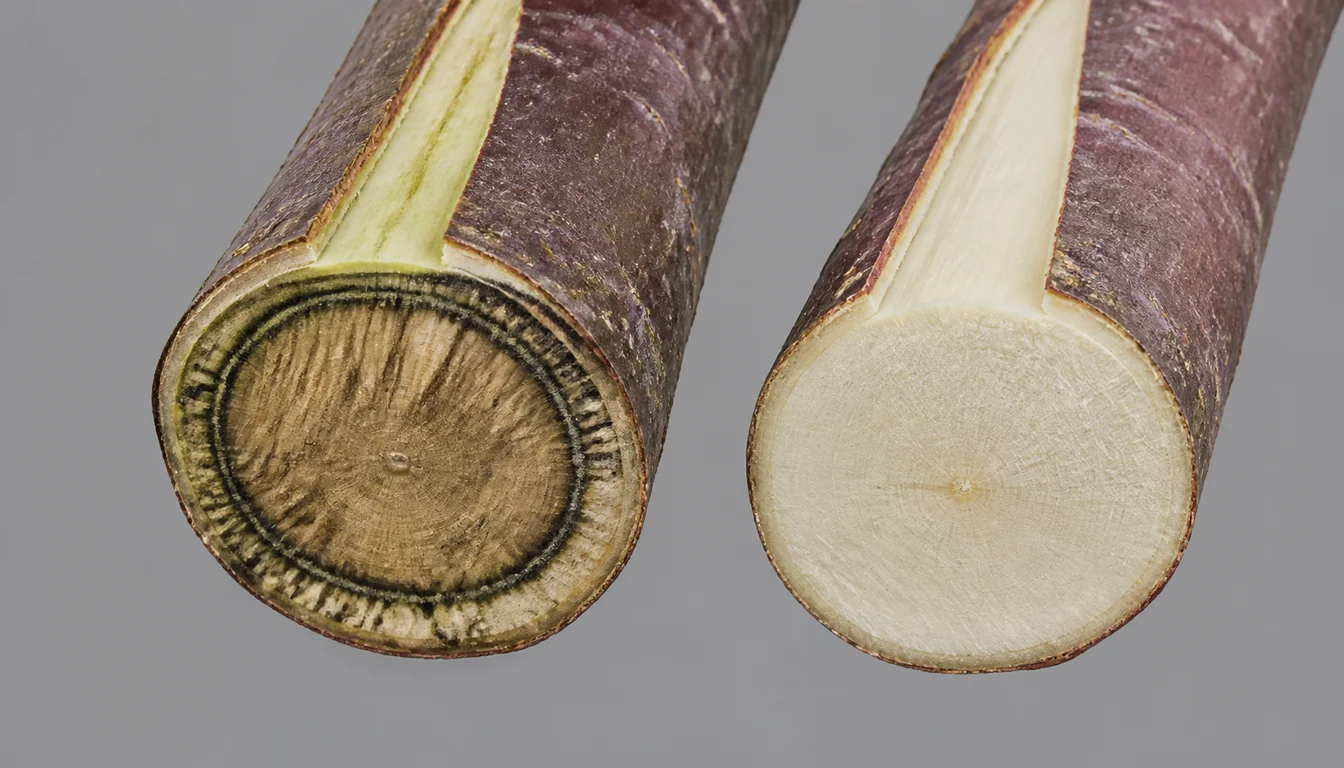
Confirm it before concluding anything. Cut a wilted stem and peel the bark back, and infected wood carries dark olive-brown to greenish-black streaks running lengthwise through tissue that should be clean cream-white.
There is no cure and no soil treatment worth buying.
What helps is cutting affected wood well below the streaking, sanitizing the blades between cuts, keeping the plant unstressed with an occasional deep soak in drought, and withholding nitrogen, which speeds the fungus through the plant.
Some plants live with it for years and throw one dead branch a season. Others collapse in a single summer, and there is no reliable way to tell in advance which one you have.
If a plant dies of it the soil stays infected for a decade or more, so replace it from a resistant group such as a conifer, an oak, a beech, or an ornamental grass rather than with another smoke tree, maple, or Japanese maple.
Do You Need Gloves to Prune a Smoke Tree?
Yes, and this is the practical consequence of that family name. Anacardiaceae also holds poison ivy, poison oak, and poison sumac, and Cotinus sap carries related compounds at much lower concentration.
Most people handle the plant with no reaction whatsoever.
A minority develop a contact rash on the forearms a day or two after a heavy pruning session, and anyone who reacts badly to poison ivy should treat this as a real risk rather than a theoretical one. Long sleeves and gloves remove the problem entirely.
No ASPCA or NC State pet toxicity record was found for smoke tree, so its safety for dogs and cats is unknown. That same bitter resinous sap is why deer and rabbits walk past a smoke tree in a garden where they eat almost everything else.
There are no thorns, no spines, and no fruit to clean up, because the tiny seeds sit hidden in the plumes and drop unnoticed.
The one ongoing job is suckering, and on a grafted plant it matters more than it looks.
- Long sleeves and gloves for anything more than a snip, and a wash for tools and forearms as soon as you finish.
- Anyone who reacts badly to poison ivy should treat this plant as a real risk rather than a theoretical one.
- Pull or cut basal suckers at ground level each spring. On a grafted plant those shoots are rootstock and will take over.
- Nothing else needs planning around. No thorns, no spines, and the tiny seeds drop unnoticed inside the plumes.
Frequently Asked Questions
How fast does a smoke tree grow?
About 1 to 2 ft a year when left to grow naturally, reaching full size in roughly eight to ten years. A coppiced plant is faster in a way that does not accumulate, since it puts up 5 or 6 ft of stem each season and then loses it again.
Can you grow a smoke tree in a large container?
Yes, better than most shrubs its size, because the lean dry conditions a pot creates are close to what the plant prefers anyway. Use a gritty free-draining mix, skip the fertilizer, and expect to coppice it every year or two to keep it in scale.
Do smoke trees have invasive roots?
No, because the root system is modest and fibrous and the plant sits safely within 8 or 10 ft of a foundation or a drive. The suckers around the base are a maintenance job rather than a structural risk.
Is Cotinus obovatus a better choice than Cotinus coggygria?
It is a better choice when you want an actual tree, since the American species reaches 20 to 30 ft and has stronger fall color. It is the worse choice for purple foliage, because almost all the dark-leaved selections are Cotinus coggygria or its hybrids.
When do the smoke plumes appear and how long do they last?
They develop through June and hold their color into August in most zones, which is around eight to ten weeks. They fade to a dull gray-brown rather than dropping cleanly, so many gardeners cut the spent panicles off in late summer.
Sources & References
Related Plants
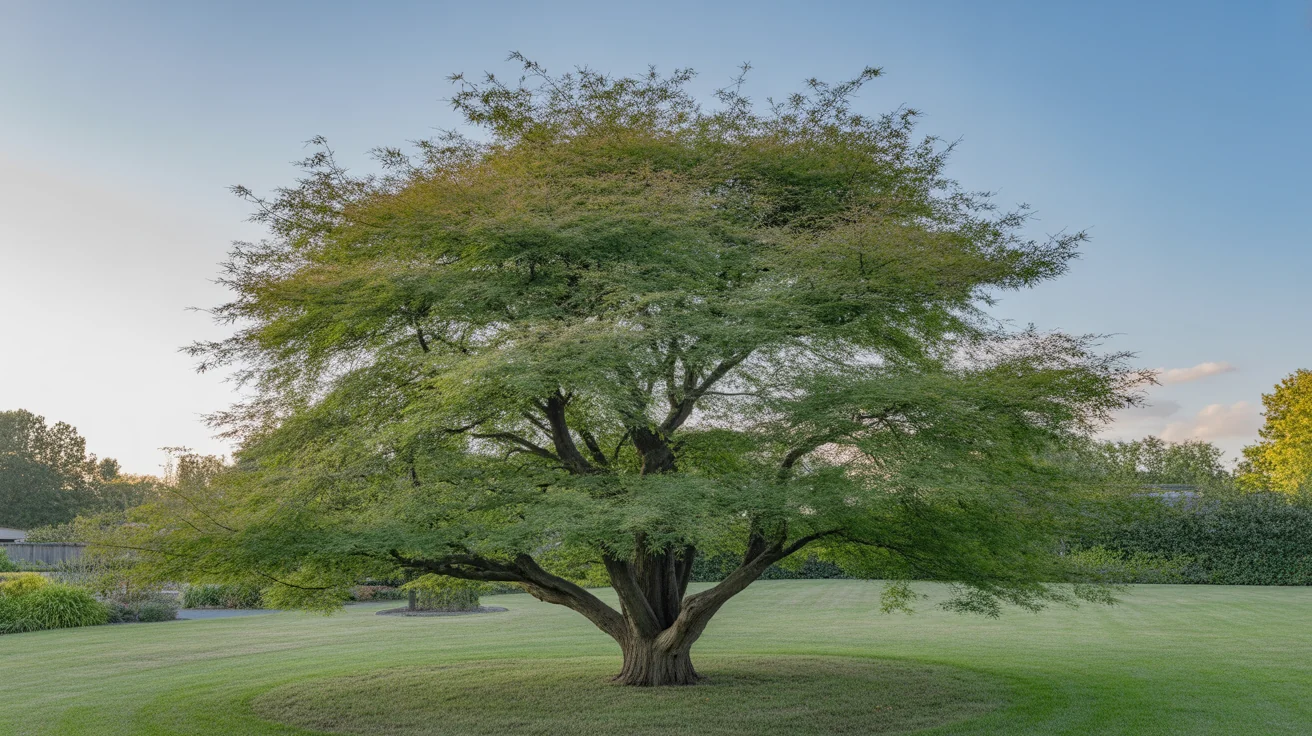
Japanese Maple
The other foliage-first specimen, but for softer light and steadier moisture.
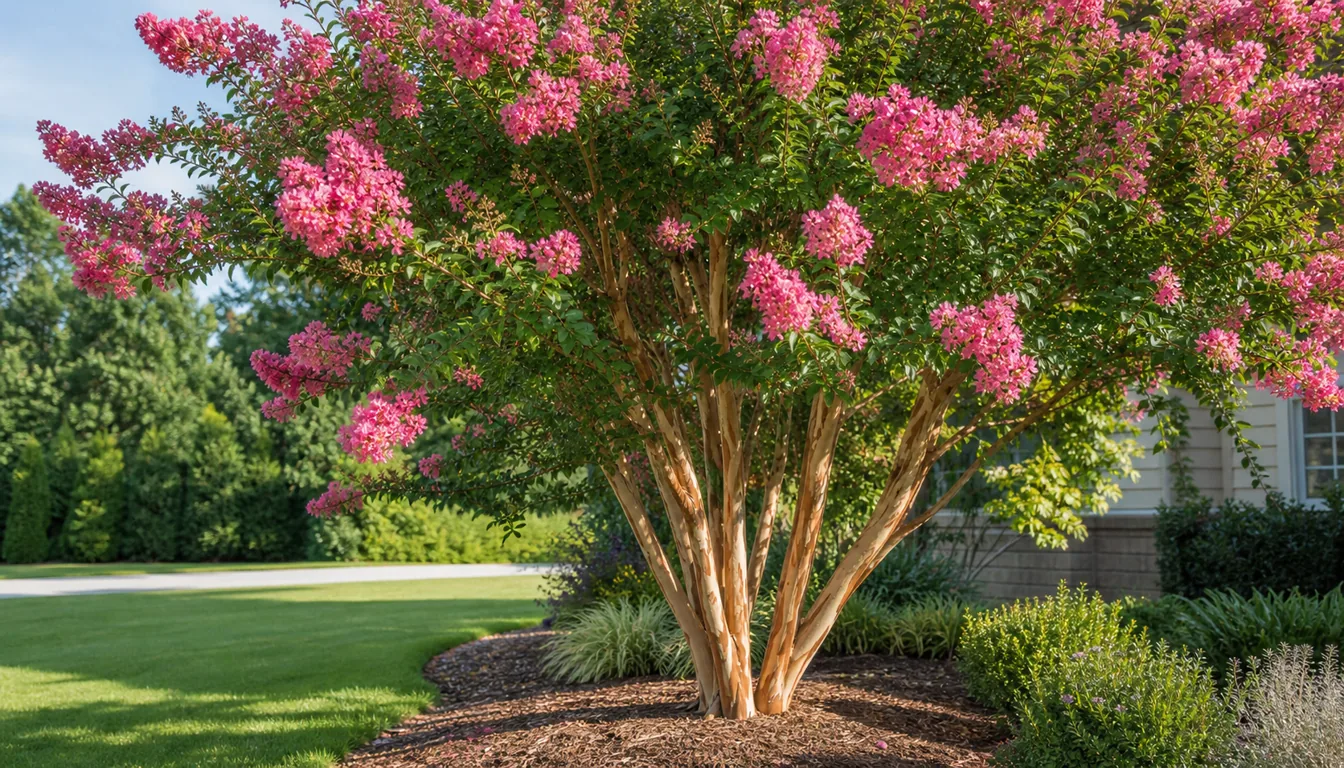
Crepe Myrtle
Another hot-sun summer performer, with real flowers instead of plume texture.
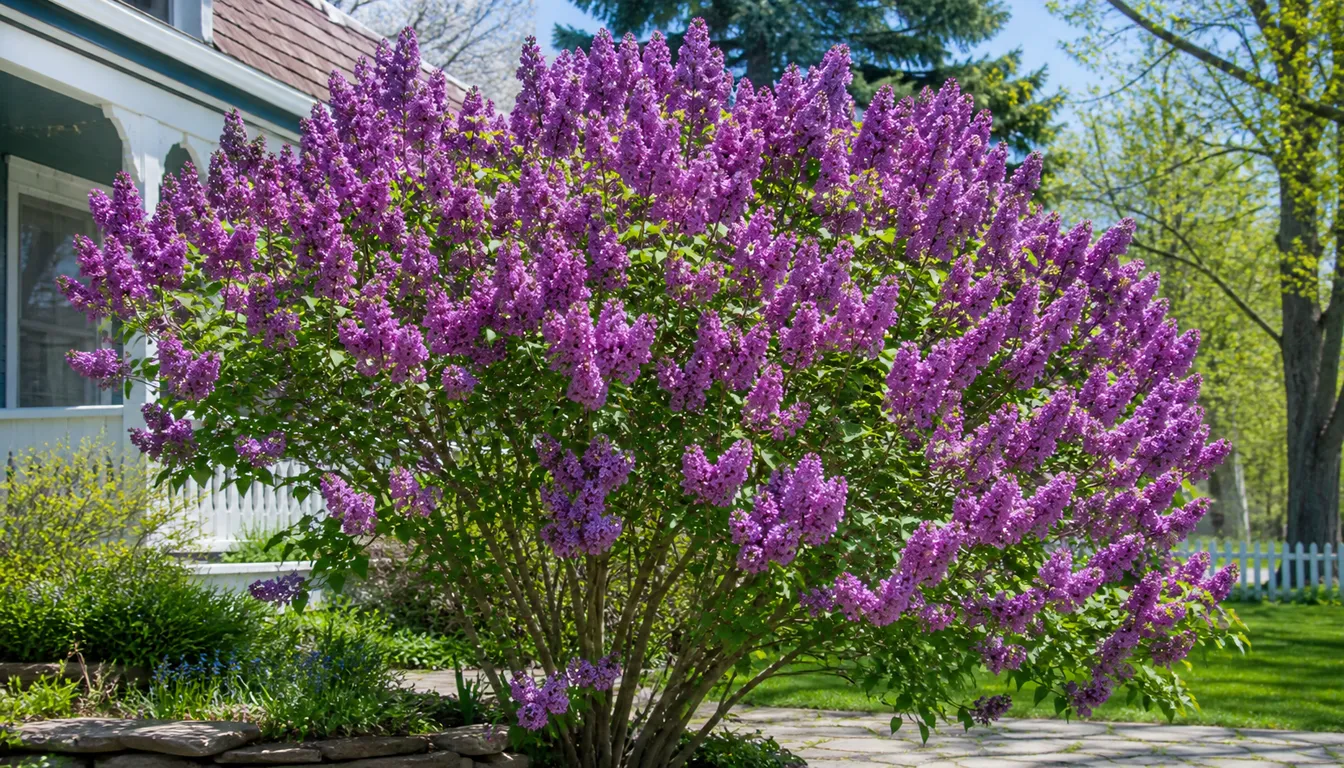
Lilac
Similar scale and similar lean-soil tastes, but the show is two weeks in spring.
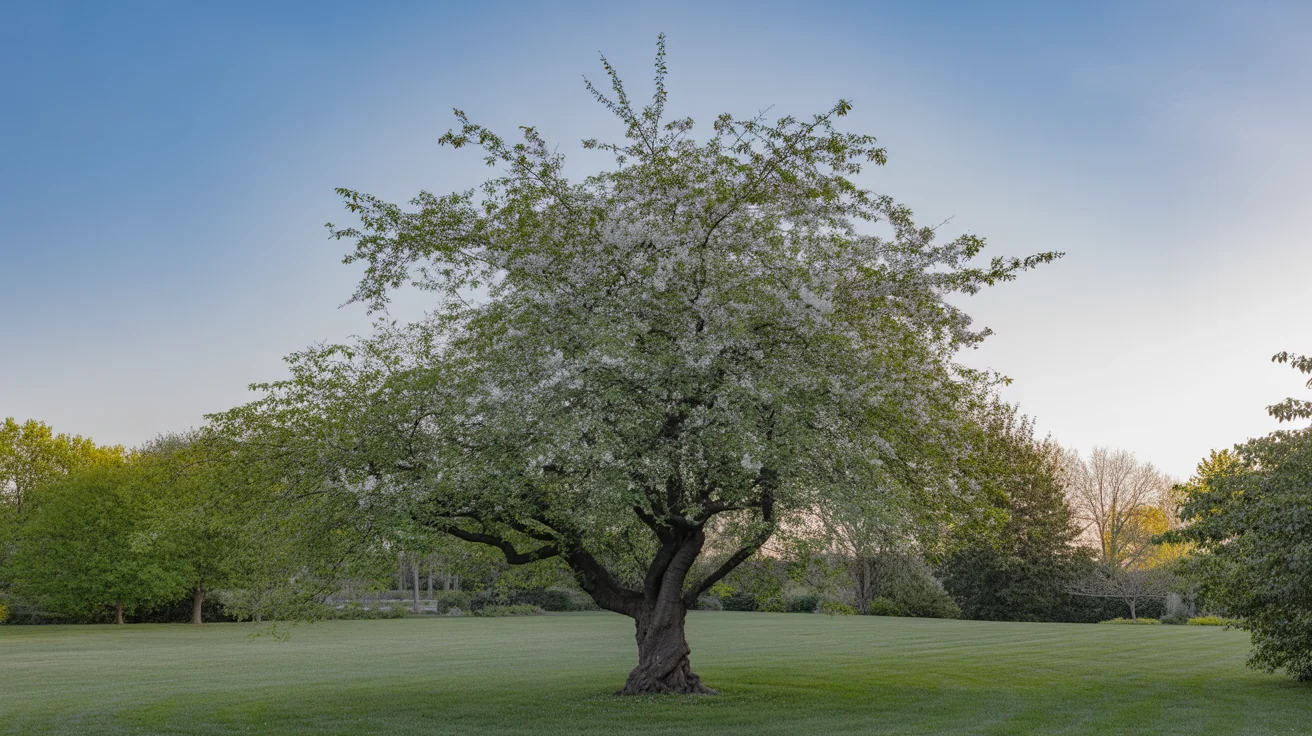
Cherry Blossom Tree
Cherry blossom tree is a common name for ornamental cherries grown for spring flowers rather than a useful fruit crop.
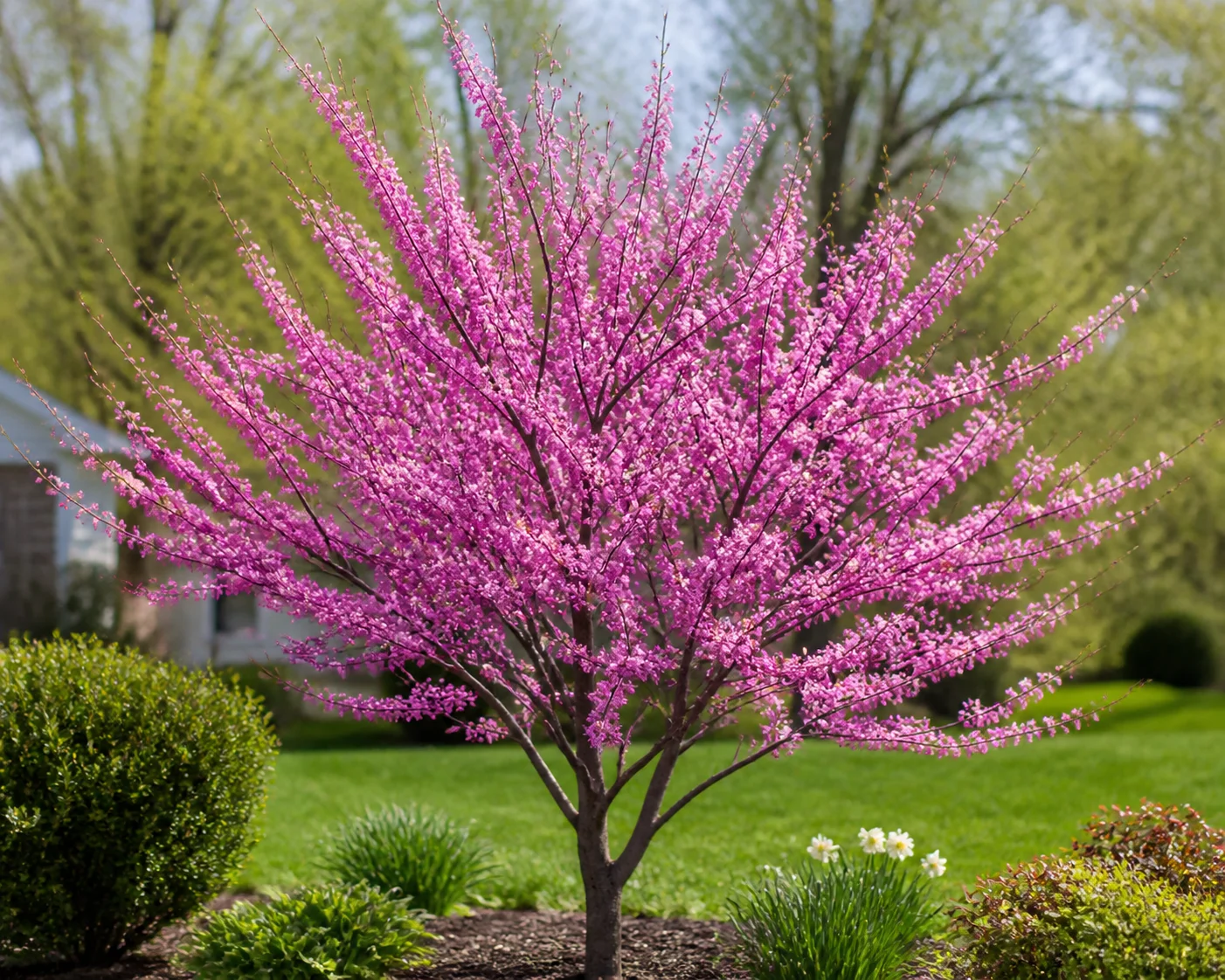
Eastern Redbud
Eastern redbud is a small North American tree with pea-like flowers that open on bare twigs and older wood.
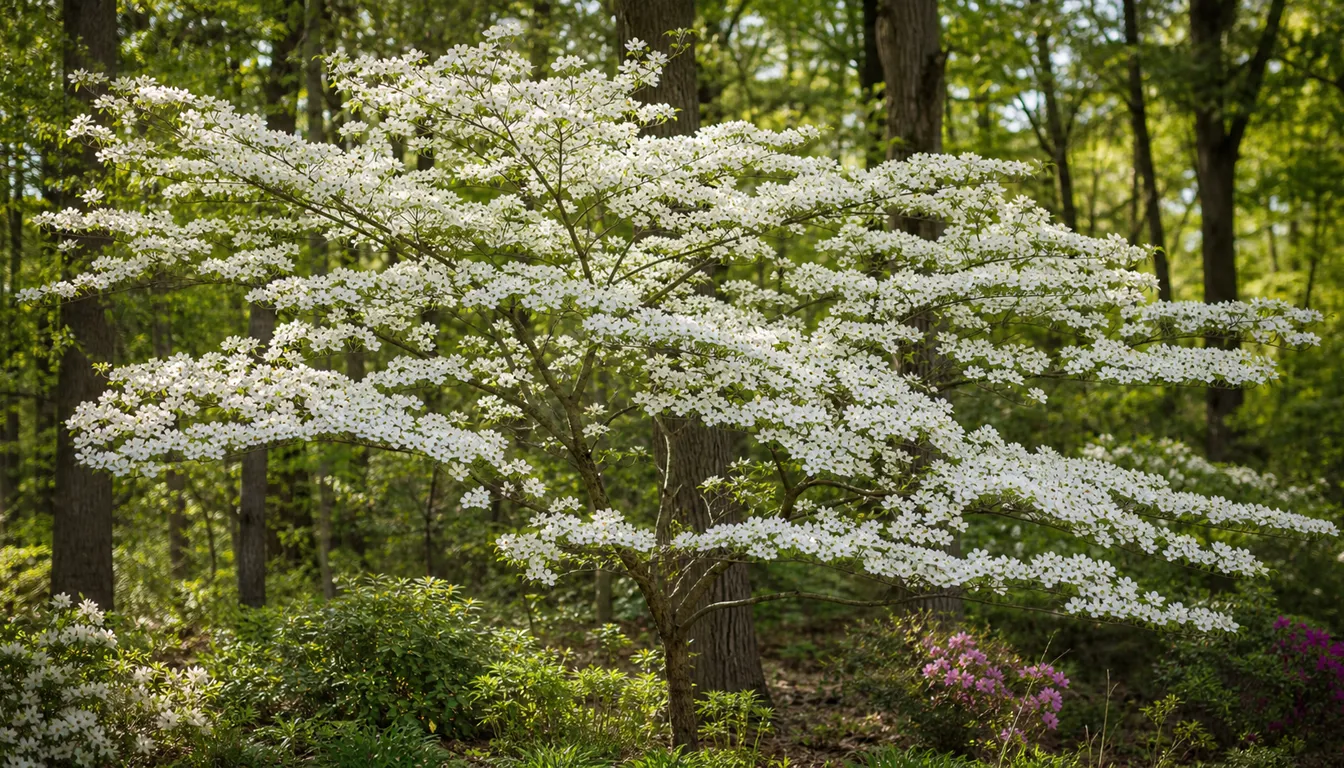
Flowering Dogwood
Flowering Dogwood is easiest to grow when you copy the place it wants to live.