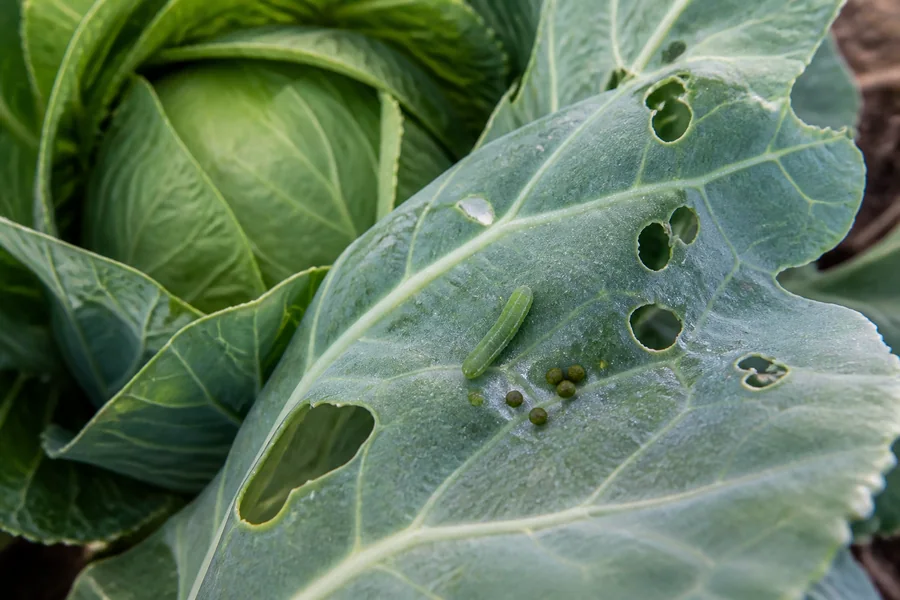
Cabbage Worms
Turn over leaves on cabbage and other brassicas to find the larva, fresh frass, and new feeding.

Plant Diagnosis
Start with the symptom you can see. Compare likely causes before changing water, fertilizer, light, or treatment.
A useful diagnosis starts with location, timing, and the pattern of damage.
Check whether symptoms begin on old leaves, new growth, roots, or one side of the plant.
Note weather, watering, repotting, feeding, pruning, and any new treatment.
Look for insects, residue, soft tissue, dry edges, odor, and soil moisture.
85 matching guides
Search checks problem names, descriptions, and summaries. Plant group uses the category saved on each problem; sorting uses the update date or problem name.
Turn over leaves on cabbage and other brassicas to find the larva, fresh frass, and new feeding.
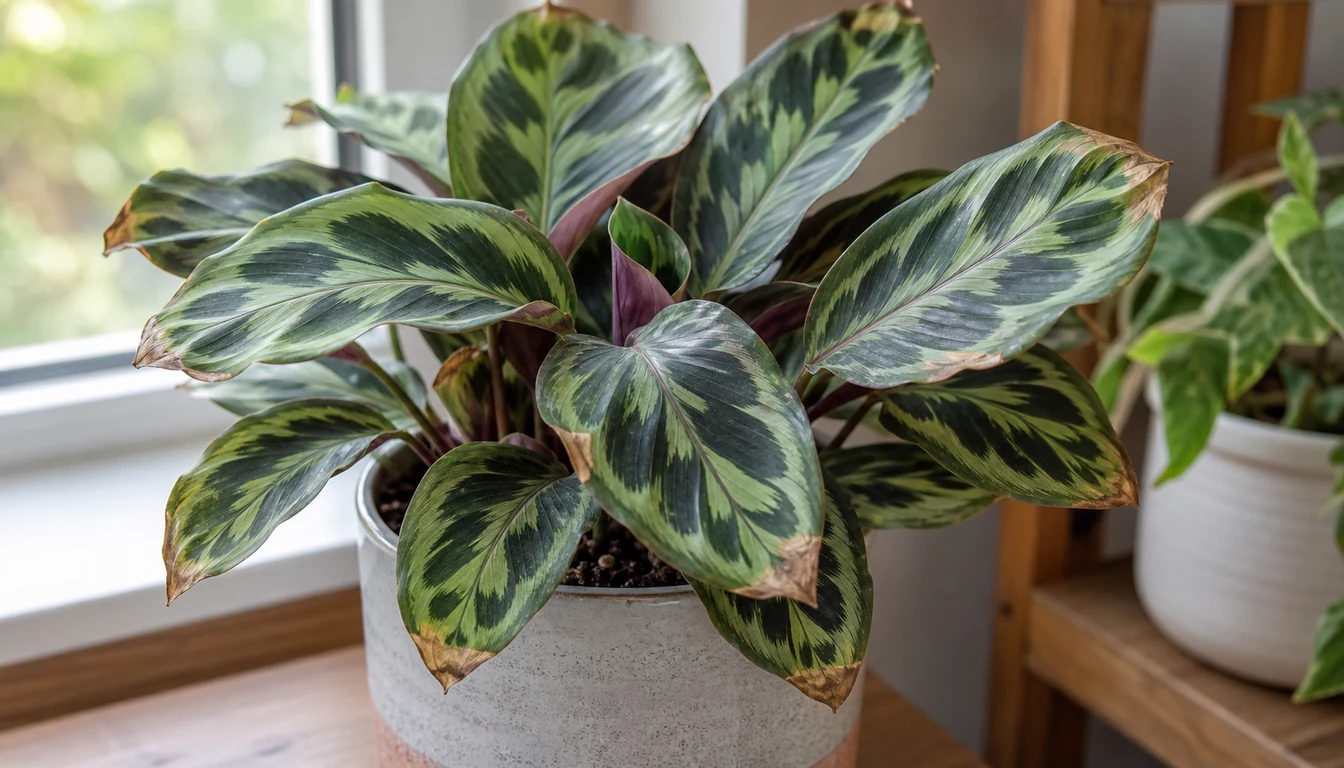
Dry brown Calathea tips are damaged tissue that will not turn green again. The same appearance can follow different stresses, so tip…
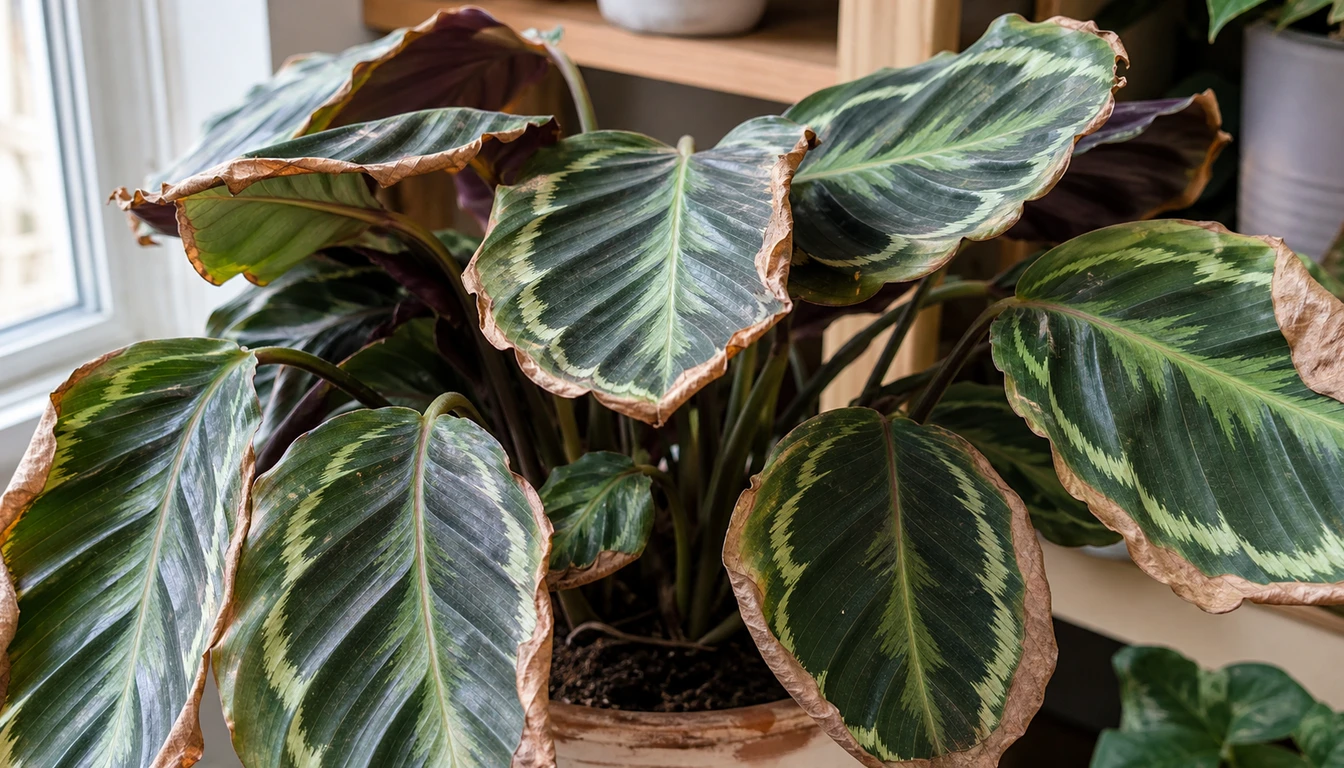
Crispy Calathea leaves have dry tissue extending along the margin or farther into the patterned blade, often with curling or rolling.
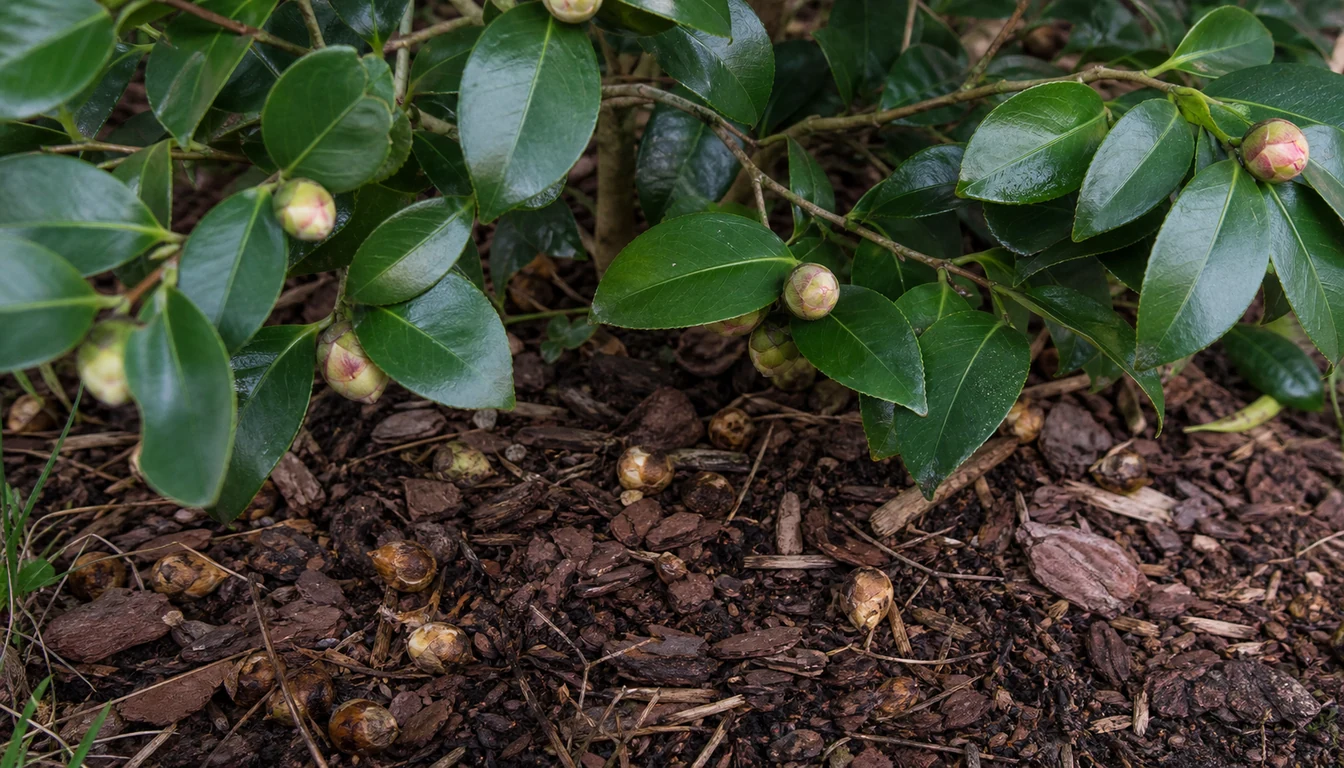
Camellia buds can fall before opening because the shrub set more buds than it can carry, endured irregular moisture months earlier…
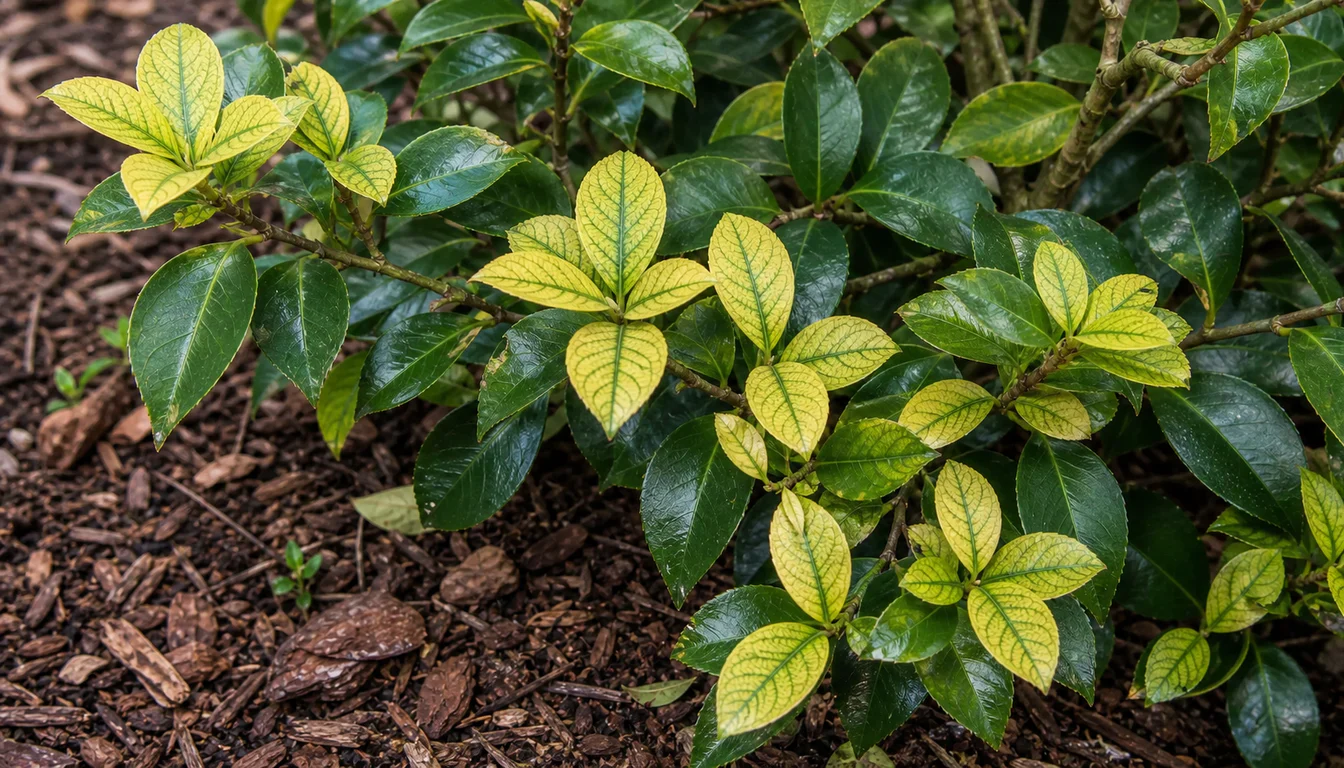
Camellia leaves turn yellow in several distinct patterns. Yellow tissue between green veins on young leaves supports iron chlorosis…
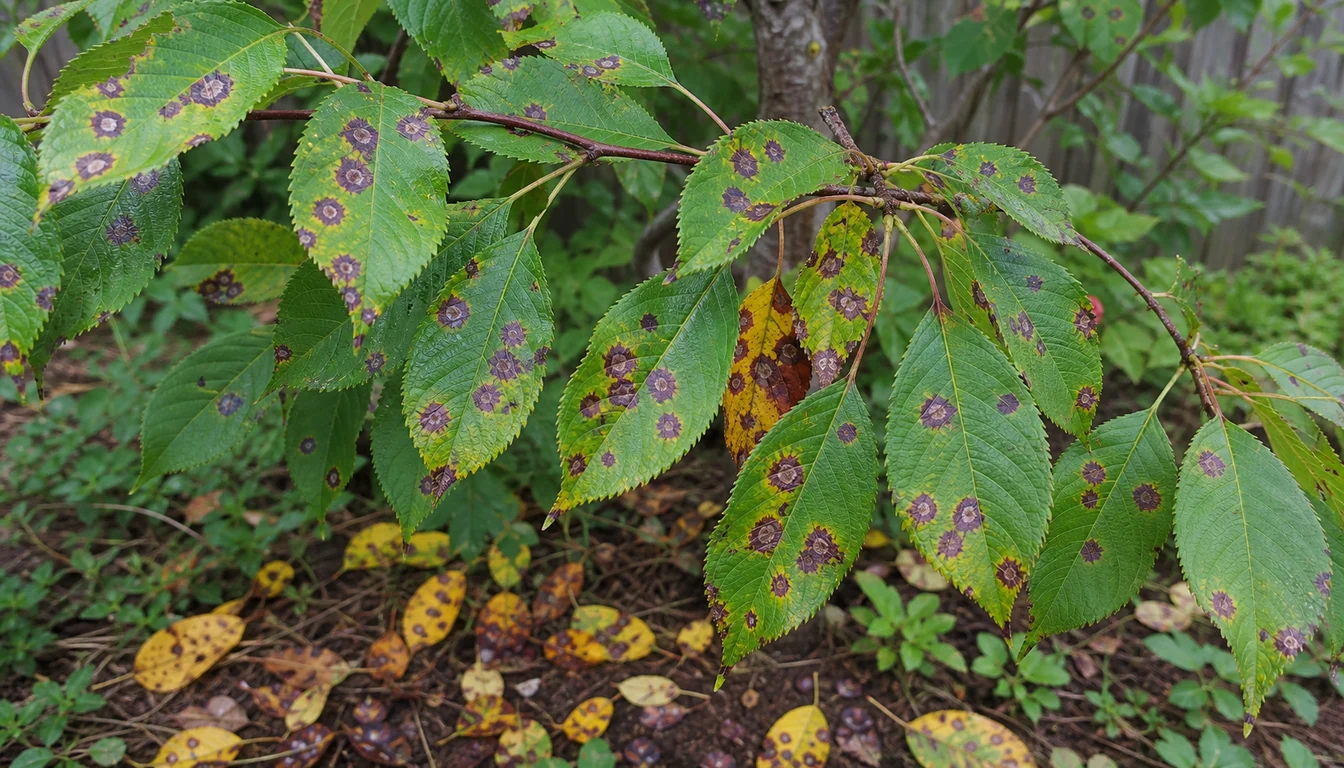
Spots and holes on ornamental cherry leaves need a lesion-first diagnosis. Round purple spots that brown, develop pale centers, yellow…
Use the plant and soil condition to set the next watering.
PestsMatch treatment to a confirmed pest and its life stage.
NutritionRule out root and moisture problems before adding fertilizer.