
Three Things Must Go Right Between Apple Blossom and Fruit
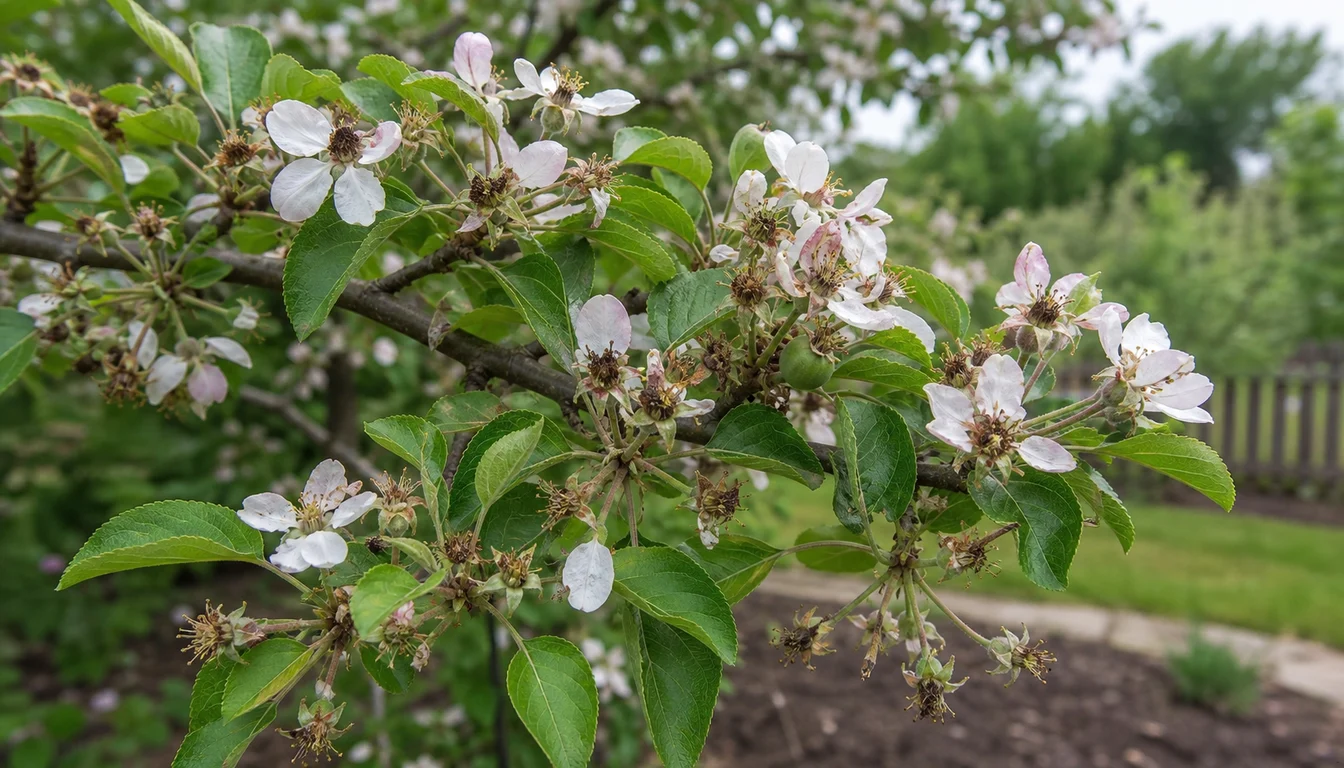
An Apple Tree that flowered has already proved it is alive, old enough to bloom, and healthy enough to spend the energy. What went wrong sits in the gap between blossom and apple, and the week it happened tells you which of seven causes it was.
Quick diagnosis
Look at when it failed, not at the tree
Blossoms browning during bloom points to frost, healthy flowers dropping at petal fall points to pollination, and marble-sized fruitlets falling weeks later is usually the tree editing its own crop.
Open the full diagnosisWhat You Are Seeing
An Apple Tree that flowered has already answered several worries. It is alive, old enough to bloom, and healthy enough to have spent the energy on flowers.
Between a blossom and an apple sit three gates. The flower has to survive the night, it has to receive pollen from a different cultivar, and the tree has to be willing to carry what it started.
Each gate fails in a different week, which is why the timing is worth more than any inspection of the tree now.
Common Causes
01 High likelihood
Frost during bloom
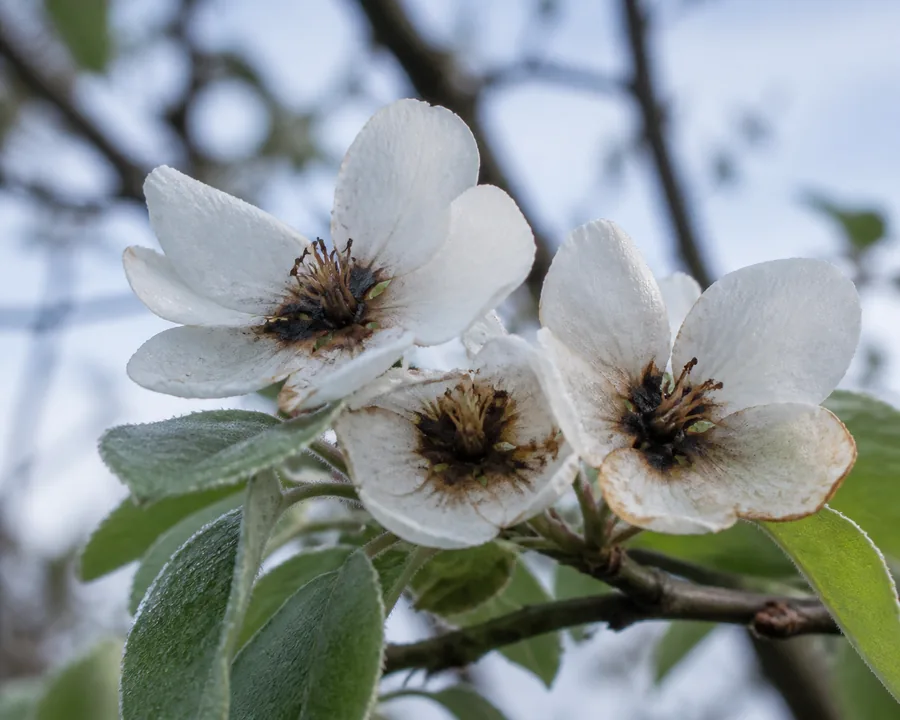
Frost kills the pistil at the center of the flower first, so a blossom can look perfectly normal from outside while the part that becomes the apple has already died.
Open bloom is the most vulnerable stage, and a few hours below freezing is enough.
How to identify it
- Flower centers are brown or black while the petals still look white.
- The damage showed up within a day or two of a cold night.
- The exposed side of the tree is hit while the sheltered side set fruit.
- Whole clusters dropped intact once the weather warmed.
What to do
- Open a few flowers and look at the center, because the petals will not tell you.
- Cover the tree before the next forecast frost with fleece or an old sheet held clear of the blossoms.
- Water the ground under the tree that afternoon, since damp soil releases more heat overnight than dry soil does.
- Leave the frosted flowers alone, as nothing brings them back and they drop on their own.
- Choose later-blooming cultivars and avoid low ground where cold air settles, if late frosts are usual here.
02 High likelihood
No compatible pollinizer in range
Most apple cultivars cannot set fruit with their own pollen. A single tree in a garden can flower beautifully every spring for years and never carry a crop.
How to identify it
- Nothing else apple-like flowers within about a hundred feet.
- The tree has bloomed well for several years and never set.
- Blossoms looked healthy and simply dropped a week or two after opening.
- Nothing about the weather during bloom was unusual.
What to do
- Walk the garden and look over the fences during bloom week, since a crabapple two gardens away may already be doing the job.
- Hand pollinate a few branches with a soft brush, moving pollen from a different cultivar, which rescues some fruit and confirms the diagnosis at the same time.
- Plant a second cultivar whose bloom overlaps, rather than whichever apple the nursery has in stock.
- Graft a branch of a compatible cultivar into the existing tree where there is no room for another.
03 High likelihood
Weather kept the pollinators grounded
A pollen source only helps if something carries the pollen. Bees largely stop flying below about 55°F and in rain or strong wind, and apple bloom lasts only days.
How to identify it
- Bloom week was cold, wet, or windy.
- A compatible cultivar grows nearby and has worked in other years.
- You saw few or no bees on the tree during the sunny spells there were.
- Something was sprayed on or near the tree while it was in flower.
What to do
- Check what the weather did during the days the tree was actually open, rather than across the month.
- Never spray insecticide on a tree in bloom, including products aimed at something else entirely.
- Hand pollinate during any calm sunny morning that does turn up in the middle of a bad spell.
- Plant early-flowering ground cover nearby so pollinators are already working the garden when the tree opens.
04 Medium likelihood
The tree is not old enough yet
A young apple often flowers a year or two before it can carry fruit, which is exactly what makes it confusing. The tree is not failing, it is rehearsing.
How to identify it
- The tree went in within the last few years.
- It flowered lightly rather than heavily.
- A dwarf tree is under about three years old, or a standard under about six.
What to do
- Check the planting date against the rootstock, since a dwarf bears years before a standard does.
- Remove any fruit that does set in the first year or two, so the tree builds structure instead.
- Resist feeding it harder, because nitrogen delays bearing rather than hastening it.
05 Medium likelihood
Biennial bearing after a heavy crop
Flower buds for this spring formed last summer, while the tree was carrying last year's fruit.
A very heavy crop suppresses that bud formation, so a light year is decided long before the current spring begins.
How to identify it
- Last year's crop was unusually heavy.
- This spring produced few flowers rather than plenty that failed.
- The tree looks healthy and the pattern alternates year to year.
What to do
- Accept that nothing done this spring changes this season.
- Thin next year's heavy crop instead, leaving roughly one fruit every four to six inches soon after petal fall.
- Thin early rather than late, because the bud formation you are protecting happens in that same summer.
06 Medium likelihood
Growth going into leaves instead of flower buds
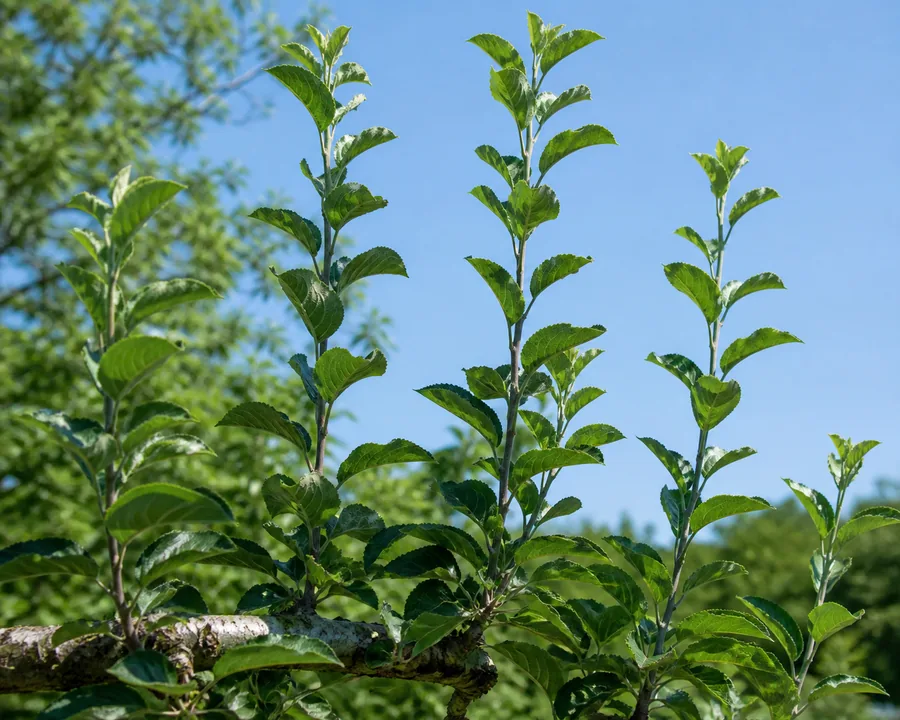
A tree can look magnificent and still fail. Long vertical shoots and heavy dark foliage mean it is spending itself on growth rather than on flower buds.
How to identify it
- Long straight shoots stand vertically from the branches with no spurs along them.
- Leaves are large, dark, and crowded.
- The tree was fed a high-nitrogen fertilizer, or stands in a lawn that gets fed.
- It was pruned hard the previous winter.
What to do
- Stop feeding nitrogen, including lawn feed that reaches the root zone.
- Prune lightly rather than hard, since winter cuts push a vigorous tree further into growth.
- Take water shoots out in summer instead of winter, which slows regrowth rather than provoking it.
- Give it a season, because the change shows up in the following spring's bud count.
07 Medium likelihood
June drop mistaken for failure
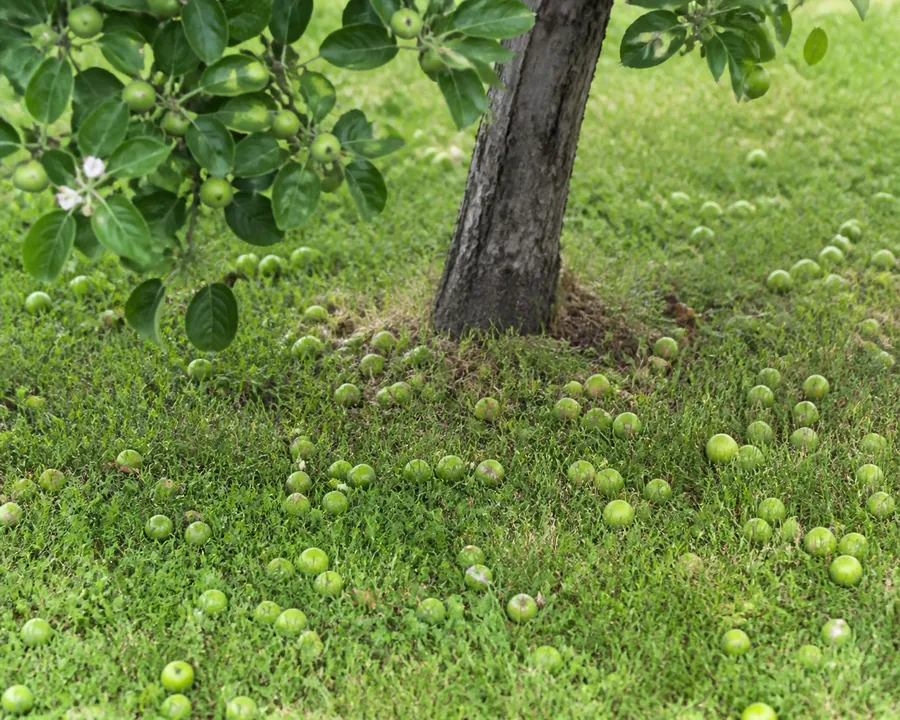
An apple sets far more fruitlets than it can ripen and then sheds the surplus a few weeks after petal fall. The ground underneath can look alarming while the tree is doing exactly what it should.
How to identify it
- The fallen fruitlets are marble sized, firm, and green rather than rotten.
- It happened a few weeks after petal fall rather than during bloom.
- There is still fruit on the branches.
- The tree flowered heavily and set heavily before the drop.
What to do
- Count what is still on the tree before deciding anything went wrong.
- Thin what remains if the clusters are still crowded, which improves size and helps next year's buds.
- Keep the tree watered through the weeks after the drop, since that is when the remaining fruit sizes up.
What Can Still Be Changed This Season
Most of what goes wrong with fruit set was decided before anyone noticed. Frost happened on a night that has passed, biennial bearing was set last summer, and the tree's age is not negotiable.
Two levers are still live during bloom. Covering the tree before a cold night protects the flowers that remain, and a soft brush moves pollen that nothing else is moving.
Hand pollination is simpler than it sounds. Take a soft brush to a freshly open flower on a different cultivar, twist it in the center until the tip carries yellow, then touch it into the center of each flower you want to set.
Do it mid-morning on a dry day, when the anthers have opened and released.
Everything else belongs to next year, and most of it happens in summer rather than in spring.
Do You Need a Second Apple Tree?
If nothing else apple-like flowers within about a hundred feet, then yes. It is also the one cause on this page that stays fixed once you fix it.
The cultivar matters less than the timing. A second tree only pollinates the first if the two are open at the same time, which is why nurseries sort apples into bloom groups rather than listing them alphabetically.
Space is the usual objection, and there are two ways around it. A flowering crabapple pollinates most apples and takes a fraction of the room, and a single grafted branch of a compatible cultivar does the job inside the tree you already have.
Recovery Plan
Protect what is left
Flowers already lost cannot be recovered, so the only work now is covering the tree on cold nights and moving pollen by hand.
The year that decides the next one
Thinning a heavy crop and easing off nitrogen both happen in summer. That is when the buds for the following spring are being formed.
Where you find out
A tree with a pollen source in range and a managed crop load should flower and set in the same season. If it flowers and still fails, the pollinizer is the thing to re-examine.
Two things decide most apple crops, and neither one is a spray. Put a compatible pollen source in bloom range once, and the commonest structural cause never comes back.
Then manage the crop load every year. Thinning a heavy set in early summer is what stops the tree taking the following season off.