
Is Japanese Maple Leaf Scorch From Sun, Wind, or Dry Roots?
Japanese Maple leaf scorch usually means the leaves lost water faster than the roots could replace it. Brown margins cannot turn green again, but the pattern across the canopy and the moisture below the mulch can show you how to stop fresh injury.
Quick diagnosis
First compare the exposed edge with the sheltered canopy
Scorch that is worst beside afternoon sun, a pale wall, pavement, or dry wind usually starts with exposure and a root zone that cannot keep pace. Lift the mulch and check soil several inches down at two or three points before adding water.
If only one branch wilts, new leaves are unusually small, or twigs are dying, stop treating the problem as routine scorch. Those signs call for a root, trunk, or vascular-disease assessment.
Open the full diagnosisWhat You Are Seeing
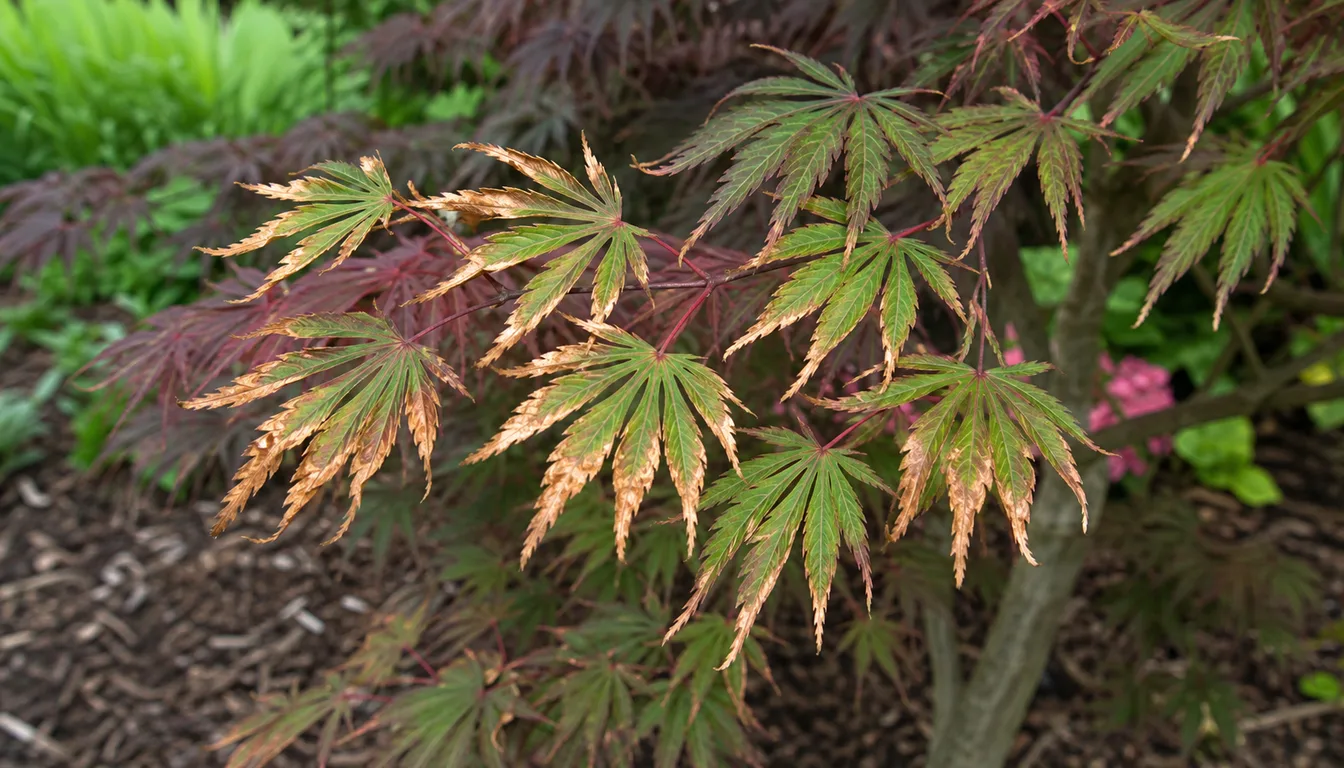
Japanese Maple leaf scorch begins at thin tips and margins because those tissues are the hardest parts of the leaf to keep supplied with water. The dead areas turn tan or brown, feel crisp, and may spread inward between the veins while tissue nearer the main veins stays alive.
Timing and distribution are more useful than the shade of brown. Injury that appears after hot, windy weather and is strongest on the exposed canopy edge supports physiological scorch, while scattered spots after a wet spring or wilt confined to one branch points elsewhere.
The soil surface can mislead you because mulch may be damp while the root zone below is dry, while a wet bed can deprive roots of oxygen and make more irrigation harmful.
This diagnosis is separate from Japanese Maple fall color. Flexible leaves changing across the canopy at the normal autumn time are completing seasonal senescence, while growing-season scorch leaves crisp dead margins that cannot produce a full fall display.
Common Causes
01 High likelihood
Hot sun, reflected heat, or dry wind
Hot afternoon sun, low humidity, and wind increase transpiration until a Japanese Maple can lose water faster than its roots and water-conducting tissue deliver it.
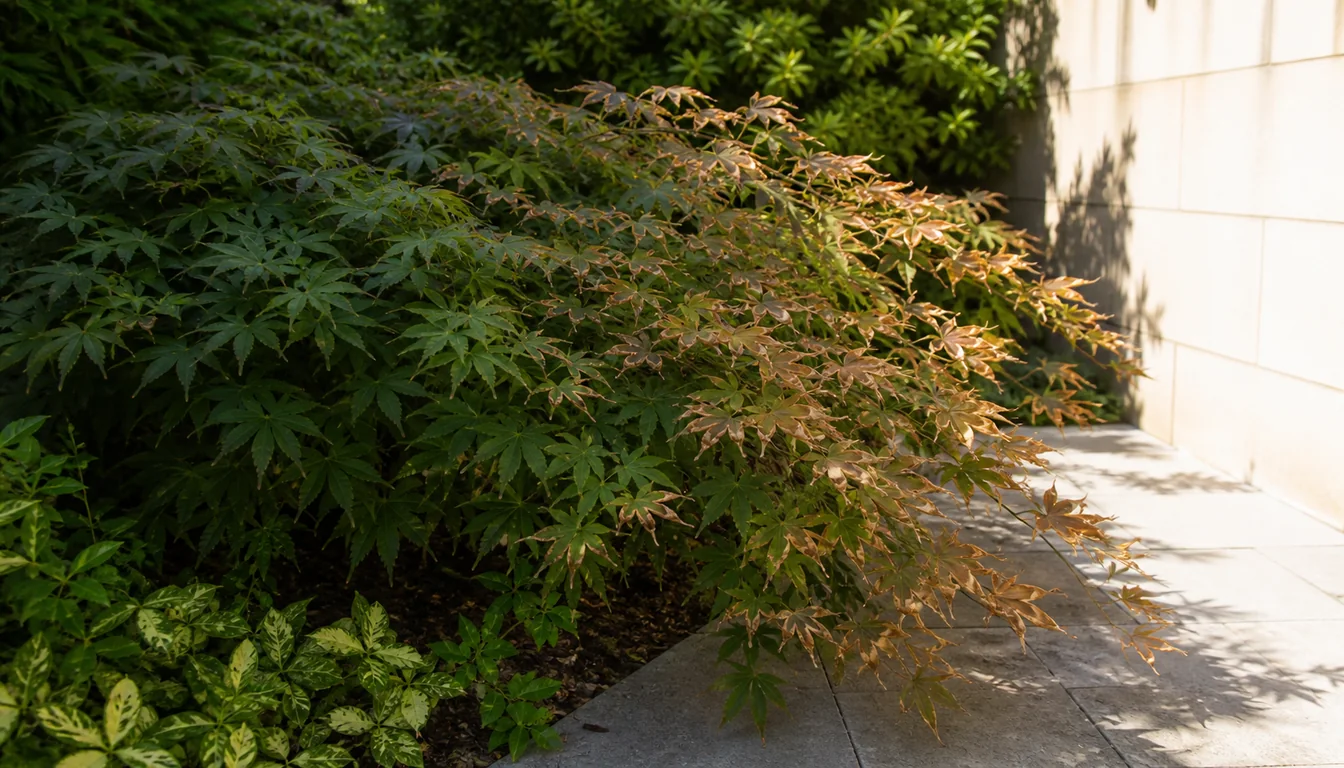
Read the direction of the injury before changing the whole site. Outer leaves beside a west-facing wall, pale paving, gravel, or an open wind corridor may crisp while leaves deeper in the same canopy remain supple.
Moving a container from morning sun into several hours of late-day heat can scorch foliage that formed under lower light even when the potting mix has not dried completely.
Temporary shade during an extreme spell can protect the living tissue that remains. Make permanent changes before the next hot season and keep enough filtered light for healthy growth instead of pushing the tree into deep shade.
How to identify it
- Brown tips and margins appeared during or soon after hot, dry, or windy weather.
- The west-facing, pavement-facing, or windward canopy edge is worse than the sheltered interior.
- Outer leaves feel crisp while protected leaves on the same branches remain flexible.
- The damage does not begin as separate circular or vein-following spots.
- A container was moved into stronger light, or a nearby tree or structure stopped providing afternoon protection.
What to do
- Use temporary shade cloth above the exposed side during exceptional heat, leaving air space around the foliage.
- Move a container gradually and keep it out of reflected late-afternoon heat while damaged leaves remain attached.
- Do not thin or hard-prune the canopy during a heat wave because the newly exposed leaves and bark can overheat.
- Reduce heat from gravel or bare soil by widening a flat organic mulch layer over the root zone.
- Choose morning sun with afternoon protection for a future planting in a hot climate.
02 High likelihood in hot weather
Dry soil below damp-looking mulch
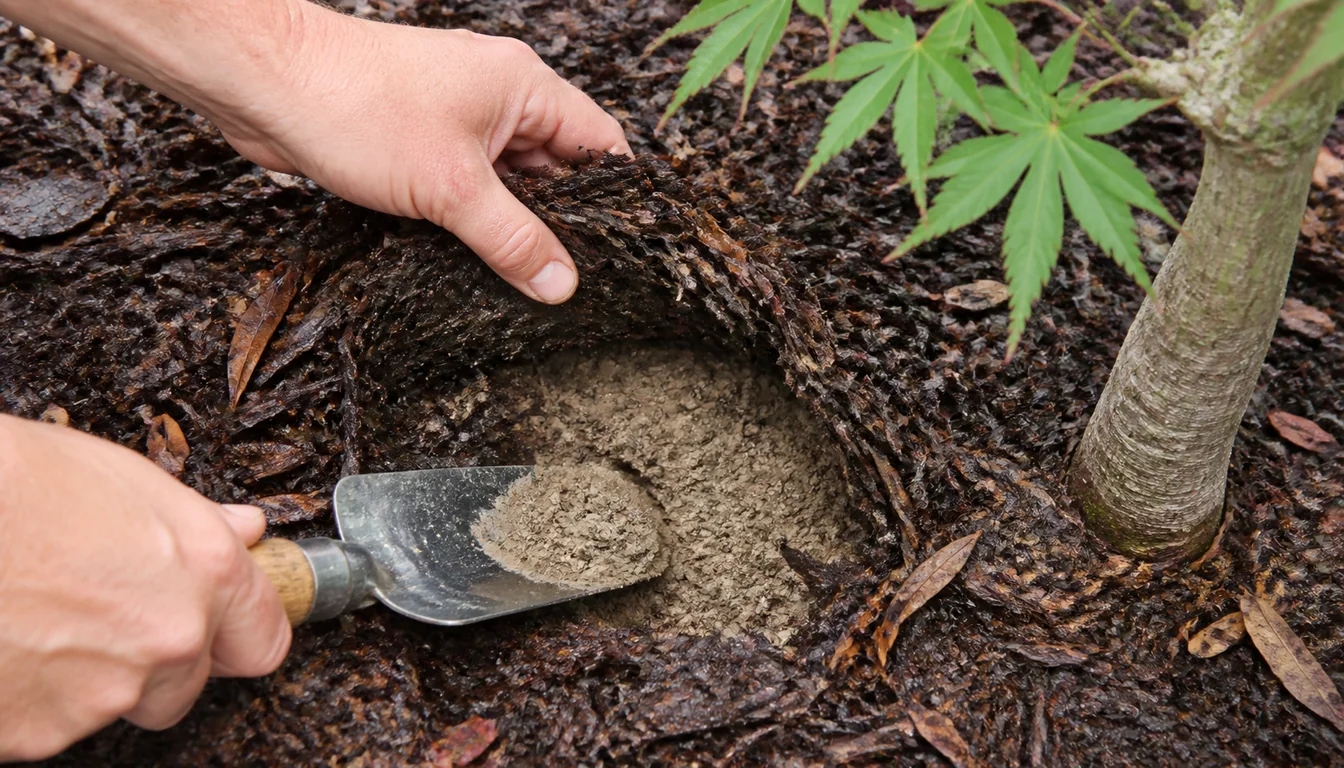
Light watering can darken mulch and the top inch of soil while leaving the deeper soil that supplies the canopy dry and crumbly.
Check at two or three places under the canopy rather than beside the trunk alone because a roof, lawn irrigation, or paving can make the root zone dry unevenly.
Containers need an additional check because a root-bound pot may shed water down the gap between the root ball and the pot wall. Water that exits quickly is not proof that the center of the root ball became moist.
Water slowly across the broad root zone when the tested soil is dry, then check again after the water has soaked in. Stop when the root zone is moist rather than saturated, since repeated watering into wet soil creates a different supply failure.
How to identify it
- Soil several inches below the mulch is dry even though the surface looks dark.
- Scorch followed missed irrigation, low rainfall, a heat wave, or a change in the watering schedule.
- Leaves first drooped or curled, then developed crisp margins.
- A roof overhang, pavement, or competing turf leaves part of the root zone drier than the rest.
- A container feels unusually light or has a dry center after water ran down the sides.
What to do
- Lift the mulch and test the soil before each corrective watering.
- Apply water slowly over the root area beneath and beyond the canopy instead of pouring it against the trunk.
- Pause long enough for water to enter hard or dry soil, then make another slow pass if the first one ran off.
- Rewet a dry container root ball in stages and confirm moisture in the center with a wooden skewer or finger check.
- Keep two to three inches of mulch over the bed while leaving the trunk flare uncovered.
03 High likelihood after planting
A new tree has too few working roots
A transplanted Japanese Maple may develop marginal scorch, wilting, small leaves, and short shoots because its reduced root system cannot yet support a full canopy.
The root ball and the native soil can hold different amounts of water. A dense nursery root ball may stay dry while the loosened backfill is wet, or it may remain saturated after the surrounding bed has drained.
Inspect the planting depth as well as moisture. The first structural roots should sit near the soil surface, and mulch should not cover the trunk flare or pile against the bark.
Judge recovery by stable buds, live twigs, and stronger shoot growth rather than adding fertilizer that can supply salt or stimulate foliage before the roots can support it.
How to identify it
- The tree was planted or moved within the last two growing seasons.
- Leaves are smaller than expected and current shoots are short.
- The root ball has a different moisture level from the surrounding soil.
- The trunk enters the ground like a pole because the root flare is buried.
- Scorch affects much of the canopy without distinct leaf spots or a single dying branch.
What to do
- Check moisture in both the root ball and the surrounding soil before watering.
- Expose the top of the root flare by moving loose mulch away without cutting bark or major roots.
- Keep the root ball evenly moist during establishment while allowing excess water to drain.
- Leave partly green leaves and healthy branches in place because they still support root growth.
- Ask an arborist or experienced nursery professional to inspect a deeply planted tree or a root ball that never drains.
04 Moderate likelihood when scorch repeats
Wet, compacted, or restricted roots
Wet soil can produce the same leaf-edge injury as drought because waterlogged roots lose function, so adding more water may deepen the problem even when the canopy looks thirsty.
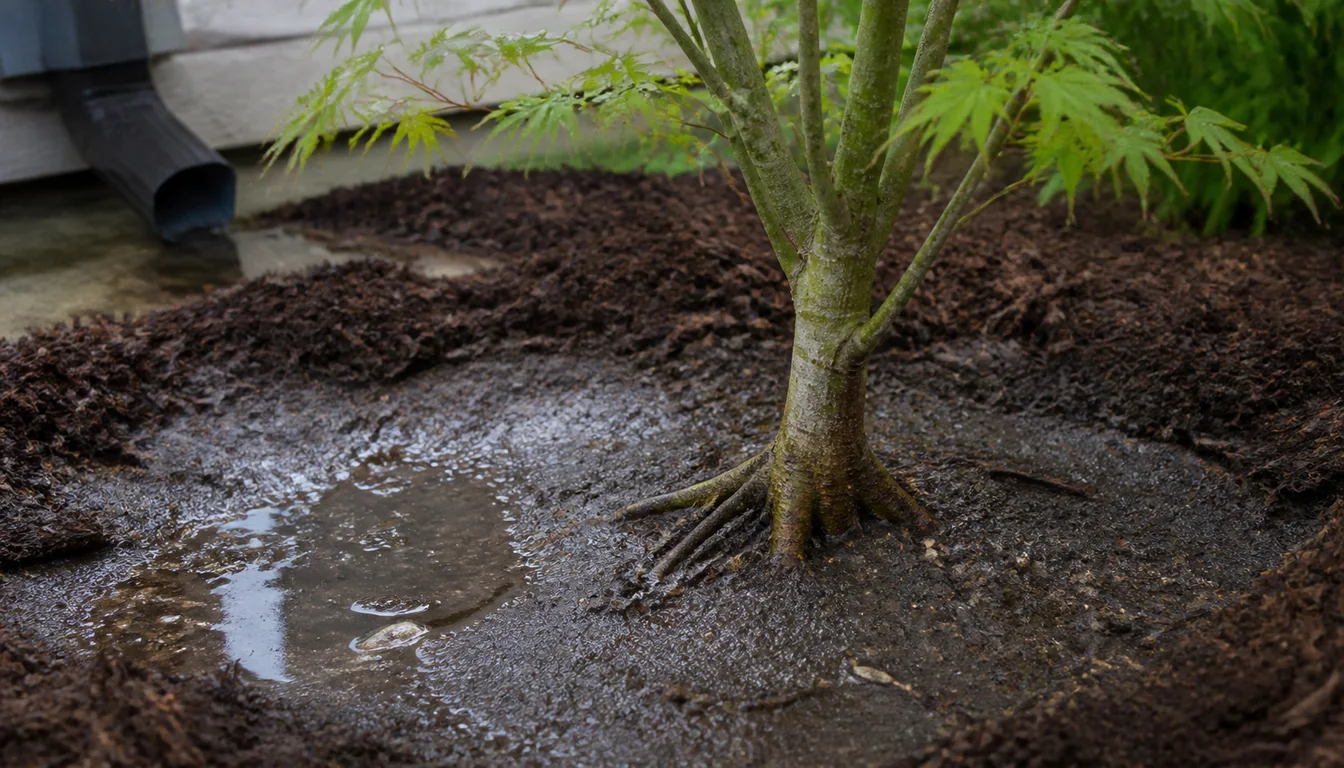
Look for puddling after rain, a downspout emptying into the bed, a buried root flare, compacted soil, added fill, trenching, or new paving. These site changes can reduce water uptake across the whole tree or in the canopy sector served by the damaged roots.
Repeated scorch with short shoots, sparse foliage, early color, or branch dieback deserves more attention than one hot-weather episode. A circling root pressing into the trunk base can also create a chronic supply problem, especially when the trunk lacks a normal flare.
Correct surface drainage and stop traffic or digging before considering root work. Do not till under the canopy or cut a large girdling root without an assessment, since either action can remove more working roots from an already stressed tree.
How to identify it
- The bed remains slick or saturated long after nearby soil has drained.
- Scorch returns despite measured soil moisture and reasonable afternoon protection.
- Shoot growth is weak, leaves are small, or the canopy is thinning.
- Construction, grade changes, heavy foot traffic, or paving affected the root zone.
- The trunk flare is buried or a woody root presses tightly against the trunk.
What to do
- Redirect downspout water and stop irrigation while the tested root zone remains wet.
- Keep vehicles, repeated foot traffic, digging, and soil storage away from the root area.
- Remove only loose excess mulch from the trunk flare and leave major roots undisturbed.
- Have persistent one-sided decline, a large girdling root, or construction damage assessed by a qualified arborist.
- Plan drainage correction around the existing roots instead of cutting channels through them.
05 Site dependent
Salt, fertilizer, or a one-time chemical burn
A recent fertilizer, hard-water, or deicing runoff event makes salt injury credible because dissolved salts can accumulate at leaf margins and kill tissue there.
Root-zone salt injury often affects the canopy supplied by contaminated soil and may continue until the source stops. Direct spray, cleaning solution, or herbicide contact creates damage where droplets or drift reached foliage, which can leave a sharp boundary on one side of the tree.
Twisted or cupped new growth supports herbicide exposure, while lesions that enlarge during wet weather are a poor fit for a one-time chemical event.
Stop the source before trying to leach the soil. Flushing a container with open drainage can help with soluble salts, but adding large amounts of water to a compacted landscape bed may worsen root stress.
How to identify it
- Damage followed fertilizer, deicing runoff, pressure washing, herbicide use, or a change in irrigation water.
- Marginal burn is strongest near a treated lawn edge, road, walkway, or runoff path.
- Only leaves contacted by spray or drift show the same bleached or burned pattern.
- New growth is twisted or cupped after a suspected herbicide exposure.
- There is no clear link to a hot spell, dry root zone, or persistent waterlogging.
What to do
- Stop fertilizer and keep deicing or cleaning runoff out of the root zone.
- Move a container away from the exposure and replace salt-loaded potting mix when repeated hard-water or fertilizer injury is well supported.
- Rinse fresh direct spray from foliage with clean water when the product label allows it.
- Document the product, date, wind direction, and damaged side before the pattern fades.
- Use a soil or tissue test when salt injury is suspected in the landscape rather than adding a corrective amendment by guesswork.
What Brown Leaves Can and Cannot Tell You
Brown margins show that leaf tissue died from an interrupted water supply, but they do not identify the interruption by themselves. Heat and wind can pull water out too quickly, while drought, damaged roots, saturated soil, or vascular disease can limit the supply side.
Because old damage cannot become green again, leave a partly green leaf attached to support the tree unless it falls naturally or a confirmed sanitation need requires removal.
Fertilizer is not a rescue treatment for scorch. It can add soluble salts and can push tender growth before a stressed root system is able to support more leaves.
A stable canopy after the weather moderates supports an isolated stress event. Scorch that expands during mild weather, returns despite corrected soil moisture, or tracks one declining branch needs a closer root, trunk, and disease investigation.
Use current buds and twigs as your forecast. Plump buds and live flexible twig tips support recovery, while small leaves, short shoots, delayed bud break, and widening dieback show that the underlying supply problem remains.
Scorch Pattern vs Leaf Spot and Branch Dieback
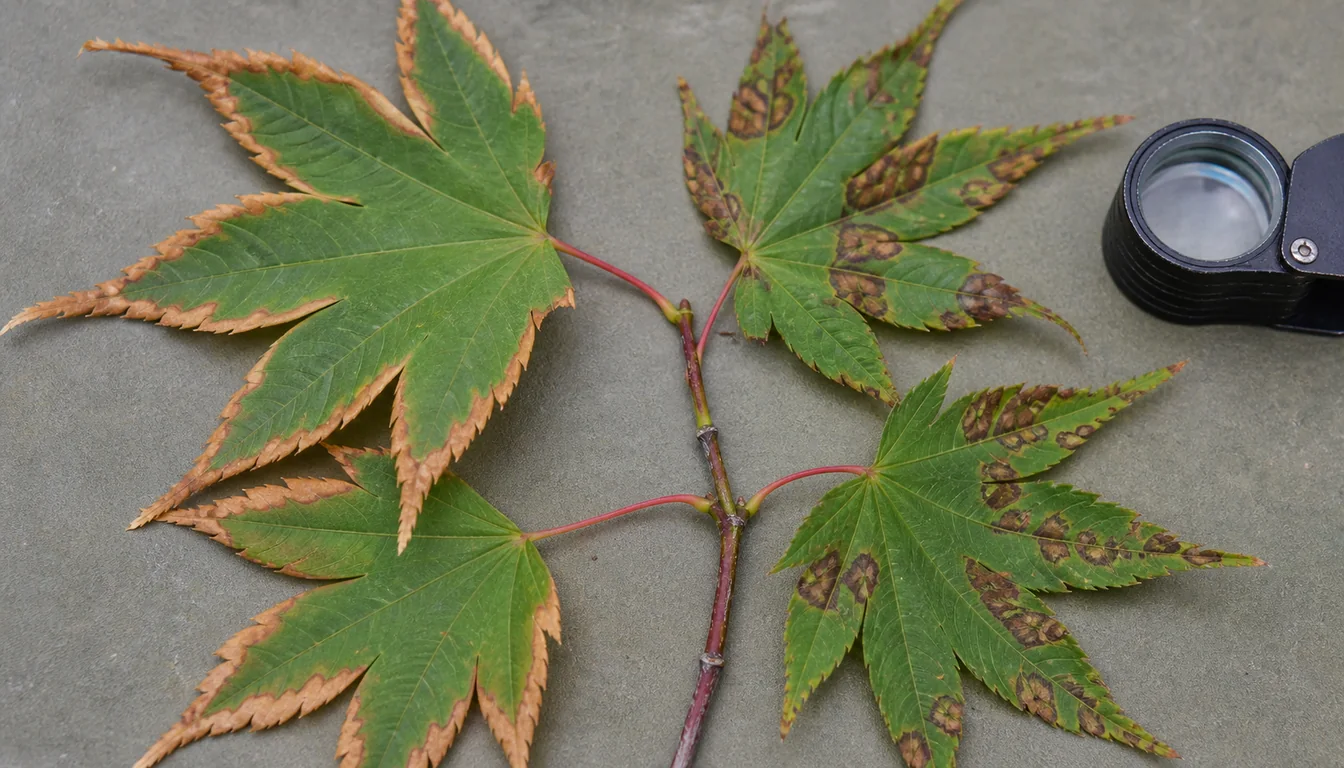
Physiological scorch usually forms a broad dry band from the tips and margins inward along the exposed canopy edge or across leaves affected by the same heat and moisture event.
Anthracnose and other foliar diseases more often begin as distinct tan, brown, or black lesions, sometimes following veins on young leaves after cool, wet spring weather. Lower and interior foliage may be affected first because those leaves stay wet longer.
One-sided wilt changes the urgency. Japanese Maple leaves that are small or yellow before browning, paired with branch death or green-to-black staining beneath the bark, can indicate Verticillium wilt and need professional diagnosis.
Do not diagnose bacterial leaf scorch from a brown edge. Similar-looking bacterial disease in listed maple hosts requires laboratory confirmation, and ordinary drought scorch is much more useful to test first on a Japanese maple.
Physiological Scorch
- Crisp band starts at tips and margins
- Follows heat, wind, exposure, or root stress
- Check canopy direction and soil moisture
Foliar Disease
- Separate lesions may follow veins
- Often linked to cool wet leaf-expansion weather
- Watch whether spots enlarge or spread
Branch or Vascular Decline
- Wilt follows one branch or canopy sector
- Leaves and shoots may be small or weak
- Use an arborist or diagnostic lab
Recovery Plan
Test before you treat
Map the damage from exposed edge to sheltered interior, then check soil below the mulch at several points. Water only where the root zone is dry, pause irrigation where it is wet, and move any container away from reflected afternoon heat.
Protect the living leaf tissue
Leave partly green leaves attached and watch whether fresh margins remain healthy after the weather eases. New scorch during moderate weather means the root zone, chemical history, or branch health still needs investigation.
Inspect the structure and site
Look for a visible root flare, circling roots, trunk wounds, grade changes, puddling, and construction damage without cutting roots or bark. Arrange an arborist assessment when one branch is dying, the trunk base is compressed, or scorch repeats with weak growth.
Judge recovery from the new canopy
Normal bud break and stronger shoots show that the tree retained useful roots and stored energy. Delayed bud break, small leaves, short shoots, or renewed scorch despite corrected moisture and exposure means the original cause is still active.
Give Japanese Maple gentle morning light and afternoon protection where summers are hot, then keep its broad root zone evenly moist rather than constantly wet. A flat two-to-three-inch mulch layer slows drying, but the trunk flare must remain visible.
Keep digging, vehicles, extra soil, fertilizer spills, deicing runoff, and downspout discharge away from the roots. Check the moisture below mulch during heat instead of following a fixed watering calendar.
A tree that repeatedly scorches with weak shoots or one-sided dieback needs a root, trunk, and vascular assessment. Changing light or irrigation alone will not repair a root system that cannot function.
Sources
- Leaf Scorch on Japanese Maple, UC Cooperative Extension Ventura County
- Acer palmatum: Japanese Maple, University of Florida IFAS Extension
- Leaf Scorch of Ornamental Trees and Shrubs, University of Missouri Extension
- Maple Leaf Edges Discolored, University of Minnesota Extension
- Transplant Shock of Trees and Shrubs, Purdue Extension
- Anthracnose Diseases of Shade Trees, University of Maryland Extension
- Verticillium Wilt of Woody Ornamentals, Penn State Extension
- Phytotoxicity and Chemical Damage to Garden Plants, University of Maryland Extension