
Why Camellia Buds Drop Before Opening
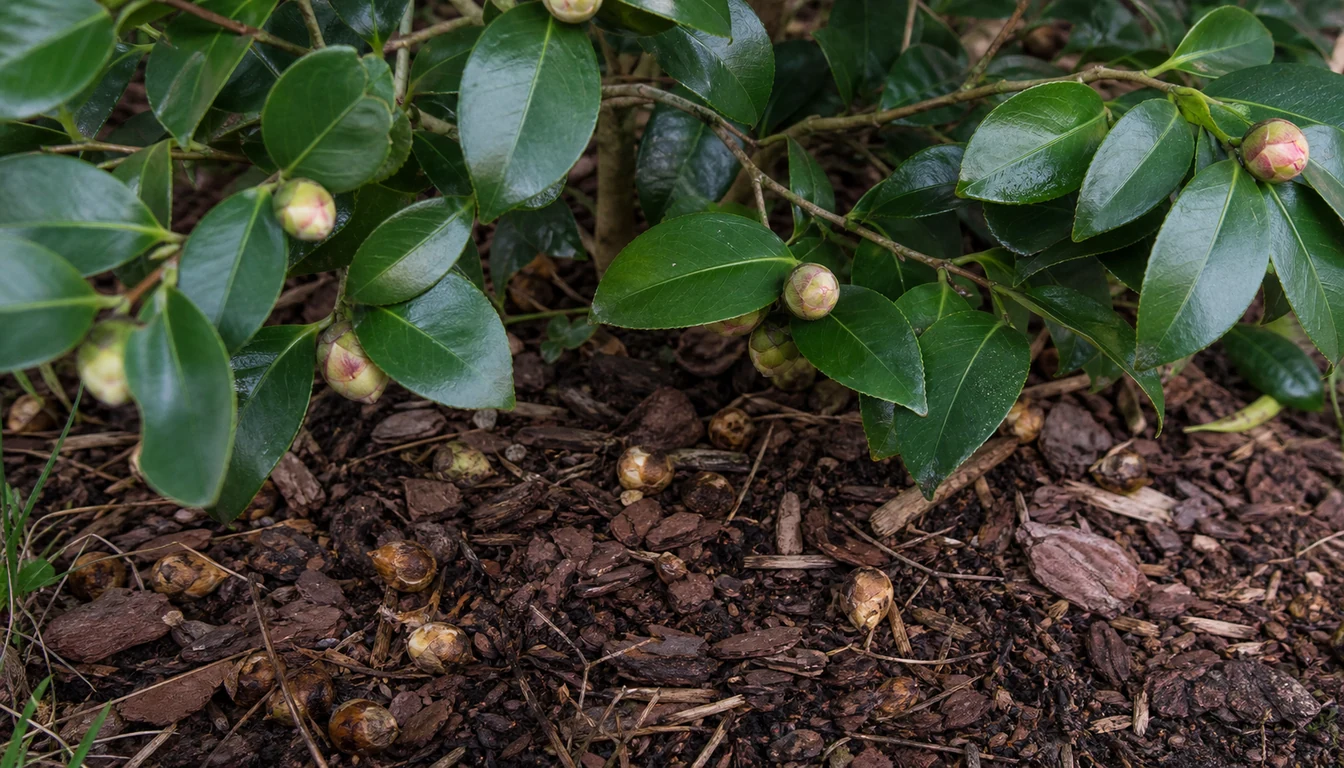
Camellia buds can fall before opening because the shrub set more buds than it can carry, endured irregular moisture months earlier, suffered a temperature swing, or has a root, site, nutrient, or bud-mite problem.
Start with how many buds fell, when they fell, and whether the remaining shrub still looks vigorous.
Quick diagnosis
The timing and scale of loss separate the main causes
Scattered smaller buds dropping from a heavily budded, healthy shrub can be natural thinning. A sudden wave after cold or heat supports temperature injury, while gradual loss after drought, persistent wetness, or slow brown-tipped buds points to moisture, roots, site conditions, nutrition, or bud mites.
Open the full diagnosisWhat You Are Seeing
Camellia flower buds develop well before the winter or spring bloom, so loss at opening time can trace back to drought during late summer or fall. A healthy shrub may also shed part of an unusually heavy bud set while larger buds continue to swell.
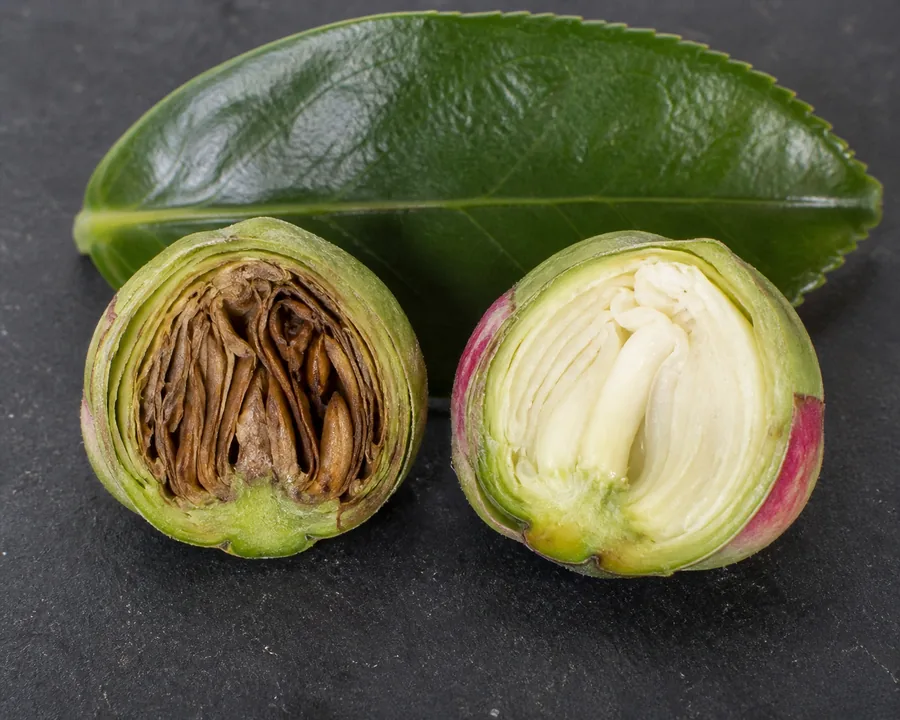
A sudden drop gives weather more weight. Open one fallen bud after a freeze and compare it with a firm attached bud because brown internal flower tissue can hide beneath scales that still look normal.
Bud drop and yellow Camellia foliage answer different questions. Glossy green leaves with scattered loss support thinning or direct bud injury, while weak growth, yellowing, wet soil, odor, or damaged roots shifts attention to the root zone and site.
Common Causes
01 High likelihood
Natural thinning after a heavy bud set
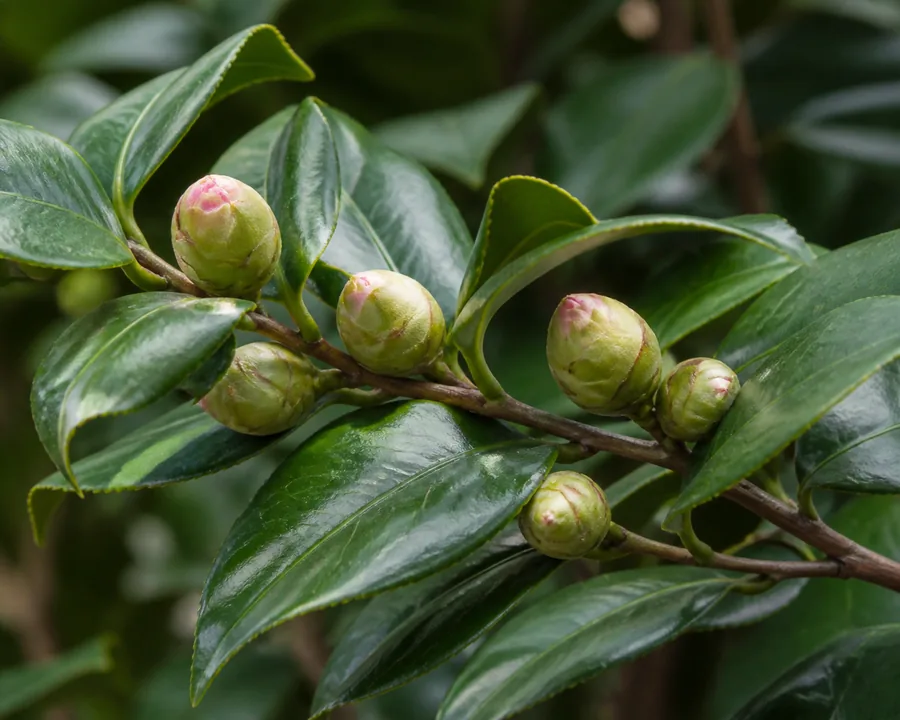
Many Camellias form more flower buds than they can open, and the shrub may shed part of that load. Natural thinning is scattered rather than tied to one weather event, with smaller or later buds falling while leaves stay glossy and the remaining buds continue to enlarge.
How to identify it
- The shoot carries several unopened buds of different sizes.
- Smaller buds fall gradually while larger firm buds continue to swell.
- Leaves remain glossy green and new growth appears normal.
- There is no matching freeze, drought, saturated-soil, or pest pattern.
What to do
- Monitor the remaining buds instead of changing water, fertilizer, and soil at once.
- Remove fallen buds from beneath the shrub so later disease signs are easier to read.
- Avoid forcing growth with extra fertilizer when the foliage and remaining buds look healthy.
- Record how the cultivar behaves because sensitivity and bud load vary among Camellias.
02 High likelihood
Irregular moisture during bud development
Camellia roots are shallow, and flower buds begin developing months before bloom. Dry soil during late summer or fall can reduce the next flower display, while repeated dry-to-soaked swings stress both roots and developing buds.
How to identify it
- Bud loss follows a known dry period or an irregular watering history.
- Soil below the mulch is dusty dry or separates from a container wall.
- Loss develops gradually rather than within days of one freeze.
- Root competition, containers, eaves, or hot weather made the root zone dry faster than expected.
What to do
- Use soil and weather evidence beneath the mulch and across the root zone rather than checking beside the trunk only.
- Water slowly enough to wet the shallow root area evenly without leaving standing water.
- Maintain a 2–3 inch organic mulch layer while keeping mulch away from the trunk flare.
- Plan consistent moisture during late summer and fall instead of waiting for buds to swell.
03 Medium likelihood
Freezing, heat, or a large temperature swing
Swollen flower buds are less forgiving than the evergreen leaves around them. A freeze, unusually warm spell followed by cold, or hot weather during bud development can damage internal flower tissue and trigger a sudden loss.
How to identify it
- Many buds loosen or fall within a few days of a temperature event.
- A cut bud has brown or black internal tissue beneath normal-looking scales.
- Damage is strongest on exposed tips or the side facing cold dry wind.
- Leaves may remain green because the flower tissue was at a more vulnerable stage.
What to do
- Use breathable frost cloth over small shrubs before a forecast freeze and keep the fabric from crushing swollen buds.
- Remove the cover after temperatures rise so trapped moisture can leave.
- Keep the root zone normally moist before cold weather without saturating it.
- Use a sheltered site for future plantings when the same exposed side loses buds repeatedly.
- Choose a cultivar and bloom season suited to the local cold pattern when losses recur every year.
04 Medium likelihood
Poor drainage and damaged roots
Camellias need moist soil with usable air spaces, not a root zone that remains saturated. Poor drainage reduces root function and can cause gradual bud loss together with yellowing, stalled growth, leaf drop, odor, or dark damaged roots.
How to identify it
- Water stands after rain or the soil remains slick and wet for many days.
- The shrub shows weak growth or yellow leaves as buds decline.
- The trunk flare is buried or the plant sits in a low pocket.
- Roots near the wet area are dark, soft, or sparse rather than firm and branching.
What to do
- Stop adding water until inspection shows that the root zone has begun to drain normally.
- Redirect roof runoff and correct a blocked container or bed outlet.
- Expose a buried trunk flare and keep new mulch away from the stem base.
- Improve the site or transplant during a suitable season when the root zone stays chronically saturated.
- Avoid digging amendments into established shallow roots as a quick drainage cure.
05 Low likelihood
An exposed or unsuitable planting site
Hot afternoon sun, cold dry wind, intense reflected heat, or root competition can make bud loss repeat on the same side or in the same season. Site stress remains likely when watering is consistent but the exposed portion fails first.
How to identify it
- Bud loss is concentrated on the windy, sunny, or reflected-heat side.
- Protected interior buds survive better than exposed branch-tip buds.
- The pattern repeats in similar weather each year.
- Nearby roots or an overhang change how much moisture reaches part of the shrub.
What to do
- Use a temporary wind screen that does not trap moisture against the foliage.
- Provide filtered shade from harsh afternoon exposure where the shrub is overheating.
- Check moisture separately in the exposed and protected sides of the root zone.
- Transplant only when a recurring site mismatch cannot be corrected in place.
06 Low likelihood
A nutrient deficiency confirmed by evidence
A nutrient shortage can contribute to slow buds and poor flowering, but bud drop alone does not identify which nutrient is missing. Pale foliage, weak growth, soil conditions, and a soil test should support any correction because excess fertilizer can injure Camellia roots.
How to identify it
- Bud loss occurs with pale foliage or weak annual growth.
- Soil pH or a laboratory test shows a specific availability problem.
- Moisture, drainage, temperature, and natural thinning do not explain the pattern.
- The shrub has not improved under otherwise suitable site conditions.
What to do
- Test the soil before choosing a fertilizer or pH amendment.
- Correct the named deficiency at the recommended rate and season.
- Keep fertilizer away from the trunk and never apply extra to drought-stressed roots.
- Judge the response from new growth and the next bud-setting cycle.
07 Low likelihood
Camellia bud mites
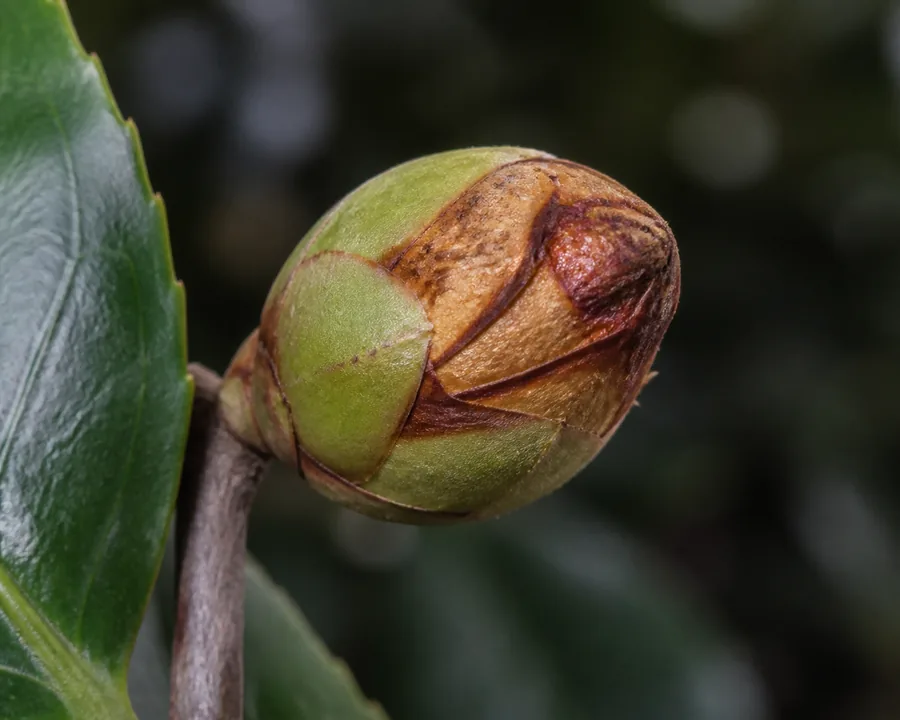
Camellia bud mites are a documented cause of brown bud tips, slow development, late opening, and failure. Because the mites are tiny, the useful field evidence is a recurring localized pattern that remains after weather, moisture, drainage, and natural thinning have been checked.
How to identify it
- Bud tips brown while the buds remain attached and develop slowly.
- Some buds open late or fail while nearby foliage looks reasonably healthy.
- The pattern recurs on the same plant without a matching weather event.
- Magnification or qualified diagnosis confirms mites in or around affected buds.
What to do
- Collect affected buds for local extension or diagnostic-lab confirmation when the pattern persists.
- Remove badly affected fallen and attached buds from beneath the shrub.
- Avoid broad pesticide treatment when no mite evidence has been confirmed.
- Use only a product labeled for Camellia, the target mite, and the application site when treatment is recommended.
What a fallen bud can still tell you
A whole unopened bud on the ground is still useful evidence.
Note its size, firmness, outer tip, and internal color, then compare it with attached buds rather than diagnosing from the fallen count alone.
Natural thinning leaves the shrub vigorous and the surviving buds continue to enlarge.
Temperature injury clusters around a weather event, while root and moisture problems develop more gradually and often affect foliage or growth as well.
Petal blight belongs to a different stage because it begins on opened flower petals and can drop an intact-looking bloom after infection spreads. An unopened bud that loosened first needs the bud-drop branches before a flower-disease response.
A fallen bud cannot reattach or open. The useful goal is to protect remaining firm buds and correct the condition before the shrub builds the next crop.
Recovery Plan
Preserve the remaining firm buds
Monitor healthy buds when loss looks like natural thinning, or correct the one weather, moisture, drainage, or mite branch supported by evidence. Remove fallen material and avoid hard pruning or extra fertilizer during the diagnosis.
Read the final bloom pattern
Record which branches opened normally and which side lost buds. Clean fallen flowers after bloom, use flowering-shrub pruning timing only for a clear plant need, and test soil or seek a mite diagnosis when the remaining evidence points there.
Protect the next bud-setting period
Maintain even moisture through late summer and fall, keep the shallow root zone mulched without burying the trunk, and plan site or frost protection before buds swell. Compare next year's loss with this season's record to confirm the correction.
Reduce harmful Camellia bud drop by maintaining even moisture during bud development, preserving a shallow organic mulch layer, keeping drainage open, and protecting swelling buds from recurring temperature extremes. Match the planting site and cultivar to local exposure, use soil tests before correcting nutrients, and record natural thinning so it is not treated as a disease.