
Why Your Daylilies Are Not Blooming
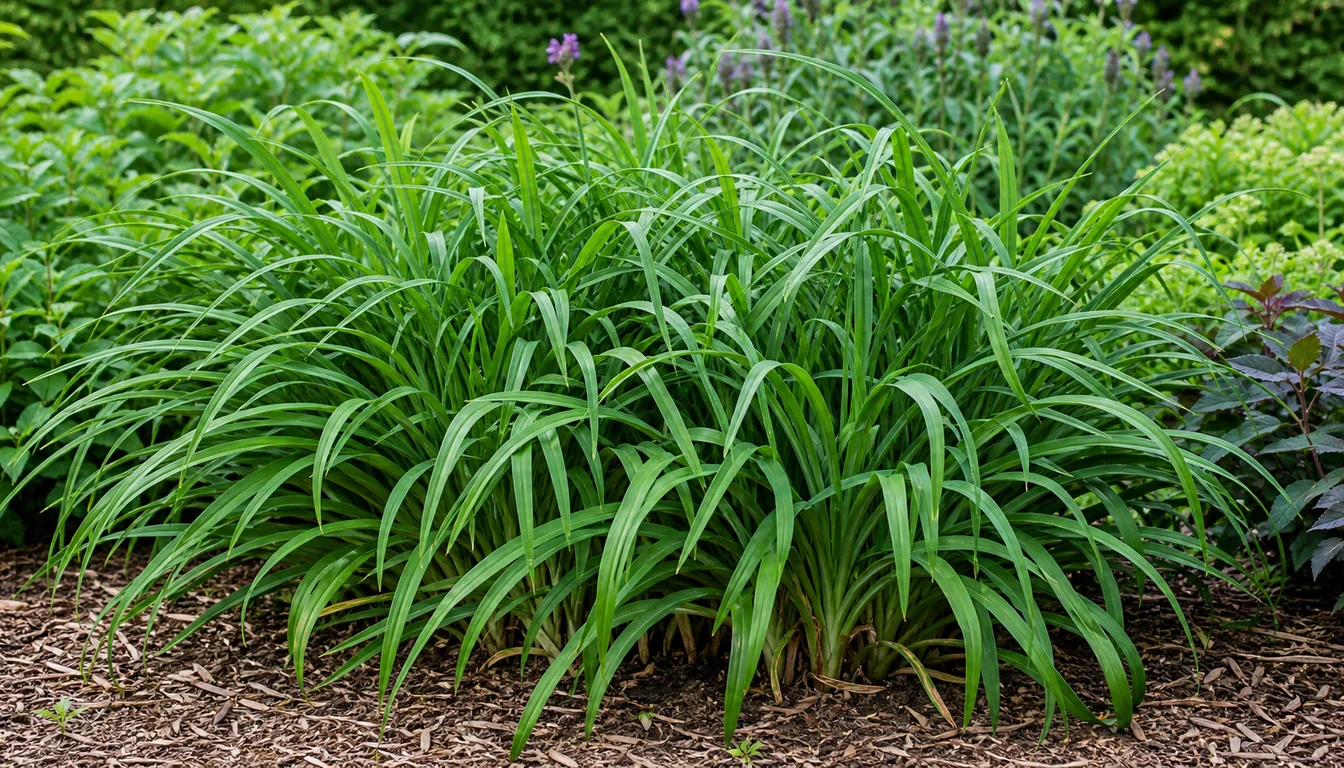
A daylily that grows green fans without flowers usually lacks enough direct sun, has become overcrowded, or is spending a season establishing after division. If scapes or buds formed first, inspect for drought, browsing, cold injury, and bud pests before changing the soil.
Quick diagnosis
First check whether any flower scapes formed
A leafy clump that never produced an upright scape points first to light, crowding, crown depth, or establishment.
Cut scape ends, collapsed buds, or distorted unopened buds prove the plant reached a later stage and need a different fix.
Open the full diagnosisWhat You Are Seeing
Daylily flowers rise on mostly leafless stalks called scapes from the center of fan-shaped crowns. Search among the leaves for a stalk or a cut stub before deciding that the crown failed to initiate flowers.
Healthy green fans with no scapes define the main problem on this page. A clump with yellow streaks, orange pustules, collapsing leaf bases, or soft crown tissue needs a foliage or crown diagnosis because disease and rot leave evidence beyond missing flowers.
Daylilies are Hemerocallis perennials with fleshy roots, not true lilies growing from bulbs. That difference matters when you check planting depth or divide a clump, although the full identity comparison is a separate reader task.
Check the expected bloom window before calling a plant late. Cultivars flower at different times, and a flower that opened yesterday may already be gone even though other buds on the same scape should continue the display.
Common Causes
01 High likelihood
Too little direct sun
Daylilies tolerate light shade, but flowering is strongest with at least six hours of direct sun. A shaded plant can maintain broad green fans while making few or no scapes.
Measure the hours when the sun reaches the leaves during the weeks before bloom, not the brightness of the bed at one convenient time. A gradual decline as a tree canopy closes over the clump, together with better flowering at the sunny edge, makes light more convincing than age or fertilizer.
Record the first and last direct sun on both the blind clump and a flowering comparison.
Dappled brightness under a canopy is not the same as uninterrupted direct light. When the shaded clump also has normal crown depth and moisture, moving it during the appropriate dormant or cool period tests the diagnosis more cleanly than feeding it in place.
How to identify it
- The clump has normal green fans but no upright scapes by its expected bloom time.
- The bed receives less than six hours of direct sun on a clear day.
- Nearby daylilies in a brighter part of the same bed flower normally.
- A growing tree, shrub, hedge, or fence now shades a site that flowered in earlier years.
- The crown is firm and the leaves show no pest, rot, rust, or streak symptoms.
What to do
- Record direct sun at several points from morning through late afternoon instead of judging the site once.
- Prune an appropriate neighboring shrub only when that safely restores useful light.
- Move the clump in early spring or after its normal flowering period when the site stays shaded, then choose from full-sun perennials if the original bed needs a replacement.
- Choose a new position away from tree and shrub roots that also compete for water and nutrients.
- Judge scape production in the next normal bloom season because a brighter site cannot restore flowers that were never initiated this year.
02 High likelihood
An overcrowded older clump
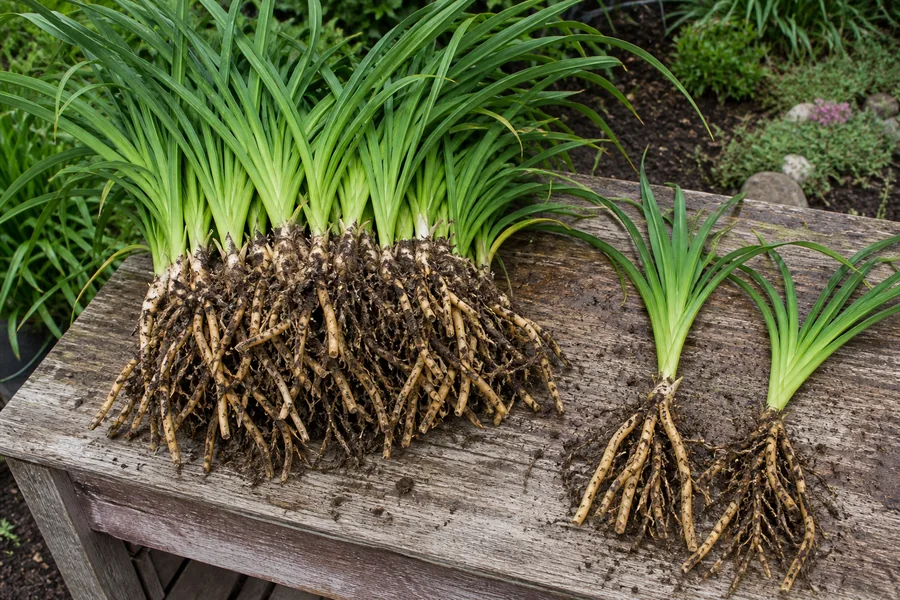
Daylily crowns multiply into more fans as a clump matures. Flower numbers can fall when many crowns occupy a tight root mass, even though the outside of the clump still looks vigorous.
The history of the clump matters more than its diameter alone. Crowding fits a mature planting that once bloomed well and then produced progressively fewer scapes as fan density increased, while a young nonflowering division needs establishment time rather than another immediate split.
Count firm fans and look for a dead or weak center after the normal bloom period.
Divide only when density and decline agree, then keep pieces large enough to reestablish without another long setback. Repeatedly splitting a small recent division delays the same flowering the correction is meant to restore.
How to identify it
- A formerly floriferous clump has declined gradually over several seasons.
- Many fans emerge from a small area and the center is difficult to part by hand.
- The middle looks congested or weak while newer fans spread around the edge.
- Uncrowded clumps with the same sun and watering still send up scapes.
- The plant has remained undivided for roughly three to five years or longer.
What to do
- Lift the clump in early spring or immediately after flowering when practical.
- Wash or shake away enough soil to see where natural groups of fans join.
- Separate divisions with two or three healthy fans and an attached root system.
- Replant with room for the mature cultivar rather than packing every division back into the same hole.
- Water thoroughly and allow the divisions to establish, because a spring division may skip that summer's bloom.
03 Medium likelihood
A buried crown or a recent division
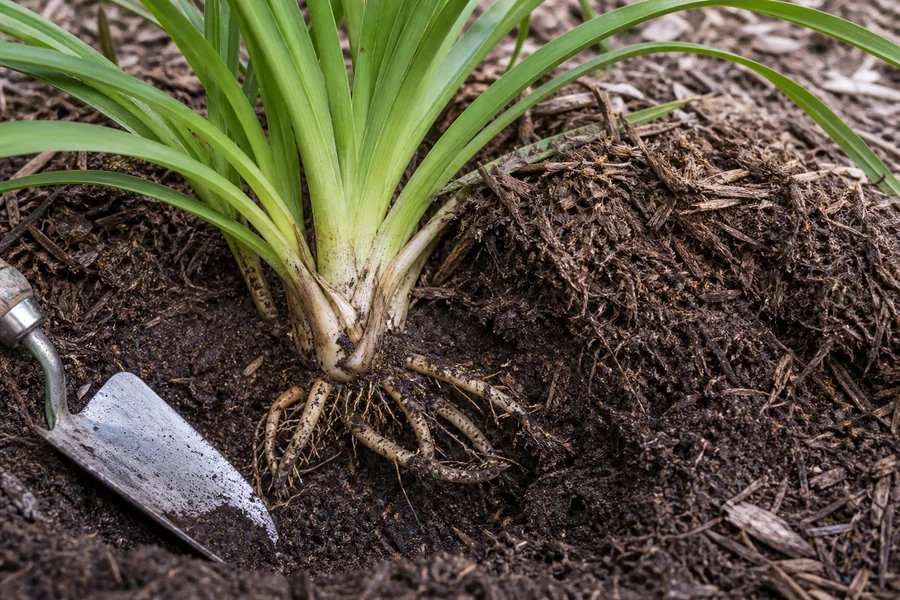
The crown is the junction where the fans meet the roots, and it should sit about one inch below the soil surface. A deeply buried crown loses vigor, while a correctly planted recent division may simply be rebuilding roots before it flowers well.
Pull mulch back and locate that junction before digging or resetting anything. Added soil can bury an established crown gradually, but a firm division planted at the correct level last season should be left long enough to root instead of being disturbed each time it misses a bloom cycle.
How to identify it
- The plant has never flowered well since it was installed, moved, or divided.
- Several inches of mulch or compost or a layer of new soil have accumulated over the original crown level.
- The crown sits much deeper than one inch when soil is carefully brushed away.
- A recent division has firm tissue and fresh roots but has not yet made many fans.
- Established plants nearby flower under the same light and moisture conditions.
What to do
- Pull loose mulch away first and locate the actual crown before digging the plant.
- Lift and reset a deeply buried crown so its top finishes about one inch below the settled soil surface.
- Spread the fleshy roots over a small soil mound instead of bending them into a narrow hole.
- Water thoroughly after replanting and keep new mulch off the crown itself.
- Wait through the appropriate establishment period when the depth is correct, because divided plants may need one or two years to bloom well.
04 Medium likelihood
Excess nitrogen feeding the leaves
Rich soil or repeated high-nitrogen feeding can produce unusually lush foliage with sparse flowers. Lawn fertilizer drifting or washing into a border is a common clue when the daylily itself was never deliberately fed.
Use a change in the feeding history and a comparison with nearby flowering clumps before assigning this cause. Ordinary green leaves are not proof of excess nitrogen, and adding phosphorus on that assumption can create another imbalance without correcting shade, depth, or crowding.
How to identify it
- Leaves are darker, softer, or more abundant than those on flowering daylilies nearby.
- The clump receives lawn fertilizer, manure, or frequent high-nitrogen feed.
- Bloom declined after the feeding routine changed while light and spacing remained stable.
- The crown is firm and the bed does not show a spring drought pattern.
- A soil test does not support adding the nutrient being applied.
What to do
- Stop high-nitrogen products around the clump and keep lawn applications out of the bed, then review when to fertilize plants before feeding again.
- Do not add phosphorus or a bloom booster without a soil test or local recommendation.
- Use a modest spring compost application only when the soil needs organic matter.
- Maintain ordinary moisture while the plant uses the current foliage to rebuild reserves.
- Evaluate the next bloom cycle instead of applying a second product when flowers do not appear immediately.
05 Medium likelihood and seasonal
Dry soil while scapes and buds form
Established daylilies tolerate dry periods, but adequate spring moisture increases flower number and size. Prolonged dryness during scape and bud formation can stall the display or cause some cultivars to drop buds.
The failed stage separates this from a plant that never initiated flowers. Short stalled scapes or aborted buds after a documented dry spell support moisture stress, while a clump with no scape tissue should first be checked for light, crown position, establishment, and cultivar timing.
Check moisture several inches down across the active roots and compare it with the timing of scape slowdown.
A dry surface after one warm afternoon is weak evidence; a dry root zone through repeated bud development is stronger. Restoring even moisture protects remaining buds but cannot rebuild scapes or buds that have already aborted.
How to identify it
- Short scapes or small buds began to form and then stopped during a dry spell.
- The root zone is dry several inches down rather than only at the mulch surface.
- The clump competes with nearby tree or shrub roots for spring moisture.
- Plants in deeper or consistently moist soil flower better in the same light.
- There are no cut scape ends, swollen buds, insects, or cold-damaged tissues.
What to do
- Check moisture below the mulch before watering because a dry surface can hide damp soil.
- Use deep watering during extended spring drought rather than wetting only the leaves.
- Aim for consistent moisture in well-drained soil and avoid leaving the crown waterlogged.
- Use organic mulch to slow evaporation while keeping it clear of the crown.
- Expect intact later buds to continue only when the scape remains alive, and judge a fully lost display next season.
06 Medium likelihood where animals browse
Deer or rabbits removed the scapes
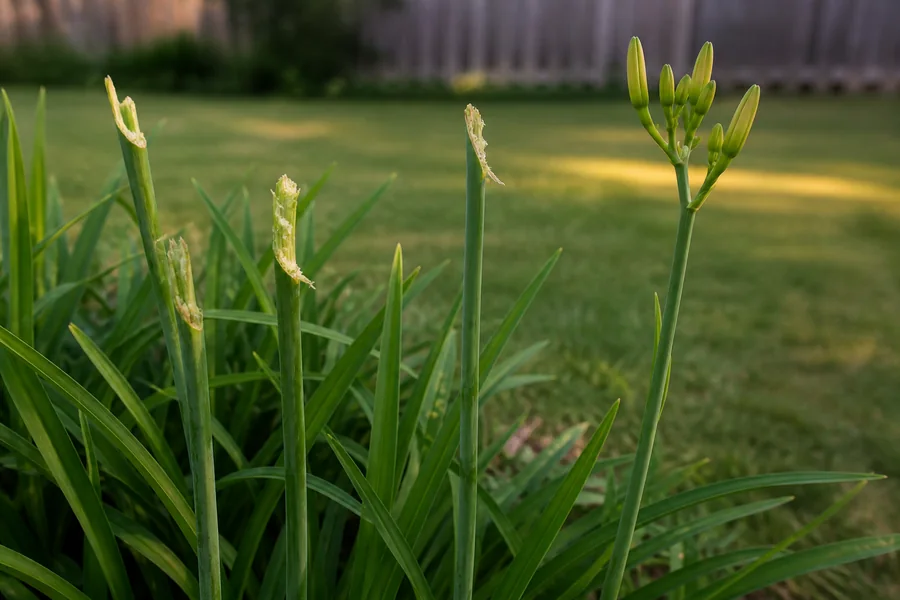
Deer readily eat tender daylily buds, and smaller animals can remove young flower growth closer to the leaves. The crown did initiate flowers in this case, so division and fertilizer do not address the loss.
Physical evidence often remains after the flowers disappear. Upright stubs, ragged fibers, tracks, droppings, and intact scapes inside a barrier show that the plant completed flower initiation and shift the correction toward protection before the next buds rise.
Inspect at the height where tissue vanished and compare plants inside and outside any existing barrier.
Repeated clean losses overnight point toward browsing, while distorted buds that remain attached point toward insects or cold. Protect developing scapes before the next feeding visit rather than waiting until only stubs remain.
How to identify it
- Upright scape stubs end abruptly above otherwise intact green fans.
- The broken ends look clipped, torn, or freshly chewed rather than soft and collapsed.
- Buds disappear overnight or after known animal activity in the yard.
- Tracks, droppings, or browsing on neighboring plants support the diagnosis.
- Protected daylilies retain buds while exposed clumps in the same bed lose them.
What to do
- Photograph and inspect the stem ends before trimming them so the physical evidence is not lost.
- Use a barrier tall and secure enough for the animal responsible in that yard.
- Protect new scapes early because a barrier added after all buds are gone cannot restore this display.
- Avoid relying on one short-lived scent deterrent where browsing pressure is heavy.
- Keep caring for the healthy foliage and wait for the cultivar's next scape or next flowering season.
07 Low likelihood
Thrips or aphids damaged the buds
Thrips can scar and distort immature daylily stems and buds, and severe feeding may kill a flower before it opens. Aphids are easier to see and may leave curled tissue, shed white skins, sticky honeydew, or warty bud growth.
A bud pest belongs on the list only after buds or scapes are found. Open one damaged bud carefully or tap it over white paper, then use the insect and feeding pattern to distinguish internal or surface injury from drought, cold, and browsing before choosing a treatment.
How to identify it
- Scapes and buds are present, but the buds are scarred, brown, distorted, or unopened.
- Tiny slender thrips fall onto white paper when buds and flowers are tapped over it.
- Aphids cluster on tender growth or leave pale cast skins and sticky honeydew.
- The damage is concentrated on buds and young tissue rather than the entire crown.
- The bud is not the unusually short swollen cone associated with gall midge.
What to do
- Confirm the insect with a white-paper tap test or a hand lens before treating.
- Remove badly damaged buds and nearby weeds that shelter recurring pests.
- Use a strong stream of water for light aphid populations when it will not damage the buds.
- Preserve lady beetles, lacewings, and other natural pest control instead of spraying on suspicion.
- If damage is severe, follow a product labeled for daylilies and the confirmed pest, including every pollinator precaution.
08 Low likelihood and regional
Daylily gall midge in an affected region
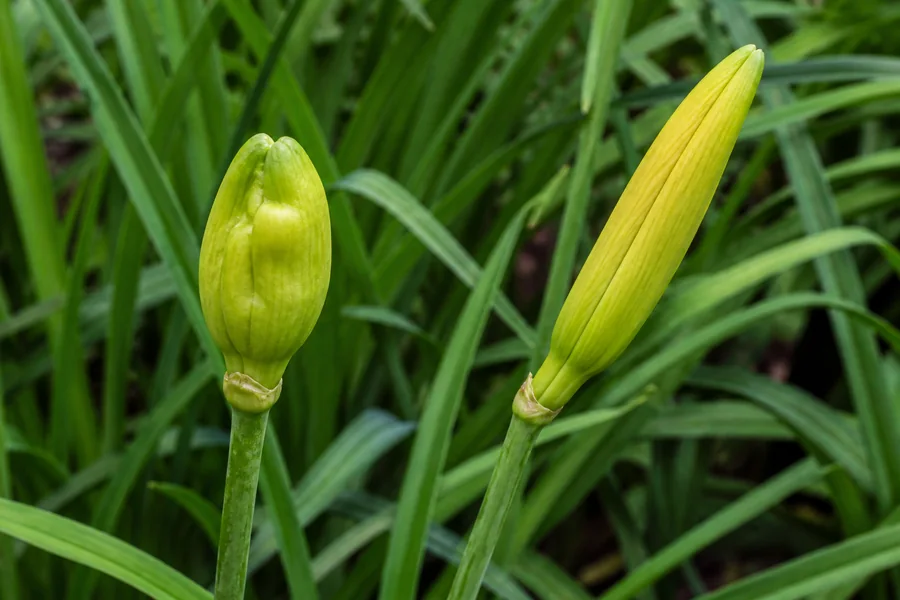
Daylily gall midge larvae feed inside developing buds in parts of the Pacific Northwest, Canada, and Europe. The damaged bud becomes short, swollen, and distorted instead of staying long and slender.
Shape and geography must agree for this diagnosis to outrank common causes. A normal-length scarred bud fits thrips or another injury better, and a swollen bud outside a documented region should be confirmed locally before the clump is managed as gall midge.
How to identify it
- Early-season buds are unusually short, fat, conical, and sometimes dimpled.
- Affected buds fail to open, then dry, rot, or drop from the scape.
- A carefully opened suspect bud may contain watery fluid and many tiny pale larvae.
- Later-flowering cultivars are less affected than early cultivars in the same area.
- Local extension or plant-health records confirm that the pest occurs in the region.
What to do
- Remove suspect buds promptly and place them in a sealed waste container.
- Do not compost infested buds because mature larvae leave the bud and overwinter in soil.
- Ask a local extension office to confirm regional presence when the insect is unfamiliar.
- Monitor early-blooming cultivars as buds develop in future seasons.
- Consider later-flowering cultivars where gall midge repeatedly destroys the early display.
09 Low likelihood and event-specific
A late freeze killed developed flower growth
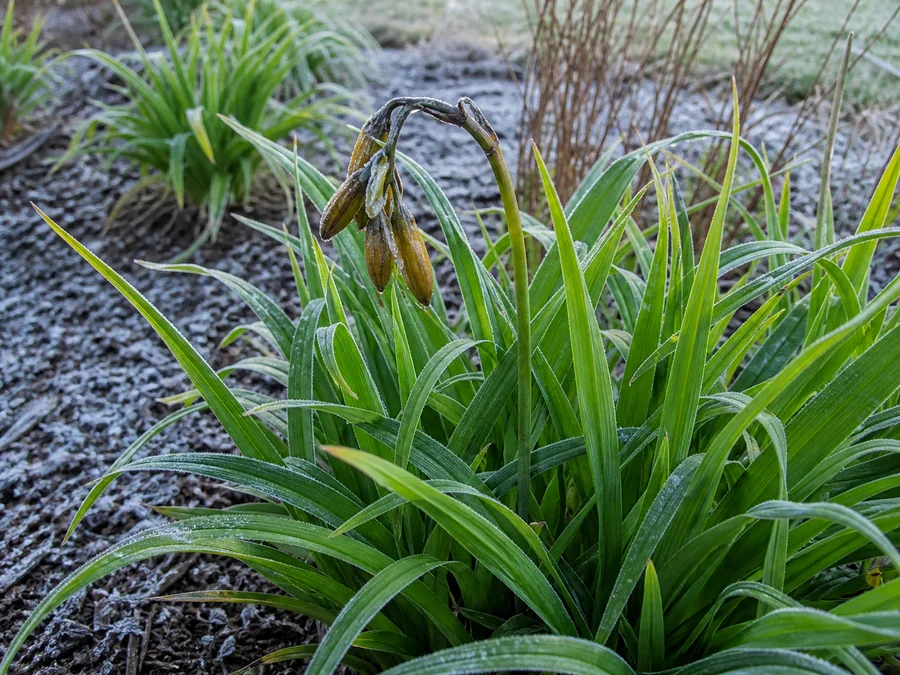
New daylily foliage can outgrow ordinary tip damage after a cold spell. A freeze explains missing flowers only when developed scape or bud tissue becomes water-soaked, dark, limp, or collapsed soon after the event.
Match the damaged tissue to the date of the freeze. Brown leaf tips alone do not prove that flowers were lost, while scapes that were visible before the event and collapsed within days provide a one-season explanation that does not justify dividing a sound crown.
How to identify it
- Scapes or buds were visible before a documented hard freeze.
- Tender flower tissue darkened or collapsed within days of the cold event.
- More exposed clumps were damaged while sheltered clumps retained their buds.
- The same mature plant flowered normally in earlier years.
- The evidence involves flower growth, not only white or brown tips on early leaves.
What to do
- Wait until damaged tissue clearly declares itself before cutting it away.
- Leave healthy green foliage to support the crown for the next flowering cycle.
- Do not divide or fertilize a firm established clump solely because one freeze ended the display.
- Use a breathable frost cover before the next forecast event when developed scapes are vulnerable.
- Expect the next reliable chance to flower in the following normal bloom season.
10 Low likelihood and location-specific
The cultivar is late or poorly matched to the climate
Daylily cultivars differ in early, midseason, late, and reblooming behavior, and they do not perform identically in every region. Some cultivars also need a cold period to initiate flowers and may grow attractive foliage without blooming where winters are too warm.
Treat cultivar fit as a conclusion reached after the physical checks, not as a convenient explanation for an unknown plant. A named cultivar that repeatedly fails beside locally proven daylilies under the same light, depth, moisture, and feeding conditions gives useful evidence for replacement.
Confirm the name and expected bloom window before declaring failure.
A late cultivar should be compared after its local season, and a recently purchased division deserves establishment time. Several years of blind growth while comparison cultivars flower under the same measured conditions makes climate fit a stronger conclusion.
How to identify it
- The plant is a known late cultivar and its local bloom window has not ended.
- A reblooming cultivar made one normal flush but does not repeat in a short growing season.
- The clump flowered the first year after arriving from cold storage and then stopped in a warm climate.
- Locally proven cultivars bloom under the same sun, soil, water, and spacing.
- The plant remains green and vigorous after all physical and care causes are ruled out.
What to do
- Confirm the cultivar name and expected local bloom season before intervening.
- Ask a regional nursery or daylily society how that cultivar performs nearby.
- Do not promise rebloom where the local growing season is too short for a second scape cycle.
- Replace a persistently mismatched cultivar with one proven in the local climate.
- Avoid home chilling experiments that repeatedly dig and disturb an established landscape clump.
Use the stage that failed to choose the fix
A clump with no scapes failed before visible flower development, so an insect inside a bud that never existed cannot explain it.
Rank measured direct sun, crown density, planting depth, recent division, nitrogen history, and cultivar fit according to the clump's own history.
A plant with scapes but no open flowers reached a later stage and needs a different evidence search.
Dry soil can stall buds, animals leave missing tops or cut stubs, cold damages tissue after a dated event, and bud pests leave distortion, insects, honeydew, or larvae.
Gall midge has an unusually specific combination of bud shape, internal larvae, timing, and region.
Its shortened swollen bud differs from the surface scarring of thrips, so the pest should stay low on the list where local records do not confirm it.
Normal leaf color and a firm crown keep this route focused on flower development. Yellow streaks, orange powdery pustules, extensive browning, soft leaf bases, or a collapsing crown provide stronger evidence for a foliage disease or crown problem and need that diagnosis before bloom is addressed.
Change one confirmed cause at a time whenever the plant is stable, and preserve a comparison clump when possible. Moving, dividing, feeding, and watering differently in the same week removes the evidence that would show which diagnosis was correct during the next bloom cycle.
Record the outcome at the same failed stage next season.
The return of scapes tests light, crown, establishment, and cultivar corrections. Scapes that form but lose buds redirect the search to moisture, browsing, cold, or pests.
That stage-based record prevents a one-season event from being mistaken for a permanent crown problem.
Find the Stage Where Flowering Stopped
A daylily that never produced a scape failed before visible flower development. Start with direct sun, crown crowding, planting depth, recent division, feeding history, and cultivar timing because no bud pest can damage a bud that never formed.
A clump with missing or ragged scape tops reached the next stage. Search for clipped stems, tracks, browsing height, or a dated break rather than moving the plant or feeding the crown.
Scapes that remain but carry distorted, sticky, swollen, or collapsed buds move the search to moisture, insects, gall midge where it occurs, and freeze injury. The bud surface, shape, and timing decide which evidence matters.
No scape appeared
- Measure direct sun
- Check crown density and depth
- Review division and feeding history
Scape top is missing
- Look for ragged or clipped ends
- Compare damage height across the bed
- Protect the next set of scapes
Buds formed but failed
- Inspect bud shape and surface
- Match damage to weather timing
- Remove only confirmed infested tissue
Recovery Plan
Record the failed stage
Look for scapes, clipped stubs, unopened buds, crown depth, leaf condition, and current soil moisture. Photograph evidence before removing buds or stems, and stop high-nitrogen fertilizer while the cause is unresolved.
Correct only what the evidence supports
Water a genuinely dry root zone, protect intact scapes from browsing, remove confirmed infested buds, or pull excess mulch away from a buried crown. A plant that is merely late should remain undisturbed until its local flowering window closes.
Move, divide, or reset the crown
Move a persistently shaded clump, divide a congested healthy crown, or correct planting depth at a suitable transplant time. Replant sound divisions with attached roots and two or three fans, then water them thoroughly.
Judge scapes before replacing the plant
A mature clump corrected for light, water, or fertilizer should get a fair next bloom cycle. A recent division may need one or two years, but a correctly planted established clump that still makes no scapes in full sun can be replaced with a locally proven cultivar.
Keep daylilies where they receive at least six hours of direct sun, prevent soil and mulch from building over the crowns, and divide healthy clumps when flowering declines with congestion. Keep spring moisture steady without waterlogging the bed, protect developing scapes where animals browse, and choose cultivars with a record of flowering in the local climate.
Sources
- Daylilies, University of Minnesota Extension
- Daylily, University of Arkansas Cooperative Extension
- The Flower That Thrives on Neglect, University of Missouri Extension
- When Can I Divide Daylilies, Iowa State University Extension
- Daylily Diseases and Insect Pests, Clemson Cooperative Extension
- Daylily Gall Midge, Washington State University Hortsense
- Cold and Freeze Damage to Garden Plants, Iowa State University Extension
- Daylily, University of California Cooperative Extension
- Is It Necessary to Deadhead My Daylilies, University of New Hampshire Extension