
Why Are My Sweet Basil Leaves Turning Yellow?
Two of the causes of yellow Sweet Basil leaves cannot be fixed by anything you change about watering or feeding, and both are settled in seconds. Turn one leaf over and slice one stem before you adjust a single thing about your care.
Start diagnosis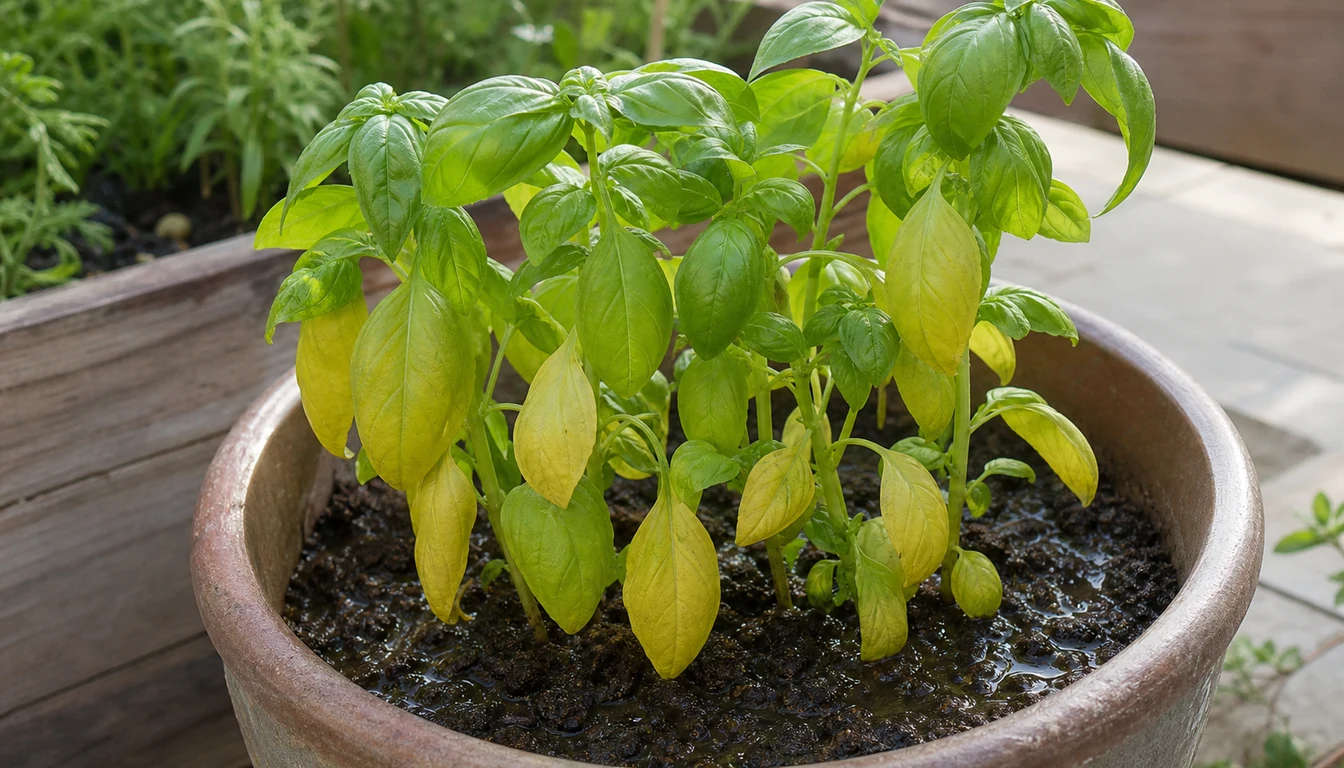
What You Are Seeing
Sweet Basil is a fast annual grown entirely for its leaves, and that shapes everything about diagnosing it. There is no dormant season to recover through and no woody frame to fall back on, so a problem that a shrub would absorb over a year shows up here within days.
The roots are fine and shallow and sit in the top few inches. They respond to how wet or dry that layer is almost immediately, which is why basil is the plant in the garden that tells you first when watering has gone wrong.
Before you match your plant to a cause, note three things. Which leaves went yellow first, how fast it spread, and what the soil felt like on the day you noticed.
Those three answers separate most of what follows. Yellowing that climbs from the bottom is a different problem from an even pallor across every leaf, and both are different from yellowing that arrived overnight after a cold snap.
Common Causes
Downy mildew
This has been the defining basil disease worldwide since it spread in 2007, and most care articles still do not mention it. It yellows the blade from above in blocks that stop at the veins, while the evidence sits underneath on the surface nobody turns over.
What makes it worth catching early is that it spreads fast in humid weather and cannot be cured on a plant that has it. The decisions are about harvesting what is still good and about what you buy next time.
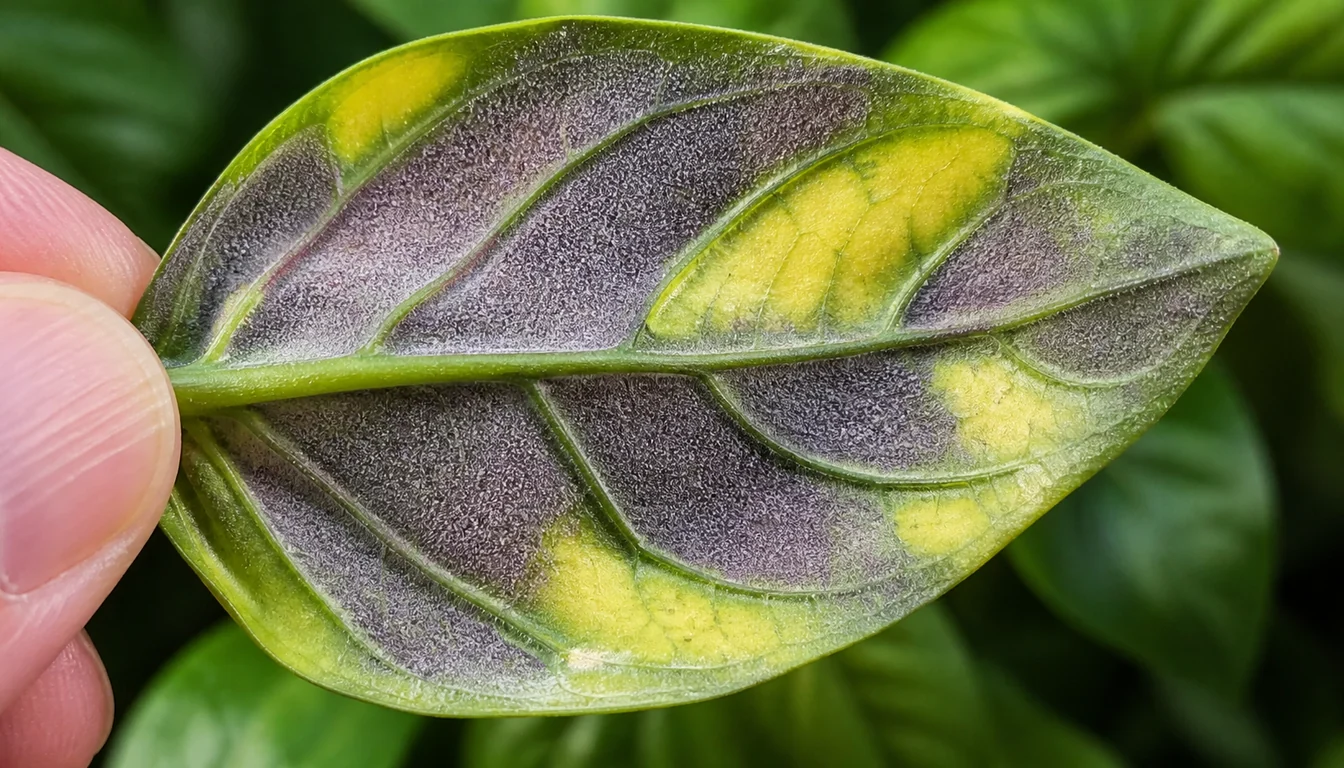
- Yellowing is blocked into angular patches with straight edges where the leaf veins bound them.
- Turning the leaf over shows gray to dusty purple fuzzy growth in those same patches.
- It spread through the plant within days rather than creeping over weeks.
- The weather has been humid, or the plants sit close together with still air between them.
- Harvest everything still clean today, because the plant will not get better and the crop only shrinks from here.
- Pull out and bin badly affected plants rather than composting them.
- Give surviving plants more space and better airflow, and water the soil rather than the leaves.
- Buy a downy mildew resistant sweet basil variety next season, which is the only reliable answer in a humid climate.
- Grow the next batch somewhere with morning sun that dries the foliage early in the day.
Soil that stays wet
Basil roots are fine and they suffocate quickly in mix that never drains. The lowest leaves yellow first and the stems go limp rather than crisp, which is the pattern that separates this from a plant that has dried out.
Most of the time the frequency is not really the problem. A saucer left full or a pot with one blocked hole keeps the bottom of the mix saturated no matter how carefully you water the top.
- Yellowing starts on the lowest leaves and works upward, and those leaves feel soft rather than papery.
- Soil two inches down still feels wet several days after watering.
- The pot sits in a saucer or a decorative cover that is holding water.
- The mix smells sour when you put your nose close to the surface.
- Empty the saucer or the outer pot now, and every time you water from here on.
- Check with a finger two inches down and water only when that depth feels dry.
- Clear any blocked drainage hole, and move the plant into a pot with real drainage if it has none.
- Choose a pot only slightly wider than the root ball, since a large pot holds wet mix the roots never reach.
- Water the soil directly rather than over the foliage, which also keeps the leaves drier for the disease above.
A crowded supermarket pot running out of room
A supermarket basil pot is not one plant. It is dozens of seedlings sown thickly together so the pot looks generous on the shelf, grown fast under glass and sold at the point where they have just filled it.
They were never meant to grow on. Within a few weeks the plug runs out of room, water, and food at the same time, and the whole pot yellows on a schedule regardless of how well you look after it.
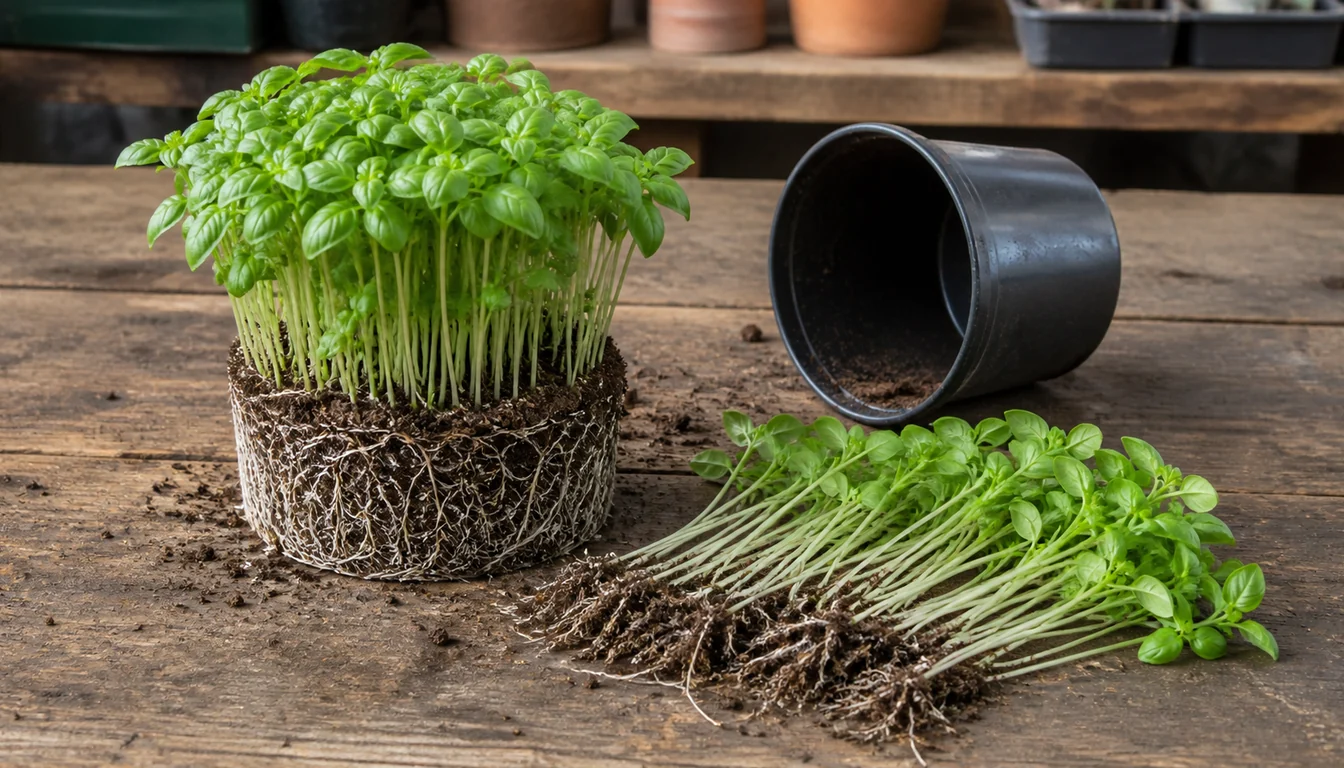
- The plant came from a supermarket or a grocery shelf rather than a nursery.
- Knocking it out of the pot reveals many thin stems in one tight plug rather than one root system.
- Yellowing began within two to four weeks of coming home, without any obvious care change.
- The stems are thin and the plant looks full at the top but crowded at soil level.
- Tip it out and see what you actually have before deciding anything else.
- Split the plug into three or four clumps with your fingers, accepting that some roots will tear.
- Pot each clump separately in fresh mix with room around it, and water it in well.
- Keep them out of direct sun for the first few days while they settle, then move them into full sun.
- Treat the pot as a harvest instead if you would rather not bother, and cut the whole thing for the kitchen while it is still good.
Nitrogen running out in the pot
A fast leafy annual in a small volume of mix empties it quickly. Most potting mixes carry only a few weeks of feed, and after that a plant grown entirely for its leaves has nothing left to build them with.
The yellow this produces is even across the blade rather than blocked between veins, and it usually arrives with growth that has simply slowed down.
- The pallor is even across the whole leaf, with no sharp edges and no pattern following the veins.
- Older leaves are affected first and worst, since the plant moves nitrogen up to the new growth.
- The plant has not been fed since it was potted or planted.
- Growth has slowed, and new leaves are coming smaller than the ones below them.
- Feed with a balanced liquid feed at half the strength on the label.
- Repeat every two to three weeks through the growing season rather than giving one heavy dose.
- Keep the rate light, because heavy nitrogen grows soft leaves with noticeably less aroma.
- Repot into fresh mix instead if the plant has been in the same pot for several months.
Drying out between waterings
Basil wilts dramatically and recovers quickly, which trains people to treat a wilt as harmless. It usually is once, but the leaves the plant drained to survive it often yellow and drop a few days later.
Everything here runs opposite to the wet-soil card. Check the pot weight and your own memory of a wilt before acting, because watering a waterlogged plant more makes things considerably worse.
- You can remember the plant wilting hard at least once in the last week or two.
- The pot feels very light, and the mix has shrunk away from the sides.
- Yellow leaves feel papery and dry rather than soft.
- The plant sits in full sun in a small pot during hot weather.
- Stand the pot in a basin of water for twenty minutes so the mix rewets from underneath.
- Water from the top afterwards too, since dry mix repels water and lets it run down the inside of the pot.
- Move a small pot into a larger one, because basil in a tiny pot in summer can need water twice a day.
- Check it by weight every morning in hot weather rather than on set days.
Not enough light to carry the leaves it has
A plant short of light cannot fund all the leaves it is carrying, so it drops the lowest and shadiest ones to pay for the top. That looks like a nutrient problem and gets treated as one for weeks.
The tell is in the spacing rather than the color. A plant with enough light has leaf pairs stacked close together, and a plant without it stretches the gaps between them.
- The gaps between leaf pairs on the stem are long, and the plant leans toward the window.
- Lower and inner leaves yellow while the top growth stays green.
- The plant sits indoors, on a north-facing sill, or under something that shades it for part of the day.
- It came home in autumn or winter, when even a bright sill delivers very little.
- Move it to the sunniest position you have, aiming for six hours of direct sun.
- Put it outside once nights stay above 50F, in a spot that gets morning sun.
- Add a grow light within a foot of the plant if the only option is growing herbs indoors over winter.
- Accept a smaller plant and harvest it sooner where the light genuinely cannot be improved.
Cold, including the fridge
Sweet basil takes damage in the mid forties Fahrenheit, which is well above frost and well within what feels like an ordinary cool evening. That is why basil yellows on nights when everything else in the garden looks perfectly happy.
The same threshold catches cut basil in the kitchen. A bunch stored in the fridge blackens and yellows within a day or two for exactly this reason.
- You can point to a specific cold night, an early trip outdoors in spring, or a spell in the fridge.
- The yellowing appeared within a day or two of that event rather than building gradually.
- Damaged leaves may look dull or slightly translucent as well as yellow.
- Soil moisture and the pot weight are both perfectly normal.
- Bring the plant somewhere consistently above 50F and leave the damaged leaves alone for now.
- Wait until nights are reliably above 50F before putting basil outside in spring.
- Cover plants with fleece on a cold night, keeping the cover off the leaves themselves.
- Store cut basil at room temperature in a glass of water rather than in the fridge.
The plant has started flowering
Once basil sets flower buds it stops investing in leaves and starts investing in seed. The lower leaves yellow because the plant is deliberately emptying them, not because anything has gone wrong.
Catching it early matters. Pinched back weekly before the buds open, the same plant will keep producing leaves for months longer.
- Square-sided flower buds are forming at the shoot tips, before any petals show.
- New leaves are coming smaller than the ones below them.
- The flavour has turned sharper and more clove-like than it was.
- It is midsummer, or the plant has been in the ground for a couple of months.
- Pinch out every flowering tip, cutting just above a pair of leaves.
- Do it weekly through summer rather than waiting until buds are obvious.
- Harvest by cutting whole stem tips above a leaf pair, which keeps the plant bushy and delays flowering.
- Let one plant flower deliberately if you want seed or bees, and keep the others pinched.
Fusarium wilt in the soil
This one blocks the plant's plumbing from inside, so the leaves yellow and the plant wilts while the soil moisture is perfectly reasonable. It usually takes one plant at a time rather than a whole row at once.
The stem cut settles it. Nothing else on this page puts brown streaking inside a stem that still looks green on the outside.
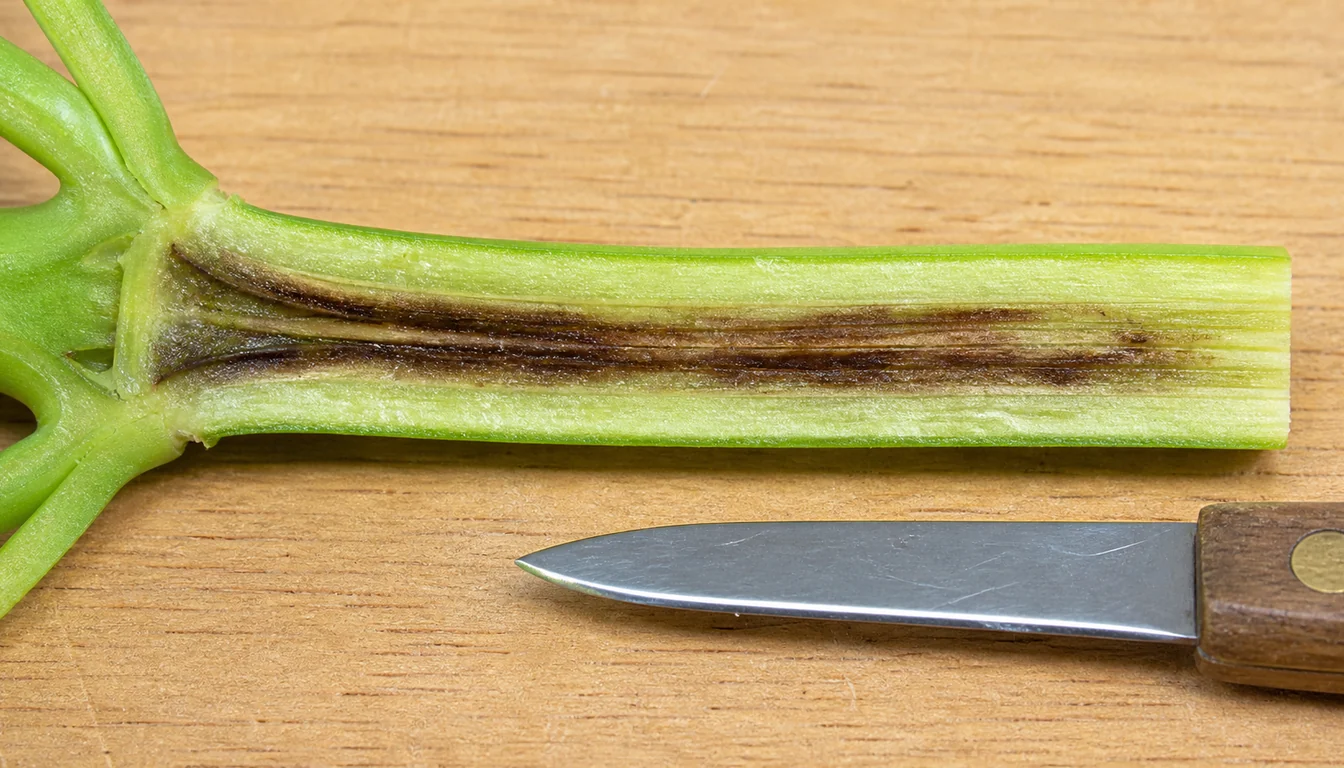
- The plant wilted and yellowed while the soil was neither dry nor waterlogged.
- Slicing the main stem lengthwise shows brown streaks running upward inside it.
- One plant went while its neighbors carried on normally for a while.
- Stems may be twisted or the growth one-sided before the collapse.
- Pull the plant with as much of its root system as you can and bin it rather than composting it.
- Wash tools and hands before touching other basil plants.
- Stop growing basil in that ground, because the organism persists in soil for years.
- Grow the next basil in containers with fresh mix, or in a bed that has never had basil in it.
Turn a yellow leaf over and look at the underside
A dense gray to dusty purple fuzz on the underside, sitting in angular patches that stop at the leaf veins, is downy mildew. Nothing about your watering caused it and nothing about your watering will fix it, so stop adjusting and read that card.
If the underside is clean, slice the main stem open lengthwise near soil level. Dark brown streaking running up inside a stem that still looks green outside is a soil-borne wilt, and that plant is finished.
A clean underside and a clean cut means the cause is care or environment, and every one of those is fixable. Sort them by which leaves went yellow and what the soil felt like when it happened.
Bottom leaves first over wet soil points one way, an even pallor across the whole plant points another, and yellowing that followed a hard wilt or a cold night points somewhere else again.
Open full diagnosisIs the Plant Worth Keeping?
The yellow leaves themselves are settled. They have lost their chlorophyll and their aromatic oils together, and nothing you do brings either back, so the decision is entirely about the rest of the plant.
Two causes on this page are worth giving up on. Downy mildew and fusarium wilt both get worse from here regardless of what you change, and time spent nursing either is time the replacement could have been growing.
Everything else recovers, and quickly. Basil that still has a healthy growing tip puts out new leaves within one to two weeks of the cause being corrected, and it will be back in production before you would have missed it.
Keep the calendar in mind when deciding. Basil started from seed reaches usable size in six to eight weeks, so in early summer starting again is often faster than rescuing, while in August it rarely is.
Can You Still Eat It?
Nothing that causes yellowing on basil makes people ill. The organisms involved attack plants and have no interest in us, so the question is really about quality rather than safety.
Quality is where yellow leaves lose. A leaf gives up its aromatic oils along with its color, so a fully yellow leaf tastes of very little and is not worth the space in the pan.
- Downy mildew, eat the clean green leaves and discard any with fuzz underneath, since they taste musty rather than dangerous.
- Soggy soil, low light, nitrogen shortage, and drought, all the green leaves are perfectly good.
- Crowded supermarket pot, harvest the whole thing at once, because it is at its best right now.
- Cold damage, use the green leaves and discard blackened or translucent ones for texture rather than safety.
- Flowering, the leaves are still good but sharper, so use a little less than a recipe asks for.
- Fusarium wilt, take any clean leaves before you pull the plant, then wash your hands and tools.
Wash anything you pick from a plant that has been unwell, in plain cold water. Pat it dry rather than leaving it damp, because wet leaves bruise and blacken in the fridge.
Recovery Plan
Act once, then leave it
Make the one correction the diagnosis pointed at and stop there. Empty the saucer, split the pot, feed it, move it into the light, or pinch the flowers, but do not do several of those at once.
Changing three things together means that when it recovers you will not know which one mattered, and basil gives you plenty of chances to find out.
New leaves give the answer
This is fast enough to reward you quickly. A corrected plant pushes new leaves at the growing tips within a fortnight, and they come up full-sized and properly green.
The leaves that were already yellow stay yellow, so pick them off once new growth is clearly coming and judge the plant only on what appears after that.
Back in production, or time to restart
A plant that has recovered is worth harvesting from again by now, and regular picking from the stem tips will keep it bushy.
A plant that still looks the same after a month is telling you the diagnosis was wrong or the cause was one of the two that do not recover. Start a new one rather than giving it another month.
One purchase decision removes the biggest cause before it starts. Buy a downy mildew resistant sweet basil variety, which several seed companies now sell, and the disease that ends most basil plants stops being a risk at all.
After that it is space and water. Give each plant room for air to move around it, water the soil rather than the leaves, feed lightly every few weeks, and pinch the growing tips before flower buds open.