
What's a Tomato Plant? How to Get Heavy, Healthy Fruit
Solanum lycopersicum Solanaceae
The choice between a determinate and an indeterminate Tomato decides your support, your pruning, and whether the crop arrives all at once or all summer, and almost every problem that follows traces back to watering evenly.
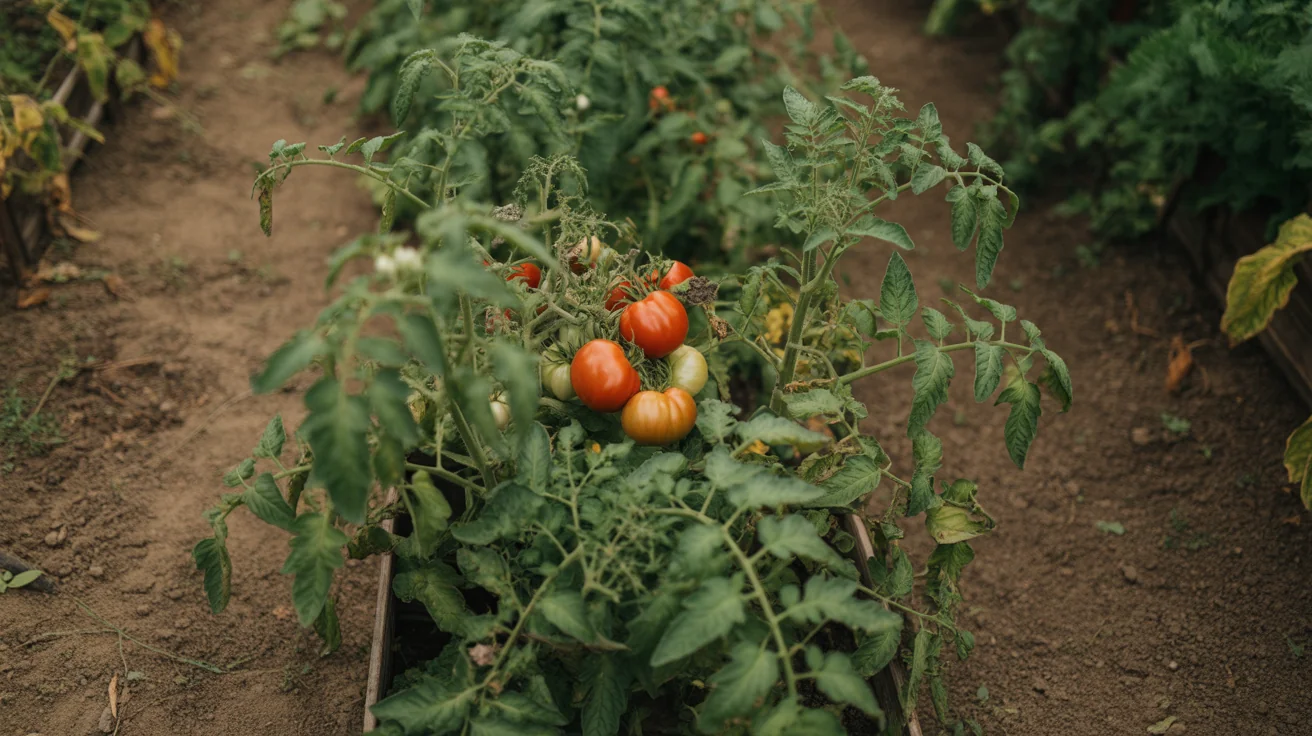
Care snapshot
What Kind of Plant Is a Tomato?
Tomato is Solanum lycopersicum, a tender perennial almost always grown as an annual, and it belongs to Solanaceae, the nightshade family.
That family is the useful part of the identity, because it also contains Pepper, Eggplant, and potato.
Those four share the same soil-borne wilts, which is the whole reason they have to move around the garden together rather than being rotated independently.
The family also explains the safety note later on. Nightshade foliage carries glycoalkaloids that the ripe fruit does not, so the leaves and green fruit are a different proposition from what you eat.
Botanically the fruit is a berry, native to western South America and carried into Mexico before it reached the rest of the world.
Unlike a squash or a melon, each flower carries both sexes and pollinates itself, so poor fruit set is almost never a pollinator problem here.
Plant profile
- Botanical name
- Solanum lycopersicum
- Family
- Solanaceae, the nightshade family
- Plant type
- Tender perennial grown as a warm-season annual
- Grown for
- Ripe fruit, botanically a berry
- Native range
- Western South America
- Close relatives
- Pepper, Eggplant, potato
Should You Grow Determinate or Indeterminate Tomatoes?
This matters more than the variety name on the tag, and it decides your support, your pruning, and the shape of your harvest.
Determinate plants stop growing at a set height, usually 3 to 4 feet, then ripen most of their crop inside a two to four week window.
That is the plant you want if you are canning, freezing, or making sauce in one weekend.
Indeterminate plants never stop. They keep vining, flowering, and setting fruit until frost kills them, reaching 6 to 8 feet with real support behind them.
For a household eating Tomatoes off the counter all summer, indeterminate is the obvious answer. For a pantry, determinate is.
The habit also changes the pruning rule completely, which is where most yield gets thrown away. Pruning suckers off a determinate plant removes fruit it was going to set, because a determinate sets its crop on those very shoots.
Cherry and grape types are usually indeterminate and outproduce everything else in the bed.
Paste types such as Roma tend toward determinate, which is exactly why they ripen in batches you can actually process.
Beefsteaks need the longest warm run and the strongest cage. In a short season they will happily grow into a magnificent plant and hand you three ripe fruit.
Semi-determinate types sit between the two, holding near 4 to 5 feet with a longer set than a determinate and a shorter one than a vine. Support them like a vine and leave their suckers alone.
Disease resistance codes on the tag are worth reading in humid regions.
The letters V, F, N, and T mark resistance to verticillium wilt, fusarium wilt, nematodes, and tobacco mosaic virus, which are the problems no amount of good care prevents.
Space plants 18 to 24 inches apart in rows 3 to 4 feet apart whichever habit you choose.
Crowding is what turns a bed into the damp jungle that foliar disease moves through.
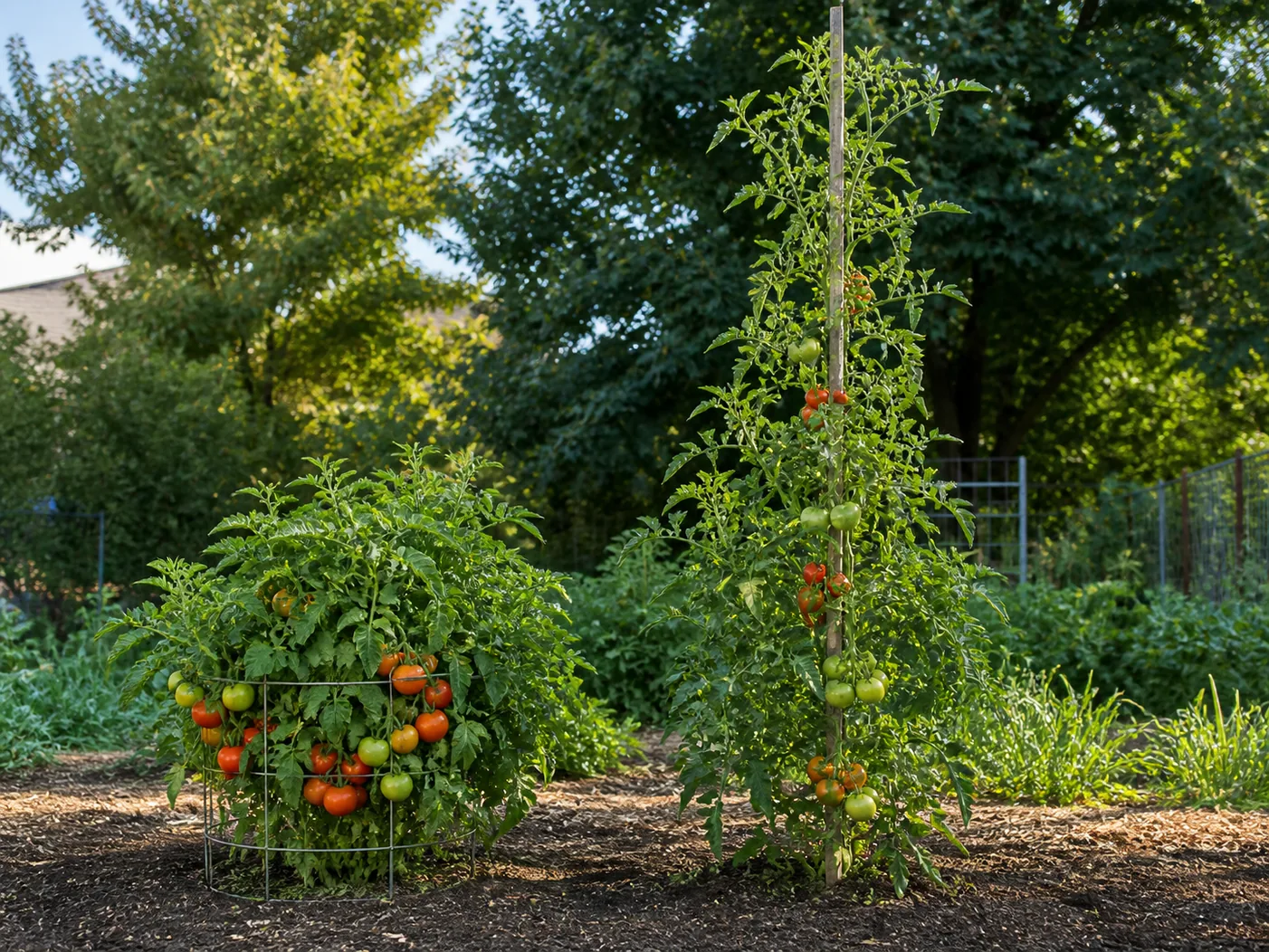
- Determinate
- Stops near 3 to 4 ft, ripens most fruit in 2 to 4 weeks, do not prune suckers
- Indeterminate
- Vines to 6 to 8 ft, bears until frost, benefits from sucker pruning
- Choose determinate for
- Sauce, canning, freezing, containers, and short seasons
- Choose indeterminate for
- Steady eating fruit across the whole summer
How Much Sun and What Soil Do Tomatoes Need?
Eight to ten hours of direct sun, and the shortfall shows up in fruit rather than foliage.
Six hours will still grow a healthy-looking plant. It will simply carry fewer, smaller, later Tomatoes than the same variety in an open bed.
Sun does a second job here that has nothing to do with photosynthesis.
A bed that dries its foliage by mid-morning loses far less to early blight and septoria than one that stays damp until noon.
Watch how shadows actually move across the spot before committing. A fence or a shed that looks harmless at nine in the morning can take the entire afternoon.
Work finished compost into the top 8 to 12 inches before transplanting.
Tomatoes get one warm season to root, flower, and ripen, so soil preparation has to pay off inside a few months rather than over years.
A pH between 6.0 and 6.8 keeps the nutrients available, and most vegetable beds already sit there. This is not a crop that needs a soil test before you can start.
Do not plant Tomatoes where Tomatoes, peppers, potatoes, or eggplant grew in the last three years.
They share the soil-borne wilts, and moving the crop is the only control there is.
Where the ground is heavy and stays wet, plant into a raised row or a framed bed instead of amending in place.
Cold soggy soil in spring costs weeks that a short season cannot spare.
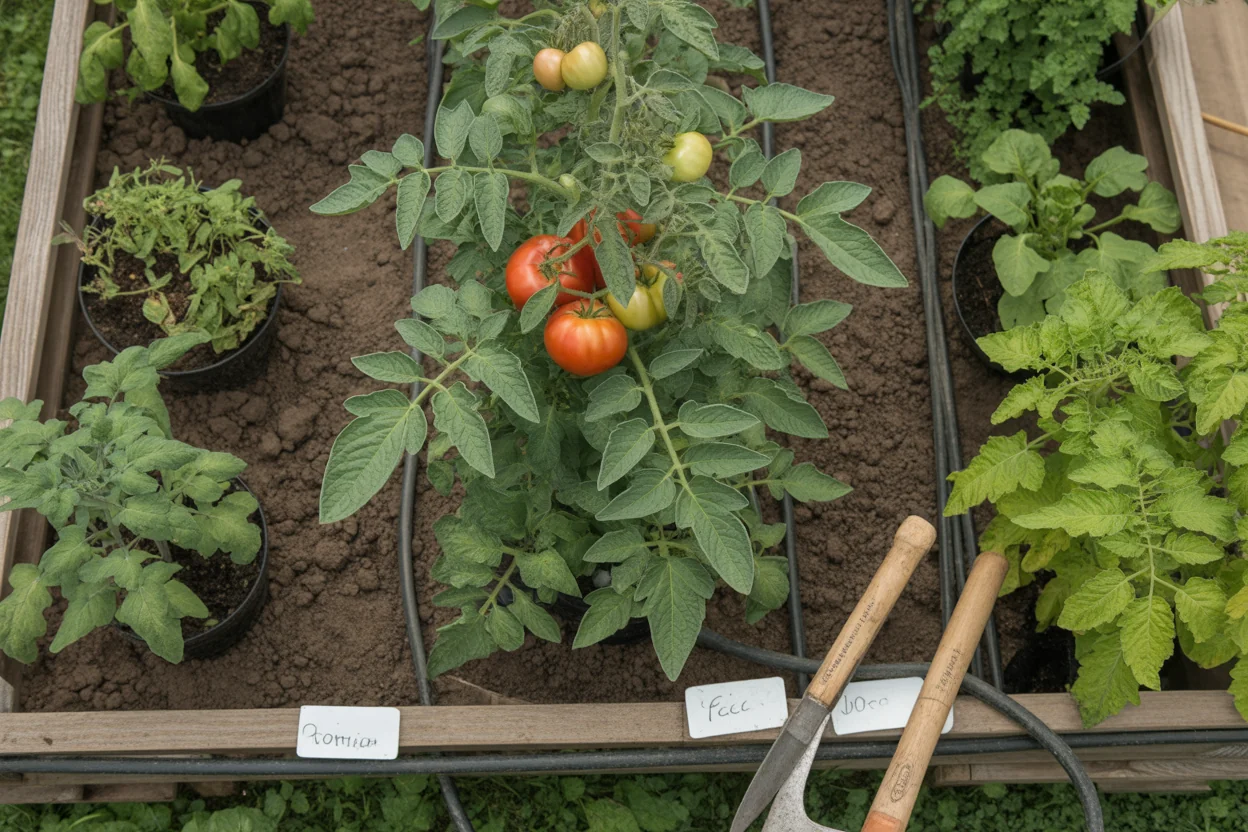
When Should You Plant Tomatoes Outside?
After the last frost and once soil holds 60F at 2 inches deep, which is usually later than the garden center display suggests.
Start seed indoors 6 to 8 weeks before that date. Starting earlier produces tall soft plants that sulk for weeks after transplanting and get overtaken by later, stockier ones.
Harden transplants off over about a week before they go in. A seedling moved straight from a windowsill into full sun scorches in an afternoon.
How Deep Should You Plant a Tomato Seedling?
Tomatoes are one of the few garden plants that grow roots from a buried stem.
Those little hairs along the stalk are adventitious root initials waiting for soil contact.
Strip the lower leaves and bury the plant up to its top few leaf sets. A leggy seedling can instead be laid sideways in a shallow trench with only the tip above ground.
The result is a much larger root system going into summer, which is the cheapest drought insurance available on this crop.
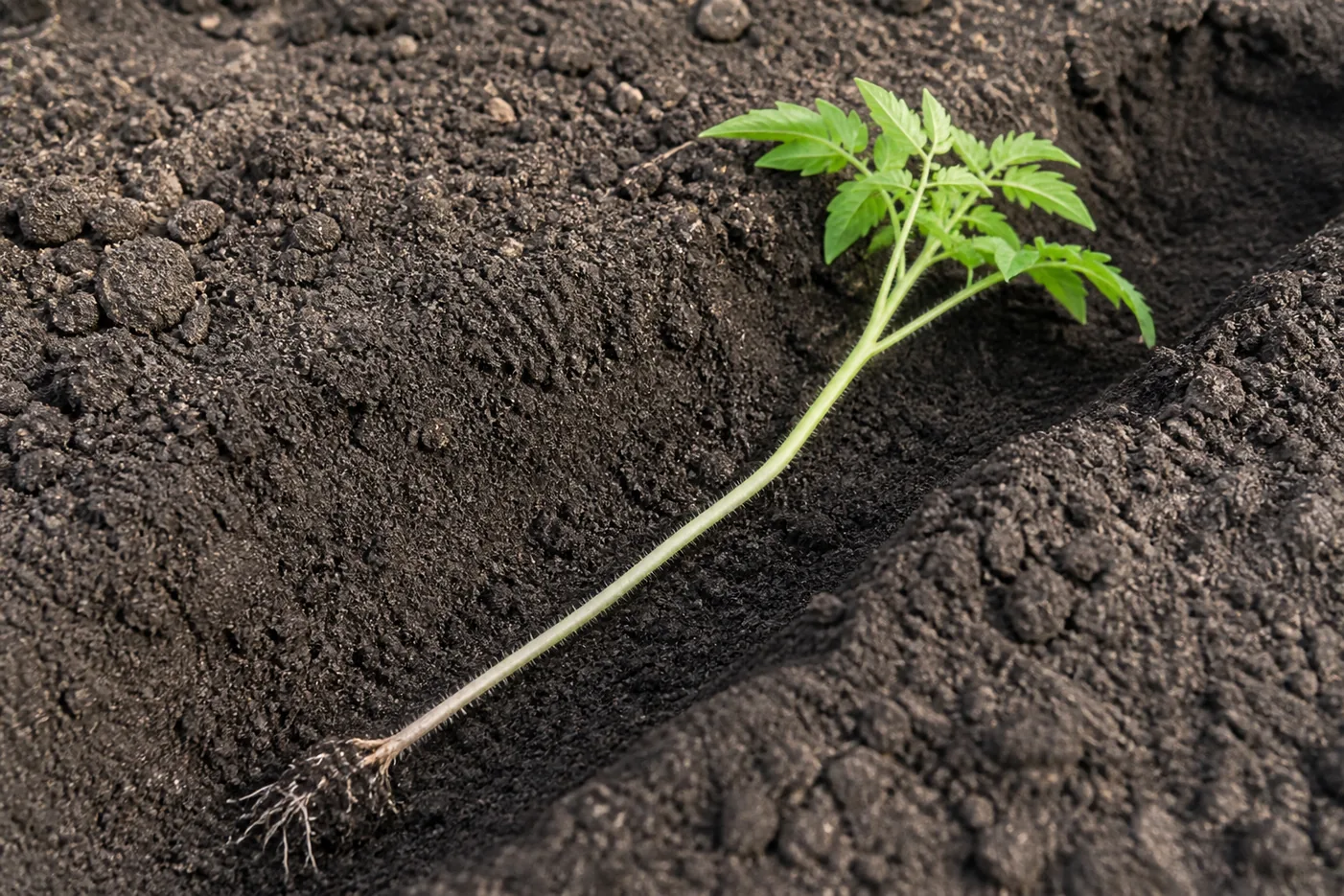
- Strip the lower leaves before planting.
- Bury roughly two thirds of the stem, upright or in a shallow trench.
- Set the cage or stake at the same time, not later.
What Support Do Tomatoes Need, and Should You Prune Suckers?
Build the support on planting day. Driving a stake beside an established plant tears the root system you spent two months growing.
The flimsy conical cages sold everywhere are sized for a determinate plant and nothing else.
An indeterminate vine will wear one like a hat by July and then fold it over.
For indeterminate types, use a tall stake, a cattle panel, a string trellis, or a heavy welded-wire cylinder. Whatever you pick has to hold a plant that will weigh a surprising amount when it is soaked and loaded with fruit.
Now the pruning question, and the answer genuinely depends on the habit.
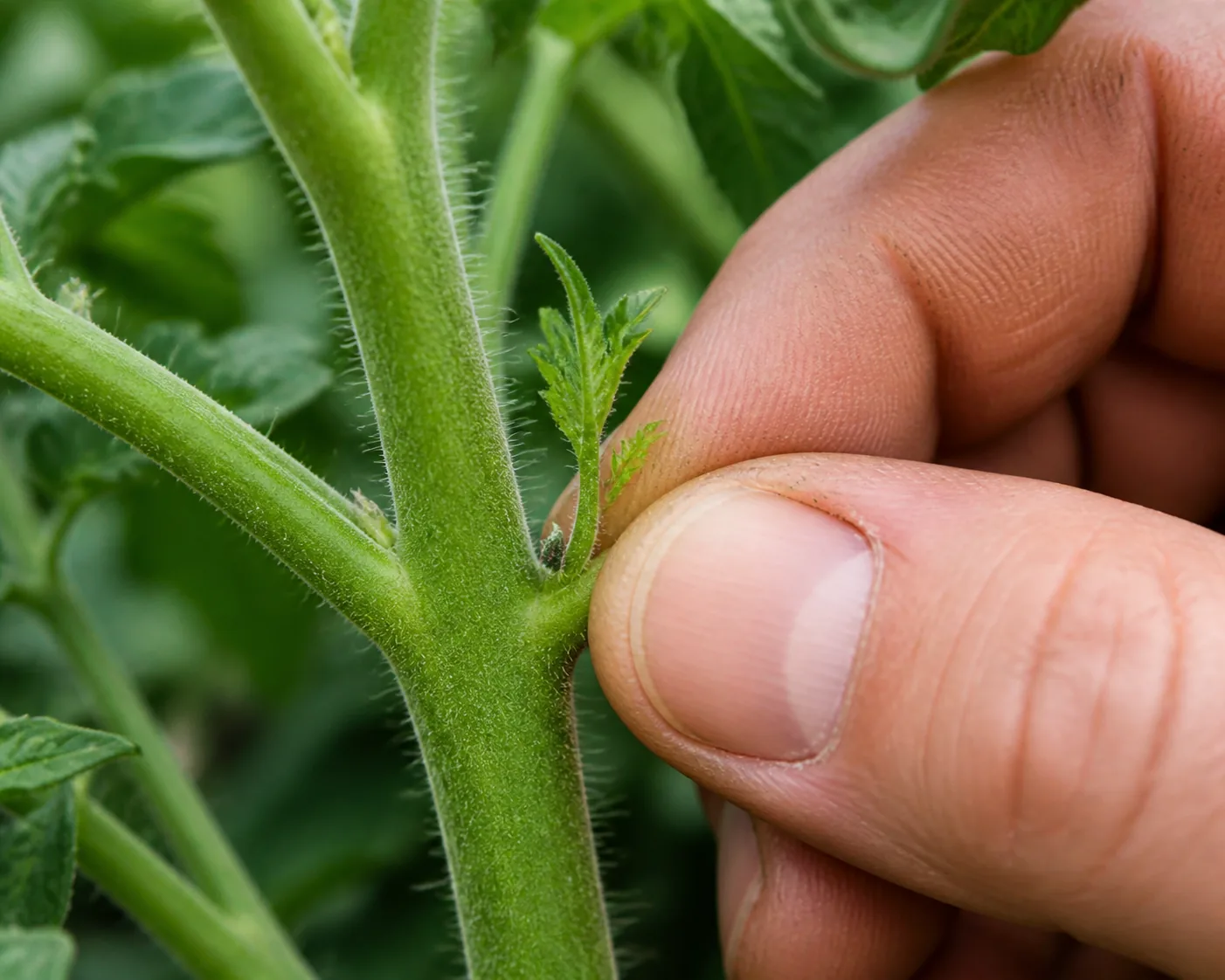
A sucker is the shoot that appears in the crotch between the main stem and a leaf branch.
On an indeterminate plant, removing most of them concentrates the plant into one or two leaders, improves airflow, and gives larger fruit slightly earlier.
On a determinate plant, do not do it. Determinates set their whole crop on those shoots, so pruning them is pruning the harvest.
Whichever type you have, strip the leaves off the bottom 12 inches of stem once the plant is established.
Splash from the soil is how early blight and septoria get onto the plant in the first place, and those lower leaves are the landing pad.
Do not prune in wet weather.
Every cut is an opening, and spores travel into fresh wounds far more readily when the foliage around them is damp.
Mulch before you tie rather than after. Getting a straw layer down around the base of a caged and staked plant without snapping stems is much harder than it sounds.
Tie loosely with soft material and re-tie as the stem thickens.
A tight tie girdles the stem and takes the whole plant down at that point.
- Set stakes or cages on planting day.
- Prune suckers on indeterminate plants only.
- Strip leaves from the bottom 12 inches of stem.
- Re-tie loosely as stems thicken.
How Often Should You Water Tomatoes?
Aim for 1 to 1.5 inches a week delivered in two or three deep soakings rather than a daily sprinkle.
Check by hand rather than by calendar. Push a finger 4 to 6 inches down, and water when that depth feels dry or barely damp.
Weather moves the interval a long way. A hot windy week may want water every day or two, while a cool cloudy stretch in spring can stretch to four or five days in heavier soil.
What matters more than the exact volume is the absence of swings. A plant that goes bone dry and then gets flooded splits its fruit skins and washes out the flavor, and cherry types crack fastest of all.
Water at the soil, early in the day. Wet foliage going into the evening is how foliar disease gets the hours it needs.
Then mulch with 2 to 3 inches of straw or shredded leaves. Mulch does more for moisture consistency than any watering schedule, and it also blocks the soil splash that carries disease spores upward.
A soaker hose or drip line run under the mulch earns its small cost on this crop in particular. It puts water at the roots without ever wetting a leaf, which is half the foliar disease problem solved by hardware.
Why Are My Tomato Flowers Dropping Without Fruit?
Almost always temperature, and almost never a pollination problem, because Tomatoes are self-pollinating.
Pollen goes sterile when days run above about 90F or when nights stay above roughly 75F. It also fails when nights drop below about 55F, which is why early plantings and late heat waves produce the same empty trusses.
Drought and a heavy nitrogen feed produce the same symptom by a different route. Both push the plant to protect itself or grow foliage instead of committing to fruit.
The useful response is to do very little. Keep water steady, stop feeding nitrogen, shade the plant through an extreme spell if you can, and wait for the weather to break.
Fruit set resumes on its own once temperatures come back into range. The trusses that aborted are gone, but the plant is not damaged.
There is one case worth acting on. If the plant is flowering well in fair weather and still not setting, shake the cage gently in the late morning, because tomato pollen needs vibration to release and still air under a cover or on a sheltered patio never supplies it.
If the vine is enormous, dark green, and flowering poorly, that is the nitrogen version rather than the heat version. Stop feeding and it will shift back toward fruit.
Why Do My Tomatoes Have Black Sunken Bottoms?
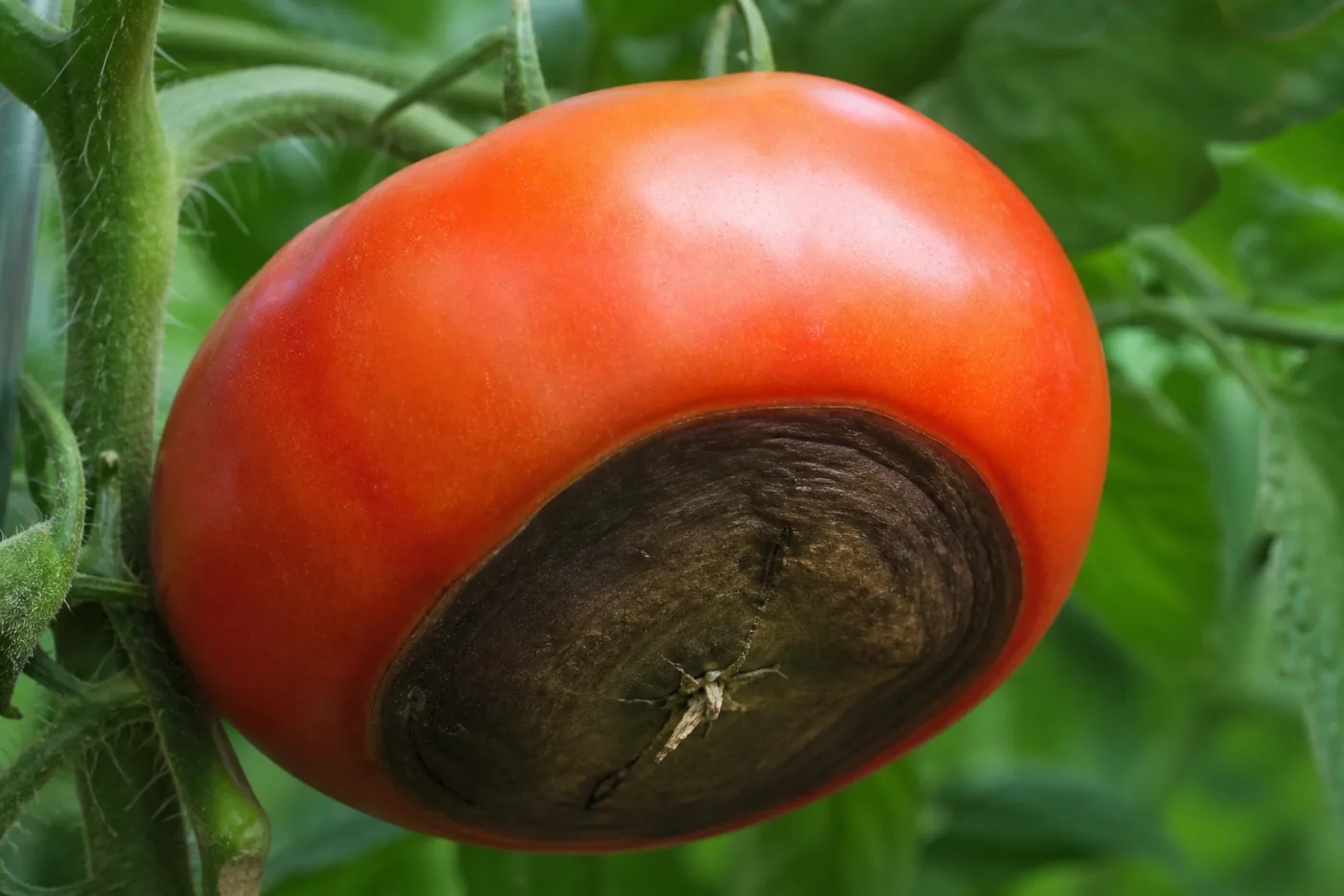
That is blossom end rot, and the single most useful thing to know is that it is not a disease and not usually a soil calcium shortage.
Calcium moves through the plant dissolved in water. When the water supply swings between dry and drenched, delivery to the fastest-growing tissue fails, and the blossom end of a developing fruit is the fastest-growing tissue there is.
The soil can therefore be perfectly well supplied while the fruit still starves. This is why calcium sprays and additives disappoint so consistently.
It shows up first on the earliest fruit of the season, then usually stops on its own once the plant's root system catches up with its top growth.
Steady the watering and mulch deeply, and the next trusses generally come through clean. Sandy beds need more frequent, smaller waterings than clay beds to hold the same evenness.
High nitrogen makes it worse by pushing rapid growth the water supply cannot keep up with. Excess potassium and magnesium also compete with calcium uptake, which is one more argument against feeding a struggling plant harder.
Affected fruit is safe to eat if you cut the bad end off, though most people compost it. Pull them promptly either way, so the plant puts its energy into the fruit that will finish.
Why Are My Tomatoes Not Turning Red?
Usually because it is too hot, which surprises people who assume heat speeds ripening.
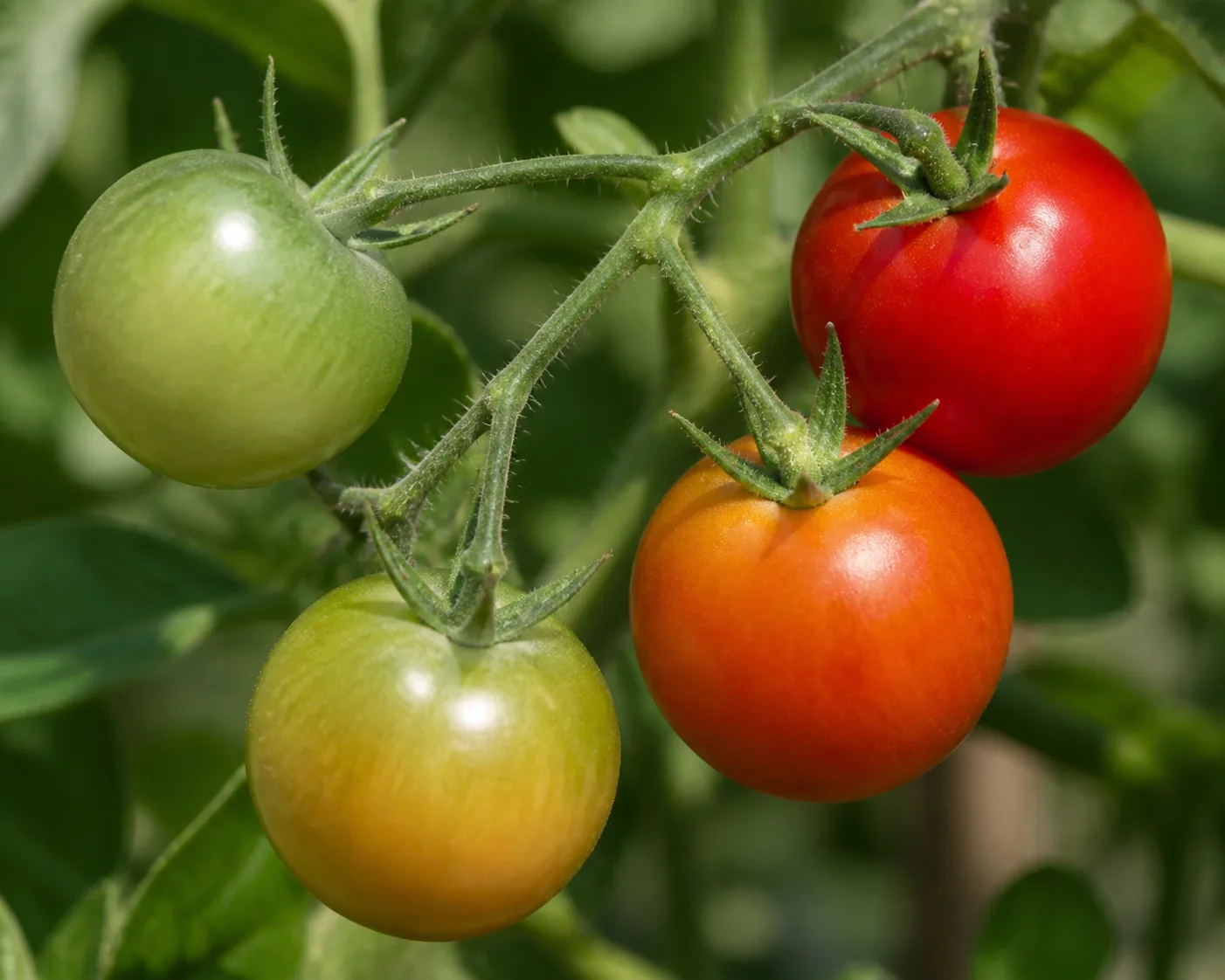
Lycopene is the pigment that makes a tomato red, and the plant largely stops producing it above roughly 85F to 90F. Fruit sitting through a heat wave stalls at orange or yellowish and stays there.
The answer is shade rather than patience. Light shade cloth over the plants during an extreme spell lets color development restart, and the fruit finishes normally afterward.
The other common cause is simply a plant carrying more fruit than it can finish before the season ends. Pinching off new flowers four to six weeks before your first expected frost pushes everything into the fruit already on the vine.
Once a tomato shows its first blush of color, called the breaker stage, it has effectively cut itself off from the plant. From that point it will ripen just as well on a kitchen counter as on the vine.
That fact is what makes a frost warning survivable. Pick everything that has broken color, keep it at room temperature out of direct sun, and it will finish over the following weeks.
Box the mature green fruit separately from the ones that have blushed. Green Tomatoes ripen slowly and unevenly, and one that rots quietly will take its neighbors with it.
What Is Wrong With Your Tomato Leaves?
Start at the bottom of the plant, because the two most common tomato diseases both begin on the lowest leaves and work upward.
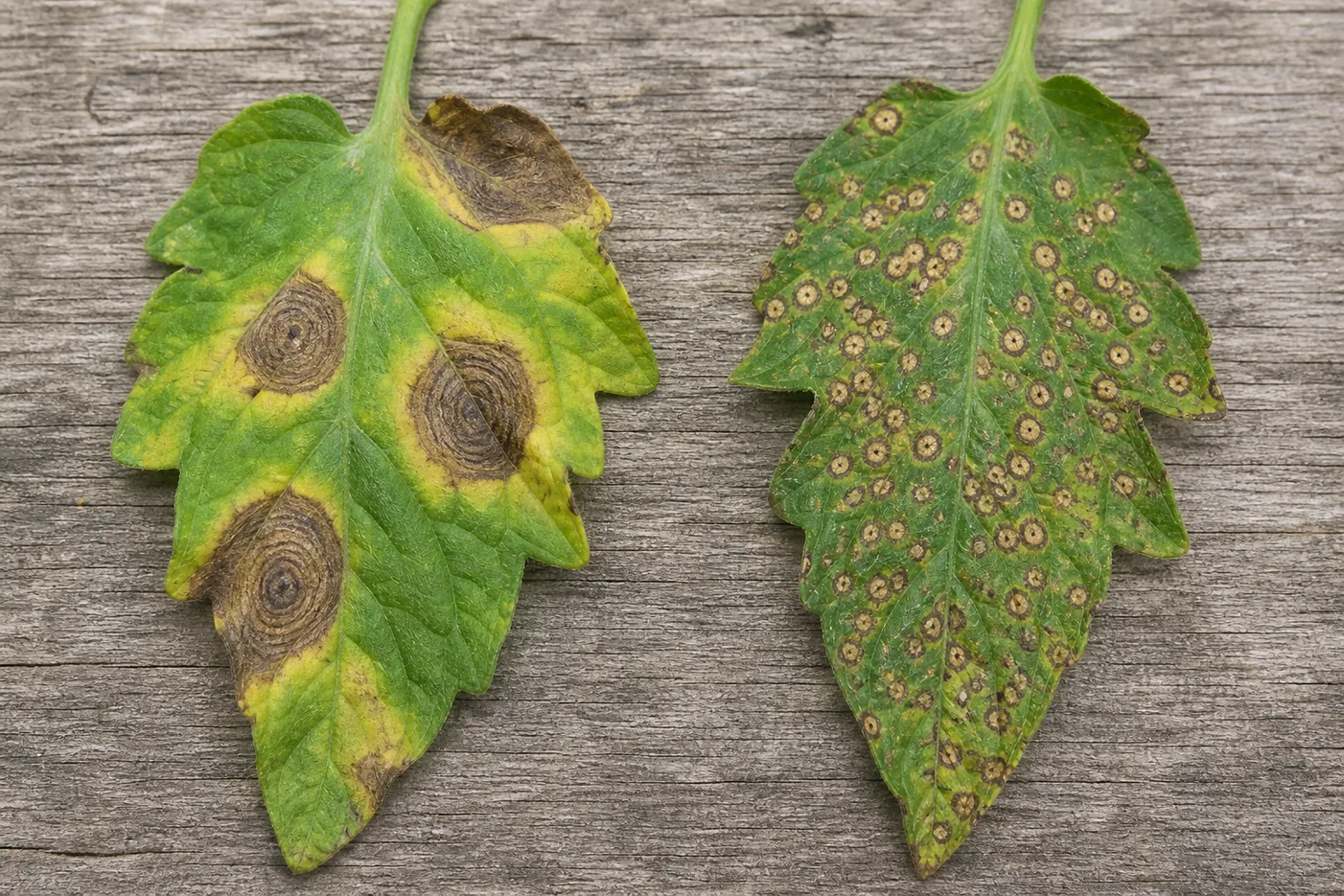
Early blight makes a small number of large brown lesions with concentric rings inside them, like a target, each ringed by a yellow halo. Leaves yellow and drop from the bottom up as it climbs.
Septoria leaf spot makes the opposite pattern. Many small round tan spots with dark margins, scattered densely across the blade, often dozens on a single leaf.
Both spread by splash from infected soil, and both are why stripping the bottom 12 inches of leaves and mulching are worth doing on planting day rather than after symptoms appear.
Neither one usually kills the plant outright. They defoliate it gradually, which cuts the harvest and exposes the remaining fruit to sunscald.
Late blight is the one to take seriously and it looks different. Large greasy gray-green patches spread fast in cool wet weather, stems develop dark lesions, and a plant can collapse within days.
Remove and bag infected foliage rather than composting it, and never work among wet plants. Your sleeves move spores down a row faster than weather does.
If you do decide to spray, do it before symptoms rather than after. Copper and chlorothalonil protect leaves that are still clean, and neither one cures a lesion that has already opened.
Yellowing without spots is a different question entirely. Lower leaves yellowing evenly on an otherwise healthy plant is usually normal aging or a nitrogen call, while whole-plant yellowing with wilting points toward verticillium or fusarium wilt in the soil.
Leaf roll is the one that alarms people and matters least. Lower leaves curling upward into tubes through hot dry weather is a water-conserving reflex rather than a disease, and the fruit is unaffected.
Those soil wilts cannot be sprayed away. Rotate Tomatoes and their relatives out of that ground for three or four years and buy varieties carrying the V and F resistance codes.
What Is Eating Your Tomato Plants?
Work from the damage rather than from a pest list, because the same plant attracts chewers, suckers, and stem cutters that need opposite responses.
Whole branches stripped overnight means hornworm. They are large green caterpillars that are almost invisible against the foliage, so look for dark pellets of frass on the leaves below and then search directly above them.
Leave any hornworm carrying rows of white rice-shaped cocoons exactly where it is. Those are parasitic wasp pupae, the caterpillar is already finished, and the wasps that emerge will hunt the rest for you.
Sticky curled tips with clustered soft insects means aphids. A hard spray of water knocks them down, and lady beetles usually arrive within days if you have not sprayed anything broad-spectrum.
Stippled bronze leaves with fine webbing in hot dry weather means spider mites. Rinsing the foliage regularly does more than most gardeners expect, because mites do badly in humidity.
Seedlings cut clean off at soil level overnight means cutworms. A cardboard collar pushed an inch into the soil around each transplant stops them completely, which is worth doing at planting rather than after losing plants.
Match the urgency to the pest. A hornworm needs removing the day you find it, while a small aphid colony can wait for a rinse and a second look in two days.
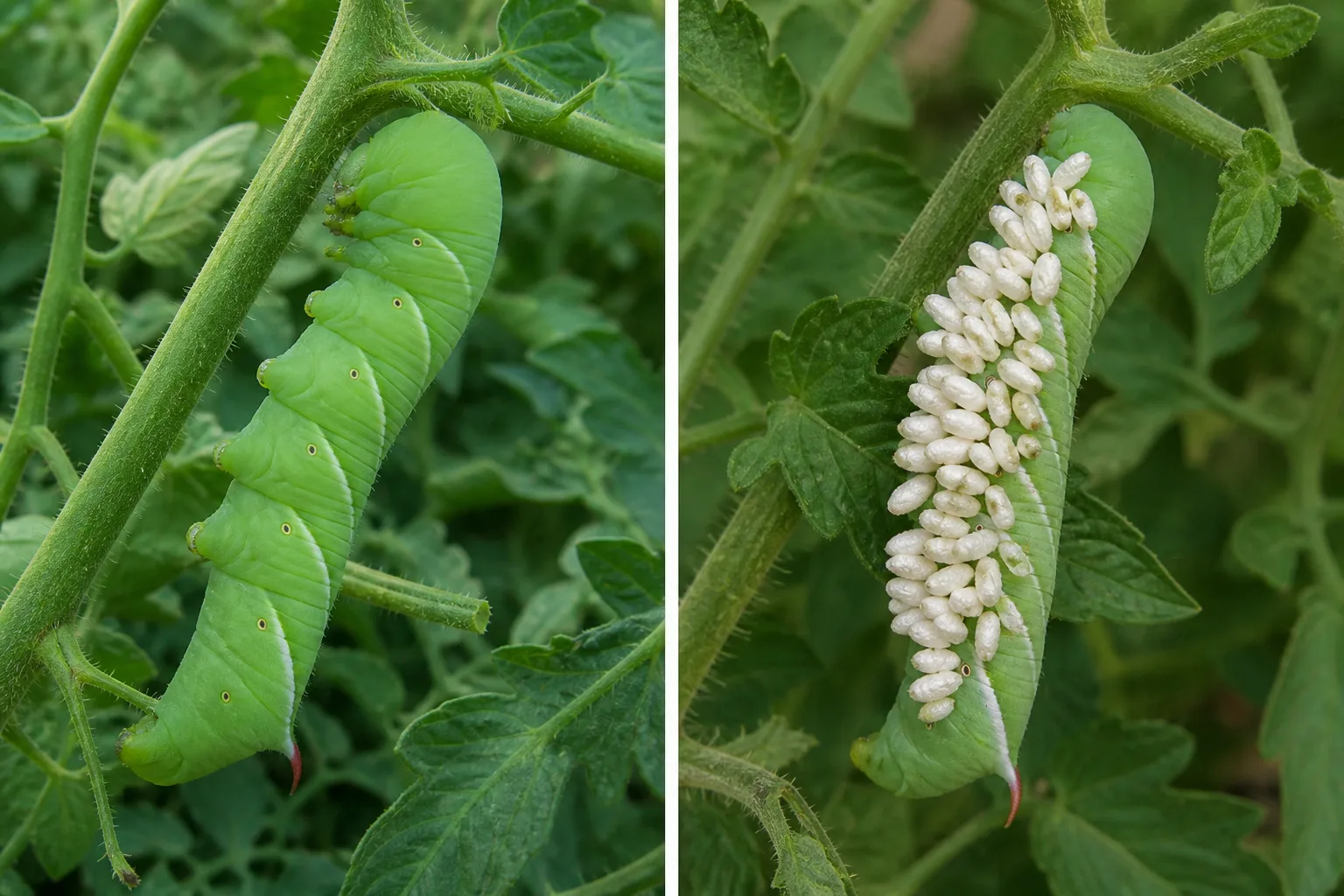
Leaves stripped fast
- Look for frass pellets, then search above them
- Handpick hornworms at dusk
- Leave cocoon-covered caterpillars in place
Curled sticky tips
- Spray hard with water first
- Wait two days before anything stronger
- Avoid broad-spectrum sprays that kill lady beetles
Stems cut at soil level
- Push a cardboard collar into the soil at planting
- Clear weeds and debris from around stems
- Check at night when cutworms feed
Are Tomato Leaves Poisonous to Pets?
The leaves, stems, and unripe green fruit contain glycoalkaloids, mainly tomatine, which the ripe fruit does not.
A dog or cat that eats a quantity of foliage can get drooling, stomach upset, and weakness. A nibbled leaf is not an emergency, and a chewed-through vine is worth a call to your vet.
The practical habit is to keep prunings picked up rather than tossed at the edge of the bed. A pile of wilting stems is far more interesting to a dog than the living plant was.
Can You Grow Tomatoes in Pots?
Yes, and the pot size is what decides whether it works.
Give a determinate variety at least 5 gallons and an indeterminate one 10 gallons or more. An undersized pot is the direct cause of most container tomato disappointment, because it cannot hold enough water to keep the plant even.
Expect to water daily in summer heat, sometimes twice. That is also why blossom end rot is more common in pots than in beds, since a container swings between wet and dry far faster than ground does.
Feed container plants more often than bed plants. Every watering carries nutrients out of the drainage holes, so a light feed every couple of weeks beats one heavy dose at planting.
Use a real potting mix rather than garden soil, which compacts into a brick in a container. A blend of about half potting mix, a quarter compost, and a quarter perlite or fine bark stays open and still holds moisture.
Frequently Asked Questions
Should I pinch off the first flowers on a young tomato plant?
On a small transplant that has not rooted in yet, removing the first flowers sends energy into roots and stems and pays back later. Once the plant is established and growing strongly, leave them alone.
Why are my tomatoes cracking on top?
Concentric or radial cracks around the shoulders come from a sudden surge of water into fruit whose skin has already set, usually heavy rain after a dry spell. Mulch buffers it, and picking at first blush avoids the worst of it.
Can I plant tomatoes in the same spot every year?
It works until it does not. Verticillium and fusarium wilt build up in soil and cannot be treated once present, so move tomatoes, peppers, and eggplant to different ground on a three or four year cycle.
Do tomatoes need a pollinator?
No, each flower pollinates itself, though it needs movement to shake the pollen loose. Wind normally does it, and bumblebees do it better, which is why greenhouse growers bring them in.
Is it worth removing tomato leaves to ripen fruit faster?
No, and it usually backfires. Ripening is driven by temperature rather than light, and exposing fruit by stripping leaves invites sunscald while removing the foliage that feeds the plant.
Sources & References
- Growing tomatoes in home gardens, University of Minnesota Extension
- Tomatoes in the Garden, Utah State University Extension
- Blossom-End Rot of Tomato, Missouri Botanical Garden Integrated Pest Management
- Tomato Hornworm, University of Minnesota Extension
- Tomato Plants, ASPCA Animal Poison Control Toxic and Non-Toxic Plant List
- Early Blight and Septoria Leaf Spot of Tomato, Penn State Extension
- Solanum lycopersicum (Tomato, Tomatoes) | North Carolina Extension Gardener Plant Toolbox
Related Plants
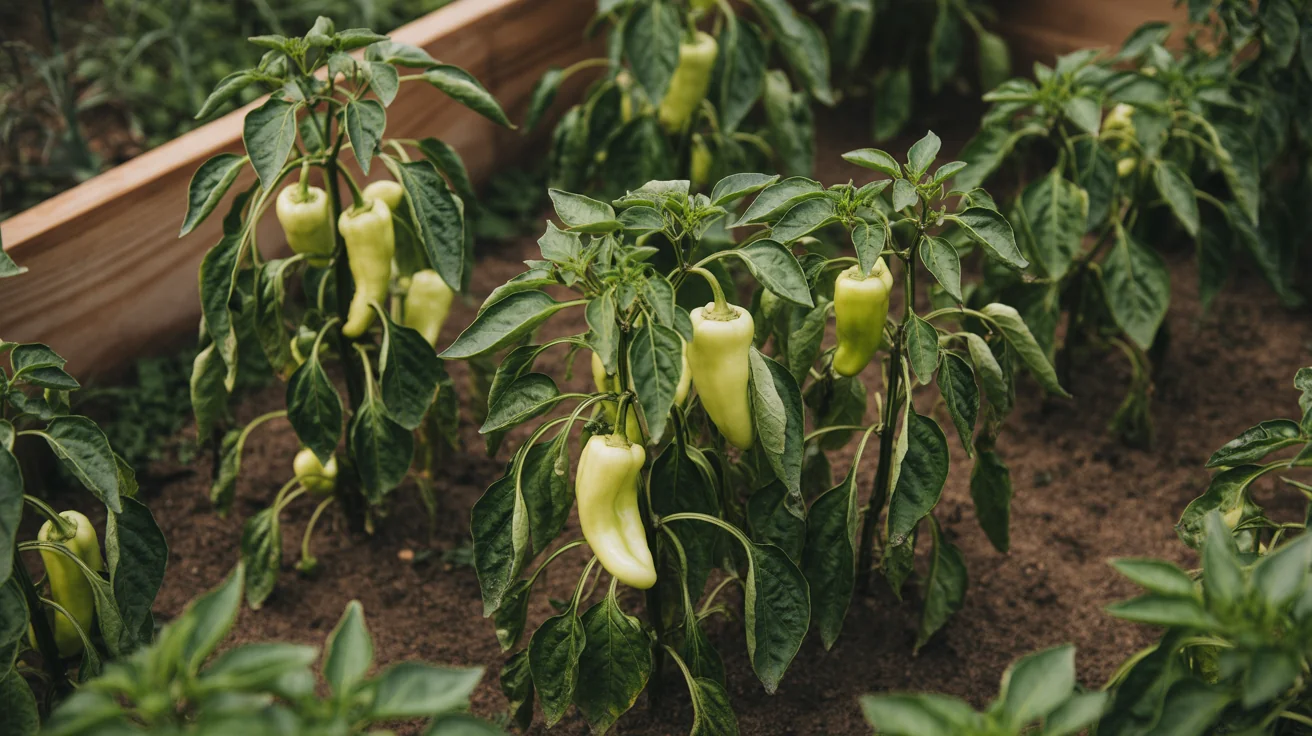
Pepper
The same family, the same heat-driven flower drop, and the same soil wilts in a rotation.
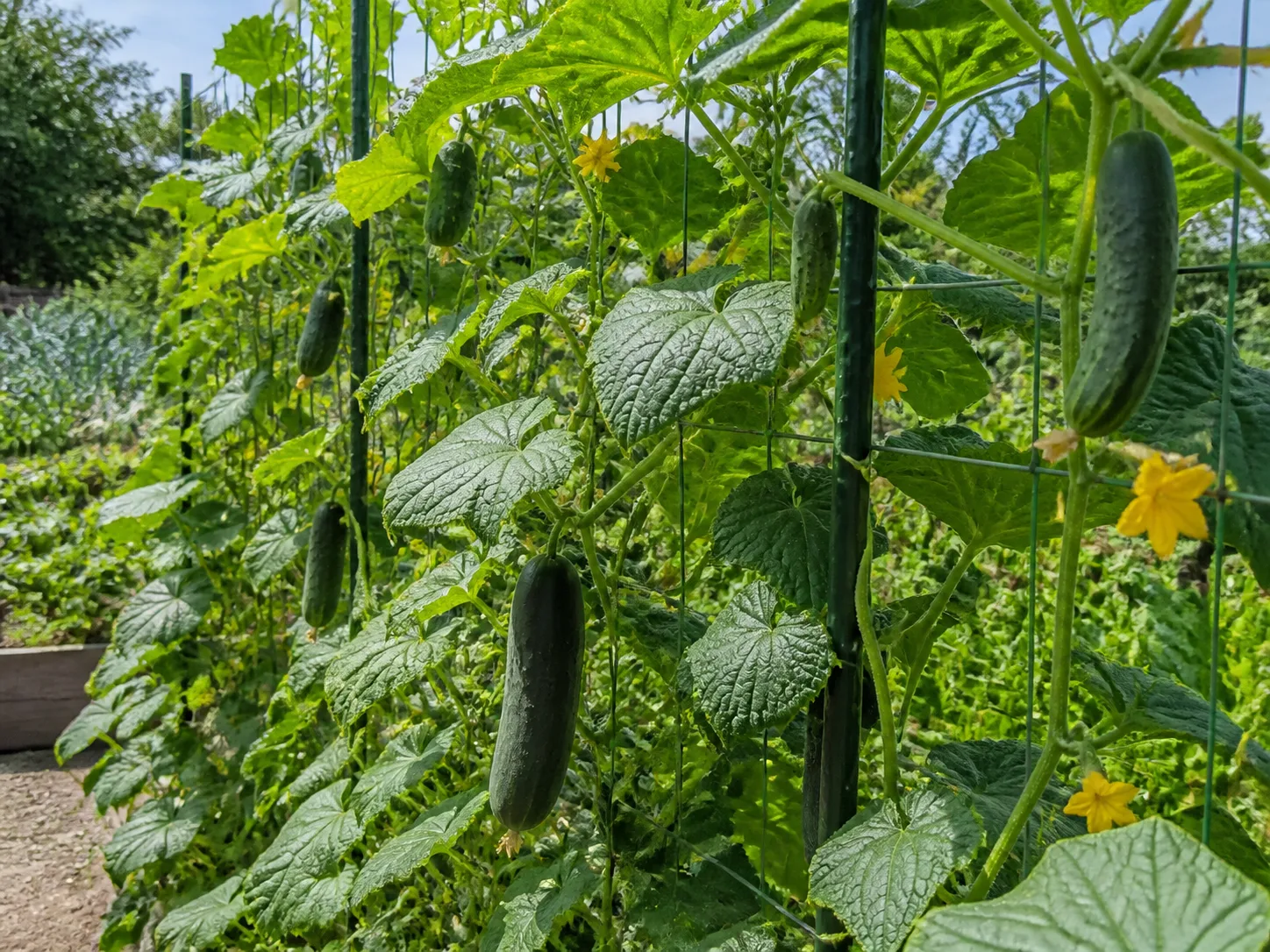
Cucumber
A trellised vine that fills the bed beside staked tomatoes without competing for the same soil disease.
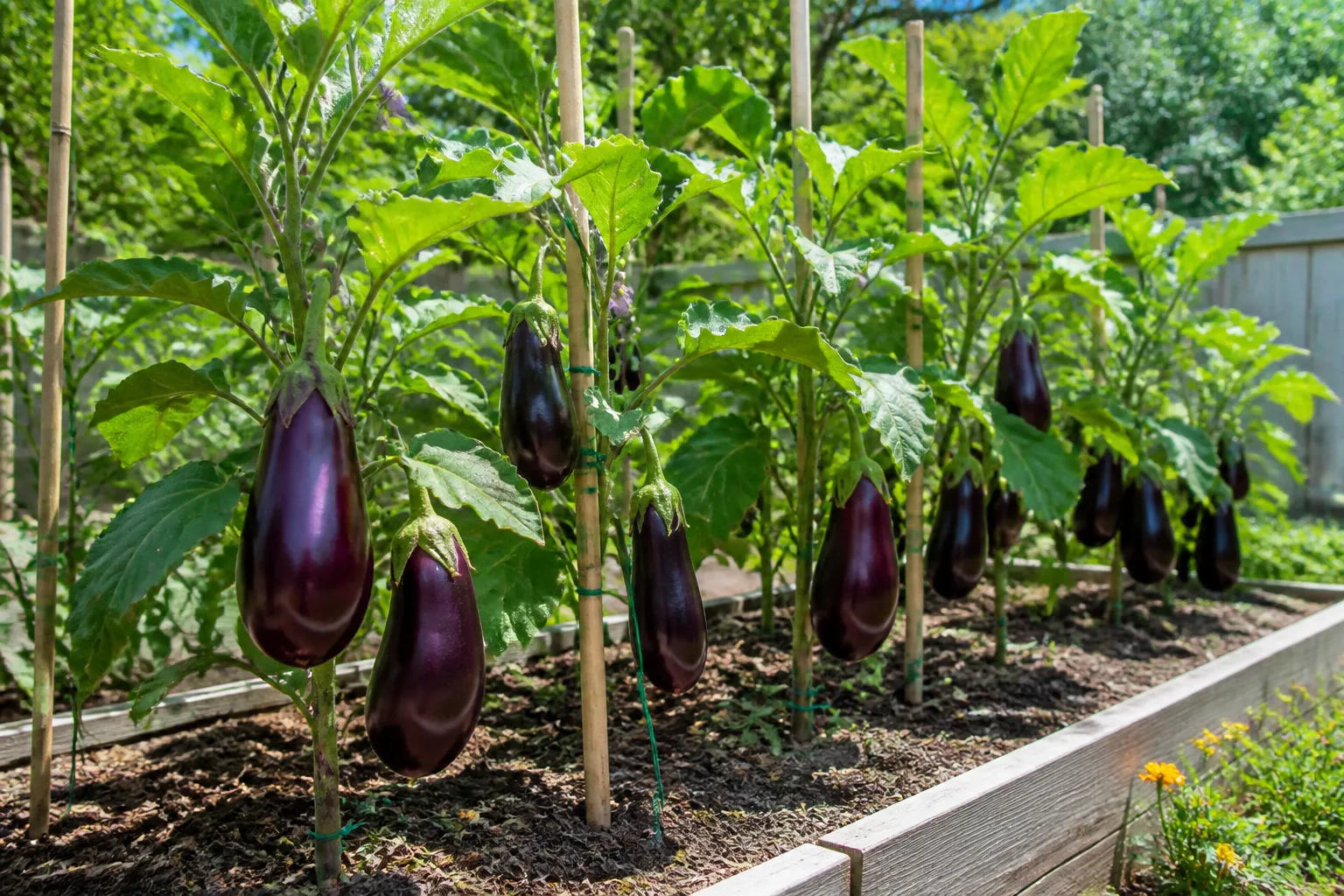
Eggplant
Another nightshade wanting the same warmth, and another reason not to plant all three in the same ground each year.
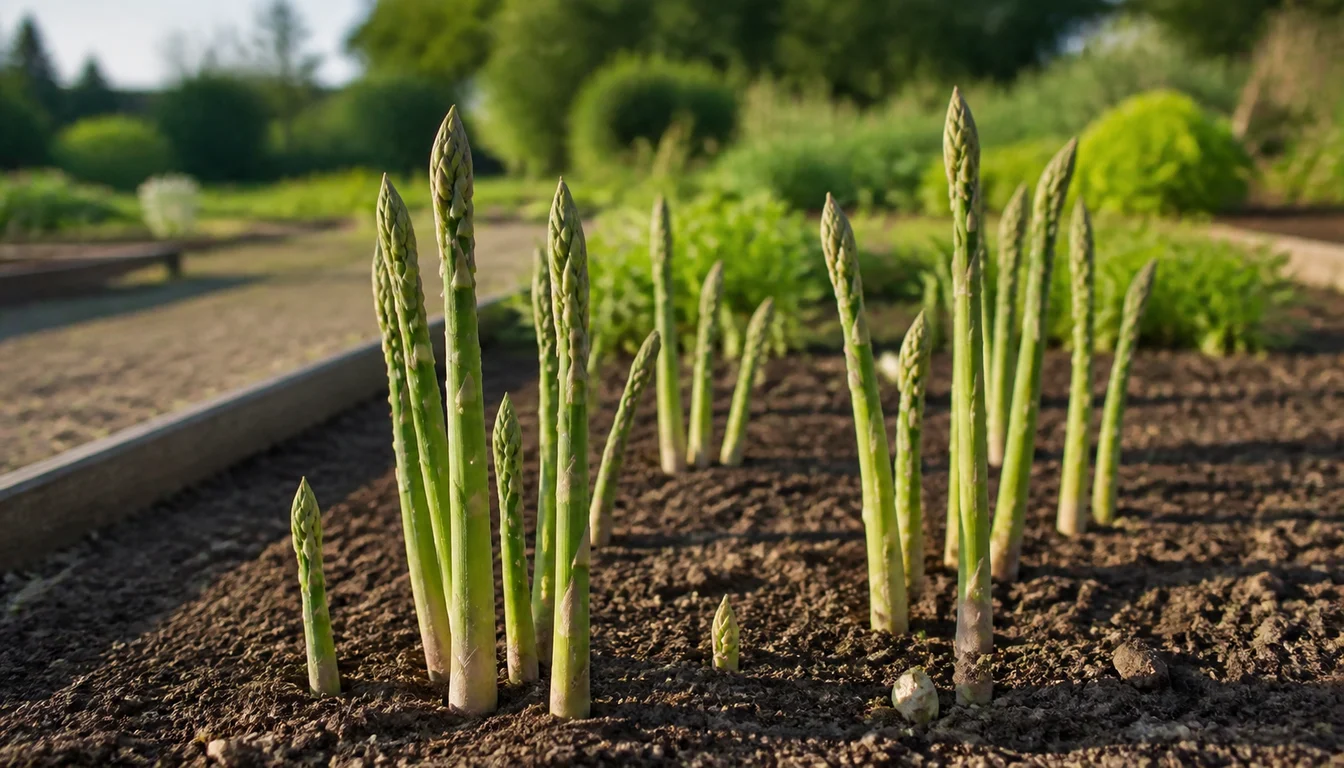
Asparagus
Asparagus rewards careful establishment with spring harvests for many years.
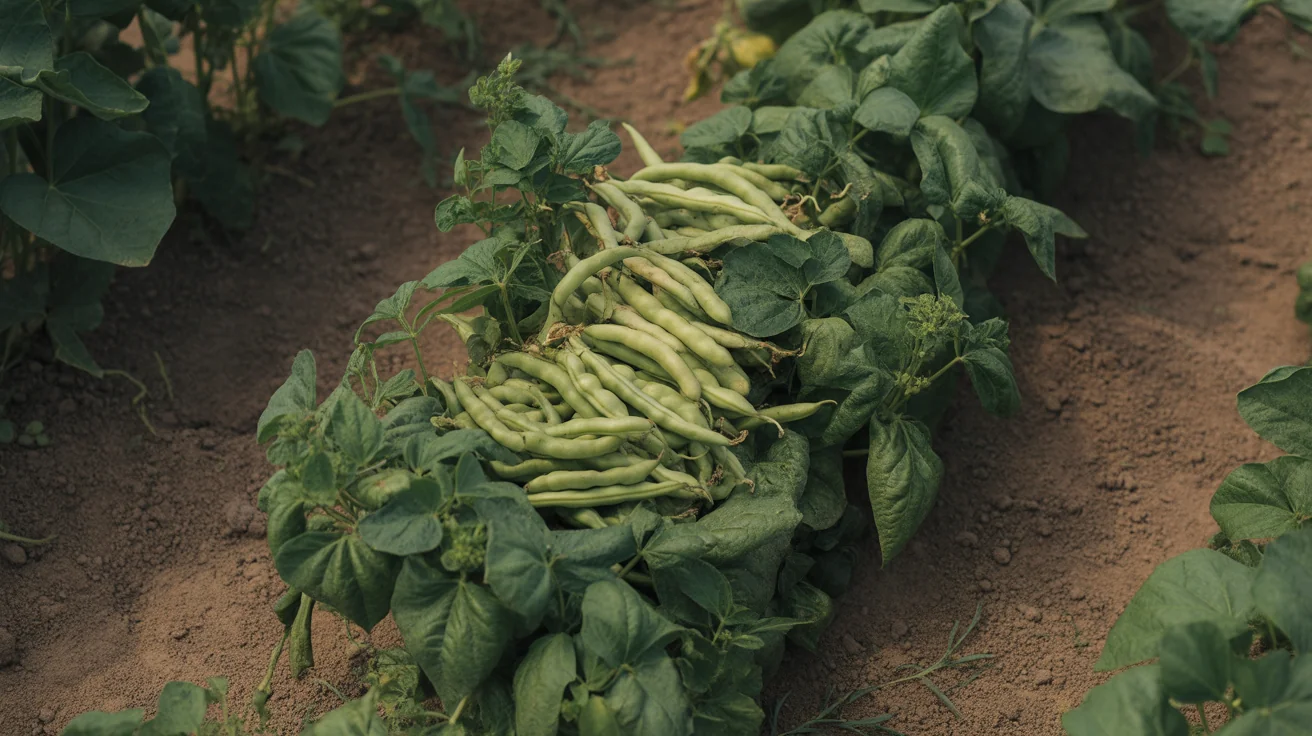
Beans
Two different plants share the name bean, one that stays knee-high and gives most of its crop inside two or three…
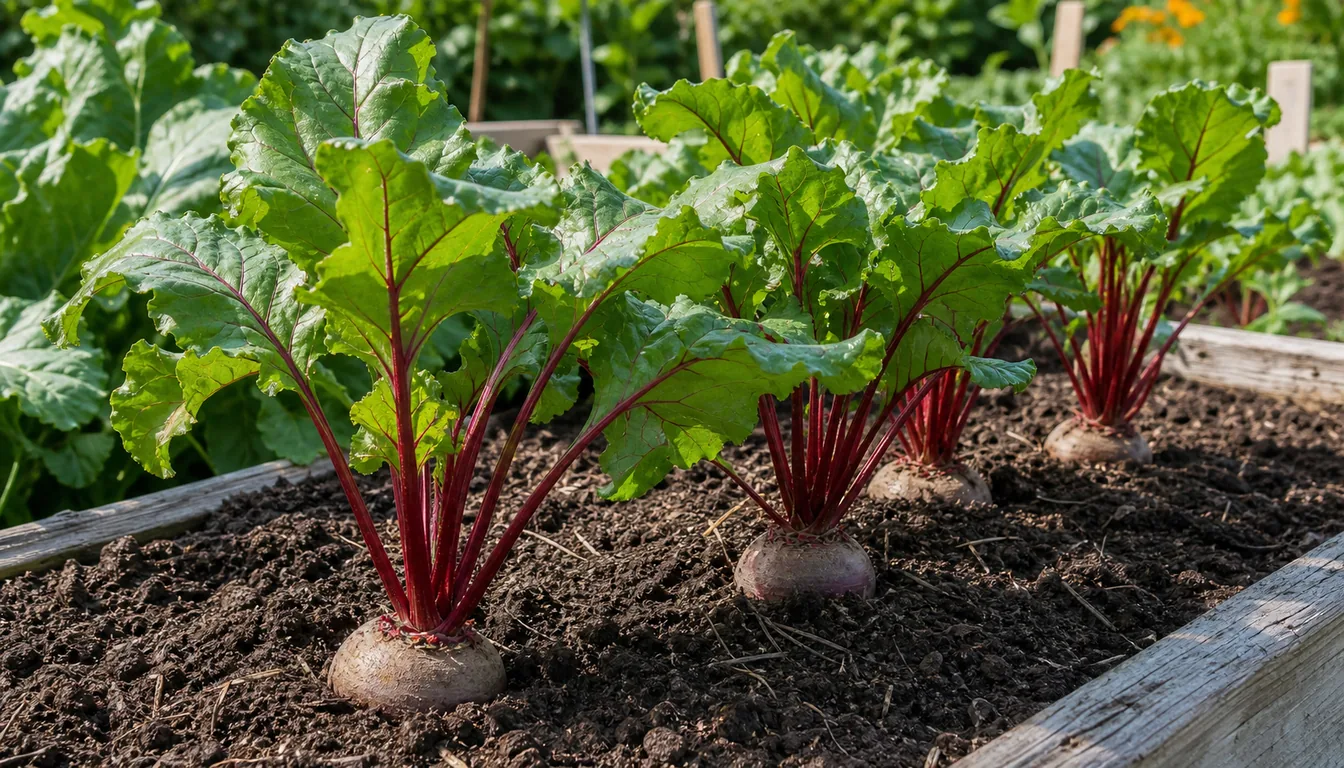
Beet
Beet care starts with one unusual fact. Each seed ball can make several seedlings, so the crop needs early thinning…