
What's an Astilbe? How to Get Plumes, Not Just Ferny Leaves
Astilbe spp. Saxifragaceae
An Astilbe puts real color into a shade bed that would otherwise be green on green, but its shallow roots hold no reserve and its plumes depend on light most people misjudge. Get those two right and the clump thickens for years.
Care snapshot
What Is an Astilbe, and Why Does It Bloom Where a Hosta Only Makes Leaves?
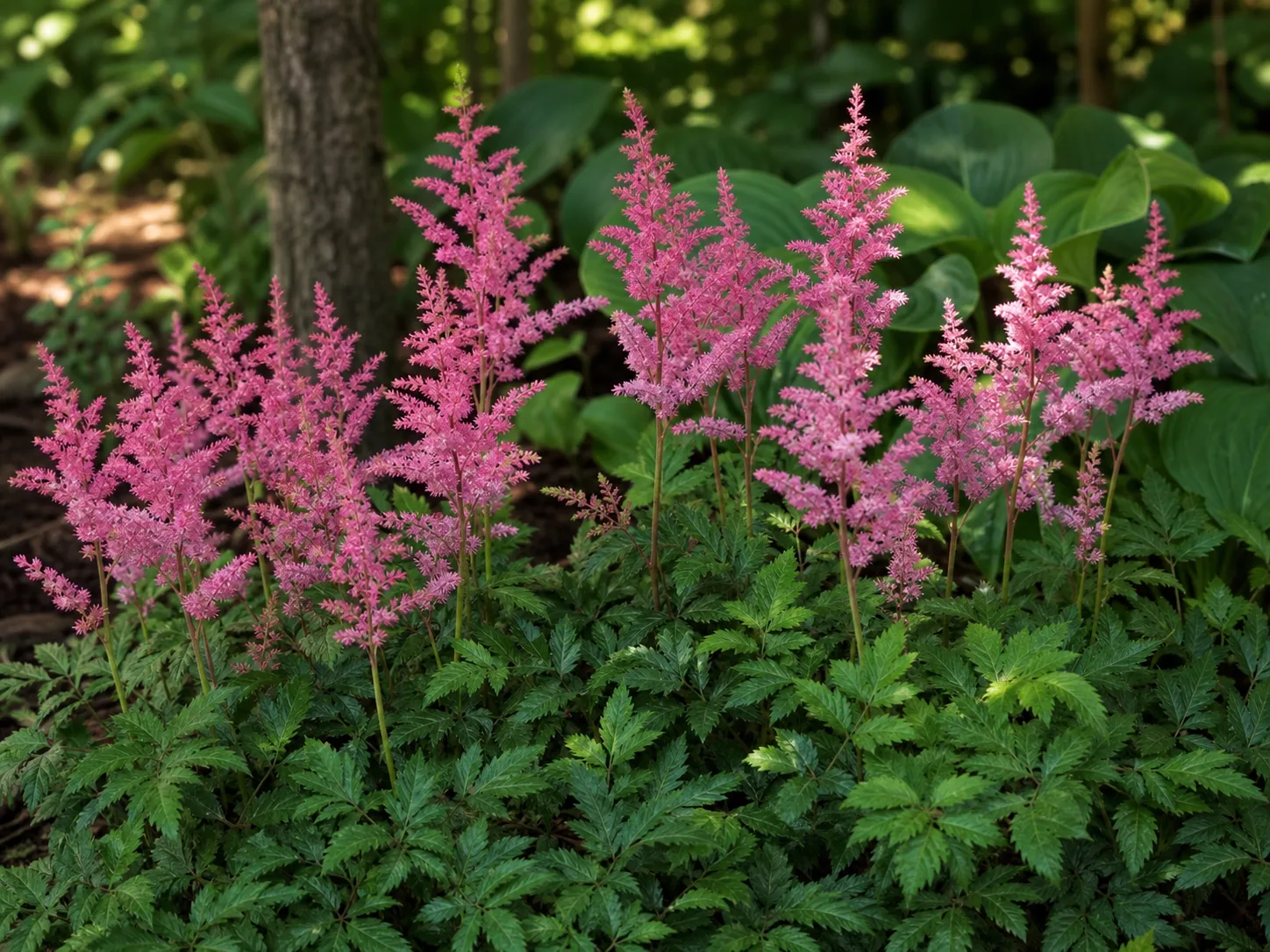
An Astilbe is a shade perennial built in two layers, with feathery flower plumes carried on wiry stems well above a low mound of deeply cut leaves.
That second layer is the whole point. Most reliable shade plants give you foliage and texture, while an Astilbe puts actual color at eye level in a bed that would otherwise be green on green.
It grows from woody rhizomes near the surface, so a clump widens slowly year on year rather than running through the bed. Its home ground is damp woodland and stream edge, and that single fact sets every watering decision further down this page.
Which Astilbe Should You Buy for Your Shade Bed?
Match the breeding group to how damp and how hot your bed actually gets, then choose the plume color you wanted. A tall red type in a bed that bakes in July will disappoint faster than a small pink one in ground that stays cool.
The four groups sold under one label differ most in what they survive, not in how they look.
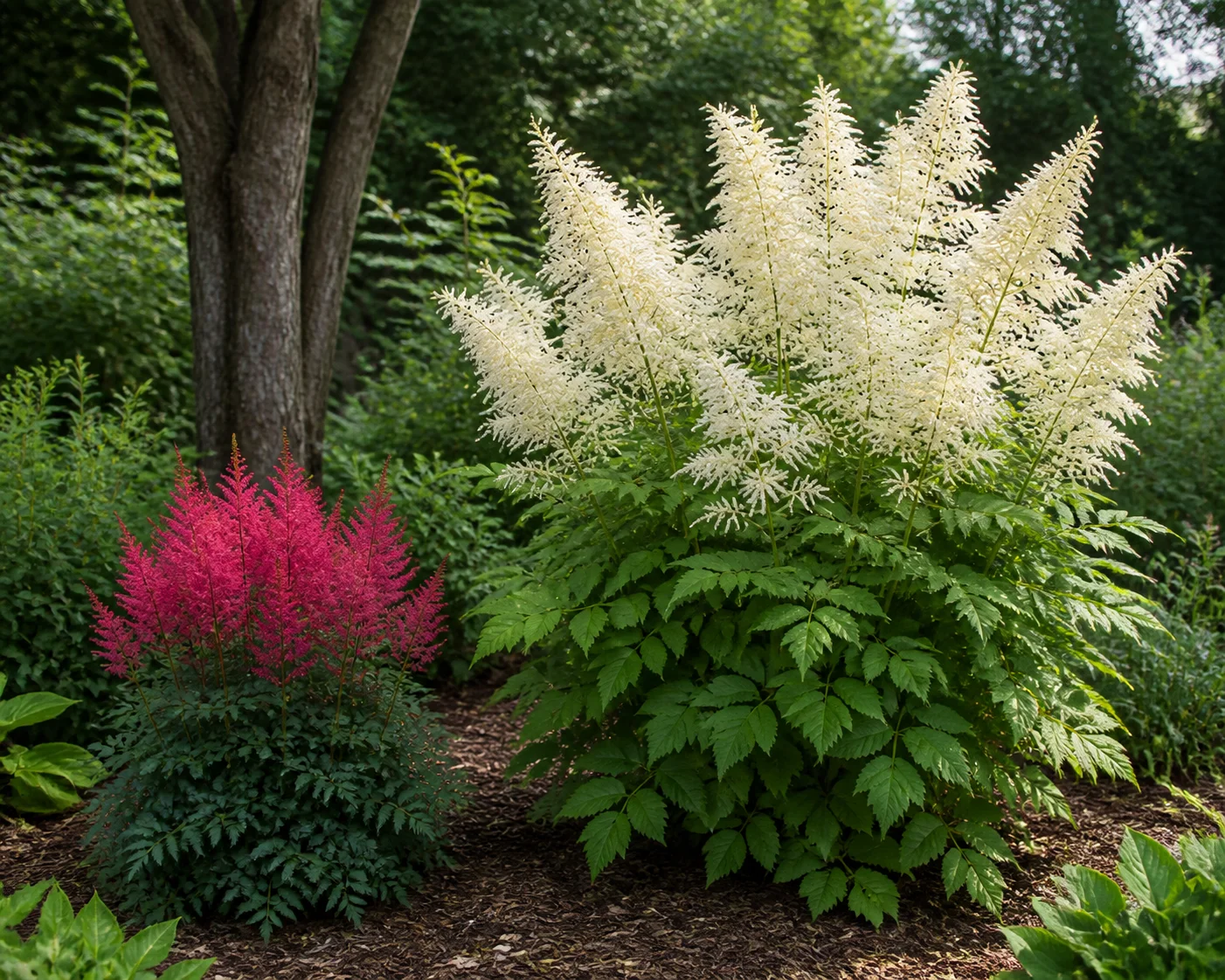
Chinensis hybrids are the ones to reach for when the bed is not reliably damp, because they take more heat and dryness than the rest. Arendsii hybrids are what most nurseries stock and what most color photographs show.
Before any of that, check the plant is an Astilbe at all. True goat's beard, Aruncus dioicus, carries the same feathery white plumes and is regularly shelved alongside it, but it reaches 4 to 6 ft and takes far more sun than an Astilbe ever will.
Buying that by mistake does not give you a large astilbe, it gives you a shrub-sized plant in a spot planned for a compact one.
- Arendsii hybrids
- The nursery standard. Widest color range and the most reliable bloom, but wants steady moisture.
- Chinensis hybrids
- Taller and the most heat and drought tolerant of the four, which makes it the safer pick outside a damp bed.
- Japonica hybrids
- Earliest to open, useful for starting plume color before the other groups.
- Simplicifolia hybrids
- Smallest, with the finest cut foliage, for front edges and small shade pockets.
How Much Shade Can an Astilbe Take and Still Flower?
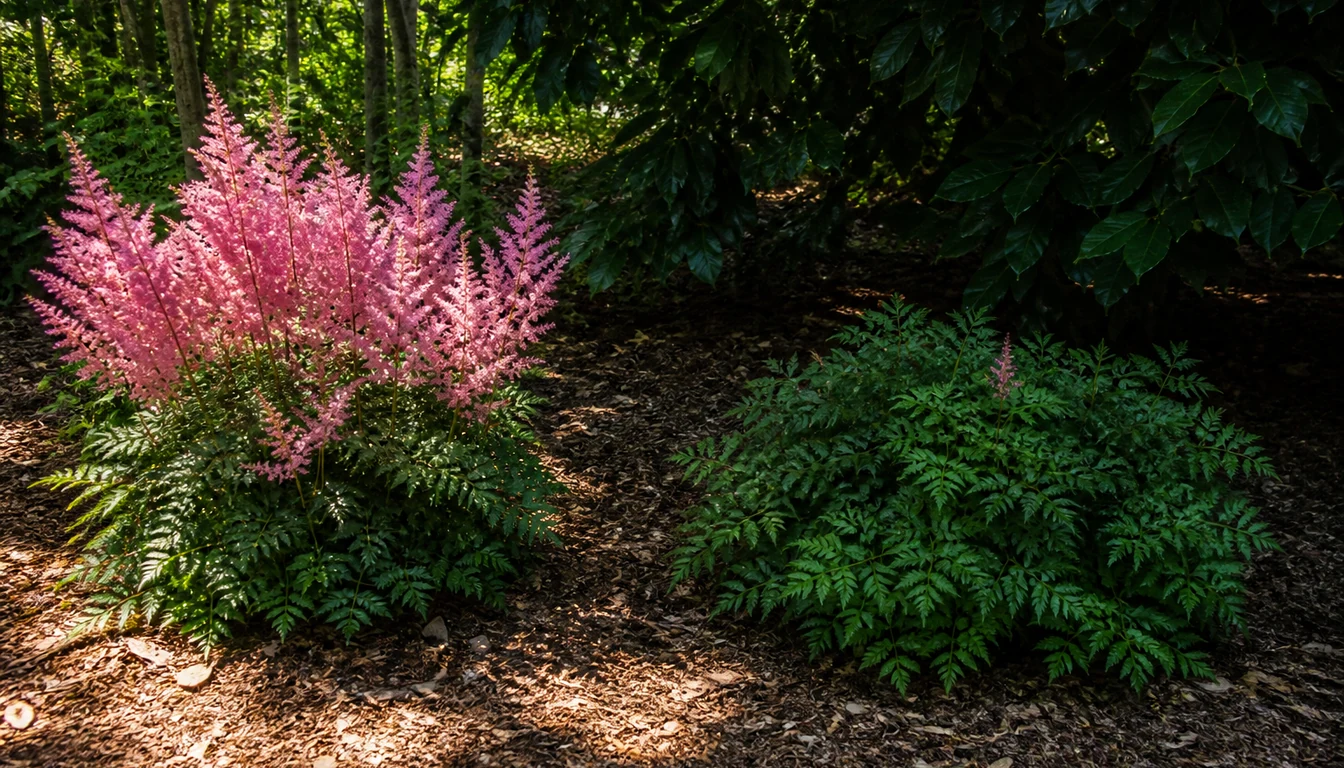
Morning sun with afternoon shade is the band that reliably produces plumes.
Push past that into direct afternoon sun and the finely cut leaves brown at the edges while the plumes go over early. Pull back into dense evergreen shade and the opposite happens, with the foliage staying handsome and the flowers barely arriving.
That second failure is the one people misread.
A plant with healthy leaves and almost no plumes is telling you about light, not about food. Feeding it makes more of the leaves you already have, so move the clump a few feet brighter in early spring or fall and let the shallow roots settle before the next bloom push.
- Look for 3 to 4 hours of morning or late-day sun in cooler zones.
- Use a high open tree canopy rather than a solid evergreen one.
- Keep the plant off west-facing walls that throw back heat and light.
- Check whether a poor bloomer is shaded rather than hungry before feeding it.
Why Do Astilbe Leaves Turn Brown and Crispy?
The answer is in the roots rather than in your watering can. An Astilbe grows a shallow fibrous mat with no taproot, so it cannot reach the moisture a deep-rooted perennial pulls up from lower down.
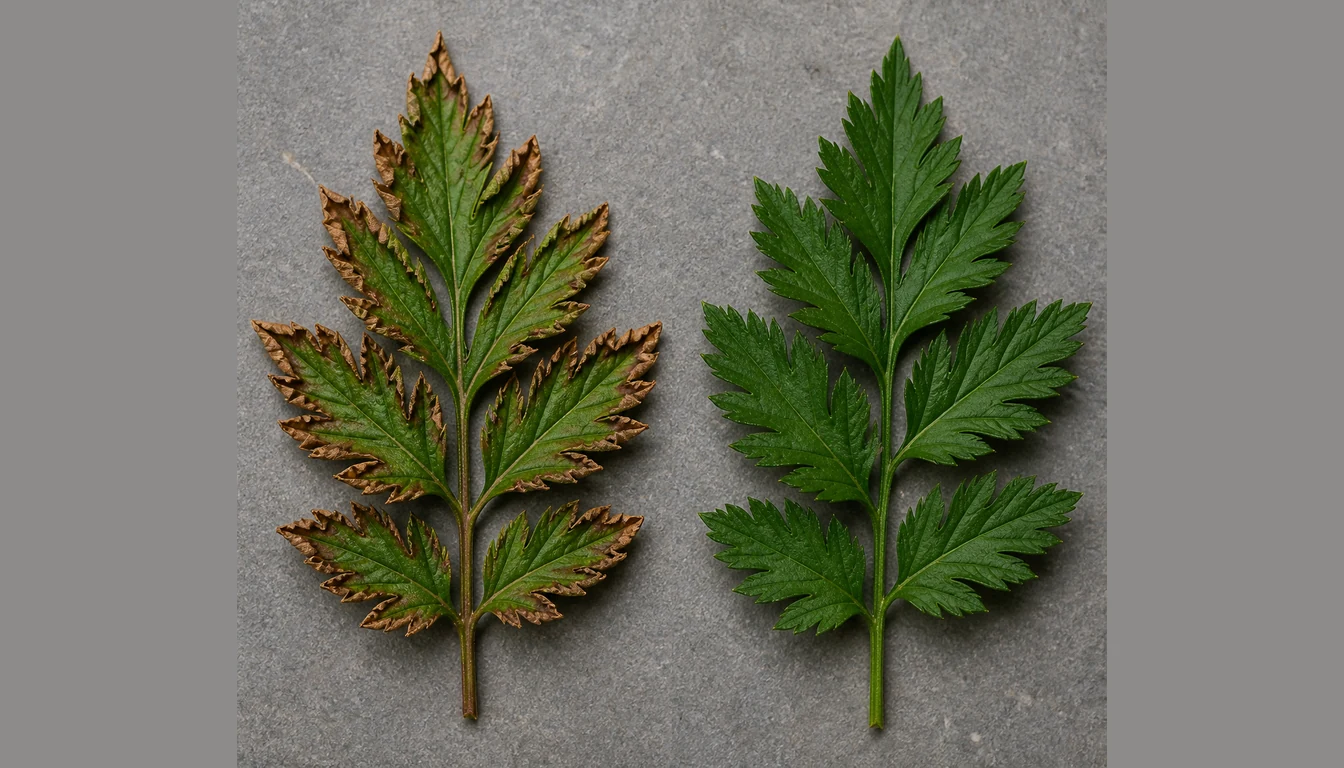
That means the plant has no reserve to spend. One dry week while the plumes are forming shows up as dry brown margins on the leaflets, and those leaves do not recover.
Water deeply enough to wet the root zone to 6 to 8 inches, then let only the top inch or two begin to dry before going again.
The soil has to hold that water or the schedule cannot save you. Work compost through the bed until it holds shape when squeezed and still breaks apart when poked, then keep 2 to 3 inches of mulch over it to slow the drying.
Skip the low pocket that stays soggy after every rain, even though it looks like a shortcut to constant moisture. Astilbe wants ground that is evenly damp, and standing water rots the rhizomes it was supposed to feed.
- Soil texture
- Loam or amended clay carrying plenty of organic matter, never thin or sandy ground.
- Organic matter
- Roughly 20 to 30% compost blended into the native soil at planting.
- Soil pH
- 6.0 to 7.0, slightly acidic through neutral.
- Mulch depth
- 2 to 3 inches of shredded leaves or bark, held clear of the crown.
Is It Drought, Mites, or Crown Rot?
Three different failures on this plant all arrive looking like bad foliage. Getting the name right matters more here than on most perennials, because two of them call for opposite watering.
Drought scorch runs along the leaf margin as a dry brown band, working inward from the edge.
Mite feeding does not follow the margin. It stipples the face of the leaf with fine pale dots and leaves webbing in the leaf angles, and it turns up in the hot dry spells when the plant was already stressed.
Crown rot is the one that punishes a wrong guess. When a clump collapses with soft rhizomes and sour-smelling soil, more water accelerates it, so lift the healthy outer pieces and move them to ground that drains instead.
A dry brown band along the leaf margin, curling inward, worst after a hot dry week. Soak the root zone deeply and mulch, rather than sprinkling more often.
Fine pale stippling across the leaf face with webbing in the leaf angles. Rinse the foliage in the morning and treat only where mites are confirmed.
Soft rhizomes, sour soil, and a clump that collapses rather than crisps. Lift firm outer divisions and replant them in better-drained ground; do not water more.
Clusters on new stems and rising flower spikes. A strong water spray every few days usually settles them before soap is needed.
When Should You Divide an Astilbe?
The clump signals it by going woody and bare in the middle while the outer ring keeps growing.
Bloom falls off at the same time, so a plant with decent foliage and fewer plumes each year is asking to be lifted. That usually lands every 3 to 4 years rather than on any annual schedule.
Early spring is the cleanest window in cold regions, before the top growth gets going. Mild climates can also split in early fall while the soil is still warm enough for new roots to move.
Cut generously, because the size of the piece decides whether it flowers next year or merely survives.
- Lift the whole clumpDig a wide circle and take the entire root mass out rather than chopping sections off the side, since the rhizomes sit near the crown.
- Find the budsLook over the lifted clump for the fat growth buds and plan the cuts between them rather than through them.
- Cut big piecesGive every division three to five healthy buds plus a firm chunk of root, and discard the woody dead middle.
- Replant immediatelySet each piece at its original depth the same day, because a division left drying on the bench can fail even after a clean cut.
- Water and mulchSoak them in, mulch two to three inches deep clear of the crown, and keep the bed damp through the first season.
What Does Astilbe Need Through the Year, and Is It Safe Around Pets?
One month decides this plant's year, and it is not a cold one. Whether the bed stays damp through midsummer heat is what separates a clump that thickens from one that limps.
Everything in spring and fall is really preparation for that. Top-dress with compost and divide crowded clumps in spring, hold off on heavy nitrogen that makes soft leaves without fixing dry ground, and in fall leave the foliage until it yellows before clearing it.
No ASPCA or NC State record gives a pet toxicity classification for Astilbe, so its safety for cats and dogs is unknown. If a pet chews a large amount, contact a veterinarian or ASPCA Animal Poison Control. Its textured cut foliage does make it one of the more reliably deer-resistant shade perennials.
Frequently Asked Questions
Will astilbe grow in full shade?
It will live there and keep good foliage, but it will flower poorly or not at all. Full shade is the most common reason a healthy-looking astilbe never produces plumes.
Can I grow astilbe in a container?
Yes, though a pot dries far faster than open ground and this is the plant least able to cope with that. Use the largest container you can, keep it out of afternoon sun, and expect to water more often than you would for almost anything else on the patio.
Should I cut back astilbe plumes after they fade?
That is a preference rather than a care requirement, since the plant does not rebloom from deadheading. Many gardeners leave the dried plumes standing because they hold their shape into winter and give the bed structure when everything around them has collapsed.
How long does an astilbe take to fill out?
A nursery plant usually looks established in its second season and reaches full size in the third. The clump widens from surface rhizomes rather than running, so it thickens in place instead of spreading through the bed.
Do astilbe come back after the foliage dies down?
Yes. The top growth dies away for winter through Zones 3 to 9 and new shoots, often reddish, push up from the rhizomes once the soil warms in spring.
Why did my astilbe bloom well the first year and less after that?
A first-year plant flowers on what the nursery built, so a drop in year two usually means the bed is drier or shadier than the plant needs. If the foliage is also thinning toward the middle of the clump, the plant has aged into needing division instead.
Sources & References
Related Plants
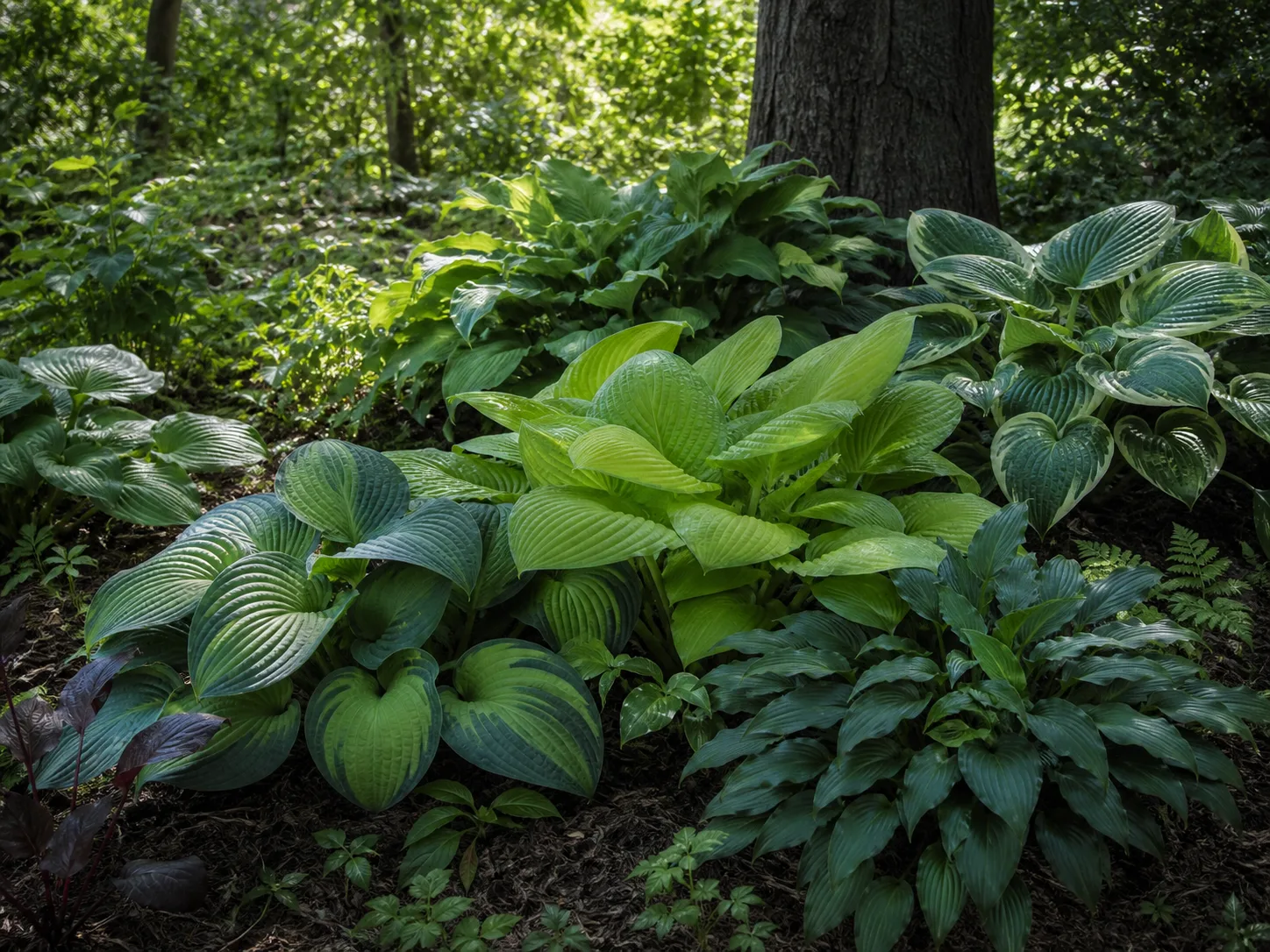
Hosta
Bold foliage perennial that pairs well with Astilbe in shade beds.
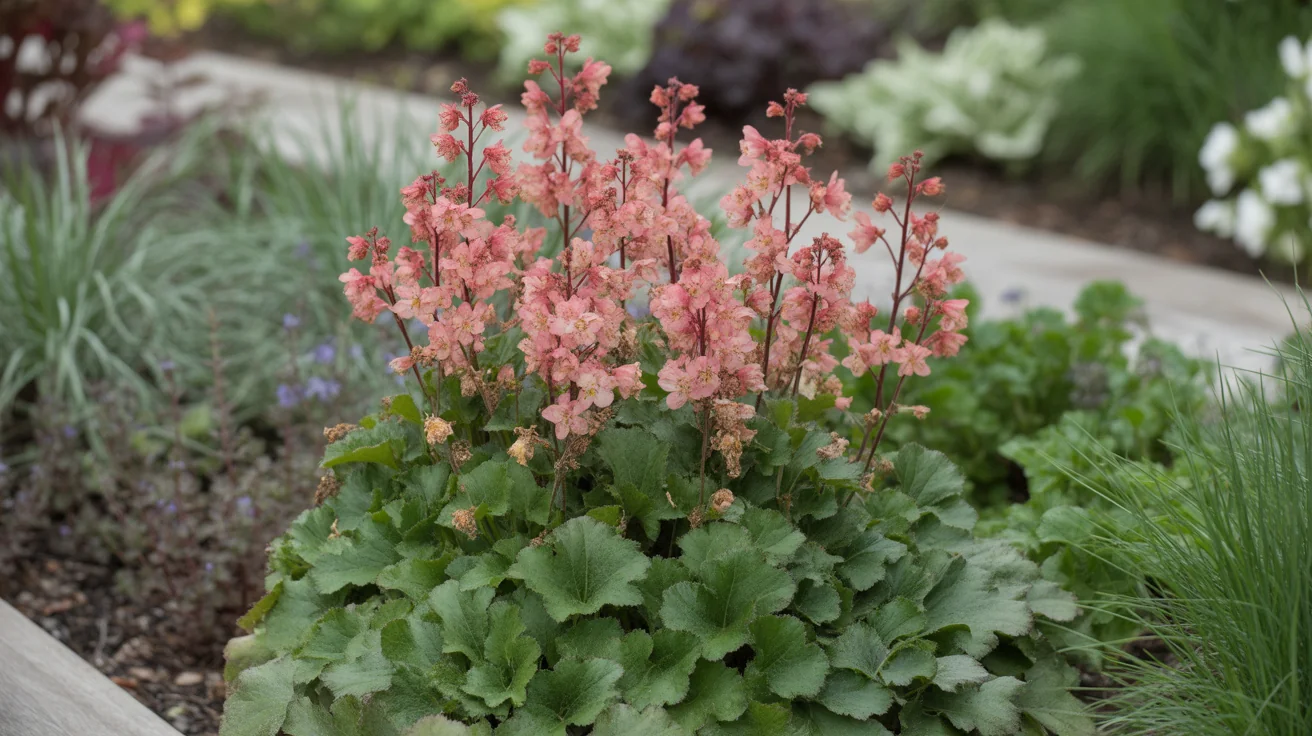
Coral Bells
Colorful leaves and airy blooms that echo Astilbe’s texture.
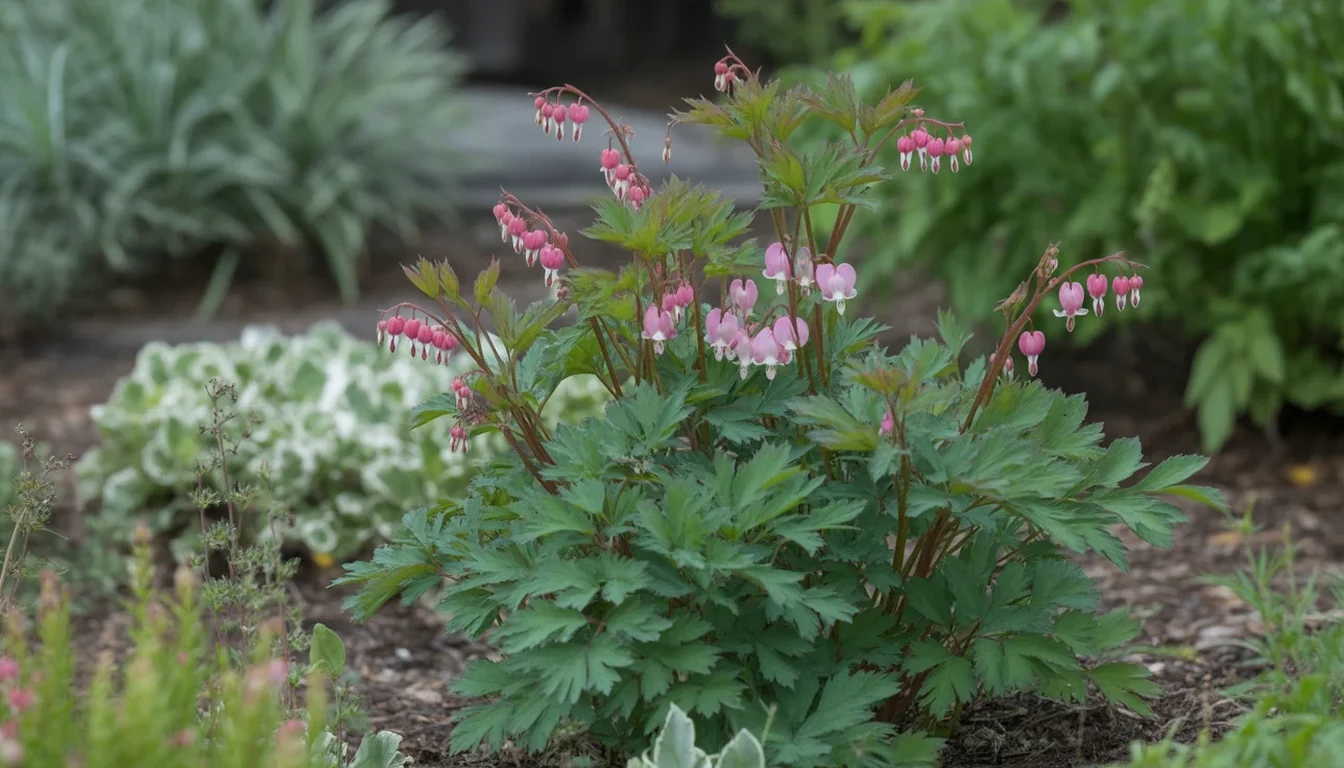
Bleeding Heart
Spring-blooming shade perennial that overlaps Astilbe’s season.
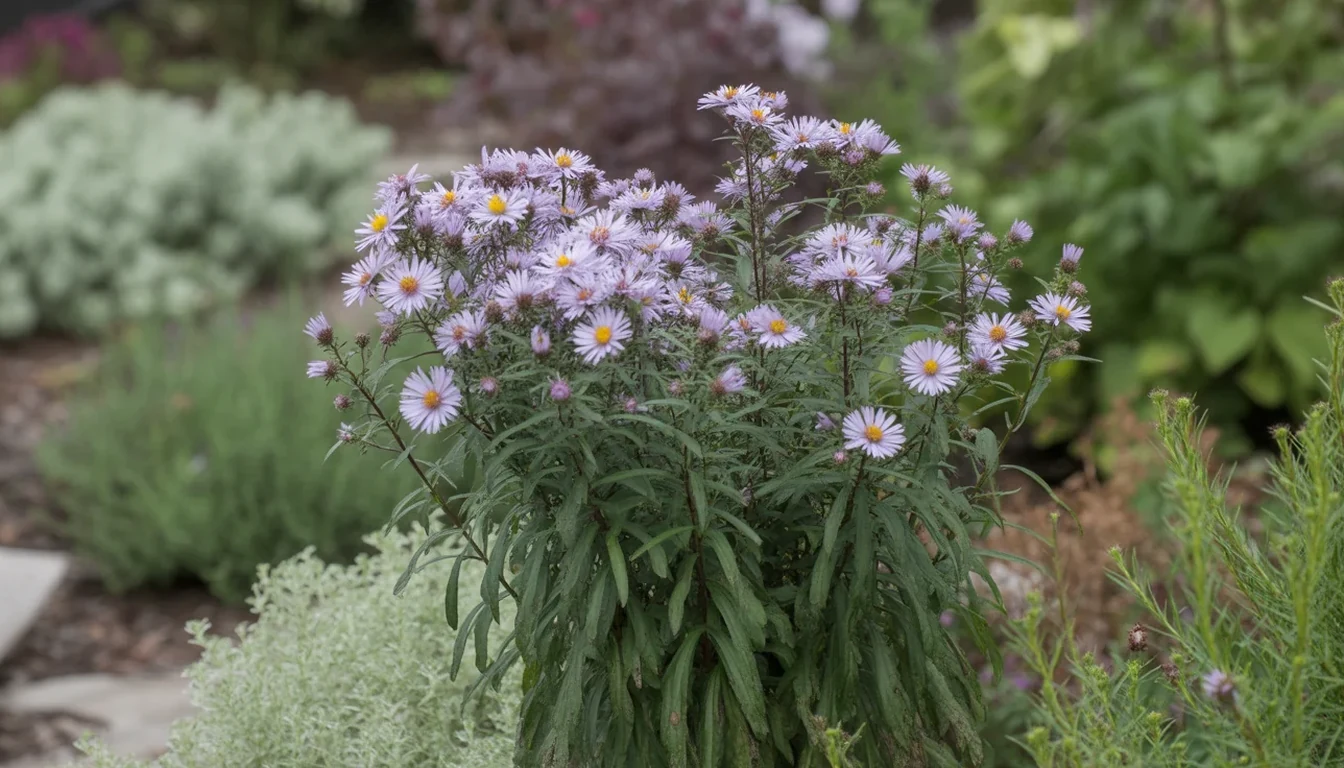
Aster
Gardeners blame the weather when an Aster splits open in September, but the shape was decided in early summer.
Bigleaf Hydrangea
Bigleaf hydrangea (Hydrangea macrophylla) produces mophead or lacecap flowers, but winter survival and reliable…
Black-Eyed Susan
A Black-Eyed Susan patch outlives the plants in it. The common garden species lives one to three years and restocks…