
How to Choose Evergreen Shrubs That Hold Year-Round Structure
The evergreen shrub that holds its shape for years is the one whose mature size already fits the spot, whose hardiness covers your winters, and whose foliage can take the winter sun and wind where it will stand. Pruning cannot make up for a shrub that wants to be twice the size of its space, and a boxwood or rhododendron on an open south wall is prone to browning in a hard winter.
After that choice, the first two years decide the rest. A root flare set at soil level, a deep weekly soak through two summers and into fall, and pruning that never cuts back into bare brown wood are what separate a hedge that thickens from one that thins.
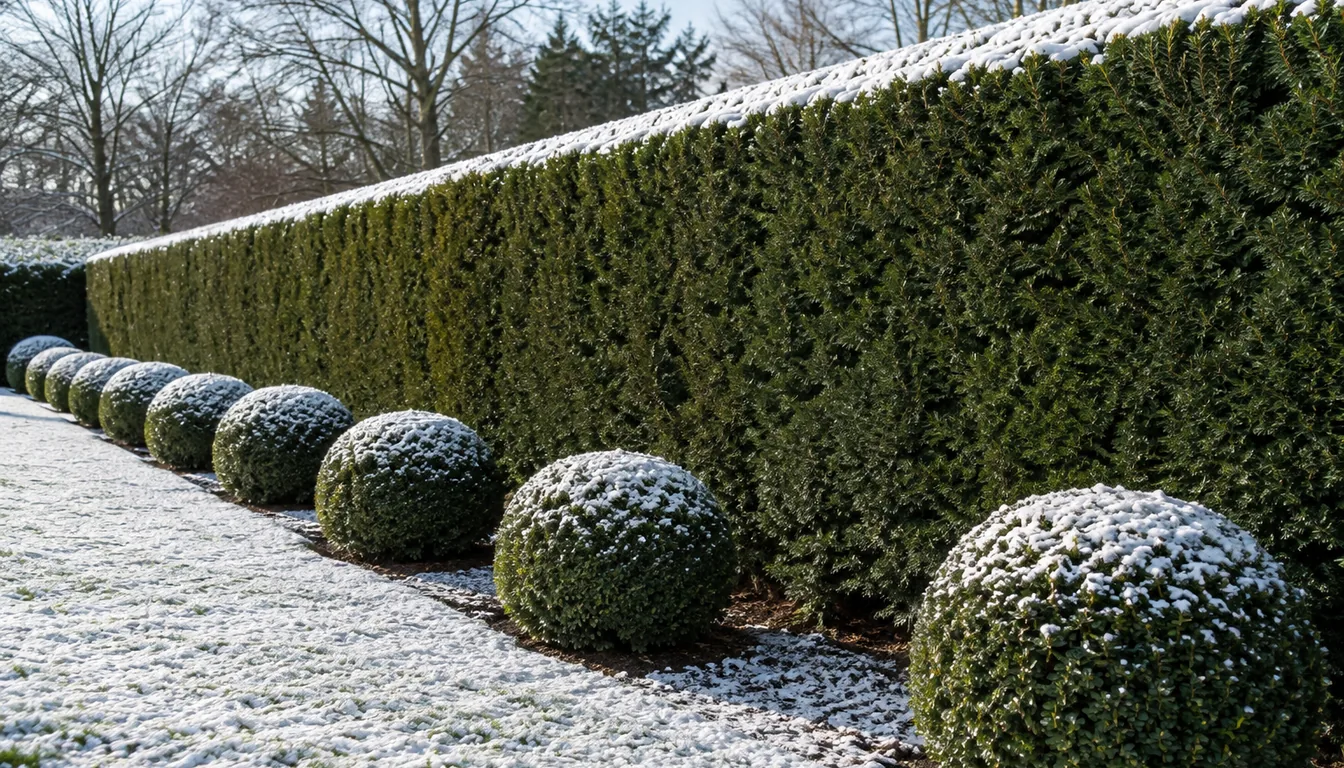
At a glance
Start With the Size the Shrub Will Reach
NC State Extension's handbook puts mature size at the top of the list of things to check, and asks gardeners to measure both the height and the width available against buildings, walks, fences, and power lines. University of Maryland Extension explains why that check cannot be skipped. If a plant is too large for its space, pruning will not be a permanent solution, because pruning does not stop growth and actually stimulates new growth.
That matters more for evergreens than for most shrubs, because many of them cannot be cut back hard once they outgrow a spot. A shrub bought at the right mature size needs a light trim or none, while one bought too big needs cutting back every year and still keeps pushing past its space.
The label to read is the cultivar, not the species. NC State lists American arborvitae as a 40 to 60 foot tree, yet the arborvitae sold for hedges are cultivars a fraction of that size. Chinese juniper covers everything from groundcovers to 50 foot trees. A plant tag that gives only the species name says little about how big your shrub will get.
Common Evergreen Shrubs Compared by Zone and Size
The table below draws hardiness, size, light, and problem notes from NC State Extension's plant database, with boxwood siting from University of Maryland Extension. Sizes are typical ranges for the species or hybrid, and named cultivars can be much smaller.
| Shrub | Hardiness zones | Typical size | Light | What to watch for |
|---|---|---|---|---|
| American arborvitae, Thuja occidentalis | 3 to 7 | Species 40 to 60 ft tall, cultivars far smaller | Sun to part shade | Deer browsing can be serious, plus bagworms and leaf miners |
| Hybrid yew, Taxus x media | 4 to 7 | 2 to 20 ft by cultivar | Sun to heavy shade | Needs good drainage, and its leaves, bark, and seeds are highly poisonous to people and pets |
| Common boxwood, Buxus sempervirens | 5 to 8 | 5 to 20 ft, many cultivars smaller | Sun to part shade, best with afternoon shade | Boxwood blight, leafminer, mites, and winter burn on south and west sides |
| Japanese holly, Ilex crenata | 5 to 8 | 5 to 10 ft tall | Sun to part shade | Few serious pests, but leaves yellow in alkaline soil |
| Inkberry, Ilex glabra | 4 to 11 | 5 to 10 ft tall | Sun to part shade | Wants acidic soil, tolerates wet soil and salt |
| Catawba rhododendron | 4 to 8 | 6 to 10 ft tall, 8 to 10 ft wide | Part shade | Acidic soil, frequent deer damage, and a long pest list |
| Mountain laurel, Kalmia latifolia | 4 to 9 | 4 to 15 ft tall | Dappled shade to sun | All parts poisonous, and lace bugs and leaf spots |
| Cherry laurel, Prunus laurocerasus | 6 to 8 | 10 to 20 ft tall, compact cultivars smaller | Sun to deep shade | Leaves, stems, and seeds contain cyanide compounds |
| Japanese camellia | 7 to 9 | 10 to 13 ft tall | Part shade | Scale and frequent disease problems, including petal blight |
| Chinese juniper, Juniperus chinensis | 4 to 9 | Groundcovers to trees, by cultivar | Full sun, accepts part shade | Like other needled evergreens except yew, does not regrow from bare brown wood |
The last column often decides more than the zone. A yard with heavy deer pressure changes the choice between arborvitae and a holly, and a yard where dogs or children play changes how yew and cherry laurel are used. The ASPCA lists yew and boxwood as toxic to dogs, cats, and horses, and NC State rates yew and cherry laurel as highly poisonous to people.
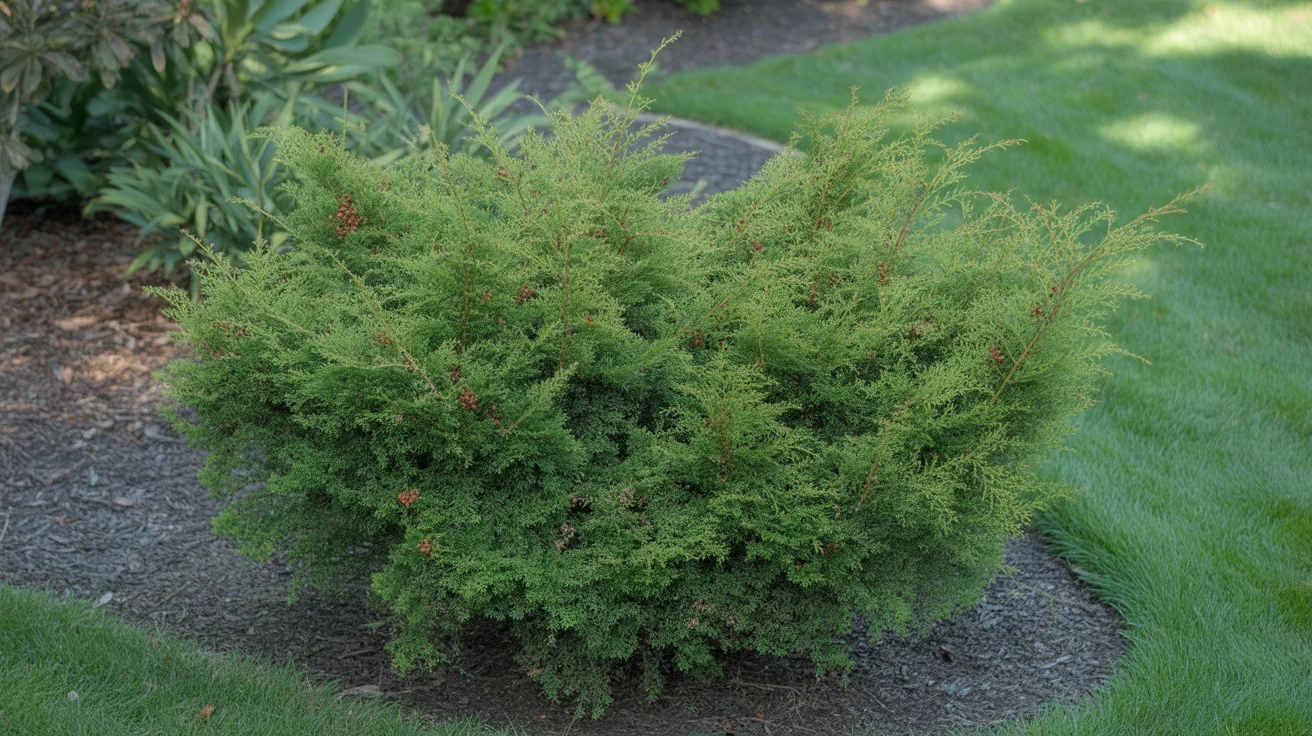
Arborvitae
Narrow evergreen screen in sun where winters are cold
- Mature fit
- Choose a cultivar by mature width, since the species becomes a large tree
- Main tradeoff
- Deer browse it heavily, and bare interior wood does not regrow
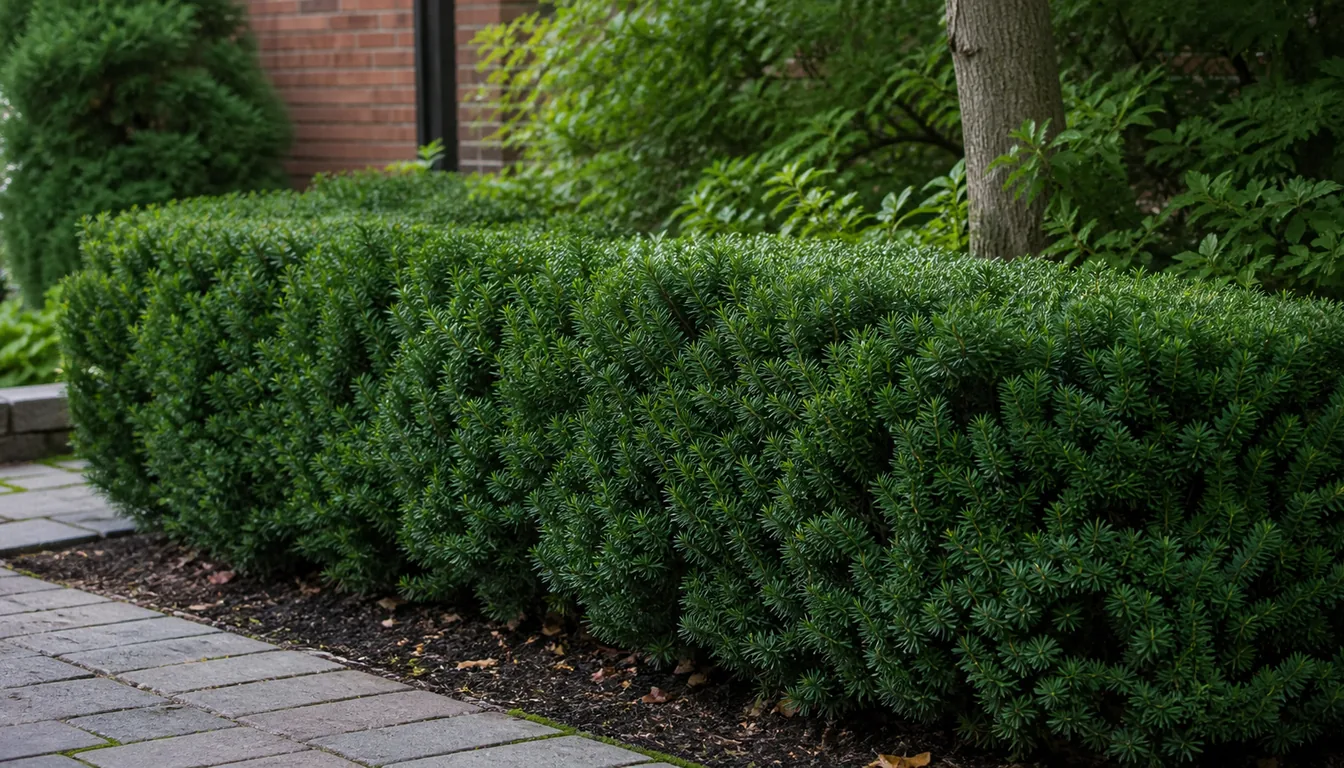
Yew
Shearable hedge or foundation shrub that tolerates shade
- Mature fit
- Cultivars range from low spreaders to small trees
- Main tradeoff
- Leaves, bark, and seeds are poisonous, and it rots in poorly drained soil
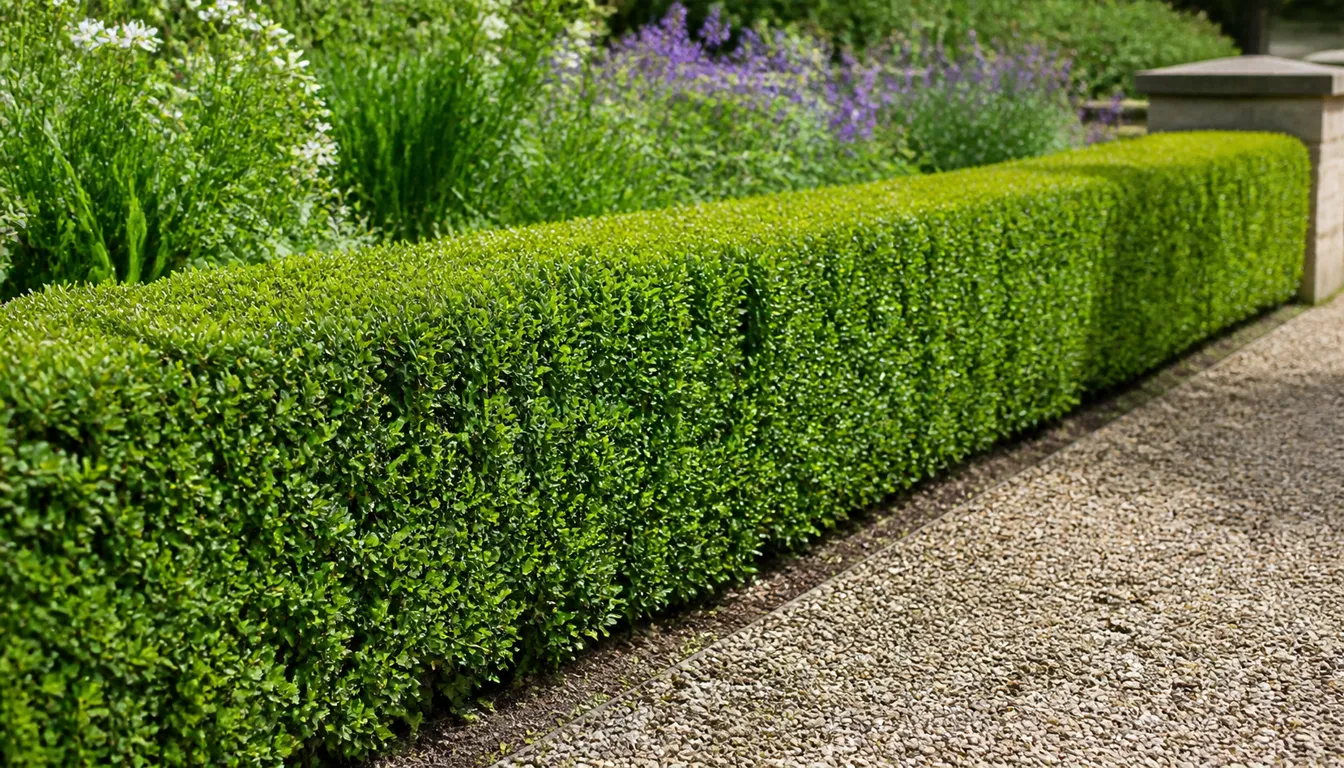
Boxwood
Low formal hedge or edging near a door or walk
- Mature fit
- Pick a compact cultivar for edging, since some grow well over head height
- Main tradeoff
- Boxwood blight and leafminer, plus winter burn in open sun
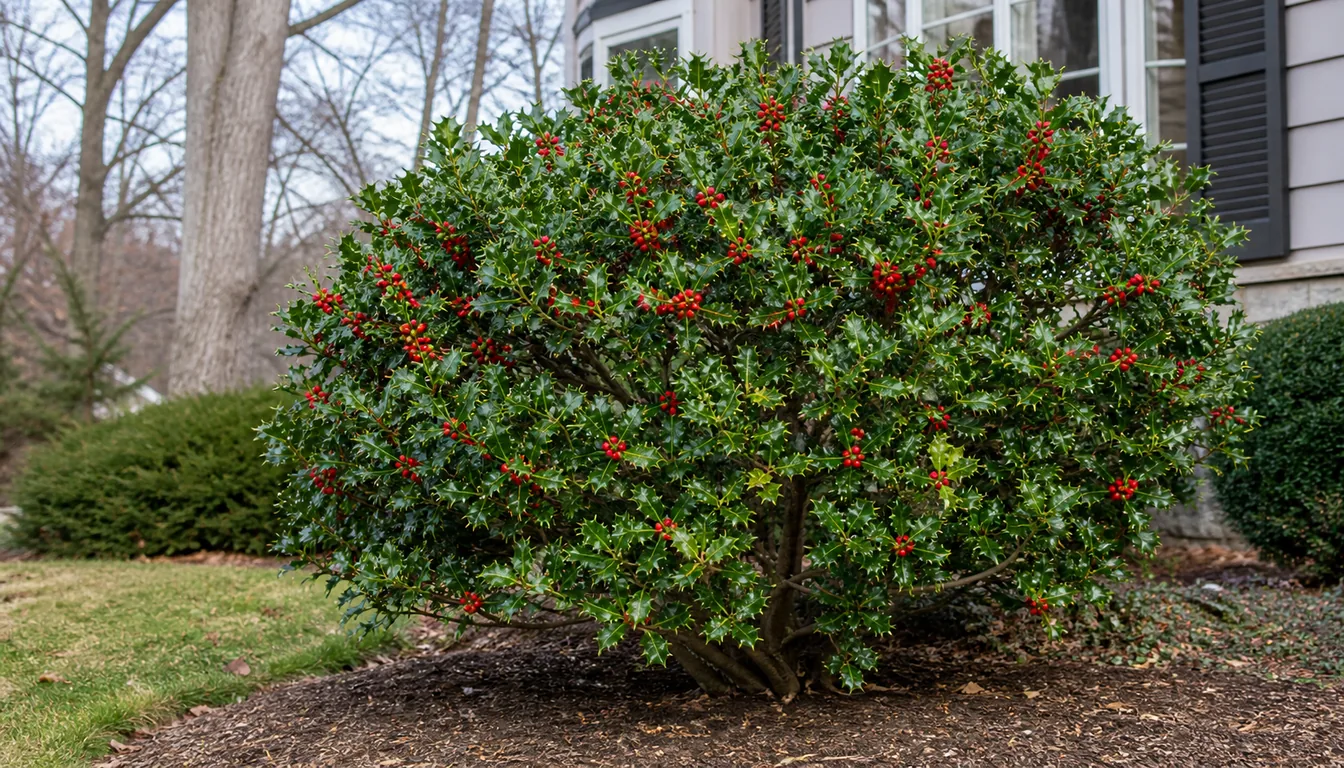
Holly
Dense broadleaf screen or hedge with a choice of leaf sizes
- Mature fit
- Species and cultivars run from small shrubs to trees
- Main tradeoff
- Japanese holly yellows in alkaline soil, and inkberry needs acidic soil
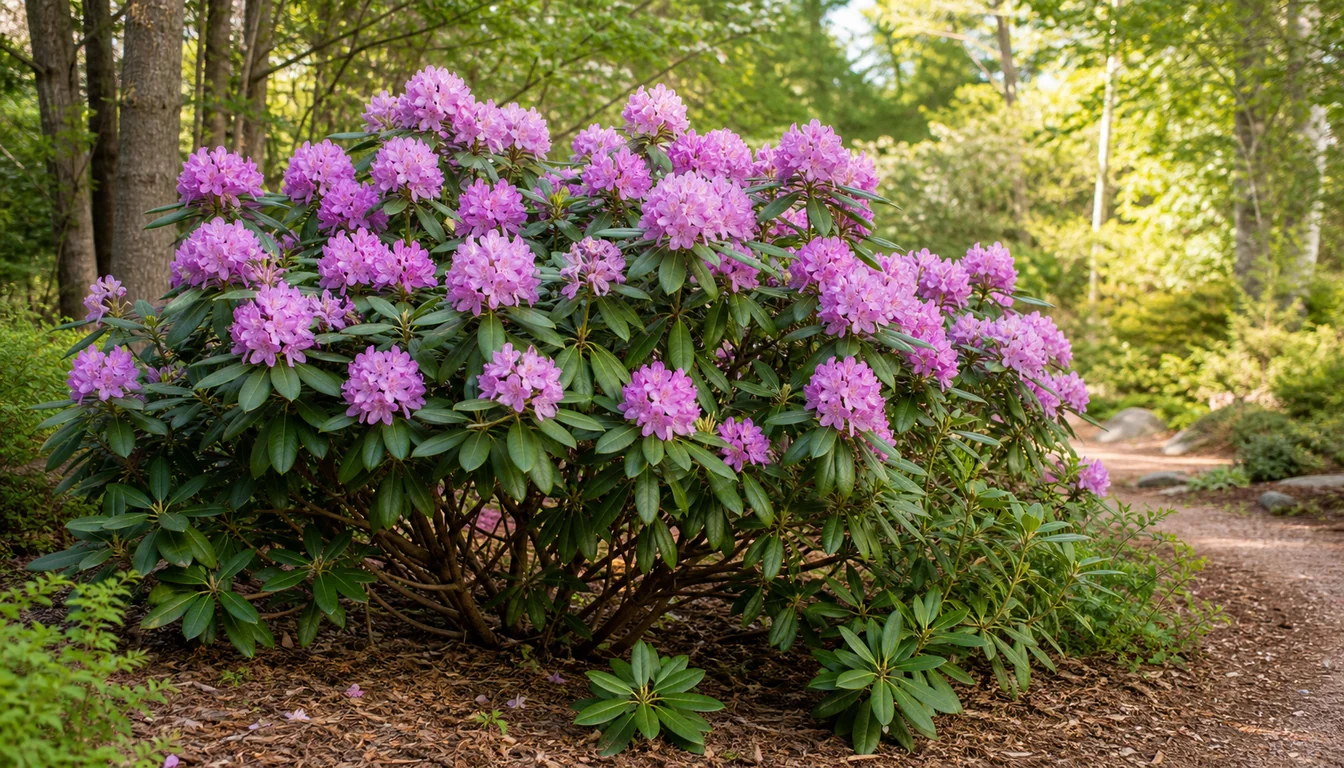
Rhododendron
Flowering evergreen for a partly shaded bed
- Mature fit
- Large types spread as wide as they grow tall
- Main tradeoff
- Needs acidic soil and draws deer and a long list of pests
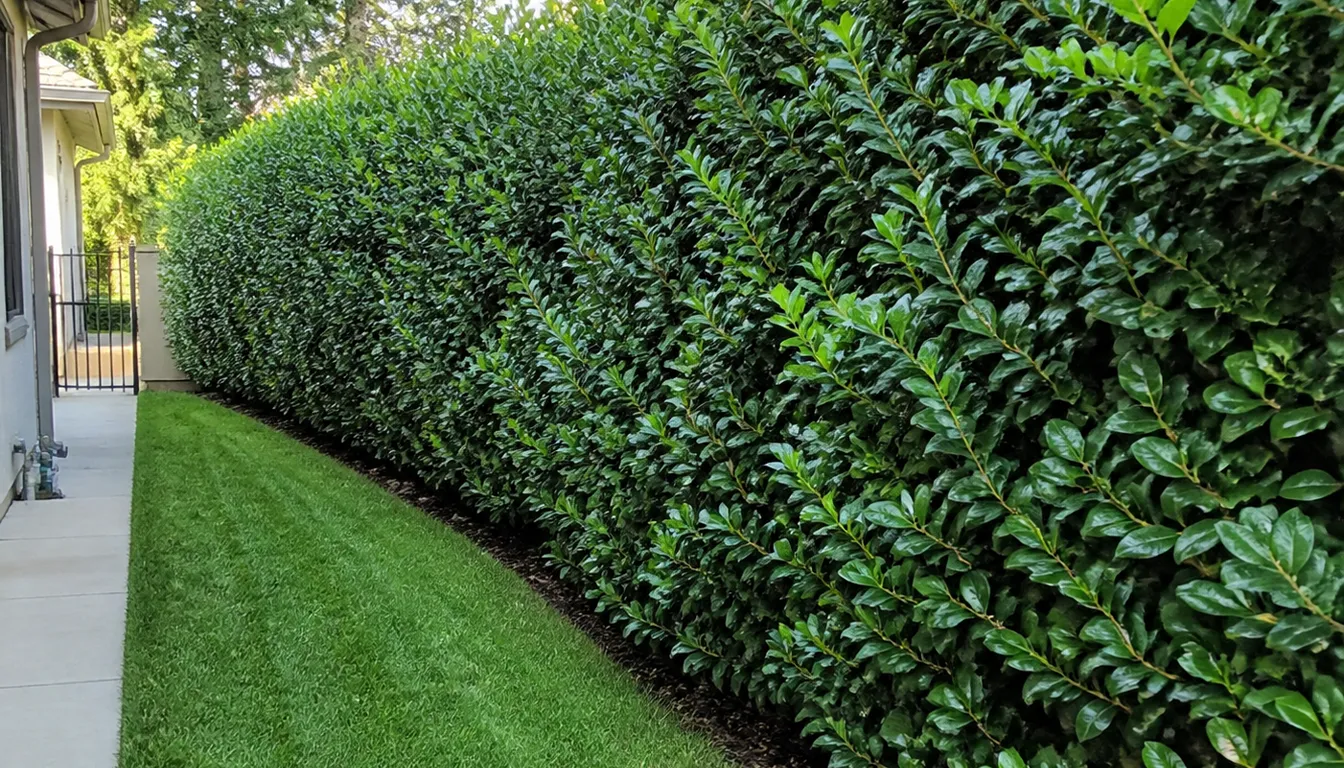
Skip Laurel
Broadleaf screen or hedge that tolerates shade
- Mature fit
- A compact cherry laurel cultivar for screens and hedges
- Main tradeoff
- Leaves, stems, and seeds are poisonous
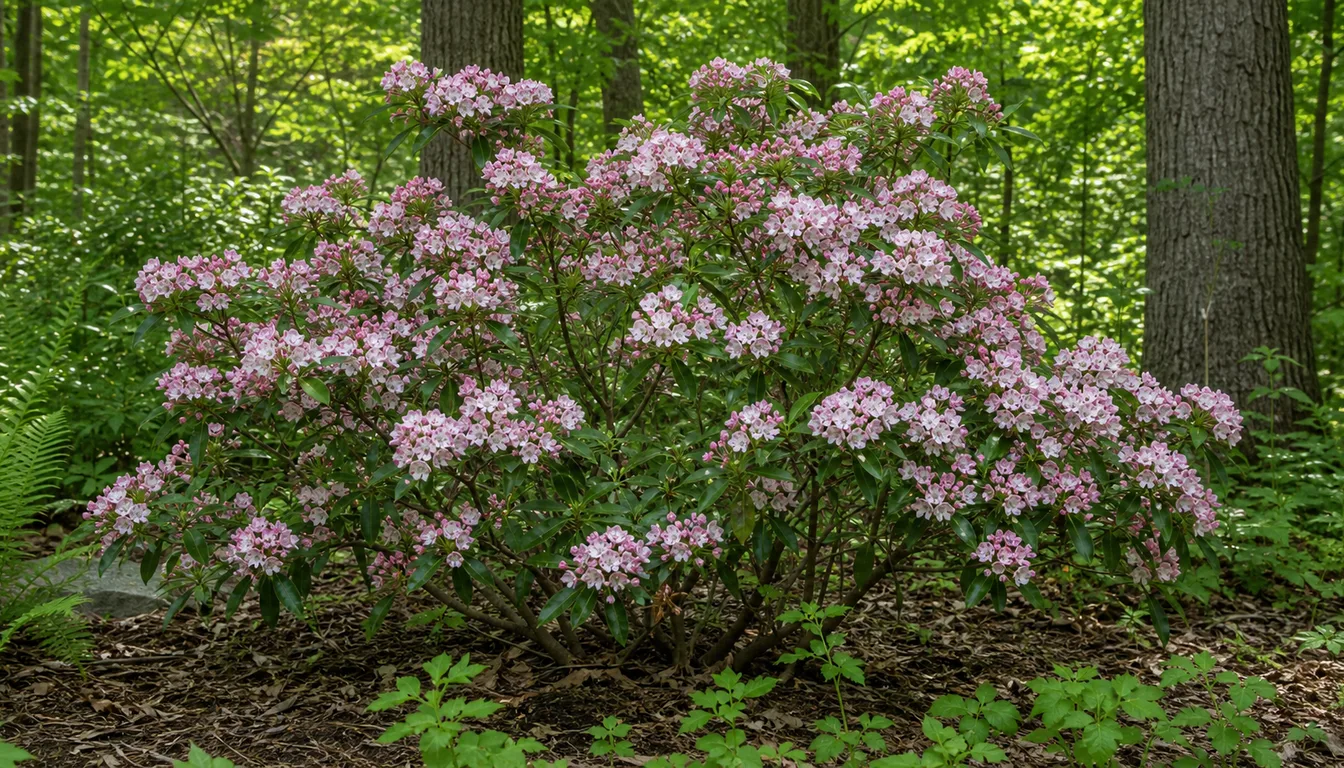
Mountain Laurel
Native flowering evergreen for woodland edges
- Mature fit
- Shrub or small tree, typically 4 to 15 feet tall
- Main tradeoff
- All parts are poisonous, and leaf spots and lace bugs can be problems
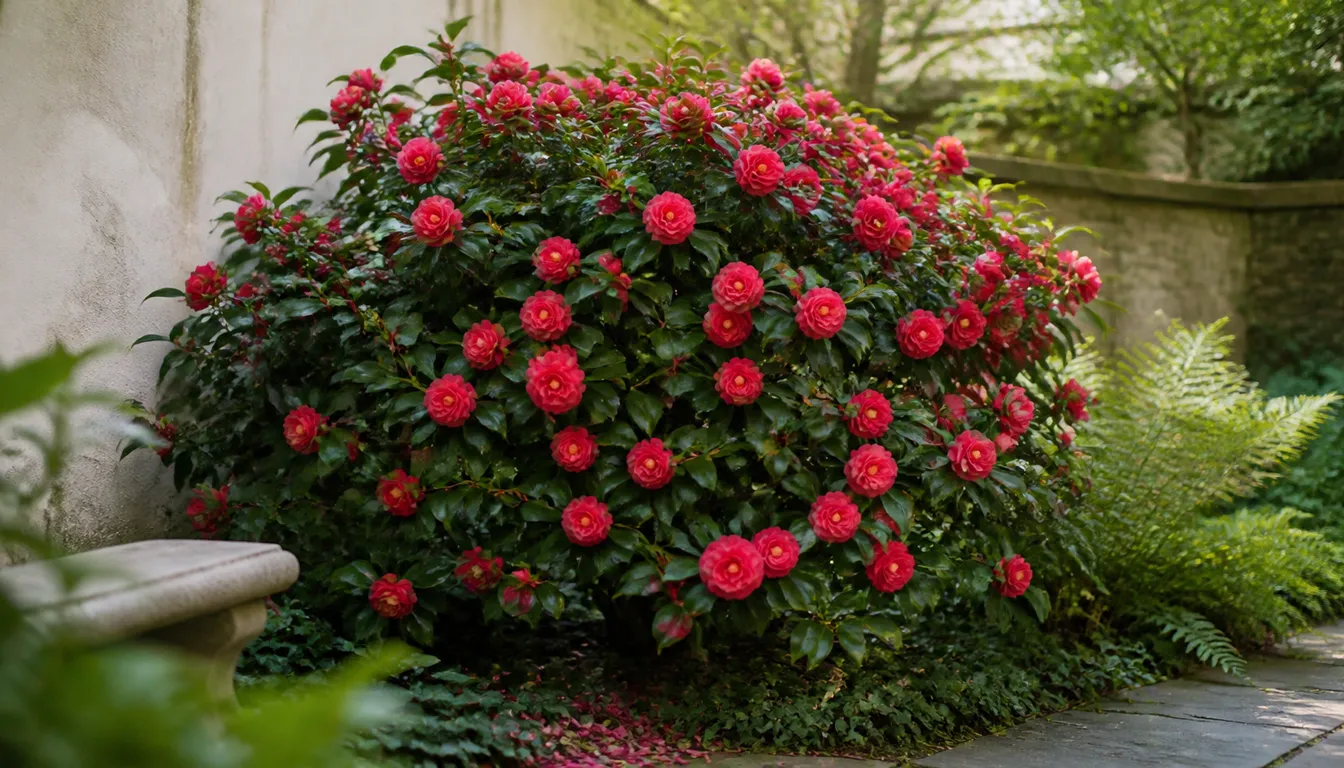
Camellia
Flowering evergreen for partly shaded beds in mild climates
- Mature fit
- Shrub or small tree, about 10 to 13 feet tall
- Main tradeoff
- Hardy only to about Zone 7, with scale and petal blight
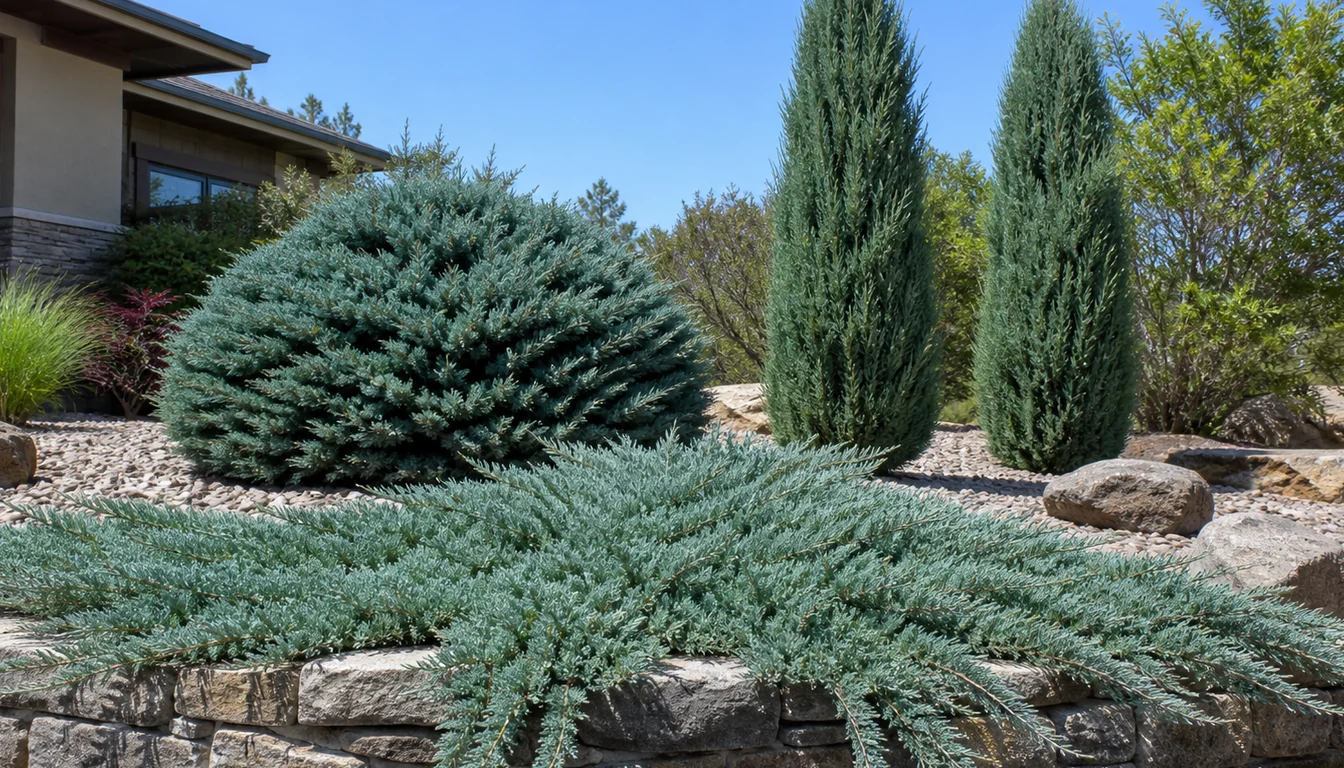
Juniper
Sun-loving evergreen for slopes, edges, and dry spots
- Mature fit
- Ranges from groundcover to upright tree by cultivar
- Main tradeoff
- Prefers full sun and will not regrow from bare brown wood
Matching Foliage to Winter Sun and Wind
Winter burn is a common reason an evergreen in the right zone still looks bad in spring. University of Wisconsin's Plant Disease Diagnostics Clinic explains the cause. On sunny winter days foliage loses water, and because the ground is frozen the roots cannot replace it, so leaves and needles dry out and brown. Wind makes it worse, and foliage facing south, southwest, or west is hit most often.
Broadleaf and needled evergreens both suffer, but the risk is highest for plants that are only marginally hardy where they are planted and for recent transplants with small root systems. Wisconsin's guidance is to plant boxwoods, hemlocks, rhododendrons, and yews in partial shade, on the east or northeast side of a building, or in a sheltered courtyard, rather than on an open, windy, sunny site. University of Maryland Extension makes the same point for boxwood, noting that plants with a south or southwest exposure suffer winter burn more than those facing east or north.
Road and driveway salt adds to the problem, because Wisconsin notes that salt exposure makes evergreens more prone to winter burn. A spot within splash range of a treated drive is a poor place for a boxwood hedge, while inkberry is one of the few in the table that NC State lists as salt tolerant.
Spacing a Hedge or Screen for the Long Run
Spacing comes from mature width. A shrub expected to reach 6 feet across, planted 6 feet from its neighbor, will just touch it at maturity, and planting closer fills the gaps sooner at the cost of crowding later.
Washington State University Extension advises at least 2 feet between hedge plants to avoid root crowding, and preferably 3 feet or more, with tighter spacing reserved for slender plants that take years to fill in. For large screening evergreens, NC State's Polk County Center suggests 10 to 12 feet apart and warns that even that may become too tight as they mature. It offers a way around the long wait, which is to plant closer on purpose and then remove every other plant after about five years.
Using more than one species is the other spacing decision. A screen of a single species runs a high risk that one pest or stress problem opens a gap, according to WSU, and NC State adds that a missing plant in a uniform row is hard to replace at a matching size. A mixed planting is easier to repair. The privacy shrub spacing guide works through hedge and screen spacings plant by plant.
Planting So Roots Grow Out of the Hole
Illinois Extension's planting guide names the most common mistake as a hole that is too deep. Nursery stock often has its root flare, where the trunk widens into roots, buried inside the pot or root ball, so the depth of the container is misleading.
- Find the flareGently dig into the top of the root ball until the first roots leaving the trunk are visible.
- Dig wide, not deepMake the hole wide with well-loosened soil and only deep enough that the flare ends up even with the surrounding grade.
- Roughen the sidesScratch up the walls of the hole so roots can grow into the native soil.
- Backfill and waterFill with the soil that came out and water deeply to settle it.
- Mulch in a ringSpread 2 to 4 inches of bark or wood chips as wide as the hole, kept away from the root flare.
Timing depends on climate. Wisconsin's guidance for cold regions is early spring before buds break or late summer, August through September, and it warns against planting after early to mid October because roots need time to grow before the ground freezes. In warmer regions, NC State Extension notes that container plants do best and need the least watering when planted in late fall or early spring.
Illinois Extension adds that potted or balled and burlapped shrubs can stay in transplant shock for up to three years while roots spread beyond the planting hole, which is why a new hedge often looks unchanged for its first season or two.
Watering Through Two Summers and Into Fall
New evergreens need water into fall as well as through summer, because their foliage keeps losing moisture through the winter. Illinois Extension recommends planning to water a newly planted tree or shrub through its first two summers whenever rainfall is short, with one heavy soak a week that wets the soil 8 to 12 inches deep rather than frequent light sprinkles.
Wisconsin's clinic carries that into fall. It gives established evergreens about 1 inch of water a week and newly transplanted ones up to 2 inches a week during the growing season, continuing until the soil freezes or a significant snow arrives. A well-watered evergreen goes into winter with more moisture in its foliage and is less prone to winter burn. A soaker or drip hose near the drip line puts that water where roots can use it.
Fertilizer needs less attention. NC State advises waiting until spring to fertilize shrubs planted in fall, and Wisconsin warns that quick-release, high-nitrogen fertilizer in late summer or fall can push new growth that is not ready for winter. The shrub fertilizer timing explains why many established shrubs need none at all.
Pruning Without Cutting Into Bare Wood
The rule that protects most evergreens is about old wood. Penn State Extension explains that, with the exception of yews, cutting a needled evergreen back to bare brown wood does not produce new growth on that branch. Only yews have dormant buds on old wood and can be renewed with hard cuts. Lower branches lost to shade also do not regrow.
That is why hedge shape matters from the start. Penn State and University of Maryland Extension both recommend a hedge that is wider at the bottom than at the top so light reaches the lower branches. Maryland gives an example of a 5 foot hedge about 3 1/2 to 4 feet wide at the base and about a foot wide at the top. Of the needled evergreens, Penn State names arborvitae, hemlock, and yew as able to take shearing.
| Shrub type | When to prune | How |
|---|---|---|
| Yew, juniper, and other narrow-leaved evergreens | Early spring before new growth, with optional light trimming in midsummer | Avoid fall pruning, which leaves shrubs more prone to winter injury |
| Boxwood | Remove winter damage in early to mid spring, shape in spring and early summer | Thin out branches rather than shearing repeatedly, and skip late-summer cuts |
| Rhododendron | Right after flowering | Use hand pruners, since shears damage large leaves and leave them brown |
| Any evergreen | Late summer and fall | Avoid, because new growth may not harden before winter |
Those timings come from Iowa State University Extension, Penn State, and Maryland. Maryland adds that constant shearing makes boxwood so dense that air stops moving through it, which encourages leaf spot and Volutella disease, so thinning cuts that open the center keep it healthier. The shrub pruning timing guide covers deciduous shrubs and flowering timing in more detail.
Reading Winter Burn, Salt, and Deer Damage
Winter burn shows up as snow melts. Wisconsin describes browning that starts at branch tips and moves inward, with leaf edges browning first on broadleaf evergreens, mostly on the sides facing sun and wind. Foliage that was under snow or facing away from the sun is usually undamaged, and that one-sided pattern is the main clue that winter exposure is the cause.
Recovery depends on the plant. For arborvitae, boxwood, juniper, and yew, Wisconsin advises waiting until mid spring, after new foliage appears, and then pruning out tissue that is still brown. Scratching the bark of a doubtful branch shows green tissue if it is alive. Pines, spruces, and firs usually replace damaged needles from the tips without pruning. An evergreen that is brown all over is unlikely to recover, and Wisconsin suggests replacing it with something better suited to the site. The arborvitae winter burn page walks through that diagnosis for one of the most affected shrubs.
For prevention on exposed sites, Wisconsin recommends a screen of burlap, canvas, or snow fencing on stakes about 2 feet out from the drip line on the south and west sides, with the top left open. Wrapping plants tightly in burlap traps moisture and can encourage disease, and the clinic found anti-transpirant sprays of limited benefit.
Deer are a separate winter problem. NC State notes that deer damage to American arborvitae can be serious and that Catawba rhododendron is frequently damaged. Where browsing is heavy every winter, the deer-resistant planting options are worth comparing before replacing a damaged hedge. In a boxwood planting, University of Maryland Extension notes that boxwood blight starts on the lower branches and moves upward, the opposite of winter burn, which starts at the exposed tips.
Pro Tips
- Read the cultivar's mature width on the tag before choosing a spot, since the species name alone can describe a tree.
- Keep boxwood, yew, and rhododendron off open south and west walls where winter sun and wind brown their foliage.
- Keep watering new evergreens until the soil freezes, since they go into winter needing moisture in their foliage.
Frequently Asked Questions
How far apart should evergreen shrubs be planted?
Work from the cultivar's mature width. Hedge plants need at least 2 feet between them, and preferably 3 or more, to avoid root crowding. Large screening evergreens may need 10 to 12 feet, or can be planted closer with every other plant removed after about five years.
When is the best time to plant evergreen shrubs?
In cold regions, early spring before buds open or late summer through September, so roots grow before the ground freezes. In warmer regions, late fall or early spring needs the least watering.
Why do my evergreens turn brown in winter?
Usually winter burn. Sun and wind pull water from the foliage while frozen soil keeps roots from replacing it, so tips brown first on the south and west sides. Recent transplants and marginally hardy plants suffer most.
Can I cut an overgrown evergreen back hard?
Only a yew. Penn State Extension notes that yews are the needled evergreens with dormant buds on old wood. Most others, including arborvitae and juniper, will not regrow from bare brown wood.
Which evergreen shrubs grow in shade?
Hybrid yew tolerates heavy shade, cherry laurel grows in sun to deep shade, and rhododendron, mountain laurel, and camellia do well in part shade. Yew and cherry laurel are both poisonous, which matters where pets or children play.
Sources & References
- Extension Gardener Handbook, Chapter 11: Woody Ornamentals, NC State Extension
- Thuja occidentalis, North Carolina Extension Gardener Plant Toolbox
- Taxus x media, North Carolina Extension Gardener Plant Toolbox
- Buxus sempervirens, North Carolina Extension Gardener Plant Toolbox
- Ilex crenata, North Carolina Extension Gardener Plant Toolbox
- Ilex glabra, North Carolina Extension Gardener Plant Toolbox
- Rhododendron catawbiense, North Carolina Extension Gardener Plant Toolbox
- Kalmia latifolia, North Carolina Extension Gardener Plant Toolbox
- Prunus laurocerasus, North Carolina Extension Gardener Plant Toolbox
- Camellia japonica, North Carolina Extension Gardener Plant Toolbox
- Juniperus chinensis, North Carolina Extension Gardener Plant Toolbox
- Winter Burn, Wisconsin Horticulture, University of Wisconsin-Madison Extension
- Tree and Shrub Planting Guide, Illinois Extension
- Pruning Needled Evergreens, Penn State Extension
- Pruning Shrubs and Hedges in the Home Garden, University of Maryland Extension
- Boxwood: Identify and Manage Common Problems, University of Maryland Extension
- When should I prune evergreen shrubs?, Iowa State University Extension and Outreach
- Privacy Matters: Screening Plants to Consider, N.C. Cooperative Extension, Polk County Center
- Privacy Screens, Washington State University Extension, Skagit County Master Gardeners
- Yew, ASPCA Toxic and Non-Toxic Plants
- Boxwood, ASPCA Toxic and Non-Toxic Plants
Related Guides
Best Butterfly Garden Plants for a Complete Habitat
The best butterfly garden plants do two different jobs. Host plants feed caterpillars, while nectar…
15 min read
Best Fall-Blooming Flowers for Color Near Frost
A bed that still carries flowers in October usually was planned before temperatures fell.
9 min read
Best Fast-Growing Trees for Shade and Privacy
The best fast-growing tree is the one whose mature crown, roots, climate range, and maintenance…
16 min read
Best Fragrant Flowers for Every Yard and Season
The best fragrant flowers depend on climate, light, space, and the hours you use the yard.
15 min read
Best Full-Sun Perennials for Hot, Bright Beds
The best full-sun perennials are the ones that match the bed's soil moisture and drainage, local…
14 min read
Best Ground Cover Plants for Sun, Shade, and Slopes
The best ground cover is a plant that survives the site and performs the job without escaping into…
18 min read