
What's a Juniper? How to Match the Form to the Job
Juniperus spp. Cupressaceae
Juniper covers dozens of evergreen conifers that range from a 4 inch mat to a 60 ft tree, so the form on the label decides what the plant can do far more than the species name does. Every one of them wants full sun and sharp drainage, and every one of them refuses to regrow from wood you cut back past the green.
Care snapshot
What Is a Juniper, and Which Form Are You Buying?
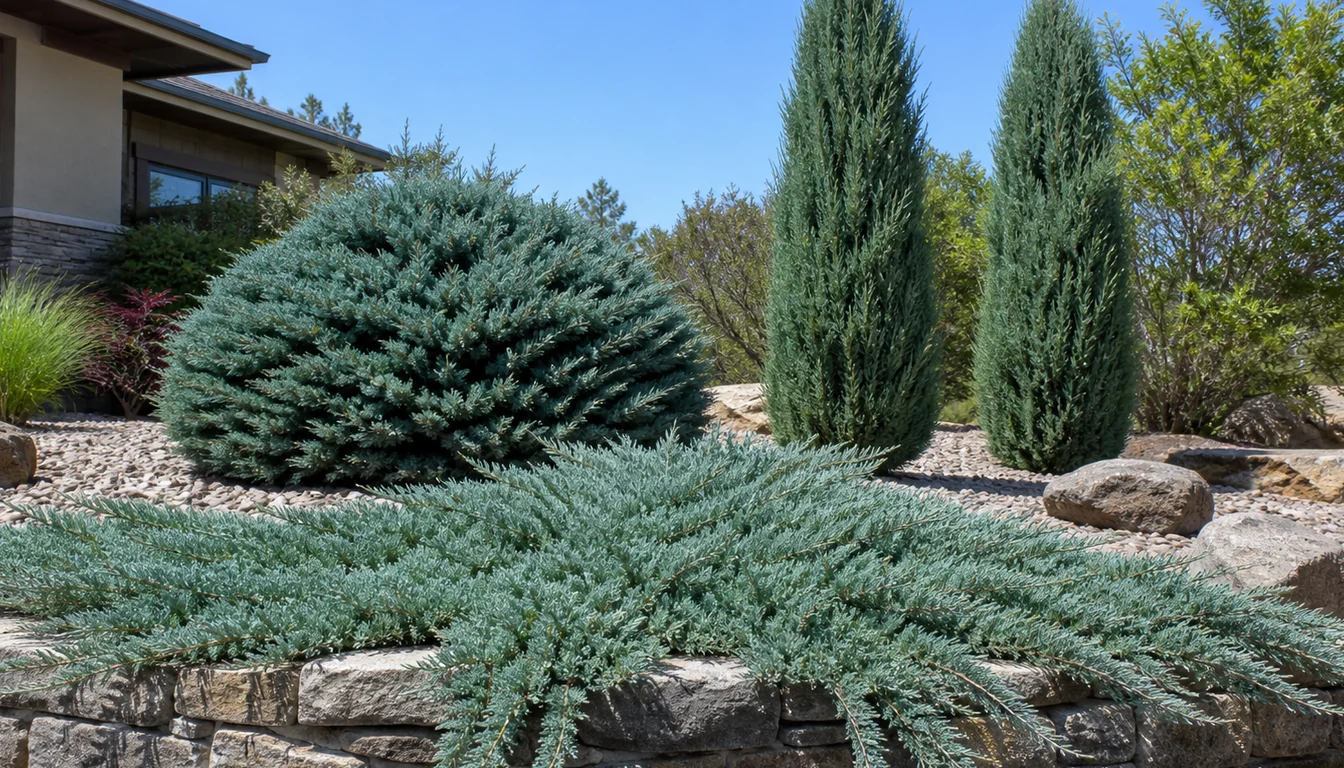
Juniper is not one plant. Juniperus is a genus of evergreen conifers in the cypress family, Cupressaceae, and the name covers everything from a 4 inch mat to a 60 ft tree.
That range is why so much juniper advice contradicts itself, and why the form on the label matters more than the species name.
Nurseries sell them in three habits that behave like three different plants. A creeping form bred to spill down a bank will never build a screen, and an upright form will never knit a slope.
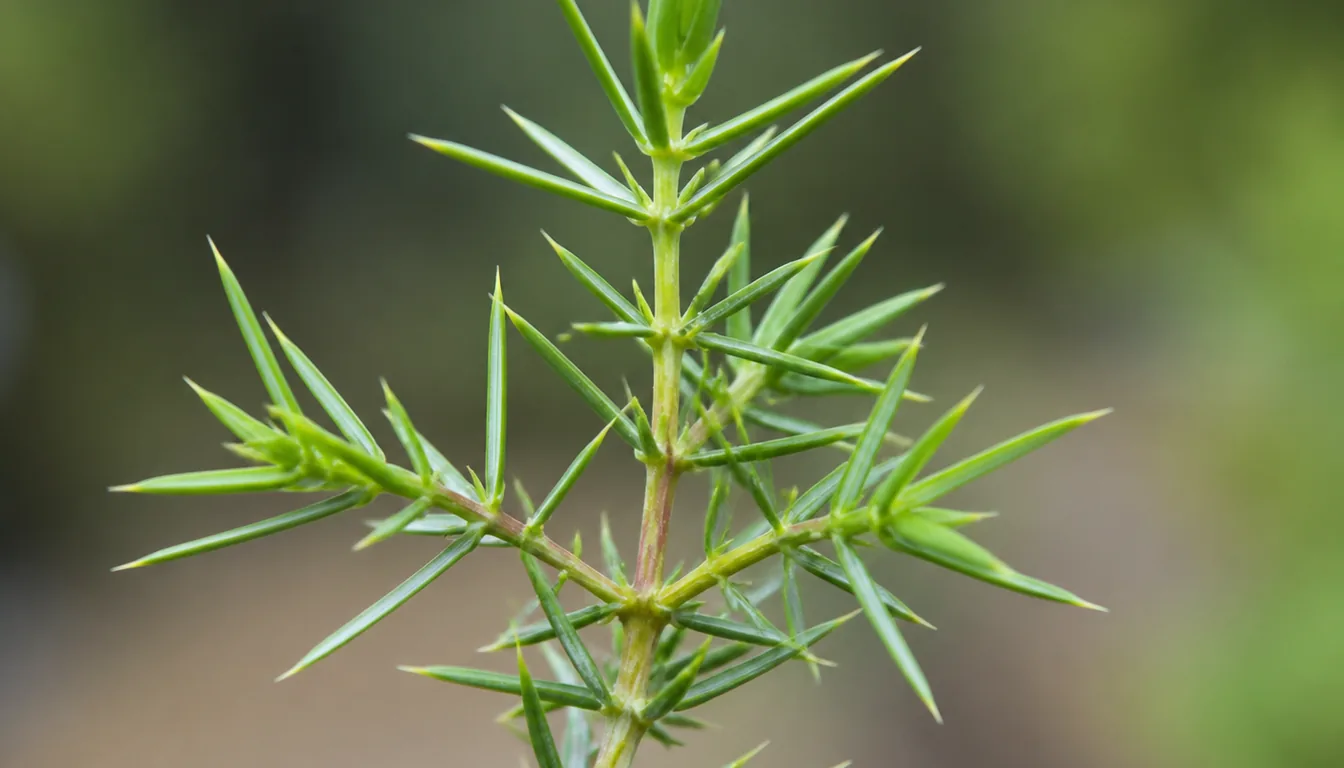
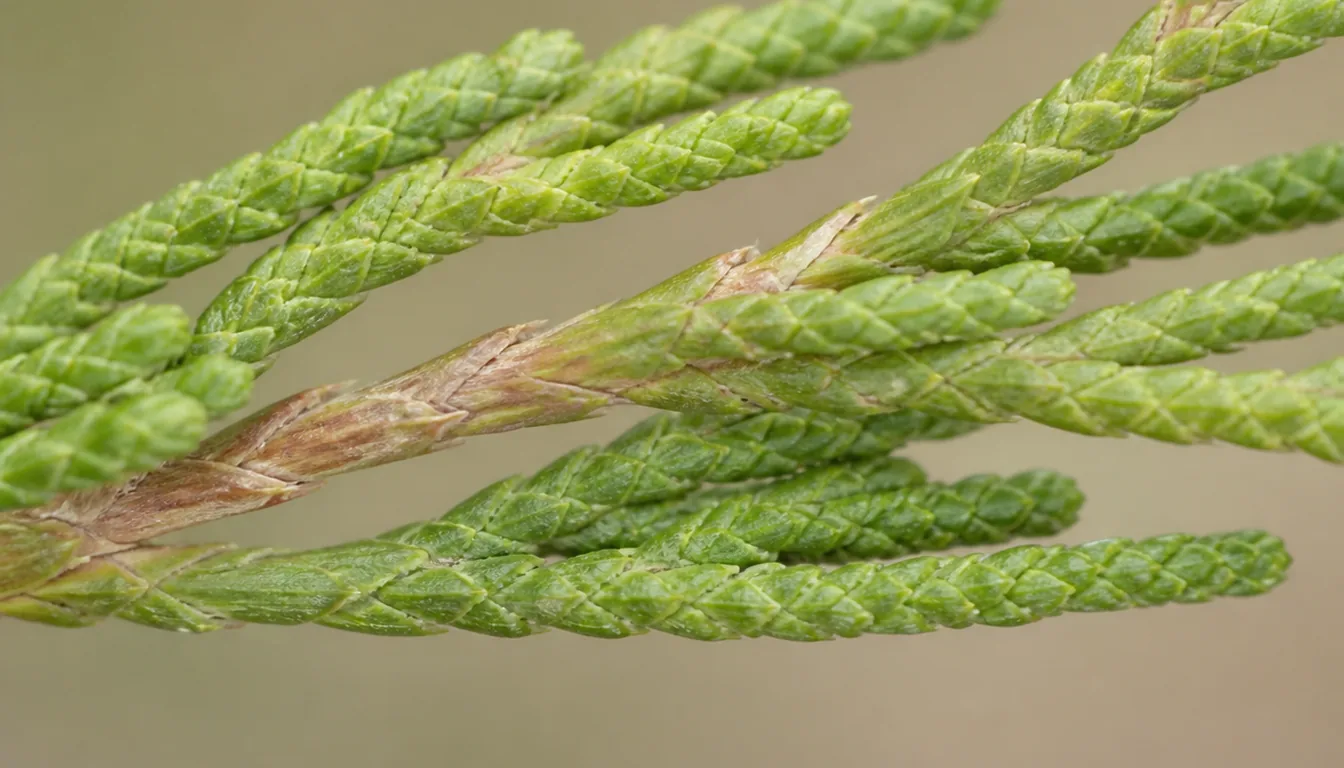
The foliage tells you the plant is a juniper even when the shape does not. Young growth is sharp and needle-like, mature growth turns to fine scale-like sprays pressed flat against the twig, and many plants carry both at once.
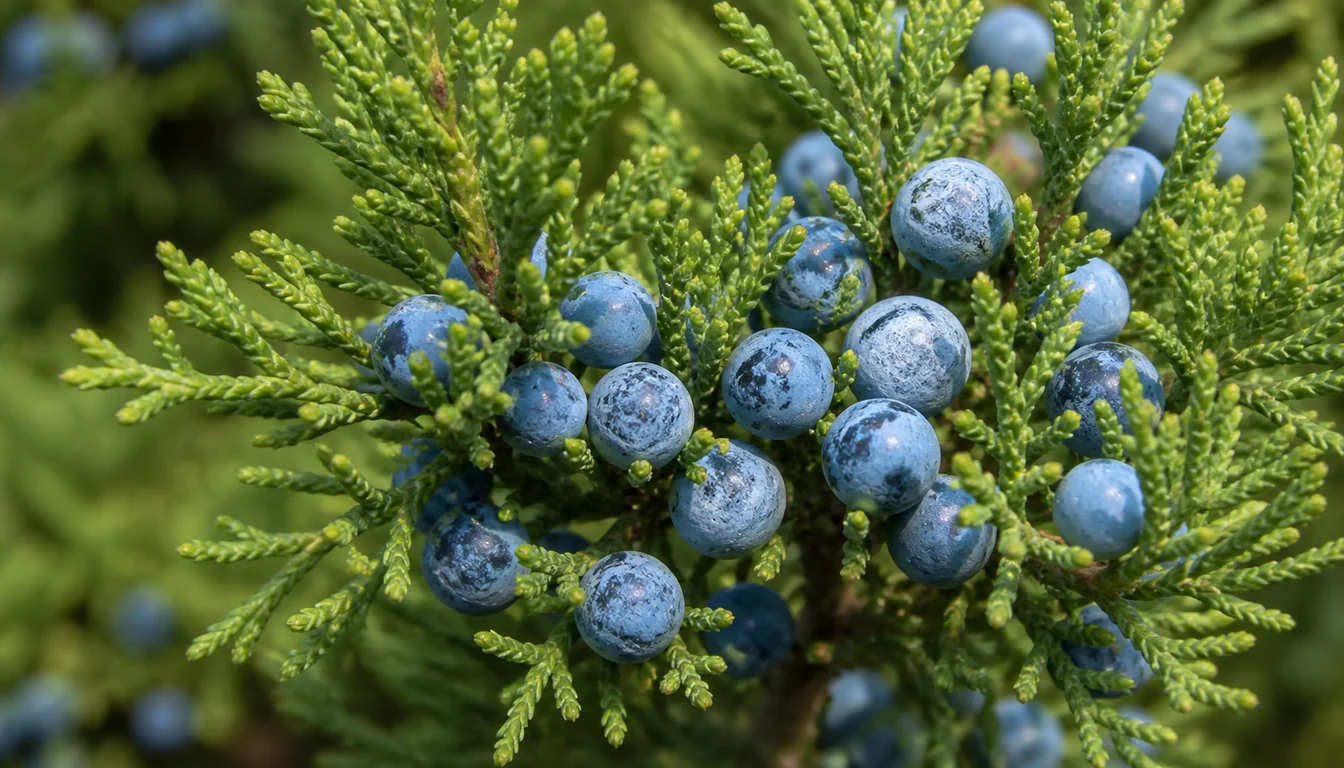
What look like berries are cones. Juniper cones never open into a woody structure, so they stay round, fleshy, and dusted powder-blue. On eastern red cedar they ripen in the fall on female trees.
The other constant is the site. Nearly every form, from the mat to the tree, wants full sun and sharp drainage, and they fail the same way in wet shade.
- Creeping and groundcover forms
- 4 in to 2 ft tall, spreading 4 to 10 ft. For hot banks, bed edges, and erosion control where mowing is impractical.
- Mounded shrub forms
- 2 to 5 ft tall and about as wide. For foundation beds, dry borders, and low structure beside an entry.
- Upright and columnar forms
- Narrow columns such as 'Spartan', which Clemson Extension lists at 15 to 20 ft tall and about 5 ft wide. For narrow screening, vertical accents, and corners that need winter height.
- Tree forms
- 20 to 60 ft. Eastern red cedar and its relatives, for windbreaks and large rural properties.
- Foliage and cones
- Needle-like juvenile growth, scale-like adult sprays, and round powder-blue cones on female plants.
Where Does Juniper Actually Thrive?
Sun, air movement, and soil that dries at the surface between soakings. Rocky banks, hot foundations, gravel beds, and windy open edges suit Juniper better than any bed you have improved.
Six hours of direct sun is the floor. Below that the plant thins from the inside, holds moisture in the crown, and starts browning in ways no spray will fix.
The second failure is slow soil. Juniper roots need oxygen, and ground that stays saturated for a day after rain kills them by suffocation rather than by disease.
Test the drainage before you buy rather than after. Dig a hole about 12 inches deep, fill it with water, and let it drain.
Water gone within a few hours means the site works. Water still standing the next morning means the site is wrong, and no amendment reliably changes that.
Skip the fertilizer too. This is a low-fertility plant, and nitrogen pushes soft floppy growth that is more prone to disease and less able to hold a bank.
Salt and reflected heat are two things many junipers take well. NC State rates eastern red cedar as highly salt tolerant, and Clemson Extension notes that shore juniper tolerates salt spray, which is why junipers survive along driveways and road edges where arborvitae browns out.
- Six hours of direct sun or more, with the crown out of any low pocket where water settles after a storm.
- A drainage hole that empties within a few hours, not one that still holds water the next morning.
- Coarse mulch kept in a ring and pulled back off the stems, rather than damp compost packed against them.
- Enough room for the mature spread on the tag, because a juniper cut back to fit never fills in again.
How Much Water Does an Established Juniper Need?
Almost none, and that is the part people get wrong in the direction of kindness. An established Juniper in the ground is drought tolerant in the real sense, and steady watering is what kills it.
A new plant is a different question, because a root ball that has not yet grown into the surrounding soil still dries out on its own schedule.
Soak it deeply whenever the top 2 to 3 inches go dry through the first growing season, then deliberately stretch the gap in years two and three so roots chase moisture downward.
After that, water only in a genuine drought or where reflected heat off paving is cooking the root zone.
Overwatering does not look like overwatering. It shows up as dull gray-green foliage, thinning from the base, and branch dieback that people treat as a disease and spray for.
Containers are the exception worth remembering, since a pot dries and heats far faster than open ground and a potted juniper needs checking through summer even when the same plant in a bed does not.
- First growing season
- Soak deeply whenever the top 2 to 3 inches dry out. Aim for the root ball, not the surface.
- Years two and three
- Stretch the interval on purpose so roots follow moisture down instead of staying shallow.
- Established in the ground
- Only in prolonged drought, or where paving reflects heat into the root zone.
- In a container
- Check through summer regardless of age. Pots dry and overheat faster than beds.
Why Is My Juniper Turning Brown?
Brown foliage on a juniper is a symptom with six common causes, and the pattern of the browning tells you which one you have.
Start by asking where the brown is rather than how much there is.
Interior browning on an older plant is usually nothing. Shaded inner foliage ages out and drops every year, and a dense plant that has never been thinned does it more visibly.
Brown that starts at the outer tips after winter is usually winter burn from drying wind, road salt, or frozen ground the roots could not draw from.
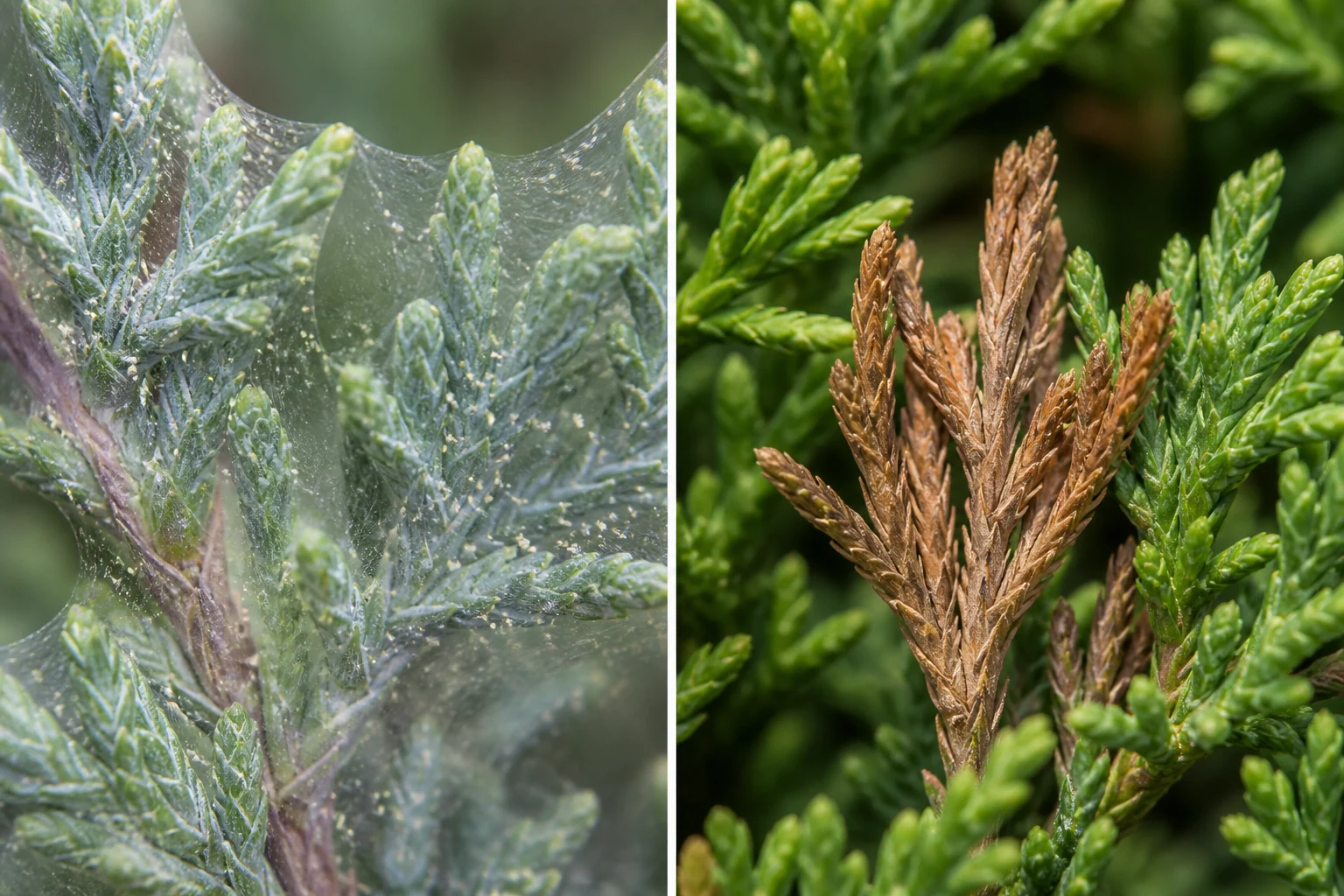
Gray, dusty, stippled foliage with fine webbing in the crotches means spider mites, and it arrives in hot dry weather inside crowded branches.
Whole branch tips dying back cleanly, with no webbing and no insects, points to tip blight, which follows a crowded plant and a wet spring.
Those last two get confused constantly, and one home test separates them. Hold white paper under a suspect branch and shake it, because mites drop as moving specks while blight leaves nothing at all.
The two remaining causes are the site rather than a pest. Roots sitting in wet soil brown a plant from the base upward, and dog urine burns a spreading juniper in patches at the height a dog can reach.
- Interior only, older plant: normal shedding of shaded inner foliage. Thin lightly if you want it to look cleaner, and otherwise leave it.
- Outer tips, after winter: winter burn from wind, salt spray, or frozen roots. Rinse salt off in spring and expect regrowth from green wood.
- Gray dusty foliage with fine webbing: spider mites in hot dry weather. Confirm by shaking a branch over white paper and hose the plant down hard.
- Whole tips dead, no webbing: tip blight after a wet spring. Prune out affected tips in dry weather and open the plant up so it dries faster.
- Browning from the base upward: roots in wet soil. This is a site problem and no spray reaches it.
- Patches at dog height on a spreader: urine burn. Rinse the area and reroute the traffic.
Why Won't a Cut-Back Juniper Grow Back?
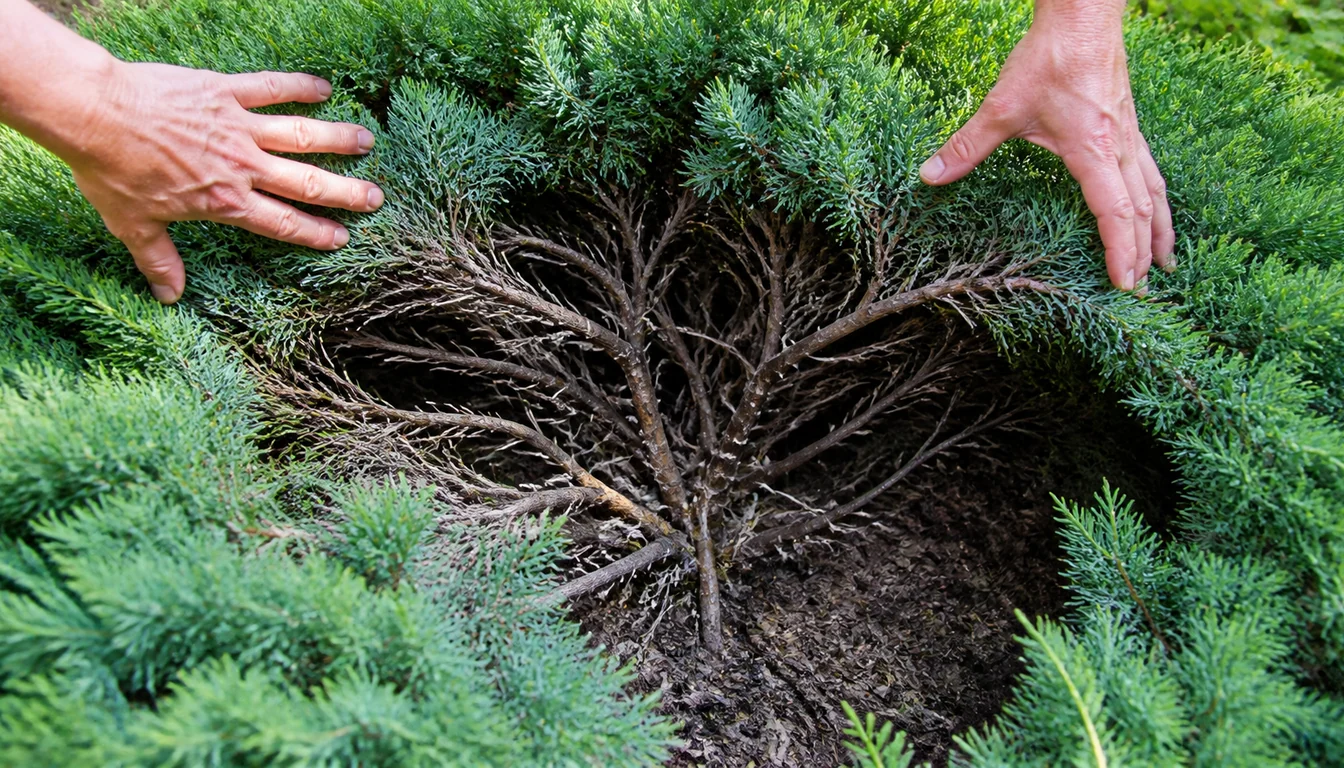
Because juniper carries almost no dormant buds on old wood. Cut into the bare brown center and that gap stays bare, often for the life of the plant.
This is the single most expensive thing to learn late about the genus, and it is the reason so many foundation junipers end up as a green shell around a hollow of dead sticks.
The working rule is that you cut where you can still see green foliage on the shoot you are shortening. Anything beyond that line is a permanent hole.
That also means a juniper cannot be renovated. A shrub that has outgrown its bed cannot be cut back into scale and regrown, and replacing it with a genuinely smaller cultivar is cheaper than years of trying.
Light thinning is what the plant does accept. Reach inside, take whole small branches back to a junction, and let light into the crown rather than shearing the outside.
Shearing is the habit to break, since a clipped shell blocks light from the interior and accelerates exactly the inner die-off that makes the plant look bad.
Late spring into early summer, once the first flush has hardened, is the window that heals best and leaves the least dieback.
Should You Plant Juniper Near Apple or Pear Trees?
Usually not, and this is the one juniper decision that affects a plant other than the juniper.
Cedar-apple rust and its relatives need two hosts to complete a life cycle. The fungus spends part of the year on a juniper and part on a plant in the rose family, and neither half works alone.
On the juniper the damage is usually minor. Illinois Extension describes the galls as greenish-brown to tan and round to kidney shaped, reaching 3/8 to about 1 3/16 inches across by fall. In wet spring weather they push out bright orange gelatinous horns.
As the spring rains end the galls die, which can kill the twig from the gall out to the tip. Beyond that the juniper is rarely harmed, which is exactly why the problem gets ignored.
The apple or pear pays instead, with orange leaf spots, early defoliation, and blemished fruit in a bad year.
Spores can be carried several miles on wind, although Illinois Extension notes that most infections occur within several hundred feet of the source juniper. A neighbor's juniper can therefore matter as much as your own, and removing yours may not end the problem.
The practical answer depends on which plant you care about. If the orchard is the point, choose a different evergreen, and if the juniper is the point, choose rust-resistant apple cultivars and accept some spotting.
- Look for hard brown galls on juniper twigs in late winter, before they swell and release in spring.
- Remove visible galls before the orange horns form, which reduces local spore load without solving the wider problem.
- Check what grows within several hundred feet before assuming your own plant is the source, since that is where most infections start.
- If you are planting both from scratch, pick rust-resistant apple cultivars rather than trying to separate the two by distance.
Are Juniper Berries Edible, and Are Junipers Safe Around Pets?
One species is the gin plant. NC State Extension notes that the cones of Juniperus communis are edible but pungent and are used to flavor gin, cooked meats, and cabbage, and it is the juniper commonly treated as culinary.
The landscape species are a different matter. NC State's record for eastern red cedar rates it as low toxicity if eaten, with large amounts possibly causing diarrhea, and lists volatile oils including thujone in the flowers, fruits, and leaves. The blue cones on an ornamental juniper are not a foraging opportunity.
For pets there is no settled answer either. Juniperus is absent from the ASPCA's dog, cat, and horse lists, and NC State's low rating for people eating eastern red cedar is not a pet rating, so the risk to a dog that eats fallen cones is unknown.
The prickle is the more common complaint. Juvenile needle foliage is genuinely sharp, and a spreading juniper beside a path catches bare legs every time somebody cuts the corner.
That argues for keeping the low forms as bank cover and bed edging rather than putting them where children play or where a path bends.
The upside is that juniper foliage holds up well to deer. NC State notes that eastern red cedar resists deer damage, which puts junipers on many deer resistant lists, and its cones and dense branches give wildlife food and cover, with cedar waxwings especially drawn to the cones.
Which Juniper Should You Buy for the Space?
Start from the mature spread on the tag and treat it as a promise rather than a suggestion. A groundcover rated to 8 ft will reach 8 ft whatever you do with the shears.
For a hot bank or a bed edge, 'Blue Rug' hugs the ground tightest at about 4 to 6 inches tall and 6 to 8 ft wide, with rich blue needles that turn slightly mauve in winter. 'Bar Harbor' is a faster-growing groundcover with blue-gray foliage that turns purplish in winter.
For a low mound beside an entry, 'Blue Star' stays compact at about 2 to 3 ft tall and wide with silvery-blue needles, though Clemson Extension notes that it tends to be short-lived in the Southeast.
For a narrow screen, 'Spartan' is a dense, fast-growing column that Clemson lists at 15 to 20 ft tall and about 5 ft wide.
Buy for the habit first and the color second, because a juniper in the wrong role stays a problem no matter how good the foliage looks.
Check the plant itself before it leaves the lot. Look inside the crown for dead centers, look at the base for a root ball that has circled in the pot, and pass on anything already sheared into a shell.
- 'Blue Rug', or Wiltonii
- 4 to 6 in tall, spreading 6 to 8 ft. The tightest groundcover, rich blue turning slightly mauve in winter, best over a wall or a hot bank.
- 'Bar Harbor'
- A fast-growing groundcover with blue-gray foliage that turns purplish in winter, slightly greener than Blue Rug.
- 'Blue Star'
- 2 to 3 ft tall and as wide. A dense silvery-blue mound for a foundation bed or an entry, but often short-lived in the hot, humid Southeast.
- 'Spartan'
- 15 to 20 ft tall and about 5 ft wide. A dense, symmetrical column for a narrow evergreen screen.
Frequently Asked Questions
How fast do junipers grow?
Growth speed varies by form. Groundcovers gain width faster than upright forms gain height, and a fast cultivar such as 'Bar Harbor' or 'Spartan' fills its space sooner than a slow mound.
Can a juniper grow in part shade?
It survives in light open shade and it does not thrive there. Density drops, interior browning speeds up, and the blue-foliage cultivars lose most of the color you paid for.
How long does a juniper live?
A juniper in a yard most often fails from wet soil, shade, or cuts into bare wood rather than from old age. Eastern red cedar in particular is a tough, long-lived tree when the site suits it.
Do junipers have invasive roots?
No. The root system is wide but fibrous and shallow, with no reputation for lifting paving or entering pipes, which is part of why the low forms work along driveway edges.
Can you grow juniper from a cutting?
Yes, from semi-hardwood cuttings. Named cultivars are propagated this way because seed does not reproduce the color or habit.
Sources & References
- Growing and Using Juniper Groundcovers and Small Shrubs, Clemson Cooperative Extension Home and Garden Information Center
- Junipers, University of Minnesota Extension
- Juniper Diseases and Insect Pests, Clemson Cooperative Extension
- Cedar-Apple Rust, University of Minnesota Extension
- Juniperus, Missouri Botanical Garden Plant Finder
- Growing and Using Juniper (Juniperus spp.): Large Shrubs and Trees, Clemson Cooperative Extension Home and Garden Information Center
- Juniperus virginiana, North Carolina State Extension Gardener Plant Toolbox
- Juniperus communis var. depressa, North Carolina State Extension Gardener Plant Toolbox
- Cedar Apple Rust, University of Illinois Extension
- Toxic and Non-Toxic Plant List: Dogs, ASPCA Animal Poison Control
Related Plants
Arborvitae
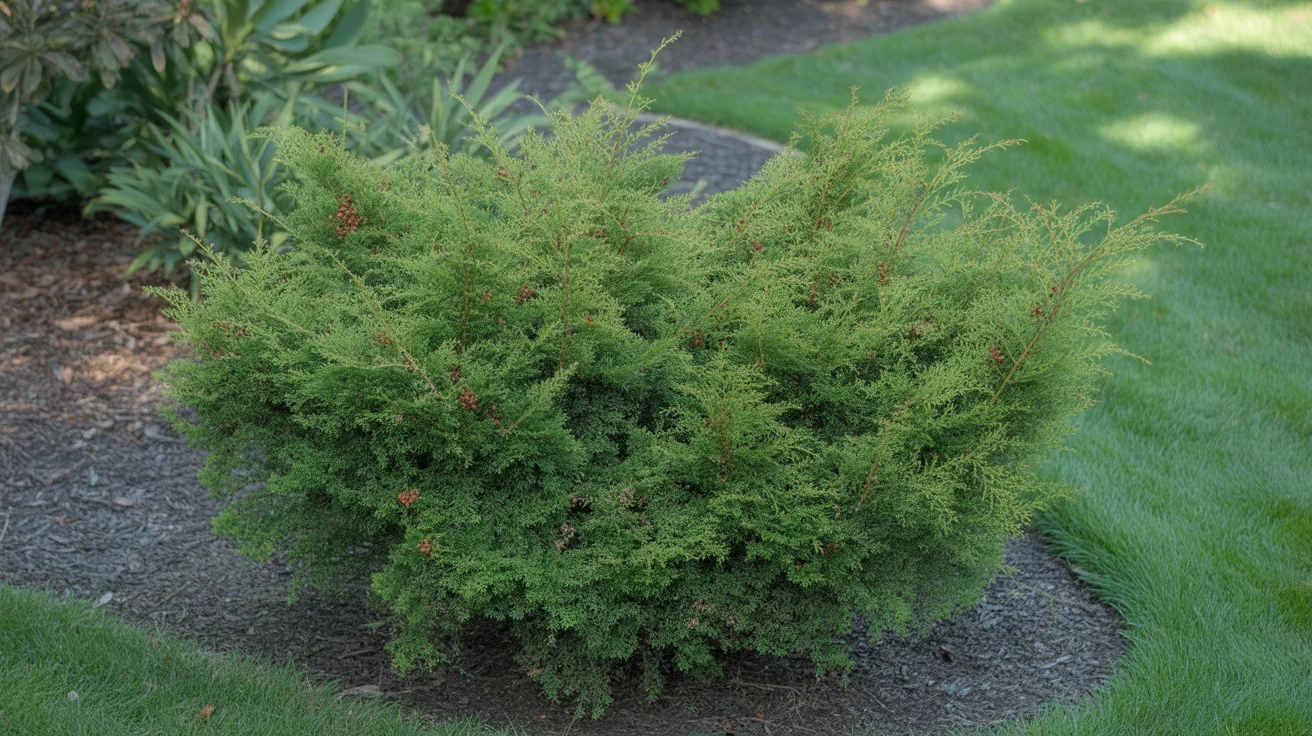
The softer evergreen screen for beds that hold moisture, where juniper would rot.
Boxwood
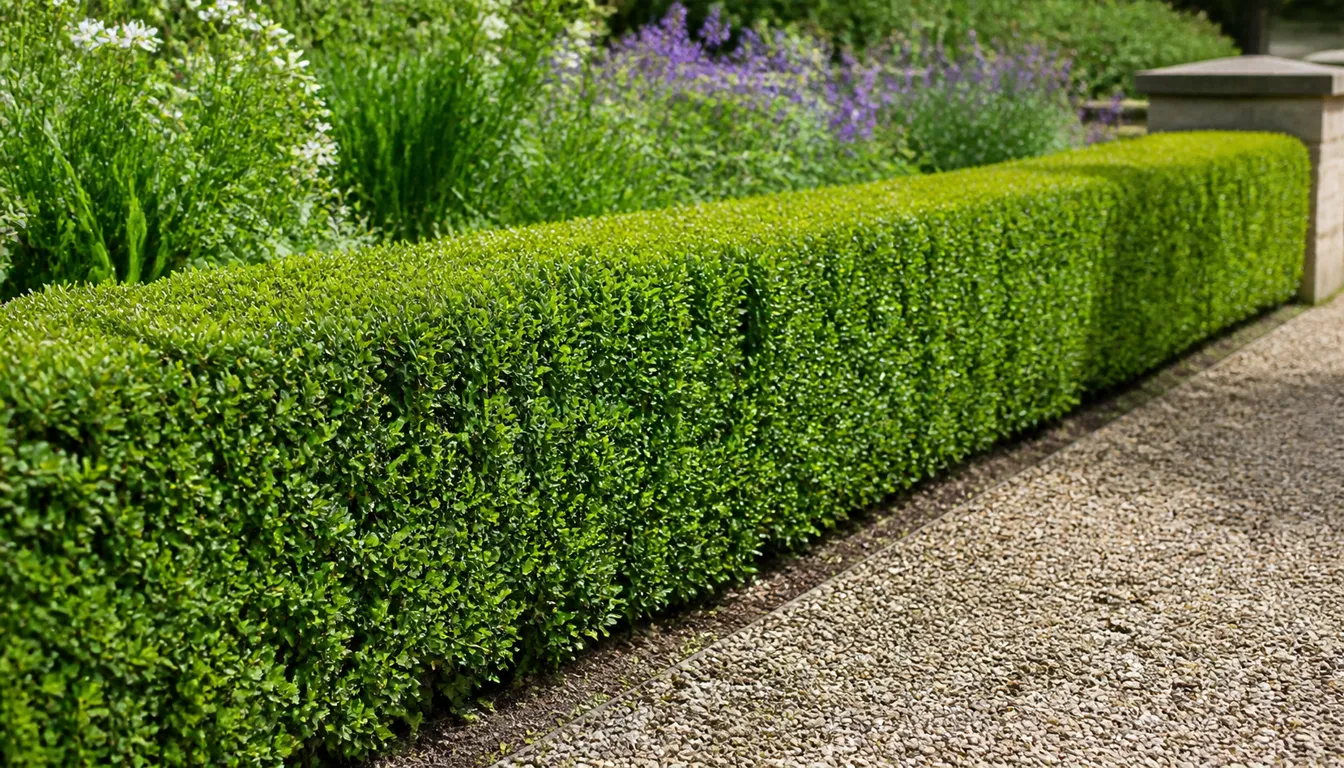
The right choice when you actually want clipped geometry, which juniper cannot take.
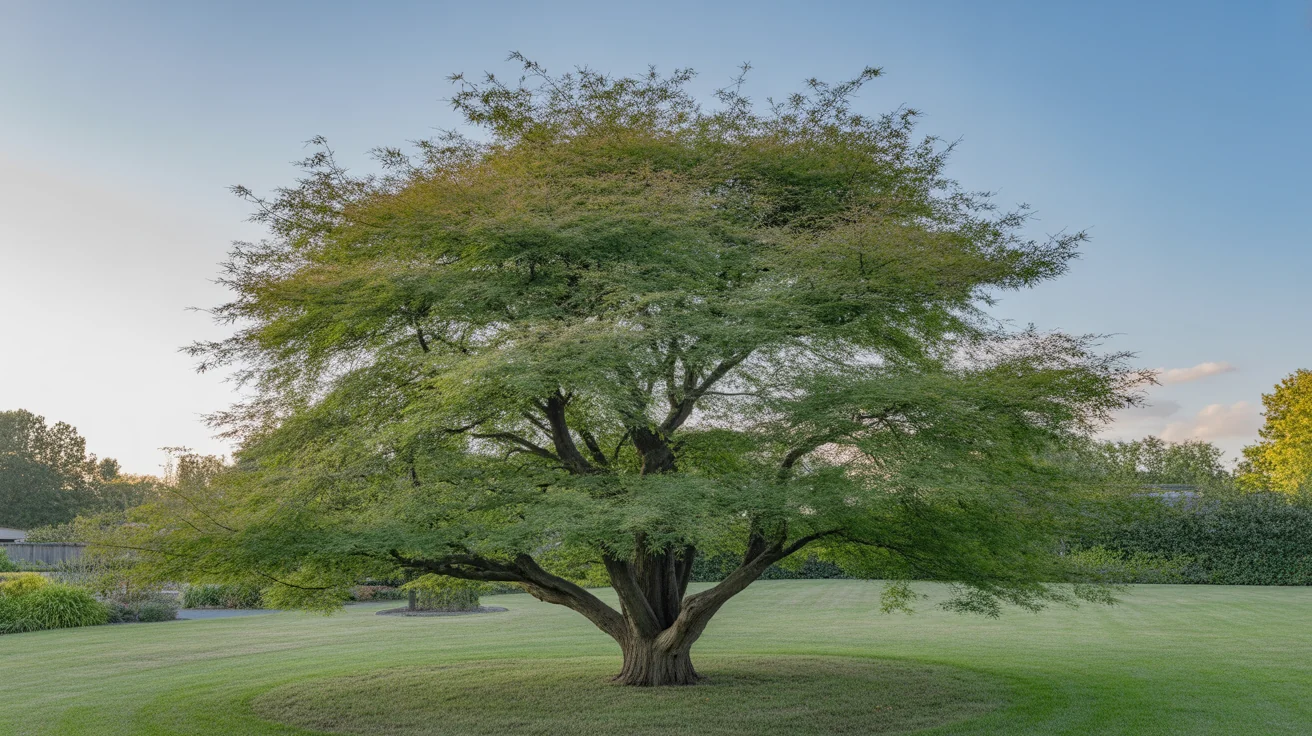
Japanese Maple
A focal plant to sit above a spreading juniper without competing for water.
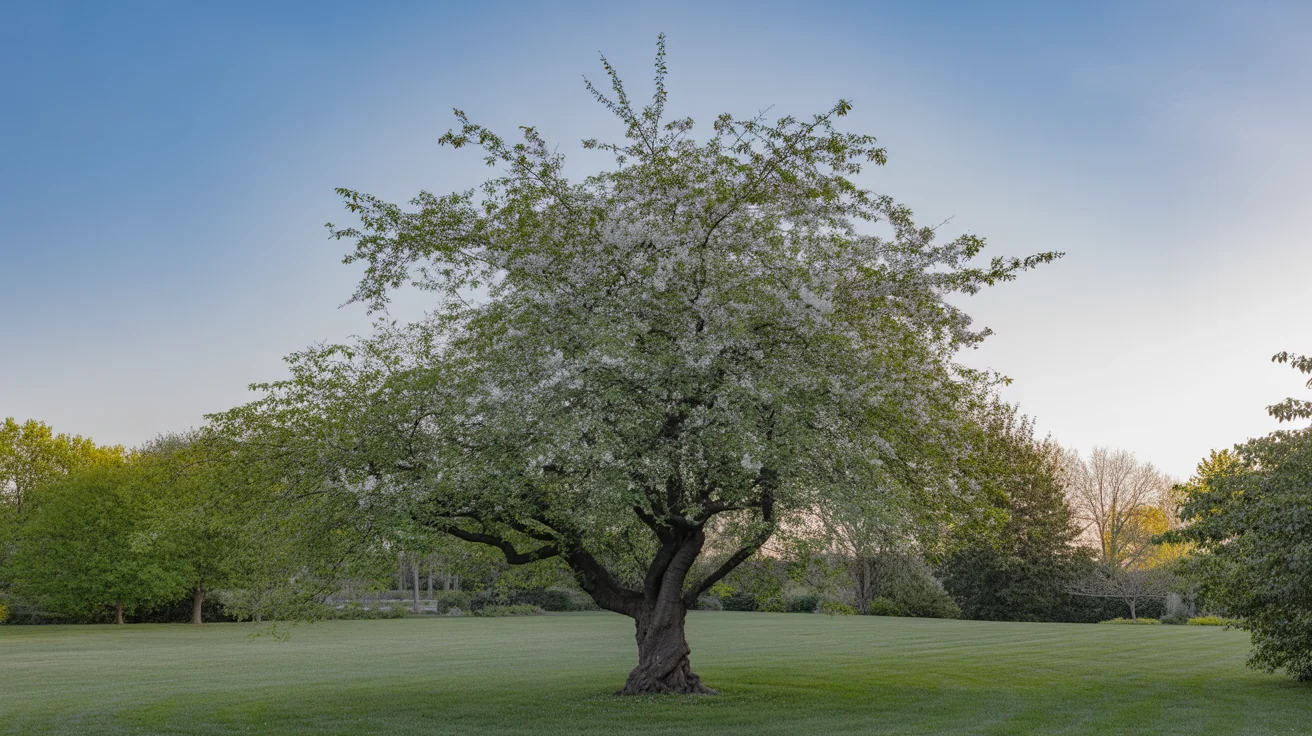
Cherry Blossom Tree
Cherry blossom tree is a common name for ornamental cherries grown for spring flowers rather than a useful fruit crop.
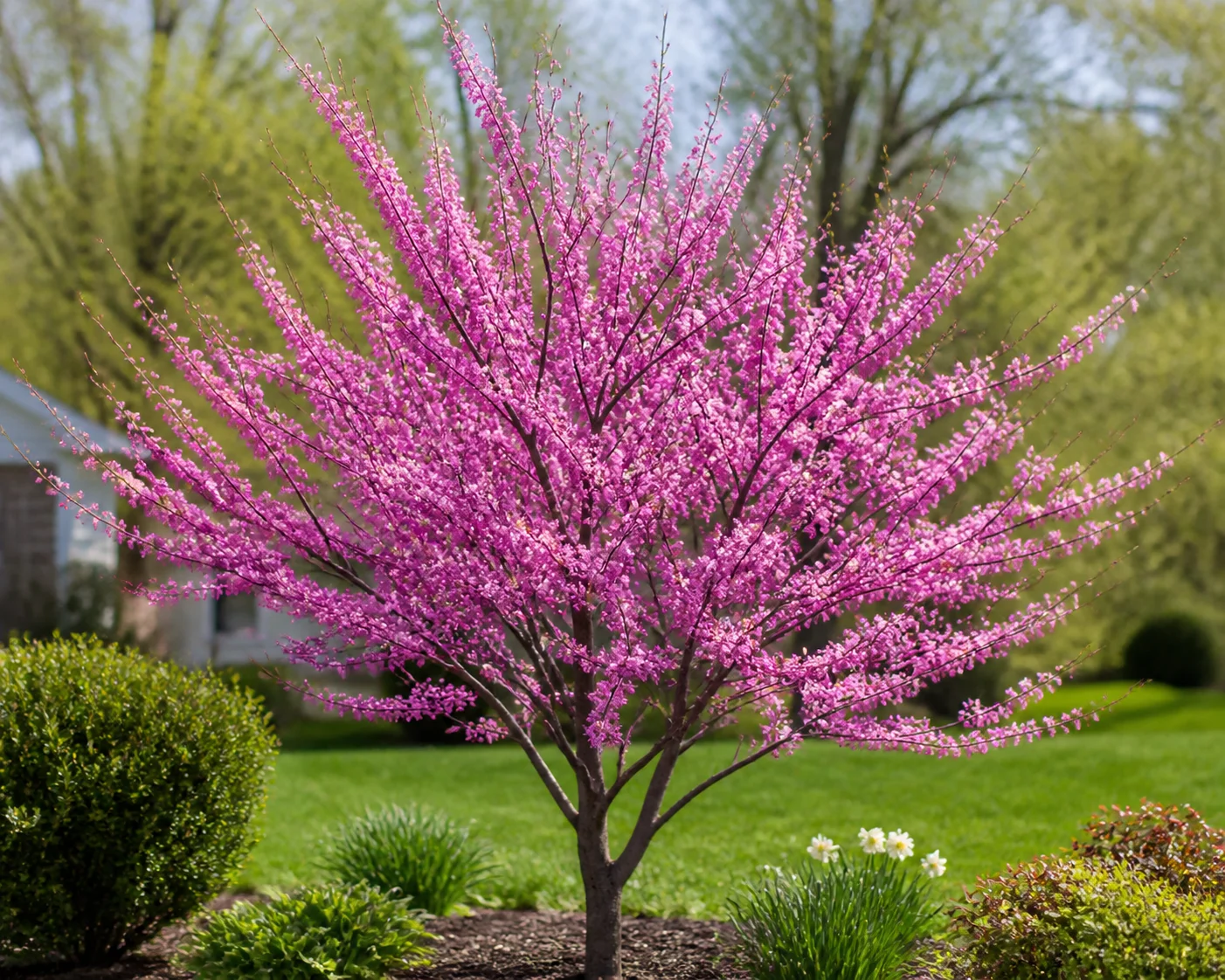
Eastern Redbud
Eastern redbud is a small North American tree with pea-like flowers that open on bare twigs and older wood.
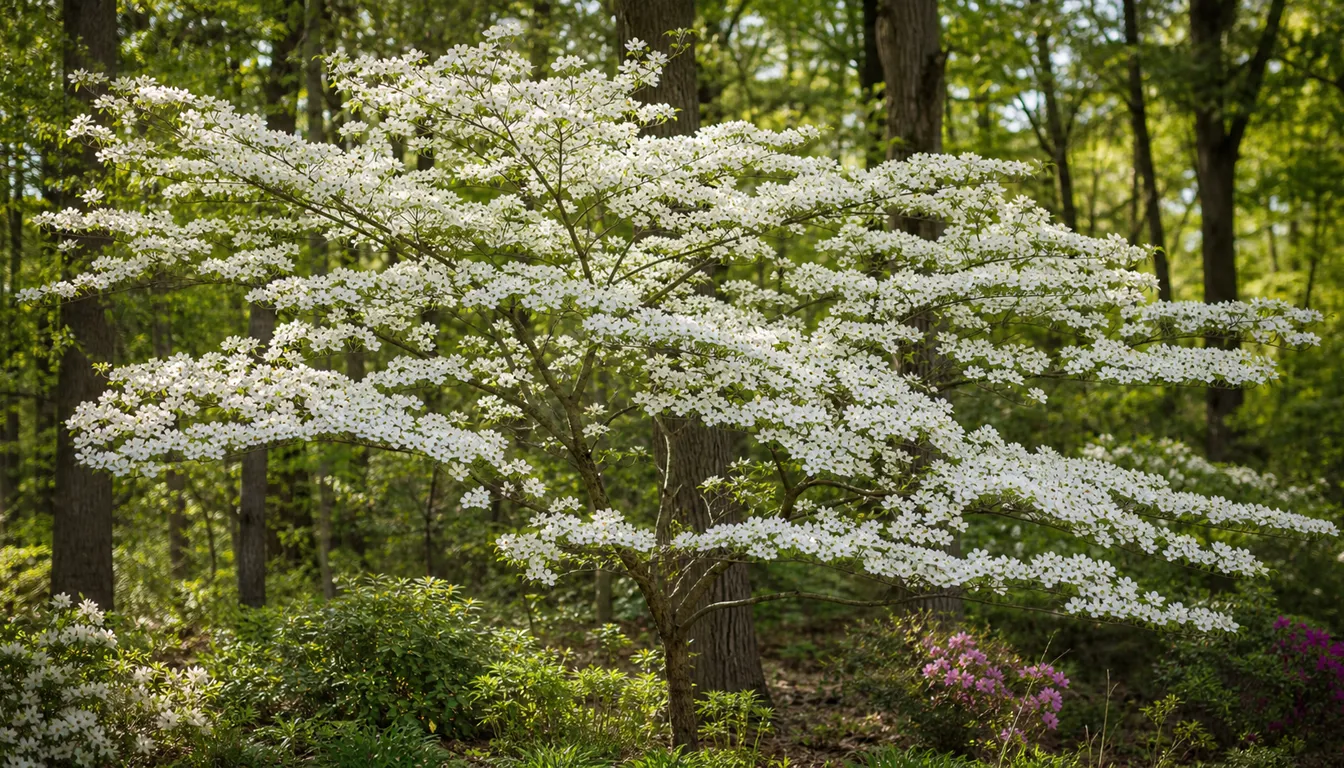
Flowering Dogwood
Flowering Dogwood is easiest to grow when you copy the place it wants to live.