
What's a Holly Shrub? How to Get Berries Without Crowding
Ilex spp. Aquifoliaceae
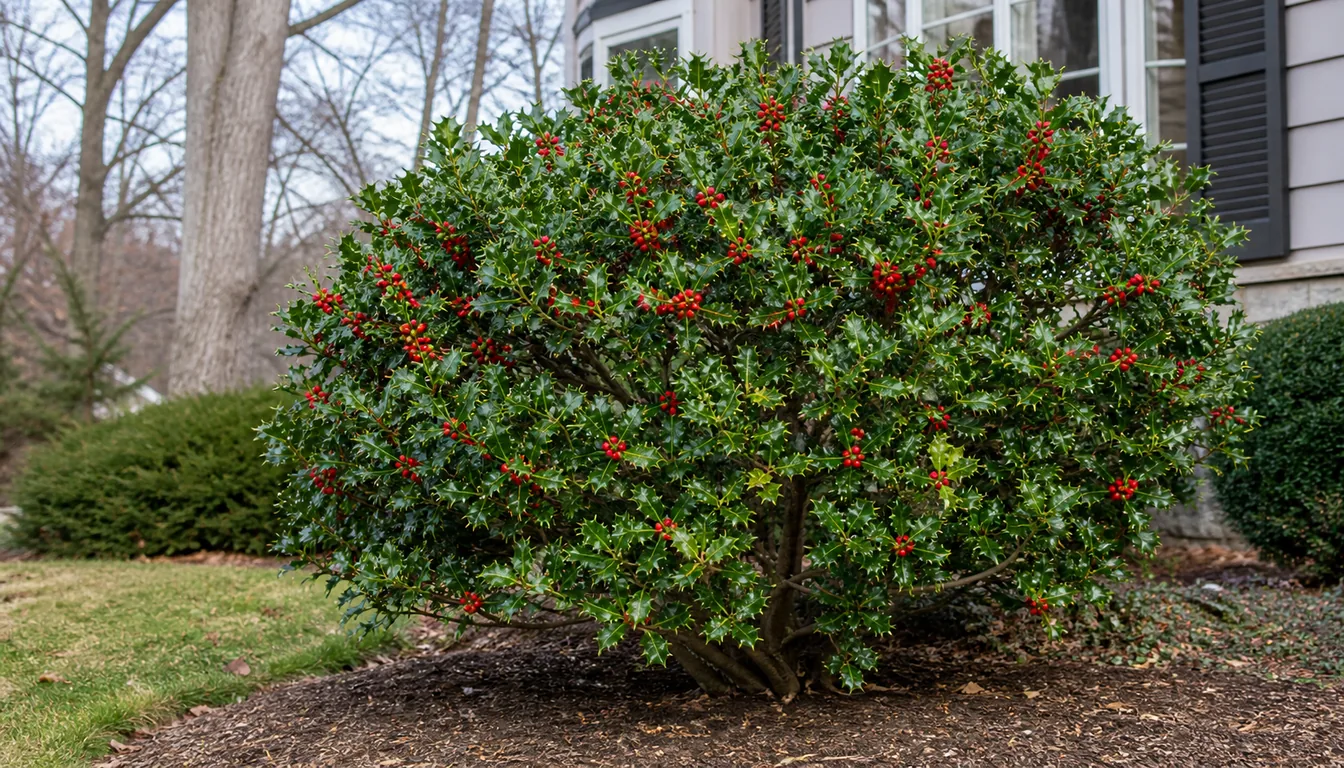
Most hollies carry berries only on female plants, and only when a male of a compatible type blooms nearby at the same time. Extension guidance puts that at one male for every three to five females, or up to ten for winterberry, planted within about 40 to 100 feet. Mature size, which runs from 3-foot mounds to 50-foot trees, decides where each type fits.
Care snapshot
Which Kind of Holly Are You Buying?
Holly is the genus Ilex, and Clemson Extension counts more than 400 species, some evergreen and some deciduous, from 18 inches to more than 50 feet tall. The types sold for yards differ so much that the species name matters before berry color or price.
- Japanese holly
- 3-10 ft, small spineless leaves, black fruit. 'Helleri' about 4 ft, while 'Convexa' can reach 9 ft tall and 24 ft wide (Clemson).
- Chinese holly
- Large glossy spiny leaves. 'Burfordii' about 20 ft each way, 'Rotunda' 3-4 ft (Clemson).
- American holly
- A native tree, 20-30 ft in Illinois plantings and up to 50 ft in Clemson's listing, with classic spiny leaves and red fruit.
- Yaupon holly
- 3-15 ft, tolerates heat and wind, red berries in clusters (Clemson).
- Blue holly (Ilex x meserveae)
- 3-8 ft tall and 6-8 ft wide, hardy to Zone 5, bred from English holly for cold winters (NC State).
- Winterberry (Ilex verticillata)
- Deciduous native, generally 6-10 ft, berries on bare winter stems, tolerant of poorly drained soil (UConn).
Japanese holly is a texture plant, since its fruit is black and small, and it is often used where people want a boxwood look. Chinese, American, blue, and yaupon hollies are the red-berried evergreens, and winterberry drops its leaves, so its fruit shows on bare winter stems. The holly vs boxwood comparison covers the clipped-hedge choice between holly and boxwood.
English holly brings a regional question. Washington State listed common holly, Ilex aquifolium, as a Class C noxious weed in 2025, because birds spread its seed and branches root where they touch moist soil. Control is not required statewide unless a county selects it, and it can still be sold in Washington, but a Pacific Northwest garden next to woods is a poor place for it.
How Many Male Hollies Do You Need for Berries?
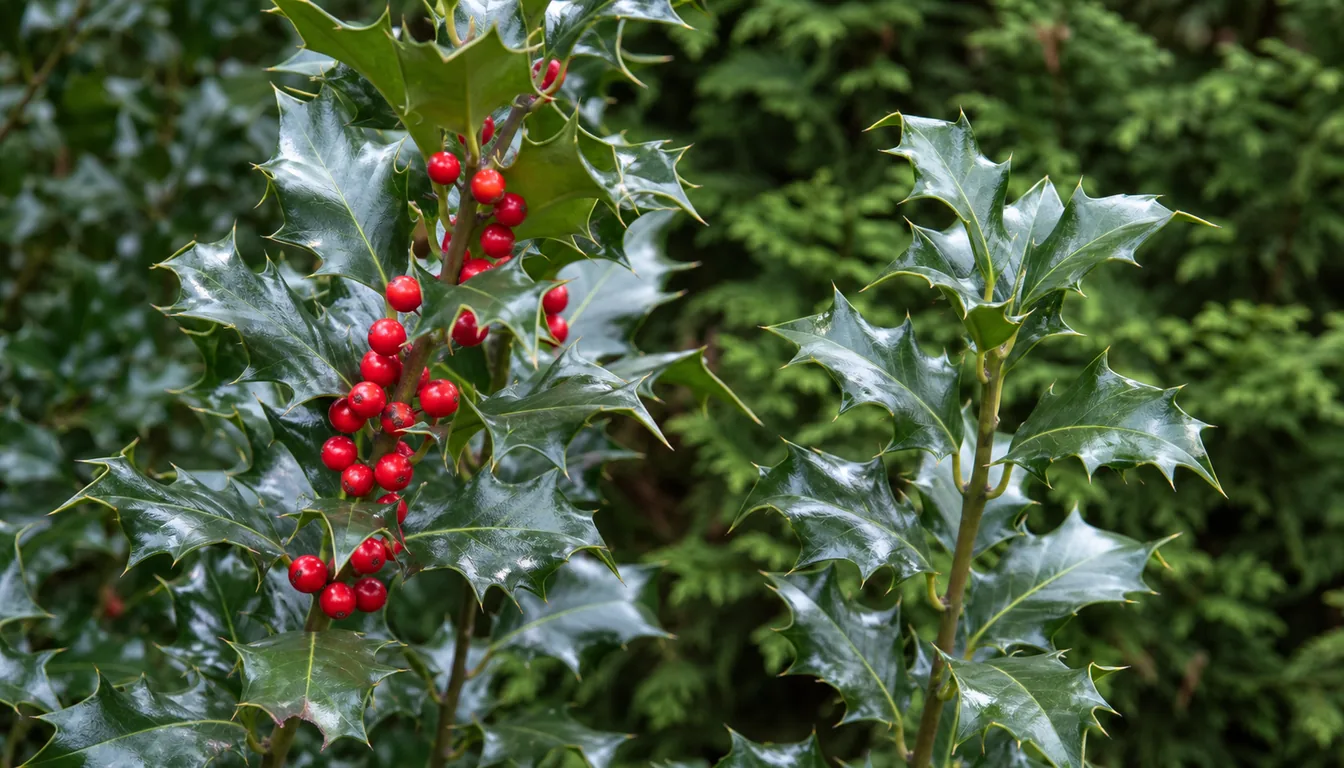
Most hollies are dioecious, meaning male and female flowers grow on separate plants. Only females make berries, and only after pollen from a male reaches their spring flowers. Clemson notes the exceptions, saying some hollies are self-fertile and Chinese holly sets berries without a male.
Extension sources agree on the principle and differ a little on the numbers.
- Blue holly (NC State)
- One male for every 3 to 5 females, with 'Blue Prince' as the standard male.
- Hollies in general (University of Illinois)
- One male for every 3 to 5 females is the typical recommendation, with plants in the same yard within about 100 ft considered close enough.
- Winterberry (UT Gardens)
- One male can pollinate 5 to 10 females planted within 40 to 50 ft.
Taken together, one male for every three to five females, planted within about 50 feet, meets every one of these recommendations. Insects carry the pollen, so the male can sit at the back of a border or around a corner of the house as long as it stays within that distance. It does not need to stand beside the females.
Bloom timing is the detail that most often goes wrong. A male holly of the wrong group can flower before or after the females and leave them barren even though it is only a few feet away. UT Gardens advises matching bloom times as closely as possible, and the named pairs below are how nurseries handle it.
- 'Winter Red' or 'Winter Gold' winterberry
- Late-blooming male 'Southern Gentleman'.
- 'Red Sprite' winterberry
- Early-blooming dwarf male 'Jim Dandy', which UConn also lists for 'Afterglow' and 'Aurantiaca'.
- 'Berry Poppins', 'Berry Heavy', 'Berry Heavy Gold'
- Male 'Mr. Poppins'.
- 'Blue Princess', 'Blue Girl', 'China Girl' blue hollies
- Males such as 'Blue Prince', 'Blue Boy', or 'Blue Stallion'.
What Light and Soil Do Hollies Need?
Clemson recommends well-drained soil that is rich in organic matter and slightly acid, with mulch over the root zone. Hollies grow in sun or partial shade, but Clemson notes that sun produces more berries and a more compact plant, so a female planted for fruit belongs in the brightest spot available.
Winterberry is the exception on drainage. UConn describes it as tolerant of poorly drained soils and suited to moist, acidic sites, which makes it the holly for a wet low corner where an evergreen holly would struggle. UConn also notes it turns chlorotic, with yellow leaves and green veins, on alkaline soil, so pH matters more than wetness for that species.
Where Do Prickly Hollies Fit in a Yard?
Spiny leaves make a useful barrier and a poor neighbor for a walk. Chinese and American hollies grow large and stay prickly, so mature width, not pot size, sets the distance from paths, doors, and windows. A 'Burfordii' that reaches 20 feet each way needs that room or a lifetime of cutting.
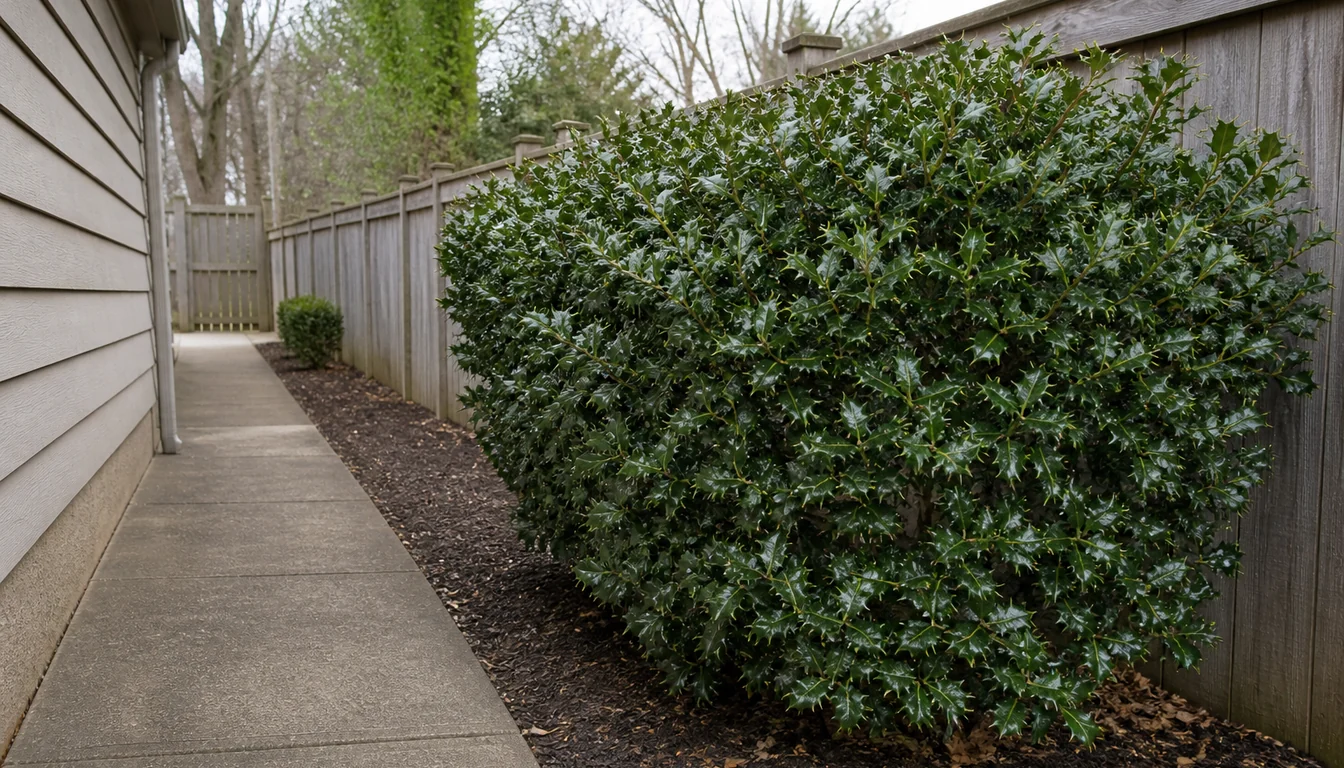
For a screen, the privacy shrubs guide compares holly's slow growth with faster hedges. Where people brush past daily, Japanese holly gives evergreen structure with small spineless leaves, and yew or skip laurel are soft-leaved alternatives.
The male plant needs a place too. Because it carries no berries, it can go where the fruit would not be seen anyway, such as behind a garage or at the far end of a border, as long as it stays within roughly 50 feet of the females.
When and How Should You Prune Holly?
The University of Delaware's guide to pruning evergreens gives holly its own section. American holly can be pruned in December, which turns the cuttings into Christmas greens, and Chinese holly can be trimmed in early spring. Cuts on American holly go at a node just above a side bud, and the goal is to keep the plant's natural shape.
Shrubby Chinese and Japanese hollies take harder cutting, and Delaware notes they may need some light pruning during the growing season as well. That makes them the better choice for a hedge that has to stay a set size.
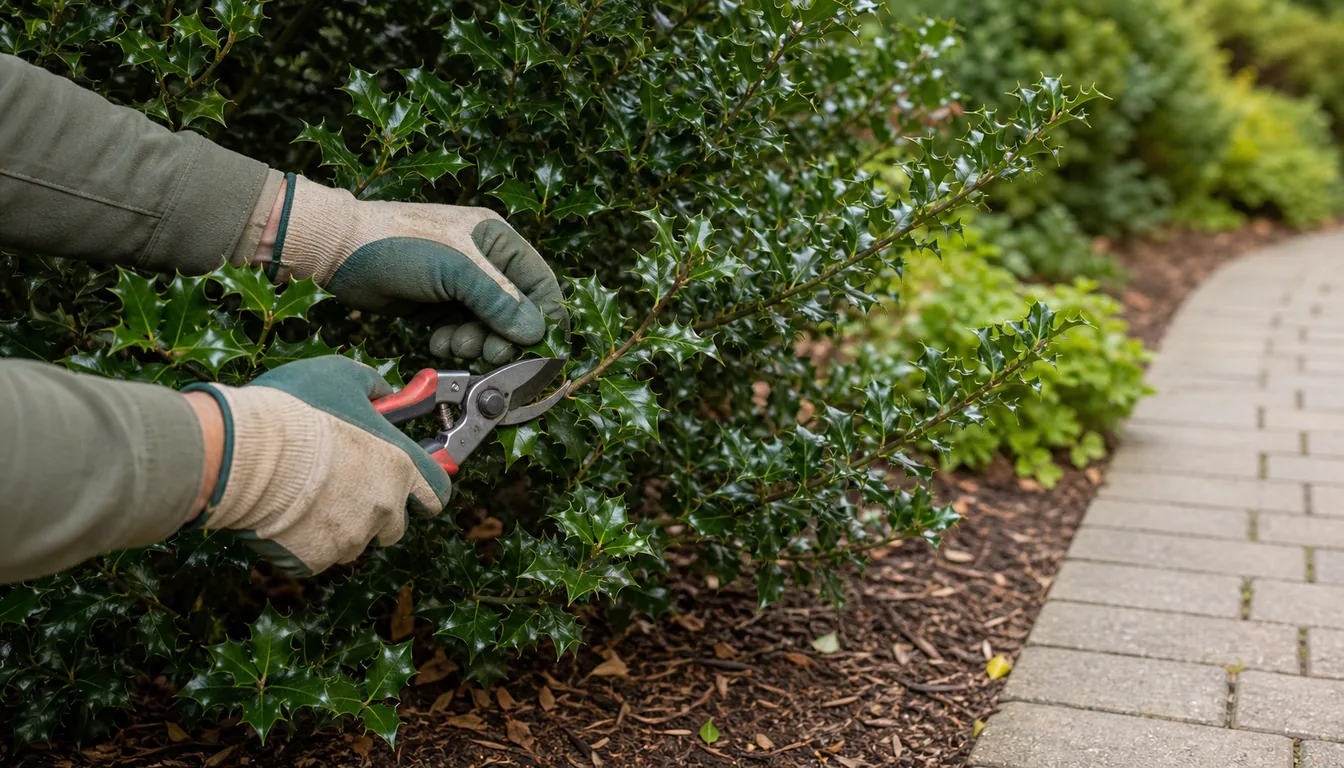
Berries add a tradeoff that foliage hedges do not have. Holly berries form from spring flowers, so a stem cut in December takes that winter's fruit indoors, and a hard late-winter cut removes some of the wood that would have flowered. Delaware's general rule for flowering evergreens is to prune soon after flowering so next season's flowering wood is not lost. Light, scattered cuts each year keep both the shape and the display.
What Pests Bother Hollies?
NC State lists holly leafminers, spider mites, whiteflies, and scale as the insect problems on blue hollies. Each leaves a different sign, and none of them explains a female with no berries, which Clemson traces to pollination, age, nitrogen, or frost.
- Winding trails or blotches inside the leaf
- Holly leafminer.
- Fine pale stippling on the leaves
- Spider mites.
- Tiny white insects that fly up when a branch is shaken
- Whiteflies.
- Bumps on stems or leaf undersides, sticky leaves
- Scale.
- Healthy female with no berries
- No matched male, a young plant, too much nitrogen, or spring frost (Clemson).
Are Holly Berries Poisonous to Pets and Children?
The ASPCA lists holly as toxic to dogs, cats, and horses. Its record is filed under American holly and names English holly, inkberry, and winterberry among the common names, with saponins as the toxic principle and vomiting, diarrhea, and depression as the signs. It also rates the leaves and berries as low toxicity.
NC State's entry for blue holly says the fruit is particularly poisonous to children. That matters most for winterberry and other heavy-fruiting females, since the berries hang at a child's eye level on bare stems in winter, and for cut holly brought indoors, where dropped berries end up on the floor.
Birds are the reason many people plant berrying hollies, and fruit left on the plant into winter does that job. The same fruit is a reason to keep heavy-berrying females away from a dog run or play area and to sweep up dropped berries under a patio planting.
Frequently Asked Questions
How many male hollies do I need?
NC State and the University of Illinois recommend one male for every three to five females. UT Gardens says one winterberry male can serve five to ten females within 40 to 50 feet.
How close does the male holly need to be?
Within about 40 to 50 feet is the safest range from the sources we read, although the University of Illinois considers plants within about 100 feet in the same yard close enough.
Why does my female holly have no berries?
Clemson lists missing pollination, a young plant, too much nitrogen, and spring frost on the flowers. A male whose bloom time does not overlap the female's also leaves it barren.
Do all hollies need a male to make berries?
No. Clemson notes that some hollies are self-fertile and that Chinese holly sets berries without pollination.
Are holly berries poisonous to dogs?
Yes. The ASPCA lists holly as toxic to dogs, cats, and horses, with vomiting, diarrhea, and depression, though it rates leaves and berries as low toxicity.
Sources & References
- Holly, Clemson Cooperative Extension Home & Garden Information Center
- Ilex x meserveae, NC State Extension Gardener Plant Toolbox
- Holly: A Native Holiday Decoration, University of Illinois Extension
- Winterberry Holly Blazes in Color Across its Namesake Months, UT Gardens
- Ilex verticillata, UConn Plant Database
- Pruning Evergreens, University of Delaware Cooperative Extension
- Common Holly (Ilex aquifolium), Washington State Noxious Weed Control Board
- Holly, ASPCA Toxic and Non-Toxic Plants
- American Holly, ASPCA Toxic and Non-Toxic Plants
Related Plants
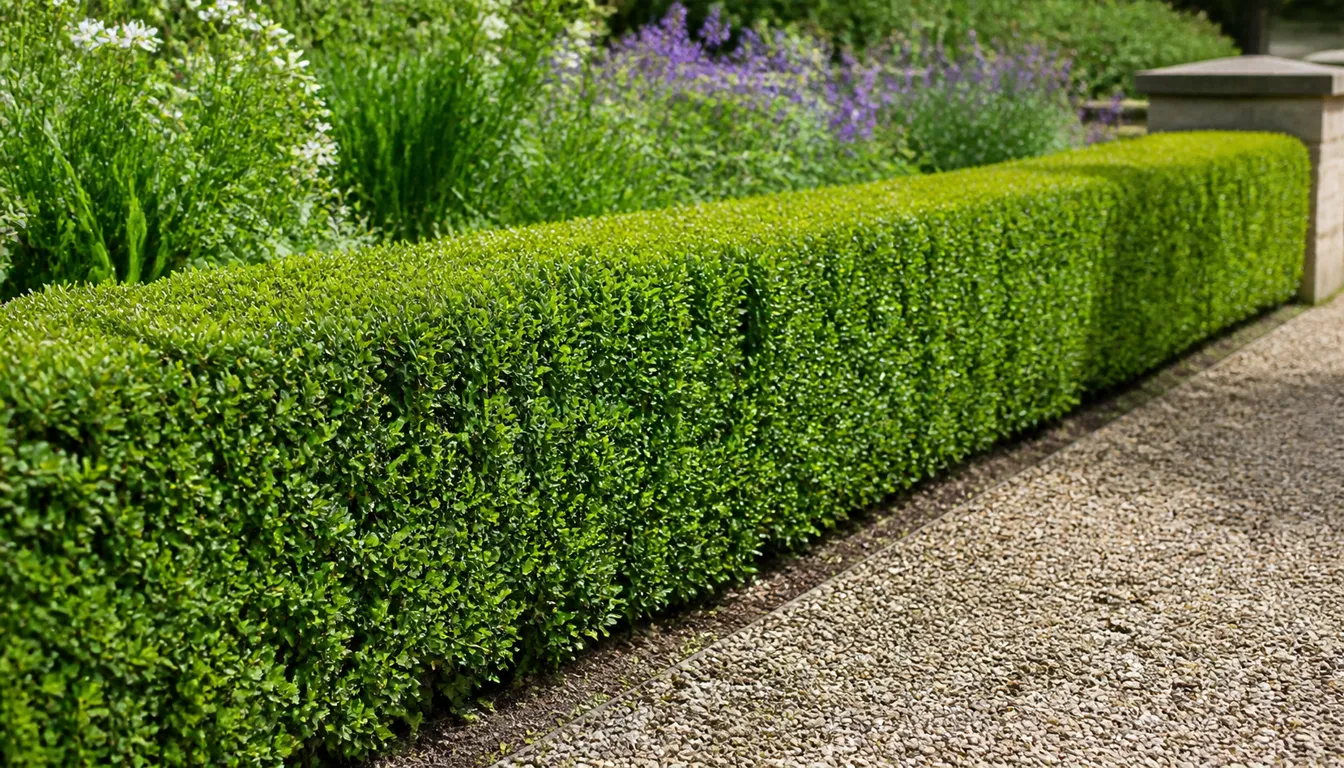
Boxwood
Small-leaved evergreen shrub often used for clipped formal edges where berries are not the goal.
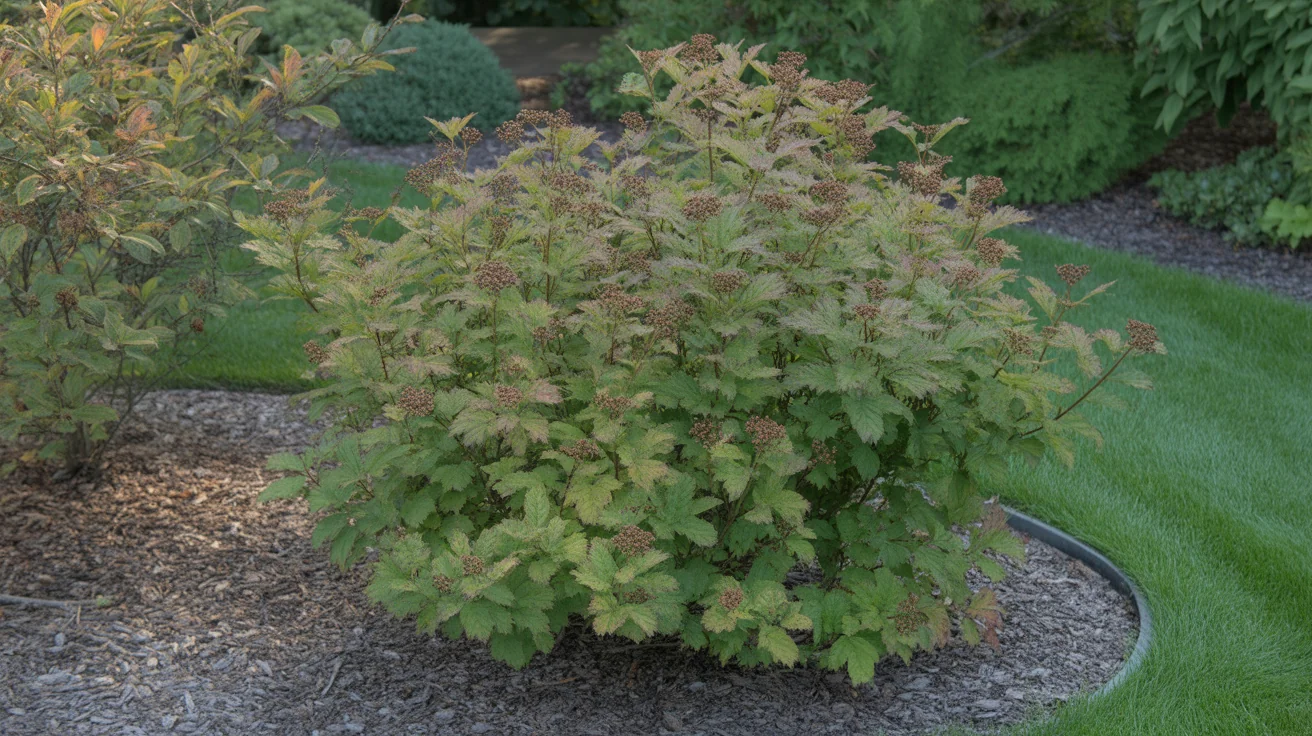
Viburnum
Softer flowering and berry shrub for mixed wildlife borders without holly's spiny leaves.
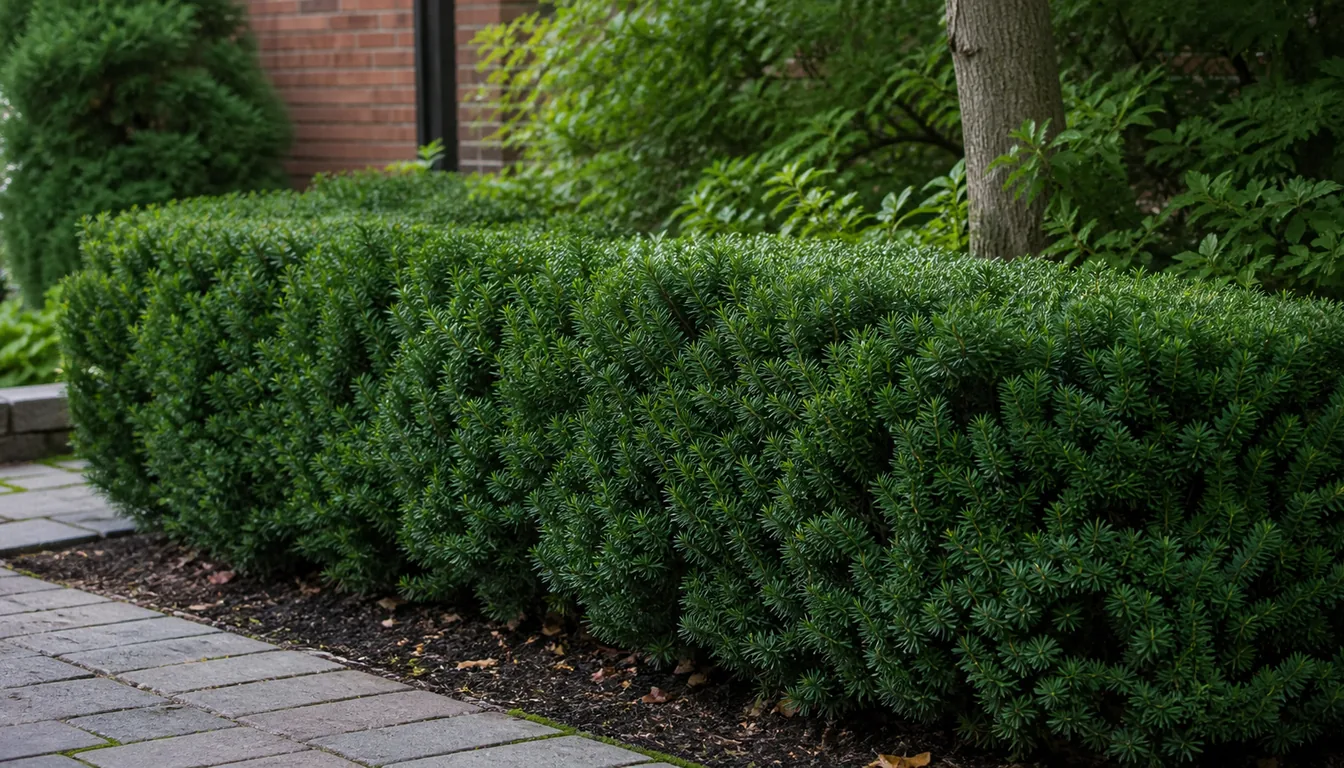
Yew
Shade-tolerant evergreen structure with a different toxicity and pruning profile.
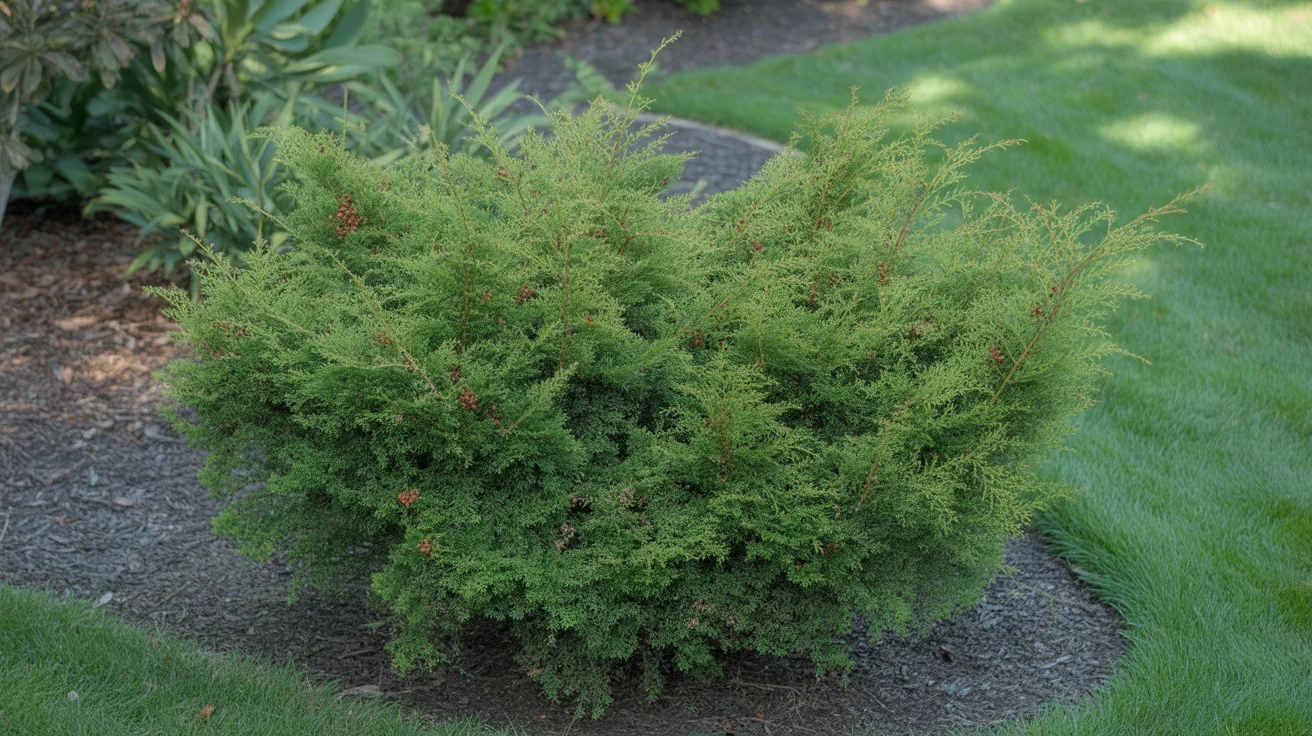
Arborvitae
Arborvitae can form a dense living screen where its mature width, exposure, and water needs fit the site.
Aucuba
Aucuba is the shrub for bright shade with dry root competition. It keeps evergreen structure near north walls, porches…
Azalea
Azaleas bring spring flowers, and some cultivars bloom again later in the year.