
Most Trees and Shrubs in a Fed Lawn Need No Fertilizer
Before the question of when, there is a question of whether.
Colorado State says feeding a tree growing in fertilized turf will likely not be beneficial, and Clemson says tree and shrub roots intercept the fertilizer applied to the lawn. A tree in a lawn you feed is already being fed.
Clemson also settles the other common reason, which is a newly planted tree. Water rather than fertilizer is the most important element for successful establishment, so the bag is not what a struggling new tree is short of.
That leaves a smaller group who do need to do something, and two signs put a plant in that group.
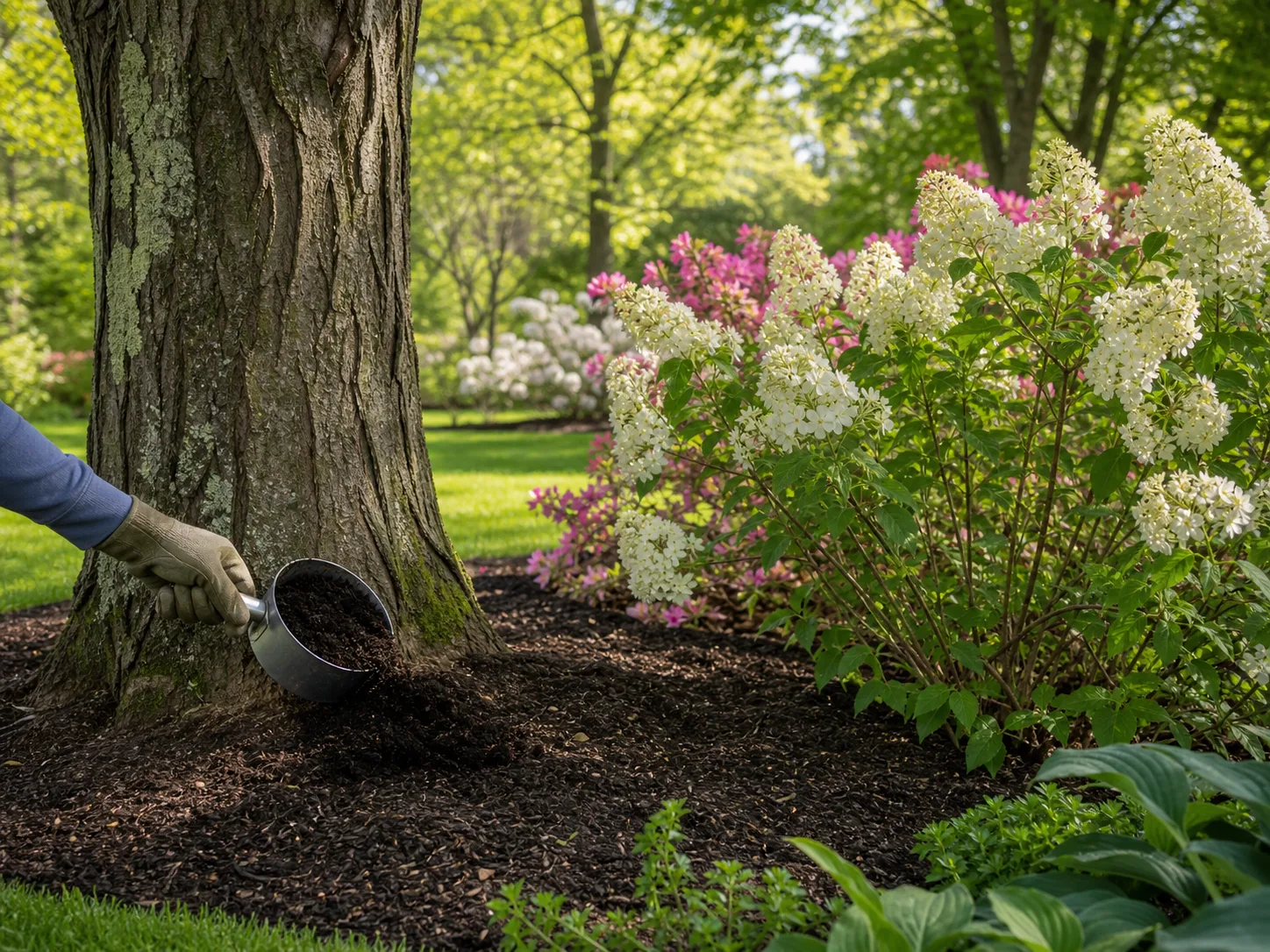
At a glance
Does Your Tree or Shrub Need Feeding at All?
Most people asking when to feed do not need to feed.
The lawn covers the largest group. Colorado State is direct about it, saying that feeding a tree growing in fertilized turfgrass will likely not be beneficial, and Clemson explains why, since shrub and tree roots intercept nutrients from the fertilizer applied to the grass above them.
New plantings are the second group, and the answer there is the same for a different reason. Clemson says water rather than fertilizer is the most important element for successful establishment.
It also helps to know what the bag actually does.
Fertilizer corrects a shortage of a nutrient. It does nothing whatever for a plant short of water, short of root room, planted too deep, or sitting in soil that will not drain.
In practice the nutrient in question is nitrogen. Shortages of phosphorus and potassium are uncommon in landscape trees, so a general purpose feed is usually solving one problem and adding two things the plant did not ask for.
The readers left are those with a woody plant in an unfed bed, showing a real shortage, in soil low in organic matter. That is a much smaller group than the people currently standing in a garden center.
How Do You Know a Plant Actually Needs Feeding?
Three things point at a shortage, and only one of them is a color.
Leaves lighter green than normal is the first, and normal is doing a lot of work in that sentence. It means lighter than the same plant used to be, or lighter than the same species growing nearby, rather than lighter than a photograph.
Reduced annual twig growth is the second, and it is the one worth measuring. Less flowering than the plant used to give is the third.
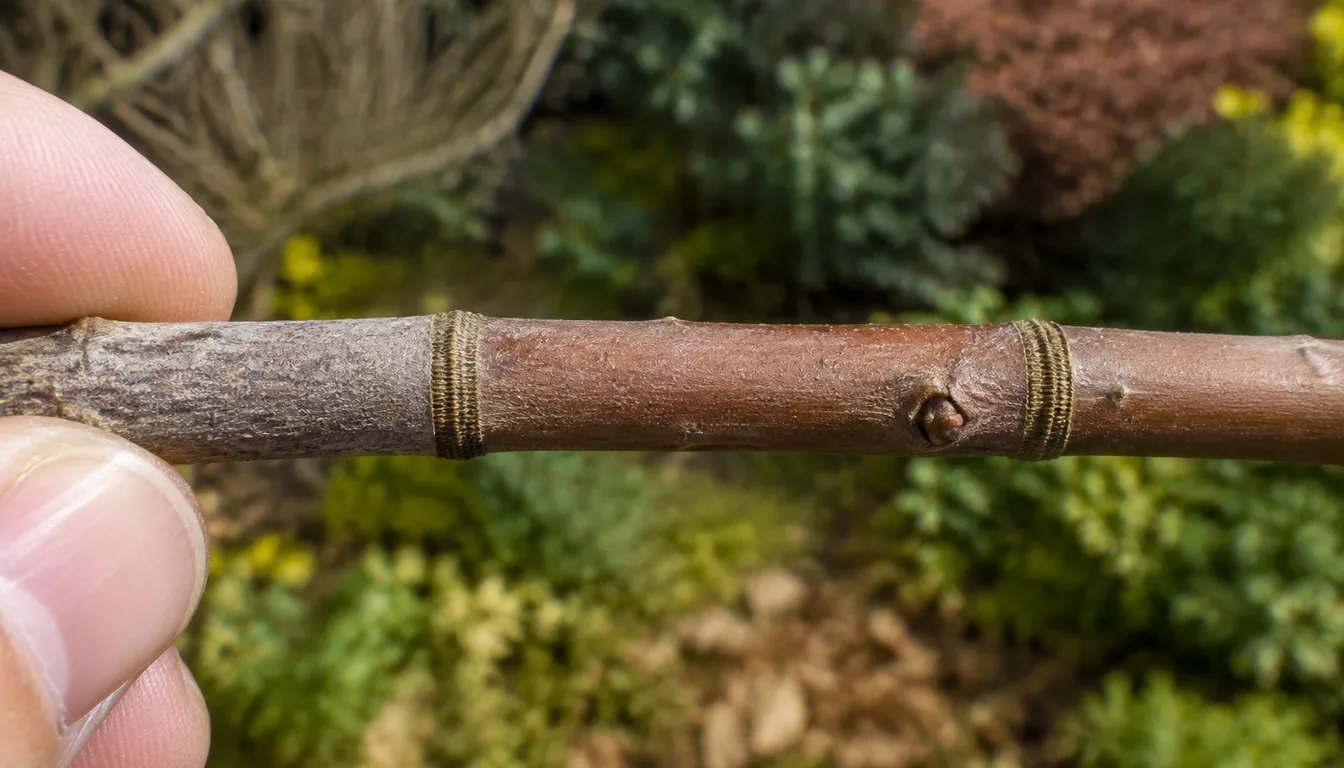
Twig growth is measured between two narrow bands of fine rings on the bark. Each band marks where a season started, so the length of smooth bark between them is one year of growth, and a short run on a plant that is otherwise healthy is the evidence a feed is answering.
A soil test finishes the job properly. A soil test or a plant tissue analysis comes back with the kind and the rate, which is a different thing from a guess with a bag.
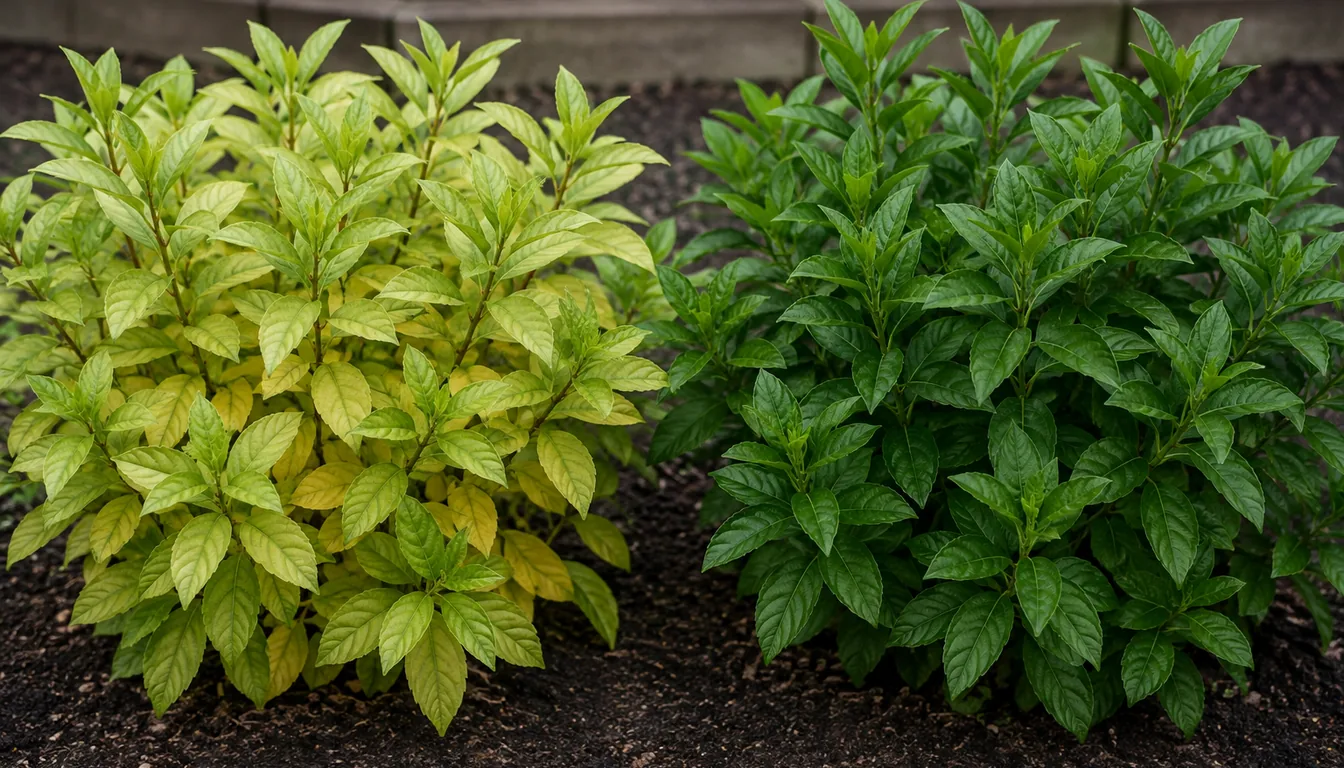
- Compare the leaf color against the same plant last year or the same species nearby
- Find two ringed bands on a twig and check how much bark sits between them
- Ask whether flowering has fallen off compared with previous seasons
- Take a soil test before buying anything, since it returns a rate rather than a hunch
When Is the Right Window to Feed?
Two windows are recommended, and they sit at opposite ends of the dormant season.
Early spring is the first, four to six weeks before bud break, so the nutrient is in place when the roots start working.
Late autumn is the second, after the leaves have dropped, provided the soil is still above 40 degrees Fahrenheit. Roots keep taking up nutrients after the canopy has finished for the year, which is what makes that window work at all.
The sources disagree about late summer, and it is worth knowing why rather than picking one.
Colorado State advises avoiding late summer and early autumn feeding because it can interfere with winter hardiness.
Clemson lists late summer through early autumn among its windows.
Climate settles it.
Where winter arrives hard and early, a late feed pushes growth that meets the cold soft, and the Colorado answer applies.
Where the season runs long and the winter is mild, the Clemson window is available.
Summer has one absolute. Do not feed a drought-stressed plant, because nutrient uptake depends on soil moisture, and fertilizer going onto dry soil is salt rather than food.
| Window | The case for it | The caution |
|---|---|---|
| Early spring, 4 to 6 weeks before bud break | Nutrient is in place as roots begin working | Nothing much, this is the safe default |
| Late autumn after leaf drop | Roots still take up nutrients once the canopy has finished | Only while soil stays above 40F |
| Late summer into early autumn | Plant is still actively growing and can use it | Colorado State advises against it, since new growth may not harden before winter |
| Mid summer on a dry plant | None | Uptake needs soil moisture, so it adds salt rather than nutrition |
How Much Nitrogen, and Over What Area?
A rate on its own is not a quantity, and this is where most applications go wrong.
Slow release nitrogen goes on at 2 to 4 pounds of total nitrogen per 1,000 square feet a year, and never above 6 pounds in a year.
Fast release nitrogen goes on at 1 to 2 pounds per 1,000 square feet where there is no turf in the treated area, and never above 4 pounds a year. The turf caveat matters, because a lawn under the tree is already receiving its own rate.
The area runs from the trunk out to the outermost branches. For a mature tree Colorado State goes further and treats a circular area twice the diameter of the canopy, since the roots run well past the branch tips.
Establishment is deliberately light. A tree in its establishment phase takes 0 to 1 pound of nitrogen per 1,000 square feet, and a mature tree on soil low in organic matter takes 2 to 4.
Measure the circle before you open anything. The rate is per thousand square feet of that area rather than per plant, which is the step almost everybody skips on the way to a handful thrown at the trunk.
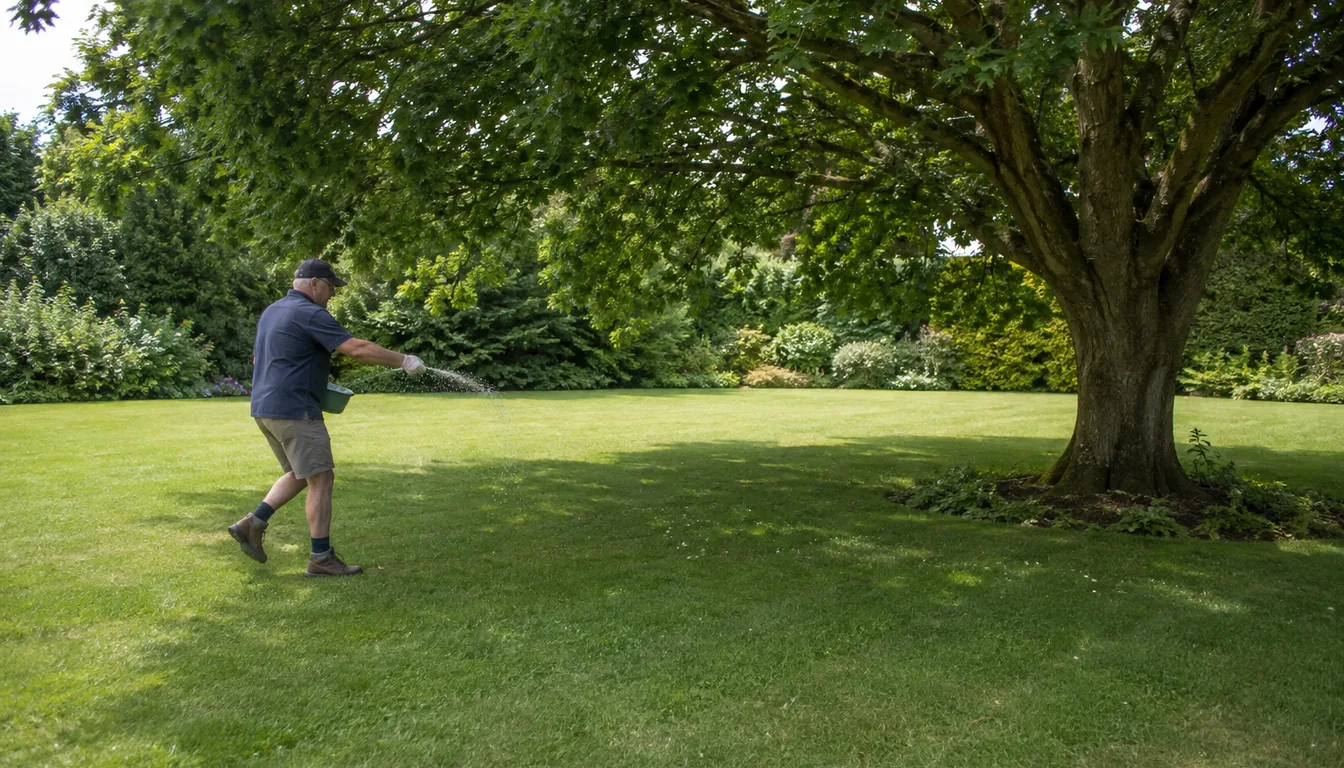
- Slow release
- 2 to 4 lb N per 1,000 sq ft, max 6 lb a year
- Fast release
- 1 to 2 lb N per 1,000 sq ft, max 4 lb a year
- Establishment
- 0 to 1 lb N per 1,000 sq ft
- Area treated
- Trunk to dripline, or twice the canopy diameter on a mature tree
What Does Feeding at the Wrong Time Cost?
Every one of these mistakes looks like diligence at the time.
Feeding late in the season pushes growth that has no time to harden before the cold, and the damage shows the following spring as dieback on the newest wood rather than on the day it was applied.
Feeding a thirsty plant does nothing useful. Uptake depends on soil moisture, so the nutrient sits in dry soil as salt around roots that are already struggling.
Feeding instead of diagnosing is the expensive one. A plant declining from root damage, compaction or bad drainage gets a season of fertilizer and another season of decline, and the real problem goes another year unexamined.
Over-application has its own signature. Excess salts damage roots and can show as a crust on the soil surface, and heavy nitrogen produces abundant but lanky growth, which on a woody plant means weak wood rather than a fuller shape.
Feeding too late in the season
Nitrogen pushes soft new growth that meets the first hard frost unhardened. You see it as dieback on the newest wood the following spring, a long way from the afternoon that caused it.
Feeding a dry plant
Nutrient uptake needs soil moisture, so on dry soil the fertilizer stays put as salt around roots already under stress. Water first, and feed on another day if it is still needed.
Feeding instead of diagnosing
A tree declining from compaction, poor drainage or root damage is not hungry. A season of fertilizer buys nothing except another season before anybody looks at the actual cause.
Do Evergreens, Flowering Shrubs and Fruit Trees Differ?
The principle holds across all of them and the details shift.
Evergreens keep their foliage for several years, so a shortage builds slowly and a correction takes just as long to show. Judging the result of a feed on an evergreen by next month is judging too early.
Flowering shrubs answer heavy nitrogen with leaves. A shrub fed generously and flowering poorly is often a shrub that was fed generously, and the pruning timing usually deserves a look before the fertilizer does.
Fruit trees in a regularly fertilized lawn need nothing separate, for the same reason every other tree in that lawn does not.
Acid loving shrubs are a different question wearing the same clothes. A pale rhododendron or blueberry in alkaline soil is usually unable to take up what is already there, which is a pH problem rather than a shortage.
| Plant group | The adjustment | Why |
|---|---|---|
| Evergreens | Judge the result over a season or more | Foliage is held for years, so change is slow both ways |
| Flowering shrubs | Go light on nitrogen | Heavy nitrogen is answered with leaves rather than flowers |
| Fruit trees in a fed lawn | Feed nothing separately | Roots take up the lawn's fertilizer already |
| Acid loving shrubs | Check soil pH first | Pale leaves often mean nutrients present but unavailable |
Pro Tips
- If you fertilize the lawn, the trees and shrubs in it are already fed.
- Measure the treated area before opening a bag, since the rate is per thousand square feet rather than per plant.
- Never feed a drought-stressed plant, because uptake needs soil moisture and the fertilizer stays as salt.
- Measure last season's twig growth between two ringed bands before deciding anything is short.
- Take a soil test, which returns a rate instead of a guess.
Frequently Asked Questions
Do trees in a lawn need separate fertilizer?
Usually not. Colorado State says feeding a tree growing in fertilized turf will likely not be beneficial, and Clemson notes that tree and shrub roots intercept the fertilizer applied to the grass.
Should I fertilize a newly planted tree?
Water matters far more. Clemson says water rather than fertilizer is the most important element for successful establishment, and any feed at that stage is light and only if a soil test shows a shortage.
When is the best time to fertilize trees and shrubs?
Early spring, four to six weeks before bud break, or late autumn after leaf drop while the soil is still above 40 degrees Fahrenheit.
Is late summer feeding a problem?
In cold regions, yes.
Colorado State puts late summer and early autumn feeding off the table in cold regions, because growth pushed then can meet the cold before it has hardened.
Clemson lists that window for warmer areas, so the answer depends on your winter.
How much nitrogen should I apply?
Slow release nitrogen at 2 to 4 pounds per 1,000 square feet a year, up to a ceiling of 6. Fast release at 1 to 2 pounds per 1,000 square feet where there is no turf, up to a ceiling of 4.
Will fertilizer fix a tree that looks unwell?
Only if the problem is a nutrient shortage. Fertilizer does nothing for a plant short of water, root room or drainage, and a season spent feeding one is a season the real cause goes unexamined.
Sources & References
- Fertilizing Shade Trees, Colorado State University Extension
- Fertilizing Trees and Shrubs, Clemson Cooperative Extension
- Fertilizing Evergreens, University of Minnesota Extension
- Fertilizing Tree and Small Fruits in the Home Garden, Iowa State University Extension
- Fertilizer Rates and Requirements for the Home Garden, Iowa State University Extension
Related Guides
Best Fertilizer for Indoor Plants: How to Choose
The best fertilizer for most indoor plants is a complete fertilizer labeled for houseplants, with…
15 min read
Best Fertilizer for Vegetables by Garden Type
Fertilizer only helps vegetables if it matches what your soil and crops need.
11 min read
Can You Fertilize Wet Grass Safely?
A wet lawn right when you planned to fertilize creates second thoughts fast.
11 min read
How Long Does Compost Take to Be Ready?
Compost does not follow a calendar, it follows conditions.
11 min read
How to Fertilize Tomatoes Without Overfeeding
Fertilize tomatoes according to a soil test and product label, not a fixed weekly calendar.
15 min read
How to Fertilize a Vegetable Garden for Maximum Yield
Fertilizer is not magic dust. It is plant food in a specific ratio.
14 min read