
What's Skip Laurel? How to Keep a Narrow Hedge Dense
Prunus laurocerasus 'Schipkaensis' Rosaceae
Skip Laurel works when you need a year-round screen in a tight strip, but it only stays useful when you plan mature width, drainage, pruning access, and toxic foliage before planting.
Care snapshot
What Is Skip Laurel and How Wide Does It Get?
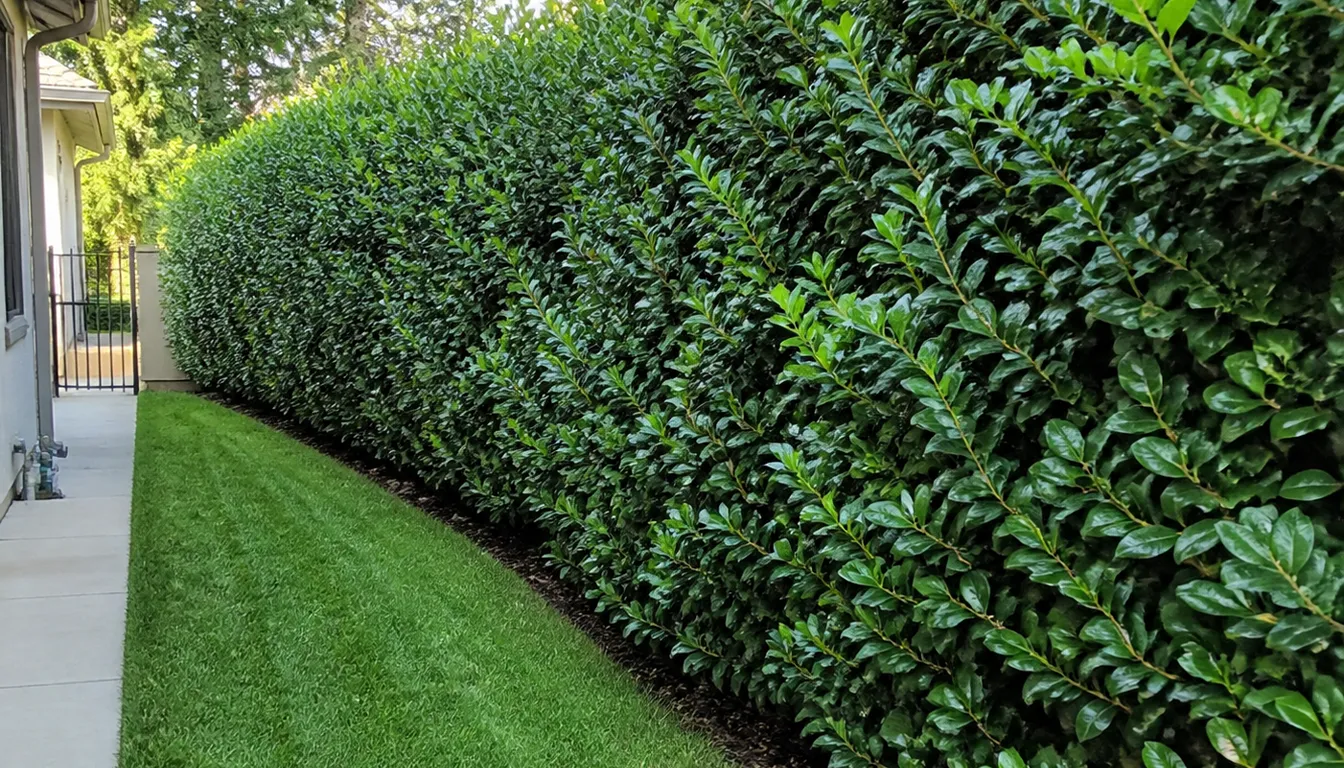
Skip laurel is the compact, goblet-shaped cherry laurel cultivar Prunus laurocerasus 'Schipkaensis', used to form dense broadleaf evergreen screens in confined spaces.
Skip Laurel works best when a privacy hedge must stay narrower than many broad evergreen screens. It is not a magic green wall, and it still needs setback, root room, and a pruning lane.
Start from the view you want to block.
A window-height screen, a street-side buffer, and a neighbor-facing hedge do not need the same height or the same planting line.
"Skip" is short for Schipka, a cultivar named for the Shipka Pass in Bulgaria. NC State Extension describes 'Schipkaensis' as a goblet-shaped selection that stays smaller than the species, which can reach 20 feet tall and 10 feet wide.
Unlike Arborvitae privacy rows, Skip Laurel is a broadleaf hedge that can regrow after cuts.
It differs from Privet hedge care because seed spread is less central than evergreen leaf density, toxic clippings, and drainage.
A solid screen needs plants set closer together than their full mature spread so neighbors knit into one face. For example, plants expected to spread 4 to 5 feet are typically set 3 to 4 feet apart on center, which closes the wall without early overcrowding.
That spacing math scales directly, so a 20 foot run at 3 to 4 feet on center needs roughly five to seven plants rather than a guessed number.
Measuring the actual run length before ordering avoids an awkward leftover gap or a crowded last plant squeezed in at the end.
NC State lists 'Schipkaensis' as growing up to about 6.5 feet, and nursery figures run higher on older plants. That is enough to top a standard 6 foot fence, which is part of why the hedge works as a stand-alone screen. A row kept trimmed down to fence height gives up most of the plant's screening value.
If you cannot leave access behind the hedge, the plant will eventually lean into the path, fence, or wall.
Plan the maintenance space while the shrubs are still small.
- Botanical identity
- Prunus laurocerasus 'Schipkaensis', in the rose family Rosaceae
- Garden habit
- Goblet-shaped broadleaf evergreen shrub, smaller and narrower than the species
- Main job
- Dense privacy screen or tall evergreen backdrop
- Light
- Sun to shade, with density and water demand changing by exposure
- Root rule
- Moist but well-drained soil, with no buried crown and no standing water
- Safety
- Leaves, stems, and seeds are poisonous to people, dogs, cats, and horses if eaten
How Far Apart Should You Plant Skip Laurel?
Nursery plants often look thin compared with the hedge you want. Do not solve that by crowding them.
Crowded laurels compete at the root zone and lose lower leaves sooner.
Schip laurel types stay narrower than many cherry laurels, but they still broaden with age. A staggered row can fill a view without turning one straight line into a wall of tangled stems.
NC State describes cherry laurel as a rapid grower with competitive roots.
With steady water, a new hedge of small plants usually closes into a solid screen within a few growing seasons.
A larger 3-gallon container plant establishes faster and closes gaps sooner than a 1-gallon plant, though the price difference adds up across a long row. Larger container sizes mainly save time rather than changing the final size of the hedge.
If you want a clipped formal face, compare the job with Boxwood before buying.
Skip Laurel gives a larger, glossier, looser screen, not tiny-leaf geometry.
- Tight side yard
- Use fewer plants with pruning access, not a double row pressed against a fence.
- Street buffer
- Leave enough depth for snow, salt splash, and regrowth after trimming.
- Mixed privacy
- Break the line with Holly or Viburnum where width allows more seasonal value.
- Fast cover pressure
- Buy larger plants only if the root balls are healthy and the watering plan is realistic.
How Much Light Keeps Skip Laurel Dense?
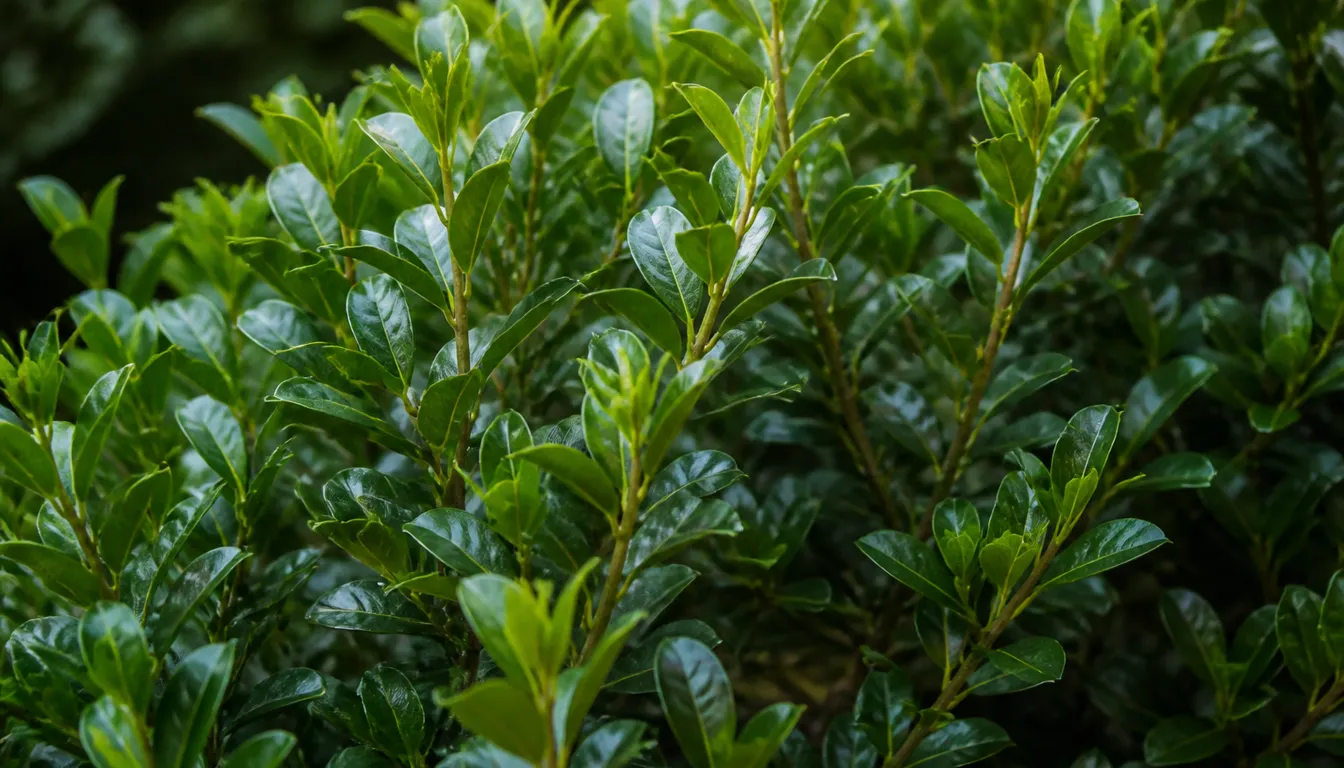
Skip Laurel can take sun or shade, and NC State notes that the species grows in full sun to deep shade. Even so, the lower hedge needs light, and a dark back side thins even when the front looks glossy.
Hot reflected sun is a different problem.
Leaves can scorch near pavement or pale walls, especially while roots are still trapped in the nursery ball.
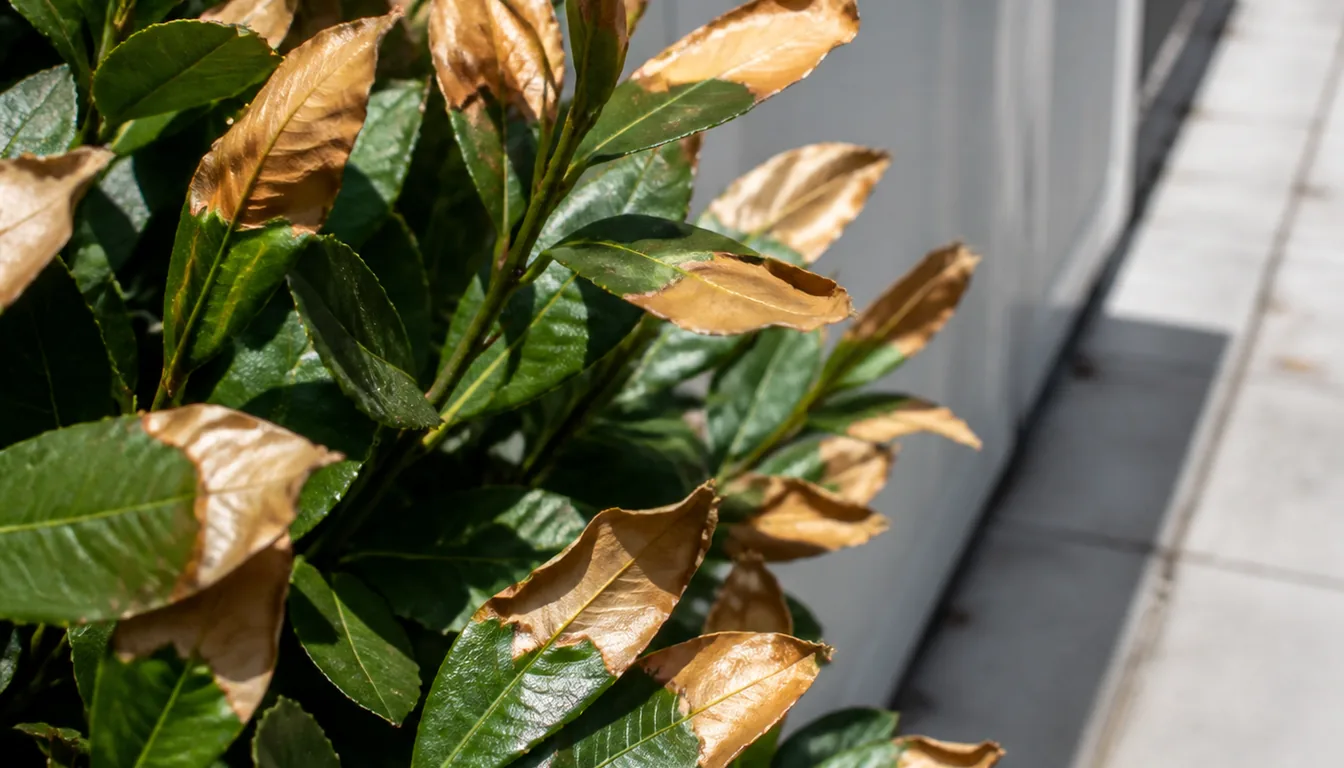
Winter brings a third risk. Broadleaf evergreens hold their leaves through the cold season, so bright winter sun combined with dry wind can burn foliage, since the leaves keep losing moisture that roots cannot replace from frozen soil.
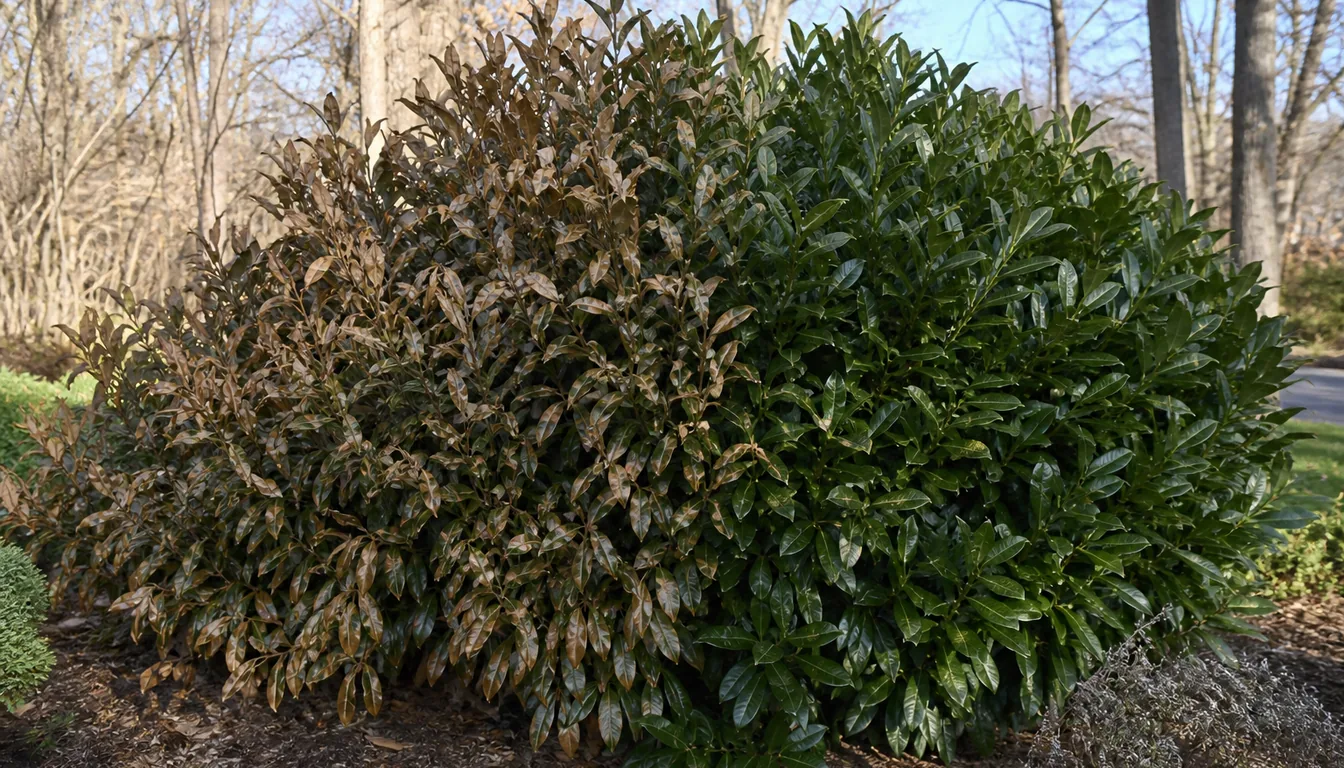
Morning sun is gentler than afternoon sun for scorch risk, since afternoon light arrives with higher heat and often coincides with reflected warmth off pavement.
A hedge facing west or south deserves closer scorch monitoring than one facing east.
Aim for full sun to bright partial shade with airflow on both faces. In deep shade, Yew may hold a cleaner evergreen shape with less leaf drop.
The hedge is too shaded at the bottom or cut too narrow at the base.
Check reflected heat, winter wind, and dry roots before blaming disease.
Move the planting line or thin nearby shrubs so light reaches the back face.
How Do You Water a New Skip Laurel Hedge?
The risky period is the first two growing seasons. Skip Laurel can look full above ground while the original root balls stay dry inside.
Soak each plant slowly, then check the soil beside and inside the root ball.
A sprinkler that wets the leaf wall may leave the real root zone untouched.
A dry root ball often feels noticeably lighter than a wet one if you can gently rock the base. Soil that looks dark and moist on the surface can still sit dry an inch below, right where the original roots are.
Once the hedge roots knit together, water during long dry spells instead of keeping the strip constantly wet.
Evergreen leaves keep losing moisture in wind even when the weather feels cool.
Use deep watering habits at soil level. Wet leaves at night add nothing to privacy and can make disease easier in a dense hedge.
A layer of mulch over the root zone during establishment holds moisture longer between waterings and buffers soil temperature swings. Two to three inches is enough, pulled back from direct contact with the stems.
- First summer
- Check root balls by hand before heat waves.
- Second year
- Stretch intervals only after new growth stays firm.
- Established hedge
- Water during drought, winter wind, or after heavy pruning.
Why Should Skip Laurel Sit High in the Soil?
Wet soil is harder on Skip Laurel than ordinary lean soil. Yellowing, thinning, and branch dieback often start where water sits around the crown.
NC State lists root rot among the problems cherry laurel is susceptible to, and root rot organisms do their damage in soil that stays waterlogged.
Before committing a whole row, test one spot with a simple percolation check. Dig a hole about a foot deep, fill it with water, and see how long it takes to drain, ideally an inch or two per hour in soil this plant will tolerate.
Water still standing after several hours signals a site that needs correction before planting, not after.
The top of the root ball should sit an inch or two above the surrounding grade once backfilled, not level with it or below it. That small margin gives settling room without the crown ending up buried.
Plant slightly high in heavy soil and loosen a wide strip rather than digging rich individual bowls.
A perfect planting hole inside compacted clay can hold water like a basin, even when the surrounding soil looks fine.
Mulch the row, but keep mulch off the stems. The goal is even surface moisture, not a buried crown.
On a genuinely poor-draining site, a raised planting bed or a French drain along the row is worth the added cost.
Both beat replacing a failed hedge a few years later.
Where drainage is unreliable, compare the space with Holly screening or another shrub that fits the soil better. Replacing one failed hedge row costs more than fixing the site first.
How Do You Prune Skip Laurel Without Bare Legs?
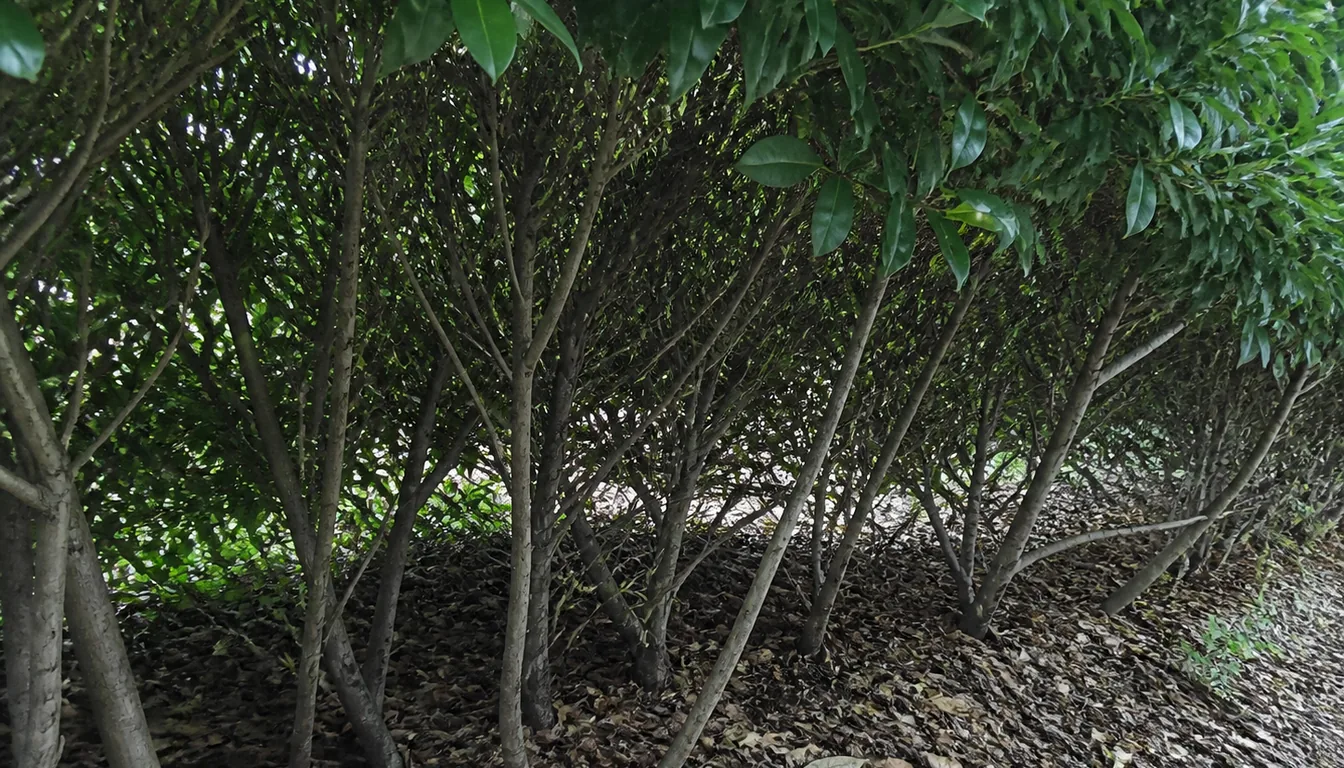
A Skip Laurel hedge should be a little wider at the bottom than the top. That shape keeps light on lower leaves and slows the bare-leg problem. NC State notes that cherry laurel tolerates heavy pruning, so a hedge that has gotten away can be brought back.
Start shaping young plants with light cuts.
Waiting until the hedge is too tall forces heavy pruning that leaves big leaves torn and branch stubs exposed.
Hand pruners leave cleaner cuts than hedge shears on broad leaves. Use shears for line control only when you accept some clipped leaf edges.
Wipe blades with rubbing alcohol between plants, especially if any of them show shot hole or leaf spot symptoms.
Fungal and bacterial pathogens can ride from one shrub to the next on an uncleaned tool, turning one infected plant into a whole-row problem.
Avoid pruning too late in the season. Soft new growth pushed close to frost has no time to harden off, which matters more here since winter hardiness depends on mature, hardened tissue.
The safest general window is right after the spring growth flush hardens, typically late spring to early summer, with a light second trim in midsummer if needed.
Avoid trimming from late summer onward so new growth has time to harden before frost.
If the hedge needs hard size reduction every year, the planting line is doing the wrong job. A narrower evergreen or a mixed screen may fit better.
Check bird nesting, tool access, and whether both hedge faces can be reached.
Rake up and bag leaves and stems right away. Wilting clippings are the most toxic form of the plant, so they should not sit where pets or livestock graze.
Thin crowded stems before the outer shell hides a dead interior.
What Causes Holes, Yellowing, or Dieback on Skip Laurel?
Holes in Skip Laurel leaves can come from shot hole disease, insect feeding, or physical damage. The pattern matters more than the label.
Random older-leaf holes with otherwise strong growth are less urgent than yellowing, wilting, or whole branches dying back.
Whole-plant decline points you back to roots, drainage, or transplant stress.
Shot hole symptoms happen when a leaf spot disease kills a small patch of tissue. That patch dries out and falls away, leaving a round hole behind rather than a chewed edge. NC State lists shot hole disease, powdery mildew, and root rot as the problems cherry laurel is susceptible to, and notes that it resists pests better than most other Prunus species.
Raking up and disposing of fallen spotted leaves, instead of leaving them under the hedge or adding them to compost, removes material that can carry leaf spot into the next season.
Dense hedges also hide trouble on the inside.
Open the canopy with your hands and inspect stems, not only the shiny outside leaves.
A white powdery coating on leaves in shaded, still parts of the row points to powdery mildew, which opening the canopy and improving air movement helps reduce. Sticky leaves with small brown bumps along the stems point to scale insects instead.
If a laurel row keeps failing in the same wet stretch, treat the site like a drainage problem first.
Evergreen shrub planning is only useful when the soil can support evergreen roots.
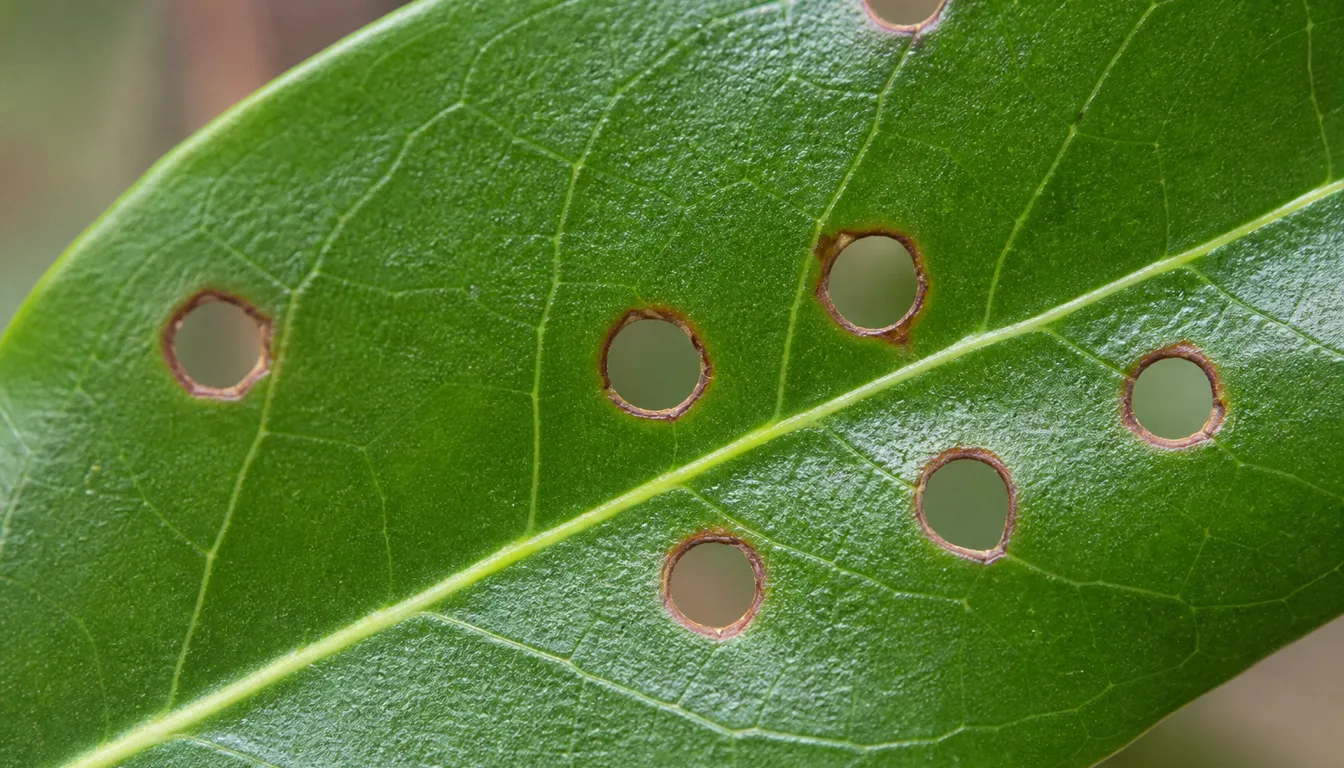
Check for shot hole patterns and remove the worst fallen leaves.
Check wet soil, high planting stress, or drought in the root ball.
Suspect powdery mildew in shaded, crowded sections and open up the canopy.
Check wind exposure and dry soil before pruning in panic.
Is Skip Laurel Safe Around Children and Pets?
All cherry laurels deserve a safety decision. Skip Laurel foliage, seeds, and stems are poisonous to people, dogs, cats, and horses if eaten, and the ASPCA lists Prunus species as toxic to all three animals.
The risk comes from cyanogenic glycosides in the leaves, stems, and seeds, which release cyanide. NC State rates the poison severity as high.
Both NC State and the ASPCA note that the plant is particularly toxic while the foliage is wilting, which is why a pile of fresh clippings deserves even more caution than the standing hedge.
The ASPCA lists brick red gums, dilated pupils, difficulty breathing, panting, and shock as signs in pets. If a dog, cat, or horse eats leaves or clippings, call a veterinarian or the ASPCA Animal Poison Control Center at (888) 426-4435 right away rather than waiting for symptoms.
That does not rule out the plant for every yard, but it changes placement.
Keep hedges away from animal runs, edible beds, and play corners where clippings sit after pruning.
For a family hedge with less toxic concern, one documented option is black haw (Viburnum lentago), which the ASPCA lists as non-toxic to dogs, cats, and horses. That listing does not cover every viburnum species, so check the specific plant before buying.
Cherry laurel also spreads beyond gardens in some regions. NC State notes that it has escaped cultivation on the Pacific coast west of the Cascades, where it is classified as a weed of concern.
Frequently Asked Questions
How far apart should I plant Skip Laurel?
Spacing depends on plant size and final hedge height, but do not crowd Skip Laurel just for instant cover. Leave enough room for root growth, lower light, and pruning access.
Does Skip Laurel grow in shade?
Skip Laurel tolerates partial shade, but deep shade thins the lower hedge. Bright partial shade or sun with good root moisture gives a denser screen.
Why are my Skip Laurel leaves getting holes?
Leaf holes may come from shot hole disease, insects, or weather damage. Check the whole plant first, since yellowing and dieback point more toward root or drainage stress.
Is Skip Laurel safe for pets?
No. Skip Laurel leaves, stems, and seeds contain cyanide-producing compounds, and the ASPCA lists Prunus species as toxic to dogs, cats, and horses. Wilting clippings are the most dangerous form, so bag them right after pruning.
Sources & References
- Prunus laurocerasus, North Carolina State Extension Gardener Plant Toolbox
- Hedging Shrubs for Privacy - University of Minnesota Extension
- Prunus laurocerasus 'Schipkaensis' Plant Finder
- Woody Plant Propagation From Cuttings - University of Kentucky Extension
- Cherry, ASPCA Toxic and Non-Toxic Plants
- Black Haw, ASPCA Toxic and Non-Toxic Plants
Related Plants
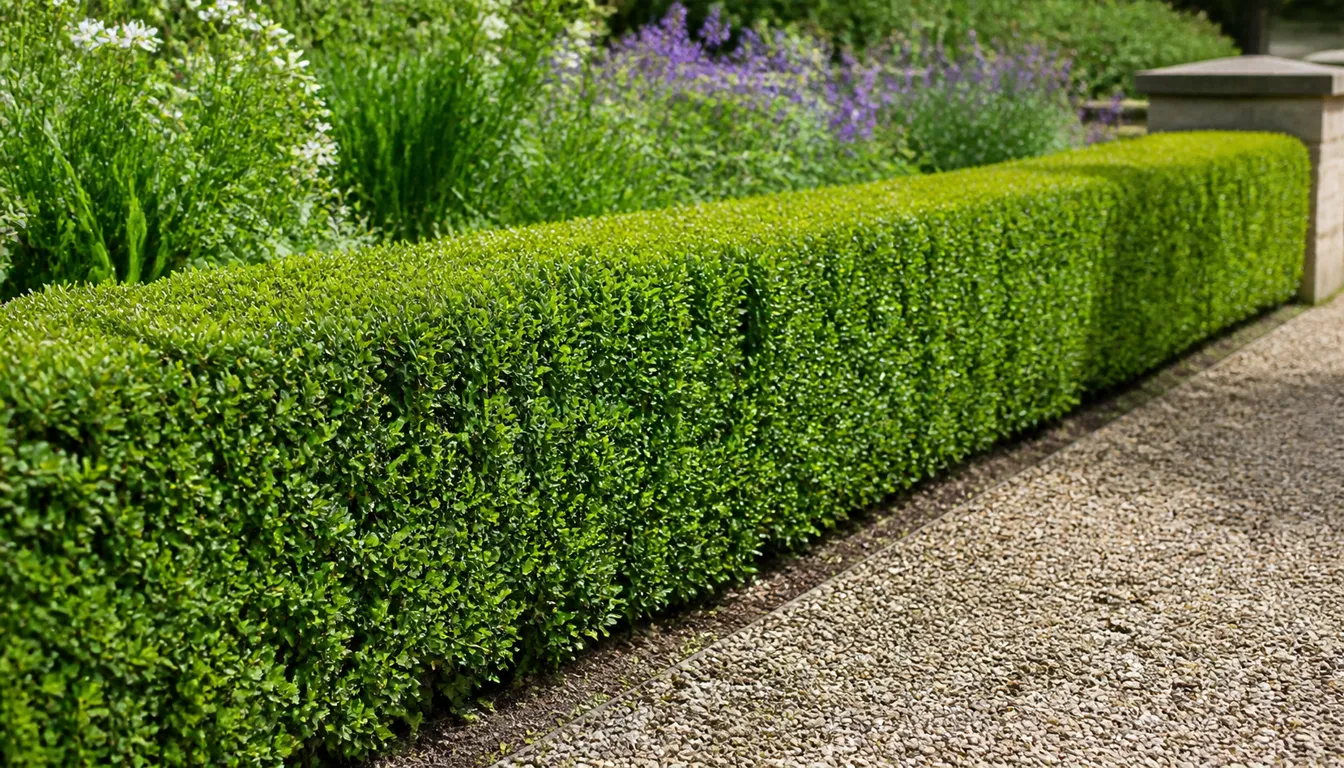
Boxwood
Compact evergreen shrub for formal hedges and low borders.
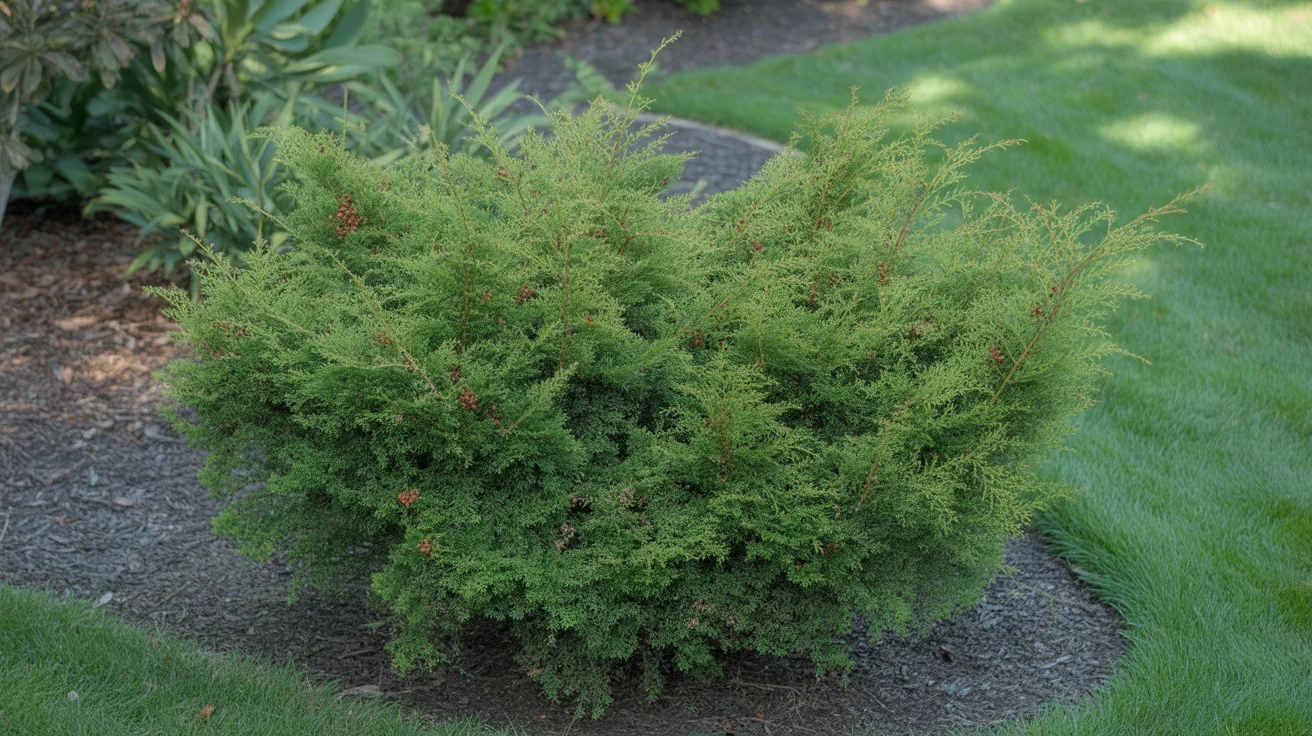
Arborvitae
Tall, columnar evergreen tree for fast privacy screens.
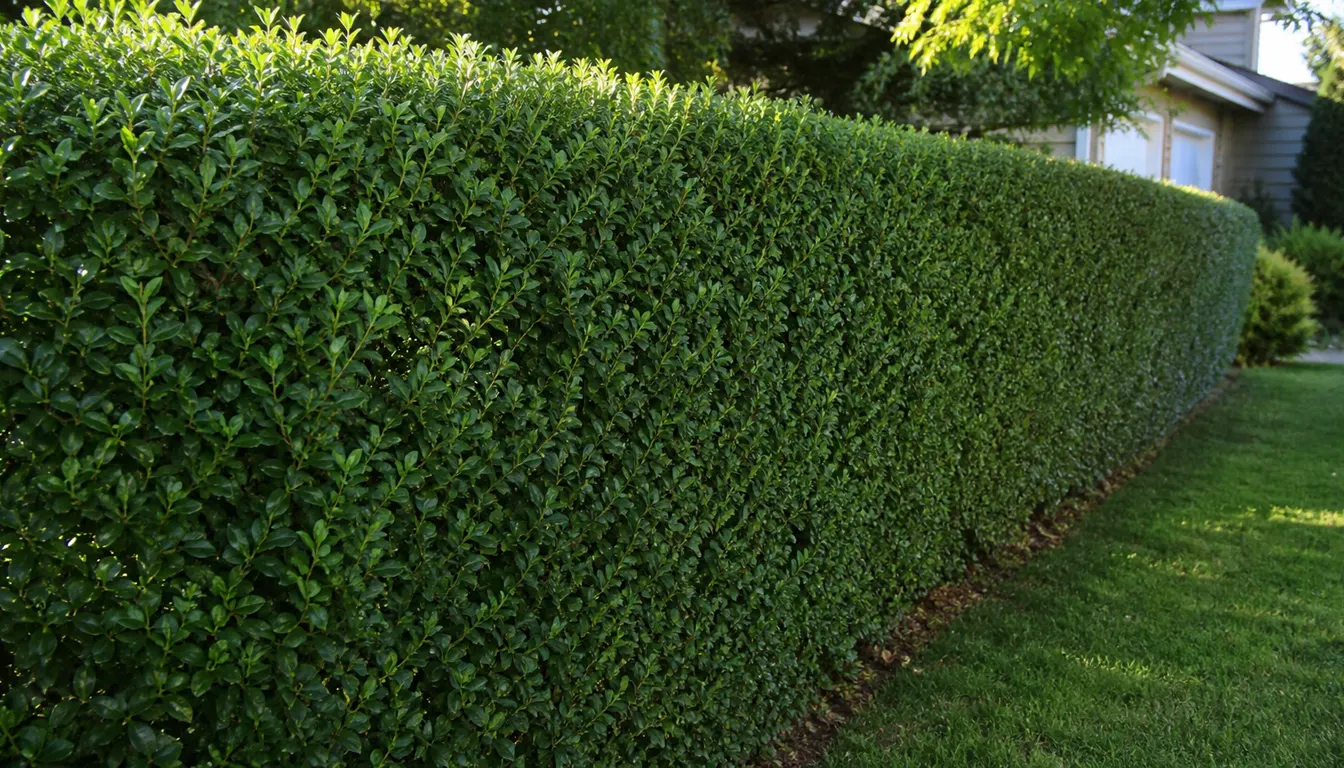
Privet
Deciduous to semi-evergreen shrub often used for clipped hedges.
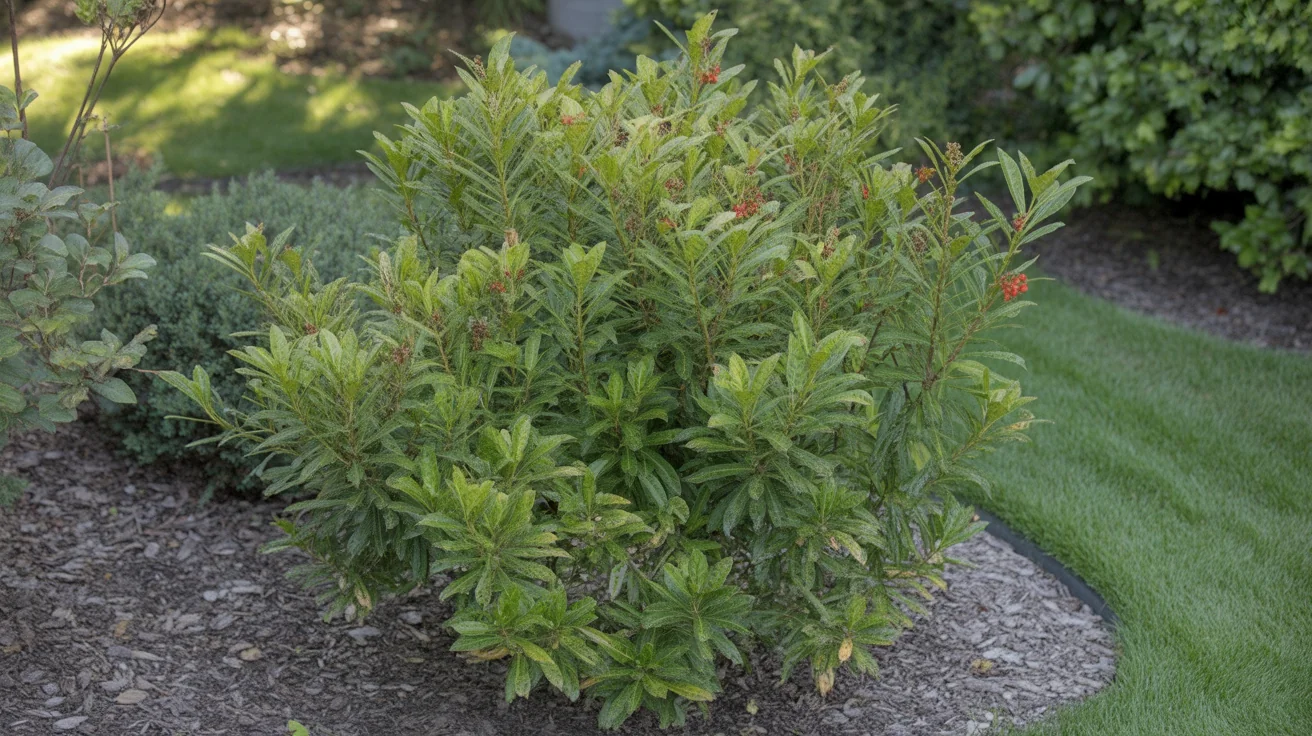
Aucuba
Aucuba is the shrub for bright shade with dry root competition. It keeps evergreen structure near north walls, porches…
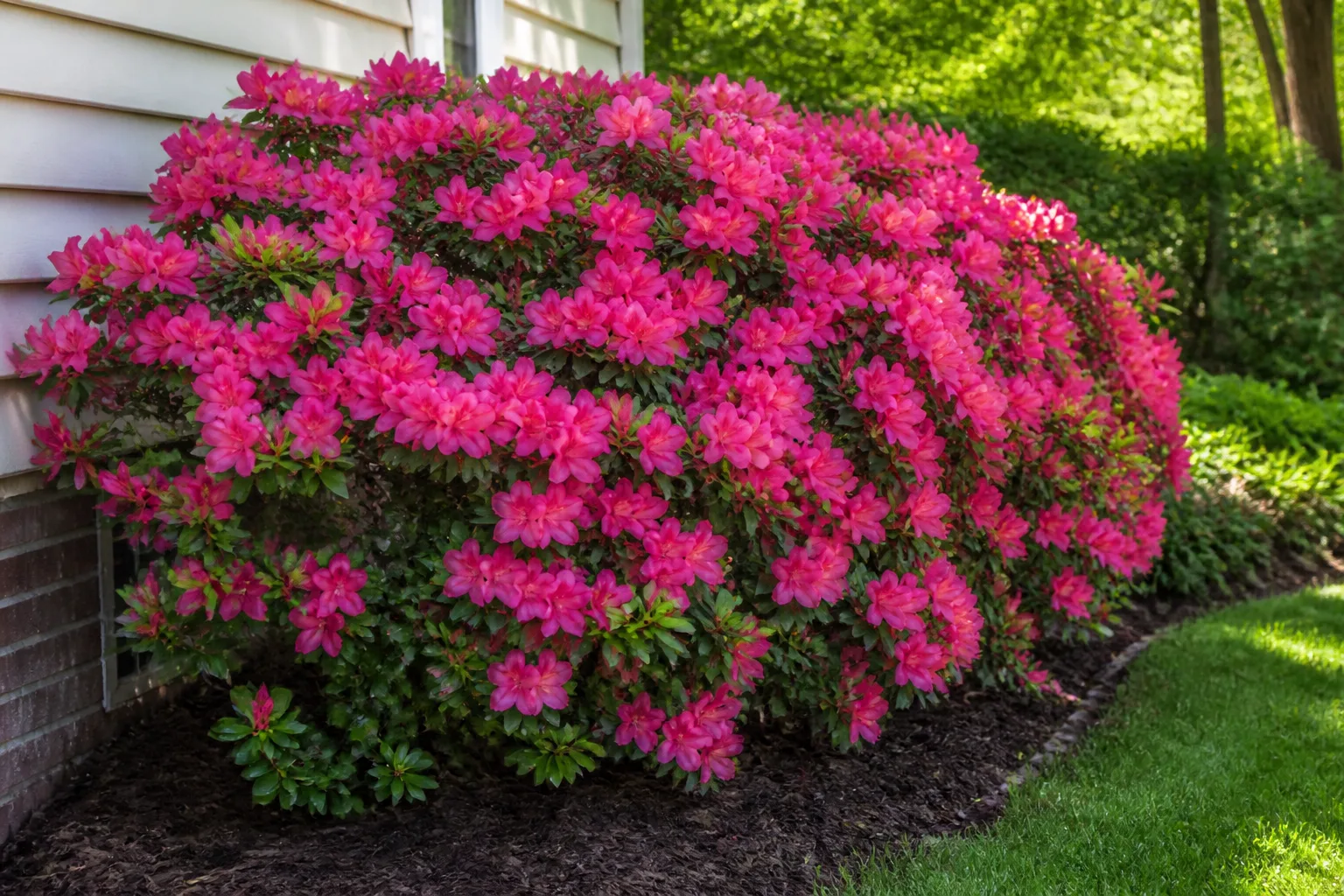
Azalea
Azaleas bring spring flowers, and some cultivars bloom again later in the year.
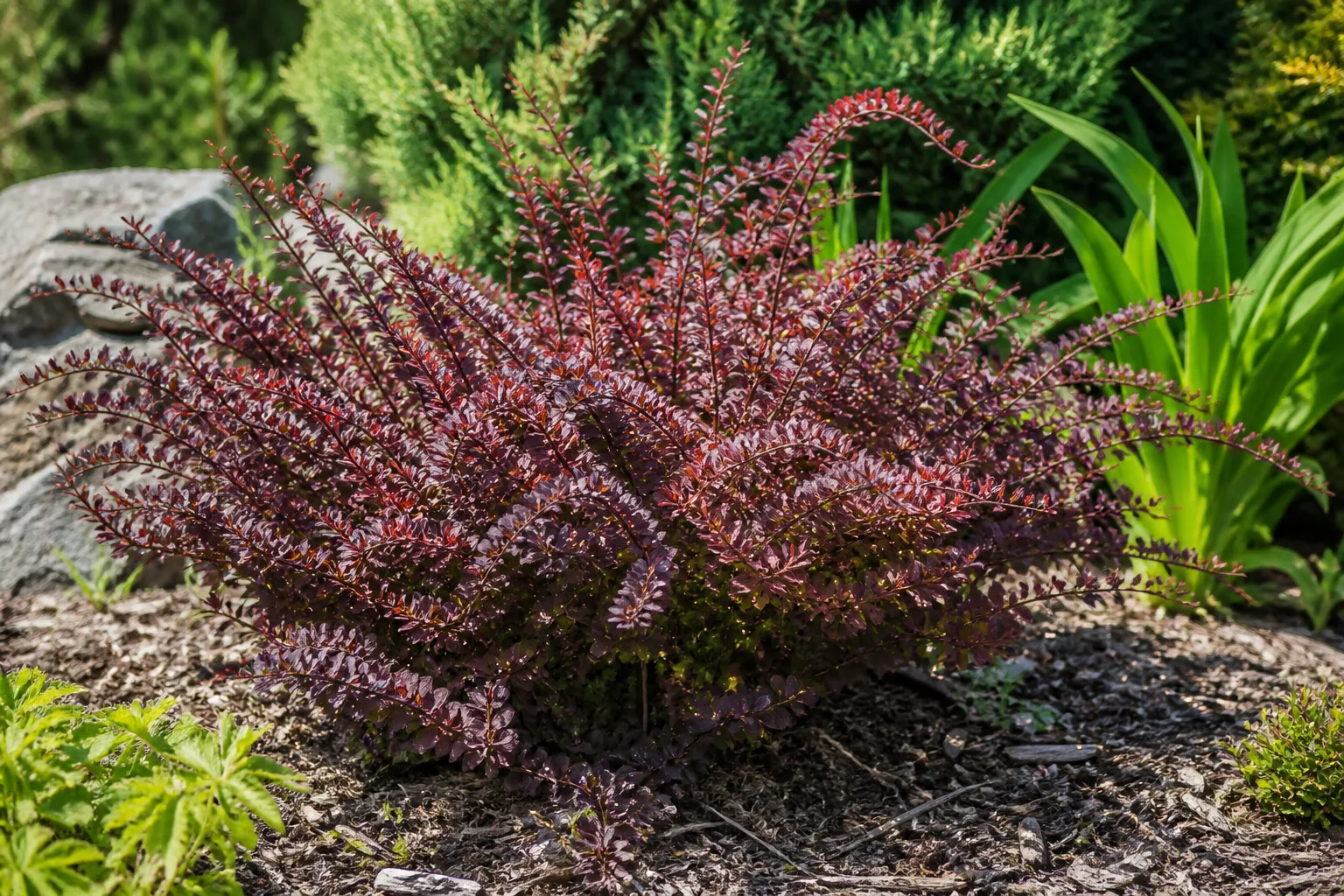
Barberry
Japanese barberry (Berberis thunbergii) is a thorny, deer-resistant shrub whose berries birds carry into woods, so…