
Best Privacy Shrubs for Hedges and Screens
Space hedges 2 to 3 feet apart or screens at 60 to 75 percent of mature width. Choose shrubs that recover well and avoid hard cuts on arborvitae.
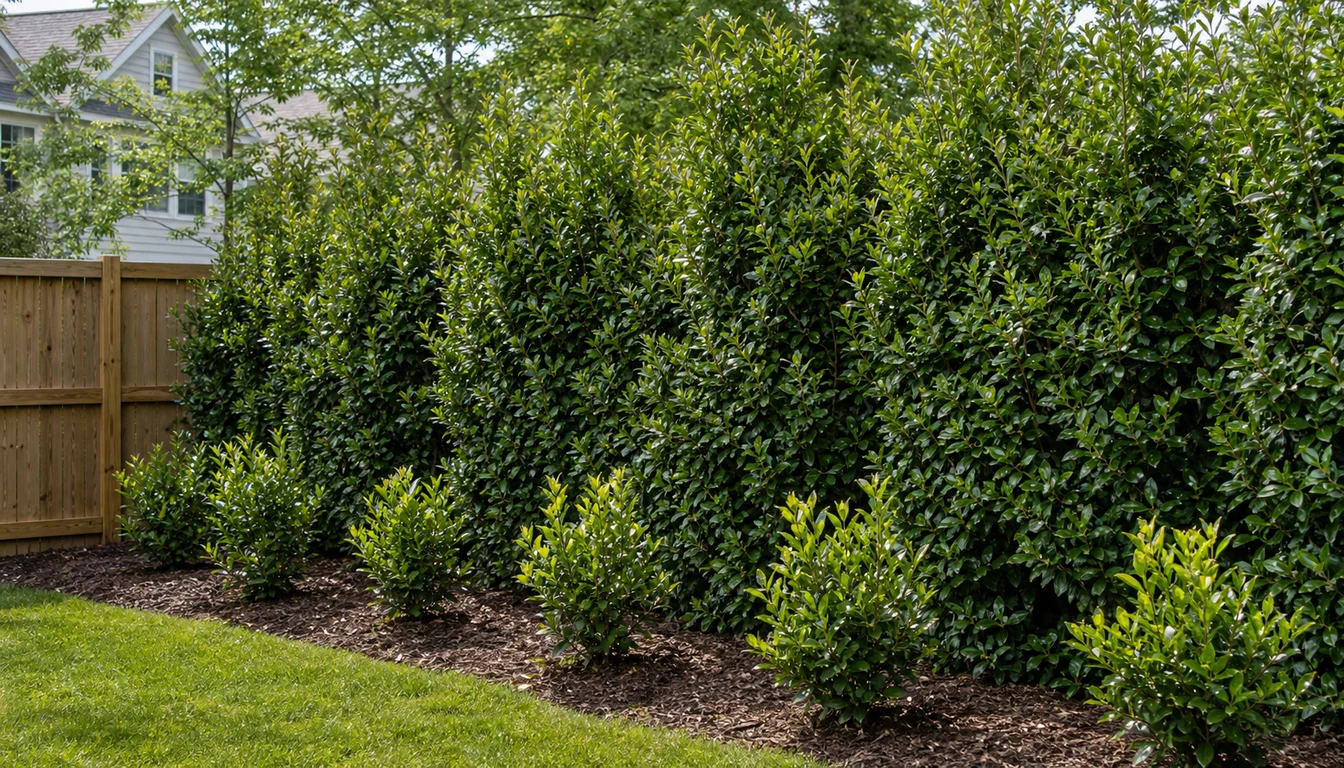
At a glance
Almost every failed suburban hedge was planted or cut for the wrong future shape. The plant itself was rarely the first problem.
The row was spaced for planting day and cut into a vertical box, so its lower growth died in shade. Some rows were also cut into bare wood that cannot regrow.
The first choice is between a sheared hedge and an informal screen, and it changes every decision after it. It then turns that choice into practical widths, spacings, pruning shapes, and repair decisions.
Should You Plant a Hedge or an Informal Privacy Screen?
These are two different projects rather than two looks.
A formal hedge is sheared to a flat face and is meant to read as a single green wall, while an informal screen keeps each shrub's natural outline and reads as a planting.
The difference costs real time, because a crisp formal hedge wants two to three cuts a season for as long as you own it while an informal screen is pruned selectively once a year and often less. Over ten years that is the gap between roughly twenty-five sessions with a trimmer and fewer than ten with a pair of loppers.
A hedge is also less forgiving of a wrong species. Shearing exposes any shrub that resents it by browning at the cut face or thinning where light stops reaching, so the plants that make good formal hedges are a much shorter list than the plants that make good screens.
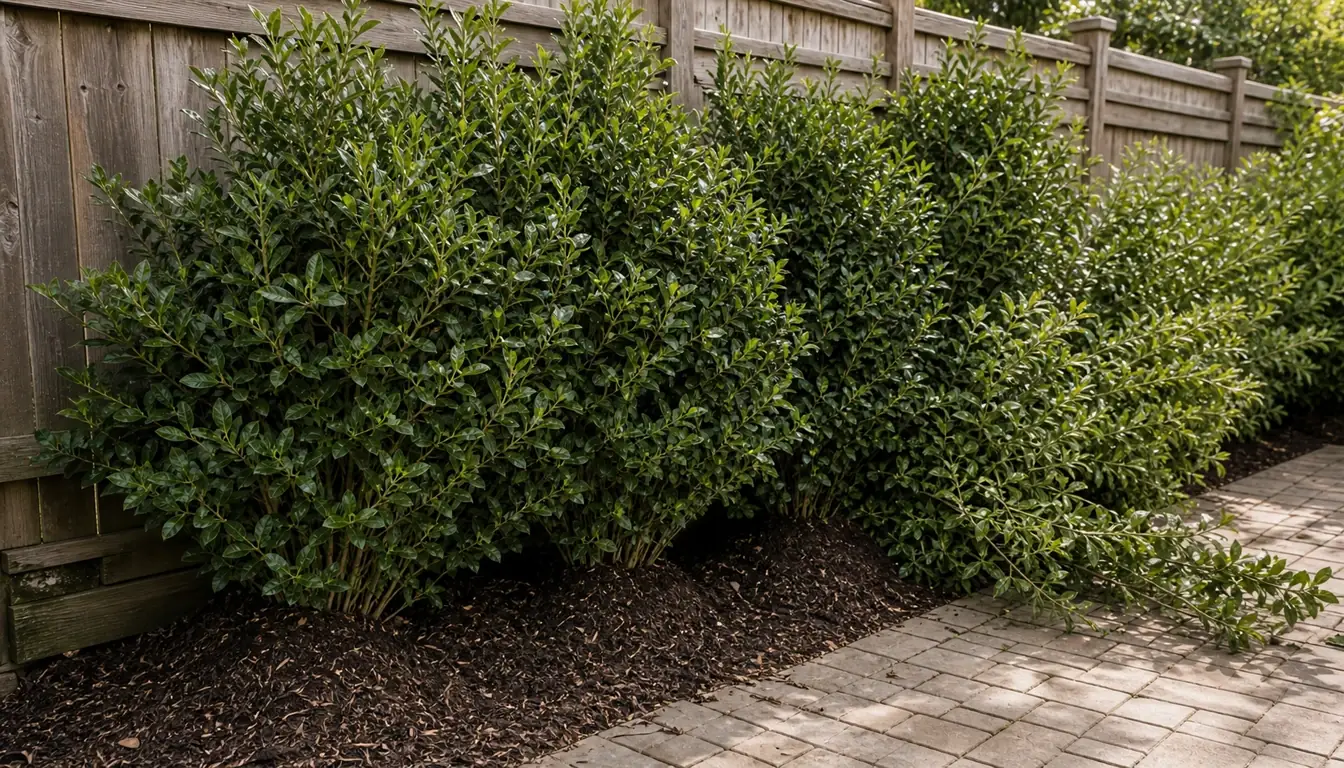
| Decision | Formal hedge | Informal screen |
|---|---|---|
| Spacing | 2 to 3 ft apart, meant to fuse | 60-75% of mature width |
| Cutting | 2 to 3 shears a season | Selective, once a year or less |
| Shape | Tapered, top narrower than base | The plant's own outline |
| Species tolerance | Narrow, must take shearing | Wide, most screening shrubs work |
| Recovery from neglect | Poor once bare | Good, it was never uniform |
Pros
- A hedge gives a crisp architectural line and the densest possible screen per foot of width
- A hedge can be kept far narrower than the same shrubs grown loose
- A screen needs a fraction of the annual work and forgives a missed year
- A screen survives a single plant failure without a visible hole in a flat face
Cons
- A hedge commits you to two or three cuts every season for the life of the planting
- A hedge that goes bare at the base is difficult and slow to bring back
- A screen needs more depth of bed, because the plants keep their full width
- A screen cannot be held to a sharp line if the design wants one
Where Does the Privacy Sightline Actually Cross Your Yard?
The fence is where the boundary is, not where the problem is.
A short angled group near a patio routinely blocks more of the actual view than a long row at the property edge, and it costs a fraction of the plants.
Start from the number. Seated eye level is roughly 4 feet above the ground and standing eye level 5 to 5 feet 6 inches, so most exposures need far less height than people assume once they stop measuring from the lawn and start measuring from the chair.
Distance then does the rest of the work, because a screen at half the distance to the viewer blocks about twice the angle for the same height. The exception is anything raised, since a neighboring deck or an upslope needs height that shrubs cannot reach and belongs with screening trees instead.
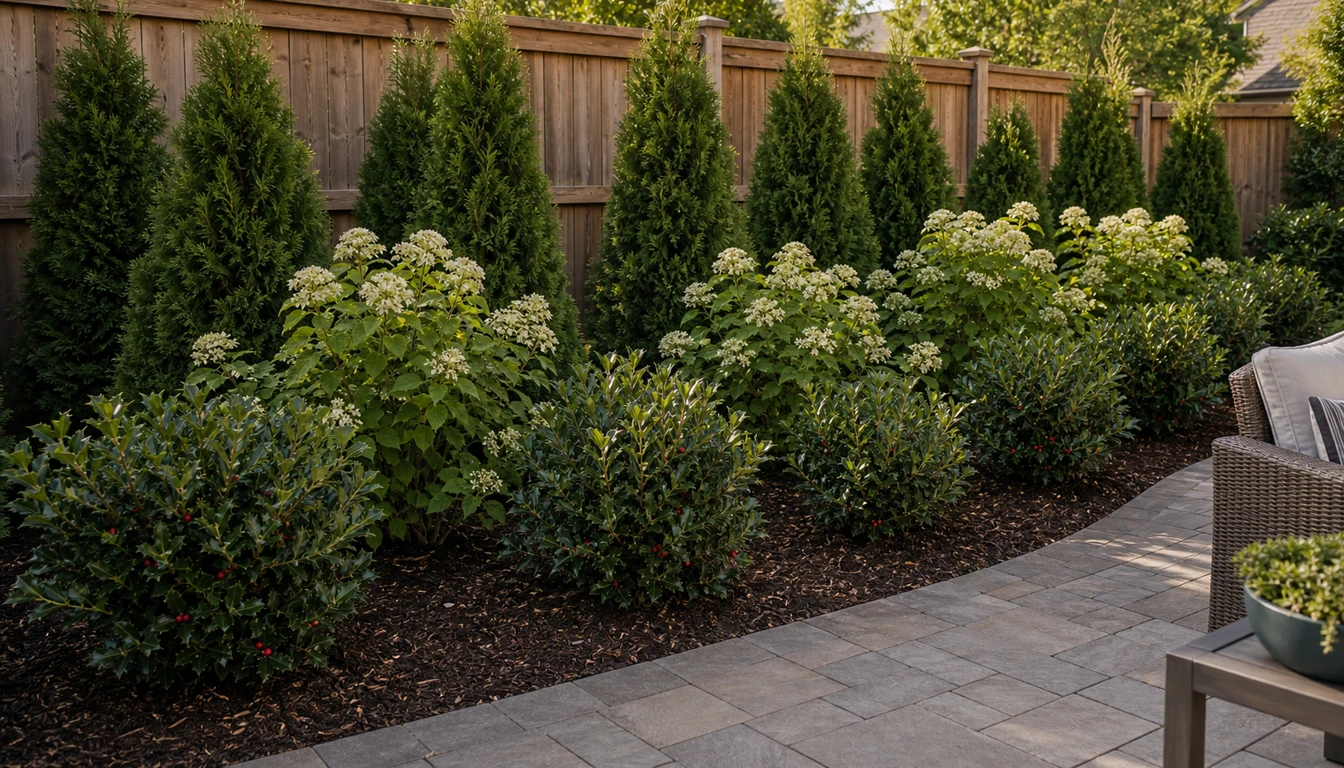
| What is exposed | Height to clear | Where to plant it |
|---|---|---|
| Seated patio view | About 4 ft | Near the seat, not at the line |
| Standing view across the garden | 5 to 5 ft 6 in | Mid-garden or boundary |
| Side window or car | 5 to 6 ft | Boundary, dense to the ground |
| Headlight glare | 2 to 3 ft, dense | Along the exposed edge |
| Angled view through a straight row | Same height, offset | A staggered second group |
| Neighbor's deck or upslope | Above 8 ft | Beyond shrubs, use a tree |
How Far Apart Should Privacy Shrubs Be Planted?
Spacing follows directly from the first decision.
A formal hedge goes 2 to 3 feet apart because the plants are meant to grow into one another and be cut as a single mass, while an informal screen goes at 60 to 75 percent of mature width so each shrub keeps its own shape and its own air.
Planting a screen tighter than that buys a year or two of earlier cover and then charges for it. Crowns press, interiors go bare where light stops reaching, and any disease that arrives moves along the row through touching foliage instead of stopping at the first plant.
Then set the whole thing back from the boundary. At least half the mature width inside your own line keeps the screen yours to prune, and 2 to 3 feet of working room behind it is what makes that pruning physically possible in ten years.
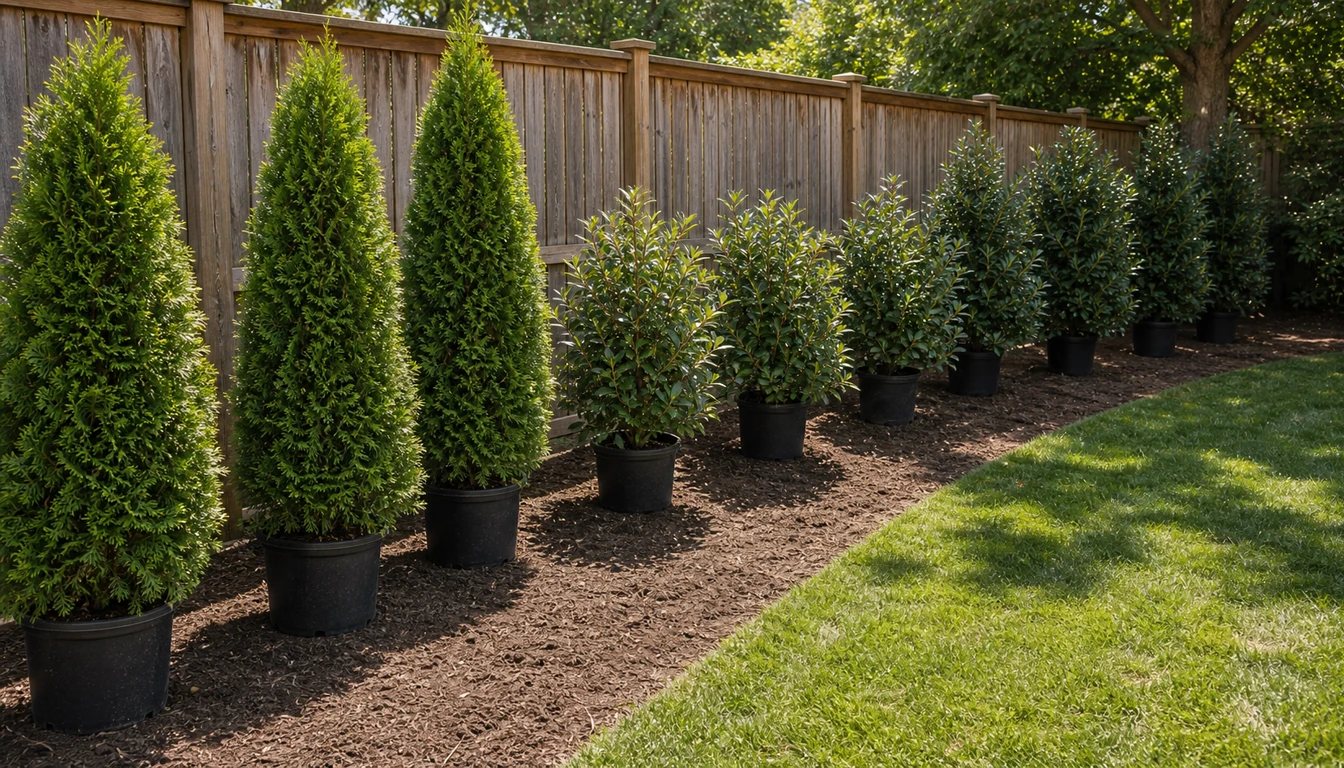
| Shrub | Mature height | Mature width | Hedge / screen spacing |
|---|---|---|---|
| Boxwood | 2-15 ft by cultivar | 2-8 ft | 2 ft / 60-75% of width |
| Yew | 10-40 ft | 4-20 ft | 2-3 ft / wide, it fills slowly |
| Holly | 3-50 ft by type | 3-25 ft | 3 ft / check the cultivar |
| Privet | 4-15 ft | 3-12 ft | 2 ft / 3-4 ft |
| Skip laurel | 6-10 ft | 3-5 ft | 2-3 ft / 3-4 ft |
| Euonymus | 4-10 ft | 3-6 ft | 2-3 ft / 3-4 ft |
| Viburnum | 4-12 ft | 4-12 ft | Screen only, 4-8 ft |
| Arborvitae | 3-40 ft by cultivar | 2-15 ft | Screen only, 60-75% |
Why Should a Clipped Hedge Be Wider at the Base?
A hedge cut with vertical sides shades its own base, and a hedge cut wider at the top shades it badly.
That is the whole reason so many established hedges are a green wall on top of a row of bare brown legs.
The fix is geometric rather than horticultural. Cut the hedge as a gentle wedge with the top roughly 10 to 25 percent narrower than the base, so light reaches the lower branches every day rather than being intercepted by the growth above them.
The taper matters most on whichever side gets least sun, since that face is already working with less and cannot afford to be shaded by its own top as well.
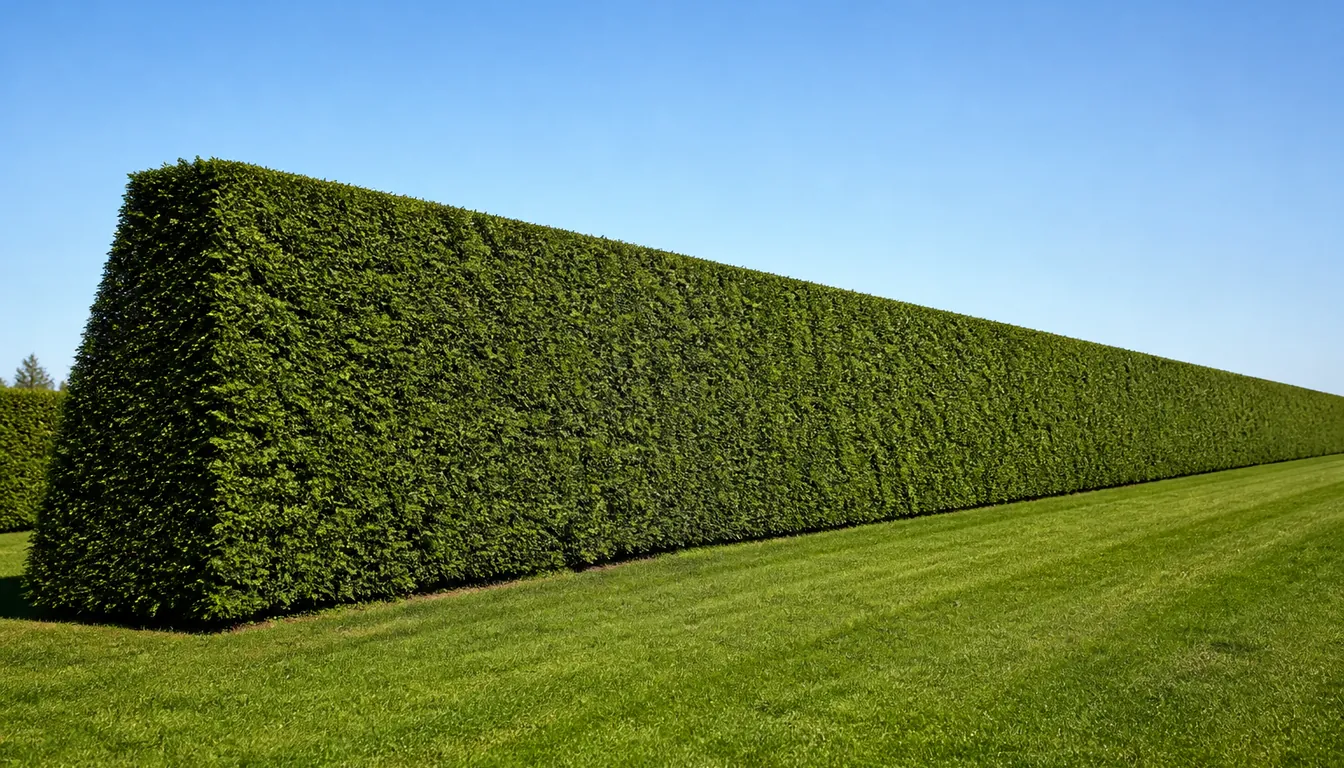
- Set the base width firstcut the bottom to the width you actually want the hedge to occupy
- Mark the top narroweraim for 10 to 25 percent less than the base, more on the shaded side
- Cut the sides to meet themwork bottom upward so falling clippings do not hide the line
- Cut the top lastflat and level, and never wider than the sides you just made
Cut a wedge, not a box. The top of a hedge should always be narrower than its bottom, because the only thing that keeps the lower branches alive is light that the upper growth did not take first.
Can an Overgrown Privacy Hedge Be Cut Back Hard?
This is the single most expensive thing to get wrong, because it is not recoverable.
Most conifers, including arborvitae and juniper, carry a dead zone of bare inner wood that holds no dormant buds, so a cut into it never produces new growth.
The result is a brown face that stays brown for the life of the plant. An arborvitae hedge reduced by a foot too far is not recovering next season or the season after, and the only remedies are replacement or living with it.
Broadleaf shrubs behave completely differently. Privet, holly, boxwood, laurel and viburnum all resprout from bare wood, which means an overgrown broadleaf hedge can be renovated hard and will come back, and yew is the one conifer that behaves the same way.
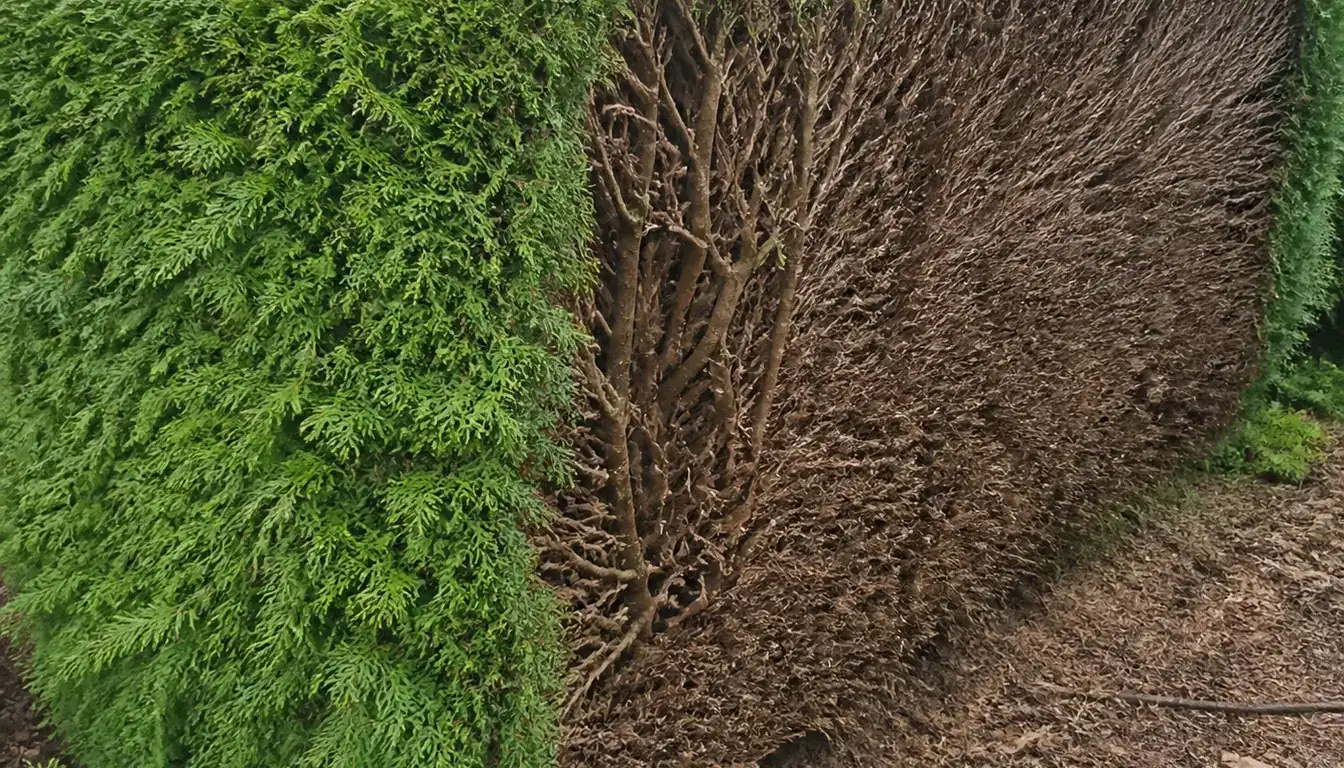
- Will not come back: arborvitae and juniper, so never cut past the green
- Will come back: privet, holly, boxwood, laurel, viburnum and yew
- Renovate over two or three seasons: cut one side hard in the right window for the species, let it refurnish, then do the other
- If it is a conifer and already bare: plan a replacement rather than a rescue
Should You Choose Fast Growth or a Longer-Lived Screen?
Every screening shrub sits somewhere on one trade-off, which is how quickly it covers against how much cutting it then demands forever.
Privet is the honest example at the fast end. It reaches usable height quickly and then needs shearing two or three times a season to stay tidy, so the plant that saved you two years of waiting spends the next twenty charging you for it in weekends.
Read that as speed rather than as quality, because the slow end of it is where the long-lived plants are. Yew and boxwood take years to fill and then stay presentable for decades on one cut a year, which is why old gardens are full of them and rarely full of privet.
Should a Privacy Screen Mix Several Shrub Species?
A single-species run carries a single shared risk.
One pest, one disease, one drought pattern, one ice load or one hungry deer population can mark every plant in it at the same time, and a uniform wall fails uniformly.
A mixed run only works if the roles are clear, because variety for its own sake reads as a collection rather than a screen. Repeat each role down the length instead of planting one of everything, and accept that a mixed run suits an informal screen far better than a sheared hedge.
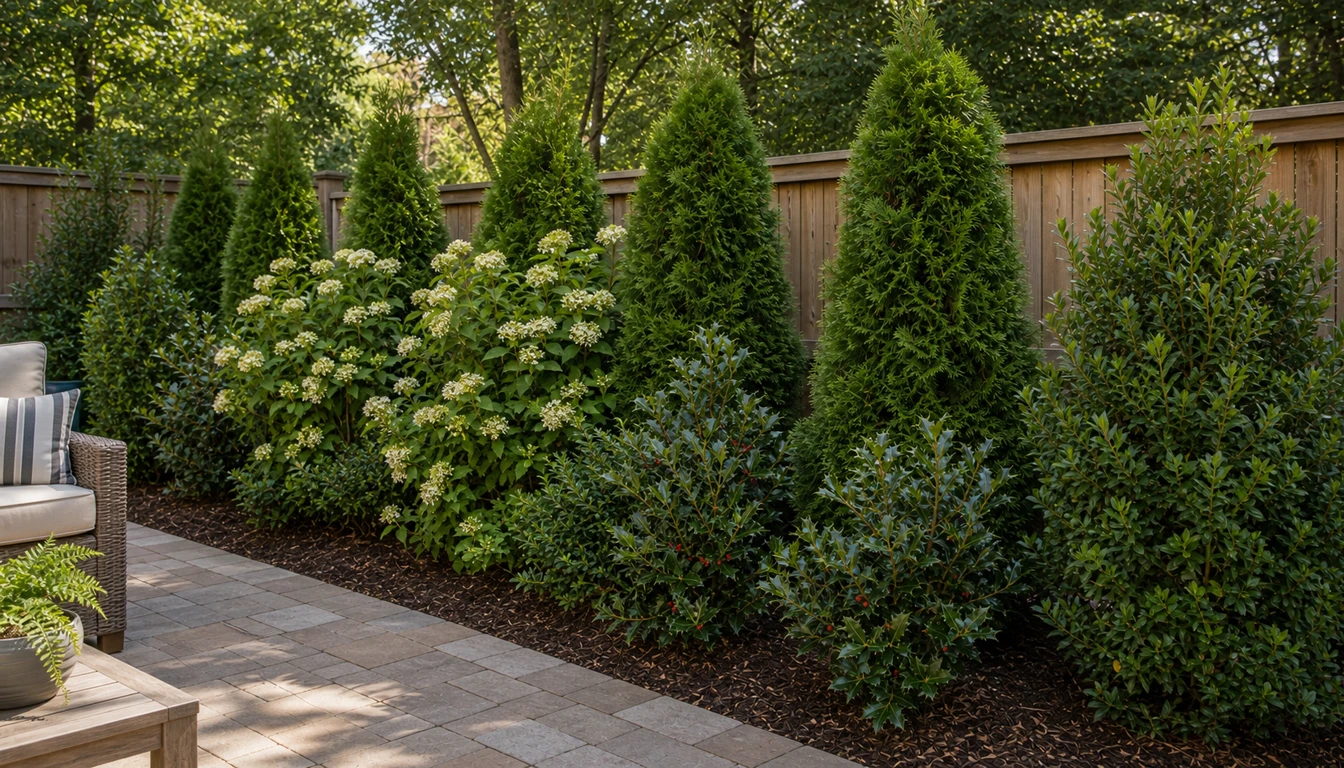
- Evergreen backbone: the plants carrying winter cover, repeated down the run
- Lower filler: shorter shrubs closing the band a seated viewer looks through
- Seasonal leaf mass: deciduous shrubs adding summer density and autumn interest
- Repair plant: one species you keep spare, so a gap can be filled with something that already suits the site
How Do You Establish a Whole Row Evenly?
A fence-line bed is harder than the middle of a garden, and it is worth knowing why before the first hot spell.
Wind runs along boundaries, fences throw rain shadow, and a south-facing panel reflects heat straight back into the root zone.
Watering habits then decide whether the run thickens low down or races upward on shallow roots. Water deeply and wait until the top 2 inches of soil are dry rather than sprinkling daily, and treat the whole run as one shared root zone laid out for a soaker line rather than as a series of separate plants to hand water.
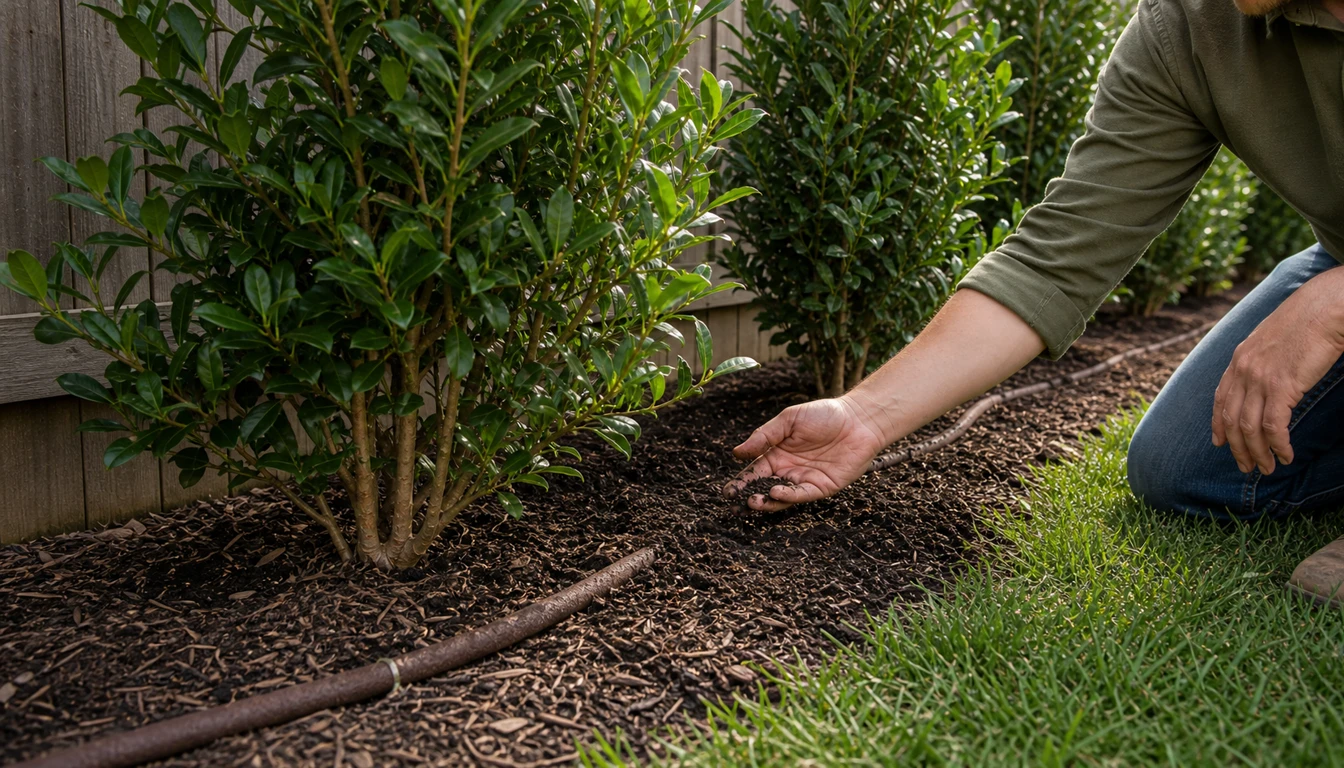
- Soak, then wait: water again when the top 2 inches are dry rather than on a schedule, and see watering timing for when in the day
- One soaker line down the run: the root zones overlap, so treat them as one
- Feed lightly or not at all: heavy nitrogen makes tall soft growth and a thin base
- Tip the leaders on young plants: it forces the side branching that fills the bottom
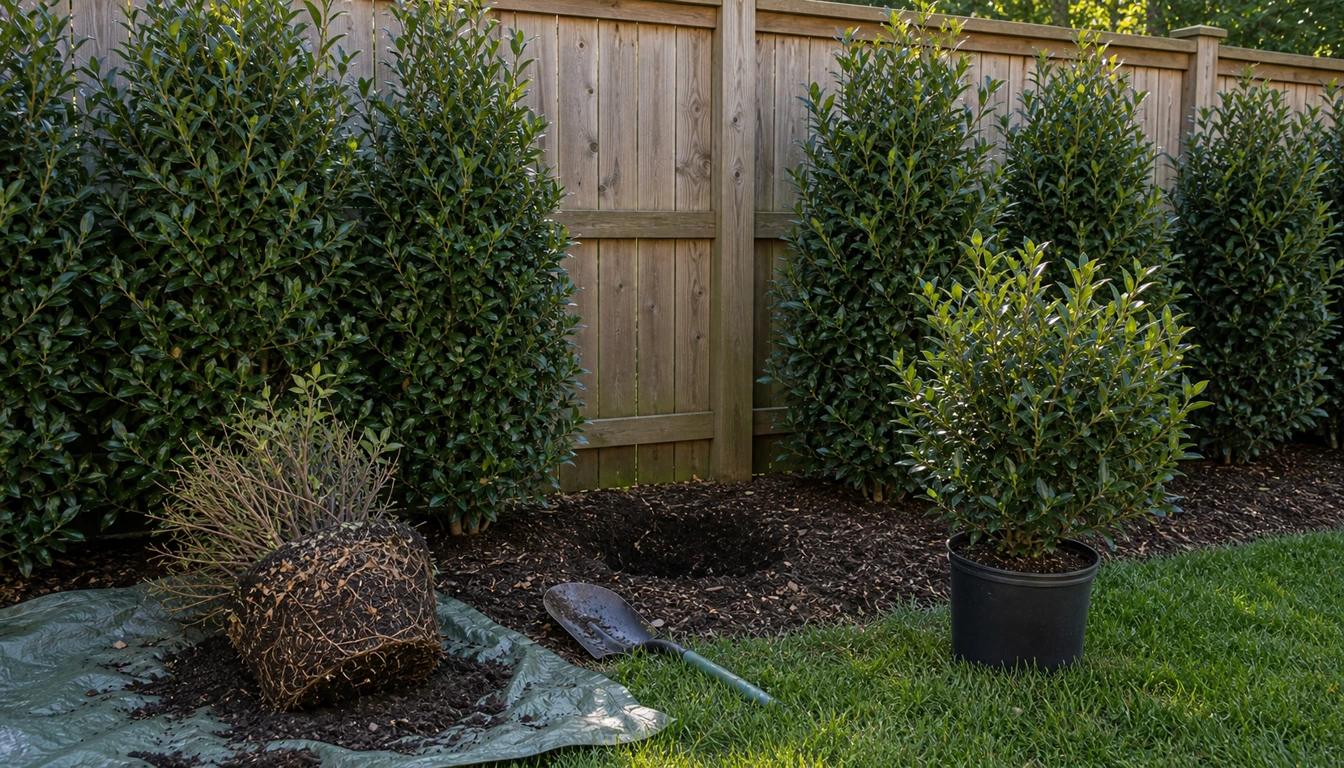
How Do You Repair One Gap Without Replanting the Row?
A gap in a screen is a symptom rather than a vacancy, and planting into it without asking why it opened usually buys the same failure again two years later.
The pattern tells you most of it. One failed plant in an otherwise healthy run is a replacement, while the same failure repeating along a stretch is a site problem that a new shrub will meet exactly as the old one did.
Whatever the cause, a replacement planted into an established run starts at a disadvantage, competing for light and water against neighbors that have had years to root, so it needs its own watering for longer than a new run would.
| What you see | Likely cause | The repair |
|---|---|---|
| One dead plant, rest healthy | Bad luck or a buried root flare | Replace, check the depth |
| Several failing in one stretch | Drainage, rain shadow or wind | Fix the site before replanting |
| Bare at the bottom along the run | Hedge cut wider at the top | Taper it, and renovate if it will regrow |
| Browsed to a clean line | Deer | Change species or fence the run |
| Brown interior after a hard cut | Conifer dead zone | Not recoverable, plan replacement |
Quick Tips
- Decide hedge or screen first, because it sets the spacing, the species and the yearly work.
- Plant a formal hedge 2 to 3 feet apart and a screen at 60 to 75 percent of mature width.
- Set the row half the mature width inside your own line, with 2 to 3 feet of room behind it.
- Cut a hedge as a wedge, top 10 to 25 percent narrower than the base.
- Never cut arborvitae or juniper past the green, because the bare wood will not resprout.
- Yew, privet, holly and boxwood all come back from bare wood if you need to renovate.
- Water deeply until the top 2 inches are dry, and tip young leaders to force low branching.
Recommended Plants
8 shrubs worth considering.
Boxwood
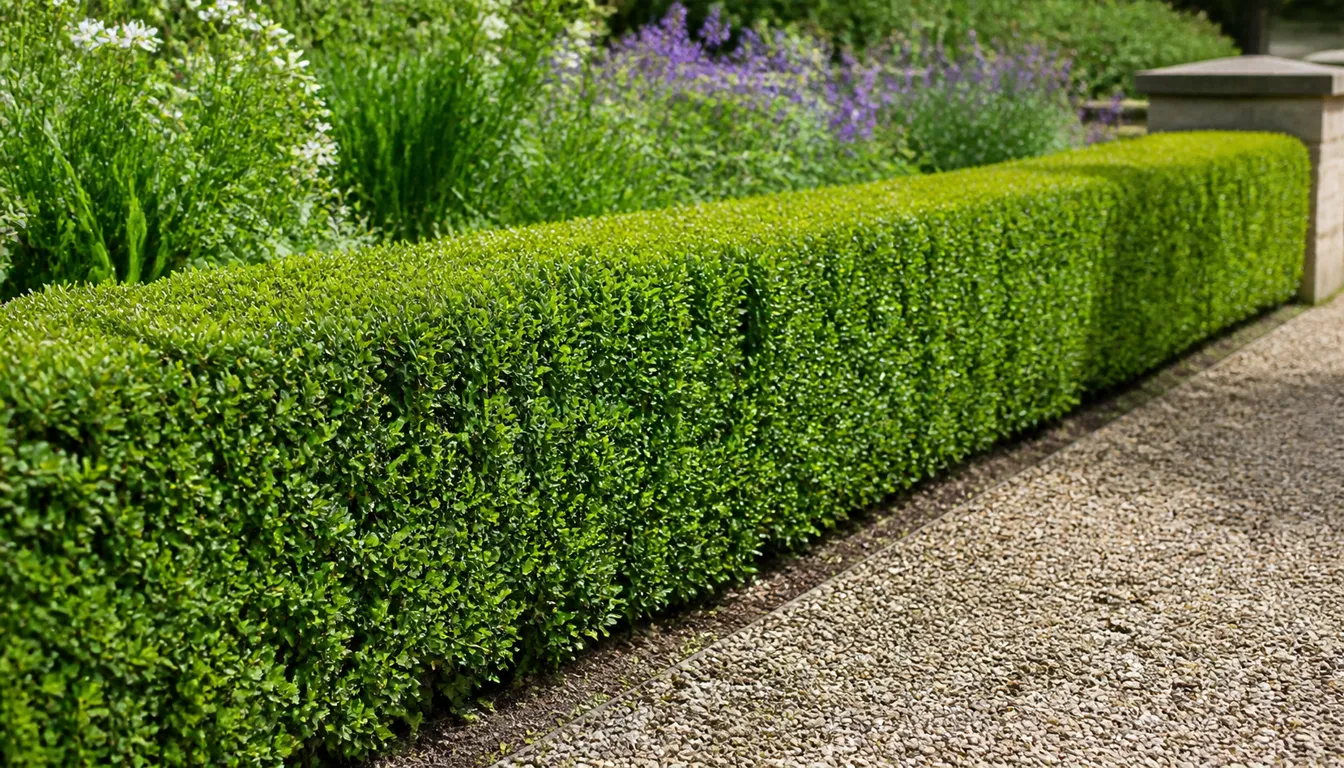
Boxwood works when you need a small evergreen line that stays clipped, dense, and quiet year-round.
Holly
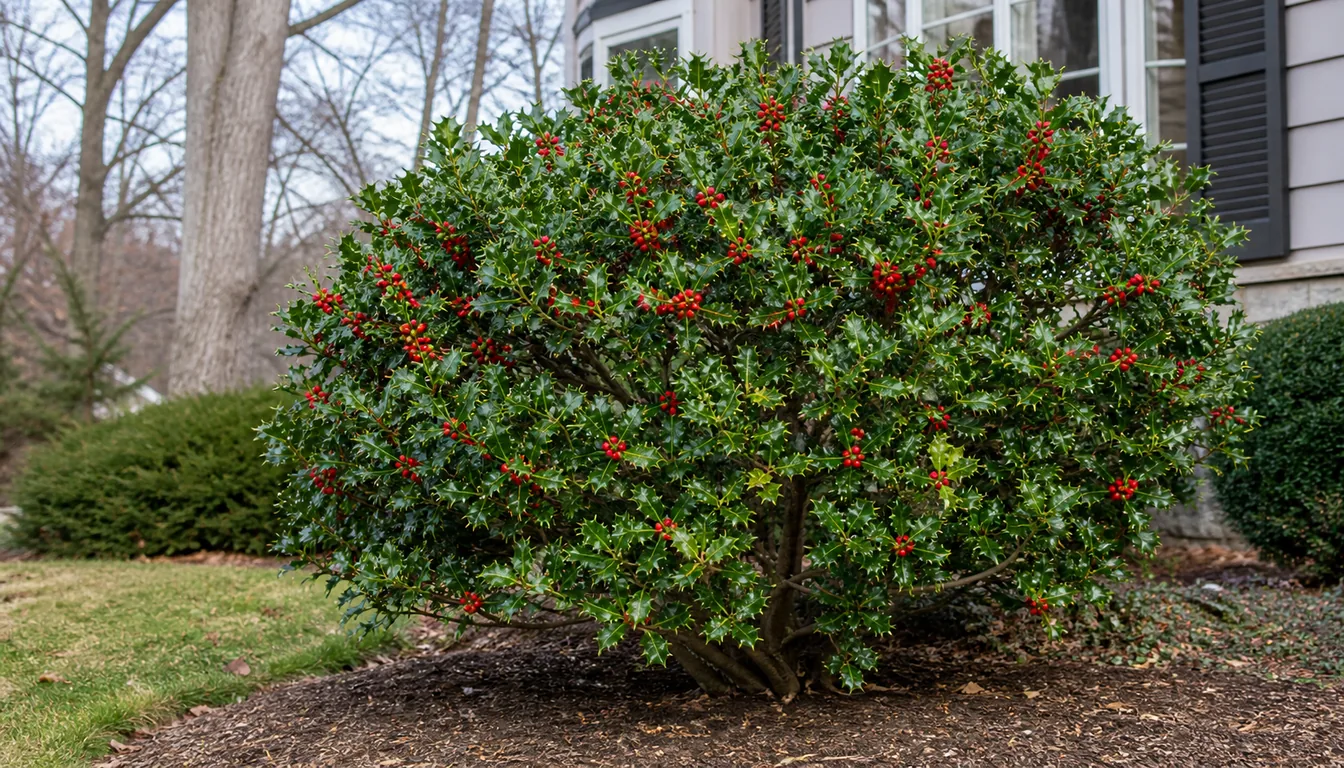
Most hollies carry berries only on female plants, and only when a male of a compatible type blooms nearby at the same…
Yew
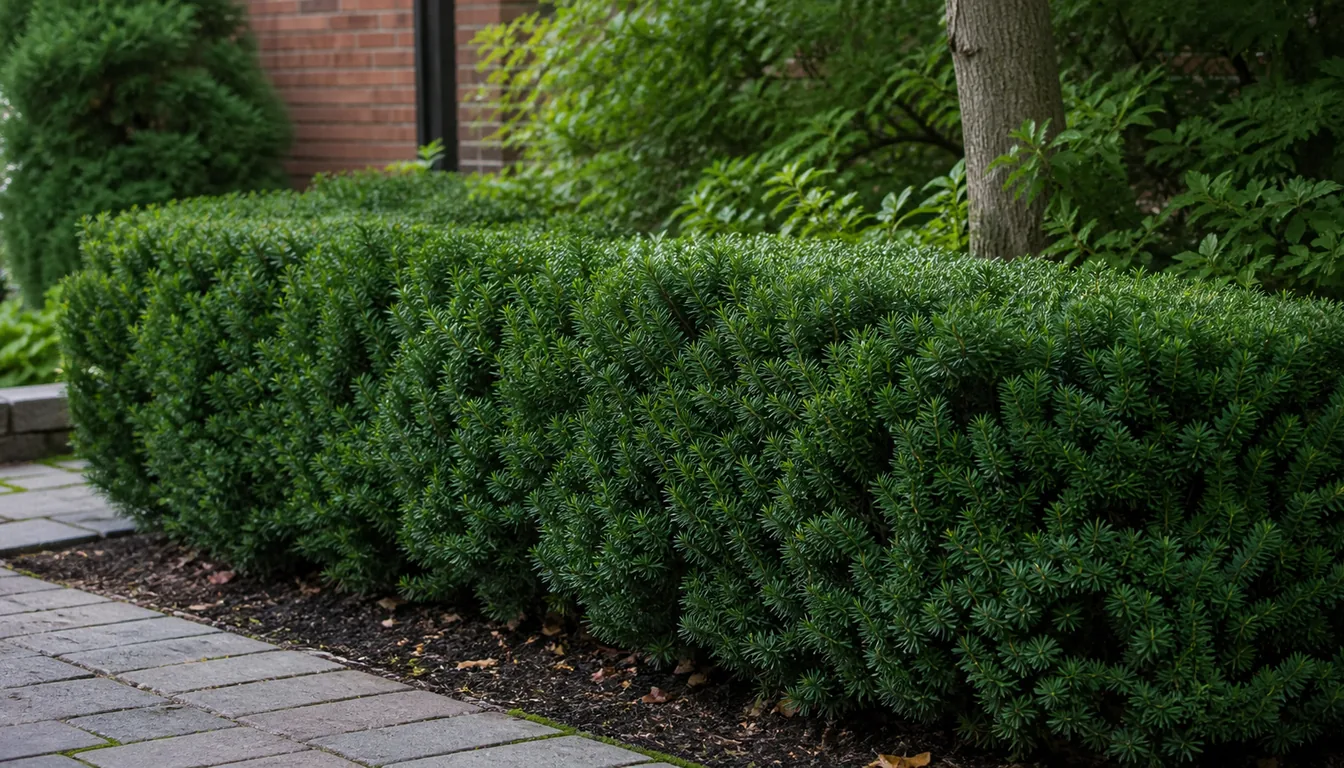
Yew is a long-lived evergreen structure shrub for shade, hedges, and formal planting, but it belongs only where toxic…
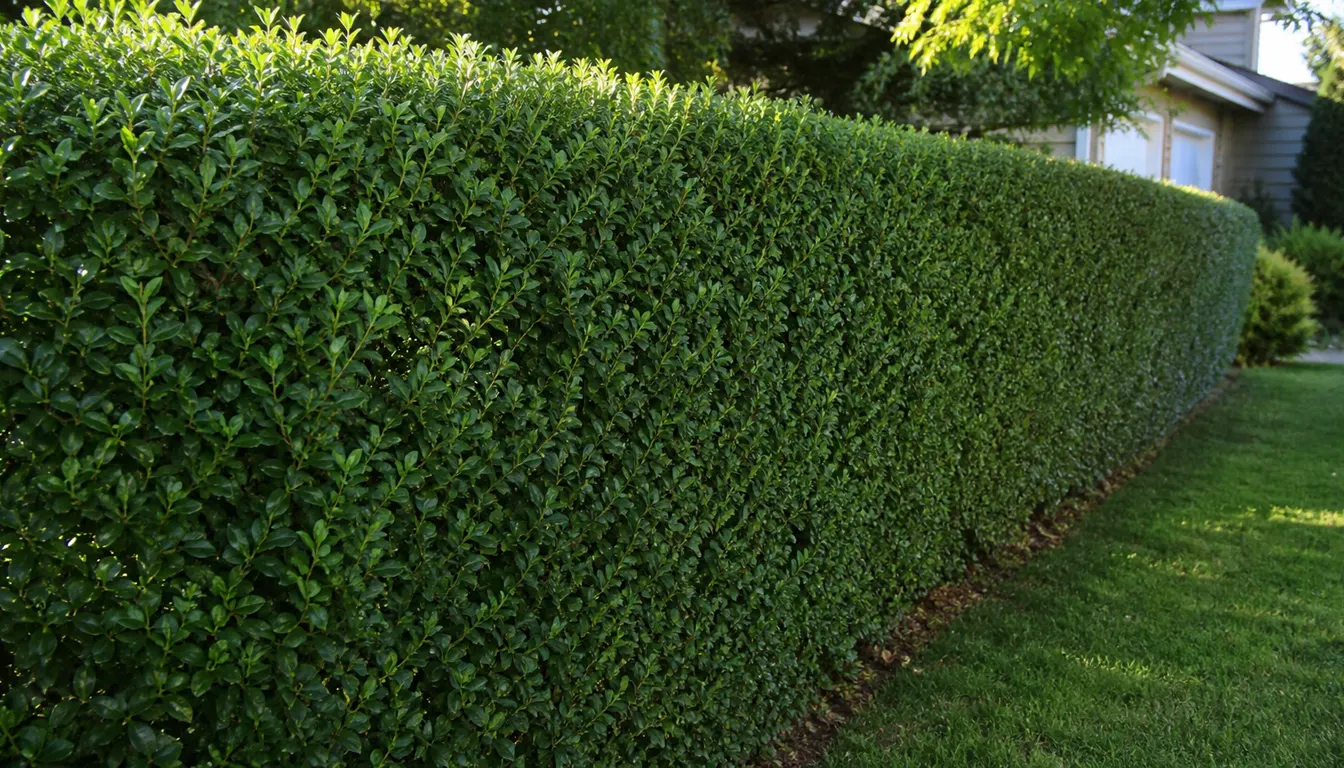
Privet
Privet can make a fast dense hedge, but it should not be the default privacy answer.
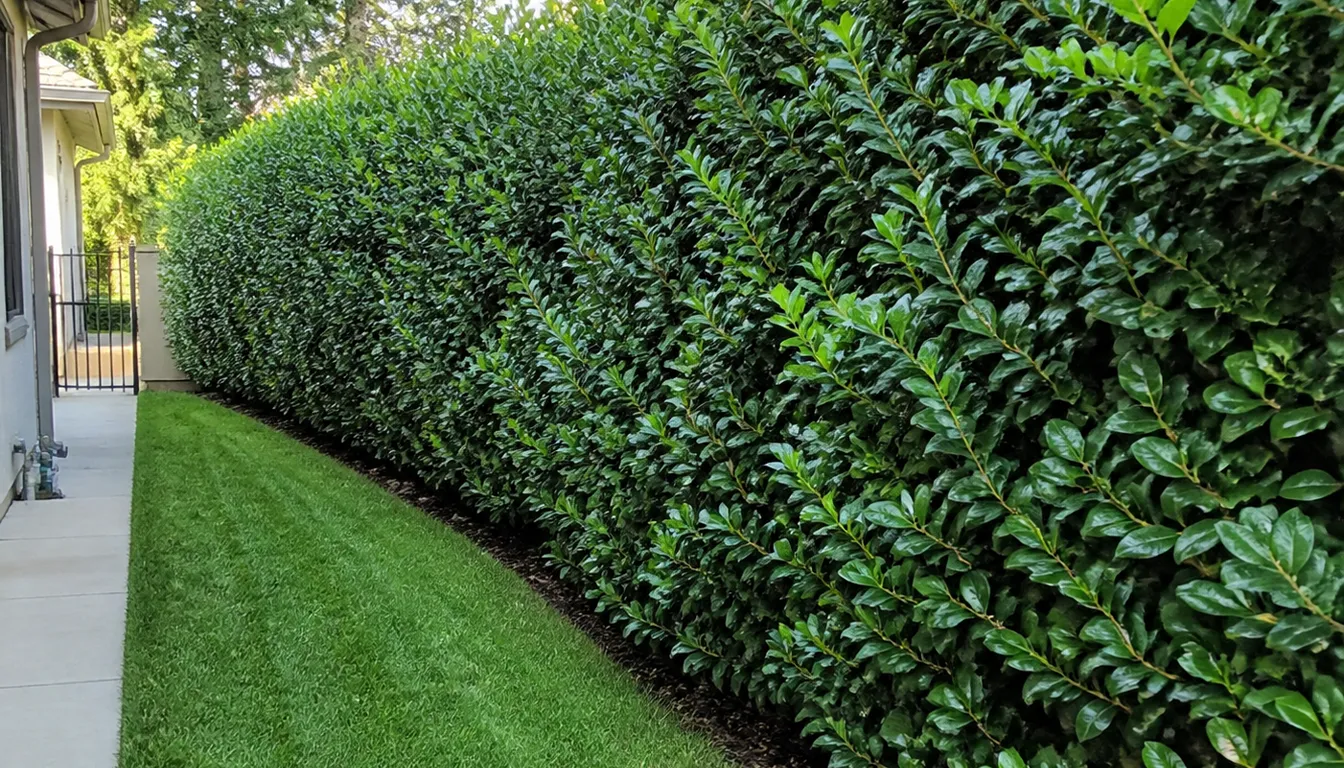
Skip Laurel
Skip Laurel works when you need a year-round screen in a tight strip, but it only stays useful when you plan mature…
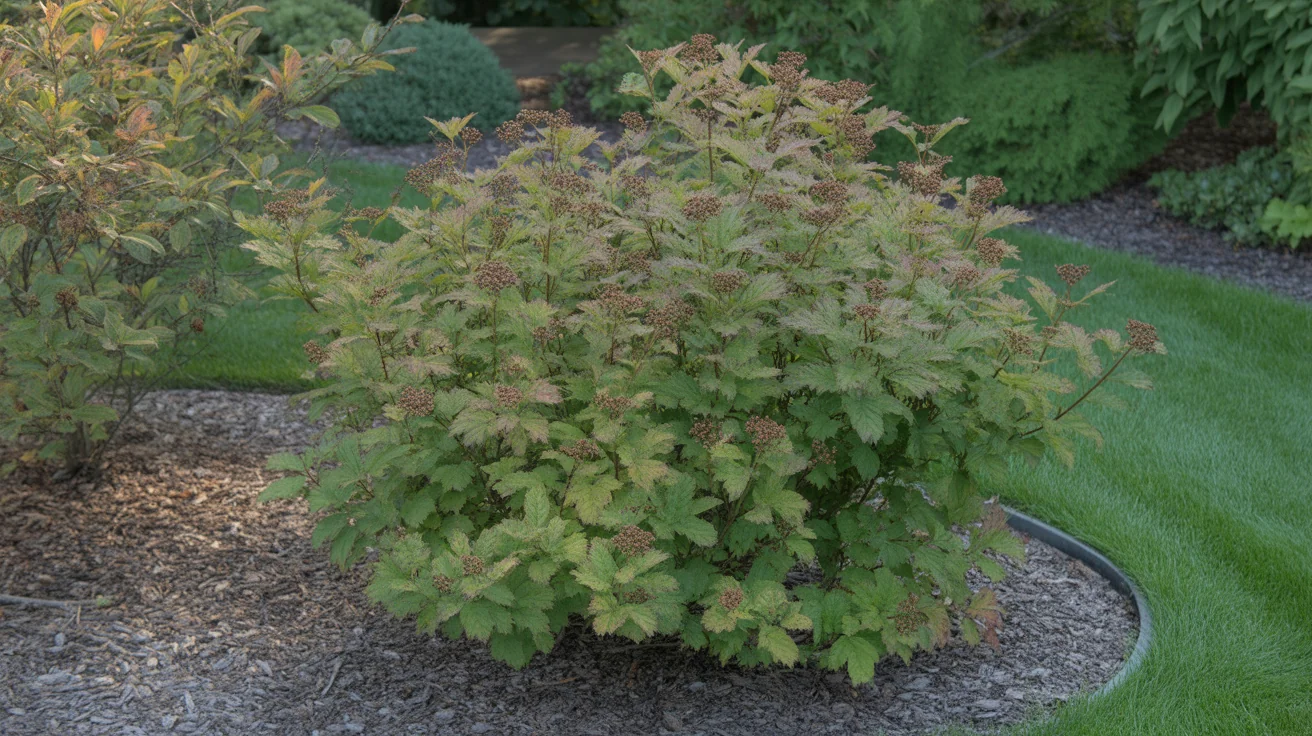
Viburnum
Viburnum is not one shrub habit. The right species decides whether you get fragrance, berries, fall color, a screen, or…
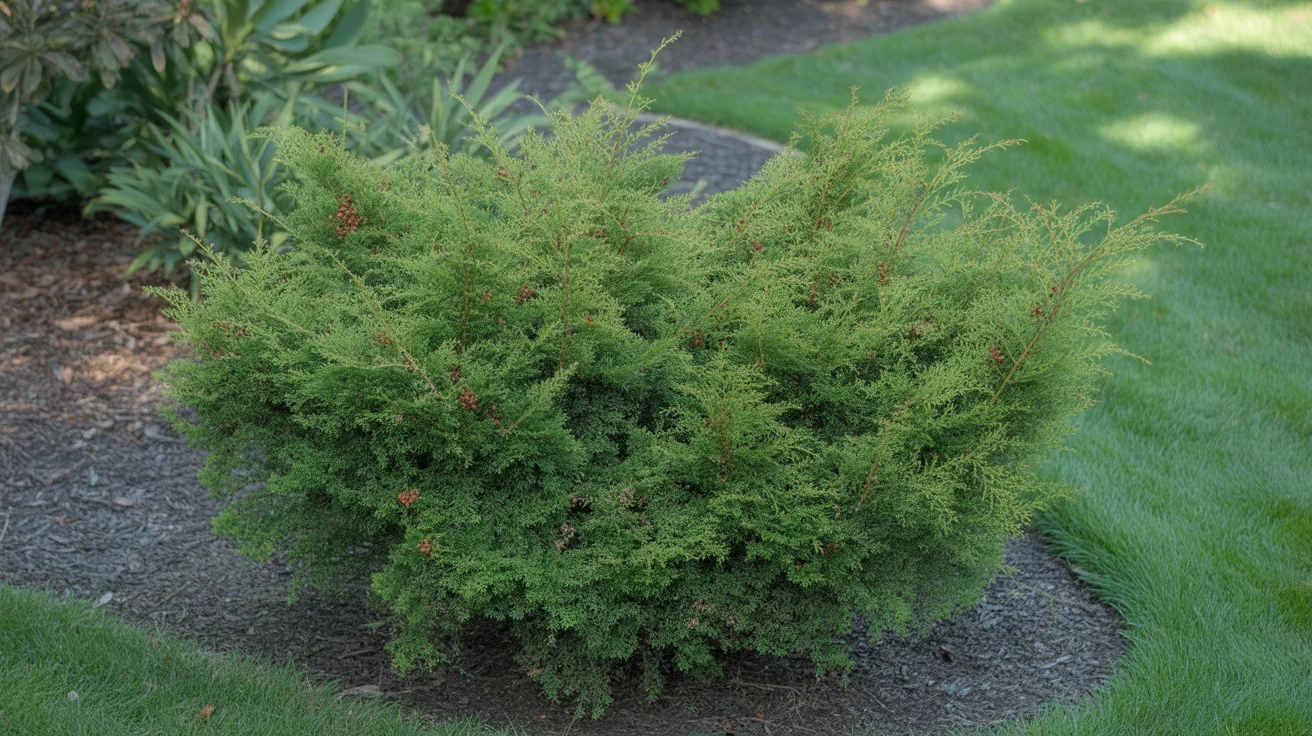
Arborvitae
Arborvitae can form a dense living screen where its mature width, exposure, and water needs fit the site.
Euonymus
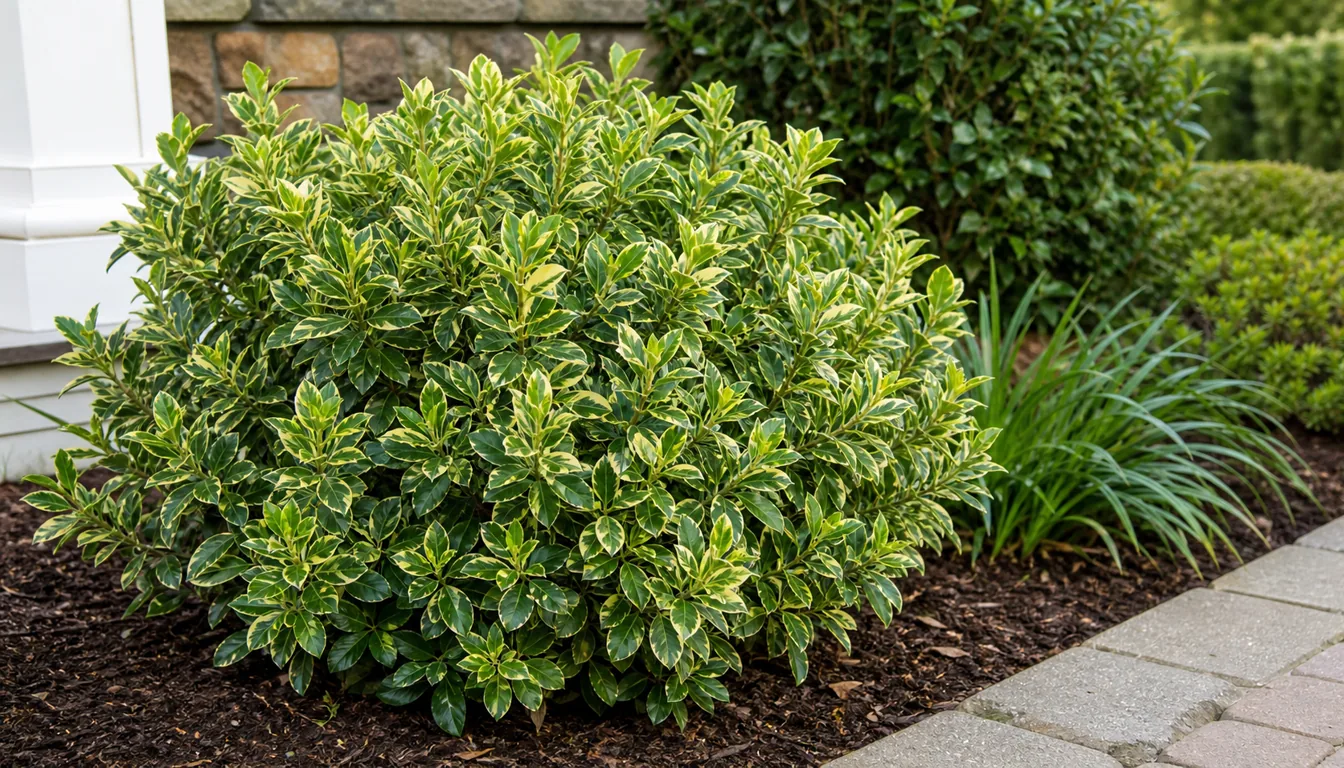
Japanese euonymus (Euonymus japonicus) is an evergreen hedge shrub that tolerates salt, drought, and heavy pruning, but…
Frequently Asked Questions
How far apart should privacy shrubs be planted?
A sheared formal hedge goes 2 to 3 feet apart because the plants are meant to fuse into one mass, while an informal screen goes at 60 to 75 percent of mature width so each shrub keeps its own shape. Planting a screen tighter buys a year of cover and then produces bare interiors and disease running down the row.
Why is my hedge bare at the bottom?
Almost always because it is cut with vertical or top-heavy sides, so the upper growth shades the base and the lower branches die back. Cut it as a wedge with the top 10 to 25 percent narrower than the base, and expect the correction to take a season or two.
Can I cut an overgrown hedge back hard?
It depends entirely on the species. Privet, holly, boxwood, laurel, viburnum and yew all regrow from bare wood, while arborvitae and juniper have a dead zone that never resprouts, so a cut past the green leaves a permanent brown face.
What are the fastest growing privacy shrubs?
Privet is among the fastest, followed by arborvitae, skip laurel and euonymus, but speed is not free. Fast growers need shearing two or three times a season for as long as you own them, while yew and boxwood take years to fill and then stay presentable for decades on one cut a year.
How close to the property line can I plant a hedge?
Set the row at least half the mature width inside your own line, and leave 2 to 3 feet of working room behind it. Planting on the line means half the hedge grows over the boundary and the side you cannot reach is the side that browns and dies back.
Should I use one shrub species or several?
One species gives a cleaner line and carries one shared risk, since a single pest or disease can mark the whole run at once. A mixed run is more resilient but needs clear roles, an evergreen backbone, a lower filler, seasonal leaf mass and a repair plant, and it suits an informal screen far better than a sheared hedge.