
What's a Camellia? How to Protect Buds for Cool-Season Flowers
Camellia japonica Theaceae
Camellia is a cool-season flowering evergreen for sheltered acidic sites, not a dry-shade filler. It rewards morning light, steady root moisture, and wind protection.
Most bud drop and yellow leaves begin when those three jobs are ignored.
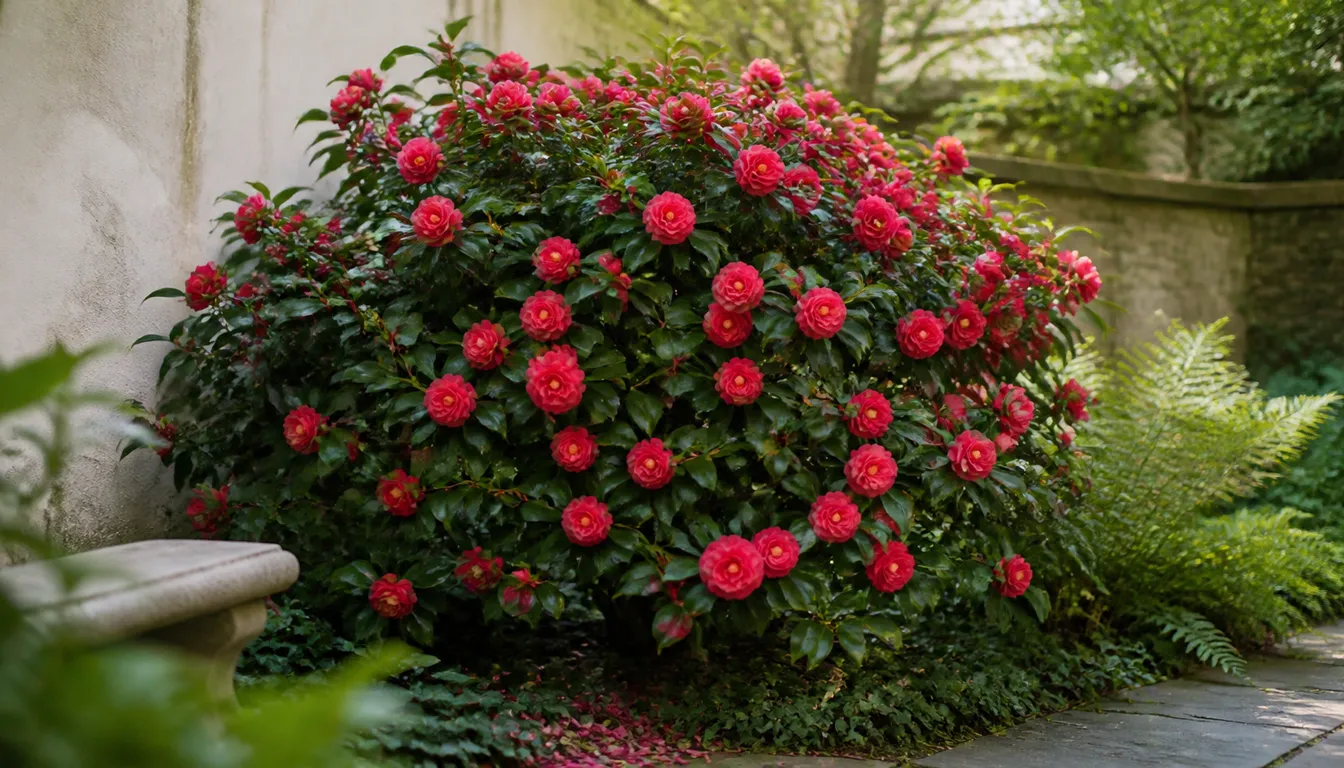
Care snapshot
What Makes Camellia a Cool-Season Flowering Evergreen?
A Camellia is grown for flowers that open when many shrubs are quiet. That means the first care question is bud protection, not general evergreen care.
Cold wind, hot afternoon sun, dry roots, and sudden temperature swings can make buds drop before the show.
Flower buds form during summer and swell through fall, so stress during that window often shows up as bud drop months later rather than an immediate symptom.
This separates Camellia from aucuba in dry shade. Gardenia fits warm fragrant borders, while Camellia wants cool roots, acidic soil, and a protected spot where buds are not roasted or frozen hard.
Use it for courtyards, east-facing walls, woodland edges, and sheltered foundation beds. Do not use it where sprinkler spray, winter wind, or alkaline concrete runoff will be constant.
A south-facing wall in a hot climate can bounce more heat and light onto the shrub than the open garden nearby, which turns an apparently sheltered spot into a scorch risk instead of protection.
Camellia care is mostly about getting a glossy evergreen shrub to hold and open its buds. If you only need a tough green mass, evergreen shrub choices may lead you somewhere easier.
Choose by Bloom Season Before Flower Color
Camellia japonica flowers anywhere from October to March depending on the variety, with most plants peaking in late winter, while Camellia sasanqua blooms in late fall and early winter and handles more sun. That timing matters more than whether the flower is pink, red, or white.
If late freezes are common, an early display can be risky in exposed sites.
A later-blooming cultivar or a more sheltered wall can save more flowers than any after-the-fact rescue.
Sasanqua cultivars such as Yuletide and Setsugekka bloom from fall into early winter, and NC State Extension notes that sasanqua grows quickly and works well as a privacy hedge. Its smaller leaves and fragrant flowers set it apart from japonica types. Fall bloom also helps it escape petal blight, since the weather when sasanquas flower is generally unfavorable for that fungus.
Classic japonica cultivars such as Kramer's Supreme and Adolphe Audusson Special bloom later, through winter, with the large formal flowers the species is known for.
Japonica types prefer shade to part shade with protection from drying winter winds, so they need more shelter than sasanqua.
Cold-hardy hybrids such as the Winter Series, which NC State Extension describes as cold-hardy and fall-blooming, are the usual choice at the cold edge of the range.
- Sasanqua types
- Earlier bloom, smaller leaves, often better for hedges and lighter sun.
- Japonica types
- Large formal flowers, glossy leaves, better in sheltered part shade.
- Cold-edge gardens
- Choose hardy cultivars and avoid winter morning sun after deep freezes.
- Small spaces
- Pick naturally compact types instead of pruning away flower buds later.
Give Morning Sun and Protect the Afternoon
The best Camellia light is usually morning sun with afternoon shade, or bright filtered light. Morning sun dries leaves and supports buds.
Hot afternoon sun can scorch leaves and stress roots, especially in warm zones.
The scorch shows up first as brown, crisp patches on the sun-facing side of the leaf rather than an even yellowing across the whole plant.
Deep shade creates a different problem, since it still grows glossy leaves but few flowers. The shrub may look healthy enough, yet buds stay sparse.
That is why an east-facing wall often beats the dark side of a porch.
In cold climates, avoid sites where frozen buds get hit by sudden direct morning sun, since a fast thaw can damage the tissue.
Shelter from wind and temperature swings matters as much as the number of sun hours. A site with the right light but a wind tunnel between two buildings can still lose buds every winter.
A Camellia that gets too much shade for years rarely dies from it, but the flower show fades gradually until the shrub reads as a green background plant instead of a seasonal feature.
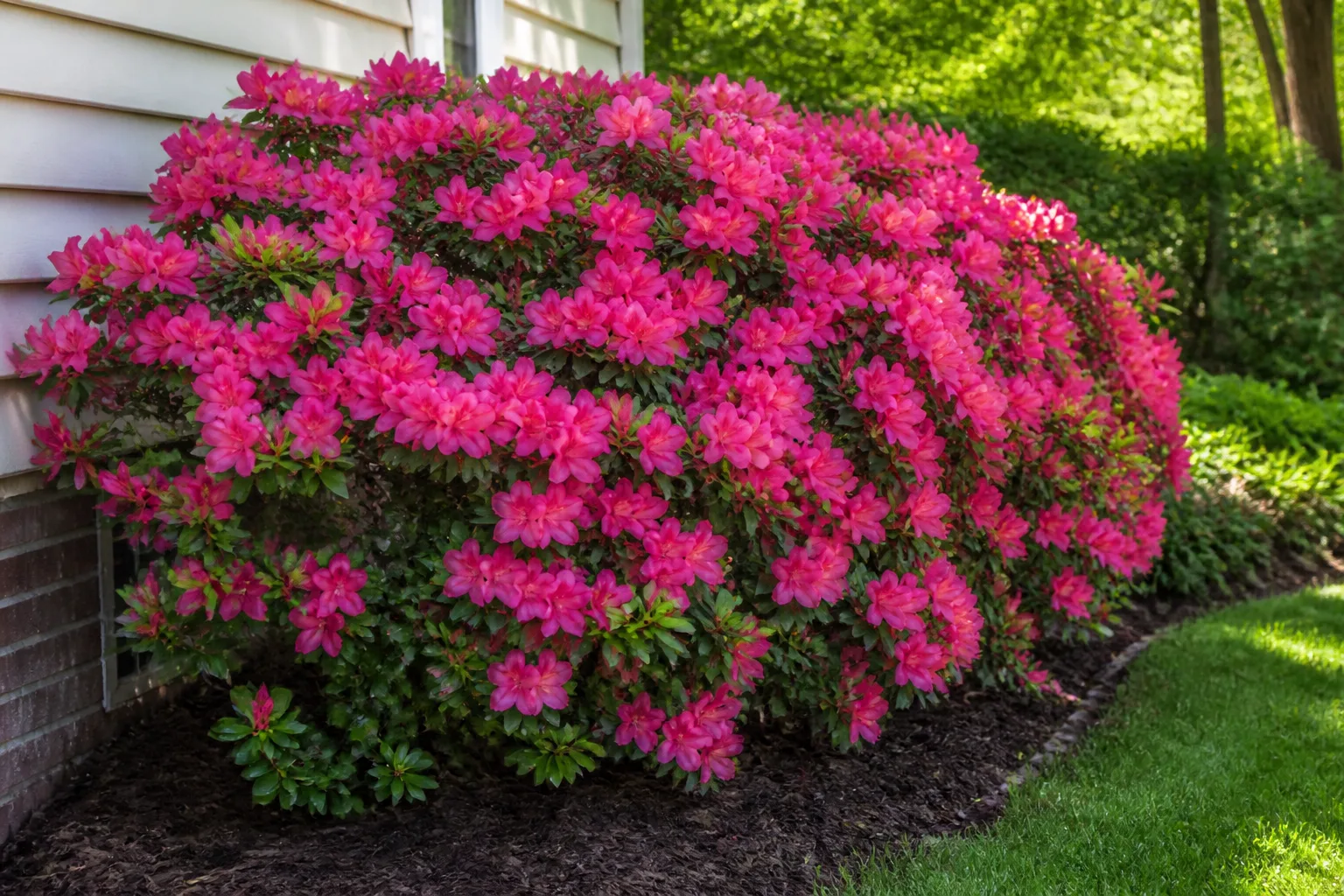
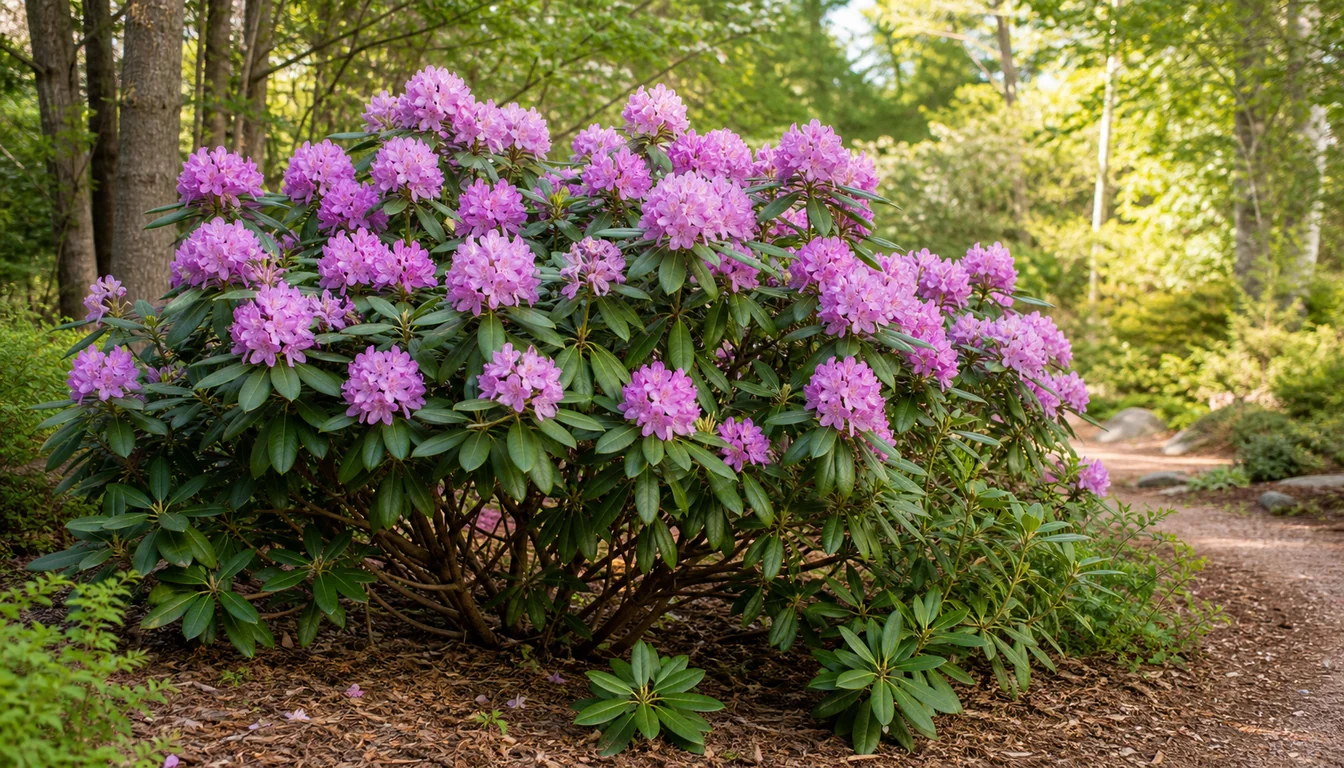
Nearby acid-loving shrubs such as azalea can share the same broad bed. Rhododendron is a closer soil cousin, but Camellia usually needs more winter protection.
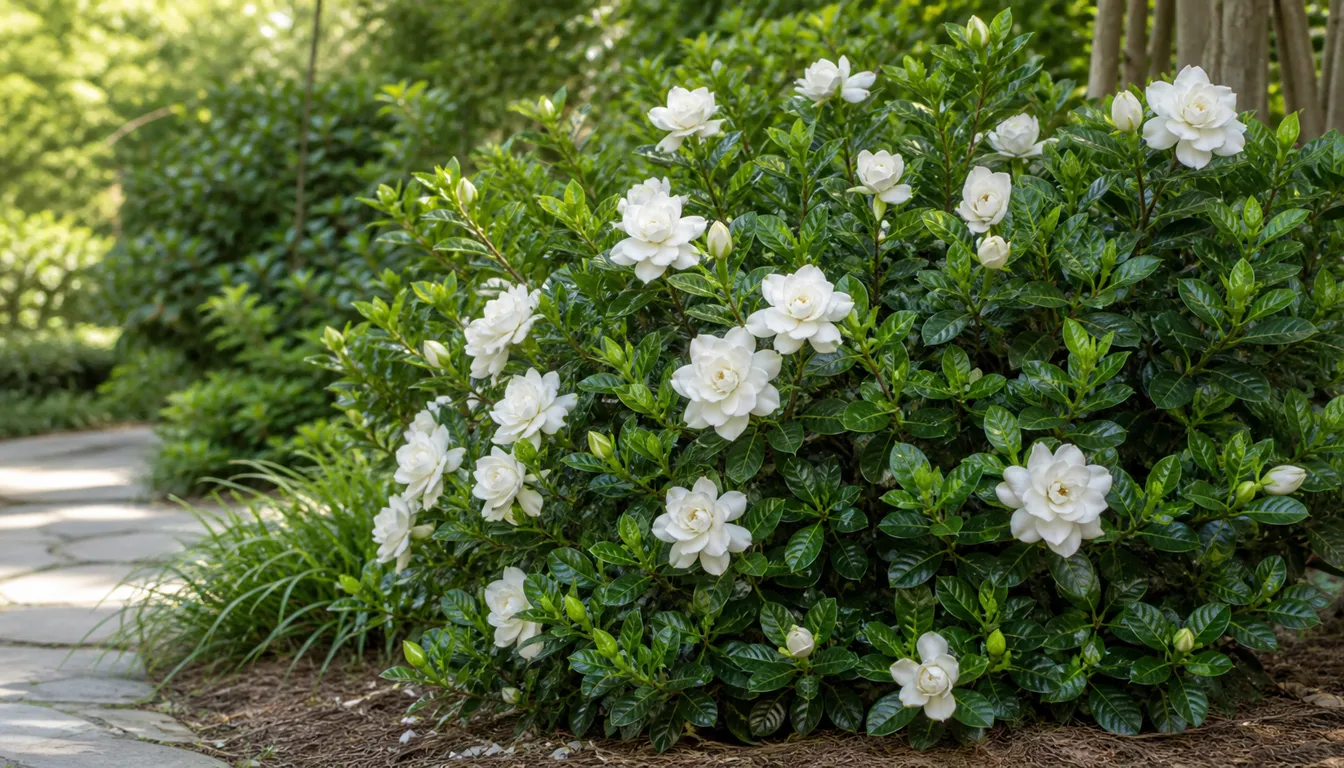
Gardenia shares the acidic preference too, but wants more warmth and sun than a Camellia typically tolerates, which is why the two rarely share the exact same bed spot.
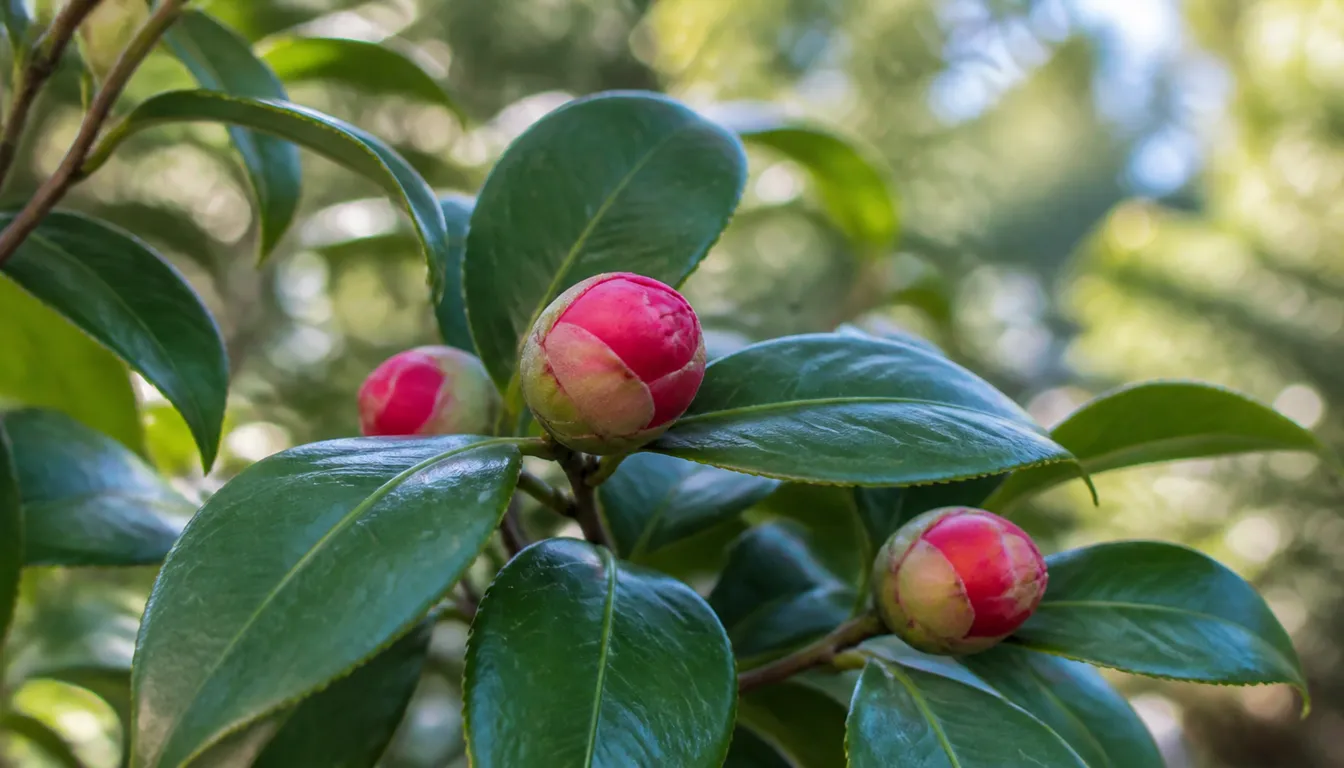
Keep Moisture Even While Buds Are Forming
Uneven water is a common bud-drop trigger. NC State Extension notes that drought in August and September can reduce flowering the following spring, so a Camellia that dries hard while buds are forming may shed them months later, even after you start watering again.
Water slowly at the drip line during dry spells, then let the surface breathe. The goal is steady moisture, not soggy soil.
If leaves yellow while the bed stays wet, check camellia yellow leaves before adding fertilizer.
Mulch helps because the roots are shallow and cool-loving. Keep it off the trunk and spread it wide over the root zone.
Clemson Extension recommends a 2 to 3 inch layer of mulch to conserve soil moisture. Refreshing it once a year keeps the depth steady without burying the crown deeper.
Camellia in a region with reliable summer rainfall often needs little supplemental water once established, while a drier climate needs consistent irrigation through the growing season.
A container-grown Camellia dries out faster than one in the ground and needs more frequent checking during hot, windy stretches.
Use Acidic Drainage, Not a Rich Wet Hole
Camellia needs slightly acidic soil, around pH 5.5 to 6.5 according to NC State Extension, with enough organic matter to hold moisture. It does not want a deep pocket of compost sitting in clay.
Soil that is naturally alkaline, common near concrete foundations and driveways, is a common reason a Camellia struggles even with otherwise good watering and light.
Lime leaching slowly out of concrete over years can quietly raise soil pH well after the foundation itself was poured.
Plant slightly high, especially in heavy soil. The top of the root ball should not sink below grade after watering settles the bed.
Use loamy soil as a texture reference, then keep the crown out of wet winter soil.
Feed lightly after bloom or during active growth if the plant needs it. Follow shrub fertilizer timing, and avoid late feeding that pushes tender growth before cold.
A soil test before planting confirms whether the native pH actually needs correction, since guessing can push it too far in either direction.
Sulfur lowers pH gradually over a season or more, while compost or pine bark fines improve structure without a fast chemical swing. Retesting the soil after the first season shows whether another light application is actually needed before adding more.
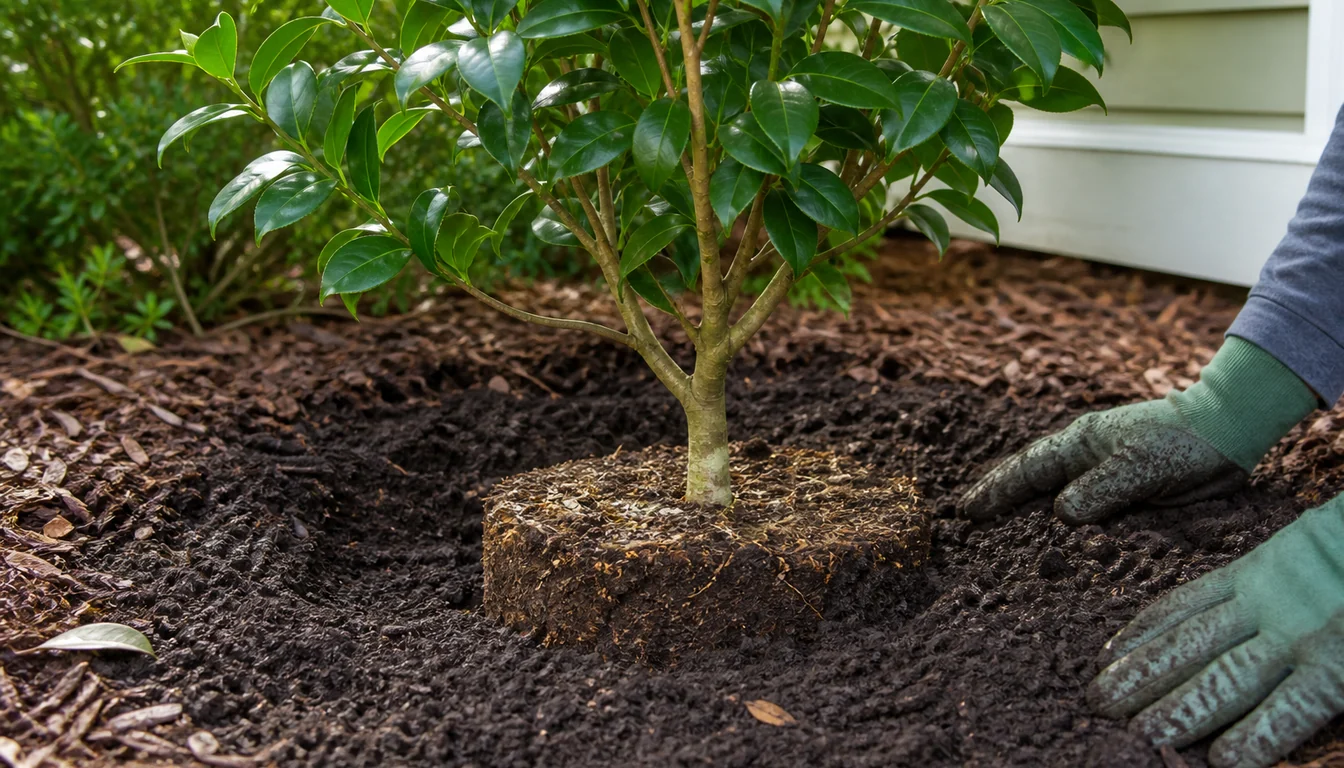
- Target pH
- Acidic, often about 5.5-6.5.
- Good texture
- Moisture-holding but open enough for roots to breathe.
- Bad pocket
- Deep compost hole in clay that stays wet after rain.
Prune After Bloom, Before Next Buds Matter
Most Camellia pruning is small, removing dead wood, shortening awkward branches, and opening crowded interior growth after flowers fade. Heavy cuts can remove the framework that carries next season buds.
If you inherited an overgrown plant, reduce it over time instead of flattening the outside. Use shrub pruning timing for the calendar, then keep the evergreen shape natural and flower buds visible.
An overgrown Camellia can be renewed in steps over two or three seasons. Clemson Extension notes that a severe cutback, down to stems with no leaves, is safe from mid-February to about May 1, while dead and weak stems can come out at any time.
A Camellia cut hard to bare wood can take several years to rebuild both its shape and its flower buds, so gradual renewal protects both faster.
Camellia is propagated by stem cuttings or by layering, where a low branch is pinned to the soil until it roots.
Cuttings from a favorite cultivar preserve its exact flower form and color, while seed-grown plants can vary widely and take years longer to bloom.
Read Bud Drop, Yellow Leaves, and Scale as Different Problems
Bud drop is a timing clue. Dry roots during bud swell, freeze-thaw swings, hot sun, transplant stress, or a sudden water change can all make buds fall.
Use camellia bud drop to narrow the cause before changing everything.
Yellow leaves point somewhere else, whether that is high pH, poor drainage, root stress, or normal older leaf shed. NC State Extension notes that yellow leaves with green veins may indicate chlorosis in alkaline soil, which can be treated by adding iron chelates.
Tea scale and other scale insects hide on leaf undersides. Look for yellow speckling above and cottony or shell-like bumps below.
Prune badly infested twigs and treat the undersides, not just the shiny top surface.
Sooty mold, a black coating on leaves, usually follows a scale infestation rather than being its own disease, since it grows on the sticky honeydew scale insects leave behind. Wiping affected leaves with a damp cloth can speed up the cleanup once the scale itself is under control.
Treating the scale removes the mold's food source, and the black coating typically wears off on its own over the following months.
Petal blight is a separate problem from bud drop. It shows up as browning that runs from the edges of open petals toward the center, and NC State Extension advises removing all infected plant parts promptly.
The fungus that causes petal blight survives in fallen petals and soil, so removing spent blooms promptly instead of letting them rot on the ground reduces next year's infection.
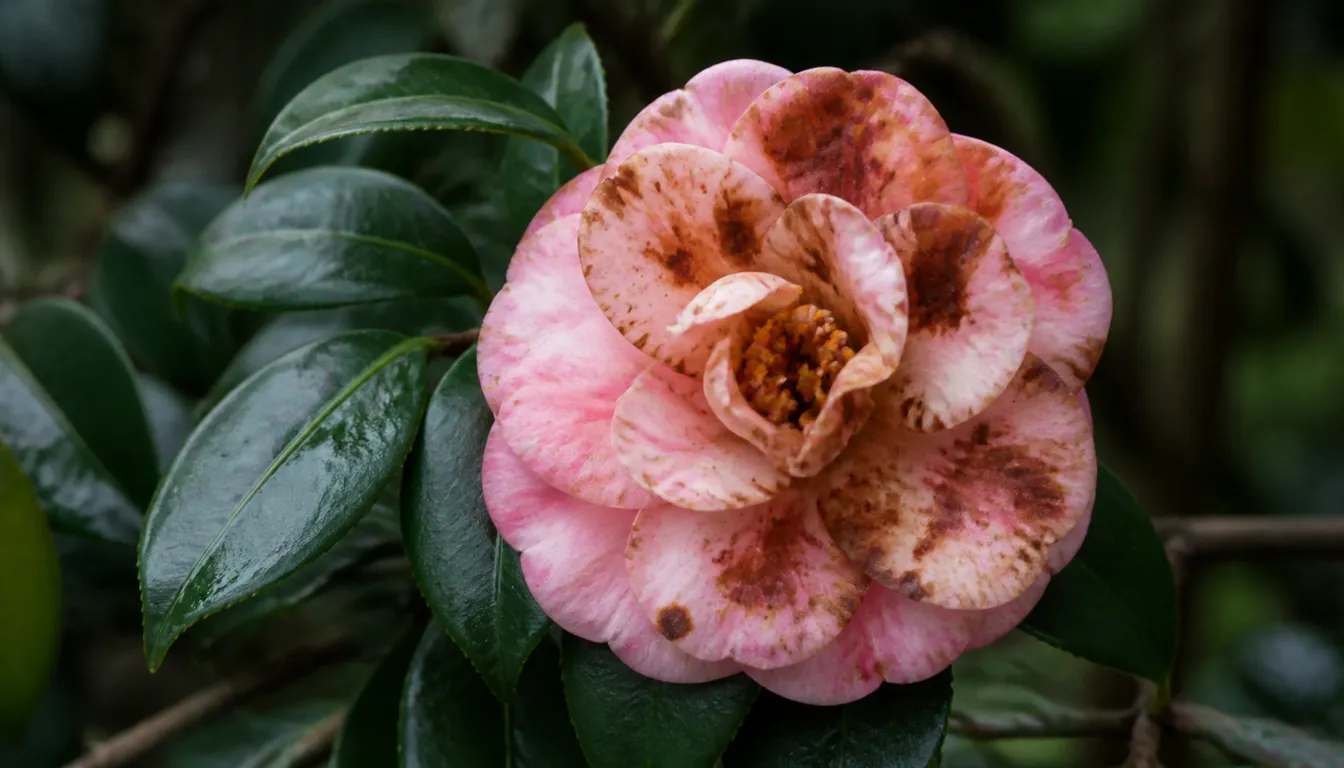
Root rot from poorly drained soil looks different again, showing as a slow overall decline and wilting despite moist soil, rather than the sudden bud or flower symptoms above. By the time wilting is obvious, the root damage is often already extensive, which is why drainage matters most at planting time, before symptoms appear.
Pest pressure rises when the shrub is crowded and airless. Give Camellia room before reaching for sprays, since that keeps the glossy leaves inspectable.
- Buds drop cleanly: check moisture swings, freeze-thaw exposure, and transplant stress.
- Leaves yellow with green veins: test pH before adding more fertilizer.
- Sticky leaves or black mold: inspect undersides for scale.
- Burned leaf edges: check afternoon sun, wind, and dry mulch.
Where Does a Long-Lived Camellia Fit, and Is It Safe Around Pets?
A healthy Camellia can live for decades, so place it where the mature evergreen shape still makes sense after bloom. Do not hide it behind a short-lived annual display.
The ASPCA lists Camellia japonica as non-toxic to dogs, cats, and horses. That listing covers the plant itself. Sasanqua camellias do not appear on the list, so their status is unknown, and the listing says nothing about fertilizer or pest sprays applied to the shrub. The ASPCA also notes that eating any plant material can cause vomiting or stomach upset in dogs and cats.
Winter and early spring bloom makes a Camellia one of the few flowering shrubs open in the cold months, and NC State Extension lists it as attracting pollinators and songbirds.
Camellia also grows well in a large container on a patio or porch, where soil pH is easier to control than in native ground.
A container plant still needs winter protection in a cold climate, since roots above ground freeze faster than roots insulated by garden soil.
Frequently Asked Questions
Why are my camellia buds falling off?
Camellia buds often drop after uneven water, freeze-thaw swings, hot afternoon sun, or transplant stress. Check site and moisture before feeding.
Do camellias need sun or shade?
They usually do best with morning sun and afternoon shade, or bright filtered light. Deep shade reduces bloom, while harsh afternoon sun can scorch leaves and buds.
What soil does camellia need?
Camellia needs acidic, well-drained soil that stays evenly moist. Plant slightly high in heavy soil so roots do not sit wet.
When should I prune camellia?
Prune after bloom, before the next bud cycle becomes important. Keep cuts light unless you are renovating an old plant over several seasons.
Sources & References
- Camellias for Minnesota, University of Minnesota Extension
- Growing Camellias in the Landscape, Clemson Cooperative Extension
- Growing Camellias in the Landscape, University of Georgia Extension
- Camellia, Missouri Botanical Garden Plant Finder
- Camellia japonica, Missouri Botanical Garden Plant Finder
- Camellia japonica, North Carolina State Extension Gardener Plant Toolbox
- Camellia sasanqua, North Carolina State Extension Gardener Plant Toolbox
- Camellia, ASPCA Toxic and Non-Toxic Plants
- Toxic and Non-Toxic Plants, ASPCA Animal Poison Control
Related Plants
Azalea
Rhododendron
Gardenia
Arborvitae
Arborvitae can form a dense living screen where its mature width, exposure, and water needs fit the site.
Aucuba
Aucuba is the shrub for bright shade with dry root competition. It keeps evergreen structure near north walls, porches…
Barberry
Japanese barberry (Berberis thunbergii) is a thorny, deer-resistant shrub whose berries birds carry into woods, so…