
What's Mountain Laurel? How to Grow It in Acidic Woodland Soil
Kalmia latifolia Ericaceae
Mountain Laurel is a native broadleaf evergreen for acidic woodland edges, not a fast privacy shrub. Plant it where roots stay cool, drainage stays sharp, and pets or livestock cannot browse the toxic foliage.
Care snapshot
What Makes Mountain Laurel a Woodland Evergreen?
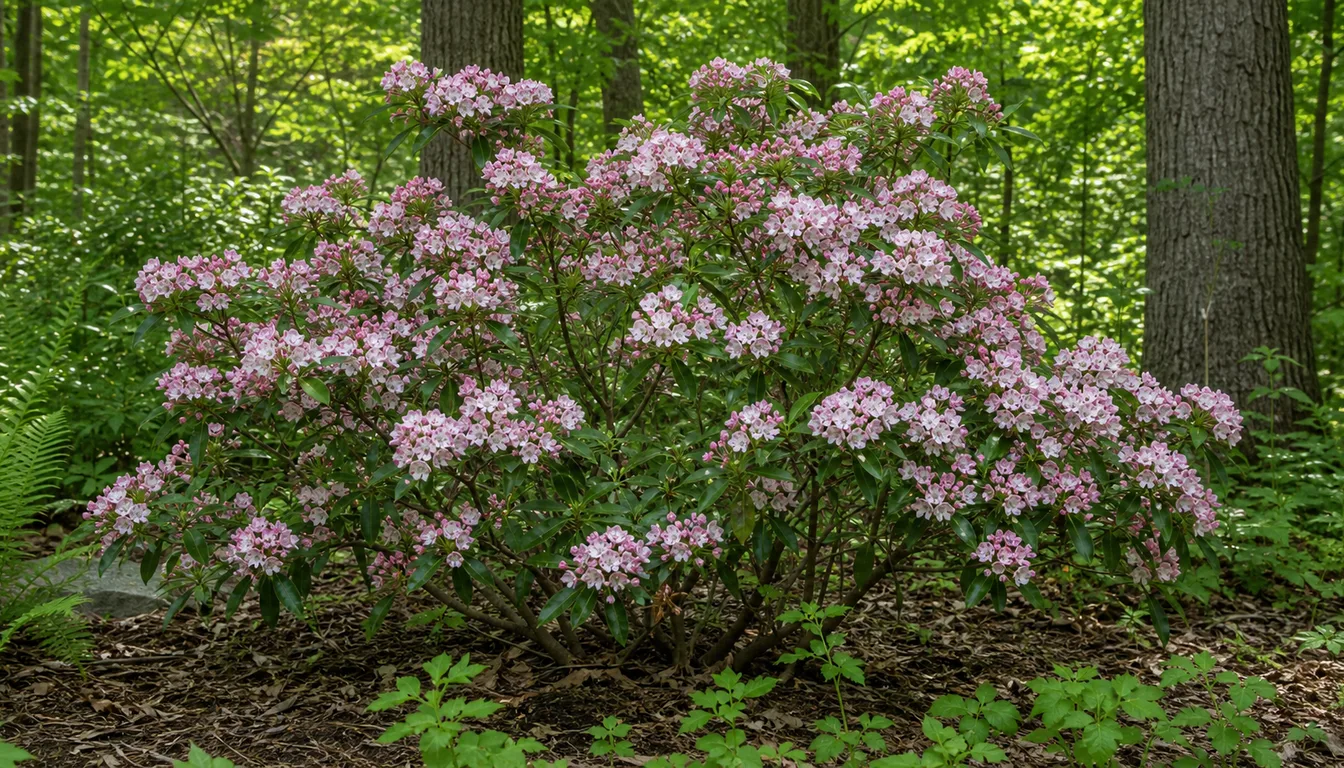
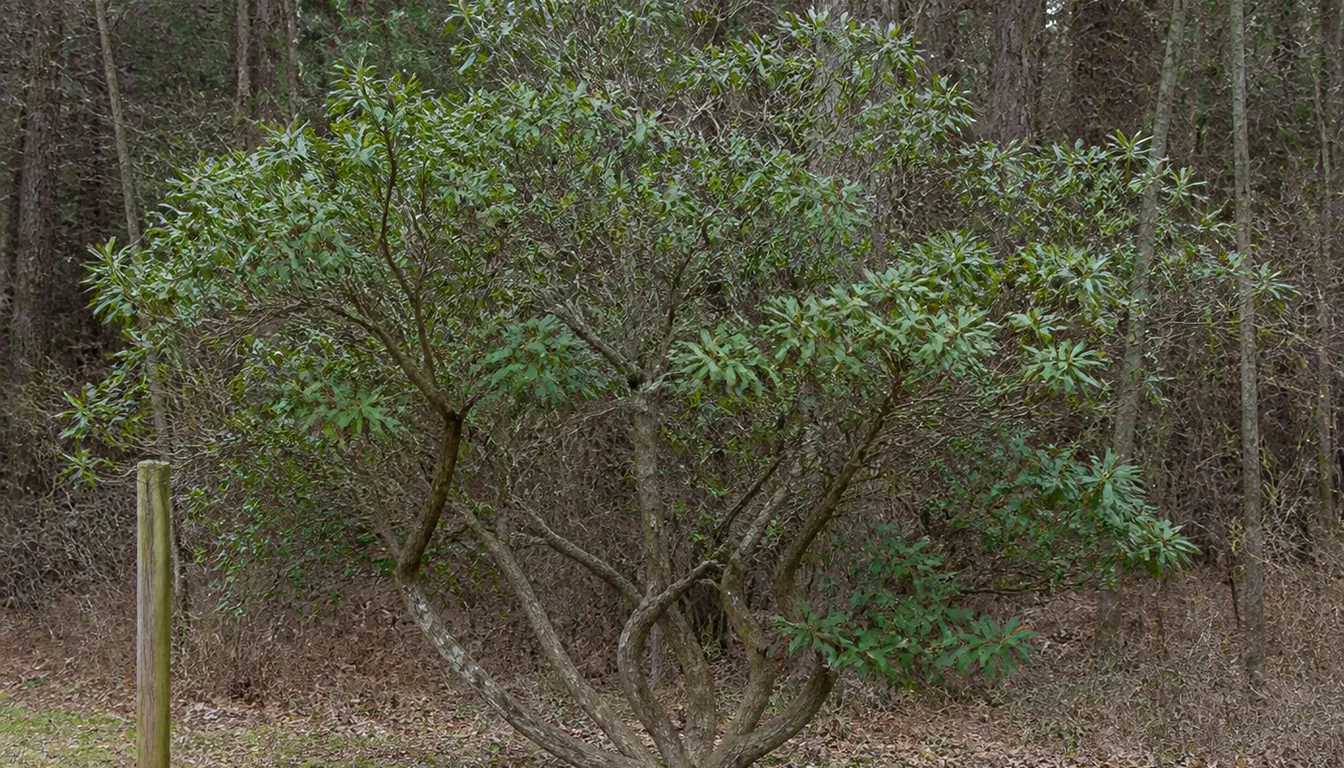
Mountain Laurel (Kalmia latifolia) is a slow-growing broadleaf evergreen in the heath family, alongside azalea and rhododendron. It succeeds where the site already feels like a woodland edge, wanting acidic soil, broken shade, cool roots, and room to grow slowly over many years.
This is not the shrub to choose for a quick screen.
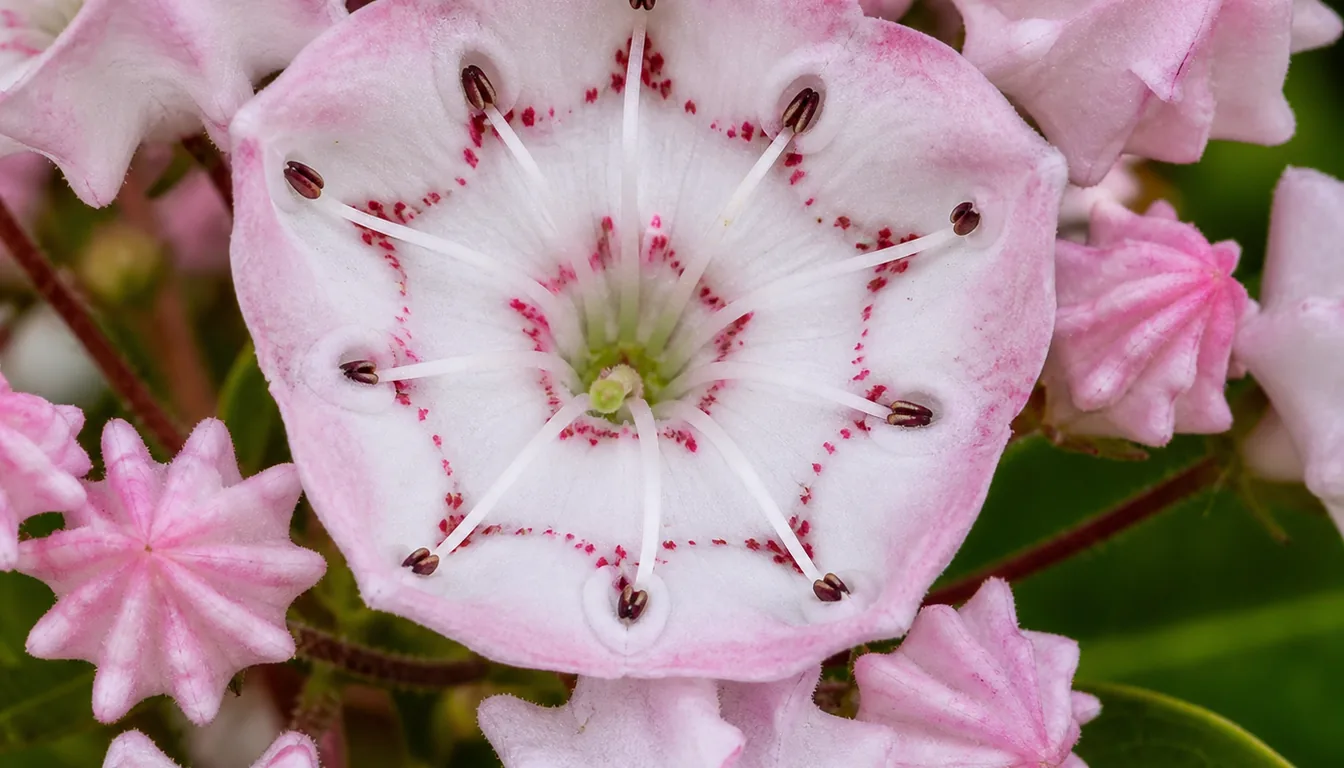
A healthy plant may add only a few inches in a normal year, but it keeps glossy leaves through winter and opens intricate late-spring flower clusters that few other native shrubs match. That patience pays off in a plant that can outlive the gardener who planted it.
Its closest care comparison in a shade bed is a broadleaf evergreen like rhododendron.
Mountain Laurel differs by staying more open and irregular in form, growing slower, and carrying stronger toxicity throughout every part of the plant. It is also native to eastern North America rather than developed through ornamental breeding.
The leaves themselves are worth a closer look before you ever see a flower.
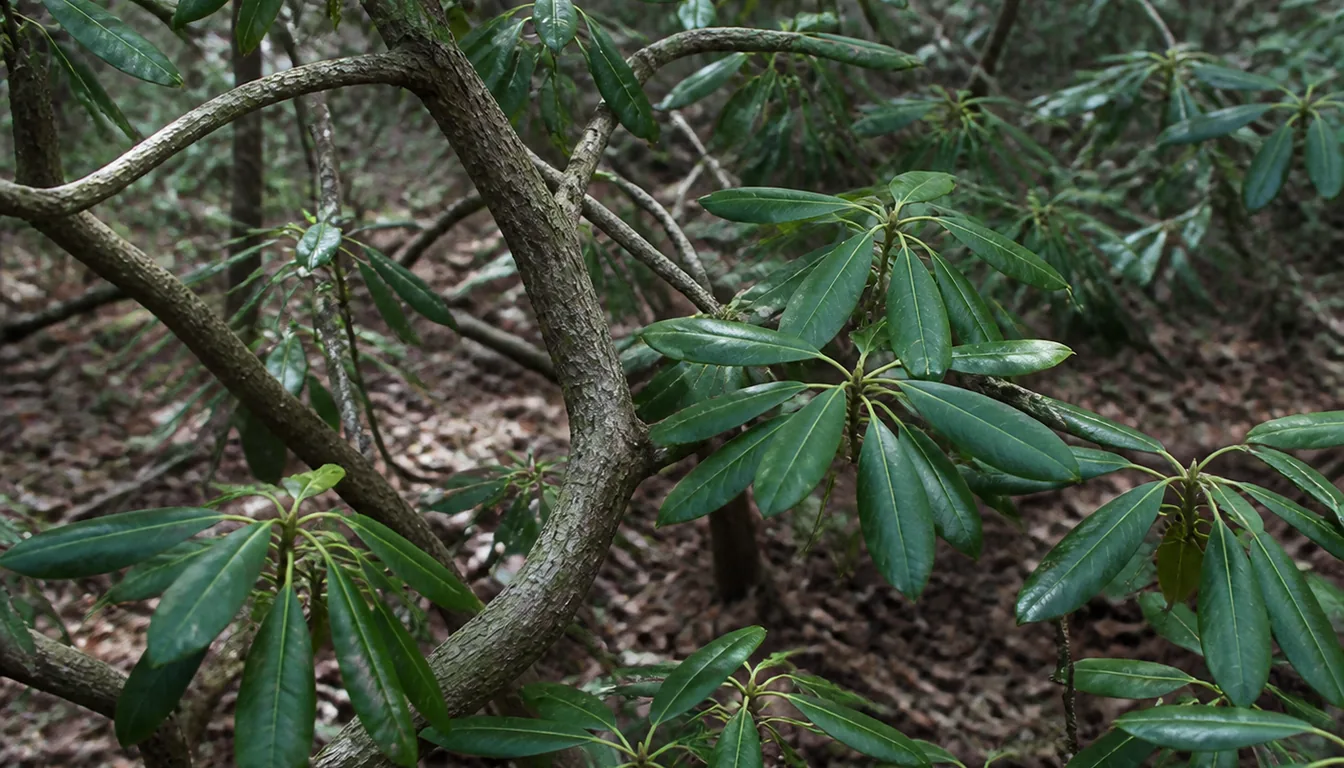
They are leathery, dark green, and elliptical, arranged in whorls or scattered pairs along woody canes that thicken with age. That evergreen structure is what carries the garden through winter long after the spring bloom fades.
A plant that looks small in a nursery pot can still become a broad, multi-stemmed shrub over time.
Give it a permanent spot instead of treating it like a filler between faster shrubs. Moving an established Mountain Laurel later disturbs the fine root system enough to set the plant back a full season or more.
Two states, Connecticut and Pennsylvania, adopted Mountain Laurel as their official state flower.
That popularity says more about the flower display than about ease of care. The plant asks for the right site up front rather than rewarding trial and error.
Buy for Root Quality and Mature Width
A good Mountain Laurel purchase starts below the leaves. Tight, circling roots in a small pot can stall the plant for years after planting, even when the top looks clean.
Named cultivars solve a real problem seed-grown plants cannot.
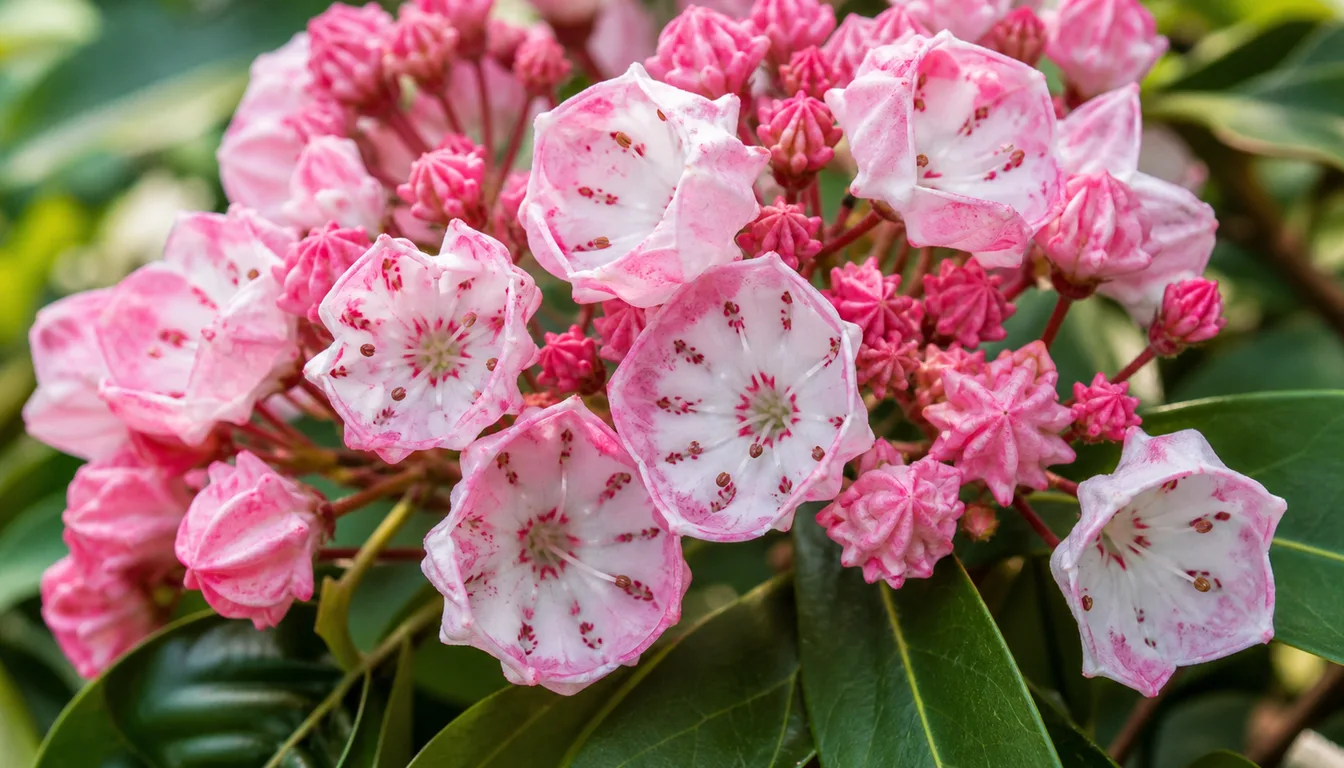
Compact selections such as Elf, Minuet, and Olympic Fire give a predictable mature size, deeper flower color, and reliable bloom on a plant that actually fits a small bed. Seed-grown shrubs are fine for naturalized edges, but flower color and final shape vary from plant to plant.
Avoid bargain plants with blackened stems, wilted flower buds, or dry root balls.
- Best nursery sign
- Firm leaves, moist root ball, and no circling woody roots
- Small garden choice
- Compact named cultivars listed near 3-5 ft
- Natural edge choice
- Larger forms with room for slow widening
- Avoid
- Plants kept dry, rootbound, or forced into hot full sun
This shrub recovers slowly from stress, so a struggling nursery plant can waste a whole season before you know whether it will settle in. Buying the healthiest plant available matters more here than it does for a faster-growing shrub.
A deer-browsed neighborhood is one place this plant's toxicity becomes an advantage instead of a liability.
Deer generally leave Mountain Laurel alone entirely because of the same grayanotoxins that make it dangerous to livestock and pets. That makes it a genuine option for a yard on a deer-resistant plant list where deer strip everything else back to bare stems.
Give Bright Shade, Not Deep Shade
The best light is morning sun with afternoon shade, or high dappled shade under open trees. That combination gives enough energy for bloom without baking the evergreen leaves through a hot afternoon.
Deep shade keeps the leaves alive but reduces flower clusters.
Hot reflected sun does the opposite. It can scorch leaf edges and dry flower buds before they even open, especially near pavement or a south-facing wall.
Think of Mountain Laurel as a cooler woodland plant than a full-sun flowering shrub.
If a sun-loving shrub would bloom heavily in a given spot, that same site is likely too exposed for laurel unless summers stay mild. Match the plant to the shade pattern the site already has instead of fighting it with irrigation.
- Use east-facing beds, north edges, or open tree shade.
- Avoid pavement glare and hot south-facing walls.
- Keep the root zone mulched so light does not become heat stress.
Morning light matters more than afternoon light for this particular bloom.
If the whole bed still leans too sunny after adjusting exposure, browse a broader roundup of shade shrubs for garden beds before forcing Mountain Laurel into a spot it will fight all summer.
Protect the Fine Roots
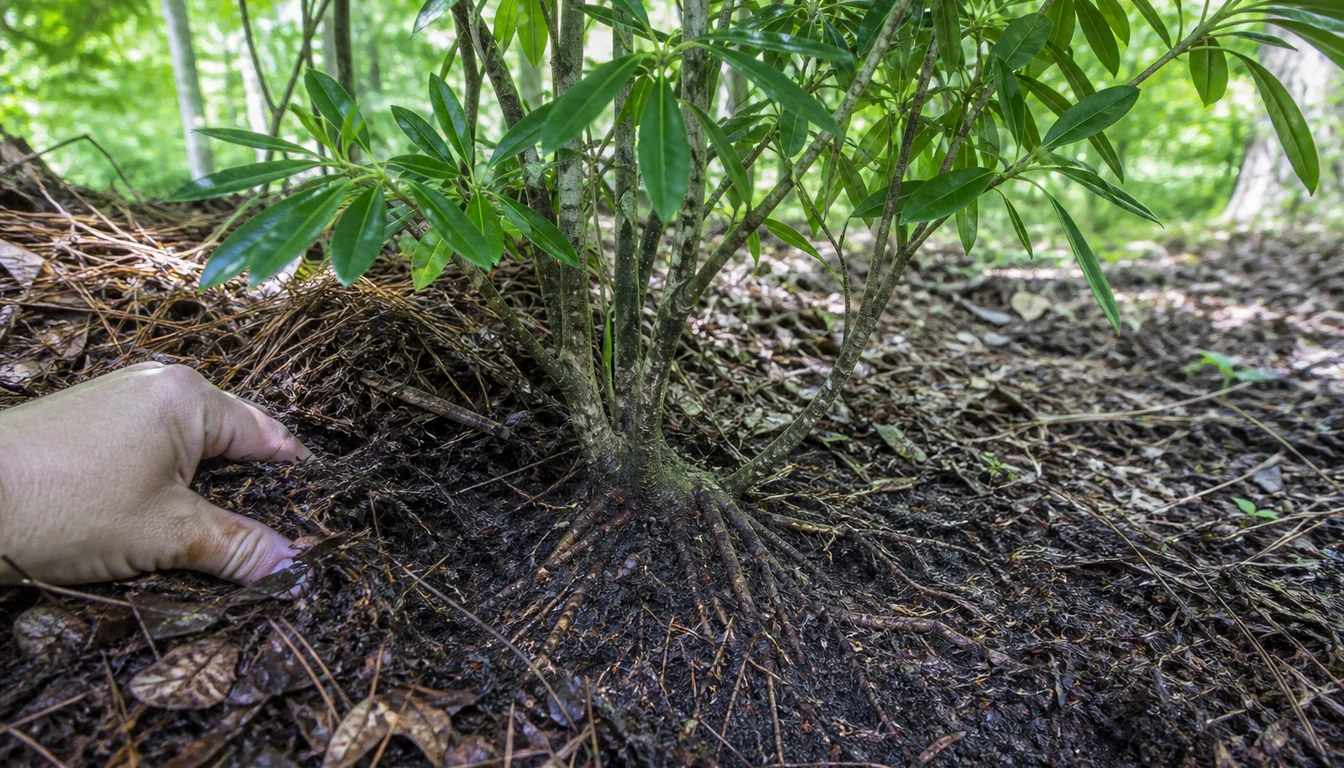
Fine roots make Mountain Laurel sensitive to both drought and soggy soil at once. The goal is not wet soil, it is moist, acidic, airy soil that drains within hours of a hard rain.
Prepare a wide bed rather than a narrow hole.
Work leaf mold, pine bark fines, or composted leaves into an area several times the width of the root ball. Do not dig a deep pocket in clay and fill it with peat, because that creates a bathtub where water collects around the roots instead of draining past them.
Mulch matters more than heavy fertilizer for this plant.
A loose layer of pine bark or shredded leaves keeps roots cool and feeds the surface slowly as it breaks down. That surface-feeding habit suits acid-loving shrubs better than a granular feed dug into the root zone.
The fine roots also depend on a mycorrhizal fungal partnership most acid-loving woodland shrubs share. Disturbing or drying that root zone during planting can set back the fungal relationship along with the roots themselves.
That is one more reason to plant once and plant carefully rather than relocating the shrub later.
The same bed conditions suit other acid-loving companions.
Pieris shares the same acidic, well-drained preference and blooms earlier in spring, which extends the color season in a woodland bed without asking for a different soil recipe.
Water Before Leaves Curl Hard
A dry Mountain Laurel often curls its leaves before it visibly wilts. By the time leaves hang limp, the fine roots may already be under real stress.
New shrubs need slow, deep watering through the first two summers whenever rain skips the bed.
Established plants still need help in drought, because shallow woodland roots dry out faster than the soil surface suggests. Judge water need by digging a few inches down, not by how the mulch looks.
Repeated shallow sprinkles work against this plant instead of for it.
Frequent light watering keeps foliage wet and encourages roots to stay near the surface where they dry out fastest. One deep soak that reaches well below the root ball does more good than several quick passes with a hose, the same deep watering versus frequent watering logic that applies to most woody shrubs.
A soaker hose left running at the base for an hour beats a sprinkler running twice as long.
Sprinklers wet the foliage as much as the soil, and wet foliage sitting overnight is exactly the condition that invites the leaf spot problems covered later in this profile. Water at the base, and water in the morning if you have a choice.
Prune as Little as Possible
Most Mountain Laurel pruning should be small and done right after bloom. Remove broken wood, tip back a stray branch, and otherwise leave the natural irregular form alone.
Late pruning removes developing flower buds before they ever get the chance to open.
That timing rule is not unique to this species. It follows the same old-wood logic covered in pruning flowering shrubs by bloom wood, where the plant sets next year's flower buds shortly after this year's bloom finishes.
Shearing also turns a graceful woodland shrub into a dense, uniform surface that traps humidity against the inner leaves. That trapped moisture is exactly the condition that invites the leaf spot disease covered later in this profile.
Deadheading spent flower clusters is optional but genuinely useful on a young plant.
Pinch or clip the cluster stem without cutting into the fresh leafy shoot growing right beside it. That directs the plant's energy toward growth instead of seed production.
- Wait until flowering finishes.
- Remove dead, broken, or crossing stems first.
- Shorten only the branch that breaks the outline.
- Stop before the plant loses its open layered shape.
A shrub that has outgrown its space usually means the site choice was wrong from the start.
Mountain Laurel does not respond well to repeated hard renovation the way a fast-growing shrub might. Moving the plant to a bigger bed is often more successful than pruning a mature specimen down to a smaller footprint.
Separate Site Stress From Pest Damage
Most ugly Mountain Laurel leaves start with the site, not with a pest.
Too much sun, wet clay, drought, or alkaline soil weakens the plant before insects ever get involved. Ruling out those causes first saves a treatment that was never going to fix the real problem.
Lace bugs leave pale speckling on the top of the leaf and dark varnish-like spots on the underside, especially on plants getting too much sun. Leaf spot shows up as brown or purplish blotches after wet weather and poor airflow between branches.
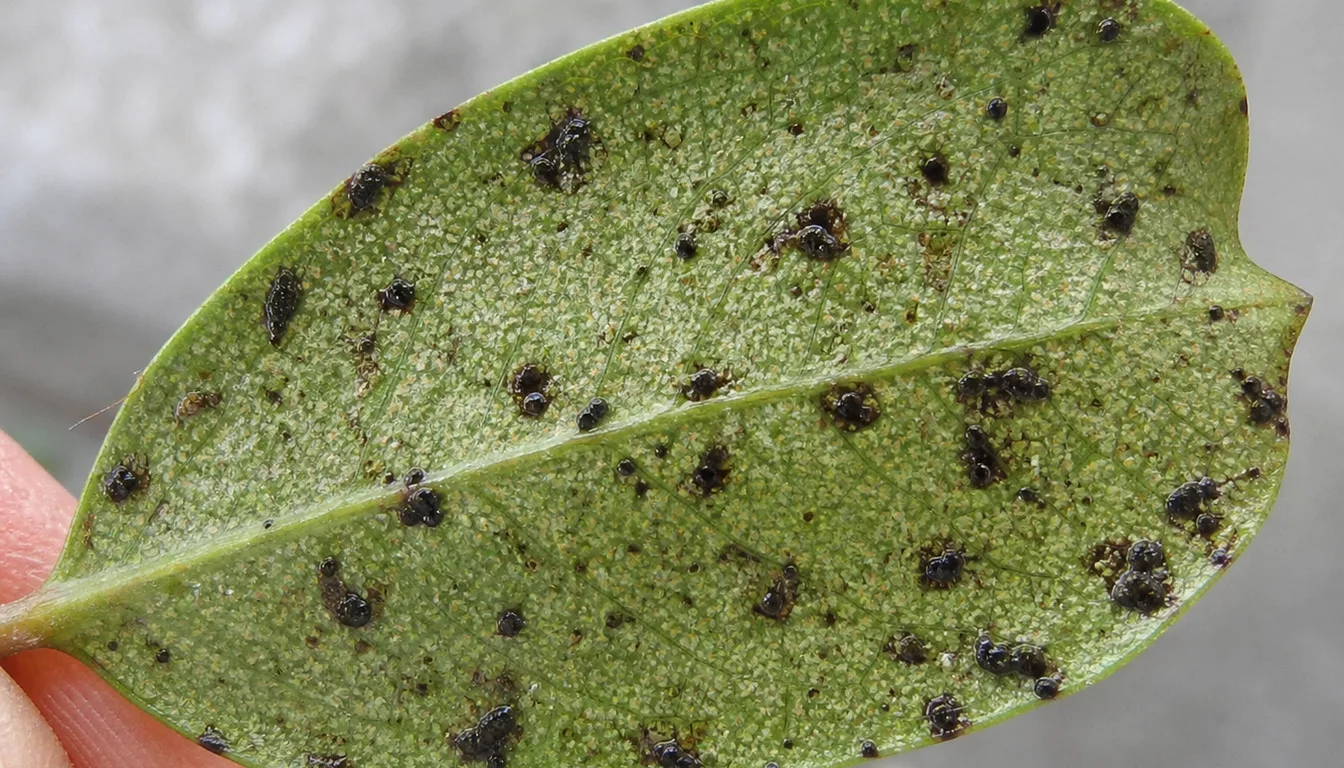
Scale insects appear as small bumps on stems or leaves and often bring sticky honeydew with them, sometimes followed by a black sooty mold that grows on the honeydew itself.
Treat light infestations early with horticultural oil, but correct the underlying stress first so the plant can actually replace the damaged leaves. Spraying a plant that is still sitting in wet clay treats the symptom while the real cause keeps working against it.
Do not copy a broad pest list built for houseplants or roses onto this shrub.
Mountain Laurel needs a laurel-specific diagnostic order, checking exposure, drainage, pH, leaf undersides, then disease cleanup in that sequence. Working through that order catches the site problem before it gets blamed on an insect.
Move future plantings out of hot afternoon sun.
Check pH and root wetness before fertilizing.
Inspect undersides for lace bugs on sunny plants.
Thin nearby growth and stop overhead watering.
Yellowing between the veins on otherwise healthy-looking leaves usually points to alkaline soil rather than a nutrient deficiency to fix with fertilizer. A soil test settles the question faster than guessing at a feeding schedule.
Use the Native Value With Real Safety Boundaries
In the right place, Mountain Laurel adds native evergreen structure and late-spring flowers that pollinators use heavily. It also creates a woodland look that imported formal shrubs cannot copy.
The tradeoff is safety, and it deserves to be taken seriously.
Every part of the plant contains grayanotoxins, and honey made from its nectar can cause illness in enough quantity, a phenomenon documented since antiquity. Do not plant it along pasture fences, goat yards, horse paddocks, or dog runs where browsing is likely.
For family yards that need safer shrubs near paths, keep Mountain Laurel farther back.
Mountain laurel belongs away from the places where kids and pets spend time. The toxicity does not rule the plant out everywhere, it just decides where in the yard it belongs.
None of this makes Mountain Laurel unusually dangerous compared to other common landscape shrubs.
Azalea and rhododendron carry similar grayanotoxin risks in the same acid-loving plant family, so a yard already growing those two safely can usually extend the same precautions to Mountain Laurel without learning a new set of rules.
Livestock poisoning cases in the United States most often come from browsing during winter or early spring, when other forage is scarce and the evergreen leaves are one of the few green options left in a pasture.
That seasonal pattern is worth knowing if this shrub grows anywhere near grazing land. A fence line that looks safe all summer can become a real risk the moment snow covers everything else and hungry animals start browsing whatever green leaves remain in reach.
Frequently Asked Questions
Why is my Mountain Laurel not blooming?
Mountain Laurel may skip bloom in deep shade, after late pruning, or when drought hit during bud formation. Check light and pruning timing before feeding.
Can Mountain Laurel grow with azaleas?
Yes, Mountain Laurel, Azalea, and Rhododendron all like acidic, organic, well-drained soil with partial shade. Give each plant room so air moves between evergreen leaves.
Is Mountain Laurel safe for pets?
No, Mountain Laurel is toxic if eaten and even honey from its nectar can cause illness in quantity. Keep it away from pets, livestock, and children who might handle leaves or flowers unsupervised.
Can I hard prune Mountain Laurel?
Avoid hard pruning unless you are removing dead wood. Mountain Laurel grows slowly and recovers unevenly from severe cuts.
Do deer eat Mountain Laurel?
Rarely. The same grayanotoxins that make it toxic to pets and livestock also make it one of the more reliably deer-resistant flowering shrubs.
Sources & References
- Kalmia latifolia, North Carolina State Extension Gardener Plant Toolbox
- Kalmia latifolia, Missouri Botanical Garden Plant Finder
- Mountain Laurel for the Home Landscape, Penn State Extension
- Mountain Laurel, Kalmia latifolia
- Kalmia latifolia (Mountain Laurel) Plant Finder
- Mountain Laurel, Kalmia latifolia L.
- Toxic and Non-toxic Plants: Laurel | ASPCA
Related Plants
Azalea
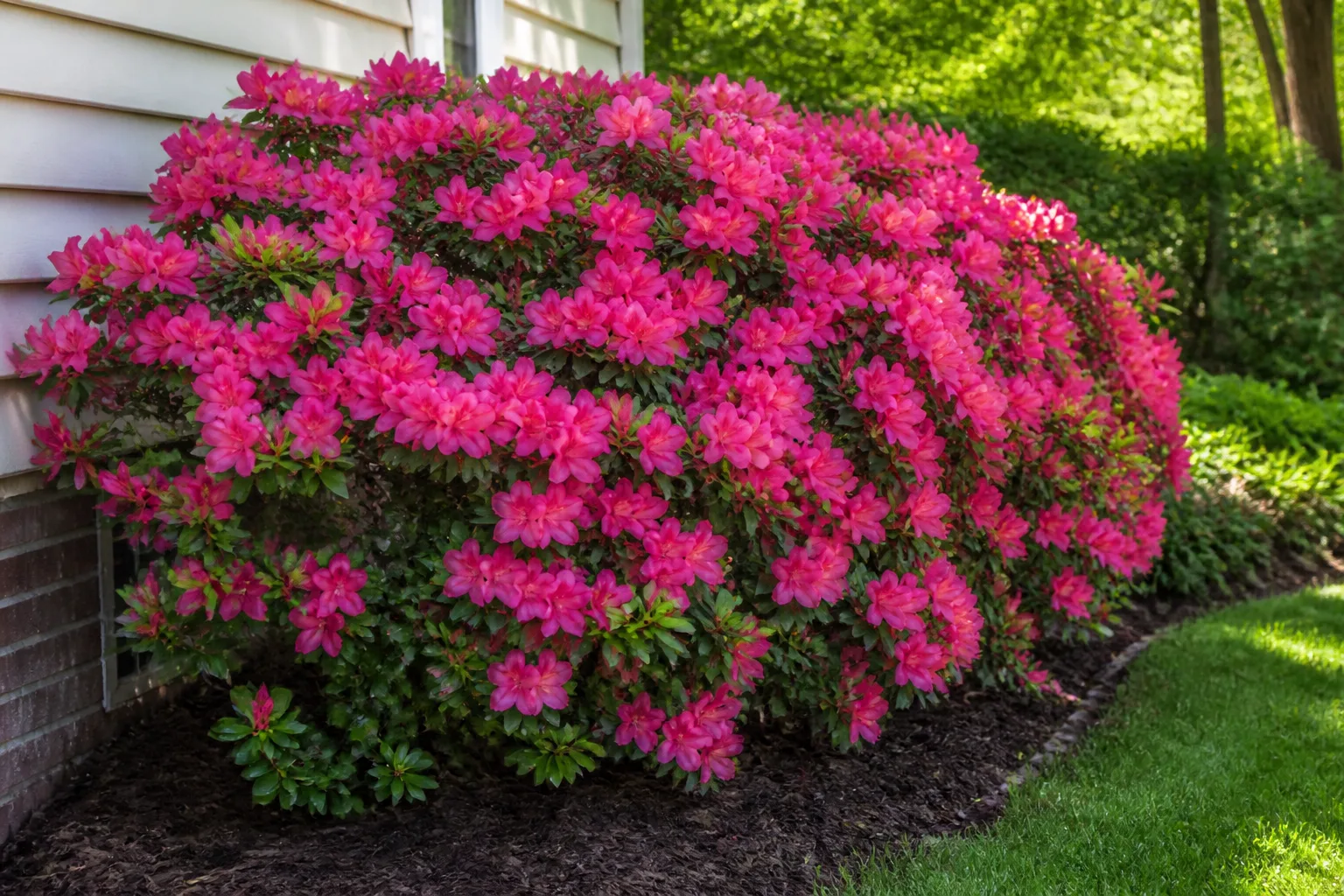
Another spring-blooming shrub that shares the same acidic soil needs as Mountain Laurel.
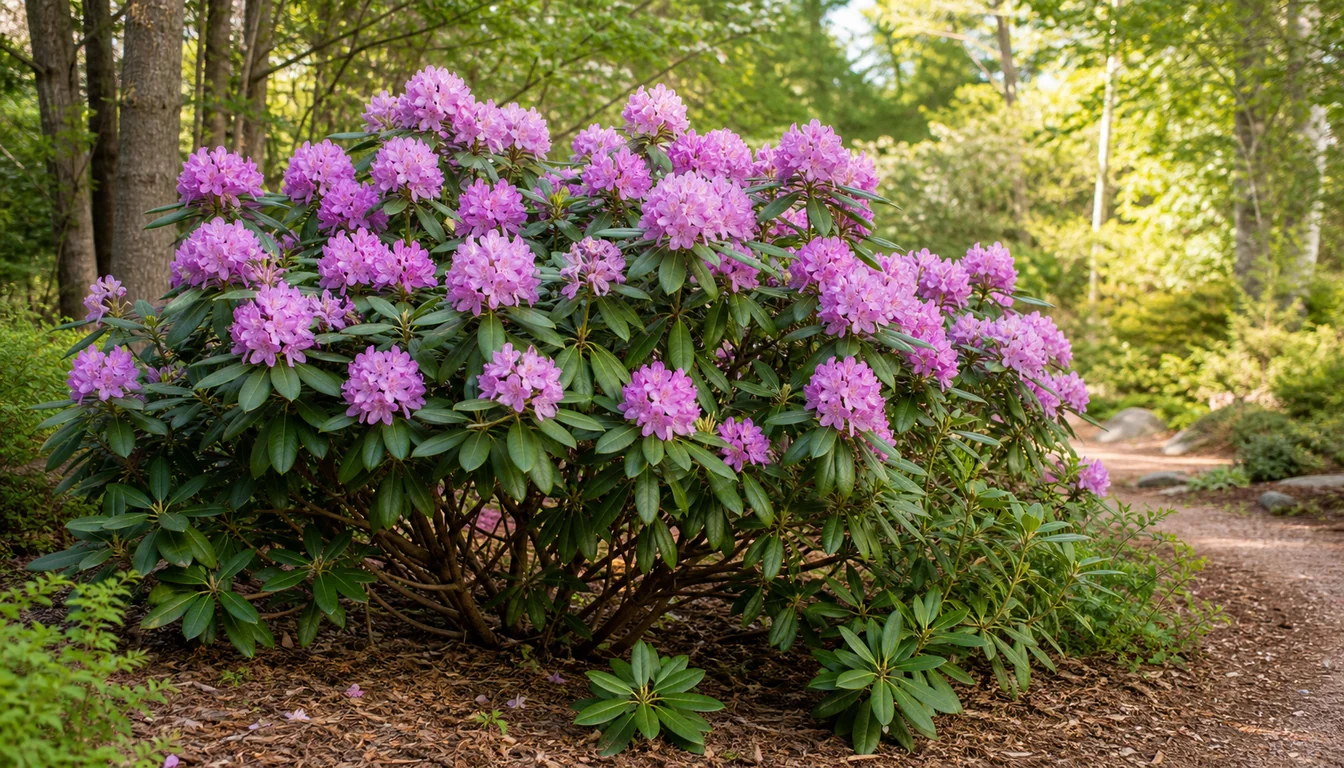
Rhododendron
Broadleaf evergreen shrub with larger leaves and flowers, suited to the same woodland-style gardens.
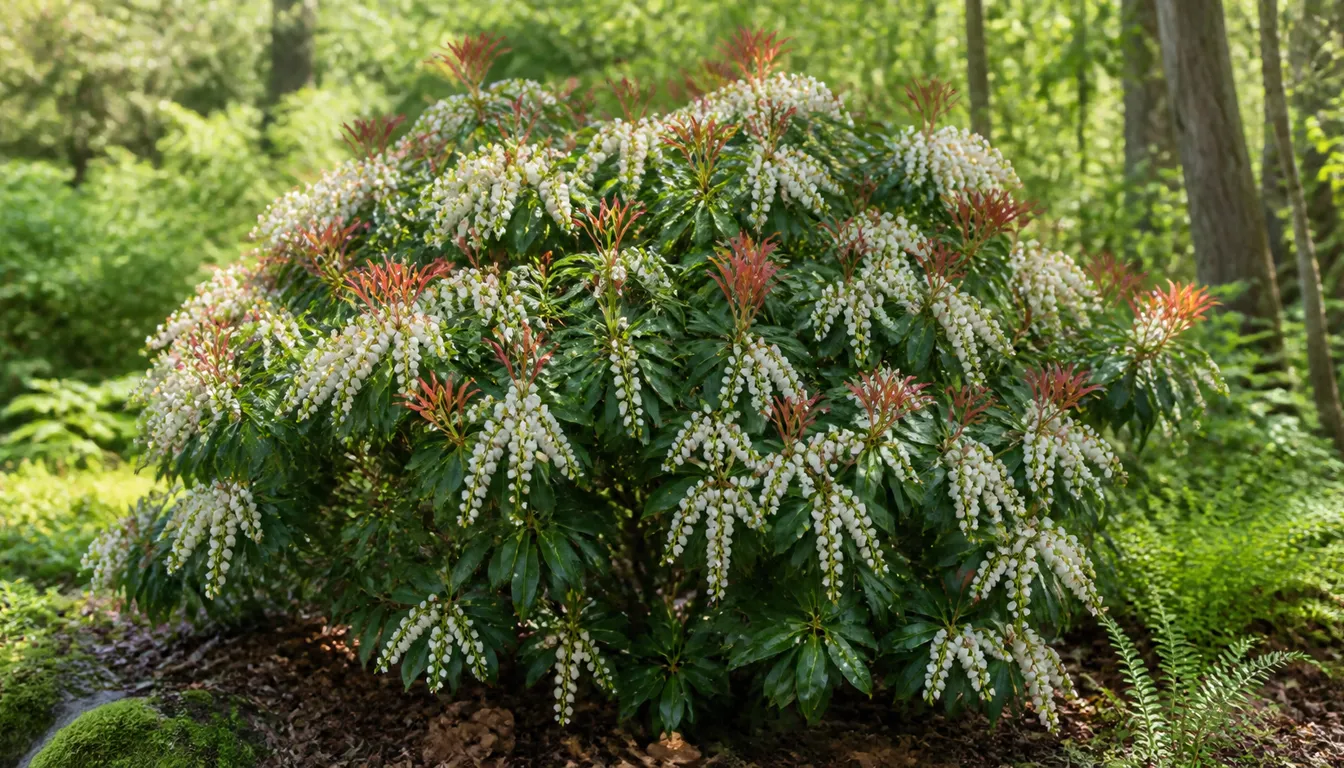
Pieris
An evergreen shrub for acidic soil with early spring flowers, good alongside Mountain Laurel.
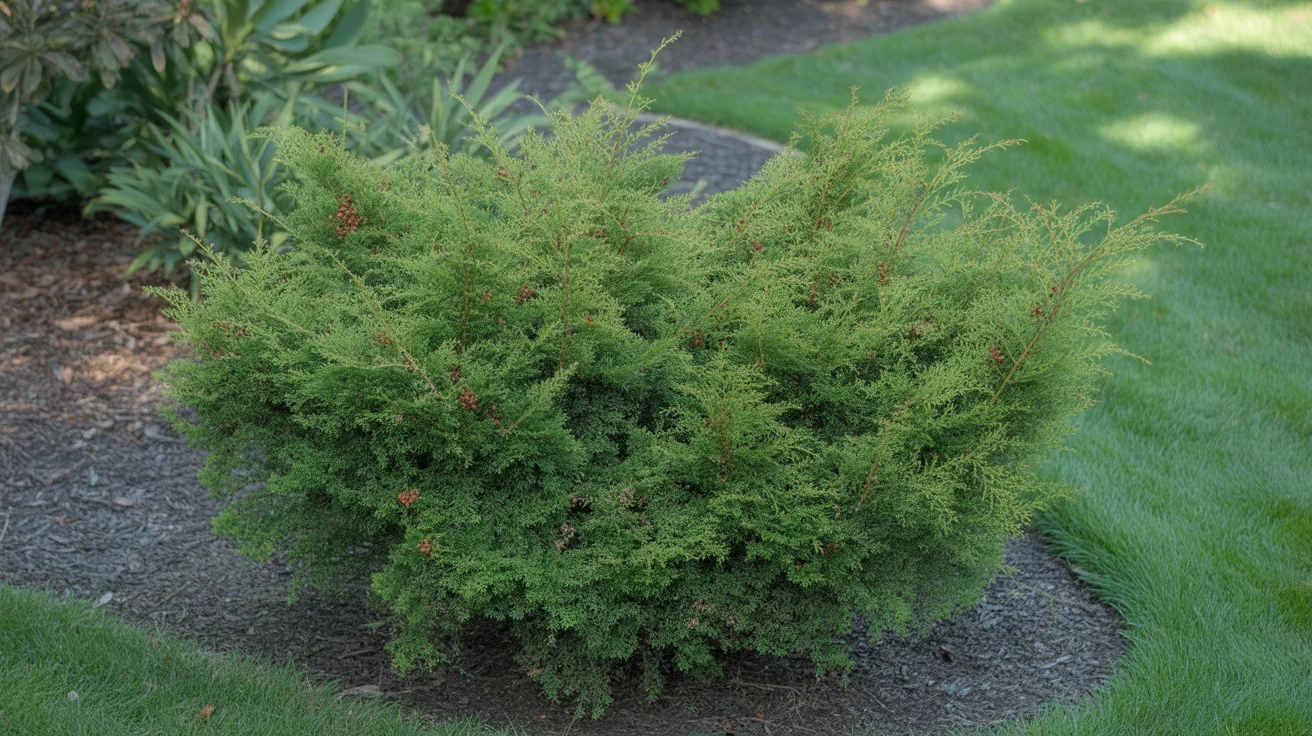
Arborvitae
Arborvitae can form a dense living screen where its mature width, exposure, and water needs fit the site.
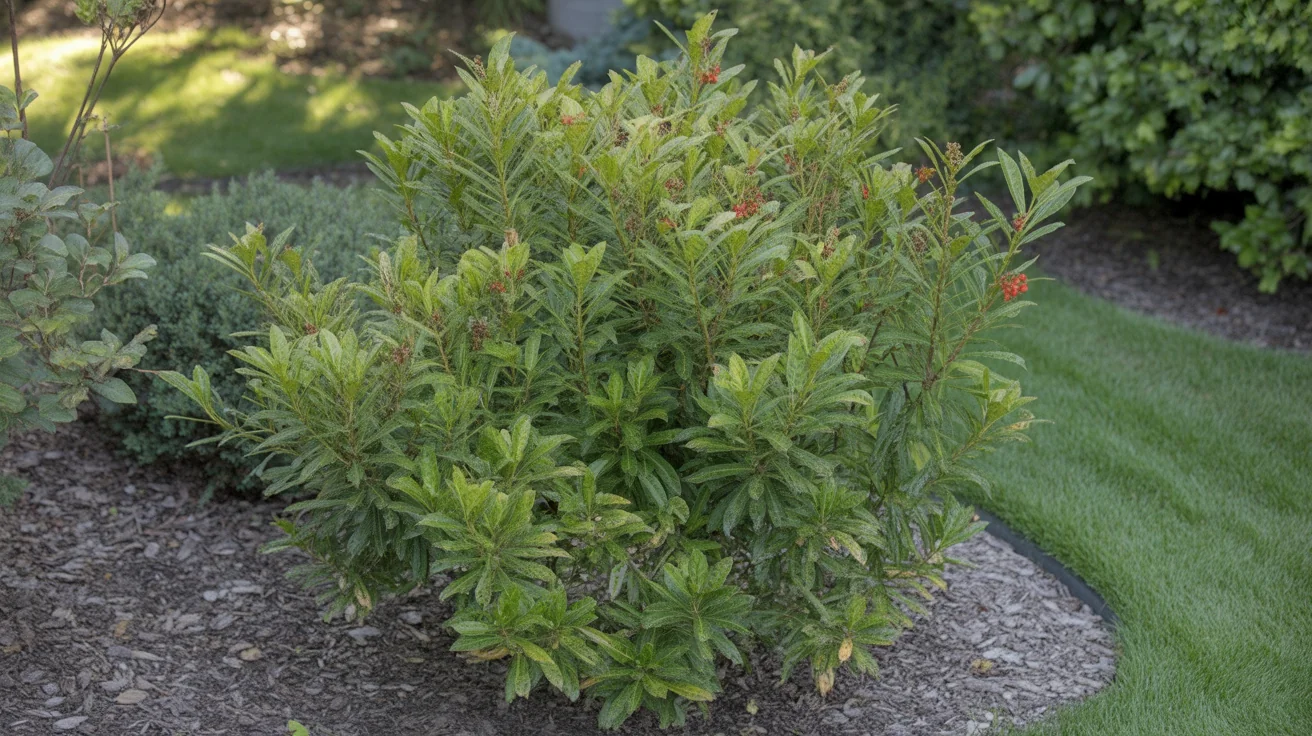
Aucuba
Aucuba is the shrub for bright shade with dry root competition. It keeps evergreen structure near north walls, porches…
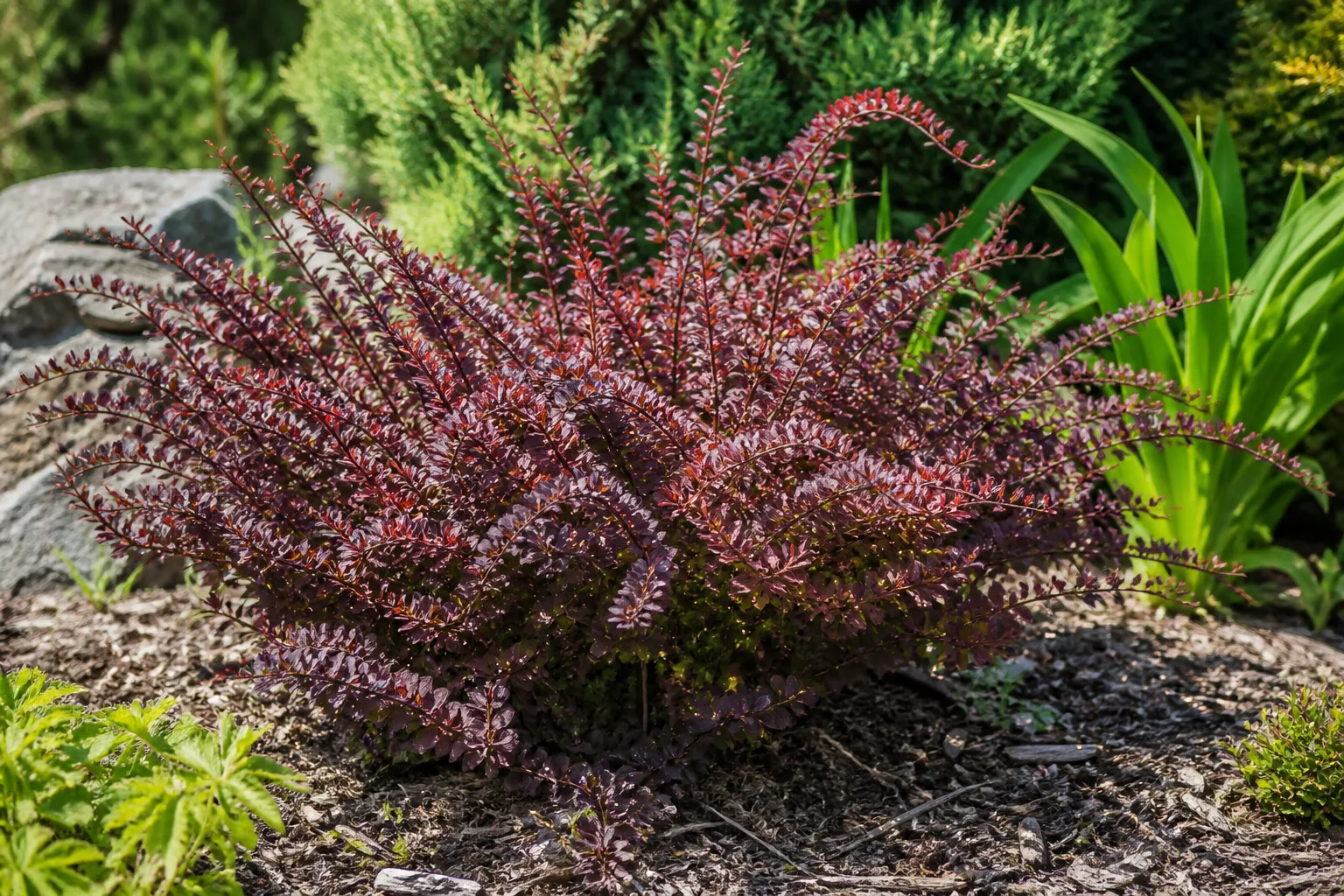
Barberry
Japanese barberry (Berberis thunbergii) is a thorny, deer-resistant shrub whose berries birds carry into woods, so…