
What's an Arborvitae? How to Keep a Screen Dense and Green
Thuja occidentalis Cupressaceae
Arborvitae can form a dense living screen where its mature width, exposure, and water needs fit the site. Deer access and care while the roots establish matter as much as nursery height.
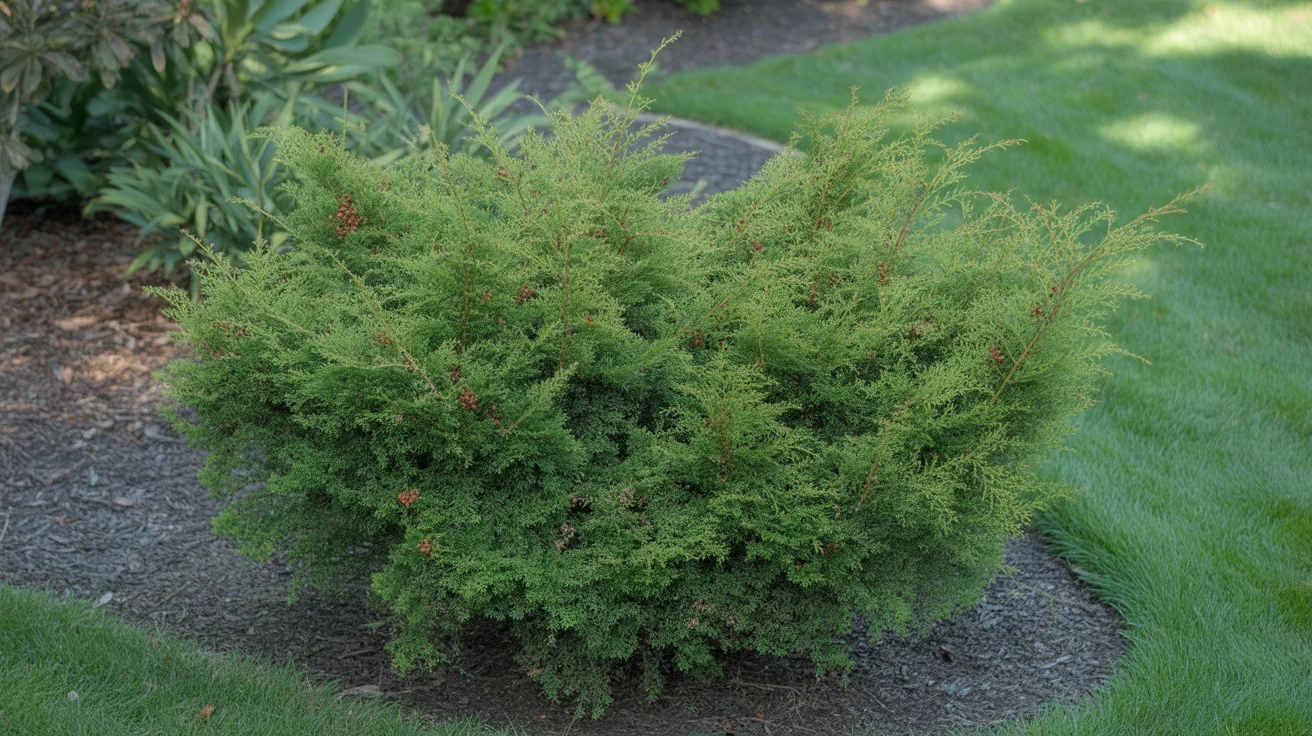
Care snapshot
What Makes Arborvitae Work as a Living Privacy Wall?
A good arborvitae hedge starts with the view you need to block. Stand where people sit, park, or look out the window, then mark the height and width that must disappear.
That line tells you whether a narrow Emerald Green type is enough or whether a broad, fast grower would become a problem.
Spacing depends on the named cultivar’s mature width and the intended screen. Closer planting can close gaps sooner but also increases crowding; there is no single overlap distance that fits every arborvitae.
The common mistake is buying for today's gap. A 4-foot nursery row can look perfect for one season and still fail later because the plants were set too tight, too close to the fence, or too far from the sightline.
Nursery height and expected mature size are different measurements. A tag or cultivar record needs to identify which one it gives before that number is used to plan a bed.
Privacy comes from mature foliage overlapping at the right height, not from squeezing more shrubs into the bed.
Checking the blocked view from a seated position, not just standing, often gives a more accurate read on the height a screen actually needs.
Use evergreen shrub planning for the broad hedge idea, but make the final decision around Thuja behavior. Flat sprays need light on both sides, roots need steady moisture while young, and old bare wood does not refill after hard cuts.
Choose a Cultivar by Width, Speed, and Winter Risk
Emerald Green and Techny are Thuja occidentalis selections. Green Giant is a different hybrid, derived from Japanese arborvitae and western redcedar. Their mature sizes, cold limits, and response to the site are not interchangeable.
Growth rate differences compound over a decade, so a cultivar that looks similar in the nursery pot can end up several feet wider or taller than its neighbor by year ten.
None of those jobs are interchangeable in a side yard.
NC State describes Green Giant reaching 40–60 feet tall and 12–18 feet wide, with rapid growth under favorable conditions. It needs substantially more room than a narrow screen cultivar, even when nursery plants look similar.
If you only have a 4-foot bed, do not plant a 10-foot-wide cultivar and plan to keep it skinny forever. Arborvitae can take light shaping, but it will not rebuild green foliage from old bare interior stems the way privet hedges often can.
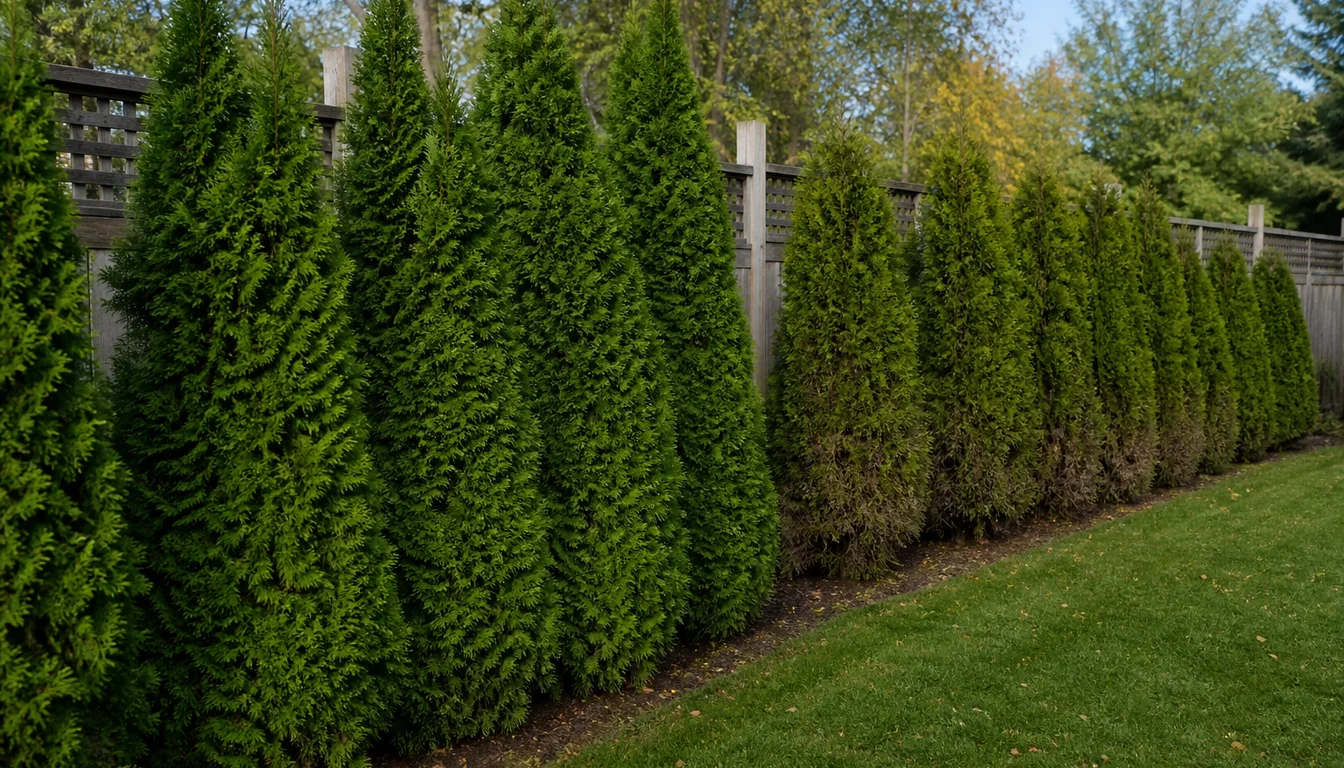
A cultivar record and local performance guidance help match the plant to the available space. The winter-hardiness rating does not by itself describe summer heat, road-salt tolerance, or snow loading.
- Emerald Green
- A narrow, columnar T. occidentalis selection. Use its named cultivar record for mature dimensions.
- Techny
- A pyramidal T. occidentalis selection with dark foliage; allow room for its broader form.
- Green Giant
- A fast-growing hybrid, not T. occidentalis. Its large mature size suits spacious sites; it is not salt-tolerant.
- Globe forms
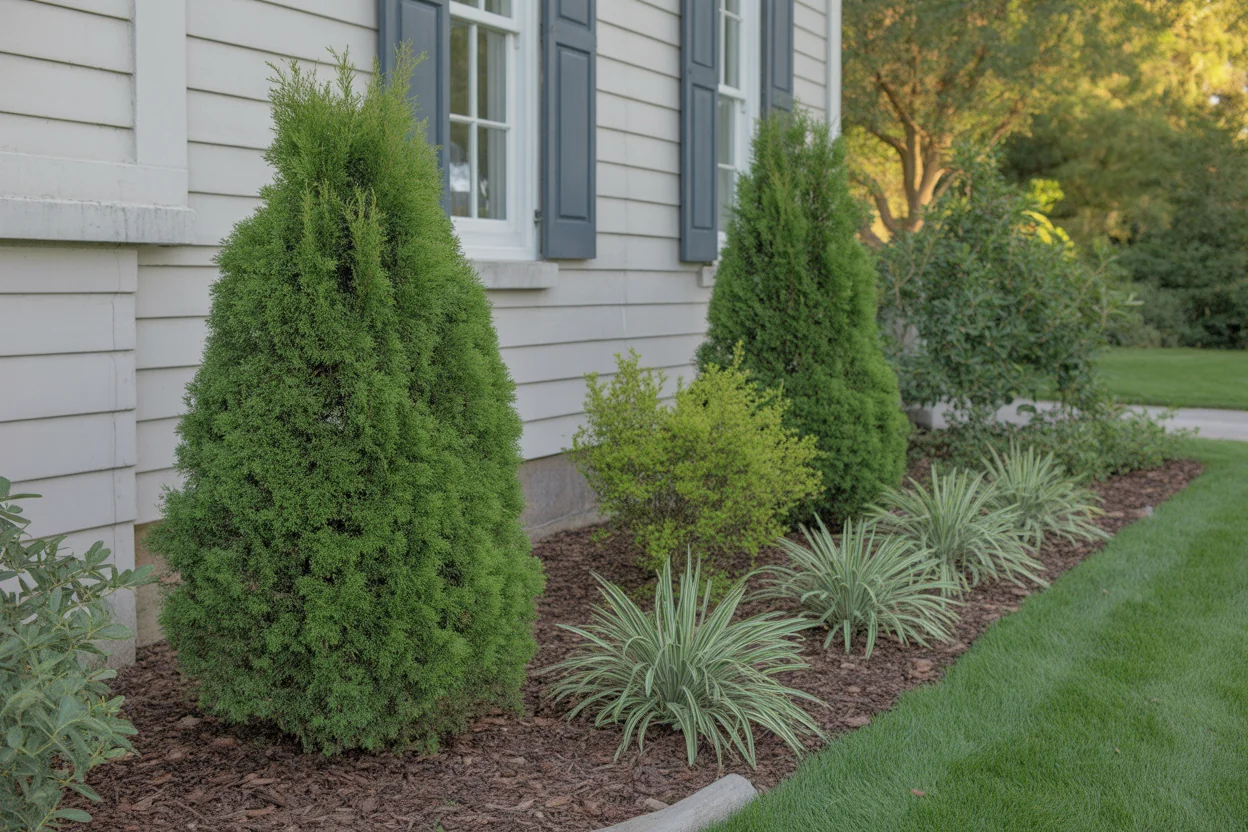
- Use as accents or low structure, not as privacy walls.
Keep the Foliage Green by Giving It Light and Air
Arborvitae grows in full sun or partial shade, while deep shade makes foliage sparse. Light reaching the lower and back branches matters as the hedge and nearby plants grow.
A hedge planted on the north side of a tall structure often gets noticeably less usable light than the same hedge a few feet further out, even though both spots look sunny at midday.
Air matters because the foliage sits in layered fans. A hedge jammed against a solid fence or wall dries unevenly after rain, heats up on one side, and stays dark on the back.
Leave enough room to walk behind or beside the row when you can.
Room around the hedge also makes inspection and watering easier. It does not prevent every pest or disease.
Reflected heat and drying conditions beside pavement can add stress. Actual exposure and soil moisture matter more than using a winter-hardiness zone as a measure of summer heat.
In those spots, set plants back from driveways and compare the site with tougher evergreens such as juniper before you commit to a full row.
A hedge beside a salted road can receive both spray and salty runoff. Distance, drainage, and a barrier against spray matter; rinsing foliage does not correct salt collecting around the roots.
- Use full sun for a true privacy hedge.
- Avoid deep shade under large trees where lower branches will thin.
- Leave service access for pruning, bagworm checks, and watering.
- Set plants back from hot pavement and salted winter roads.
Water the Root Ball Before the Tips Turn Brown
A new arborvitae can look green while the original root ball is already dry. The foliage holds color for a while after stress begins, so browning often shows up after the easy fix has passed.
Checking moisture within the original root ball as well as adjacent soil can reveal uneven wetting. Resistance to a screwdriver also depends on soil texture and compaction, so it is not a definitive moisture test.
While roots establish, slow irrigation can wet the root ball more evenly than a brief pass over the mulch. The amount and timing depend on moisture, rainfall, plant size, and drainage rather than a fixed two-year calendar.
A hose trickle, drip line, or soaker hose does the real work.
A consistent mulch layer around 2 to 3 inches deep holds soil moisture noticeably longer between waterings than bare soil does.
Piling mulch against the trunk instead of pulling it back a few inches traps moisture against the bark and can invite the same rot problems that planting too deep causes.
Established hedges need less help, but they still need a deep soak before a dry winter. Evergreens lose water through foliage on mild winter days, and roots cannot replace it when soil is frozen.
An already wet root zone does not need another autumn soaking. Moisture checks prevent a winter-preparation routine from becoming overwatering.
Dry soil may need water before it freezes, provided it can absorb and drain the application. Frost on foliage alone does not show that the root zone has frozen.
One declining plant warrants a local check of irrigation delivery, planting depth, and drainage. Shared browning across a row suggests shared conditions, but neither pattern excludes pests or root disease.
Plant High Enough That Roots Can Breathe
The root flare should sit at or slightly above the finished soil line. Planting deep hides the trunk base, traps wet mulch against bark, and slows new root growth.
In heavy clay, a slightly raised bed beats a deep amended hole.
A quick percolation test, digging a hole and timing how fast it drains after filling with water, is worth doing before planting a whole row in a suspect spot.
A slowly draining hole is a reason to investigate the site, not a universal deadline for installing a raised bed. Soil texture, saturation before the test, and surrounding runoff affect what that observation means.
Do not backfill only with fluffy compost. Roots leave the original hole better when the backfill still feels like the native soil around it.
Loosen a wide area, remove circling roots, and water the settled soil before you mulch.
Container-grown arborvitae often arrive with roots already circling the pot shape, and scoring or teasing those roots apart at planting helps them grow outward instead of strangling the trunk later.
- Space narrow cultivars so mature sides meet without crushing each other.
- Use a 2-3 inch mulch layer, pulled back from the stems.
- Assess low ground where runoff collects or the root zone stays saturated.
- Assess weak growth before feeding; tree and shrub fertilizer timing depends on the plant and the reason for treatment.
Read Browning by Pattern Before You Treat
Brown foliage on arborvitae has several possible causes. The face exposed to winter wind can suggest winter injury, but that pattern does not rule out salt or root problems.
A whole lower band may point to deer. Scattered dead patches with hanging cone-like bags point to bagworms.
Bagworm bags are built from bits of the plant's own foliage, which is exactly what makes them so easy to overlook during a quick walk-by.
Bagworm populations tend to build over several seasons, so a light infestation caught and hand-removed early is far easier to manage than the same problem left for two or three years.
Bagworms deserve their own check because they blend into the plant. Look for small spindle-shaped bags hanging from branch tips in winter and spring.
If you see them, remove them by hand and use arborvitae bagworm control before the next generation strips more foliage.
Winter burn usually shows on the south or west side after cold, dry wind. The plant may still have live buds deeper in the branch, so wait until spring growth starts before pruning.
The winter burn guide helps separate dryness from pest damage.
A burlap screen staked on the windward side before winter can meaningfully cut wind exposure on a newly planted hedge that has not yet built up its own density.
An anti-desiccant is not a routine winter-burn treatment for arborvitae. Rutgers warns that some products can injure scale-leaved evergreens, so suitability depends on the specific label; autumn moisture management and protection from drying wind remain important.
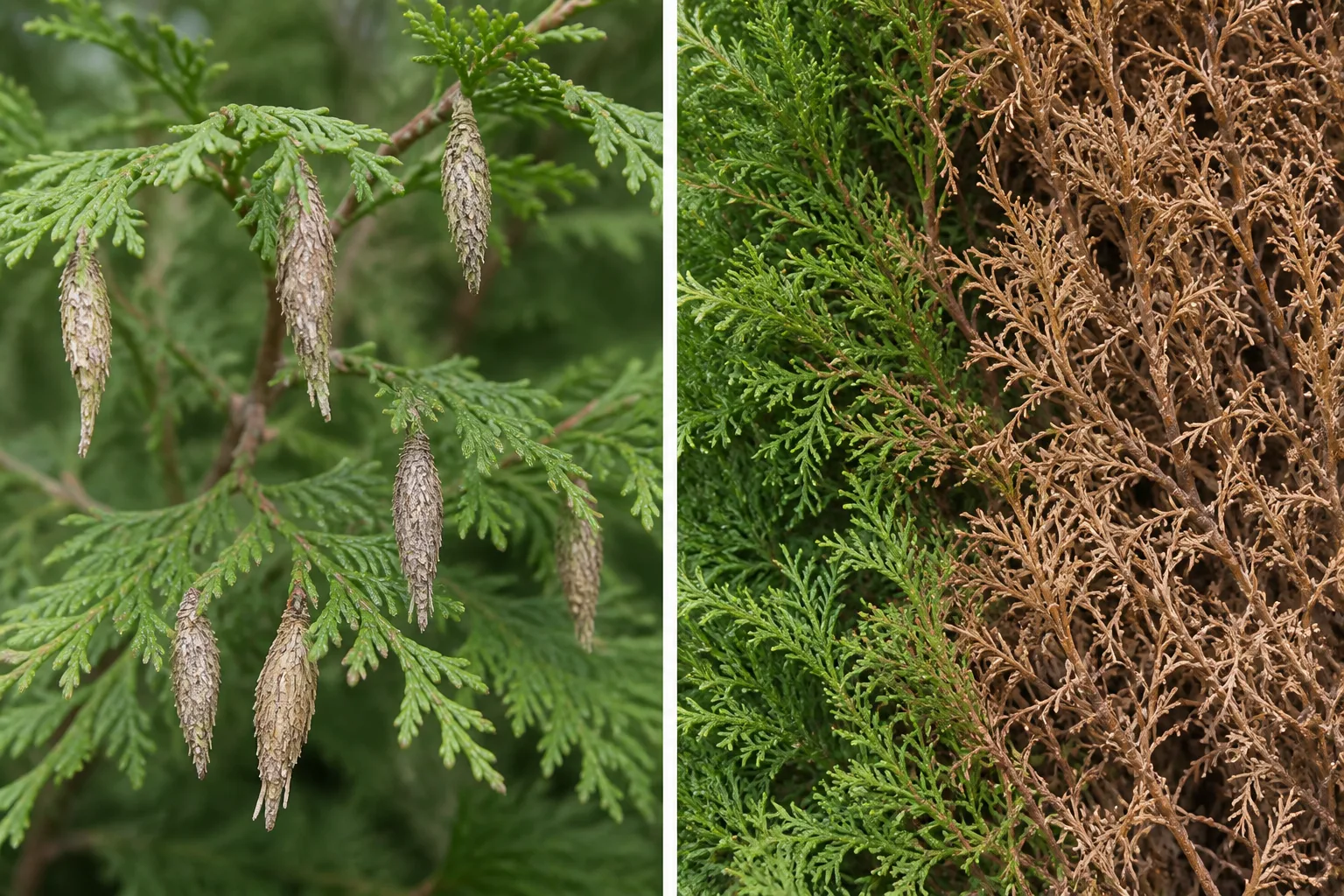
- Outer face browned
- Wind, salt, reflected heat, or winter sun.
- Lower foliage missing
- Deer or rabbits, especially after snow cover.
- Small bags on twigs
- Bagworms; remove early before feeding peaks.
- One plant failing
- Investigate the local root ball, planting depth, irrigation delivery, drainage, and possible root disease.
If the pattern points to browsing instead of insects, change the protection plan. Deer pressure makes arborvitae a weaker choice than many broadleaf shrubs in exposed winter yards.
Propagate Only When Uniformity Matters
Vegetative propagation can preserve a named cultivar, while seed-grown plants may differ. That distinction matters when extending an existing uniform hedge.
Cutting preparation and rooting conditions depend on the selection and available propagation setup. A generic rooting-week promise is not a sound basis for buying fewer plants for a screen that is needed soon.
Established nursery plants provide immediate height, but they still need room and care while roots establish. Starting smaller plants is a different timetable from purchasing a near-finished screen.
Time Pruning Around Green Growth, Not a Calendar Habit
Light shaping works best after spring growth begins. You can shorten soft tips and keep the hedge even, but avoid cutting back behind the green outer shell.
Old interior wood rarely pushes fresh foliage.
Marking the outer green shell with a stake or string before the first shaping cut of the season helps avoid the common mistake of cutting one pass too deep.
Avoid shearing late in fall, since new growth pushed too close to frost will not have time to harden before winter cold sets in.
Summer care is mostly water and inspection. Walk the row, look into the shaded side, and check for bags, mites, broken stems, and dry mulch.
This is faster than repairing a long brown section later.
Dull or changing foliage deserves a moisture and pest check. Color alone cannot identify heat stress or establish that the roots are healthy.
Fall care follows soil moisture, clear stem bases, and protection where road spray or wind repeatedly damages the hedge. Heavy snow and ice can bend or break branches; forcing frozen material off can add injury.
Plan for Deer, Pets, and the Native-Evergreen Tradeoff
Thuja occidentalis is native to parts of North America and provides dense winter cover. Deer browsing can seriously damage it; the Green Giant hybrid discussed above is a different plant with different resistance traits.
A holly or boxwood screen needs its own assessment of climate, space, and local deer pressure. No replacement is protected from browsing merely because it has tougher leaves.
Fencing can prevent browsing where deer can reach the hedge. An older or denser plant is not protected by age alone, and repeated browsing may leave gaps that arborvitae fills poorly.
Deer repellent sprays need reapplication after heavy rain to stay effective, which makes them a maintenance commitment rather than a one-time fix in high-pressure yards.
The sources reviewed here do not establish a pet-safe classification for Thuja occidentalis. Deer browsing does not prove safety for dogs, cats, or children. Prevent chewing, and contact a veterinarian after a suspected pet ingestion.
Use arborvitae where year-round cover is the main job. If you need flowers, berries, or pollinator value in the same bed, build a second layer with viburnum.
Beautyberry can handle the fall-fruit job without weakening the screen row.
Frequently Asked Questions
How far apart should I plant arborvitae for privacy?
Base spacing on the actual cultivar’s mature width, available bed space, and how soon the screen is needed. Emerald Green, Techny, and the much larger Green Giant hybrid should not share one spacing rule. Closer planting closes gaps sooner but can also create crowding.
Why is one arborvitae in the row turning brown?
One declining plant can have a local root-ball, planting-depth, or drainage problem. Several affected plants may share exposure, watering, salt, or pests, but the pattern alone does not rule out disease or identify one cause.
Can I cut arborvitae back hard to make it smaller?
Do not cut behind the green outer foliage unless you accept a bare spot, since arborvitae does not refill old bare wood well. Choose the right mature size first, then use light tip pruning to hold the shape.
Does arborvitae need fertilizer every year?
An established hedge growing well does not need fertilizer simply because another year has passed. Weak growth or pale foliage can also reflect water, roots, or pests, so those signs need assessment before nutrients are added.
Sources & References
- Arborvitae for Landscape Plantings, University of Minnesota Extension
- Selecting Shrubs for Hedges, Clemson Cooperative Extension
- Evergreen Trees and Shrubs for Privacy, Clemson Cooperative Extension
- Managing Bagworms on Trees and Shrubs, Penn State Extension
- Rutgers Cooperative Extension — Primer on Anti-Transpirant Applications
- Protecting trees and shrubs in winter, University of Minnesota Extension
- Thuja occidentalis, NC State Extension Plant Toolbox
- Green Giant Arborvitae, NC State Extension Plant Toolbox
Related Plants
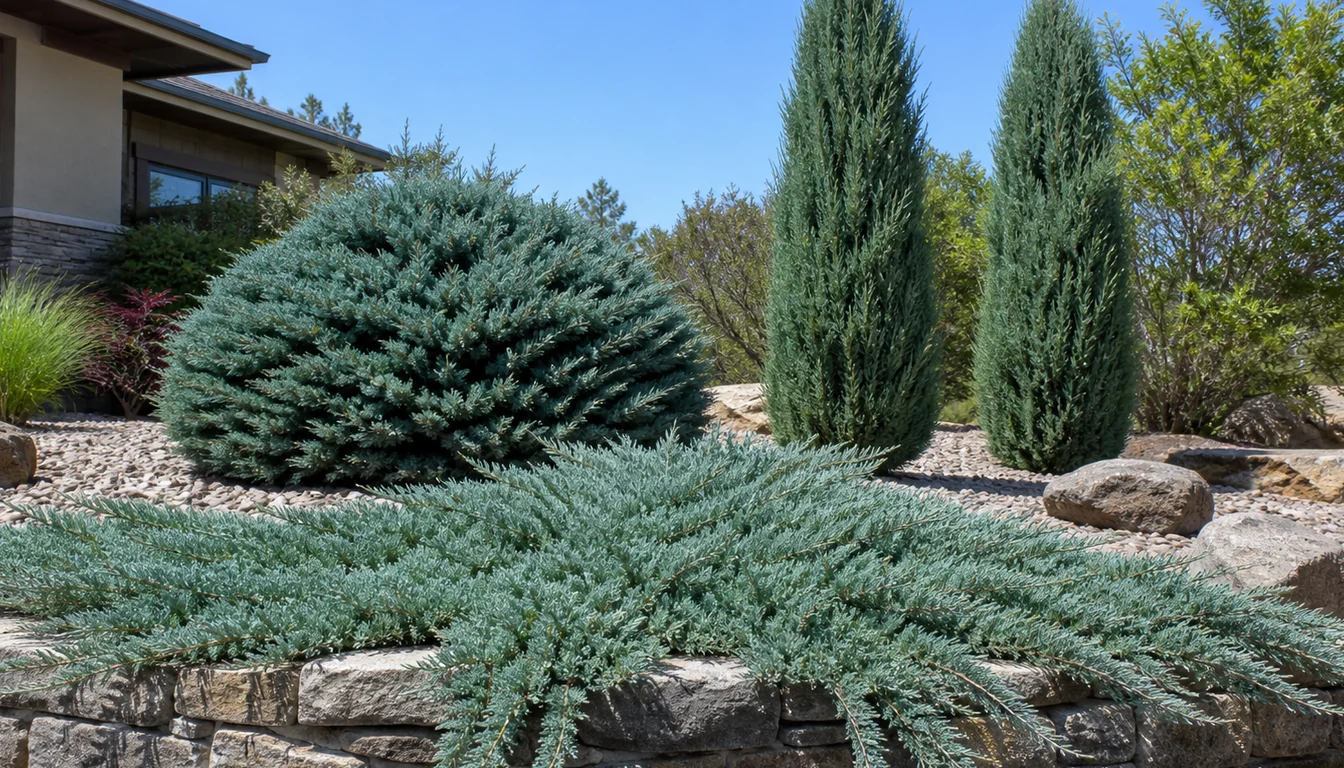
Juniper
Evergreen alternative with higher drought tolerance and varied textures.
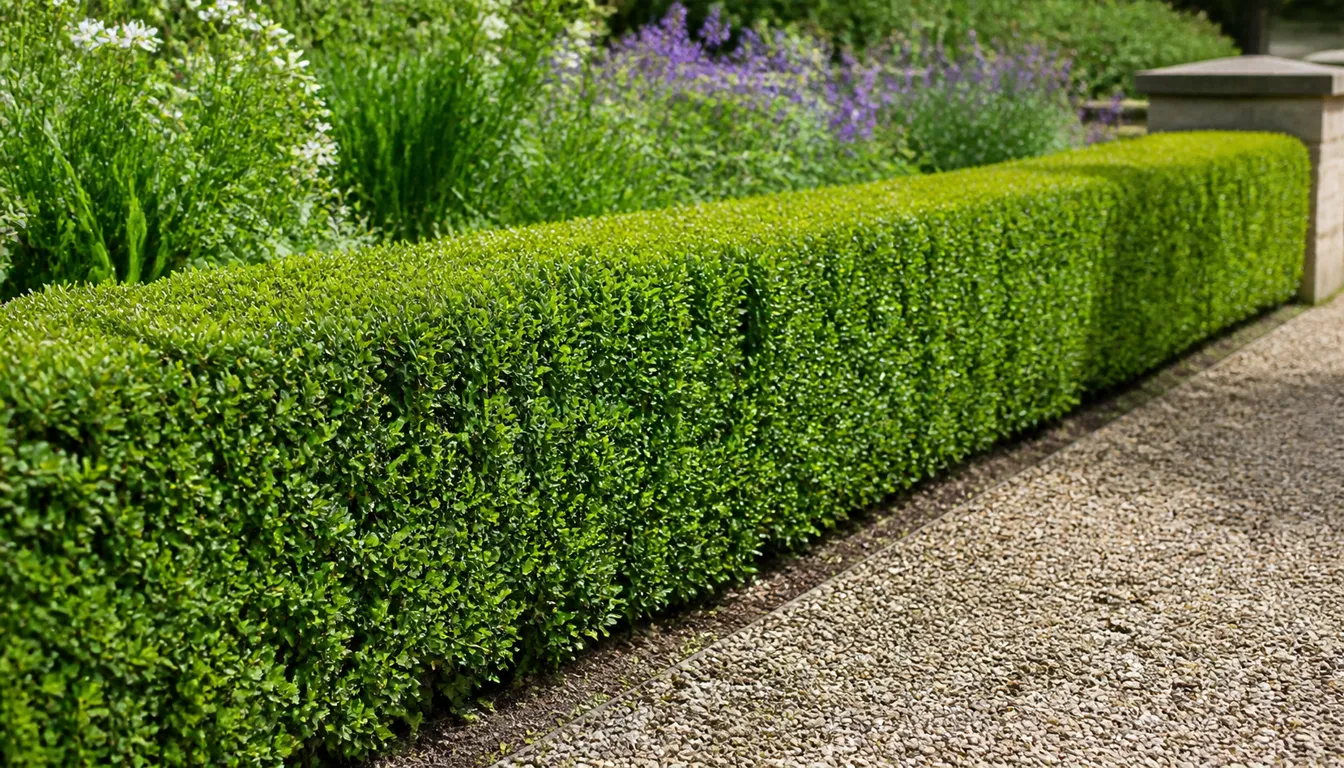
Boxwood
Classic small hedge shrub for formal shapes where height is not needed.
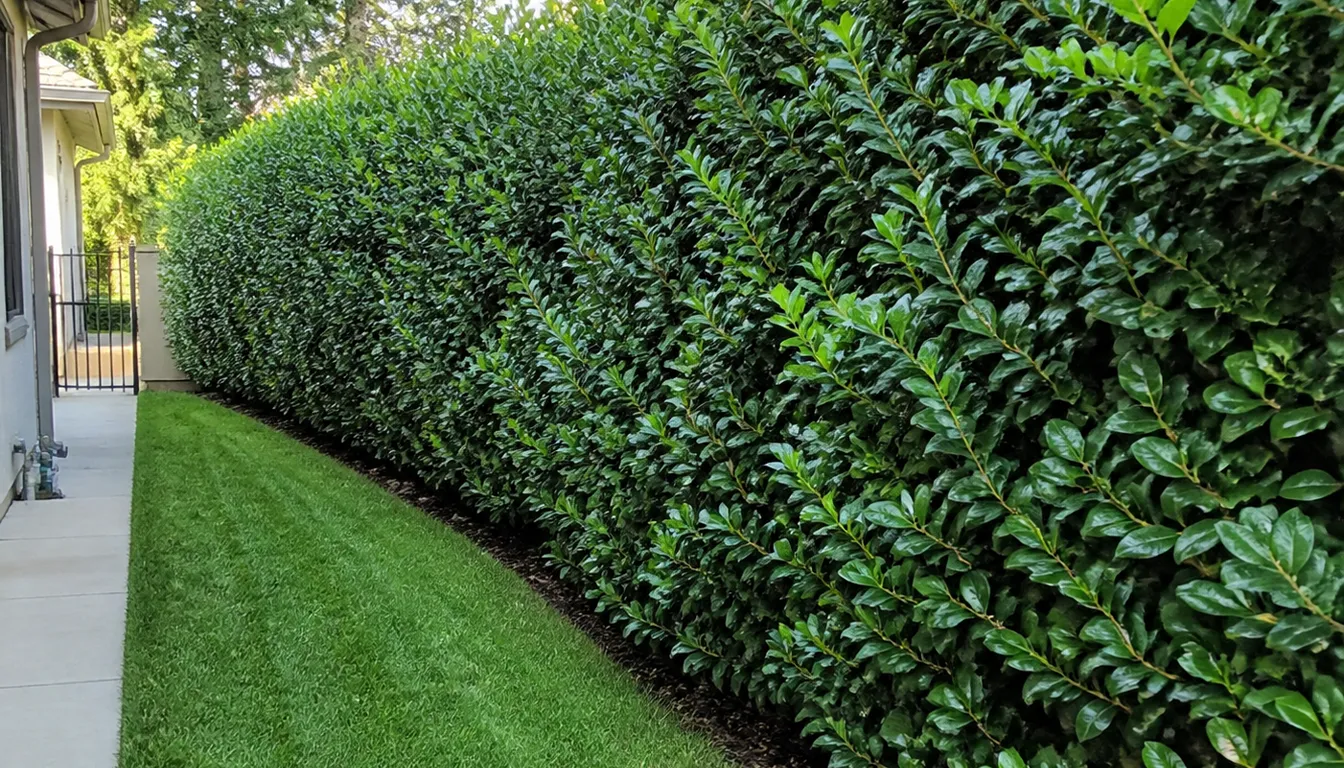
Skip Laurel
Broadleaf evergreen hedge option for Zone 6-9 with glossy foliage.
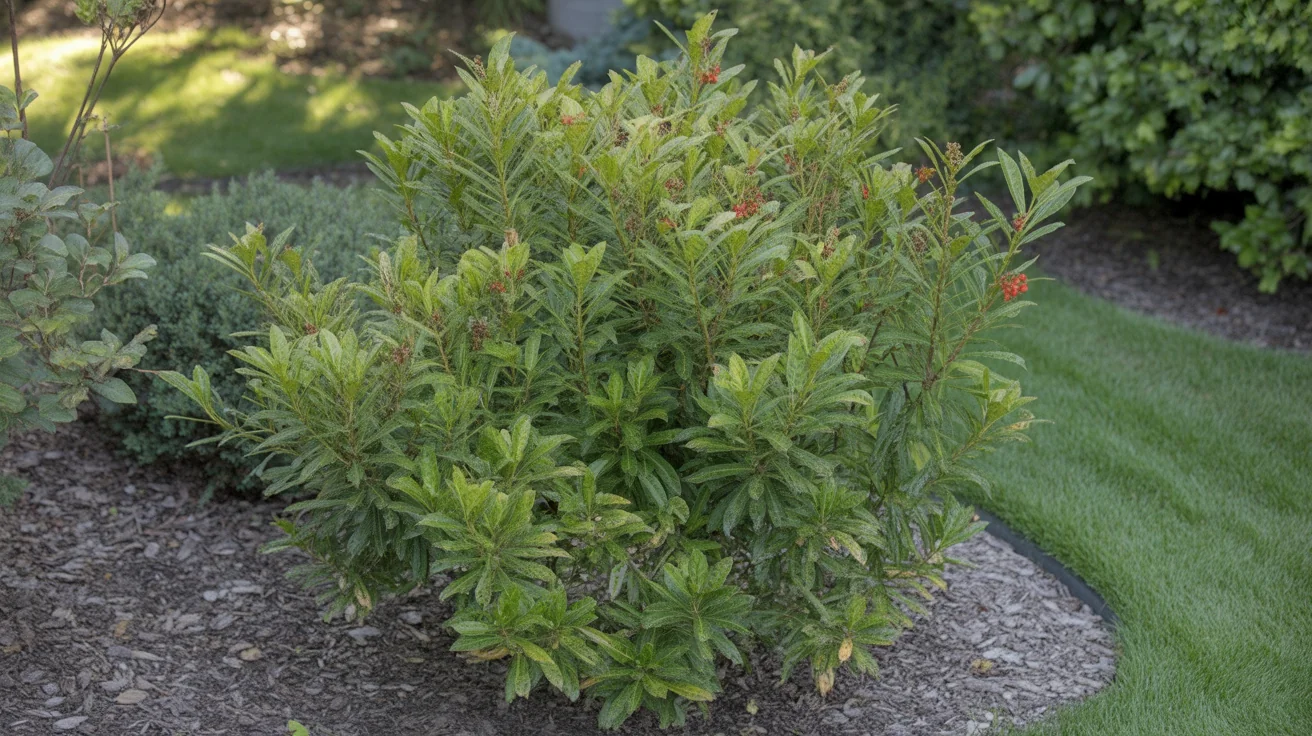
Aucuba
Aucuba is the shrub for bright shade with dry root competition. It keeps evergreen structure near north walls, porches…
Azalea
Azaleas bring spring flowers, and some cultivars bloom again later in the year.
Barberry
Japanese barberry (Berberis thunbergii) is a thorny, deer-resistant shrub whose berries birds carry into woods, so…