
Which Deer-Resistant Plants Hold Up Under Heavy Browsing?
Deer pressure is not the same in every yard.
A plant that survives untouched in town can get stripped overnight beside a woodlot.
The goal is not a magic list. It is a planting plan that deer prefer to skip.
We lean on plants with fragrance, fuzzy or tough foliage, and milky or bitter sap, then arrange them so the tastier things are harder to reach.
You will still see a test nibble now and then.
The win is turning your beds from a buffet into an occasional snack.
Pairing smart plant choices with fences, repellents, and layout can get you there without turning your yard into a fortress.
At a glance
Know Your Deer Pressure First
Browsing patterns tell you far more than any generic deer resistance list. Fresh ragged bites on tender plants like shade hosta clumps or daylily foliage mean you are in a high-pressure yard where hungry herds pass through often.
If you only see occasional damage on the outer edge of beds, you are probably in a moderate-pressure area and can mix in a few favorites with protection. Light nibbles once or twice a season usually count as low pressure.
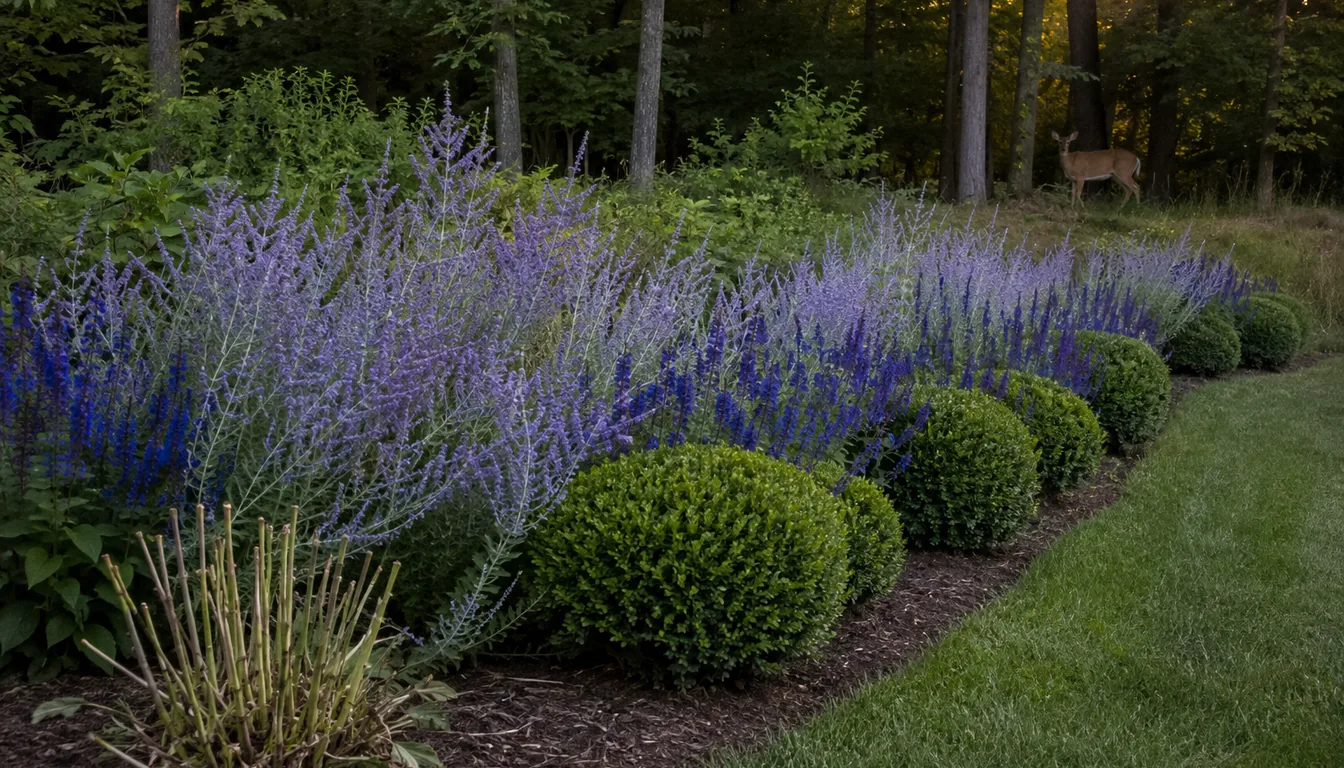
High-pressure sites near woods or farm fields need a backbone of very unappealing plants. Think tough shrubs such as boxwood hedges and strongly scented perennials like lavender clumps and russian sage mounds.
Urban and small-lot yards, where dogs and people are active, can usually get away with more “borderline” options like hydrangea shrubs and coneflower patches if you protect new plantings.
Before you spend money, walk your street and note what neighbors grow that still has leaves. Their survivors are your best local deer resistance list.
That neighborhood scan is worth more than a generic roundup because it reflects the exact herd pressure on your block.
- Low pressure: Occasional nips, damage mostly in winter
- Moderate pressure: Frequent tasting, some plants stripped mid-summer
- High pressure: New growth vanishes within days, whole beds eaten back
- Extreme pressure: Deer in daylight, shrubs browsed to one height line
That quick field read changes the whole strategy, because the same plant list behaves very differently in a casual suburban route than beside a woodlot.
Core Deer Resistant Shrubs and Trees
Woody plants carry most of the visual weight in a yard, so this is where we start. Evergreen structure from shrubs and small trees makes beds look full even if deer sample a few perennials.
Boxy, dense shrubs are rarely first-choice food.
Classic examples are boxwood, many holly types, and leathery-leafed broadleaf evergreens like camellia shrubs in warmer zones.
In colder climates, needled evergreens such as juniper screens tend to hold up better than softer options.
Color shrubs can be surprisingly tough too. Plants like barberry with thorns, ninebark, and burning bush usually get only light browsing when food is scarce.
Small ornamental trees with stronger scent or less tasty foliage also help. serviceberry trees and ginkgo leaves are rarely hammered like a young apple tree or pear tree.
Even “resistant” shrubs are most vulnerable their first two years. Cage or wrap trunks until they size up and set tougher bark.
Choose the woody frame first, then decide which softer plants are worth protecting inside it.
- Reliable shrubs: Boxwood, inkberry, holly, barberry, spirea shrubs
- Better bets for trees: Ginkgo, serviceberry, redbud blossoms, river birch
- Use caution: Young fruit trees, Japanese maple, and red maple in high-pressure yards
Use those woody plants as the frame of the bed, then let softer flowering plants play a smaller supporting role inside that frame.
Perennials Deer Usually Avoid
Perennials give you most of the flower color, so we lean on species deer naturally dislike. That usually means strongly scented foliage, fuzzy leaves, or bitter sap that tastes awful after one bite.
Classic deer resistant bloomers include catmint edging, yarrow clumps, purple coneflower, black eyed susan, russian sage, and ornamental salvia. These handle full sun, heat, and match the toughness of zone 5 stalwarts like peony clumps.
In shadier beds, look at bleeding heart, astilbe plumes, and coral bells foliage. They are not as ironclad as prickly shrubs, but deer commonly pass them by when more palatable alternatives are nearby.
Avoid planting big drifts of well-known favorites like daylily clumps and hostas out in the open if your neighbors already complain about browsing. Treat those like dessert tucked behind a hedge.
Mix textures. A bed of only coneflower can still be mowed down, but coneflower threaded between catmint, yarrow, and sedum mats feels less inviting.
That mixed texture is what turns a tempting bloom bed into a place deer do not enjoy lingering.
- Sun lovers: Yarrow, coneflower, black eyed susan, Russian sage, ornamental salvia
- Part shade options: Coral bells, bleeding heart, astilbe, some ferns
- Borderline favorites: Daylily clumps and hostas, best used behind tougher plants
Fragrant Herbs as a Living Deer Fence
Strong scent is one of your best tools.
Many herbs sit high on every deer resistant list because the oils in their leaves overwhelm a deer's sensitive nose.
We use them as a living barrier in front of plants deer crave.
Good candidates are woody herbs like rosemary shrubs, hedges of lavender, culinary sage, and creeping thyme. In colder zones, hardy mounds like ornamental oregano and garlic chives pull double duty as edging and kitchen plants.
Around vegetables, ring beds with herbs instead of bare mulch. Deer are far more likely to step into a plain row of bush beans and ripening tomatoes than through a gauntlet of rosemary, mint clumps, and dill fronds.
A dense strip of pungent herbs at nose height can do more than random sprays of repellent. Keep them where deer first approach, such as along driveways and path edges.
- Best edging herbs: Lavender, rosemary, thyme, sage, oregano
- Veggie bed helpers: Chives, dill, mint in buried pots, cilantro around ends of rows
- Indoor backups: Start replacements in pots with indoor herb setups so gaps fill quickly
Designing Beds Deer Actually Leave Alone
Bed layout does as much as plant choice. Deer like straight runs where they can stroll and browse without brushing against anything prickly or smelly.
Curved beds with mixed heights and textures slow them down and cut their comfort level.
Put your most deer tempting plants, like repeat-blooming roses, deep inside the bed or closer to the house.
Wrap them with rings of sharper foliage, such as thorny barberry shrubs.
Use holly hedges where you need a denser, evergreen buffer.
In wide beds, aim for at least three layers. Use sturdy shrubs in back, mid-height perennials like colorful coneflower clumps in the center, and tough groundcovers such as low catmint along the edge.
Deer are jumpy around tight spaces. Narrow side yards planted with tall, dense options like arborvitae screens discourage them from walking between houses.
A tight planting with very little open soil is harder for deer to wade through, so pack plants a bit closer than usual.
- Back layer: 6 to 8 foot shrubs or small trees (holly, viburnum, smoke tree)
- Middle layer: 2 to 4 foot perennials and small shrubs (coneflower, yarrow, boxwood)
- Front layer: 12 to 18 inch edging plants (catmint, thyme, low sedum)
- Path edges: Strong scent or texture where deer must touch plants to pass
That layout makes the route feel crowded and irritating, which matters almost as much as the flavor of the plants themselves.
Seasonal Timing So Deer Do Not Win Spring
Deer are hungriest in late winter and early spring when natural browse is low. That is exactly when tender shoots and bulbs emerge in your beds.
If you are going to protect anything, protect spring growth first.
Plant true deer candy, like bright tulips and soft hostas, closest to the house or inside fenced areas. Use more resistant early perennials such as daffodils and yarrow clumps at the outer edges.
In fall, choose and plant woody deer resistant shrubs while soil is still warm. Shrubs like boxwood hedges and colorful ninebark root deeper before winter, so they tolerate browsing better if deer test them.
Summer brings more natural food, so damage often shifts to watering points. Deer will nibble tender new growth on irrigated trees such as young apple trees while ignoring drier corners.
Keep irrigation focused and avoid creating a single always-damp "salad bar" strip along the whole fence line.
Seasonal protection works best when you change tactics before deer build a habit.
- Late winter: Put up temporary netting around roses and fruit trees before buds swell
- Early spring: Spray repellents as soon as green tips show, then repeat every 2 weeks
- Summer: Rotate repellent brands so deer do not get used to any one scent
- Fall planting window: Add at least two new woody deer resistant anchors each year
When you protect that first flush of growth, the rest of the season usually becomes easier because deer never learn the bed as easy food.
Pair Plants With Repellents And Barriers
Even the most deer resistant mix benefits from backup. Think of repellents and barriers as the insurance policy around your plant choices.
You can reduce browsing a lot by stacking two or three mild tactics instead of relying on one strong measure.
Scent-based sprays work best on plants deer are only half interested in, like mophead hydrangea shrubs. On heavy favorites such as tender daylilies, sprays alone rarely hold during a hungry year.
Physical barriers, even short and temporary ones, change deer behavior. A simple ring of 3 foot wire fencing around a new blueberry bush keeps it off their menu until it is tall enough to handle some nipping.
Never hang food-based baits (like corn or apples) near the garden to "distract" deer, or you train them to visit daily.
The backup tools work best when they make a resistant bed even more annoying, not when they try to replace structure.
- Core repellents: Rotate egg-based, garlic-based, and spicy sprays on outer plantings
- Netting: Use fine mesh over hostas, peony shoots, and tulips during spring flush
- Small enclosures: Cage young trees, especially pear saplings and fig trees
- Perimeter line: Combine thorny shrubs like barberry rows with herbs such as strong lavender to make a deterrent belt
Troubleshooting When Deer Still Browse
Even with good planning, a hungry herd will sample almost anything. The trick is reading what kind of damage you see and adjusting fast.
Deer leave torn, ragged ends on stems, not clean cuts like rabbits or pruners.
If deer take a few bites from a plant that is usually low on their list, such as purple coneflower, do not rip it out. Watch how quickly it rebounds and whether damage repeats after you change your deterrent pattern.
Consistent, heavy browsing that keeps foliage under 18 inches on shrubs like viburnum hedges means your yard is a regular route, not a random visit.
Once deer add your yard to their daily loop, you need faster, stronger changes for at least one full season to break the habit.
Match the response to the pattern instead of treating every bite like a disaster.
- One-time nibble: Switch to a different repellent on that bed and monitor two weeks
- Repeated damage: Add physical barriers around favorites plus a new repellent scent
- Severe stripping: Consider replacing with tougher options, for example swapping hybrid tea roses for Knock Out types behind a herb border
- Tree rubbing: Protect trunks of maples, young redbud, and serviceberry clumps with spiral guards every fall
Common Mistakes That Invite Deer Back In
Small habits around the yard can undo a lot of good plant choice. Deer like predictable food and easy movement.
Once you spot patterns, you can remove the welcome mat without turning your yard into a fortress.
Overfertilizing shrubs and perennials gives you extra-soft, extra-tasty growth. That is true if you are feeding rose beds or flowering shrubs like azalea rows.
If you already drench plants with rich fertilizer, scale back after reading about proper shrub feeding in our guide on tree and shrub timing.
Bird and wildlife feeders are another big draw. Spilled seed under feeders pulls deer right up to the house, where they notice your hosta clumps and hydrangea blooms.
Leaving piles of apples, pumpkins, or corn along the fence line is basically a dinner invitation for every deer within miles.
- Mistake: Planting a straight row of favorite veggies like tomato vines and pole beans right at the woods edge
- Better: Tuck those crops inside fencing and buffer the edge with strong scents and textures
- Mistake: Letting shrubs grow leggy with open trunks that deer can reach under
- Better: Prune so lower branches fill in, making it harder for deer to step through
Pro Tips
- Group your most tempting plants, like hostas and daylilies, in one fenced or caged “deer candy” bed instead of scattering them everywhere.
- Plant strongly scented herbs at nose height right along main deer paths, not buried in the back of the border.
- Use small wire cages for new shrubs and trees for the first two or three seasons, until trunks are above typical browse height.
- Rotate commercial repellents and homemade sprays every few weeks so deer do not get used to one smell.
- Choose at least three different deer resistant perennials for each bed so one plant is never your single point of failure.
- In high-pressure yards, avoid straight buffet-style rows; stagger plants so deer cannot see a clear walkway through beds.
- After the first hard frost, walk your yard weekly and look for new damage, since winter hunger makes deer less picky.
Frequently Asked Questions
Are any plants completely deer proof?
No plant is truly deer proof.
In a bad winter or drought, deer will sample almost anything.
Aim for plants they usually avoid, such as strongly scented herbs and rough-textured perennials, then back them up with repellents and barriers near favorites.
Can I grow roses in a yard with heavy deer pressure?
You can grow roses with deer, but they need protection. Plant tougher choices like Knock Out types, keep them closer to the house, surround them with prickly or fragrant plants, and use fencing or netting while new growth is tender in spring.
Do deer resistant plants work in every USDA zone?
Some deer resistant favorites, like lavender and Russian sage, handle heat better than cold, while others prefer cooler summers. Check each plant's hardiness range for your zone, then mix options so at least a few deer resistant plants thrive through your winters.
Will deer eventually ignore my repellents?
Deer often get used to a single scent if you never change it. Rotate at least two or three repellent products through the season, and pair them with basic barriers like netting or low fencing around the plants they target most.
Is it worth fencing a small garden instead of changing plants?
If you have a compact bed of high-value plants, like vegetables or prize hostas, a small fence is usually the most reliable fix. Combine the fence with deer resistant plants outside it so pressure stays lower on the enclosure itself.
Sources & References
Related Guides
Do Marigolds Keep Squirrels Away From Your Garden?
Squirrels can strip a bed of seedlings or freshly planted bulbs in a single morning.
11 min read
Do Squash Bugs Bite People?
No. A squash bug cannot bite you. Its mouthparts are a slender stylet built to pierce plant tissue…
9 min read
Does Dawn Dish Soap Kill Grubs? Why It Fails and What Works Instead
No. Dawn and other dish detergents do not bring white grubs to the surface, and they do not kill…
9 min read
How Do You Get Rid of Spider Mites on Houseplants?
Spider mites on houseplants often can be reduced by repeatedly washing the leaf undersides.
11 min read
How Much Neem Oil Per Gallon? Read and Scale the Label Rate
There is no universal amount of neem oil per gallon. The rate belongs to the exact product and its…
11 min read
How to Control Fungus Gnats in Houseplant Soil
Fungus gnat control works best when it addresses the larvae in potting mix as well as the adults…
15 min read