Fertilizingschedule11 min read
When to Fertilize Plants for Real Growth
Learn how to time fertilizer for houseplants, lawns, vegetables, trees, and shrubs so you feed growth instead of wasting product or burning roots.
Fertilizer works best when it matches what your plants are already trying to do. Feed during active growth and you get thicker lawns, stronger roots, and more flowers for the same money.
This guide lays out simple timing rules for houseplants, lawns, vegetables, and woody plants so you are not guessing from the calendar alone. We will use soil temperature, daylight, and growth cues your plants already show you. For lawns and beds, you can pair these tips with a basic lawn care calendar or the schedule we use to fertilize a vegetable garden.
compostKnow What Fertilizer Actually Supports
The right time to fertilize depends on what kind of growth the plant is pushing. Nitrogen fuels leafy shoots, phosphorus backs roots and flowers, and potassium keeps overall health steady.
Plants only use fertilizer efficiently when they are actively growing. In cold soil or deep winter, roots sit still and extra nutrients just leach away or build up as salts.
Think of high nitrogen feeds as a green light for leaves. Lawns and leafy crops like spring spinach rows love them during cool, active growth, but that same product on dormant turf in summer heat is begging for burn.
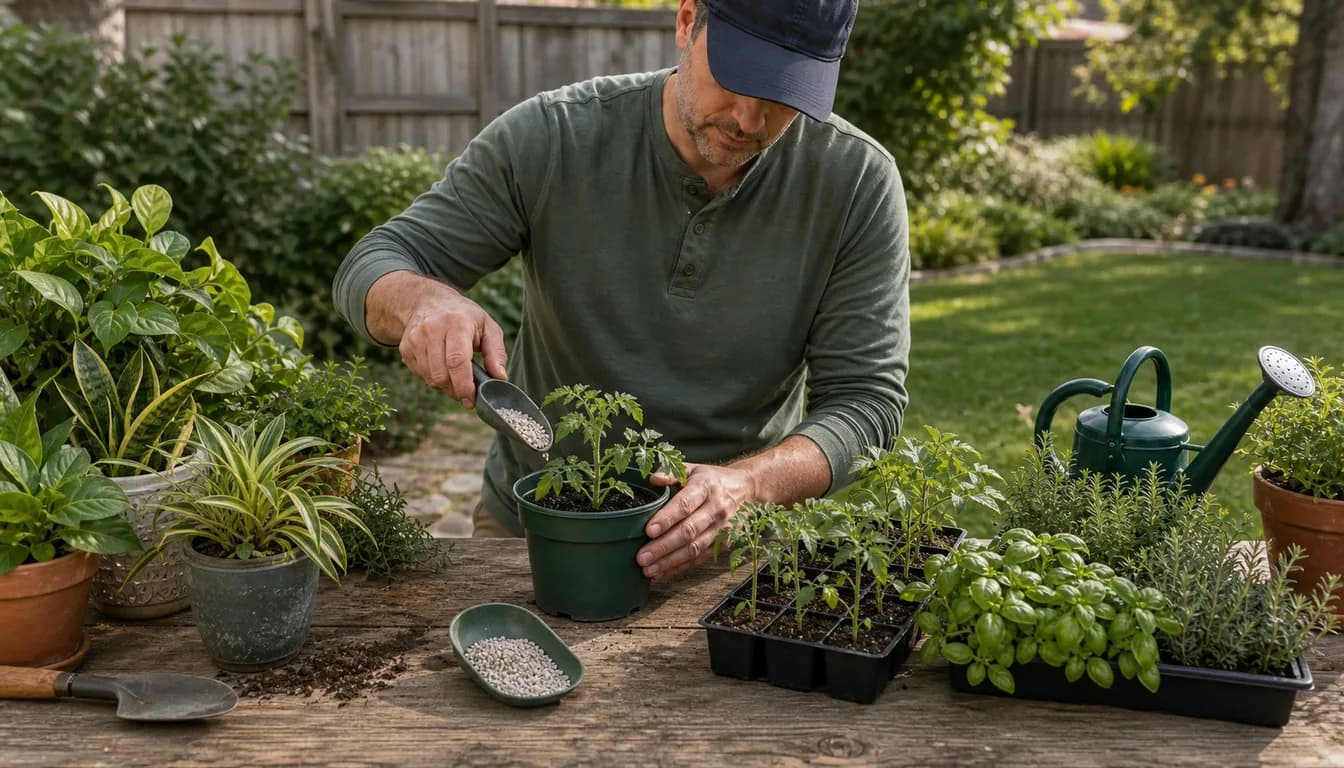
Phosphorus-heavy blends are better timed to root growth and bloom set. That is why we feed bulbs like tulip clumps and fruiting plants like tomato containers early in their season, before flowers and fruits are fully underway.
Fertilizer never fixes basic problems like poor light or dry soil. If a Monstera vine is starving for light or a Snake Plant sits in soggy mix, nutrients just add stress.
If a plant looks weak, check water, light, and roots before reaching for the fertilizer bag.
That order matters because fertilizer only helps once the rest of the system is working.
- fiber_manual_recordLeafy focus: Higher N is best during early, leafy growth
- fiber_manual_recordRoots and blooms: Higher P belongs near planting and bud set
- fiber_manual_recordOverall health: Balanced NPK works for steady maintenance
- fiber_manual_recordSlow release: Coated or organic pellets suit long, gentle feeding
- fiber_manual_recordFast acting: Soluble feeds are better for quick, targeted boosts
calendar_monthSeasonal Timing Outdoors: Lawns, Beds, and Veggies
Soil temperature tells you more about when to fertilize than the month printed on the bag. Roots mostly wake up once soil stays above about 50-55 F for cool-season plants and closer to 60 F for warm-season types.
Cool-season lawns like home fescue mixes take fertilizer best in early spring and fall. Kentucky bluegrass follows the same cooler window, so nitrogen thickens turf instead of scorching blades in summer heat.
Warm-season lawns like sunny bermuda turf should not see their first big feeding until they are mostly green. Dense zoysia patches usually follow that same late-spring rhythm, then may take one lighter midsummer feeding if growth stays active.
Perennial beds and shrubs respond to one main feeding in early spring. We give hosta clumps and azaleas a slow-release dose as new shoots emerge, similar to how you might feed a peony planting along with other spring bloomers.
Vegetable gardens need more precise timing. Heavy feeders like sweet corn rows appreciate fertilizer at planting. Indeterminate tomato vines usually get the next light boost when they hit knee-high or start flowering, not through random monthly dumps.
Never fertilize frozen, waterlogged, or bone-dry soil. Water deeply the day before if ground is dusty.
That quick moisture check prevents more root burn than any premium fertilizer label ever will.
- fiber_manual_recordCool lawns: Feed early spring and early fall, skip summer heat
- fiber_manual_recordWarm lawns: First big feeding once turf is mostly green
- fiber_manual_recordShrubs and perennials: Single spring feeding as buds swell
- fiber_manual_recordVeg beds: Base dose at planting, light boosts at key stages
That seasonal split keeps fertilizer aligned with real root activity instead of making every plant category share the same schedule.
Guide — See AlsoCan You Fertilize Wet Grass Without Damaging Your Lawn?Learn when it is safe to fertilize wet grass, when to wait, and how moisture, product type, and weather affect burn risk
chevron_rightpotted_plantTiming Fertilizer for Houseplants
Indoor plants do not follow your frost dates, but they still have seasons. Most houseplants slow down in low winter light and ramp up strongly in late winter or early spring.
We start feeding common foliage plants like vining pothos once we see fresh, pale new leaves in late winter. Offset-heavy spider plants and thick-stemmed ZZ plants usually wake up on that same longer-day cue.
Flowering houseplants and heavy drinkers such as peace lilies respond better to small, regular doses. A big fiddle leaf fig often benefits from the same diluted liquid every 4-6 weeks in spring and summer, which keeps growth steady without salt buildup.
Winter is rest time for most indoor plants in North America. We either stop fertilizing or cut back to one very light feeding midwinter for high-light growers like bird of paradise. Large rubber plants also fit that exception if they are still pushing leaves.
If a houseplant sits in very low light, skip fertilizer and fix the light first.
Use new growth as the trigger, then keep the dose modest.
- fiber_manual_recordStart month: Resume feeding late winter as new growth appears
- fiber_manual_recordMain season: Fertilize every 4-6 weeks through early fall
- fiber_manual_recordSlow growers: Feed half as often for species like cast iron plants
- fiber_manual_recordWinter: Pause or give at most one very light feeding
- fiber_manual_recordRepotted plants: Wait 4-6 weeks after fresh potting mix before feeding
The point indoors is consistency, not volume; a weak dose during active growth almost always beats a heavy dose after months of neglect.
Email Updates
Join the KnowTheYard update list
Zone-specific advice, seasonal reminders, and new plant guides — no filler.
parkTrees, Shrubs, and Fruit: Feed the Roots, Not Just Leaves
Woody plants respond slowly, so fertilizer timing here is about long-term health more than quick color. Roots do most of their work when soil is cool and moist but not frozen.
Deciduous trees and shrubs like young apple trees, lilacs, and hydrangeas take fertilizer best in early spring just before or as buds swell. A second light feeding after bloom can help repeat-flowering shrubs such as Knock Out roses.
Evergreen shrubs and conifers, from boxwood hedges to arborvitae screens, prefer feeding once in early spring. In colder zones like zone 5 gardens, we stop all fertilizer by midsummer so new growth can harden before frost.
Fruit trees and berries also like early feeding. We fertilize blueberry bushes and raspberry canes as buds swell, and give container citrus like Meyer lemon trees small, monthly doses through warm months.
Avoid fertilizing any woody plant in late summer or fall, since tender new growth is more likely to winter-kill.
That cutoff matters more than squeezing in one extra dose.
- fiber_manual_recordMain feeding: Early spring for trees and shrubs
- fiber_manual_recordSecond dose: Optional light feed after bloom for repeat-flowering shrubs
- fiber_manual_recordFruit timing: At bud swell, then modestly through fruit set
- fiber_manual_recordCold zones: Stop feeding by mid-summer in zones 3–5
- fiber_manual_recordNew plantings: Use very light rates their first season
Guide — See AlsoHomemade Liquid Fertilizer for Healthier PlantsLearn how to make homemade liquid fertilizer from kitchen scraps and yard waste, with clear recipes, dilution rates, and
chevron_rightlightbulbReading Your Plants After You Feed
New growth tells you more than any fertilizer label.
Watch how leaves, stems, and flowers respond in the 2–4 weeks after feeding before you decide when to fertilize plants again.
Fast growers like tomato vines and basil plants should push out noticeably longer stems and richer color within a couple of weeks.
Slower shrubs such as boxwood hedges or hydrangea shrubs show results over a month, mostly as fuller foliage and sturdier stems instead of big size jumps.
If you see pale new leaves or weak stems after fertilizing, the problem is usually watering or soil, not "too little fertilizer".
Use a simple check before adding more fertilizer: scrape back the top inch of soil and look at roots.
Healthy roots on peace lily clumps or snake plant clumps are firm and white or tan, not mushy or dark.
Wilting right after you fertilize is a warning sign.
If a container plant like monstera foliage or spider plant offsets droops within a day, you likely gave too strong a dose or fertilized dry roots.
Leaf tips turning brown on edges, especially on zz plant foliage and dracaena canes, often means fertilizer salts are building up.
Flush the pot thoroughly with plain water before you fertilize again.
For outdoor beds, watch bloom timing and number of flowers.
If rose bushes and daylily clumps give lots of leaves but few buds, you probably fertilized too heavy in nitrogen or too late in the cycle.
warningAvoiding the Most Common Timing Mistakes
Most fertilizer problems come from timing, not the product you grabbed.
A few habits keep you on track whether you grow edible crops or patio pots of petunia color or anything in between.
The first mistake is fertilizing dry soil. Roots on fern houseplants and azalea shrubs burn easily if you pour strong nutrients onto bone-dry mix.
Always water lightly first, then fertilize, then water again to carry nutrients down.
Overlapping products is another big one. People spread a spring lawn food, then add a weed-and-feed, then toss in lawn starter after seeding within a few weeks.
Lawns of bermuda turf or cool-season fescue only need one of those in that window, not all three.
Stacking fertilizers back to back rarely speeds growth and often just stresses roots.
Seasonal timing trips up a lot of us too. We feed flowering shrubs like rhododendron groups in midsummer because they look hungry. Lilac hedges often get hit with the same mistake.
That late push can cause tender growth that winter kills in cold zones such as zone 4 gardens.
Skipping slow-release granules in favor of constant liquid feed can backfire. Container plants, especially hungry ones like petunia baskets and geranium pots, often do best when you mix a slow-release into the potting soil and then give very light liquid feeds only during peak bloom.
Most of those mistakes come from treating fertilizer like a rescue tool instead of part of an already stable watering and light routine; timing works best when the rest of care is already stable.
Guide — See AlsoWhen to Fertilize Lawn in Fall for Strong Spring GrowthLearn the right fall fertilizing window for cool- and warm-season lawns, how soil temperature affects timing, and how to
chevron_rightcalendar_monthMatching Fertilizer Timing to Plant Lifespan
Annuals and perennials handle feeding on different clocks.
If you fertilize them the same way, you either waste product or shorten their bloom season.
Short-lived annuals like marigold bedding, zinnia rows, and tomato vines sprint from seed to seed.
They respond best to regular light feeding once they are established, usually every 2–3 weeks with a balanced or bloom-boosting product.
Perennials such as hosta clumps, coneflower stands, and peony crowns build root systems over years.
We usually give them one strong feeding in early spring, then a lighter top-up right after bloom if growth looks weak.
Bulbs sit in their own category.
Spring bulbs like tulip beds and daffodil drifts barely use fertilizer right when they flower.
They need food as the foliage stays green after bloom to recharge the bulb for next year.
Feed bulbs as flowers fade, then stop once leaves yellow naturally.
That post-bloom window is short, so it is worth planning ahead instead of trying to remember after the foliage collapses.
Woody plants keep most of their nutrients in permanent structures.
Deciduous trees like apple trees and oak shade trees usually get their main feeding in very early spring.
We might add a light dose in midsummer on young trees in poor soil, but mature trees often need far less than people expect.
water_dropCoordinating Fertilizer With Watering Habits
Water schedule controls how often roots see the nutrients you add.
If you know how your soil drains, you can time fertilizer so it reaches roots instead of leaching away.
On sandy soils and raised beds, nutrients move quickly. Gardeners on light soils growing carrot rows often do better with smaller, more frequent feedings. Leafy greens usually follow the same pattern.
Pair those smaller doses with deep watering as outlined in our deep watering habits so fertilizer reaches the full root zone.
Clay holds nutrients longer but can stay soggy. If you grow shrubs like azalea hedges or camellia shrubs in heavy soil, fertilize right before a forecast light rain instead of during a wet spell.
That timing helps carry nutrients in without drowning roots.
Container plants dry out and leach faster than in-ground beds. Hanging baskets full of petunia blooms or patio tubs of lavender pots may need fertilizer every 2-3 weeks during peak bloom because every heavy watering rinses nutrients out.
Self-watering containers are different. Those wicking reservoirs under indoor herbs or self-watering peace lilies keep soil moist more evenly, so use weaker fertilizer solutions on the same schedule or salts build up faster in the constantly damp mix.
- fiber_manual_recordFast-draining beds: Smaller doses more often, paired with deep watering
- fiber_manual_recordHeavy clay soil: Feed after rain breaks, not during soggy stretches
- fiber_manual_recordContainers: Regular light feeding, plus occasional plain-water flushes
Once you match fertilizer timing to how quickly the soil drains, you stop paying for nutrients that wash past the root zone before plants can use them.
Guide — See AlsoUse Frost Date by Zip Code to Time Lawn and Garden TasksLearn how to use frost dates by zip code to time seeding, planting, and lawn care, and why averages are only a starting
chevron_rightscienceAdvanced Timing: Soil Tests, Organics, and Special Cases
Once you have the basics down, timing fertilizer gets easier when you use your soil and plants as guides instead of dates on a bag.
A simple soil test sets the whole schedule. County extensions often test for pH and nutrient levels.
If your soil already has high phosphorus, you can skip bloom-booster products on rose beds. Clematis vines often benefit more from timing around nitrogen instead.
Organic fertilizers break down slowly. Milorganite on cool-season lawns or composted manure around sweet corn rows needs warm, moist soil to release nutrients, so feed these a couple of weeks earlier than you would a fast synthetic.
Special plants have their own calendars. Acid lovers such as blueberry bushes, evergreen azaleas, and camellia shrubs need fertilizer applied before or just after bloom because that is when they are both setting buds and pushing roots.
Succulents and drought plants are another case. Tough growers like sedum mats rarely need regular feeding at all. Outdoor yucca clumps often need just the same light spring dose unless you grow them in very lean gravel.
If a plant is thriving without fertilizer, do not start feeding just because the calendar says so.
Indoor-only trees such as fiddle leaf figs and money trees often rest in winter even in warm homes. Time fertilizer for late winter through early fall while they are actively putting on leaves, then cut it off when day length shortens again.
tips_and_updates
Pro Tips
- check_circleWatch for pale, smaller-than-normal new leaves as a better feeding cue than a date on the calendar.
- check_circleTest soil temperature at 2–4 inches deep; wait until it stays above 50°F before fertilizing cool-season turf.
- check_circleWater thoroughly the day before you fertilize if soil is powder dry to protect roots from burn.
- check_circleCut labeled rates in half for potted plants, especially sensitive houseplants, and adjust only if growth stays weak.
- check_circleUse slow-release or organic fertilizers around trees and shrubs so nutrients match their slower growth pace.
- check_circleSkip fertilizer on any plant that is wilting, diseased, or pest-ridden until you solve the underlying problem.
- check_circlePair fertilizer timing with deep watering, not quick sprinkles, so nutrients reach the root zone.
quiz
Frequently Asked Questions
Should I fertilize right after planting new trees or shrubs?expand_more
Skip strong fertilizer in the planting hole. Mix in compost instead and water deeply. Start light fertilizing in the next growing season once new growth shows the roots have settled and the plant is actively growing.
Is it better to fertilize plants in the morning or evening?expand_more
Morning is usually safest. Plants are hydrated, air is cooler, and you avoid scorching wet foliage in hot midday sun. For lawns and beds, fertilize before a light morning watering or gentle rain for best movement into the root zone.
How often should I fertilize container flowers on my porch?expand_more
For heavy bloomers in pots, feed every 2–3 weeks during peak growth with a diluted liquid fertilizer. Combine that with a slow-release product mixed into the potting soil at planting so the plants are not relying only on liquid feed.
Can I fertilize stressed or diseased plants to help them recover faster?expand_more
Hold off on fertilizer until you fix the underlying stress. Extra nutrients push weak roots and can worsen problems like root rot or drought stress. Focus on watering, drainage, and pests first, then resume light feeding once new healthy growth appears.
Do I need to fertilize plants growing in rich compost or fresh potting mix?expand_more
Fresh quality potting mix and well-made compost usually feed plants for several weeks. Wait 4–6 weeks before starting a regular fertilizer routine and watch the foliage. If growth stays strong and leaves look deep green, you can delay feeding longer.
menu_book
Sources & References
Related Guides
Benefits of Composting for Healthier Soil and Plants
Learn how composting turns kitchen scraps and yard waste into free fertilizer, improves soil, and boosts plant health in any size garden.
12 min read
Best Fertilizer for Indoor Plants
Learn how to choose the best fertilizer for indoor plants by growth style, season, and pot size without burning roots or overfeeding slow growers.
14 min read
Best Fertilizer for Vegetables by Garden Type
Learn how to pick the best fertilizer for vegetables by crop group, soil condition, and garden setup so you feed beds, rows, and containers without wasting nutrients.
11 min read