Fertilizingschedule11 min read
When to Fertilize Lawn in Fall for Strong Spring Growth
Learn the right fall fertilizing window for cool- and warm-season lawns, how soil temperature affects timing, and how to feed without burning or wasting fertilizer.
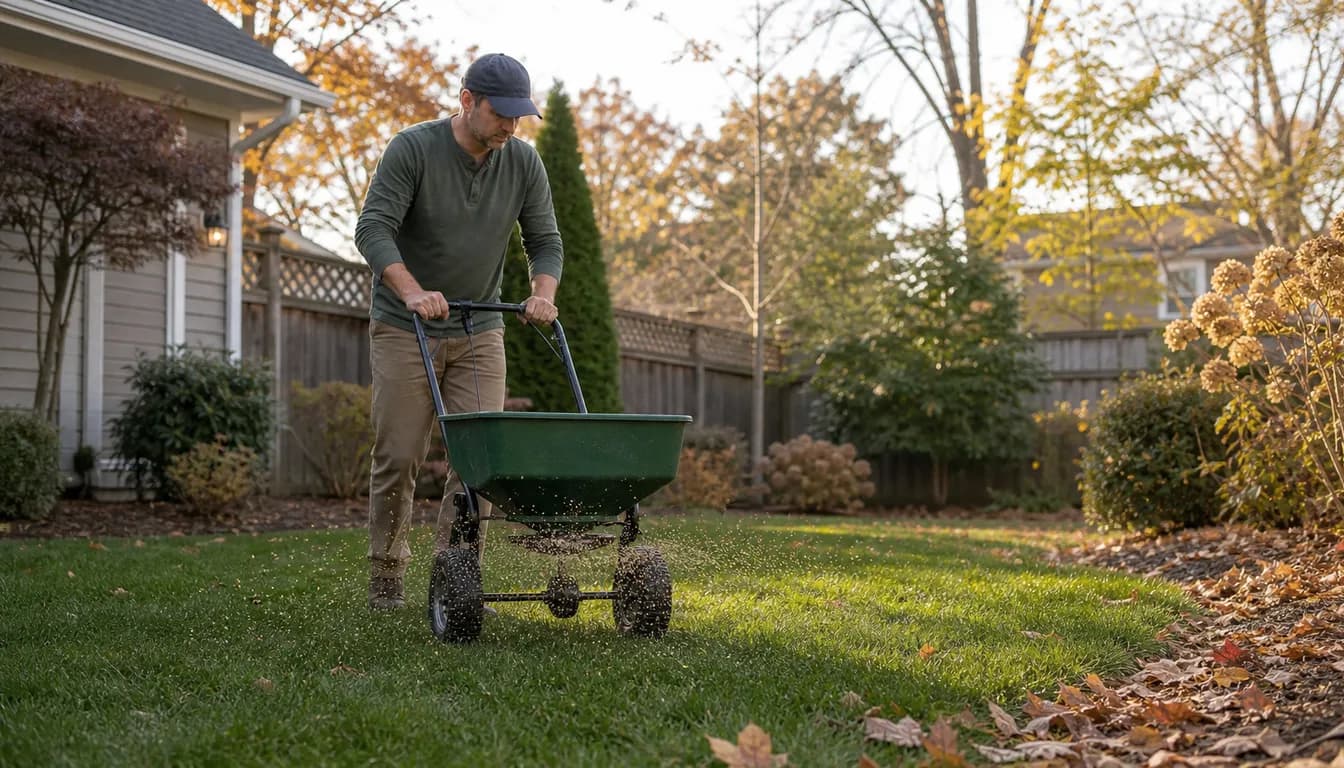
Fall fertilizing can do more for next spring's color than anything you did all summer. The trick is hitting the window when roots are still active, but top growth is slowing. We will walk through timing by grass type, zone, and soil temperature.
If you already follow a general year-round lawn schedule, this guide zooms in on the fall feeding piece. You will know exactly when to spread fertilizer, what kind of product to choose, and how to water so you do not burn or waste it.
grassKnow Your Grass Type Before You Pick a Date
The calendar on your wall does not know whether you grow cool-season or warm-season turf. That difference decides whether fall is your main feeding time or just a light touch before dormancy.
Cool-season grasses like Kentucky bluegrass, perennial ryegrass, and tall fescue are in their prime from early fall until the soil freezes. Lawns built around Kentucky bluegrass patches respond especially well to a strong fall feeding because they are pushing roots, not blades.
Warm-season lawns, including bermuda, zoysia, and St. Augustine, are winding down in much of North America by mid fall. Warm-climate yards with bermuda in sunny areas often need their last nitrogen earlier than cool-season neighbors.
You cannot set a single “October 1” date that works from zone 3 through zone 11. We have to match your grass type with both local weather and soil temperature; otherwise you force tender growth that winter will simply burn off.
If you are not sure what you have, compare a patch to bermuda and fescue differences or check seed bag records from past overseeding. Getting this right once will make every future timing decision easier.
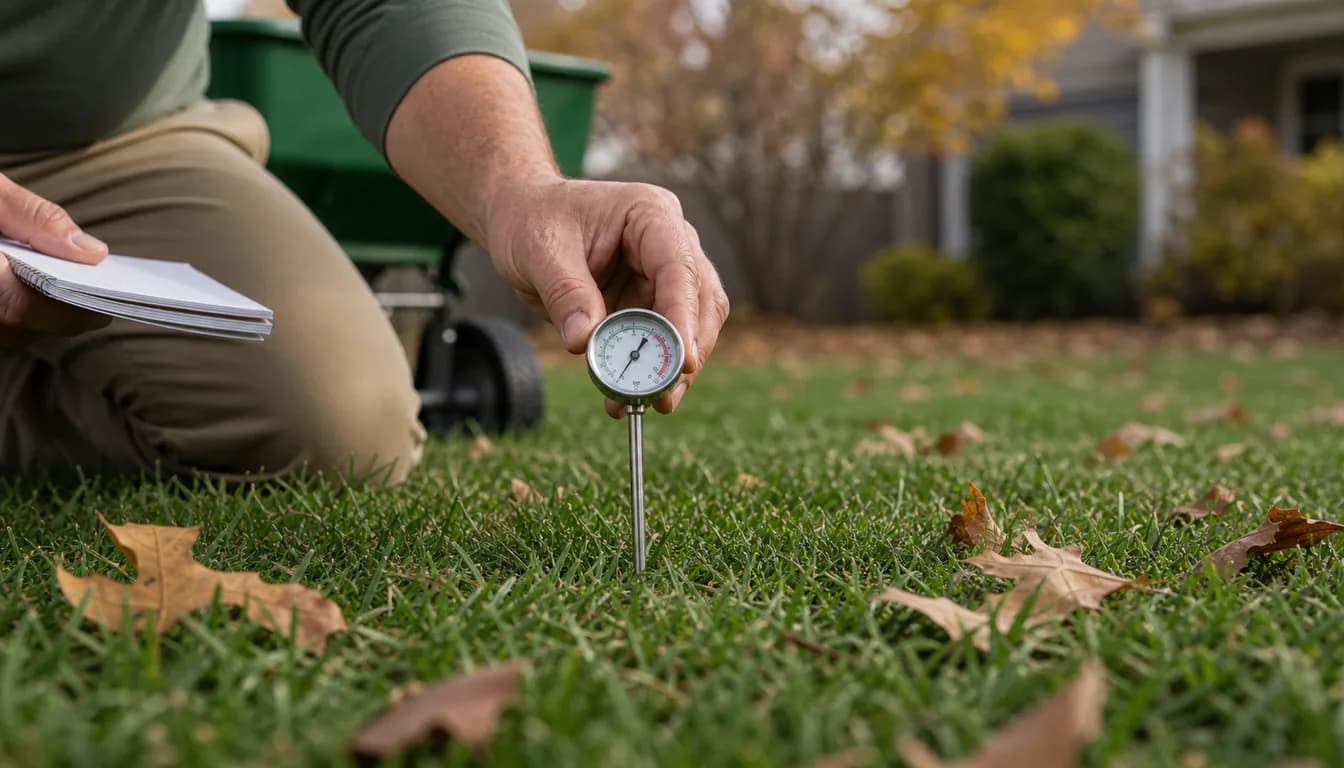
Soil temperature matters more than the calendar for fall fertilizing.
thermostatUse Soil Temperature, Not the Calendar
Soil temperature tells you what the grass roots are doing. Air can swing 20 degrees in a day, but soil warms and cools slowly, which is what matters for fertilizer uptake.
For cool-season lawns, the sweet spot is 50–65°F soil temp at a depth of 2–3 inches. In that range, roots are very active, while top growth is slowing. That gives you thickening and deeper rooting instead of a mowing explosion.
Warm-season turf likes its last real nitrogen when soil is above 65°F but drifting down, often late summer or early fall in zones 7–8. In zone 9 and warmer, you can often push that feeding a bit later, especially if your yard mixes zoysia in sunny strips with other warm-season species.
Do not guess soil temp from the weather app. A cheap analog soil thermometer is more accurate than any calendar rule.
Here is an easy cheat sheet once you own a thermometer:
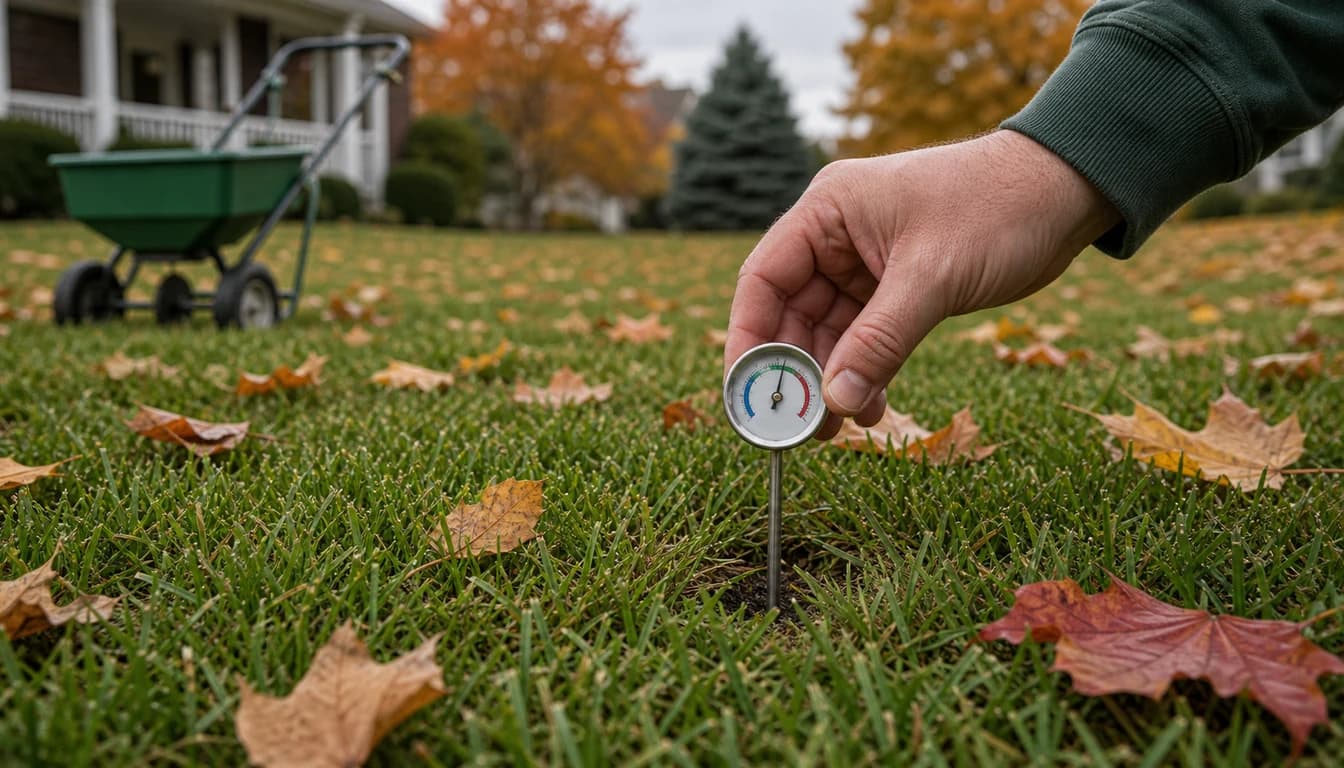
A cheap soil thermometer is more accurate than guessing dates.
- fiber_manual_recordCool-season target: Feed when soil is holding between 50–65°F for 7–10 days.
- fiber_manual_recordWarm-season target: Final nitrogen when soil drops from the mid-70s into the mid-60s.
- fiber_manual_recordToo cold: Below 45°F, fertilizer mostly sits there or risks runoff.
- fiber_manual_recordToo warm: Above 75°F in fall, wait. Focus on water and mowing until temps slide.
Guide — See AlsoBenefits of Composting for Healthier Soil and PlantsLearn how composting turns kitchen scraps and yard waste into free fertilizer, improves soil, and boosts plant health in
chevron_rightcalendar_monthFall Timing by Zone and Grass Category
Zone matters for fall fertilizing, but it is still only a starting point. Spring in zone 5 behaves very differently from zone 9, so your fall cut-off dates change too.
Cool-season lawns in zones 3–5 often hit their main fall feeding between mid September and early October. That window lines up with when zone 5 winters start to cool soil but before the freeze shuts down growth.
In zones 6–7, you usually get an extra two to four weeks. Many homeowners in these bands time fertilizer one month after core aeration and overseeding. That combo is popular where people mix tall fescue clumps with Kentucky bluegrass.
Zones 8–9 support both cool- and warm-season lawns, so timing gets split. Warm-season grasses in these zones usually get their last nitrogen between late August and early September. Cool-season patches or transitions can take a fall feeding in October or even early November.
Zones 10–11 behave more like extended growing seasons for warm-season turf. You might use a lower-nitrogen product later into fall, or follow a schedule closer to what you see in zone 10 lawn calendars. Either way, heavy nitrogen just before a rare cold snap is a risk you want to avoid.
- fiber_manual_recordZones 3–5, cool-season: Mid Sept to early Oct, soil 50–60°F.
- fiber_manual_recordZones 6–7, cool-season: Late Sept to late Oct, soil around 55–65°F.
- fiber_manual_recordZones 8–9, cool-season: Oct to early Nov, watching for 50–65°F.
- fiber_manual_recordWarm-season any zone: Last higher-nitrogen feeding when soil slides through the mid-60s.
Email Updates
Join the KnowTheYard update list
Zone-specific advice, seasonal reminders, and new plant guides — no filler.
compostChoose the Right Fall Fertilizer Analysis
Picking the right bag matters as much as picking the right date. Fall is about roots, energy storage, and winter toughness, not forcing bright green top growth at all costs.
For cool-season lawns, a high-nitrogen product with some potassium and little or no phosphorus is common. Many homeowners like something in the range of 24-0-10 or 28-0-12, applied at a rate that delivers about 0.75–1.0 lb of nitrogen per 1,000 square feet.
Warm-season turf heading into dormancy often benefits from lower nitrogen and a bump of potassium. That means something closer to 10-0-20 or a similar ratio with less nitrogen. In very sandy soils, that extra potassium can help lawns with centipede grass patches handle winter stress.
More nitrogen is not better in fall. Overdoing it gives you soft blades that winter disease and cold can hammer.
If you lean organic for your beds or vegetable garden fertility, you can do the same for turf. Just remember many organic fertilizers release slower, so aim a little earlier in the fall window to give microbes time to work.
Here is a simple way to compare options on the shelf:
- fiber_manual_recordCool-season synthetic: 24-0-10 or similar, quick greening and root support.
- fiber_manual_recordCool-season organic: 8-0-6 type analysis, slower release, safer from burning.
- fiber_manual_recordWarm-season fall: 10-0-20 style, modest nitrogen with extra potassium.
- fiber_manual_recordHeavy thatch or compaction: Consider combining fall fertilizing with core aeration.
Guide — See AlsoVegetable Garden Fertilizer Chart by Crop and SeasonUse this vegetable garden fertilizer chart to match NPK, timing, and rates to each crop so you feed enough for strong gr
chevron_rightwater_dropWatering And Mowing After You Fertilize
The first watering after you spread product matters more than the day you put it down. Most granular fertilizers need 0.25–0.5 inches of water right away to dissolve and move into the root zone.
Lightly run your sprinklers right after fertilizing so you wet the top few inches without creating runoff. If rain is coming, a steady quarter inch shower works better than a fast downpour that carries granules into the street.
For the next week, stay on a deep but not daily schedule. Use the same pattern you use to keep deep watering habits all season, and skip extra irrigation just because you fertilized.
Hold off on mowing 24–48 hours after application. Cutting right away can blow or vacuum up granules. Once you do mow, bagging or mulching is fine as long as the fertilizer has been watered in.
Never fertilize a bone dry, drought stressed lawn and leave it unwatered. That combination is what burns grass tips.
Use the post-care checklist to keep the product moving into soil, not leaf tips.
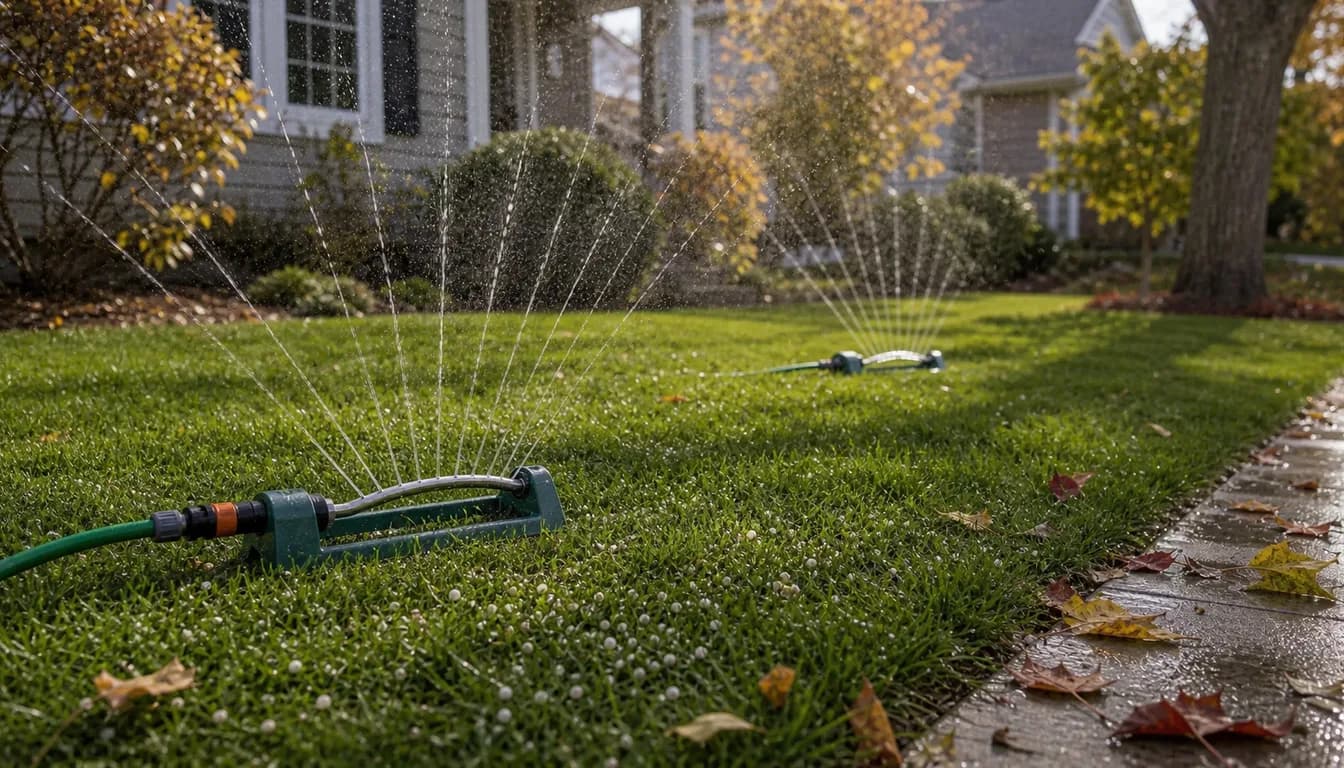
A light watering right after spreading fertilizer helps nutrients reach the roots without runoff.
- fiber_manual_recordPost-watering depth: 3–4 inches of moist soil
- fiber_manual_recordFirst mow delay: at least one full day
- fiber_manual_recordMower blades: sharpened before fall feeding
- fiber_manual_recordFoot traffic: light for 24 hours while granules settle
grassCoordinating Fertilizer With Overseeding And Aeration
Combining fall fertilizing with aeration and overseeding gives cool season lawns a big jump. You are already opening up the soil, so feeding at the same visit gets more nutrients right where new roots grow.
On core aeration days, run the machine first so it pulls plugs through unfertilized turf. Then spread starter fertilizer if you are seeding, or a standard fall formula if you are only thickening existing grass.
Starter products with higher phosphorus help seed roots in cool season lawns. That is one of the few times extra P makes sense, similar to using a focused blend when you fertilize a new blueberry planting or other permanent bed.
Overseed immediately after you spread fertilizer, then topdress if you are using compost. You want seed in contact with soil, not sitting on top of granules. Lightly rake to settle everything into the aeration holes and thin spots.
If you must pick only one task, seed in fall and skip fertilizer, not the other way around. New plants fix thin spots better than one extra feeding.
That priority keeps thin lawns from staying thin under darker green old grass.
- fiber_manual_recordAeration order: aerate, fertilize, seed, rake
- fiber_manual_recordStarter ratio: look for higher middle number
- fiber_manual_recordSeed cover: thin soil or compost dusting
- fiber_manual_recordTraffic limit: keep pets and kids off for 7–10 days
Guide — See AlsoBest Fertilizer for Indoor PlantsLearn how to choose the best fertilizer for indoor plants by growth style, season, and pot size without burning roots or
chevron_rightwarningAvoiding Common Fall Fertilizer Mistakes
The easiest way to ruin good timing is to ignore the spreader settings. Guessing usually means applying double the label rate, which wastes money and can scorch turf when conditions stay warm.
Always calibrate your spreader in a test area before doing the whole yard. That single habit saves more lawns than any special product, just like measuring instead of eyeballing when you feed heavy feeding tomatoes in a vegetable bed.
Another mistake is feeding too late in mild zones. If warm season lawns like sun loving bermuda or dense zoysia turf get nitrogen while they are trying to go dormant, they stay soft heading into cold snaps.
Cool season lawns have the opposite problem. Skipping the late fall "winterizer" pass in zones 4–6 cuts down on stored energy and can leave them pale next spring.
If you see frost on the lawn at sunrise most mornings, you are past the window for fall nitrogen on warm season grass.
The safest mistakes are the ones you prevent before the spreader opens.
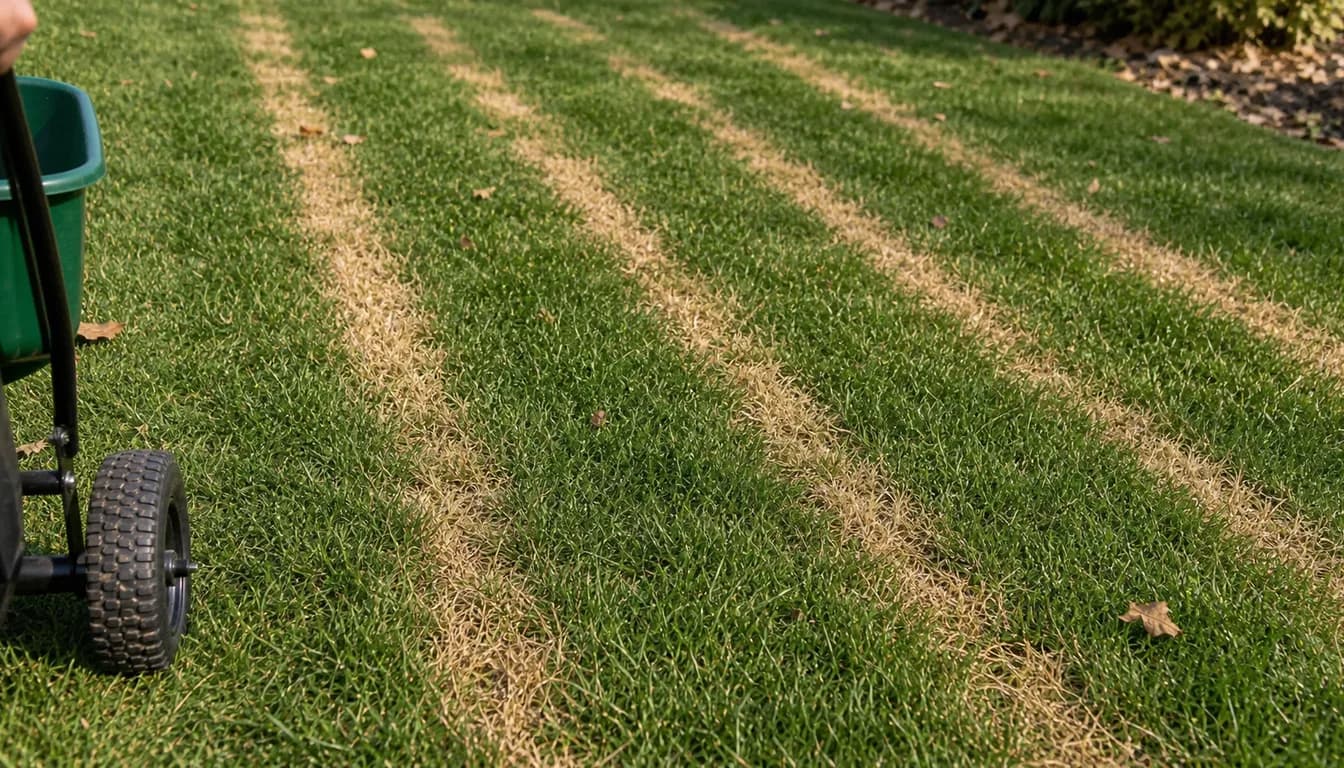
Striping and straw colored patches usually trace back to uneven or excessive fertilizer application.
- fiber_manual_recordSpread rate: never exceed label pounds per 1,000 sq ft
- fiber_manual_recordWeather watch: avoid 85°F+ days for cool season feeds
- fiber_manual_recordFrost rule: no late nitrogen on brown warm season turf
- fiber_manual_recordEquipment rinse: wash spreader before storing for winter
lightbulbReading Your Lawn’s Response And Troubleshooting
A well timed fall feeding puts color back into tired blades within 7–10 days. Growth feels thicker underfoot, but the lawn should not explode in height the way it does with heavy spring nitrogen.
If stripes or blotches appear that match your spreader pattern, you probably overlapped too much or spilled product. Flush those areas with extra water over a few days, the same way you would wash salts through a container with a sensitive peace lily plant.
Pale color two weeks after feeding usually means one of three problems. Either soil pH is off, you applied too little nitrogen, or roots are shallow from summer stress and cannot grab nutrients.
Check thatch and rooting depth with a screwdriver or soil probe. If you hit a hard layer at 2 inches, plan on aeration and a more careful watering schedule next year, along with checking your broader season long lawn plan.
If fall fertilizer produces fast top growth but no density, you are likely feeding too early or using a blend with very quick release nitrogen.
Use root and thatch checks before assuming the bag failed.
- fiber_manual_recordHealthy response: deeper green in 1–2 weeks
- fiber_manual_recordCheck pH: test every 2–3 years
- fiber_manual_recordRoot depth goal: at least 4–6 inches
- fiber_manual_recordThatch layer: keep under 0.5 inch for best results
Guide — See AlsoWhen to Fertilize Plants for Real GrowthLearn how to time fertilizer for houseplants, lawns, vegetables, trees, and shrubs so you feed growth instead of wasting
chevron_righttips_and_updates
Pro Tips
- check_circleBuy a simple soil thermometer and start logging temps at 2 inches in early fall.
- check_circleTime fertilizer so you have 4–6 mowings left before the lawn stops growing.
- check_circleWater in granular fertilizer with about 0.25–0.5 inch of irrigation right after spreading.
- check_circleSkip fall nitrogen if a drought ban prevents you from watering it in properly.
- check_circlePair fall feeding with core aeration to get more nutrients down into the root zone.
- check_circleBlow granules off sidewalks and driveways so you do not waste product or stain concrete.
- check_circleAvoid high-nitrogen fertilizer on warm-season lawns once nights consistently drop below 60°F.
quiz
Frequently Asked Questions
Can I fertilize and overseed my lawn on the same day in fall?expand_more
Yes, you can. Aerate first if needed, then spread a starter fertilizer, overseed, and lightly rake everything into the soil. Water immediately to settle seed and nutrients without creating puddles or runoff.
Is one fall fertilizer application enough for cool season lawns?expand_more
In many yards, two lighter fall applications beat one heavy one. Feed once around early fall green-up, then again when top growth slows but blades are still green. Use soil temperature, not the calendar, to fine tune timing.
Should I fertilize a dormant brown lawn in fall?expand_more
No. Brown, fully dormant warm season grass should not get nitrogen in late fall. Wait until soil warms again in spring. Feeding dormant turf wastes product and can increase winter injury if a warm spell triggers soft growth.
Is organic fertilizer better than synthetic for fall lawn feeding?expand_more
Both can work if you apply them at the right rate and time. Organic products usually release slower and are less likely to burn. Synthetics offer more precise NPK ratios. Follow label rates either way and match them to your soil test.
Can I skip fall fertilizing if I fed heavily in spring?expand_more
You can, but the lawn will likely enter winter with fewer stored carbohydrates. Heavy spring feeding drives blade growth, not root storage. A moderate fall application supports roots and often improves color and thickness next spring.
menu_book
Sources & References
Related Guides
Benefits of Composting for Healthier Soil and Plants
Learn how composting turns kitchen scraps and yard waste into free fertilizer, improves soil, and boosts plant health in any size garden.
12 min read
Best Fertilizer for Indoor Plants
Learn how to choose the best fertilizer for indoor plants by growth style, season, and pot size without burning roots or overfeeding slow growers.
14 min read
Best Fertilizer for Vegetables by Garden Type
Learn how to pick the best fertilizer for vegetables by crop group, soil condition, and garden setup so you feed beds, rows, and containers without wasting nutrients.
11 min read