
Wateringschedule11 min read
Deep Watering vs Frequent Watering for Strong Roots
Understand the real difference between deep watering and frequent watering so you can set a schedule that builds deep roots, saves water, and keeps plants healthy in any yard.
Water schedules confuse more gardeners than any fertilizer label ever will. The real choice is not “once a day or once a week,” it is shallow roots or deep roots. Deep watering pushes moisture 6–12 inches down so roots chase it. Frequent light watering keeps everything near the surface.
That choice shows up in how your lawn handles August heat and whether your tomato patch wilts at noon. The same logic applies indoors, from succulents to tough snake plants in dark corners. The method, start to finish: what deep watering means in inches and minutes, how it compares to frequent watering, and how to match each method to your soil, slope, and plants.
water_dropWhat Deep Watering Really Means
Deep watering is about depth, not just dumping extra water. You are trying to wet the root zone 6-12 inches down, then let the surface dry before you water again. That trains roots to live where soil stays cooler and more stable.
On clay soil, that might mean running a soaker hose for 30-45 minutes. On sandy soil it could take less time but more total gallons, since sand drains so fast. If water only soaks the top 2 inches, you are not deep watering, no matter how long the hose ran.
Most vegetables, like indeterminate tomato vines and fruiting peppers, keep most feeder roots in the top 12 inches; lawns, shrubs, and many perennials do the same. If that zone dries out between waterings, roots dig deeper instead of hanging around the top half inch.
Deep watering has limits. Very shallow rooted plants, like new sod or some annual flowers, still need gentler, more frequent drinks until roots extend. Houseplants in small pots can also suffer if you water heavily but let them go bone dry for weeks, especially moisture lovers like peace lilies indoors.
opacityFrequent Watering and Shallow Roots
Frequent watering keeps the top inch of soil damp most of the time. That sounds kind, but it encourages roots to stay right at the surface where heat, cold, and evaporation hit hardest. Shallow roots mean plants need you almost every day.
On a lawn this looks like grass that wilts by late afternoon unless the sprinklers run daily. Cool season grasses, like fine fescue mixes, become dependent on shallow moisture. Bluegrass lawns can show crispy patches after a single missed watering in a heatwave.
In beds, light daily sprays around basil clumps or hydrangea shrubs feel helpful but rarely soak past 2-3 inches. That top layer dries quickly on hot or windy days, stressing plants and making them more likely to flop or drop buds.
Frequent watering is not always wrong though. Freshly planted trees and shrubs and new bermuda sod all need consistently moist surface soil until roots establish. Seed beds for fine carrot seed need the same surface moisture until germination. The key is shifting from frequent to deeper sessions once roots reach 3-4 inches down.
Many overwatering problems are really frequent watering on poorly draining soil, not a single deep soaking.
Guide — See AlsoHow Often to Water Seedlings Without Killing ThemLearn exactly how often to water seedlings under lights, in windows, and outdoors. We walk through soil checks, containe
chevron_rightyardHow Soil Type Changes the Rules
Soil texture decides how long deep water stays deep. Clay holds water tightly but drains slowly, so deep watering can last a week or more. Sandy soil drains fast, so the same depth might only support plants for two or three days.
Loam, the mix most of us hope for, sits in the middle. It drains well enough to avoid root rot yet holds enough moisture for deep watering to work. If you are not sure what you have, a simple jar test or ribbon test tells you more than any generic schedule.
On heavy clay, long soaks can cause puddling and runoff. Breaking sessions into two shorter cycles lets water soak instead of sheeting away. That matters for shrubs like boxwood hedges and azaleas that hate sitting in cold, airless mud.
On very sandy beds, deep watering still matters, you just do it more often. Drip lines around rosemary shrubs or dry-loving lavender are perfect. They deliver water slowly enough that it penetrates, even when soil wants to drain straight through.
If water disappears in under 30 seconds and the soil still feels dry 3 inches down, you have a drainage problem, not a watering schedule problem.
Email Updates
Join the KnowTheYard update list
Zone-specific advice, seasonal reminders, and new plant guides — no filler.
local_floristDeep vs Frequent by Plant Type
Different plants want the same basic physics applied in different doses. Deep watering helps most established plants, but timing and depth change between lawns, vegetables, shrubs, and pots. Grouping plants by water need always beats guessing by eye.
Lawns of warm season zoysia or sunny bermuda turf respond well to 1 inch of water once or twice a week, measured in a tuna can. Cool season grass like tall fescue blends often prefers the same inch split into two deeper sessions.
Vegetables with big appetites, such as vining tomatoes, cucumbers on trellises, and sprawling squash want soil moist 6-8 inches deep. In raised beds you might water deeply every 2-4 days in summer, depending on heat and wind.
Shrubs and trees, from crepe myrtle alleys to mixed borders, like long, slow soaks that reach 12-18 inches around the drip line. Backyard apple trees barely benefit from light sprays at the trunk because feeder roots sit farther out.
Houseplants split by root type. Drought tolerant species like bulbous ZZ plants love a thorough soak followed by a full dry out. Desk succulents need the same dry-down rhythm.
Thirstier plants, such as large monstera, still prefer deep watering until water drains from the pot. Ferns indoors need the next soak before the mix turns bone dry.
- fiber_manual_recordLawns: 1 inch, once or twice weekly, adjusted for heat
- fiber_manual_recordVegetables: 6-8 inch depth, every 2-4 days in hot weather
- fiber_manual_recordShrubs/trees: 12-18 inch soak, every 7-21 days once established
- fiber_manual_recordHouseplants: Full pot soak, then wait until mix is partly dry
Guide — See AlsoBest Time to Water Flowers for Stronger BloomsLearn exactly when to water flowers so blooms last longer, plants stay healthier, and you are not wasting water. Covers
chevron_rightcalendar_monthSeasonal Timing: Adjusting Deep Watering Through the Year
Soil dries very differently in April than it does in August, so your deep watering schedule has to move with the season.
Cool, cloudy stretches in spring and fall let water linger around roots. Hot, windy summer weather pulls it out fast.
In cool spring weather, deep water established shrubs like lilac hedges and boxwood borders every 10-14 days if rainfall is short. Focus on rebuilding soil moisture after winter and supporting new growth.
Peak summer heat in zone 7-9 often calls for weekly deep sessions for thirsty beds of hydrangeas or tomato vines, especially in raised beds that drain fast.
In colder zones like zone 4-5, established trees and deep rooted perennials can often go 2-3 weeks between deep soakings in spring and fall if you have decent organic matter in the soil.
Never guess based on the calendar alone. Use a trowel or moisture meter and let soil depth, not date, call the shots.
During fall, the priority is charging the soil before the ground cools. A slow, deep watering a few weeks before freeze protects roots of new apple trees and azalea shrubs.
Winter is about spot watering new plantings on thawed days. Established plants in the ground rarely need watering once soil is fully cold and growth stops.
In hot, arid summers, early morning deep watering is best. It reduces evaporation and gives lawns of bermuda turf and beds of garden roses time to dry at the surface by evening.
- fiber_manual_recordSpring focus: Support new growth and recovery from winter
- fiber_manual_recordSummer focus: Prevent stress in heat waves
- fiber_manual_recordFall focus: Hydrate before freeze and dormancy
- fiber_manual_recordWinter focus: Protect first year roots during dry spells
quizDiagnosing Problems From Shallow or Deep Watering Mistakes
Leaf symptoms tell you a lot about how you are watering, but you have to pair them with a soil check to read them right.
The same yellow leaf can come from soggy soil or bone dry roots, so dig a few inches down before changing habits.
Consistent shallow watering gives you dry lower soil and stressed, floppy plants. Veggies like pepper plants wilt midafternoon, then perk up at night, but fruit drop and small yields follow.
Chronic overwatering from daily light sprinkles leaves soil constantly damp near the surface. Plants like shade hostas show faded, yellow leaves and may develop root rot, especially in clay.
If soil is wet at 3–4 inches, more water is not the fix, better drainage and longer gaps are.
Lawns tell on watering mistakes fast. Frequent misting encourages thatch and shallow roots in bluegrass lawns, while deep, rare soakings keep turf greener during short dry spells.
Before blaming bugs or fertilizer, check moisture below the surface. Watering errors are behind more plant problems than pests in most yards.
Houseplants have their own signals. Overwatered peace lilies droop with soft stems and dark, soggy soil, while underwatered pots feel feather light and leaves crisp on the edges.
For shrubs like bigleaf hydrangea, compare older and newer leaves. New growth burning at the tips often points to inconsistent moisture near the surface, not just hot sun.
- fiber_manual_recordWilting then recovering at night: roots too close to the surface
- fiber_manual_recordYellowing with soggy soil: deep layers staying saturated
- fiber_manual_recordBrown leaf edges with dry soil: gaps too long between deep sessions
- fiber_manual_recordMushroom or algae growth: chronic surface moisture from misting
Guide — See AlsoSigns of Underwatering Plants and How to Fix ThemLearn how to spot the real signs of underwatering in houseplants, vegetables, and shrubs so you can fix stress early and
chevron_rightgrassBuilding a Deep Watering Routine for Lawns and Beds
A simple routine beats guessing every weekend. The goal is to give each area a target depth and then measure whether you hit it.
Once you know how long your system takes to reach that depth, you can put watering on autopilot.
For lawns, aim for 1 inch of water once a week in cool seasons, and up to 1.5 inches split in two sessions during extreme heat on cool season turf like fescue mixes.
Warm season lawns of zoysia grass or full sun bermuda usually thrive with a bit less per session but still need deep soakings, not quick sprinkles.
Garden beds are all about plant needs and soil. Heavy feeders like indeterminate tomatoes in raised beds may need deep watering every 3-4 days, while established lavender clumps in the ground can stretch 10-14 days easily.
Use inexpensive rain gauges or straight sided containers in several spots. Run sprinklers or drip for 15 minutes, measure depth, and adjust runtime until most gauges show your target amount.
Drip systems still need calibration. Many gardeners assume drippers are 'low water' but leave them on so long that soil never breathes.
Give houseplants a version of deep watering too. Fully soak pots of snake plant collections and ZZ plant groupings until water runs from the bottom, then wait until the mix is nearly dry before repeating.
For mixed borders of shrubs and perennials, group plants with similar needs. Keep thirsty hydrangea corners on one deep line and drought lovers like catmint drifts and yarrow clumps on a separate, less frequent circuit.
- fiber_manual_recordLawns: Measure inches per week with gauges
- fiber_manual_recordBeds: Adjust days between sessions by soil feel
- fiber_manual_recordPots: Water to runoff, then let them nearly dry
- fiber_manual_recordZones: Hotter zones 8-11 need shorter gaps than 3-5
tips_and_updatesAdvanced Tips: Drip, Mulch, and Root Depth
Once the basics are dialed in, tweaks to hardware and mulch let you get more root depth from the same amount of water.
Your goal is to slow water down, not necessarily use more of it.
Drip lines excel for deep watering rows of bush beans, cucumbers, and squash vines. Emitters release water slowly enough that it sinks, which keeps foliage dry and cuts disease.
Soaker hoses shine in shrub borders of hydrangea shrubs, spirea mounds, and evergreen boxwood where you want a continuous moist band over the root zone.
Mulch is the quiet hero. A 2-3 inch layer of wood chips or shredded leaves around trees, shrubs, and perennials cuts surface evaporation so each deep watering lasts longer.
A good mulch ring can stretch the gap between deep waterings by several days in hot weather.
Keep mulch pulled a few inches off trunks of young maples and stems of rose bushes to avoid rot and rodent damage.
Rock mulch over compacted soil often bakes roots. In those beds, deep watering can still fail because heat and runoff win.
Growers sometimes use a screwdriver test. If a long screwdriver slides easily 6 inches into soil after watering near fruit trees, roots have access to enough moisture.
For containers, double potting can buffer roots. Slip smaller pots of patio basil or vigorous mint into decorative covers with a little space around them to shield from hot sun and wind.
- fiber_manual_recordDrip spacing: Emitters every 12-18 inches along veggie rows
- fiber_manual_recordMulch depth: Maintain 2-3 inches, never more than 4 inches
- fiber_manual_recordTree rings: Extend mulch at least to the drip line
- fiber_manual_recordHardware check: Flush drip lines each season to prevent clogs
Guide — See AlsoHow to Water Potted Plants Without GuessingLearn a simple, repeatable way to water potted plants based on soil and pot size, not random schedules, so you avoid roo
chevron_rightlightbulbCommon Myths About Deep vs Frequent Watering
A lot of watering advice gets passed around without anyone checking a shovel. Separating myth from reality helps you water less and grow more.
'Water every day' is the most damaging myth for both lawns and beds.
Daily watering almost always keeps the top inch damp and the lower soil starved of air. That invites disease in rose beds and creates lazy roots in lawns of perennial ryegrass or St. Augustine lawns.
The flip side myth says 'deep watering means drenching nonstop.' In reality, deep watering is about reaching a target depth, then stopping. Flooding clay soil around peony clumps just suffocates roots.
Another myth is that all plants want the same schedule. Shade loving hosta patches in rich loam can stay happy on a very different rhythm from full sun lavender rows in gravelly soil.
If a schedule does not match your soil type and sun, it is a myth for your yard, no matter who said it.
People also assume drooping leaves always need more water. Overwatered hydrangea shrubs and soggy potted fiddle leaf figs both droop when roots are drowning, even though the problem is too much moisture.
Some gardeners worry that deep watering wastes water compared to frequent light sprinkling. In reality, short surface sprays mostly evaporate from hot pavement and mulch before they ever reach roots; measured soakings usually reach the root zone with less waste.
If you track how long it takes to get 1 inch of water into a bluegrass lawn and then stretch days between sessions, you usually end up using less water overall.
- fiber_manual_recordMyth: Every garden should water daily
- fiber_manual_recordFact: Frequency depends on soil, plant, and weather
- fiber_manual_recordMyth: Deep watering always uses more water
- fiber_manual_recordFact: Deep, measured soakings usually waste less in evaporation
- fiber_manual_recordMyth: All wilt means 'water me'
- fiber_manual_recordFact: Wilt with wet soil signals drainage trouble, not thirst
tips_and_updates
Pro Tips
- check_circleUse a simple trowel test, checking moisture 4–6 inches down before deciding to water again.
- check_circlePlace a tuna can on the lawn to measure the 1 inch of water goal during sprinkler sessions.
- check_circleBreak long watering sessions into two cycles to reduce runoff on clay or sloped yards.
- check_circleWater early in the morning so more moisture reaches roots instead of evaporating in midday heat.
- check_circleAim so at least the bottom third of the root zone stays moist after a deep soak.
- check_circleSwitch from frequent to deeper watering gradually so shallow rooted plants can adjust.
- check_circleUse drip or soaker hoses in beds for slower, deeper penetration than overhead sprinklers.
- check_circleFor containers, water until it drains out the bottom, then empty saucers so roots are not sitting in a swamp.
quiz
Frequently Asked Questions
How long should I run sprinklers for deep watering?expand_more
Use containers or rain gauges to test. Run your system for 15 minutes, measure depth, then adjust. Aim for about 1 inch of water on lawns and 6–8 inches of soil penetration in beds.
Is deep watering always better than frequent watering?expand_more
Deep watering is better for most trees, shrubs, lawns, and vegetables, because it builds deeper roots. Very shallow rooted plants and new seedlings still need more frequent, lighter moisture until roots develop.
How do I deep water potted plants without overwatering?expand_more
Water until it runs from the drainage holes, then stop and let excess drain. Wait until the top 1–2 inches of mix are dry for average pots, or nearly dry for succulents, before repeating the soak.
Does mulching mean I can water less often?expand_more
Yes, a 2–3 inch mulch layer slows surface evaporation so each deep watering lasts longer. You still have to check soil moisture, but you can often add several days between waterings in summer once mulch is in place.
Should I water at night or in the morning for deep watering?expand_more
Early morning is best. Water has time to soak in before heat builds, and leaves on lawns or plants like rose bushes dry quickly after sunrise, which lowers disease risk compared to evening watering.
menu_book
Sources & References
Related Guides
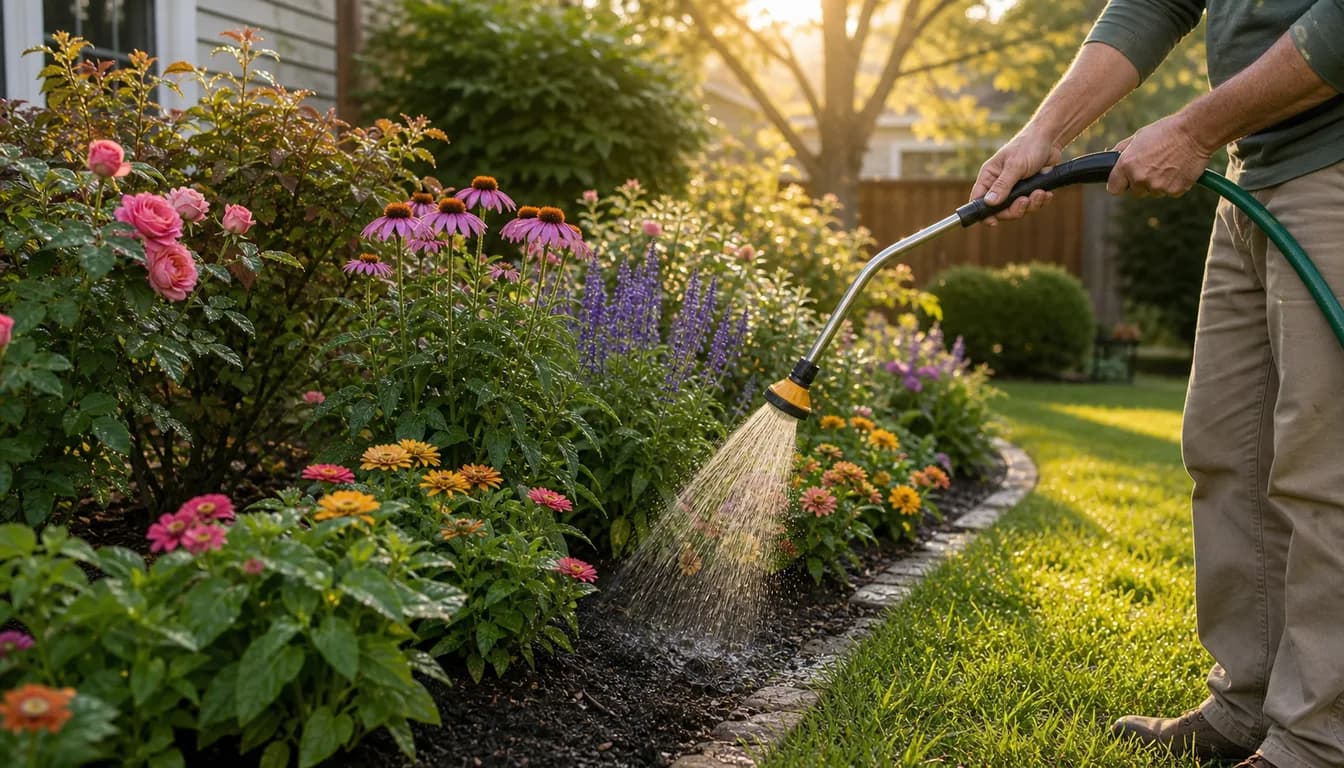
Best Time to Water Flowers for Stronger Blooms
Learn exactly when to water flowers so blooms last longer, plants stay healthier, and you are not wasting water. Covers beds, containers, and hanging baskets.
10 min read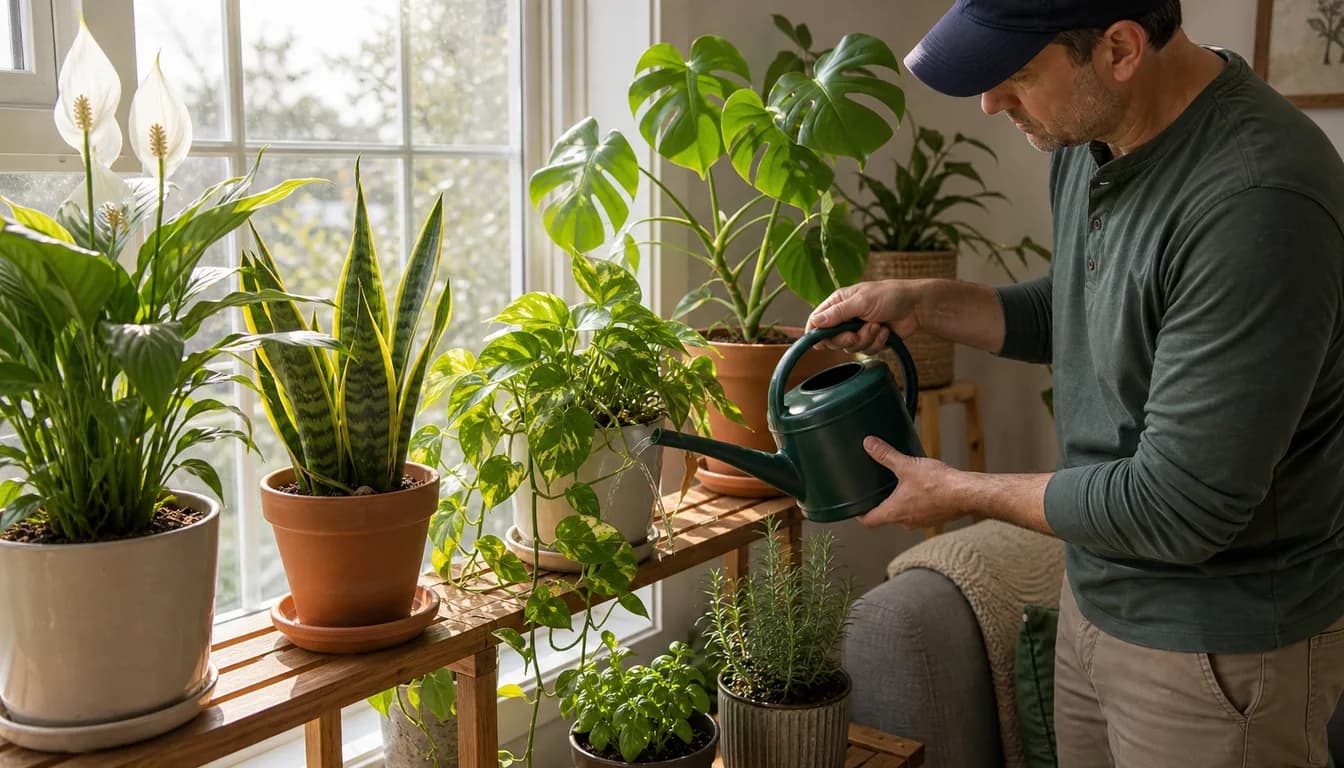
Best Time to Water Indoor Plants for Healthy Growth
Learn exactly when to water indoor plants during the day, how timing changes by season and light level, and how to avoid rot and droop without using a strict calendar schedule.
11 min read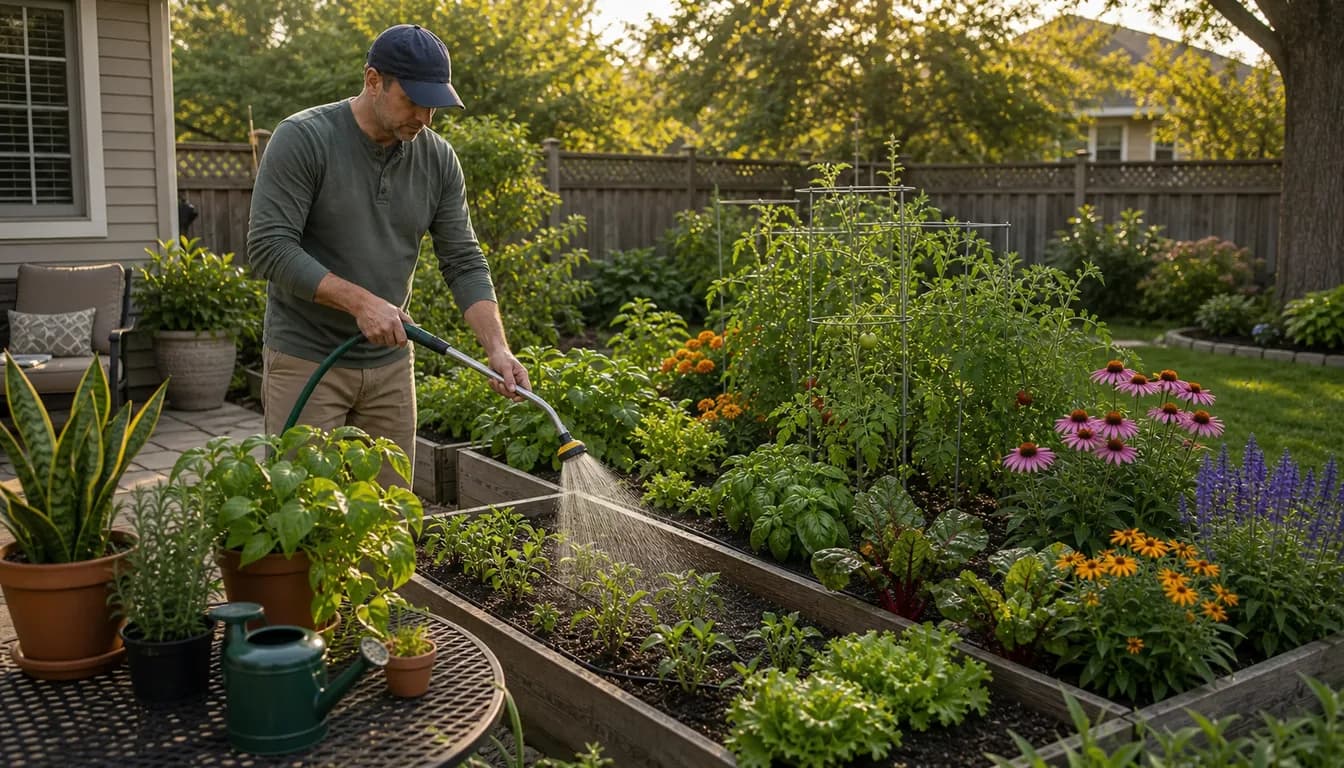
Best Time to Water Plants for Healthier Roots
Learn exactly when to water indoor and outdoor plants so roots drink deeply, leaves stay healthy, and soil stays in the ideal moisture range instead of staying soggy or bone dry.
11 min read