
Lawn Careschedule14 min read
How to Fertilize Your Lawn Without Burning It
Step-by-step guide to fertilizing your lawn without streaks, burn marks, or wasted product. Covers timing, spreader settings, watering, and how to match fertilizer to your grass type.
Those yellow stripes and crispy patches after fertilizing are almost always user error, not bad fertilizer. The good news is you can avoid them with a simple routine that works in every zone.
You will find the right application rate, spreader settings, and watering timing so granules do their job instead of burning the blades. Timing differs for cool and warm season grasses; every section ties back to your real growing season, not just the calendar.
If you already feed warm season turf like bermuda or cool season lawns, this will tighten up your routine and save a lot of wasted product.
grassKnow Your Grass Type and Growth Season
Burned lawns often start with guessing at grass type. Warm season and cool season lawns want fertilizer at opposite times of year.
Warm season lawns include bermuda, zoysia, St. Augustine, centipede, and bahia. They green up once soil stays above about 65°F and slow down again when nights cool.
Cool season lawns include fescue, Tall Fescue, Kentucky bluegrass, and perennial ryegrass. They push hardest growth in cool spring and fall, then coast through summer heat.
Feeding heavy during heat waves on cool season grass is a fast way to cook it. The plant is already stressed, so extra nitrogen pushes leaf growth it cannot support with roots.
Check what mix you have by comparing blades and texture to coarser Tall Fescue clumps or fine Kentucky bluegrass types sold locally. Matching blades to what the garden center sells is usually enough.
Once you know your type, match feeding windows. Cool season lawns get their biggest dose in early fall. Warm season lawns want their first real feed a few weeks after full green up.
If your lawn is a patchwork of sun and shade, you might even have both. Sunny spots might be mostly zoysia patches, while shaded areas hide fescue. Treat each area based on what dominates.
Fertilizing hard outside the active growth season is one of the quickest ways to scorch a lawn.
Match fertilizer timing to active grass growth before you worry about product brand.
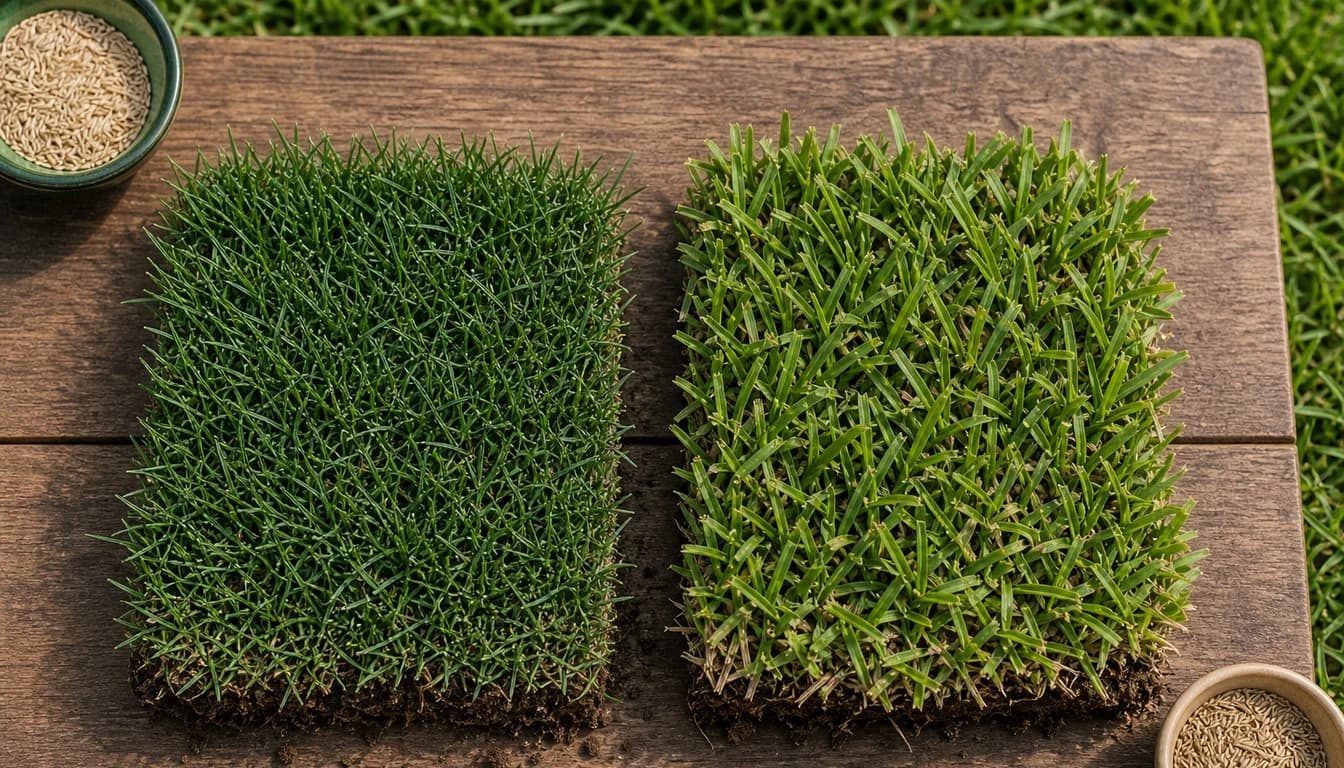
Cool season and warm season grasses want fertilizer at different times of year.
- fiber_manual_recordWarm season peak feeding: late spring through midsummer
- fiber_manual_recordCool season peak feeding: early fall with lighter spring
- fiber_manual_recordSkip heavy nitrogen: during midsummer for cool season lawns
- fiber_manual_recordZone clue: what your neighbors grow can confirm which schedule fits
compostPick the Right Fertilizer and Rate
Straight nitrogen is what most home lawns need, but the source and rate matter more than the brand name.
Bag fronts show the NPK numbers. For lawns, the first number, nitrogen, does almost all the visible work. Slow release products are far harder to burn with than quick release, especially in heat.
Look for bags that say at least 30–50% slow release or list polymer coated urea in the ingredients. These release over weeks instead of days, so blades see a gentle flow of nutrients.
Next, match the bag rate to your lawn. Most cool season lawns do best with about 0.75–1.0 pound of nitrogen per 1,000 square feet per feeding. Warm season lawns tolerate similar rates once fully active.
To find how many pounds of product that is, use a simple formula. Divide the desired nitrogen rate by the bag's nitrogen percentage as a decimal.
For example, if you want 0.8 lb N and have a 24-0-4 bag, divide 0.8 by 0.24 to get about 3.3 pounds of product per 1,000 square feet.
Fertilizer burn almost always comes from applying more pounds of product per 1,000 square feet than the bag calls for.
Organic fertilizers for lawns, like composted poultry litter, are even safer from burn but act slower. They work well if you already use gentle feeds in a vegetable and want the same approach on turf.
- fiber_manual_recordQuick release: faster green, higher burn risk
- fiber_manual_recordSlow release: steadier color, safer in heat
- fiber_manual_recordOrganic blends: low burn, milder response
- fiber_manual_recordAvoid weed-and-feed: on stressed or newly seeded areas
Guide — See AlsoWhen to Aerate Your Lawn for Real ResultsLearn exactly when to aerate your lawn based on grass type, soil conditions, and season so you get thicker turf instead
chevron_rightquizMeasure Your Lawn and Calibrate the Spreader
Guessing on lawn size is the sneaky way to double your rate without realizing it. Most yards are smaller than people think.
Break your yard into rectangles and triangles. Multiply length by width for each section, then add them together. Keep the math simple and round to the nearest 100 square feet.
Once you know the area, figure out how many total pounds of product your lawn needs. Multiply your pounds per 1,000 square feet by the number of thousands of square feet you have.
For example, a 5,000 square foot lawn at 3.3 pounds per thousand needs about 16.5 pounds total. That tells you how much of the bag to use, not just what the dial says.
Spreader dials are suggestions, not truth. The same setting can throw way more product with a heavy fertilizer than a fluffy one.
Always test your spreader setting on a driveway or tarp so you can see how much comes out before rolling across the grass.
Pour a known amount, like 5 pounds, into the spreader. Walk a measured 1,000 square foot area on your driveway or bare ground. See how much is left.
Adjust the dial so that test pass uses close to what your math called for. This ten minute test is the single best protection against stripes and burned bands.
If you use a battery spreader or attachment, repeat this test every time you change from a light product like indoor plant food granules to dense lawn fertilizer.
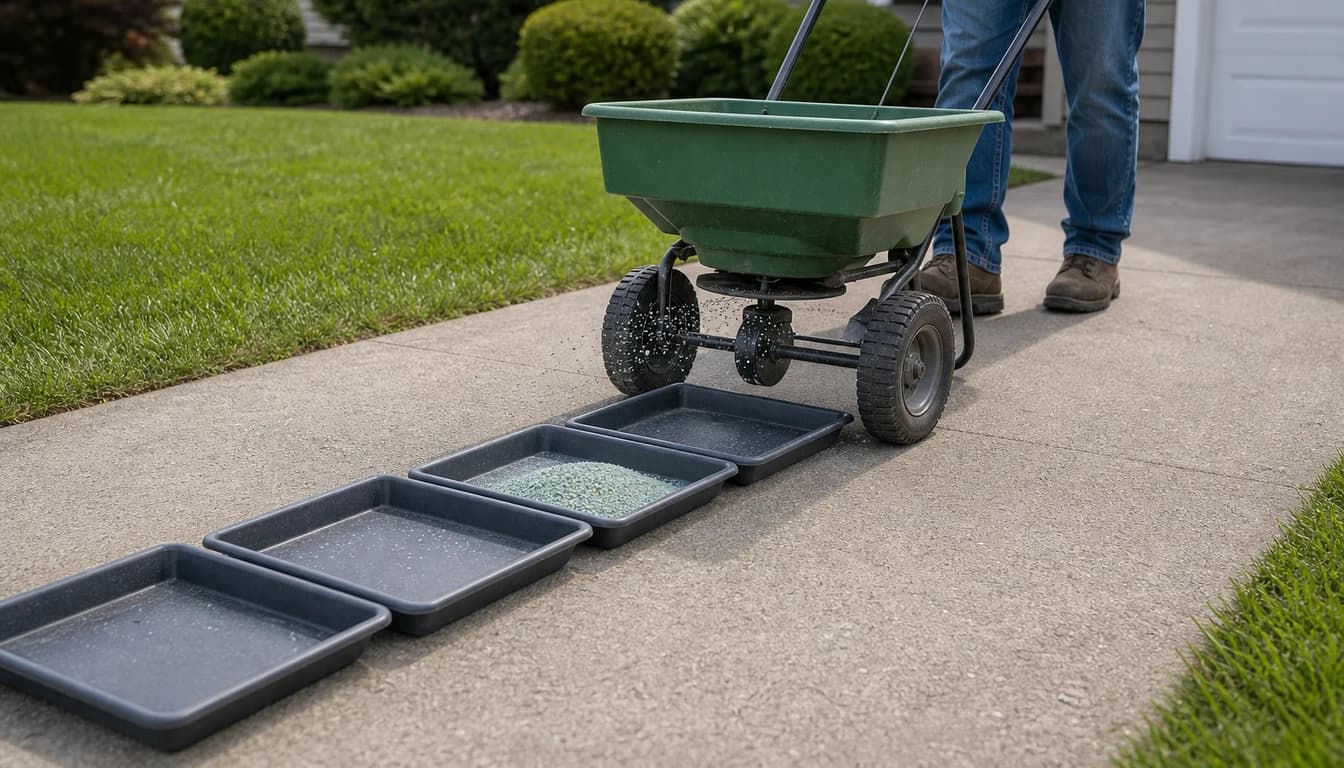
Test spreader settings on a driveway or tarp before rolling onto grass.
Email Updates
Join the KnowTheYard update list
Zone-specific advice, seasonal reminders, and new plant guides — no filler.
water_dropTime Applications and Watering to Avoid Burn
Fertilizer only burns when salts sit concentrated on blades or in the top half inch of soil. Smart timing and watering keep that from happening.
Apply granular fertilizer on dry grass, then water it in within 24 hours unless the label says otherwise. Lightly damp blades can make granules stick, which creates little burn spots if water is delayed.
Aim for a 0.25–0.5 inch watering after you spread. This is usually 15–30 minutes with oscillating sprinklers, but you should confirm with a rain gauge or tuna can test.
Avoid feeding before pounding thunderstorms. Heavy rain can float granules into low spots and flower beds, or straight into the street. That is wasted money and hard on nearby flower beds in low areas.
Hot afternoons are a bad time too. Heat and sun dry granules fast on blades. Early morning or early evening are safer, especially when temps run above 85°F.
If life gets in the way and you cannot water the same day, skip the application and wait. Spreaders can go back in the garage. Burned lawns cannot.
New seed and freshly sodded areas are more sensitive. Use starter fertilizers at lower nitrogen rates there. Standard high nitrogen blends can scorch tiny roots and delay establishment.
- fiber_manual_recordSpread on dry grass: to keep granules moving
- fiber_manual_recordWater in promptly: light but thorough soaking
- fiber_manual_recordSkip extreme heat: or drought stressed weeks
- fiber_manual_recordWatch slopes: fertilizer should not wash into sidewalks or drains
Guide — See AlsoBest Time to Aerate and Overseed for a Thicker LawnLearn when to aerate and overseed your lawn by season and grass type so every pass of the machine leads to thicker, gree
chevron_rightgrassPost‑Fertilizing Aftercare and Monitoring
The first two weeks after feeding are when you either lock in results or cause damage.
Walk the lawn every few days and look at blade color, new growth, and any uneven patches that show stress.
Color should deepen to a richer green within 7-10 days on most cool season grasses.
If you see bright lime green streaks where the spreader overlapped, you probably doubled the rate in those tracks.
Check soil moisture with a screwdriver or soil probe so you do not stack drought stress on top of fertilizer stress. You want the top 4-6 inches moist but not sloppy.
If the soil surface is cracked or dusty, delay any follow up fertilizer until you restore deep moisture.
Keep mowing on schedule, but never remove more than one third of blade height. Scalping right after fertilizing concentrates nitrogen in short tissue and can burn.
Bag clippings only if they are clumping or you just did a heavy weed-and-feed pass that might carry herbicide into beds with plants like daylily clumps.
Otherwise, mulched clippings recycle nutrients and reduce how often you need to fertilize.
If you also fertilized shrubs or trees along the lawn edge, compare how lawn color responds against a known feeder like hydrangea shrubs to judge whether your rate was adequate.
Use a notebook or phone app to record date, product, rate, weather, and sprinkler runtime.
The fastest way to stop burning your lawn is to copy what worked last time instead of guessing every season.
warningSpotting And Fixing Early Fertilizer Burn
Fertilizer burn usually starts as straw colored lines, splotches, or footprints that match where granules piled up or where a dog urinated after fertilizing.
Catch it fast and you can limit the damage to blades instead of roots.
Kneel down and look for intact crowns at the soil line.
If the base of the plant is still white or light green, the turf can often recover with aggressive flushing.
Run sprinklers long enough to apply 0.5–1 inch of water right away, then repeat the same depth the next day if the area still looks stressed.
Water early in the morning so leaf surfaces dry out before night.
Do not apply any more fertilizer or weed killers on burned spots for at least four weeks, even if color looks weak.
Use a broom or stiff rake to knock visible granules off sidewalks and back into the lawn as soon as you spread.
Granules left on concrete dissolve and wash into low spots, where they can create surprise burn patches.
If a section is completely dead and the soil feels crusty or salty, strip the thatch and top 1 inch of soil, then bring in fresh topsoil before you reseed.
Overseed thin areas with a matching grass, the same way you would follow up after overseeding a tired lawn in fall.
Compare the damaged area to healthy turf to confirm the problem is burn and not an insect issue.
If blades are chewed or birds are pecking heavily, you might instead be dealing with grubs or sod webworms.
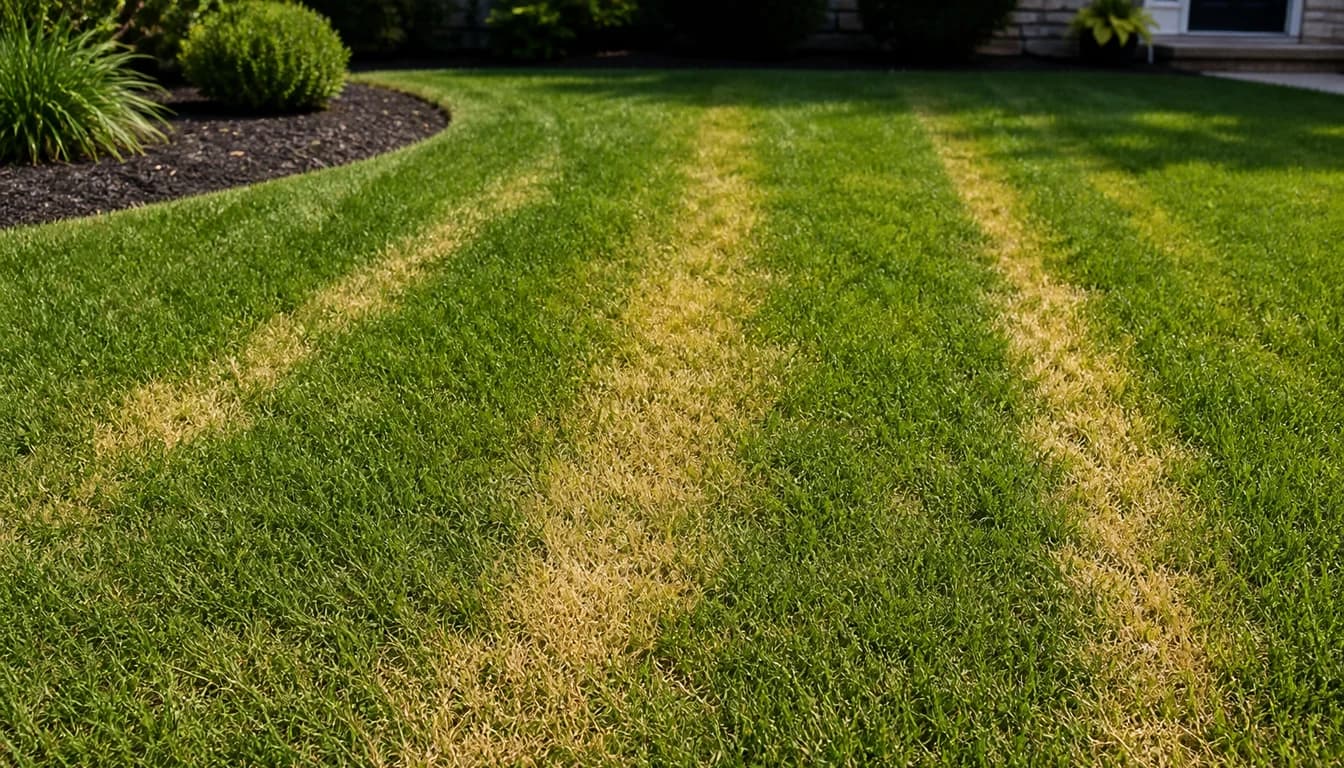
Salt burn often shows up as streaks that follow your spreader pattern.
Guide — See AlsoDethatching vs Aerating: Which Your Lawn Needs FirstLearn whether your lawn needs dethatching, aeration, or both, how they work, and the right timing and tools so you do no
chevron_rightcalendar_monthSeasonal Fertilizer Schedules That Avoid Burn
Cool season lawns like fescue mixes or Kentucky bluegrass lawns prefer heavier feeding in spring and fall.
Warm season lawns such as bermuda turf or zoysia yards want most of their nutrition in summer.
Spring feeding should wait until you have mowed the lawn at least two or three times.
Early spring growth often comes from stored carbohydrates, not new root growth that can handle extra salts.
For cool season grass, many extension offices suggest 2–4 pounds of nitrogen per 1,000 square feet per year split into two or three applications.
Heavy single doses are what scorch blades and explode thatch.
Summer fertilizer on cool season lawns should be light or skipped in hot regions.
Heat stressed turf, especially in zone 7 and warmer, burns easily because shallow roots cannot move salts.
If your cool season lawn goes tan and dormant in high heat, water occasionally but stop feeding until soil cools below the mid 70s.
Warm season lawns should get their first full feeding when they are 50–75% greened up, not at the very first hint of color.
This is often when soil temps hit the mid 60s, which you can track with a cheap probe just like you would for timing seed starting.
Late fall applications on cool season grass, sometimes called a "winterizer", help roots store energy.
Keep nitrogen moderate and avoid high quick release blends that cause a burst of late top growth vulnerable to winter injury.
In snowy climates, use slow release products in fall so nutrients move into the soil profile gradually rather than washing into storm drains with meltwater.
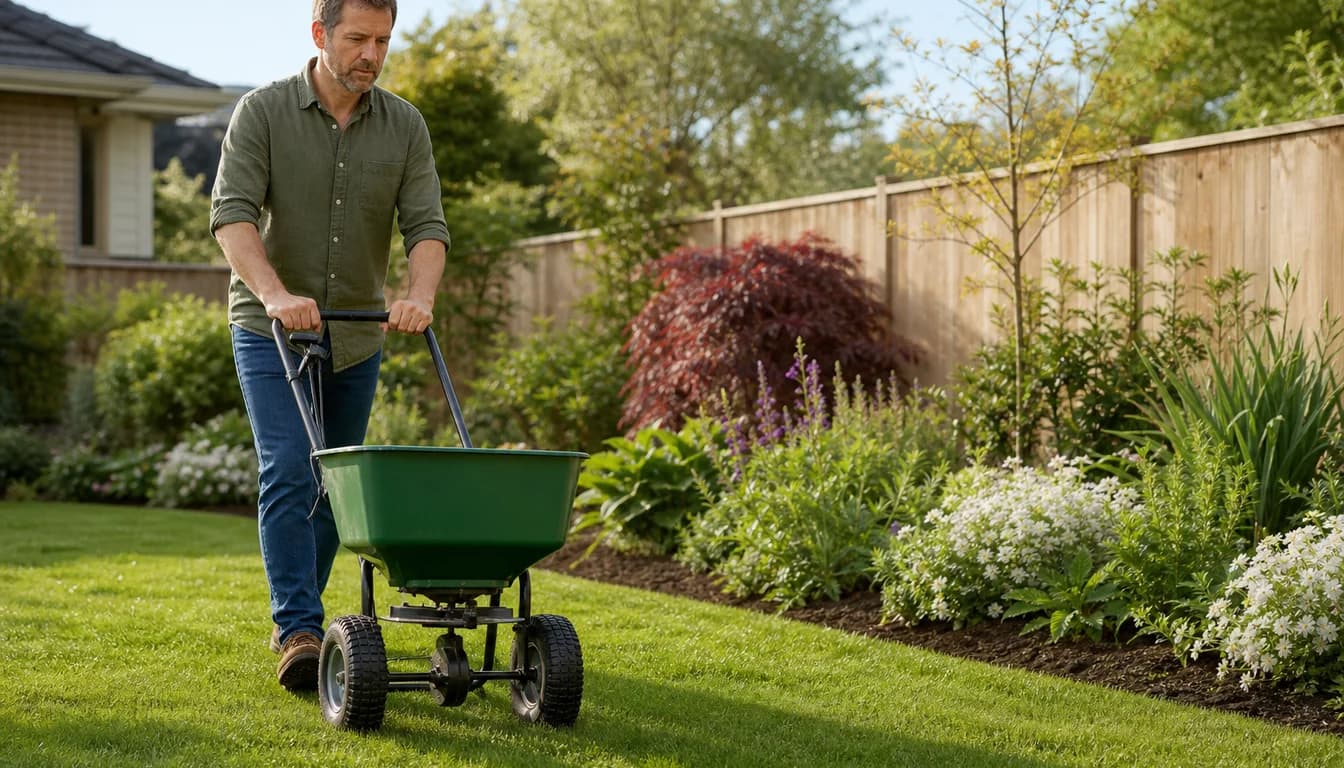
Tie fertilizer timing to grass growth and season, not the bag marketing copy.
pest_controlCoordinating Fertilizer With Weed And Pest Control
Combining fertilizer with weed or pest control saves time, but it raises the risk of injury to desirable turf and nearby beds.
You need to match products to both your grass type and what is planted right next to the lawn.
Many crabgrass preventers come mixed with fertilizer.
These "weed‑and‑feed" bags can be harsh on shallow rooted perennials like hosta clumps or flowering shrubs such as azalea borders if granules bounce into their mulch rings.
Use a drop spreader along bed edges so you do not sling herbicide onto non‑target plants.
Blow or sweep granules back into the turf immediately.
Never spread weed‑and‑feed under the drip line of trees or shrubs that are already fertilized separately.
Pesticide sprays for grubs or surface insects can also stress grass if used on hot, dry days right after fertilizing.
Give the lawn a few days between fertilizer and insecticide applications, and water deeply before you treat.
If you are running a vegetable garden close to the lawn, be cautious about overspray from weed killers.
Herbicide drift can deform leaves on crops like tomato vines or pepper plants even at low doses.
Coordinate fungicide programs with your nutrient plan as well.
High nitrogen feeding right before a stretch of humid weather encourages diseases on dense cool season turf, much like overfeeding a rose bush makes it more prone to black spot.
Space out heavy nitrogen applications at least two weeks away from routine fungicide treatments so you can see what is working.
Guide — See AlsoWhen to Aerate a Lawn in Michigan for Thick TurfLearn exactly when to aerate a lawn in Michigan, how soil temperature and grass type change the timing, and how to pair
chevron_rightcompostAdvanced Tips For Soil Health And Lower Fertilizer Needs
Healthy soil lets you fertilize less often and still get a thick yard.
Organic matter, microbial life, and steady moisture all help buffer salt from synthetic fertilizers so burn is less likely when mistakes happen.
Topdressing with screened compost at 0.25–0.5 inches once a year adds carbon and slow release nutrients.
Thin tall fescue lawns can catch up to the dark color of a well-fed blueberry hedge after two seasons of light compost plus moderate fertilizer.
Core aeration before topdressing helps organic material fall into the holes and improves root depth.
Deep roots handle fertilizer salts better, similar to how drought tolerant plants in the drought tolerant plants category ride out dry spells.
Consider replacing one synthetic feeding with a natural source like composted poultry manure or a milorganite type product.
These usually carry lower salt levels and release over several weeks, so they are harder to burn with.
Even "organic" products can burn at very high rates, so always follow label coverage numbers.
Mulch mow leaves into the turf in fall instead of raking them all away.
Chopped leaves supply potassium and micronutrients, the same minerals you would otherwise add with a bag.
If you have fruit trees bordering the lawn, such as a backyard apple tree, avoid piling mulch or compost directly against their trunks when you topdress the grass.
Soil tests every 3 years keep you from guessing on phosphorus and potassium.
Many established lawns only need nitrogen once P and K levels are correct, which lowers salt load and burn risk over time.
Building better soil is the only lawn upgrade that permanently reduces how often you reach for fertilizer.
tips_and_updates
Pro Tips
- check_circleCut the recommended bag rate in half for your first pass, then see how the lawn responds before adding more.
- check_circleOverlap wheel tracks slightly when you walk, but change your pattern each application to smooth out any streaks.
- check_circleSkip high nitrogen fertilizer for at least four weeks after heavy weed control so stressed grass is not pushed too hard.
- check_circleUse a simple soil test every few years so you are not adding phosphorus or potassium you do not need.
- check_circleBlow stray granules off sidewalks and driveways back into the lawn before watering so they do not stain concrete.
- check_circleFeed a day or two after mowing, not the same afternoon, so blades have time to recover from cutting.
- check_circleMark sprinkler heads and shallow cables before using heavy drop spreaders to avoid breaking anything.
- check_circleKeep a small notebook or phone log with dates, products, and rates so you can repeat what worked.
quiz
Frequently Asked Questions
How long should I water after fertilizing my lawn?expand_more
For granular fertilizer, water enough to apply about 0.25–0.5 inches right after spreading. That usually means 10–20 minutes per zone, but use tuna cans or rain gauges to measure rather than guessing by time.
Can I fertilize and overseed my lawn at the same time?expand_more
Yes, but pick a starter fertilizer labeled for seeding and avoid strong weed‑and‑feed products. Many homeowners pair fall overseeding with a light starter rate so young grass, like new perennial ryegrass seedlings, establishes without burn.
Is liquid fertilizer safer than granular for preventing lawn burn?expand_more
Liquid is not automatically safer. Hose‑end sprayers make it easy to overapply in slow walking areas. Granular products burn most often when spread too heavy. In both cases, correct rate, even coverage, and prompt watering are what prevent burn.
How soon can I mow after fertilizing my yard?expand_more
Wait until after your first post‑fertilizer watering has dried. Mowing wet grass right away can pick up granules with the wheels or bagger. Once the lawn is dry to the touch, mowing will not affect how nutrients move into the soil.
What temperature is too hot to fertilize a lawn safely?expand_more
Avoid fertilizing during extended stretches above 85°F, especially on cool season grasses. In that range, roots are already stressed and salt from fertilizer can finish them off. Wait for a cooler period or push the feeding to fall instead.
menu_book
Sources & References
Related Guides
Best Time to Aerate and Overseed for a Thicker Lawn
Learn when to aerate and overseed your lawn by season and grass type so every pass of the machine leads to thicker, greener turf instead of wasted seed.
11 min read
Best Time to Overseed a Midwest Lawn for Thick Turf
Learn the best time to overseed a Midwest lawn based on soil temperature, grass type, and hardiness zone so your new seed fills in thin spots.
11 min read
Best Time to Overseed a Northeast Lawn for Thick Turf
Learn exactly when to overseed cool-season lawns in the Northeast, how soil temperature and frost dates affect timing, and what to do before and after seeding for a thicker, greener yard.
11 min read