verifiedSource Reviewed
Dracaena: Easygoing Cane Houseplants
Dracaena spp.
Family: Asparagaceae
wb_sunnyLight
Bright to medium indirect light
water_dropWater
Low to moderate, let top half dry
heightHeight
2-10 ft indoors, depending on variety
publicZone
USDA Zone 10-12 outdoors; common houseplant elsewhere
airAir Quality
Air Quality Note

Native Region
Africa, southern Asia, and Central America
forestChoose the Dracaena Shape Before the Care Routine
Dracaena is not one single room shape. Some types grow as thick canes, some as narrow sculptures, and some as compact rosettes. That shape changes placement and pruning more than most care labels admit.
The shared weakness is wet roots and damaged leaf tips. Most indoor failures come from too much water, poor drainage, mineral-heavy tap water, or cold drafts.
- check_circleTall cane: plan floor space and pot weight.
- check_circleNarrow cane: plan light from the side.
- check_circleCompact rosette: protect the crown from staying wet.
For the classic thick cane, use Corn Plant. A narrow red-edged silhouette belongs to Dragon Tree.
That split matters because a tabletop rosette, a single cane, and a multi-cane floor plant all fail in different-looking ways.
local_floristMatch the Type to the Room Job
Pick Dracaena by room job first. A corner tree, a narrow entry plant, and a tabletop rosette should not get the same buying advice.
Corn PlantThick cane and striped crown for floor placement
Dragon TreeSlim canes and narrow leaves for tight corners
CompactaDense slow growth for smaller spaces
If you want brighter tropical color instead of cane structure, Ti Plant owns that search better.
Plant Problem — See AlsoDracaena Yellow Leaves**Dracaena** yellow leaves usually come from root stress, especially overwatering, but the pattern matters. One or two o
chevron_rightlight_modeUse Soft Light to Keep Leaves Clean
Most Dracaena types prefer medium to bright indirect light. They tolerate lower light, but slow growth and smaller new leaves follow.
Harsh direct sun can bleach or scorch leaves, especially on variegated types. A bright room away from hot glass is safer than a dark corner or a west-window blast.
If the plant leans, rotate slowly. A cane that bends for months will not straighten overnight.
If a variegated type loses contrast, solve light first. Food cannot replace a brighter placement.
Email Updates
Join the KnowTheYard update list
Zone-specific advice, seasonal reminders, and new plant guides — no filler.
water_dropLet the Pot Dry More Than Your Instinct Wants
Water after the upper part of the mix dries, then empty the saucer. Constantly damp soil is the mistake that makes Dracaena decline quietly.
warningQuiet Decline
A Dracaena can look fine above the soil while roots are staying too wet below. Pot weight matters.
If you want an even drier plant, Snake Plant is more tolerant of long dry stretches.
Guide — See AlsoAir Purifying Plants for Cleaner Indoor AirLearn how to pick, place, and care for air purifying plants so they help your indoor air instead of just looking pretty.
chevron_right
compostBuild Air Around Slow Roots
Use a loose mix with perlite, bark, or pumice. Slow roots need air because they do not recover quickly after rot.
Do not overpot. A large wet container makes the plant look stable while the root zone stays wet too long.
- fiber_manual_recordMove up one pot size only.
- fiber_manual_recordKeep cane depth the same.
- fiber_manual_recordUse a heavy outer pot only if water drains away.
For a plant that also suffers from heavy decorative pots, compare Rubber Plant.
For a plant that can wait even longer between waterings, ZZ Plant is safer in a forgetful home.
lightbulbSlow Root Rule
Use a smaller draining pot before you use a larger decorative pot.
content_cutCut Canes When Shape Still Has Energy
Cane cuttings work best from firm healthy stems. If you wait until a cane is soft, the clean section may be too short to save.
Top cuttings can reset height. Cane sections can root from nodes, but they need warmth, clean cuts, and light moisture rather than a soaked tray.
Shape resetTop cutting from a tall cane
Backup plantFirm cane section with nodes
Bad candidateSoft, cold, or sour-smelling cane
Guide — See AlsoBest Herbs to Grow Indoors for Real Harvests, Not Spindly PotsChoose indoor herbs that can actually produce in your light, temperature, and container setup, then match each one to th
chevron_rightpest_controlDiagnose Brown Tips Before Treating Pests
Brown tips are usually not a pest problem. Dry air, fluoride, salts, missed watering, or cold drafts are more likely.
Pests show different evidence: sticky residue, cottony joints, webbing, or distorted new leaves. Clean the leaves so those signs are visible.
If leaf tips keep browning across several plants, check your water source before treating every pot.
If only one cane shows damage, inspect that cane and its root zone before changing care for the whole pot.
calendar_monthUse Winter as a Dry-Down Season
Winter light slows root water use. Keep the plant warm and stretch watering intervals rather than following summer timing.
Do not repot or cut canes in a cold slow room unless rot forces the decision. Warm active growth gives a cleaner recovery.
Move outdoor summer plants back inside before cool nights. Cold damage can look like watering trouble at first.
If winter air is very dry, clean the leaves and watch tips, but do not turn humidity concern into extra watering.
If the plant sits near a cold window, move the pot first and water second. Cold roots use water slowly, even when leaf tips look dry.
Guide — See AlsoBest Indoor Plants for Every Room and Light LevelA practical guide to choosing the best indoor plants for your home, covering beginner-friendly picks, low light champion
chevron_rightpetsPlace Cane Plants Away From Chewers
Most Dracaena houseplants are not pet-safe. Long leaves can hang at pet height, especially on floor plants.
For a pet-safe low-light floor plant, Parlor Palm is a better fit, though it wants more even moisture.
Remove dropped leaves and pruned cane pieces right away so pets do not find them later.
For an upright plant that looks cane-like but handles water very differently, Lucky Bamboo belongs in a separate water-rooted setup.
eco
Keep Exploring
Related Plants
 Houseplants
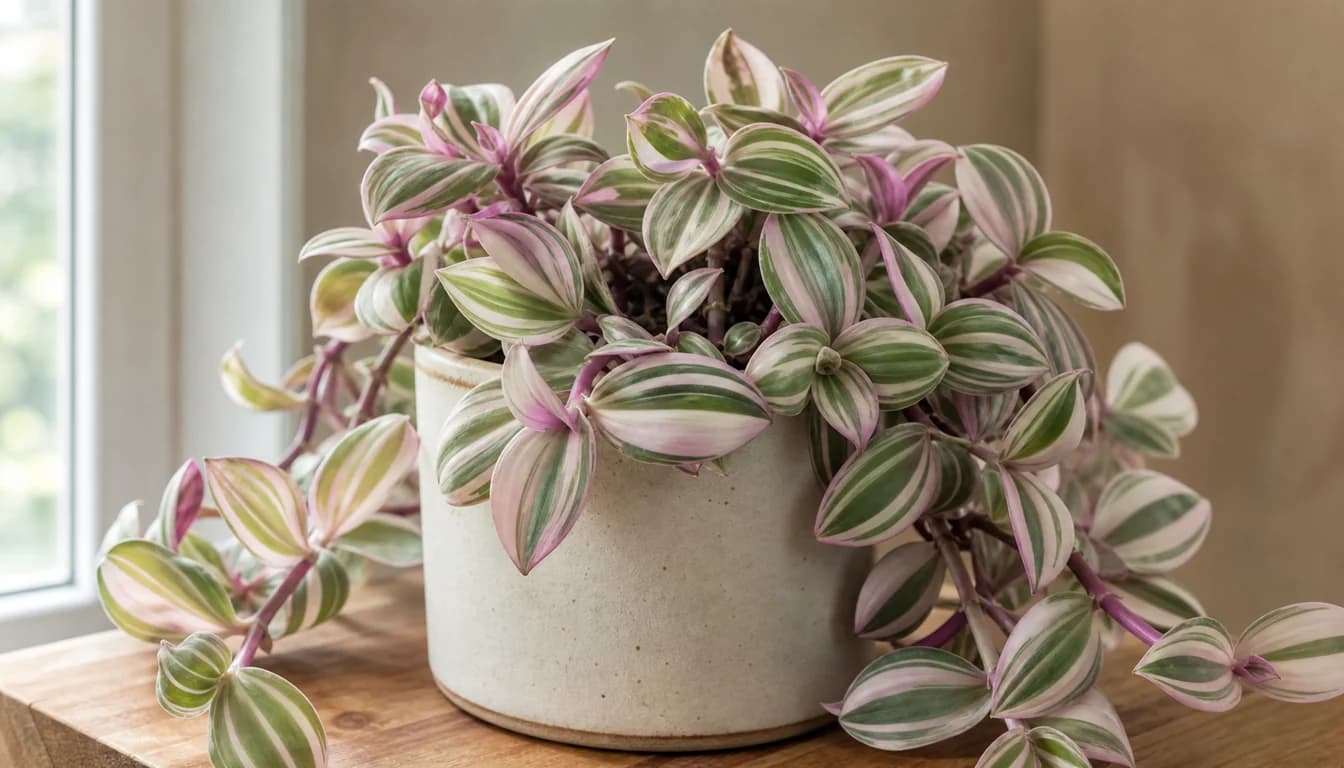
Tradescantia Nanouk
Tradescantia Nanouk is the candy-colored trailing plant that grows absurdly fast — thick, succulent stems with pink, purple, and cream stripes that intensif
 Houseplants
Money Tree
Braided trunks, glossy palmate leaves, and a forgiving nature make the Money Tree (Pachira aquatica) a go‑to indoor tree for bright rooms. It stays compact in c
 Houseplants
Scindapsus Treubii
Scindapsus Treubii is the rare trailing aroid with silvery-blue leaves that look like they've been dusted with moonlight. It's slower-growing than satin pot
quiz
Frequently Asked Questions
How often should I water Dracaena?expand_more
Water after the upper mix dries and the pot feels lighter. In low light or winter, wait longer.
Why are my Dracaena tips brown?expand_more
Brown tips often come from mineral-heavy water, dry air, cold drafts, or uneven watering, not pests.
Can Dracaena grow in low light?expand_more
It can tolerate lower light, but growth slows and new leaves may shrink. Medium to bright indirect light keeps better shape.
Can I cut back a tall Dracaena?expand_more
Yes. Cut firm canes during warm active growth and root healthy tops or cane sections.
Is Dracaena pet-safe?expand_more
No. Keep it away from pets that chew leaves.
menu_book
Sources & References
- 1.University of Florida IFAS Extension – Dracaena fragrans, Corn Plantopen_in_new
- 2.University of Georgia Extension – Cultural Guidelines for Commercial Production of Interiorscape Dracaenaopen_in_new
- 3.Royal Horticultural Society – Dracaena Growing Guideopen_in_new
- 4.University of Florida IFAS Extension - Dracaena fragrans, Corn Plantopen_in_new
- 5.University of Wisconsin Horticulture - Caring for Houseplantsopen_in_new
- 6.ASPCA - Dracaena Species Toxicity to Cats and Dogsopen_in_new