
Houseplants Do Not Clean the Air in a Real Room
The short answer is no, and it comes from the agency that would say otherwise if it could.
The EPA states that there is currently no evidence that a reasonable number of houseplants removes significant quantities of pollutants in homes and offices. A 2019 review at Drexel put a number on it, finding that matching a building's ventilation would take between 100 and 1,000 plants per square meter of floor space.
The study everybody cites was real, and it was run in a sealed chamber often a cubic meter or smaller, with one compound injected into it.
None of that is a reason to own fewer plants. It is a reason to stop choosing them on a claim that does not hold, and this page covers what does work instead.
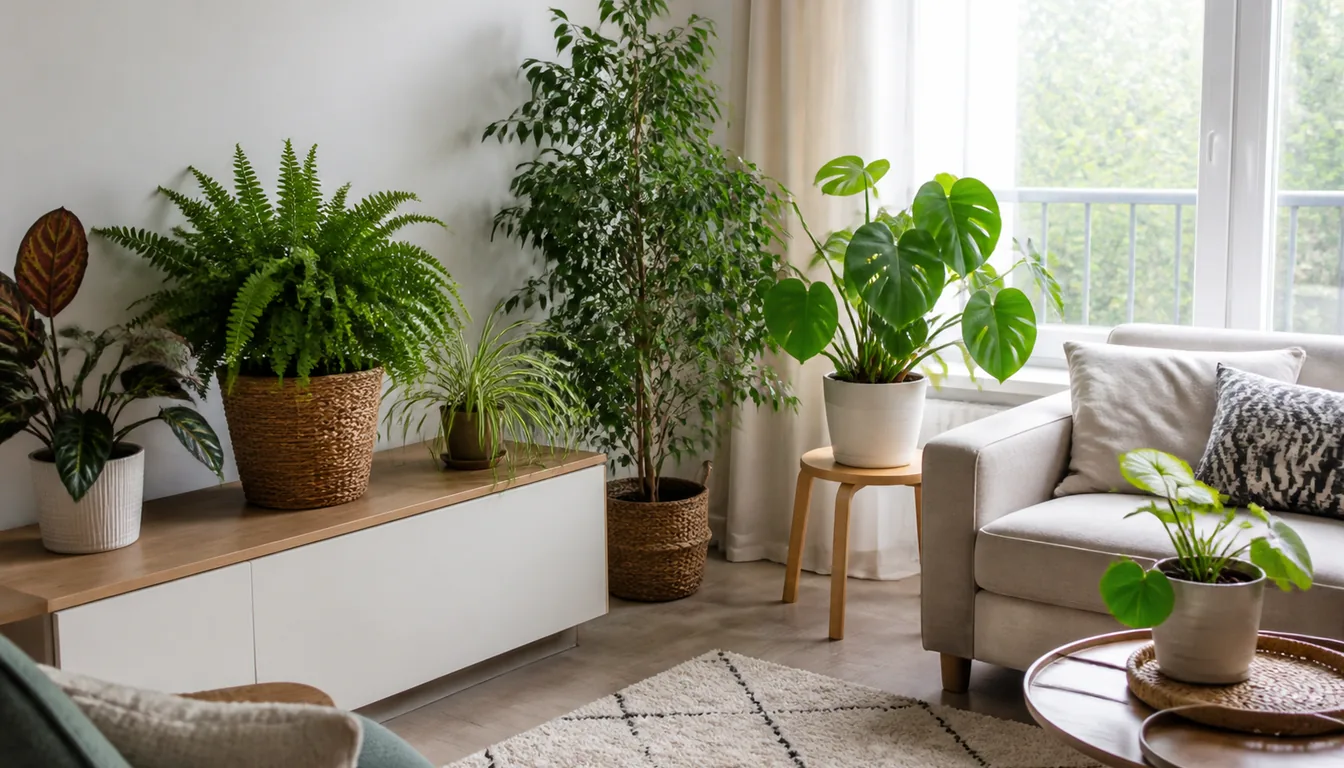
At a glance
Do Houseplants Actually Clean Indoor Air?
No, not at any scale a person has in their house.
The EPA's wording is careful and unambiguous. There is currently no evidence that a reasonable number of houseplants removes significant quantities of pollutants in homes and offices.
A 2019 review at Drexel University went through a dozen studies spanning 30 years of research on plants and volatile organic compounds, and converted their results into a single comparable measure.
What it found was a matter of scale rather than direction. The rate at which plants dissipated compounds in a chamber was orders of magnitude slower than the standard rate of air exchange in a building.
The researcher's own summary is worth quoting, because it is not dismissive. Plants are great, he said, but they do not clean indoor air quickly enough to have an effect on the air quality of a home or office.
The plants are doing something. Every one of those studies measured real removal in a chamber, and the disagreement is not about whether it happens but about how fast, compared with a window.
What Did the NASA Study Actually Test?
It tested something real, and something quite different from a living room.
The claim traces to a 1989 NASA study looking for ways to clean air on space stations, which is a genuinely closed environment where a plant's contribution might matter.
The experiments were conducted in a sealed chamber, often with a volume of a cubic meter or smaller. A single volatile organic compound was injected into that chamber, and its decay was tracked over hours or days.
Every part of that setup is doing work the claim later loses. A sealed cubic meter has no air exchange at all, one compound is not the mixture in a house, and hours or days is not the timescale anybody breathes on.
A real room is being diluted continuously, whether or not anybody opens a window. Air leaks through the building, doors open, extractor fans run, and that flow is what the plant is competing against.
The study was not wrong about any of that. It answered a question about a sealed box, and the answer got carried across to rooms where the sealed box was the whole point.
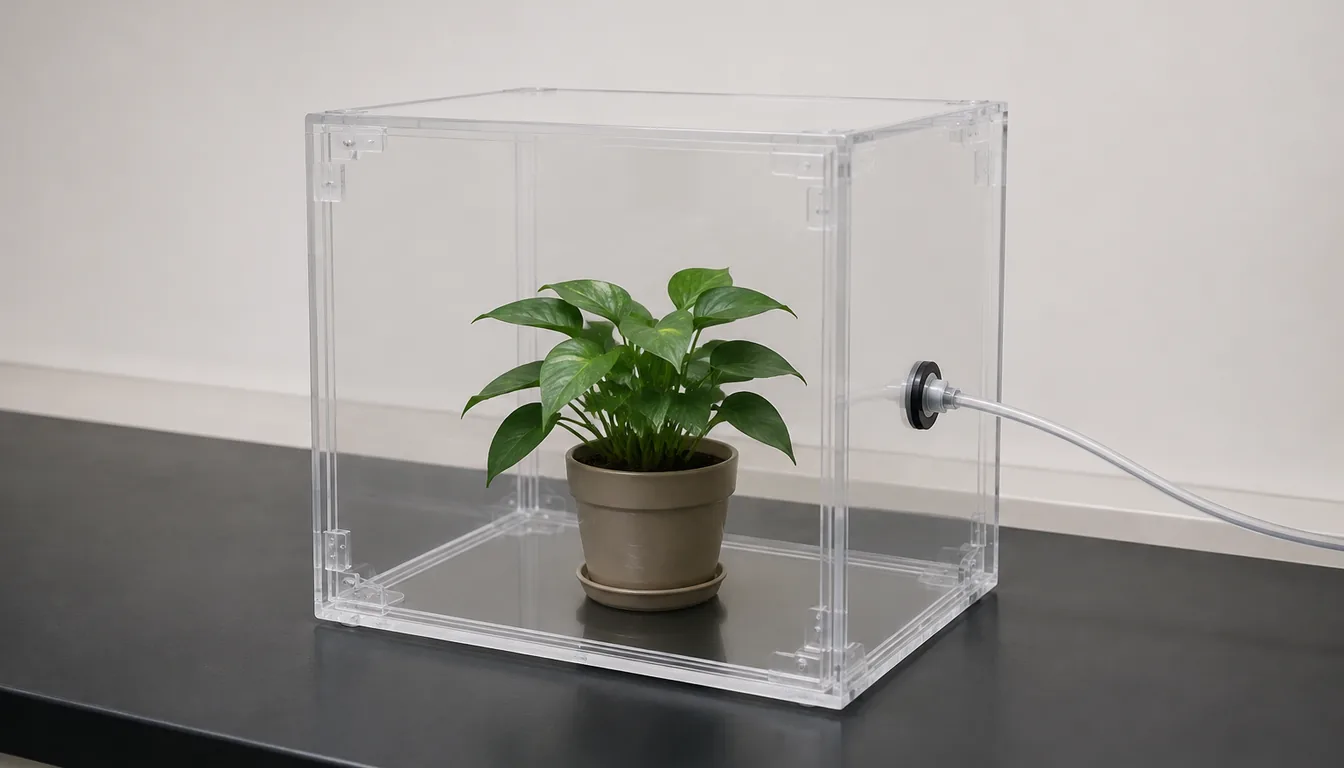
The chamber
A sealed box, often a cubic meter or less, with no air exchange at all, and one compound injected at a known concentration. A single plant, and hours or days of measurement with nothing else happening.
Your living room
Tens of cubic meters, continuously diluted by air leaking through the building and by every door and window. A shifting mixture of compounds from cooking, cleaning, furnishings and people, replenished all day.
How Many Plants Would It Actually Take?
The number is the part that ends the argument.
The Drexel analysis put the requirement at between 100 and 1,000 plants per square meter of floor space to match what a building's ventilation is already doing.
Put that into a room. A modest living room of 20 square meters needs somewhere between 2,000 and 20,000 plants standing in it, which is not a decorating scheme but a nursery with a sofa in it.
Reported another way, a 1,500 square foot home came out at roughly 680 plants even on a generous reading of the same work.
The comparison is the important detail. It is not against an air purifier or against a laboratory, it is against the ordinary ventilation of an ordinary building, which is already outperforming anything a plant shelf can do.
That is why six plants is not a small version of the effect. It is a rounding error against a process that is running all day whether or not the plants are there.
- To match ventilation
- 100 to 1,000 plants per square meter of floor
- A 20 square meter room
- 2,000 to 20,000 plants
- A 1,500 square foot home
- Around 680 plants on a generous reading
- A typical plant shelf
- No measurable effect on room air
What Actually Improves the Air in Your Home?
Three things, and the EPA puts them in an order for a reason.
Source control comes first. The EPA calls it usually the most effective way to improve indoor air quality, by eliminating individual sources of pollution or reducing their emissions, which means dealing with the thing producing the problem rather than the air carrying it.
Ventilation is second. Increasing the amount of outdoor air coming indoors is what dilutes whatever is already in the room, and it is the same process the plants were being measured against.
Filtration is third. An air cleaner's effectiveness depends on how well it collects pollutants, expressed as a percentage efficiency, and on how much air it draws through the filter, expressed in cubic feet per minute.
The order is the useful part. Filtering air that a source is still filling costs more and works more slowly than turning the source off, and no amount of filtration substitutes for a window in a house that never gets one open.
- Source controlFind and remove or reduce whatever is producing the problem, whether that is a solvent, a fuel-burning appliance, damp, or a product being used indoors.
- VentilationIncrease the outdoor air coming in. Open windows, run extractor fans while cooking and showering, and air the house even in winter.
- FiltrationIf something remains, add an air cleaner sized for the room, judged on its collection efficiency and on the airflow it moves through the filter.
Can a Room Full of Plants Make the Air Worse?
Only in one way, and it is a watering problem rather than a plant problem.
Potting mix kept permanently wet grows green algae and white surface mold, and it supports fungus gnats. Those are things added to a room rather than removed from it.
A large collection makes it easy to do at scale. Watering thirty pots on the same day of the week, regardless of what any of them needed, produces a great deal of permanently wet mix in one house.
The fix is the same one the plants themselves want. Water on the state of the mix rather than on a schedule, and empty every saucer afterwards, which the overwatering guide covers properly.
Nobody needs to remove plants over this. A collection watered on a check simply does not develop it.
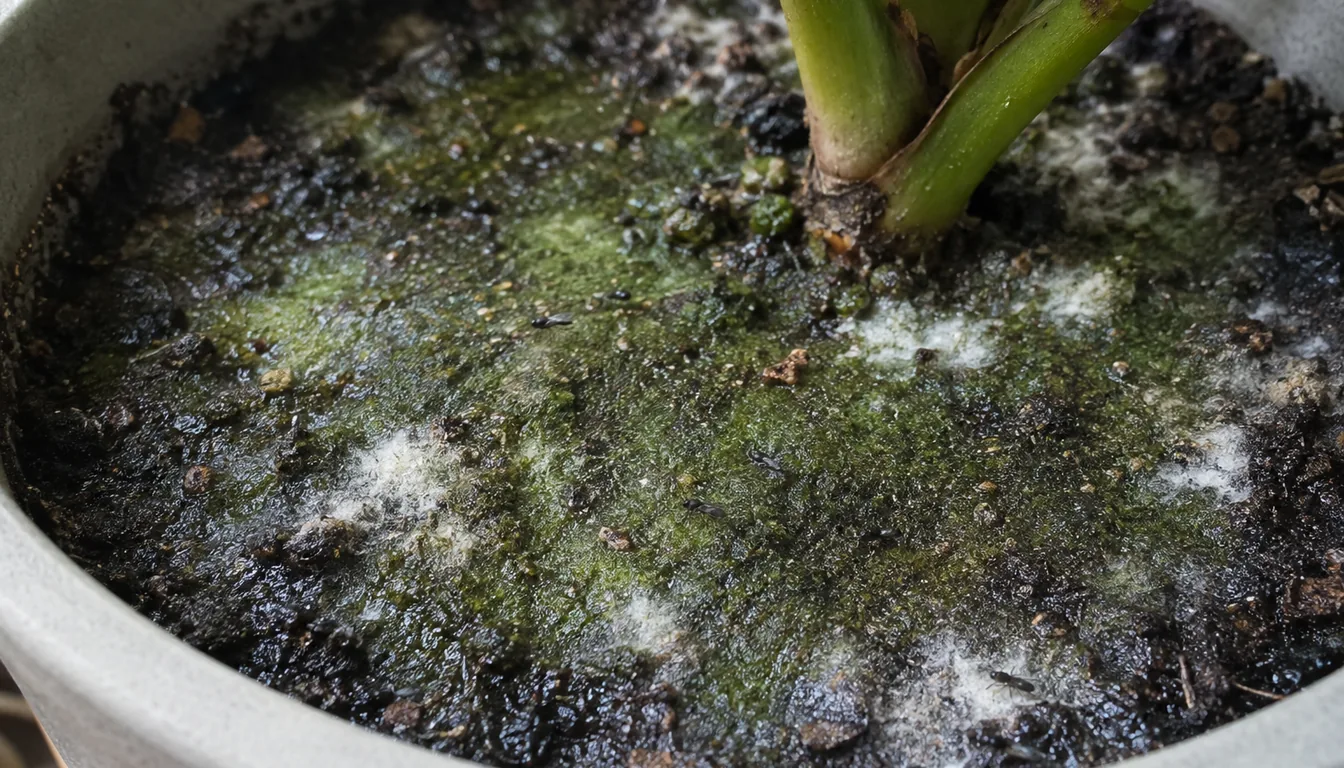
- Check each pot before watering it rather than watering the whole collection on one day
- Empty saucers and cover pots after every watering
- Leave space between pots so air moves between them rather than grouping them tightly
- Scrape off and replace the top layer of any mix that has gone green or moldy
What Are Houseplants Actually Good For?
Everything except the thing they were sold on.
Plants change how a room looks and how it feels to be in, and that is a complete reason on its own. It does not need a chemistry claim propping it up, and it does not stop being true when the chemistry claim goes.
It is worth noticing that the researcher who ended the air quality claim opened his own summary with the words that plants are great. The finding was about a rate, not about whether anybody should own a fern.
What changes is how you choose. A plant picked for a filtration list is often a plant picked for the wrong window, which is a large part of why so many of them die within a year of arriving.
Choose on the light you actually have, the space the plant will fill, and whether there is a cat in the house. Choosing indoor plants by light and the pet safe list both answer better questions than any purifying list does.
Nothing here is an argument for fewer houseplants. It is an argument against one particular reason for them, and there are plenty left.
Pro Tips
- Open a window before buying a plant, since ventilation is what the plants were being measured against.
- Deal with the source of a smell or a fume rather than trying to filter it afterwards.
- Choose a houseplant on the light your room gets, which is the question that decides whether it survives.
- Water a large collection pot by pot, because a house full of permanently wet mix grows mold and gnats.
- Treat any list of purifying plants as a list of houseplants, which is what it is.
Frequently Asked Questions
Do air purifying plants really work?
Not at any scale you would have at home. The EPA says there is no evidence that a reasonable number of houseplants removes significant quantities of pollutants indoors, and a 2019 review found plants work orders of magnitude more slowly than ordinary ventilation.
Was the NASA study wrong?
No, it was answering a different question. It was run in a sealed chamber often a cubic meter or smaller with a single compound injected into it, which is a fair model of a spacecraft and not of a living room with air moving through it.
How many plants would clean a room?
Between 100 and 1,000 per square meter of floor space to match a building's ventilation. A 20 square meter living room would need somewhere between 2,000 and 20,000 plants.
Which houseplant is best for air quality?
None of them, at a realistic number. Choose on the light your room has and on whether the plant is safe around your animals, since those decide whether it thrives and whether it is a risk.
What should I do instead?
The EPA's three strategies in order. Remove or reduce the source of the pollution, increase the outdoor air coming in, then filter what is left with an air cleaner sized for the room.
Can houseplants make indoor air worse?
Only through permanently wet potting mix, which grows algae and surface mold and supports fungus gnats. Watering on a check rather than a schedule and emptying saucers prevents it.
Sources & References
- Improving Indoor Air Quality, United States Environmental Protection Agency
- Study, Actually, Potted Plants Do Not Improve Indoor Air Quality, Drexel University
- Care of Houseplants, University of Minnesota Extension
- Indoor Plants, Watering, Clemson Cooperative Extension
- Lighting, Houseplants, University of Illinois Extension
Related Guides
Best Butterfly Garden Plants for a Complete Habitat
The best butterfly garden plants do two different jobs. Host plants feed caterpillars, while nectar…
15 min read
Best Fall-Blooming Flowers for Color Near Frost
A bed that still carries flowers in October usually was planned before temperatures fell.
9 min read
Best Fast-Growing Trees for Shade and Privacy
The best fast-growing tree is the one whose mature crown, roots, climate range, and maintenance…
16 min read
Best Fragrant Flowers for Every Yard and Season
The best fragrant flowers depend on climate, light, space, and the hours you use the yard.
15 min read
Best Full-Sun Perennials for Hot, Bright Beds
The best full-sun perennials are the ones that match the bed's soil moisture and drainage, local…
14 min read
Best Ground Cover Plants for Sun, Shade, and Slopes
The best ground cover is a plant that survives the site and performs the job without escaping into…
18 min read