
Which Peperomia Fits Your Home and How Do You Grow It?
Peperomia spp. Piperaceae
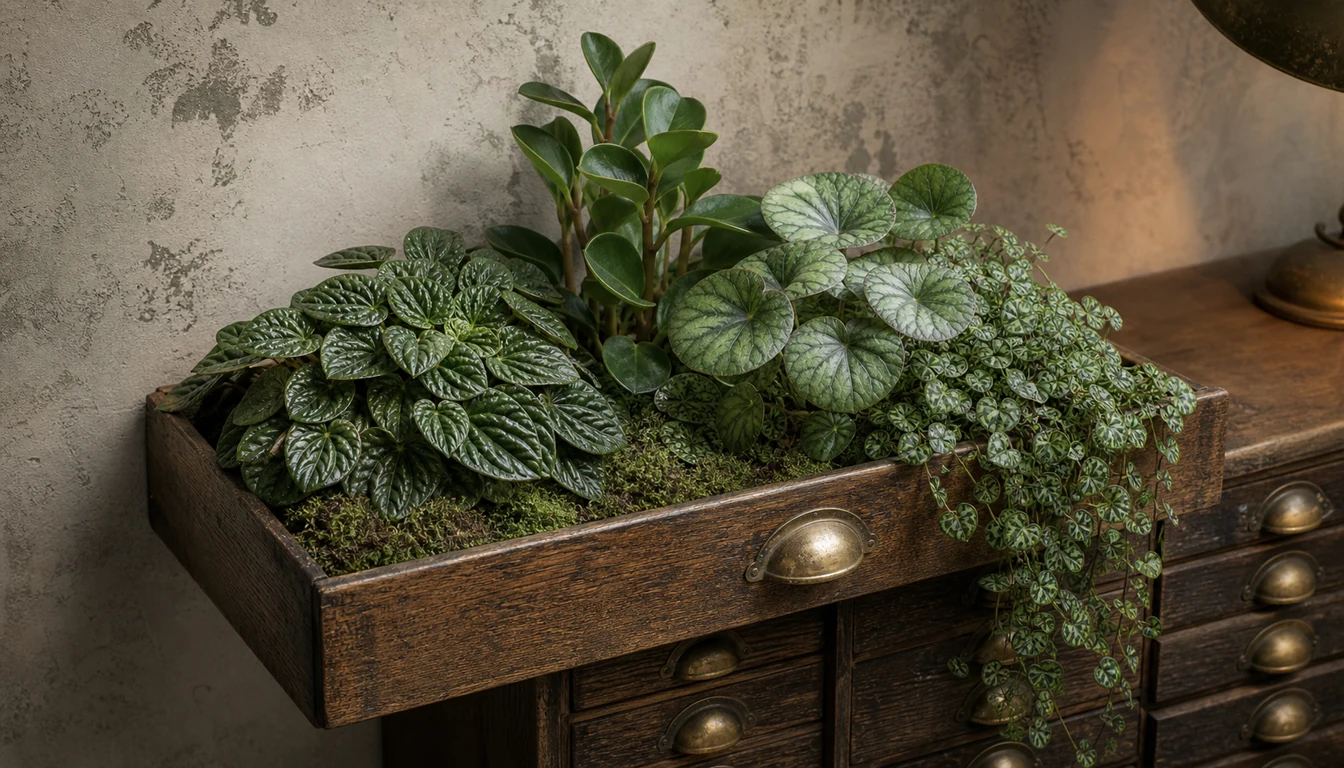
Peperomia includes low rosettes, upright plants with fleshy leaves, and delicate trailers. Many common indoor forms grow well in filtered light and porous potting mix that partly dries between waterings.
Growth form helps with placement and handling, but the species still matters. Leaf shape alone cannot establish a watering schedule, a propagation method, or safety for pets.
Care snapshot
What Does the Name Peperomia Include?
Peperomia is a large genus in the pepper family, Piperaceae. Its species occur across tropical and subtropical regions and include plants rooted in the ground as well as epiphytes growing on other plants.
That variety explains why a generic nursery label leaves important questions unanswered. A compact ripple plant and a trailing vine can share a genus while presenting very different crowns, stems, and amounts of foliage above a pot.
Many familiar houseplant selections stay compact. Clemson lists examples from roughly 8 inches for Watermelon Peperomia to about 12 inches for Jelly and Raindrop Peperomia. These are examples, not a height limit for the genus, and the length of trailing stems is a separate space requirement.
Some species grow in loose organic material on trees, while others come from drier habitats. An airy root zone is useful across many cultivated forms, but those origins do not justify one drying interval or one mix for every species.
For an unidentified plant, the first useful decision is whether the available shelf, pot, and growing conditions suit its structure. A species label then allows more precise care. The resemblance to pepper reflected in the name does not make ornamental leaves a kitchen ingredient.
Which Growth Form Is on the Label?
Rosette
- Leaves cluster at a low crown
- Petiole bases can be crowded near the mix
- An open view of the crown helps with inspection
Upright
- Leaves sit along visible stems
- Nodes are useful landmarks for stem cuttings
- Height and top weight matter for placement
Trailing
- Flexible stems hang or spread
- Leaf arrangement varies among species
- Runners need support during moving and watering
Ripple plants such as P. caperata have deeply ridged leaves on separate stalks. Their texture is normal, and a low crown does not by itself mean that the roots need a shallow container. Root volume and drainage decide the pot size.
An upright Baby Rubber Plant has thick, glossy leaves and recognizable stem nodes. Those visible nodes distinguish a stem cutting from a leaf and its stalk.
The silver-striped, peltate leaves of Watermelon Peperomia differ from the small patterned leaves of a trailing String of Turtles. Peltate means the leaf stalk attaches within the blade rather than at its edge, a useful identification clue alongside the label.
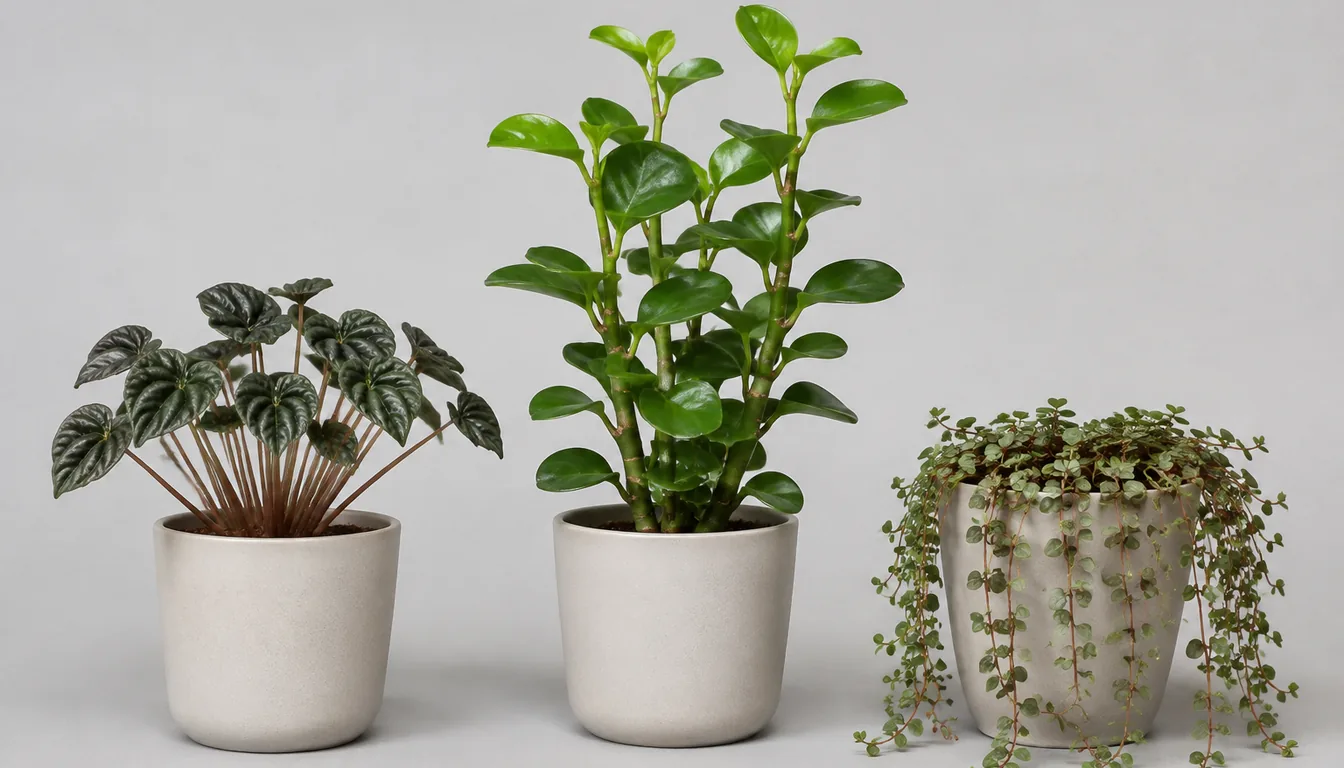
Natural foliage includes red, silver, cream-edged, smooth, and puckered forms. A color difference between two labeled cultivars is not evidence of damage. New changes on the same plant are more useful when assessing its condition.
Thick Leaves Still Need a Moisture Check
Fleshy leaves can store water while the roots remain small. A firm leaf does not reveal whether the mix contains enough air, and a limp one does not automatically mean the pot is dry.
Common indoor peperomias generally benefit from partial drying between waterings. Moisture in the root zone is the deciding observation. Pot weight helps when compared with the same pot at different moisture levels, but heavy pottery can hide the difference.
- Check below the exposed surface, without repeatedly probing through roots.
- Compare the center and edge when drying seems uneven. A damp center is not a reason to add another automatic watering.
- Look for water trapped inside a cover pot and confirm that drainage holes are open.
- If decline continues despite appropriate moisture, inspect the base and, when justified, the root ball.
Container depth, material, mix, root volume, and room conditions all change drying speed. A trailing plant is not necessarily drier than a rosette, and limp outer runners can coexist with wet mix at the center.
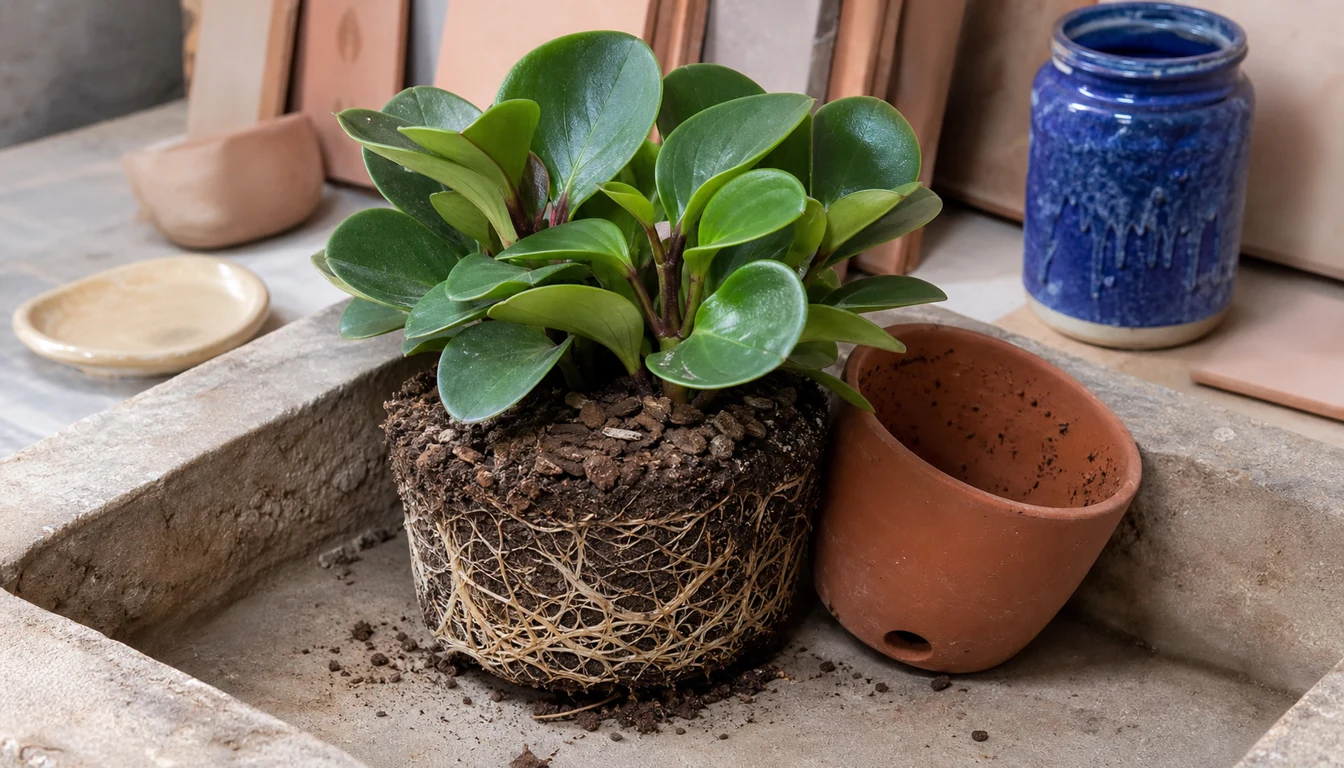
When the mix has partly dried, watering across the surface until excess drains helps wet the root zone more evenly. Emptying the saucer prevents the pot from sitting in the runoff. Small daily additions may leave one area wet while another receives little water.
Clemson identifies leaf drop as a possible result of overwatering. The reverse conclusion does not follow. A dropping leaf cannot prove overwatering, and prolonged wetness can injure roots through poor aeration without identifying a particular pathogen.
Soft, deteriorating roots, a collapsing base, and continued decline are concerning. Pale or firm roots alone cannot rule out disease. A damaged root system may leave the foliage wilted even while the surrounding mix is wet, which is why more water can worsen the situation.
Cooler, dimmer conditions often slow water use. The interval can lengthen as growth slows, but a calendar date does not replace checking the plant and pot.
Light, Warmth, and Leaf Changes
Bright filtered light suits many common tropical peperomias. An east-facing window or a brighter exposure screened from strong sun can work, depending on season and nearby obstructions. A compass direction alone does not describe the light reaching a leaf.
Weak light can contribute to stretched growth or a looser habit. New growth after an improved placement is more informative than expecting old stem gaps to shorten. Species and cultivar differences still matter when judging color and leaf shape.
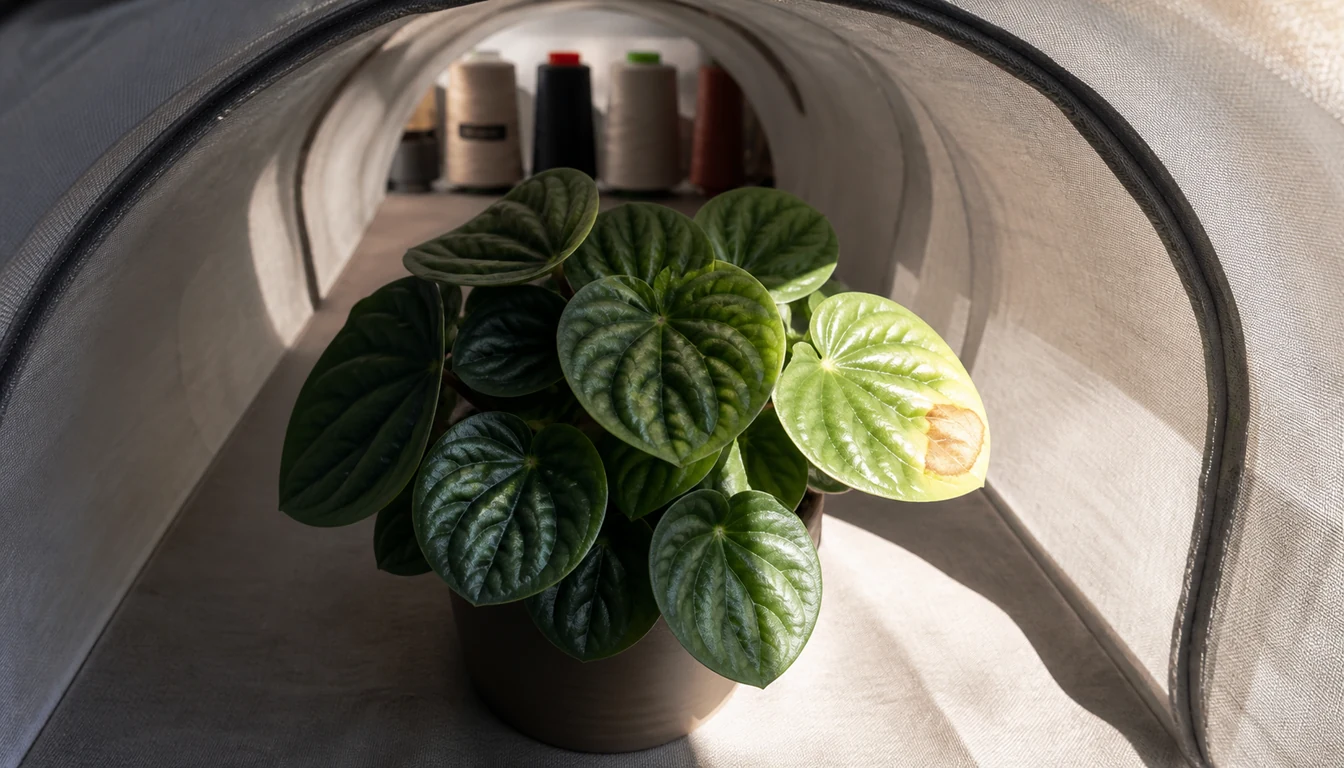
RHS gives 65 to 86°F as a growing range for tropical forms and advises protection from sudden temperature changes and drafts. Some drier-habitat species have different winter requirements, so a lower limit for one succulent species cannot safely be transferred to the whole genus.
Common indoor types can adapt to household humidity, while dry heated rooms may warrant a humidifier. Humid air and wet foliage are different conditions. A crowded crown that stays wet needs airflow and better watering placement rather than repeated misting.
Pot Size, Mix, and Feeding
A container close to the current root-ball size is generally easier to manage than a large pot of unused wet mix. Extra volume does not force a compact peperomia to grow faster. Drainage and access for inspecting the crown matter as much as the outline of the leaves.
- Roots fill the pot and watering becomes difficult
- A modest increase in container size may help
- Roots occupy little of a persistently wet pot
- Review moisture, mix, and root condition before enlarging it
- Porous tropical-houseplant mix
- Suits many common cultivated forms when it retains some moisture
- A labeled dry-habitat species
- May need a faster-draining succulent mix and different seasonal care
RHS notes that many peperomias need repotting only every two or three years. That is a general interval, not a deadline. Crowded roots, deteriorated mix, and difficulty wetting or draining the root ball provide stronger reasons for a change.
A loose houseplant mix with coarse aerating material suits many tropical forms. Bark can help maintain air spaces, while truly succulent species may need a different blend. A pot with an exit for excess water remains necessary even when the mix is porous.
After repotting, the crown and original stem base remain at their previous depth. Burying a low crown to make the plant appear more upright can leave tender tissue against wet mix.
Clemson recommends low-strength feeding during active growth. An occasional dilute liquid feed or an appropriate slow-release product offers different ways to supply nutrients; they are not automatically additive. Product directions and fertilizer already in the potting mix determine the amount.
Feeding is less useful when poor light, cold conditions, or injured roots are limiting growth. More fertilizer cannot restore air to saturated mix, and excess salts can add another source of root stress.
Which Peperomias Can Grow From Leaf Cuttings?
The species determines the method. Some peperomias can produce new plants from leaves, while stem cuttings are useful for many familiar forms. A rosette shape does not prove leaf propagation will work, and an upright stem does not prove that it will fail.
NC State lists both leaf and stem-tip cuttings for P. caperata. Clemson describes leaf-petiole, stem, and water-rooting methods for suitable peperomias. These examples support choosing material after identification rather than assigning one method to each display group.
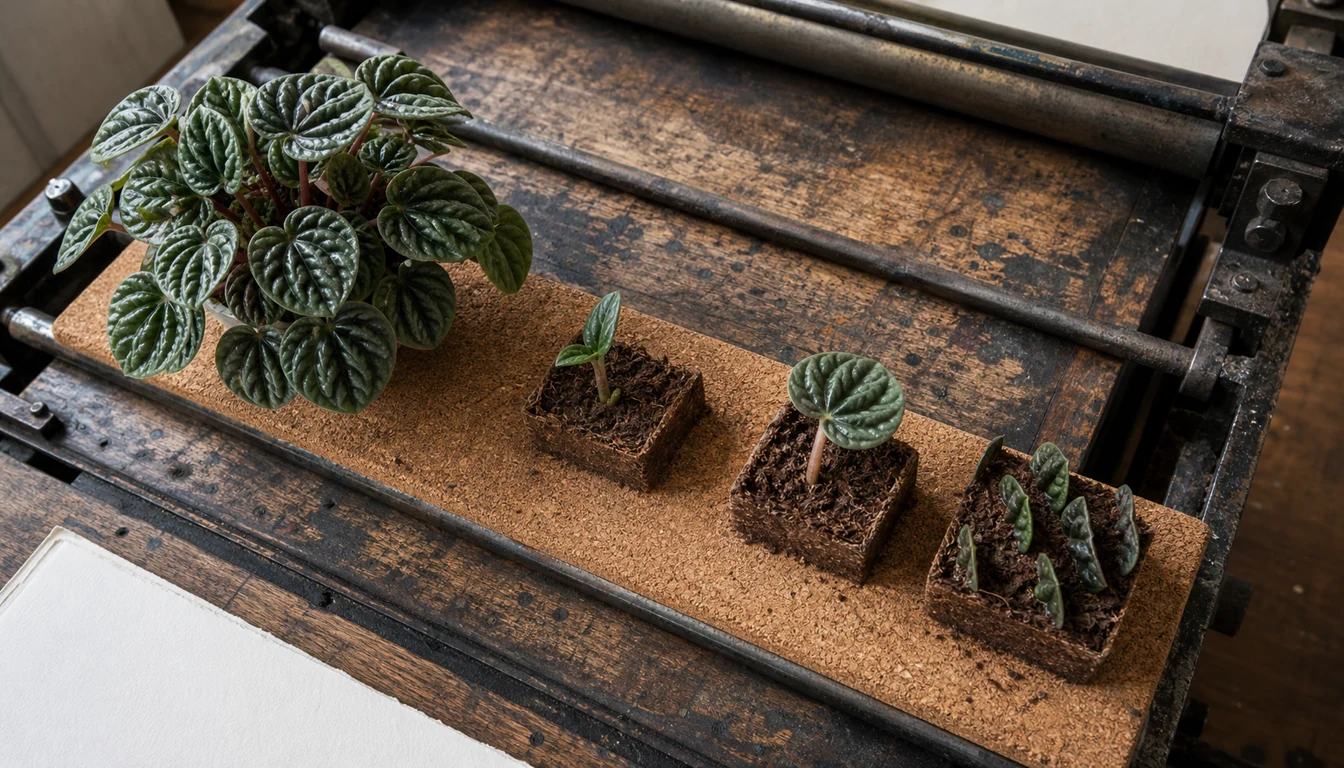
- Identify the species and select a supported method before cutting.
- Use clean tools and tissue without visible pests, collapse, or spreading lesions.
- For a stem cutting, retain a node and remove leaves that would be buried. For a suitable leaf cutting, retain the petiole or the orientation required by that species.
- Keep the rooting material moist and aerated in filtered light, with foliage above the water or medium.
- Move established cuttings gently into a container proportionate to the developing roots.
For stem propagation, Clemson gives 3 to 5 inches as an example cutting length. The piece still needs a usable node and healthy-looking tissue. Small-leaved trailing species require a method suited to their finer stems.
Water rooting makes roots visible, while a porous medium avoids the later transition from water to mix. Root development and continued growth help show when the cutting is becoming established. The developing roots need gentle handling during transfer.
A leaf can remain firm before it produces a plantlet. Rooting and the development of new top growth are separate stages, so firmness alone does not show that propagation has succeeded.
What Are the Thin Spikes Above the Leaves?
The slender green or cream structures are flower spikes, with many tiny flowers arranged along them. They can resemble thin tails rather than the broad blooms usually associated with flowering houseplants.
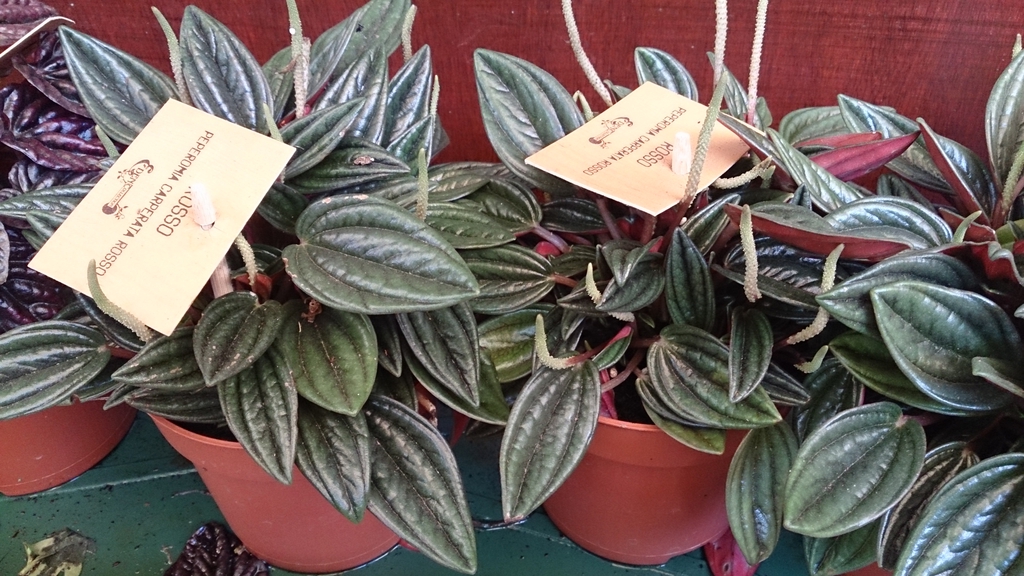
NC State describes P. caperata flowers as lacking a perianth, the outer floral parts that include petals and sepals. Their small scale explains the modest display. Extra fertilizer will not turn those spikes into large petaled flowers.
Keeping a spike is optional. A spent or unwanted spike can be removed carefully without cutting neighboring leaf stalks. Flowering by itself does not prove that every root is healthy or that the plant needs a larger pot.
What Leaf Damage Can and Cannot Tell You
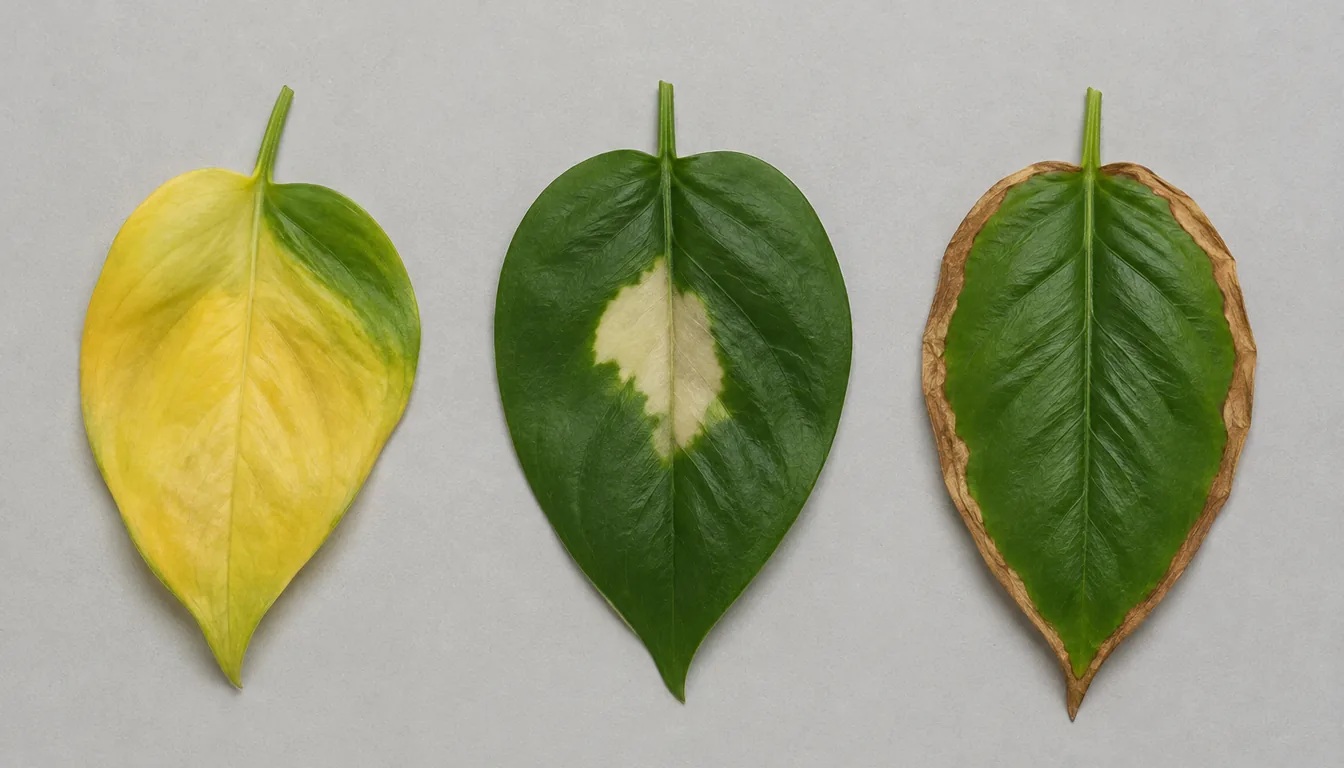
Yellowing, a pale patch, and a dry margin are different observations, but none names its cause on sight. Their position, progression, and relationship to watering or exposure guide the next inspection.
Yellowing or collapse
- Compare moisture with the watering history
- Check drainage and the stem base
- Persistent decline may justify root inspection
Pale or tan patch
- Review direct sun and temperature exposure
- Inspect both surfaces for other signs
- An expanding edge is not an automatic disease diagnosis
Brown tips or margins
- Review drying, fertilizer, and water quality
- Consider dry room air and root condition
- No single brown edge proves fluoride injury
White wax or cotton
- Inspect folds and stem joints for actual insects
- Separate suspected infestations from other plants
- Treatment depends on confirmed pests and the product label
RHS identifies fluoride sensitivity as one possible cause of brown tips in peperomias. That does not establish the cause in every plant with a brown margin. The local water supply, fertilizer history, and root condition matter before attributing damage to one mineral.
A suitable alternative water source can be useful when water quality is implicated, but the word filtered does not establish which substances a filter removes. New growth after a change can help evaluate conditions without turning one clean leaf into a diagnostic test.
Mealybugs, mites, scale, whiteflies, and fungus gnats are possible pests on peperomias. Cottony wax, fine webbing, or actual insects provide more specific evidence than a discolored leaf alone. Fungus gnats warrant reviewing damp growing medium but do not prove that roots are rotting.
Leaf-spot diseases can also occur. Keeping irrigation water off crowded foliage and improving air movement can reduce prolonged leaf wetness, but those changes neither identify a pathogen nor guarantee prevention. Unclear, spreading damage may need a local extension diagnostic service.
Species-Specific Pet Listings and Outdoor Care
ASPCA lists Watermelon Peperomia and Trailing Peperomia as non-toxic to dogs and cats. These are particular plant records, not evidence that every unidentified peperomia has the same safety classification.
Scientific names matter when common names overlap. The cited ASPCA records spell their names Peperomia argyreia and Peperomia prostata, respectively. A plant with a different label needs its identity reconciled before that listing is applied, rather than relying on the word Peperomia alone.
For a summer move outdoors, Clemson recommends nights consistently at or above 60°F. Its mention of May reflects South Carolina conditions, not a nationwide date. Local night temperatures and the needs of the identified species determine timing.
A protected, shaded placement reduces abrupt exposure to stronger outdoor sun. Wind, rainfall, and different drying rates still change care. Tropical plants need to return indoors before unsuitable cool nights arrive, with leaves and pot checked for pests. The lower winter tolerance of a different dry-habitat species is not a safe substitute.
Sources & References
- Peperomia (Peperomia spp.) Indoor Plant Care and Growing Guide, Clemson Cooperative Extension
- Peperomia - NC State Extension Plant Toolbox
- Watermelon Peperomia pet safety - ASPCA
- Trailing Peperomia pet safety - ASPCA
- How to grow peperomia - Royal Horticultural Society
- Peperomia caperata - NC State Extension Plant Toolbox
- University of Maryland Extension - Diagnose Indoor Plant Problems
Related Plants
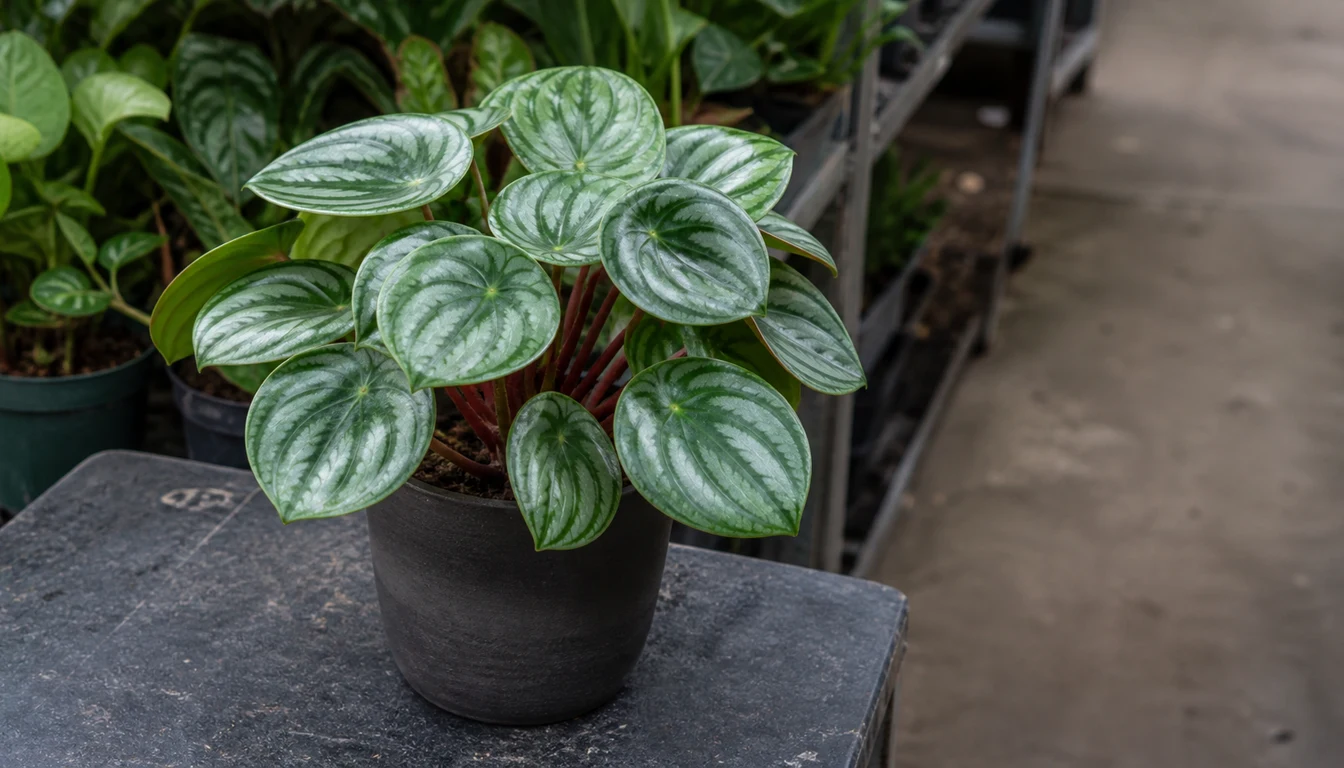
Watermelon Peperomia
Rounded, silver-striped leaves attach to their petioles within the blade.
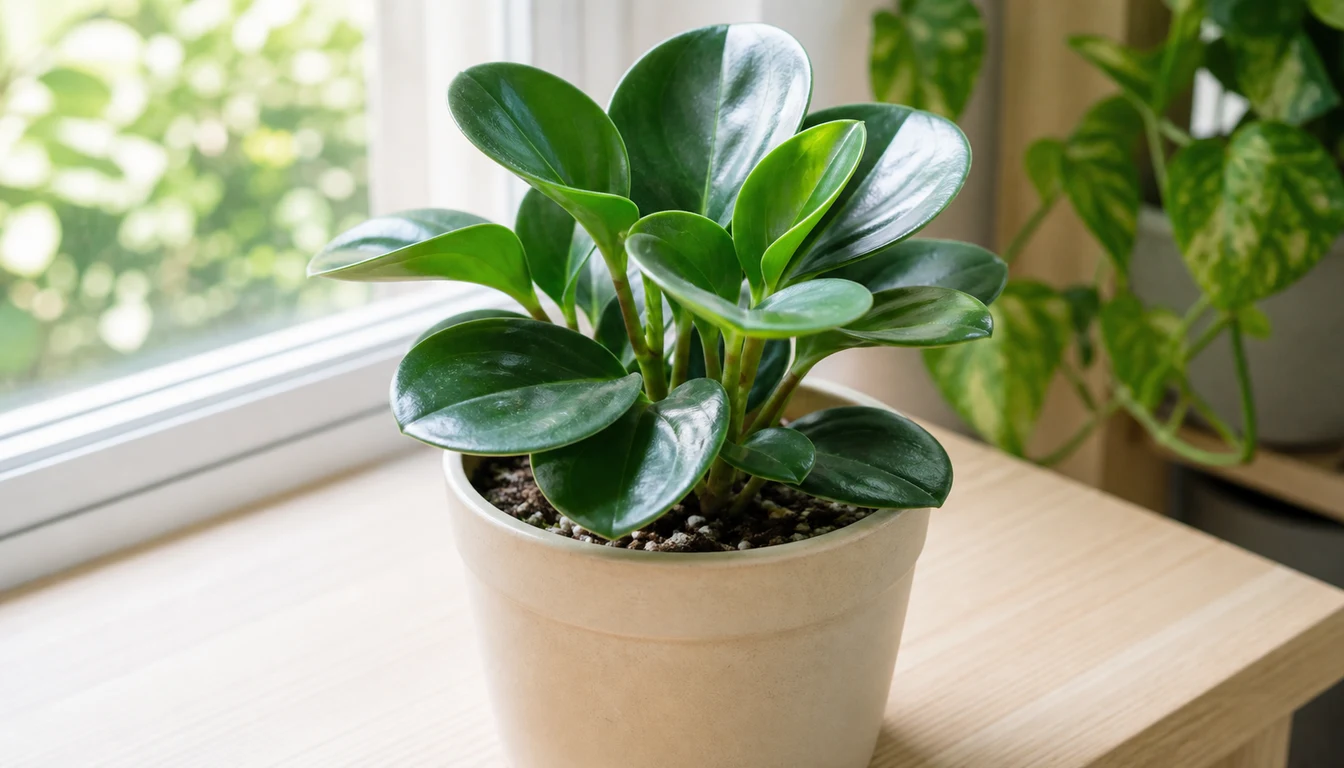
Baby Rubber Plant
Glossy oval leaves and fleshy upright stems distinguish this common species.
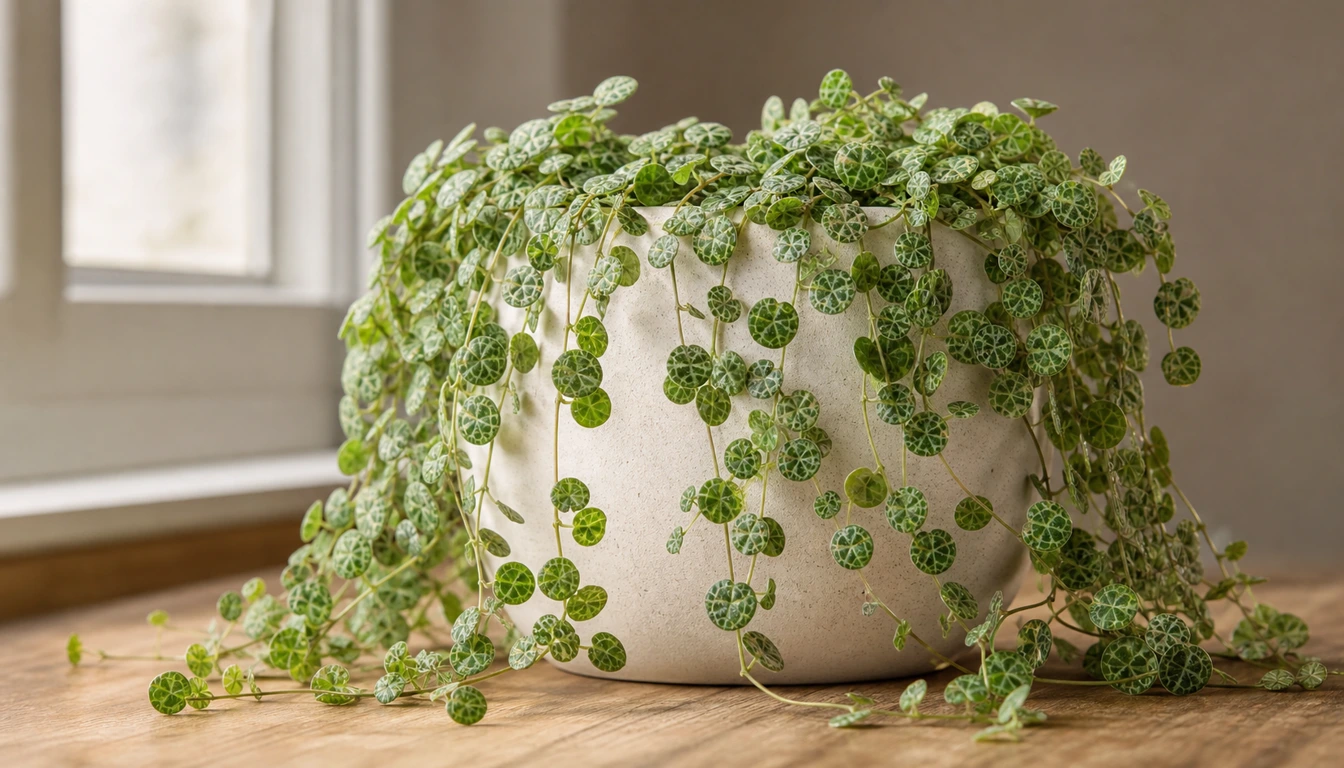
String of Turtles
Small patterned leaves run along delicate trailing stems for a different display.
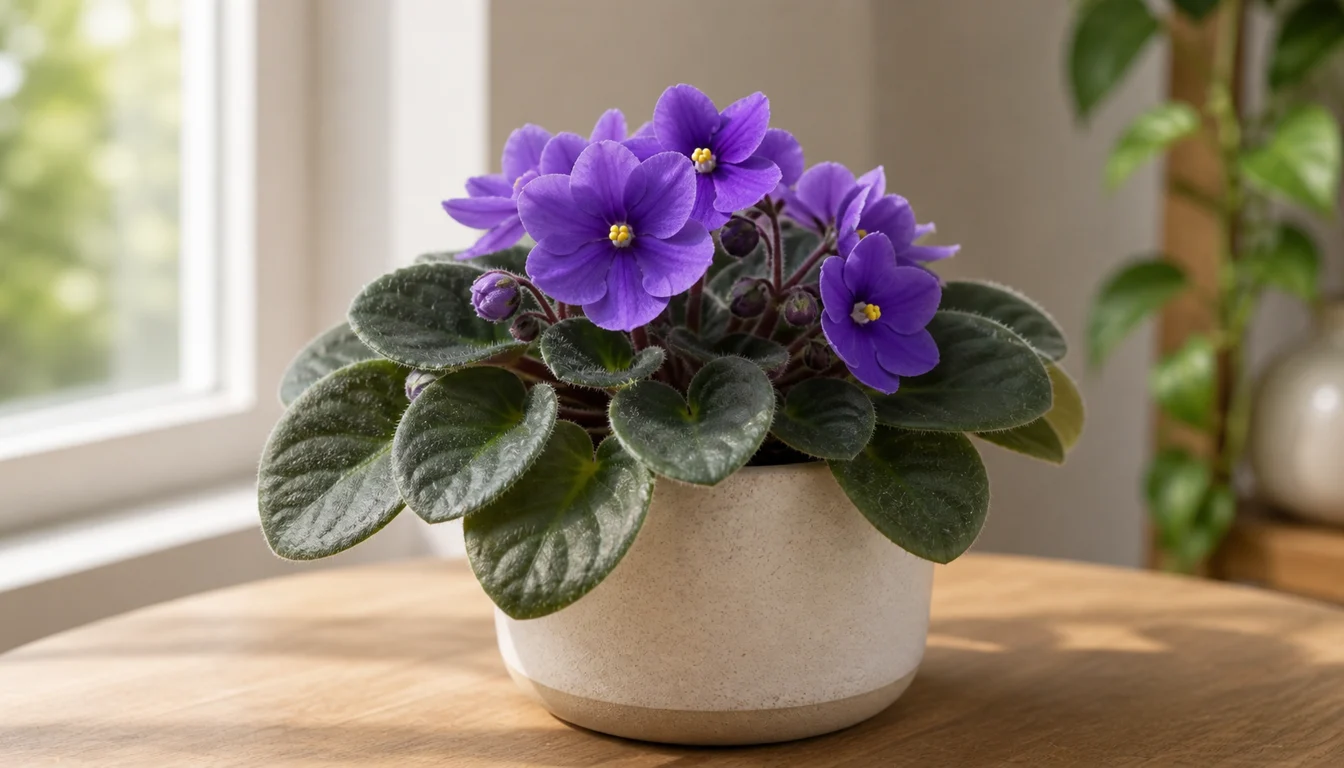
African Violet
African Violet is a windowsill bloomer that rewards steady, small-pot care.
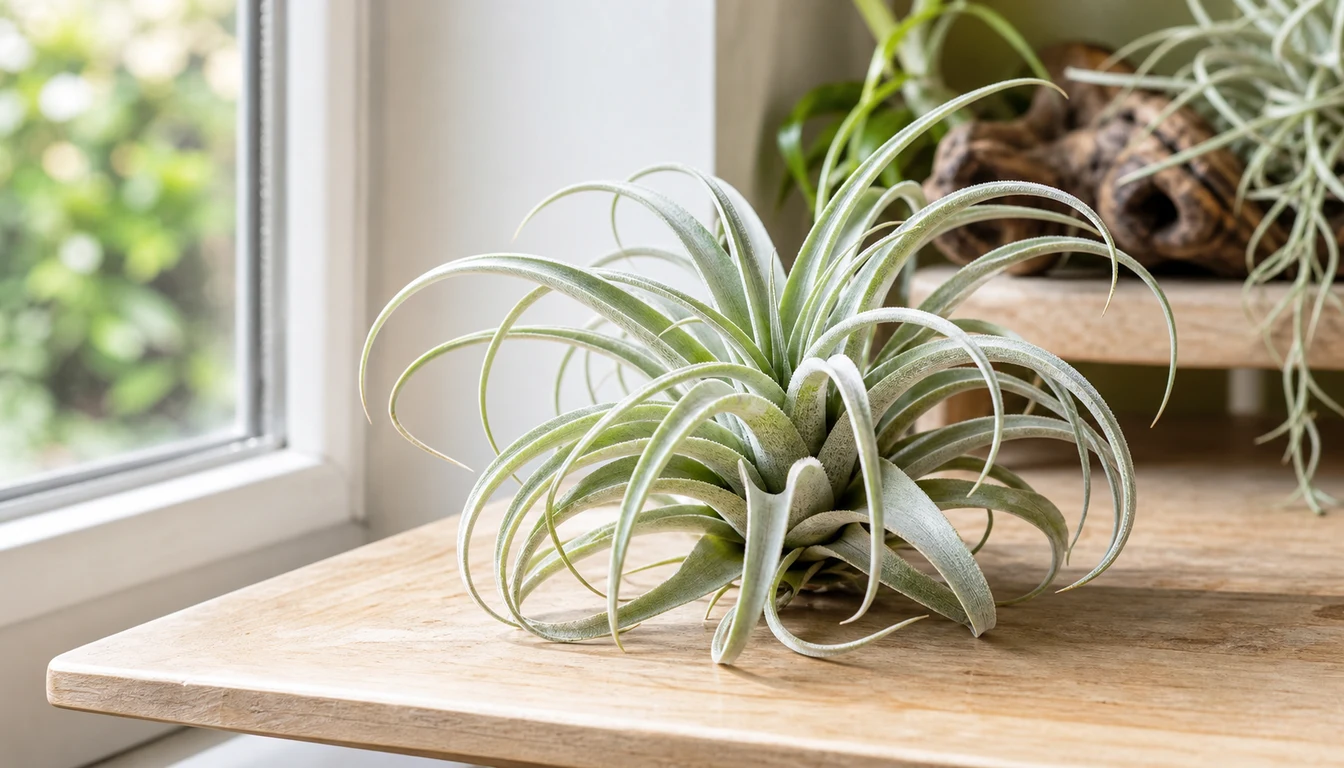
Air Plant
Air plants are living sculptures that thrive without soil, anchoring to driftwood, rocks, or shells while drawing…
Alocasia
Alocasias include compact, textured houseplants and large elephant ears that need substantial floor space.